International Research Journal of Engineering and Technology (IRJET)
e-ISSN: 2395-0056
Volume: 06 Issue: 06 | June 2019
p-ISSN: 2395-0072
www.irjet.net
IOT BASED SMART GARBAGE MONITIORING SYSTEM USING ESP8266 WITH GPS LINK MAHESH S.SHINDE Department Of MCA SEM VI, YMT College of Management, Institutional Area, Sector-4, Kharghar, Navi Mumbai ---------------------------------------------------------------------------***---------------------------------------------------------------------------
Abstract:- Waste management is now one of the main issues facing the world regardless of advanced or developing countries. The main problem in waste management is that the waste bin in government locations is overflowed well in advance before the next cleaning method starts. An ultrasonic sensor is used to detect whether or not the waste can be filled with waste. Here Ultrasonic Sensor is mounted at the top of Trash Can and can be used to measure the garbage distance from the top of Trash and we can set a limit value depending on the size of the trash. If the distance is less than this threshold value, means that the trash can be filled with garbage and that we can print the Basket message is Full on the webpage and if the distance is greater than this threshold value, then we will print the Basket message EmptyHere we have set the 5 cm border within the program code. We will use the ESP8266 Wi-Fi module to connect the Arduino to the web server. This in turn leads to multiple risks, such as poor odor and ugliness, which may be the basis for the unfolding of multiple illnesses. This work is installed on a wise garbage scheme to prevent all such hazardous situations and to preserve public cleanliness and safety. Web server for immediate mud bin cleaning with right verification endorsed trash filling level. This technique is motor-assisted by a supersonic device interfaced with Arduino UNO to visualize the quantity of trash stuffed inside the mud bin and to send the alert to the municipal net server once the trash is filled.
and its initial level height. Arduino UNO programming is carried out in such a manner that, once a certain amount of filling is identified, data is sent asking for cleaning and updating of bin status. Existing system
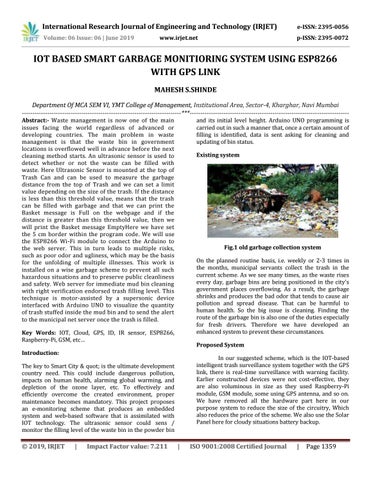
Fig.1 old garbage collection system On the planned routine basis, i.e. weekly or 2-3 times in the months, municipal servants collect the trash in the current scheme. As we see many times, as the waste rises every day, garbage bins are being positioned in the city's government places overflowing. As a result, the garbage shrinks and produces the bad odor that tends to cause air pollution and spread disease. That can be harmful to human health. So the big issue is cleaning. Finding the route of the garbage bin is also one of the duties especially for fresh drivers. Therefore we have developed an enhanced system to prevent these circumstances.
Key Words: IOT, Cloud, GPS, ID, IR sensor, ESP8266, Raspberry-Pi, GSM, etc‌
Proposed System
Introduction:
In our suggested scheme, which is the IOT-based intelligent trash surveillance system together with the GPS link, there is real-time surveillance with warning facility. Earlier constructed devices were not cost-effective, they are also voluminous in size as they used Raspberry-Pi module, GSM module, some using GPS antenna, and so on. We have removed all the hardware part here in our purpose system to reduce the size of the circuitry, Which also reduces the price of the scheme. We also use the Solar Panel here for cloudy situations battery backup.
The key to Smart City & quot; is the ultimate development country need. This could include dangerous pollution, impacts on human health, alarming global warming, and depletion of the ozone layer, etc. To effectively and efficiently overcome the created environment, proper maintenance becomes mandatory. This project proposes an e-monitoring scheme that produces an embedded system and web-based software that is assimilated with IOT technology. The ultrasonic sensor could sens / monitor the filling level of the waste bin in the powder bin
Š 2019, IRJET
|
Impact Factor value: 7.211
|
ISO 9001:2008 Certified Journal
|
Page 1359