
International Research Journal of Engineering and Technology (IRJET) e-ISSN: 2395-0056
Volume: 13 Issue: 01 | Jan 2026 www.irjet.net p-ISSN: 2395-0072
International Research Journal of Engineering and Technology (IRJET) e-ISSN: 2395-0056
Volume: 13 Issue: 01 | Jan 2026 www.irjet.net p-ISSN: 2395-0072
Madhura Rajendra Patil
1 National Innovation Foundation–India (NIF India), Department of Science & Technology, Government of India, Gandhinagar, Gujarat, India
2 Department of Renewable Energy Engineering, College of Technology and Engineering (CTAE), Maharana Pratap University of Agriculture and Technology (MPUAT), Udaipur
Abstract - Pyrolysis is thermal decomposition of biomass conducted in absence of oxygen at temperature of 400-600 °C for very short residence time of 2 seconds to producebio-oil.In this study, pyrolysis of lemongrass was investigated with the aim to study the product distribution and their chemical compositions and to identify optimum process conditions for maximizing the bio-yield. Particular investigated process variables were temperature (450°C), heating rate (1050°C/min) and nitrogen gas flow rate (2.5 l/min). Proximate analysis and heating value of both bio-oil and raw material was investigated. The fuel properties of bio-oil such as flash point, fire point, viscosity, cloud point, pour point etc was also determined. The performance evaluation was carried out a proximate analysis of lemongrass and characterization of lemongrass oil and it was found that bio-oil (26.53%), biochar (34.61%) produced from lemongrass. The properties of lemongrass bio-oil were viscosity (29.9 cSt), flash point (294°C), fire point (353°C), cloud point (-7.2°C), pour point (-15.0°C), and Calorific value (26.5MJ/kg). It has been found that raw lemongrass contains Moisture content, volatile matter, ash and fixed carbon content 9.97, 83.88, 4.43and 11.69 % respectively. The lemongrass and such herbal and medicinal plants were presented as an environmentally friendly feedstock candidate for bio-oil.
Keywords: lemon grass; pyrolysis; bio-oil, characterization, fixed-bed, economics analysis, etc.
Biomass is viewed as a major world renewable carbonneutral energy source. Combustion of fuels derived from biomass is believed to be less polluting than that of fossil fuels.Forthesereasonsconversionofbiomassintofuelsis gaining significant popularity worldwide. Biomass has always been an important energy sources for India considering the benefits it offers for power generation, cooking gas production and other valuable recycled products.Itisrenewable,widelyavailable,carbonneutral andhaspotentialtoprovidesignificantemploymentinthe ruralareas.
Pyrolysisisthermaldecompositionconductedinabsenceof oxygenattemperature400-600°Cforveryshortresidence timeof2secondstoproduceliquidmajorproductbio-oil.
Pyrolysis of biomass leads to formation of bio-char and vapors consisting of condensable and non-condensable gases. Quenching of vapors after its separation from char yields a liquid product which is known as bio-oil. Also a gaseousby-productthatisreferredtoasnon-condensable gasisobtainedafterquenching.
Inthepresentcontexttheutilizationofbio-oilespeciallyfor power production or thermal application is still under developmentandneedfurtherstudyforthestandardization and quality improvement. However, bio-oil can substitute fueloilordieselinmanystaticapplicationsincludingboilers, furnaces,enginesandturbinesforelectricitygeneration.Biooil is an attractive alternative energy source for many reasons.Mostnotably,itiscompletelyrenewableandeasily createdfromcommonwasteproducts.Usingbiomassfeed stockssuchaswood,wheatstraws,andground-nutshells. The pyrolysisprocess resultsin“net zero”carbondioxide emissions.Keepingabovepointsinmindresearchproblem is formulated to design and develop fixed bed type fast pyrolysis unit for production of bio-oil by using crop residues.
MATERIALS AND METHODS
A] Design of fixed-bed fast pyrolysis unit
i. Design of reactor Choice of reactor type
Choiceofareactordependsonseveralfactorssuchastype, capacity, capital cost, yield and available feedstock, bulk density, volume. For example, a choice made from capital costconsiderationmaynotgivethebestoperatingcostor highestyield,whileonewiththehighestyieldmaynotsuit the available feedstock or may require high capital investment. Applying proper weight age to a selection criterion,onecouldmakeafinalselection.
Heat transfer in reactor Conduction, Q Cond

International Research Journal of Engineering and Technology (IRJET) e-ISSN: 2395-0056
Volume: 13 Issue: 01 | Jan 2026 www.irjet.net p-ISSN: 2395-0072
The height of reactor

Total volume of reactor

Capacity of reactor

Thickness of insulation, rc

Outer diameter of reactor
ii. Design of Heat Exchanger
Lengthoftubeofwascalculatedbyusingfollowingmethod (Cengel,2007).
Heat capacity rate of hot fluid

Heat capacity rate of cold fluid

Capacity ratio

Maximum heat transfer rate

Actual heat transfer rate

The effectiveness of heat exchanger

Number of Transfer Units (NTU)

Heat transfer surface area, As (m2)

Surface area, As

Length of the tube (m)

B] Performance evaluation of developed pyrolysis unit
Proximate analysis biomass
1.Moisturecontent(%)
2.Volatiles
3.Fixedcarbon
4.Ash
Properties of bio-oil
1.Viscosity
2.Flashpoint
3.Firepoint
4.Cloudpoint
5.Pourpoint
5.HHVofliquid(MJ/kg)
C] Cost Economics of designed system
The following assumptions were made for economic assessmentofdesignedsystem.
a. Discountrate(d)
b. Repairandmaintenance(α)5%ofthecapitalcost ofPyrolysissystem
c. Numberofdaysofoperationperyear,(n)
d. Lifespan(t)
e. Capitalcostofthebiomassfireddryer(C0)
1. The Net present value

2. The Benefit- Cost ratio
Benefitcostratio=

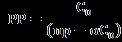
3. The payback period (PP)
International Research Journal of Engineering and Technology (IRJET) e-ISSN: 2395-0056
Volume: 13 Issue: 01 | Jan 2026 www.irjet.net p-ISSN: 2395-0072
A] Design of Fast pyrolysis unit
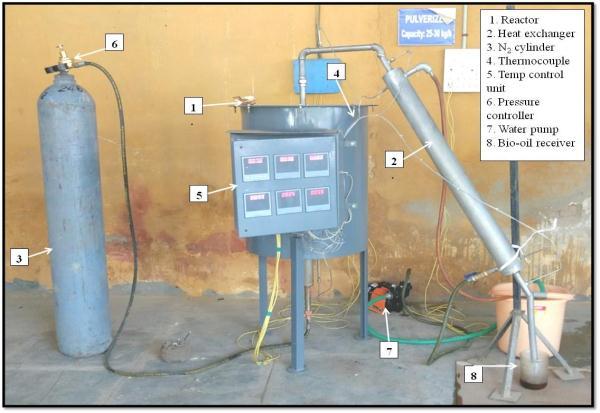
TheFixed-bedtypeFastPyrolysisunittoproducecleanand highenergyBio-oilfromcropresiduewasdesignedbythe Department of Renewable Energy Engineering, CTAE, and MPUATUdaipur.ThedesignedunitwasfabricatedbyM/s Siya Instrument,Udaipur.Theunitcomprisesof fixedbed type reactor, Heat exchanger for condensation, K-type thermocouples for measuring reactor temperature, water pump,andbio-oilreceiverforcollectingoil.
Thereactorsystemisoperatedthroughcontrolledsystems. The pressure of N2 sweeping gas is controlled by the pressure gauge as per required. A temperature indicator cum controller is connected to K-type of thermocouple to controlthetemperatureofreactor.Thecompletesystemis shown in fig.1. The lemongrasses (5kg) are used as raw material. The feed rate is adjusted to 5kg/hr. The temperaturewassetat450°C.Thebio-oiliscollectedatthe bottomofthecondenser.Theperformanceofheatexchanger wasevaluatedbycouplingitwithbio-charreactor.Chilled waterat8°Cisre-circulatedintheouterwaterjacketofheat exchangerforcondensationofpyrolysisvaporandrecovery ofbio-oilhasbeenobservedas26.72%forgroundnutshells, 24 % for sorghum and 26.53% for Lemongrass. Technical Specifications of developed Fast pyrolysis system are mentionedintable.1
[B] Performance evaluation of Fast pyrolysis unit
The produced yield of bio-oil, bio-char and syngas from lemongrassisgivenintable2.
Table 2 Performance analysis of developed Pyrolysis unit
International Research Journal of Engineering and Technology (IRJET) e-ISSN: 2395-0056
Volume: 13 Issue: 01 | Jan 2026 www.irjet.net p-ISSN: 2395-0072
The experiment was carried out at temperature of 450°C withheatingrate50°C/minandnitrogentakingassweeping gaswithflowrateof2.5L/minfor60min. Bio-oilyieldfrom lemongrasswasfoundabout26.53%andbio-charwasabout 34.61%andsyngas38.84%itisshowninfigure2.
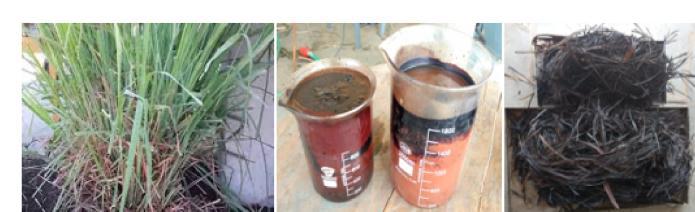
The physio chemical properties of biomass and thermal properties of bio-oil like moisture content, calorific value, viscosity,cloudpoint,pourpoint,firepoint,andflashpoint hasbeenobservedandgiveninthisstudy.
a] Proximate analysis of biomass
Propertiesofbiomassasperdifferentstudiesconductedby using various instruments like hot air oven, moisture analyzer,mufflefurnace,weighingbalancearegiveninthe Table3.
Table 3 Properties of biomass Sr.
b] Properties of bio-oil
As per different studies conducted at the laboratory the propertiesofdifferentbiomassandbio-oilaregiveninthe Table4.
Table 4 Properties of Bio-oil
C] Economic feasibility of system
Theeconomicsevaluationofdevelopedpyrolysisunitwas carriedoutintermsofnetpresentworth,paybackperiod, costbenefitratioandinternalrateofreturn,asprocedure suggestedbyPanwaretal.(2014).
Table 5 Economics of Fast pyrolysis unit
1. CapitalcostofPyrolysisUnit Rs.2,86,000
2. Numberofdaysofoperationina year 300days
3. LifeofdevelopedPyrolysisUnit 5years 5. RepairandMaintenanceCost(@10 %ofcapitalcostperyear)
6. CostofLemongrassincludingits transportationandlabourcost
5Perkg 7. Totaloperationperyear 1500 8. Totallemongrassrequiredon annualbasis 7500kg
9. CostofLemongrassperyear
10. CostofNitrogenCylinder (@Rs.2000percylinder)(One cylinderperday) Rs.6,00,000
11. Electricityconsumptionperbatch 10unit
12. Totalelectricitycostperyear Rs.1,20,000
13. LabourCostrequiredperdayto operateUnit (@Rs.300perday) Rs.90,000
14. Totaloperationcostperyear Rs.8,76,100
15. Bio-oilproducedperday(@6.0kg) 1800kg
16. MarketvalueofLemongrassoilper kg. Rs.2000
17. TotalcostofLemongrassoilper year Rs.36,00,000
18. PayBackPeriod 330.65days ≈1.10years 19. BenefitCostRatio 3.78
Table 6 Economic indicators of the developed pyrolysis unit
International
Volume: 13 Issue: 01 | Jan 2026 www.irjet.net p-ISSN: 2395-0072
3
The net present worth and internal rate of return of the developedsystemwasfoundRs.10039724/-and856.73per cent respectively for 5 years assumed life of developed system.Thebenefit-costratiowasfoundtobe3.78witha payback period of 1.10 years (330 days) which are viable andfeasibleaswell.
Inthisstudypyrolysisoflemongrasswerecarriedoutina fixed-bed reactor in order to investigate the effect of pyrolysistemperature,heatingrate,andsweepinggasflow rate on product yield and to study proximate analysis of lemongrass and characterization of bio-oil produced from lemongrass.
The experiment was carried out at temperature of 450°C withheatingrate 50°C/min andnitrogentakingassweeping gaswithflowrateof 2.5L/min for 60 min Bio-oil yield from lemongrass was found about 26.53% and bio-char was about 34.61%. The viscosity, flash point, fire point, cloud point, pour point, and calorific value was estimated about 29.9 cSt, 294°C, 353°C, -7.2°C, -15.0°C, and 26.5 MJ/kg respectively.Ithasbeenfoundthatrawlemongrass contains Moisture content, volatile matter, ash and fixed carboncontent 9.97, 83.88, 4.43and 11.69 % respectively. The NPW for the system was found Rs. 10039724/- for 5 years assumed life of developed system.
Pyrolysis encourages the production of Bio-oil with medicinalandherbalplantslikebasil,mintlemongrassetc. used in medical purpose to benefit farmers for their selfeconomicdevelopment.Pyrolysisencouragestheproduction ofBio-oilwithmedicinalandherbalplantslikebasil,mint lemongrassetc.usedinmedicalpurposetobenefitfarmers fortheirself-economicdevelopment.
The author gratefully acknowledges the guidance and technical support of Dr. N. L. Panwar, Department of RenewableEnergyEngineering,CollegeofTechnologyand Engineering (CTAE), Maharana Pratap University of AgricultureandTechnology(MPUAT),Udaipur,Rajasthan, duringtheM.Techresearchwork(2015-2017).Theauthor alsoacknowledgesthelaboratoryfacilitiesandinstitutional supportprovidedbyCTAE,MPUAT,Udaipur,forcarryingout theexperimentalwork.
[1]F.Abnisa,A.Arami-Niya,W.W.Daud,J.N.Sahu,andI.M. Noor,“Utilizationofoilpalmtreeresiduestoproducebio-oil
and bio-char via pyrolysis,” Energy Conversion and Management,vol.76,pp.1073–1082,2013.
[2]P.Basu,EconomicIssuesofBiomassEnergyConversion, 2nded.,inBiomassGasification,Pyrolysis,andTorrefaction, Elsevier,Amsterdam,2013.
[3] A. V. Bridgwater and G. V. C. Peacocke, “Fast pyrolysis processesforbiomass,”RenewableandSustainableEnergy Reviews,vol.4,no.1,pp.1–73,2000.
[4]A.V.Bridgwater,“Principlesandpracticeofbiomassfast pyrolysis processes for liquids,” Journal of Analytical and AppliedPyrolysis,vol.51,no.1–2,pp.3–22,1999.
[5] Y. A. Cengel, Heat and Mass Transfer: A Practical Approach, 3rd ed., Tata McGraw-Hill Education Pvt. Ltd., NewDelhi,2007.
[6]A.Demirbas,“Producingbio-oilfromolivecakebyfast pyrolysis,”EnergySources,PartA:Recovery,Utilization,and EnvironmentalEffects,vol.30,no.1,pp.38–44,2007.
[7] A. Demirbas, “Determination of calorific values of biochars and pyro-oils from pyrolysis of beech trunk barks,” JournalofAnalyticalandAppliedPyrolysis,vol.72,no.2,pp. 215–219,2004.
[8]S.Keleş,K.Kaygusuz,andM.Akgün,“Pyrolysisofwoody biomass for sustainable bio-oil,” Energy Sources, Part A: Recovery,Utilization,andEnvironmentalEffects,vol.33,no. 9,pp.879–889,2011.
[9]K.H.Kim,T.S.Kim,S.M.Lee,D.Choi,H.Yeo,I.G.Choi, andJ.W.Choi,“Comparisonofphysicochemicalfeaturesof bio-oils and bio-chars produced from various woody biomassesbyfastpyrolysis,”RenewableEnergy,vol.50,pp. 188–195,2013.
[10]G.Maschio,C.Koufopanos,andA.Lucchesi,“Pyrolysis,a promising route for biomass utilization,” Bioresource Technology,vol.42,pp.219–231,1992.
[11]N.L.Panwar,“Biomassfordomesticandagro-industrial applications,” in Wood: Types, Properties, and Uses, L. F. Botannini,Ed.,NovaSciencePublishersInc.,NewYork,2011.
[12] N. L. Panwar, R. Kothari, and V. V. Tyagi, “Thermochemical conversion of biomass – eco-friendly energyroutes,”RenewableandSustainableEnergyReviews, vol.16,no.4,pp.1801–1816,2012.
[13] Q. Wang, X. Li, K. Wang, Y. Zhu, and S. Wang, “Commercializationandchallengesforthenextgenerationof biofuels:Biomassfastpyrolysis,”inProc.Asia-PacificPower andEnergyEngineeringConf.(APPEEC),IEEE,2010,pp.1–4.
[14]J.Yanik,C.Kornmayer,M.Saglam,andM.Yüksel,“Fast pyrolysis of agricultural wastes: Characterization of
International Research Journal of Engineering and Technology (IRJET) e-ISSN: 2395-0056
Volume: 13 Issue: 01 | Jan 2026 www.irjet.net p-ISSN: 2395-0072
pyrolysisproducts,”FuelProcessingTechnology,vol.88,no. 10,pp.942–947,2007.
[15]Q.Zhang,T.Wang,C.Wu,L.Ma,andY.Xu,“Fractioned preparation of bio-oil by biomass vacuum pyrolysis,” InternationalJournalofGreenEnergy,vol.7,no.3,pp.263–272,2010.
BIOGRAPHIES

Madhura Rajendra Patil is
Research Associate at National Innovation Foundation-India (NIF-India), Department of Science and Technology, Government of India. She holds anM.TechdegreeinRenewable Energy Engineering from MPUAT, Udaipur, RJ,and B.Tech degree in Agricultural Engineering from MPKV,Rahuri,MH. Her professional interest includes biomass energy conversion, renewable energy systems etc. She is involved in applied research, prototype development, scientific validation, and technical documentation of sustainable technologies.
© 2026, IRJET | Impact Factor value: 8.315 | ISO 9001:2008