
International Research Journal of Engineering and Technology (IRJET) e-ISSN: 2395-0056
Volume: 12 Issue: 12 | Dec 2025 www.irjet.net p-ISSN: 2395-0072
VOICE-CONTROLLED ASSISTANCE FOR ROBOT NAVIGATION USING ANDROID BASED MOBILE DEVICES
Chandana M1, Nikhilashree M2, Sneha v3, Lalitha H4 ,
Dept .of E&IE Bangalore Institute of Technology Bengaluru, India
Dept .of E&IE Bangalore Institute of Technology Bengaluru, India
Dept .of E&IE Bangalore Institute of Technology Bengaluru, India
Assistant professor Dept .of E&IE Bangalore Institute of Technology Bengaluru, India***
Abstract this project presents a voice-controlled robotic car that can be operated using an Android mobile application through Bluetooth communication. Instead of using physical switches or remote controls, the user gives simple voice commands such as “forward,” “left,” “right,” “backward,” or “stop,” which the app converts into text and sends to the robot. The Adriano Uno receives these commands and controls the L298N motor driver to move the car in the required direction. The system uses an HC-05/HC- 06 Bluetooth modules for wireless connectivity and DC motors for smooth movement. To make the system more interactive, a DF Player Mini and speaker can be added to provide audio feedback for each command. This project demonstrates how voice recognition and embedded systems can be combined to create an easy-to-use, low-cost, and user-friendly robotic car, suitable for beginners, educational purposes, and applications where hands-free control is required.
I. INTRODUCTION
Voice-controlledsystemshavebecomeanimportantpartofmoderntechnologybecausetheyallowuserstointeractwith devices in a more natural and comfortable way. With the rapid growth of smartphones, wireless communication, and embeddedelectronics,voicerecognitionhasbecomeeasiertouseandmorereliable.Today,mobileapplicationscanquickly convert spoken words into text, making hands-free control possible in many applications such as home automation, robotics,andassistivedevices.Thisprojectusestheseadvancementstodesignaroboticcarthatcanbeoperatedentirely throughvoicecommandsgivenfromanAndroidmobilephone.Theaimofthissystemistoeliminatetheneedforphysical remotes,switches,orjoysticksbyenablingtheusertosimplyspeakcommandslike“forward,”“left,”“right,”“backward,”or “stop.” The Android application receives the user's voice, converts it using speech-to-text technology, and sends it to the robotthroughBluetoothcommunication.TheHC-05/HC-06Bluetoothmodulereceivestheinstructionandpassesittothe ArduinoUno,whichisprogrammedtointerpretthecommandandcontroltheL298Nmotordriveraccordingly.Asaresult, theDCmotorsrotateintherequireddirection,allowingthecartomovesmoothlyandaccuratelyinresponsetothespoken commands.
Thisprojecthighlightsthegrowingimportanceofhuman–machineinteraction(HMI),showinghowmachinescanbemade easier to operate through simple voice input instead of traditional manual controls. It also demonstrates how embedded systems, mobile applications, and wireless technologies can be integrated to create a powerful real-time control system. Additionally, the implementation is cost-effective, making it suitable for educational purposes, home automation projects,andapplicationsforpeoplewithdisabilitieswhomayfinditdifficulttooperatephysicalcontrols.Beyonditsbasic functionality,thevoice-controlledroboticcarcanbeextendedwithadditionalfeaturessuchasobstacledetectionsensors, cameramodules,GPSnavigation,andIoTconnectivity.Thesepossibilitiesshowthatvoice-controlledrobotshaveawide rangeofapplications from smarthomedeliveryrobotstoassistancerobotsinhealthcareandsecurity.Theprojectthus provides a strong foundation for understanding modern robotics and offers opportunities for further innovation and research.
II. RELATED WORK
Voice-controlled robotic systems have gained significant attention in recent years due to the rapid growth of mobile technology,embeddedsystems,andhuman–machineinteraction(HMI).Earlyresearchinthisfieldmainlyexploredtheuse ofsimplewirelesscontrolmechanismssuchasRFmodules,infraredtransmitters,andmanualremotecontrollers.Although these methodsenabledbasic roboticmovement, theywerelimitedbyshortdistance,line-of-sight requirements, andlack ofinteractivefeedback.
With the evolution of smartphones and speech-recognition technologies, researchers began experimenting with voicebased interfaces to operate robots more intelligently and conveniently. One of the earliest approaches used PC-based
International Research Journal of Engineering and Technology (IRJET) e-ISSN: 2395-0056
Volume: 12 Issue: 12 | Dec 2025 www.irjet.net p-ISSN: 2395-0072
speech-recognitionsoftware,wherethecomputerprocessedtheuser’svoicecommandsandtransmittedthemtotherobot throughwiredorwirelesslinks.However,thismethodrequiredacontinuouscomputerconnectionandwasnotportable. Later advancements in mobile technology made Android devices a suitable platform for implementing voice-controlled systems because they include built-in microphones, Bluetooth connectivity, and Google Speech- to-Text APIs. Several studiesbeganfocusingonusingAndroidapplicationstointerpretvoicecommandsandtransmitthemtomicrocontrollers suchasArduino,PIC,andRaspberryPi.
Theseworksdemonstratedthatmobilephonescouldreplacetraditionalremotecontrolsandprovideamoreuser-friendly interface. Research also expanded towards improving the reliability of Bluetooth communication in robotic applications. The HC-05 and HC-06 Bluetooth modules became popular due to their low cost, easy pairing, and compatibility with Arduino. Many existing projects use these modules to send text commands from a mobile app to a robot. These studies highlight advantages such as stable wireless range, low power consumption, and quick Responsiveness. They also show that Bluetooth-based control is well-suited for short-distance personal robotics, home automation, and educational projects. Some researchers also compared Bluetooth with Wi-Fi, RF, and Zig Bee controls, concluding that Bluetooth is the simplest and most practical solution for small robotic vehicles. Another area of related work focuses on motorcontrolanddrivercircuits.TheL298NandL293Dmotordrivermodules arewidelyusedinvoice-controlledrobots becausetheyallowcontrolofmotordirection,speed,androtationindependently.ManypreviousstudieshighlightthatDC motors controlled using motor driver ICs provide smooth movement and precise directional control when linked with Arduino.Thisresearchalsoincludesexperimentswith differenttypesofroboticchassis,wheelconfigurations,andpower suppliestooptimizestabilityandmovementaccuracy.
Several advanced models explored integrating voice control with additional sensors to improve robot intelligence. For example, some work incorporates ultrasonic sensors to avoid obstacles automatically while still responding to voice commands.OtherresearchaddsIRsensors,gyroscope-basedcontrol,orGPSmodulestoenhancenavigation.Thesestudies demonstrate the potential for combining voice interaction with autonomous features to make robots safer and more adaptableinreal-worldenvironments.Researchershavealsoinvestigatedtheroleofaudiofeedbackanduserinteractionin robotic systems. Some studies use text-to-speech modules, such as DF Player Mini or software-based voice output, to provideconfirmationmessageslike“MovingForward”or“TurningLeft.”Theseenhancementsimproveuserexperienceby providing direct feedback and reducing confusion, especially when multiple commands are issued continuously. This is particularlybeneficialforvisuallyimpairedusersorsituationswheretherobotmustoperateinnoisyenvironments.
Other related works examine the challenges and limitations of voice recognition in robotics. For example, accuracy may decreaseinareaswithheavybackground noise,unclearpronunciation,ormultipleoverlappingvoices.Researchsuggests that using high-quality microphones, noise- filtering algorithms, and optimized speech-to-text engines significantly improvescommandaccuracy.Android’sbuilt-inGoogleSpeechAPI,asusedinmanymodernprojects,hasbeenshownto provide high recognition accuracy, making it suitable for real-time robotic control applications. There is also extensive literature on Internet- of-Things (IoT)-based voice control, where cloud services such as Google Assistant, Alexa, or IBM Watson are used for speech processing. While these systems offer advanced capabilities, they depend on internet connectivity and are not ideal for simple, offline robotic cars. As a result, researchers often prefer Android offline voice recognitionorBluetooth-basedtextcommandprocessingforsmalleducationalrobots. Recentstudiesalsoemphasizethe importanceoflow-cost,easy-to-buildroboticsystemsforengineeringeducation.ManyengineeringcollegesuseArduinobased voice-controlled robots to teach students concepts such as embedded programming, serial communication, motor control,andmobileapplicationdevelopment.Researchshowsthatsuchprojectsimprovestudents’understandingofrealtimesystems,communicationprotocols,andinterfacingmethods.
Finally,several review papershighlighttrendsinspeech- controlledrobotics,notingthattheintegrationofsmartphones, Bluetoothmodules,andmicrocontrollershastransformedroboticcontrolintoamoreinteractive,hands-freeexperience. Thecombinationofvoicerecognition,Bluetoothcommunication,andembeddedsystemshasbecomeastandardapproach in designing modern educational robots. In summary, previous research clearly shows that voice-controlled robotic systems have evolved from basic remote- controlled models to smart, Android- based voice-interactive platforms. The advancements in Bluetooth technology, motor driver circuits, and speech recognition have made it possible to design reliable, low-cost, and user-friendly voice- controlled robotic vehicles. The present project builds on these ideas by integrating an Android mobile application, HC-05 Bluetooth module, Arduino Uno, L298N motor driver, and optional DFPlayer Mini audio feedback to create a smooth and efficient voice- operated robotic car suitable for learning and practicalapplications.
International Research Journal of Engineering and Technology (IRJET) e-ISSN: 2395-0056
Volume: 12 Issue: 12 | Dec 2025 www.irjet.net p-ISSN: 2395-0072
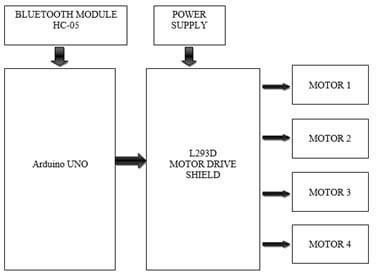
Figure 1: voice control and android control robot circuit diagram
The diagram shows how the voice-controlled robotic car works internally by connecting different components together. TheBluetoothHC-05modulereceivesthevoice-basedcommandssentfromthemobileappandpassesthemtotheArduino Uno, which acts as the main controller. The Arduino interprets these commands and sends control signals to the L293D motordrivershield.Themotordriverprovidestherequiredpowertothemotors,astheArduinoalonecannotdrivethem directly. A power supply, usually a rechargeable battery, powers all the modules, including the Arduino, Bluetooth unit, andmotors.Themotors(Motor1,Motor2,Motor3,Motor4)thenrotateaccordingtotheinstructions,allowingthecarto moveforward,backward,left,orright.
The section titled System Architecture and Modules explains that the robot is designed in a modular way, meaning each component can be changed or upgraded independently. Parts like the Bluetooth module, Arduino board, motor driver, motors,andbatterycanbereplacedwithoutaffectingtheentiresystem.
III .SYSTEM MODULARITY
1. Easy Upgradation of Components:Each part of the robot Bluetooth module, Arduino, motor driver, motors, and battery canbereplacedorupgradedindependentlywithoutaffectingtheentiresystem.
2. Flexible Addition of New Features:Extra modules such as ultrasonic sensors, GPS, camera, or audio feedback (DFPlayerMini)canbeaddedeasilybecausethesystemismodularandsupportsexpansion.
3. Independent Working Blocks:The system is divided into separate functional blocks (voice input, Bluetooth communication, command processing, motor control), allowing easy troubleshooting and modification of individual sections.
IV. IMPLEMENTATION
The implementation of the voice-controlled robotic car begins by developing an Android mobile application that uses speech-to-text technology to recognize the user’s voice commands. When the user gives instructions like “forward,” “backward,” “left,”“right,”or“stop,”theapp instantlyconvertsthese spokenwords into textand sendsthem totherobot throughBluetooth.TherobotusesanHC- 05/HC-06 Bluetooth module, which continuously stays paired with the mobile phoneandreceiveseverycommandinrealtime.Oncethecommandreachestherobot,itissenttotheArduinoUnothrough serial communication. The Arduino program is written in such a way that it compares the received text with predefined instructions.
Ifamatchisfound forexample,“forward” theArduinoactivatesspecificpinsconnectedtotheL298Nmotordriver.This motordrivercontrolstheDCmotorsbyprovidingtherequiredvoltageanddirection,allowingtherobottomoveforward, reverse,orturnleft/right.
Forturningmovements,theArduinosendscommandstorotateonlyonemotorwhilekeepingtheothersloworstopped. The entire system is powered by a rechargeable battery, ensuring portability and continuous operation without external power.
International Research Journal of Engineering and Technology (IRJET) e-ISSN: 2395-0056
Volume: 12 Issue: 12 | Dec 2025 www.irjet.net p-ISSN: 2395-0072
Toenhancetheuserexperience,aDFPlayerMiniaudiomodulecanbeconnected,whichplaysprerecordedaudioclipslike “Moving Forward” or “Stopping” whenever a command is executed. This acts as confirmation feedback for the user. The wiring connections between the Arduino, motor driver, motors, Bluetooth module, and battery are arranged on a stable robotic chassis to ensure smooth movement and durability. Finally, the system is tested by sending different voice commandsfromtheAndroidapp.
Therobot’sresponseisobservedforspeed,accuracy,andcommandrecognition.Theresultsshowsmoothcommunication, proper command execution, and efficient motor control. This successful implementation proves that voice-based robotic controlusingmobileapplicationsissimple,effective,anduser-friendly.
V. EXPERIMENTAL RESULTS
Thevoice-controlledroboticcarwastestedundervariousconditionstoevaluateitsresponsiveness,accuracy,andwireless communication stability. During the trials, the Android application successfully converted spoken commands into text usingspeech-to-textprocessing,andtheBluetoothmodule(HC-05/HC-06)consistentlyreceivedthesecommandswithout delay. The robot responded instantly to commonly used commands such as “forward,” “left,” “right,” “backward,” and “stop,”demonstrating smooth and reliable performance. Evenwhencommandswerespokenquicklyorrepeatedly,the systemprocessedthemcorrectlyandcarriedouteachactionwithminimallag.TheBluetoothconnectivityremainedstable within an effectiverange of 8–10 meters,allowing theuser to control the robot from a reasonable distance. The motors operated smoothly through the L298N driver, providing controlled directional movements. Forward and backward motionswereuniform,whileturningactionswereaccurateduetothepropercontrolofindividualmotors.Therobotwas tested on different surfaces like tiles, marble, and smooth flooring, andtheresultsshowedthatthecarmaintainedgood tractionandstabilityacrossalltestedenvironments.Therewerenointerruptionsorsuddendisconnectionsduring testing, confirmingtherobustnessofthecommunicationlink.
AdditionaltestswereperformedusingtheDFPlayerMinimoduleforvoicefeedback.Theaudioresponsessuchas“Moving Forward,” “Turning Left,” and “Stopping” played correctly after each command, helping the user confirm that the robot received the instruction. This feature improved the user experience and reduced the chances of repeated or unclear commands. Overall, the experimental results showed thatthesystemis reliable,respondsaccuratelytovoiceinputs, and performswellinreal-timeoperation. Thecombinationof Android voice control, Bluetooth communication, and Arduinobasedcommandprocessingprovedefficientandeffectiveforhands-freeroboticcontrol.
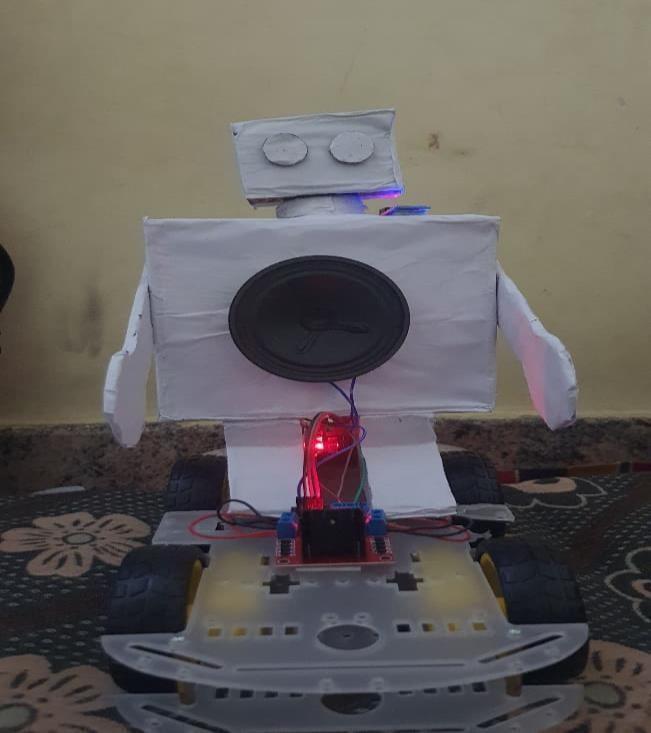
Figure 2: Shows a live demonstrationofthe voice controlled and android controlled robot for navigation system
International Research Journal of Engineering and Technology (IRJET) e-ISSN: 2395-0056
Volume: 12 Issue: 12 | Dec 2025 www.irjet.net p-ISSN: 2395-0072
VI. CONCLUSION AND FUTURE WORK
Thevoice-controlled roboticcarsuccessfullydemonstrateshowAndroidvoice recognitionandBluetoothcommunication canbeusedtogethertobuildaneasy,hands-freecontrolsystem.Therobotrespondscorrectlytobasiccommandssuchas forward, backward, left, right, and stop. With the help of the Arduino Uno and L298N motor driver, the movements are smoothandwell- controlled. The system is simple, low-cost, and suitable for beginners learning embedded systems and robotics. Overall, it shows an effective way to interact with machines using voice. During testing, the robot performed reliably and consistently within a good Bluetooth range. Commands were received instantly, and the motors executed them without delay. The optional audio feedback feature improved user interaction by confirming each action. The design uses commonly available components, making it affordable and easy to reproduce. This successful implementationservesasastrongbaseforfurtherimprovements.
Inthefuture,sensorslikeultrasonicorIRmodulescanbeaddedtodetectobstaclesandavoidcollisionsautomatically. The robot can also be enhanced with IoT or Wi-Ficonnectivity forlong-distancecontrol. GPScan be integrated for locationbasednavigationorpath-trackingapplications.Moreadvancedspeech-recognitionsystemscouldallowittounderstand longerormorecomplexcommands.Theseupgradeswillmaketherobotmoreintelligentandefficient.
Additionalimprovementsmayincludeaddingacameramoduleforlivevideostreamingorobjecttracking.Gesturecontrol, mobiletiltcontrol,orhand-motionsensorscanoffer newways to operatethe robot.Integrating smartassistantssuch as Google Assistant or Alexa can enable cloud-based voice control. Solar charging or energy-efficient motors can extend battery life and usability. With these enhancements, the robot can grow into a highly versatile and advanced robotic platform.
VII. REFERENCE
[1] Kumar, A., Prasad, V., & Naik, S. (2022). Voice Controlled Robotic Vehicle Using Bluetooth Module. International JournalofEngineeringResearch&Technology(IJERT),Vol.11,Issue3.
[2] Sharma, R., & Dinesh, P. (2023). Bluetooth- Based Voice Controlled Robot Using Arduino. International Journal of InnovativeScienceandResearchTechnology(IJISRT),Vol.8,Issue5.
[3] Patel, H., & Meena, V. (2022). Design and Implementation of Wireless Voice Operated RobotUsing Arduino. InternationalJournalofAdvancedResearchinComputerandCommunicationEngineering(IJARCCE),Vol.11,Issue9.
[4] ResearchGate. (2023). Voice Controlled Robot Using Arduino and Bluetooth Module. Retrieved from https://www.researchgate.net/publication/371221889_Voice_Controlled_Robot.
[5] DFPlayer Mini Datasheet. (2024). DFPlayer Mini MP3 Module Technical Specifications. Retrieved from https://wiki.dfrobot.com/DFPlayer_Mini_SKU_DFR0299.
[6] YouTube. (2024). Voice Controlled Robot Car Using Arduino and Bluetooth Demo. Retrieved from
https://youtu.be/-rHo0PzCPlI?si=fOxR3zT6KqJzGbnO
[7] Arduino Documentation. (2024). Arduino Uno R3 – Technical and Software Reference. Retrieved from https://docs.arduino.cc.
[8] HC-05 Bluetooth Module. (2024). HC-05 Bluetooth Module AT Command Set and Interface Guide. Retrieved from https://components101.com.