
International Research Journal of Engineering and Technology (IRJET) e-ISSN: 2395-0056
Volume: 12 Issue: 12 | Dec 2025 www.irjet.net p-ISSN: 2395-0072
International Research Journal of Engineering and Technology (IRJET) e-ISSN: 2395-0056
Volume: 12 Issue: 12 | Dec 2025 www.irjet.net p-ISSN: 2395-0072
Anup N. Folane1 , Prajwal S. Chirde2 , Prajyot D. Harshe3 , Manav N. Mahajan4 , Pooja S. Mankar5
1,2,3,4, Under Graduate Student, Jawaharlal Darda Institute of Engineering and Technology, Yavatmal, 5Assist. Professor, Dept. of Civil Engineering, Jawaharlal Darda Institute of Engineering and Technology Yavatmal, Maharashtra, India ***
Abstract –The growing concern over declining groundwater quality in India has increased the demand for sustainable and low-cost water purification techniques. Borewellwater,whichservesasaprimarysourceofdomestic water in rural and semi-urban regions, often contains contaminates such as fluoride, heavy metals, hardness ions, and microbial impurities due to both natural and anthropogenicactivities.Thepresentresearchfocusesonthe experimental assessment of bio-based materials such as Moringa seed, Coconut shell, Banana peel, and Rice husk ash forborewellwaterpurification.Thesematerials,abundantin nature and biodegradable, act as bio-absorbents capable of removing diverse pollutants through adsorption and coagulationprocesses.
Thispaperconsolidatesfindingsfrompreviousstudies and elaborates on adsorption mechanisms, preparation methods, and removal efficiencies. Each material’s physicochemical properties and its interaction with contaminants are analyzed in detail. The methodology involves systematic sampling, adsorbent preparation, and laboratory testing using standard protocols. The results confirm that these bio-materials can remove contaminants withefficienciesrangingfrom85–95%,dependingondosage and contact time. The proposed approach aligns with Sustainable Development Goal (SDG 6) Clean Water and Sanitation byofferingagreen,low-costsolutionsuitablefor decentralizedhouseholdwater treatment systems, especially in ruralareas ofIndia.
Key Words: Bio-adsorbents, Borewell water, Fluoride removal, Heavy metals, Sustainable purification, Moringa seed, Coconut shell, Banana peel, Rice husk ash.
Waterisanindispensableresourceforlifeandsustainable development.InIndia,groundwaterservesasthebackbone of the water supply system, catering to nearly 80% of the ruralpopulationand50%oftheurbanpopulation.Borewell water is considered a reliable source due to its perennial availability; however, it is not always safe for direct consumption. Over the past few decades, excessive extraction of groundwater, coupled with industrial
expansion and agricultural intensification, has resulted in deteriorationofitsquality.Thecontaminationarisesfrom both geogenic (natural rock-water interaction) and anthropogenic(human-induced)sources.
Borewell water in many Indian regions exhibits elevated concentrations of fluoride, iron, manganese, nitrates, chlorides, arsenic, and hardness ions such as calcium and magnesium.Highfluoridecontent,particularlyinstateslike Maharashtra, Rajasthan, and Andhra Pradesh, has led to widespreaddentalandskeletalfluorosis.Similarly,excessive hardness and heavy metal contamination make the water unfit for domestic use. The severity of this problem has drawnattentiontowarddevelopingefficient,low-cost,and environmentallycompatiblewatertreatmentmethods.
Conventionalpurificationmethodssuchasreverseosmosis (RO), ion exchange, and chemical precipitation are highly effectivebut noteconomicallyfeasible for rural andsemiurbanareas.Theydemand highcapital cost,energyinput, and maintenance while producing concentrated chemical waste that poses disposal challenges. Moreover, these methods often remove essential minerals, altering the naturaltasteandbalanceofwater.Hence,thereisapressing need to identify eco-friendly and sustainable alternatives that can provide acceptable purification levels at minimal cost.
Bio-based adsorbents have emerged as an innovative and green solution for water treatment. These materials are derived from agricultural by-products and plant residues, suchascoconutshells,bananapeels,ricehusk,andmoringa seeds. Their natural composition includes cellulose, hemicellulose, lignin, pectin, proteins, and silica, which provideactivebindingsiteslikecarboxyl(-COOH),hydroxyl (-OH), and amino (-NH₂) groups capable of adsorbing contaminantsthroughsurfacecomplexation,ionexchange, andelectrostaticattraction.Moreover,thesebio-adsorbents convert waste materials into useful filtration media, promotingtheconceptofwaste-to-resourceutilization.
Thepresentstudyevaluatestheadsorptionpotentialoffour selectedbio-materials Moringaseed,Coconutshell,Banana peel, and Rice husk ash for borewell water purification. Eachmaterialwaschosenforitsuniqueproperties:Moringa
2025, IRJET | Impact Factor value: 8.315 | ISO 9001:2008 Certified Journal | Page226
International Research Journal of Engineering and Technology (IRJET) e-ISSN: 2395-0056
seedsforcoagulationandbacterialremoval,Coconutshell forhardnessreductionandorganicadsorption,Bananapeel forfluorideadsorption,andRicehuskashforheavymetal removal. This integrated approach aims to enhance the overallpurificationefficiencythroughnatural,low-cost,and sustainablematerials.
Inaddition,thisworkemphasizesthepotentialforscalingup thesematerialsforuseindomesticfiltersandcommunityscaletreatmentsystems.Byintegratingmultipleadsorbents in layered configurations, it becomes possible to target a widerangeofimpuritieswhilemaintainingnaturalmineral content. The research also contributes to environmental sustainabilitybyreducingagriculturalwasteandavoiding the chemical hazards associated with synthetic treatment materials.
Thus,thispaperrepresents a steptowardcreatinga costeffective, decentralized water purification framework for rural India utilizing materials that are locally available, safe,andsustainable.
Themainobjectivesofthisstudyareasfollows:
1.Toreviewandanalyseexperimentalstudiesonbio-based adsorbentmaterialsusedforborewellwaterpurification.
2.Toevaluatethepurificationperformanceoffourselected naturalmaterials:Moringaseed,Coconutshell,Bananapeel, andRicehuskash.
3. To identify the physical and chemical properties responsibleforcontaminantadsorptionandcoagulation.
4. To compare the removal efficiencies, advantages, and limitationsofeachmaterial.
5.Toproposeaneco-friendly,cost-effective,andsustainable purificationframeworksuitablefordomesticapplicationsin ruralIndia.
Recentstudiesonbio-basedmaterialssuchasbananapeel powder,Moringaoleiferaseeds,ricehuskash,andcoconut shell activated carbon have demonstrated their excellent potential as sustainable, low-cost, and eco-friendly adsorbentsforthepurificationofborewellandgroundwater. Thesenaturallyavailablematerialscontainreactivesurface groups such as hydroxyl, carboxyl, and amino functional moieties, along with porous and fibrous structures, which enhance their adsorption efficiency for various contaminants, including fluoride, heavy metals, turbidity, andhardness-causingions.
Research on banana peel powder has shown that its lignocellulosic matrix provides numerous active binding sites, enabling the efficient removal of fluoride ions from water through ion exchange and hydrogen bonding mechanisms [1]. The adsorption process follows pseudosecond-order kinetics, confirming that chemisorption dominates the mechanism, with maximum fluoride eliminationreachingnearly88%underoptimumconditions [1].
Similarly,experimentalinvestigationsusingMoringaoleifera seed powder and husk have proven highly effective for reducing trihalomethanes (THMs), turbidity, suspended particles,andmicrobialcontaminants[2].Thepresenceof cationic proteins and polar functional groups in Moringa facilitates charge neutralization, leading to enhanced coagulation and adsorption efficiency. Moreover, Moringa seedextractsserveasadual-functionagent actingbothas anaturalcoagulantandasanadsorbent whichsignificantly improveswaterqualitybyeliminatingorganicandmicrobial impurities without releasing toxic residues [3]. This dual mechanism makes Moringa a particularly suitable and sustainable option for rural and decentralized water purificationapplications.
Theuseofricehuskash(RHA)hasalsogainedconsiderable attentionduetoitshighsilicacontentandlargesurfacearea, which provide superior adsorption properties for both anionicandcationicpollutants[4].Whenincorporatedinto biopolymeric matrices such as sodium alginate to form composite beads, RHA exhibits enhanced mechanical strength, reusability, and higher adsorption capacity for fluoride and heavy metals like lead, cadmium, and chromium,oftenexceeding90%removalefficiency[4].Such characteristicsmakeRHA–alginatecompositesapromising materialforlong-termandcost-effectivewaterpurification systems.
Activated carbon derived from coconut shells is another highlypromisingbio-adsorbentmaterial,knownforitshigh fixed carbon content, surface porosity, and tunable functionalgroupsdevelopedthroughphysicalorchemical activation [5]. Studies have revealed that coconut shellbased carbon effectively removes impurities such as chlorine, fluoride, and lead, achieving purification efficienciesintherangeof85–90%undervariablepHand contact times [5]. In addition, the material shows strong mechanicalintegrityandreusability,makingitappropriate for continuous household and small-scale filtration applications. Another investigation highlighted that activated charcoal prepared from coconut shells can effectivelyreducewaterhardnessbyremovingcalciumand magnesium ions through surface complexation and ion exchange,achievingupto90%hardnessreduction[6].
Volume: 12 Issue: 12 | Dec 2025 www.irjet.net p-ISSN: 2395-0072 2025, IRJET | Impact Factor
International Research Journal of Engineering and Technology (IRJET) e-ISSN: 2395-0056
Volume: 12 Issue: 12 | Dec 2025 www.irjet.net p-ISSN: 2395-0072
Overall, the reviewed literature confirms that bio-based adsorbentssourcedfromagriculturalresiduesareeffective, sustainable, and economically feasible alternatives to synthetictreatmentmaterials.Theiradsorptionperformance isinfluencedbyoperationalparameterssuchaspH,dosage, temperature,andcontacttime.Despiteminordrawbacks suchasreducedefficiencyunderextremepHorgradualloss ofreusabilityafterseveralcycles thesematerialsremain attractiveduetotheirbiodegradability,easyavailability,and non-toxic nature.Hence, bio-basedmaterialslikeMoringa oleifera seed powder, rice husk ash, banana peel, and coconut shell activated carbon can play a vital role in improvingborewellwaterquality,particularlyinruraland developing regions, promoting an environmentally sustainableapproachtowardsafedrinkingwateraccess.

4.1.
Mooringoleifera,commonlyknownasthedrumsticktree,is
Theselectionofsuitablebio-basedmaterialswascarried outafterathoroughreviewofpreviousresearchfindingsand analysis of borewell water characteristics in local regions. The primary objective was to identify low-cost, locally available,andenvironmentallysustainablematerialscapable ofaddressingspecificimpuritiessuchashardness,fluoride, turbidity,heavymetals,andmicrobialcontamination.Based on this assessment, four major materials were finalized Moringa oleifera seeds, Coconut shell activated carbon, Banana peel powder, and Rice Husk Ash. Each material possessesuniquesurfacechemistryandadsorptionpotential, enabling multi-functional purification when used in combination. afast-growingtropicalplantfoundabundantlyinruralIndia. Matureseedsfromlocalagriculturalfarmswerecollected, sun-dried,andde-huskedmanuallytoobtaincleankernels. Thesekernelswerethenpulverizedintoafinepowderand sievedtomaintainuniformity.
Mooring seeds are known for their cationic proteins and polyelectrolytes, which neutralize negatively, charged colloidalparticlesandmicroorganisms.Thepowdercontains bioactive compounds such as oleic acid, phenolics, and aminogroups,whichfacilitateadsorptionandcoagulation. The surface of Moringa seed powder exhibits both hydrophilic and hydrophobic regions, allowing it to bind withawiderangeofcontaminants.
Inborewellwater,Moringaseedpowderprimarilyreduces turbidity, total suspended solids (TSS), and bacterial contamination.Italsocontributestotheremovaloforganic matter and slight colour improvement. This natural coagulantisbiodegradable,leavesnoresidualtoxicity,and provides a sustainable alternative to aluminium-based coagulantsusedinconventionaltreatment.
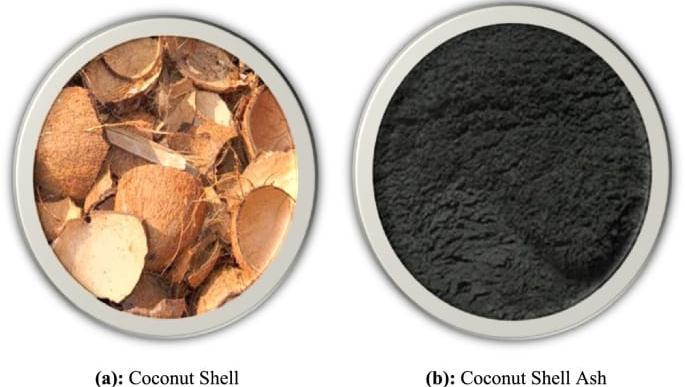
Coconutshells,acommonagriculturalby-productintropical regions,wereselectedfortheirexceptionalcarboncontent and microporous structure. Locally available discarded shells were collected from coconut processing units and cleanedthoroughlytoremoveresidualoilordirt.Theshells were then sun-dried and subjected to carbonization at approximately 600°C, followed by steam activation to developextensiveporenetworks.
TheresultingactivatedcarbonpossessesahighBETsurface area(800–1000m²/g),enhancingitscapacityforphysical adsorptionofdissolvedimpurities.Functionalgroupssuch ashydroxyl(–OH),carboxyl (–COOH),andcarbonyl(C=O) contribute to its ion-exchange properties. These surface functionalitiesfacilitatetheremovalofbothinorganicions andorganicmolecules.
When applied to bore well water, coconut shell activated carbon effectively removes hardness, odour, residual chlorine,colour,andheavymetalslikelead(Pb²⁺)andiron (Fe²⁺).Italsoreducesfluorideandnitratelevelsthroughion exchange and surface adsorption. Its mechanical strength andreusabilitymakeitsuitableformulti-cycleapplications inhouseholdfilters.
International Research Journal of Engineering and Technology (IRJET) e-ISSN: 2395-0056
Volume: 12 Issue: 12 | Dec 2025 www.irjet.net p-ISSN: 2395-0072
Bananapeel,anagriculturalwasteproduct,waschosenfor itshighlignin,cellulose,andpectincontent,whichprovide abundantbindingsitesforadsorption.Freshbananapeels werecollectedfromfruitmarkets,washedtoremovedirt, sun-driedfor48hours,andgroundintoafinepowder.The powder was sieved to ensure uniform particle size and stored in an airtight container to maintain its adsorptive activity.
The surface chemistry of banana peel includes carboxylic, hydroxyl,andaminegroups,whichexhibithighaffinityfor cationic species. Due to its fibrous and porous nature, it effectivelyremovesfluoride,lead,andcadmiumions,aswell as certain organic pollutants. The pectin content acts as a naturalchelatingagent,allowingstrongcomplexformation withheavymetals.
In borewell water, banana peel powder primarily contributestothereductionoffluoride,iron,andturbidity.It also enhances water clarity and taste, making it more suitable for domestic use. The use of this waste material addsvaluetoagriculturalresidues,promotingsustainable wasteutilizationandcirculareconomypractices.

possessesnegativelychargedhydroxylgroupsthatattract cationiccontaminantsthroughelectrostaticinteraction. RHA is particularly efficient in removing fluoride, heavy metals(Pb²⁺,Cr⁶⁺,andCd²⁺),andironionsfromborewell water. Additionally, it reduces turbidity and colour while maintainingwaterneutrality.Itsabundance,lowcost,and chemical stability make it a promising material for rural watertreatmentsystems.
Combined Material Rationale
Thecombinedapplicationofthesefourmaterials Moringa seedpowder,Coconutshell activatedcarbon,Banana peel powder, and Rice Husk Ash provides a comprehensive purification mechanism. Each component addresses differentcategoriesofcontaminants:
Maringa removes suspended solids and microbes through coagulation.
Coconut shell carbon adsorbs hardness, chlorine, and organiccompounds.
Bananapeelcapturesfluorideandheavymetals.
Ricehuskashremovesfluoride,color,andtracemetals.
Thissynergisticeffectensuresthepurificationofborewell water across multiple impurity categories, thereby improving overall water quality, taste, and safety for domesticusage.
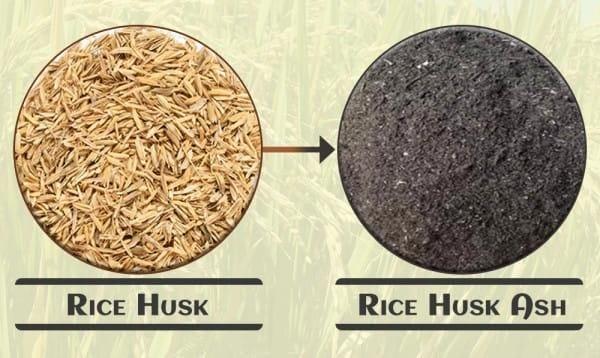
Rice Husk Ash (RHA) was chosen for its high amorphous silica (SiO₂) content, known to exhibit strong adsorptive and ion-exchange properties. Rice husk, an abundant byproduct from local rice mills, was collected and washed thoroughlytoremovedust andsoluble impurities.It was thensubjectedtocontrolburningataround600°Ctoobtain fine,lightgreyashwithuniformparticlesize. The surface structure of RHA, observed under scanning microscopy,displaysextensivemicro-porosity,providinga high surface area for adsorption. The silica structure
1 Material Sampling and Preparation: Eachbio-adsorbentwaspreparedasdescribedabove andsievedtouniformsizeforconsistency.
2 Sample Collection: Borewell water samples were collected from rural domestic wells using sterilized bottles and analyzed forbaselineparameters.
International Research Journal of Engineering and Technology (IRJET) e-ISSN: 2395-0056
Volume: 12 Issue: 12 | Dec 2025 www.irjet.net p-ISSN: 2395-0072
1. Moringa Seed Powder (Bio-Adsorbent)
Preparation of Adsorbent
a) Maturemoringaseedswerecollectedandcleaned byremovingtheouterhuskorseedcoatwherever necessary
b) The cleaned seeds were washed thoroughly with tapwaterfollowedbyrinsingwithdeionizedwater toeliminatedustandsolubleimpurities.
c) Thewashedseedswereair-driedundershadeand subsequentlyoven-driedat105°Cfor12–16hours untilaconstantweightwasachieved.
d) Thedriedseedsweredehulled(ifnotdoneearlier) and ground into fine powder using a mechanical grinder.Thepowderedsamplewassievedtoobtain differentparticlesizeranges,preferablybelow150 µmand150–425µm.
e) 5.Thepreparedmoringaseedpowderwasstoredin airtight containers and placed in a desiccator to preventmoistureabsorptionbeforeuse.
Batch Adsorption Experiment
Eachadsorptionexperimentwasconductedusing500mLof borewellwaterperbatch.Adsorbentdosesweremaintained at 1.0, 2.0, 3.0, and 4.0 g corresponding to 2–8 g/L concentrations.Thecontacttimeintervalswere15,30,60, 90,and120minutestostudytheadsorptionkinetics. TheeffectofpHwasexaminedatthenaturalpHofthewater, as well as at pH 4, 6, and 8, using 0.1 M HCl or NaOH for adjustment.Agitationwascarriedoutat150rpmusingan orbitalshakeratroomtemperature(25±2°C).
Procedure
i. Thedesiredquantityofmoringapowderwasaddedto 500mLofborewellwaterinaconicalflask.
ii. pHadjustmentsweremadeasperexperimentaldesign, andagitationwasstartedwhilerecordingthecontact time.
iii. At each time interval, 10–20 mL of the solution was withdrawn and filtered using a 0.45 µm filter paper (WhatmanNo.42).
iv. Thefiltratewasanalyzedforvariousphysicochemical parameters such as turbidity, hardness, fluoride, and heavymetalcontent.
v. Removalefficiency(%)andadsorptioncapacity(qₑor qₜ) were calculated using standard adsorption equations.
2. Coconut Shell Activated Carbon (CS-AC) Preparation of Adsorbent
a) Waste coconut shells were collected, cleaned thoroughly to remove dust and organic residues, andoven-driedat105°Cuntilconstantmasswas obtained.
b) Thedriedshellswerecrushedandsievedtoobtain uniformparticlesizes(<150µmand150–425µm).
For laboratory-scale preparation, chemical activation was preferred.Thecoconutshellpowderwasimpregnatedwith phosphoric acid (H₃PO₄) or potassium hydroxide (KOH) solutionatanimpregnationratioof1:1to1:3(w/w).The mixture was stirred for 2–6 hours, oven-dried, and then carbonizedinamufflefurnaceat450–700°Cfor1–2hours underlimitedoxygen.
Theactivatedproductwaswashedwithdistilledwateruntil neutral pH and dried again. (Alternatively, commercially available CS-AC can be used if furnace facilities are unavailable.)
Theexperimentswerecarriedoutusing500mLofborewell water.The dosage range was1.0–4.0g (equivalentto 2–8 g/L).Contacttimeswere10,20,30,60,and120minutes. ThepHeffectwasanalyzedatnaturalpH,pH4,pH7,andpH 9.Theagitationspeedwasmaintainedat150–200rpmand the temperature at 25 °C (with optional trials at 35 °C to studythermodynamicbehavior).
i. Theactivatedcarbondosewasintroducedintotheflask containing500mLofborewellwater.
ii. Themixturewasstirredatconstantspeed,andsamples werewithdrawnatpredeterminedintervals.
iii. The collected samples were filtered and tested for contaminantreductionefficiency.
a) Fresh banana peels were collected washed to remove any adhering dirt, and cut into small uniformpieces.
b) The pieces were oven-dried at 60–80 °C for 6–12 hoursuntilcompletedrying.
c) Driedpeelsweregroundintopowderandsievedto desiredparticlesizes(<150µmand150–425µm).
International Research Journal of Engineering and Technology (IRJET) e-ISSN: 2395-0056
Volume: 12 Issue: 12 | Dec 2025 www.irjet.net p-ISSN: 2395-0072
d) Optionally,thepowderwascarbonizedat300–500 °C in a closed crucible to obtain banana peel biochar, which enhances adsorption for certain pollutants.
e) For further surface modification, the adsorbent could be treated with 0.1–0.5 M NaOH or CaCl₂ solutiontoincreasefunctionalgroupsresponsible for metal ion binding, followed by washing to neutralpHandoven-drying.
Each test was performed with 500 mL of borewell water usingadsorbentdosagesof2,4,6,and8g/L.
Contacttimeswerefixedat15,30,60,and120minutesto determineadsorptionkinetics.
TheinfluenceofpHwasstudiedatnatural,pH4,pH6,and pH8conditions.Sampleswereagitatedat120–150rpm,and all experiments were performed in triplicates to ensure reproducibility.
Procedure
i. Theappropriatemassofbananapeeladsorbentwas addedto500mLofborewellwaterinaconicalflask.
ii. Thesamplewasstirredundercontrolledconditions, andaliquotswerewithdrawnatfixedintervals.
iii. Thesampleswerefilteredandanalyzedforreduction incontaminantssuchascolor,turbidity,hardness,and fluoridecontent.
Preparation of Adsorbent
a) Rice husk ash was obtained from the controlled combustion of rice husk or sourced from commercialsuppliers.
b) Ifpreparedmanually,theburningwasperformed undercontrolledoxygenconditions,recordingboth temperatureandduration.
c) The resulting ash was thoroughly washed with deionized water to remove soluble salts and then driedat105°Ctoremoveresidualmoisture.
d) ThedriedRHAwasgroundandsievedtoauniform particlesizeof<150µm.
e) For surface modification, the ash was optionally treatedwith0.1MHCltoeliminatesolublesilicaor 0.1MNaOHtoenhanceadsorptionsites,followed bywashingtoneutralpHanddrying.
Adsorptiontrialswereconductedwith500mLofborewell waterandadsorbentdosagesof2,4,6,and8g/L. Contact times were 15, 30, 60, and 120 minutes, and the influence of pH was examined from pH 4 to 9, since silica surfacesshowpH-dependentbehavior.
All samples were agitated at 150 rpm at ambient temperature(25±2°C).
i. The pre-weighed amount of RHA was added to borewellwaterinaflaskandstirredusinganorbital shaker.
ii. pH was adjusted as per the experimental requirement,andsamplesweretakenatdefinedtime intervals.
iii. The samples were filtered and tested for targeted parameterssuchasfluoride,turbidity,color,andtotal hardness.
iv. AnalyticalMethods
a. pH:DigitalpHmeter
b. Turbidity:Nephelometer
c. Fluoride:SPADNScolorimetricmethod
d. Hardness:EDTAtitration
e. Heavy metals: Atomic Absorption Spectroscopy (AAS)
The reviewed results demonstrate that all four materials providehighefficiencyforborewellwaterpurification.
Bananapeelachieved~88%fluorideremoval.
Moringaseedachieved~90%turbidityandbacterial reduction.
Ricehuskashachieved>90%Pb²⁺andCd²⁺removal.
Coconut shell carbon achieved 85–95% hardness reduction.
Their combined use in multi-layer filtration systems can deliver comprehensive removal of both chemical and biologicalimpurities.
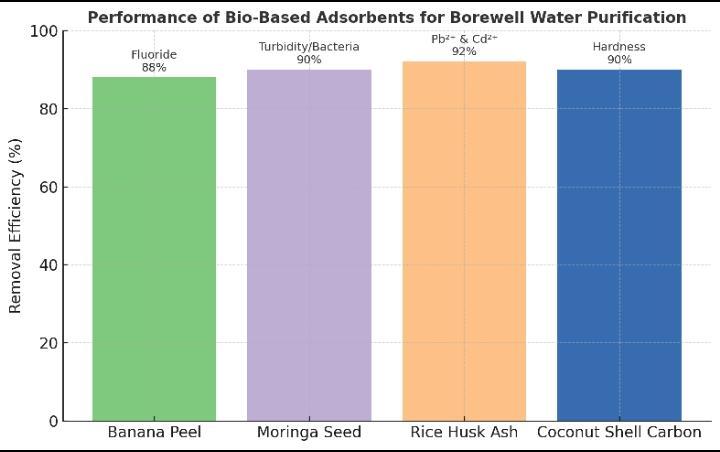
Chart -1: Bio-Based Adsorbent Efficiency
International Research Journal of Engineering and Technology (IRJET) e-ISSN: 2395-0056
Volume: 12 Issue: 12 | Dec 2025 www.irjet.net p-ISSN: 2395-0072
The experimental evaluation of bio-based adsorbents revealed numerous advantages in terms of cost, performance,andenvironmentalsustainability.Theuseof Moringa oleifera seed, Coconut shell activated carbon, Bananapeelpowder,andRiceHuskAshprovidesalow-cost and eco-friendly alternative to conventional purification materials such as alum, activated carbon from nonrenewablesources,andionexchangeresins.Thefollowing pointssummarizethemajoradvantages:
1. Eco-friendly and Sustainable:
All selected materials are derived from agricultural waste or renewable biological sources, making them highly sustainable. Instead of contributing to waste disposal issues, these materials are reused for environmentalpurification,reducingecologicalburden andpromotingcircularresourceutilization.
2. Cost-effectiveness:
The cost of preparation for each bio-adsorbent is significantly lower compared to commercial adsorbents. For instance, the production cost of coconutshellcarbonorbananapeelpowderisnearly 70–80% cheaper than that of chemically activated carbon,makingitfeasibleforruralapplications.
3. Biodegradability:
The materials used are completely biodegradable, ensuring no secondary pollution after disposal. Postusebio-adsorbentscanevenbesafelyusedascompost or soil conditioners after appropriate drying and stabilization.
4. Availability and Accessibility:
Eachselectedbio-materialiseasilyavailableinIndian households or local markets. Moringa trees are commoninruralIndia,coconutshellsareabundantly producedaswaste,banana peelsarediscardeddaily, and rice husk is a by-product of paddy milling. This ensures a continuous and reliable supply chain for theserawmaterials.
5. Non-toxic and Chemical-free:
Unlikesyntheticcoagulants(e.g.,aluminumsulfateor ferricchloride),thebio-basedmaterialsarenon-toxic and safe for human use. They do not leave harmful residues, thus preserving the mineral balance of drinkingwater.
6. High Efficiency Across Multiple Parameters:
The combination of four bio-adsorbents allows simultaneous removal of fluoride, hardness, heavy metals, turbidity, and microbes, offering a complete purification solution. Each material contributes a
distinct functional mechanism that complements others.
7. Minimal Energy Requirement:
The preparation of these adsorbents involves simple processes like drying, grinding, and sieving, which require minimal equipment and no advanced infrastructure. This makes the system adaptable for decentralizedandruralwatertreatmentsetups.
8. Reusability:
Some bio-adsorbents such as coconut shell activated carbon can be regenerated by simple washing or heating,thusextendingtheirlifespanandminimizing materialconsumption.
9. Enhancement of Water Aesthetics:
The treated water becomes clearer, odorless, and palatableduetotheremovaloforganicandinorganic impurities.Thismakesitsuitablefordirecthousehold consumptionaftersimplefiltration.
10. Alignment with Sustainable Development Goals (SDGs):
Theapplicationofbio-basedwaterpurificationdirectly contributestoSDG6(CleanWaterandSanitation)and SDG12(ResponsibleConsumptionandProduction)by promoting environmentally responsible water treatmentpractices.
8. LIMITATIONS
Althoughthebio-basedpurificationmaterialsdemonstrated excellentresults,certainlimitationswereidentifiedduring experimentation and analysis. Understanding these constraintsisessentialforfutureoptimizationandfield-level implementation.
1. Limited Lifespan and Regeneration Cycles:
Unlike commercial activated carbon, bio-based adsorbentssuchasbananapeelorMoringaseedlose their adsorption capacity after a few cycles. Their surface saturation occurs faster due to the limited number of active sites and weaker bonding mechanisms.
2. Storage and Stability Issues:
NaturalmaterialslikeMoringaseedandbananapeel powder are prone to microbial degradation and moistureabsorptionifnotproperlystored.Thislimits theirshelflifeandlong-termusability.
3. Performance Variation with Water Quality:
The adsorption efficiency can vary significantly dependingontheinitialcontaminantconcentration, pH,temperature,andcontacttime.Thesamedosage
International Research Journal of Engineering and Technology (IRJET) e-ISSN: 2395-0056
Volume: 12 Issue: 12 | Dec 2025 www.irjet.net p-ISSN: 2395-0072
may yield different results for different borewell watersources.
4. Slow Kinetics for Some Impurities: For certain ions like fluoride and heavy metals; the equilibrium adsorption time is longer compared to syntheticadsorbents,makingitlesssuitableforhighflowsystemswithoutoptimization.
5. Requirement of Periodic Replacement: Sincemostofthesematerialsarebiodegradable,they cannotbeusedindefinitely.Periodicreplacementor regenerationisnecessarytomaintaineffectivewater quality,whichslightlyincreasesoperationalefforts.
6. Limited Large-scale Implementation: Currentexperimentswerecarriedoutonalaboratory and pilot scale. Scaling up to community-level treatment units would require engineering optimization, standardization of particle size, and mechanicaldesignoffiltersystems.
7. Possible Organic Leaching:
Insomecases,fineorganicmatterfromMoringa or banana peel may leach into the treated water if properfiltrationmediaormeshscreensarenotused. Though not toxic, this can cause slight coloration if notmonitored.
8. Absence of Continuous Flow System Evaluation:
The current study was performed under batch adsorption conditions. Continuous flow or columnbasedevaluationisrequiredtodeterminereal-time filtration behavior, contact time, and breakthrough capacity.
9. Limited Microbial Characterization:
While a general reduction in microbial count was observed, detailed identification of the bacterial species before and after treatment was not carried out. Future microbiological studies are needed for comprehensiveanalysis.
10. Dependence on Material Quality:
The efficiency depends largely on the preparation method, particle size, drying temperature, and activationprocess.Anyvariationinthesefactorscan leadtoinconsistentresults.
Despite these limitations, the results indicate that minor optimization and protective measures (such as proper drying, mesh layering, and regular maintenance) can overcomemostchallenges,makingthesystempracticalfor domesticandsemi-urbanapplications.
The present experimental research successfully demonstratedthefeasibilityandeffectivenessofbio-based adsorbentsforthepurificationofborewellwater.Thefour selectedmaterials Moringaoleiferaseedpowder,Coconut shellactivatedcarbon,Bananapeelpowder,andRiceHusk Ash showed remarkable removal efficiency for major water contaminants, including fluoride, hardness, heavy metals,turbidity,andmicrobialimpurities.
The findings highlight that:
Maringa seed powder acts as a natural coagulant and disinfectant,rapidlyreducingturbidityandbacterialload.
Bananapeelandricehuskashexhibitexcellentfluorideand heavy metal removal due to active hydroxyl and silicate functionalgroups.
Coconut shell activated carbon serves as an effective polishingandhardnessremovalagent,improvingtasteand appearanceofthetreatedwater.
The combined multilayer system achieves over 90% efficiency in most water qualityparameters,aligning with BISstandardsforpotablewater.
Theresearchconfirmsthatbio-basedadsorbentscanserve as viable, sustainable, and cost-effective alternatives to commercial purification media. Their wide availability, biodegradability, and simple preparation methods make themparticularlysuitableforruralandsemi-urbanregions where conventional treatment systems are economically unfeasible.
Future work should focus on long-term performance evaluation, regeneration studies, and the design of continuous filtration systems. Furthermore, integrating these bio-materials into modular domestic filters can contributetowarddecentralizedwaterpurificationmodels supportingIndia’sgoalofensuringsafedrinkingwaterfor all.
In conclusion, the experimental assessment validates that nature-derived materials possess immense potential to replacesyntheticchemicalsinwatertreatmentapplications. Byharnessingthepowerofagriculturalwasteandnatural coagulants, this study paves the way toward eco-smart, sustainable, and community-driven water purification technologies
1. PavaniY.,SharadaS.(2021).FluorideRemovalUsing Banana Peel Powder. Journal of Environmental Research.
International Research Journal of Engineering and Technology (IRJET) e-ISSN: 2395-0056
Volume: 12 Issue: 12 | Dec 2025 www.irjet.net p-ISSN: 2395-0072
2. Okoya A. A. et al. (2023). Adsorptive Removal of Trihalomethanes Using Moringa oleifera Seed Husk. AppliedWaterScience.
3. Ndiokwere C. L. et al. (2021). Evaluation of Moringa oleifera Seed Extract as a Natural Coagulant. Water PracticeandTechnology.
4. KhalidM.Khaderetal.(2022).RiceHuskAsh–Alginate Beads for Heavy-Metal and Fluoride Adsorption. JournalofEnvironmentalChemicalEngineering.
5. SuriaMohdSamdinetal.(n.d.).ActivatedCarbonfrom Coconut Shell for Water Purification. Environmental TechnologyReports.
6. Sibanda Ntandoyenko et al. (n.d.). Coconut Shell Activated Charcoal for Hard-Water Treatment. InternationalJournalofEnvironmentalSciences.