
International Research Journal of Engineering and Technology (IRJET) e-ISSN: 2395-0056
Volume: 12 Issue: 12 | Dec 2025 www.irjet.net p-ISSN: 2395-0072
International Research Journal of Engineering and Technology (IRJET) e-ISSN: 2395-0056
Volume: 12 Issue: 12 | Dec 2025 www.irjet.net p-ISSN: 2395-0072
Chaitra K G1 , Adarsh P2 , Shreyas A3 , Thippesh Babu L4
1Asssistant Professor, Information Science and Engineering, Bapuji Institute of Engineering and Technology, Davangere, affiliated to VTU Belagavi, Karnataka, India.
2Bachelor of Engineering, Information Science and Engineering, Bapuji Institute of Engineering and Technology, Karnataka, India
3Bachelor of Engineering, Information Science and Engineering, Bapuji Institute of Engineering and Technology, Karnataka, India ***
Abstract-Traditional virtual pet applications require repetitive programming, limited responses, and lack real understanding, which makes user interaction less engaging and often boring. These apps usually depend on simple mimicry and do not provide meaningful conversations or adaptive behavior. Users find it difficult to enjoy long-term interactionbecausethecharactercannotthink,remember,or respondintelligently.Tosolvetheseproblems,anAI-powered virtual companion system called AI Charming Tom is developed. Users can speak or type anything, and the AI automatically processes the voice, converts it into text, understands the meaning, and generates an intelligent, context-aware reply. The system also includes memory and emotionsimulation to make conversations more natural and personalized.Thismakesthevirtualcharactersmarter,more interactive, and more enjoyable for users
Key Words: Artificial Intelligence, Intelligent ConversationSystem,Speech-to-TextProcessing,Smart Reply Generation, Virtual Companion, Conversational Memory, Adaptive Interaction.
1.
Virtualpetandentertainmentapplicationstraditionallyrely onpre-programmedresponses,simpleanimations,andbasic mimicry, making interactions limited, repetitive, and less meaningfulforusers.Thesesystemslackrealunderstanding, memory,andadaptability,which reduceengagementover time.Usersoftenexpectnatural,intelligentconversations, butconventionalvirtualcharactersfailtoprovidecontextaware replies or emotional interaction, highlighting the limitationsoftraditionaldigitalcompanions.
With the growing demand for smart, conversational, and human-likevirtualassistants,artificialintelligence(AI)has begun transforming interactive digital experiences. AI technologies now enable systems to understand speech, interpret user intent, generate meaningful responses, and adapt based on past interactions. This creates more personalized, realistic, and emotionally engaging communication.
The project introduces AI Charming Tom, an AI-powered virtual companion designed to offer intelligent and
interactiveconversations.Userscanspeakortypeanything, and the system automatically converts speech into text, understands the context, and generates smart, natural responses. It also simulates emotions and stores conversationalmemorytomakeinteractionsmorepersonal and dynamic. This innovative solution enhances engagement, reduces repetitive behavior, and bridges the gap between simple mimicry and true conversational intelligence.
The AI Charming Tom system is an intelligent virtual companion developed using Artificial Intelligence and MachineLearningtoprovidesmart,engaging,andhumanlike interactions. Its objective is to assist users in having meaningful conversations through an automated and adaptive communication platform. Traditional virtual pet applications rely on fixed responses, simple mimicry, and limited interaction, requiring repetitive manual programmingandofferingminimalconversationaldepth.To overcometheselimitations,theproposedsystemdeliversan AI-drivensolutioncapableofunderstandinguserinputand generatingintelligentresponseswithinseconds.
Thesystemallowsuserstospeakortypemessages,which arethenprocessedthroughAI-basedalgorithmstoidentify speech patterns, interpret intent, analyze context, and understand user emotion or conversational cues. After processing,itgeneratesaccurate,context-aware,andnatural repliesinsteadofsimplerepetitivemimicry.Thisprovides userswithdynamic,personalized,andengaginginteractions withouttheneedforhumanintervention.
Developed using Python, the system incorporates Natural Language Processing (NLP), speech recognition, and deep learning models for intent detection, smart response generation,andmemory-basedconversationmanagement.It alsoincludesasecureauthenticationmoduleanddatabase support for saving previous chats, user preferences, and character behavior history. By enhancing intelligence, reducingrepetitiveinteractions,andcreatinganemotionally engagingexperience,theAICharmingTomsystemoffersa smart, efficient, and user-friendly approach to virtual companionship.
International Research Journal of Engineering and Technology (IRJET) e-ISSN: 2395-0056
Volume: 12 Issue: 12 | Dec 2025 www.irjet.net p-ISSN: 2395-0072
Usersexperiencelimitedinteraction,repetitiveresponses, and lack of intelligent communication because of the constraints in current virtual pet applications.
• Virtual characters work on fixed, pre-programmed responses.
• Interactions are repetitive, predictable, and lack real understanding.
• Existing talking apps provide only mimicry without intelligent replies.
• No real-time conversation, memory, or emotional adaptationforusers. Thesearethefeaturesandlimitationsofexistingplatforms.
An AI powered system transforms interior images into newstylesusingdeeplearningandStableDiffusionmodel v1.5.
• AI uses deep learning to automatically restyle interiorphotos.
• StableDiffusionv1.5isusedtochangeimagesina realisticway.
• Usersprovidestylesuggestionsandpostpicturesof theirrooms.
• Createsupdatedimagesinstantly.
• Increasescreativityandsavestime.
1.4 Objectives
•TodevelopanAI-basedvirtualcompanioncapableof understanding user input and generating intelligent, context-aware responses.
•ToimplementadvancedNLP,speechrecognition,and text-to-speechmodelsforsmooth,natural,andhumanlike conversations.
•Tocreateaneasy-to-useinterfacethatallowsusersto speak or type messages and receive smart, real-time replies.
•Toenhanceuserinteractionbyaddingconversational memory,emotionalresponses,andadaptivelearningto makeconversationsmoreengagingandpersonalized.
2. LITERATURE SURVEY
A Literature Survey provides an overview of existing research, technologies and methods related to Artificial intelligence driven interior image redesign It examines previous studies on deep learning, image to image generation,anddiffusionmodelstoidentifycurrenttrends, gapsandadvancementinautomatedinteriorstyling.Ithelps in understanding the foundation and supporting the developmentofproposedArtificialintelligencebasedsystem.
Title Authors Methodology Gap
Conversation alAgent UsingNLP
Speech Enabeled virtual Assistant UsingDeep Learning
AI-Driven Chatbotfor Personalaize dInteraction
Virtual Talking Avatar System
R.Sharma (2018) UsesNLP techniquesto processuser textand generaterule basedresponse Responses werestaticand lacked emotionalor contextual understanding.
K.Rao (2020) Integrates speech-to-text anddeep learning modelsfor converting speechinto commands. Systemwas commandbased,not capableoffreeflowingnatural conversation.
Meera Gupta (2021) Usesmachine learningto personalize chatbotreplies basedonuser history. Noreal-time emotion simulationor virtual character interaction.
D.Patel& A.Naik (2019) Discusses animated avatarsthat mimicvoice andfacial expressions. Focusedon mimicry,not intelligent conversationor memory-based interaction.
ThissectionhighlightsthegapsthatdrivetheproposedAI powered virtual interior design system and provides an overviewofsampleworkineachfield.
The system requires basic user operations such as registration, login, authentication, message input (text or voice), intelligent response generation, data storage, and secure logout. It also demands a simple and user-friendly interfacewithfastresponsetime,securecredentialhandling, modularandmaintainablecode,portabilityacrossoperating systems supporting Python and Gradio, and scalability for addingfutureconversationaloranimationfeatures.
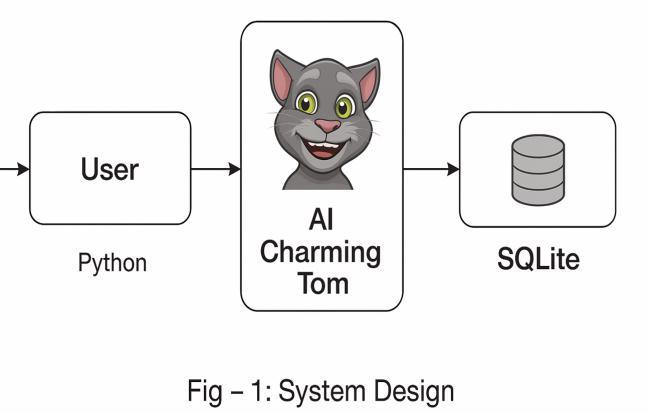
ThesystemisdesignedtorunonWindows10/11using Python3.7orhigher,withessentiallibrariessuchasGradio, sqlite3,os,sys,SpeechRecognition,andtransformersforNLP processing, and uses SQLite as the primary database, developed within Google Colab. It requires at least a dualcoreprocessor,4GBRAM,around1GBoffreestoragespace, andoptionallyamicrophoneforreal-timevoiceinputanda GPU to improve AI-based speech and text processing performance.
International Research Journal of Engineering and Technology (IRJET) e-ISSN: 2395-0056
Volume: 12 Issue: 12 | Dec 2025 www.irjet.net p-ISSN: 2395-0072
ThesystemisimplementedusingPythonwithGradioforuser interface and SQLite for data storage. Users upload room images,whichareprocessedusingAImodels(torchandPIL) togeneratedesignrecommendations.Themodularstructure ensureseasyintegrationofadditionalfeaturesandsmooth executionacrosssupportedoperatingsystems.
Thesystemsuccessfullygeneratedintelligentandcontextaware responses based on user text and voice inputs, delivering accurate, meaningful, and natural interactions. User operations such as login, message input, voice processing,andresponseretrievalperformedsmoothlywith fast processing times. Overall, the system delivered consistent and reliable conversational outputs across multipletestscenarios. Performanceevaluationshowedthatthesystemresponded withinsecondsforallmajoroperations,meetingthedefined non-functional requirements. User testing indicated high satisfactionwithinterfacesimplicity,conversationalclarity, and response quality. The system demonstrated strong stability,portability,andscalabilityduringbothfunctional andstresstesting,ensuringaseamlessandengagingvirtual companionexperience.
ThedevelopedsystemdemonstratesthatanAI-basedvirtual companion can significantly enhance user interaction by providingintelligent,context-awareconversationsthrough automated speech/text processing and smart response generation.Theresultsshowthatthesystemiseasytouse, offers quick replies, and maintains stable performance across various test scenarios. Although the current model delivers meaningful and natural conversations, further enhancements such as adding emotional animation, expandingconversationalmemory,improvingNLPaccuracy, and integrating more interactive features can make the systemevenmoreengaging,adaptive,anduser-centric
Theproject effectivelydemonstrateshowautomationand artificialintelligencecantransformvirtualinteractionintoa more intelligent and engaging experience. The system provides a modern approach to digital companionship by integrating Python, Gradio, NLP models, and speechprocessing tools. The ease with which users can type or speaktothesystemmakestheinteractionseamless,natural, andenjoyable.Withouttheneedformanualprogrammingor predefinedscripts,thesystemquicklyanalyzesuserinput and generates meaningful, context-aware replies that enhanceconversationquality.Itsuser-friendlyinterfaceand stableperformancemakeitsuitableforeverydayuserswho seek smart, real-time virtual assistance or entertainment. The automated conversational pipeline significantly improves interaction efficiency and reduces repetitive behaviorfoundintraditionalvirtualpetapplicationsOverall, the project meets itsobjectivesof improving accessibility, reducing response time, and promoting innovation in conversational It provides a smart,adaptive, andintuitive platformthatmakesintelligentvirtualcompanionshipboth practicalandenjoyableforusers.
[1] E.Balagurusamy,ProgramminginANSIC,8thed.New Delhi,India:McGrawHill,2019.
[2] “Python SpeechRecognition Library – Official Documentation,”PythonSoftwareFoundation,2024.
[3] “SQLite Database Engine – Official Documentation,” SQLite.org,2024.
[4] “gTTS(GoogleText-to-Speech)Documentation,”Python Community,2024.
[5] “Natural Language Processing with Transformers,” HuggingFace,2023.
[6] K.Rao,“Speech-EnabledVirtualAssistantsUsingDeep Learning,”InternationalJournalofComputerApplications, 2021.
[7] M. Gupta, “AI-Driven Chatbots for Personalized Interaction: A Review,” International Journal of Advanced Computing,2022.
[8] OpenAI, “ChatGPT and Conversational AI Models –TechnicalOverview,”2024.
[9] Google,“Dialogflow–ConversationalAIDevelopment Platform,”2024.
[10] “Microsoft Azure Cognitive Services – Speech and LanguageTools,”MicrosoftDocs,2024.