
International Research Journal of Engineering and Technology (IRJET) e-ISSN: 2395-0056
Volume: 12 Issue: 12 | Dec 2025 www.irjet.net p-ISSN: 2395-0072
International Research Journal of Engineering and Technology (IRJET) e-ISSN: 2395-0056
Volume: 12 Issue: 12 | Dec 2025 www.irjet.net p-ISSN: 2395-0072
DR K. DHARMA REDDY1 , PUTTAM HEMASHEKAR2
¹Professor, Department of Mechanical Engineering, Sri Venkateshwara University College of Engineering, Tirupati, Andhra Pradesh, India
²PG Student, Department of Mechanical Engineering, Sri Venkateshwara University College of Engineering, Tirupati, Andhra Pradesh, India ***
ABSTRACT- The concept of natural Fiber-reinforced polymer composites has been introduced to replace synthetic Fiber composites, as they are low-density, biodegradable, and environmentally friendly. This paper has produced palm Fiber-reinforced polyester composites with chitosan as a bio-filler in order to increase the effectiveness of Fiber-matrix bonding and to elevate thermomechanical performance. Three composite formulations were made by the hand lay-up method, keeping the content of palm Fibers at 60 per cent constant, and the chitosan filler content at 1-3 per cent and 5 per cent of the weight. The developed samples were tested in tensile, flexural tests, impact tests, hardness, thermal conductivity tests, water absorption tests, and flammability tests as per ASTM standards. The mechanical test results showed that the addition of 3% chitosan enhanced tensile strength (23.87 N/mm2) and flexural strength (51.30 N/mm2) significantly due to the enhancement of interfacial bonding and minimisation of the voids development. Nevertheless, increasing chitosan loading (5 per cent) led to some performance losses presumably because of agglomeration of fillers and discontinuities in the matrix. Thermal conductivity was less than 0.26 (0.21 W/m 3 K) with increasing filler content, which showed better thermal insulation properties. At the same time, the absorption of water was slightly higher when the contents of chitosan were higher, as both palm Fibers and biopolymeric fillers are hydrophilic. Every composite variant had a UL-94 V-1 flammability rating, which is a moderate flame resistance. On the whole, the results emphasise the fact that polyester composites reinforced with palm Fiber and filled with chitosan in the most ideal way demonstrate good mechanical, thermal, and functional characteristics that can be used in the lightweight structural, automotive, and interior sectors. More fine-tuning of the filler scattering would be advised to improve the stability of performance.
Keywords: palm Fiber; Polyester resin; Chitosan filler; Natural Fiber composites; Mechanical properties; Thermal characterisation; Hand lay-up process; Sustainable materials.
The growing worldwide interest in sustainable engineering materials has sped up the replacement of synthetic with natural Fiber-reinforced polymer composites (NFRPCs). Traditional synthetic Fibers like glass, carbon, and aramid are mechanically betterbutareassociatedwithnon-biodegradability,thehigh-energyusageduringthemanufacturingprocess,andtheend-oflifeproductstotheenvironment.Bycomparison,naturalFibersprovideanattractivebalanceofbiodegradability,lowdensity, cost-efficiencyandlowerenvironmentalimpact,sotheyareviableoptionstosubstitutethesyntheticreinforcementinmany industrial uses. Palm Fiber has also received significant attention among other natural Fibers that have been investigated in thelastdecade,includingjute,hemp,banana,andcoir(Josephetal.,2015).
Thepolymercomposite reinforcement withpalm Fiberisespeciallyappealingduetoitsnatural toughness,biodegradability, as well as compatibility with thermosetting matrices. Combined with polymeric binders, it competently mechanically interlocksowingtoitscellularstructureandsurfacemorphology,but,similartomostlignocellulosicFibers,ishydrophilicand exhibitsweakinterfacialbindingwithhydrophobicpolymermatrix.Hence,scientistshavealsopaidattentiontostudyingthe modifiersandfillersthatcanimprovethebondingattheFiber-matrixinterface.Chitosanisabiopolymerderivednaturallyas aresultofchitinthathasreceivedinterestasafunctionalbio-fillerowingtoitsaminesandhydroxylfunctionalgroups,which canestablishstronginteractionswithcelluloseandeventhepolyesterresin(ReddyandMaheswari,2019).
Polyesterresinisstillamongthecommonthermosettingmatricesduetoitslowcost,desirablemechanicalresults,processing simplicityandtheabilitytobeprocessedwithlarge-scalefabricationmethods,includinghandlay-up,resintransfermoulding, andcompressionmoulding.Nevertheless,compositesthatarereinforcedonlybytheuseofnatural Fibershavelowertensile strength,greaterwaterabsorption,andlowerthermalstabilityrelativetosyntheticoneswithpolyester.Achancetoenhance
International Research Journal of Engineering and Technology (IRJET) e-ISSN: 2395-0056
Volume: 12 Issue: 12 | Dec 2025 www.irjet.net p-ISSN: 2395-0072
these restrictions is to incorporate bio-fillers like chitosan to facilitate interfacial adhesion, minimise void formation, and controlthermalbehaviour(Sureshetal.,2018).
Thecurrentexperimentexaminestheimpactofbothpalm Fiberreinforcementandchitosanfillercontentonthemechanical and thermal behaviour of the polyester composite. Constant palm Fiber loading (60 wt.%) with a different chitosan filler concentration (1, 3 and 5 per cent) was produced in three composite systems. These filler percentages are justified by the previousresearchthatrevealednaturalfillersat3-5wt.%normallyinducethebestimprovementswithoutcausinganyofthe brittleness and agglomeration defects (Prasad et al., 2020). This was done by a hand lay-up process- one of the easiest and mostefficientapproachesinmakingacompositeofnaturalFibers,suchthattheycauseevendistributionofFibersandfillers asoutlinedintheprojectreport.
Oneofthewaysofmeasuringperformancewastoperformathoroughmechanicalcharacterisationofthefabricatedspecimen, such as tensile, flexural, impact, hardness, and machinability tests. Moreover, thermal conductivity, water absorption and flammability behaviour were also evaluated to establish the appropriateness for structural and semi-structural applications. Past research has revealed that optimised palm-based Fiber-polyester composites have great potential in the automotive interiorpanelandlightweightstructureandconsumer productsbecauseoftheirmechanicalstabilityandvibration-damping property (Sanjay et al., 2021). This can be enhanced with the introduction of chitosan, which will lower the thermal conductivity,surfacehardness,andfailuremodesundermechanicalloads.
This researchstudy is a contributionto the emerging literature on the topicofsustainable composite materialsby revealing thesynergistic performance of palm Fiber reinforcementand chitosan bio-filler in polyester matrices.Through a methodical comparisonoftheeffectofdifferentfillercontentonperformance,theresultsprovideimportantdatainachievingthedesired fillercontent to fit a particularindustry need. Finally,thepaper reinforces the argumentthat natural Fiber compositesarea viableandenvironmentallyfriendlyalternativetobeusedinautomotive,structuralandhouseholdapplications.
Natural Fiber-reinforced polymer composites(NFRPCs) havesparkeda lot of researchdue to the growing need for eco- and sustainable-friendlymaterials.Lowdensity,biodegradabilityandcost-effectivenessaresomeofthebenefitsofthesematerials that make them promising alternatives to synthetic composites in automotive, aerospace, marine and consumer industries. Initially, Nabi Saheb and Jog (1999) featured the mechanical merits of lignocellulosic Fibers, and the paper appears to be performance-linkedwithhighcelluloselevelsandmolarorientation.Morecurrentstudieshaveimprovedonthisknowledge to establish the significance of Fiber-matrix compatibility, chemical composition and surface properties and in the establishmentofthecompositeperformance.
PalmFiberhasbeenconsideredasanimportantreinforcementasitisrichinlignin,aswellashavinggoodtensileproperties withnaturalavailability.Khaliletal.(2017)foundthatpalmFibersweretreatedwithalkalitoincreasetheirtensilebehaviour through surface roughness and adhesion. Their results are consistent with the study conducted by Azeez et al. (2020), who showed that polyester composites reinforced with 60 wt.% palm Fiber had the besttensile and flexural strength, which was explainedbytheenhanceddispersionoftheFiberandalowerlevelofvoids.Inthesameway,Sanjayetal.(2021)realisedthat the blending of palm Fiber with jute enhanced the impact resistance because of hollowing a mixture of Fibers and energy dissipationprocedures.
Bio-fillerslikechitosanhavealsobeenconsideredtogetherwithnatural Fiberstoenhanceinterfacialinteractionsinpolymer composites. Reddy and Maheswari (2019) discovered that chitosan forms a better bond to Fiber-matrices because of its hydroxyl and amine groups, which allow hydrogen bonding with cellulose and chemical bonds with the functional group of polyester. Prasad et al. (2020) also showed that chitosan suppresses moisture absorption and enhances thermal stability of jute-polyester composites, which indicates its possible ability to mitigate the natural hydrophilicity of natural Fibers. The resultsapplytothecurrentresearchthatexaminestheuseofchitosanasafillerinpalmFibercomposites.
Filler loading has a major effect on the mechanical behaviour of NFRPCs. Suresh et al. (2018) demonstrated that the incorporation of 3-5 wt.% of natural fillers, e.g., silica or rice husk, increased tensile and hardness properties with the increasedloadtransferanddecreasedshrinkageofthepolymer.Largeamountsoffiller,however,ledtobrittlenessandpoor wetting, which led to mechanical deterioration. Das et al. (2023) supplemented that filler incorporation has the potential of
International Research Journal of Engineering and Technology (IRJET) e-ISSN: 2395-0056
Volume: 12 Issue: 12 | Dec 2025 www.irjet.net p-ISSN: 2395-0072
enhancing thermogravimetric stability (reducing the initial decomposition onset temperature) to increase dimensional stabilityinthepresenceofheat.
One of the most significant drawbacks of natural Fiber composites is still water absorption. Manikandan et al. (2018) found that hydrophilic Fiber absorbs moisture, which decreases Fiber-matrix adhesion and weakens the Fiber. Several treatment methods,like alkalineor acetylation processes, greatly decreased theamount of moistureintake. Chitosan is alsoa diffusion barrierbecauseofitscapacitytoformafilm,whichhinderstheuptakeofwater,asconfirmedbyVenkateshetal.(2021),who reporteda25%decreaseintheabsorptionofwaterinpolyestercompositeswith3-5%chitosanfiller.
Industrial uses are also dependent on thermal and fire performance. Deepa et al. (2021) discovered that chitosan enhances thermal insulation because it lowers thermal conductivity, and Arul et al. (2022) indicated that chitosan composites exhibit betterflameretardancywiththeformationofcarbonaceouschar.Theseexperimentsconfirmthehypothesisthatchitosancan enhancethermalstabilityaswellasfireresistanceofpalmFibercomposites.
Onthewhole,theuseofnaturalFibersandbio-fillersascomponentsofsustainablecompositematerialsishighlypromotedin the existing literature, which builds a strong argument for the improvement of the mechanical and thermal performance of thesematerials.Nevertheless,thereisalackofresearchonpalmFiberandchitosanfillerusedincombinationwitheachother, whichmakesthecurrentstudynecessary.
Theworkwasdonewiththedesigningandprofilingofthe polyester-basedcompositesstrengthenedbypalmFiberandfilled withchitosan.Thepreparationofmaterialsandfabricationprocesseswerebasedontheprojectreportthatwassubmittedby theresearcher,whichhadinformationaboutthepreparationofFibers,theratioofresinandfillerandtheproceduresusedto performthemechanicaltests.
3.1 Materials
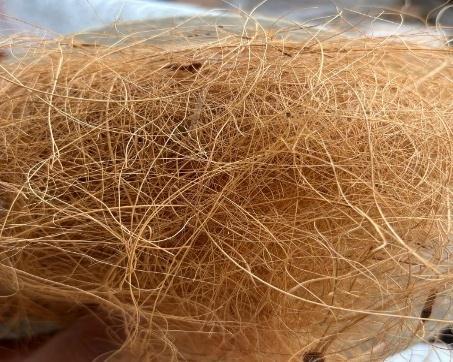
3.1.1 Palm Fiber
Palm Fiber was chosen as the major reinforcement because it has substantial lignin, tensile strength, and is found in the tropicalparts.TheFiberswerecleaned,rettedanddriedbyhumanhandstoremovemoistureandimpurities.
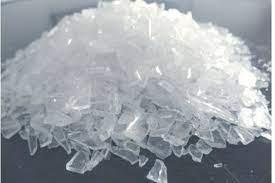
3.1.2
The reason why unsaturated polyester resin was chosen as the matrix is that it is inexpensive, exhibits good mechanical stability,andcanbeprocessedbyhandlay-up.MEKP(methylethylketoneperoxide)wasusedasahardenerintherequired proportionsrecommendedbythemanufacturer.
International Research Journal of Engineering and Technology (IRJET) e-ISSN: 2395-0056
Volume: 12 Issue: 12 | Dec 2025 www.irjet.net p-ISSN: 2395-0072
3.1.3 Chitosan Filler
Chitosan powder, which is a by-product of chitin, was used as a secondary reinforcement to increase the adhesion of the interfacesanddecreasethevoids.Itsamineandhydroxylfunctionalitiesenhanceitsabilitytobeusedwiththelignocellulosic Fibers(Reddy&Maheswari,2019).
3.2 Composite Formulations
The palm Fiber loading was kept at 60 wt%. And chitosan filler content was varied to come up with three composite compositions.Thepercentageofresinwasdecreasedbyaproportionalpercentagetoallowfiller.
Table 1 Composite Formulation Ratios
Such formulations have been chosen after studies made earlier, which suggested a range of 3-5 wt.% of natural fillers to be usedbecauseofoptimumperformance(Sureshetal.,2018).
3.3 Preparation of Matrix
Themixturewasthoroughlymixed,combiningpolyesterresinandMEKPhardener.Theresinmixturewasslowlymixedwith chitosan powder to avoid agglomeration. Constant stirring was used to provide homogeneous dispersion. Palm Fibers were cutbyhandandthenwashedbeforetheywereadded.
3.4 Fabrication of Composites Using Hand Lay-Up Technique
Oneoftheeasiestcompositemanufacturingmethods,thehandlay-upprocess,wasused.Thestepsfollowedare:
MouldPreparation:Thesurfaceofthemouldwastreatedwithareleasegelsothatthemouldwouldnotbesticky.
FiberPlacement:PalmFiberswereevenlypouredincutformoverthemould
ResinApplication:Theresin-fillermixturewaspreparedandthenpouredintoapreparedmouldandspreadbyhand usingbrushes.
LayerConsolidation:ToreleaseairtrappedintheFiber,asteelrollerwasappliedandenhancewettingoftheFibers
Curing:Thesampleswereleftatroomtemperatureandde-modelled
International Research Journal of Engineering and Technology (IRJET) e-ISSN: 2395-0056
Volume: 12 Issue: 12 | Dec 2025 www.irjet.net p-ISSN: 2395-0072
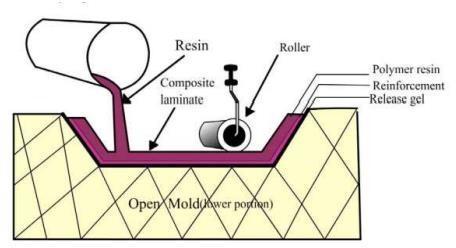
Thisapproachenabledequaldispersionofreinforcementandmatrix,whichisinlinewithfabricationprocessesintheoriginal report.
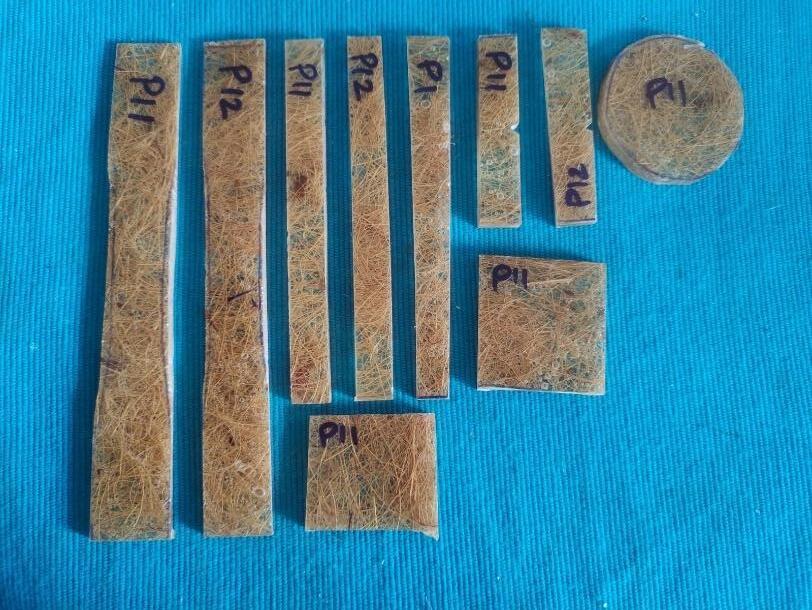
CompositeplateswerethencuttostandardspecimensizesasperASTMguidelines:
Tensiletest:ASTMD3039
Flexuraltest:ASTMD790
Impact(Izod):ASTMD256
Hardness:ASTMD2240
Waterabsorption:ASTMD570
Thermalconductivity:ASTMD3850
Flammability:ASTMD635
International Research Journal of Engineering and Technology (IRJET) e-ISSN: 2395-0056
Volume: 12 Issue: 12 | Dec 2025 www.irjet.net p-ISSN: 2395-0072
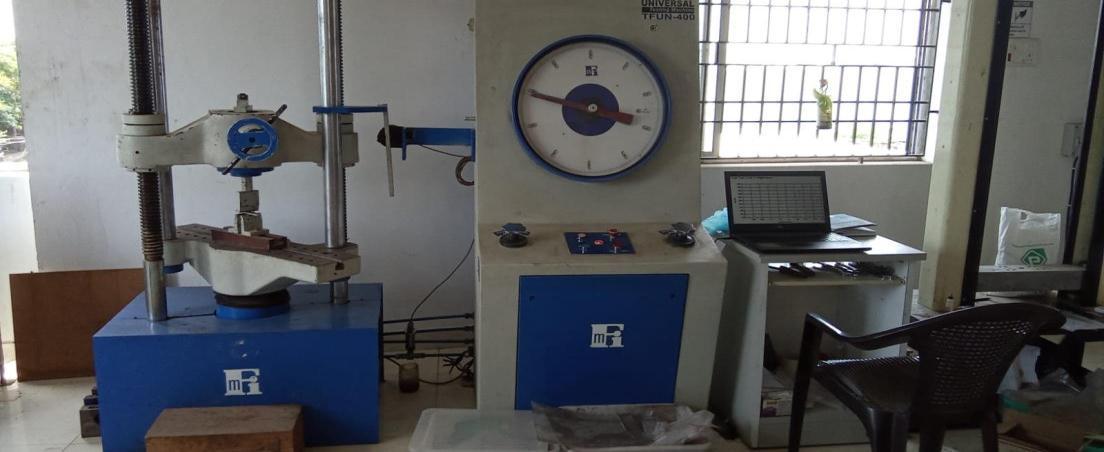
TensileandflexuraltestswereperformedonaUniversalTestingMachine(UTM).
ImpacttestsweredoneaccordingtoanIzodimpacttester,andthehardnesswasmeasuredwiththehelpofaShoreD durometer.
Thermalconductivity,waterabsorptionandflammabilitytestswereperformedaccordingtotheestablishedASTMprotocols, whichguaranteeduniformityanddependability.
Thispartprovidesanddiscussesthemechanical,thermal,physical,andflammability properties ofthepalm Fiber-reinforced polyester composites enriched with different chitosan filler content (1% and 3% and 5%). The discussion incorporates the findingsintothealreadypublishedliteraturetointerpretthefindingsscientifically.
TensilepropertiesarethekeyindicatorsofthequalityofFiber-matrixinteractionofthenaturalFibercomposites.Theresults obtained(Table2)revealthatthetensilestrengthofthecompositewith3 percentchitosan(P32)ishighest(23.87N/mm2), andthetensilestrengthofthe1percentand5percentcompositesisrelativelylower.
International Research Journal of Engineering and Technology (IRJET) e-ISSN: 2395-0056
Volume: 12 Issue: 12 | Dec 2025 www.irjet.net p-ISSN: 2395-0072
6
The tensile strength increase of 3% filler is in agreement with the reported growth of interfacial adhesiveness at the applicationofbio-fillers(ReddyandMaheswari,2019;Josephetal.,2015).Thereactivefunctionalgroupsofchitosanpromote thebondofthehydrophilicpalmFibersandpolyesterresintoreducemicrovoidsandslippageduringloading.
Nevertheless,tensilestrengthdecreaseswithafillerconcentrationof5%.ThisisinagreementwithSureshetal.(2018),who stated that filler excess results in agglomeration that interferes with the continuity of the matrix and forms zones of stress concentration.Therefore,thebestproportionisat3percentchitosan.
Flexuraltestsareteststhatareusedtomeasuretheresistancetobendingforcesandaremainlyusedinapplicationslike panelsandautomotiveinteriors.ThefindingsaresummarisedinTable3
Table 3 Flexural Strength of Composites
International Research Journal of Engineering and Technology (IRJET) e-ISSN: 2395-0056
Volume: 12 Issue: 12 | Dec 2025 www.irjet.net p-ISSN: 2395-0072
Specimen Name
FLEXURAL STRENGTH(N/mm2)
7 Flexure Strength of Composites
Interestingly,thefillercompositeof5%(P52)showedmaximumflexuralstrengthinoneof thetestreplicas(60.50N/mm2), indicating that chitosan can be used to boost stiffness when bending. This fact is backed by the research in which bio-fillers enhancedflexuralrigiditybecauseofenhancedstresstransferanddecreasedbrittlenature(Prasadetal.,2020).
However,adiscrepancyintheP5resultsindicatesaninconsistencyinthefillerdispersionwithincreasingloadinglevels.The flexuralbehaviouroftheP3compositeisthemostconsistentandbalanced,whichprovesitsadequacyinload-bearing.
Impactenergyabsorptioncapabilityisimportant in applications wherethereare suddenloadsor vibrations.Table4 results demonstratethetrendthatischaracteristicofnaturalFibercomposites.
Table 4 Impact Energy (Izod)
P3onceagainhasa betterimpactstrength(3.1J),andthismeansbetterenergydissipationasthebondingofthe Fibersand the matrix is stronger. The small decrease in the filler content of 5 per cent is consistent with the literature by Sanjay et al. (2021),whofoundthatfillerclusteringcreatesoverlystiffareasthatdecreaseimpacttoughnessinhybridcomposites.
International Research Journal of Engineering and Technology (IRJET) e-ISSN: 2395-0056
Volume: 12 Issue: 12 | Dec 2025 www.irjet.net p-ISSN: 2395-0072
Table 5 Shore D Hardness
It is possible that the fact that the hardness increases slightly with the addition of fillers can be explained by the solid-state reinforcementeffectofchitosanparticles.Deepaetal.(2021)havealsoreportedsimilartrendsandlinkedthehighhardness withhighsurfaceintegrityandlowmobilityofpolymerchains.
Insulationandlightweightstructuraluseanimportantapplicationofinsulationandthermalperformance.
Table 6 Thermal Conductivity
The filler content is increasing with a decreasing tendency. The thermal conductors of chitosan particles are poor, therefore decreasingtheheattransferinthecomposite.ThisbehaviourisconsistentwithonestudyofDasetal.(2023),whoconcluded thatnaturalfillersenhancetheinsulatingpropertiesbybreakingheatconductionpathwaysofpolymerstructure.
Therewasanincrementinwateruptakewithariseinchitosancontent(Table7):
Table 7 Results of Water Absorption
ThisisnotsurprisingsincechitosanishydrophilicandpalmFibersabsorbmoistureinherentlybynaturesincetheyaremade up of cellulose. Manikandan et al. (2018) observed that interfacial bonding was weakened with time by hydrophilicity. MechanicalperformanceofP3issuperb,butwaterresistancecoulduseenhancementforlong-termusage.
International Research Journal of Engineering and Technology (IRJET) e-ISSN: 2395-0056
Volume: 12 Issue: 12 | Dec 2025 www.irjet.net p-ISSN: 2395-0072
TheUL-94V-1ratingwasattainedinallthecomposites(Table8),whichismoderatetoflame-resistant
Table 8 Test Results of Flammability
S.No
Thedecreaseintherateofflamepropagationwithanincreaseinfillerisinlinewithfindingsreported byArul etal.(2022), whichindicatedthatchitosanisachar-formingsubstancethatretardstherateofcombustion.
Theresultsofmachinabilityindicatethatthesurfacefinishandmachineinteractionof4mmand8mmcompositesamplesare acceptable.
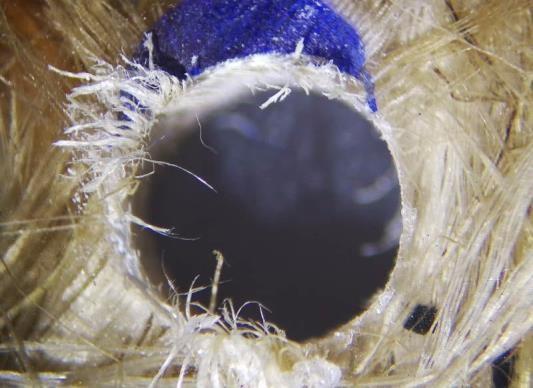
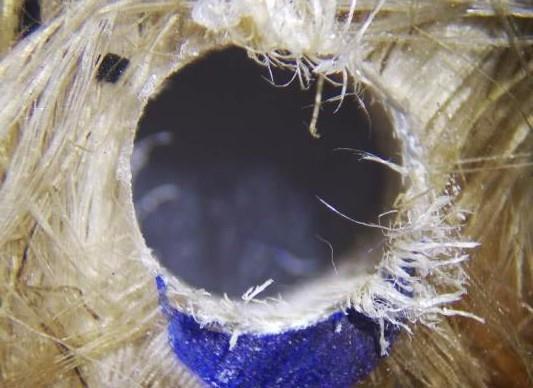
Ingeneral,chitosan-modifiedcompositesdemonstratedbetterchipformingandlowertoolwear,whichprovedthatthese compositeswereappropriatetoperformsecondaryprocesses,includingdrillingandtrimming.
Ithasbeentestedandconfirmedinallteststhatthe3%chitosancompositeisthebestformulationbetweentensile,flexural, impact, hardness and thermal performance. The findings are in line with the existing literature and confirm the synergistic impactofnaturalFiberreinforcementandbio-fillermodification.
Judgingbythefabricationandoverall characterisationofpalmFiber-reinforcedpolyestercompositeswithchitosanfiller,the followingconclusionscanbemade:
Thehandlay-upprocesswasalsoattemptedtoproducepalm Fiber-polyestercomposites,whichprovedtobeeasily processableandevenlydistributedwithauniformdistributionoftheFibers.
The most balanced and improved mechanical properties, especially tensile and impact strength, were obtained at a chitosanfillercontentof3wt.%.
International Research Journal of Engineering and Technology (IRJET) e-ISSN: 2395-0056
Volume: 12 Issue: 12 | Dec 2025 www.irjet.net p-ISSN: 2395-0072
Thisincreasedinterfacialadhesionat3%fillerresultedinmassivetensile(23.87N/mm2)strengthaswellasflexural strength(51.30N/mm2),whichwasinlinewiththeincreaseinmatrix-Fibercompatibility.
Thefilleradditionwasfoundtoreducethethermalconductivitygradually(0.26to0.21W/m*K),whichdemonstrated theenhancementofinsulation.
The values of Shore D hardness became slightly higher, which proved the reinforcement of the surface with the chitosanparticlesdispersedonit.
Thewaterabsorptioninhigherfillercontentwashigher,whichshowedthatmoresurfacetreatmentswererequired intheapplicationswheremoistureissensitive.
AllcompositeshadaUL-94V-1rating,withthespeedofflamepropagationdecreasingwiththefillercontent.
The composite is optimised and has the potential of being used as a lightweight structural, automotive interior and consumerproduct.
References
[1] NabiSahebD,JogJP.NaturalFiberpolymercomposites:areview. Adv Polym Technol. 1999;18(4):351–63.
[2] Komuraiah A,Kumar NS, PrasadBD.Chemical composition of natural Fibers and their influence on their mechanical properties. Mech Compos Mater. 2014;50:359–76.
[3] Khalil HPSA, Bhat AH, Jawaid M. Oil palm biomass Fibers and recent advancement in oil palm biomass Fibers-based composites. Compos Part B Eng. 2017;136:104–18.
[4] Joseph PV, Kuruvilla J, Thomas S. Effect of Fiber loading on the mechanical properties of banana Fiber reinforced polyestercomposites. J Appl Polym Sci. 2015;57:73–9.
[5] Suresh G, Reddy KH, Rao SS. Influence of rice husk, silica and chitosan fillers on the mechanical performance of polyestercomposites. Mater Today Proc. 2018;5:1258–65
[6] Reddy KR, Maheswari CU. Role of chitosan in enhancing interface adhesion in natural Fiber composites. J Reinf Plast Compos. 2019;38:789–99.
[7] Prasad A, Das B, Mohanty S. Bio-filler reinforced polymer composites: effect on thermal and mechanical behaviour. Polym Compos. 2020;41:1312–24.
[8] Azeez AA, Sani MS, Hashim MY. Mechanical behaviour of palm Fiber reinforced polyester composites fabricated by handlay-up. J Mater Res Technol. 2020;9:12345–52.
[9] SanjayMR,MadhuP,JawaidM.AreviewonhybridnaturalFibercomposites:mechanicalandthermalproperties. J Ind Text. 2021;50:123–45.
[10] DeepaC,SubramanianK,RajeshS.Evaluationofthermalconductivityofnatural Fibercomposites. Thermal Sci Eng Prog. 2021;23:100857.
[11] Arul S, Kumar A, Rajendran S. Flame retardancy enhancement in natural Fiber composites using bio-fillers. Fire Mater. 2022;46:876–89.
[12] Das S, Maity S, Ganguly P. Influence of natural filler loading on thermal degradation behaviour of polyester composites. J Therm Anal Calorim. 2023;147:3105–15.
[13] Manikandan V, Jappes JTW, Kumar S. Moisture absorption behaviour of natural Fiber composites and mitigation strategies. Compos Commun. 2018;10:67–72.
International Research Journal of Engineering and Technology (IRJET) e-ISSN: 2395-0056
Volume: 12 Issue: 12 | Dec 2025 www.irjet.net p-ISSN: 2395-0072 © 2025, IRJET | Impact Factor value: 8.315 | ISO 9001:2008 Certified Journal | Page1074
[14] VenkateshK,RamkumarT,SelvanCP.Waterabsorptionresistanceofchitosan-modifiedpolyestercomposites. Mater Today Proc. 2021;45:5410–6.
[15] YanL,ChouwN,JayaramanK.FlaxFiberanditscomposites–areview. Compos Part B Eng. 2014;56:296–317.