Study on Flexural and Shear Behaviour of Metalized Plastic Waste Fibre Reinforced Green Concrete
Prageeth P G 1
* Kavya Mohan2*1MTech Student, Department of civil engineering, Rajadhani Institute of Engineering and Technology, Kerala, India

2Assistant Professor, Department of civil engineering, Rajadhani Institute of Engineering and Technology, Kerala, India
***
Abstract – Metalized Plastic Waste (MPW) is a major kind of plastic waste produced mostly by the food packagingsector globally. MPW is unsuited for effective recycling, leads to pollution and garbage rise, and is hazardous to the environment. The use of cementintheconstructionofconcrete structures has a substantial influence on environmental pollution due to the emission of carbon dioxide. Employing industrial by-products with pozzolanic reactivity as a cement substitute can minimise carbon dioxide emissions while also improving the hardened characteristics of concrete. In this investigation, MPW fibre is added to concrete at 0 %, 0.25 %, 0.5%, 0.75 %, and 1 % by total volume of concrete, with cement substituted with 10 % silica fume. The optimum amount of MPW fibre in green concrete is determined by examining the fresh and hardened characteristics. Flexural and shear behaviours are investigated utilising the optimal dose of MPW fibres. In the case of flexuralandshearbehaviour studies, the optimal specimens achievealmostthesamefailure load as the control specimen. MPW fibre reinforcement improves fracture resistance and increasesspecimenductility.
Keywords: Metalized Plastic Waste (MPW) Fibres, Silica fume concrete, Sustainability, Mechanical properties, Flexural behaviour, Shear behaviour
1.INTRODUCTION
Metalizedplasticsareanon-biodegradablewastematerial mainly produced from the food packing industry. The constant demand for plastic in daily use by a growing population has led to an alarming rise in post-consumer plastic waste, posing a danger to the environment The current scenario in food industry has led to large-scale production of metallised plastic wastes (MPW). MPW is relatively unsuitable for effective recycling because it is madebyapolymercoatedinathinlayerofaluminiumfilm therefore the recycling is not cost effective and mainly contributestolitteringandlandfillexpansionthus,posingan environmental hazard. Safe and sustainable disposal methods are needed for the safety of the environment, currentandthefuturegeneration.
Oneoftheindustrialby-productsobtainedfromtheexhaust gasesofferrosilicon,silicon,andothermetalalloysmelting
furnacesissilicafume,sometimesreferredtoasmicrosilica. WhenaddedtoPortlandcementconcrete.whichprimarily consists of amorphous (non-crystalline) silicon dioxide (SiO2), enhances the material's properties, particularly its compressive strength, bond strength, and abrasion resistance.Silicafume,whichisusedinconcreteduetoits fineparticles,largesurfacearea,andhighSiO2 content,isa highly reactive pozzolan. The volume of big poresis significantlyreducedinallageswhensilicafumeisincluded in concrete mixes made with regular Portland cement. Because of its fineness, it essentially serves as a filler. Compared to concrete without silica fume, it is more cohesiveandlesspronetosegregationandbleeding.
Inthisstudycementisreplacedby10%silicafume.Silica fumeissubstitutedwithcementfrom5%-15%furtherit decreases the mechanical properties [5]. The silica fume concrete provides an increased compressive strength compared to other cement replacing materials such as natural zeolite [1]. By analysing research works it is identified that the silica fume concrete can increase the mechanicalstrengththanconventionalconcreteat28days curing[6]and10%replacementofcementwithsilicafume provides more mechanical strength [6]. Many studies are beingundertakentotesttheperformanceofMPWfibrein varioustypesofconcrete.Therehasn'tbeenalotofresearch doneonMPWfibresinsilicafume-basedconcrete.Therehas been noresearchintothebehaviourofshearfractures in MPWfibrereinforcedconcrete.
TheMPWfibresareaddedtothetotalvolumeofconcreteat 0%.0.25 %.0.5%,0.75% and1%. TheMPWfibresare. distributeduniformlythroughouttheconcrete.Atotalof5 mixesarepreparedwithdifferentdosageofMPWFibre.For compressivestrengthtestcubespecimensarecastedwitha sizeof150×150×150mm,cylindersarecastedwithasize of 150 mm diameter and 300 mm length for split tensile strengthtest,prismsarecastedwithasizeof100×100× 500mmforflexuraltest.
The optimum percentage value is used for conducting flexuralandshearbehaviourstudyofRCBeams.Theflexural andshearbehaviourwasconductedin1m×0.15m×0.15m sizebeamspecimenunderthree-pointloadinginUniversal Testing Machine (UTM). The flexural and shear crack
patterns were studied. The development of cracks with respecttotheincreaseinloadwereobservedandcompared withthecontrolspecimen.TheabilityofMPWfibretoresist thedevelopmentofcrackisstudied
2.MATERIALS USED FOR THE STUDY

2.1Physical properties of the material used
1) Cement: For this experimental investigation OPC 53 gradecementisused.Thedetailsofthetestresultsare providedintable.1. Table-1: Propertiesofcement.
4) Fineaggregate:Msandpassingthrough4.75mmIS sieve is used as fine aggregate. The details of the testresultsareprovidedintable.4
Table- 4: PropertiesofFineAggregate.
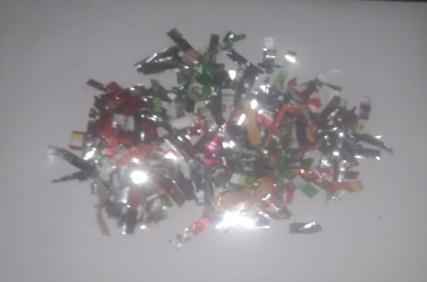
5) MetalizedPlasticWasteFibres:thewastemetalized plastic waste covers are collected from the waste dampedareasinpublicplacesshowninfigure1and shredded into a size of 3 cm length and 0.5 cm widthshowninfigure2.ThepropertiesoftheMPW fibresareprovidedinthetable5
Table- 5: PropertiesofMPWfibre
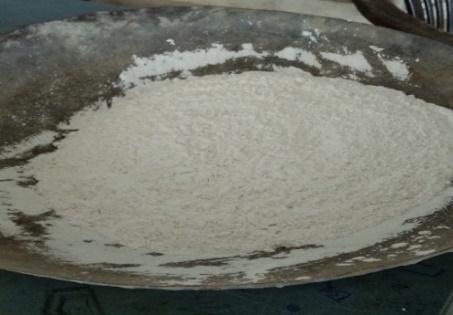
2) Silica fume: white silica fume powder is used here shown in figure 3. the test is conducted as per IS 15388: 2003. The details of the test results are providedintable.2.
Table-2: Propertiesofsilicafume
3) Coarseaggregate:themaximumsizeofaggregateused for this study is 20 mm and it is well graded. The detailsofphysicalpropertiesareshownintable3.
Table- 3: PropertiesofCoarseAggregate.
6) Superplasticizer: Conplast SP 430 is used. Which provides increase in workability and increase in compressivestrengthandreducethewatercement ratio.
7) Water:Collectedfromlocalfreshwatersources,pH shouldnotbelessthan6
Fig-1: MetalizedPlasticWaste(MPW)coverscollected
2.2 Mix proportion
M30gradeconcretemixisusedforthisstudy
Cement=354.8kg/m3
SilicaFume=39.4kg/m3
FineAggregate=826.55kg/m3
CoarseAggregate=1082.34kg/m3
Water=158kg/m3
Superplasticizer=3.9kg/m3
3.RESULTS AND DISCUSSION
3.1 Workability
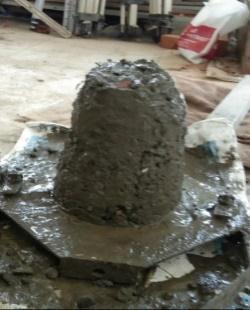
TheadditionofMPWfibresinconcretesignificantlychanges theworkabilityperformance.ThevolumeofMPWfibrein concreteincreasestheworkabilityreduces.Bestworkability performanceisobservedat0.25%showninfig4.Afterthat the workability of concrete is reduced according to the increaseinfibredosage
Chart-1: RelationbetweendifferentMPWfibredosage andslumpheight.
3.2 Compressive strength
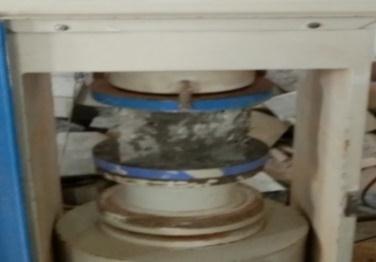
TheinclusionofMPWfibresinsilicafume-basedconcrete reducesthecompressivestrengthcomparedtotheobserved specimenasshowninchart-2
Chart-2:Compressivestrengthofcubespecimensat differentMPWFibredosages.
TheslightreductionintheCompressivestrengthaccording to the increase in fibre dosage is mainly due to the low bondingandthephysicalcharacteristicsoftheMPWfibrein concrete. But the silica fume concrete is highly non segregative.ItimprovesthebondingbetweentheMPWfibre and the concrete. Therefore, the compressive strength obtainedismuchmorethanconventionalconcrete.
3.3 Split tensile strength
The split tensile strength of cylinder specimens shows an increasewiththeincreaseinthefibredosageandthereafter itdecreasewiththeadditionofMPWFibresshowninchart3.
3.4 Flexural Strength Test
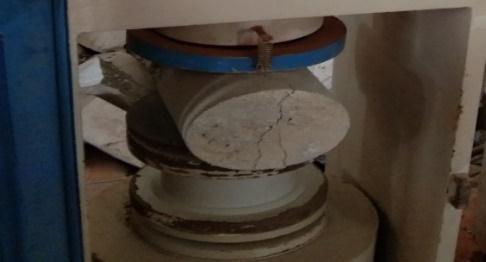
Areductionisalsoobservedinflexuralstrengthcomparedto theobservedspecimenwhenthefibredosageincreasesas showninchart-4
The split tensile strength increases up to 0.5 % this is happeningbecausethefibresconnectedthesplitpartofthe specimenassplittingoccurredacrossitandcontinued.Asa result,thisprogressivelymaintainedthetensiletensionand prevented the concrete specimen from failing. The specimen’scapacitytowithstandstrainisenhancedbytheir resistance to tension, which leads to increased splitting tensilestrength.
Alongwithcompressivestrength,flexuralstrengthdecreases asfibredoseincreases. ThisisasaresultoftheMPWfibres in the concrete not adhering as well. In comparison to regularcementconcrete,silicafume-basedconcreteachieves ahigherflexuralstrength.Thesilicafume'shighpozzolanic reactivity allows for significant pore modification, such as the reduction of larger pores, which strengthens the link betweentheconcretematrixandfibres.
3.5 Optimization study
TheobservedresultsdemonstratethatasMPWfibredoseis raised,workabilitydecreases.AccordingtoIS456-2000,the 95mmslumpproduced bythis0.25%MPWfibredose is appropriatefortheconstructionofstructuralelementssuch beams,walls,andcolumns.Thetestfindingsshowedthatas the dose of MPW fibre is increased, the compressive and flexuralstrengthfalls.Uptoadoseincreaseof0.50%,the split tensile strength of cylinder specimens increases; beyondthat,itdecreaseswiththeaddition ofMPWfibres. Accordingtotherisingdoseoffibrecontent,theadditionof MPW fibres somewhat reduces the compressive strength andflexuralstrength.Butthefreshandhardenedproperties are improved when silica fume is partially replaced with cement.Itresultsincompressiveandflexuralstrengthfor M30 grade concrete that is higher than desired strength. Fromtheresultsitisclearthatconcretecancontainanideal amount of MPW fibres. The necessary fresh and hardened
qualities for M30 grade concrete are here provided by the additionof0.25%MPWfibretothetotalvolumeofconcrete.
3.6 Flexural behaviour
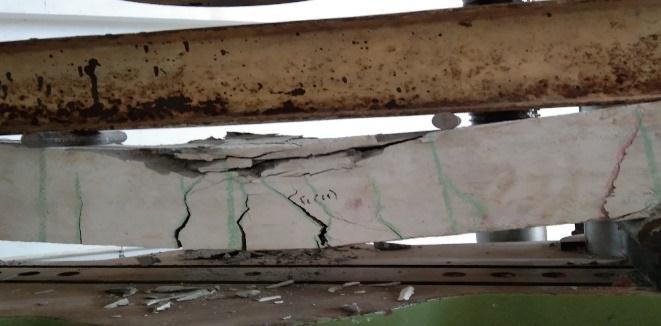
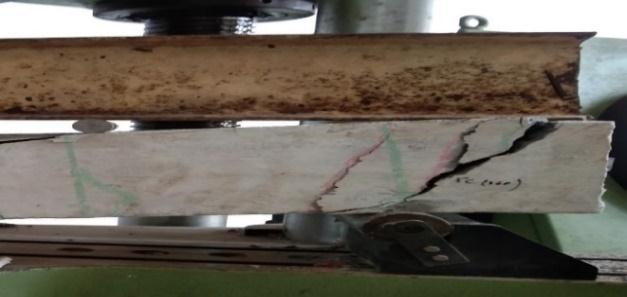
1000mmx150mmx150mmR.C.beamspecimenwascast to evaluate the flexural behaviour. Three beams are cast using 0 % MPW fibre reinforcement. It is preserved as a controlspecimen,andtheremainingthreebeamsarecast with0.25%MPWfibrereinforcement.Thespecimensare tested in a Universal Testing Machine (UTM). The crack patternsandcrackpropagationfromthetensionsidetothe compressionsideisanalysed.Theloaddeflectioncurvefor both control and optimum specimen are plotted and compared.
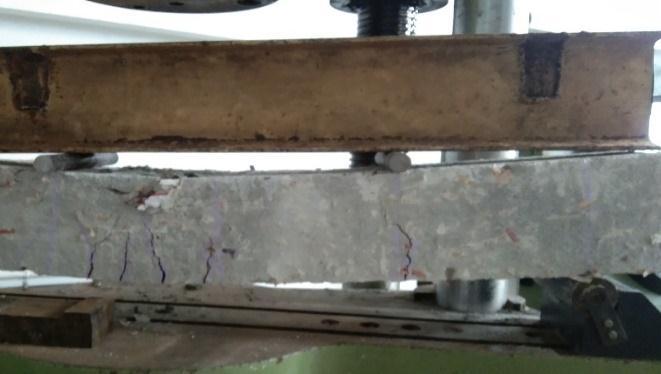
Figures8and9showthattheMPWfibrereinforcedbeamis considerably resistant to fractures. The propagation of cracksfromtensiontocompressionislikewiseshowntobe quitelimited.
Table- 6: Testresultsofflexuralbeams
ControlSpecimen
MPW fibrereinforcedspecimen
Chart-5: Loaddeflectiondiagramfromflexuraltest
Thefailureloadsofthecontrolandoptimalspecimensare comparablyquitesimilar.TheMPWfibrereinforcedbeam exhibits a larger deflection than the control specimen, as seenbytheloaddeflectioncurves.Thisrevealstheductile behaviour of the MPW reinforced concrete. The post load bearingcapacityisimprovedbytheincreaseinductility,and the increased deflection alsoprovides warnings before collapse.
3.7 Shear Behaviour
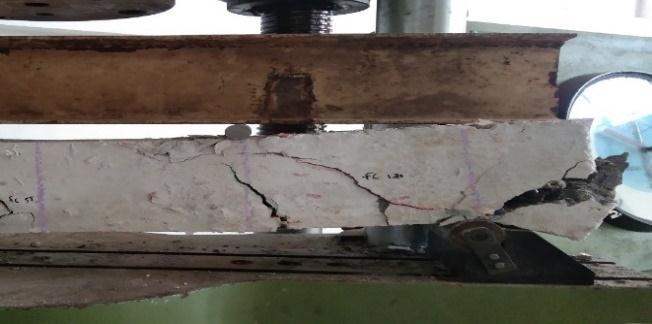
1000mmx150mmx150mmR.C.beamspecimenwascast toevaluatetheshearbehaviour.Threebeamsarecastusing 0%MPWfibrereinforcement.Itispreservedasacontrol specimen,andtheremainingthreebeamsarecastwith0.25 %MPWfibrereinforcement.Thespecimensaretestedina UniversalTestingMachine(UTM).Theshearcrackpatterns areanalysed.Theloaddeflectioncurveforbothcontroland optimumspecimenareplottedandcompared.
Figures 10 and 11 indicate that the MPW reinforcement provides significant shear crack resistance. Shear cracks emergeata45-degreeangletothesupport.Theshearcrack developedintheMPWfibrereinforcedspecimenlimitscrack propagationtotheupperportionofthespecimen.
4. CONCLUSIONS
Themajorconclusionsobtainedfromthestudyisdetailed below
TheinclusionofMPWfibresreducescompressiveand flexural strength in proportion to the dose of fibre content.However,silicafumebaseconcreteincreases bothfreshandhardenedconcretecharacteristics.As aresult,thecompressiveandflexuralstrengthsare greaterthanintraditionalconcrete.
The split tensile strength is seen to increase in the firsttwodosesofMPWfibre,0.25%and0.5%,then todropfurtherat0.5%.
Theultimateshearloadandultimateshearcapacityofthe MPWfibrereinforcedspecimenareslightlylowerthanthose ofthecontrolspecimen,whicharenearlyidentical.Theload deflectioncurveoftheshearbehaviourinvestigation(chart6)showsthattheMPWfibrereinforcedspecimenexhibits greaterdeflectionthanthecontrolspecimen.Itimprovesthe post-loadcarryingcapacityandlowersbrittlefailure.
MPW reinforced fibres in concrete will retain structural integrity because they hold the concrete together when a fracture forms and hence resist crack development. The bridgingactivityofthefibresinconcretealsocontributesto theincreaseindeflectionoftheMPWreinforcedspecimens
Here, the necessary fresh and hardened characteristicsofM30gradeconcreteareprovidedby theadditionof0.25%MPWfibretothetotalvolume ofconcrete.
In the case of flexural behaviour, the optimal specimen's failure load is reduced by 1.14 % than control specimen, which is extremely slight and nearlyidentical.
In the case of shear behaviour, the percentage differenceinthefailureloadoftheMPWreinforced beam is 0.71% lesser than that of the control
specimen, which is extremely small and nearly identical.
TheadditionofMPWfibrestoconcrete,ontheother hand, can boost the fracture resistance of beam specimens. When comparing the MPW fibre reinforced beamspecimentothecontrol specimen, the load to deflection rate increases. It prevents brittle failure and increases post-crack loading and ductility.
The findings obtained demonstrate that silica fume and MPW fibre inclusion can be employed with acceptabletechnologicalproperties.Itmaybeapplied to the construction of both structural and nonstructuralapplications,suchasbuildings,roads,and pavements. Utilising this kind of concrete is a sustainable strategy that may also help to prevent environmentalpollution.
5. FUTURE SCOPE
ThecurrentstudyinvestigatestheeffectsofMPWfibresin silica fume-based concrete. Future research can be expanded. The efficiency of MPW fibre may be assessed usingvariouscement-substitutedconcretes.Extendedcuring durations can be investigated to discover how concrete's hardenedqualitieshaveimproved.
ACKNOWLEDGEMENT
The authors are thankful to Rajadhani institute of engineering and technology for the technical support and providingthelaboratoryfacilities
REFERENCES
[1] Hamed Safayenikoo “Metalized Plastic Waste Fibre EffectsonGreenConcreteBeamsMechanicalPerformance
“2022Volume2022,ArticleID3113841,15pages
[2]Ankurc.Bhogyata,Narendrak.Arora“freshandstrength properties of concrete reinforced with metalized plastic wastefibres”2017constructionandbuildingmaterials.
[3]RayedALYousef,HosseinMohammadHosseini,Ahmed AbdelKhalekEbid,HishamAbdul-JabbarShekPoiNgianand AbdeliazimMustafaMohamed“DurabilityEnhancementof Sustainable Concrete Composites Comprising Waste MetalizedFilmFoodPackagingFibresandPalmOilFuelAsh” 2022
[4] R Christal Sophia “Characterization of strength and toughness properties of metalized plastic waste fibre reinforcedconcrete”2021
[5]LakhbirSingh,ArjunKumar,AnilSingh“studyofpartial replacementofcementbysilicafume
[6]TommuAnvesh,V.Akhil,Siddhartha“experimentalstudy onstrengthbehaviourofconcretewithpartialreplacement ofcementwithsilicafumeandcoarseaggregate.Vol13issue 8,2022journalofengineeringsciences.
[7] Sivakumar Anandan “Mechanical Strength Characterization of Plastic Fibre Reinforced Cement ConcreteComposites”Appl.Sci.2021,11,852.2021
[8]HosseinMohammedHosseiniandMahmoodMDTahir “Production of sustainable fibre-reinforced concrete incorporatingwastechoppedmetallicfilmfibresandpalm oilfuelash”2020
[9]AbhinavShyam,AbdullahAnwar,SyedAqeelAhmad“A Literature Review on Study of Silica fume as Partial Replacement of Cement in Concrete” [Vol-3, Issue-3, Mar2017 ISSN: 2454-1311International Journal of Advanced Engineering,ManagementandScience(IJAEMS)
[10] Krishna Kiran Annamanae “Experimental study and modellingonthestructuralresponseofthefiberreinforced concretebeams”Appl.Sci2022,
[11]JawadAhmadHaythamF.IsleemandShakerQaidi“A SteptowardsSustainableConcreteOverviewonMechanical, DurabilityandMicrostructureAnalysiswithSubstitutionof PlasticWasteinConcrete2022
[12]AkthamH.Alani,N.MuhamadBunnori,AhmedTareq Noaman “Durability performance of a novel ultra-highperformancePETgreenconcrete(UHPPGC)”Construction andBuildingMaterials209(2019)395–4052019
[13] Yasser E. Ibrahim Musa Adamu, Mohammad Louay Marouf, Omar Shabbir Ahmed, Q. A. Drmosh “Mechanical Performance of Date-Palm-Fibre-Reinforced Concrete ContainingSilicaFume‘2022e.Buildings2022,12,1642
[14]ShamsadAhmadomarS.BaghabraAl-Amoudi,SaadM.S. Khan, Mohammed Maslehuddin” Effect of silica fume inclusion on the strength, shrinkage and durability characteristicsofnaturalpozzolan-basedcementconcrete” 2022ConstructionandBuildingMaterials161(2022)254–266.
[15] Kaushal Kumar, Saurav Dixit, Rishabh Arora, Nikolai IvanovichVatin,JarnailSingh,OlgaV.Soloveva,SvetlanaB. Ilyashenko,VinodJohnandDharamBuddhi“Utilizationin GreenConcreteApplicationsMetalizedFilmFoodPackaging FibersandPalmOilFuelAsh”2022
[16]HanumeshBM“TheMechanicalPropertiesofConcrete IncorporatingSilicaFumeasPartialReplacementofCement”
2015 International Journal of Emerging Technology and AdvancedEngineeringVolume5,Issue9,September