
International Research Journal of Engineering and Technology (IRJET) e-ISSN: 2395-0056
Volume: 13 Issue: 03 | Mar 2026 www.irjet.net p-ISSN: 2395-0072
International Research Journal of Engineering and Technology (IRJET) e-ISSN: 2395-0056
Volume: 13 Issue: 03 | Mar 2026 www.irjet.net p-ISSN: 2395-0072
Praveen Singh
1 ,
Chandrapratap Singh
2 ,
Abhishek Varun3 , Jayati Vaish4
,
Indu Prabha Singh
5
1,2,3,4,5 Electrical Engineering Shri Ramswaroop Memorial College of Engineering & Management(AKTU)
Abstract: Efficient energy storage management is essential for ensuring the safety, reliability, and longevity of rechargeable battery systems. This paper presents the design and implementation of an Internet of Things (IoT)based Battery Management System (BMS) using an Arduino microcontroller. The proposed system monitors critical battery parameters such as temperature, voltage, and charging/discharging current in real time to maintain safe operating conditions. State of Charge (SOC) is estimated using the Coulomb counting method, while the Constant Current–Constant Voltage (CCCV) technique is employed to evaluate the State of Health (SOH) of the battery. Battery data are transmitted to the Thing Speak platform for cloud-based storage, remote monitoring, and analysis. The developed BMS provides a cost-effective and scalable solution for modern energy storage applications.
Keyword: Battery Management System (BMS), Internet of Things (IoT), Energy Storage Systems, State of Charge (SOC),State of Health (SOH).
Battery Management Systems (BMS) play a vital role in modern energy management by improving battery performance, ensuring operational safety, and enabling efficient and sustainable energy utilization. By reducing dependence on fossil fuels, BMS technology supports energy sector stabilization and enhances grid competitiveness, particularly in response to the intermittent nature of renewable energy sources. A BMS performs detailed technical analysis of dynamic energy storage behavior within batteries, taking into account battery-specific characteristics such as chemistry, capacity,andoperatingconditions[1].
The operation and analysis of a BMS are based on key parameters including terminal voltage, current, charging characteristics, State of Health (SoH), capacity, and temperature.Variationsinvoltageandcurrentoftenserve as early indicators of electrical abnormalities, while significant temperature fluctuations may trigger protectivecutoffstopreventthermalrunaway.Changesin cyclecountprovideinsightsintocharginganddischarging
efficiency, and when combined with temperature and current data, can reveal capacity degradation. Metrics such as SoH and capacity play a crucial role in maintenance decision-making by identifying batteries that may require servicingordecommissioning[2].
The growing importance of BMS technology is driven primarily by the rapid adoption of electric vehicles (EVs) and large-scale energy storage systems, both of which demand advanced battery monitoring and control. Additionally, the widespread use of rechargeable batteries across consumer electronics has accelerated the need for continuous technological innovation in BMS solutions. Thesefactorscollectivelycontributetothesteadyexpansion oftheglobalBMSmarket,asillustratedinFig.1 [3].
Despite extensive research, conventional BMS approaches exhibitseveralinherentlimitationsrelatedtocompatibility, performance, cost, scalability, reliability, security, and maintenance. Traditional systems often suffer from hardwareconstraintsthatrestrictmonitoringaccuracyand systemefficiency.Highinitialcostsandlimitedaccessibility further hinder widespread adoption, particularly for smallscale manufacturers and decentralized energy systems. Moreover, conventional BMS architectures frequently lack the flexibility required to adapt to emerging technologies and evolving energy demands. Security vulnerabilities, including data privacy concerns and susceptibility to cyberattacks, also pose significant barriers to deployment [4].
Toovercomethesechallengesandunlockthefulleconomic and operational potential of BMS, Internet of Things (IoT) technologyhasemergedasahighlypromisingsolution.IoTbasedBMSframeworksleveragewirelessconnectivity,realtime data acquisition, advanced analytics, and predictive modeling often supported by machine learning techniques to enhance energy efficiency and extend battery lifespan. IoT integration enables proactive maintenance, remote monitoring, and real-time decisionmaking, transforming BMS from a standalone control unit into a responsive and interconnected energy ecosystem capable of supporting sustainable and adaptive energy infrastructures [5]. Wireless communication technologies are fundamental to IoT-enabled BMS operation. Protocols
International Research Journal of Engineering and Technology (IRJET) e-ISSN: 2395-0056
Volume: 13 Issue: 03 | Mar 2026 www.irjet.net p-ISSN: 2395-0072
such as Wi-Fi provide high-speed data transmission for real-time monitoring, while Low Power Wide Area Network(LPWAN)technologieslikeLoRaareparticularly suitable for remote or harsh environments. These communication methods ensure reliable data exchange with minimal power consumption and fault tolerance. However,integratingIoTwithBMSintroduceschallenges related to system compatibility, performance optimization, cost efficiency, scalability, reliability, and cybersecurity, all of which must be addressed to achieve effectivedeployment[6].
The selection of appropriate IoT hardware is another critical consideration in BMS design, as illustrated in Fig. 2. Factors such as compatibility with system requirements, communication capabilities, power consumption,andscalability mustbecarefullyevaluated. Among available wireless technologies, LoRa stands out due to its long communication range, low energy consumption, and high scalability. These characteristics makeitwellsuitedforbattery-poweredBMSapplications deployed in large industrial facilities or geographically dispersed locations, where conventional communication methodsmaybeimpracticalorunreliable.
Recent researchhas exploredadvancedconcepts such as digitaltwinsforEVbatterysystems,integratingIoT,cloud computing, artificial intelligence, and multi-layer modeling to enhance battery design, monitoring, and operational management [7]. While digital twin technology offers promising solutions for optimization and sustainability, challenges remain regarding cost justification and practical implementation in industrial settings [8]. Wireless Battery Management Systems (WBMS) have also gained attention for their potential to overcome the limitations of wired BMS architectures. Surveys of WBMS highlight their benefits while emphasizing the need for further research to address issues related to reliability, security, electromagnetic interference, and cost-effectiveness, particularly in highpower lithium-ion battery systems [9]. Additionally, recent developments in modular IoT-based BMS designs demonstrate improved fault tolerance and deployment flexibility;however,scalabilityandintegrationwithfuture technologiesremainopenchallenges[10]

This section presents an overview of recent research on Energy Management and Smart Home Systems, with a focusonIoT-basedsolutions.
In one study, an IoT-enabled automated temperature and humidity monitoring and control system was developed usingaRaspberryPi.Thesystemcollectstemperatureand humidity data, which are then transmitted to the internet for real-time monitoring and control [11]. Another research work implemented an IoT-based energy managementsystemusingtemperatureandlightintensity sensors. The sensor data is relayed to an Arduino microcontroller, which regulates appliance usage as required.Additionally,aRaspberryPi3calculatesthetotal power consumption of each appliance over time and visualizes the results through graphs generated from data collected via Hall sensors, which are transmitted wirelessly over Wi-Fi. The system stores graphical data showing power consumption versus time for appliances underdifferentclimaticconditionsonacloudserver[12].
In the domain of battery management, an IoT-based BMS was developed to detect hydrogen gas emissions from batteries while monitoring essential battery parameters suchashealth,powerquality,andpowerfactor.Cloudand IoT integration enhances the system by enabling more efficient data analysis. Moreover, a GPS tracker is incorporated to monitor vehicle location, allowing rapid assistanceifnecessary[3].AcomprehensiveBMShasalso been proposed that continuously monitors key battery parametersandactivelybalancesthecellswithinabattery pack. This system employs an embedded MSP430 microprocessorformonitoringandcontrol,demonstrating its applicability in everyday electrical systems by improving efficiency, power quality, and overall performance[14][15].
International Research Journal of Engineering and Technology (IRJET) e-ISSN: 2395-0056
Volume: 13 Issue: 03 | Mar 2026 www.irjet.net p-ISSN: 2395-0072
The performance of sensors, processors, and communication modules within the BMS has been evaluated for accuracy and reliability. To further improve battery monitoring, a MATLAB-based State of Charge(SOC)estimationmethodcalledCo-estimatewas implemented on a hardware battery testbed. Comparison between simulation results and hardware implementation demonstrated the feasibility and effectiveness of this method. The proposed hardware architecture is also suitable for implementing CoEstimationinelectricvehicleapplications[16].
Furthermore, IoT and PLC-based energy management solutions have been explored for Virtual Power Plants (VPPs) in a unified electricity market. In this system, forecastsofuniversityloadsandsolargenerationforthe day-ahead (DA) market are used to optimize energy distribution. The system automates supply and load management using PLCs and Raspberry Pi, which send control signals to relay switches. PLC programming is accomplished via the Node-RED platform, enabling seamless monitoring and control for optimal energy utilization.
Collectively, these studies demonstrate the potential of integrating IoT, microcontrollers, PLCs, and cloud computing in energy management systems and smart home applications. The research highlights improvements in real-time monitoring, predictive analytics,energyefficiency,andreliability,establishinga strong foundation for future innovations in intelligent energysystems.
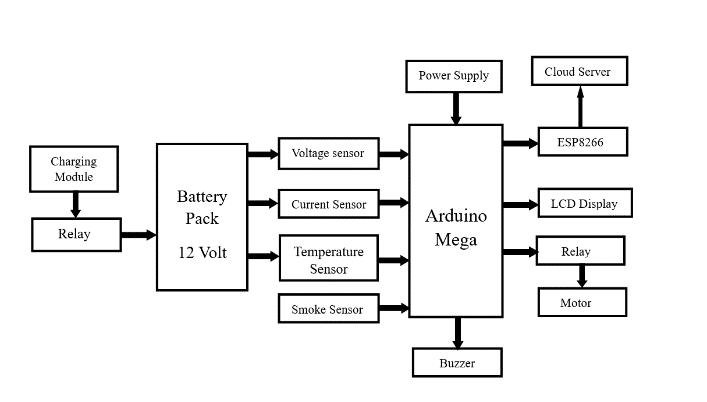
Fig.2 BlockdiagramofIotbasedbatterymanagement system.
1. Battery Pack Design
A 12 V lithium-ion battery pack is designed using cylindricallithium-ioncells,eachwithanominalvoltage of 3.7 V and a capacity of 3.4 Ah. Among the common battery pack configurations, two arrangements are
typically considered: nPmS and mSnP. In this work, the nPmS configuration is selected due to its inherent advantages in cell balancing. This configuration allows naturalbalancingbetweencellswithinamodule,reducing complexity and minimizing balancing issues. Additionally, the nPmS structure is well suited for high-power applicationssuchaselectricvehiclebatterysystems.
2.Circuit
TheBMShardwareisdesignedtomonitorandprotectthe battery pack effectively. Voltage sensors are used to measure the voltage of individual battery cells, while a current sensor monitors the overall charging and discharging current. Temperature sensors are integrated to track thermal conditions and prevent overheating. Relays are employed to control the charging and discharging paths, ensuring safe operation under various conditions. Protective components such as resistors, capacitors, and diodes are included to provide signal filtering,electricalstability,andcircuitprotection.
3.Embedded Programming
An Arduino microcontroller serves as the central processing unit of the BMS. Embedded software is developed to continuously acquire voltage, current, and temperature data from the sensors. Based on these measurements, the system calculates important battery metrics such as total pack voltage, State of Charge (SoC), StateofHealth(SoH),andthermalstatus.Safetylimitsare predefined for overcharging, deep discharging, overcurrent, and excessive temperature. When abnormal conditionsaredetected,thesystemautomaticallyactivates protectiveactionstopreventbatterydamage.
4.IoT Integration
Toenableremotemonitoringanddataanalysis,theBMSis integrated with an IoT platform using wireless communication modules such as ESP8266 or ESP32. The system connects to a Wi-Fi network and periodically uploads sensor data including voltage, current, and temperature to the cloud. Secure communication protocols are implemented to ensure reliable data transmissionandtoallowauthorizedremotecontrolofthe charginganddischargingprocesses.
5.User Interface and Remote Access
Auser-friendlywebormobileinterfaceisdevelopedusing theIoTplatform’stools.Thisinterfaceallowsuserstoview real-time battery information, track historical data, and receive alerts during fault conditions. Users can also configure system parameters remotely, improving usabilityandoperationalflexibility.
International Research Journal of Engineering and Technology (IRJET) e-ISSN: 2395-0056
Volume: 13 Issue: 03 | Mar 2026 www.irjet.net p-ISSN: 2395-0072
four-cell lithium-ion battery system and deployed for real-time monitoring and evaluation through the IoT dashboard
Parameter
Rated / Nominal
BatteryVoltage 3.7 V (Liioncell) 3.0–4.2V
Overcharge and deep discharge protection
Battery Capacity 2500 mAh 80% –100% of rated SOC and SOH estimation
Charging
Current 1C 0.5C–1C Safe and efficient charging
Discharging
Current 1C ≤2C Load and stress monitoring
Battery Temperature 25°C 0 – 45 °C (charge), −20 – 60 °C (discharge) Thermal safety
State of Charge (SOC) 100% 20–100% Energy availability tracking
State of Health (SOH) 100% ≥80% Aging and degradation detection
Internal Resistance 50mΩ ≤100mΩ Performance and fault diagnosis
Gas Concentration 0ppm ≤ Threshold limit Leakage and hazard detection
Communication Delay <100ms ≤200ms Real-time monitoring reliability
The performance of the proposed IoT-based Battery Management System is demonstrated through the experimental results illustrated in the corresponding figures. Figure 3(a) depicts real-time electrical measurements obtained during system operation,
including the voltages of individual battery cells, the total battery pack voltage, and the associated charging or dischargingcurrent.Monitoringcell-levelvoltagesenables the identification of voltage imbalance among cells, which is critical for maintaining uniform charge distribution and extending battery lifespan. The pack voltage, when analyzed alongside current profiles, reflects the overall energy flow and operating mode of the system. Furthermore, variations in current provide insight into load demand and charging efficiency under different conditions. Together, these measurements validate the system’s capability to accurately track electrical parameters, support safe operation, and ensure reliable performance of the battery pack throughout charging and dischargingcycles.
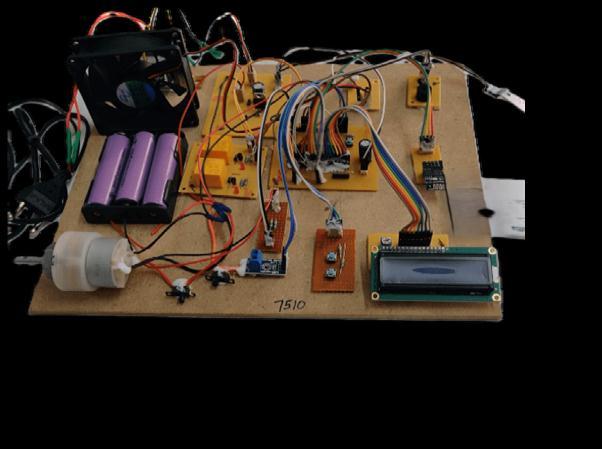
Figure 3(b) illustrates a broader set of operational and safety parameters continuously monitored by the system, including discharge rate, battery temperature, remaining charge percentage, detected gas concentrations, and the computed State of Charge (SOC). Real-time monitoring of these variables provides a comprehensive understanding of battery health, usage patterns, and thermal behavior. Trackingtemperatureandgaslevelsisparticularlycritical for ensuring operational safety, as abnormal variations mayindicateoverheating,celldegradation,ortheonsetof hazardous conditions. In addition, observing discharge characteristics and SOC trends supports accurate energy management and helps prevent over-discharge or excessive load conditions. Collectively, the continuous assessment of these parameters enhances system reliability,
International Research Journal of Engineering and Technology (IRJET) e-ISSN: 2395-0056
Volume: 13 Issue: 03 | Mar 2026 www.irjet.net p-ISSN: 2395-0072
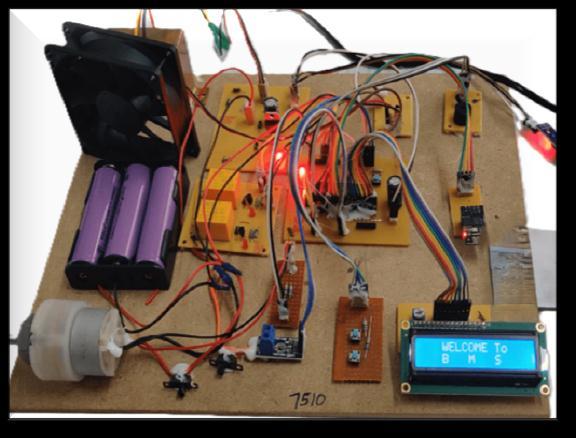
Real-timemonitoringofbatterysystem
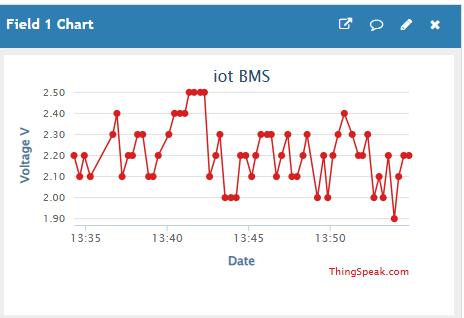
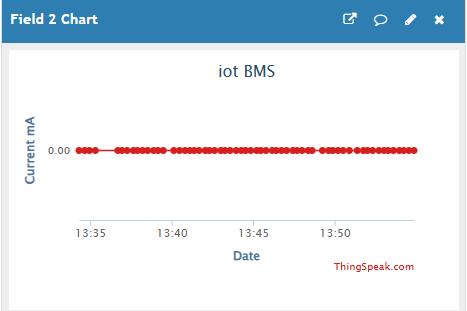
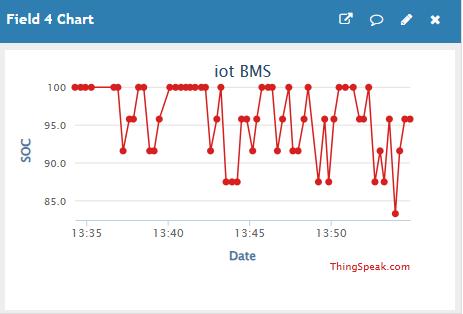
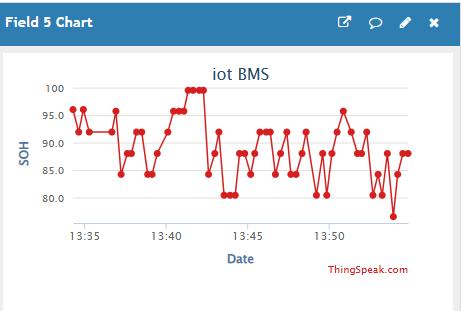
Figure 4showsthe data visualizationobtained fromthe ThingSpeak IoT platform. The cloud-based graphs display both real-time and historical trends of key battery parameters, supporting remote monitoring and detailed performance analysis. This visualization capability enhances user awareness and enables timely decision-making for battery management and maintenance.
Thingspeakserverdata
V. RESEARCH DIFFICULTIES AND GAPS
Technical Difficulties
Battery management is challenging due to the non-linear behavioroflithium-ionbatteries,whereSOCandSOHvary with temperature, load conditions, and aging, making accuratemodelingdifficult.Reliablesensingisalsocritical, as electrical noise and high-voltage environments can introduce measurement errors that affect safety and cell balancing.CommunicationdelaysinIoTsystemsmaylimit timely responses to critical conditions, while limited processing capability of low-power controllers restricts the use of advanced analytics. Additionally, harsh operating environments and the need to scale from small battery units to large battery packs further increase systemcomplexity.
International Research Journal of Engineering and Technology (IRJET) e-ISSN: 2395-0056
Volume: 13 Issue: 03 | Mar 2026 www.irjet.net p-ISSN: 2395-0072
Despite extensive research on IoT-based battery monitoring, security remains an underexplored area. Many existing systems lack robust protection against cyber threats, leaving them vulnerable to malicious attacksthatcouldintentionallyovercharge,discharge,or disablebatterypacks.
Another notable gap is the absence of standardized communication protocols. The lack of universal standards makes interoperability between IoT-BMS hardwarefromdifferentmanufacturersdifficult,limiting systemintegrationandlarge-scaledeployment.
Most current research emphasizes cloud-based data processing, with limited attention given to edge computing approaches. There is a need for strategies that process time-critical safety data locally while transmitting long-term health and performance trends to the cloud, thereby improving response time and reliability.
Integration with smart grid infrastructure is also insufficiently addressed. While significant progress has been made in BMS design, fewer studies explore how IoT-enabledBMScaninteractwithVehicle-to-Grid(V2G) systems to support grid stability and efficient energy distribution.
Long-term system reliability is another area requiring further investigation. Many studies rely on short-term laboratory testing or simulations, resulting in a lack of real-world performance data that demonstrates how IoT-based BMS solutions perform over extended operational lifetimes, such as a decade-long automotive usecase.
Finally, the energy consumption of IoT components themselves is often overlooked. In smaller battery systems, the power required for continuous sensing, processing, and wireless data transmission can significantly impact overall battery efficiency, reducing thenetbenefitofthemonitoringsystem.
This paper presented the design and implementation of an IoT-based battery monitoring system for electric vehicle applications, aimed at enabling continuous online monitoring of battery performance and degradation. The primary objective of the study was to demonstrate the practical feasibility of integrating embeddedhardwarewithIoTtechnologiesforreal-time
batteryconditionassessment.
The developed system consists of a battery monitoring hardware unit and a web-based user interface for data visualization.Keybatteryparameters,alongwithtimeand location information, are transmitted over the internet. The integration of a GPS module allows the system to identify vehicle coordinates and display location data through a mapping application, enabling remote tracking ofbatterystatus.
The proposed system architecture supports future enhancements, such as the development of a dedicated smartphone application for user-friendly monitoring and battery degradation alerts. Communication reliability can alsobeimprovedbyadoptingwirednetworkingsolutions, such as Ethernet, as an alternative to cellular-based connectivity.
IoT-based battery monitoring systems offer significant advantages, including real-time observation, predictive maintenance capabilities, improved battery lifespan, enhanced user experience, and optimized charging strategies. Remote monitoring and control features make the system particularly suitable for fleet management applications. However, challenges related to system cost, data security, network reliability, false alarms, and integrationwithexistingvehiclesystemsmustbecarefully addressed. Implementing robust cybersecurity measures is essential to protect sensitive battery and location data transmittedwirelessly.
Overall, the study confirms that IoT-enabled battery monitoring is a viable and effective solution for tracking battery performance degradation in electric vehicles. The proposedsystemprovidesascalablefoundationforfuture smart mobility and intelligent energy management application
[1] G. Krishna, R. Singh, A. Gehlot, S.V. Akram, N. Priyadarshi, B. Twala, Digital Technology Implementation in Battery-Management Systems for Sustainable Energy Storage: Review, Challenges,andRecommendations,MDPI,Sep.01, 2022,.
[2] M.H. Schraven, K. Droste, C.G.C. Carducci, D. Müller, A. Monti, Open-source internet of Things gateways for building automation applications, J. Sens. Actuator Netw. 11 (4) (Nov. 2022) 74, , 2022,Vol.11,Page74.
International Research Journal of Engineering and Technology (IRJET) e-ISSN: 2395-0056
Volume: 13 Issue: 03 | Mar 2026 www.irjet.net p-ISSN: 2395-0072
[3] “Battery Management System Market Research Report: By Battery Type, Connectivity, Topology, Vertical - Global Industry Analysis andForecastto 2030 - Global Industry Analysis and Demand Forecast to 2030.” Accessed: Mar. 15,2024.
[4] M. Shen, Q. Gao, A review on battery management system from the modeling efforts to its multiapplication and integration, Int. J. EnergyRes.43(10)(Aug.2019)5042–5075,
[5] H. Li, M. Bin Kaleem, Z. Liu, Y. Wu, W. Liu, Z. Huang, IoB: internet-of-batteries for electric vehicles–architectures, opportunities, and challenges, Green Energy and Intelligent Transportation 2 (6) (Dec. 2023) 100128, https://doi.org/10.1016/J.GEITS.2023.100128.
[6] A. Colakovi ˇ ´c, A. Haskovi´c Dˇzubur, B. Karahodˇza, Wireless communication technologies for the internet of Things, Science, Engineering and Technology 1 (1) (Apr. 2021) 1–14, https://doi.org/10.54327/SET2021/V1.I1.3.
[7] F. Naseri, et al., Digital Twin of Electric Vehicle Battery Systems: Comprehensive Review of the Use Cases, Requirements, and Platforms, ElsevierLtd.,Jun.01,2023,
[8] C.K.Lo,C.H.Chen,R.Y.Zhong,Areviewofdigital twin in product design and development, Adv. Eng. Inf. 48 (Apr. 2021) 101297, https://doi.org/10.1016/J.AEI.2021.101297.
[9] A. Samanta, S.S. Williamson, A Survey of Wireless Battery Management System: Topology, Emerging Trends, and Challenges, MDPI, Sep. 01, 2021, https://doi.org/ 10.3390/electronics10182193.
[10] H.M.O. Canilang, A.C. Caliwag, W. Lim, Design, implementation, and deployment of modular battery management system for IIoT-based applications,IEEEAccess10(2022)
[11] M. Lavanya, P. Muthukannan, Y.S.S. Bhargav, V. Suresh, “IoT Based Automated Temperature and Humidity Monitoring and Control”, Journal of Chemical and Pharmaceutical Sciences ISSN: 0974-2115.
[12] Vignesh Mani, Abhilasha, Gunasekhar,”IoT Based SmartEnergyManagement System”,International Journal of Applied Engineering Research ISSN 0973-4562 Volume 12, Number 16 (2017) pp. 5455-5462
[13] Harish N1, Prashal V2 and Dr. D. Sivakumar3,” IOT Based Battery Management System”, International Journal of Applied Engineering Research ISSN 0973-4562 Volume 13, Number 8 (2018)pp.5711-5714
[14] Abhay Shatrudhan Jha1, Anuj Kalkar2, Mandar Ghanekar3, Neeraj Pal4, Sangeeta kotecha5, "Battery Management System", International Research Journal of Engineering and Technology (IRJET) Volume: 07 Issue: 02 | Feb 2020. e-ISSN: 2395-0056
[15] Seyed Mahmoud Salamati*, Cong Sheng Huang*, Bharat Balagopal*, and Mo-Yuen Chow*, “Experimental Battery Monitoring System Design for Electric Vehicle Applications”, Electrical and Computer Engineering, North Carolina State University,Raleigh,U.S.A,IEEE2018.
[16] Poushali Pal, A. K. Parvathy, K. R. Devabalaji, S. Joseph Antony, Simon Ocheme, Thanikanti Sudhakar Babu, Hassan Haes Alhelou, T. Yuvaraj,” IoT-Based Real Time Energy Management of Virtual Power Plant Using PLC for Transactive EnergyFramework”,IEEE| July2021