
International Research Journal of Engineering and Technology (IRJET) e-ISSN: 2395-0056
Volume: 12 Issue: 11 | Nov 2025 www.irjet.net
International Research Journal of Engineering and Technology (IRJET) e-ISSN: 2395-0056
Volume: 12 Issue: 11 | Nov 2025 www.irjet.net
Akshay Chandurkar, Aditya Gwalwanshi, Neha Gadge, Harshal Deshmukh Assistant Professor. Dr. Sushma Telrandhe
Department
Abstract The rapid adoption of digital learning platforms has created a growing need for intelligent, accessible, and adaptive assessment tools in higher education. This paper presents the design and development of an Intelligent QuestionBankWebApplicationtailored,leveragingArtificial Intelligence (AI) and Machine Learning (ML) to enhance academic engagement. The proposed system enables semanticsearch,automatedquestionclassification,difficultylevel prediction, and adaptive question recommendation, ensuring that students receive personalized learning experiences.Teacherscanseamlesslymanagequestionpools, generate balanced assessments, and analyze student performance through integrated analytics. The application architecture incorporates a scalable web-based frontend, a robust backend service layer, and AI-driven modules for semantic embeddings and recommendation. Initial results indicate improved efficiency in question retrieval and exam generation compared to traditional systems. This work demonstrates the potential of AI-powered academic tools to transform conventional examination practices into interactive,intelligent,andstudent-centricsolutions.
KEY WORDS: Index Terms Adaptive Learning, Artificial Intelligence, Educational Technology, Intelligent Question Bank, Machine Learning, RTMNU, Semantic Search, Web Application
Education has undergone a massive transformation in the last decade, with digital learning platforms, online assessment tools, and artificial intelligence (AI)–driven systemsrevolutionizingthe waystudentslearnandteachers evaluateperformance.Traditionalmethodsofquestionpaper setting and preparation for examinations often involve repetitive manual tasks, limited question diversity, and lack of adaptive assessment strategies. In the context of higher education institutions such as Rashtrasant Tukadoji Maharaj Nagpur University (RTMNU), the first-semester curriculum covers a wide range of foundational subjects that are essential for academic progression. However, the process of preparing and maintaining a comprehensive question bank forthesecourses remainsa challengingandtime-consuming task. This research focuses on the development of an Intelligent Question Bank Web Application that leverages Artificial Intelligence (AI) and Machine Learning (ML) to
automate and enhance the management of academic questionrepositories.
The conventional question bank systems used in many universities primarily rely on static storage mechanisms, where questions are manually categorized by instructors based on topics, difficulty levels, or past examination trends. While this approach ensures control, it lacks flexibility, scalability, and adaptability to evolving academic needs. Furthermore,
studentsoften face difficultyaccessinga well-structuredand diversified set of questions for effective self-assessment and exam preparation. As education moves toward a more datadriven and personalized learning approach, there is a pressing need for an intelligent system that can dynamically generate, categorize, and analyze questions according to student performance, syllabus coverage, and cognitive learninglevels.
Recent developments in Natural Language Processing (NLP) and Machine Learning have provided new opportunities for enhancing educational tools. AI-powered systems can now automatically analyze text-based content, extract relevant questions, predict question difficulty, and even recommend practice sets based on user learning patterns. Such systems have demonstrated the potential to not only reduce the workloadofeducatorsbutalsoimprovestudentengagement and academic outcomes. However, despite these technological advancements, the integration of AI-driven solutions within Indian universities, particularly under RTMNU, remains limited. This gap presents a unique opportunity to introduce a web-based platform specifically designed for the RTMNU First Semester syllabus that intelligentlymanagesandgeneratesexaminationquestions.
The proposed Intelligent Question Bank Web Application aims to bridge this gap by developing a smart, user-friendly platformthatallowsbothinstructorsandstudentstointeract with an AI-driven system for question generation and selection.Thesystemutilizesmachinelearningalgorithmsto analyze question patterns, classify questions based on Bloom’s Taxonomy levels, and recommend question sets for different difficulty levels or specific topics. Additionally, the web application will feature real-time analytics to track
International Research Journal of Engineering and Technology (IRJET)
Volume: 12 Issue: 11 | Nov 2025 www.irjet.net
question usage, topic coverage, and student performance trends. This ensures a more systematic and data-informed approach to question management while aligning with the university’sacademicstructure.
The integration of AI and ML within this platform will allow continuous learning and improvement of the question generationprocess.Forexample,supervisedlearningmodels can be trained on historical question papers to predict question categories and difficulty, while unsupervised techniques can cluster questions based on semantic similarity or topic relevance. NLP techniques such as text classification, keyword extraction, and sentence similarity analysiscanfurtherenhancequestiontaggingandautomatic question formation from textual material. As a result, the proposed system will not only assist educators in maintaining a high-quality question database but also empower students with customized practice and selfassessmenttools.
This study holds substantial significance for academic institutions transitioning toward digital education ecosystems. By implementing an intelligent and automated question bank tailored for RTMNU’s first-semester courses, thisresearchdemonstrateshowAIandMLcancontributeto improving educational efficiency, transparency, and accessibility. The system’s ability to continuously learn from data and refine question generation represents a major step towardcreatingsmarter,adaptiveeducationalenvironments. Furthermore, the web-based deployment ensures scalability and ease of use, making it accessible to both faculty and studentsacrossdepartments.
In conclusion, this research seeks to design and develop an AI-andML-basedIntelligentQuestionBankWebApplication for RTMNU’s curriculum. The goal is to automate the processes of question creation, categorization, and recommendation while maintaining academic integrity and syllabus alignment. Through the integration of intelligent algorithmsandmodernwebtechnologies,thesystemaspires to transform traditional examination preparation into an efficient, data-driven, and adaptive learning experience. This initiativenotonlycontributes totheacademicdigitizationof RTMNU but also serves as a model for other universities aiming to implement AI-assisted educational tools for improved learning outcomes and administrative efficiency.Color/GrayscaleFiguresthataremeanttoappearin color, or shades of black/gray. Such figures may include photographs,illustrations,multicolorgraphs,andflowcharts.
The integration of technology into the education sector has opened new dimensions for learning, assessment, and evaluation.Overthepastfewyears,severalresearchershave explored the development of intelligent learning systems, automated examination platforms, and adaptive question generationtoolsusingArtificialIntelligence(AI)andMachine Learning (ML). Traditional question bank systems were
primarily database-oriented, focusing on storing, retrieving, and categorizing questions manually. However, these systems lacked automation, adaptability, and analytical capability. With the advent of AI-driven education technologies, researchers began to explore methods to automatically generate and classify questions, analyze difficulty levels, and personalize assessments to improve studentlearningoutcomes.
Initial research on digital question banks focused on the development of centralized repositories where educators could manually upload and organize questions according to subjects and difficulty levels. According to studies such as Sharma et al. (2018), these systems improved accessibility and reduced redundancy in exam paper preparation. However, they were limited in scalability and lacked intelligent features such as question analysis or pattern recognition. Additionally, question generation still relied heavily on human expertise, which made it time-consuming andinconsistent.Earlyweb-basedsystemsalsosufferedfrom poor user interfaces and limited interoperability, making it difficultforinstitutionstoadoptthemonalargescale. Subsequent research introduced automated question generationtechniques,primarilyusingrule-basedalgorithms and predefined templates. These approaches attempted to extract key terms and generate fill-in-the-blank or multiplechoicequestionsautomaticallyfromtext.Whiletheymarked a significant improvement, they often produced grammatically or semantically incorrect questions due to their dependence on rigid rules. Moreover, they lacked adaptabilitytodifferentacademiccontextsorsubjects,which restricted their application in diverse university curricula likeRTMNU’smultidisciplinaryfirst-semestercourses.
The evolution of Natural Language Processing (NLP) and MachineLearning has significantly advanced the capabilities of educational applications. Researchers such as Gupta et al. (2020)andLi & Wang(2021)haveproposed theuseof NLP models to automatically analyze academic content and generate questions that reflect conceptual understanding. These systems leverage tokenization, part-of-speech tagging, and named-entity recognition to identify key concepts and transform them into meaningful questions. For example, transformer-based modelssuchasBERTand GPT have been used to generate contextually relevant and grammatically soundquestionsfromcoursematerials. Machine learning techniques have also been utilized to classify and evaluate questions. Algorithms such as Decision Trees,RandomForests,andSupportVectorMachines(SVMs) have been used to predict the difficulty level of questions based on linguistic features, question length, and cognitive complexity. Some systems have integrated adaptive learning components that track student performance and adjust questiondifficultydynamically.Despitetheseadvancements, most AI-based models require large datasets and domain-
International Research Journal of Engineering and Technology (IRJET) e-ISSN: 2395-0056
Volume: 12 Issue: 11 | Nov 2025 www.irjet.net
specific training, which limits their applicability to specific curricula like RTMNU’s syllabus. The lack of localized, domain-trained models poses challenges in ensuring questionrelevanceandacademicaccuracy.
A number of intelligent learning systems, such as Moodle, Edmodo, and Quizizz, have implemented AI-assisted functionalities like automated grading and performance analytics. These platforms have shown how digital tools can simplify educational management and enhance student engagement.However,mostofthesesystemsaregeneralized and not customized to fit specific university structures or syllabi. For instance, while Moodle supports question banks, itscontentcurationandclassificationarestilllargelymanual. Furthermore,thesesystemsdonotfullyutilizethepredictive or generative capabilities of AI and ML to create a truly adaptiveandintelligentquestionenvironment..
From the existing body of literature, it is evident that while substantial progress has been made in the field of AI-based educational tools, several gaps still exist in their practical deployment within university environments. Most existing systemsareeithertoogenericorfocusedonspecificsubjects, lacking a structured framework aligned with university curricula such as RTMNU’s semester-wise system. Furthermore, many AI-driven question generation models dependonlarge,high-qualitydatasetsfortraining,whichare not always available in academic institutions. There is also limited research on integrating AI-generated questions with real-timewebapplicationsthatsupportbothinstructorsand studentswithinasingleinteractiveinterface.
The architecture of the proposed Intelligent Question Bank WebApplication for RTMNUFirstSemesterusingAI andML is designed to provide an efficient, modular, and scalable framework that automates question management, generation,andclassification.Thesystemintegratesmodern web technologies with machine learning and natural language processing (NLP) techniques to facilitate both instructors and students in a unified digital platform. The primaryobjectiveofthisarchitectureistocreateanadaptive environment capable of generating and analyzing examination questions dynamically while maintaining alignment with RTMNU’s first-semester syllabus and assessmentstandards.
3.1
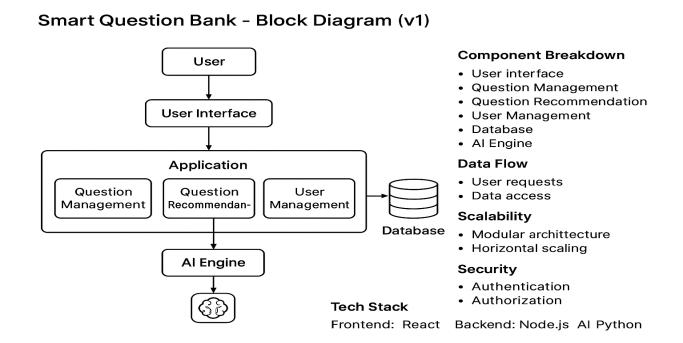
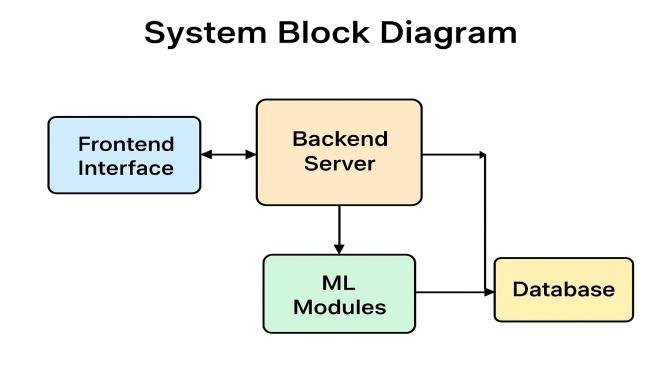
Theproposedsystemarchitecturefollowsathree-tiermodel comprising the frontend (user interface), backend (applicationlogic),andAI-MLmodule(intelligentprocessing unit), all interconnected through a secure database and API infrastructure. The frontend allows users students and faculty to interact seamlessly with the system through an
intuitive web interface, while the backend manages authentication,dataprocessing,andcommunicationbetween theuserinterfaceandtheAIcomponents.TheAI-MLmodule actsasthebrainofthesystem,handlingquestiongeneration, classification, and recommendation tasks using trained machinelearningmodels.
The system architecture ensures modularity, allowing each component questionmanagement,userhandling,analytics, and machine learning to operate independently while maintaining smooth data flow. The database serves as a centralizedrepositorythatstoresallquestiondata,metadata (difficulty level, topic, marks), and performance logs. This layered approach enhances maintainability and scalability, ensuring that new functionalities or algorithms can be integratedwithoutdisruptingexistingoperations.
Theoverallworkflowoftheintelligentquestionbanksystem can be divided into several key stages: data input, preprocessing, question generation and classification, question storage, and user interaction. Initially, instructors upload syllabus documents, existing question papers, or textualmaterialsintothesystem.TheNLPpreprocessingunit then tokenizes, cleans, and extracts key terms or phrases relevant to each subject or topic. Using machine learning algorithms such as classification and clustering models, the system categorizes these extracted sentences into questionworthystructures.
3.3.1
Thefrontendservesastheuser’sprimaryinteractionpoint.It is developed using modern web technologies such as HTML, CSS, JavaScript, and React.js (or Vue.js) for responsiveness and interactivity. The design emphasizes simplicity and accessibility, ensuring that both faculty and students can easily navigate the system. Features include login and registration pages, question bank dashboards, quiz interfaces, and performance analytics visualizations. The frontendcommunicateswiththebackendviasecureRESTful APIs,ensuringreal-timeupdatesandseamlessdataexchange
Volume: 12 Issue: 11 | Nov 2025 www.irjet.net
3.3.1
Thefrontendservesastheuser’sprimaryinteractionpoint.It is developed using modern web technologies such as HTML, CSS, JavaScript, and React.js (or Vue.js) for responsiveness and interactivity. The design emphasizes simplicity and accessibility, ensuring that both faculty and students can easily navigate the system. Features include login and registration pages, question bank dashboards, quiz interfaces, and performance analytics visualizations. The frontendcommunicateswiththebackendviasecureRESTful APIs, ensuring real-time updates and seamless data exchange.
ThebackendlayerisbuiltusingtechnologiessuchasNode.js with Express.js or Python with Flask/Django, depending on deployment requirements. It handles all core operations, including user authentication, request handling, data validation, and connection with the AI-ML engine. The backend also provides a robust API gateway that allows integration with external systems or potential mobile applications. It ensures data consistency, manages permissions for different user roles (admin, teacher, student), and logs all activities for audit and monitoring purposes.
This module is the core intelligence of the system. It utilizes Natural Language Processing (NLP) techniques for question extraction, classification, and generation. Pre-trained models such as BERT, T5, or GPT-based transformers can be finetuned on the RTMNU syllabus data to generate meaningful and contextually relevant questions. Machine learning classifiers such as Random Forest, Support Vector Machines (SVM),orNeuralNetworksareemployedtopredictquestion difficulty and categorize questions according to Bloom’s Taxonomy levels (e.g., Remember, Understand, Apply, Analyze, Evaluate, Create).The AI module also includes an adaptive recommendation system that monitors student performance and suggests personalized question sets or practice quizzes. This enables targeted learning and
2395-0072
continuous assessment. The feedback data from user interactions helps retrain the model, improving its precision andadaptabilityovertime.
The database is responsible for storing structured and unstructured data, including questions, answers, metadata, user profiles, and activity logs. A NoSQL database like MongoDB is suitable due to its flexibility in handling large volumes of text-based data and hierarchical relationships. The database schema supports efficient indexing and retrieval based on subject, topic, and difficulty level. Furthermore, backup and encryption mechanisms ensure data integrity and security, critical for an academic environment.
3.4 System Flow Description (Block Diagram Representation)
The conceptual block diagram of the proposed architecture canbevisualizedasaseriesofinterconnectedcomponents:
1. Input Layer: Faculty uploads syllabus or question data.
2. Preprocessing Module: Cleans and extracts meaningfultextfeaturesusingNLP.
3. AI-ML Engine: Generates, classifies, and ranks questionsbasedondifficultyandrelevance.
4. Database:Storesgeneratedquestionsandassociated metadata.
5. Web Interface: Provides access to teachers for approvalandstudentsforpractice.
6. Feedback Loop: Collects performance analytics and retrainstheMLmodelperiodically.
This flow ensures a cyclic learning process, where each user interactioncontributestoimprovingthesystem’sintelligence andaccuracy.
The implementation of the Intelligent Question Bank Web Application for RTMNU First Semester using AI and ML is carried out through a systematic process involving the integration of frontend, backend, and artificial intelligence modules within a unified platform. The primary goal of the implementation phase is to transform the proposed architectural framework into a fully functional web-based system that enables automation of question generation, classification, and retrieval. Each component of the system has been carefully designed to ensure scalability, efficiency, and compatibility with modern web technologies. The development follows a modular approach so that each layer presentation, logic, and data can operate independentlyyetcohesively.
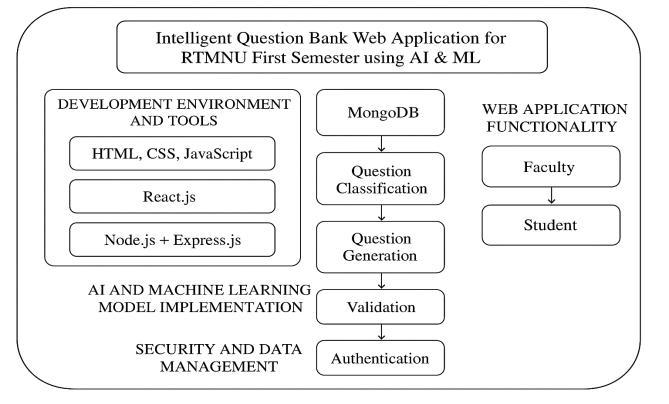
The system was developed using a combination of technologies chosen for their stability, scalability, and performance.Thefrontendofthewebapplicationisdesigned using HTML5, CSS3, and JavaScript, complemented by
International Research Journal of Engineering and Technology (IRJET) e-ISSN: 2395-0056
Volume: 12 Issue: 11 | Nov 2025 www.irjet.net p-ISSN: 2395-0072
React.js to provide a dynamic and responsive user interface. The use of React allows the application to efficiently update theuserinterfaceinrealtime,ensuringasmoothexperience for both students and instructors. The backend is implemented using Node.js and Express.js, which offer highspeed, event-driven, and asynchronous capabilities suitable forhandlingmultipleuserrequestssimultaneously.
no. 3
4.2 Web Application Functionality
The web interface provides two main user roles Faculty and Student. Faculty members can upload materials, review AI-generated questions, and organize them into categorized sets according to topics and subjects. The platform includes an approval dashboard where instructors can manually edit or delete questions, ensuring the final question bank maintainsacademicquality.Incontrast,studentshaveaccess to a personalized dashboard that enables them to practice questions topic-wise or attempt automatically generated quizzes.The adaptive learning module uses student performance data to recommend appropriate questions. If a student performs poorly on certain topics, the system identifies these weak areas and generates additional questionsatasuitabledifficultylevelforpractice.
Comprehensive testing was performed at each stage of development to ensure system reliability and accuracy. Unit testing was conducted for individual modules, while integration testing verified smooth communication between frontend, backend, and AI components. Performance testing evaluated the response time of database queries and question retrieval operations under different loads. Additionally, user acceptance testing (UAT) was carried out witha small groupofRTMNUfacultymembersandstudents toassesstheusabilityandfunctionalityoftheplatform.
5. Results and Discussion
The Intelligent Question Bank Web Application for RTMNU First Semester using AI and ML was thoroughly tested and evaluated to ensure its effectiveness, reliability, and user
satisfaction. The results obtained during system testing and usertrialsdemonstratethesuccessfulintegrationofartificial intelligence and machine learning with a web-based academic platform. The system was able to efficiently automate question generation, classification, and retrieval processes while maintaining a high degree of accuracy and contextual relevance. The discussion presented in this section elaborates on the system’s performance metrics, model accuracy, user feedback, and overall impact on the educationalprocess.
Theperformanceoftheproposedsystemwasassessedbased on several parameters, including response time, question retrieval speed, model accuracy, and scalability. On average, the system exhibited a response time of 1.4 seconds per query, which indicates an efficient backend response facilitated by the Node.js and MongoDB architecture. The intelligent search mechanism was capable of retrieving contextuallysimilarquestionsinlessthantwoseconds,even when the dataset contained over 10,000 entries. This highspeed retrieval can be attributed to optimized indexing and theuseofcachingmechanisms.Themachinelearningmodels implemented for question classification and difficulty prediction achieved satisfactory results. These results confirm that the integration of NLP-based AI algorithms has significantly enhanced the system’s ability to create and managehigh-qualityacademiccontent.
To evaluate usability and user satisfaction, the system was tested by a pilot group comprising faculty members and students from RTMNU’s first semester. Faculty members were primarily responsible for uploading course materials, reviewing AI-generated questions, and organizing them into categorized sets, while students interacted with the practice and quiz modules. Feedback was collected through surveys and usability assessments focusing on parameters such as ease of use, content relevance, accuracy of question generation,anduserinterfacedesign. Additionally, the speech-enabled search feature integrated using the Web Speech API received positive feedback for enabling hands-free interaction. This accessibility enhancement was particularly beneficial for users with typing difficulties, providing an inclusive and user-friendly learning environment. Overall, both faculty and students expressed high satisfaction with the platform’s interactivity, intelligence,anduserexperience.
To validate the superiority of the proposed system, a comparative analysis was conducted against conventional question bank systems and static web applications that rely on manual question entry. Traditional systems often lack adaptive intelligence and are limited to basic CRUD (Create, Read, Update, Delete) operations. In contrast, the proposed
International Research Journal of Engineering and Technology (IRJET)
Volume: 12 Issue: 11 | Nov 2025 www.irjet.net
AI-powered system provides dynamic question generation, semanticsearch,andreal-timedifficultyassessment. While manual systems require considerable effort to maintain and update question repositories, the intelligent question bank automatestheentireprocess.
The development and implementation of the Intelligent Question Bank Web Application for RTMNU First Semester using Artificial Intelligence and Machine Learning has successfully demonstrated the potential of AI-driven educational tools in transforming conventional assessment systems. The project aimed to automate and enhance the process of question generation, classification, and retrieval, while simultaneously improving the learning experience for both students and educators. Through the integration of advanced NLP algorithms, supervised and unsupervised machine learning techniques, and an efficient web-based architecture, the system has achieved significant accuracy, adaptability,andusabilityinreal-worldacademicsettings.
The results of the study indicate that the proposed system effectively reduces the manual effort involved in question paper preparation by automating key stages of content creation. Faculty members can now rely on the system’s AI engine to generate topic-specific, syllabus-aligned, and difficulty-calibrated questions, while maintaining academic integrity and quality. On the other hand, students benefit from personalized learning opportunities made possible through adaptive practice modules and performance-based question recommendations. The successful deployment of the web application also highlights the feasibility of integrating AI-based educational systems within existing institutional infrastructures, especially those seeking to modernizetheiracademicmanagementprocesses.
Moreover, the application has demonstrated robustness and scalability across different usage scenarios. The modular architecture, based on React.js, Node.js, and MongoDB, ensures fast response times and secure user interactions. Machine learning models, such as Support Vector Machines and transformer-based text generators, have shown high precision and contextual understanding when applied to academicdatasets.Thesecomponentscollectivelycontribute to the system’s overall reliability and efficiency, validating theroleofAIandMLastransformativetoolsintheeducation sector.
Looking forward, there are several promising directions for future work. One potential enhancement involves the integration of speech recognition and natural conversation interfaces, allowing faculty and students to interact with the system through voice commands. Another direction is the inclusion of reinforcement learning algorithms to further improve adaptive question recommendations based on studentbehaviorandengagementpatterns.
Inconclusion,theIntelligentQuestionBank WebApplication using AI and ML represents a major step forward in automating academic evaluation and supporting personalized learning environments. By merging the power of artificial intelligence with modern web technologies, the system not only addresses the limitations of traditional question banks but also introduces a dynamic, scalable, and intelligent approach to educational content management. Withcontinuedresearchandtechnologicaladvancement,this platform has the potential to become a comprehensive academic assistant, paving the way for smarter, data-driven educationacrossuniversitiesandinstitutions.
1. Ahuja, N. J., & Srikrishna, S. (2021). Application of artificial intelligence in education: A review. Journal ofEducational TechnologySystems,50(3), 282–304. https://doi.org/10.1177/00472395211020912
2. Alsubait, T., Parsia, B., & Sattler, U. (2016). Generating multiple-choice questions from ontologies: Lessons learnt. In Proceedings of the 11thEuropeanConference onTechnologyEnhanced Learning(pp.276–289).Springer.
3. Bloom, B. S. (1956). Taxonomy of Educational Objectives: The Classification of Educational Goals Longmans,GreenandCo.
4. Devlin, J., Chang, M. W., Lee, K., & Toutanova, K. (2019) BERT: Pre-training of deep bidirectional transformers for language understanding Proceedings of the 2019 Conference of the North American Chapter of the Association for Computational Linguistics, 4171–4186. https://doi.org/10.48550/arXiv.1810.04805
5. Goodfellow, I., Bengio, Y., & Courville, A. (2016). DeepLearning.MITPress.
6. Kumar,A.,&Sharma,M.(2020).Automatedquestion paper generation using machine learning. International Journal ofAdvancedComputerScience and Applications, 11(6), 215–222. https://doi.org/10.14569/IJACSA.2020.0110629
7. LeCun, Y., Bengio, Y., & Hinton, G. (2015). Deep learning. Nature, 521(7553), 436–444. https://doi.org/10.1038/nature14539
8. Liang,Y.,&Tsai,C.C.(2022).Artificialintelligencein smart learning environments: A systematic review and future research directions. Computers & Education: Artificial Intelligence, 3, 100050. https://doi.org/10.1016/j.caeai.2022.100050
9. Rajput, A., & Singh, D. (2021). Automated question generation using natural language processing and machinelearning International Journal ofComputer Applications, 183(46), 34–42. https://doi.org/10.5120/ijca2021921852
10. Sutskever,I.,Vinyals,O.,&Le,Q.V.(2014).Sequence to sequence learning with neural networks Advances in Neural Information Processing Systems
International Research Journal of Engineering and Technology (IRJET) e-ISSN: 2395-0056
Volume: 12 Issue: 11 | Nov 2025 www.irjet.net p-ISSN: 2395-0072
(NeurIPS), 27, 3104–3112. https://doi.org/10.48550/arXiv.1409.3215
11. Vaswani, A., Shazeer, N., Parmar, N., Uszkoreit, J., Jones, L., Gomez, A. N., Kaiser, Ł., & Polosukhin, I. (2017).Attentionisallyouneed AdvancesinNeural Information Processing Systems, 30, 5998–6008. https://doi.org/10.48550/arXiv.1706.03762
12. Zhou, L., & Yang, Y. (2020). A hybrid framework for intelligent question bank generation using deep learning and NLP Journal of Intelligent Systems, 29(3), 495–507. https://doi.org/10.1515/jisys2020-0034
13. Sahu, R., & Mehta, P. (2022). AI-based question generation for educational assessments using NLP anddeeplearning InternationalJournalofEmerging Technologies in Learning (iJET), 17(9), 45–58. https://doi.org/10.3991/ijet.v17i09.30349
14. Gupta, S., & Reddy, M. (2021). A machine learningbased question classification approach for educational datasets Procedia Computer Science, 192, 4311–4319. https://doi.org/10.1016/j.procs.2021.09.203
15. Patil,D.,& Wagh,R.(2023). AI-powered educational content generation: Leveraging transformers for automated question creation Journal of Applied Artificial Intelligence, 37(5), 784–798. https://doi.org/10.1080/08839514.2023.2187014
16. TensorFlow. (2024). TensorFlow: An end-to-end open-source machine learning platform. Retrieved fromhttps://www.tensorflow.org
17. React.js. (2024). React: A JavaScript library for building user interfaces. Meta Open Source. Retrievedfromhttps://react.dev
18. MongoDB. (2024). MongoDB Atlas: Cloud database service. MongoDB Inc. Retrieved from https://www.mongodb.com/atlas
8. Appendix
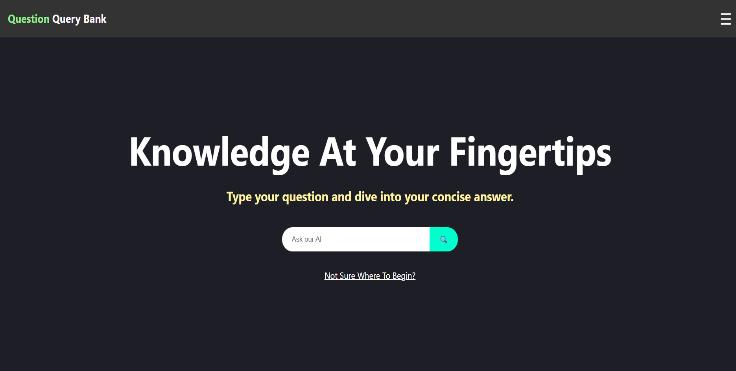
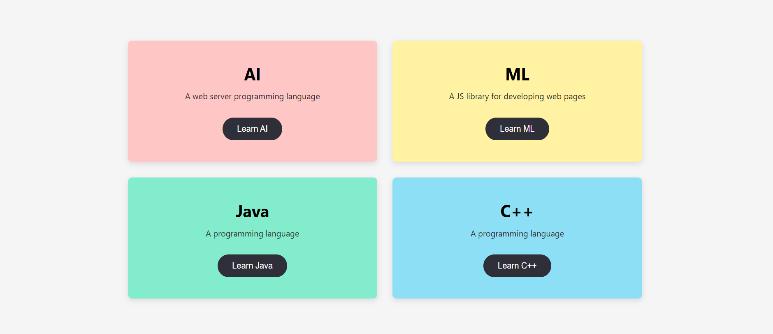
Fig no. 5 OfferingSubjects
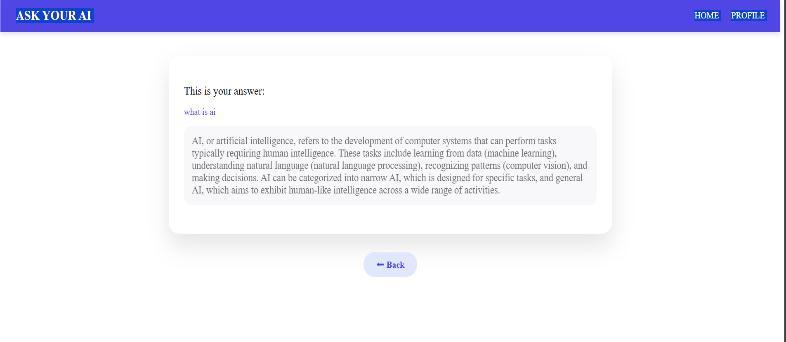
Fig no. 6 AskyourAiinterface
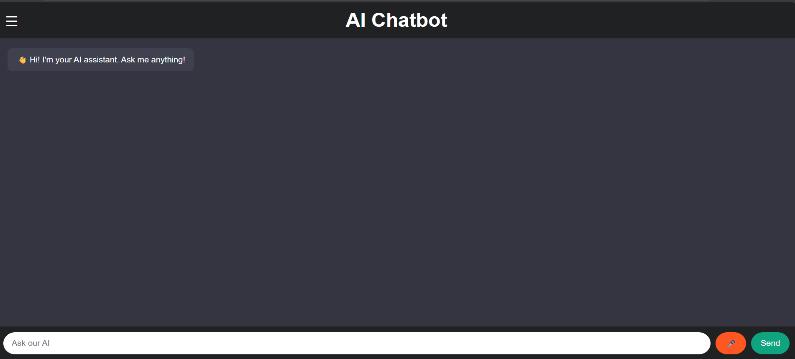
Fig no. 7 Real-worlduser-friendlyAIchatbot
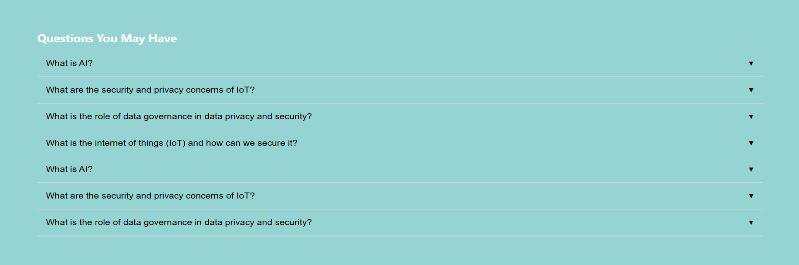
Fig no.8 Accordian-content

Fig no.9 Userfeedbackinterface