
International Research Journal of Engineering and Technology (IRJET) e-ISSN: 2395-0056
Volume: 12 Issue: 10 | Oct 2025 www.irjet.net p-ISSN: 2395-0072
International Research Journal of Engineering and Technology (IRJET) e-ISSN: 2395-0056
Volume: 12 Issue: 10 | Oct 2025 www.irjet.net p-ISSN: 2395-0072
Manish
Kumar Yadav1 , Nirendra Dev2
1M. Tech. Scholar, Department of Civil Engineering, DelhiTechnological University, New Delhi 2Professor, DepartmentofCivil Engineering, Delhi Technological University, New Delhi
Abstract - A structural designer's top concerns while designing and maintaining structures are stiffness and drift since a decrease in stiffness and an increase in drift can result in the breakdown of the entire structure, which can have negative effects on safety and the economy. ETABS, a tool commonly used to analyse structuresundervariousloadingconditions,isutilizedin this study to examine the stability of an existing structure. The main goal of the study is to compare the mid-rise structure and exoskeletal system under lateral loading. The exoskeletal system upgrade improved the structure'slateraldisplacement,drift,andstiffnessunder seismic and wind loads, according to the analysis that was obtained. In order to improve the overall stability and performance of mid-rise structures under lateral loading circumstances, the study highlights the significance of the exoskeleton, offering important insight. The maximum lateral displacement for a structure withoutan exoskeleton islargerthan thatofa structure without one, according to analysis conducted under seismic and wind loads. This shows that exoskeletonsreducelateraldisplacement.Thegoalofthe study is to determine which bracing orientation in steel exoskeletal constructions results in the greatest reduction in lateral displacement under lateral loading circumstances, as well as which bracing orientations cause the most lateral displacement loss. The efficacyof exoskeletal as a retrofitting technique is highlighted in the study. They act as a fixed supporting system for the structure, reducing the displacement under study in response spectrum analysis and increasing overall stiffness.
Key Words: Exoskeletal,Drift,ResponseSpectrum,bracings, Displacement,SeismicLoad.
An important development in structural engineering and architecture is the incorporation of exoskeletalstructures into mid-rise buildings, which offers an alternative to traditional building practices. The exoskeleton, a supplementary,externalstructuralframework,iscreatedto encloseandsupportthemainbuildingstructureinthisnovel method [1]. The main load-bearing system is this
exoskeleton, which is usually made of steel or reinforced concrete, relieving the internal structure of this duty. Numerousstrongbenefitsaremadepossiblebythisdivision ofstructureandspace.Exoskeletonsystemshavereceiveda great deal of attention as a means of addressing the drawbacksofalternativesolutions.Theirsuccessfulandnoninvasivebiomimicry-basedtechniquesignificantlyreduces thestructure'sseismicloadsbymakingthebuildingmore rigid and resistant to lateral pressures. First of all, exoskeletons provide improved structural performance, which is especially important in areas that are prone to earthquakesorstrongwinds[2].Thebuilding'sresilienceand safetycanbeincreasedbydesigning the external frame to more successfully withstand lateral forces. Second, and perhapsmoreimportantlyfromanarchitecturalperspective, the exoskeleton makes it possible to create interior areas that are open and free of columns. Over the course of the building'slife,thislayoutflexibilitypermitseasieradaptation tochangingneedsandgivesdesignersmorecreativefreedom. Open-planofficesandadaptableretailspacesareonlytwoof the many uses made possible by large, continuous floor plates[3]
Exoskeletonsprovideadvantagesintermsofstructureand space, but they also present intriguing opportunities for architecturalexpression.Akeydesignelementthataddsto the building's aesthetic identity and establishes a unique visual presence is the external framework. Additionally, includingsustainabledesigncomponentsismadepossibleby exoskeleton. It can accommodate rainwater collection systems,verticalgreenwalls,sunshadingdevices,andother elements that improve environmental performance and energy efficiency. Although the idea of using exoskeletal structuresinmid-risebuildinghasitsownsetofprospects and challenges, it balances cost-effectiveness with the possibility of major functional and architectural advancements.Thegoalofcreatingmoreresilient,flexible, and sustainable built environmentsiswhatmotivatesthis investigationintoincorporatingexoskeletonsintomid-rise structures[4].Wemustusedynamicanalysistoexaminethe structure's dynamic behavior. For mid-rise buildings, dynamicanalysiswillassistindetermininghoweachstory will reacttolateral loading events. To study the seismic effect, there are two different types of seismic dynamic analysis (a) Response spectrum analysis (b) Time history analysis.InthispaperstudydonebyconsideringResponse spectrumanalysis.
International Research Journal of Engineering and Technology (IRJET) e-ISSN: 2395-0056
Volume: 12 Issue: 10 | Oct 2025 www.irjet.net p-ISSN: 2395-0072
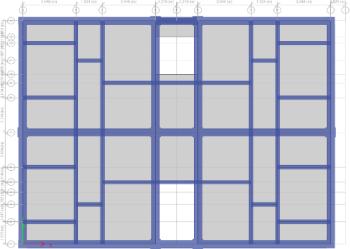
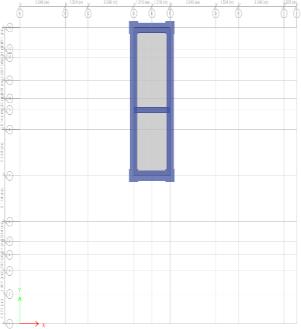
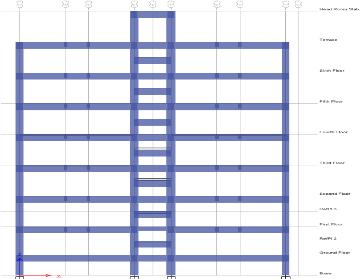
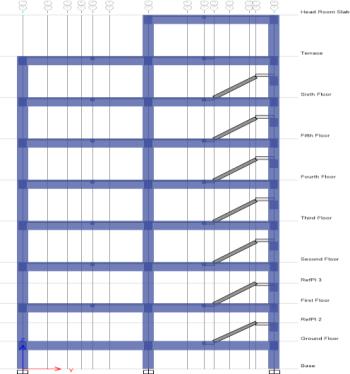
AG+6residentialRCbuildinghasbeenselectedasthecase study.Thebuilding'sfloorplanisrectangular,withYandX measurements of 13.717 and 17.678 meters, respectively (see Fig -2). The building's overall height (H) is 31.394 meters,basedonthefloor-to-floorheightcalculationsshown inTable1. Thefloorsare16.85cmthick witha 15 cm RC slab.Crosssectionsofthecolumnswereobtained:Col.50× 50cm2.Thecolumns'longitudinalsteeldimensions,taking reinforcement into account, were 4 Φ20 and 4 Φ16. The beam’s cross- sections were 30 × 80 cm2 ,40 ×70cm2 ,23 ×25cm2 and,23×30cm2 arerespectivelyforPB1,PB2, SB1 and SB2 where PB means Primary Beam and SB means SecondaryBeamasshownin(seeFig-4).
Table -1:FloortofloorheightofG+6building
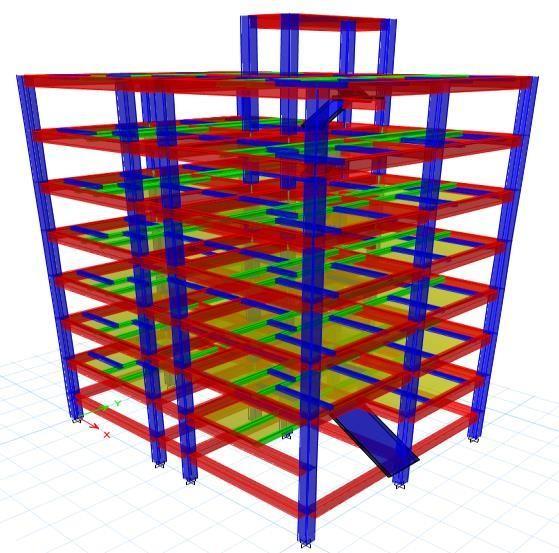
Fig -1:IsometricView
Totalheightofthestructureis31.394mwhichcomesunder mid-risebuildingasperbasicdesignconcept.
3. GEOMETRICAL FEATURES OF RC STRUCTURES
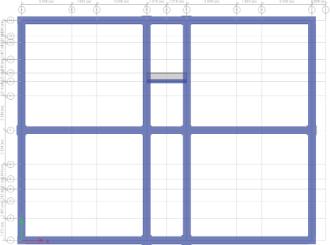
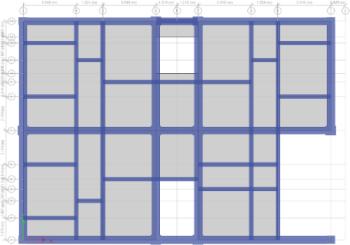
(a)GroundFloorPlan (b) FirstFloorPlan
(c)PlanofSecondFloortoTerrace (d) Headroom
Fig -2: ConfigurationofstructureframePlan
International Research Journal of Engineering and Technology (IRJET) e-ISSN: 2395-0056
Volume: 12 Issue: 10 | Oct 2025 www.irjet.net p-ISSN: 2395-0072
(a)ElevationinXDirection (b) ElevationinYDirection
Fig -3:Configurationofstructureframeelevation
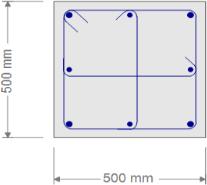
(a)Columnsection
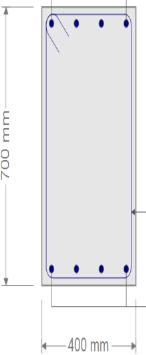
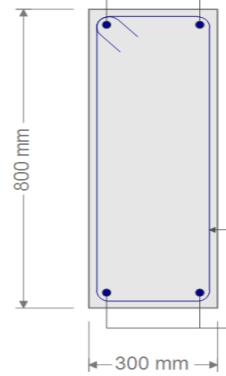
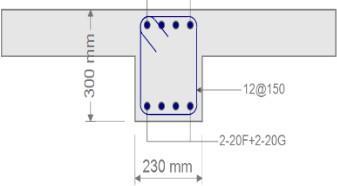
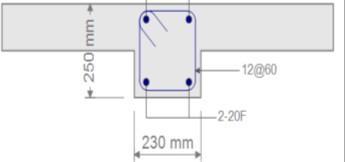
(b)Beamsections
Fig -4:Structuralelementcross-sections
4. MODELLING
Thetraditionalmid-riseframeconsideredinthestudyisa rectangulardesign(L/B=1.289)withdimensionsof17.678 m×13.717mandthreebaysalongtheXandtwobaysalong theYdirections.Thestructureinquestionis31.394meters tall, contains G+6 levels, and features a headroom slab. Beyondthebuilding'sperimeter,anexoskeletonstructureis accessible at a distance of 1.30 meters. The exoskeleton structureisconnectedtothebuilding'smultiplefloorlevels by links. The links were made of 120 mm-diameter steel rods.
Fig -2 (a, b, c, d) shows that the plans of the different floors of the structure differ, as shown by the study's assessment of the elevation and plan of the ordinary rectangular building (Fig -2, 3). The analysis begins with conventional mid-rise frames (Fig. 1) and moves on to Xbraced(Fig-5a),V-braced(Fig-5b),diagonal-braced(Fig5c),anddiamond-braced(Fig-5d)structures.Fig-5shows theelevationofeverymid-riseframealongthepositionsof the exoskeletons, perpendicular to the building's frameat everyoutercolumnspot.
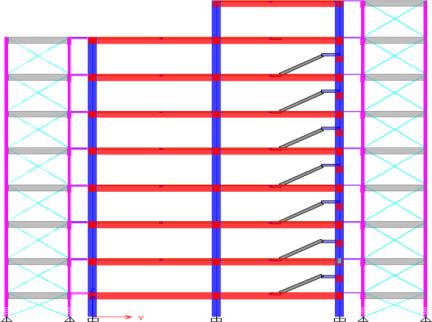
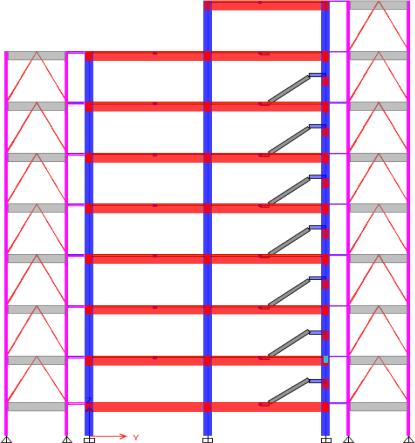
(a)X-braced (b)V-braced
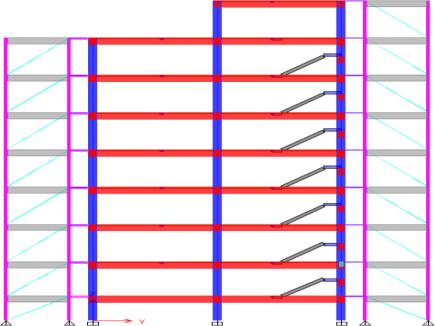
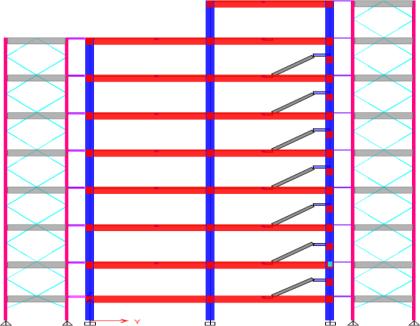
(c)Diagonal-braced (d)Diamond-braced
Fig -5: Conventionalframewithexoskeletalintegration
Exoskeleton structures are made of steel of the Fe250 grade.A120mm-diametersteelrodservesasthelinkage,the diagonal beams of the exoskeleton structures are hollow circularbeams(ISNB50M),andthecolumnsarecreatedfrom built-upboxsectionsoftwochannelsectionISMC200with batteningat0.30mintervals(Fig-6).
Releasing moments are employed to model the connections as axially stiff links. It is assumed that the Young'smodulus(E)ofthelinkishigh.AhighvalueofEis employedtomaketheconnectionasrigidasfeasibleandto maximizeitsaxialstiffness.Theexoskeletonstructureswere situated 130 cm from the center line of the building's exteriorperimeter
International Research Journal of Engineering and Technology (IRJET) e-ISSN: 2395-0056
Volume: 12 Issue: 10 | Oct 2025 www.irjet.net p-ISSN: 2395-0072
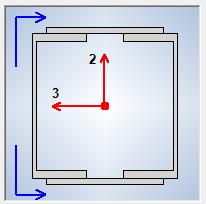
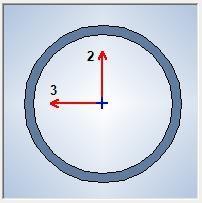
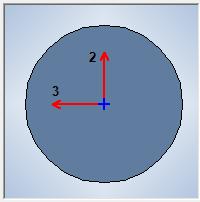
Static analyses were conducted using ETABS software to evaluatethecurrentRCstructure'sperformanceintermsof lateralforceresistance.ThisResponseSpectrumapproach wasusedtoperformlineardynamicanalysisinETABSfor framesofallfiveconfigurations:–rectangularmid-riseRC frame, X-braced, V-braced, Diagonal-braced and diamondbraced[5-6].Throughoutthefollowingsections,theframe withoutanexoskeletonisreferredtoasaconventionalmidriseframe.Atotaloffivemodelswereexamined,including fourframeswithexoskeletonstructuresandonestandard frame. The response spectrum for Zone III as stated in IS:1893-2016[7]wastakenintoaccountduringtheanalysis. A response reduction factor (R) of 3.0 and an importance factor (I) of 1.0 have been considered. The process of responsespectrumanalysisentailscalculatingtheresponses in each vibrational mode and combining them using appropriatemodalcombinationcriteria.
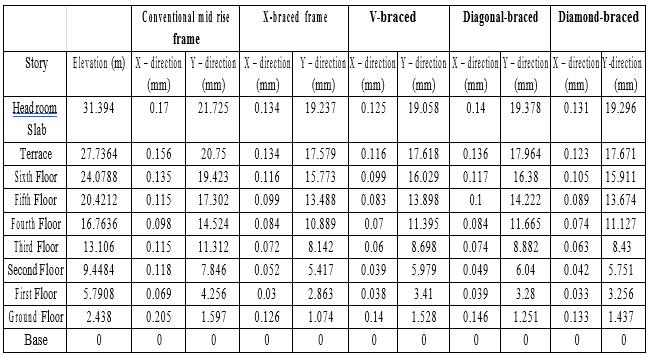
Asframeconsideredinthispaperwasrectangularinplan, soweneedmaximumdisplacementalongX&Ydirectiondue tolateralforceinrespectivedirection.Themaxdisplacement alongrespectivedirectionshowninTable2.
Table -2:MaximumfloordisplacementsinX-directionandYdirection
Finally, complete content and organizational editing before formatting. Please take note of the following items whenproofreadingspellingandgrammar:
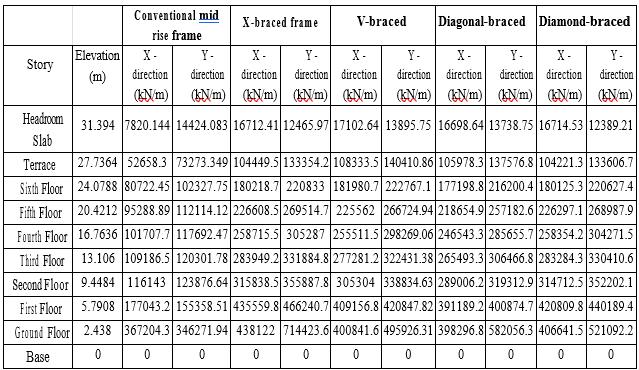
The maximum story stiffness induced in frames in X directionandYdirectionsrespectivelyduetolateralforcein their respective direction of different configurations providedinTable3.Thetablepresentsadrasticincreasein the stiffness of exoskeleton frame as compared to conventional mid-rise frame. However, exoskeleton structuresX-bracedframeshowsmaximumstorystiffness.
Table -3:MaximumstorystiffnessinX-directionandY-direction
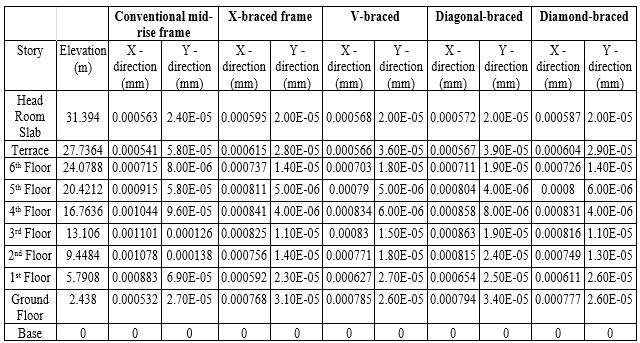
Story drift in mid-rise buildings under lateral loading referstotherelativedisplacementbetweenadjacentstories duetohorizontalforcessuchaswindorseismicactivity.As these forces act upon the structure, each story undergoes horizontalmovement,resultingindifferentialdisplacements alongthebuildingheight[8].Thephenomenonofstorydrift isacriticalconsiderationinstructuraldesigntoensurethat displacementsremainwithinacceptablelimits to maintain occupant comfort, structural stability, and safety, optimizing andincorporating bracing systems to mitigate excessivedrift.Thereisadecreaseinstorydriftbecauseof integrationofexoskeletalasobservedfromTable4.
Table -4:MaximumstorydriftinX-directionandY-direction
International Research Journal of Engineering and Technology (IRJET) e-ISSN: 2395-0056
Volume: 12 Issue: 10 | Oct 2025 www.irjet.net p-ISSN: 2395-0072
Exoskeletonintegrationintomid-risebuildingsisaneffective retrofitapproach,particularlywhentherearefunctionaland spatial limitations. The present work examines the performance of exoskeleton structures in the lateral force regulation of conventional RC frames. The current study utilizesrigidlinkswithhingedconnections,oneoftheseveral braced configurations that connect the exoskeleton to the conventionalmid-riseRCframe.
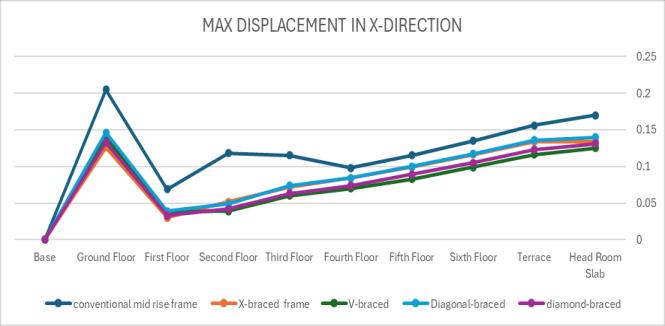
Fig -7: MaximumdisplacementinX-direction
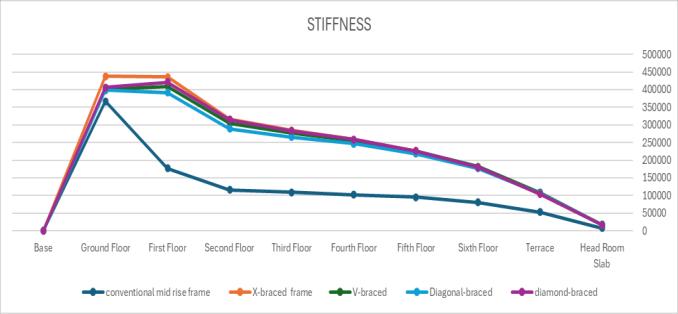
Fig -8: Stiffnessofstructurefordifferentbracings
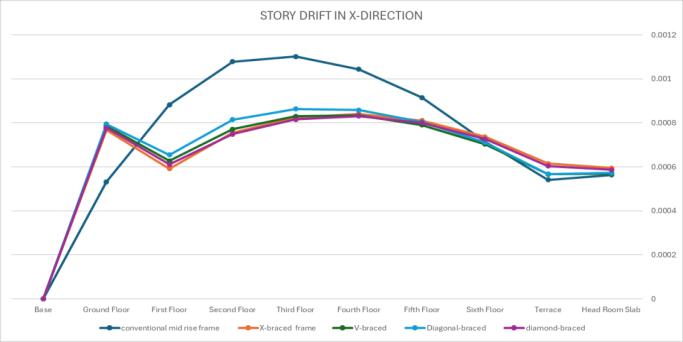
Fig -9: StorydriftinX-direction
As a result, the analysis of five distinct building frames demonstratesthattherearesignificantdifferencesinhow wellabuildingperformsunderlateralloading.Theresponse spectrum analysis also analytically demonstrates that the installationofanexoskeletalstructuralsystemwithoutthe use of a damping system automatically reduces story displacement (Fig -7) and story drift (Fig -9) in the diaphragm.So,thisworkcanbeconsideredasareference
forthedesignandexecutionoftheofanymid-risestructure which is going to be constructed in India by considering exoskeletal systemwhichincreasetheperformanceofthe storystiffness(Fig-8).Additionally,exoskeletalsystemscan be efficiently designed using this study for a variety of performance goals at various risk levels. The exoskeletal systemisthereforeshowntobeasafechoiceforthemidrisestructuresthatcansuccessfullybedesigned.
[1] Olivo, J., Cucuzza, R., Bertagnoli, G., Domaneschi, M. (2024). Optimal design of steel exoskeleton for the retrofitting of RC buildings via genetic algorithm. Computers and Structures, 299: 1-18. https://doi.org/10.1016/j.compstruc.2024.107396
[2] Reggio,A.,Restuccia,L.,Martelli,L.,Ferro,G.A.(2019). Seismic performance of exoskeleton structures. Engineering Structures, 198: 109459. https://doi.org/10.1016/j.engstruct.2019.109459
[3] Passoni,C.,Guo,J.,Christopoulos,C.,Marini,A.,Riva,P. (2020).Designofdissipativeandelastichigh-strength exoskeletonsolutionsforsustainableseismicupgrades of existing RC buildings. Engineering Structures, 221: 111057. https://doi.org/10.1016/j.engstruct.2020.111057
[4] Passoni, C., Marini, A., Belleri, A., Menna, C. (2019). A Multi-Step Design Framework based on Life Cycle Thinking for the Holistic Renovation of the Existing Buildings Stock. IOP Conf. Series: Earth and Environmental Science, 290: 012134. https://doi.org/10.1088/1755-1315/290/012134
[5] Kapoor, K., Joshi, R., Singh, A., Resatoglu, R., Zain, M. (2023).CalibrationofFEMmodelsofhistoricmasonry structures and its application on a local historic structure. Materials Today: Proceedings. https://doi.org/10.1016/j.matpr.2023.04.050
[6] Yadav,P.,Joshi,R.(2019).EffectofHeightandPosition ofShearWallonG+5Multi-StoreyBuildingforZoneIII. International Journal of Recent Technology and Engineering,8(3),5452-5456.
[7] IS1893(Part1):2016.CriteriaforEarthquakeResistant Design of Structures, Part 1: General Provisions and Buildings(SixthRevision),BureauofIndianStandards, NewDelhi.
[8] Joshi,R.,Burman,A.K.(2017).EffectofPeriodicLoads on G+3 RCC Building. International Journal of EngineeringResearch&Technology,6(6):99-102.