
International Research Journal of Engineering and Technology (IRJET) e-ISSN:2395-0056
Volume: 12 Issue: 10 | Oct 2025 www.irjet.net p-ISSN:2395-0072
International Research Journal of Engineering and Technology (IRJET) e-ISSN:2395-0056
Volume: 12 Issue: 10 | Oct 2025 www.irjet.net p-ISSN:2395-0072
Bariakwaadoo S. Bere1, Isidore U. Uju2
1Department of Electrical/Electronic Engineering Technology, Kenule Beeson Saro-Wiwa Polytechnic, Bori, Rivers State, Nigeria, +234-806-061-5520
2 Department of Electrical/Electronic Engineering, Chukwuemeka Odumegwu Ojukwu University,Uli, Anambra State, Nigeria,+234-806-451-9778
Abstract
Inductionmachineshavebeenreliableinitsoperationsandthisincreaseitsusageintheindustries.
Demandforbetterperformanceinitsareaofapplicationcallsforresearchtoaddresssomeofitsshortcomings likespeed variationwithappliedload,poortrajectorytrackingcapabilities,lowfrequencyvibrations.Themainobjectiveofthestudy was to improve the performance and stability of Dual Stator Induction Machine (DSIM) using Linear Quadratic Regulator (LQR)controller.TheimplementationoftheDSIMcontrolstrategyinvolvedinvestigationofitsperformanceimprovement usingLQRcomparedtoPIDcontrolmethod.Theevaluationconsidereda5Nloadconditionwithperformancemetricsuch asstepresponseanalysis(overshoot,risetimeandsettlingtime),bodeplotanalysisandsigmaplotanalysis.Toanalysethe complex space vector model of the DSIM, a complete set of simulations were carried out using MATLAB/Simulink 2021b modelling software. From the analysis, it was found out that, the LQR controller had a good torque stability, low torque overshoot and moderate current ripple. The time domain metric shows that; PID had an overshoot, rise time and settling time of 4.6%, 0.213s and 0.598s respectively; LQR had an overshoot, rise time and settling time of 0.152%, 0.288s and 0.47s respectively. The frequency response analysis shows that PID controlled DSIM peak gain is -6.02dB and LQR controlled DSIM had a gain and phase margins of 48.8dB (at frequency of 0.0104rad/s) and 19.80(at frequency of 0.97rad/s)respectively.Insigmaplotanalysis,PIDcontrollerhada highernegative singularvaluewhileLQRhasa lesser negativesingularvalue.Thefindingsforcurrent,torqueandspeedresponseshowsthattheefficiencyofLQRisbetterthan thatofPIDcontroller. TimedomainanalysisshowsthatLQR issuperiortoPIDcontroller intermsofovershoot, risetime andsettlingtime.Insigma plotanalysis,PIDcontrollertendstoperformwellatlowfrequencies,but lackshighfrequency robustness which is improved in LQR. Increased peak indicate power robustness and sensitivity to disturbance. Flatter shapeofLQRindicateuniformperformanceandrobustnessthanPIDespeciallyathighfrequencies.
Keywords: Induction Machine, Dual Stator, Stability, Performance
1.0 INTRODUCTION
1.1 Background of study
A Dual Stator Induction Motor or Machine (DSIM) is an induction machine which has two separate three-phase stator windings, sharing the same machine core and the common squirrel cage rotor winding. Power is supplied to the two windings by two separate variable frequency inverter drives to provide two independently controllably torque components.Inthemachine,alternatingcurrentisappliedtothestatorandalternatingcurrentsareinducedintherotorby transformer action (Mataray and Kakkar. 2011)[1]. At low speed, the power supplied to one of the windings can produce torque which opposes the torque from the power applied to the other winding, so that very low speed and standstill operationcanbeachievedwhilethefrequencyofthepowersuppliedbytheinvertersisalwaysgreaterthantheminimum frequency. At higher operating speeds, power is supplied to the two windings so that the torque from the windings adds. Thedualstatormachinecanbebuiltwithminimalmodificationstostandardwindingconfigurations.
International Research Journal of Engineering and Technology (IRJET) e-ISSN:2395-0056
Volume: 12 Issue: 10 | Oct 2025 www.irjet.net p-ISSN:2395-0072
Withreferencetothelayoutofthestatorwindingsinthemotorcore,thedualstatorinductionmotorscanbecategorized into two basic types. The first type consists of a set up in which two separate three-phase stator windings are located sequentiallyalongthestatorcore.Inthistypeofthecategory,thereisnomagneticcouplingbetweenthestatorwindings, buteachofstatorwindingsismagneticallycoupledwiththerotorcagewinding. Thetwostatorwindingscanbesupplied from the same or separate AC voltage sources of the same frequency. The second type of dual stator set up consists the motorwithtwostatorwindingsthatarespatiallyshiftedandaresituatedinthesamestatorcore (Pieńkowski, 2012[2]).
Theproblemsexistingintheinductionmachineareasfollows:
i. The speed of the motor varies with the applied load which consequently affects the general performance of the inductionmachine,causingloworpoortrajectorytrackingcapability.
ii. From the review, it was found that the dual stator winding induction machine output still records some low frequencyvibrationswhichmeansthatthemachinesuffersfrominadequatecompensationcapabilities.
iii. The induction machineisverysensitivetodisturbances especiallythe setof disturbancesformedasa result of the variationintheload.Thus,themachinesuffersfromlowdisturbancerejectioncapabilities.
Theaimofthestudyistoimprovetheperformanceandstabilityofthedualstatorwinding inductionmachineusinglinear quadraticregulator(LQR)controller
Theobjectivesofthestudyareasfollows:
i. Toaddressthespeedvariationproblemoftheinductionmachineusingrobustcontroltechnique.
ii. Tooptimizethe machineoutputperformancein ordertocancel thelowfrequency oscillationandtherebyimprove itsstability.
iii. ToanalyzethedualstatorinductionmachineoutputperformanceusingdifferentcontrollerssuchasPIDandLQR.
iv. TocomparetheoutputperformanceoftheDSIMunderdifferentcontrollers(PIDandLQR)inordertoascertainthe controllerwiththebestimprovementcharacteristics.
2.1 Theoretical Framework
Aninductionmachinecanbeusedasamotorwhenitconvertselectricalenergytomechanicalenergyorageneratorwhen it coverts mechanical energy to electrical energy. The dual stator induction motor being a rotary machine operate on the same working principle as it linear counterpart - the linear motor. In linear motor magnetic flux from a mover (rotor) is lockedorsynchronizedwiththatofastationarytrack(stator)convertingelectromagneticenergyintotranslationalmotion (Uju et.al, 2018)[3].
A squirrel cage induction motor will be composed of the squirrel cage windings. Aluminum bars would be molded on the slotsandtheywillbeshort-circuitedattheendrings.Inordertoreducenoise,thebarswouldbeslantedinasmallrotor.In thesquirrelcagetype,therewon’tbeanyslipringsbutitcouldhaveconductorslikecopper,andalsoitwillbegalvanically isolated.Sotherotorinsidethiswouldlooklikeasquirrelcage.Therotorisacylindricalsteellaminationwithaconductive material embedded in its surface. So when an AC current passes through the stator windings then a rotating electromagneticfieldwillbecreated (Ashlin, 2021)[4].
Squirrelinductionmotorworkingisbasedontheprincipleofelectromagnetism.Whenthestatorwindingissuppliedwith a three-phase AC, it produces a rotating magnetic field (RMF) which has a speed called synchronous speed. This RMF causes voltage induced in the rotor bars. So, that short-circuit current flows through that. Due to these rotor currents, a self-magnetic field is generated which interacts with the stator field. Now, as per the principle, the rotor field starts opposing its cause. When the RMF catches the rotor moment, the rotor current drops to zero. Then there would be no relativemomentbetweentherotorandRMF (Elprocus, 2022)[5]
International Research Journal of Engineering and Technology (IRJET) e-ISSN:2395-0056
Volume: 12 Issue: 10 | Oct 2025 www.irjet.net p-ISSN:2395-0072
The multiphase induction machinehas gained a lot of interests in research and the industries due to its improved power and general performance which include other characteristics that edge it out over the usual induction machine type. The mostcommontypeofthismultiphasemachineisthedualstatorinductionmachine(DSIM),whichhasitsconfigurationand design in such a way that two sets of three-phase windings, spatially phase shifted by 30 electrical degrees, share a commonstatormagneticcore (Ben-Slimene et al, 2012)[6] asillustratedinfigure2.1.
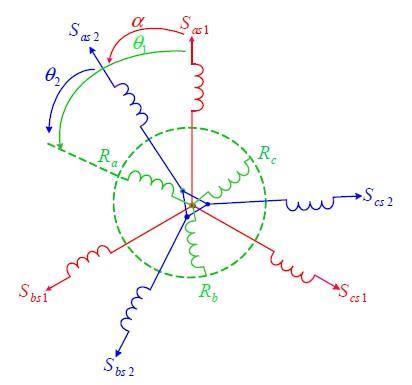
The analytical d-q model was developed in general reference frame and is suitable for analysis of the machine behavior withanarbitraryangleofdisplacement.
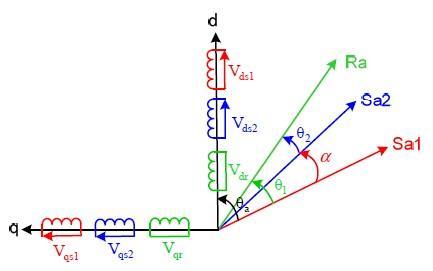
Thevoltageequationsofthedualstatorinductionmachineusingdecompositionvectorspaceareasfollows.Forthestator circuitwecanwrite (Marwa et al, 2014)[7]:


International Research Journal of Engineering and Technology (IRJET) e-ISSN:2395-0056
Volume: 12 Issue: 10 | Oct 2025 www.irjet.net p-ISSN:2395-0072
Therotorcircuitmathematicalexpressionisgivenasfollows (Marwa et al, 2014)[7]: (2.5) (2.6)

Where���� isthespeedofthereferenceframe.
The analytical d- model has been developed in a general reference frame and can be used to analyze the behavior of inductionmachineinanyreferenceframe.
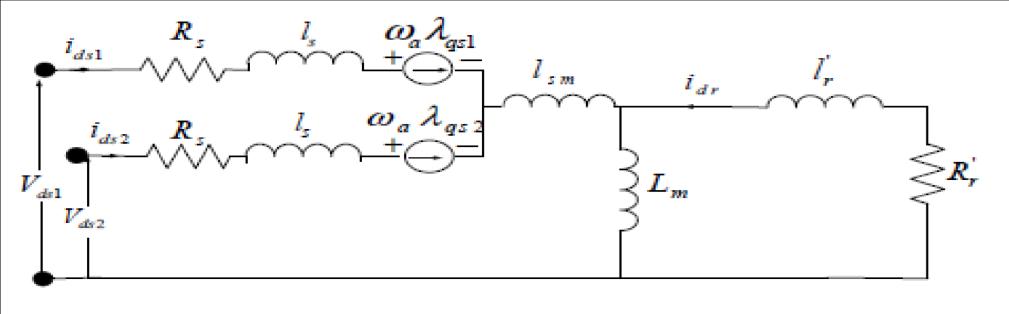
Figure 2.3: The d-axis equivalent circuit of a Dual Stator IM in arbitrary reference frame (Marwa et al, 2014)[7]
The equations from 2.1 to 2.14 propose the equivalent circuit as shown in figure 2.3. The common mutual leakage inductanceexpressesthepointthatthetwosetsofstatorwindingsoccupythesameslotsandare,thus,theyaremutually coupledbyacomponentofleakageflux (Singh et al, 2003)[8].
Theelectromagnetictorqueanddynamicequationscanbeexpressedas: (2.7) (2.8)

Representingthemodelinstatespacemodel,thestateequationoftheformexpressedinequationwasused:
2.3
APID(Proportional-Integral-Derivative)controllerisawidelyusedcontrolloopfeedbackmechanisminindustrialcontrol systems.Itcombinesthreecontrolactions;proportional,integral,andderivativestoprovidea robustandeffectivemeans of controlling dynamic systems. The PID controller is particularly valued for its simplicity, effectiveness, and ease of implementation.
Theproportionaltermproducesanoutputthatisproportionaltothecurrenterrorvalue,whichisthedifferencebetween thedesiredsetpointandtheactualprocessvariable.Theproportionalgainkpdeterminesthereactiontothecurrenterror. A higher kp results in a larger output for a given error, leading to a faster response. However, using only proportional controlcanleadtoasteady-stateerror,asitdoesnotaccountforpasterrors.
© 2025, IRJET | Impact Factor value: 8.315 | ISO 9001:2008 Certified Journal | Page601 (2.4)
International Research Journal of Engineering and Technology (IRJET) e-ISSN:2395-0056
Volume: 12 Issue: 10 | Oct 2025 www.irjet.net p-ISSN:2395-0072
Theintegraltermaccumulatesthepasterrorsovertime,providingacorrectiveactionbasedonthehistoryoftheerror.The integralkidetermineshowmuchinfluencetheaccumulatederrorhasontheoutput.Thistermhelpseliminatesteady-state errorbyadjustingthecontroloutputbasedonthetotalaccumulatederror.
The derivative term predicts future error based on its rate of change, providing a damping effect that helps reduce overshootandimprovesystemstability.Thederivativegainkddeterminestheinfluenceoftherateofchangeoftheerror ontheoutput.Thistermhelpstoreacttochangesintheerrorquickly.
The PID controller is a fundamental tool in control engineering, providing a simple yet effective means of managing dynamicsystems.Itsabilitytocombineproportional,integral,andderivativeactionsallowsforimprovedstability.
ThePIDcontrollawisexpressedas: ��(��) (��) ∫ (��)���� ( )
where (��)
TheclassicalnumericalPIregulatoriswellsuitedtoregulatingthemotortorquetothedesiredvaluesasitisabletoreach constantreference.Thetransferfunctiontakestheform (Benyoussef, 2022)[9]: (��) ( ) ( ) (2.12) where (��) �� ( )�� (2.13)
2.4 Linear-Quadratic-Gaussian
Linear-Quadratic-Gaussian(LQG)controlisamodernstate-spacetechniquefordesigningoptimaldynamicregulatorsand servo controllers with integral action (also known as set point trackers). This technique allows you to trade off regulation/trackerperformanceandcontroleffort,andtotakeintoaccountprocessdisturbancesandmeasurementnoise.
The compensator (k) in an LQR controller is a gain matrix that optimally balances state feedback to minimize a coat function, typically involving state errors and control efforts. In the context of a DSIM, this matrix is designed to ensure stabilityandperformancebyeffectivelymanagingthesystem’sdynamicresponse.Thecompensator(k)providesfeedback basedonthecurrentstateofthesystem,allowingforreal-timeadjustmentstothecontrolinputs.Thisfeedback iscrucial formaintainingthedesiredperformanceoftheDSIM.
The LQR framework aims to minimize a quadratic cost function, which typically includes terms for state deviations and controlefforts.Thecompensator(k)isderivedfromsolvingthealgebraicRiccatiequation,ensuringthatthecontrolactions areoptimallyintermsofthisfunction.
In a DSIM, the compensator (k)helps manage the dynamic response by adjusting the control inputs based on the state of themotor.Thisisparticularlyimportantforachievingdesiredspeedandtorquecharacteristicswhileminimizingovershot andsettlingtime.Itplaysacriticalroleinoptimizingperformance,ensuringstability,andmanagingthedynamicresponse ofthemotor.
After implementing the compensator (k), it is essential to evaluate the performance of the DSIM under various operating conditionstoensurethatthedesiredcontrolobjectivesaremet.
ThematricesQandRusedintheLQRformulationmustbecarefullyselectedtoreflecttherelativeimportanceofthestate errorsversuscontrolefforts.Thistuningdirectlyinfluencesthevaluesinthecompensator(k).
Givenalineartime-invariantsystem,thestatespaceequationiswritteningeneralformas: �� �� ����
International Research Journal of Engineering and Technology (IRJET) e-ISSN:2395-0056
Volume: 12 Issue: 10 | Oct 2025 www.irjet.net p-ISSN:2395-0072
whereA=statematrixofsides ,Bisthecontrol orinputmatrixoforder ,Cistheoutputmatrixoforderp n, and D is feedthrough matrix of order p m, respectively. n is the number of state variables and m is the number of input variables.
Thecostfunctionistominimize:
∫( �� ��)���� �� ��
WhereQisapositive-definite(orpositive-semidefinite)Hermitianorrealsymmetricmatrix,
R is a positive-definite Hermitian or real symmetric matrix. Note that the second term on the right-hand side of Equation accountsfortheexpenditureoftheenergyofthecontrolsignals.ThematricesQandRdeterminetherelativeimportanceof theerrorandtheexpenditureofthisenergy.
TheLQRk(s)isdesignedusingAlgebraicRiccatiEquation(ARE)ensuringoptimal disturbancerejection.Ittakestheform (Ben and Khlifi, 2022)[10]: �� �� �� ��
Where:
Aisthestatematrix, Bistheinputmatrix, Qisthestateweightingmatrix
Risthecontrolweightingmatrix, Pisthesolutionmatrix
Theoptimalfeedbackcontrollawis;
��
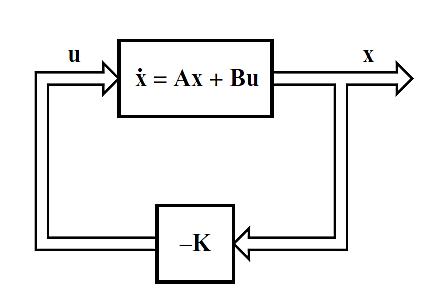
Therefore, if the unknown elements of the matrix K are determined so as to minimize the performance index, then u(t)= (t)isoptimalforanyinitialstatex(0).
Thegainmatrixkiscomputedas:
The control cost weighting matrix R determines the penalty on control effort. A larger R means the controller will use smallercontrolinputs(smootherbutpossiblyslowerresponse).R>0toensuretheproblemiswell-posed.Prepresentthe cost-to-go matrix in the optimal control problem. It is used to solve the Riccati equation and defines the optimal cost function.Bdefineshowcontrolaffectsthesystemdynamics.
© 2025, IRJET | Impact Factor value: 8.315 | ISO 9001:2008 Certified Journal | Page603
International Research Journal of Engineering and Technology (IRJET) e-ISSN:2395-0056
Volume: 12 Issue: 10 | Oct 2025 www.irjet.net p-ISSN:2395-0072
ThesetermstogetherdeterminetheoptimalfeedbackcontrollawthatminimizesthequadraticcostfunctionJ.
From the reviewed literature, the following points were identified to be the research gaps in the dual stator induction machineperformanceimprovement:
i. Therobustnessofthedualstatorinductionmachinewasnotguaranteedduetolackofproperanalysisofthesystem behaviorinfrequencydomainandlacktrackingerroranalysisdetermination.Thesemakeitdifficulttoknowexactly the ability of the system to withstand disturbances and perform optimally in the presence of significant uncertainties.
ii. The tracking performance characteristic of a controlled system determines the ability of the system to achieve optimal performance by tracking the reference input to the system with reduced error. However, the tracking performanceofthedualstatorinductionmachinewasnotanalyzed
iii. The stability of the system is required in the system design and it is used to determine the ability of the system to maintainequilibrium.However,thestabilityofthedualstatorinductionmachinewasnotanalyzed.
iv. From the results of the reviewed works, there are still ripples existing in the output of the controlled DSIM which showsthattheperformanceofthesystemneedsmoreimprovement.
v. The system sensitivity and disturbance rejection capability are not analyzed in frequency domain. Thus, there is need to carry out a thorough analysis of the system sensitivity to disturbance in frequency domain in order to ascertaintherealabilityofthecontrollerandtherobustnesscharacteristicsofthesystem.
3.0 METHODOLOGY
3.1 Controller Design
ThePIDcontrollawisexpressedas: ��(��) (��) ∫ (��)���� ( ) (3.1)
Where (��)
TheclassicalnumericalPIregulatoriswellsuitedtoregulatingthemotortorquetothedesiredvaluesasitisabletoreach constantreference.Thetransferfunctiontakestheform (Benyoussef, 2022)[9]:
(��) ( ) ( ) (3.2)
Where (��) �� ( )�� (3.3)
TheLQRk(s)isdesignedusingRiccatiequationsensuringoptimaldisturbancerejection.Ittakestheform (Ben and Khlifi, 2022)[10]: �� (3.4)
Thestatespaceequationforthesystemiswritteningeneralformas: �� �� ���� (3.5)
whereA=statematrixofsides ,Bisthecontrolmatrixoforder respectively.nisthenumberofstatevariables andmisthenumberofinputvariables.
International Research Journal of Engineering and Technology (IRJET) e-ISSN:2395-0056
Volume: 12 Issue: 10 | Oct 2025 www.irjet.net p-ISSN:2395-0072
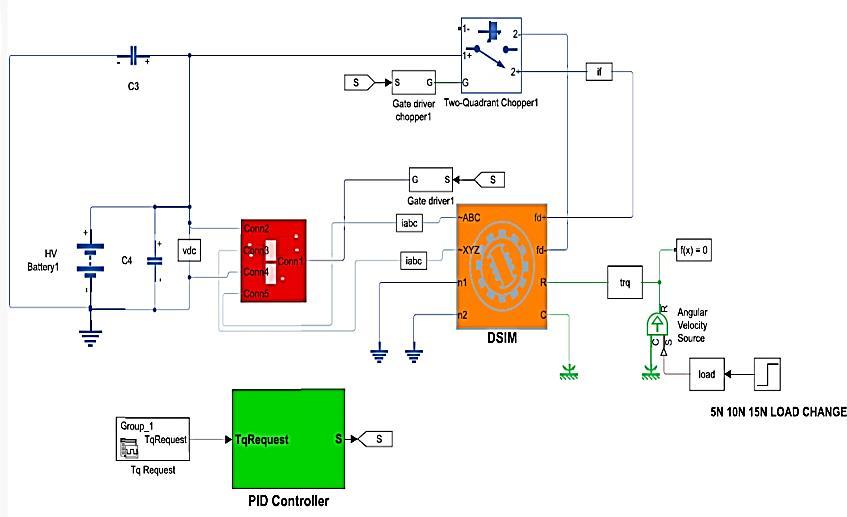
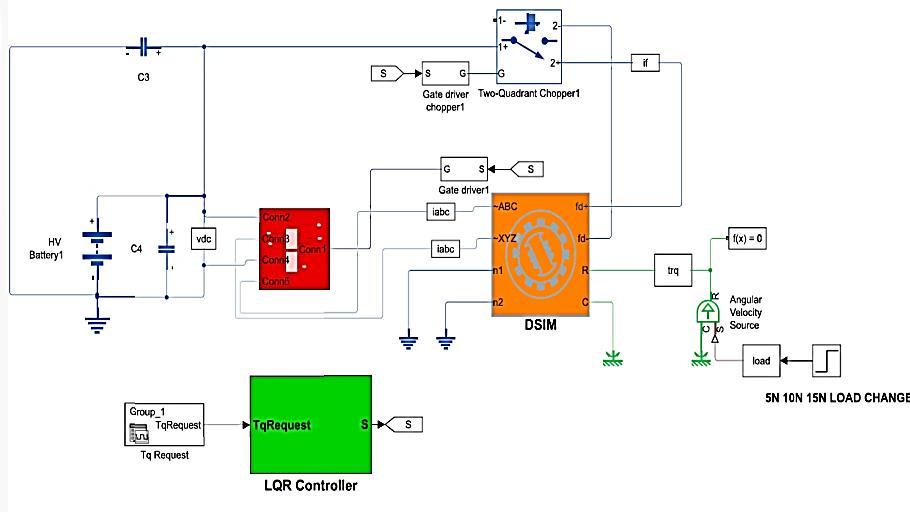
Thesimulationwasconductedbyreplacingthederived state-spacemodel(A,B,C,D)withtheactualDSIMandcontroller parameterstosimulateresponsesforPIDandLQR.
TheMATLABscriptsimulatesaunitstepinput,whichrepresentsadisturbanceloadchange.Finallyrunningthesimulation togenerateallcomparativeplotsforeachconditionandcontroller.
AnewMATLABscript(DSIM_Control_Comparison)wascreatedusingthecontrolsystemtoolboxtogeneratePIDandLQR functions. System parameters (Rs, Ld, Lq, km, J, B, P) were defined at the beginning. The state-space matrices (A, B, C, D) wereconstructedbasedonDSIMdynamicsandstoredasanss(state-space)object.Afterconstructingthestate-space,the controllers were manually selected (kp, ki, kd) for each loop and then combined into a diagonal matrix for feedback looping. The code was structured into clear sections (modeling, controllers, simulation, and plotting). The simulation was finally executed with a time vector t=0:0.01:1, speed of 1500 RPM, and step inputs depending on load conditions. System parametersarespecifiedinTable(3.1).TheMATLABcodesareshowninappendix1.
Table 3.1: Dual Stator Induction Machine (DSIM) Parameters.

International Research Journal of Engineering and Technology (IRJET) e-ISSN:2395-0056
Volume: 12 Issue: 10 | Oct 2025 www.irjet.net p-ISSN:2395-0072

4.0 RESULTS AND DISCUSSION
4.1 Step Response Results
International Research Journal of Engineering and Technology (IRJET) e-ISSN:2395-0056
Volume: 12 Issue: 10 | Oct 2025 www.irjet.net p-ISSN:2395-0072 © 2025, IRJET | Impact Factor value: 8.315 | ISO 9001:2008 Certified Journal | Page607
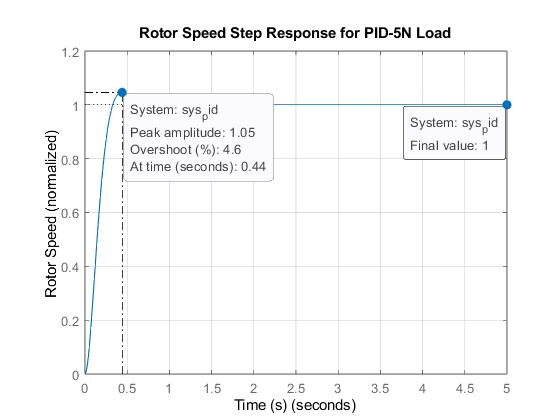
4.3: Step response of PID-based DSIM showing overshoot (5N Load)
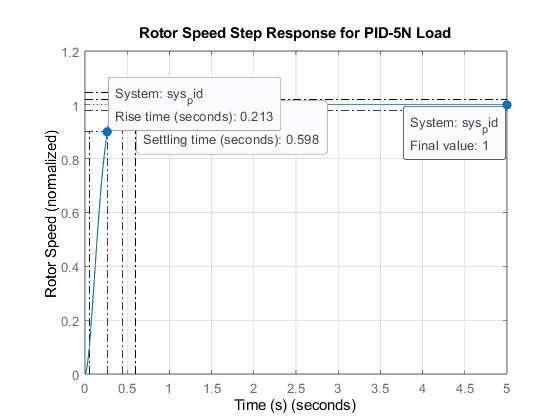
4.4: Step response of PID-based DSIM showing rise time and settling time (5N load)
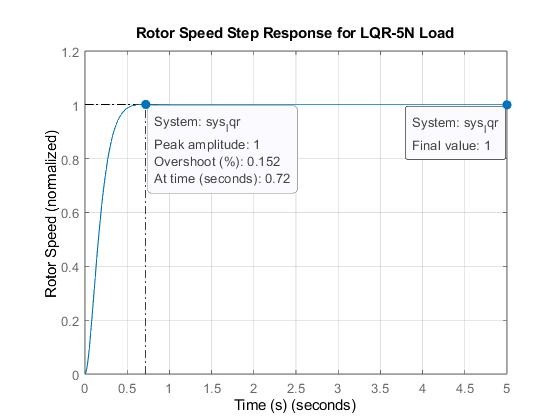
4.5: Step response of LQR-based DSIM showing overshoot (5N)
International Research Journal of Engineering and Technology (IRJET) e-ISSN:2395-0056
Volume: 12 Issue: 10 | Oct 2025 www.irjet.net p-ISSN:2395-0072 © 2025, IRJET | Impact Factor value: 8.315 | ISO 9001:2008 Certified Journal | Page608
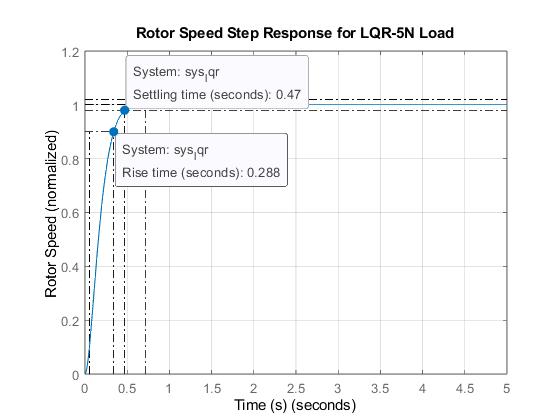
4.6: Step response of LQR-based DSIM showing rise time and settling time (5N)
4.2 Frequency Response (Bode Plot) Results
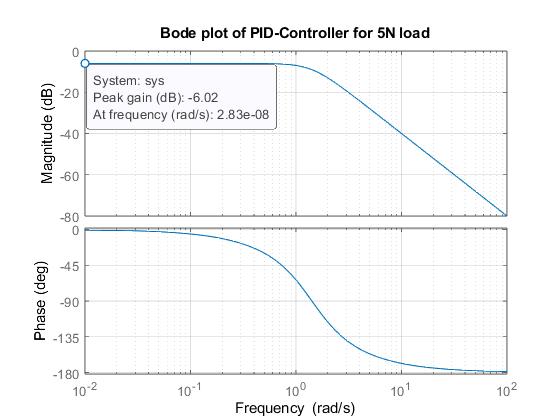
4.7: Bode plot of the PID-based DSIM showing peak gain (5N)
International Research Journal of Engineering and Technology (IRJET) e-ISSN:2395-0056
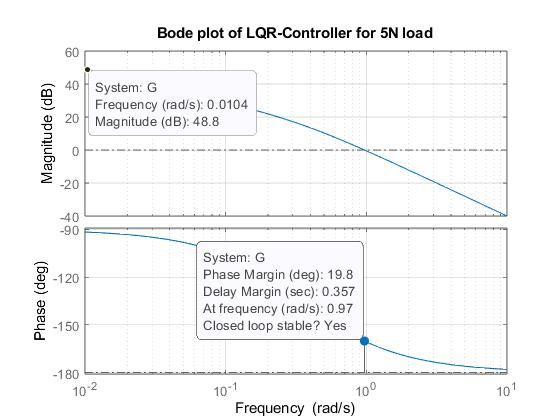
4.8: Bode plot of the LQR-based DSIM under 5N load
Volume: 12 Issue: 10 | Oct 2025 www.irjet.net p-ISSN:2395-0072 © 2025, IRJET | Impact Factor value: 8.315 | ISO 9001:2008 Certified Journal | Page609
4.4 Sigma Plots Results
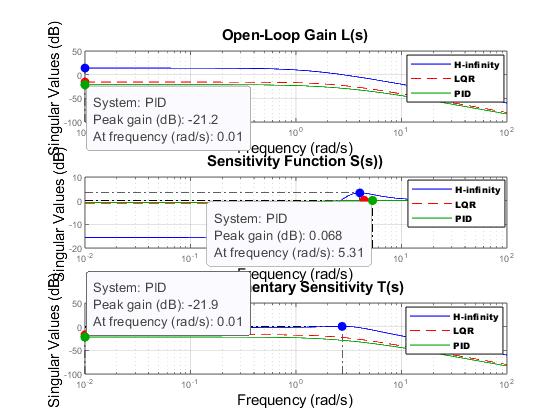
4.9: Analysis of the combined sigma plot under 5N load
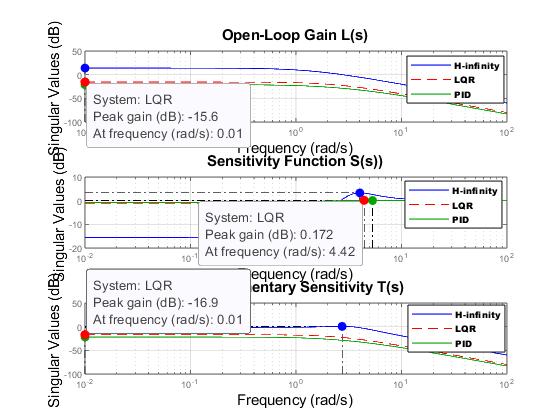
4.10: Analysis of the combined sigma plot under 5N load
International Research Journal of Engineering and Technology (IRJET) e-ISSN:2395-0056
Volume: 12 Issue: 10 | Oct 2025 www.irjet.net p-ISSN:2395-0072
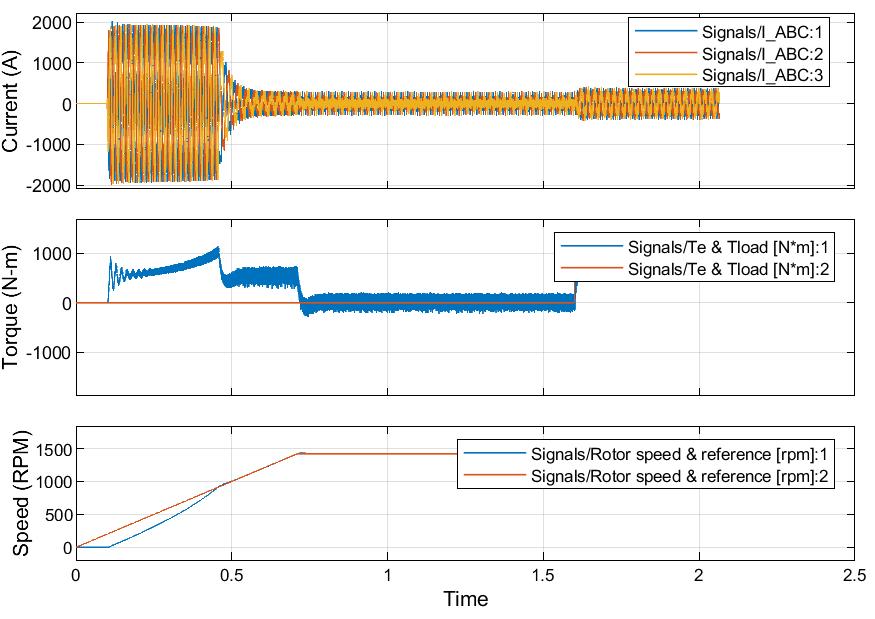
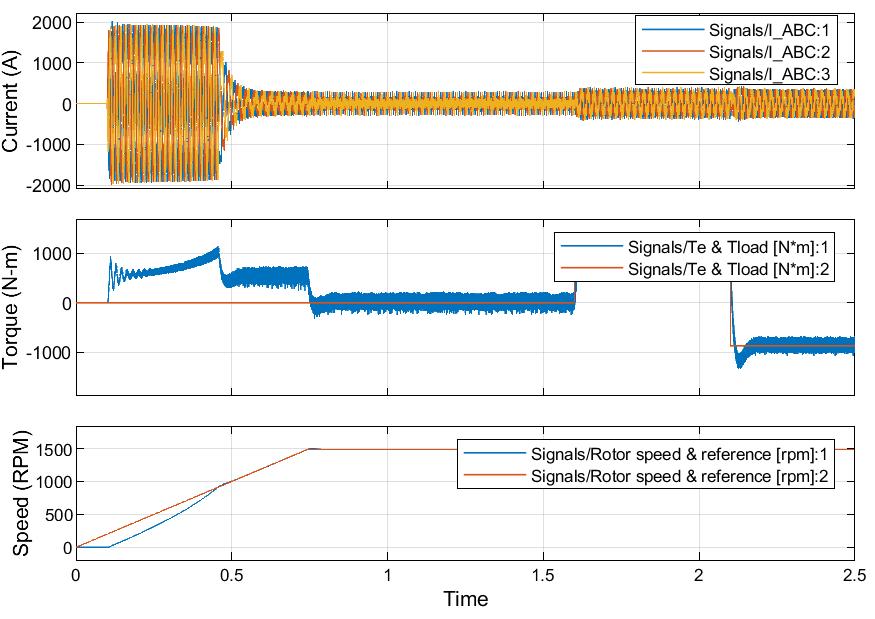
Figures4.1depictsthePIDcontrollerbasedDSIMoutcomesconcerningtorque,speed,rotor,andstatorcurrentsunder5N loadchange.Thestatorcurrentsreflecthowthemachinedrawspowertomeetloaddemands.WithPIDcontrol,thecurrent response isgenerallysharp andsometimes excessive. The electromagnetic torquegenerated by the machine reflectshow thecontrollercounterstheappliedload.IncaseofPIDcontrol,torquetendstolagbehindtheloadchanges.Ascanbeseen, thereisanabruptovershootfrom0.1sto0.5sbeforeitstabilizes.Thisindicatesthecontroller’sreactivenatureandlimited abilitytohandlesuddendisturbances. Ascanbeseenin figure4.2,LQRhandlesloadchangesbetterduetostatefeedback butstillshowssensitivity.Itoffersmoderateovershootwithmoreconsistentdampingandconstantsettlingbehaviorthan thePIDcontroller.UnderLQRcontrol,thecurrent response isimprovedand better synchronized butthereare still some ripples, especially if sensor noise or un-modeled dynamics affect the state estimation, but the overall behavior is more stablethanwithPIDcontrolmethod.Torquereactsmorequicklytotheappliedloads.Thecontrollermanagestoanticipate thedemandtosomeextent,sothetorqueincreasesmoresmoothlyandsettlesfasterthanwithPIDcontrolstrategy
Infigure4.3,therotorspeedstepresponseofPID-basedDualStatorInductionMachinesunder5Nloaddisturbanceshows an overshoot of 4.6% and in figure 4.5, the step response of the LQR based Dual Stator Induction Machineunder 5N load disturbanceshowsanovershootof0.152%.ThereducedovershootinthecaseofLQRshowsthatithasbetterperformance characteristicsthanPID.
Infigure4.4,therotorspeedstepresponseofPID-basedDualStatorInductionMachinesunder5Nloaddisturbanceshows a risetimeof0.213second andsettlingtimeof0.598second whileinfigure4.6,thestepresponseoftheLQRbasedDual Stator Induction Machine under 5N load disturbance shows a rise time of 0.288 second and settling time of 0.47 second. Thesettlingtimeinthecaseof LQRislessthaninPIDshowingimprovementofLQRoverPID.
4.6 Discussion of Frequency Response Results
Infigure4.7,thefrequencyresponse(BodePlot)ofPID-basedDualStatorInductionMachineunder5Ndisturbanceshows a peak gain of -6.02dB at a frequency of 2.83 rad/s. In figure 4.8, the frequency response (Bode plot) of LQR based DualStatorInductionMachineunder5Nloaddisturbanceindicatesamagnitude(gainmargin)of48.8dBatafrequencyof 0.0104rad/sandaphasemarginof atafrequencyof0.97rad/s.Thehighgainmarginof48.8dBinLQRascompared to-6.02dBinPIDmakesLQRthecontrollerwithbetterperformancecharacteristics.
4.7 Discussion of Sigma Plots Results
Figure 4.9, shows the sigma plots of all three controllers (PID, LQR and H-infinity) together for the Dual Stator Induction Machine under 5N. For the open loop gain, L(s), PID indicates a peak gain of -21.2dB at a frequency 0.01rad/s. For the sensitivity function, S(s), PID indicates a peak gain of 0.068dB at 5.31rad/s. For the complimentary sensitivity, T(s), PID indicates peak gain of -21.9dB at frequency of 0.01rad/s. Figure 4.10 shows the sigma plots of all three controllers (PID, LQRandH-infinity)togetherfortheDualStatorInductionMachineunder10N.Fortheopenloopgain,L(s),LQRindicatesa peak gain of -15.6dB at a frequency 0.01rad/s. For the sensitivity function, S(s), LQR indicates a peak gain of 0.172dB at 4.42rad/s.Forthecomplimentarysensitivity,T(s),LQRindicatespeakgainof-16.9dBatfrequencyof0.01rad/s.
Theperformanceoftwocontrolstrategies(PIDandLQR)werecomparedfortheDSIMunder5Nloadperformancemetrics considered include overshoot, rise time and settling time with frequency analysis via Bode and Sigma plots to ascertain robustnessandstabilitymarginswhilePIDissimplertoimplementthantheLQR,thelatterofferabetterperformancethan theformer.
PIDsigmaplotshowshigherpeaks,indicatingpoordisturbanceattenuation,LQRimprovesindisturbancerejectionbutstill showspeaksunderhighloads.
In frequency domain, PID shows reduced phase margin and lower gain cross over frequency, indicating reduced stability andincreasedsensitivitytodisturbance.LQRmaintainsabetterphasemargin,offeringimprovedrobustness.
International Research Journal of Engineering and Technology (IRJET) e-ISSN:2395-0056
Volume: 12 Issue: 10 | Oct 2025 www.irjet.net p-ISSN:2395-0072
Recommendation
ThecurrentstudyofH-infinitybasedDSIMisbasedonasingleloadconditionofN.Futureworkshouldincludeastudy undervaryingloadconditions.
Acknowledgement
1. MatarayM.andKakkarV.(2011),AsynchronousMachineModelingUsingSimulinkFedby PWMInverter,InternationalJournalofAdvancesinEngineering&Technology,Vol. 1,Issue2,pp.206-214
2. PieńkowskiK.,(2012),Analysisandcontrolofdualstatorwindinginductionmotor,Archives of ElectricalEngineering,VOL.61(3),pp.421-438(2012)
3. UjuI.U,NzeifeI.D&AsiweU.M(2018).AnalysisandApplicationofLinearMotors;anOverview. International JournalofInnovativeEngineeringTechnologyandScience.Vol.2,Issue1.
4. AshlinA.,(2021),whatistheDifferencebetweenSquirrelCageandWoundRotorInductionMotor? https://automationforum.co/what-is-the-difference-between-squirrel-cage-andwound-rotorinduction-motor/
5. Elprocus,(2022),WhatisaSquirrelCageInductionMotorandItsWorking, https://www.elprocus.com/what-is-asquirrel-cage-induction-motor-and-its-working/
6. BenSlimeneM,KhlifiMA(2022).InvestigationontheEffectsofMagneticSaturationinSix-Phase Induction MachineswithandwithoutCrossSaturationoftheMainFluxPath.Energies. 2022;15(24).
7. MarwaB.S,LarbiK.M,MouldiB.F.andHabibR.,(2014),DualStatorInductionMotorOperation from Two PWMVoltageSourceInverters,UnitSignal,ImageandIntelligentControlof Industrial Systems(SICISI)
8. SinghG.K.,PantV.,SinghY.P.,(2003).Voltagesourceinverterdrivenmulti-phaseinductionmachine, Computers andElectricalEngineering,Vol.29,no.8,pp.813–834
9. BenyoussefE,BarkatS(2020).Five-levelDirectTorqueControlwithBalancingStrategyofDouble Star InductionMachine.IntJSystApplEngDev.2020;14(Dci):116–23.
10. BenSlimeneM,KhlifiMA(2022).InvestigationontheEffectsofMagneticSaturationinSix-Phase Induction MachineswithandwithoutCrossSaturationoftheMainFluxPath.Energies.2022;15(24).
%DualStatorInductionMachineControlUsingLQR
%Author:
%Date:
%Objective:ComparePIDandLQRControl clc; clear;
%MotorParameters
Rs=0.435; Rr=0.816; Ls=0.002; Lr=0.002; Lm=0.0693; J=0.089; B=0.005; p=4;
International Research Journal of Engineering and Technology (IRJET) e-ISSN:2395-0056
Volume: 12 Issue: 10 | Oct 2025 www.irjet.net p-ISSN:2395-0072
%Torqueconstant Kt=(3/2)*(p/2)*(Lm/Lr);
%SystemMatrices
A=zeros(7,7); Bmat=zeros(7,4);
%FillAmatrix
A(1,1)=-Rs/Ls;
A(1,5)=-Lm/(Ls*Lr)*Rr;
A(2,2)=-Rs/Ls;
A(2,6)=-Lm/(Ls*Lr)*Rr;
A(3,3)=-Rs/Ls;
A(3,5)=-Lm/(Ls*Lr)*Rr;
A(4,4)=-Rs/Ls;
A(4,6)=-Lm/(Ls*Lr)*Rr;
A(5,1)=-Lm/(Lr*Ls)*Rs;
A(5,3)=-Lm/(Lr*Ls)*Rs;
A(5,5)=-Rr/Lr;
A(6,2)=-Lm/(Lr*Ls)*Rs;
A(6,4)=-Lm/(Lr*Ls)*Rs;
A(6,6)=-Rr/Lr;
A(7,1)=Kt;
A(7,3)=Kt;
A(7,2)=-Kt;
A(7,4)=-Kt;
A(7,5)=-Kt;
A(7,6)=Kt;
A(7,7)=-B/J;
%Bmatrix(inputsarevds1,vqs1,vds2,vqs2)
Bmat(1,1)=1/Ls; Bmat(2,2)=1/Ls;
Bmat(3,3)=1/Ls; Bmat(4,4)=1/Ls;
%Output:rotorspeed
C=[0000001];
D=zeros(1,4);
%Createsystem
sys=ss(A,Bmat,C,D);
%Simulationtime
t=linspace(0,5,1000); dt=t(2)-t(1);
%Displaytransferfunctionfromeachinput tf_sys=tf(sys)
%Functiontosimulateresponsewithloadtorque
International Research Journal of Engineering and Technology (IRJET) e-ISSN:2395-0056
Volume: 12 Issue: 10 | Oct 2025 www.irjet.net p-ISSN:2395-0072
simulate_response=@(TL)simulate_with_load(sys,J,t,TL);
%Runsimulations [omega5]=simulate_response(5); %Plot figure; pl0ot(t,omega5,'r',t, 'g-.','LineWidth',1.5); xlabel('Time(s)'); ylabel('RotorSpeed(rad/s)'); title('DSIMRotorSpeedResponsetoLoadTorqueDisturbances'); legend('5Nm','); gridon;
%%1.PIDControllerDesign
C_pid=pidtune(sys_siso,'PID'); T_pid=feedback(C_pid*sys_siso,1);
%%2.LQRControllerDesign
Q=C'*C; R=0.01; K_lqr=lqr(A,Bmat(:,1),Q,R); sys_lqr=ss(A-Bmat(:,1)*K_lqr,Bmat(:,1),C,0); T_lqr=feedback(sys_lqr,1);
systemnames='sys_sisoWpWu'; inputvar='[dist;control]'; outputvar='[Wp;Wu;sys_siso]'; input_to_sys_siso='[control+dist]'; input_to_Wp='[sys_siso]'; input_to_Wu='[control]'; P=sysic;
%%4.SimulateStepTorqueDisturbance t=0:0.01:5; dist5=-5/J*ones(size(t)); %rotordecelerationduetoload
%H-infinitysystemisalreadyconfiguredfordisturbanceasinput [y_pid5,~]=lsim(T_pid,dist5,t); [y_lqr5,~]=lsim(T_lqr,dist5,t); %%5.Plotfor10NmDisturbance figure; plot(t,y_pid10,'g',t,y_lqr10,'b ',t,y_hinf10,'r-.','LineWidth',1.5); title('RotorSpeedResponseto10NmLoadTorque'); xlabel('Time(s)');ylabel('Speed(rad/s)'); legend('PID','LQR','H-infinity');gridon;
%%6.ComparePerformance info_pid=stepinfo(y_pid10,t); info_lqr=stepinfo(y_lqr10,t); info_hinf=stepinfo(y_hinf10,t);
fprintf('\n StepResponseMetricsfor10NmDisturbance \n'); fprintf('PID |Overshoot:%.2f%%|SettlingTime:%.2fs\n',info_pid.Overshoot,info_pid.SettlingTime);
© 2025, IRJET | Impact Factor value: 8.315 | ISO 9001:2008
International Research Journal of Engineering and Technology (IRJET) e-ISSN:2395-0056
Volume: 12 Issue: 10 | Oct 2025 www.irjet.net p-ISSN:2395-0072
fprintf('LQR |Overshoot:%.2f%%|SettlingTime:%.2fs\n',info_lqr.Overshoot,info_lqr.SettlingTime);
%BodeandSigmaplot
%T_pid =closed-loopsystemwithPIDcontroller(SISO)
%T_lqr =closed-loopsystemwithLQRcontroller(canbeSISOorMIMO)
%Definefrequencyrange w=logspace(-1,3,500); %from0.1to1000rad/s
%%BodePlot figure;
bode(T_pid,'g',T_lqr,'b ',CL_hinf,'r-.',w); legend('PID','LQR',); title('BodePlotComparison'); gridon;
%%SigmaPlot(forrobustnessanalysis,onlyforMIMOsystems) figure;
sigma(T_pid,'g',T_lqr,'b ',CL_hinf,'r-.',w); legend('PID','LQR','H-infinity'); title('SigmaPlot(SingularValue)Comparison'); gridon;
© 2025, IRJET | Impact Factor value: 8.315 | ISO 9001:2008 Certified Journal | Page614