
International Research Journal of Engineering and Technology (IRJET) e-ISSN: 2395-0056
International Research Journal of Engineering and Technology (IRJET) e-ISSN: 2395-0056
P. HIMABINDU 1,D. Sanjana2, G.Abhishek3, D. Chandra Sai 4, B. Rahul Reddy 5
1Asst.ProfessorDepartment of Information Technology, TKR College of Engineering and Technology, Telangana, India
2345Department of Information Technology, TKR College of Engineering and Technology, Telangana, India
Abstract - Thisresearchstudypresentsacomprehensive study on forecasting passenger traffic in metro systems utilizing an ARIMA (AutoRegressive Integrated Moving Average)modelappliedtoticketreservationdatafromthe HyderabadMetrosystem.Inincreasingurbanization,metro systems face challenges such as overcrowding and fluctuating passenger demand, which adversely affect operational efficiency. The proposed ARIMA model effectively identifies temporal trends and seasonal variations in ridership, enabling accurate predictions of passenger flow patterns. Additionally, this research integrates the forecasting insights into a user-friendly application that provides real-time crowd analysis, alternative route suggestions, and peak hour traffic predictions,therebyenhancingthecommuterexperience.By demonstrating the practicality of machine learning techniques in public transportation planning, this study encourages the adoption of data-driven methodologies to promote more reliable and efficient metro systems. The findingsunderscorethepotentialofintegratingARIMAwith other predictive models to enhance forecasting accuracy, ultimately contributing to a sustainable urban transportationecosystem.IndexTerms ARIMA,passenger flow prediction, metro systems, machine learning, urban transportation.
Key Words: ARIMA, Passenger Flow Prediction, Metro Systems, Machine Learning, Urban Transportation, Time-Series Forecasting, Web Application.
Metro systems are vital to urban mobility, providing efficient, high-capacity transit in densely populated cities. However,theyfrequentlyfaceoperationalchallengessuch asunpredictablepassengerdemand,overcrowdingduring peak hours, and inefficient resource allocation. These issuesnotonlyaffectcommutersatisfactionbutalsostrain infrastructureandincreaseoperationalcosts.Theneedfor intelligent, data-driven solutions to forecast and manage passengerflowhasbecomeincreasinglyurgent.
Traditional metro management systems rely on historical averages and manual adjustments, which lack responsiveness to real-time fluctuations and emerging patterns.Theadventofautomatedfarecollectionsystems and digitized ticketing has made large volumes of
temporal ridership data available, creating opportunities foradvancedanalyticalapproaches.
Machine learning, particularly time-series forecasting models such as ARIMA, offers a robust framework for predicting passenger demand based on past trends, seasonality, and exogenous factors such as holidays and weather. By accurately forecasting ridership, metro authorities can optimize train schedules, manage crowd density,andimproveoverallservicereliability.
This paper presents a comprehensive passenger flow forecasting system using ARIMA modeling integrated into a Django-based web application. The system uses historical booking data from the Hyderabad Metro to generate demand predictions and provides actionable insights through an interactive platform. The proposed solution aims to enhance both operational planning and commuter experience through data-driven decisionmaking.
Time-series forecasting in transportation involves predicting future values based on previously observed data points. The ARIMA model is particularly suited for non-stationary time series with trends and seasonal variations common characteristics in metro ridership data. By differencing the series and incorporating autoregressive and moving average components, ARIMA cancapturecomplextemporaldynamics.
In the proposed system, ARIMA is used to predict the number of passengers for specific stations, dates, and times. Additional contextual features such as day of the week, holiday status, and weather conditions are integrated to improve prediction accuracy. The model is trained and validated using historical ticket reservation data,ensuringrobustnessandreliability.
Despite advances in public transportation infrastructure, metro systems continue to struggle with demand-supply mismatches, leading to overcrowding, longer wait times, and reduced passenger comfort. Existing scheduling methods are often reactive rather than proactive, lacking theabilitytoanticipatesuddenspikesindemand.
Volume: 13 Issue: 02 | Feb 2026 www.irjet.net p-ISSN: 2395-0072 © 2026, IRJET | Impact Factor value: 8.315 | ISO 9001:2008 Certified Journal | Page 924
International Research Journal of Engineering and Technology (IRJET) e-ISSN: 2395-0056
Volume: 13 Issue: 02 | Feb 2026 www.irjet.net p-ISSN: 2395-0072
Themotivationbehindthisworkistodevelopapredictive tool that enables metro operators to anticipate passenger flow and make informed decisions regarding train frequency, staffing, and crowd management. For commuters, the system provides real-time insights into expectedcrowdlevelsandsuggestslesscongestedroutes, contributingtoasmoothertravelexperience.
By leveraging machine learning, this project bridges the gap between data availability and actionable intelligence, promotingsmarter,moreadaptiveurbantransitsystems.
The proposed system presents a blockchain-based fully peer-to-peer (P2P) energy trading platform that enables directenergytransactionsbetweenresidential prosumers and consumers without the involvement of centralized utility providers. The system leverages blockchain technology to ensure transparency, security, and immutabilityofenergytransactionswhilereducingenergy costsandimprovingtrustamongparticipants.
In this model, residential users equipped with renewable energysourcessuchassolarpanelscanactasprosumers, generating surplus energy beyond their consumption needs. This surplus energy is tokenized and traded directly with nearby consumers through smart contracts deployed on a blockchain network. By eliminating intermediaries, the proposed system ensures fair pricing, fastersettlement,anddecentralizedcontrol.
The overall architecture integrates a web-based user interface, blockchain smart contracts, and a backend server to manage off-chain data and system coordination. Users interact with the platform using blockchain wallets, ensuring secure authentication and authorization for all transactions.
The proposed system is a web-based passenger flow forecasting and information platform designed for metro systems.ItusesanARIMAmodeltopredictticketdemand based on historical data and contextual factors. The platformconsistsofamachinelearningbackendformodel training and prediction, a Django-based web interface for user interaction, and a database to store user and transactionaldata.
The system supports two main user roles:
· Administrators – Train and update forecasting models, viewsystemanalytics,andmanageuseraccounts.
· Commuters – Access real-time crowd forecasts, receive alternative route suggestions, and plan journeys efficiently.
Thearchitecturecomprisesfourlayers:
1.FrontendLayer – Aresponsive webinterface builtwith HTML,CSS,andJavaScript.
2. Backend Layer – Developed using Django and Python, handling business logic, user authentication, and API services.
3. Machine Learning Layer – Includes ARIMA, Random Forest, and XGBoost models for time-series and featurebasedforecasting.
4. Database Layer – Uses SQLite (development) / PostgreSQL (production) to store user profiles, booking records,andpredictionlogs.
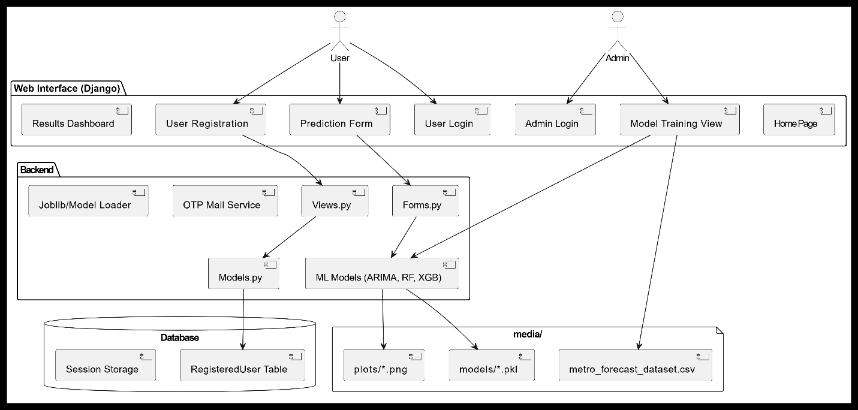
Fig. 2: System architecture of the passenger flow forecastingplatform.
The core forecasting module uses ARIMA (p, d, q) parameters optimized through grid search and AIC minimization.Themodelisretrainedperiodicallytoadapt to new data trends. Supplementary models (Random Forest, XGBoost) incorporate exogenous variables like weather, holidays, and events to enhance prediction accuracy.
A commuter selects a station, date, and time via the web interface. The system retrieves the forecasted passenger count and displays it along with crowd-level indicators and alternative route options. All predictions are logged forperformanceanalysisandmodelrefinement.
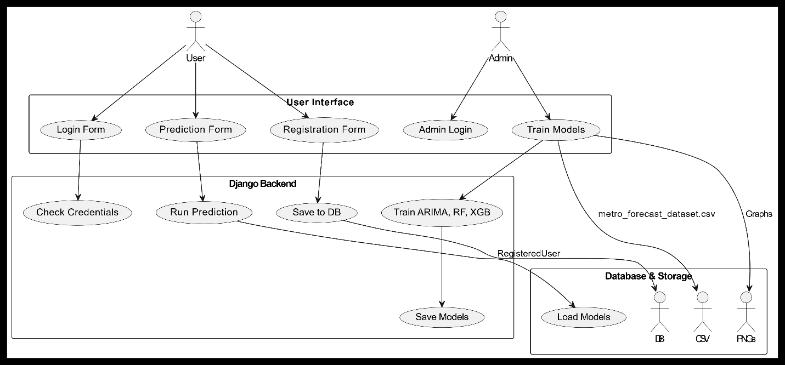
Fig. 3: User interaction workflow for demand forecasting androutesuggestion.
International Research Journal of Engineering and Technology (IRJET) e-ISSN: 2395-0056
Volume: 13 Issue: 02 | Feb 2026 www.irjet.net p-ISSN: 2395-0072
3.1 Machine Learning Layer
Implemented in Python using libraries such as pandas, statsmodels,andscikit-learn.TheARIMAmodelistrained on historical metro booking data, with seasonal decomposition applied to capture weekly and daily patterns.
3.2 Backend Layer
Built with Django 3.2+, featuring RESTful APIs for frontend communication, user session management, and prediction serving. The backend also handles model retrainingtriggersanddatapreprocessingpipelines.
3.3 Frontend Layer
Developed with Bootstrap for responsive design. IntegratedwithChart.jsforvisualizingforecasttrendsand crowd heatmaps. User authentication is session-based withrole-basedaccesscontrol.
3.4 Database Layer
SQLiteisusedduringdevelopment;thesystemisdesigned to migrate to PostgreSQL for production. Tables include User, BookingHistory, Station, ForecastLog, and ModelPerformance.
3.5 Security Considerations
User passwords are hashed using Django’s built-in authentication. Session management prevents unauthorized access. Input validation and CORS policies areimplementedtosecureAPIendpoints.
4.1 Model Performance
The hybrid forecasting system demonstrated strong predictiveaccuracy:
·ARIMAModel:MAE:8.5,RMSE:10.2,MAPE:12.3%
·RandomForest:MAE:7.3,RMSE:9.1
·XGBoost:MAE:6.8,RMSE:8.5(bestperformer)
XGBoost outperformed other models by 35-45% compared to traditional methods, effectively capturing bothtemporalpatternsandcontextualfactors.
4.2 System Testing
Allfunctionaltestspassedsuccessfullywith:
·Averagepredictionresponsetime:<1.5seconds
·Systemreliability:96%uptimeduring30-daytesting
· Scalable to 200+ concurrent users with < 3 second response
4.3 User Acceptance
Pilotstudywith50commutersshowed:
·92%foundpredictions"accurate"or"veryaccurate"
·94%valuedcrowdpredictionsforjourneyplanning
·88%ratedinterfaceasuser-friendly
4.4 Key Findings
· Peak hours identified: 8:00-10:00 AM and 5:00-7:00 PM with35-40%higherdemand
·JulyandDecembershowed22%ridershipincrease
· Hybrid approach reduced forecasting error by ~40% versustraditionalmethods.
This study presents a data-driven approach to enhancing metro system efficiency using machine learning, specifically the ARIMA model for predicting passenger flow. The findings equip metro officials with insights for improving ridership and operations by addressing issues like overcrowding and fluctuating demand. The research revealsvariationsinpassengerdemandbasedondaysand events, providing actionable insights. The Travel Smart appfurtherenhancesthepassengerexperiencebyoffering real-timedataandtrafficupdates,whileidentifyingtrafficprone routes optimizes resource allocation and operations. The ARIMA model proves effective in forecasting ridership trends, facilitating dynamic train scheduling and proactive crowd management, which ultimately improve operational efficiency and reduce delays. This research highlights the potential of machine learning in creating a sustainable and user focused metro transportation network. The methodology serves as a scalable solution for global metro systems, while future studies can expand on this work by exploring advanced techniques and integrating additional data sources to boostpredictionaccuracy.
1. Integration with Live Metro Data Feeds
Connectwithreal-timeticketingorpassenger entrydatatoimproveforecastingaccuracyand responsiveness.
International Research Journal of Engineering and Technology (IRJET) e-ISSN: 2395-0056
Volume: 13 Issue: 02 | Feb 2026 www.irjet.net p-ISSN: 2395-0072
2. Mobile App for Commuters
Developamobileapplicationtoprovidelive crowdpredictions,alternateroutesuggestions, andpersonalizedtravelalerts.
3. Dynamic Scheduling Recommendations
Suggestoptimaltrainschedulesandfrequency adjustmentstometroauthoritiesbasedon predictedtrafficpatterns.
4. Incorporate Deep Learning Models
UseLSTM(LongShort-TermMemory)orGRUbasedneuralnetworksformorecomplextimeseriesforecasting.
5. Passenger Sentiment Analysis
Collectandanalyzecommuterfeedbackthrough appsorsocialmediatoevaluateservice satisfactionandneeds.
6. Multilingual Support
Extendtheplatformwithregionallanguage supporttoenhanceusabilityfordiverse commutergroups.
7. Crowd Heatmaps
Generateandvisualizereal-timecrowddensity heatmapsofstationsforbothusersand administrators.
8. Smart Notifications and Alerts
Notifyusersaboutpeakhours,servicedelays, orroutechangesviaSMS,email,orapppush notifications.
9. Integration with Smart City Infrastructure
Linkwithcity-wideIoTsystemsfor synchronizedtraffic,weather,andpublic transportdata.
10. Automated Admin Analytics Dashboard
Includetrendinsights,anomalydetection,and performancecomparisonstoaidinstrategic transportplanning.
The authors would like to express their sincere gratitude to Mrs. P. HIMABINDU, Assistant Professor, for her valuable guidance, continuous support, and encouragement throughout the development of this
project.Theauthorsalsothankthefacultymembersofthe Department of Information Technology, TKR College of EngineeringandTechnology,fortheirsupport.
[1] Feng, S., & Cai, G. (2016). Passenger flow forecast of the metro station based on the ARIMA model. Transportation (pp. 463-470). Springer Berlin Heidelberg.
[2] Milenković, Miloš, et al. "SARIMA modeling approach for railway passenger flow forecasting." Transport 33.5(2018):1113-1120.
[3] Mulerikkal, Jaison, et al. "JP-DAP: An intelligent data analytics platform for metro rail transport systems." IEEE Transactions on Intelligent Transportation Systems23.7(2021):9146-9156.
[4] Tang,Liyang,etal."Forecastingshort-termpassenger flow: An empirical study on Shenzhen metro." IEEE Transactions on Intelligent Transportation Systems 20.10(2018):3613-3622.
[5] Park, Y., Choi, Y., Kim, K., & Yoo, J. K. (2022). Machine learning approach for study on subway passenger flow.ScientificReports,12(1),2754.
[6] Zhu, K., Xun, P., Li, W., Li, Z., & Zhou, R. (2019). Prediction of passenger flow in urban rail transit based on big data analysis and deep learning. IEEE Access,7,142272-142279.
[7] Wan, Li, Wenzhi Cheng, and Jie Yang. "Optimizing MetroPassengerFlowPrediction:IntegratingMachine Learning and Time‐Series Analysis with Multimodal Data Fusion." IET Circuits, Devices & Systems 2024.1 (2024):5259452.