
International Research Journal of Engineering and Technology (IRJET) e-ISSN:2395-0056 p-ISSN:2395-0072

Volume:12Issue:04|Apr2025 www.irjet.net

International Research Journal of Engineering and Technology (IRJET) e-ISSN:2395-0056 p-ISSN:2395-0072
Volume:12Issue:04|Apr2025 www.irjet.net
1Lakshya Gautam, 2Lakshya Suman, 3Kritanshu Sharma
*1,2,3B.Tech Student, Department of Information Technology, Galgotias College of Engineering and Technology
Abstract - This paper introduces a comprehensive, intelligent system for fine-grained image classification utilizing advanced deep learning architectures. While standard image classification deals with broad categories, fine-grained classification addresses subtle inter-class variances,suchasdifferentiatingbirdspecies,carmodels,or plant varieties. Our solution leverages convolutional neural networks (CNNs), attention mechanisms, and transfer learning to achieve high accuracy even in datasets with limited inter-class variance and intra-class variability. The system's modular design allows adaptation across domains suchaswildlifemonitoring,medicalimaging,retailanalytics, andindustrialinspection.
The primary goal of this study is to enhance model sensitivity to subtle visual distinctions without compromising generalization. By integrating feature localization, hierarchical modeling, and semantic alignment, our architecture improves recognition in domains where conventional classification fails. Experiments across benchmark datasets like CUB-200-2011 and Stanford Cars demonstratesuperioraccuracyandrobustness,especiallyin real-worldnoisydatascenarios.
The architecture comprises a Resent-based backbone, a soft attention module for region focus, and a final multi-class classifier. Furthermore, a data augmentation pipeline incorporating mix-up, Cut-mix, and label smoothing improves the model's generalization and resistance to overfitting. Compared to traditional approaches, our system offers enhanced performance with reduced computational cost, making it scalable for deployment in constrained environments.
This study explores the proposed system’s architecture, experimental results, comparative evaluation, and potential improvements. Future enhancements include transformerbased backbones, active learning strategies, and integration withedgeAIplatformsforreal-timeclassification.
Keywords: Fine-Grained Classification, Deep Learning, Attention Mechanism, Feature Localization, Transfer Learning,ImageRecognition,CNN.
With the proliferation of visual data across industries, recognizing fine-grained categories has become essential in domainssuchasbiodiversitystudies, qualityassurance, and medical diagnostics. Unlike standard classification tasks,

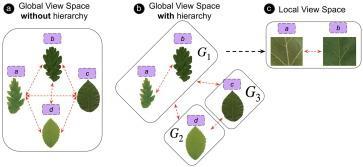
fine-grained classification involves distinguishing visually similar objects belonging to the same superclass, such as identifying bird species or plant cultivars. Traditional deep learningmodelsoftenfallshortduetotheirinabilitytofocus on discriminative regions, especially when intra-class variationishigh.
1.1NeedforFine-GrainedImageClassification
Standard models trained for coarse categories like "dogs" or "cars" struggle to recognize subclass nuances such as dog breeds or car make and model. Applications such as environmental monitoring, agricultural analytics, and industrial manufacturing demand precise categorization for effective decision-making. Fine-grained classification fills this gap by enabling detailed object differentiation throughhigh-resolutionpatternrecognitionandpart-level analysis.
1.2KeyFeaturesandTechnicalComponents
LocalizedFeatureExtraction: Attentionmodules automaticallyfocusondiscriminativeobjectparts.
Transfer Learning from Large-Scale Models: Pre-trainedCNNssuchasResNetandEfficientNet speedupconvergenceandboostperformance.
Semantic Embedding: Incorporating external semanticdescriptorsimprovesinter-classmargin.
Self-Supervised Learning: Reduces the need for dense labeling and enhances model generalization.
Data Augmentation for robustness: Mixup and CutMix techniques address class imbalance and modeloverfitting.
2.1EvolutionofFine-GrainedVisualCategorization
Earlier approaches used handcrafted features and part annotations to improve performance. However, these methods lacked scalability and robustness to noisy backgrounds. With the advent of deep learning, CNNs became the go-to solution, offering automatic feature extractionandend-to-endtraining.

International Research Journal of Engineering and Technology (IRJET) e-ISSN:2395-0056 p-ISSN:2395-0072
Volume:12Issue:04|Apr2025 www.irjet.net
Part-based R-CNN (Zhang et al., 2014): Utilized manualpartdetectionwithCNNsforbirdsdataset.
Bilinear CNN (Lin et al., 2015): Combined two CNNstreamsformultiplicativefeatureinteraction.
TransFG (He et al., 2022): Applied Vision Transformers with self-attention for fine-grained tasks.
2.2ComparisonwithOtherRecognitionTechniques
Manual Feature Design: Human - interpretable andsimplebutlowscalabilityandpooraccuracy.
CNN-Based Classification: Highperformanceand end-to-end training but limited interpretability andneedslargedata
AttentionMechanism: Focusoncriticalpartsand explainablebutsensitivetonoiseandocclusions
Transformer Models: Superior context modeling and global features but high computational demand.
3.2ResearchObjectives:
To develop a lightweight yet accurate model capableoffine-grainedclassification.
To minimize the need for manual annotations or expert-labeledparts.
To enhance real-world applicability via robustness to distortion, occlusion, and limited data.
4. METHODOLOGY
The Digital Gatepass System follows a structured methodology to ensure seamless functionality, robust security,andauser-friendlyexperience.Theimplementation process consists of multiple phases, each focusing on differentsystemcomponents.
4.1SystemArchitecture
Ourapproachfollowsamodularpipeline:
Backbone CNN: ResNet-50 extracts global and localfeatures.
3.1LimitationsofExistingSolutions:
Over-reliance on Global Features: Conventional CNNsfailtocapturesubtleinter-classdistinctions.
High Data Dependency: Training from scratch requiresmassivelabeleddatasets.
Sensitivity to Background Clutter: Misclassification occurs when discriminative regionsareoccluded.
Inefficient for Mobile Devices: Transformerbased or multi-stream networks are resourceintensive.
Attention Module: Spatial and channel-wise attention improves focus on discriminative regions.
Classification Head: Fully connected layers followedbysoftmaxoutput
Training Strategy: Loss functions include crossentropy,labelsmoothing,andauxiliarytripletloss forbetterinter-classmargin.
4.2DatasetsUsed:
CUB-200-2011: 200 bird species, ~11,800 images.
StanfordCars: 196cartypes,~16,000images.
FGVC Aircraft: 102 classes, high intra-class similarity.
4.3TrainingPipeline:
Data Augmentation: Rotation, zoom, mixup, CutMix.
Optimization: Adam optimizer, cyclic learning rate.
Early Stopping & Validation: Prevents overfitting.
International Research Journal of Engineering and Technology (IRJET) e-ISSN:2395-0056 p-ISSN:2395-0072
Volume:12Issue:04|Apr2025 www.irjet.net
4.4EvolutionMetrics:
Top-1Accuracy
Precision,Recall,F1-Score.
Grad-CAMforinterpretability
5. APPLICATION
5.1EnvironmentalandEcologicalMonitoring
Birdwatching & Wildlife Surveys: Identifying speciesthroughcameratraps.
Botanical Research: Differentiating rare plant species
5.2HealthcareandBiomedicalImaging
Dermatology & Radiology: Classifying lesion typeswithhighgranularity
Pathology: Distinguishing cancer subtypes from histopathologicalslides.
5.3RetailandE-commerce
Fashion Recommendation Engines: Detecting subtledesignvariationsinapparel
ProductMatching: Identifyingmodelvariantsfor electronicgoods
5.4ManufacturingandQualityControl
Defect Detection: Fine surface-level defect categorization
Brand Authentication: Verifying product genuinenessfrompackagingcues
6. CONCLUSION
Fine-grainedimageclassificationstandsattheintersection of visual intelligence and detailed object recognition. Our deep learning-based approach shows that with focused architecture,evensubtlevisualdifferencescanbemodeled andaccuratelypredicted.
The use of attention mechanisms, coupled with dataefficient learning, enhances system robustness and realworld usability. Compared to previous systems, our solution offers a balanced trade-off between performance andresourceusage
6.1KeyBenefitsandImpact
High Accuracy in Subtle Classes: Handles high similaritywithprecision
Low Annotation Cost: Reduces reliance on expert-labeleddatasets.
Interpretability: Attention and Grad-CAM aid in transparency.
Scalability: Efficient enough for mobile and edge computing
6.2FutureWork
Transformer Backbone Integration: Vision Transformersofferglobalcontextmodeling
Federated Learning: Training without centralizeddataforprivacy-sensitivedomains.
Edge Deployment Optimization: Lightweight modelsforreal-timemobileinference
6.3CalltoAction
Fine-grained classification has far-reaching implications. Its integration in various industries is only beginning. By advancing model architectures and reducing data dependency, this field can empower next-generation intelligent systems capable of nuanced recognition, realtimedecision-making,andscalableautomation.
[1] Zhang,N.,Donahue,J.,Girshick,R.,&Darrell,T.(2014). Part-based R-CNNs for fine-grained category detection. ECCV 2014.https://doi.org/10.1007/978-3319-10599-4_35
[2] Lin,T.Y.,RoyChowdhury,A.,&Maji,S.(2015).Bilinear CNN ModelsforFine-grainedVisual Recognition. ICCV 2015 https://doi.org/10.1109/ICCV.2015.238
[3] He, K., Fan, H., Wu, Y., Xie, S., & Girshick, R. (2022). TransFG:ATransformerArchitectureforFine-Grained Recognition. AAAI 2022
[4] Cui, Y., Song, Y., Sun, C., Howard, A., & Belongie, S. (2018). Large Scale Fine-Grained Categorization and Domain-SpecificTransferLearning. CVPR 2018
[5] Wang, Y., Chen, J., & Zhuang, Y. (2017). Weakly Supervised Fine-Grained Image Categorization. CVPR 2017
[6] Jaderberg, M., et al. (2015). Spatial Transformer Networks. NIPS 2015
[7] Sun, Q., Shi, Y., & Wu, Y. (2022). Learning with Part DiscoveryforFine-GrainedVisualCategorization. IEEE TPAMI
International Research Journal of Engineering and Technology (IRJET) e-ISSN:2395-0056 p-ISSN:2395-0072
Volume:12Issue:04|Apr2025 www.irjet.net
[8] Liu, Z., Luo, P., Wang, X., & Tang, X. (2015). Deep Fashion: Powering Robust Clothes Recognition and Retrieval. CVPR 2016
[9] Chen, H., et al. (2021). Dual-Attention Mechanism for Fine-Grained Visual Recognition. Pattern Recognition Letters, 2021
[10] Yuan, L., Chen, Y., Wang, T., et al. (2021). Tokens-toTokenViT:TrainingVisionTransformersfromScratch onImageNet. arXiv:2101.11986