
International Research Journal of Engineering and Technology (IRJET) e-ISSN: 2395-0056
Volume: 12 Issue: 12 | Dec 2025 www.irjet.net p-ISSN: 2395-0072
ELECTROPLATING MACHINE
sharabanna1 , Venkatesh k2 , S Harshavardhan3 , Devindrappa4
1Lecturer, Department of Mechanical Engineering, Sanjay Gandhi polytechnic college Ballari, Karnataka, India
2Lecturer, Department of Mechanical Engineering, Sanjay Gandhi polytechnic college Ballari, Karnataka, India
3student, Department of Mechanical Engineering, Sanjay Gandhi polytechnic college Ballari, Karnataka, India
4student, Department of Mechanical Engineering, Sanjay Gandhi polytechnic college Ballari, Karnataka, India
Abstract - Electroplating is a crucial surface treatment process that enables the deposition of a thin metal layer onto conductive substrates through electrolysis. The electroplating machine is equipped with essential components including an electrolyte solution, an anode, a cathode, and a power supply. The electrolyte contains metal ions that, when subjected to an electric current, are reduced and subsequently adhere to the cathode, creating a uniform metal coating. This process significantly enhances the aesthetic appeal, structural integrity, and corrosion resistance of various materials, making it indispensable across multiple sectors. Applications range from jewelry and automotive components to electronic circuitry and industrial equipment, highlighting electro plating’s versatility. By facilitating precise control over layer thickness and coating properties, electroplatingisessentialfor achieving desired functional and decorative outcomes. The technique is thus integral to industries seeking durability and enhanced performance, paving the way for innovation and improvement in product longevity and reliability.
Key Words: Electroplating, Electrolysis, Metal coating, Surface finish, Corrosion resistance.
1. INTRODUCTION
1.1Introduction to Electroplating Machines
Electroplatingmachines,whichusetheelectrochemicalproc essofelectrolysistoputthinlayersofmetalontoa varietyof substrates,arevitalequipmentintoday'smanufacturing and surfacefinishingsectors.
Theprimaryobjectiveofelectroplatingistoenhance surface qualities,suchascorrosionresistance,wearresistance,elect ricalconductivity,andaestheticappear emachine operates byimmersingtheobjecttobecoated(cathode)andtheplati ngmetal(anode)intoanelectrolytesolutioncontainingdiss olved metalions. Whenan electricalcurrent is supplied,
metal ions from the electrolyte are deposited onto the surface of th e cathode, generating a homogeneous and durablemetal coating
Electroplatingmachinesarewidelyutilizedacrossnumerous industries,including:
Automotive:Forchromeplatingandcorrosionprotectionof automobileparts.
Electronics:Forgoldandsilverplatingofcircuitboardsand connectors
Jewelry:Toaddornatefinishesorguardagainsttarnishing. Aerospace and Industrial:Toenhancewearresistanceand reduce friction on essential components. This technology serves a critical role in generating highquality,durable,andvisuallyappealinggoods,makingita cornerstoneofmodernmaterialprocessing
1.2Problem Statement:
Electroplating is a procedure used to cover a material (usuallymetal)witha thin coatingof another metal using electrical current. Electroplating machines are widely employedinmanydifferentindustries,buttheyfrequently encounter particular difficulties that compromise their effectiveness,quality,andlong-termviability.
1.3Key Challenges:
a. Inconsistent Coating Thickness: Product rejections or subpar results may result from uneven coating material deposition.
b.EnvironmentalConcerns:Electroplatingincludestheuse ofhazardouschemicals,bringingconcernsofpollutionand healthdangersifnotmanagedadequately
c. High Energy Consumption: The process consumes significant electrical energy, making it pricey and environmentallyunsustainable.
d.MaterialWastage:Ineffectiveplatingmaterialuseraises expensesandresultsinwaste.
e.MaintenanceIssues:Electroplatingdevicesoftenrequire frequent maintenance owing to corrosion, chemical wear, andequipmentinefficiencies.
f.ProcessMonitoring:Inadequateautomationandreal-time monitoring may lead to process variations that lower the qualityofthefinishedproduct.
g. Adaptability: Many machines are not flexible enough to handledifferenttypesofmaterialsandplatingneeds
1.4OBJECTIVES
Resistance to Corrosion:
Topreservethebasicmetalfromrustingorcorrosio nbyapplyingaprotectivemetalcoatinglikechromi umornickel.
International Research Journal of Engineering and Technology (IRJET) e-ISSN: 2395-0056
Volume: 12 Issue: 12 | Dec 2025 www.irjet.net p-ISSN: 2395-0072
Aesthetic Appeal:
Togiveathingaglossy,ornamental,orappealingfi nishlikegoldorsilverplating toimproveitsappearance.
Electrical Conductivity:
To improve electrical conductivity by coating objects with metals like silver, gold, or copper, especiallyinelectroniccomponents.
Restoration and Repair:
Torestoretheproportionsofwornoutpiecesbybui ldinguplayersofmetalthroughelectroplating.
2. Literature survey
Emmanuel Chukwuebuka Gugua etal.: Discusses asystematicreviewofelectroplatinginthemodern era, covering its history, commercialization, techniques, materials, challenges, and future recommendations.
Ojo Sunday Isaac Fayomi: Defines electroplating asanelectrochemicalprocessforcreatingthinfilm layers, highlighting its unique functional applicationsandaestheticproperties,particularlyin corrosiveenvironments.
John X.J. Zhang & Kazunori Hoshino: Describes electroplatingasanelectrodepositionprocessused for producing thicker metal films (>5 µm) in Nano/micro fabrication, mentioning specific applicationslikemicroelectricalcoilsandmagnetic forceactuators.
Piotr Augustine: Reviews the possibilities for electroplating of polymer materials, focusing on methods of metallization, electrical properties of polymers,andtheuseofnanoparticlestoenhance conductivityanddepositionefficiency.
3. METHODOLOGY
Components used: Electroplatingequipmentnormallyco mprisesofnumerouscomponentsthatworktogethertoco atamaterialwithathinlayerofmetal. Theimportantcomponentsinclude:
3.1.1Power Supply:-
ProvidesaregulatedDCcurrentsuppliesaregulatedDCcu rrentfortheelectroplatingprocedure.Allowsmodification ofvoltageandcurrenttomeetthespecificplatingmaterial andrequirements
3.1.2Anode:
Madeofthemetaltobedepositedoraninertsubstancelik egraphiteorplatinum.Connectedtothepositiveterminal ofthepowersupply.
3.1.3 Cathode:
Theitemtobeplated,attachedtothepowersupply'snegativ eterminal.Attractsthepositivelychargedmetalions,causing themtosettleonitssurface.
3.1.4Heating System:
Someplatingmethodsrequiretheelectrolytetobekeptata specifictemperature.
3.2Construction
3.2.1Design and Fabrication: Determinethesizeandshap eoftheelectrolytetankbasedonthesizeoftheWorkpieces tobeplated.Designandbuildamountingsystemfortheano deandcathodewithinthetank.
3.2.2Electrical Connections:
ConnectthepositiveTerminaloftheDCpowersupplytothe anode.ConnectthenegativeterminaloftheDCpowersupply tothe Cathode.
3.2.3Assembly:
Place the anode and cathode in the electrolyte tank, Ensuring theyare properlypositionedand insulated From each other. Fill the tank with the electrolyte Solution. TestingandOperation: TurnonthepowerSupplyandadjust thecurrenttothedesiredamount
WORKING PRINCIPLE
Theelectrolysisprocess, whichuseselectricalenergyTodep ositathincoatingofmetalontoaconductiveSurface,isthen dationofanelectroplatingmachine'soperation.Theworking principleisexplainedindetailbelow:
Preparing for Perspiration: -
1.Theobjecttobeplated(cathode)isproperlycleanedtore movedirt,grease,andoxides,ensuringproperadhesionofth eplating.Themetaltobedeposited(anode)Isselectedandpr epared.
2. The process of electrolysis: WhentheDCpowersupplyisswitchedon
IonizationintheElectrolyteSolution theelectrolytecomprisesmetalions(e.g.,Cu²⁺,Ni²⁺ )fromthemetalsaltdissolvedinit.
MetalDeposition. Atthecathode,positivelychargedmetalionsgainel ectrons(reduction)andformasolidmetallayer
.Cathodereaction: Dissolutionofanode(ifactive).T heanodecandissolveintheelectrolytetoreplacem etalions.
International Research Journal of Engineering and Technology (IRJET) e-ISSN: 2395-0056
Volume: 12 Issue: 12 | Dec 2025 www.irjet.net p-ISSN: 2395-0072
Anodereaction:d. Current flow: Theplating ProcessissustainedbythecontinualpassageofIon sandelectronexchangethroughtheelectricalcurre nt.
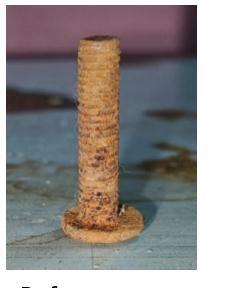
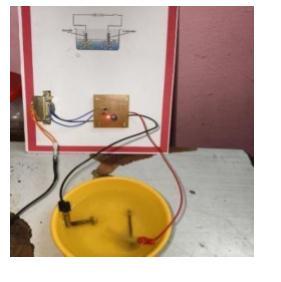
SETUP: 1 Removing Rust from a Steel Bolt by ElectrochemicalCleaning(ElectrolysisMethod) Objective: Toremoverustfroma steel boltusingan electrochemical (electrolysis)process.
Materials Required:
Electroplating/electrolysissetup
DCpowersupply
Ironrod(actsasanode)
Rustedsteelbolt/ironscrew(actsascathode)
Electrolytesolution:
Bakingsoda–50g
Salt–50g
Water(sufficienttoimmersethematerials)
Sandpaper
Steps:
Surface Preparation Usesandpapertocleanthesurfaceof therustedbolt(cathode)toremovelooserust,dirt,grease, oroil.Thisimprovestheefficiencyoftheprocess.
Prepare the Electrolyte Dissolve50gbakingsodaand50g saltinwater.Stirthesolutionuntilfullymixed.
Electrical Connections
Connecttheironrod(anode)tothepositive(+)terminalof thepowersupply.
Connecttherustedsteelbolt(cathode)tothenegative(–) terminal.
Immersion
Immerse both the anode and cathode in the electrolyte solution.Ensuretheydonottoucheachother.
Electrolysis Process
SwitchontheDCpowersupply.
Bubbleswillformatthecathodeduetoreductionreactions. Rustwillstartbreakingdownanddetachingfromthebolt.
Observation
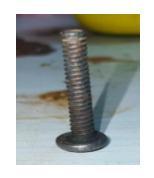
After a few minutes to several hours (depending on rust level), remove the bolt, scrub off loosened rust, and rinse withcleanwater.
Ensuretheelectrodesdonottoucheachother.
Donotusetoohighvoltage(6–12Visusually sufficient).
Performtheexperimentinawell-ventilatedarea.
Avoidtouchingthesolutionwhilethepowerison
Table -1:
Sl.No Initial weight(M1) Before Removing CorrosionIn Grams Final weight(M2) After Removing CorrosionIn Grams CorrosionOn NailM1-M2In Grams
Result: Rust gets removed from the steel bolt due to the electrochemical reduction process at the cathode. After conducting this experiment bolt weight has been reduced 0.22grams
SETUP 2: Applying a copper coating to steel nails via electroplating.
Objective:Toelectroplatesteelnailswithcopperusingan electroplatingapparatus.
Equipment: 1.Electroplatingmachine.
International Research Journal of Engineering and Technology (IRJET) e-ISSN: 2395-0056
Volume: 12 Issue: 12 | Dec 2025 www.irjet.net p-ISSN: 2395-0072
2.Powersource.
3.Steelnail(cathode).
4.Copperwire(anode).
5.Coppersulfateelectrolytesolution.
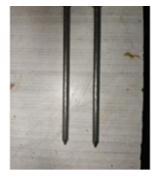
before Coating
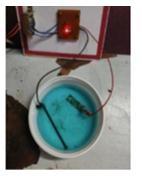
Coating under Process
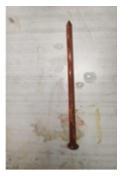
Fig-5 after Coating
Steps:
1.Cleanthesteelnail'ssurfaceusingsandpapertoeliminate anydirt,grease,orcontaminants,ensuringoptimalcoating adhesion.
2.Createtheelectrolytesolutionbydissolvingcoppersulfate inwaterandthoroughlymixing.
3.Attachthecopperwireanodetothepositiveterminalof thepowersupply.
4.Connectthesteelnailcathodetothenegativeterminalof thepowersupply.
5.Submergeboththeanodeandcathodeintheelectrolyte solution.Applyadirectcurrent(DC)tothesolution.
6. Copper ions (Cu²⁺) from the electrolyte migrate to the cathode, where they acquire electrons through reduction, formingacopperdeposit.
7. At the anode, copper atoms release electrons through oxidation, thereby replenishing the copper ions in the electrolyte.
Table -2:
Sl.No Initial Wight(M1) Before Coating In Grams Final Wight(M2) After CoatingIn Grams
1.
Result: Afterconductingthisexperimentonnailweight hasbeenincreased0.04grams
4. CONCLUSION
In conclusion, electroplating represents a versatile and efficient method for rust removal and the deposition of copper coatings, effectively enhancing the lifespan and aestheticqualityofmetallicsurfaces.Thetechniquehinges on a thorough understanding of the underlying electrochemical processes, particularly the importance of maintaining optimal current density and a balanced electrolytecomposition.Utilizingsubstancessuchasbaking soda,salt,andcoppersulfateprovidesafoundationforthe electroplating process, ensuring that the deposition of copperisuniformandadheresproperlytothesubstrate. Moreover,attentiontotheseparametersnotonlyinfluences the functional properties of the coated materials but also playsasignificantroleindeterminingthevisualappealof the final product. Industries ranging from automotive to decorativefabricationcangreatlybenefitfromimplementing preciseelectroplatingprotocols,thusachievinghigh-quality finishes and prolonged durability. As research and technology continue to advance, further refinement of electroplating methods is anticipated, paving the way for even more innovative applications in material science. Ultimately, proper maintenance and control within the electroplating process serve as fundamental practices for maximizingthepotentialbenefitsofthisvaluabletechnique inbothindustrialanddecorativerealms.
REFERENCES
[1] Electroplating:BasicPrinciples,ProcessesandPractice: By N. Kanani, published by Elsevier Advanced Technologyin2004
[2] Modern Electroplating: By Frederick Adolph Lowenheim,publishedbyJ.WileyandSonsin1974
[3] Principles of Electroplating and Electroforming (electrotyping): By William Blum and George B. Hogaboom, published by McGraw-Hill Book Company Incin1949
International Research Journal of Engineering and Technology (IRJET) e-ISSN: 2395-0056
Volume: 12 Issue: 12 | Dec 2025 www.irjet.net p-ISSN: 2395-0072
[4] General Chemistry: Principles and Modern Applications:ByRalphH.Petrucci,HarwoodWilliamS., Herring F. G., and Madura Jeffrey D., published by PearsonEducation,Incin2007
[5] Review on Types and Methods of Electroplating on Metals:APDFavailableonResearchGate
[6] EmmanuelChukwuebukaGuguaetal
[7] OjoSundayIsaacFayomi
[8] JohnX.J.Zhang&KazunoriHoshino
[9] PiotrAugustyn
BIOGRAPHIES

Sharabanna,lecturerinMechanical Engineering at Sanjay Gandhi PolytechnicCollege,Ballari,India, holdsanM.TechinThermalPower Engineering and has teaching assistant experience at IIT Dharwad. He is a lifetime ISTE member and has published six internationaljournalpapers,with interests in heat transfer, power generation,andrenewableenergy.