
International Research Journal of Engineering and Technology (IRJET) e-ISSN: 2395-0056
Volume: 12 Issue: 12 | Dec 2025 www.irjet.net p-ISSN: 2395-0072
International Research Journal of Engineering and Technology (IRJET) e-ISSN: 2395-0056
Volume: 12 Issue: 12 | Dec 2025 www.irjet.net p-ISSN: 2395-0072
Ammar Ali Fejlat 1,Abdul-Karim Al-Jerf 2 ,Mohammad Ali Issa 3
1 Doctorate Student at Structural Department in Faculty of Civil Engineering, Homs University, Homs, Syria
2 Assistant Professor at Structural Department in Faculty of Civil Engineering, Homs University, Homs, Syria
3 Lecturer at Structural Department in Faculty of Civil Engineering, Homs University, Homs, Syria
Abstract - This study aims to investigate the efficiency of steel ribbed-angles in strengthening external concrete beamcolumn joint. The bearing capacity and final deflection of this joint are studied for improving its behavior, moving the plastic hinge away from the face of column and choosing a suitable strengthening pattern. Numerically, using Abacus finite element software, by simulation of experimented concrete joint which is not designed according to seismic codes (without additional shear reinforcement in joint area), this research aims to compare between behaviors of joints supported with two ribbed angles at the external faces from top and bottom of the joint by several different shapes of angles No study has been reported in open literature on geometrical dimensions of external steel angles and correlated effects on bearing capacity of concrete joint.
The results of this study indicates that supporting technique with steel ribbed-angles increases bearing capacity about (11120%) depending on angle length but decreases final deflection of the concrete joint. Before strengthening, bearing capacity of the joint increases with increasing of column-load, but the final deflection decreases. After strengthening, there is no effect of column-load because the failure occurs in the beam with existence of steel angles Increasing the length of ribbed-angle plates increases bearing capacity and consequently strengthening effectiveness by about (20-120%) according to anglelength but the final deflection decreases by about (7-50%)
Increasing the rib-thickness (from 4mm to 30mm) has a very little effect but without a rib the strengthening effectiveness decreases and the final deflection increases. Also, a case study from Tartu’s city is executed and presented in this paper supplied by photos of strengthening of joints in five-story concrete building. By 500mm-length, 250mm-width and 10mm-rib angle, bearing capacity will increase by about 283% but displacement of beam end at failure is decreased by about 31 %.
Keywords: reinforced concrete frame - beam column joint - steel angles - ribbed angles - strengthening.
The RC (reinforced concrete) frame is an effective and commonly used system in RC buildings for resisting both vertical and horizontal load effects. Beam-column joints are important chains in transferring and resisting different buildings’ loads [2]. The subject of studying a (column-beam) joint is one of the most important topics in the study of structural structures,especiallywhenthesestructuresareexposedtoseismicloads,wherethejointshowsnonlinearbehaviorwhen subjected to large monotonic loads, and increases the degree of non-linearity in the behavior of the Moment-Resistant compositejoint,asaresultofmultiplecomponentswithinthejointinadditiontotheinterdependencewitheachotherin differentways.[5]
One of the central constituents of reinforced concrete moment-resisting frames are the beam-column joints which are responsibleforthestabilityoftheframeswhenitisundertheinfluenceofseismicexcitation [4] Inmanyinstances, postearthquakeinspectionsofstructureswithRCmomentresistingframesdamagedduringearthquakes,haveshownthatthe damage inflicted upon the frames was mostly concentrated in the beam-column joints [4]. Also, it has been noted that external beam-column joints are more exposed to damage compared to internal beam-column joints because of their geometricaldiscontinuityandsubpartconfinement[4] Mostofthebuildingsthathavebeenbuiltpriortotheadoptionof the Syrian Arab Code in 1995 and its Annex (2) in 2005 are structurally inadequate to withstand seismic loads. Many of these buildings are still in use with varying levels of seismic deficiencies. Development of knowledge and techniques related of seismic resistance and rise the efficiency of reinforced concrete frame buildings led to achieve more accurate codes.[12]
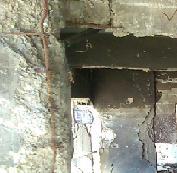
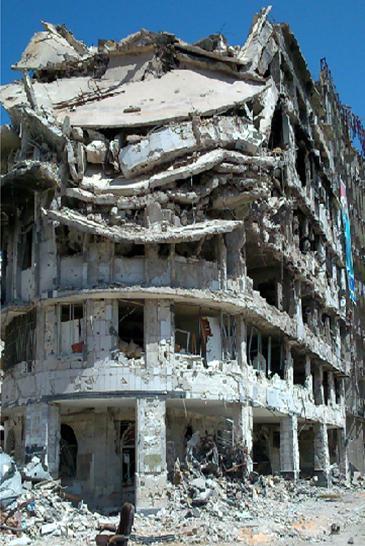
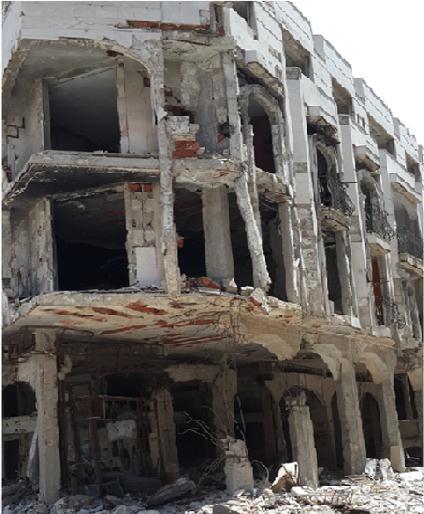
After war in Syria, there are a lot of buildings with damaged faces, which have exterior joints need to be fixed and retrofitted. Some of these joints are shown in Figure (1). Rehabilitation of buildings has very economical benefits. Also, therearealotofseismicallyundersignedbuildingsandhaveinadequateshearreinforcementatjointsareas.
International Research Journal of Engineering and Technology
Volume: 12 Issue: 12 | Dec 2025 www.irjet.net
e-ISSN: 2395-0056
p-ISSN: 2395-0072
Figure-1 SomeofdamagedexteriorjointsintheoldcityofHoms,Syria.
Strengthening effectiveness of concrete beam the ratio between increasing in bearing capacityafterstrengtheningandbearingcapacitybeforestrengthening. Finaldeflection isthedeflectionatpeakultimate load.
Where: :Strengtheningeffectiveness(%) :Bearingcapacityofjointafterstrengthening(kN) :Bearingcapacityofjointbeforestrengthening(kN)
The development of capacity design principles in New Zealand in the 1970's (Park and Paulay, 1976)[18] was an expression of the realization that the distribution of strength through a building was more important than the absolute value of the design base shear. It was recognized that a frame building would perform better under seismic attack if it could be assured that plastic hinges would occur in beams rather than in columns (weak beam/strong column mechanism), and if the shear strength of members exceeded the shear corresponding to flexural strength. This can be identified as the true start to performance based seismic design, where the overall performance of the building is controlledasafunctionofthedesignprocess.[19]
So,itispreferredtomovetheplastichingeawayfromthefaceofcolumnandchooseasuitablestrengtheningpattern.This isconductedbyaddingexternalsupportsatjointszonetoimproveperformanceandstructuralefficiency
Fourperformancelevelsaredefined:
• Fully Operational. Facilitycontinuesinoperationwithnegligibledamage.
• Operational.Facilitycontinuesinoperationwithminordamageandminordisruptioninnonessentialservices.
• Life Safe.Lifesafetyissubstantiallyprotected,damageismoderatedtoextensive.
•Near Collapse.Lifesafetyisatrisk,damageissevere,structuralcollapseisprevented.
Displacement capacity, or ultimate displacement, has also had a number of definitions, including displacement at peak strength,displacementcorrespondingto20%or50%degradationfrompeak(ornominal)strength,anddisplacementat initialfractureoftransversereinforcement.[19]
Akhaveissy et al [4] investigatedtheperformanceofadefectiveRCbeam-columnconnectionwith9differentmodelsand providedamethodtoimprovethebehavioroftheconnection.Tensileboltswereusedtoconnectsteelplatestoeachother
International Research Journal of Engineering and Technology (IRJET) e-ISSN: 2395-0056
Volume: 12 Issue: 12 | Dec 2025 www.irjet.net p-ISSN: 2395-0072
intheproposedmodelsareoftypeA325andaccordingtotheASTM-A325code.Theboltshadbeenpre-stressedequalto either40or70percentoftheiryieldstresses.Figure(2)illustratesmodel9andtheplacementofthestrapsandthebolts.
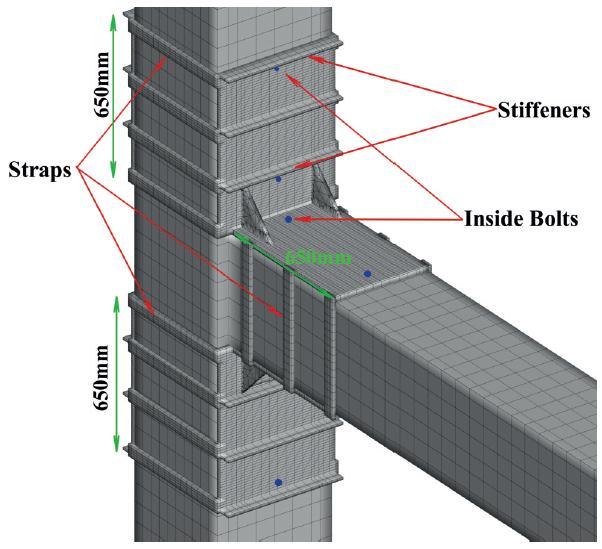
Figure-2 Viewofmodel9andtheplacementofthestrapsandthebolts[4]
The experimental model of joint is illustrated in Figure (4). By comparing the load-displacement diagram of model 9 to thoseoftheothermodels,theloadbearingcapacityoftheconnectionhasconsiderablyincreasedbyabout(67.2-71%)for (40%, 70%) respectively percent of pre-stressing of inside bolts. Chart (1) shows comparison between the loaddisplacementdiagramsofmodel9andtheinitialmodel.
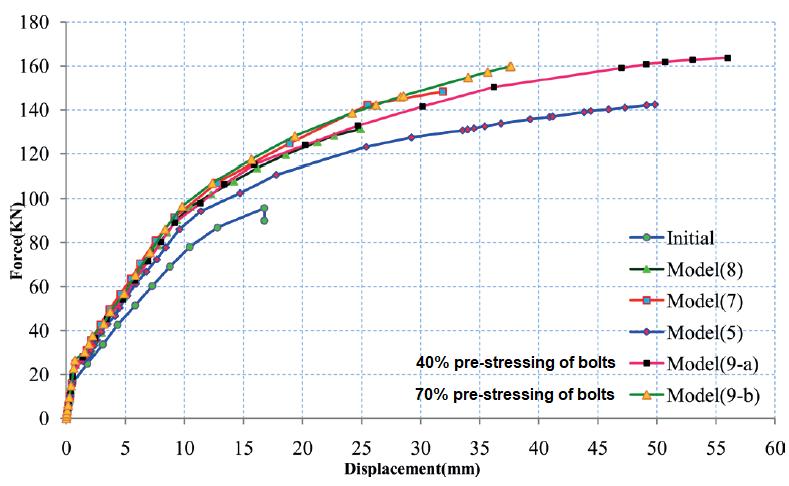
Chart-1 Comparisonbetweentheload-displacementdiagramsofmodel9andtheothermodels[4]
Zhang et al [23] proposedjointconnectionconstructionmethodbasedontheribbedanglesteeltoimproveconstruction performance of reinforced concrete column-steel beam composite joints. The bending bearing capacity of the joint with slidingfailurebetweenthefittingandthesteelbeamiscontrolledbytheantslidingbearingcapacityofhigh-strengthbolts between fittings and steel beams. The enlargement of cross sections of the beam and the column fails to improve the bendingbearingcapacityofjointseffectivelyinthiscase.Onthebasisoftheexperimentalinvestigationandfiniteelement analysis,thereliabilityofthenovelprefabricatedRCScompositejointwithtopandbottomribbedanglesteelwasproven. The simple structure improved the convenience in assembly construction and promoted its practical application in fabricatedstructuralengineering.Figure(3)illustratestheconcretecolumn-steelbeam jointwithribbedangles.
International Research Journal of Engineering and Technology (IRJET) e-ISSN: 2395-0056
Volume: 12 Issue: 12 | Dec 2025 www.irjet.net p-ISSN: 2395-0072
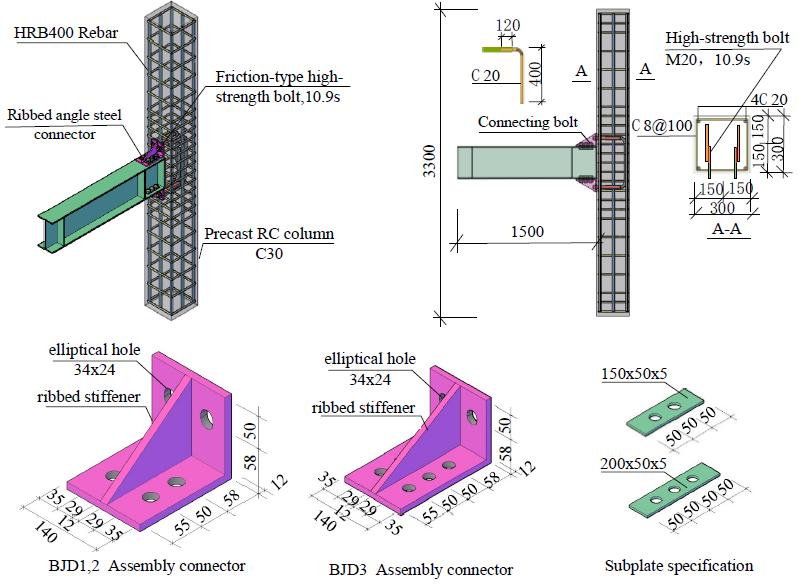
Figure-3 Graphicalillustrationofconcretecolumn-steelbeam jointwithribbedangles[23]
[Al rays] [6] usedachanneltostrengthenthecolumnzoneinbeam-columnsteeljointandinvestigatedtheperformance usingmateriallynonlinearanalysisandT-stubmodelwhichtakesthecomponentmethodintoaccount.Ithadbeenshown thataddingachannelenhancestheductilityandtheresistancemoment.
[ACI-ASCE committee 352] [3] Forjointsinstructuresbuiltbeforethedevelopmentofcurrentdesignguidelinesdonot conform to the current requirements, recommends that “these joints need to be studied in detail to establish their adequacy and to develop evaluation codes for building rehabilitation”. Methods for improving the performance of older jointsneedtobestudiedtoavoidjointsfailureinearthquakeareas.
Choosingthemostsuitableshapeofangledependsonthegeometryofjoint,architecturalview,seismicclassificationand economic issues. Seismic classification means performance-based design when we need target deflection to control performance level (e.g. Life Safety), so when changing angle width and angle thickness, there are optimum values which givemaximumfinaldeflectionandmaximumdeflectionatfailureofjoint.Mostresearchersuseaspecificmodeofexternal strengtheningorconfinement.Nostudyhasbeenreportedinopenliteratureongeometricaldimensionsofexternalsteel anglesandcorrelatedeffectsonbearingcapacityofconcretejoint.Parametersareincludingmanylevelsofloadoncolumn and geometrical shape of steel angles (length, width, thickness, rib……) The aim is to reach more efficient pattern of strengtheningandflexibilityforimplementationincomplexarchitecturalplans.
Thecompressivestrengthofconcreteis25MPa.Thetensilestrengthofthelongitudinalsteelbarsandthestirrupsusedin thebeamsandcolumnsis400Mpa.Thetensilestrengthoftheanglessteel is 528Mpa. Thedimensionsofthe columnof thestudiedconnectionare052*052mm.Also,thebeamhasaheightof052mmandawidthof002mm.Thedetailsofthe poorlyconstructedconnectioninthehighschool,includingthedimensionsandthereinforcementsaredepictedinFigure (4).
Using Abacus software for modeling and simulation of reinforced concrete joint supported with steel ribbed-angles, the variablesareangleplatesthickness,anglelength,anglewidth,ribthickness(45o-Rib)andtheloadappliedonthecolumn. Also there is need to study the effect of adding unrobed-angle for comparing strengthening effectiveness and final deflection Highstrengthbolts8.8(yieldstrength=640Mpa,ultimatestrength=800Mpa,length=12.5cm,diameter=24 mm)areusedandpartiallyembeddedinconcrete.Anglesarefullyconnectedtoconcretesurfaces.
International Research Journal of Engineering and Technology (IRJET) e-ISSN: 2395-0056
Volume: 12 Issue: 12 | Dec 2025 www.irjet.net p-ISSN: 2395-0072
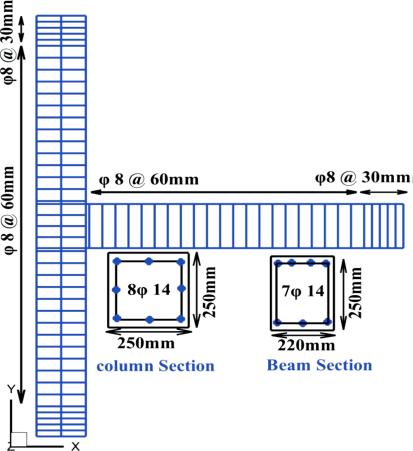
Figure-4 Theexperimentalmodelofjoint.[4]
OneofanglemodelsisshowninFigure(5).Figure(6)showsthemethodologygraphofthisresearch.
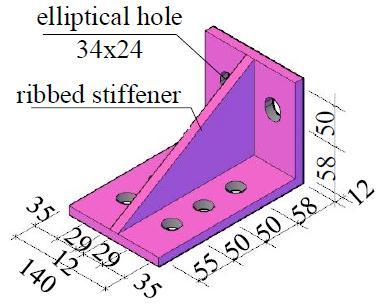
Figure-5 Graphicalillustrationofthesteelangleforstrengtheningconcretejoint(dimensionsin mm) [22]







the Results
Figure-6 Methodologyofresearch
3. Models
Thenumericalfiniteelementmodelis depictedinFigure(7).Using Concrete Damaged Plasticity Model[7,9]formodeling of concrete, Tie method for the connection between steel angles and concrete (full connection surfaces) and embedded region forsteelbarsinconcrete.
Bycomparingtheload-displacementdiagramsofthejointmodelanditssimulationon Abaqus softwareusingtheobtained parameters,a goodagreementcanbeseen(Chart-2). Bykeepingthestrengthparametersofconcreteandsteel constant, theretrofittingoftheconstructedjointwithsteelanglesisinvestigated.
International Research Journal of Engineering and Technology (IRJET) e-ISSN: 2395-0056
Volume: 12 Issue: 12 | Dec 2025 www.irjet.net p-ISSN: 2395-0072
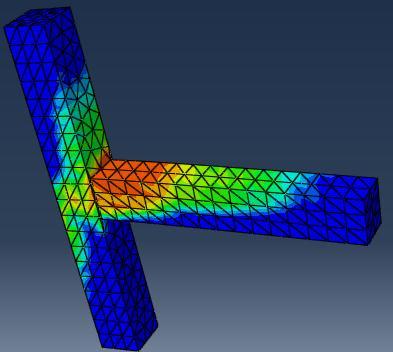
Figure-7 Thefiniteelementmodelofjoint.
Elementtypesdependonthegeometryofthemodel.Elementtypesusedinourmodelsofjointsare:
C3D10: A10-nodequadratictetrahedronusedfortheconcrete,steelanglesandheadsofhighresistancebolts.
C3D8R: An8-nodelinearbrick,reducedintegration,hourglasscontrol,usedforbodiesofhighresistancebolts.
T3D3: A3-nodequadratic3-Dtruss,usedforsteelbarsandsteelstirrups.Boundaryconditionsforthejointareillustrated inFigure(8).
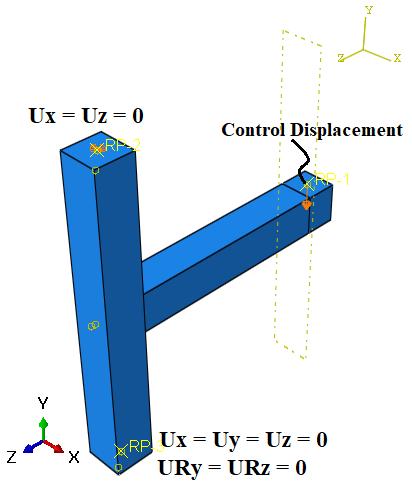
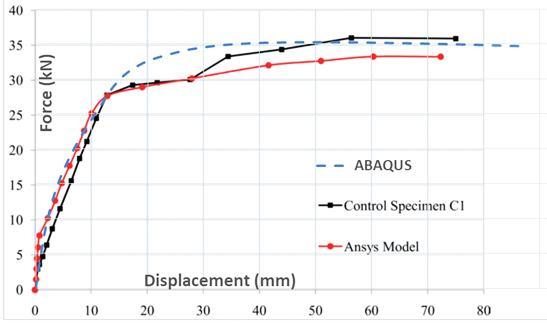
Chart-2 Load-Displacementcurvesforjointmodel.
International Research Journal of Engineering and Technology (IRJET) e-ISSN: 2395-0056
Volume: 12 Issue: 12 | Dec 2025 www.irjet.net p-ISSN: 2395-0072
Akhaveissy - Simulation
Unstrengthened Strengthened
Chart-3 Load-Displacementcurvesforjointmodelbeforeandafterstrengthening
AsitshownfromChart(3),forthismodel,loadcarryingcapacityincreasesbyabout(32%)forstrengthenedjoint. Angles andhighstrengthboltsareshowninFigure(9).
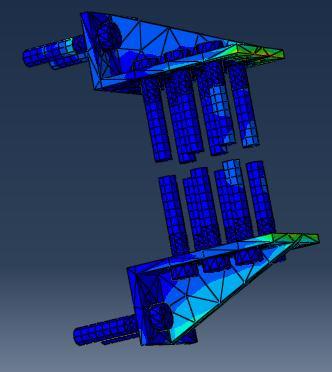
Figure-9 Anglesandhighstrengthbolts.
ParametersforCDPconcretematerialispresentedinTable(1).Detailsandnamingofthetestspecimenswereconcisein Table2.
Table.1 Parameters forconcretedamagedplasticityin Abacus forthetestedjointmodel.
1 ColumnLoad Before Strengthening
2 ColumnLoad After
Table.2 Models’IDandtheirbriefdetails
L0-T0-W0-R0-C0
L0-T0-W0-R0-C0
L0-T0-W0-R0-C0
L0-T0-W0-R0-C0
L0-T0-W0-R0-C0
International Research Journal of Engineering and Technology (IRJET) e-ISSN: 2395-0056
Volume: 12 Issue: 12 | Dec 2025 www.irjet.net p-ISSN: 2395-0072
Strengthening C100
L225,108-T12-W140-R12C50
L225,108-T12-W140-R12C200
L225,108-T12-W140-R12C500
L100-T8-W140-R4-C0
L200-T8-W140-R4-C0
3 AnglesLength
4 RibThickness
5 Angles Thickness
6 AnglesWidth
WhereSymbolsareas:
L300-T8-W140-R4-C0
L400-T8-W140-R4-C0
L500-T8-W140-R4-C0
L600-T8-W140-R4-C0
L300-T12-W140-R0-C0
L300-T12-W140-R4-C0
L300-T12-W140-R8-C0
L300-T12-W140-R12-C0
L300-T12-W140-R16-C0
L300-T12-W140-R20-C0
L300-T12-W140-R30-C0
L300-T4-W140-R4-C0
L300-T8-W140-R4-C0
L300-T12-W140-R4-C0
L300-T20-W140-R4-C0
L300-T8-W40-R4-C0
L300-T8-W80-R4-C0
L300-T8-W120-R4-C0
L300-T8-W140-R4-C0
L300-T8-W160-R4-C0
L300-T8-W180-R4-C0
L300-T8-W220-R4-C0
3.1. Effect of column’s load on bearing capacity and final deflection before strengthening: (Group 1) In the first phase, the column top face is subjected to uniform pressure, and in the second phase, the beam’s free end is subjectedtotheactionofacontrolledverticaldisplacementtillreachingthemodelmaximumcapacityandfailure
Bearing Capacity V.S Column Load
Bearing Capacity of Joint (kN) Load on Column (kN)
Chart-4 BearingCapacityVS. ColumnLoadbeforestrengthening y = -x + 3657 R² = 1
International Research Journal of Engineering and Technology (IRJET) e-ISSN: 2395-0056
Volume: 12 Issue: 12 | Dec 2025 www.irjet.net p-ISSN: 2395-0072
Final Deflection V.S Column Load
y = 0.0005x + 3.9566
R² = 0.9999
on Column (kN)
Chart-5 FinalDeflectionVS. ColumnLoadbeforestrengthening
Load carrying capacity of the joint is related to the load of column. As can be seen from Charts (4, 5), bearing capacity decreaseswhilecolumn’sloadincreases,butfinaldeflectionincreases.
3.2. Effect of column’s load on bearing capacity and final deflection after strengthening: (Group 2)
By the same methodology, a plot was provided for the relationships between column’s load and both strengthening effectiveness and final deflection (Chart-6). There is clearly no effect. This is because the maximum plastic strain is transferred from the face of column to the beam by the steel angles. In general, sensitivity analysis provides users of mathematicalandsimulationmodelswithtoolstoappreciate thedependencyofthemodeloutputfrommodelinput,and toinvestigatehowimportantiseachmodelinputindeterminingitsoutput. Theimpactofsmallinputperturbationsonthe modeloutputisstudied.Sensitivityanalysisisusedwhenthereisamulti-variablesfunctionbychangingonevariableand fixingothervariablestoinvestigatehowmuchthisvariableaffectstheallsystem.
Strengthening Effectiveness V.S Column Load
Strengthening Effectiveness Final Deflection
on Column (kN)
Chart-6 StrengtheningEffectivenessandFinaldeflectionVS. ColumnLoadafterstrengthening
Before strengthening, bearing capacity decreases while column’s load increases, but final deflection increases. After strengthening, there is no effect of column’s load on bearing capacity and final deflection, because the existence of steel anglestransfersthemaximumplasticstrainsfromthefaceofcolumntothebeam.
3.3. Effect of length of angle plates: (Group 3)
Itisobvious numericallyfromTable(3)thatwhenanglelengthincreases,strengtheningeffectivenessincreasesbut final deflectiondecreases.ThisisillustratedgraphicallyinCharts(7,8).
International Research Journal of Engineering and Technology (IRJET) e-ISSN: 2395-0056
Volume: 12 Issue: 12 | Dec 2025 www.irjet.net p-ISSN: 2395-0072
Table.3 Numericalvaluesfortheeffectofangleslengthinstrengtheningexteriorjoint
Strengthening Effectiveness VS. Angle Length
Chart-7 StrengtheningEffectivenessVS. Angle Length
Final Deflection VS. Angle Length
Chart-8 FinalDeflectionVS. Angle Length
From Charts (7, 8), it can be seen that strengthening effectiveness is increased when angle length is increased but final deflection is decreased. It is rational results because the supported part of joint is increased. However angle length is controlledbyarchitectureandeconomicissues.
3.4. Effect of rib thickness: (Group 4)
AsshowninChart(9),thereisaverylittleeffectwhentheribthicknesschangesfrom(4mm)to(30mm).However,ifthere isnorib,strengtheningeffectivenessdecreasesandfinaldeflection increases.
International Research Journal of Engineering and Technology (IRJET) e-ISSN: 2395-0056
Volume: 12 Issue: 12 | Dec 2025 www.irjet.net p-ISSN: 2395-0072
Strengthening Effectiveness
Poly. (Joint Deflection)
Poly. (Strengthening Effectiveness)
Chart-9 StrengtheningEffectivenessandFinaldeflectionVS. RibThickness
3.5. Effect of angle-plate thickness and angle width: (Groups 5,6 )
Thereisalittleincreasinginstrengtheningeffectivenesswhenanglewidthincreases,schematicallyclarifiedinChart(10). Perversely,anglethicknesshasanoptimumpointwhichgivesamaximumbearingcapacityofconcretejoint.Inourcase, Chart (11) shows that 12-mm-plate thickness gives the maximum strengthening effectiveness. This result can’t be generalizedanditismaybeespeciallyforthecondition.
Effectiveness VS. Angle
Chart-10 StrengtheningEffectivenessVS. AngleWidth
Strengthening Effectiveness VS. Angle Thickness
Chart-11 StrengtheningEffectivenessVS. Angle Thickness
Notethat,forconcretejointstrengthenedwithsteelribbedangles,maximumdeflectionofbeamgenerallydecreaseswhile loadcapacityofjointincreases. Butthereare optimum values ofthicknessand widthoftheangles whichgive maximum deflectionatfailureofjoint,schematicallyillustratedinCharts(12,13).
International Research Journal of Engineering and Technology (IRJET) e-ISSN: 2395-0056
Volume: 12 Issue: 12 | Dec 2025 www.irjet.net p-ISSN: 2395-0072
Chart-12 FinalDeflection VS. AngleWidth
Deflection VS. Angle Thickness
Chart-13 FinalDeflection VS. AngleThickness
It can be seen that thickness (8mm) and width (8cm) of ribbed-angles are the best choices for final deflection of strengthenedconcretejoint.Furtherresearchesareneededtorelatetheseparameterstojointdimensions.
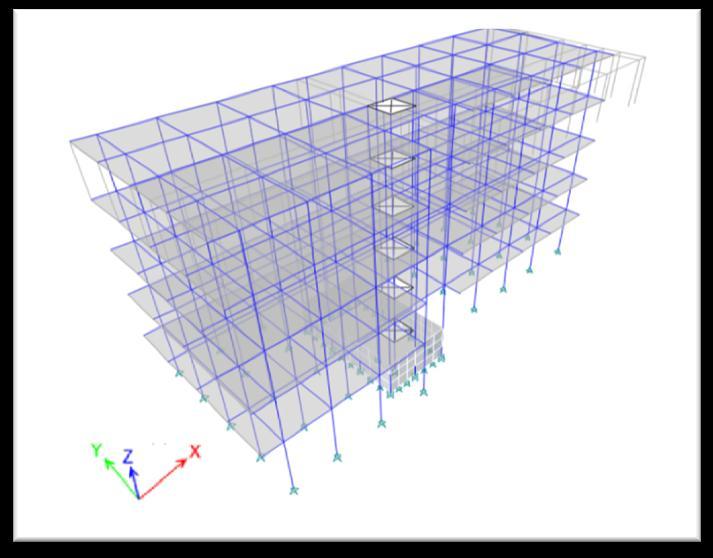
Ascasestudy,anexteriorconcretejointinHordyslabin5-storeyandbasementbuildingin Tartous City.Strengtheningis conducted forspecific joints inthefivestories(intersectionofB-Band 5-5axes,intersectionofH-Hand5-5&2-2axes) 3D-modelofthebuildingisillustratedinFigure(10).
International Research Journal of Engineering and Technology (IRJET) e-ISSN: 2395-0056
Volume: 12 Issue: 12 | Dec 2025 www.irjet.net p-ISSN: 2395-0072 © 2025, IRJET | Impact Factor value: 8.315 | ISO 9001:2008 Certified Journal | Page679
The planof buildingis illustrated in Figure (11).Evaluation of the building is done by equivalent staticmethod on Etabs V18 software and the results of drifts on X & Y directions are presented in Table (4). So, as can be seen, the building in needtobestrengthened.ThejointanddetailsillustratedinFigure(12).
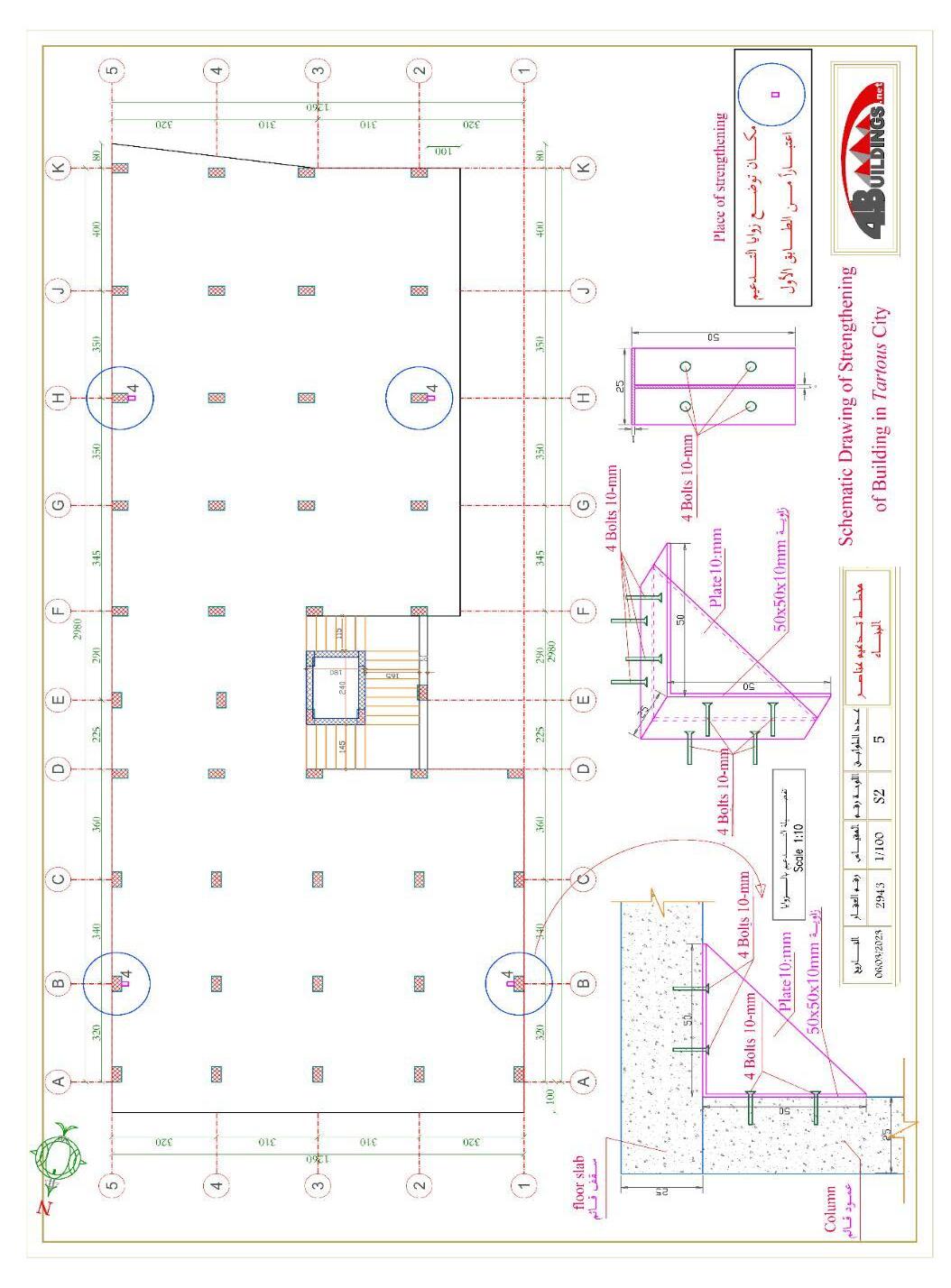
Planof5-storeyconcretebuildingwithstrengthenedjointspositions.
International Research Journal of Engineering and Technology (IRJET) e-ISSN: 2395-0056
Volume: 12 Issue: 12 | Dec 2025 www.irjet.net p-ISSN: 2395-0072
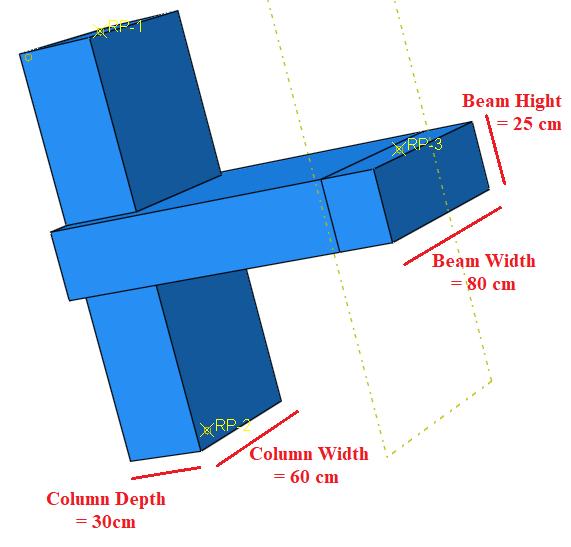
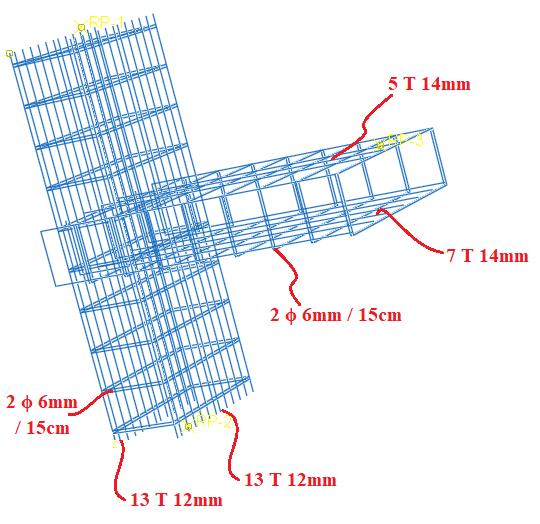
Figure-12 ThejointandsteelreinforcementdetailsinBasement.
Table.4 DriftValuesforthebuildingunderoverview
Illustrated in Figure (13), the used steel angle is L: 500x500x10 mm, width is 250mm, with rib of thickness 10 mm and fourhighstrength8.8boltsofdiameter10mm using epoxytocoherewithconcrete.Concretecompressivestrengthwas 22MPa.Theyieldstrengthofsteelwas528MPaandultimatestrengthwas657MPaat5%elongation.
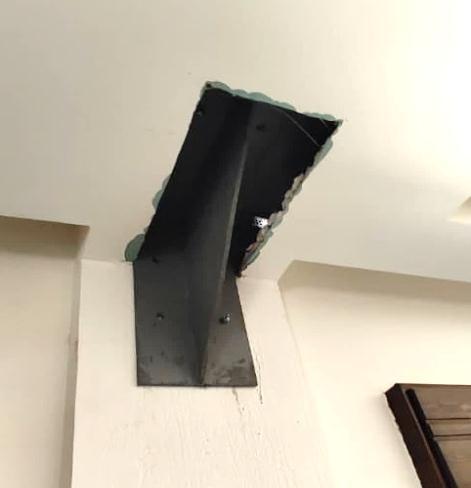
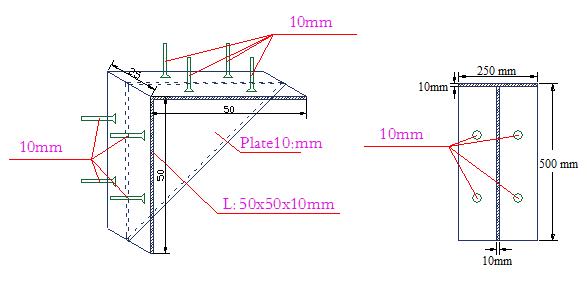
Figure-13 Thesteelangleusedinstrengtheningjointinthe5th storyoftheconcretebuilding
Load-Displacement curve for joint case study before and after strengthening is illustrated in Chart (14). Notice that Load Capacity of joint isincreased by 283 %. But displacement of beam endat failure isdecreased byabout 31 %,from 29.7 mm to 20.6mm.
International Research Journal of Engineering and Technology (IRJET) e-ISSN: 2395-0056
Volume: 12 Issue: 12 | Dec 2025 www.irjet.net p-ISSN: 2395-0072
Force-Displacement Curves
Chart-14
Before Strengthening
After Strengthening
Displacement at Beam End (mm)
Load-Displacementcurveforjointcasestudybeforeandafterstrengthening
Figure (14) shows comparison between plastic strain zones and values before and after strengthening. Notice that maximum plastic strains at failure is transferred from the connection zone between beam and column to the beam at surfacecontactbetweensteelangleandbeam.Secondfailurepatternisconsideredfavoriteagainstthefirstone.
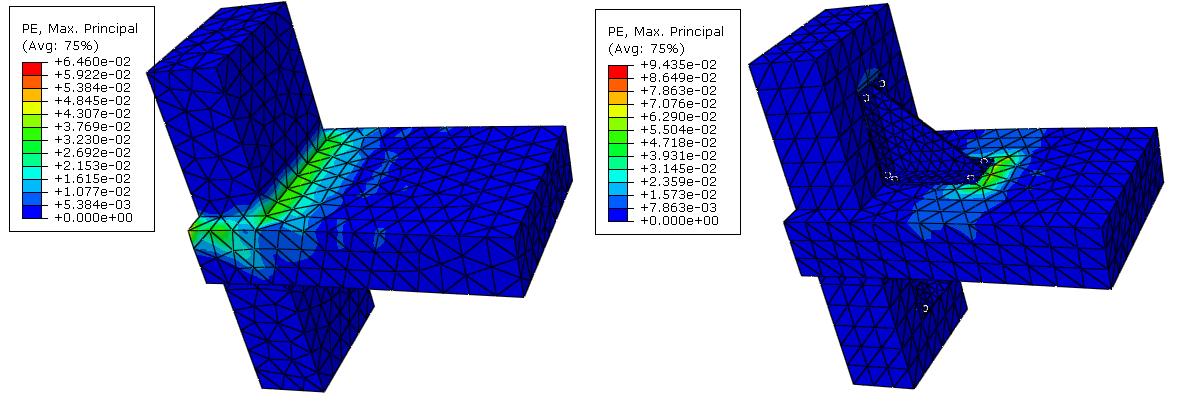
5. Conclusions
In this study, numerical analytical comparing is made between the cases of using steel angles for strengthening exterior beam-columnconcretejointby Finite Element Method andtheseresultsareobserved:
By using specified ribbed steel angles, the load carrying capacity of exterior beam-column concrete joint is increasedbyabout(32%),inaccordancewithliterature,butthefinaldeflectiondecreases.
Beforestrengthening,bearingcapacitydecreaseswhilecolumn’sloadincreases,butfinaldeflectionincreases.
After strengthening, there is no effect of column’s load on bearing capacity and final deflection, because the existenceofsteelanglestransfersthemaximumplasticstrainsfromthefaceofcolumntothebeam.
Thereisbarelyalittleeffectwhentheribthicknessisincreasedfrom(4mm)to(30mm).
In general, for concrete joint strengthened with steel ribbed angles, maximum deflection of beam generally decreaseswhileloadcapacityofjointincreases.
International Research Journal of Engineering and Technology (IRJET) e-ISSN: 2395-0056
Volume: 12 Issue: 12 | Dec 2025 www.irjet.net p-ISSN: 2395-0072
Thecracksmovefromthejointtothebeam,thefailureoccursinthebeamwithmaximumplasticstrains,andthe joint area remains intact. This confirms that the steel angles are effective in protecting the joint and give more desirablefailurepatterninaconcretejoint.
Thereareoptimumvaluesofthicknessandwidthoftheangleswhichgivemaximum finaldeflectionatfailureof joint.Furtherresearchesareneededtorelatetheseparameterstojointdimensions.
6. References
[1] ABAQUS/CAEUser'sGuide(0202).DassaultSystèmes,1011p.
[2] Abdelwahed,B&Kaloop,M&El-Demerdash,W(2021)-NonlinearNumericalAssessmentofExteriorBeam-Column ConnectionswithLow-StrengthConcrete.mdpi.com/journal/buildings,15p
[3] ACI352R-02(2002)-RecommendationsforDesignofBeam-ColumnConnectionsinMonolithicReinforcedConcrete Structures AmericanConcreteInstitute,37p.
[4] Akhaveissy,A&Permanoon,A&Mirzaei,M(2017)-SeismicRetrofitofDefectiveRCBeam-ColumnJoints.Periodical PolytechnicaCivilEngineering,33p.
[5] Al-deeri, M (2018) - Enhancing the Performance of Composite (Beam-Column) Joint Using Numerical Component Modeling.FacultyofCivilEngineering,DamascusUniversity,108p.
[6] Alrayes, H (2013) - Determination of the Ductility of Bolted End-Plate Beam-to-Column Joints Stiffened with Steel Channel.FacultyofCivilEngineering,DamascusUniversity,123p.
[7] Aninthaneni,P.K&Dhakal,R.P(2014)-ConceptualDevelopment:LowLossPrecastConcreteFrameBuildingsWith SteelConnections.DepartmentofCivilandNaturalResourcesEngineering,UniversityofCanterbury,13p.
[8] Babu ,S & Sonu ,A (2023) - Strengthening of RC Beam-Column Joints Using Steel Plates and Shear Connectors. InternationalJournalforResearchinAppliedScience&EngineeringTechnology(IJRASET),Volume11IssueIVApr 2023,13p.
[9] Cosgun ,C et al (2019) - Experimental behaviour and failure of beam-column joints with plain bars, low-strength concreteanddifferentanchoragedetails.EngineeringFailureAnalysis,14p
[10] FEMA 273 (1997) - Federal Emergency Management Agency - NEHRP GUIDELINES FOR THE SEISMIC REHABILITATIONOFBUILDINGS.BUILDINGSEISMICSAFETYCOUNCIL-Washington,D.C,435p.
[11] Hafezolghorani,M(2015)-SimplifiedDamagePlasticityModelforConcrete.StructuralEngineeringInternational Nr.1/2017,11p.
[12] JABALY, M & ALSEHNAWI, R (2025) - Study the Seismic Sesponse of Reinforced Concrete Buildings Retrofitted with a Precast Concrete Frame Reinforced with a Steel Plate. Damascus University Journal of Earthquake and DisasterResearch,Vo2number(1)-2025:97-77,20p.
[13] Leon, R (1999) - Composite Connections, Structural Engineering Handbook. - School of Civil and Environmental Engineering,GeorgiaInstituteofTechnology,30p.
[14] LUBLINER,Jetal(1988)-APLASTIC-DAMAGEMODELFORCONCRETE.InternationalJournalofSolidsStructures, Vol.25,No.3,28p.
[15] MADDALA , P (2013) - PUSHOVER ANALYSIS OF STEEL FRAMES .NATIONAL INSTITUTE OF TECHNOLOGYROURKELA,ORISSA, 53p.
[16] Mirghaderi, S.R & Eghbali, N.B (2013) - Analytical investigation of a new Through-Column-Type Joint for compositereinforcedconcreteandsteelframes.SchoolofCivilEngineering,UniversityofTehran,13p.
[17] Pampanin, S & Christopoulos, C & Chen, T.-H (2006) -Development and validation of a metallic haunch seismic retrofit solution for existing under-designed RC frame buildings. Earthquake Engineering & Structural Dynamics, 35 (01.) ,33p.
International Research Journal of Engineering and Technology (IRJET) e-ISSN: 2395-0056
Volume: 12 Issue: 12 | Dec 2025 www.irjet.net p-ISSN: 2395-0072
[18] Park,R&Paulay,T(1975)-ReinforcedConcreteStructures.JohnWiley&Sons,783p.
[19] PRIESTLEY,MJN(2000)-PERFORMANCEBASEDSEISMICDESIGN.UniversityofCalifornia,SanDiego,22p.
[20] Reinosa, J.M & Loureiro, A & Gutierrez, R & López, M (2016) - Advanced FE models of stiffened cleat angle connections.-SpanishMinisteriodeEconomíayCompetitividad,8p.
[21] Venkatesana,B&Ilangovanb,R(2016)-StructuralBehaviourOfBeamColumnJointRetrofittedWithFerrocement Laminates.-InternationalJournalofAdvancedEngineeringTechnology,9p.
[22] Wang,P&Pan,J&Wang,Z&Chen,S(2017)-Experimentalandanalyticalbehaviorofstiffenedanglejoints.Steel andCompositeStructures,SouthChinaUniversityofTechnology,12p.
[23] Zhang, Z H & Mao, G X & Liu, Y & Xiao, A L & Liu, Z L (2021) - Experimental Analysis on Seismic Behavior of Prefabricated Reinforced Concrete Column to Steel Beam Exterior Joints with Ribbed Angle Steel. - Journal of EngineeringScienceandTechnologyReview,12p.
In Arab
[24] Al-Khadour , H (2023) – Experimental Study of External Beam Column Joint Strengthened with Ferrocement. FacultyofCivilEngineering,AlBaathUniversity,181p.
BIOGRAPHIES



Ammar Ali Fejlat
DoctorateStudentinStructuralEngineering,FacultyofCivilEngineering,HomsUniversity
Worked as teaching assistant in the Faculty of Civil Engineering, Homs University Now is site engineerinPrecast/PrestressedCompany
Abdul-Karim Al-Jerf
Assistant professor in Department of Structural Engineering, Faculty of Civil Engineering, HomsUniversity
Mohammad Ali Issa
LecturerinDepartmentofStructuralEngineering,FacultyofCivilEngineering,HomsUniversity
|