
International Research Journal of Engineering and Technology (IRJET) e-ISSN: 2395-0056
Volume: 12 Issue: 04 | Apr 2025 www.irjet.net p-ISSN: 2395-0072
International Research Journal of Engineering and Technology (IRJET) e-ISSN: 2395-0056
Volume: 12 Issue: 04 | Apr 2025 www.irjet.net p-ISSN: 2395-0072
Sushant Sadanand Kulkarni
At Post Aurangabad Tal. Aurangabad Dist. Aurangabad Pin 431005
Dr. Pritam Malakar, Dept. of civil Engineering, GH Raisoni University, Maharashtra, India
Abstract – Storm water management refers to the practices,policies,andtechniquesusedtomanagetheflow, quality,andquantityofrainwaterrunoff.Thisisessentialin urban areas or areas with large amounts of impervious surfaces (e.g., roads, parking lots, buildings) that prevent water from naturally soaking into the ground. Effective storm watermanagementhelpsprevent flooding, reduces erosion,andprotectswaterqualitybycontrollingtherunoff and ensuring that it does not carry pollutants into rivers, lakes,oroceans.
The GVF Rational Method is used to design storm water systems, particularly in urban areas. It's a method that focuses on determining peak flow rates for the design of stormwatersystems,likeculverts,gutters,orpipes.TheGVF in the name stands for Generalized Variable Flow which referstotheapproachformodellingtheflowofstormwater through the drainage system, considering varying flow conditions.
The Key Objective of Storm water management is Flood Control,WaterQualityProtection,GroundwaterRecharge, ErosionControlandSustainability
Inthecontextofmodernurbandevelopment,stormwater management aims to replicate the natural hydrologic conditionsasmuchaspossible.Thiscanbeachievedthrough avarietyoftechniquesdesignedtocapture,store,treat,and safelyconveystormwaterrunoff.
Effective storm water management is essential for minimizingtheenvironmental impactofurbanizationand preventingflooding,waterqualitydegradation,anderosion. Byusingamixofstructuralsolutions,greeninfrastructure, and best management practices (BMPs), communities can managestormwaterinawaythatisbothsustainableand environmentallyresponsible.Thekeyistodesignsystems thatmimic natural hydrological processes, improve water quality,andensurethelong-termresilienceofboththebuilt environmentandthesurroundingecosystem.
Key words - GVF Rational Method, Flow, Culverts, Flood Control, Water Quality Protection, Erosion Control and Sustainability, Structural solutions.
PuneisthesecondlargestcityinMaharashtrawithan areaofabout324.00sq.km(243.00sq.km.ofPunecityarea +81.00sq.km.of11newlyaddedvillages)andwithabout populationofcitycensus(2017)48.52Lakhpeopleresiding.
On 30th June 2021, 23 additional villages (Mhalunge, Sus, Bavdhan, Pisoli, Kondhwe-Dhawade, Kopre, Nanded, Khadakwasla, Mundhwa, Manjari, Narhe, Mantarwadi, Holkarwadi, Handewadi, Wadachiwadi, Shewalewadi, Mangdewadi, Vadgaonsheri, Nandoshi, Bhilarewadi, Jambhulwadi,Gujar-Nimbalkarwadi,Kolewadi)wereadded toPuneMunicipalCorporation.Theadjoiningvillageswhich arenowmergedinPunearealreadyurbanizingrapidlyand are expected to grow more now that they are part of the urbanconglomerate.
PuneMunicipalCorporationpreparedStormwatermaster plan in Year 2007. Then after merged 12 Village (Yewalewadi+11Village)departmentsalsopreparedstorm water master plan in year 2018. This includes study of existing Storm network and proposing revamping of inadequate network as well as new network and constructionofCulvertsfacilitiesinphasedmanner.
Consideringtheexpectedrapidgrowthinthenewlymerged 23 villages having area approx.181 sqkm, Pune Municipal CorporationaimstoprepareacomprehensiveStormmaster planforthenewlyaddedarea.Thismasterplanisproposed to be developed such that it can dovetail into the existing masterplansothataseamlessdevelopmentofStormwater collection and as to provide a system wherein no water loggingoccursinthenewlymerged23VillageandBavdhan villagesisoneofthevillagefrom23newlyMergevillagein PMC and we are going to look for Bavdhan storm water management.
Recently23fringevillagesincludedinthePuneMunicipal Corporation city limit. At present total area of Pune city increasedfrom333.69Sq.kmto581.30Sq.km.,highlighted marked area in yellow color shown in above figure is the villagesaddedinPuneMunicipalCorporationcitylimitand wearegoingtolookforBavdhanStromWaterManagement.
International Research Journal of Engineering and Technology (IRJET) e-ISSN: 2395-0056
Volume: 12 Issue: 04 | Apr 2025 www.irjet.net p-ISSN: 2395-0072
2.1 Objectives:
The objective of a Stormwater Master Plan (SWMP) isto provide a comprehensive, long-term framework for managing stormwater runoff in urban and rural areas to reduce flooding, protect water quality, and promote environmentalsustainability Specificobjectivesinclude
1) FloodRiskManagement
2) WaterQualityProtection
3) RegulatoryCompliance
4) .SustainableUrbanPlanning
5) EnvironmentalConservation
2.2 Scope:
1. Collecting Village maps, DP or Regional Planning map from with Pune Municipal Corporation and toposheets from respective government department.
2. Preparation of base map of newly merged 23 villages by using available satellite image of with Pune Municipal Corporation. This will include existing roads, natural streams, village maps and importantlandmarksetc.
3. Topographicalsurveybyusingtotalstation/DGPS of all existing roads & existing natural streams (nalla).
4. Creating sub-watersheds (Basins) based on topography of the project area and outfalls of naturalstreams(nalla).
5. Markingproposedstormwaterdrainagenetwork and nodes within the sub-watersheds (basins) by identifyingtheexistingroadsandnaturalstreams (nalla), which will carry the storm water to the outfallofnaturalstream.
6. Historical Rainfall data collection of the nearest rain-gauge station form Indian Meteorological department, rainfall analysis and generating Intensity-Duration-Frequency (IDF) curve as per CPHEEOmanualforstormwaterdrainagesystem.
7. Fortheroadsandstreams(nalla)identified,design storm water drains with carrying capacity for intensityofreturnperiodassuggestedinCPHEEO manual.Hydraulicdesignshall beasperCPHEEO manual.
8. Evaluate current carrying capacity of natural streams (nalla) in the project area and provide recommendationsonpossibilitiesofincreasingthe capacity.
9. Identifying frequently flooding spots and encroachmentofnaturalstreamsandrecommend
appropriatemeasurestosolvetheproblemofwater stagnationatthesespots.
10. Showing storm water network in GIS map with attributeslikeestimatedrunoff,proposedsizesof drainsetc.
Limitation: Many traditional storm water management systems, such as pipe-based drainage and storm sewers,areofteninadequate inmanaginglargevolumesofwaterduringextreme rainfall events. These systems tend to focus on flood prevention through rapid conveyance but arenotoptimizedfor storm water storage orfor dealingwiththeincreasingfrequencyandintensity ofheavystormsduetoclimatechange.
Research Gap: There is a need for advanced modelling to improve flood prediction under changing climate conditions. More research is required to integrate climate change projections intourbandrainagesystemdesign,particularlyto enhance resilience andmanage flash floods
Limitation: Traditional systems often fail to adequatelytreatstormwater runoff, especiallyin urban areas with high levels of impervious surfaces (e.g., roads, buildings), leading to the transport of pollutants suchas nutrients, heavy metals,and oils intowaterbodies.Whilesystems like detention ponds and swales help reduce runoff,theymaynotalwaysmeetstringent water quality standards
Research Gap: More research is needed into innovativefiltrationtechnologies,includingtheuse ofbioretentionsystems,constructedwetlands,and advanced stormwater treatment methods. Additionally,developingsystemsthatcanremove emerging contaminants (e.g., pharmaceuticals, microplastics)isanurgentareaofstudy.
Limitation: Despite the increasing recognition of green infrastructure (GI) techniques, such as rain gardens, permeable pavements, and green roofs, thesesolutionsarestillunderutilizedinmanycities. Traditional infrastructure often prioritizes shortterm flood control over long-term water managementandenvironmentalbenefits.
International Research Journal of Engineering and Technology (IRJET) e-ISSN: 2395-0056
Volume: 12 Issue: 04 | Apr 2025 www.irjet.net p-ISSN: 2395-0072
Bio-RetentionCell (BIO)
Infiltration Trench(ITR)
Permeable Pavement(PP)
Shallow depression with soil media, underdrain, and vegetation
Gravel-filled trench allowing stormwater to infiltrate into the ground
Pervious surface with structural supportallowinginfiltration
RainGarden(RG) A variation of BIO without underdrain
RainBarrel(RB) Above-ground cistern storing roofrunoff
Rooftop Disconnection (RD)
Vegetative Swale (VS)
Directing rooftop runoff to perviousareas
Shallow, vegetated channels slowingandinfiltratingflow
GreenRoof(GR) Vegetated rooftop system for stormwaterretention
Research Gap: Researchisneededtoevaluatethe performanceandcost-effectivenessofvariousgreen infrastructure solutions, particularly in terms of storm water infiltration and pollutant removal underdifferentclimaticconditions.Thereisalsoa need for studies on the integration of GI with existing grey infrastructure, such as when combiningpermeablepavementswithconventional stormwatersystems.
3.4 High Costs and Maintenance of Storm Water Infrastructure
Limitation: The initial capital investment for advanced stormwater management technologies, such as rainwater harvesting systems, green infrastructure, or large-scale treatment facilities, canbeprohibitivelyhigh.Additionally,maintenance of stormwater systems, especially GI systems, requires ongoing monitoring and maintenance to ensuretheireffectivenessovertime.
Research Gap: Further investigation into the life cycle costs of stormwater management infrastructure, including both initial construction and long-term maintenance, is needed. Research should also explore financial models and policies thatencouragetheadoptionofcost-effectivestorm watermanagementtechniques,particularlyforlowincomeordevelopingurbanareas.
4.1 Base Map
The base map prepared for all villages by using geo referenced satellite image of year 2014 provided by IT department, Pune Municipal Corporation (PMC) Village mapsof23villagesandDPmapofYewalewadiprovidedby DPcellofPMC.Thesevillagemapswerescannedandgeoreferencedaspersatelliteimageofyear2014anddigitized. The village wise base map prepared by digitization of satelliteimage,villagemaps,OP.map&toposheets.Allthe existing river, nallas, streams, roads, revenue survey numbersanditsboundariesaredigitizedandshowninbase map.
4.2
Eachandeverynalla/streaminbasemapvisitedonground toascertainexistingconditionofnalla/stream,opennalla, partially encroached nalla, fully encroached nalla, undevelopednalla,undergroundnallaetc.
Streams: Fromsitevisitsitisobservedthatincase ofprimarydrainsi.e.startingstageofnalla/stream, watercoursedoesnotdevelopongroundbutthere isanaturallow-lyingareawhichcarriesthestorm waterduringrains.Theseprimarydrainswhichdo nothaveregularwatercourse(unseennallawidth and depth) considered as streams (undeveloped nalla)inmasterplan.
Nalla: NaturalNallaexistswithwatercourseseen widthanddepthfromwhichstormwaterflows.
Fully encroached nalla and streams: Existing nalla/streamcourseobstructedduetoconstruction activity and by earth filling etc. These spots were probable flooding location and marked in yellow colourindrawings.
Partially encroached nalla and streams: Existing nallacoursepartlyobstructedduetodevelopment activityalongthenallacoursesuchasconstruction, earth filling etc causing resulting smaller/inadequate section for draining storm water.Thesespotswereprobablefloodinglocation andmarkedinyellowcolorindrawings.
Underground nalla and streams:Existingnatural nallaconstructedinconcreteboxdrainorbyusing RCCpipes.
International Research Journal of Engineering and Technology (IRJET) e-ISSN: 2395-0056
Volume: 12 Issue: 04 | Apr 2025 www.irjet.net p-ISSN: 2395-0072
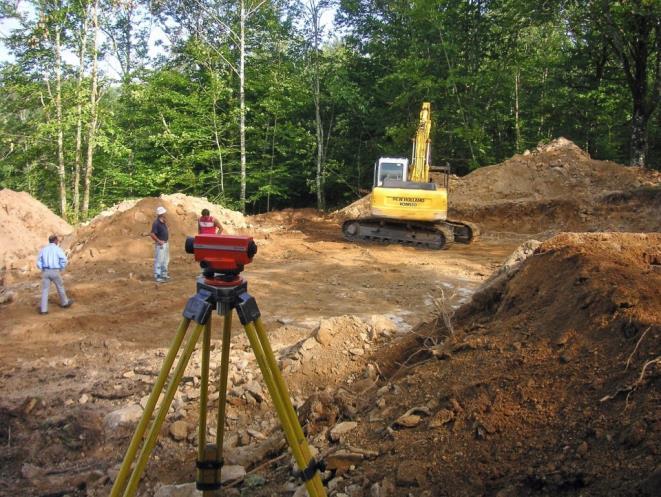
Thetopographicsurveycarriedforallall-existingroadsand nallas where nalla course exists i.e. nalla has width and depthandnetworkinprojectareabyusingelectronictotal stations.Forundevelopednalla/streams,satelliteimageis usedforalignments,levelsanddesigns.Thelandmarks,c.d. works and water bodies like captured and marked on the map.Thecontourmapofsurveyedareaispreparedbyusing this total station survey data. Contours are trimmed in unsurveyarea.Thesurveydata&contourdataofallnallas androadnetworksuperimposedoverbasemaps.Allnallas andstreamsshownonDevelopmentPlan/villagemapsare considered for design even some nalla are fully/partially encroached.
Catchmentareaofmainnallaanditstributariesismarkedby usingtoposheet.Thecatchmentareaoutsidetheprojectarea isalsoconsideredfordesignCoefficientofrunoffinproject areaisconsideredasproposedlandofresidentialareahigh density,asworkDPmappreparationofthesevillagesarein progress. Catchment area outside the project area, coefficient runoff is considered by predicting the future growthandtherebychangeinlandusefromagricultureto residential/commercialuse.
AsallthevillagesarescatteredalongtheoldPMCboundary, Basin boundaries (23 basins) of old PMC limits are not revised as it has basin code based noding system. Under storm water master plan for newly merged 23 villages, villageboundaryisconsideredasaprojectarea.
4.6
AsperoldmasterplanofPunecity23basinshasgiventhe basinnamefromAtoW.Theseinitialisconnectedasasuffix withthenumericalvalueforNodeandnallanumberofthe basin to know the basin by reading node numbers. This
methodisnotadoptedforthese23villagesbecauseitmay bepossibilityofduplicatenodenumbersinold23basinsand these 23 villages. Hence separate system for nodding is definedfornalla.
UnderStormWaterMasterPlan,nallasectionwithnatural bed and RCC retaining/protection wall on both banks is proposed.Naturalbedallowsprecipitatingthestormwater intogroundandwillhelptorechargethesurroundingarea
4.8
The hydraulic analysis of collection network of proposed networkiscarriedoutusing“StormCAD”
Purpose Description
Stormwater DrainageDesign Design and analysis of stormwater drainage systems, including open and closedconduits.
Hydraulic Modeling
Performssteady-statehydraulicanalysis usingrationalmethodcalculations.
Inlet Capacity Analysis Evaluatescapacityofinlets(grates,curb openings,combinationinlets,etc.).
Gutter Flow Calculations Simulates gutter flow and spread width forsurfacedrainageanalysis.
Design of Storm Sewers
InletSpacingand Placement Optimization
Catchment Area Management
Pipe Sizing and Slope Optimization
Sizes storm sewer pipes based on peak flows,slope,andcoverrequirements.
Helps optimize locations and spacing of inletsforefficientdrainage.
Assigns catchment areas to inlets and calculatesrunoffusingrationalmethod.
Automatically resizes pipes and adjusts slopestomeetdesignconstraints.
Manhole and JunctionAnalysis Analyzes hydraulic performance of manholesandjunctionsinthenetwork.
Scenario Management
Design Reports andProfiles
Allowscomparisonofmultipledesignand analysisscenarios.
Generates design spreadsheets, longitudinal sections, and detailed reports.
GIS and CAD Integration IntegrateswithGISandCADplatformsfor seamlessdataexchangeandmapping.
International Research Journal of Engineering and Technology (IRJET) e-ISSN: 2395-0056
Volume: 12 Issue: 04 | Apr 2025 www.irjet.net p-ISSN: 2395-0072
Base Map: LayerThenewsurveyofnallaandroadnetwork isimportedinthesoftwareintheformatofCADfileorEsri. Shape file. GL at various nodes is obtained through the Trex‐toolinBentley.
Allrelatedparameters(pipediameterorboxspanandrise, material,cvalue,status,Tc,runoffcoefficient)areassigned tonode,pipenetwork&catchments.
Similarly, length is obtained automatically from scaled Surveybasemap.
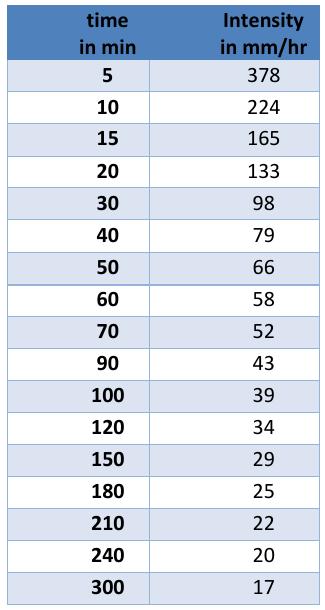
The Rainfall data is collected from the authority and IDF curveispreparedforaparticularreturnperiodanditisused toforecastthemaximumrainfallinthefuture.
Catchment Area’s are created through Arc GIS tool or manuallyfromGoogleEarthProSoftware’sandfurtheritis assignedtonetworkcatchbasinsusingThissenPolygonand model builder tools.Theservicearea polygonis prepared usingtheThiessenPolygontoolinBentley.
For each catch basin (Point) Thiessen polygon defines a region around each point. A Thiessen polygon divides a planesuchthateachpointisenclosedwithinapolygonand assignsthearea(servicearea)toapointinthepointset(the pointsetbeingthenodes).AShapefileofthecommandarea
isimportfortheformationoftheseserviceareas;Further theentirecommandareagetsdividedintonumberofservice polygons,servedbyeachrespectivenode.Afterassigninga checkisdoneforensuringtherainfalleninthepolygonarea iscollectedintherespectivecatchbasinandchangingthe areaofpolygonaccordingtoit.
Theservicepolygonsrepresentservingareaforeach node(Thecatchbasincarriestherunoffoftherainfallfrom therespectiveservicearea).
1. Ministry of Housing and Urban Affairs (MoHUA) –
MoHUA has issued guidelines on urban drainageandstormwatermanagementthatfocus onimprovinginfrastructureforhandlingrunoffin cities.
2. Central Pollution Control Board (CPCB)
The CPCB is responsible for monitoring and controlling pollution in India, including storm water runoff that carries pollutants like sewage, heavymetals,andchemicals.Theyofferguidelines forstormwatermanagementinurbanareas.
3. Central Public Health and Environmental Engineering Organisation (CPHEEO). (2019). Manual on Strom water drainage system. MinistryofHousingandUrbanAffairs,Government ofIndia.
4. Manual on Stormwater Drainage Systems" by M. S. Ramaswamy
This book provides detailed technical guidelines and case studies on stormwater drainage systems and is widely used by civil engineersworkinginIndia.
5. A World Bank Reports on Urban Flooding and Storm water Management
TheWorldBank,incollaborationwiththe Indiangovernment,haspublishedreportsonstorm water management in Indian cities, focusing on floodmitigationandclimateresilience.