
International Research Journal of Engineering and Technology (IRJET) e-ISSN: 2395-0056
Volume: 13 Issue: 02 | Feb 2026 www.irjet.net p-ISSN: 2395-0072
International Research Journal of Engineering and Technology (IRJET) e-ISSN: 2395-0056
Volume: 13 Issue: 02 | Feb 2026 www.irjet.net p-ISSN: 2395-0072
Artwell Masarirevu
1
, Durgesh Kumar Singh2 , Dr. Prachi Pandya3, Dr. C. G. Patel4
1 Final Year Student, Department of Civil Engineering (IoT), Ganpat University, Gujarat, India
2Assistant Professor, UVPCE, Department of Civil Engineering, Ganpat University, Gujarat, India
3Assistant Professor, IOT, Department of Civil Engineering, Ganpat University, Gujarat, India
4Professor & Head, UVPCE, Department of Civil Engineering, Ganpat University, Gujarat, India
Abstract - Accurate characterization of subgrade strength and estimation of traffic loading are essential for reliable structural performance prediction of flexible pavements. This study presents the structural design of flexible pavement for TB Road in accordance with IRC: 37–2018 guidelines. The pavement thickness was determined based on projected traffic growth and representative soil parameters of the Mehsana region. The initial commercial traffic was considered as 450 CVPD with an annual growth rate of 7.5%, lane distribution factor of 0.75, and vehicle damage factor (VDF) of 3.5, for a design life of 15 years. The cumulative design traffic was calculated as 11.26 MSA. A subgrade strength of 6% CBR was adopted based on local soil conditions. Using IRC design charts for traffic category 10–20 MSA and CBR of 6%, the total pavement thickness was determined as 620 mm, comprising 40 mm BC, 100 mm DBM, 250 mm WMM, and 230 mm GSB. The proposed pavement structure satisfies IRC requirements and is expected to perform adequately over the design life.
Key Words: Flexible Pavement Design, IRC: 37–2018, Subgrade Strength, CBR, Traffic Loading, MSA, And Pavement Thickness.
Flexible pavements possess a multi-layer structure where theloadsimposedbyvehiclesaregraduallytransferredto thesubgradethroughlayeredloadtransferringsystems.In contrasttorigid pavements thatget theirstrength mainly from slab action, the flexible pavement comes from the combinedstructuralinteractionofbituminousandgranular layers. The maximum stress occurs at the wheel loading surface,becomingsmallerasitpenetrateseachlayer.
There are two critical responses, which control the structuralperformanceofflexiblepavements;tensilestrain at the bottom of the bituminous layer governs fatigue cracking and vertical compressive strain at the top of subgrade controls rutting. Careful selection of layer thicknessensuresthatthesestrainsdonotexceedallowable limitsoverthedesignlife.
Pavement designisvital forensuringthelongevity,safety, ridequality,andcost-effectivenessofroadsystems.Failureto correctly predict traffic growth or to accurately assess subgrade strength can result in early failures like fatigue cracking,rutting,potholes,andsurfacedeformation.These issues not only elevate maintenance expenses but also shortenservicelifeanddiminishusercomfort.
Precisetrafficforecastingisespeciallycrucialsincepavement damageincreasesinanonlinearmannerwithaxleloads.A minorriseinaxleloadcangreatlyshortenthelifespanofthe pavement. Likewise, poor subgrade conditions necessitate thickerstructurallayerstoavoidexcessivedeformation.Asa result, a rational design that adheres to standardized guidelines is critical for the long-term performance of pavements.
TheIndianRoadsCongress(IRC)servesastheprimary technical authority for establishing standards and specificationsforroadinfrastructureinIndia.IRC:37–2018 offersdetailedguidelinesfordesigningflexiblepavements througha
Mechanistic–empiricalapproachtailoredtoIndiantraffic andclimaticconditions.
Theguidelineincorporates:
• Modellingoftrafficgrowth
• VehicleDamageFactor(VDF)
• Considerationsforlanedistribution
• ClassificationofsubgradesusingCBR
• Criteriaforfatigueandruttingperformance
Bymergingmechanisticconceptswithempiricallyderived relationshipsthatarecalibratedtofielddata,IRC:37–2018 guarantees that pavement designs are both structurally soundandcost-effectivefortheconditionsinIndia.
International Research Journal of Engineering and Technology (IRJET) e-ISSN: 2395-0056
Volume: 13 Issue: 02 | Feb 2026 www.irjet.net p-ISSN: 2395-0072
TB Road is situated in the Ruturaj–Mehsana district of Gujaratandactsasavitalconnectionbetweenagricultural areasandurbancommercialhubs.Theroadaccommodatesa variety of traffic, including cars, buses, light commercial vehicles,andheavytrucks.Theriseincommercialactivities and regional growth has led to increased traffic loads in recentyears.
TheMehsanaareaexperiencessemi-aridclimateconditions, marked by high temperatures in summer and moderate rainfall during the monsoon season. These environmental factorsaffecttheperformanceofthebituminouslayerand variationsinsubgrademoisture.Thepredominantlocalsoil typesaresandyloamandclay,featuringamoderatebearing capacity.Giventhetrafficvolumeandlocalsoilconditions,it is essential to implement a structured pavement design based on IRC: 37–2018 to ensure structural integrity and durability.
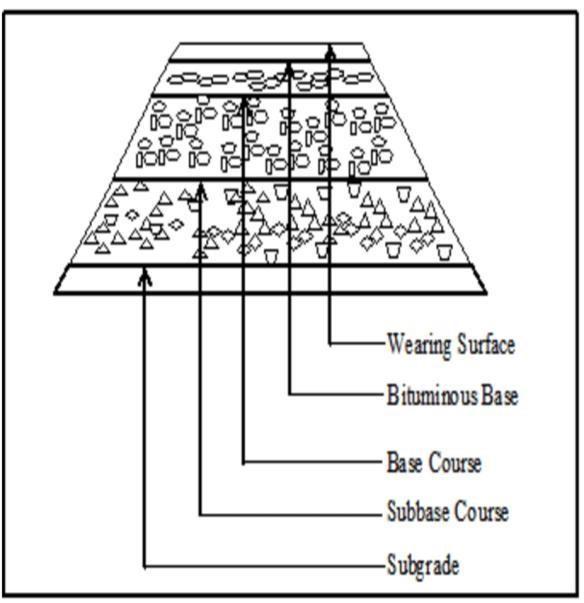
The design of flexible pavements in India has experienced significantchangesoverthelastfewdecades.Earlierdesign methodswereprimarilyempiricalandbasedonobservations from the field, along with correlations derived from the California BearingRatio(CBR).TheoriginalIRCguidelines focused on thickness design mainly related to subgrade strengthandprojectedtrafficvolumes.
TheIRC:37–1970representedthefirstthoroughstandard forflexiblepavementdesigninIndia.Laterupdatesin1984 and 2001 gradually introduced improved techniques for traffic estimation and more refined specifications for
materials. Nevertheless, these versions remained predominantlyempiricalincharacter.
ThelaunchofIRC:37–2012andsubsequentlyIRC:37–2018 markedasignificantchangetowardamechanistic–empirical approachindesignmethodology.Therevisedguidelinestake intoaccountthestress–strainbehaviorofpavementlayers and associate them with performance standards such as fatiguecrackingandrutting.Thisshiftenhancedreliability and guaranteed that pavement structures are more accuratelyadjustedtothetrafficloadingconditionsinIndia.
Substantial advancements in research have influenced contemporary flexible pavement design theories. The mechanisticmethodologyintroducedbyYoderandWitczak [6] revealed the connection between pavement layer characteristicsandcriticalstressresponsesduringrepeated loading. Their research established that fatigue failure is predominantlydeterminedbytensilestrainatthebottomof the bituminous layer, while rutting is influenced by compressivestrainatthesubgradelevel.
In the context of India, Khanna and Justo highlighted the importanceofpreciselyassessingtrafficgrowthandcorrectly choosingvehicledamagefactors.Theirresearchpointedout thatpavementdeteriorationoftenstemsfromtheincorrect estimation of total traffic load. Studies have demonstrated that the lifespan of pavement declines nonlinearly with higher axle loads, in accordance with the fourth power damagelaw.Asaresult,anaccurateestimationoftheVehicle DamageFactor(VDF)isessential forensuringprecisionin structuraldesign.
Pavement performance in Gujarat is affected by the local climateandsoilconditions.ThenorthernregionofGujarat, includingtheMehsanadistrict,hasasemi-aridclimatethat features high temperatures during summer and moderate rainfall. Higher surface temperatures of the pavement influencethestiffnessandagingpropertiesofthebituminous layer.
Geotechnicalstudiesintheareashowthatsandyloamand clayeysoilsareprevalent,withCaliforniaBearingRatio(CBR) valuesgenerallyfallingbetween4%and8%.Therearealso areaswithblackcottonsoil,whicharepronetochangesin volumeduetovariationsinmoisturecontent.
Research on highways in Gujarat has indicated that early pavement deterioration is frequently linked to insufficient drainage and increased traffic from commercial vehicles. These results emphasize the necessity of appropriate selection of structural thickness and assessment of the subgrade.
International Research Journal of Engineering and Technology (IRJET) e-ISSN: 2395-0056
Volume: 13 Issue: 02 | Feb 2026 www.irjet.net p-ISSN: 2395-0072
IRC:37–2018servesasthelatestguidelineforthedesignof flexible pavements in India. This guideline employs a mechanistic–empirical approach that merges theoretical stressanalysiswithempiricalperformancemodelsrefined usingfielddatafromIndia.Thedesignprocessinvolves:
• Assessing cumulative traffic in terms of Million StandardAxles(MSA)
• DeterminingsubgradestrengththroughCBR
• Analyzingcriticalstrainsinthepavementlayers
• Choosinglayerthicknessbasedondesigncharts Fatiguecrackingisaddressedbycontrollingthehorizontal tensile strain at the base of the bituminous layer, while ruttingisreducedbycappingtheverticalcompressivestrain at the topmost layer of the subgrade. The design charts provided in IRC: 37–2018 aid in selecting the appropriate thickness for various traffic categories and subgrade conditions.
Globally, methods for pavement design differ according to localconditionsandthedatathatisaccessible.IntheUnited States,theAASHTOGuideforDesignofPavementStructures reliesonempiricalrelationshipsestablishedfromtheAASHO RoadTest.
The more recent Mechanistic–Empirical Pavement Design Guide(MEPDG)integrateslayeredelastictheoryandmaterial characterizationtoenhancepredictionaccuracy.European pavementdesigntechniquesoftenemployanalyticalmodels tocalculatestressesandstrainsusinglayeredelasticanalysis.
Incomparisontopurelyempiricalapproaches,mechanistic empiricalframeworksoffergreaterflexibilityinadaptingto variationsintrafficpatternsandmaterialproperties.TheIRC: 37–2018 aligns well with international mechanistic–empiricalpracticeswhilebeingcalibratedspecificallytothe trafficloadingcharacteristicsandenvironmentalconditions ofIndia.
Despite the existence of standardized design protocols, numerous regional road initiatives continue to use generalizedorpresumedtrafficmetrics.Poortrafficgrowth predictions and insufficient evaluations of subgrade conditionsoftenresultininadequatelydesignedpavement structures.
Thereisstillarequirementforthesite-specificapplicationof theIRC:37–2018methodology,incorporatingrealistictraffic parametersandrepresentativesoilproperties.Thisresearch aimstofillthatvoidbyapplyingIRCprocedurestoTBRoad
inRuturaj–Mehsanaandprovidingastructuredcalculation basedpavementdesign.
Tocomputecumulativedesigntraffic (MSA)using IRC:37–2018methodology.
ToclassifysubgradestrengthbasedonCBRvalue.
To determine pavement layer thickness using IRC designcharts.
Thestudyfocusesonstructuraldesignofflexiblepavement forTBRoadusingIRC:37–2018.Itincludestrafficestimation, subgrade evaluation, thickness determination, and design verification.Detailedmaterialtestingandeconomicanalysis arebeyondthescopeofthisstudy.
Thepavementdesignprocedurefollowsthesesteps:
Collectionoftrafficparameters
Determinationofdesignlife
Calculationofgrowthfactor
EstimationofcumulativeMSA
Subgradeclassification
ThicknessselectionfromIRCdesigncharts
Verificationofminimumlayerrequirements
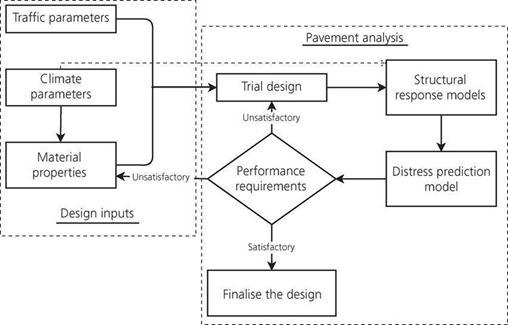
Fig. -2: Flexiblepavementdesignprocedure
International Research Journal of Engineering and Technology (IRJET) e-ISSN: 2395-0056
Volume: 13 Issue: 02 | Feb 2026 www.irjet.net p-ISSN: 2395-0072
6. SITE DESCRIPTION
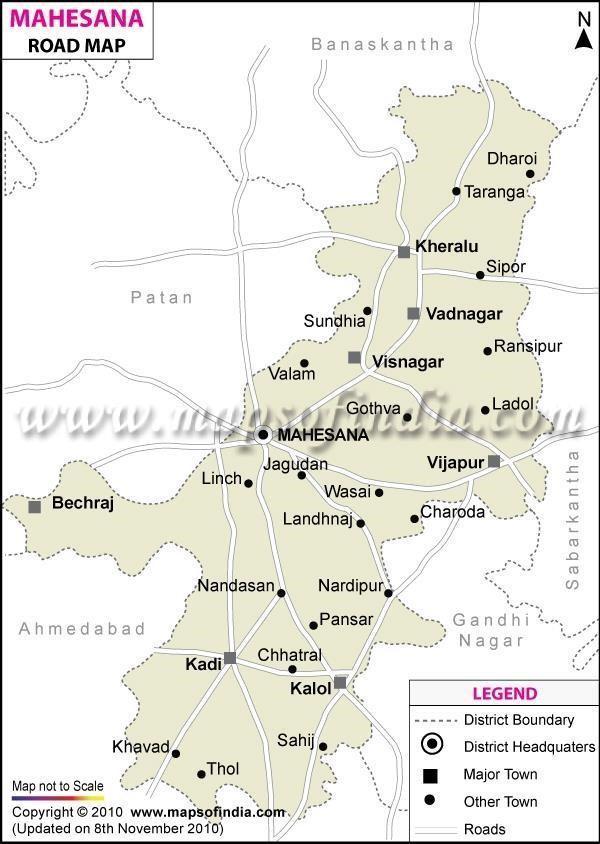
TBRoadservesasadistrict-levelroutelinkingagricultural zonestothecityofMehsana.Itaccommodatesavarietyof traffic, such as passenger cars, buses, light commercial vehicles,andheavytrucks.Theareahasasemi-aridclimate Characterized by elevated temperatures and moderate precipitation.
7. DESIGN INPUT PARAMETERS
Table -1: DesignInputParameters
8. DESIGN TRAFFIC CALCULATION
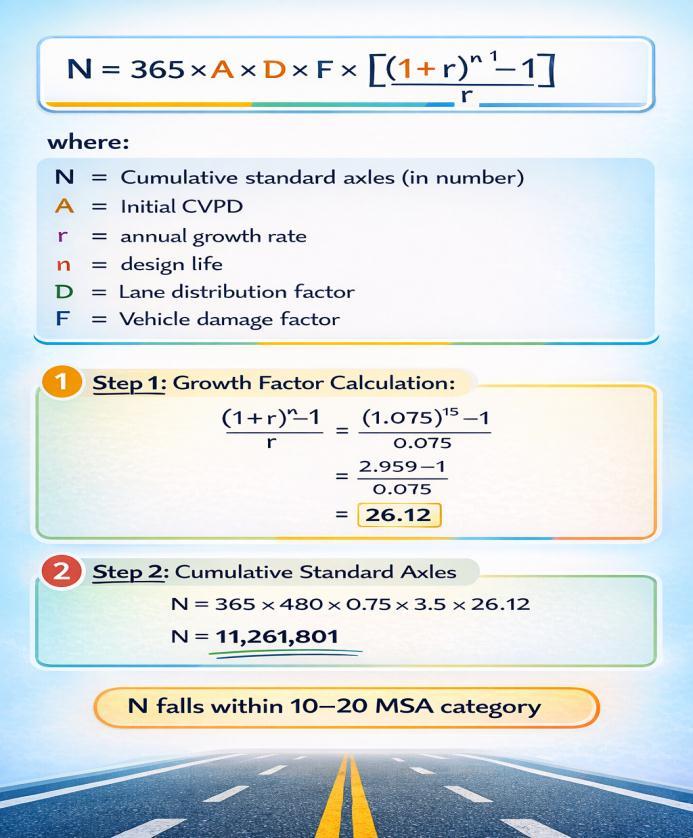
DesigntrafficiscalculatedusingIRCformula
9. FINAL PAVEMENT COMPOSITION
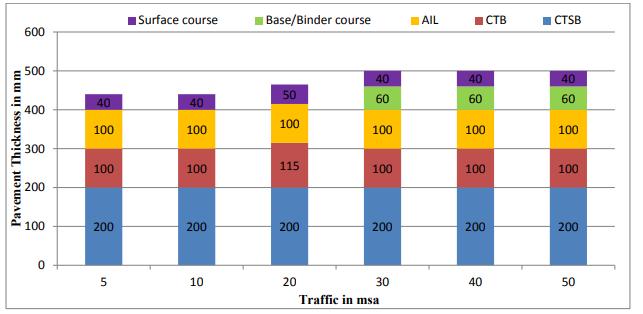
TrafficCategory:10–20MSASubgradeCBR:6%
Requiredthickness≈620mm.
International Research Journal of Engineering and Technology (IRJET) e-ISSN: 2395-0056
Volume: 13 Issue: 02 | Feb 2026 www.irjet.net p-ISSN: 2395-0072
Table -2: RecommendedPavementStructure Layer
Wearing Course Bituminous Concrete SurfaceLayer
Binder Course Dense Bituminous Macadam Intermediate Bituminous Layer
Base Course WetMix Macadam BaseLayer
Severalfactorsbeyonddesignthicknessinfluencepavement performance:
Construction Quality:
Achieving design performance relies heavily on effective compaction,monitoringlayerthickness,ensuringuniformity ofmaterials,andmaintainingstrongbondingbetweenlayers. One of the primary reasons for early pavement failure is insufficient compaction. It is essential that each layer is compacted to the specified density with optimal moisture content.
Minimumbituminousthicknessrequired≥140mmprovided =140mm
Basethicknessrequired≥250mmprovided=250mm
Totalthickness=620mmAdequatefor11.26MSAandCBR 6%.
The design traffic of 11.26 MSA places TB Road under moderate commercial loading. The thickness of 620 mm ensuresstressestransmittedtothesubgraderemainwithin permissiblelimits.Thedesignbalancesstructuralsafetyand costefficiency.
10. COMPARISON WITH TYPICAL DESIGNS
Typical flexible pavement designs for similar traffic conditionsinGujaratoftenrangefrom550mmto700mm totalthickness.Thedesigned620mmfallswithinthisrange, validatingthereasonablenessofthedesign.
Table -3: ComparisonwithTypicalDesigns
Fromcomparison,ifsubgradeCBRwerelower(e.g.,4%),the required total thickness would increase to approximately 700-750mm.Conversely,iftrafficwerelower(e.g.,5MSA), thickness could be reduced to 550-600 mm. This demonstrates the sensitivity of pavement design to input parametersandtheimportanceofaccuratesite-specificdata.
Inadequate drainage leads to moisture accumulation in granularlayersandsubgrade,reducingstrengthandcausing premature failure. For TB Road, side drains should be providedandmaintained.Cross-drainagestructuresmustbe adequate for the catchment area. The pavement surface shouldhavepropercamber(2.5-3.0%)foreffectivesurface drainage.
Material Quality:
Aggregates must meet gradation, strength, and durability requirements.Poorqualityaggregatescanbreakdownunder traffic,leadingtolossofstructuralintegrity.Bitumenshould conform to specified grades and properties. Contaminated materialsmustberejected.
Traffic Loading:
Vehiclesthatareoverloadedcangreatlyshortenthelifespan ofpavement.A10%riseinaxleloadcanleadtoa30-40% decrease in pavement longevity due to the fourth-power relationship between load and damage. Enforcing weight restrictionsiscrucialformeetingtheintendedlifespanofthe pavement.
Environmental Conditions:
ElevatedtemperaturesinMehsana(40-45°Cduringsummer) can soften bitumen, which may result in rutting. Rainfall duringthemonsoonseasonaffectsthemoisturelevelsinthe subgrade,makingproperdrainagenecessary.Variationsin temperatureinducethermalstresseswithinthebituminous layers.
Maintenance:
Consistent maintenance, such as sealing cracks, repairing potholes, and periodically renewing the wearing surface, prolongs the lifespan of the pavement. Postponing maintenance allows wear and tear to worsen, resulting in moreextensiveandexpensiverepairs.
International Research Journal of Engineering and Technology (IRJET) e-ISSN: 2395-0056
Volume: 13 Issue: 02 | Feb 2026 www.irjet.net p-ISSN: 2395-0072
Thedesignissensitivetovariationsininputparameters:
TrafficGrowthRate:
If growth rate increases to 8.0%: N = 12.48 MSA (10.8% increase)
If growth rate decreases to 7.0%: N = 10.18 MSA (9.6% decrease)
VehicleDamageFactor:
IfVDFincreasesto4.0:N=12.87MSA(14.3%increase)
If VDF decreases to 3.0: N = 9.65 MSA (14.3% decrease) InitialCVPD:
IfCVPDincreasesto500:N=12.51MSA(11.1%increase)
IfCVPDdecreasesto400:N=10.01MSA(11.1%decrease)
SubgradeCBR:
IfCBRis5%:Requiredthicknessincreasesto~660mm
IfCBRis8%:Requiredthicknessdecreasesto~560mm
this sensitivity analysis underscores the importance of accurate input data and the need for conservative assumptionsintheabsenceofsite-specificdata.
This study has several limitations that should be acknowledged:
Traffic Data: Trafficinformationreliesonstandardfigures instead of thorough traffic assessments. Conducting an extensive traffic analysis, which includesclassifiedvolume counts, axle load assessments, and origin-destination research,wouldyieldmoreprecisedata.
Subgrade CBR: CBR relies on standard values instead of beingestablishedthroughlabtests.Itisadvisabletoconduct site-specific testing for real construction, which should involvesamplingatregularintervalsalongtheroute.
No Mechanistic Analysis: Althoughtheapproachofusinga design catalogue has been confirmed, a comprehensive mechanisticanalysiscouldofferfurtherconfirmationofhow pavementsrespond,specificallyregardingtensilestrainsin bituminouslayersandcompressivestrainsinthesubgrade.
Material Properties: Thematerialpropertieswerederived fromstandardvaluesinsteadofbeingestablishedthroughlab testing.Creatingamixdesignandcharacterizingtheactual materialswouldenhancethedesign.
No Economic Analysis: Alife-cyclecostanalysistocompare different options was not conducted. This type of analysis would aid in optimizing the design by taking into account initialcosts,maintenanceexpenses,andusercosts.
Environmental Factors: The environmental factors of temperatureandmoisturewerenotquantitativelyanalyzed. These elements affect the behavior of materials and the performanceofpavement.
Drainage Design: In-depth drainage design, which encompasses hydrological analysis and cross-drainage structures,wasnotincludedintheprojectscope.
[1] IRC: 37–2018 – Guidelines for the Design of Flexible Pavements.NewDelhi,India.
[2] Specifications for Road and Bridge Works (5th Revision). Ministry of Road Transport and Highways, (2013)GovernmentofIndia.
[3] S.K.Khanna,&C.E.G.Justo, HighwayEngineering.Nem Chand&Bros.,Roorkee.
[4] L. R. Kadiyali. Principles and Practice of Highway Engineering.KhannaPublishers,Delhi.
[5] Yoder, E.J., & Witczak, M.W. Principles of Pavement Design.