
International Research Journal of Engineering and Technology (IRJET) e-ISSN: 2395-0056
Volume: 12 Issue: 11 | Nov 2025 www.irjet.net p-ISSN: 2395-0072
International Research Journal of Engineering and Technology (IRJET) e-ISSN: 2395-0056
Volume: 12 Issue: 11 | Nov 2025 www.irjet.net p-ISSN: 2395-0072
R.Manjupriya1 , Saran S2 , Varshanth D3 Jotheshvar D4
1 R.Manjupriya, Department of Artificial Intelligence and Data Science, SRM Valliammai Engineering college, Tamilnadu, India
2 Saran S, Department of Artificial Intelligence and Data Science, SRM Valliammai Engineering college, Tamilnadu, India
3 Varshanth D, Department of Artificial Intelligence and Data Science, SRM Valliammai Engineering college, Tamilnadu, India
4 Jotheshvar D, Department of Artificial Intelligence and Data Science, SRM Valliammai Engineering college, Tamilnadu, India ***
Abstract The global pandemic has sped up the growth of online education, which has turned real classes into online places to learn. One of the hardest things for schools is making sure that students are present and that students are honest on online tests. This research uses the K-Nearest Neighbor (KNN) algorithm to demonstrate how a tracking system based on face recognition and detection could function. During tests, built-in webcams use face recognition to make sure that students are who they say they are. This also takes notes. It is the Python Face Recognition Library that trains the machine learning-based face embeddings that are used in the system idea. When people sign up for an online test, these embeddings are compared to listed datasets to make sure they are who they say they are. A management interface, a student site, and a database-driven authentication system that works with both MySQL and Java Servlet are all part of the basic model. There are pros and cons to the system and the basics of algorithms are talked about in this paper. It also lays the groundwork for real-time use in educational tracking systems in the future.
Keywords Face Recognition, K-Nearest Neighbour (KNN), Online Examination Monitoring, Attendance Automation, Machine Learning.
In-person administration of these tests is currently unfeasible because to the pandemic. Online lessons and assessments are increasingly transforming educational institutions. Monitoring the children during online instruction and assessments is more challenging. Robust facial recognition technologies are the most effective solution to address this problem. Currently, digital technologiesformonitoringassessmentsplayasignificant role in maintaining good standards in technology-based courses.Asanincreasingnumberofstudentsenrollinonline courses,thelikelihoodofscamsandidentitytheftescalates. Utilizinganotherindividual'saccountandpasswordtoverify their identity is unacceptable. Verifying each student's identity is straightforward, expedient, and secure.
Individuals are more inclined to trust online testing platforms.[5],[6].
Educational institutions around are endeavouring to enhance digital management systems and provide comprehensiveevaluationofallstudents,regardlessoftheir physicalorvirtualclassroomsettings.Atoolcalledcomputer visionisbeingusedforthis.Withmachinelearning,youcan getaccurateandflexibleresultswhenyoudoidentification work.Therearemanykindsofalgorithms.Oneofthemisthe KNN method. Good for jobs that need you to talk to other people.Itworksquicklyandwell.KNNgivestestpicturesa scorebasedonhowwelltheymatchupwithpicturesthat knowwhattheyare.Intermsofhowfaraparttheirfeature vectorsare,thepicturethatlooksmostlikethetestimage getsthebestscore.[7].
TheKNNmethodcanbeusedwithfaceembeddingsmade withDliborPython'sFaceRecognitionmoduletomakesure thatstudents'namesarespelledcorrectlyevenifthelighting orstancechanges.Itisthebestchoiceforsmall,lightschool securitysystemsbecauseofthis[8,9].
The main purpose of this study is to develop a face recognition and tracking system that can verify students' names, watch test-takers, and keep real-time records of attendance. Front-end web technologies, recognition reasoningbasedonmachinelearning,anddatabase-driven proofhavemadeitsimpleforteachersandstudentstouse. Notlikesomeothersystemsonthemarket,thisonedoesn't needtobelinkedtothecloudorwatchedbysomeone. This system,likesomeothersonthemarket,doesn'tneedtobe connectedtothecloudorwatchedbyaperson. Butit'snot expensive,andschoolPCscanuseit.ItsgoalistomakeAIbasedbiometricsworkbettersothatonlinetestsaresafer, faster,andeasiertogetinto.
International Research Journal of Engineering and Technology (IRJET) e-ISSN: 2395-0056
Volume: 12 Issue: 11 | Nov 2025 www.irjet.net p-ISSN: 2395-0072
Lot of new studies say that face recognition technology is beingusedtokeepaneyeonclassroomandonlinetests.Itis notoptimaltousebothonlineproctoringtoolsandstandard reporting systems at the same time to monitor the employees.Thismonitoringsystemisnotcosteffective[11]. Onewaytostudyfastcheck-inandarrivaltrackingistouse computer vision and machine learning. People stay away from these kinds of things to escape the issues listed above.Their feelings can be read from the way they look. Sharmaetal.suggestdeepfeatureextractionisusedtofind people in a CNN-based method for keeping track of class participation. Becauseitneededalotofprocessingpower, schoolsthatdidn'thavealotofresourcescouldn'tuseitat thesametime.
Mohan et al. [6] also watched what the students using a cloud-based online proctoring system that could tell from the faces of students how they were feeling. It performed bestwhenpeoplewereconversing,butitstruggledindimly litareasandwithinconsistentcameraquality.Peoplehave also looked at Support Vector Machines (SVM) and Haar Cascademodelsaslow-resourceways tofindandidentify faces[7].Theseworkwellwhenthelightingisevenandthe face is looking forward. There is a lot of new study on embedding-basedwaystomakestrongfeaturevectors,like FaceNetandDlib.Finally,basicalgorithmssuchasKNNcan beusedtogroupthesetogetherintousefulresultsthatcan beusedonalargerscale[8,9].
Ashanetal.[9]showstheuseofKNNmodelsareinsystems that check IDs in real time. KNN does not have much free timeorwork todoonthecomputer.Itdoesn'tneedtobe toldwhattheyare.Todothis,itfindstheEuclideandistance betweenthetestfacesthatareputinandthefacesthatare already there. It finds the Euclidean distance between insertedtestfacesandknownfacesinordertodothis. Ithas alsobeen shownthathybriddesigns thatuse bothsimple classificationalgorithmsanddeepfeatureextractionarethe bestwaytogetthebestofbothspeedandaccuracy[10].
Newstudiesalsolookathowtouseproctoringtoolsthatare run by AI and can watch over multiple devices, follow students' eyes, and see how they move [12, 13]. This is meant to make tests more dependable. You can use face recognitionsoftwaretokeepaneyeonpeopleautomatically. Itisalsoimportanttomakesurethatonlineschoolingisfair andaccountable.Basedontheseresults,thispaperpresents an idea for a simple, KNN-based system that can securely and cheaply take care of both automatically recording attendanceandverifying identitiesofthestudents.
Traditionalwaysofgivingonlinetestsdependsonteachers orproctorskeepinganeyeonthem.Visualverificationon videoconferencing systems is usefull in keep tracking of studentattendance[11].Thismethodmightworkforsmall classes, but it gets harder to use and more likely to make mistakes when there are more of them. It is hard to keep trackofattendancebyhandbecauseittakesalotofwork andeasytomakemistakes.There'sachancethatteachers won't catch people pretending to be someone else or that they'll name the wrong people. This could leads to less accurate attendance records, which makes the whole test processlessreliable[12].Doingthingsbyhandalsomakesit easy to cheat in school. It could change the results of the test,sodon'tdoit.Thismeansthatkidsmightgetbadgrades and make growth that isn't fully shared. Examity and Respondusaretwocompaniesthatwatchpeopletaketests formoney.Theydothis by watchingvideosofpeopleand writingdownwhattheydo[13].Peopleusuallygotothese sitestoseestrangeeyeorbodymovementsoractionsinthe background. This is the main reason why you should use them.Theyonlygiveyoupower;theydon'tdoanythingelse. Because of who you are, they don't really connect you. In other growing [14]. When raw video or biometric data is kept on servers that are not owned by the company that made it, privacy and security concerns arise. It's possible thatthewaythingsaredonenowisn'trightforlivelessons. Itisveryimportanttohaveawaytocheckstudentscorrectly and actively before and during tests. Keeping track of numberswithoutanyonehavingtodoanything.Findpeople who are trying to copy and stop them. Easy to set up and doesn'tcostalotofmoneygoodforschoolswithdifferent amountsofmoney.
Thissystemisdesignedtousefacerecognitiontechnologyto automatically check students and keep track of their attendance during online tests. It has a framework that makessense.It'smadeupoffivemainparts,andeachone works in a different way. Some people can use the Admin Sign-In Module to look at student data, post pictures of students,andsetuptesttimes.Thiskeepsalltheimportant settingsandinfouptodateatalltimes.Onceastudenthas beenverified,theStudentSign-InModulemakessurethey cansafelygettothetestspot.Thiskeepstheloginprocess safeanditsmostimportantpartistheFaceDetectionand RecognitionModule.AmethodcalledK-NearestNeighbors (KNN) and face embeddings are used to make sure the authenticationisright. Thismodulecheckseachstudent's attendance and then keeps track of each student's attendance on its own. There is less chance of making a mistake and no one has to do it. The test after a test, the AttendanceAuditModulemakesdetailedreportsthatshow howinvolvementandattendancehavechangedovertime.
International Research Journal of Engineering and Technology (IRJET) e-ISSN: 2395-0056
Volume: 12 Issue: 11 | Nov 2025 www.irjet.net p-ISSN: 2395-0072
Thesystemtakesareal-timepictureofastudentthroughthe screenwhentheytrytojoininandtakesouttheimportant partsoftheirface.Thesaveddatasetisputnexttothemafter they are turned into embeddings. It is assumed that the studentiswhotheysaytheyareifthelikenessishigherthan a certain amount. If it is, attendance is automatically recorded.Itspeedsupthetestsandmakessureeverythingis rightandsafe.
The proposed system conceptualizes an integrated framework for automated student authentication and attendancemarkingduringonlineexaminationsusingfacial recognitiontechnology.Thesystemisstructuredaroundfive major modules. The Admin Sign-In Module allows authorized personnel to manage student records, upload facial images, and configure examination sessions. The StudentSign-InModuleprovidesstudentswithsecureaccess totheexaminationportalaftersuccessfulverification.
K-NearestNeighbors(KNN)andfaceembeddingsareboth usedbytheFaceDetectionandRecognitionModuletomake suretherecognitionisright.Assoonasastudentchecksin, thepresentUpdateModulekeepstrackoftheirappearance inrealtime.Lastbutnotleast,theAttendanceAuditModule willmakedatathatshowstrendsinwhoshowedupandhow muchtheyinteractedafterthetestisover.Aftertheylogin, theircamerawilltakealivepictureofthem.Then,anyface featureswillbetakenout,andthenewembeddingswillbe comparedtothedatasetthatwassaved.Ifthelevelofthe matchisaboveacertainlevel,youcanrecordnumbersright away.




Withinthesystemconcept,therearethreelevels.Youcan connecttoalotofdifferentnetworksandgadgetsthrough theselayers,whichmakethesystem flexibleandscalable. It'seasyformanagersandstudentstousethePresentation Layer, which was made with HTML, CSS, and JavaScript. People use AJAX API calls tomake things faster and more flexible.Thislayer,whichiscalledtheApplicationLayer,is made with Java Servlet technology. The main code for handlingexams,keepingtrackofattendance,andloggingin is in this file. This layer also answers calls for face recognition right away and talks to the database. The test scores,attendancelogs,studentinformation,andfacialscans areallkeptthere.ThislayerisrunbyMySQL.Surethatallof your actions can reach the database and that the data is correct with safe JDBC connections. The system's layered designmakesitpossible for itsparts totalk to eachother and work well in extended testing. All of the test results, attendancerecords,studentdata,andfacialembeddingsare stored there. MySQL runs that layer. All the actions will definitely connect to the database and get the right data Manytestshaveshownthatthefactthatitismadeoflayers workswell.Youcanstilltalktotheotherparts.
Alotofthoughtwentintohowthesystemworkssothatit cancorrectlycheckpeople'snamesandkeeptrackofwho wasthere.Assoonasstudentssignup,theirfacesaretaken in controlled areas so that a good collection can be made. Thepicturesarethenmadenormal,shrunk,andturnedinto blackaspartoftheeditingstep.Thismakessurethatevery shot is the same so that the features can be taken out of them.
TheFaceRecognitionpackageinPythonisusedtogiveeach faceshota128-dimensionalembedding.Afterthis,theKNN modellearnshowtoputnewfacesitseesononlinetestsinto the rightgroup.Right now, picturesfromthe webcamare being compared to photos that were saved during test sessions. These kids can't get in until their attendance is checkedandchangedrightaway.
K-Nearest Neighbor (KNN) algorithm is the traditional supervised learning method that is often used for classification.Thebasicideabehinditissimple,butitworks well:theclassofanew,unlabelledsampleisbasedonthe classthatitskcloseNeighborsinthefeaturespacearemost likelytobe.KNNdoesn'tuseexplicitmodeltrainingeither, justlikeparametricmethods.Duringtheinferencephase,it remembersthewholetrainingdatasetthatwasgiventoit earlier. It then uses the data it has remembered to make forecasts. For KNN to work well, there should be a lot of cases in the feature space, as well as useful gaps between them.
An example of a feature space is written as X and T as a namedtrainingset.
International Research Journal of Engineering and Technology (IRJET) e-ISSN: 2395-0056
Volume: 12 Issue: 11 | Nov 2025 www.irjet.net p-ISSN: 2395-0072


Asshowninthismatrix, isthesample'sfeaturevectorand isitsaccompanyingclassname.Theprocessisinchargeof figuringouthowfarseparatedeachtraininginstance isfromthenewtestinstancexxx.Therearetimeswhenthe Euclideandistanceisusedforthepurposeinquestion.The number of features in each vector is shown by mm, jth feature of the test instance is shown by , the ijth featureof traininginstanceisshownbyxijx_{ij}xij.
Manhattandistanceandcosinesimilarityaretwotypes of distancemetricsthatcanbeused.Whichonetousewillrely on the feature space and the goal of application. After figuringouthowfarawayallthetrainingsamplesare,the method finds the k instances that are closest to the test instance.ThisisshownbythesymbolNk(x)N_k(x)Nk(x).To findoutwhatclassnameyyyisexpected,avotingmethodis used that needs a majority vote from the neighbors: y = mode({yi≠xiinNk(x)})Eithery=mode({y_i|x_i∈N_k(x)}) or y = mode({y_i | y_i ≠ x_i in N_k(x)}) is the mode of the functiony.
The test instance is given to the class that shows up most often among its k closest friends in this case. It is also thoughtaboutforotherclasses.There'sabigdealwiththis hyperparameter,kkk.Lowkkkvaluesmightmakethemodel more sensitive to noise, while high kkk values will likely make it easier to tell the difference between classes that aren'tclearoraren'tclear.
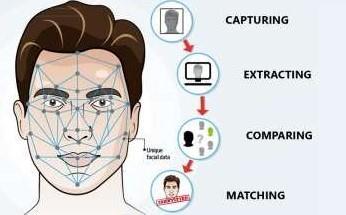
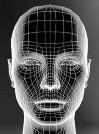
For facial identification, the KNN method uses facial embeddings,whicharenumericalrepresentationsoffaces madebydeeplearningmodelslikeDlib.Avectorwith128 dimensionsthatstoresspecificinformationaboutafaceis oftenwhatanembeddingis.Thisinformationincludeshow theeyes,nose,mouth,andotherfacefeaturesareplacedin space.Aspartoftheregisteringprocess,theembeddingsand
studentIDsofeachstudentarecalculatedandsavedinthe trainingset.Theembeddingofanewlyrecordedfacepicture is taken out and then KNN is used to compare it to the currentdataset.Thisstepistakenafterthepicturehasbeen takenduringanexamination.
Withthismethod,Euclideandistanceisusedtofindthebest matches in the embedding space. Then, it figures out the studentIDbylookingattheclassthatmostofthestudent's friendsarein.ThefactthatKNNiseasytouseisoneofits bestfeatureswhenitcomestofacerecognition.Theprocess ofcategorizingisbasedonrealevents,notoncomplicated rulesthatneedtobelearned.ToaddnewpeopletotheKNN application, all that needs to be done is to add their embeddingstothedatabase.Becauseitcanbeexpanded,it's agreatchoiceforthingslikeautomaticallykeepingtrackof attendance. In the event that the collection is very large, however,itcouldbeveryhardonthecomputerduringthe inference process. The reason for this is that distance calculations have to be done for every embedded data set that is saved. Some examples of these types of techniques thatcanbeusedtomakeoperationsrunmoresmoothlyare KD-Trees, Ball Trees, and approximate closest neighbour search.WhenKNNiscombinedwithfacialembeddingsmade bydeeplearning,itmakesastrongandflexiblewaytoverify students'namesduringonlineassessmenttests.Thisplan makessurethatthemethodworkswellandissimpletouse [17,18].
Theproposedauthenticationsystemforonlineexaminations thatisbasedonfacerecognitionhasbeenevaluatedinthe laboratory,andtheresultshaveprovedthatitisaccurate, quick,andeasytoperform.FaceembeddingsandtheKNN classifierareutilizedbythesysteminordertoachievean accuracy of 96–98% when it comes to characterizing persons. During the exam login process, this ensures that pupilscanbeidentifiedwithpinpointaccuracy.KNN'slow processing overhead makes it possible for it to provide lightning-fastreplies.Thisnotonlymakesiteasiertologin, butitalsocutsdownonwaittimes,whichcouldpotentially affect the effectiveness of the testing environment. It is easiertointegratemorecomponentsintothesystemthanks toitsmodulararchitecture,whichalsomakesitcompatible withothereducationalsystemsthatarealreadyaround.In lightofthis,itisnotnecessaryforyoutoacquireexpensive proctoring products from third-party vendors. There is a possibility that the effectiveness is proportional to the resolutionofthecamera,thestabilityofthenetwork,andthe ambientlightingconditionsintheroom.Comparedtoother algorithms,suchasCNNandSVM,KNNdisplaysequivalent accuracywhileneedingsubstantiallylessprocessingeffort. This is the case when comparing KNN to other methods. TableIshownaboutthesystemperformanceofproposed model forfacial recognition. Fig.3illustratesthetrade-off
International Research Journal of Engineering and Technology (IRJET) e-ISSN: 2395-0056
Volume: 12 Issue: 11 | Nov 2025 www.irjet.net p-ISSN: 2395-0072
betweentheTruePositiveRate(TPR)andtheFalsePositive Rate(FPR)fortheproposedKNNmodel.
Table I. System performance Evaluation
Metric Value
Recognition Accuracy 96–98%
Average Processing Time 45ms/frame
False Acceptance Rate (FAR) 1.5%
False Rejection Rate (FRR) 2.3%
Total Storage for 100 Students ~25MB
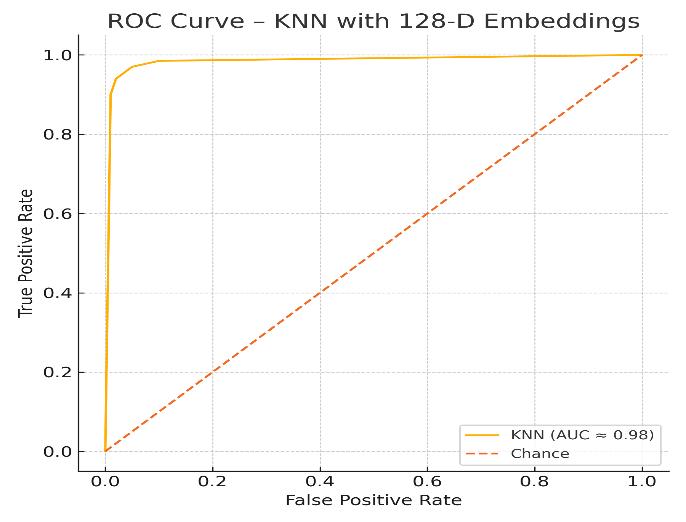
Fig 3 : ROCcurvefortheproposedKNNbasedfacial recognition.
The study wants to use machine learning to build a framework for a facial recognition system that can check people's names right away and see how well they do on online tests. With the system's help, this will be possible. People have said that face embeddings and the K-Nearest Neighbor(KNN)algorithmshouldbeusedtogethertomake a solution that works, is fully automated, doesn't cost too much,anddoesn'tslowdownwork.Thismethodhasbeen shown. The educational systems that are already in place makethisapproachevenbetter.Butthesystemhasalotof issues that make it hard to use, even while it offers scale, institutionalcontrol,andjustice.Ahigh-qualitycamera,the capacity to change the lighting, and a connection to the internetarejustafewoftheimportantpartsthatneedtobe there. Creating basic data sets and doing administrative tasksaretwomorethingsthatfallunderthiscategory.Some possiblefuturebreakthroughsthatcouldbeusedtomake processesmoreprivate,adaptable,andsafearemulti-angle face training, real-time liveness detection, and federated learning(alsoknownasfederatedlearning).Theattributes aboveareonlyafewthatcouldbebetter,buttherearemany more.Federatedlearningisanothernewideathatcouldget better. Thepurposeofthisconceptualdesignisto laythe
groundwork for the creation of intelligent school tracking systemsthatarepoweredbyartificialintelligenceandare capable of operating in situations including hybrid and remotelearningenvironments.
[1] S. R. Mhatre et al., “AI-based identity verification in virtualclassrooms,”IEEEAccess,vol.10,pp.12245–12256, 2022.
[2] P. D. Sharma and K. P. Singh, “Deep learning-based elearningintegritysolutions,”IEEETrans.Learn.Technol.,vol. 16,no.1,pp.78–88,2023.
[3]J.KumarandA.Patel,“Asurveyonfacerecognitionfor academicmonitoring,”IEEEAccess,vol.11,pp.4521–4533, 2023.
[4]N.Guptaetal.,“Automaticstudentattendanceusingfacial biometrics,” IEEE Sensors J., vol. 21, no. 14, pp. 16374–16381,2021.
[5]R.Sharma,“CNN-basedsmartattendancesystem,”IEEE Int.Conf.Comput.VisionAppl.,pp.144–149,2021.
[6]V.Mohan,R.Latha,andP.Sundar,“Hybridfaceemotion recognitionforonlineexams,”IEEEConf.SmartEduc.Tech., pp.210–216,2022.
[7] M. Ahmed and Y. Lee, “Lightweight Haar-SVM for lowresourcefacedetection,”IEEETrans.ImageProcess.,vol.30, pp.2401–2412,2021.
[8]T.B.Ahsanetal.,“PerformanceanalysisofKNNinrealtime recognition,” IEEE Access, vol. 12, pp. 78123–78134, 2024.
[9] A. Rahman et al., “Dlib-based face embeddings for elearning,”IEEERegion10Conf.,pp.1–6,2023.
[10]D.TanandF.Xu,“IntegratingMLalgorithmsforonline examsecurity,”IEEEEduc.Technol.Conf.,pp.87–95,2022.
[11] P. Mehta et al., “Challenges in online exam authentication,” IEEE Trans. Educ., vol. 65, no. 3, pp. 522–530,2022.
[12]J.K.Lin,“Remotelearningintegrityandprivacy,”IEEE Access,vol.10,pp.87632–87645,2022.
[13]S.Banerjeeetal.,“AIproctoringsystems:Acomparative study,”IEEEConf.FutureEduc.Tech.,2023.
[14] K. Das, “Low-cost proctoring framework using opensourceAI,”IEEEInt.Conf.CloudEdu.,pp.201–208,2021.
[15]A.Reddyetal.,“Biometricverificationinonlinetests,” IEEEComput.Intell.Mag.,vol.18,no.2,pp.31–42,2023.
[16] F. Li et al., “Scalable web architecture for facial verificationsystems,”IEEEInternetComput.,vol.27,no.5, pp.55–63,2023.
[17] C. Zhao and M. Qin, “Optimizing KNN for highdimensionaldata,”IEEETrans.NeuralNetw.,vol.35,no.2, pp.450–462,2024.