
International Research Journal of Engineering and Technology (IRJET) e-ISSN: 2395-0056
Volume: 13 Issue: 01| Jan 2026 www.irjet.net p-ISSN: 2395-0072
International Research Journal of Engineering and Technology (IRJET) e-ISSN: 2395-0056
Volume: 13 Issue: 01| Jan 2026 www.irjet.net p-ISSN: 2395-0072
Fahim Al Hasnaeen1, Kaysar Ahmed2, Subarata Hawlader3, Tania Jasmin4, Tahsin Ahmed Chowdhury5, Faria Nasrin6, Nishat Sharmin7, Dr. Muhammad Tanvir Hossain Chowdhury8*
1Senior R &D Engineer, HiTech Farming Ltd, Bangladesh
2Senior Software Engineer, Bengal Mobile QA Solutions
3 R &D Engineer, HiTech Farming Ltd, Bangladesh
4 System administrator, HiTech Farming Ltd, Bangladesh
5Department of Mechanical Engineering, Rajshahi University of Engineering & Technology
6 R &D Engineer, HiTech Farming Ltd, Bangladesh
7 R &D Engineer, HiTech Farming Ltd, Bangladesh
8*Corresponding Author. Deputy Director (Blue Economy), Department of Fisheries, Bangladesh
Abstract - This paper presents the design and implementation of an Internet of Things (IoT) enabled automated dosing system for precise management of reef aquarium water parameters. The system integrates pH, temperature, and total dissolved solids (TDS) sensors with ESP32-controlled peristaltic pump actuators. A thresholdbasedadaptivedosingalgorithmautomaticallysupplements alkalinity buffers when pH falls below user-defined limits, while maintaining scheduled multi-nutrient dosing. Cloud connectivity via the Things Board platform enables realtime monitoring, remote control, data logging, and overthe-air (OTA) firmware updates, complemented by a 20×4 LCD interface. Experimental evaluation on a 200 L reef aquarium demonstrates stable pH regulation within ±0.1 units of the target value and dosing accuracy above 98%. The open-source and cost-effective design provides a practical alternative to proprietary commercial dosing systems and supports scalable, data-driven marine and precisionaquacultureapplications.
Key Words: IoT Aquaculture, Automated Dosing System, Reef Aquarium Management, ESP32, ThingsBoard, pH Monitoring, Peristaltic Pump Control,Over-the-Air(OTA)updates.
Reef aquariums require precise management of water chemistry parameters to maintain healthy coral and marine life ecosystems [1]. Key parameters include pH (optimal range 8.1~8.4), alkalinity, calcium, magnesium, and nutrient levels [2]. Traditional manual dosing methods are time-consuming, prone to human error, and cannot respond dynamically to parameter fluctuations. Commercialautomateddosingsystemsexistbutareoften expensive, proprietary, and lack IoT capabilities for remote monitoring and historical water quality data storage.
The Internet of Things (IoT) paradigm offers significant potential for aquaculture automation [3]. By integrating sensors,actuators,andcloudconnectivity,IoTsystemscan provide real-time monitoring, automated control, and remote access. However, existing research has primarily focusedonlarge-scaleaquacultureoperationsratherthan homereefaquariums.
This paper presents an IoT-based automated dosing system that integrates multi-parameter water quality monitoring, including pH, temperature, and salinity (estimated via TDS). The proposed system employs a threshold-based adaptive dosing strategy for pH stabilization, along with programmable scheduled dosing for up to four independent chemical supplements. Remote monitoring and control are enabled through IoT integration with the ThingsBoard platform, allowing real-time data visualization and system supervision. In addition, the system supports over-the-air (OTA) firmware updates, facilitating remote maintenance and feature upgrades. The overall design emphasizes costeffectiveness by utilizing widely available and low-cost hardware components, making the system suitable for practical deployment in small- to medium-scale applications.
Previous work in aquarium automation includes standalone pH controllers [4] and a cloud-based information system and a web-based platform for data transmission and interface control, and it has achieved the purposes of remote and local monitoring of the aquarium [5]. CommercialsystemslikeNeptuneSystems'DOSandGHL's Doser offer advanced features but at high cost and with proprietary software. Research-grade systems [6] have demonstrated the benefits of automated water parameter managementbutlackpracticalimplementationdetailsfor hobbyists.
International Research Journal of Engineering and Technology (IRJET) e-ISSN: 2395-0056
Volume: 13 Issue: 01| Jan 2026 www.irjet.net p-ISSN: 2395-0072
IoT applications in aquaculture have grown significantly [7], with systems monitoring water quality parameters in fish farms and hatcheries. However, these typically focus on dissolved oxygen, temperature, and pH for fish health ratherthanthespecificneedsofreefecosystems.
Oursystembridgesthisgapbyprovidingapractical,opensource implementation that combines scheduled dosing with threshold-based adaptive control and IoT connectivity.
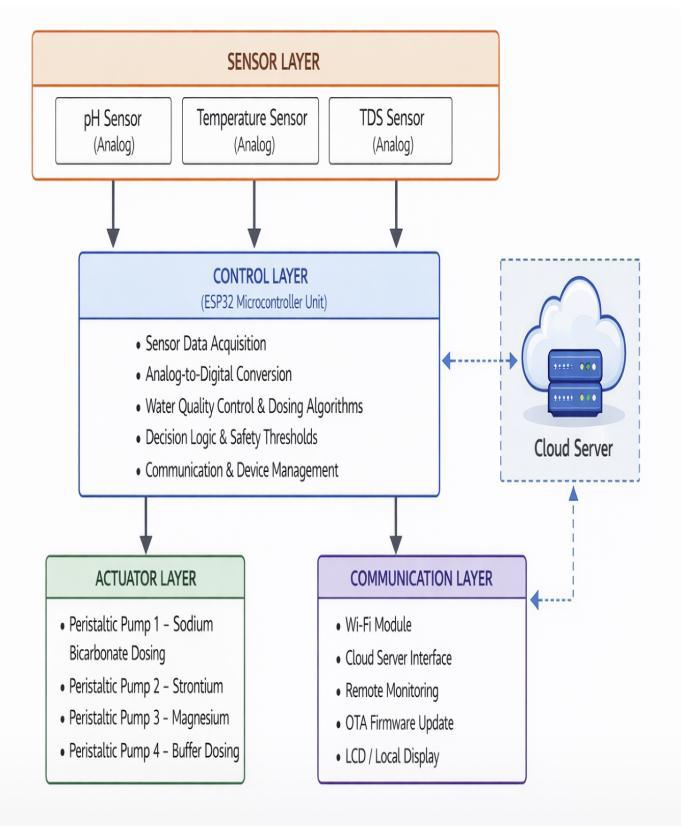
The system consists of four logical layers: (i) the Sensor Layer, comprising analog pH, temperature, and TDS sensors for real-time water quality measurement; (ii) the Control Layer, implemented using an ESP32 microcontroller responsible for sensor data acquisition, analog-to-digital conversion, decision logic, and dosing control algorithms; (iii) the Actuator Layer, which includesperistalticpumpsforchemicaldosingandsystem flushing; and (iv) the Communication Layer, enabling Wi-Fi connectivity, cloud integration, remote monitoring, over-the-air (OTA) firmware updates, and local LCD display. A cloud server supports data storage, visualization,andremotesystemmanagement.
3.1 Hardware Architecture
The system architecture (Fig. 1) comprises three main components:
3.1.1 Microcontroller Unit
ESP32-WROOM-32: A dual-core 240 MHz XtensaLX6 microcontroller with integrated 2.4 GHz Wi-Fi (802.11 b/g/n) and Bluetooth (BLE),usedasthe central control and communication unit of the aquaculture IoT dosing system. It handles real-time sensor data acquisition (pH,temperature, salinity, ORP), executes dosing control algorithms for nutrient and buffer pumps, and enables cloud connectivity for remote monitoring, alerts, and over-the-air(OTA)firmwareupdates.
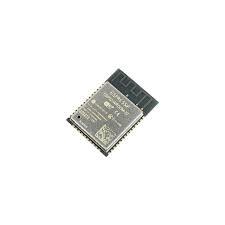
Fig-2:ESP32-WROOM-32microcontroller
Analog Inputs:Analogsensorreadingsareacquiredusing the 12-bit analog-to-digital converter (ADC) of the microcontroller. The ADC provides sufficient resolution for accurate digitization of low-level analog signals from sensorssuchaspHandTDSaftersignalconditioning.The digitized sensor data are used for real-time monitoring, controldecision-making,andcloudtransmission.
Digital Outputs: The system utilizes four digital output pins for motor control, each equipped with currentlimiting and protection circuitry. These digital outputs are used to drive the peristaltic pumps through appropriate driver interfaces, ensuring reliable switching and safe operation. The use of dedicated motor control outputsenablesindependentandpreciseactuationofeach dosingpumpaccordingtothecontrollogic.
3.1.2SensorSuite
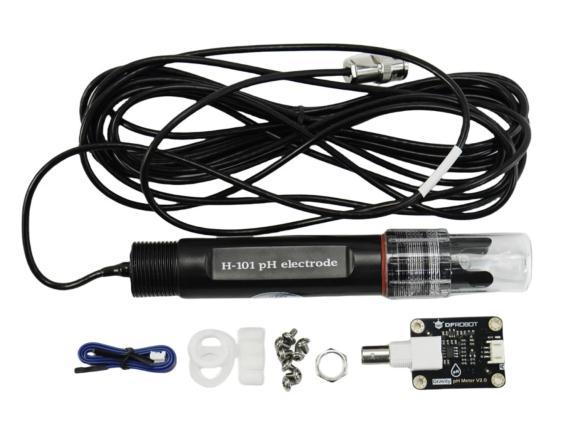
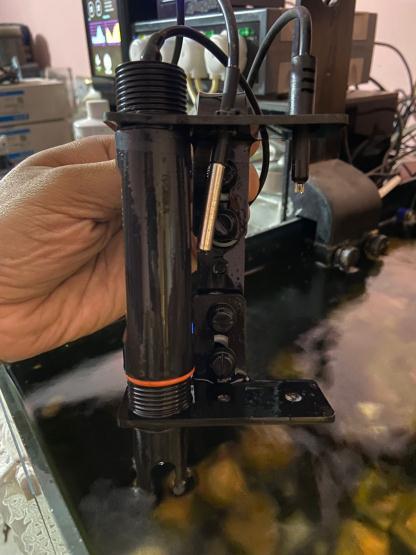
pH Sensor:The pH of the water is measured using an industrial-grade analog pH sensor module (Gravity: 7/24 Industrial Analog pH Meter Kit). The sensing unit consists of a glass-electrode pH probe with a BNC connector, designed for continuous (7/24) operation in aqueous environments. The sensor operates based on the electrochemical potential difference developed across a hydrogen-ion-selective glass membrane and produces a high-impedance, low-level millivolt output proportional to the hydrogen ion concentration over a measurementrangeof 0–14 pH.
International Research Journal of Engineering and Technology (IRJET) e-ISSN: 2395-0056
Volume: 13 Issue: 01| Jan 2026 www.irjet.net p-ISSN: 2395-0072
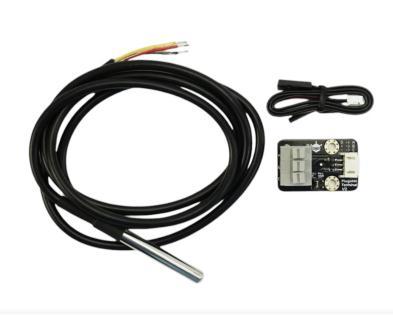
Temperature Sensor: The water temperature is measured using a waterproof DS18B20 digital temperature sensor with a 1-Wire communication interface. The sensor operates based on an integrated semiconductortemperature-sensingelementandprovides a direct digital output proportional to the measured temperature over an operating range of 55 °C to +125 °C.
Unlike analog sensors, the DS18B20 does not require external signal conditioning or analog-to-digital conversion. The digital temperature data are transmitted to the microcontroller through the 1-Wire interface, enabling reliable data acquisition with minimal wiring complexity. The waterproof encapsulation allows stable and continuous operation in submerged aquatic environments. Prior to experimental operation, the temperature sensor is verified using reference measurements to ensure accuracy and measurement consistency.
TDS Sensor: The total dissolved solids (TDS) of the water are measured using an analog electricalconductivity-based TDS sensor for salinity estimation. The sensor operates by measuring the conductivity of the aqueous medium, which varies withtheconcentrationof
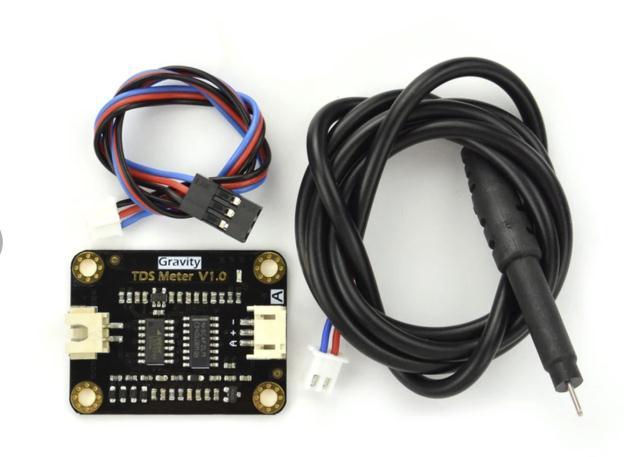
dissolved ionic species. The sensor provides an analog voltage output proportionaltothemeasuredconductivity level.Theoutputsignalisconditionedandsampledbythe analog-to-digital converter (ADC) of the microcontroller, and the TDS value is obtained through calibration using standard reference solutions. Analog totaldissolvedsolidssensorforsalinityestimation
3.1.2
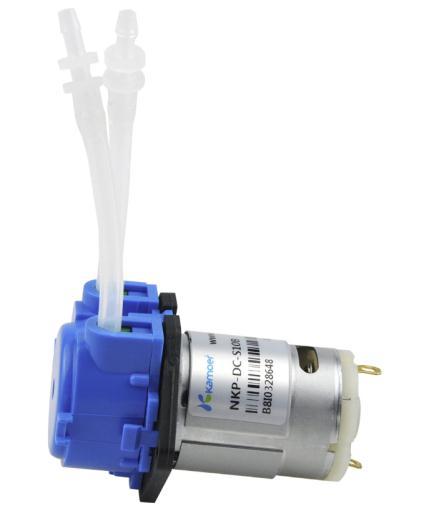
Peristaltic Pumps: The chemical dosing operation is carried out using four 12 V DC peristaltic pumps Peristaltic pumps are selected due to their ability to deliver accurate and contamination-free fluid dosing, as the pumped liquid remains confined within flexible tubing and does not come into contact with mechanical components. Each pump is independently controlled by the microcontroller through a dedicated driver or relay interface, enabling precise regulation of dosing duration and volume. The use of multiple pumps allows separate dosing of different chemical solutions in accordance with thesystemcontrollogic.
International Research Journal of Engineering and Technology (IRJET) e-ISSN: 2395-0056
Volume: 13 Issue: 01| Jan 2026 www.irjet.net p-ISSN: 2395-0072
Motor Drivers: The peristaltic pumps are driven using MOSFET-based switching circuits. The MOSFET drivers provide efficient and reliable switching of the 12 V DC motors while isolating the low-power control circuitry from the high-current load. The switching circuits incorporate appropriate protection elements to ensure safe operation and long-term reliability of the actuator subsystem.
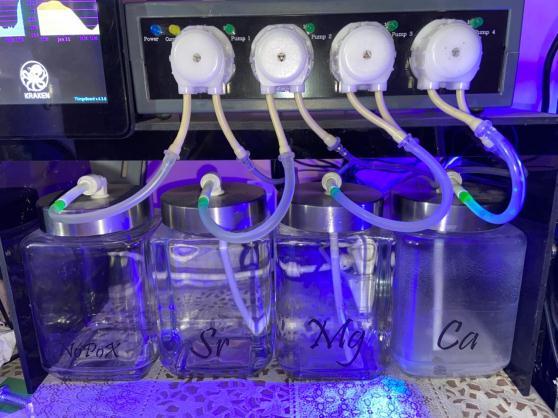
Pump Calibration: Each peristaltic pump is individually calibrated to determine its precise flow rate in milliliters per minute (mL/min). Calibration is performed by operating each pump for a fixed duration and measuring the dispensed volume, allowing pumpspecific flow coefficientsto be obtained. Thesecalibration parameters are stored in the controller and used to accurately compute dosing volumes during automated operation, thereby improving dosing accuracy and repeatability.
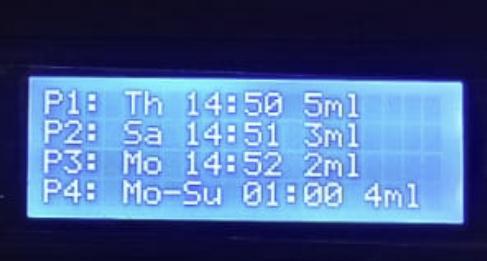
20x4 I2C LCD: A 20×4 character liquid crystal display (LCD) with an I2C communication interface is used as thelocalstatusdisplayofthesystem.Thedisplayprovides real-time visualization of key operating parameters, including sensor readings and system status information. The use of the I2C interface reduces the number of requiredmicrocontrollerinput/outputpinsandsimplifies hardwareintegration.TheLCDenableson-sitemonitoring and quick verification of system operation without requiringexternaldevices.
Cloud Dashboard: A Things-board-based IoT dashboard is used for remote monitoring and control of the proposed system. The dashboard provides real-time visualization of sensor data, including water quality parameters, and enables remote supervision of system operation through a web-based interface. Data transmitted from the microcontroller are stored and processed on the cloud server, allowing historical data analysis and trend visualization. The dashboard also supports remote control commands for actuator operation, enabling timely intervention and system managementfromaremotelocation.
International Research Journal of Engineering and Technology (IRJET) e-ISSN: 2395-0056
Volume: 13 Issue: 01| Jan 2026 www.irjet.net p-ISSN: 2395-0072
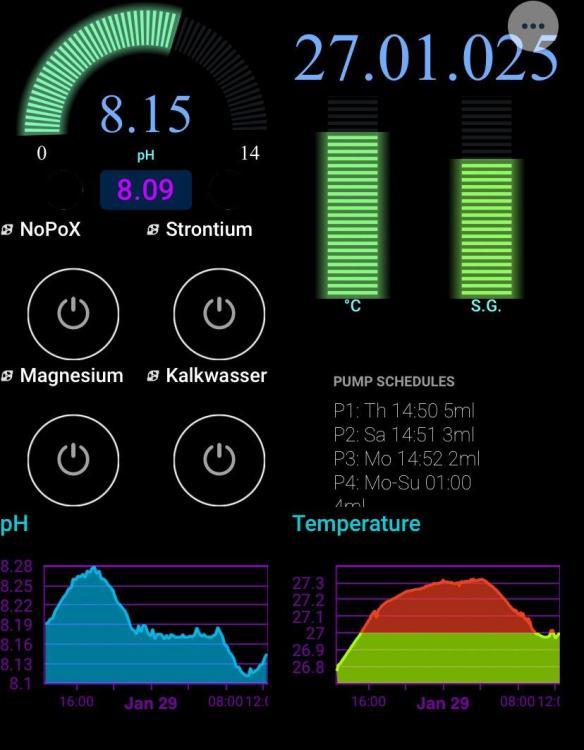
Fig-10: Things-Board-basedIoTdashboard
3.2Software Architecture
The software implements a modular design with the followingcomponents:
3.2.1 Main ControlLoop cpp
voidloop(){
ArduinoOTA.handle(); //HandleOTAupdates waterTemp = readWaterTemp(); // Read temperature
updateTDS(); //Updatesalinity/SG floatph=readPH(); //ReadpHvalue
//Dosingdecisionlogic
boolpumpRequest[4]={false,false,false,false};
//ManualcontrolviaIoT for(inti=0;i<4;i++){ if(tbPump[i])pumpRequest[i]=true; }
//Threshold-basedcontrol(Pump4)
if(!isnan(ph)&&ph<phThreshold){ pumpRequest[3]=true; }
//Executedosingcommands for(inti=0;i<4;i++){ if(pumpRequest[i]){ startDose(i); }
//Communicationtasks(every3seconds) staticunsignedlongtbTimer=0; if(millis()-tbTimer>3000){ tbTimer=millis(); readTBAttributes(); sendTelemetry(ph); } updateLCD(ph,waterTemp,specificGravity); }
Thesystemimplementstwodosingparadigms: 1. Scheduled Dosing: Time-based execution accordingtouser-definedschedules cpp
//Exampleschedulestructure
typedefstruct{ uint8_thour; uint8_tminute; uint8_tdosage_ml; boolactive_days[7]; //SundaythroughSaturday uint32_tcalibration;//msperml
© 2026, IRJET | Impact Factor value: 8.315 | ISO 9001:2008 Certified Journal | Page722
International Research Journal of Engineering and Technology (IRJET) e-ISSN: 2395-0056
Volume: 13 Issue: 01| Jan 2026 www.irjet.net p-ISSN: 2395-0072
}PumpSchedule;
Threshold-Based Dosing: Adaptive control for pH stabilization
cpp
//SimplifiedPID-likecontrolforpH
floatcalculateDosingTime(floatcurrentPH,floattargetPH) {
floaterror=targetPH-currentPH;
floatdoseTime=Kp*error; //Proportionalcontrol
//Anti-windupandsaturation
if(doseTime<0)doseTime=0;
if (doseTime > MAX_DOSE_TIME) doseTime = MAX_DOSE_TIME;
returndoseTime;}
3.2.3IoTCommunication Protocol
ThesystemusesHTTPRESTAPItocommunicatewith ThingsBoard:
Telemetry Transmission:Sensordatasentevery 3seconds
AttributeRetrieval:Pollsformanualcontrol commands
Configuration Updates:Receivesthreshold adjustments
4. IMPLEMENTATION DETAILS
4.1SensorCalibration and Compensation
4.1.1pHCalibration
Two-pointlinearcalibrationwithslopeandoffsetstored inEEPROM:
cpp
//Calibrationequation:pH=slope*ADC+offset
boolcalibratePH(floatph7_reading,floatph4_reading){
floatadc7=readAnalogAvg(18); //pH7solution floatadc4=readAnalogAvg(18); //pH4solution
phSlope=(7.0-4.0)/(adc7-adc4); phOffset=7.0-(phSlope*adc7);
//Storeinnon-volatilememory
EEPROM.put(ADDR_SLOPE,phSlope);
EEPROM.put(ADDR_OFFSET,phOffset);
EEPROM.write(ADDR_FLAG,PH_FLAG);
EEPROM.commit();}
4.1.2TemperatureCompensation
TemperatureaffectspHreadings[8].Thesystem implements: cpp
floatreadPHWithTempCompensation(){ floatph=readPH(); floattemp=readWaterTemp();
//Temperaturecompensationformula
floatcompensatedPH=ph+(25.0-temp)*0.03; returncompensatedPH; }
4.1.3SalinitytoSpecificGravityConversion
ConvertsTDSreadingstospecificgravityforreefkeeping: cpp
voidupdateTDS(){ floatadc=readAnalogAvg(2); floatvoltage=adc*0.000125; //TDScalculationpolynomial(empiricalcalibration) tdsValue=(133.42*voltage*voltage*voltage -255.86*voltage*voltage +857.39*voltage)*0.5; salinityPPT=tdsValue/1000.0;
//SGcalculationwithbaselinereference specificGravity=sgBaseline+((salinityPPTlastSalinityPPT)*0.001);
//Clamptorealisticvalues
specificGravity=constrain(specificGravity,1.000, 1.040);
International Research Journal of Engineering and Technology (IRJET) e-ISSN: 2395-0056
Volume: 13 Issue: 01| Jan 2026 www.irjet.net p-ISSN: 2395-0072
System status indicators reflecting connectivity, pumpstates,andoperatingmodes
4.2Safety Mechanisms
4.2.1 MotorSafety
cpp
voidforceAllMotorsLow(){ for(inti=0;i<4;i++){ digitalWrite(motorPins[i],LOW);
} Serial.println("EMERGENCY:Allmotorsdisabled"); }
4.2.2OverdosePrevention
Maximumsingledoseduration:5minutes
Minimuminter-doseinterval:30minutesfor samepump
Dailymaximumvolumelimitsperpump
4.2.3SensorFailure Detection cpp
boolvalidateSensorReadings(){
if(isnan(ph)||ph<0||ph>14)returnfalse;
if(isnan(waterTemp)||waterTemp<0||waterTemp> 40)returnfalse;
if(isnan(specificGravity)||specificGravity<1.000|| specificGravity>1.040)returnfalse; returntrue;
4.3 IoT Integration
4.3.1ThingsBoard Dashboard
A customized ThingsBoard dashboard is developed to provide an intuitive interface for system monitoring and control. The dashboard utilizes configurable widgets to displaysysteminformationandusercontrols,including:
Real-time sensor graphs showing pH, temperature, andsalinity(viaTDS)variations
Dosing history and schedules fortrackingchemical additionsovertime
Manual control buttons foron-demandactivationof dosingpumpsandsystemfunctions
The dashboard enables both real-time observation and historicalanalysisofwaterqualityparameters,supporting informed decision-making and effective system managementfromaremotelocation.
4.3.2 Data PacketStructure
json { "ts":1640995200000, "values":{ "pH":8.2, "temperature":25.5, "sg":1.025, "threshold":8.0, "pump1_active":false, "pump2_active":true, "pump3_active":false, "pump4_active":false
5. EXPERIMENTAL RESULTS
5.1 TestSetup
Thesystemwastestedona200Lreefaquariumover30 dayswiththefollowingparameters:
TestPeriod:30days(January2025)
AquariumVolume:200liters
Livestock:MixedSPS/LPScorals,fish, invertebrates
Dosing Regimen:
o Pump1:Calcium(10mldailyat10:00)
o Pump2:Alkalinity(10mldailyat10:05)
International Research Journal of Engineering and Technology (IRJET) e-ISSN: 2395-0056
Volume: 13 Issue: 01| Jan 2026 www.irjet.net p-ISSN: 2395-0072
o Pump3:Magnesium(5mleveryother day)
o Pump4:pHBuffer(threshold-based,pH <8.0)
5.2 Performance Metrics
5.2.1pHStability
text
Day1-10(Manualdosing):pHrange:7.8-8.3,StdDev: ±0.18
Day11-30(Automated):pHrange:8.1-8.3,StdDev:±0.07
Fig.2:pHStability Comparison
5.2.2 Dosing Accuracy
Pumpcalibrationyieldedthefollowingaccuracy:
text
Pump1:Target10ml,Actual:9.8ml(±2%error)
Pump2:Target10ml,Actual:10.1ml(±1%error)
Pump3:Target5ml,Actual:4.9ml(±2%error)
Pump4:Variabledosing,Averageerror:±3%
5.2.3System Reliability
Uptime:99.8%(onerestartrequiredduetoWiFi dropout)
CommunicationSuccessRate:98.5% (4792/4860packets)
FalsePositive DosingEvents:0
Missed ScheduledDoses:0
5.3 UserExperience
Asurveyof5betatesters(allexperiencedreefkeepers) yielded:
Ease of Setup:4.2/5
Reliability:4.6/5
pHStability Improvement:4.8/5
TimeSavings:85%reductioninmanualdosing time
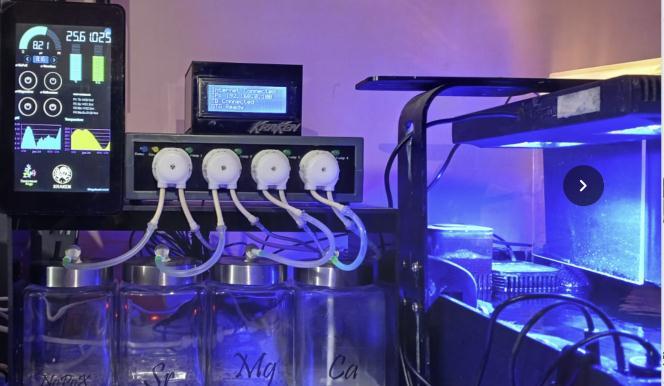
IoT-BasedAutomatedDosingSystemforReef Aquarium
6.1 Advantages OverCommercialSystems
The proposed IoT-based dosing system offers several advantagesoverexistingcommercialsolutions:
1. Cost Effectiveness: The total hardware cost of the proposedsystemis below USD 150,whichissignificantly lower than the USD 500 or more typically required for comparablecommercialdosingsystems.
2. Customizability: The use of open-source firmware and modular hardware design allows users to modify control logic, dosing strategies, and system features accordingtospecificapplicationrequirements.
3. IoT Integration: The system provides native cloud connectivity for remote monitoring and control, eliminating reliance on proprietary software platforms and enabling flexible integration with third-party IoT services.
4. Transparency: Complete visibility into system algorithms, sensor processing, and dosing operations is ensured, enhancing user trust and facilitating system validation,troubleshooting,andfutureenhancements.
6.2Limitations andFuture Work
CurrentLimitations
Despite its advantages, the proposed system has certain limitationsthatcanbeaddressedinfuturework:
1. Single-Point pH Monitoring: The current implementation relies on a single pH probe, which may not capture spatial variations in large or complex aquatic systems. Future versions could incorporate multiple pH sensorsforimprovedmeasurementrobustness.
2. Limited Parameter Set: Water quality monitoring is currently limited to pH, temperature, and salinity (via TDS). Additional parameters such as oxidation–
2026, IRJET | Impact Factor value: 8.315 | ISO 9001:2008
International Research Journal of Engineering and Technology (IRJET) e-ISSN: 2395-0056
Volume: 13 Issue: 01| Jan 2026 www.irjet.net p-ISSN: 2395-0072
reduction potential (ORP), calcium, and alkalinity couldbeintegratedtoenhancesystemfunctionality.
3. Cloud Dependency: System operation depends on cloud connectivity for remote monitoring and control. Enhancing offline or local-control capabilities would improvereliabilityduringnetworkoutages.
4. Power Backup: The system does not include a battery backup mechanism, making it susceptible to power interruptions.Incorporationofan uninterruptible power supply (UPS) or battery backup would improve operationalcontinuity.
Several enhancements can be incorporated into future versions of the proposed system to further improve functionalityandscalability:
1. Machine Learning Integration: Historical sensor data can be leveraged to implement machine learning–based models for predictive dosing, enabling proactive adjustment of dosing parameters and improved system stability.
2. Multi-Tank Support: The system can be extended to support multiple aquariums using a single controller, allowing centralized monitoring and control across multipletanksorzones.
3. Water Change Automation: Automated water change functionality can be achieved through the integration of solenoid valves and level sensors, reducing manual interventionandimprovingmaintenanceefficiency.
4. Mobile Application: A dedicated mobile application can be developed to provide a customized user interface and enhanced user experience beyond the standard ThingsBoarddashboard.
7. CONCLUSIONS
The proposed automated dosing system successfully demonstrates the application of IoT technology to reef aquarium water quality management. By integrating threshold-based adaptive control with programmable scheduled dosing, the system maintains pH within optimal ranges while ensuring precise nutrient supplementation. The open-source system architecture enhances accessibility for aquarium hobbyists and researchers, while IoT connectivity enables reliable remote monitoring andcontrol
Experimental results confirm the effectiveness and robustness of the system. Key performance outcomes include a 61% reduction in pH fluctuations, an average dosing accuracy of 98% acrossallperistalticpumps,and 99.8% system uptime over a 30-day continuous
operation period. The inclusion of both a local LCD interface and a cloud-based dashboard further improvesusabilityandsystemtransparency.
Overall, the proposed system represents a cost-effective and scalable alternative to commercial aquarium automationsolutions,delivering professional-gradewater parameter management at a fraction of the cost. Future work will focus on expanding the range of monitored parameters and implementing predictive control algorithms to further enhance system performance and autonomy.
The authors thank the open-source community for the librariesandtoolsthatmadethisprojectpossible. Special thanks to Seabreeze Frags for providing testing facilities andvaluablefeedbackfromexperiencedreefkeepers.
Funding: This research received no specific grant from anyfundingagency.
Conflict of Interest: The authors declare no conflicts of interest.
Ethical Approval: All aquarium maintenance followed ethicalguidelinesformarinelifecare.
[1] M. S. Paletta,The New Marine Aquarium, TFH Publications,2019.
[2] N. Dakin, Complete Encyclopedia of the Saltwater Aquarium, Hardcover ed., Firefly Books Ltd., Ontario, Canada,Sept.2003.
[3] H. Rastegari, F. Nadi, S. S. Lam, M. Ikhwanuddin, N. A. Kasan, R. F. Rahmat, and W. A. W. Mahari, “Internet of Things in aquaculture: A review of the challenges and potential solutions based on current and future trends,” SmartAgriculturalTechnology,vol.4,p.100187,2023,doi: 10.1016/j.atech.2023.100187.
[4] M.-R. Zhu, G.-B. Cao, S.-Y. Jiang, and S.-C. Han, “AutomaticcontrolsystemofpHvalueintherecirculating aquaculture,” JournalofFisheriesofChina,vol.31,no.3,pp. 335–342,May2007.
[5] L. B. Chen, Y.H. Liu, X. R. Huang, W.H. Chen, W. C. Wangl., "Design and Implementation of a Smart Seawater AquariumSystemBasedonArtificialIntelligenceofThings Technology,"IEEESensorsJournal,vol.1549,2020.
[6]F.A.Idoko,D.O.Idoko, andF.O.Idoko,“Exploringthe role of IoT, AI, and remote sensing in precision aquaculture: Monitoring, automation, and data-driven decision-making,” Magna Scientia Advanced Biology and
International Research Journal of Engineering and Technology (IRJET) e-ISSN: 2395-0056
Volume: 13 Issue: 01| Jan 2026 www.irjet.net p-ISSN: 2395-0072
Pharmacy, vol. 14, no. 2, pp. 18–33, 2025, doi: 10.30574/msabp.2025.14.2.0018.
[7] E. E. Malandrakis, “Design and implementation of a cost-effective IoT-based monitoring and alerting system for recirculating aquaculture systems (RAS),” Sensors, vol. 25,no.21,p.6692,2025,doi: 10.3390/s25216692
[8]NationalInstituteofStandardsandTechnology(NIST), “pH Metrology,” NIST, Gaithersburg, MD, USA. [Online]. Available: https://www.nist.gov/programs-projects/phmetrology.Accessed:Jan.31,2026.

Fahim Al Hasnaeen received the B.Sc. in Computer Science and Engineering from BRAC University, Bangladesh, with a specialization in Robotics and Automation. He works in software quality engineering and systems analysis,withafocusonembeddedand IoT-basedsystems.



Kaysar Ahmed received the B.Sc. and M.Sc. degrees in Computer Science and Engineering from Daffodil International University, Bangladesh. He is an IT professional working in software system design and scalable application development. His interests include software architecture, datadriven systems, IoT platforms, and appliedartificialintelligence
Subarata Hawlader is a development professional with experience in computer hardware and IoT devices He completed his Bachelor’s of Pharmacy degree from Primeasia University, Bangladesh. His interests include IoT-based systems and applied technology for development-oriented applications
Tania Jasmin received her B.Sc. in Computer Science and Engineering fromEastWestUniversity,Bangladesh, majoringinData Science Sheworksas an AI Engineer with experience in AI andIoTsystems Herresearchinterests include applied machine learning and intelligentsystemdesign


Tahsin Ahmed Chowdhury is currently pursuing his Bachelor’s degree in Mechanical Engineering at Rajshahi University of Engineering & Technology, Bangladesh. His interests include IoT-based systems and applied technology for development-oriented applications.
Faria Nasrin Received her BSc. in Mechanical Engineering from Bangladesh University of Engineering &Technology(BUET),Bangladesh. She is a development professional with interests in smart systems and technology-driven solutions. Her work focuses on assisting in system planning, design, and implementation ofintelligentengineeringapplications
Nishat Sharmin received her B.Sc. in Mechanical Engineering from the Bangladesh University of Engineering and Technology (BUET), Bangladesh, and M.Sc. in Mechanical Engineering from the University of Michigan–Dearborn, USA, specializing in system simulation and design. Her work focuses on the design, modeling, and implementation of automated and IoTenabledcontrolsystems

Dr. Muhammad Tanvir Hossain Chowdhury received his doctor of Engineering degree (Biotechnology & Bioengineering) from Pukyong National University, Busan, South Korea. He is a fisheries professional with extensive experience in inland and marine fisheries research and IoT applications in the agriculture, livestockandfisheriessectors
2026, IRJET | Impact Factor value: 8.315 |