
International Research Journal of Engineering and Technology (IRJET) e-ISSN: 2395-0056
Volume:12Issue:12|Dec2025 www.irjet.net p-ISSN: 2395-0072
International Research Journal of Engineering and Technology (IRJET) e-ISSN: 2395-0056
Volume:12Issue:12|Dec2025 www.irjet.net p-ISSN: 2395-0072
Dr. P. Guhan 1 , E. Yuvasri2
1Principal, Jaya College of Arts & Science, Chennai. 2PG Student, Department of Computer Applications, Jaya College of Arts & Science, Chennai.
Abstract - Businesses can anticipate purchases, tailor recommendations, and optimize marketing strategies by leveragingbig dataanalytics topredictcustomer behaviour
Traditional analytical methods are no longer adequate to capture intricate and dynamic customer patterns due to the exponential growthof digital footprintscreatedbyweblogs, mobile applications, transactions, and social media interactions. This paper proposes a comprehensive framework for forecasting consumer actions in e-commerce by integrating large-scale data ingestion, preprocessing pipelines, automated feature engineering, scalable machine learning models, and production-grade deployment mechanisms. This architecture is based on contemporary big-data technologies, such as Apache Spark for distributed processing,Kafka forreal-timestreaming,HDFSforscalable storage, and sophisticated algorithms like XG Boost, Light GBM, Transformers, and deep neural networks. We describe modular system designs with a focus on real-time personalization, explainable AI (XAI), data drift monitoring, and continuous model retraining (MLOps), as well as a thorough review of previous research and limitations in current predictive systems. For comprehending the real factors influencing consumer choices, creating synthetic data to increase model resilience, and using ethical AI techniques to guarantee equity and openness in extensive ecommerceanalytics.
Key Words: Big Data, Customer Behavior Prediction, Ecommerce Analytics, Machine Learning,Clickstream Analysis,UserSegmentation
Predicting customer behaviour including purchase intent, churn probability, click-through likelihood, and customer lifetime value has become a critical capability for competitive e-commerce platforms. Conventional analysisForcompetitivee-commerceplatforms,theability to predict customer behaviour including purchase intent, churn probability, click-through likelihood, and customer lifetime value has become essential. Because businesses now produce enormous amounts of highvelocity data from web logs, mobile applications, transaction systems, and various third-party sources, traditional analytics techniques are no longer adequate. Big data analytics addresses these challenges by leveragingdistributedstorageandprocessingframeworks capable of handling terabytes or even petabytes of heterogeneous data. To extract meaningful patterns from
such large-scale datasets, modern systems must integrate robust data engineering pipelines, advanced machine learning models, and real-time processing capabilities. This paper presents a scalable and practical methodology for building customer behaviour prediction systems that operate effectively across both batch and near-real-time environments, ensuring an optimal balance between predictive performance, latency, scalability, and interpretability.
[1]. Early efforts relied on logistic regression and decision trees on structured transactional data to predict churn and purchase probability. These approaches were effectiveonsmalltomoderatedatasetsbutsufferedwhen scaled.
[2]. Ensemble methods (Random Forests, Gradient Boosting Machines) improved predictive power and robustness. Feature engineering RFM (Recency, Frequency, Monetary), sessionisation, and user segmentation becamekeytoperformance.
[3]. with richer behavioral signals (clickstreams, sequence data), RNNs, CNNs, and Transformer variants have been applied for session- and sequence-level predictions(e.g.,next-itemrecommendation).
[4]. Big-data frameworks (Hadoop, Spark) and streaming platforms (Kafka, Flink) are widely used for scalable training and inference. Model serving at scale often involves feature stores and online model servers (e.g.,TFServing,Seldon)
3.1 Objectives
•Withthehighaccuracyandminimallatency,forecastone or more customer behaviors (e.g., purchase within 7 days, churn in 30 days, next product category).
• Incorporate forecasts into recommendation engines and marketingautomation.
3.2 Data Sources
Transactional data: Orders, returns, payment method,timestamps.
Behavioral logs:Clickstream,pageviews,session durations,scroll/clickevents.
International Research Journal of Engineering and Technology (IRJET) e-ISSN: 2395-0056
Profile data:Demographics,location,loyaltytier.
Product/catalog data: Category, price, availability.
External data (optional): Social signals, ad impressions,economicindicators.
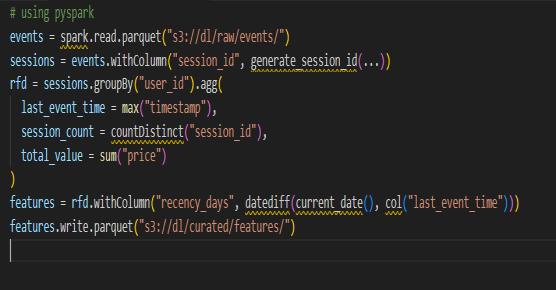
Big data–driven customer behaviour prediction depends fundamentallyonthequality,richness,andconsistencyof features engineered from raw, large-scale datasets. This phase converts massive, noisy, and multi-source information into structured, meaningful signals that machine-learning models can effectively use. To ensure scalability and fault tolerance, the workflow starts with data ingestion, where scheduled batch ETL jobs and realtime streams from Kafka/Kinesis are integrated into distributedstoragesystemslikeHDFSorAmazonS3.Once ingested, user activity logs and interaction traces are organizedthroughessionization,whichgroupscontinuous events into coherent user sessions based on inactivity cutoffs.
High-level behavioural metrics like Regency–Frequency–Monetary(RFM)scores,popularitytrendsattheitemand category levels, and time-decay–weighted aggregates to highlightrecentactionsarethenproducedbyaggregation techniques.
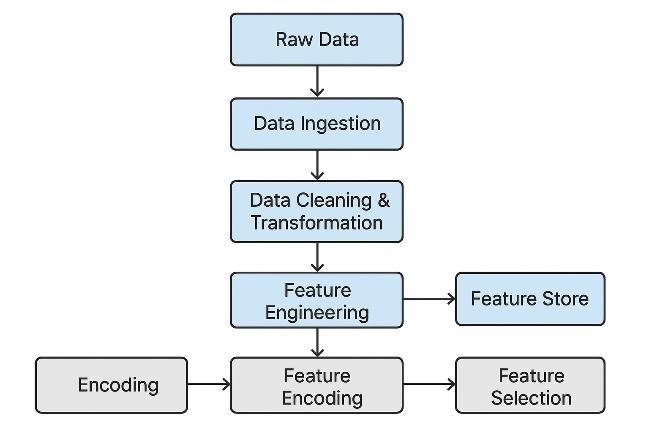
(Fig 1: Big Data Processing Pipeline).
The pipeline also creates sequence-based features like last-N clicked or viewed items, inter-event time gaps, and temporal interaction patterns that capture evolving user intent. To represent deeper behavioural semantics, customer and product embeddings are learned using algorithmssuchasskip-gram,autoencoders,orsequencebasedrepresentationlearning,enablingmodelstocapture hidden relationships and similarities. The final stage includescomprehensivefeaturetransformationstepssuch as normalization, scaling, one-hot and target encoding, frequencyencoding,andsystematichandlingofmissingor sparse values. All things considered, the pipeline for data processing and feature engineering guarantees that
unprocessed big data transforms into excellent, information-rich representations that greatly improve predictiveaccuracyincustomerbehaviormodeling.
Modelling customer behaviour prediction in e-commerce requires selecting techniques capable of capturing complexfeatureinteractions,sequentialuserpatterns,and large-scale data variations. Important outcomes like purchase intent, churn risk, click-through probability, next-item recommendation, and total customer lifetime valueareallpredictedbythesemodels.
Conventional baseline models, such as decision trees and logistic regression, offer interpretability and are good places to start when trying to understand important predictors. For richer tabular data, advanced gradientboostingframeworkssuchasXGBoost,LightGBM,andCat Boost are widely used due to their ability to handle heterogeneous features, non-linear relationships, and high-dimensionalinputs.Deeplearningarchitectures,such asRNNs,LSTMs,andTransformer-basedmodels,areused to model sequential behaviour. These architectures learn temporal dependencies and recognize changing user interests from clickstreams or browsing sessions. By combining neural networks or gradient-boosting models with embedding layers for users, products, or events, hybrid approaches allow for the extraction of latent behavioural representations in addition to potent nonlinear modelling. Finally, ensemble strategies combine multiple models to improve robustness, stability, and predictiveaccuracyacrossdiversecustomersegmentsand behaviourpatterns.
To ensure both technical accuracy and practical impact, customer behaviour prediction models must be evaluated using a combination of statistical, machine-learning, and business-oriented metrics. For evaluating classification quality, standard performance metrics like AUC-ROC, Precision, Recall, F1-score, and PR-AUC are crucial, particularly in unbalanced environments where favourable events like purchases or churn may be uncommon. Furthermore, for decision-making systems like churn intervention programs or personalized recommendations,calibrationmetricsareusedtoconfirm whether predicted probabilities accurately reflect true likelihoods. In order to replicate actual deployment behaviour, a strong validation strategy is equally crucial. Time-based splits, in which models are trained on earlier periods and validated on later windows, are frequently used, and cross-validation techniques are meticulously craftedtopreventtemporaloruser-leveldataleakage.
Beyond technical accuracy, models are ultimately evaluated through business metrics such as uplift in
Volume:12Issue:12|Dec2025 www.irjet.net p-ISSN: 2395-0072 © 2025, IRJET | Impact Factor value: 8.315 | ISO 9001:2008
International Research Journal of Engineering and Technology (IRJET) e-ISSN: 2395-0056
Volume:12Issue:12|Dec2025 www.irjet.net p-ISSN: 2395-0072
conversion rate, increase in average order value (AOV), and improvements in customer retention measured through controlled A/B experiments. When taken as a whole, these evaluation dimensions guarantee that the predictive models are both statistically sound and able to producequantifiablebusinessvalue.
Traditional e-commerce platforms rely on basic analytics pipelines that focus mainly on transactional reporting rather than predictive intelligence. In the existing system, customer behaviour analysis is typically limited to historical data summaries such as total sales, page views, or simple funnel metrics extracted through conventional reporting tools. Data is mostly processed through batch ETL pipelines, where interaction logs are aggregated overnight and stored in relational databases or basic data warehouses. These systems lack real-time processing capabilities,meaningcustomeractionscannotbeanalysed orrespondedtoinstantly.Sequentialbrowsing behaviour, session patterns, or temporal dynamics are not captured by feature engineering, which is often limited to static attributes like user demographics or previous purchase counts.Theuseofmachinelearningiseitherrestricted or depends on basic models that don't scale well with large datasets, such as logistic regression or rule-based recommendations. Furthermore, model deployment and monitoring mechanisms are either absent or manually managed, making it difficult to update models, track performance,ordetectdrift.Thecurrentsystem'scapacity to deliver precise forecasts or customized user experiencesatscaleisseverelylimitedbytheabsenceofa unifiedfeaturestore,automatedpipelines,real-timeevent processing,andsophisticatedmodelling
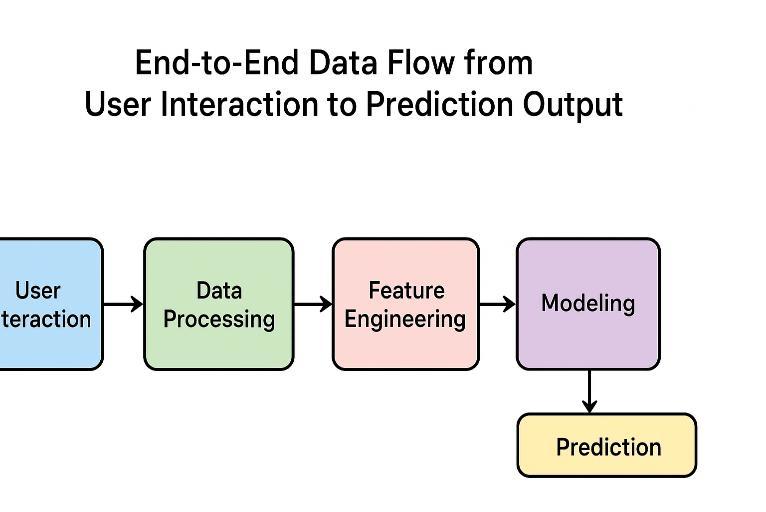
The proposed system introduces a modular, scalable, and intelligence-driven architecture designedto overcome the limitations of traditional e-commerce analytics. It begins with an Ingestion Module equipped with schema validation, deduplication, and fault-tolerant collectors to ensure high-quality event capture from multiple sources. For effective retrieval and subsequent processing, the StorageModuledividesdataintoarawzoneandacurated zone, stores it in optimized parquet formats, and partitions it by date. A dedicated Feature Engineering ModuleleveragesdistributedSparkjobsandacentralized FeatureStoretogeneraterichbehavioural,sequential,and real-time features accessible across both offline training andonlineinferenceenvironments.TheModellingModule provides an end-to-end experimentation pipeline, supporting automated hyperparameter tuning, model versioning, and explainability frameworks to ensure transparencyandreproducibility.
For deployment, the Serving Module enables low-latency inference through REST/gRPC endpoints, supported by intelligent caching and fallback strategies to maintain reliability under high traffic. A Feedback Loop Module, which gathers ground truth such as conversions, user reactions, and online prediction performance and feeds itintoretrainingcyclesformodelupdates,iswhatpropels continuous improvement. The Monitoring Module performs real-time data quality checks, tracks model accuracy, latency, drift, and fairness metrics, and triggers alerts when anomalies occur. Finally, the Privacy & Governance Module enforces strict access controls, anonymization methods, and compliance auditing to ensure secure and responsible handling of user data. These components work together to create a reliable, flexible,andfuture-readysystemforpredictinglarge-scale consumerbehaviorine-commerce.
The system is implemented using a modern, scalable big dataandmachinelearninginfrastructuretailoredforrealtime customer behaviour prediction. Data ingestion is handled through Kafka producers embedded in web and mobile applications, with Kafka Streams enabling realtime event transformation and routing. All incoming data isstoredinanS3-baseddatalake,whileDeltaLakelayers provide ACID guarantees for reliable updates, versioning, andschemaevolution.Large-scalefeatureengineeringand distributed ETL workflows are supported by Apache Spark, which is used for processing and feature computation. A dedicated Feature Store implemented usingFeastoracustomdesignbackedbyRedisforonline features and Parquet files for offline features ensures consistencybetweentrainingandinference.
Python frameworks like sickie-learn, XG Boost, PyTorch, and Tensor Flow are used in the modelling process, and Optima is used to optimize hyperparameters for better model performance. A lightweight FastAPI-based REST micro service that loads the most recent validated model
International Research Journal of Engineering and Technology (IRJET) e-ISSN: 2395-0056
Volume:12Issue:12|Dec2025 www.irjet.net p-ISSN: 2395-0072
from ML flow's model registry is used to deploy models. Workflow orchestration and scaling are managed by Airflow and Kubernetes, ensuring reliable scheduling, execution, and distributed resource allocation. System health and performance are continuously tracked using Prometheus and Grafana dashboards, while custom data quality monitoring jobs detect anomalies, drift, and ingestion issues to maintain the integrity of the entire pipeline.
1. Dataset: 6 months of user events and transactions. Create labeled examples where label=1 if purchase occurred within 7 days after theobservationwindow.
2. Features: Last 7 days RFM, device type, channel, avg session length, last 5 viewed categories (embedded),timeofdayactivity.
3. Model:XGBoostwithclassweighting;alsotraina sequenceTransformeronlast50events.
4. Training: Time-based split (train: months 1–4, val: month 5, test: month 6). Early stopping on validationAUC.
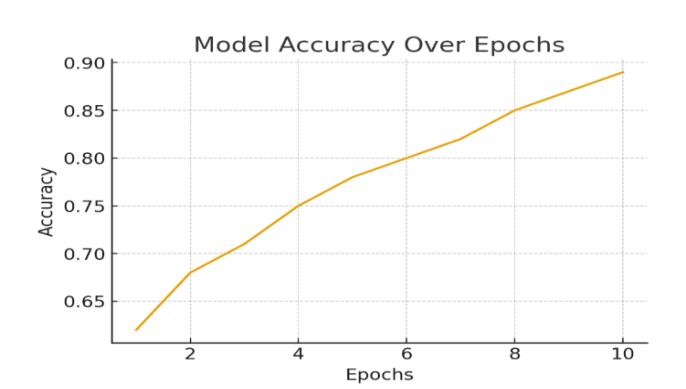
5. Evaluation: Report AUC, Precision@10, calibrationplot.Deploybestmodeltoservingand A/B test against current recommender for 2 weeks.
Inthiswork,anend-to-endbigdata–drivenframeworkfor predicting customer behaviour in e-commerce has been presented, addressing the limitations of traditional analytics systems. The suggested architecture enables precise, real-time prediction of important customer actions like purchases, churn, and engagement by combining scalable data ingestion, distributed storage, sophisticated feature engineering, and cutting-edge modelling techniques. The incorporation of monitoring, governance, and feedback loops promotes continuous improvementandresponsibledatause,whilethemodular design guarantees flexibility, maintainability, and ease of integration across large-scale environments. Overall, the system provides a robust and production-ready solution that enhances personalization, improves decision-making, and drives measurable business value for modern ecommerceplatforms.
[1] Ali, I., Mohammed, R., Nautiyal, A., & KumarSom, B. (2024). Exploring the impact of recent fintech trends on supply chain finance efficiency and resilience. https://doi.org/10.52783/eel.v14i1.1185
[2] Erdem, Ș., Durmuş, B., & Özdemir, O. (2017). Relationship between ad clicks and purchase intention: An empirical study of online consumer behaviour. European Journal of Economics and Business Studies, 9(1), 25–35. https://doi.org/10.26417/ejbes.v9i1.p25-35
[3] Gupta, S., & Israni, D. (2024). Machine learning–based customer behavior analysis and segmentation for personalized recommendations. https://doi.org/10.1109/icssas64001.2024.1076 0319
[4] Journal of Marketing Analytics. (2019). Palgrave Macmillan. https://doi.org/10.1057/41270.20503326
[5] Tokuc, A., & Dağ, T. (2024). Customer purchase intent prediction using feature aggregation on ecommercedata.E-CommerceJournal.
[6] Pandey, S., Aly, M., Bagherjeiran, A., Hatch, A., Ciccolo, P., Ratnaparkhi, A., & Zinkevich, M. (2011). Learning to target. Proceedings of the 20th Conference on Information and Knowledge Management, 1805–1814. https://doi.org/10.1145/2063576.2063837
International Research Journal of Engineering and Technology (IRJET) e-ISSN: 2395-0056
Volume:12Issue:12|Dec2025 www.irjet.net p-ISSN: 2395-0072
[7] Punetha, N., & Jain, G. (2023). Game theory and MCDM-based unsupervised sentiment analysis of restaurant reviews. Applied Intelligence, 53(17), 20152. https://doi.org/10.1007/s10489-02304471-1
[8] Widayati, C., Ali, H., Permana, D., & Riyadi, M. (2019). The effect of visual merchandising, sales promotion, and positive emotion on impulse buying behavior. Journal of Marketing and Consumer Research. https://doi.org/10.7176/jmcr/60-06
[9] Yerrineni, A., Ferri, B., Kokkili, S., Sirinelli, M., Martins, F. R., Riyasiman, S., & Kumar, R. (2023). Artificialintelligence–drivenconsumerbehavioral analytics in marketing. Journal of Revenue and Pricing Management, 22(2), 171. https://doi.org/10.1057/s41272-022-00357-0
2025, IRJET | Impact Factor value: 8.315 | ISO 9001:2008