
International Research Journal of Engineering and Technology (IRJET) e-ISSN: 2395-0056
Volume: 12 Issue: 08 | Aug 2025 www.irjet.net p-ISSN: 2395-0072
International Research Journal of Engineering and Technology (IRJET) e-ISSN: 2395-0056
Volume: 12 Issue: 08 | Aug 2025 www.irjet.net p-ISSN: 2395-0072
M Devuja1 , B Jagan Mohan2 , S Sai Teja3
1Asst Prof, Dept. of Physics, Priyadarshini Govt Degree College for Women, Gadwal, Telangana, India
2Lecturer, Dept. of Mathematics, Priyadarshini Govt Degree College for Women, Gadwal, Telangana, India
3Lecturer, Dept. of Computer Science, Priyadarshini Govt Degree College for Women, Gadwal, Telangana, India
Computational science has transformed into a dynamic, multidisciplinaryfieldthatdrawsonadvancedtechniques from artificial intelligence (AI), mathematics, chemistry, and physics to drive scientific discovery and problemsolving. By adopting data-driven approaches, researchers can integrate complex datasets, build predictive models, and automate processes leading to major breakthroughs acrossawiderangeofdisciplines.Mathematicsunderpins the field by providing essential algorithms for numerical methods, optimization, and statistical analysis, ensuring accuracy and rigor in data interpretation. Physics contributesfundamentalprinciplesthatgovernreal-world behavior, enabling precise simulations in areas like quantummechanics,fluiddynamics,andthermodynamics. Chemistry adds depth through molecular modelling and reaction kinetics, playing a critical role in drug discovery, materialsscience,andenvironmentalstudies.AIenhances all of these areas by efficiently analyzing large datasets, uncovering patterns, and generating predictive insights, significantly boosting the decision-making capabilities of computational research. This paper delves into how AIpowered, data-driven methodologies accelerate simulations,deepenscientificunderstanding,andenhance accuracy across mathematical, physical, and chemical applications.Techniquessuchasmachine learning,neural networks, and high-performance computing allow researchers to tackle complex problems with greater speed and efficiency. Moreover, interdisciplinary collaborationisdrivinginnovationinareaslikehealthcare, clean energy, and advanced material development. The fusionofAIandcomputationalsciencemarksamajorshift in how research is conducted streamlining workflows, enablingautomateddiscovery,andopeningnewfrontiers. As computational methods continue to evolve, the integration of data science with mathematics, chemistry, andphysicswill reshapescientific exploration andunlock groundbreakingadvancementsacrossmultipledomains.
Keywords: AI, Mathematics, Physics, Chemistry, Data Sets,InterdisciplinarySciences,QuantumComputing.
Humanlife isa continuous journey oflearning, shaped by observation and experience. Through these, we gather different types of information some measurable, others more descriptive. By repeatedly witnessing events, we start to recognize patterns that link data to events and events to one another. In scientific discovery, these patterns are formalized into laws and equations, while data is represented through properties and variables. Observations, whether actions or characteristics, are measured to help understand these relationships. Laws and equations, common in science, enable us to make predictions and efficiently share knowledge with minimal information. However, traditional scientific learning is slow. It requires extensive observation, often through costly experiments, to identify key variables and their effects across numerous possible scenarios sometimes overlooking important, unexpected factors. Additionally, science typically relies on hypotheses, meaning it carries an inherent bias. The scientific method was developed to counteract the natural biases and limitations of human thinking, particularly our tendency to seek explanations beyondobservablereality.
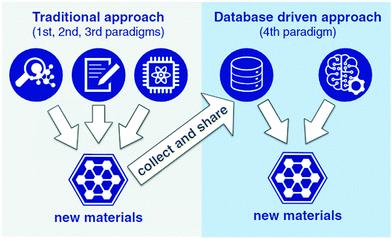
Fig:1 Difference B/W Paradigm approach
International Research Journal of Engineering and Technology (IRJET) e-ISSN: 2395-0056
Volume: 12 Issue: 08 | Aug 2025 www.irjet.net p-ISSN: 2395-0072
discovery in science using AI
Physics- and structure-based data-driven approaches
Engineeringandscientificmodellingfacechallengeswhen relying solely on data-driven methods, as they may not account for all relevant factors. To address this, researchers are increasingly combining data-driven approaches with established physical principles, like conservation laws such as energy conservation and maximum entropy. This mixed approach aims to enhance the reliability of results by integrating fundamental scientificconcepts.
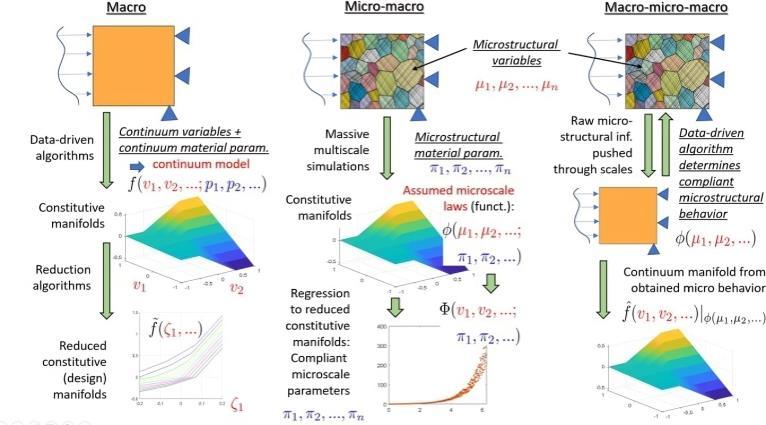
Traditionally, modelling follows either a macro or micromacro approach. In a macro approach, everything is analysed at a large-scale continuum level. In contrast, micro-macro (structure-based) methods define relationships at the microscopic level based on material properties. A more advanced macro-micro-macro approach works slightly differently. Instead of defining properties at the microscale, it establishes connections between microscopic mechanical variables. These relationships are then applied at the continuum level, linkingthemtolarger-scaleproperties.Atthisstage,datadriven techniques determine how the system behaves at bothmicroandmacroscales.
Data-driven approaches in solid mechanics. Macro (left): variables and possible parameters are macroscopic; data-driven procedures determine the constitutive/designmanifoldsfromobservedmacroscopic behaviour. Micro-macro (center): a model for the microscopic behaviour is used, with material parameters meaningful at themacroscopic scale. Massive simulations are performed to develop either micro or macro constitutive manifolds as a function of parameters at themicro scale. Reduced representations may be used at any level. Macro-micro-macro (right): Minimal microscopic information is used (e.g., the material structure), assumed constitutive laws are avoided. The raw kinematic microstructural dependencies are pushed to the continuum scale, carrying the microstructural variables.Compliantmacro-microbehaviourisobtainedat thecontinuumlevel,solvingbothbehavioursatonce.
The availability of curated labelled and unlabelled data in the chemical sciences is very large compared with some other physical sciences. Since its origins many decades ago, theChemical Abstracts Servicehas compiled a list of over 144 million known substances, and about 67 million protein andDNA sequences(www.cas.org). More than 15,000 substances are added each day. The size of potential chemical space, however, is overwhelmingly larger than our ability to explore it by hand. Different estimates for the number of chemically accessible molecules range from 1,030 to 10,100. Therefore, the number of possible combinations to explore is very large. Thespeedatwhichdata isbeinggeneratedishigherthan the speed at which we can analyses them. In this regard, data-driven techniques are important, and they are increasingly being used in guessing or narrowing the search for compounds with given desired characteristics This is especially important because even though the numberofpossibletargetshasbeenincreasing,theactual number of new drug launches is decreasing, whereas the costs associated with their development is increasing steadily
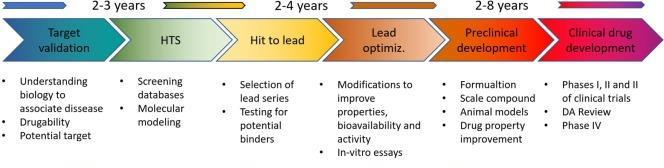
The discovery of new chemical compounds such as small molecule drugs, and the assignment of new application labels to existing ones are very complex processes. Usually, the lack of deterministic approaches to predict performance from structure and the complexity of carrying out discrete optimization over chemical graphs result in very costly trial-and-error tests to arrive at a product with the desired performance. The procedure ofdrug discovery typically follows different stages (1) target validation, (2) primary and secondary assay development (high-throughput screening), (3) hit to lead compound, (4) lead optimization, (5) preclinicaldrug developmentand(6)clinicaldrugdevelopment.
International Research Journal of Engineering and Technology (IRJET) e-ISSN: 2395-0056
Volume: 12 Issue: 08 | Aug 2025 www.irjet.net p-ISSN: 2395-0072
The availability of curated labelled and unlabelled data in the chemical sciences is very large compared with some other physical sciences. Since its origins many decades ago, theChemical Abstracts Servicehas compiled a list of over 144 million known substances, and about 67 million protein andDNA sequences(www.cas.org). More than 15,000 substances are added each day. The size of potential chemical space, however, is overwhelmingly larger than our ability to explore it by hand. Different estimates for the number of chemically accessible molecules range from 1,030 to 10,100. Therefore, the number of possible combinations to explore is very large. Thespeedatwhichdata isbeinggeneratedishigherthan the speed at which we can analyses them. In this regard, data-driven techniques are important, and they are increasingly being used in guessing or narrowing the search for compounds with given desired characteristics. This is especially important because even though the numberofpossibletargetshasbeenincreasing,theactual number of new drug launches is decreasing, whereas the costs associated with their development is increasing steadily
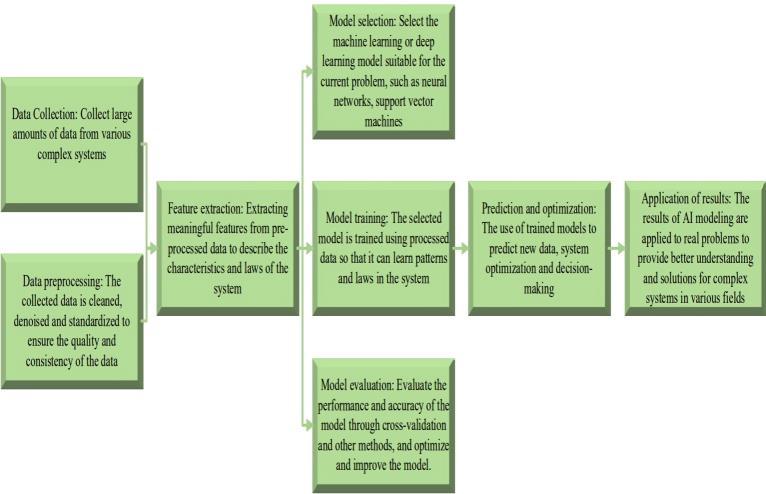
Artificial intelligence has extensive applications in mathematical modelling of complex systems. Through technologies such as machine learning and deep learning, artificialintelligencecanlearnfromlargeamountsofdata and discover patterns and regularities in the system. This ability allows artificial intelligence to better understand and solve problems in complex systems. Implementation flow of artificial intelligence in mathematical modelling of complexsystems.
The advantage of data-driven modelling is its ability to extract the actual behaviour of a system from real data without relying on a priori knowledge of the system or theoretical assumptions. Through a large amount of data observationandanalysis,data-drivenmodellingcanmore comprehensively consider the nonlinearity and complexity of the system, and can capture subtle changes andanomaliesinthesystem.
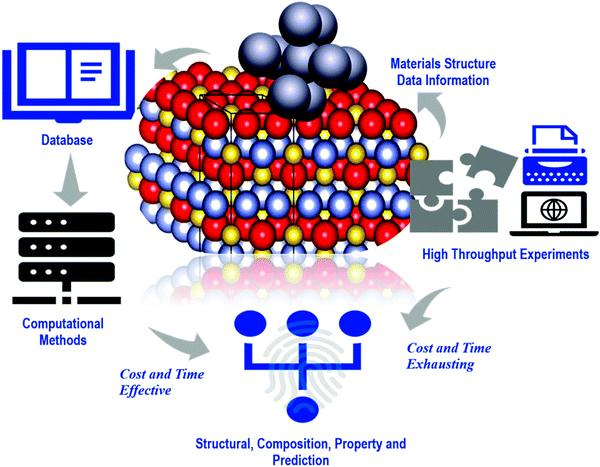
The 21st Century is considered the Century of Big Data. Thechangeofcenturyhasbroughtahistoricchangeinour society. Computers, Internet and the new digital devices are producing a large amount of data. Current computational power and cloud computing also allow for anunforeseennumberofsimulations.However,insteadof being overwhelmed by such amount of raw information, we are learning how to take advantage of the new paradigm. Software companies have taught us that much benefit and key information may be obtained from data analytics.Then,wearelearningnewwaysofdoingthings, amongthem,scienceandengineering.
Data-driven procedures focus on data and try to extract variables and relations directly from raw data, giving frequently more accurate responses without the use of
International Research Journal of Engineering and Technology (IRJET) e-ISSN: 2395-0056
Volume: 12 Issue: 08 | Aug 2025 www.irjet.net p-ISSN: 2395-0072
classical analytical laws and equations. However, many openquestionsremain,andinsomeoccasions,drawbacks havebeenfoundasthelackoffulfilmentofsomephysical principles. Then, new physics-based data-driven proceduresaregettingin
[1] Montáns, F. J., Chinesta, F., Gómez-Bombarelli, R., & Kutz, J. N. (2019). Data-driven modeling and learning in science and engineering. ComptesRendusMécanique, 347(11),845-855.
[2] Singh, V., Patra, S., Murugan, N. A., Toncu, D. C., & Tiwari, A. (2022). Recent trends in computational tools and data-driven modeling for advanced materials. MaterialsAdvances, 3(10),4069-4087.
[3]Rovinelli, A., Sangid, M. D., Proudhon, H., & Ludwig, W. (2018). Using machine learning and a data-driven approach to identify the small fatigue crack driving force in polycrystalline materials. npj Computational Materials, 4(1),35.
[4] Bessa,M.A.,Bostanabad,R.,Liu,Z.,Hu,A.,Apley,D.W., Brinson, C., ... & Liu, W. K. (2017). A framework for datadrivenanalysisofmaterialsunderuncertainty:Countering the curse of dimensionality. Computer Methods in Applied MechanicsandEngineering, 320,633-667.
[5] Paulson, N. H., Priddy, M. W., McDowell, D. L., & Kalidindi, S. R. (2018). Data-driven reduced-order models for rank-ordering the high cycle fatigue performance of polycrystalline microstructures. Materials & Design, 154, 170-183.
[6] L. Himanen, A. Geurts, A. S. Foster and P. Rinke, DataDriven Materials Science: Status, Challenges, and Perspectives, Adv.Sci.,2019,(6),1900808
[7] K. Yang, C. Oses and S. Curtarolo, Modeling OffStoichiometryMaterialswithaHigh-ThroughputAb-Initio Approach, Chem.Mater.,2016,28(18),6484–6492
[8] J. E. Saal, S. Kirklin, M. Aykol, B. Meredig and C. Wolverton, Materials Design and Discovery with HighThroughput Density Functional Theory: The Open Quantum Materials Database (OQMD), JOM, 2013,65(11), 1501–1509
[9] Ibáñez, R., Abisset-Chavanne, E., González, D., Duval, J. L., Cueto, E., & Chinesta, F. (2019). Hybrid constitutive modeling: data-driven learning of corrections to plasticity models. InternationalJournalofMaterialForming, 12,717725.
[10] Amores, V. J., Benítez, J. M., &Montáns, F. J. (2019). Data-driven, structure-based hyperelastic manifolds: A macro-micro-macro approach. arXiv preprint arXiv:1903.11545



M.Devuja Assistant Professor of Physics. Qualified M.Sc.,B.Ed.,TSSET. As Working at Priyadarshini Govt Degree College for Women Gadwal Since 2009 till Date and also Experience16Years.
B.Jagan Mohan Lecturer in Mathematics. Qualified M.Sc.,B.Ed and Pursuing Ph.D in Mathematics Background. Present working at Priyadarshini Govt Degree College for Women Gadwal. Total 18 Years of experience as a lecturer. Published1ResearchPaper.
S.Sai Teja Lecturer in Computer Science and Applications. Qualified M.Sc.,UGC NET.Working at Priyadarshini Govt Degree College for Women Gadwal.Total 2 years of Experience as a Lecturer.Published 2 Research Papers.