
International Research Journal of Engineering and Technology (IRJET) e-ISSN: 2395-0056
Volume: 12 Issue: 06 | Jun 2025 www.irjet.net p-ISSN: 2395-0072
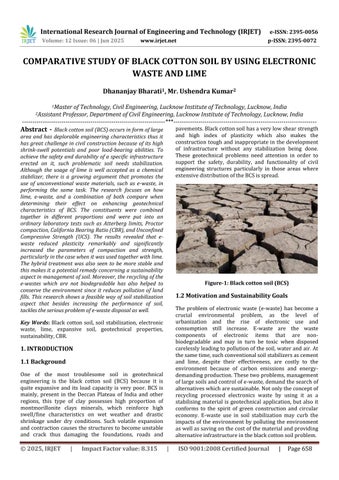
International Research Journal of Engineering and Technology (IRJET) e-ISSN: 2395-0056
Volume: 12 Issue: 06 | Jun 2025 www.irjet.net p-ISSN: 2395-0072
Dhananjay Bharati1, Mr. Ushendra Kumar2
1Master of Technology, Civil Engineering, Lucknow Institute of Technology, Lucknow, India
2Assistant Professor, Department of Civil Engineering, Lucknow Institute of Technology, Lucknow, India
Abstract - Black cotton soil (BCS) occurs in form of large area and has deplorable engineering characteristics thus it has great challenge in civil construction because of its high shrink-swell potentials and poor load-bearing abilities. To achieve the safety and durability of a specific infrastructure erected on it, such problematic soil needs stabilization. Although the usage of lime is well accepted as a chemical stabilizer, there is a growing argument that promotes the use of unconventional waste materials, such as e-waste, in performing the same task. The research focuses on how lime, e-waste, and a combination of both compare when determining their effect on enhancing geotechnical characteristics of BCS. The constituents were combined together in different proportions and were put into an ordinary laboratory tests such as Atterberg limits, Proctor compaction, California Bearing Ratio (CBR), and Unconfined Compressive Strength (UCS). The results revealed that ewaste reduced plasticity remarkably and significantly increased the parameters of compaction and strength, particularly in the case when it was used together with lime. The hybrid treatment was also seen to be more stable and this makes it a potential remedy concerning a sustainability aspect in management of soil. Moreover, the recycling of the e-wastes which are not biodegradable has also helped to conserve the environment since it reduces pollution of land fills. This research shows a feasible way of soil stabilization aspect that besides increasing the performance of soil, tackles the serious problem of e-waste disposal as well.
Key Words: Black cotton soil, soil stabilization, electronic waste, lime, expansive soil, geotechnical properties, sustainability,CBR.
1.1
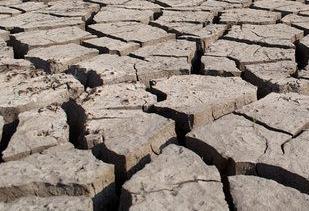
One of the most troublesome soil in geotechnical engineering is the black cotton soil (BCS) because it is quite expansive and its load capacity is very poor. BCS is mainly, present in the Deccan Plateau of India and other regions, this type of clay possesses high proportion of montmorillonite clays minerals, which reinforce high swell/fine characteristics on wet weather and drastic shrinkage under dry conditions. Such volatile expansion and contraction causes the structures to become unstable and crack thus damaging the foundations, roads and
pavements.Blackcottonsoilhasaverylowshearstrength and high index of plasticity which also makes the construction tough and inappropriate in the development of infrastructure without any stabilization being done. These geotechnical problems need attention in order to support the safety, durability, and functionality of civil engineering structures particularly in those areas where extensivedistributionoftheBCSisspread.
The problem of electronic waste (e-waste) has become a crucial environmental problem, as the level of urbanization and the rise of electronic use and consumption still increase. E-waste are the waste components of electronic items that are nonbiodegradable and may in turn be toxic when disposed carelesslyleadingtopollutionofthesoil,waterandair.At thesametime,suchconventionalsoilstabilizersascement and lime, despite their effectiveness, are costly to the environment because of carbon emissions and energydemandingproduction.Thesetwoproblems,management oflargesoilsandcontrolofe-waste,demandthesearchof alternativeswhicharesustainable.Notonlytheconceptof recycling processed electronics waste by using it as a stabilising material is geotechnical application, but also it conforms to the spirit of green construction and circular economy. E-waste use in soil stabilization may curb the impacts of the environment by polluting the environment aswellassavingonthecostofthematerialandproviding alternativeinfrastructureintheblackcottonsoilproblem.
International Research Journal of Engineering and Technology (IRJET) e-ISSN: 2395-0056
Volume: 12 Issue: 06 | Jun 2025 www.irjet.net p-ISSN: 2395-0072
In this study, the researcher intends to explore the use of electronic waste and lime as black cotton soil stabilizer whenusedaloneandincombination.Itaimsatcomparing the geotechnical characteristics of the untreated BCS to that one treated with lime, e-waste, and combination of both in terms of plasticity, characteristics of being compacted, and strength of the grounds. This research aims at measuring the effects of each of the stabilizers on thebehaviorofthesoilincontrolledlabenvironmentand to identify whether a synergistic effect is attained when lime and e-waste are combined. The study will equallybe usedtodeterminethepossibleusefulnessofe-wasteasan alternative sustainable and environmentally-friendly solution to conventional soil stabilisers by using it in the improvement of soil as well as waste disposal in civil engineering.
Blackcottonsoil(BCS)isasocommonlyfoundsoiltypein India and this type of soil is most predominant in the Deccanplateaualongwith thecentral andsouthernIndia. It is dark in color and contains lots of clays especially montmorillonite that produces excessive shrink-swell properties when the moisture increases and decreases. Duringsuchdryperiods,thesoilshrinksresultingintothe developmentwidecracksandduringthewetseasons,soil swells up due to water absorption causing the ground to heave. This voluminous character causes high structure instability of foundations, roads and pavements set up on untreated of BCS. It also includes the soil which is of high plasticity index and low shear strength, poor drainage capacityandlow bearing strengthand thereforeitcannot be used directly in construction. Such geotechnical constraints warrant the use of stabilization methods in enhancingitsstrength,workabilityaswellasdurability.
Inordertoenhancetheperformanceofweaksoilssuchas the black cotton soil, all kinds of stabilizers have been applied where the prominent ones are the lime and cementtype.Limestabilizationisproficientinclayeysoils because: (i)pozzolanic reactions and cation exchange processes take place and (ii) the plasticity reduces, compaction level increases and the strength of the soil increases.Whenthelimeisaddedtothesilicaandalumina (that is found within the soil), cementitious compounds are manufactured which increases the load-bearing capacityanddecreasingvolumetricsusceptibility.Cement also works through hydration of the soil particles as well asbindingtheparticlestogethertoforma rigidstructure. Itgreatlyincreasesthecompressivestrengthofthesoilof durability. Nevertheless, both of these materials have
environmental negatives especially the cement that is linked to high levels of carbon dioxide emission. Though lime is more sustainable compared to CO2 almost its intense applications require close consideration on the environment. Although they are effective materials, the useoflimeandcementinthelongrunhasmadetheircost and environmental implication to lead to the quest of alternativeandsustainablematerials.
E-wasteorelectronictrashhasbecomeanewissueasthe world gravitates towards e-waste problems due to the increasing rate of electronic use and the unsustainable method of e-waste disposal. E-wastes normally contain plastics,ceramics,andmetalswhicharenotbiodegradable thus they pose a major threat to the environment and human health when disposed in landfills. In the recent years, some studies have been done to determine the possibility of using e-waste in civil engineering projects andpossiblewaystouseitinsoilstabilization.Afterbeing crushedandsuitablyprocessed,thee-wastematerialsthat include printed circuit boards, plastic cases and glass particles can be added to the soil in order to enhance its mechanical properties. The materials can be used to diminish plasticity, raise dry density, and enlarge shear strength, since it offered structural resistance and better interlocking of particles. Most of the chemicals contained in e-wastes are inert and non-reactive and hence can be used as fillers in the expansive soils. Further, when ewaste is used along with conventional stabilizers such as lime,ithasprovedtohelpinincreasingthestrengthofsoil as well as decreasing the effect of moisture sensitivity. In this way, there are two potentialities of using a combination of e-waste to geotechnical applications: increasing the behavior of soils and achieving sustainabilityinwastemanagement.
Although the topic of efficient methods of sustainable managementof soilshasbecomemostlypopular,a gap in literature exists on the use of lime and electronic wastes combined in the black cotton soil treatment. Majority of studies have treated the separate outcome of stabilizer, either lime or e-waste, without taking a proper look into thesynergisticactionoflimeande-waste.Thisisaserious omission, since lime as a chemically active substance combined with the physical effects of e-waste could produce even better outcomes in the sense that the stabilizationofthesoilswill be established.Further, most of the laboratory experiments show the geotechnical enhancement over the short-term period, but few numbers of records can be found of how such stabilized soilsbehave,howlongitwilllast,andwhetheritissafeto the environment, over a long period. The leachability of the dangerous materialsin e-waste and itsinterminglings with natural soil in long periods of time has not been
International Research Journal of Engineering and Technology (IRJET) e-ISSN: 2395-0056
Volume: 12 Issue: 06 | Jun 2025 www.irjet.net p-ISSN: 2395-0072
comprehended. In addition, there is a limited practice in the field application and majority of the results are spent onamorecontrolledareaorlaboratoryset-upwhichdoes not accommodate changes in site conditions like climate, intensityoftheloadsandsoilheterogeneity.Thismakesewaste lime stabilization processes ineffective due to lack of field trial and evaluation of environmental risk when adopting such practices. This necessitates an urgent need to have a detailed, regional, and long-term studies that would determine the feasibility and the safety of using a mixtureoflimeandelectronicwastetostabilizeexpansive soilssuchastheblackcottonsoil.
3.1 Materials Used
3.1.1
The black cotton soil that was used in the present study was obtained at a place that had highly clay content and expansive behavior hence taking a depth of about 1.5 meters to eliminate surface organic matter. It is a characteristic soil in Deccan Plateau and is characterised byswelling-shrinkage wheremontmorillonitetypeofclay mineralsarepresent.Excavatedsoilwasdriedintheform of air, pulverized, and sifted using 4.75mm IS sieve to make them homogeneous to eliminate gravel or foreign materials. The simple geotechnical properties were identified according to the IS standards. Its liquid limit was determined to be 68 %, plastic limit 32 % and their plasticity index 36 % which confirmed that the soil was highly plastic. The total moisture content of the soil was 2.65, the desired moisture content was at 22.5 and the maximum dry density was 1.48 gr/ cu centimeter. Such characteristics signal that the soil falls into CH group according to the Unified Soil Classification System and it cannot be used as construction works as it is until it is stabilized.
3.1.2
In this research, hydrated lime (Ca(OH) 2 ) which has the abilityofenhancingthepropertiesofblackcottonsoilwas usedinstabilizingthesoil.Thelimewasobtainedinform ofcertifiedcommercialsupply,anditwasaccordingtothe IS 1514-1990. The later was determined by X-ray fluorescence analysis to have 72.5 percent calcium oxide (CaO), 2.3 percent magnesium oxide (MgO), 1.4 percent silica (SiO 2 ), 0.8 percent alumina (Al2O 3 ) and 0.5 percentironoxide(Fe2O3).Thismadethevaluesensure high pozzolanic strength when the lime was combined with the reactive clays of the soil making the strength higherandplasticitylow.
Table -1: Chemical Composition of Hydrated Lime.
Electronic waste material that were used in the research wasnon-hazardouswasteintheformofshreddedprinted circuit boards (PCBs) and plastic casing and other recyclable wastes obtained after use of some electronic devices. These e-wastes were gathered in the local recycling centers and repair markets. The e-waste was clean and processed with a process that included removing the hazardous waste such as batteries and capacitors, crushing and grinding the remaining componenttoaparticlesizeoflessthan2mmandsifting using a 4.75 mm sieve. This was uniform in size to make them mix well with soil. The processed e-waste took the role of being mainly a physical stabilizer making the soil havemorecompactionandstrengthpropertiesinaddition tocounteringtheproblemofe-wastedisposal.
The work consisted of making several samples of stabilizedsoilwithdifferentratiosofthesecomponentsof lime and e-waste separately and in parallel with each other. A control sample of black cotton soil which was untreated was assigned the name S0. Samples that containedan onlyaddition oflimeweredesignatedas L2, L4,andL6 thatimply2%, 4 %and 6 %limecontent on a dryweightbasisofthesoil.Inthesameway,E5,E10,and E15 meant the 5 percent, 10 percent and 15 percent ewaste sample, respectively. Derived hybrid samples that wereaddedtolimeande-wastewerecodedtoLE2E5(2% lime + 5% e-waste), LE4E10 (4% lime + 10% e-waste), and LE6E15(6% lime + 15% e-waste). These ratios of mixeshavebeenselectedonthebasisofliteraturesurvey andpilottests whichare expected to resultin monitoring ofeffecteachofthetwostabilizersandsynergisticeffectof themonengineeringbehaviorofblackcottonsoil.
Four major laboratory tests were carried out following Indian Standard (IS) specification to ensure that the investigation of the geotechnical behavior of black cotton
International Research Journal of Engineering and Technology (IRJET) e-ISSN: 2395-0056
Volume: 12 Issue: 06 | Jun 2025 www.irjet.net p-ISSN: 2395-0072
soilundertheinfluenceoflimeandelectronicwastecould bemade.
Atterberg Limits Test were performed according to IS 2720 (Part 5) to obtain the value of plastic and liquid limits of soil and using which plasticity index (PI) was obtained.AdecreaseinthePImeansahighersoilstability andlesspotentialofswelling.
Each sample was provided with an Optimum Moisture Content (OMC) and Maximum Dry Density (MDD) as a result of the Standard Proctor Compaction Test that was carried out in compliance with the IS 2720 (Part 7). This test assisted in establishment of the most effective moisture content of the maximum compaction and density.
This was done in accordance with the IS 2720 (Part 16) under the California bearing ratio (CBR) Test, which considered the load bearing capacity of both the treated and the untreated samples of the soils at the condition of soaked and unsoaked state. It is a very important parameter of assessing the comfortableness of subgrade soilsinconstructionofpavements.
At a 7-day and 28-day curing interval, the results of the compressive strength test carried out on the cylindrical sample of soil and in accordance with IS 2720 (Part 10) were measured by the Unconfined Compressive Strength (UCS) Test. UCS values give the direct measure of resistanceofsoiltodeformandaxialstress.
The soil samples prepared were then compacted into three layers of 25 blows each using 2.6kg rammer using StandardProctorcompactionasprovidedinIS2720(Part 7).The samples were compactedatits optimum moisture contents to obtain similar density. Compacted specimens were then removed out of the mold and were enclosed in airtight containers or curing rooms with 27 02/2 as the temperature and 95 as the humidity percentage. At this controlled environment moisture level was maintained stable and the pozzolanic reactions were enhanced, especially in the lime-treated samples. Such strength relatedtestslikeUCS,CBR were carried out bycuring the samples after a curing time of 7 days and 28 days of curing, and thereby testing with the result on early performance as well as long term performance of stabilization. Curing time is very important because it determines the strength increase of pozzolanic and structural bonding process especially those that have undergoneamixtureoflimeande-waste.
Atterberg limits of black cotton soils (BCS) play an extreme role in determination of plasticity and consistency behaviour of the soil at different moisture contents.Therawsoilhadliquidlimitvalueof68percent, plastic limit value of 32 percent and therefore plasticity index (PI) value of 36 percent which proves that the soil falls under clay of highly plastic type (CH). On lime stabilization,therewassignificantdecreaseinthevalueof plasticity owing to cation exchange process and reaction betweenlimeandclayminerals.Whenthecontentoflime was6percent(sampleL6),thePIwassubstantiallylower which means that the workability became better and the potentialofswellingandshrinkingdecreased.
Thecontributionsduetotheinclusionofelectronicwastes (e-waste) as the sole input factor also resulted in drop of the PI although not as substantial as the contribution by lime. E-waste is non-cohesive and inert and, therefore, lowered the general plasticity of the soil by breaking the clay framework physically. As an example, the treatment of soil with 15% e-waste (E15) led to the moderate decreaseinthePIcomparedtotheuntreatedsoil.Butuse of hybrid samples especially LE6E15 where combination of 6 and 15 percent of lime and e-waste respectively contributedthemosttothereductionofplasticityinthese samples.Thissynergistic effectalso reduced the moisture sensitivity of the soil and, therefore, it improved dimensional stability and proved to ensure mutually reinforcing effects of chemical and physical stabilisation processes.
The Standard Proctor test was adopted to evaluate the characteristics of compaction, that is, Maximum Dry Density (MDD) and Optimum Moisture Content (OMC). The untreated black cotton soil had the MDD of 1.48 g/cc and the OMC of 22.5 percent. On lime addition the OMC was increased, but the MDD was lowered a bit. Such change has been attributed to the flocculation of the clay particles which smack down the density of the soil and also made it more in need of water in order to be able to have the right compacting. As an example, the sample L6 (6 percent lime) increased OMC and experienced a minor decreaseinMDDasopposedtothecontrolsample.
As a contrast, the e-waste addition caused a contrary trend. By the reason that processed e-waste is inert and granular,theMDDincreasedmarginallyandOMCreduced largelyintheE10andE15samples.E-wasteimprovesthe soil structure because the granular particles used in ewaste contribute to filling the soil mix and therefore, enhancesthesoilcompactionwiththeapplicationoflittle extramoisture.
International Research Journal of Engineering and Technology (IRJET) e-ISSN: 2395-0056
Volume: 12 Issue: 06 | Jun 2025 www.irjet.net p-ISSN: 2395-0072
Hybridsamplesturnedouttobethemostbalanced.Mixes LE4E10 and LE6E15 mixtures were good in terms of compaction properties with optimum density and reasonable moisture content. The findings obtained indicate that lime and e-waste combination may be adjusted to provide optimum compaction characteristics thatmaybeusedinsubgradeandpavementformations.
Table-2: Compaction Characteristics of BCS with Different Stabilizer Combinations.
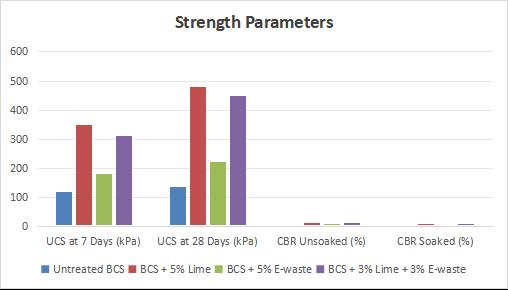
Theparametersofstrengthsweredeterminedonthebasis of Unconfined Compressive Strength (UCS) and California BearingRatio(CBR)testsat 7and 28 days of curing. This is because the values of UCS and CBR performed at low valuesof57KN/m2and 14.82percent respectively when measuredina blackcotton soilthathadnot beentreated. When lime was added, the UCS increased with time of curing; especially when there were pozzolanic reactions that formed as a result of curing. The UCS of sample L6 recorded the highest point compared with lime only mixturesonthe28thday.
Onthesamenote,strengthwasenhancedbyadditionofewaste to some level. There were observable improvementsinthevaluesofUCSandCBRusingtheE10 and E15 samples in that there was enhancement of the interparticle friction and that the bulk density also improved. Most important increases in strength were, however, registered in hybrid samples. Contrary, LE6E15 containing the maximum percentage of lime and e-waste mixture had the highest value of UCS and CBR in all the categoriesoftest.
These findings confirm that combining lime and e-wastes alsomakethesoilstrongbesidesbeingdurableenoughto be used in the heavy traffic areas like subgrades and backfillsoffoundations.
Whatthefindingsillustrate isthattherearetwo different stabilization mechanisms in action that are chemical stabilizationbyusinglimeandphysicalstabilizationusing e-waste. As a reactive chemical compound, lime also performs exchange with clay minerals, through which flocculation of the clay minerals, cementation of the concrete by cementitious compositions is developed due to the pozzolanic interaction. Through these activities the soilstructureisbetter,theplasticityisdecreasedandafter a period of time the strength enhances greatly. This techniqueisveryusefulbutmostlyrequiresworkmanship andslowcuringtimetoachievefullcapacity.
E-waste on its side works by a physical contribution. The presence of inert and crushed e-waste pieces (fragments of plastics and ceramics) cannot be ignored to change the wateraffinityofsoil,interlockingofparticles,andthelevel of compaction. In spite of having no reaction, e-waste altersthesoillattice,fillingtheporespacesandenhancing theobstacletodeformation.
A combination of lime and e-waste presents a multi seizuresolutionofthegeotechnicalproblempresentedby black cotton soil. The soil stabilization uses the chemical process of lime along with the structural benefit that the useof e-waste ridesontoenhancethestabilizationof the soilbetterthanwhatusingeachadditiveseparatelywould do.Notonlyisthissynergytechnologicallycompetent but it also happens to be economically and environmentally worthwhile as well. It offers an economic mechanism of recycling toxic e-wastes and enhancing the engineering actionofsoilsproblem.
Asamatteroffact,suchadualstabilizationsolutionhasa tremendous potential in terms of rural and semi-urban infrastructure construction in the environments with black cotton soil and areas of waste management problems. The project will be advantageous in terms of using e-waste as a viable additive and promoting further projects that call for its inclusion as possible input in
International Research Journal of Engineering and Technology (IRJET) e-ISSN: 2395-0056
Volume: 12 Issue: 06 | Jun 2025 www.irjet.net p-ISSN: 2395-0072
stabilization
Use of electronic waste (e-waste) in soil stabilization is beneficial in two aspects i.e. it not only improves the geotechnical characteristics but also combats the environmentalpollution.E-wastewhichismostlymadeof non-biodegradable materials such as plastics, ceramics, and shredded circuit boards, is one of the rapidly increasingwasteflowintheworld.Thetraditionalwaysof taking care of the garbage, such as taking it to land and burning, are risky to the environment since they may emanate dangerous heavy metals and unwanted organic reagents. This paper proves that processing noncontaminated parts of e-waste and utilizing them in civil workslikesoilstabilizationisoneofthesolutionsthatcan be used to limit the negative impact of using electronic wasteovertheenvironment.
Recycling of the e-waste in black cotton soil stabilization will directly lead to the decrease in landfill pressure and, instead, establish the process of the circular use of resources. Specifically, plastic casing as well as fragments ofPCB,which,ontheirownwouldtakehundredsofyears to be degraded in the environment are used so as to enhance the durability and mechanical strength of expansive soils. Moreover, the switch of part of the traditionalstabilizers,suchascement,andlime,whichare hard on the energy and emit carbon, with processed ewaste reduces the number of carbon emissions in constructionprojectsconsiderably.Therefore,thestrategy is within the scope of the world expectations of sustainable construction, waste reduction, and green materialdevelopment.
Theresultsofthestudyshowthattreatedblackcottonsoil did not show much change in geotechnical behavior and wasuplifted toa great extent byadding a mixtureoflime and e-waste. The stability of the stabilization method in pioneer laboratory circumstances brings up potential prospects in utilizing it on a large basis especially in the development of its infrastructure in territories that are majorly characterized by expansive soils. In India, the regionsaffectedwithblackcottonsoilsareintheruraland semi-urban places, where one encounters problems with soil instability and a deficient system of balancing the same economically. The use of e waste in this kind of situationsdoesnotonlyofferthetechnicaladvantage,but also offers an economic advantage through cost savings
since there will be less use of commercially obtained stabilizers.
Crushed plastics, circuit board fragments and other processed e-wastes used in this paper are relatively abundant,lowcostandcanbeeasilyobtainedattheurban recycling streams. The latter makes them a marketable product to the public works departments, the highway authorities, as well as a local municipality in terms of sustainable materials in their road subgrades, embankments and probably the low-volume rural roads. This method of stabilization can be well expanded after instituting proper regulatorymeasures and procedures of qualitycontrolandstandardizedprocessingprocedures.It is a chance of synergy between the field of waste management and civil construction industry and hence acts as a double benefit in material recovery on one hand andthebuildingoflonglastinginfrastructureontheother.
Although the multiple benefits associated with the use of e-waste in geotechnicalengineering exist, the issue of environmental safety (leaching of heavy metals) does occur and should be mentioned as well. Despite the intention of the handlers of e-waste to avoid dangerous elements like the batteries, capacitors, and the use of elements that are chemically reactive during e-waste processing, the problem of e-waste is heterogeneous and quite unpredictable at any time distance. Although the non-toxic non-reactive fractions employed here did not showanyimmediateleachinginlaboratoryenvironments, the environmental behavior in an attenuated long-term environmentofsuchsubstancesintheenvironmentunder variable conditions-wet-dry cycle, temperature variance and ground water interaction, among others-is yet to be studiedadequately.
Adequate research needs to be conducted to evaluate the leachate properties, toxicological effects, and any retractant chemical behavior due to organic soil moisture andrealisticrestraintexposurestomaketheutilizationof e-waste become wide spread and safe. Long-term studies shouldalsobeplacedonstabilizedsoilsinfieldsatvarying climaticconditionsandthisshouldbedonewiththeuseof field-scalestudiesandpilotprojects.Besides,thebehavior of sorting, treating and encapsulating the materials must bestandardizedtoreducethechancesofcontaminationto the environment. The future studies are not merely essentialtovalidatehoweffectivethistechniquewillbein thelong-term,butalsotosecurethetolerationoftherules of environmental protection, as well as the requirements ofthehumanhealth.
To sum it up, although such a solution as the reuse of electronic waste in stabilizing black cotton soil can be considered very innovative and environmentally friendly,
International Research Journal of Engineering and Technology (IRJET) e-ISSN: 2395-0056
Volume: 12 Issue: 06 | Jun 2025 www.irjet.net p-ISSN: 2395-0072
its application on the scale should include well-grounded environmental studies and regulatory control. This practicehasthepotentialtobecomeawidespreadpractice through sustained interdisciplinary research and help people to continue the work of ecological conservation andresilienceofinfrastructure.
Theresearchpaperhasdiscussedanewerandsustainable method of stabilizing a black cotton soil through the incorporationoftheelectronicwaste(e-waste)alongwith the traditional lime treatment method. Poor engineering properties of black cotton soil like high plasticity, and shrink-swell propensity and low bearing capacity make it cause lots of difficulties in the implementation of civil engineering. By a selection of routine laboratory tests, i.e. Atterberg limits, Proctor compaction, California Bearing Ratio (CBR) and Unconfined Compressive Strength (UCS), it was noted that the addition of lime and e-waste either separately or in hybrid systems resulted in a significant increaseinthegeotechnicalpropertiesofthesoil.
The pozzolanic reactions with high degree of strength improvement were apparent when only lime stabilization was applied as a dislocator of plasticity. Incorporation of e-waste as a stabilizing material helped to increase compaction and mechanical interlocking thus, increasing densityandstrengthaswellasprovidingafeasiblewayof waste re-use. The greatest performances were recorded when the stabilizers were combined and the hybrid mixtures exhibited synergistic effect which performed betterinregardtostrength,durabilityandworkability.
Onthewhole,thepresentstudygivesstrongargumentsto showthattheincorporationofe-wasteinsoilstabilization activities does not only improve the engineering performance of expansive soils but also facilitates environmental sustainability due to the reduced need to bringdownwastestoalandfillsiteandcarbonemissions. The results create an opportunity to develop green and economicalinfrastructure,particularly,inareaswithblack cottonsoildominant.
Although the promising findings have been recorded in the study, a number of limitations are to be taken into consideration. Primarily, the research studies conducted were at a laboratory level and it dealt with controlled experiments. Although such tests provide meaningful information,inasmuchastheyindicatethesuccessfulness of lime and e waste in stabilizing soil, such tests may not comprehensively incorporate the complexities and changes that present themselves in the field settings. It is not clear what long term stabilized soils with particular attention to e-waste content will behave in respect to the
cyclicweatherenvironment,thechangingloadandnatural ageing.
Also,inspiteofthehazardouspartsbeingleftoutofthisewaste study, leaching of the toxins could not be assessed criticallythroughalongperiod.Afterselectingthee-waste material to be used in soil, then environmental safety of this practice should be strictly evaluated by carrying out leachate test and long-term field observation studies to have a conformance to ecological demand and health requirements of people. The second limitation is the unevenness of the composition of e-wastes, which may cause the inconsistency and the lack of reproducibility of findings unless tailored processing procedures are implemented.
Finally, the results of the present research are localized andrefertoonekindofblackcottonsoil.Theresultsofthe stabilization procedure can be variable in the case of application to the soils of different mineralogical or physicalcharacteristics.Itthusbecomesnecessarytohave wider researches that will help in generalizing and confirming the applicability of this technique in different soiltypesandenvironmentalconditions.
[1]S.R.Bell,“Stabilizationofexpansiveclayswithcement and lime,” Transportation Research Record, vol. 1836, no. 1,pp.34–39,2005.
[2] A. S. Al-Rawas and H. Goosen, Expansive Soils: Recent Advances in Characterization and Treatment, CRC Press, 2006.
[3] B. K. Shrivastava and A. K. Yadav, “Behavior of black cotton soil stabilized with fly ash and lime,” International Journal of Civil Engineering Research, vol. 7, no. 2, pp. 105–110,2006.
[4] S. Kumar and J. P. Sharma, “Soil stabilization using wastefibermaterials,”IndianHighways,vol.35,no.8,pp. 31–40,2007.
[5]M.A.MohamedandA.M.Yasser,“Performanceoflime stabilized soils under dynamic loading,” Geotechnical and GeologicalEngineering,vol.26,no.3,pp.327–334,2008.
[6]R.K.SharmaandB.V.Rao,“Useofplasticwasteinsoil stabilization,” International Journal of Earth Sciences and Engineering,vol.3,no.6,pp.911–915,2009.
[7] R. Bhuvaneshwari, R. G. Robinson, and S. R. Gandhi, “Stabilization of expansive soils using fly ash,” Fly Ash UtilizationProgramme(FAUP),TIFAC,DST,India,2010.
[8]V.N.GopalandP.L.Ram,“Stabilizationofblackcotton soil using lime and cement,” International Journal of
International Research Journal of Engineering and Technology (IRJET) e-ISSN: 2395-0056
Volume: 12 Issue: 06 | Jun 2025 www.irjet.net p-ISSN: 2395-0072
Engineering Research and Applications, vol. 2, no. 6, pp. 1592–1596,2011.
[9]J.R.SinghandM.Gupta,“Comparativestudyofcement and lime stabilization of black cotton soil,” Indian GeotechnicalJournal,vol.42,no.1,pp.59–66,2012.
[10] S. K. Patel, A. Yadav, and M. K. Verma, “Utilization of shredded plastic waste in black cotton soil,” International Journal of Engineering Research and Development, vol. 6, no.5,pp.31–37,2013.
[11] B. Raj and P. Singh, “Effect of lime on engineering properties of black cotton soil,” International Journal of Engineering Research and Technology, vol. 3, no. 11, pp. 206–210,2014.
[12] A. K. Mishra and R. K. Mehta, “Stabilization of black cotton soil with industrial wastes: A review,” Journal of Civil Engineering and Environmental Technology, vol. 2, no.3,pp.231–235,2015.
[13] R. Jain and D. Sharma, “Experimental study on stabilization of black cotton soil using electronic waste,” InternationalJournalofAdvancedResearchinEngineering andTechnology,vol.6,no.2,pp.110–118,2016.
[14] M. K. Ramesh and V. Manju, “Performance of lime treatedblackcottonsoil undercyclicwettinganddrying,” GeotechnicalandGeologicalEngineering,vol.34,no.4,pp. 1235–1243,2016.
[15] N. S. Kumar and R. Arora, “Stabilization of expansive soils using e-waste and fly ash,” International Journal of Innovative Research in Science, Engineering and Technology,vol.6,no.3,pp.5231–5239,2017.
[16] P. D. Patel and K. C. Raval, “Use of plastic e-waste in subgrade soil for pavement construction,” International Journal of Civil Engineering and Technology, vol. 8, no. 3, pp.450–456,2017.
[17] V. R. Singh and A. Singh, “Experimental investigation onblackcottonsoilstabilizedwithe-waste,”International Research Journal of Engineering and Technology, vol. 5, no.4,pp.1115–1121,2018.
[18] A. R. Deshmukh and K. R. Jain, “Effect of lime and shredded e-waste on CBR of black cotton soil,” Journal of Civil Engineering and Environmental Technology, vol. 5, no.6,pp.510–514,2018.
[19] K. Shashidhar and B. N. Rao, “Soil stabilization using e-wasteandlime:Asustainableapproach,” Indian Journal ofGeotechnicalEngineering,vol.9,no.1,pp.27–34,2019.
[20]P.Y.RaoandV.S.Kumar,“Useofindustrialwasteand lime for black cotton soil stabilization,” International
Journal of Geosynthetics and Ground Engineering, vol. 6, no.2,pp.76–83,2020.
[21]M. R.Patel,S.B. Sharma,andH. L.Mehta, “Combined effect of lime and e-waste on UCS of expansive soil,” International Journal of Recent Technology and Engineering,vol.9,no.1,pp.2142–2147,2020.
[22]A. J. Singh andA. Gupta,“A review on stabilization of expansive soil using solid waste,” Materials Today: Proceedings,vol.47,pp.1295–1301,2021.
[23]R.B.GadeandV. T.Patil,“Long-term performance of limestabilizedsoil:Fieldandlabevaluation,”Geotechnical TestingJournal,vol.44,no.3,pp.478–488,2021.
[24] N. K. Sharma and M. Roy, “Application of electronic waste in highway construction: Review and opportunities,”JournalofCleanerProduction,vol.278,pp. 123941,2021.
[25] A. P. Wani and S. S. Dar, “Environmental impact and feasibilityofusinge-wasteingeotechnics,”Environmental Technology&Innovation,vol.23,pp.101735,2022.
[26] S. V. Rao and A. Joshi, “Performance of e-waste stabilized black cotton soil for road subgrade,” Transportation Infrastructure Geotechnology, vol. 10, pp. 143–155,2022.
[27] M. T. Desai, P. S. Dholakia, and H. N. Bhatia, “Fieldscale implementation of e-waste stabilized soil for rural roads,” Journal of Materials in Civil Engineering, vol. 35, no.1,pp.04022490,2023.
[28] A. Jain and S. K. Tripathi, “Sustainable soil stabilization: Synergistic use of e-waste and lime,” ConstructionandBuildingMaterials,vol.365,pp.130078, 2024.
[29]V.K.IyerandR.Kumar,“Futureprospectsofe-waste ingeotechnical engineering: Alifecycleapproach,”Journal ofHazardousMaterialsAdvances,vol.5,pp.100100,2025.