
International Research Journal of Engineering and Technology (IRJET) e-ISSN: 2395-0056
Volume: 12 Issue: 10 | October 2025 www.irjet.net p-ISSN: 2395-0072
International Research Journal of Engineering and Technology (IRJET) e-ISSN: 2395-0056
Volume: 12 Issue: 10 | October 2025 www.irjet.net p-ISSN: 2395-0072
Anjali Tekam1 , Dr. Anil Kumar Suman2
1Final Year Student & M.Tech Transportation Engineering
2Associate Professor & Head Of Department
3Dept. of Transportation Engineering, Shri Shankaracharya Technical Campus (CSVTU), Bhilai, Chhattisgarh, India
Abstract - Asuccessfultransportationsystemcanonlybe achievedbysmartlymonitoringreal-timedataandanalyzing itaccordingtodifferenttrafficfactors.
Itisessentialtocollectcomprehensivetrafficsurveydatato comprehend the actual circumstances, emphasizing management strategies, capacity, operations, and management. Asaresult,theseresearchinitiativeshelpto createefficientstrategiesthatreducetrafficcongestion.
Asaresult,theseresearchinitiativeshelptocreateefficient strategies that reduce traffic congestion. According to the gathereddata,theservicelevelhasbeenassessedbasedon lanewidthandtheintendedservicevolume.Furthermore, the traffic patterns for each road segment are analyzed through a hypothetical analysis study using statistical ttablesapproachandtrafficconversions,whichuncoversthe differences within particular sections and assists in determiningtheAADTvalue,thatis,AverageAnnualDaily TrafficinrelationtoPCU(PassengerCarUnit).Alongwith this, it also helps in deciding the usage of patterns for different classified vehicles, which further helps in highlightingthevariationofmeangroupdatawithrespectto eachotheratthebusiestintersectionofroadcityofRaipur, Chhattisgarh. Thefindingsfrom theresearchindicatethat improving traffic management and control, offering more efficient public transportation alternatives, boosting investment in transport infrastructure, utilizing advanced technologies, and implementing coordinated policies for transportandlanduseareessentialelementsforreducing congestion. This study is based on real-time data taken manuallyfromsitesite-basedvideographysystem.
Key Words: DataCollection,TrafficSurveydata,Passenger CarUnit(PCU), AnnualAverageDailyTraffic(AADT),Peak Hour
Data collection through traffic surveys is essential for thoroughtrafficandtransportationplanning.Gaininginsight into the existing traffic conditions and travel behaviors is crucial for improving traffic and transportation strategies aimedatalleviatingcongestionissues.Thisstudyfacilitatesa properanalysisofdatacollectiontodetermineroadusage
patterns through hypothetical analysis and statistical techniques. The gathered data can be evaluated through variousmethods.Themainobjectiveoftrafficsurveysisto performastudyontrafficvolume.Thisincludesexamining thevarietyofvehiclespresentontheroadduringadefined timeframe.Trafficvolumemaybequantifiedbytheoverall countofvehiclespassingthroughaspecificroadovertime or in relation to passenger car units (PCU) and time. The trendofroadutilizationreflectsatheoreticalexaminationof the Passenger Car Units (PCUs) produced on a particular segment of roadway, considering different times like morningandeveningpeakhours.Thisresearchanalyzesthe patternsofroadusagederivedfromsurveysessions.Given the limited availability of data, the approach taken by the researchermakesthehypotheticalstatisticalt-testespecially appropriate for analyzing these types of data and thus increasesitsefficiency.Additionally,thispaperdescribesthe method for calculating the average annual daily traffic (AADT)throughtheanalysisofthemaximumtrafficvolume observed on a specific day. Focus has also been given to measuringtrafficvolumeandassessingthelevelofservice. Thesignificanceofthisresearchstudyandanalysiswillback smart mobility initiatives rooted in real-time traffic information, enabling the improvement of traffic signal schedules, routing, and public transportation systems, therebyencouragingmoreeffectiveandsustainableurban transit and thus increasing mobility. Charging fees for drivinginbusyareasduringhigh-trafficperiodsencourages people to travel during less crowded times and to use alternativeroutes,whichdirectlyaffectscongestionlevels. Combiningtransportationplanningwithland-usestrategies, including mixed-use developments and transit-oriented design,lessenstheneedforextendedtripsandencourages more sustainable, walkable urban environments. By integratingtechnologicalpolicies,infrastructure,andurban design, city planners, along with relevant research and agencies,seektodevelopsustainablemobilitysolutionsthat significantlyalleviatetrafficcongestion.
UDIT BATRA and MANDAR V. SARODE (RATMIG, 2013, IJAIEM) emphasize the significance of traffic surveys in conductingadetailedanalysisoftrafficandtransportation. Various approaches are employed for traffic surveying,
Volume: 12 Issue: 10 | October 2025 www.irjet.net p-ISSN: 2395-0072
depending on the limited time available for the survey location. Different categories of traffic surveys can be conducted to assess current traffic conditions and travel demand patterns, which aid in developing plans for improvementsintransportationinfrastructure,suchasroad inventorysurveys,classifiedtrafficvolumecountingsurveys, originanddestinationsurveys,householdinterviewsurveys, speed and delay studies, parking surveys, pedestrian surveys, surveys of intermediate public transport operations, and user surveys for intermediate public transport. A Traffic Count Survey using video analysis incorporates cameras with clear visibility and wide-angle lensesthatcoverextensiveareasforresearch,allowingfor precisecountingandclassificationofvehicles,pedestrians, and cyclists. This approach presents several advantages, includingefficientdatacollectionthatminimizeserrors,the ability to observe specific sites such as cycle paths or intersections,andtheprovisionofmultimodaltrafficcounts that include both pedestrians and cyclists. Additionally, it ensuresdataaccuracyandboastsavehicleclassificationand detection reliability rate exceeding 99%. This research document presents findings regarding the level of service derivedfromdatacollectedatfiveintersectionpoints.The analysis of road usage trends was conducted utilizing a statistical t-table hypothetical evaluation, which reveals variationsbetweenthemeanandtheaverage,assistingin identifying the actual usage patterns of the roadway. This contributes to improving our capacity to change lanes, reducetrafficbottlenecks,anddecreaseaccidentsandother related issues. Ultimately, the thorough analysis helps in identifying crucial elements that are necessary for establishing an effective and sustainable transportation systemcateringtovarioustypesofroadusers.
Trafficsurveyinformationhasbeencollectedatfivedistinct road intersection sites. To ensure precision, the volumeof Passenger Car Units (PCUs) during peak hours has been recorded for both morning and evening periods. Manual counts,complementedbyvideofootagefromcameras,were utilized to compute the PCUs per hour for each roadway segment. Furthermore, the Level of Service has been evaluatedbasedonthestandardsandguidelinespresentedin IRC:106.Thehypotheticalassessmentusingthestatisticalttablehasbeenconducted,providinginsightintothetraffic patternsforeachsegmentoftheroad.Thetrafficcountshave beenconvertedandillustratedwithspecificpeak-hourdata toshowtheanalysisinlinewithBotswanaguidelines,along withfurthercalculationsfortheAnnualAverageDailyTraffic (AADT).
The collected data presentsthe Level of Service, reflecting how a roadway segment supports mobility and its
effectiveness based on lane width and the design service volume for urban arterial roads, in accordance with the standardDSVsetbyIRC:106.Additionally,theinvestigation ofRoadUsePatternsemphasizesusagetrendsderivedfroma hypothetical statistical t-table analysis that uncovers deviations from the groupmean. Traffic CountConversion assistsinidentifyingthePCUduringpeakhours,aswellas theaverageandmaximumdailytraffic,ultimatelyleadingto the determination of the Annual Average Daily Traffic (AADT).
Traffic surveys have compiled data indicating the PCU (PassengerCarUnit)perhourduringboththemorningand eveningpeakperiods.AssessingthePCUperhourforeach segmentoftheroadintersectionenablestheevaluationofthe LevelofService(LOS)bycalculatingtheratioofPCUperhour totheDesignServiceVolume(DSV)accordingtoIRC:106; thisinformationissummarizedinthetablethatdetailsthe LevelofServiceforallroadways.
The Road Use Pattern pertains to the theoretical examinationofthePassengerCarUnit(PCU)generated at diverse sections of road intersections, utilizing statistical dataanalyzedagainstthet-tabletoidentifytheroadusage trend.Thistrendshowsminimalvariationordeviationinthe groupmeanoftheusagepattern,whereasdistincttypesof patternsexhibitconsiderabledifferencesinroadusage.The techniques for translating traffic count calculations aid in determining the Peak Hour Factor in relation to Average Daily Traffic, converting average daily traffic data into Maximum Daily Traffic, and ultimately leading to the calculationofAverageAnnualDailyTraffic(AADT).
TheRoadUsePatternrelatestothetheoreticalexamination of the PCU generated at different sections of road intersections,basedonstatisticaldataanalyzedagainstthettable to identify the road use pattern. This pattern shows minimal variation or deviation in the group mean of the usage pattern, while various types of patterns indicate substantial differences in road usage. The techniques for transforming traffic count calculations aid in determining the Peak Hour Factor in relation to Average Daily Traffic, converting average daily traffic figures to Maximum Daily Traffic,andultimatelyfacilitatingthecalculationofAverage AnnualDailyTraffic(AADT).
Volume: 12 Issue: 10 | October 2025 www.irjet.net p-ISSN: 2395-0072
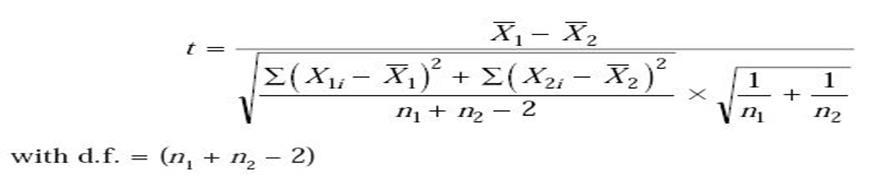
Inthiscontext,’t’referstothet-value,while'Xbar'represents themeanofthedataset.Tobegin,weneedtodeterminethe degrees offreedom(d.f.). To calculatethis 'd.f.',thesample size('n')isrequired,whichwillleadustothed.f.Value.Next, we will identify the ’t’-value, which corresponds to the tcritical value. At a significance level of 5%, the expected tcritical value is 1.9146. By substituting the values into the formula,wecanfindthet-statistic.Ifthet-statisticexceedsthe t-critical value, this indicates a difference in road usage patternsbetweenthetwosessions;otherwise,itsuggeststhe roadusagepatternsaresimilaracrossbothsessions.Wehave atotalof8samples,whichresultsinthedegreesoffreedom (d.f.)beingcalculatedas(8+8-2)=14.Forad.f.of14ata5% significancelevel,thecriticaltvalueis1.9146.
-1: Levelofserviceforallsectionsofroad intersection.
RoadAH
(Mumbai–KolkataHighway)
Theprimaryinputfactorsfordevelopinganimprovedroad networkinvolveanalyzingtrafficvolumes.Tocreatearoad networkintendedtolast20years,theAnnualAverageDaily Traffic (AADT) measurement is utilized. This figure representsthetotalnumberofvehiclesthatpassaspecific pointinbothdirectionseachday,whileconsideringseasonal variations in traffic patterns and the total axle counts associatedwiththatvehiclevolume.TocalculatetheAADT fromtheAveragePeakFlowgatheredfroma2-hourtraffic survey, several steps must be followed to determine the averagedailymaximumflow.Afterrecordingthepeaktraffic counts over 24 hours, one can convert this data to the standard24-hourflowtocomputetheAverageDailyTraffic, whichwill thenallowforthedeterminationoftheAnnual AverageDailyTraffic.
The traffic volume during peak hours, used for design calculations, reflects the number of vehicles that pass a certain point during the most congested hour(s) of the observationperiod.Totransformpeak-hourtrafficdatainto AverageDailyTraffic(ADT),thefirststepistocalculatethe Peak Hour Factor (PHF), which is the ratio of the highest volumeinasinglehourtofourtimesthemaximumvolume recordedduring15minuteswithinthatpeakhour.
Now,calculatingPeakHourFactor,PHF= V 4XV15
Volume: 12 Issue: 10 | October 2025 www.irjet.net p-ISSN: 2395-0072
Where:1-hourpeakflow (Obtainedfromtrafficsurvey)
V15=15-minute peak flow of the 1-hour peak flow (combiningbothmorningandeveningpeakhours).
1. Conduct two traffic observation sessions for every segmentoftheroadway.
2. Determine the four highest traffic volumes from each observationsessionforaparticularsectionoftheroad(15minuteinterval).
3. Compute the average of the four volumes from each session.
4. Calculate the overall average of the averages obtained fromeachsession.
5. This will yield the peak hour volume for that specific segmentoftheroad.
6. Repeat this entire process for all five segments of the roadway.
7.Computetheaverageacrossallfivesegmentsoftheroad.
8.Considerthehighesttrafficvolumeforonehourbasedon theaveragevalueobtained.
9.Evaluatethehighestvolumeovera15-minutetimeframe using the calculated 1-hour average peak volume. After determiningthePeakHourFactor,calculatethemaximum flowrateforthepeakhourperiod.MRFrepresentsthepeak volume recorded during 1 hour divided by the PHF. The maximumdailytraffic(MDT)iscalculatedbymultiplyingthe maximum flow rate (MFR) by 24 hours. To determine the Average Daily Traffic, multiply the MDT by a traffic conversion factor. This factor represents the ratio of the second-highestpeaktrafficflowtothehighestrecordedflow value during a specific peak time, under the same circumstancesandwithinadesignatedcountingperiod.
2. Conversion of Average Daily Traffic (ADT) to Annual Average Daily Traffic (AADT)
The Annual Average Daily Traffic (AADT) reflects the anticipated number of vehicles that will utilize a specific roadthroughoutayear(365days).TocalculatetheAnnual AverageDailyTrafficfromAverageDailyTraffic,theformula usedisAADT=T-ADT/365.Inthisequation,AADTdenotes Annual Average Daily Traffic, while T-ADT signifies Total AverageDailyTraffic.TofindtheTotalAverageDailyTraffic, apeaktrafficsurveyisperformedforoneweekeachmonth, andthetotalmonthlytrafficcountsaresummedtoderive theoverallaveragedailytraffic.
In our traffic study conducted over one day at a single location,wegatheredsevensetsoftrafficsurveydataacross seven days. Consequently, the T-ADT is computed as ADT multipliedby31andthenby12.
Note:
1.AlltrafficvolumesshouldberepresentedinPassengerCar Units(PCU).
2. To convert peak-hour (2 hr.) traffic data into Average DailyTraffic,ifaroadsectionshowsastableusagepattern throughoutbothsessions,theaverageofthepeakhours fromeachsessionshouldbetaken.Conversely,iftheroad sectiondisplaysvaryingpatternsduringthetwosessions, the highest peak hour from either session should be chosen.
Table3.PCU(TrafficVolume)forAADTComputation
min)
PeakHourTrafficVolumefor:
2-hour(consideringbothmorningandeveningpeakhours) =3262.4PCU
1-hour(consideringbothmorningandeveningpeakhours) =1834.2PCUV15=550
PHF = 1834.2/4X550 =0.83373
PHFdenotesPeakHourTraffic
Rateofflow(Max.-1hour)=1834.2/0.83373=2200
MaximumDailyTraffic(MDT)=24X2200=52800
AverageDailyTraffic(ADT)=52800X0.946 =49948.8PCU
(Usingdata:0.946=TrafficconversionfactorbyBotswana Guideline9)
(T-ADT)=(ADTX31X12)…..(31daysinamonth&12 months
=(49948.8X31X12)=18580953.6PCU
AverageAnnualDailytraffic(AADT)
=(T-ADT)/365 =18580953.6/365 =50906.722PCU (FinalAnswer)
Volume: 12 Issue: 10 | October 2025 www.irjet.net p-ISSN: 2395-0072
The various techniques for analyzing traffic survey data provide insights into the methods utilized for assessment. Evaluations of traffic volume studies reveal the quantity of trafficonaroadsegmentduringpeaktimes,whicharedefined astwohoursinthemorningandtwohoursintheevening,and aremeasuredbythetotalnumberofvehiclesontheroadas well as in passenger car units. The fluctuations in traffic volumeovertimearedepictedinFig.1,whileFig.2illustrates the percentage distribution of different types of vehicles utilizing that roadway during the same timeframe. The assessmentofthelevelofserviceoffersaquantitativemeasure oftrafficflowefficiencythroughoutthecity.Resultsshowthat majorroadsreceivealevelofserviceratingof“B,”indicatinga stableflowthatallowsdriverstomaintainareasonabledegree ofspeedchoiceandmaneuverabilitywithinthetraffic.Average travelspeedsgenerallyreacharound70percentofthefreeflowspeedforarterialroads.Trafficusagepatternshavebeen analyzedinconnectionwithspecifictraffictrendsduringpeak morning and evening hours.Roads exhibiting similarusage patternsdisplayidenticalcharacteristicsintermsoftrafficflow andvariousparametersduringbothpeakperiods.Conversely, roadswithdifferingusagepatternsrevealdistincttrafficflow characteristicsduringmorningandeveningpeakhours.The analysis of road usage patterns has employed a research methodinvolvingt-tests.Establishingaconsistentroadusage patternimpliesthatthelevelofserviceforthatparticularroad duringbothmorningandeveningpeakperiodsshouldalsobe thesame.Theassessmentoftrafficcountconversionyieldsthe annualaveragetrafficcountderivedfromsurveysconducted duringpeaktimes.Theanalysisperiodhasbeenspecifiedas31 days within a month, as traffic planning should focus on managing the peak traffic volume. Therefore, utilizing this method,theannualaveragetrafficcounthasbeencalculatedin termsofPassengerCarUnits(PCU).
7. SUMMARY AND CONCLUSIONS
Understandingdataisessentialfordevisingtransportationand trafficinitiatives,whichisthemainfocusofthispaper.Research ontrafficvolumehasbeenconductedduringpeakperiodsto evaluatethenecessityforroaddevelopmentorplanningthat corresponds with anticipated traffic volumes. Road usage patternshavebeenexaminedutilizingamethodthatillustrates howdifferentroadsareusedatvarioustimes,alongwiththeir corresponding traffic volumes. The approach for converting trafficcountshasbeenutilizedtocalculatetheAverageAnnual Daily Traffic (AADT) from the Average Daily Traffic (ADT), whichaids inforecasting futureAADT andanalyzingservice levelstoassesstrafficadaptability.Asatransportationengineer, ensuring a safe and dependable experience for public transportationisatoppriority.Thus,thisresearchassistsfuture scholarsintheareabythoroughlyanalyzingtrafficsurveysto mitigatetraffic-relatedissues.Ultimately,itpavesthewayfor further examination of traffic survey data through the ITMS system,whichdeliversreal-timetrafficinformationgatheredby
anintelligentsystemandprovidesalgorithmsforsmarttraffic detection. Additionally, it contributes to achieving highefficiencymobilityonroads,alleviatingcongestionandrelated challenges.
1. Udit Batra and Mandar V. Sarode. "Traffic Surveying & Analysis."RATMIG,IJAIEM,ISSN2319-4847,vol.5(4), 2013.
2.Hensher,D.A."AnEvaluationofLongitudinalSurveysin Transport." In ES Ampt, AJ Richardson & W Brög (Eds),NewSurveyMethodsinTransport.VNUScience Press:Utrecht,theNetherlands,1985.
3.Singh,SiteshKumar."AnalysisofParkingPatternsacross Various Parking Facilities." International Journal of CivilandStructuralEngineeringResearch2.2:35-39, 2014.
4. Goodwin, P. B. "Family Dynamics and Public Transport Usage from 1984 to 1987: A Dynamic Analysis UtilizingPanelData."Transportation,16,2,121-154, 1989.
5. Manheim, M. L. "Essentials of Transportation Systems Analysis."MITPress,Cambridge,MA,1979.
6.IRC:106-1990.GuidelinesfortheCapacityofUrbanRoads inFlatAreas,IRC,1990.
7. Botswana Guideline 9. Traffic Data Gathering and Analysis,TRB,2003.