
International Research Journal of Engineering and Technology (IRJET) e-ISSN: 2395-0056
Volume: 12 Issue: 12 | Dec 2025 www.irjet.net p-ISSN: 2395-0072
International Research Journal of Engineering and Technology (IRJET) e-ISSN: 2395-0056
Volume: 12 Issue: 12 | Dec 2025 www.irjet.net p-ISSN: 2395-0072
Pranav K. Mhatre1
1 Masters of Engineering in Civil Engineering, University of Mumbai, At- Dhaulpada, Po- Amtem, Tal- Pen, Dist- Raigad, 402106
Abstract - Mumbai Metropolitan Region (MMR) begins its eastward push into Pen Taluka to develop its “Third Mumbai” (Karnala-Sai-Chirner New Town). In this paper, ecological feasibility for superimposing dense urbanization on this vulnerable flood-prone coast, having highly mineralized aquifers and estuarine tides of Pen-Taluka Region, has been assessed. In this “Proxy Project Assessment,” notifications (2024-2025) for Pen-Taluka regions, combined with various data from industrial projects of neighboring regions (JSW Steel and Cementation Adani), form this investigation.
The results reveal a critical Over-allocation of the region's environment beyond its capacity. This Virar-Alibag Multimodal Corridor Project will thus act as an "Artificial Dam" and will disconnect the natural East-West drainage system of the Western Ghats Range. At the same time, the diversion of the Amba River's main water entitlement of 126 MLD to heavy industry will cause a short-term deficit of potable water for this emerging mega-city. In addition to this, the cumulative dredging activities by industries to extract more than 6 million cubic meters of sediment per annum will weaken the estuary's natural flood protection system. This research work will thus conclude by stating that if the saline "Kharlands" are developed without their own independent water supplies and without implementing their "No-Build" buffer zone around the riverbanks, this will cause regular floods and make the groundwaters saline around this megacity.
Key Words: Third Mumbai, Environmental Impact Assessment, Pen Taluka, KSC New Town, MMRDA, Amba River, Hydrological Disruption, Carrying Capacity, Salinity Ingress
The Mumbai Metropolitan Region (MMR) is witnessing a paradigmshiftwithitsstrategicmovetotheeastwiththe opening of the Mumbai Trans Harbour Link (MTHL). This project revolves around the construction of the KarnalaSai-Chirner (KSC) New Town, commonly referred to as "Third Mumbai," which redefines the Pen Taluka ecological hinterland into a dense urban artery. What beganasa"RestoftheRegion"RoRGreenBufferhasnow turned against itself with Pen being the epicentre for a
spate of aggressive conversions in terms of land use with projects like the Virar-Alibag Multi-modal Corridor (VMMC).
Nevertheless, such a process of urbanization is set on a collisioncoursewiththe biophysical contextof the region at large. The region of Pen Talaka, for instance, is not a tabula rasa but a complex hydrological region with a high concentration of saline aquifers, so-called Kharlands, and the active floodplain of the river Amba. The land-use intervention of linear transportation infrastructure and high-density foundations on top of such a fragile, closed estuary has systemic risks, such as hydrological obstruction or the "Artificial Dam" effect and, more importantly, the irreversible salinization of groundwater there. This research will critically evaluate the environmental carrying capacity of the region at large with regard to such developments to demonstrate the "Land Use Conflict" that exists within the Third Mumbai visionprocesswithregardtothethreatsof mereflooding orresourcedepletion,respectively.
TheshiftofPenTalukafromanagriculturalbufferzoneto a strategic urban point is integrated with the systematic development pattern of land usage policy. In the past, the 1996-2011 Regional Plan had designated the area a “Rest of the Region” (RoR) region, which safeguarded the intertidal Kharlands areas into Green Zones (G1/G2) in order to retain the balance between the natural environment and the region. Nonetheless, the approved Regional Plan (2016-2036) triggered a shift in the approach, adding ‘Growth Centers’ while overlaying ‘IndustrialZones’onagriculturalzones.
The Maharashtra Government Notification of 2019 made this transition official and assigned the Mumbai MetropolitanRegionDevelopmentAuthority(MMRDA)the roleofSpecialPlanningAuthorityfortheentiretalukaarea, overriding local planning powers in municipalities. Since then, legislative actions have made this "Dual-front" approach to urbanization even stronger in reality. The Notification of October 2024 marked nine coastal villages tobeincorporatedintotheKarnala-Sai-Chirner(KSC)New TownandassignedanupgradedroletoMMRDAtobecome
International Research Journal of Engineering and Technology (IRJET) e-ISSN: 2395-0056
Volume: 12 Issue: 12 | Dec 2025 www.irjet.net p-ISSN: 2395-0072
a New Town Development Authority (NTDA). Simultaneously, the September 2025 Notice issued the initiationofaDevelopmentPlanforthe'ExtendedNotified Area'ofthehinterlandstoguaranteethattheentireareais openedtodevelopmentandoverridestheCRZNotification of2019regardingCoastalZoneConservation.
Table1.ChronologyofStatutoryInterventionsinPen Taluka
Date Notification /Document IssuingAuthority&KeyImpacton PenTaluka
09/2019 MMR Extension Notification
10/2024 KSCNew Town Notification
UDD,Govt.ofMaharashtra
AppointedMMRDAasSPAfor entirePenTaluka,superseding localbodies.
UDD,Govt.ofMaharashtra
Designated9coastalvillagesof Penaspartof"ThirdMumbai" (KSCNewTown).Appointed MMRDAasNTDA(NewTown DevelopmentAuthority).
09/2025 Noticeof Intentionto PrepareDP
MMRDA Declared intention to prepare a Development Plan (DP) for the "Extended Notified Area" covering theremainingvillagesofPennotin KSCNewTown
The region of concern, Pen Taluka, is a very complex transitional zone of hydro-geology in terms of its Kharlands being under saline conditions and also being underthetidalestuaryoftheAmbaRiver.Anindependent scientific analysis confirms that there is a very poor environmental condition prior to any proposed urbanization in the region. The Amba River is the major river in the region that drains water out of it and is rated as“ClassE”meaningitisunfitfordrinking.Thissituation has happened because of a lot of industrial effluent being drained into the river as well as high seawater intrusion. DatafromWaterQualityIndexanalysishasrecordedCOD ofashighas375mg/LaswellasTDSofashighas31,116 mg/L, hence showing hypersaline conditions that would notbesuitableevenforirrigationpurposes.Theestuaryin termsofecologyisunderahighlevelofstress.Therehave indeed been very high records of diatoms Coscinodiscus oculus-iridis being in a huge amount of mass of 3.5 x 10⁵ cells l ¹ in ecological surveys indicating very acute conditions of eutrophication induced as a result of industries upstream as well as domestic sewage. In parallel to these conditions in ecology, the region’s air
quality has indeed reached saturation as far as its contaminants measured in PM10 have already reached a levelof109µg/m³intermsofNAAQSstandards already muchabovea safethresholdofa resilient environment of "ThirdMumbai".
Table2.BaselineEnvironmentalStressIndicators
Indicator Current Level (Recorded) Stand ard / Limit Status
AirQuality (PM10)
Chemical Oxygen Demand (COD)
Traffic Level ofService
River Water Classification
109 µg/m³ (at Pen Village)
110 - 375 mg/L
Class "F" (Forced Flow)
Class"E"
100 µg/m³ (NAAQS)
NonAttainment
10mg/L Severely Polluted
Class "C" (Stable Flow)
Class "A" or "B" (Potable)
Saturated /Jammed
Unfit for Drinking
ThedegradationofPenTalukaisaresultofa"coordinated assault" on it carrying capacity because of the implementation of four mega-infrastructure projects simultaneously in that area. The Virar-Alibag Multi-modal Corridor (VMMC) project is a "backbone connectivity" project that requires 1,566 hectares of land diversion, includingCRZ-Iecologicallysensitivelands,for"raisingan embankment that splits" this region physically. Alongside thisprojectistheKSCNew TownNotification(2024)that identifiesninecoastalvillagesas"NoDevelopmentZones" and "marks them as High-Density Urbanizable Zones," thussettinguphigh-risedevelopmentonsalinelandsthat arepronetohightidesandNLDSflooding.
The effects on the hinterland are more apparent in the Raigad Pen Growth Centre (formerly Orange Smart City), where 434 hectares of irrigated multi-crop farmland, accounting for 50% of the area, will transform into impervious logistics parks, substantially increasing the runoff coefficient in the Bhogeshwari basin. The problem is multiplied by the 'Industrial Pincer' in the estuary mouths: the expansion of the JSW Dolvi project from the current 10 MTPA capacity to 15 MTPA on the northern side, and the proposed cement terminal project from the southernsideat5MTPAcapacity.
International Research Journal of Engineering and Technology (IRJET) e-ISSN: 2395-0056
Volume: 12 Issue: 12 | Dec 2025 www.irjet.net p-ISSN: 2395-0072
Pen Taluka’s hydrology system, determined by its EastWest drainage of the Amba river basin,standsthreatened in its very existence by this new North-South line of infrastructure development. Virar-Alibag Multi-modal Corridor (VMMC), being this project's linear “Artificial Dam,” has its elevated levees crossing over existing natural drainage routes of the Western Ghats. Unless extensive cross-drainages (such as viaducts built over these drains) are done, this barrier will disrupt this overland runoff, resulting in this marginal area being regularly flood-swept downstream, particularly in Vadkhal. Such flood potential, too, gets aggravated from this systemic floodplain erosion, particularly since both “RaigadPenGrowthCentre&JSWDolviPhaseIIIProject" involve turning over more than 250 hectares of pervious farmland or Kharlands into this industrial hard topping area, reducing this entire area of West Pen to having no floodcontrolcapacitywhatsoever.
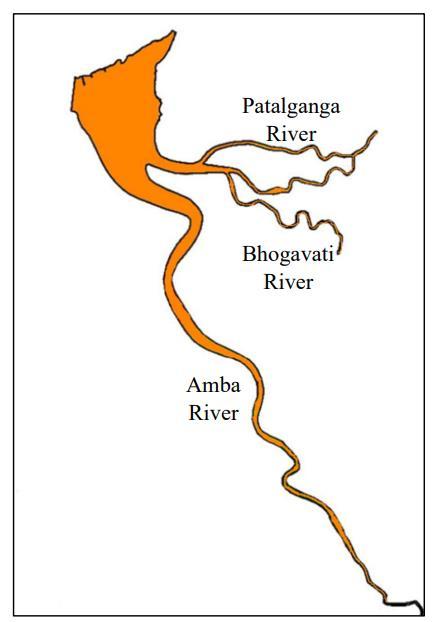
In addition, the Amba Estuary is prone to the “Pincer Effect,” where the reclamation on the North Bank (JSW) and South Bank (Adani) at the same time reduces the widthoftheriver mouth. TheextensionoftheDharamtar Jetty requires the Capital Dredging of 4.15 million cubic meters of the Amba Estuary bed, contributing substantiallytothe“Tide-LockEffect,”wherethehightide lockstheriver’sdischargeandcausesthefloodlevelatall times to rise coinciding with the monsoon peaks, making thenewKSCTownvulnerabletosubmergence.
The first and foremost abiotic barrier in the "Third Mumbai" proposal is Water Security. The region's hydrological resources are severely over-exploited, and the freshwater discharge of the Amba River is resourcecruelly diverted extensively in favour of heavy industries; thus, there arises a "zero-sum conflict" between this resource and the "demand of the proposed metropolitan region." The hydro-chemical assessment of estuarine waters has rated "Poor to Very Poor" quality, "Very high COD of 375 mg/L, and TDS of 31,116 mg/L. Such values demonstrate hyper-saline conditions sustained by seawater invasion into freshwater resources, rendering the Amba River unsuitable even for the proposed metropolitan region’s non-potable use, except through expensivedesalinationprocesses.
Table3. RegionalWaterBudgetDeficitAnalysis
DemandCategory Volume (MLD) DataSource
IndustrialDemand(JSW DolviPhase-III) 126.0 JSW Dolvi EIA (2024)
IndustrialDemand (ReliancePatalganga) ~17.0 Reliance EC Compliance (2024)
ResidentialDemand (ProjectedThird Mumbai) 40.5 Est. for 300,000 population @ 135 LPCD TotalProjected
EIA (2024) NetDeficit
Immediate Shortfall
Geologicallyspeaking,"TheproposedKSCNewTownArea has been identified over ‘Kharlands,' topographically characterized by freshwater ‘lens’ sitting below an overlying saline ‘aquifer system’ approach for high-rise constructionrequires‘deep-pilefoundations’andcanlead to rupture of an impervious clay ‘aquitard,’ initiating an uncontrollable process of upward saline migration of freshwater resources into ‘wells’ drilled within nearby housing.” The proposed "water harvesting and storage in housing roofs for flood management and arresting wastage of this precious resource" is turned ineffective through ground truthing that indicates "fine coal dust ladencoalbarges,operatingwithoutanextendedrooftop overhead protection and oriented toward closely approaching housing, result in coal dust settling over housing roof tops." The above conditions make "Third Mumbai" face an "immediate and permanent shortage of supplyofpotablewater.
International Research Journal of Engineering and Technology (IRJET) e-ISSN: 2395-0056
Volume: 12 Issue: 12 | Dec 2025 www.irjet.net p-ISSN: 2395-0072
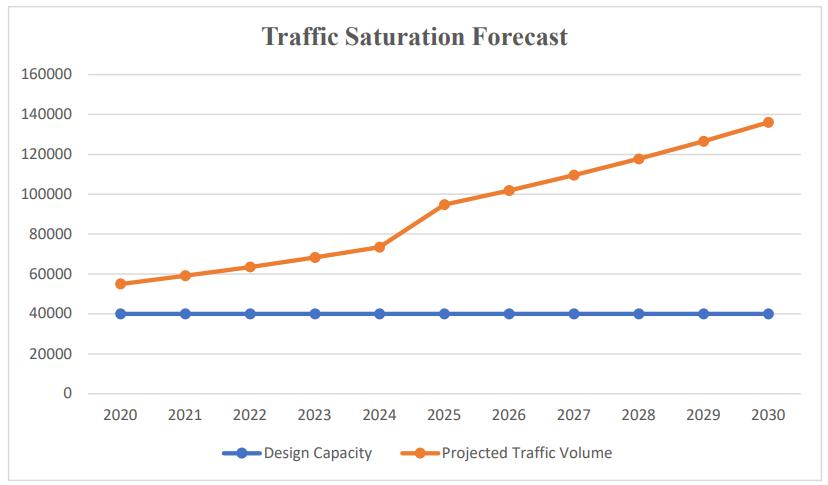
Standard EIAs adopt a project-by-project approach and thus will not be able to capture the system failure of carrying capacity of Pen Taluka. The current study uses the CIA approach to assess the "Pincer Effect" of synchronizedindustrialexpansionalongbothbanksofthe Amba Estuary. The North Bank is dominated by the JSW Dolvi Steel expansion to 15 MTPA, combined with the Dharamtar Jetty, while the South Bank is facing the Adani Cementation Bulk Terminal (5 MTPA) development. Such atwin-bankincursionseverelyreducestheestuarineflood plain, thereby constricting the discharge of monsoon runoff and enhancing the flood risk upstream. Equally significant, the hydrologic stress gets exacerbated by the gigantic dredging. Thus, IWAI DPR confirms that 3.4 million cubic meters of maintenance dredging will be required to deepen the channel for 8,000-tonne vessels andthatwillcastapermanent"turbiditycurtain"blocking sunlight and collapsing the primary productivity. Biological evidence of this is confirmed by the recorded bloom of Coscinodiscus oculus-iridis; already, the estuary hasbeeneutrophicowingtonutrientloading.Further,the airshed of the area is saturated; the baseline studies record PM10 levels of more than 100 µg/m³ driven by fugitive coal dust and traffic LOS of "F" (Jammed) in NH66.Insuperposition,anewmetropolisuponthissaturated industrial corridor creates an ecologically unsustainable "toxiccocktail"ofrisksfortheproject.
The urbanization of Pen Taluka represents a huge socioeconomicdisplacement,markedbythedeliberateoblivion of indigenous economies. “Inland fishing as an activity does not take place in Amba River” is contended by government plans, especially in the NW-10 Detailed Project Report, as a criterion for industrial shipping. However,arealitycheckonasocialauditindicatesthat18 fishing coops remain operative on this same part where huge shipping is proposed. "Regulatory Invisibility" is a
phenomenon that denies rehabilitation policies to its 8,000 fisher families whose habitats are sabotaged by wake waves from 8,000-ton barges and by dredgingrelatedturbidity.
Nevertheless, the agricultural economy is dispossessed as well. The Raigad Pen Growth Centre identifies the irrigatedmulti-croplandsasindustrialestates,leadingthe farming community to give up their lands in exchange for contract work as landless agricultural labourers. The health conditions in the region get worse as the community experiences a ‘double burden’ disease due to the fly-away coal dust that pollutes the rainwater harvesting mechanism and the respiratory disorders caused by the same dust in the form of fly-away coal dust and water-borne diseases due to the sewage-filled RiverUmbholi.The‘ThirdMumbai’isthusonthevergeof becoming an egalitarian region where the native population is relegated to the periphery of the developmentthatleachesofftheirresources.
Inordertoprevent ecologicallydrivendestruction,this research suggests that it is imperative to introduce a compulsory Environmental Management Plan (EMP) that needs to change the concept of "Conquest" to "Coexistence" in terms of planning. Some key interventions in the primary zoning would involve demarcation of the "Blue Line" No-Build Zone within 500 meters of the Amba River and the change in Kharlands from residential to Eco-Sensitive Zones (ESZs) to retain theirconceptofactingasfloodwaterabsorbers.Technical parameters would require that the "Stilts over Fill" concept be adopted in the Virar-Alibag MLC (VMMC) on wetland components instead of the current river embankmentdesignsthatresembledams.
Imperatively, water resilience in KSC NT demands a legal "Net-Zero Water" policy that mandates 100% sewage recycling (Zero Liquid Discharge) to compensate for the industrial monopoly on the River Amba. To address the estuarine "Pincer Effect," a "Polluter Pays" Restoration Fund, charged on the Mumbai Port Trust and industrial establishments enjoying the "Clean Mumbai" regulatory favour, would cover biennial estuary desilting and mangrove re-establishment. Lastly, development control norms must ban deep foundation construction in a saline environment to avert aquifer penetration. The above nonegotiable correctives need to be implemented to avert the "Third Mumbai" becoming a disaster vulnerable burdeninitsownright.
International Research Journal of Engineering and Technology (IRJET) e-ISSN: 2395-0056
Volume: 12 Issue: 12 | Dec 2025 www.irjet.net p-ISSN: 2395-0072
Fromtheevidencesynthesisconductedinthisresearch,it isevidentthatthe“ThirdMumbai"projectimplementedin Pen Taluka has overburdened the environment of this region.Atpresent,thecourseofdevelopmentisfollowing a mistaken tabula rasa, neglecting the fact that the region is a fully loaded industrial corridor and a delicate hydrological basin. At the same time, the Virar-Alibag Multi-modalCorridor(VMMC)linerepresentsacross-wise obstruction in nature’s East-West drainage course, preparing for the conversion of this hinterland into a permanent backwater flood basin. On another hand, the location of the KSC New Town on the salt-bearing Kharlands without a guaranteed water supply represents a motivation of resource bankruptcy in face of the industrialgraboftheAmbaRiver.
The combined effect of "Industrial Pincer" (JSW/Adani) and dredging activities has resulted in ecological sterilization of the estuary, undermining its role as a natural barrier against flood threats. In a bid to prevent a dysfunctional living space, an operational paradigm shift between "Conquest" and "Coexistence" must occur. This requires an immediate and universal floodplain noreclamation policy, "Stilts over Fill" for all linear infrastructural developments, and a mandatory Net Zero Water policy for all proposed township developments. Should this fail, "Third Mumbai" could well emerge as a curse a space characterized by flood threats, a shortage ofwater,anddislocationofpeople.
[1] Maharashtra Pollution Control Board (MPCB). (2017). Executive Summary of Environmental Impact Assessment Report of Orange Smart City, Pen Taluka, Raigad District. Prepared by Building Environment(India)Pvt.Ltd.
[2] Urban Development Department, Government of Maharashtra. (2019). Notification No. TPS1218/1665/C.R.-79/20/UD-12: Extension of Mumbai Metropolitan Region Boundaries. Mumbai:GovernmentCentralPress.
[3] Adani Cementation Limited. (2019). Executive Summary of Comprehensive Marine Environmental Impact Assessment Study for CaptiveJetty,ConveyorCorridorwithStorageand Backup Facilities and Approach Road for Raigad Cement Bulk Terminal in Village Shahabaj and Shahpur, Alibag Taluk, Maharashtra. Prepared by IndomerCoastalHydraulics(P)Ltd.
[4] Karthik,R.,Robin,R.S.,Anandavelu,I.,Purvaja,R., Singh,G.,Mugilarasan,M.,Jayalakshmi,T.,Samuel, V. D., & Ramesh, R. (2020). Diatom bloom in the Amba River, west coast of India: A nutrient-
enriched tropical river-fed estuary. Regional StudiesinMarineScience,35,101244.
[5] Mumbai Metropolitan Region Development Authority (MMRDA). (2021). Final Regional Plan for Mumbai Metropolitan Region (2016-2036). GovernmentofMaharashtra.
[6] TERI (The Energy and Resources Institute). (2021). Environmental Status Report of Mumbai Metropolitan Region. Prepared for Mumbai Metropolitan Region Development Authority (MMRDA).
[7] Jaybhaye, R., Nandusekar, P., Awale, M., Paul, D., Kulkarni, U., Jadhav, J., Mukkannawar, U., & Kamble, P. (2022). Analysis of seasonal variation in surface water quality and water quality index (WQI) of Amba River from Dolvi Region, Maharashtra, India. Arabian Journal of Geosciences,15(1261).
[8] Maharashtra Pollution Control Board (MPCB). (2022). Minutes of the Environmental Public Hearing for Proposed Multi-modal Corridor from Navghar to Chirner (Raigad District Section). ConductedbyMSRDC.
[9] Groundwater Surveys and Development Agency (GSDA). (2023). Report on Salinity Ingress in CoastalAquifersofRaigadDistrict.Governmentof Maharashtra.
[10] JSW Dharamtar Port Private Limited. (2024). Environmental Executive Summary: Proposed Expansion of Dharamtar Jetty Facility (Phase-III) in Village Dolvi of District Raigad, Maharashtra. Prepared by Building Environment (India) Pvt. Ltd.
[11] JSW Steel Limited. (2024). Executive Summary: ExpansionofIntegratedSteelPlantCapacityfrom 10 MTPA to 15 MTPA at Village Dolvi, Raigad District, Maharashtra. Prepared by MECON Limited.
[12] Manthan Adhyayan Kendra. (2024). Cargo and Consequences: A Report on the Social and Environmental Implications of Shipping on Amba River - National Waterway-10. Partners in Justice Concerns.
[13] Reliance Industries Limited. (2024). Six Monthly Compliance Report of Environmental Clearance for Patalganga Manufacturing Division (April 2023–September2023).SubmittedtoMinistryof Environment, Forest and Climate Change (MoEF&CC).
[14] Urban Development Department, Government of Maharashtra. (2024). Notification No. TPS1221/2461/CR-83/21/NTDA/UD-12: Appointment of MMRDA as New Town Development Authority (NTDA) for Karnala-SaiChirner(KSC)NewTown.
[15] Mumbai Metropolitan Region Development Authority(MMRDA).(2025).NoticeunderSection
International Research Journal of Engineering and Technology (IRJET) e-ISSN: 2395-0056
23 of Maharashtra Regional and Town Planning Act, 1966: Declaration of Intention to Prepare Development Plan for MMR Extended Notified Area. Notification No. MMRDA/PD/SPA/MMRENA/CHAPTERIII/STATUTORY/1244/1131/2025.
BIOGRAPHIES

Volume: 12 Issue: 12 | Dec 2025 www.irjet.net p-ISSN: 2395-0072 © 2025, IRJET | Impact Factor value: 8.315 |
MhatrePranavKamalakar
- Masters of Engineering in Civil Engineering, University of Mumbai.(2022)
- Bachelor of Engineering in Civil Engineering, University of Mumbai.(2018)
- Diploma in Civil Engineering, MSBTE.(2015)