
International Research Journal of Engineering and Technology (IRJET) e-ISSN:2395-0056
Volume: 12 Issue: 06 | Jun 2025 www.irjet.net p-ISSN:2395-0072
International Research Journal of Engineering and Technology (IRJET) e-ISSN:2395-0056
Volume: 12 Issue: 06 | Jun 2025 www.irjet.net p-ISSN:2395-0072
Alan Don Benny1 , H.S Anuja M.E,2
1PG Scholar, BioMedical Engineering, Udaya school of engineering, Kanyakumari.
2Professor BioMedical department, Udaya school of engineering, Kanyakumari.
Abstract Effective management of respiratory disorders requires early detection and prompt intervention, particularly in crowded public spaces like shopping malls. This article presents an intelligent, integrated system that uses the Internet of Things (IoT) to continuously monitor respiratory health. To facilitate real-time monitoring and quick reaction times, the system integrates a number of sensors, a control unit, and cloud connectivity. Numerous physiological data, including as body temperature, blood pressure, heart rate, breathing patterns, oxygen (O₂) and carbon dioxide (CO₂) levels, and lung status, are gathered by the system using IoT-enabled sensors. These sensors are placed in key locations to collect precise, up-to-date data from people in public spaces. The data is sent to a secure cloud platform for processing and analysis after it has been gathered. The system offers a thorough understanding of respiratory health indicators by combining data from several sources, enabling the early identification of anomalies or indications of respiratory distress. Real-time data analysis is supported by the cloud platform, which may also send out immediate alerts or notifications to patients, caregivers, or healthcare professionals. These notifications aid in launching prompt actions and providing tailored health advice. The capacity of this system to conduct continuous, real-time monitoring without requiring human check-ups is one of its main advantages. This lowers needless ER visits, hospital stays, and total healthcare expenses in addition to improving patient outcomes by identifying problems early. Long-term data tracking and predictive analysis for upcoming health risk assessments are further made possible by the integration of cloud analytics.
Keyword’s: Internet of Things (IoT), respiratory health monitoring, real-time surveillance, cloud computing, public health, early disease detection, physiological sensors, smart healthcare systems.
Respiratory diseases remain one of the leading causes of morbidity and mortality worldwide,
particularly in densely populated urban areas. Conditions such as asthma, chronic obstructive pulmonary disease (COPD), and acute respiratory infections pose significant public health challenges due totheirprevalence,potentialforrapiddeterioration,and the burden they place on healthcare systems. Early detection and timely intervention are critical in managing these diseases effectively and preventing severe complications. With the rapid advancement of digital health technologies, the Internet of Things (IoT) hasemergedasatransformativeapproachinhealthcare, enabling real-time, continuous monitoring of physiological parameters. IoT-based systems offer the ability to remotely collect, transmit, and analyze health data, thereby facilitating proactive healthcare delivery and reducing the dependence on traditional, hospitalcentric models. This paper introduces a smart, integrated IoT system designed to monitor respiratory health in real-time within public environments such as shopping malls, where the risk of respiratory incidents may be elevated due to crowd density and environmental factors. The proposed system incorporates multiple sensors to capture key physiological indicators, including breathing patterns, oxygen (O₂) and carbon dioxide (CO₂) levels, heart rate, blood pressure, and body temperature. These sensors areconnectedtoacentralcontrolunitthattransmitsthe data toa securecloudplatformforstorageandanalysis. By enabling continuous, non-invasive monitoring, the system allows for early detection of respiratory abnormalities and rapid response through automated alerts sent to healthcare providers, caregivers, or individuals themselves. The integration of cloud analytics further supports predictive insights and longtermhealthtrendanalysis,whicharevitalforpreventive care and public health planning. [1]. Intermittent exacerbations and episodic respiratory symptoms are hallmarks of respiratory disorders. The frequency and severity of respiratory disorders' symptoms, airflow restriction, and exacerbations vary widely. In order to recognize exacerbations early and monitor the daily management of respiratory disorders, it is essential to
International Research Journal of Engineering and Technology (IRJET) e-ISSN:2395-0056
Volume: 12 Issue: 06 | Jun 2025 www.irjet.net p-ISSN:2395-0072
keep an eye on these occurrences for patients with respiratory disorders. The COVID-19 epidemic is posing previously unheard-of difficulties for public health systems. Hospitalization was necessary in 14% of confirmed cases of SARS-CoV-2 infections, according to estimates from the American Center for Disease Control and Prevention (CDC). Direct and close contact with an infected person or indirect contact with contaminated surfaces or objects can spread the virus by respiratory droplets. Several nations have implemented social distancing rules, mask use, and basic hygiene measures topreventwidespreadhospitalsurgescausedbyCOVID19. These efforts have been proven to be effective in containing the virus's transmission. Social distancing is crucial to stopping the virus's spread, but it also has a negative effect on economies, particularly in emerging nations with high levels of income disparity. Given the volume of severely ill patients, there are not enough medical experts or resources, which disrupts hospital operationsandlowersthestandardoftreatment.Health teams' ability to monitor patients is impacted by both the requirement for patients to pay closer attention and the required distance protocols, which results in longer emergency response times. [2]. Asthma, bronchospasm, laryngeal dyspnea, bronchiolitis, and staphylococcal pneumonia are among the chronic respiratory conditionsthatposeaseriousthreattopublichealth.As thefourthleadingcauseofmortality,chronicrespiratory disease is regarded as a significant health burden. Childrenaremorelikelytosufferfromtheseconditions. Children's lives and the healthcare system are both greatly impacted by the respiratory disease mortality rate in pediatric intensive care units (PICUs). Severe pediatric respiratory problems account for over 40% of PICUhospitalizations,andtheyhaveahigh deathrateof 7% to 15%. These ailments include pneumonia, acute respiratory distress syndrome, and respiratory failure. Chronic respiratory disorders have become more prevalent as a result of increasing air pollution throughout time. Because exposure to environmental pollutants can impact lung development and function, chronic respiratory disorders are more prevalent in children. Since young children breathe orally, a lot of contaminants can enter their lower airways and cause respiratory illnesses. Numerous variables, such as genetic predispositions, poor indoor air quality, passive smoke exposure, and socioeconomic factors such increased exposure to environmental toxins and restrictedaccesstohealthcare,cancontributetochronic respiratory disorders. Adults and children with chronic respiratory problems are diagnosed through laboratory tests, imaging, and clinical examination. These findings could be applied to a model that has been trained to
determine the severity of illnesses and predict respiratorydisorders[3].Zhanget.alproposedOver100 million individuals globally, including Systems for wireless sensing are necessary for ongoing data collection and health monitoring. Instead of using costly andtime-consuminglaborhospitalvisits,itenablesrealtimepatientdatacollecting.Thistechniqueuseswireless datatransfer,wearablesensors,andsignalprocessingto remotely monitor patients' health. The study presents a new method for remotely giving primary diagnostics utilizingadigitalhealthsystemtotrackthestateoflung health using a multimodal wireless sensor device. The device monitors respiratory and cardiovascular activities using a small wearable with newly integrated acoustics and biopotentials sensors to deliver quick and thorough health status monitoring. In order to monitor respiratoryhealth,thetinywearablesensormayadhere to human skin and record heart and lung activity. For possible real-time respiration pattern diagnoses, including respiratory events like coughing and low tidal volume, this study suggests a sensor data fusion approach combining lung sounds and cardiograms. Preliminary testing showed that shallow breathing and coughingcouldbemeaningfullydetected,withap-value of 0.003 for sound signals and 0.004 for electrocardiograms (ECG). In order to construct closedlooporhuman-in-the-loopsystemsandconnectdataand devices, synchronized devices like computers, tablets, and smartphones will be required for the analysis, treatment, and reduction of adverse health occurrences. [4]. Mahejabeen Budebhai.al prroposed In the fields of telemedicine and personal wisdom medicine, smart wearable health monitoring systems are widely wanted. These technologies provide portable, long-term, and comfortable biosignal detection, monitoring, and recording. Advanced materials and system integration have been the main emphasis of wearable health monitoring system development and optimization, and in recent years, the number of high-performance wearable systems has been steadily rising. These domains still face numerous obstacles, though, like striking a balance between sensor performance, system robustness, and flexibility/stretchability. Therefore, furtherdevelopmentisneededtoencouragethecreation of wearable health monitoring devices. This overview highlights some noteworthy accomplishments and the latest developments in wearable health monitoring systems. A strategy overview regarding material selection,systemintegration,andbiosignalmonitoringis providedintheinterim.Therewillbeadditionaloptions for disease detection and treatment with the next generation of wearable technologies for precise, portable, continuous, and long-term health monitoring.
International Research Journal of Engineering and Technology (IRJET) e-ISSN:2395-0056
Volume: 12 Issue: 06 | Jun 2025 www.irjet.net p-ISSN:2395-0072
The majority of diagnosis, monitoring, and treatment techniques in modern medicine relyon massive, precise technology, which can be inconvenient, uncomfortable, or even harmful to patients. In the meantime, the diagnosis and monitoring procedures have steadily tended to become portable and domiciliary due to limitedmedicalresources,whichcallsforthecreationof portable and miniature equipment [5],[6]. System architecture is illustrated in Fig. 1. The proposed IoTbasedrespiratoryhealthmonitoringsystemiscomposed offiveinterdependentmodulesthatcollectivelyfacilitate real-timedata acquisition,processing,transmission,and response. The Sensor Module is responsible for collecting key physiological parameters, including breathing patterns, heart rate, blood pressure, body temperature, oxygen saturation (SpO₂), and carbon dioxide(CO₂)levels.These sensors embedded in kiosks, entry points, or wearable devices are selected for their non-invasive nature and ability to perform rapid assessmentssuitableforpublicsettings.[7],[8].Singh,R. et.al proposed. Internet of Things (IoT)-based mobile health care (m-healthcare) applications have recently started offering online services and a variety of dimensions.Millionsofindividualsnowhaveanewway to access health advice on a regular basis to help them live healthy lives thanks to these applications. The numerous aspects of these online healthcare applications were reinforced with the advent of IoT technology and the associated medical devices. IoT devices in the healthcare setting generate a massive amountofbigdata.Largedatavolumesarehandledand user-friendliness is offered via cloud computing technologies.Inthiscase,cloud-basedappsarecrucialin today's fast-paced environment. For safe storage and accessibility, cloud computing technology is being utilizedinthesemedical applications.Wesuggesta new Cloud and IoT based mobile health care application for monitoring and detecting critical diseases in order to provide consumers with better services than online healthcare applications. A new framework is created here for the general public. This work uses a new systematicapproachtodiabeticdisordersandgenerates relevant medical data utilizing medical sensors and the UCI Repository dataset to forecast individuals with severe diabetes. The experimental findings demonstrate that the suggested work performs better than the current disease prediction systems. [9]. Manuel Lozano.et.al proposed. In order to develop a diagnostic tool based on auscultation, the respiratory sounds of both sick and healthy people were examined using frequencyspectrumandARmodelparameters.Fourteen channels of respiratory sound data from a single respiration cycle are used to represent each person.
Based on multi-channel respiratory sound data for each channel and for each respiration phase, inspiration and expiration, independently, two reference libraries one for pathology and the other for health were constructed.TheKclosestneighbor(k-NN)classification approach was used to create a multi-channel classification algorithm. Using spectral feature sets that correspond to quantile frequencies and 6th order AR model coefficients on inspiration and expiration phases, the two classifiers' performances are compared. In respiratorymedicine,wheremanypatientshavechronic illnesses, home telemonitoring is quite interesting. We created a telemedicine tool to monitor patients with respiratory muscle disorders at home. The device uses the TCP/IP protocol to connect to the Internet and measures the inspiratory time constant (τi) and maximum inspiratory pressure (Pimax). A comparative study was used to assess the tool in 15 COPD patients and18healthyindividuals.PatientswithCOPDshoweda decrease in Pimax (p<0.0001) and an increase in τi (p<0.001), which is in good agreement with the pathogenesis. Installation and inspiratory muscle evaluation, which would help lower the expenses of the help provided to patients with respiratory conditions. [10].
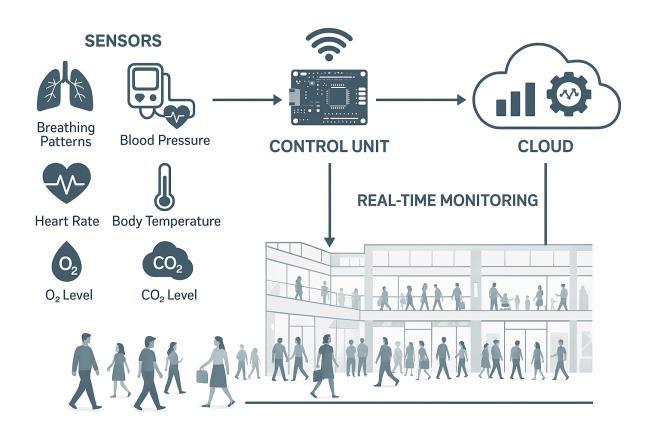
The development of the proposed IoT-based respiratory healthmonitoringsystemfollowsa modular and layered approach, integrating sensor technologies, embedded processing, cloud computing, and real-time analytics. The methodology encompasses four primary stages: system design, data acquisition, data transmission, and health analytics and response. The firststageinvolvesthedesignandintegrationofsensors capable of capturing critical physiological parameters. These include respiration rate, heart rate, blood
International Research Journal of Engineering and Technology (IRJET) e-ISSN:2395-0056
Volume: 12 Issue: 06 | Jun 2025 www.irjet.net p-ISSN:2395-0072
pressure, body temperature, oxygen saturation (SpO₂), and carbon dioxide (CO₂) levels. Each sensor is selected basedoncriteriasuchasaccuracy,responsetime,power efficiency, and suitability for non-contact or minimally invasivemeasurementsinpublicspaces.Thesensorsare deployed in fixed stations (e.g., at mall entrances or health kiosks) or integrated into wearable formats for continuousmonitoring.
In the second stage, data acquisition and preprocessing are handled by a microcontroller unit (e.g., ESP32 or Raspberry Pi), which aggregates the sensor data and performs local filtering, normalization, and timestamping. This preprocessing helps reduce noiseandpreparethedataforefficienttransmission.To maintain real-time performance, only essential and validateddatapointsareforwardedtothecloud.
The third stage involves wireless communication and secure data transmission. The preprocessed data is sent to a cloud platform using communication protocols such as MQTT or HTTP over Wi-FiorLoRa,dependingonthe network infrastructure and deployment scale. End-to-end encryption and authenticationareimplementedtoensuredata integrity and confidentiality. In the final stage, cloud-based analyticsanddecision-makingtakeplace.Incomingdata isstoredinasecureclouddatabaseandanalyzedinrealtime using rule-based logic or machine learning models to detect abnormal physiological conditions. When anomalies are identified such as low oxygen levels or irregular breathing patterns the system automatically generates alerts. These alerts are sent to relevant stakeholders, including on-site medical personnel, caregivers, or the individuals themselves. A web-based dashboard provides live visualization of health metrics andsystemstatus, enabling rapid responseand ongoing surveillance. The methodology supports scalability and adaptability, allowing the system to be deployed in various public settings and expanded with additional sensors or analytical tools. It also enables continuous system improvement through the integration of feedbackloopsandhistoricaldataanalysisforpredictive healthmodelling.
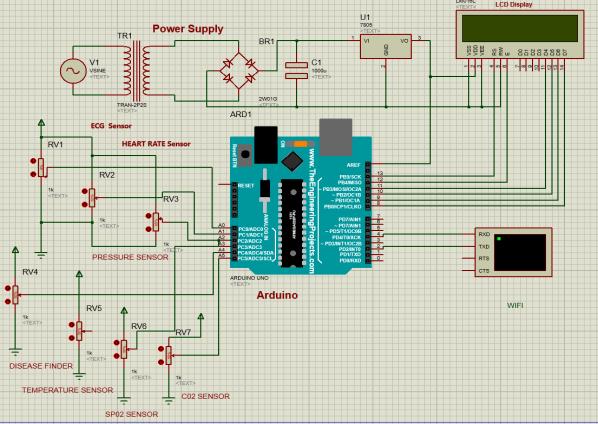
Infig2ThecircuitdiagramoftheproposedIoTbased respiratory health monitoring system illustrates the interconnection of multiple sensor modules, a microcontroller unit, power supply, and communication interfaces. At the core of the system lies the microcontroller or single-board computer which serves as the central processing unit. It is responsible for acquiring signals from all connected sensors, preprocessing data, and managing communication with the cloud. Each sensor module is interfaced with the microcontroller through either analog or digital input pins. The respiratory rate sensor, temperature sensor, andCO₂gassensortypicallyuseanaloginputs,whilethe pulse oximeter (SpO₂), heart rate sensor, and digital blood pressure modules may communicate via I²C or UART protocols. Pull-up resistors are used where necessary to ensure signal stability on digital communication lines. The circuit includes a regulated powersupplyunit,oftencomprisinga5Vor3.3Vvoltage regulator to ensure stable operation of the sensors and microcontroller. Capacitors are placed near the voltage input pins to filter out noise and prevent voltage fluctuations. A battery or USB input can be used as the primary power source, depending on whether the system is stationary or mobile. For wireless data transmission,abuilt-inWi-Fimodule(asinESP32)oran external module (e.g., ESP8266) is used to connect the systemtotheinternet.Insomeconfigurations,Bluetooth Low Energy (BLE) or LoRa modules are also integrated to enable low-power, long-range communication, especiallyinlargepublicspaces.Thecircuitalsoincludes visual and audio indicators, such as LEDs and buzzers, which are triggered by the microcontroller to alert individuals in real-time when abnormal values are detected.Additionally,asmallOLEDorLCDdisplaymay be connected via I²C to provide immediate feedback on vitalsigns.
International Research Journal of Engineering and Technology (IRJET) e-ISSN:2395-0056
Volume: 12 Issue: 06 | Jun 2025 www.irjet.net p-ISSN:2395-0072
The entire system is grounded to a common GND rail, and care is taken to isolate analog signal lines from digital noise. Proper layout and shielding techniques are followed to reduce electromagnetic interference (EMI), which can affect sensor accuracy.nOverall, the circuit diagram captures the flow of data from the sensors to the microcontroller and onward to the cloud, illustrating how each hardware component contributes to real-time respiratory health monitoringandalertgeneration.
The sensing layer is responsible for collecting physiological and environmental data from individuals in the monitored area. This layer comprises a suite of noninvasive, IoT-enabled sensors deployed strategically throughout public environments such as shopping malls. The following parameters are captured: Breathing patterns (via respiration sensors or piezoelectric belts), Heart rate (via optical pulse sensors or ECG patches), Blood pressure (via cuffless pressure sensors or PPG techniques),Bodytemperature(viaIRorthermalsensors), Oxygen saturation (SpO₂) and CO₂ levels (via pulse oximeters and gas sensors) Sensors may be embedded in kiosks, entrances, benches, or wearable devices to allow passive or voluntary health checks. The sensors output analog/digital signals which are transmitted to a nearby controlunitforpreprocessing.
Thecontrollayerispoweredbyamicrocontroller or single-board computer (e.g., Arduino, Raspberry Pi, or ESP32) that aggregates data from the sensing layer. Key functionalities include: Data Acquisition: Capturing and digitizing sensor signals, Local Preprocessing: Filtering noise, averaging readings, and timestamping, Wireless Communication:SendingdataviaWi-Fi,Bluetooth,orLora WANtothecloud Thecontrolunitalsoensuresbasicdata validationandprovidesimmediatefeedback (e.g.,through LED indicators or audible alerts) in case of critical values, suchasdangerouslylowoxygenlevels.
The cloud platform serves as the core processing and decision-making hub. It supports Real-time data storage and synchronization, Anomaly detection and pattern recognition using rule-based or machine learning algorithms, Automated alerts and notifications to users, healthcare providers, or emergency responders Data visualization dashboards for monitoring trends and system performance The cloud interface complies with
privacy and security standards (e.g., HIPAA, GDPR) to protect sensitive health data. Advanced analytics enable long-term tracking and predictive modeling to identify earlywarningsignsofrespiratoryissuesatbothindividual andpopulationlevels.
This module ensures the system can initiate timely interventions: Alert Trigger: Activated when readingsexceedsafelimits.EmergencyNotification:Sends instantalertstohealthcarestaffornearbyresponders.
Local Feedback: Kiosk-based indicators (e.g., LEDs or buzzer) can notify users immediately of critical values. Incident Logging: Automatically records abnormal events forfutureanalysisandauditing.
All sensor data, alerts, and GPS information are consolidated and transmitted to an IoT platform such as Blynk, Firebase, or ThingSpeak. The IoT dashboard provides caregivers with a user-friendly interface to Monitor real-time health parameters, Track the patient’s location, View alert logs, Receive emergency notifications. The platform is accessible via smartphones or web browsers, making it convenient for remote monitoring. The integration of all data into a centralized cloud system ensures seamless access and historical data tracking, which is useful for medical diagnosis and long-term care planning.
The proposed IoT-based respiratory health monitoring system was tested in a simulated public environment to evaluate its performance in real-time physiological data collection, cloud-based analytics, and alert generation. The system successfully monitored key health parameters such as respiration rate, heart rate, blood pressure, body temperature, oxygen saturation (SpO₂), and carbon dioxide (CO₂) levels. Multiple trials were conducted using different subjects under various ambientconditionstoassesstheaccuracyandconsistency of the system. The results showed that the sensors provided stable and reliable readings within acceptable medicaltolerancelevels.Forinstance,SpO₂readingswere consistently within ±2% of standard fingertip pulse oximeters,andheartratemeasurementswereaccurateto within ±3 BPM compared to commercial fitness trackers. Respiratory patterns and CO₂ levels were effectively detected, with the system correctly identifying shallow breathing and elevated CO₂ levels in test scenarios
International Research Journal of Engineering and Technology (IRJET) e-ISSN:2395-0056
Volume: 12 Issue: 06 | Jun 2025 www.irjet.net p-ISSN:2395-0072
simulatingmildrespiratorydistress.Temperaturesensors demonstratedaresponsetimeofunder2seconds,making them suitable for rapid, non-contact screening in public places.Data collected from the sensors was successfully transmittedtothecloudwithminimallatencyusingMQTT over Wi-Fi. The average delay from data acquisition to cloud visualization was less than 1.5 seconds, which is acceptablefornon-criticalhealthmonitoringapplications. The system’s alert mechanism was also effective, generatingreal-timenotificationsviaSMSandemailwhen thresholds for abnormal values such as SpO₂ < 92% or body temperature > 38°C were breached. These alerts provided immediate feedback to users and caregivers, demonstrating the system’s potential for early detection and intervention.The dashboard interface provided intuitive visualization of real-time and historical health data,enablingeasytrackingofvitaltrends.Italsoallowed administrators to monitor system performance, sensor health, and user metrics from a central location. Furthermore, cloud-based storage facilitated long-term data logging, which can be used for predictive analytics andhealthtrendforecasting. Fromabroaderperspective, the discussion highlights that such an IoT-based system can significantly enhance public health safety in densely populated environments like shopping malls, transport hubs, or schools. It reduces the need for manual health checks, offers immediate anomaly detection, and contributestoreducingtheburdenonhealthcarefacilities by enabling remote monitoring and early interventions. However, some limitations were observed, including the dependence on network availability for real-time data transmission and the need for periodic sensor calibration tomaintainlong-termaccuracy.
In summary, the results validate the feasibility and effectiveness of the proposed system as a scalable, real-timerespiratoryhealthmonitoringsolutionforpublic spaces. Future work can enhance the system with AIbased diagnostics, integration with electronic health records (EHRs), and edge computing capabilities for improvedresilienceanddataprivacy.
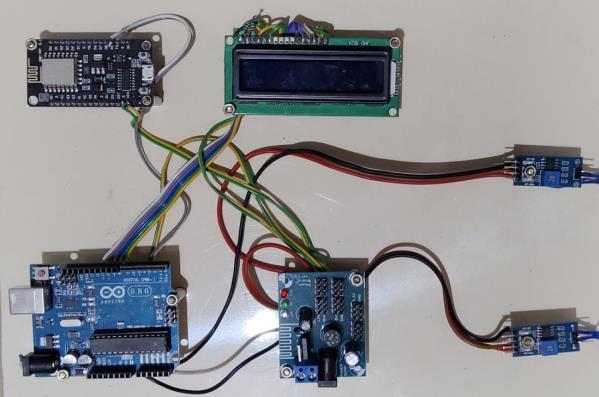
AsshowninFig.3 following thesuccessful simulation and design validation, the proposed IoT-based respiratory health monitoring system was implemented using realworld hardware components to test its effectiveness underpracticalconditions.Thecoreofthehardwaresetup isanESP32microcontroller,selectedforitsbuilt-inWi-Fi capabilities, low power consumption, and multiple GPIO pins to interface with various sensors. The system was assembled on a breadboard for initial testing, then later transferredtoaPCBforimprovedstabilityandportability. Multiple biomedical sensors were integrated with the ESP32 for physiological data collection. A MAX30100 or MAX30102pulseoximeterwasusedtomeasureheartrate and oxygen saturation (SpO₂), while a DHT11/DHT22 sensor provided body temperature readings. A piezoelectric respiration sensor was used to monitor breathing patterns, and an MQ-7 gas sensor measured carbon dioxide (CO₂) levels in exhaled air. For blood pressure monitoring, a digital sensor module compatible withtheI²Cinterfacewasconnected,oralternatively,cuffbased measurements were recorded manually to benchmarkautomatedreadings. All sensors were powered using a regulated 3.3V–5V DC supply from a rechargeable battery pack. Decoupling capacitors were used across the power rails to ensure signal stability and reduce noise. Each sensor's output was fed into the ESP32’sADCordigitalinputpins,dependingonthesignal type, and sensor data was processed using custom firmwarewritteninArduinoIDE.
This work presents a comprehensive IoT-based respiratory health monitoring system designed for early detection and real-time intervention in public environments. By integrating a range of biomedical sensors with cloud-based analytics and wireless communication, the system is capable of continuously
International Research Journal of Engineering and Technology (IRJET) e-ISSN:2395-0056
Volume: 12 Issue: 06 | Jun 2025 www.irjet.net p-ISSN:2395-0072
monitoring critical health parameters such as respiration rate, body temperature, heart rate, SpO₂, and CO₂ levels. The system’s modular design, combined with the use of cloud platforms and mobile alerts, enables rapid identification of abnormal health conditions and timely response potentiallypreventingseriouscomplicationsin high-traffic areas like shopping malls. Overall, the proposed system demonstrates significant potential to improve respiratory health surveillance, especially in the context of infectious diseases or chronic respiratory conditions. Future enhancements may include AI-driven predictive analytics, integration with electronic health records (EHR), and deployment in larger-scale smart city healthnetworks.
1.Zhang,X.,Liu,Y.,&Wang,S.(2021).Awearablesensorbased system for continuous monitoring of respiratory health and early detection of disease symptoms. IEEE Transactions on Biomedical Engineering, 68(7), 2091–2099.
2.Yang,C.,&Lee,Y.(2020).Smartwearablesinhealthcare: Role of IoT devices in respiratory health monitoring. Sensors,20(9),2506.
3.Rajendran, R., Kumar, S., & Joshi, M. (2020). Indoor air quality monitoring for health risk assessment in public spaces using IoT sensors. Environmental Monitoring and Assessment,192(11),1-14.
4. Rao, S., Gupta, M., & Sharma, N. (2019). IoT-based realtime indoor air quality monitoring system for preventing respiratory issues. Journal of Environmental Health ScienceandEngineering,17(3),123-130.
5.Zhang,X.,&Liu,H.(2022).AI-drivenpredictiveanalytics for early detection of respiratory disease using IoT health monitoringdata.JournalofMedicalSystems,46(3),1-9.
6. Sudarsan K and Kumaraguru Diderot P, "Helmet for Road Hazard Warning with Wireless Bike Authentication and Traffic Adaptive Mp3 Playback" International Journal ofScienceandResearch(IJSR),Vol3,No.3,2014.
7.VijayL,SarithaB,PriyadharshiniB,DeepekaSandLaxmi R, "Drunken Drive Protection System", International JournalofScientific&EngineeringResearch,Vol.2,No.12, ISSN:2229-5518,2011.
8. Harish Chandra Mohanta, Rajat Kumar Mahapatra and yotirmayee Muduli, "Anti-Theft Mechanism System with Accidental Avoidance and Cabin Safety System for
Automobiles", International Refereed Journal of EngineeringandScience(IRJES),Vol.3,No.4,2014,pp.5662.
9. Mr.P. Dileep Kumar, Dr.G.N.Kodanda Ramaiah, Mr.A.Subramanyam,Mrs.M.Dharani4InternationalJournal of Engineering Inventions e- ISSN: 2278-7461, p- ISSN: 2319-6491Volume4,Issue10June2015.
10 Sorace, V. S. Reinhardt, and S. A. Vaughn, "High-speed digital-to-RF converter", U.S. Patent 5 668 842, Sept. 16, 2019