
International Research Journal of Engineering and Technology (IRJET) e-ISSN:2395-0056
Volume: 12 Issue: 06 | Jun 2025 www.irjet.net p-ISSN:2395-0072
International Research Journal of Engineering and Technology (IRJET) e-ISSN:2395-0056
Volume: 12 Issue: 06 | Jun 2025 www.irjet.net p-ISSN:2395-0072
Dr. M Arul Prakash1, Kawin Harshan SU2, Gnamath Basha A3
1Asso. Prof, Dept. Of Mechanical Engineering, Sri Sairam Engineering College, Tamil Nadu, India 2,3Student, Dept. Of Mechanical Engineering, Sri Sairam Engineering College, Tamil Nadu, India
Abstract - This paper examines the application of 3D printing and composite materials in the production of lower limb orthotics, focusing on achieving both customization and cost-effectiveness. By harnessing the flexibility of 3D printing and the durability of lightweight materials, orthotic devices are tailored to meet individual anatomicalneeds, improvingpatientcomfortandmobility. These technologies reduce manufacturing time, minimize materialwaste,andlowerproductioncosts.Thestudyalso identifies current limitations and explores future improvements, such as the integration of advanced medical imaging for even more precise designs, aimed at enhancing both patient outcomes and production efficiency.
Key Words: Custom orthotics, 3D printing, composite materials, lower limb, medical imaging.
1.INTRODUCTION
The possible uses of 3D printing and composite materials in producing reasonably priced lower limb orthoses are examined in this work. It investigates the advantages of these technologies that is, more design flexibility, better manufacturing efficiency, and better biomechanical performance. Moreover, the research tackles important obstacles and future prospects in combining these developmentsformoregeneralclinicalandpersonaluses.
These devices have historically been produced using traditional techniques like metal fabrication and thermoforming plastics, which can be expensive, timeconsuming, and frequently lead to little customisation. Advances in material science and additive manufacturing have made 3D printing a promising technology for creating highly customisable and reasonably priced orthoticsolutions.
Collaborative robots, or cobots, are increasingly popular due to their ability to safely operate alongside humans in shared environments. A key aspect of their design is the use of compliant actuators, which help prevent damage during accidental collisions. In
prostheticsandorthotics,theseactuatorsareessentialfor ensuring user safety and comfort. Elastic actuators are preferred in dynamic applications over rigid ones, but current compliant cobots are often too costly or complex forwidespreaduseinthesefields.Thisstudyintroducesa low-cost, sensorized elastic actuator designed for prosthetic and orthotic applications. The modular design, made possible with 3D printing, enables quick customization and cost-effective production. Both the hardware and software are open-source, providing accessible resources for students, researchers, and professionals. Additionally, the system supports impedance and admittance control, further enhancing its adaptabilityandfunctionality[1].
Individuals with neurological impairments, particularly those with cervical spinal cord injuries (SCI), often struggle with daily tasks due to triceps weakness or loss of function. More physically demanding activities, such as sit-skiing, are often impossibleduetothestrengthrequired.Whileresearch intoexoskeletonsdesignedtoenhancearmextensionis ongoing, no commercially available solutions currently exist. Most designs rely on electric motors, which require bulky power sources and wiring, limiting their practicality for everyday use[2].Although passive power systems for upper limb exoskeletons have been explored,nonehaveyetprovidedadequatestrengthfor tasks like sit-skiing. This research introduces a passivelyactuatedexoskeletalarmbracedesignedwith two adjustable strength modes: one for low-level gravity compensation to assist with range of motion, and another for weight-bearing activities. The result is an affordable, lightweight, modular device, customizable to meet the specific needs of individual users.
Thispaperintroducesasoftwearableorthoticdevice designedtoassistwithgait.Constructedprimarilyfrom softmaterials,thedeviceweighsonly680gwhenworn on the lower extremities, minimizing any additional inertiaduring movement. Thedeviceemploysfully soft pneumaticartificialmuscles(PAMs)asactuators,which operate at low threshold pressures. A group of four PAMs generates force for ankle plantarflexion during specific phases of the gait cycle. Gait detection is
International Research Journal of Engineering and Technology (IRJET) e-ISSN:2395-0056
Volume: 12 Issue: 06 | Jun 2025 www.irjet.net p-ISSN:2395-0072
facilitated by two inertial measurement units (IMUs) attachedtothecalfandfootbraces.The orthoticdevice delivers a force of 65 N for ankle plantarflexion, amounting to 3.5% of the typical biological force exertedattheankleduringwalking[3].
Robot-assisted physical therapy for the upper limb isincreasinglypopular,especiallyforthewrist,whichis highly complex due to its multiple degrees of freedom. Overthelastthreedecades,severalroboticdeviceshave been created to aid in wrist rehabilitation, offering intensive therapy and repetitive exercises at a reduced cost. These robots also provide performance feedback, making therapy more effective and customized to a patient’s disability level.[4] Current research in wrist rehabilitation robots focuses on two key areas: mechanical design and control strategies. Mechanically, these devices are either end-effector-based or wearable robotic orthoses. In terms of control, they use either convectional trajectory tracking or assist as-needed methods to tailor support for individual needs. This review examines the design and control innovations in wrist rehabilitation robots, evaluates their performance in healthy and neurologically impaired users, and suggests future research directions for enhancing these roboticsystems.
Thispaperintroducesamodular,distributed"multirobot" cyber-physical system designed to aid children with developmental delays in learning to walk. The system features two key modules:[5] a tethered cable pelvic module with up to six degrees of freedom (DOF) formodulatingpelvicmotioninthreedimensions,anda two-DOF wearable hip module focused on supporting hipflexion.Bothmodulesarelightweightandminimally restrictive,abletofunctionindependentlyorintandem, offering adaptable and personalized assistance. The system achieved high-precision motion tracking, with the pelvic module exhibiting a root mean square (RMS) error of approximately 2 mm and the hip module achieving less than 0.1 mm RMS error. Coordinated functionality of both modules was demonstrated on a mannequinwitharticulated,instrumentedlowerlimbs.
The lower limb exoskeleton robot is designed for rehabilitation training and assists patients with mild conditions or those recovering from rehabilitation. However, challenges arise from the misalignment betweentheexoskeleton'smechanicalstructureandthe human body, along with inadequate design elements. These issues can disrupt the fixed gait during rehabilitationandhinderthepatient'sabilitytoadaptto gait information, ultimately decreasing rehabilitation effectiveness.[6] To address these concerns, this paper
presents a novel mechanical design for the lower limb exoskeleton robot. Initially, the anatomical features of the human lower limbs are examined. Building on this analysis, the design includes an exoskeleton thigh with an adjustable dip angle and length. Additionally, an ankle mechanism is introduced that allows for flexion, dorsiflexion, and adduction, enabling users to independently adjust their centre of gravity. Finite element analysis conducted using SolidWorks Simulation demonstrates that the design possesses adequate stability and strength margins for the key components.
Dexterity plays a crucial role in the research and development of rehabilitation robots. This paper focuses on enhancing the design mechanisms and optimizing control by examining the dexterity of the lower limbs, providing valuable insights for rehabilitationrobotdesigns.Buildingontheanatomical characteristics of human lower limbs, the study expands traditional three-dimensional modelling to a six-dimensional framework using spinor theory. Furthermore, it establishes a kinetic analysis model to assess the manipulability and dexterity of lower limbs. The feasibility of these analyses is confirmed [7] through experiments conducted on a powered RGO platform. The findings indicate that analysing and evaluating thedexterityofhumanlower limbsishighly feasible. The experimental results validate the effectiveness of the new approach for designing rehabilitationdevices.Additionally,theidentificationof optimal motion points (BMPs) during human movement contributes significantly to developing human analysis models and designing effective rehabilitationdevices.
This study describes a powered lower-limb orthosis intended to help people with spinal cord injuries (SCI) achieve a more functional stride. In addition to providingsupportivetorquesatthehipandkneejoints, theorthosisisequippedwithacontrolsystemanduser interface that enable upper-body movements to manipulate the powered device. The orthosis and control system were tested on a paraplegic individual (T10complete)toassessitsefficacy.Anfirstevaluation of the device's ability to assist with basic walking was given by the trials. Walking among parallel bars at an average pace of 0.8 km/h was successfully made possible by the orthosis and its control mechanism, as shown by thedataand supporting video evidence from thesestudies[8].
Thispaperpresentsacontrollerdesignedforalowerlimbexoskeletonthatfacilitates variable-geometry stair climbinganddescendingforindividualswithlowerlimb paralysis. The performance of the controller was assessed using a subject with a T10 complete spinal
International Research Journal of Engineering and Technology (IRJET) e-ISSN:2395-0056
Volume: 12 Issue: 06 | Jun 2025 www.irjet.net p-ISSN:2395-0072
cord injury (SCI) on two different[9] staircases: one featuringariserheightandtreaddepthof18.4×27.9cm (7.25×11in)andtheothermeasuring17.8×29.8cm(7 × 11.75 in). The controller successfully enabled both ascent and descent of the stairs without the need for specific adjustments for each staircase. The results indicated an average stepping rate of 12.9 steps per minute during ascent and 14.6 steps per minute during descent.
This paper presents a new method for controlling force in exoskeletons using twin foot force sensors, called proportional force control. To aid in the analysis of the human-machine system, the paper first describes thedualfootforcesensor mechanismbeforepresenting a one-dimensional lower limb model that has been simplified. After that, a comparison between the suggested proportional force control method and two traditional control techniques desired force control and trajectory tracking control is explored. Performanceisassessedbysimulationtrials,andresults show that the twin foot force sensor force control approachmayproportionatelyincreasehumanstrength and give consumers a concrete sense of control and immediatefeedback[10].
3D-printed prosthetics have made significant stridesinloweringthehighcostsoftraditionaldesigns, addressing affordability challenges for amputees. However, the World Health Organization reports that only 5-15% of those in need have access to proper prosthetic care. To tackle the issues of limited supply and high costs, this paper introduces a self- trainable, user-customizable system for 3D-printed prosthetic hands. The system allows users to create any gesture they need, improving accessibility and functionality. By utilizing aRadial Basis Function(RBF) networkwith 3channelEMG sensorinputs,the system achieves a 94% success rate in replicating[11] desired gestures. This approach offers a cost- effective solution that enhances the performance of prosthetic hands, tailored to meet individualuserneeds.
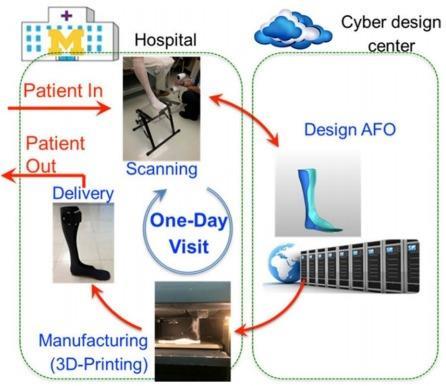
Cerebral Palsy (CP) affects over 100 million children, with more than 60% experiencing significant hand impairments due to involuntary movements and spasticity. Orthoses are commonly used as therapeutic tools to help children with CP improve hand functionality. This research focused on designing, developing,andevaluatingacustomwrist-handorthosis for a child with CP using 3D technologies. The process involved high-precision 3D scanning to capture wristhandanatomy,open-sourcesoftwareformodelling,and a cost-effective 3D printer for manufacturing the
orthosis. The Jebsen-Taylor Test of Hand Function (JTTHF)wasusedtoassesshandperformance,showing improvements in writing (13 seconds), lifting small objects (0.9 seconds), and simulated feeding (69.3 seconds). The customized orthosis not only enhanced functional abilities but also provided a comfortable fit, improvedaesthetics,andbetteroverallusability[12].
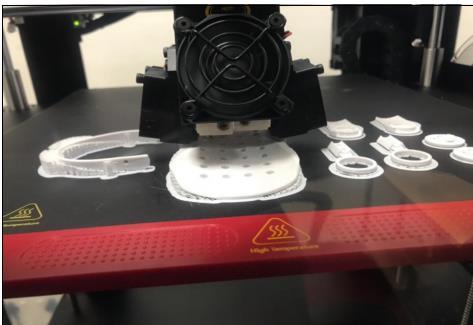
Fig-4.1 FabricationOfAFOsBy3DPrinter[12].
The development of a novel lower limb prosthesis that can dynamically modify its volume and stiffness in accordance with the demands of the user is covered in this study. The socket's inner side of the prosthesis is equipped with bags containing Magneto-Rheological (MR) fluid, which may be adjusted in size and viscosity to change the socket's properties. Total surface bearing (TSB) sockets have been one of the most often used alternatives over the last 20 years. Because[13] TSB sockets can equally transfer body weight over the full socket surface, users find them to be quite useful. Nevertheless,anoteworthyconstraintistheirincapacity to adjust to variations in the user's stump volume. Resultsfromexperimentsshowthatthenewlydesigned MR socket performs better than conventional TSB socketsbecauseitpermitsreal-timeadjustmentsinboth size and viscosity, providing enhanced comfort and functionalityfortheuser.
Fourth-degree burn scar contracture severely reduces joint mobility and frequently calls for dynamic orthotic intervention. Orthotic devices that allow for minor angular adjustments ideally no more than 2° are the most effective. This work describes a model for an all-inclusive treatment plan and presents a revolutionary design that allows for angle variations of lessthan2°overthecourseofaday.Trigonometricand goniometric calculations were used in the construction of the device, which was made utilising orthotic techniques. A screw-threaded mechanism designed especially for controlled angular extension under 2° is used in this design. This device is especially well-suited
International Research Journal of Engineering and Technology (IRJET) e-ISSN:2395-0056
forclinicaluseduetoitsmodulardesignandaffordable production costs, guaranteeing accessibility for efficient patientcare[14].
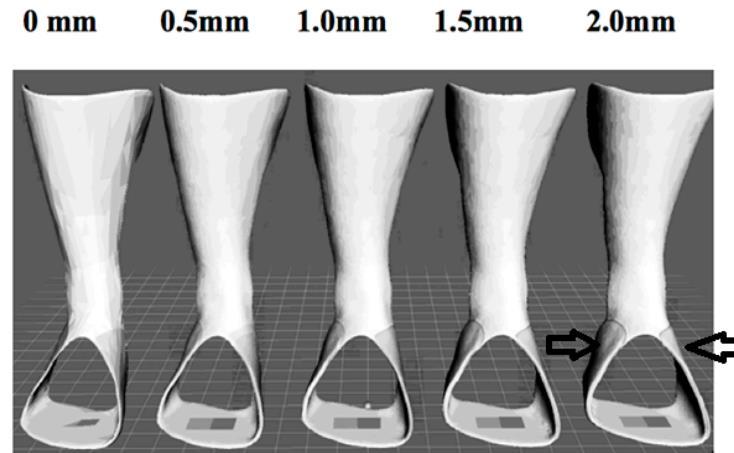
Fig-4.2 VariousThicknessOfAFOsTheArrowIndicates IncreaseThickness[14].
5.AUGMENTED REALITY AND DIGITAL TECHNOLOGIES IN REHABILITATION
Augmented reality (AR) has advanced recently, greatly improving human-computer interaction and openingupnewapplicationsinavarietyofsectors.This study presents a system that efficiently records and stores people's body positions by fusing augmented reality (AR) components with motion capture technologies. The system seeks to generate optimal rehabilitation regimens, especially for users with lower limborthoticorprostheticdevices,byquantifyingthese captures through virtual tools. The aim of this research is to assess the viability of employing this augmented reality tool in physical rehabilitation environments, ultimately leading to enhanced quality of life for people withimpairments.[15]Thismethodimprovestheentire rehabilitation experience by providing reasonably priced add-on services to the ones that are currently offered.
Augmented reality (AR) has advanced recently, greatly improving human-computer interaction and opening up new applications in a variety of fields. This study provides a system that efficiently records and stores human body positions by combining augmented reality (AR) features with motion capture technology. Thesystemusesvirtualtoolstoquantifytheserecorded postures in order to create suitable rehabilitation regimens, especially for people who use lower limb orthotic or prosthetic devices. This study's main goal is to determine whether or if this technology can be used in the field of physical rehabilitation, which will ultimately help people with impairments live better lives. This strategy keeps the framework inexpensive
Volume: 12 Issue: 06 | Jun 2025 www.irjet.net p-ISSN:2395-0072 © 2025, IRJET | Impact Factor value: 8.315 | ISO 9001:2008
while providing additional services that are in line with currentrehabilitationprocedures[16].
Due to the lack of access to trauma care and rehabilitation facilities in low-income nations, the socioeconomic effects of limb disability brought on by accidents,trauma,orcongenitaldisordersareespecially severe.Intheseareas,themajorityofmedicalschoolsdo not have a specific curriculum that addresses disability andrehabilitation,andmanyofthem are ill-equippedto give students the professional skills they need. The developmentandmanufactureofmedicalrehabilitation equipment in conjunction with the education of credentialed rehabilitation specialists is a pragmatic strategy for improving physical rehabilitation services in low-income nations. Rehabilitation-related technologies,suchprostheticsandorthotics,cangreatly improve the functional skills of people with limb limitations, especially when paired with appropriate software and hardware solutions.In this work, a lowcostmechatronicsproof-of-conceptispresentedforuse byengineers, physicaltherapists,andstudentswhoare involved in the design and manufacture of orthotic and orthotic devices for the upper and lower limbs. The study integrates[17] basic biomechanical principles assessed by means of practical approaches involving prototype building as well as theoretical approaches like the finite element method. The suggested methodology is a useful teaching tool for training in rehabilitation.Inaddition,theestablishmentofefficient and long-lasting rehabilitation technologies and services in developing nations depends on the promotion of a collaborative environment among scientists,engineers,andrehabilitationspecialists.
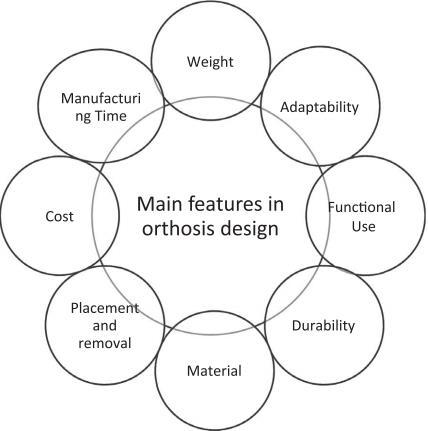
Fig-6.1 MainFeatureOfOrthosisAFOs[17].
International Research Journal of Engineering and Technology (IRJET) e-ISSN:2395-0056
Volume: 12 Issue: 06 | Jun 2025 www.irjet.net p-ISSN:2395-0072
This assessment looks at a number of areas related to wheelchair (WC) and lower-extremity prosthesis (LEP) technology and service delivery. It demonstrates how recent breakthroughs in LEP technology have emerged in low- income nations through considerable research and fieldwork. In order to increase the manufacturing capacity of LEPs, the article addresses the required technological advancements and related researchinitiatives.Italsoexaminesvariousapproaches to the planning, production, and distribution of wheelchairs in low-income environments. Finally, it provides an overview of previous studies and current efforts to enhance research capacities in this field. Ultimately, the paper offers a thorough examination of the physical, social, cultural, and economic obstacles that India faces, highlighting the difficulties in successfullyputtingthistechnologyintopractice[18].
By using materials that closely resemble the mechanical characteristics of the human musculoskeletal system, soft robots can improve performance without obstructing natural movement. This research offers a bio-inspired soft active orthotic device meant to enhance ankle dorsiflexion during walking. The apparatus uses a Pneumatic Artificial Muscle (PAM) made of silicone that actuates quickly to offer angular support at the ankle joint. The use of this PAM is maximised by its unique pneumatic network construction, which is designed to match the foot-ankle anatomy ergonomically. After preliminary testing to assess the PAM's features, ankle angle data gathered duringthegaitcyclewasusedtobuildacontrolmethod. Next, a pilot study was conducted to evaluate the efficacy of the device. The outcomes[19] show that the dynamicstabilityoftheanklejointismuchimprovedby this soft active orthotic device. In the end, it could improve walking stability for elderly people who are fragileor atriskoffalling.Ithaspotentialasareal-time augmentationsolution.
This work describes a new method for the early identification of posture transitions in a motorised orthotic brace intended to help older people with sit-tostand transfers. A linear Support Vector Machine (SVM) classifier is used by the detection system; it is trained with features taken from sensor signals that are integrated into the orthosis. These sensors consist of force sensors, gyroscopes, potentiometers, and accelerometers. Ninehealthyindividuals participated in a range of activities, including standing, walking, and sitting transitions, from which data were collected. To precisely label every posturetransition, the sensor data wasprocessed, normalised,andmanuallyannotated.To accurately detect the early start of sit-to-stand
transitions, a leave-one-out cross- validation technique was used for both training and validating the SVM classifier.Thestudyalsolookedatusinglagwindowsto improve detection precision. The suggested approach showed a low frequency of false positives and a high detectionrateforposturealterations[20].
This study presents a novel intelligent lower limb muscle support robot intended for daily usage, displaying state-of- the-artdesignadvancesthatputthe needs of the user first and reduce physical strain. The goal of this assistive device's creation is to improve human-computer interaction by utilising cutting-edge technologies. Four main areas are the centre of the design: Firstly, the robot is made up of four parts: a walking boot, a leg brace, a belt, and a mechanical framework. These parts are designed to look more like athletic gear than typical wearable robotics. Second, it mimics the muscles, tissues, and bones of the human body by combining soft and hard materials, taking inspiration from human anatomy. Soft, flexible materials, such as neoprene, are used to create the innermost layer, which feels comfortable[21] on the skin. Third, the outer layers get stiffer and stiffer with time, using carbon fibre to reduce weight and boost strength. Last but not least, the robot has sensors that dynamically track human movements, enabling realtime modifications as well as focused help and force enhancement. Through a specialised app, users may obtain data and positional information, improving the device'soverallusabilityandperformance.
Body and machine work together seamlessly thanks toacombinationofmachinelearning,forceandposition micro- sensors embedded in the fabric layer, and small butstrongaxialfluxmotorsplacedatthebody'snatural rotational locations. Physical of the design and optimisation of the new lower limb muscle assist robot technology, which is one of the most cutting-edge solutionsandtheindustry'sfuture[22].
A lower limb exoskeleton intended to aid gait in peoplewithneuromuscularimpairmentsispresentedin this research. The authors stress two crucial elements to guarantee efficient functioning. For the exoskeleton to calculate the right amount of help required during different walking phases, it must first have trustworthy real-timegaitphasedetectioncapabilities.Second,when the user needs little assistance, the device should not interferewiththeirnaturalgaitdynamics.Todothis,the exoskeleton needs to be able to reduce its passive dynamics, which include[23] friction, inertial, and gravitationalforcesthatcanobstructmovement.Inorder to improve user experience and mobility, the design
International Research Journal of Engineering and Technology (IRJET) e-ISSN:2395-0056
Volume: 12 Issue: 06 | Jun 2025 www.irjet.net p-ISSN:2395-0072
strives for active compensation of these passive dynamics. The creation and application of these two fundamental components real-time gait phase detection and the passive dynamics are actively cancelled within a prototype exoskeleton. The usefulness of these characteristics is confirmed by experimentalresults,whichalsoshowhowtheycouldhelp userswithgaitsupport.Bytakingthisnovelmethod,the team hopes to further the development of assistive technology that improve mobility for those with lower limbdisabilities.
Lower limb paralysis significantly reduces mobility for affected individuals. Computer-controlled leg brace systems offer new possibilities by enhancing mobility safety,particularlyonuneventerrain,inclines,steps,and stairs. This article presents such a system, where the knee joint of the brace was equipped to record sensor data over several weeks of home use, capturing highresolution motion information. A clinical trial with 8 patients,eachwithvaryingconditions,revealedthatthe system was used for an average of over 10 hours per day, with patients taking more than 2,100 steps[24].
This paper details a powered lower-limb orthosis designed to assist individuals with spinal cord injuries (SCI)byprovidingsupportivetorquetoboththehipand knee joints. Weighing 12 kg, the orthosis can deliver up to40 Nmoftorque witha hiprangeof motionbetween 105° flexion and 30° extension, and knee movement between 105° flexion and 10° hyperextension. Controlled by a custom embedded system, the device is poweredbyalithiumpolymerbatterythatsupportsone hour of continuous walking. To assess its effectiveness, the orthosis was tested on a paraplegic subject with a T10spinalinjury.Datafromthetrialrevealedconsistent hipandkneemovementswithanaveragewalkingspeed of 0.8 km/h. The power consumption per hip and knee jointwasaround25Wand27W,respectively,resulting in a total power usage of 117 W during walking.[25] A video demonstrating the subject's walking performance isavailableinthesupplementalmaterial.
Exoskeletal systems are becoming increasingly vital for the rehabilitation of individuals with lower limb paralysis. While these systems are primarily used in clinical settings, devices designed to assist with daily activities are now emerging. However, the unpredictability of home environments introduces new challenges and unknown loading conditions. This paper presents a novel orthotic system developed to support people with lower limb paralysis in their everyday routines. To better understand the mechanical stresses onthedevice,sensorswereadded tothekneejointunit tomeasuremotion,forces,andpowerduringreal-world use. The impact of users' remaining functional abilities onthesemeasurementswasalsoexplored.Initialresults
from a clinical trial involving three paralyzed patients indicatethatkneepoweriscomparabletothatofhealthy individuals, with peak values reaching up to 5.9 W/kg. Peak knee joint torque was measured at 1.8 Nm/kg. Significant variations were observed between patients, based on their specific conditions. Additionally, all systems experienced impacts with accelerations exceeding85m/s²inextremesituations.Thesefindings highlight the importance of mechanical durability in designing supportive systems, as patient pathology plays a major role in the stress experienced by the device[26].
This paper presents a model for a lower-limb exoskeleton robot featuring three degrees of freedom andautomaticalignmentwiththekneejoint.Themodel focusesonenhancingtheadaptabilityoftheexoskeleton tovariousmotionpostures andhumanbodystructures. A sensor mechanism is integrated into the second joint of the exoskeleton to ensure proper coordination between the robotic joint and the human knee. The design process involved modelling the exoskeleton usingSolidWorks,followed bysimulations andanalyses conducted in MATLAB to assess the model's feasibility. The findings indicate that the developed lower-limb exoskeleton robot demonstrates[27] high safety standards while enhancing the coordination between the user's legs and the robot. This research contributes to the creation of a well-structured and user-friendly lower-limb exoskeleton rehabilitation device, aligning the knee joint of the lower extremity with the robotic joint,therebyimprovinguseracceptanceandsafety.
This paper introduces an innovative test system designed to simulate the human lower limb, offering a reliable alternative for experiments assessing the performance of lower limb exoskeletons, particularly those that counteract gravity. Utilizing a wire-driven mechanism, the system can replicate the rotational movements of the hip and knee joints, effectively mimickinghumangait.Thisapproachprovidessaferand more dependable testing conditions compared to traditional methods involving human participants. By using this simulation test system, researchers can evaluate the efficiency of energy consumption in exoskeletons. A prototype of the human lower limb simulation test system has been designed and built, and experimental results confirm the effectiveness of the proposed method. The findings indicate significant potential for diverse testing applications in the field of exoskeletontechnology[28].
Although significant obstacles remain in the mechanical design of lower limb exoskeletons, developingeffectivecontrolstrategiesisequallycrucial. Given that exoskeletons operate as highly coupled human-robot systems characterized by complex
International Research Journal of Engineering and Technology (IRJET) e-ISSN:2395-0056
Volume: 12 Issue: 06 | Jun 2025 www.irjet.net p-ISSN:2395-0072
dynamicmodelsanddiverseworkingenvironments,itis essential for the control mechanisms to align with user intentions without depending on inaccurate models. This paper introduces a motion control strategy for a lower limb exoskeleton focused on providing efficient and flexible assistance during collaborative squatting. The control framework is tailored for an exoskeleton equipped with a force sensor positioned on the back. It employsahigh-levelforce-velocityadmittancemodelto interpret human intentions based on interaction forces, complemented by a low-level PD (ProportionalDerivative) closed-loop velocity control that incorporates gravity compensation. Experimental results demonstrate the feasibility and effectiveness of this proposed control strategy when implemented with theexoskeleton[29].
To enhance the safety and efficacy of lower limb exoskeleton robots (LLER) during rehabilitation training, this paper introduces a novel control strategy grounded in human plantar reaction forces. Initially, plantarreaction force and gaitdataaregatheredfroma healthy individual using a 3D experimental platform, along with the calculation of joint torque and gait trajectorythroughdynamicandkinematicanalyses.The derived gait trajectory serves as the target trajectory, while the corresponding joint torque is applied to the LLER, enabling it to mimic[30] and follow the desired movement. Subsequently, a radial basis function neural networkcontrollerisdesignedtoadjustforinputtorque based on tracking errors. The simulation results demonstrate the effectiveness of this proposed approach in improving rehabilitation outcomes for patientswithlowerlimbparalysis.
Lower limb amputees frequently experience skin injuries due to mechanical forces, particularly shear stress, while using prosthetic devices. To address this issue, this paper introduces a new type of adaptive prosthetic and orthotic interface that incorporates a capacitive shear stress sensor.[31] The design and transfer function of the sensor are explained, and preliminary tests are provided to demonstrate its functionalityinmitigatingshear-relatedskininjuries.
Recent advancements in lower-limb prosthetics haveledtodevicesthatcanactuatebothkneeandankle joints, allowing amputees to engage in complex activities such as climbing stairs and traversing sloped surfaces. Despite these capabilities, the transitions between different locomotion modes and standard walking remain non-automatic and disjointed. This study outlines the development and training of a highlevelintentrecognitionsystemdesignedforlower-limb prosthetics, enabling smoother transitions between
walking, stair climbing, stair descending, ramp ascending, and ramp descending. Data was collected using mechanical sensors integrated into powered prostheses, focusing on steady-state and transitional movements performed by six transfemoral amputees across the five locomotion modes. Initially, the intent recognitionsystemachievedanaccuracyof84.5% with steady-state training data alone. However, by including data from seamless transitions, the accuracy improved significantly to 93.9%. Furthermore, training with a singleanalysiswindowduringcriticalmoments,suchas heel contact and toe-off, proved to be more effective than using multiple analysis windows.[32] Overall, this research highlights the effectiveness of an intent recognition system in facilitating automatic and fluid transitions between various locomotion modes for transfemoral amputees utilizing powered prosthetic limbs.
Aprosthesisisamechanicaldevicedesignedbyexperts to assist individuals who have undergone amputation, facilitatednotonlytheirdailyactivitiesbutalsominimized theenergyexpenditurerequiredforthesetasks.Giventhe significant number of amputees globally, it is crucial to create prosthetic devices thatcater to theirspecific needs. The energy expenditure of lower limb amputees can be measured using indirect calorimetry, which assesses oxygen consumption during activities like walking or climbingstairs.Thispaperprovidesareviewofthevarious types of prostheses developed to date and examines their impactontheenergycostforlowerlimbamputees[33].
Adding high-performance inorganic fillers to 3D printing resin can significantly enhance its mechanical properties and thermal conductivity. However, these fillers also affect the 3D printing process[34] itself. This paper presents the development of a high-performance 3D printing composite resin, focusing on the impact of boron nitride micron sheets (hBN) on the resin's viscosity and light transmittance. The study explored suitable process parameters for optimal 3D printing. Results showed that with 30 wt% hBN, the resin's viscosityincreasedto2426 mPa.s,remainingwithinthe acceptable range for photocurable 3D printing (below 3000 mPa.s). Although hBN accelerated the resin's curing rate, it also hindered UV light transmission, reducing the curing thickness of the composite resin with 30 wt% hBN to 1.2 mm 131% thinner than the pure resin. These findings provide valuable insights for developingsustainable3Dprintingcompositeresins.
This study introduces a method for producing magnetic composites tailored for 3D printing using stereolithography (SLA). The method is applied to the
International Research Journal of Engineering and Technology (IRJET) e-ISSN:2395-0056
Volume: 12 Issue: 06 | Jun 2025 www.irjet.net p-ISSN:2395-0072
3D printing of soft- magnetic composite materials, specifically for creating toroidal magnetic core samples. The production sequence for these 3D-printed samples using SLA technology is outlined, followed by the fabrication of test samples. The magnetic properties of the samples, including magnetic permeability and the magnetization curve, are measured to assess nonlinearity. The proposed approach enables the rapid creation of complex magnetic cores through SLA, allowingprecise controlof magnetic propertiesinthree dimensions[35].
This review examines the use of biochar as an additive in 3D printing materials, focusing on its ability to enhance mechanical and thermochemical properties. Biochar,derivedfromthethermochemicalprocessingof biomass, offers high porosity, a large specific surface area, and carbon-rich composition, making it an excellentcomponentforsustainablemanufacturing.The reviewexplorestheapplicationofbiocharcompositesin various3Dprintingmaterials,suchaspolymers,metals, ceramics, and fibres, highlighting improvements in strength, durability, and performance. Additionally, biochar's contribution[38] to environmental sustainability is emphasized. Challenges related to achieving uniform dispersion of biochar and the need for advanced printing technologies are also discussed. Overall, biochar integration presents a promising opportunity to advance additive manufacturing while maintainingecologicalandfunctionalstandards.
TABLE I Mechanical properties comparison chart of different3Dprinting machines[35].
This work presents magnetic hysteresis models for composite materials created through Fused Deposition Modeling (FDM) 3D printing. The composite consists of a polymer matrix embedded with microscale iron powder, with samples produced by varying the iron content and microfill patterns. The magnetization of these samples was tested, and single-frequency hysteresis loops were obtained. The data from these measurementswereusedtofitparametersfortheJilesAtherton and Stoner-Wohlfarth hysteresis models. These findings offer valuable insights for further modelling applications and help optimize the predictive control of magnetic properties in 3D-printed polymer composites[36].
This study examines UV-curable polymer composites to evaluate their suitability for creating dielectrics with functionally graded materials (d-FGM) using stereolithographic 3D printing. Several dielectric properties, including permittivity, dielectric loss, and breakdownstrength,areanalysedonthefabricatedtest samples.Additionally,the3Dprintabilityofthepolymer compositesisassessedby measuringtheir viscosity[37] and curing depth. The impact of ceramic filler type, volume fraction, and particle morphology on both dielectric performance and 3D printing viability is also discussedindetail.
Thisresearch examines the kinematicangles ofthe lower limbs during the execution of jumping jacks, a common exercise performed by many individuals. The successofthisexercisereliesonmaintainingappropriate kinematicalignmentofthelowerlimbs,whichisvitalfor effectiveexecution.Byanalysingvariationsinlowerlimb movement throughout multiple repetitions, individuals canenhancetheirexercisetechnique.Duringthestudy,a participant performed jumping jacks for five minutes, and motion capture technology was utilized to assess differences in posture at both the beginning and end of the exercise session. Further angle analysis was conducted using MATLAB software. An Artificial Neural Network (ANN) model was also created to forecast the anglesofthelowerlimbs,takingintoaccountinputssuch as muscle activation signals[39] derived from electromyography(EMG)andtheangularaccelerationof the limbs. The results indicated that the ANN model effectively predicted lower limb kinematics. This study emphasizes that by examining muscle activation and angular acceleration, the ANN model can provide insights into the effectiveness of the jumping jack exercise.
International Research Journal of Engineering and Technology (IRJET) e-ISSN:2395-0056
Volume: 12 Issue: 06 | Jun 2025 www.irjet.net p-ISSN:2395-0072
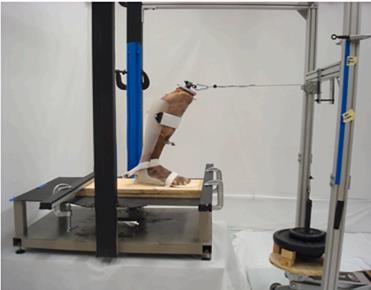
Fig-11.1 LoadingTestForAFOs[39].
This study emphasizes the significance of monitoring knee joint angles during lower-limb activities, particularlyforpatientswithkneedisordersundergoing rehabilitation. Traditional methods, such as inertial measurementunits(IMUs)andmotioncapturesystems, often face challenges like drift and high costs. In response, we have developed a wearable kneepad sensor utilizing textile-based resistive strain sensors to effectively measure knee angles during motion. These sensorsdetectchangesinresistanceduetodeformation as the knee bends. To enhance accuracy, we integrated an encoder with the kneepad sensor mounted on a prosthetic limb and used a linear mapping method to calibrate the sensor data against the encoder's measurements. The calibrated sensor achieved an R² valueof0.956,withameanabsoluteerrorof6.15°anda mean squared error of 64.35 in measuring knee angles. The results demonstrated the sensor's ability to accurately capture knee angles during two lower- limb movements: sit-to-stand (STS) transitions and knee extensions. This comfortable, wearable kneepad sensor shows promise in detecting knee angles across various environments, offering potential applications in healthcareandrobotics[40].
This article introduces an innovative design for a testbench-gaitsimulatorintendedfor theevaluationof lowerlimbprosthesesandtheircomponents,utilizinga Gough- Stewart platform equipped with six linear drives. This configuration enables the simulation of the prosthesis movements during testing, mimicking various user motor activities. In this setup, the GoughStewartplatformemploys EPCOlineardrivesproduced by Festo, which are managed through the industrial automationsoftware“ControllerDevelopmentSystem.” Thetestbenchisdesignedtoassessthefunctionalityof
differentdesignsofartificialfeet,kneeandanklejoints, as well as both transfemoral and transtibial prosthetic devices. When configuring and testing control systems for active and semi-active prostheses, the simulator operatesasamodelofahuman-machinesystem,where thegaitsimulatorrepresentsthe“human”elementand theprosthesisservesasthe“machine.”Akeyadvantage ofthistestbenchisitscapabilitytoevaluatelowerlimb prostheses and their components for static and cyclic strength, adhering to the ISO 2006:10328 standards [41].
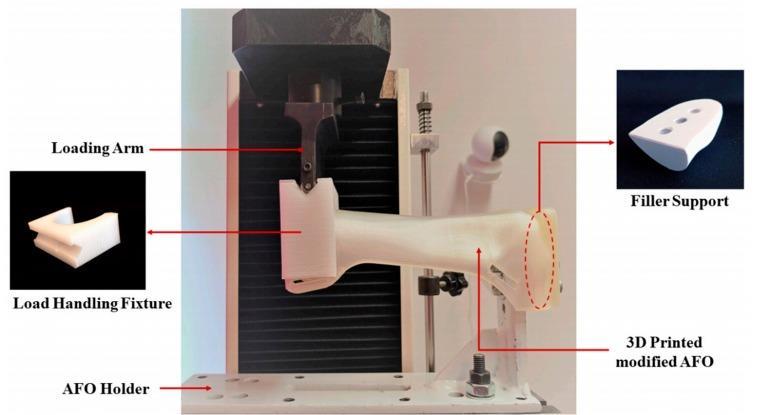
Fig-12.1 TestingsetupofAFOs[41]
Assistive robotic technology has garnered significant attention from researchers and the public alike, especially in the realm of rehabilitation for individuals with physical disabilities, the elderly, and those recovering from injuries, including spinal cord damage. Devices like lower limb exoskeletons and prosthetics play a crucial role in enhancing the quality of life for thosewhohavelostmobility.Akeyconsiderationinthe operationoftheseexoskeletonsistheabilitytointerpret the user’s motion intentions effectively. Electroencephalography (EEG) signals have emerged as a promising means to detect these intentions. Despite advancements in the control methods for lower limb exoskeletons using EEG signals over recent years, several challenges remain that require further exploration. This study examines the control mechanisms of lower body exoskeletons utilizing EEG signals,alongwiththechallengesandpotentialofBrainComputer Interface (BCI) techniques in this field. The authors also present findings from their investigations to support the concept of controlling lower limb exoskeletonsthroughEEGtechnology[42].
International Research Journal of Engineering and Technology (IRJET) e-ISSN:2395-0056
Volume: 12 Issue: 06 | Jun 2025 www.irjet.net p-ISSN:2395-0072
Powered exoskeletons are designed to assist with humanlocomotion;however,theirbulkyenergysupply systems can be cumbersome for users. During walking, the human lower limbs alternate between acceleration and deceleration, during which positive and negative work is performed, respectively. By capturing the negative work done during deceleration, an assistive device can potentially enhance the acceleration phase of movement, leading to a reduction in overall metabolic expenditure. This study introduces a novel, unpowered flexible lower limb exoskeleton that parallels the user's legs, providing walking assistance without the need for an external power source. The exoskeleton mimics the anatomical structure of the human lower limb and incorporates elastic and damping components. When donned, it assists the muscles by harvesting kinetic energy during deceleration to facilitate subsequent acceleration, thus lowering biomechanical energy costs during walking. Additionally, the generator within the exoskeleton acts as a damping mechanism, capable of converting kinetic energy into electricity to power wearable devices. A prototype of the flexible exoskeleton was developed, and experimental results confirmed its effectiveness, demonstratinga3.12%reductioninmetaboliccostata walking speed of 4.5 km/h and generating a peak electricaloutputof6.47Wataspeedof5.1km/h[43].
15.NEURAL DYNAMICS IN MOTION
The precise solutions of equations exhibit notable parallels with minimizing error in control theory, suggesting that various control challenges can be interpretedthroughthelensofequation-solving.Neural dynamics models have emerged as a robust computational approach for tackling time-varying equations and optimization tasks due to their impressive convergence and stability. Within these models, the choice of activation function significantly influences their overall performance. This paper explores the use of a unique non- linear activation function, specifically the power-sum activation function, in the experimental simulation of lower limb motion intention recognition. By comparing it to traditional linear activation functions, the analysis highlights the enhanced convergence and robustness characteristics of the neural dynamics model utilizing the power-sum activation function, demonstrating its superiorcapabilities[44].
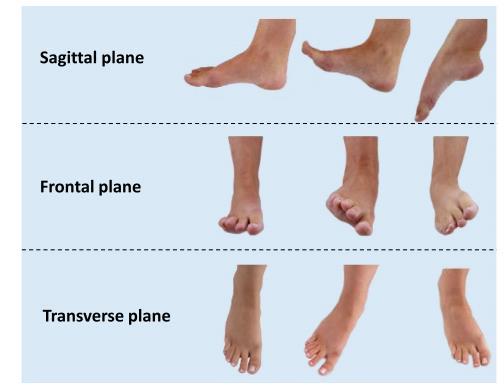
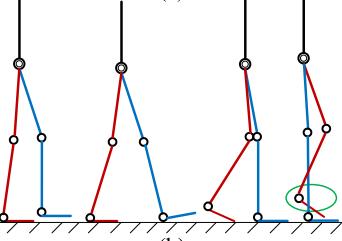
Usersoflowerlimbprostheticsoftenexperiencegait deviations, particularly in terms of asymmetrical stance time (ST), which can lead to additional musculoskeletal issues. To address this, biofeedback (BFB) systems offer promising solutionsforgaittraining aimed at correcting these deviations. This study presents a wearable BFB system that provides vibrotactile feedback through two tactors positioned on both the anterior and posterior aspects of the residual limb for prosthetic users. The system aims to rectify asymmetrical ST (%) by employing two different feedback strategies: single threshold feedback (SF) and bandwidth threshold feedback (BF). The effectiveness of each strategy was validated with a group of five lower limb amputees by comparing gait trials[45] with feedback against trials without any feedback (NF). The results indicated significant differences between the NF and feedback trials. While no substantial differences were observed between SF and BF, there were noticeable trends suggestingthatBFmaypromoteST(%)thatalignsmore closelywiththetargetwhileminimizingerror.
International Research Journal of Engineering and Technology (IRJET) e-ISSN:2395-0056
Volume: 12 Issue: 06 | Jun 2025 www.irjet.net p-ISSN:2395-0072
Research on electromyography (EMG) has long compared the muscle activity of healthy individuals and amputees. This study specifically focused on recording EMG data from five healthy participants using the BIOPAC system with surface electrodes placed on muscles such as the biceps brachii, triceps, peroneus longus, and gastrocnemius, both with and without an additional weight of 5 kilograms.[46] Each subject performed various hand and leg movements, repeating eachactionfourtimes.Additionally,EMGdatafromfour amputees were analysed while they executed lower limb movements. Key parameters such as slope, peakto-peak value, mean, and area were extracted from the EMGsignalstoinvestigatepotentialdifferencesbetween the two groups. Results indicated that the amplitude of thebicepsandtricepsinhealthysubjectsdecreasedover time under both weight conditions, reflecting muscle fatigue. Other parameters, including slope, mean, and area, also exhibited a decline over time. Comparatively, there were notable differences in EMG values for lower limb muscles between healthy individuals and amputees, attributed to the reduced muscle strength in phantom limbs. In healthy participants, the mean and amplitude values of clenches increased, indicating enhanced clench strength during the activities performed.
Anovelhorizontalrehabilitationrobotforlowerlimbs has been developed based on a parallel mechanism, aligning with the motion patterns of lower limbs and principles of rehabilitation medicine. This robot is designed to assist patients with rehabilitation exercises targeting the hips, knees, and ankles. To ensure the safetyandcomfortoftheaffectedlimbsduringtraining, it is essential to accurately understand the forces
(torques) acting on the joints[47] throughout the recovery process. Utilizing the Lagrangian method, the dynamic equations governing the robot's motion were derived, and dynamic simulations were conducted using the SimMechanics tool, confirming the validity of the dynamic modelling. Furthermore, this approach allows fortheconvenientextractionofdynamicparametersfor boththe robotand human lower limbsonce the motion control law is established. This provides a theoretical foundation for developing rehabilitation training strategies, analysing dynamic performance, and implementingpreciseforcecontrol.
This paper introduces a control scheme aimed at enhancing the safety and effectiveness of rehabilitation training for patients using a lower limb rehabilitation robot (LLRR), utilizing human gait data and plantar reaction force. Initially, normal human gait data captured through a motion capture platform (MCP) is inputted into the control system, while the plantar reaction force is processed and applied to the LLRR following dynamic[48] calculations. Subsequently, a controllerisdevelopedtotrackjointanglesandangular velocityerrors,facilitatingaccuratetrajectoryfollowing. Theefficacyofthis proposedmethodisvalidatedthrough simulation results from a robot simulation model, demonstrating its potential for improving rehabilitation trainingoutcomes.
International Research Journal of Engineering and Technology (IRJET) e-ISSN:2395-0056
Volume: 12 Issue: 06 | Jun 2025 www.irjet.net p-ISSN:2395-0072
This paper introduces the E-LEG, an innovative semi-passivelower-limbexoskeletondesignedtoassist workers during squatting by allowing motorized adjustment of the assistive squatting height. Unlike traditional passive industrial exoskeletons, the E-LEG incorporates unique design elements, including an inertial sensor for measuring thigh tilt angle and an electromagnetic switch for modifying squat height, which significantly enhanceits functionality. The paper not only details the design of the exoskeleton but also presentsasystematicexperimentalevaluationinvolving humansubjects.Throughvariousassistanceconditions, the study assessed the variability of muscular activity during prolongedstatic[49]squatting tasks. Metricsfor evaluating the device's effects included leg muscle activity, plantar pressure fluctuations, the movement of theplantarpressurecentre,andgaitangles. Thefindings indicate that the E-LEG effectively reduces muscular activity during squatting while minimally impacting normal walking gait. Overall, this study demonstrates the potential of the E-LEG exoskeleton to alleviate muscularstrainduringextendedsquattingactivities

Fig-20.1 TypesOfExoskeletonBasedOnPurpose[49].
Assessing lower limb spasticity is crucial for improving rehabilitation outcomes in stroke patients. Traditional evaluation methods, such as the Modified Ashworth Scale (MAS), are often influenced by subjective biases, leading to inconsistent assessments among healthcare providers. In contrast,
neurophysiological methods, especially the analysis of surface electromyography (SEMG) data, present a more objective and sensitive option. While much of the existing research has concentrated on upper limb spasticity, there remains a significant gap in the evaluation of lower limb spasticity. This study introduces a Bayesian-optimized[50] Support Vector Machine (SVM) classifier aimed at the objective assessmentoflower limb spasticitythrough sEMG data. In our experiment, we included seven participants categorizedacrossfourMASlevels,achievinganaverage recognition accuracy of over 75% with the optimal model and selected sEMG features. This innovative approach promises to enhance objectivity and accuracy in assessing lower limb spasticity, effectively mitigating the issues linked to subjective biases in traditional evaluationmethods.
The results of the research demonstrate the viability of combining 3D printing with composite materials in orthotic Lower limb design enhance patient outcomes reduce waste and customize for individual needs. The integration of lightweight, high-strength composites has shown promising results in reducing costs while maintainingthenecessarystrengthfordailyuse.
[1]. F. Sanfilippo, M. Økter, J. Dale, H. M. Tuan and M. Ottestad, "Revolutionising Prosthetics and Orthotics with Affordable Customisable Open-Source Elastic Actuators," 2024 10th International Conference on Automation, Robotics and Applications (ICARA), Athens, Greece, 2024, pp.57-63,doi: 10.1109/ICARA60736.2024.10553120.
[2].A.McPherson,R.Matthew,M.Estrada,R.BajcsyandM. Tomizuka, "Design of a Passive, Variable Stiffness Exoskeleton for Triceps Deficiency Mitigation,"2020 42nd Annual International Conference of the IEEE Engineering in Medicine & Biology Society (EMBC), Montreal, QC, Canada, 2020, pp.49214925,doi:10.1109/EMBC44109.2020.9175350.
[3].Y.Gu,Y.Lv,X.MaandC.Lu,"Lower-LimbSoftOrthotic Device for Gait Assistance," 2018 IEEE 4th Information Technology and Mechatronics Engineering Conference (ITOEC), Chongqing, China, 2018, pp. 894-897, doi: 10.1109/ITOEC.2018.8740407.
[4]. S. Hussain, P. K. Jamwal, P. Van Vliet and M. H. Ghayesh, "State-of- the-Art Robotic Devices for Wrist Rehabilitation: Design and Control Aspects," in IEEE Transactions on Human-Machine Systems, vol. 50, no. 5, pp. 361-372, Oct. 2020, doi: 10.1109/THMS.2020.2976905.
International Research Journal of Engineering and Technology (IRJET) e-ISSN:2395-0056
Volume: 12 Issue: 06 | Jun 2025 www.irjet.net p-ISSN:2395-0072
[5].E.J.Parketal.,"Designandpreliminaryevaluationofa multi-robotic system with pelvic and hip assistance for pediatric gait rehabilitation," 2017 International Conference on Rehabilitation Robotics (ICORR), London, UK, 2017, pp. 332-339, doi: 10.1109/ICORR.2017.8009269.
[6]. J. Wang, Y. Pang, X. Chang, W. Chen and J. Zhang,"Mechanical Design and Optimization on Lower Limb Exoskeleton for Rehabilitation," 2019 14th IEEE Conference on Industrial Electronics and Applications (ICIEA), Xi'an, China, 2019, pp. 137-142, doi: 10.1109/ICIEA.2019.8833906.
[7].D.Chen, M.Ning, J.Li,G.Yang andB. Sun, "Evaluation ondexterityofhumanlowerlimbsandapoweredorthosis experiment," 2014 IEEE International Conference on Robotics and Biomimetics (ROBIO 2014), Bali, Indonesia, 2014,pp.2421-2425,doi:10.1109/ROBIO.2014.7090702.
[8]. H. A. Quintero, R. J. Farris and M. Goldfarb, "Control and implementation of a powered lower limb orthosis to aid walking in paraplegic individuals," 2011 IEEE International Conference on Rehabilitation Robotics, Zurich, Switzerland, 2011, pp. 1-6, doi: 10.1109/ICORR.2011.5975481.
[9]. A. Ekelem, S. Murray and M. Goldfarb, "Preliminary assessment of variable geometry stair ascent and descent with a powered lower limb orthosis for individuals with paraplegia,"201537thAnnualInternationalConferenceof the IEEE Engineering in Medicine and Biology Society (EMBC), Milan, Italy, 2015, pp. 4671-4674, doi: 10.1109/EMBC.2015.7319436.
[10]. H. Wu, H. Ma, Q. Wei, J. Wang and H. An, "A novel force control method of lower limb exoskeleton based on dual foot force sensors," 2018 Chinese Control And Decision Conference (CCDC), Shenyang, China, 2018, pp. 6414-6419,doi:10.1109/CCDC.2018.8408257.
[11]. K. Nam and C. Crick, "Self-trainable 3D-printed prosthetic hands," 2021 30th IEEE International ConferenceonRobot&HumanInteractiveCommunication (RO-MAN), Vancouver, BC, Canada, 2021, pp. 1196-1201, doi:10.1109/RO-MAN50785.2021.9515506.
[12].C. Schmitz, Y. T. Mori, H.Remigio Gamba, P.Nohama and M. A. de Souza, "Development and Evaluation of a Customized Wrist-HandOrthosisusing3DTechnologyfor a Child with Cerebral Palsy - A Case Study," 2019 41st Annual International Conference of the IEEE Engineering inMedicineandBiologySociety(EMBC),Berlin,Germany, 2019,pp.1476-1479,doi:10.1109/EMBC.2019.8857327.
[13]. A. Ogawa, G. Obinata, K. Hase, A. Dutta and M. Nakagawa, "Design of lower limb prosthesis with contact pressure adjustment by MR fluid," 2008 30th Annual
International Conference of the IEEE Engineering in Medicine and Biology Society, Vancouver, BC, Canada, 2008,pp.330-333,doi:10.1109/IEMBS.2008.4649157.
[14]. B. Dimitriu, "Dynamic orthotic design for a four degree burned upper limb," 2011 E-Health and BioengineeringConference(EHB),Iasi,Romania,2011,pp. 1-4.
[15]. J. R. Clímaco and C. F. Alfaro, "Capture and posture assessment for patients with orthotic or prosthetic in lower limbs using augmented reality," 2014 IEEE Central America and Panama Convention (CONCAPAN XXXIV), Panama, Panama, 2014, pp. 1-4, doi: 10.1109/CONCAPAN.2014.7000416.
[16].C.-C.C.AlbertoandÁ.-C.P.Andrés,"Implementation of electromiographic device prototipe for the diagnosis andmonitoringofpathologiesinalowerlimb,"2017IEEE 3rd Colombian Conference on Automatic Control (CCAC), Cartagena, Colombia, 2017, pp. 1-6, doi: 10.1109/CCAC.2017.8276436.
[17]. H. Lara-Padilla, X. S. Sánchez and T. A. Paucar, "Design and evaluation of a low-cost mechatronic system tostudyupperandlowerlimbsbiomechanics," 2017IEEE Global Humanitarian Technology Conference (GHTC), San Jose, CA, USA, 2017, pp. 1-5, doi: 10.1109/GHTC.2017.8239307.
[18]. J. Pearlman et al., "Lower-limb prostheses and wheelchairs in low- income countries [An Overview]," in IEEE Engineering in Medicine and Biology Magazine, vol. 27, no. 2, pp. 12-22, March-April 2008, doi: 10.1109/EMB.2007.907372.
[19]. X. Hu et al., "An Ankle Based Soft Active Orthotic Device Powered by Pneumatic Artificial Muscle," 2019 IEEE International Conference on Real-time Computing and Robotics (RCAR), Irkutsk, Russia, 2019, pp. 374-378, doi:10.1109/RCAR47638.2019.9043948.
[20].J.Bell,X.ShenandE.Sazonov,"Earlydetectionofsitto-stand transitions in a lower limb orthosis," 2015 37th Annual International Conference of the IEEE Engineering in Medicine and Biology Society (EMBC), Milan, Italy, 2015,pp.5028-5031,doi:10.1109/EMBC.2015.7319521.
[21]. J. Cai and J. Cai, "Design and optimization of a novel lowerlimbassistedsmartrobottechnology:Evaluationof human-computer interaction based lower limb assisted robot design," 2022 IEEE International Conference on Electrical Engineering, Big Data and Algorithms (EEBDA), Changchun, China, 2022, pp. 1157-1162, doi: 10.1109/EEBDA53927.2022.9744942.
[22]. M. Liu, D. Wang and H. Huang, "Development of an Environment- Aware Locomotion Mode Recognition
International Research Journal of Engineering and Technology (IRJET) e-ISSN:2395-0056
Volume: 12 Issue: 06 | Jun 2025 www.irjet.net p-ISSN:2395-0072
System for Powered Lower Limb Prostheses," in IEEE Transactions on Neural Systems and Rehabilitation Engineering, vol. 24, no. 4, pp. 434-443, April 2016, doi: 10.1109/TNSRE.2015.2420539.
[23]. S. Murray and M. Goldfarb, "Towards the use of a lower limb exoskeleton for locomotion assistance in individuals with neuromuscular locomotor deficits," 2012 Annual International Conference of the IEEE Engineering inMedicineandBiologySociety,SanDiego,CA,USA,2012, pp.1912-1915,doi:10.1109/EMBC.2012.6346327.
[24]. R. Auberger, B. Pobatschnig, M. F. Russold, R. Riener and H. Dietl, "Activities With a Microprocessor-Controlled LegBraceforPatientsWithLowerLimbParalysis:ASeries ofCaseStudies,"in IEEE TransactionsonMedicalRobotics and Bionics, vol. 3, no. 1, pp. 137- 145, Feb. 2021, doi: 10.1109/TMRB.2020.3039892.
[25]. R. J. Farris, H. A. Quintero and M. Goldfarb, "Preliminary Evaluation of a Powered Lower Limb OrthosistoAidWalkinginParaplegicIndividuals,"inIEEE Transactions on Neural Systems and Rehabilitation Engineering, vol. 19, no. 6, pp. 652-659, Dec. 2011, doi: 10.1109/TNSRE.2011.2163083.
[26]. R. Auberger, C. Breuer-Ruesch, F. Fuchs, N. Wismer and R. Riener, "Smart Passive Exoskeleton for Everyday UsewithLowerLimbParalysis:DesignandFirstResultsof Knee Joint Kinetics," 2018 7th IEEE International Conference on Biomedical Robotics and Biomechatronics (Biorob), Enschede, Netherlands, 2018, pp. 1109- 1114, doi:10.1109/BIOROB.2018.8488119.
[27]. Z. Zhang, "An Adaptive Lower Limb Rehabilitation Exoskeleton Robot Designing Scheme," 2022 3rd International Conference on Intelligent Design (ICID), Xi’an, China, 2022, pp. 244-248, doi: 10.1109/ICID57362.2022.9969720
[28]. J. Gao, Y. Zhang and J. Liu, "A Novel Human Lower Limb Simulation Test System for Gravity-Counteracting Exoskeletons," 2021 4th International Conference on Intelligent Robotics and Control Engineering (IRCE), Lanzhou, China, 2021, pp. 16-19, doi: 10.1109/IRCE53649.2021.9570893.
[29]. J. Wang, D. Wu, W. Dong and Y. Gao, "A Control Strategy for Squat Assistance of Lower Limb Exoskeleton with Back Sensing," 2022 IEEE International Conference on Mechatronics and Automation (ICMA), Guilin, Guangxi, China, 2022, pp. 1312-1317, doi: 10.1109/ICMA54519.2022.9856343.
[30]. Y. Ge, Z. Li and L. Meng, "Tracking control of lower limb exoskeleton robot based on human plantar reaction force," 2021 International Conference on Advanced
MechatronicSystems(ICAMechS),Tokyo,Japan,2021, pp. 97-102,doi:10.1109/ICAMechS54019.2021.9661550.
[31]. K. Sundara-Rajan, G. I. Rowe, A. J. Simon, G. K. Klute, W.R.LedouxandA.V.Mamishev,"Shearsensorforlower limb prosthetic applications," 2009 First Annual ORNL Biomedical Science & Engineering Conference, Oak Ridge, TN,USA,2009,pp.1-4,doi:10.1109/BSEC.2009.5090469.
[32]. A. J. Young, A. M. Simon and L. J. Hargrove, "A Training Method for Locomotion Mode Prediction Using PoweredLowerLimbProstheses,"inIEEETransactionson Neural Systems and Rehabilitation Engineering, vol. 22, no. 3, pp. 671-677, May 2014, doi: 10.1109/TNSRE.2013.2285101.
[33]. D. A. Bermudez, R. L. Avitia, M. A. Reyna, M. A. Camarillo and M.E. Bravo, "Energy expenditure in lower limb amputees with prosthesis," 2022 Global Medical Engineering Physics Exchanges/ Pan American Health Care Exchanges (GMEPE/PAHCE), Panama City, Panama, 2022, pp.1-5, doi: 10.1109/GMEPE/PAHCE55115.2022.9757804
[34]. T. Zhao, Z. Huang, Y. Zhang, Y. Sun, R. He and C. Li, "3D Printing of High-Performance hBN/epoxy Composite Materials," 2023 2nd Asia Power and Electrical TechnologyConference(APET),Shanghai,China,2023,pp. 75-79,doi:10.1109/APET59977.2023.10488956.
[35]. M. Ralchev, V. Mateev and I. Marinova, "3D Printed Polymer Composite Magnetic Material by Stereolithography Technology," 2022 22nd International Symposium on Electrical Apparatus and Technologies (SIELA), Bourgas, Bulgaria, 2022, pp. 1-3, doi: 10.1109/SIELA54794.2022.9845727.
[36]. M. Ralchev, V. Mateev and I. Marinova, "Magnetic Hysteresis Models for 3D Printed Composite Materials," 2024 IEEE International Magnetic Conference - Short papers (INTERMAG Short papers), Rio de Janeiro, Brazil, 2024, pp. 1-2, doi: 10.1109/INTERMAGShortPapers61879.2024.10576910
[37].W.-D.Li,L.-Y.Zhang,C.Wang,X.-R.Li,M.XuandG.J. Zhang, "Dielectric Properties and 3D Printing Fesibility of UV Curable Polymer Composites," 2018 IEEE InternationalConferenceonHighVoltageEngineeringand Application (ICHVE), Athens, Greece, 2018, pp. 1-4, doi: 10.1109/ICHVE.2018.8642258.
[38]. N. Bolanakis et al., "Enhancing 3D Printing Materials withBiochar:ALiteratureReview,"20245thInternational Conference in Electronic Engineering, Information Technology & Education (EEITE), Chania, Greece, 2024, pp.1-8,doi:10.1109/EEITE61750.2024.10654408.
© 2025, IRJET | Impact Factor value: 8.315 | ISO 9001:2008 Certified Journal | Page1181
International Research Journal of Engineering and Technology (IRJET) e-ISSN:2395-0056
Volume: 12 Issue: 06 | Jun 2025 www.irjet.net p-ISSN:2395-0072
[39].G.Nagaraj,B.A.Mir,B.Gomathy,L.S.R,A.Sengupta and S. S. Ahmad, "Artificial Neural Network to Predict Swinging of Lower Limb in Jumping Jack Exercise," 2023 International Conference on Intelligent Data Communication Technologies and Internet of Things (IDCIoT), Bengaluru, India, 2023, pp. 914-918, doi: 10.1109/IDCIoT56793.2023.10053468.
[40]. X. Zou, X. Li, J. Xue and K. W. C. Lai, "Detection of Lower-Limb Motion Using a Kneepad Sensor Based on Textile Strain Sensor," 2023 IEEE 18th International Conference on Nano/Micro Engineered and Molecular Systems(NEMS),JejuIsland,Korea,Republic of,2023,pp. 161-164,doi:10.1109/NEMS57332.2023.10190914.
[41]. S. M. Güttler, A. M. Poliakov and V. I. Pakhaliuk, "Universal Mechatronic Test Bench-Gait Simulator for Testing Lower Limb Prostheses," 2022 IEEE 23rd International Conference of Young Professionals in Electron Devices and Materials (EDM), Altai, Russian Federation, 2022, pp. 588-593, doi: 10.1109/EDM55285.2022.9855100.
[42]. G. Roy, D. Nirola and S. Bhaumik, "An Approach towards Development of Brain Controlled Lower Limb ExoskeletonforMobilityRegeneration,"2019IEEERegion 10 Symposium (TENSYMP), Kolkata, India, 2019, pp. 385390,doi:10.1109/TENSYMP46218.2019.8971173.
[43]. L. Xie, G. Huang, L. Huang, S. Cai and X. Li, "An Unpowered Flexible Lower Limb Exoskeleton: Walking Assisting and Energy Harvesting," in IEEE/ASME Transactions on Mechatronics, vol. 24, no. 5, pp. 22362247,Oct.2019,doi:10.1109/TMECH.2019.2933983.
[44].J.Li,Y.Qi,M.Liu,S.Li,Z.SunandL.Jin,"Power-sum Activated Neural Dynamics for Lower Limb Motion IntentionRecognition,"2020IEEE9thDataDrivenControl and Learning Systems Conference (DDCLS), Liuzhou, China, 2020, pp. 1031-1036, doi: 10.1109/DDCLS49620.2020.9275144.
[45]. R. Escamilla-Nunez, A. Michelini and J. Andrysek, "A Wearable Vibrotactile Biofeedback System Targeting Gait Symmetry of Lower- limb Prosthetic Users," 2020 42nd Annual International Conference of the IEEE Engineering in Medicine & Biology Society (EMBC), Montreal, QC, Canada, 2020, pp. 3281-3284, doi: 10.1109/EMBC44109.2020.9176666.
[46]. S. Inam, J. Iqbal, F. Amin and M. Waqar, "Study of Electromyography(EMG)SignalsofHealthyandAmputee Subjects for their Upper and Lower Limb Muscles," 2019 InternationalSymposiumonRecentAdvancesinElectrical Engineering (RAEE), Islamabad, Pakistan, 2019, pp. 1-6, doi:10.1109/RAEE.2019.8886920.
[47]. Hongying Sun, Lixun Zhang and Changsheng Li, "Dynamicanalysisofhorizontallowerlimbsrehabilitative robot," 2009 IEEE International Conference on Intelligent Computing and Intelligent Systems, Shanghai, 2009, pp. 656-660,doi:10.1109/ICICISYS.2009.5358301.
[48]. Y. Ge, Y. Dan, A. Wang and S. Zhang, "Lower limb rehabilitationrobotcontrolbasedonhumangaitdataand plantar reaction force," 2020International Conference on Advanced Mechatronic Systems (ICAMechS), Hanoi, Vietnam, 2020, pp. 286-289, doi: 10.1109/ICAMechS49982.2020.9310077.
[49].Y.Tu,A.Zhu,J.Song,X.ZhangandG.Cao,"Designand ExperimentalEvaluationofaLower-LimbExoskeletonfor Assisting Workers With Motorized Tuning of Squat Heights," in IEEE Transactions on Neural Systems and RehabilitationEngineering,vol.30,pp.184-193,2022,doi: 10.1109/TNSRE.2022.3143361.
[50].L.Wuetal.,"QuantitativeAssessmentofLowerLimb SpasticityUsingsEMGDataandBayesian-OptimisedSVM," 2024 World Rehabilitation Robot Convention (WRRC), Shanghai, China, 2024, pp. 1-5, doi: 10.1109/WRRC62201.2024.10696863.