
International Research Journal of Engineering and Technology (IRJET) e-ISSN: 2395-0056
Volume: 13 Issue: 03 | Mar 2026 www.irjet.net p-ISSN: 2395-0072
International Research Journal of Engineering and Technology (IRJET) e-ISSN: 2395-0056
Volume: 13 Issue: 03 | Mar 2026 www.irjet.net p-ISSN: 2395-0072
Sonam Jaiswal1 , Mr. Ushendra Kumar2
1Master of Technology, Civil Engineering, Lucknow Institute of Technology, Lucknow, India
2Head of Department, Department of Civil Engineering, Lucknow Institute of Technology, Lucknow, India
Abstract The escalating environmental burden of plastic waste has stimulated interest in the reutilization of recycled plasticswithincivilinfrastructuresystems.Thispaperpresents a comprehensive review of the environmental performance analysis associated with various recycled plastic utilization pathways in infrastructure applications, with emphasis on sustainabilityassessmentmethodsandoutcomes.Asystematic literature search was conducted across major scientific databases using predefined keywords and inclusion criteria, spanningstudiesonrecycledpolymerincorporationinasphalt, concrete, geosynthetics, and other structural and non-structural elements. Key environmental assessment frameworks principally life cycle assessment (LCA), carbon footprinting, and life cycle cost analysis are synthesized to elucidate methodological trends, impact categories, and system boundaries employed in current research. The review highlights consistent evidence that recycled plastics can reduce embodied energy and greenhouse gas emissions relative to conventional materials, particularly when replacing virgin aggregates or polymer modifiers. However, resultsvarysignificantlyacrossapplicationsduetodifferences in material properties, processing requirements, and assessmentassumptions.Criticalchallengesidentifiedinclude inconsistent LCA boundary definitions, limited field-based performance data, and a paucity of regionally calibrated impact factors. Research gaps and future directions are discussed,underscoringtheneedforstandardizedassessment protocols and multi-criteria sustainability frameworks. This review aims to inform researchers, practitioners, and policymakers on the environmental implications of recycled plasticdeploymentinsustainableinfrastructuredevelopment
Key Words: Recycled plastics, life cycle assessment, civil infrastructure, environmental performance, sustainability analysis, polymer waste utilization.
1.1 Background
1.1.1 Plastic Pollution and Waste Management Challenges Globally
The production and consumption of plastics have risen exponentially over the past decades, resulting in an unprecedentedaccumulationofplasticwasteinterrestrial
andmarineenvironments.Despiteglobaleffortstopromote recycling,onlyasmallfractionoftheannualplasticoutputis effectivelyreprocessed;recentassessmentsindicatethatless than 10% of plastics produced globally originate from recycledsources,whilethemajoritypersistinlandfillsorthe naturalenvironment,exacerbatingecologicalcontamination andhumanhealthrisks(TheGuardian,2025).Plastics’long degradationtimesleadtothereleaseofmicroplastics,which infiltrate soils, water bodies, and food chains, prompting callsformoresustainablewastemanagementstrategiesthat extend beyond disposal and incineration to reuse and materialsubstitution.
Civilinfrastructure,includingroads,bridges,buildings,and drainage systems, represents one of the largest industrial consumers of raw materials worldwide. Traditional construction practices depend heavily on finite resources suchasaggregates,cement,andsteel,whoseextractionand processing are associated with significant environmental burdens.Associetalinfrastructureexpandstomeetgrowing population and economic demands, the environmental footprintofmaterialproductionandconsumptioncontinues to escalate, driving research toward alternative materials thatcanreduceresourcedepletionandlifecycleimpacts.
Within this context, recycled plastics have emerged as a promisingclassofalternativeconstructionmaterialsdueto theirdurability,lowdensity,andresistancetomoistureand chemical degradation. Studies show that various recycled polymers,notablyPET,HDPE,andPP,canbeincorporatedin concrete,asphalt,geosynthetics,andothercivilengineering elements, not only diverting waste from landfills but also enhancingcertainperformanceattributessuchasinsulation or flexibility (Das & Ali, 2025; Lopes et al., 2025). The integration of recycled plastics into infrastructure aligns with circular economy principles, potentially reducing demand for virgin resources and mitigating lifecycle environmentalimpactswhenappropriatelyapplied.
International Research Journal of Engineering and Technology (IRJET) e-ISSN: 2395-0056
Volume: 13 Issue: 03 | Mar 2026 www.irjet.net p-ISSN: 2395-0072
1.2.1 Why Environmental Performance Assessment Is Critical
While the technical feasibilityofusingrecycled plasticsin infrastructure has been well documented, understanding theirenvironmentalperformanceisequallycritical.Lifecycle assessment(LCA)frameworksprovidestructuredmethods toquantifyenvironmentalimpactsacrossproduction,use, and end-of-life stages, enabling comparisons between conventional materials and recycled alternatives. Without rigorous environmental performance analysis, decisions aboutmaterialselectionriskoverlookingtrade-offssuchas increased energy use during processing, differences in durability,orunintendedemissionsrelatedtomicroplastic release.Assuch,comprehensiveenvironmentalmetricsare necessary to evaluate whether recycled plastic pathways genuinely contribute to sustainability goals (MDPI, 2023; ScienceDirect,2023).
1.3.1 What Aspects of Plastic Recycling and Environmental Analysis Are Covered
Thisreviewfocusesonsynthesizingexistingresearchonthe environmentalperformanceofrecycledplasticutilizationin civil infrastructure systems. It encompasses studies that evaluate recycled plastic applications in structural and non-structural components, with emphasis on environmental impacts assessed through methodologies suchaslifecycleassessment(LCA),carbonfootprinting,and othersustainabilityindicators.Bysystematicallyorganizing results from global literature, the review aims to characterizecommonapplicationpathways,highlightareas of consensus and divergence, and identify methodological challengesinenvironmentalassessment.
1.3.2 Boundaries (Types of Plastics, Infrastructure Applications, Assessment Methods)
Thereview’sscopeincludesabroadrangeofthermoplastic materials commonly encountered in municipal and industrial waste streams such as PET, HDPE, LDPE, and PP given their prevalent recycling potential and documented use in civil engineering applications. Infrastructure applications examined include recycled plastic incorporation in asphalt mixtures, concrete composites, geosynthetics, and other building elements. Environmental analysis methods considered comprise cradle-to-grave LCA, carbon emission accounting, and sustainabilitytrade-offanalyses,withcriticalevaluationof assessmentboundaries,functionalunits,anddatasourcesin thereviewedliterature.
2.1 Importance
A clear and systematic literature search methodology is essential in a review paper because it ensures that the process of identifying, selecting, and analyzing studies is transparent, reproducible, and unbiased. Without a documentedstrategy,readersandreviewerscannotassess whether the review’s conclusions are based on a comprehensiveandobjectivesamplingoftheliterature.In systematic reviews, protocols such as PRISMA (Preferred ReportingItemsforSystematicReviewsandMeta-Analyses) are often applied to structure the search, selection, and reportingprocess,makingiteasiertodemonstraterigorand repeatability in research synthesis practices (Wikipedia, 2025).
To compile a comprehensive body of evidence on environmentalperformanceanalysisofrecycledplasticsin civilinfrastructure,thechoiceofdatabasesplaysapivotal role. Core scholarly databases such as Scopus, Web of Science,andGoogleScholararecommonlyusedduetotheir extensive coverage of peer-reviewed journals across engineeringandenvironmentalsciences.ScopusandWebof Science index high-impact journals and allow advanced filteringbydiscipline,publicationyear,anddocumenttype, whileGoogle Scholarprovidesbroader retrieval including conferenceproceedingsandreports,whichcanbeimportant in interdisciplinary areas. Some reviews also include specialized sources such as Engineering Village or ScienceDirectwhererelevantsubjectmatterisconcentrated (e.g.,environmentalengineering,infrastructurematerials)to ensurethatkeystudiesarenotomitted.
Theliteraturesearchemployscarefullyconstructedsearch strings that combine key terms using Boolean operators (AND,OR)tocaptureallrelevantliteraturewhileminimizing irrelevant results. For a topic focused on environmental performanceandrecycledplasticutilization,representative termsmightinclude“recycledplastics”,“plasticwaste”,“civil infrastructure”, “life cycle assessment”, “environmental impact”, and “sustainability”. String combinations (e.g., “recycledplastic”AND“lifecycleassessment”AND“asphalt”) areusedtofocusonspecificaspectsofthetopic.Usingboth broad and narrow keyword sets in combination increases theprobabilityofretrievingdiverserelevantstudieswhile maintainingfocusonenvironmentalperformanceevaluation methodologies.
International Research Journal of Engineering and Technology (IRJET) e-ISSN: 2395-0056
Volume: 13 Issue: 03 | Mar 2026 www.irjet.net p-ISSN: 2395-0072
Aftertheinitialsearchyieldsalargesetofpotentialstudies, screeningcriteriaareappliedtorefinethecorpustostudies pertinent to the research question. Inclusion criteria typicallyrequirethatarticlesarepeer-reviewed,published inEnglish,andfocusdirectlyonenvironmentalperformance or life cycle analysis related to recycled plastics in civil engineeringmaterialsandsystems.Exclusioncriteriahelp remove non-relevant studies, suchas publications thatdo notevaluateenvironmentalimpactsorthatareoutsidethe defined infrastructure applications. For example, articles solely discussing plastic recycling technologies without connection to infrastructure performance would be excluded.Somereviewsalsoeliminatenon-scientificsources likepressreleasesorblogpoststomaintainacademicrigor (MyCumbria,2025).
2.5
The time period for the literature search defines the temporalscopeofthereviewandensuresthatthesynthesis reflects contemporary scientific understanding. For many environmental performance topics, research published in thelasttwodecades(e.g.,2005–present,oruptothemost recentyear)isconsideredtocapturemajordevelopmentsin LCA methods and recycled material applications. Establishing a publication date range also helps manage volume, focusing the analysis on literature that reflects current standards, technologies, and methodological advancementsinsustainabilityassessment.
Theinitialdatabasesearchoftenreturnsalargenumberof articles, which are then narrowed through screening to a morefocusedsetofstudiesthatmeetallselectioncriteria. Throughiterativescreeningoftitles,abstracts,andfulltexts, the final set of included articles represents those with rigorous environmental assessment data or relevant synthesis findings that contribute directly to the review topic. Systematic reviews in related fields often reduce thousands of preliminary results to a few dozen or a few hundredhighlyrelevantpapersafterscreening.Thisensures bothdepthandfocusinthecriticalanalysisofenvironmental performance of recycled plastic pathways in civil infrastructure.
3.1.1
Several types of recycled plastics are employed in civil infrastructure,includingpolyethyleneterephthalate(PET),
high-densitypolyethylene(HDPE),low-densitypolyethylene (LDPE),polypropylene(PP),mixedplastics,andcomposite blends.PETiswidelyusedduetoitsrigidityandstrength, making it suitable for incorporation into concrete and composite materials. HDPE and LDPE are flexible and chemicallyresistant,oftenappliedinasphaltmodificationor drainagesystems.PPoffersagoodbalanceofstrengthand low density, lending itself to geosynthetics and pavement blocks.Mixedplasticsandpolymercomposites,derivedfrom municipal waste streams, provide opportunities to utilize otherwisenon-recyclablematerials,althoughtheypresent challengesinstandardizationandperformancepredictability (Das&Ali,2025;Lopesetal.,2025).
Thephysicalandmechanicalpropertiesoftheseplastics suchastensilestrength,modulusofelasticity,meltingpoint, andchemicalresistance dictatetheirsuitabilityforspecific infrastructureapplications.Forinstance,PETexhibitshigh tensile strength and dimensional stability, which is advantageouswhenusedaspartialaggregatereplacementin concrete or as fibers in reinforced composites. HDPE and LDPE, being softer and more ductile, improve flexibility whenincorporatedintobitumenorasphaltmixtures.PP’s combinationoftoughnessandlowdensityfacilitatesitsuse in lightweight geosynthetic mats and drainage pipes. Understandingthesecharacteristicsiscrucialforensuring that recycled plastic incorporation does not compromise structural performance while maximizing environmental benefits(Shahetal.,2023).
3.2.1
Recycledplasticshavebeenextensivelyappliedinasphalt modification, where polymer additives improve binder propertiessuchasruttingresistance,thermalstability,and durability. Plastic-modified bitumen can utilize shredded PET, LDPE, or PP as partial substitutes for conventional polymers or aggregates. Studies indicate that such modificationsnotonlyenhanceroadperformancebutalso reduceenvironmentalburdensbydivertingwasteplastics fromlandfills(Alietal.,2024).
In concrete and cementitious composites, shredded or pelletizedplasticsareincorporatedeitherasfibersorpartial replacements for fine and coarse aggregates. Applications include structural and non-structural elements such as pavements, blocks, and precast panels. The addition of plastic can enhance toughness, impact resistance, and freeze–thaw durability, although excessive content may reducecompressivestrength(Lopesetal.,2025).
International Research Journal of Engineering and Technology (IRJET) e-ISSN: 2395-0056
Volume: 13 Issue: 03 | Mar 2026 www.irjet.net p-ISSN: 2395-0072
3.2.3
Geosynthetics,includingmats,meshes,anddrainagepipes made from recycled plastics, play a vital role in soil stabilization,erosioncontrol,andwatermanagement.HDPE and PP dominate in this domain due to their chemical resistance and durability under load. Use of recycled materialsingeosyntheticscontributestocirculareconomy objectives while maintaining functional performance comparabletovirginmaterials(Shahetal.,2023).
3.2.4 Pavement Blocks, Bricks, and Tiles
Recycledplasticsareincreasinglyincorporatedinpavement blocks, bricks, and tiles, either as polymer-modified aggregates or as binding agents. This application is particularly relevant for non-structural surfaces such as sidewalks,walkways,andlandscapingareas,whereplastics enhance resistance to water absorption, wear, and deformation(Das&Ali,2025).
3.3 Standard Specifications and Practices
3.3.1 Codes and Standards
The use of recycled plastics in infrastructure is guided by nationalandinternationalcodesandstandardsthatensure safety, durability, and environmental compliance. For example,ASTMandISOprovidespecificationsforpolymermodifiedbitumen,concreteadmixtures,andgeosynthetics, while several countries, including India and the UK, have adoptedguidelinesforincorporatingplasticwasteintoroads andconstructionmaterials.Compliancewiththesestandards iscriticalforachievingstructuralintegrity,reproducibilityof materialproperties,andenvironmentalperformancetargets (Alietal.,2024;Lopesetal.,2025).
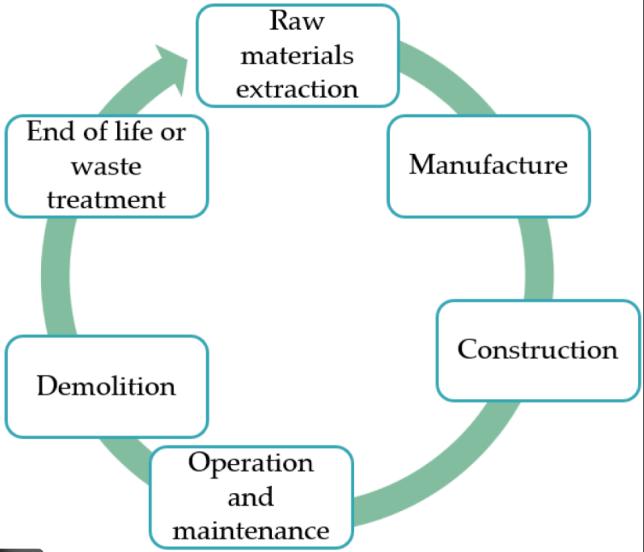
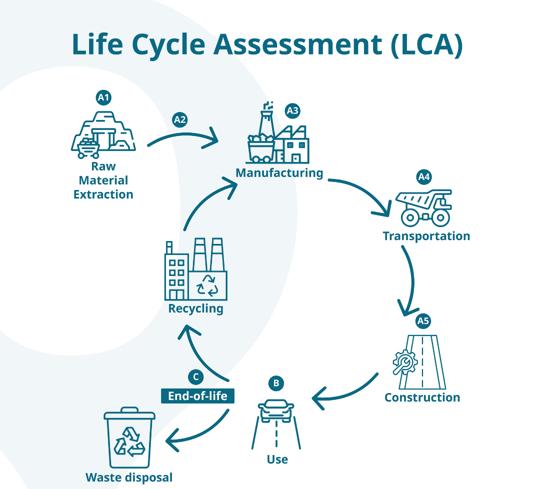
Life Cycle Assessment (LCA) is the most widely used framework to evaluate the environmental performance of materials,includingrecycledplasticsincivilinfrastructure. LCAsystematicallyquantifiesenvironmentalimpactsacross the entire life cycle of a product, from raw material extractiontoend-of-lifedisposal.Twocommonapproaches are cradle-to-gate which evaluates impacts from raw materialacquisitionuptothefactorygatebeforeuse and cradle-to-grave, which encompasses the full lifecycle including construction, use, maintenance, and disposal phases. For infrastructure applications, cradle-to-grave assessmentisparticularlyvaluableasitcapturesthelongtermenvironmentalconsequencesofincorporatingrecycled plastics in roads, concrete, or geosynthetics (Shah et al., 2023).
4.1.2
LCA analyses consider multiple impact categories. Key metrics include global warming potential (GWP), which measures greenhouse gas emissions; energy use, representingembodiedandoperationalenergy;andwater footprint, which quantifies freshwater consumption. Additionalcategories,suchasacidification,eutrophication, and human toxicity, may be included depending on study scope. Evaluating these categories helps compare environmentalburdensbetweenconventionalandrecycled-
International Research Journal of Engineering and Technology (IRJET) e-ISSN: 2395-0056
Volume: 13 Issue: 03 | Mar 2026 www.irjet.net p-ISSN: 2395-0072
plastic-inclusive materials, supporting evidence-based sustainabilitydecisions(Das&Ali,2025).
Carbon footprint analysis is a targeted assessment of greenhousegasemissionsacrossthelifecycleofaproduct or system. This method complements LCA by providing a simplified,focusedmetricforpolicymakersandpractitioners interested primarily in climate change mitigation. In the contextofrecycledplastics,carbonfootprintingquantifies emission reductions achievable by substituting virgin aggregates or polymers, highlighting the potential climate benefitsofcircularmaterialstrategies(Lopesetal.,2025).
Lifecycle Cost Assessment (LCCA) integrates economic considerationswithenvironmentalimpactstoevaluatethe long-termfeasibilityofmaterialchoices.Byincludinginitial constructioncosts,maintenance,durability,andend-of-life disposal, LCCA allows decision-makers to identify costeffective strategies that minimize environmental burdens while meeting performance requirements. For recycled plastic applications, LCCA can reveal trade-offs between upfront material costs and lifecycle savings or environmental benefits, guiding sustainable procurement (Alietal.,2024).
Beyond LCA, carbon footprint, and LCCA, additional sustainability indicators provide complementary insights. Circularity metrics measure the proportion of recycled or reused material in a system, reflecting progress toward a circular economy. Eco-efficiency indicators relate environmentalimpacttofunctionalperformance,enabling comparison between different material options on a normalized basis. Incorporating these metrics facilitates holisticevaluationofrecycledplasticapplications,aligning environmentalandresourceefficiencyobjectives(Shahetal., 2023).
Each assessment method has strengths, limitations, and applicability.LCAofferscomprehensive,multi-dimensional environmental analysis but can be data-intensive and sensitivetosystemboundarychoices.Carbonfootprintingis simpler and more accessible but does not capture nonclimatic impacts such as water use or toxicity. LCCA incorporates economic dimensions but may require assumptions about future costs or service life. Circularity and eco-efficiency metrics provide complementary sustainabilityinsightsbutarelessstandardized.Combining these methods often provides the most robust understandingofenvironmentalperformance,particularly
for novel materials like recycled plastics in civil infrastructure(Das&Ali,2025;Lopesetal.,2025).
5. LITERATURE REVIEW: ENVIRONMENTAL PERFORMANCEOFRECYCLEDPLASTICPATHWAYS
5.1.1
Recycled plastics have been extensively incorporated into asphalt and pavement systems, primarily as polymer modifiersinbitumenoraspartialsubstitutesforaggregates. Shahetal.(2023)reviewedapplicationsofPET,LDPE,and PPinasphalt,notingimprovementsinruttingresistanceand thermalstability.Similarly,DasandAli(2025)reportedthat shredded plastics in hot mix asphalt enhance fatigue life while providing a sustainable outlet for municipal plastic waste. Studies vary in scope, including laboratory-scale evaluations of material properties and pilot-scale road constructionprojects.
5.1.2 Environmental Outcomes and Performance Indicators
EnvironmentalperformanceistypicallyassessedusingLCA andcarbonfootprinting.Recycledplastic-modifiedasphalt generally reduces greenhouse gas emissions and energy consumption relative to conventional asphalt due to displacementofvirginbitumenandaggregates.Waterusage andembodiedenergyarealsooftenlower,particularlywhen plasticsoriginatefrompost-consumerwastestreams(Lopes etal.,2025).
5.1.3Comparative AnalysiswithConventionalMaterials
Comparisons consistently show that plastic-modified pavements offer both performance and environmental advantages, though the magnitude of benefits depends on plastic type, content, and processing methods. However, inconsistenciesariseduetodifferencesinfunctionalunits, boundarydefinitions,andlong-termdurabilityassumptions acrossstudies.
5.2.1 Effect on Embodied Carbon
Incorporatingrecycledplasticsinconcrete eitherasfibers or aggregate replacements can significantly reduce embodiedcarbon,primarilybysubstitutingenergy-intensive virginaggregates(Shahetal.,2023).PETfibersinstructural concrete,forinstance,decreaseGWPpercubicmeterwhile providingcrackresistance.
5.2.2 Durability vs Environmental Trade-offs
Whileenvironmentalbenefitsarenotable,excessiveplastic inclusion can reduce compressive strength and alter
International Research Journal of Engineering and Technology (IRJET) e-ISSN: 2395-0056
Volume: 13 Issue: 03 | Mar 2026 www.irjet.net p-ISSN: 2395-0072
durability.LCAstudiesindicateatrade-off:optimizedlowpercentage incorporation improves sustainability without compromising structural performance, but higher proportions may require additional maintenance or replacement,partiallyoffsettinggains(Das&Ali,2025).
5.2.3
Lifecycleanalysesreportupto20–30%reductionsinCO₂ emissionsandenergyconsumptionwhenrecycledplastics partially replace fine or coarse aggregates. However, outcomes vary by geographic region, electricity mix, and end-of-lifeassumptions.
5.3.1 Environmental Performance in Soil Stabilization and Erosion Control
Recycledplasticsarewidelyappliedingeosyntheticssuchas meshes,mats,anddrainagepipesforsoilstabilizationand erosion prevention. HDPE and PP-based geosynthetics demonstrate high chemical and mechanical stability, allowing long service life and reduced replacement frequency(Lopesetal.,2025).LCAassessmentsshowlower lifecycleenvironmentalimpactscomparedwithconventional soilstabilizationmethods.
5.3.2 Long-Term Sustainability Benefits
The use of recycled plastics in geosynthetics supports circular economy principles, reduces waste volumes, and contributes to resource efficiency. Their durability minimizes environmental burdens from frequent maintenanceormaterialreplacement.
5.4 System-Level Assessments (Infrastructure Projects)
5.4.1 Life Cycle Performance of Plastic-Inclusive Roads and Bridges
Severalstudiesevaluateinfrastructureprojectsasintegrated systems.Shahetal.(2023)analyzedplastic-modifiedroads from construction to end-of-life, reporting significant reductions in embodied energy and GHG emissions. Similarly, Das and Ali (2025) highlighted regional case studies where recycled plastics in bridges and pavements reducedlandfillloadsandmaterialcosts.
5.4.2
Environmental outcomes vary across regions due to electricity mix, transport distances, and local waste management practices. Case studies in Europe and India illustrate how locally sourced recycled plastics provide higher environmental benefits due to minimized transportationemissions.
5.5.1
Acrosstheliterature,patternsindicatethatrecycledplastic integrationconsistentlyreducescarbonfootprintandenergy consumption when used as partial substitutes in asphalt, concrete, and geosynthetics. Low-to-moderate inclusion ratesoftenoptimizebothperformanceandsustainability.
5.5.2
Variability in outcomes arises from methodological differences,suchasLCAsystemboundaries,functionalunits, andmaterialprocessingassumptions.Inconsistentreporting ofdurabilityandend-of-lifescenariosfurthercontributesto conflictingfindings.
Keygapsincludelimitedlong-termfieldperformancedata, insufficientstandardizationofrecycledplasticgrades,and lack of regionalized environmental impact factors. Future research should integrate multi-criteria sustainability assessments,standardizedLCAprotocols,andlifecyclecost analysis to provide robust guidance for infrastructure planners.
6.
6.1.1
Theliteratureconsistentlydemonstratesthattheinclusion of recycled plastics in civil infrastructure reduces environmental impacts across multiple metrics. Life cycle assessments indicate reductions in greenhouse gas emissions, embodied energy, and water consumption comparedtoconventionalmaterials.Asphaltmodifiedwith recycled polymers, plastic-reinforced concrete, and geosyntheticsderivedfromHDPEandPPnotonlyprovide technical functionality but also divert waste plastics from landfills,aligningwithcirculareconomyobjectives(Shahet al.,2023;Das&Ali,2025).
6.1.2
Despiteenvironmentalgains,technicallimitationsmustbe considered.Excessiveplasticcontentinconcretecanreduce compressive strength and durability, while improper processing in asphalt may lead to segregation or reduced ruttingresistance.Similarly,heterogeneityinmixedplastic streams can affect the mechanical performance of geosynthetics. Therefore, optimizing plastic type, particle size, and inclusion rate is critical to achieving both performance and sustainability objectives (Lopes et al., 2025).
International Research Journal of Engineering and Technology (IRJET) e-ISSN: 2395-0056
Volume: 13 Issue: 03 | Mar 2026 www.irjet.net p-ISSN: 2395-0072
Environmental performance outcomes are sensitive to regional and socioeconomic factors. Electricity grids with highrenewablepenetrationreducethecarbonintensityof processingrecycledplastics,whiletransportdistancesand localwastemanagementpracticesinfluenceoverallenergy useandemissions.Additionally,developingcountrieswith limited recycling infrastructure may face challenges in sourcing consistent-quality recycled plastics, potentially affectingbothperformanceandenvironmentalbenefits(Ali etal.,2024).Thesefindingshighlighttheneedforcontextspecificstrategiesinplanningplastic-inclusiveinfrastructure projects.
Several methodological challenges hinder consistent evaluation of environmental performance. Variability in system boundaries, functional units, and life cycle assumptionsleadstodiscrepanciesacrossstudies.Limited field-baseddataandshort-termlaboratorytestingmakeit difficult to capture long-term durability and maintenance impacts. Furthermore, few studies incorporate comprehensivesocialandeconomicsustainabilityindicators alongside environmental metrics, restricting holistic assessment(Shahetal.,2023).
To address these challenges, standardized protocols for materialcharacterization,LCAmethodology,andfunctional unitsare essential.International standards suchasASTM, ISO, and regional guidelines can provide frameworks for consistent reporting. Standardization would enable meaningful comparisons between studies, facilitate policy development,andguidepractitionersinselectingrecycled plastic materials that optimize both environmental and performanceoutcomes(Das&Ali,2025;Lopesetal.,2025).
This review critically examined the environmental performanceofrecycledplasticutilizationpathwaysincivil infrastructure, synthesizing findings across asphalt, concrete, geosynthetics, and system-level applications. Evidence from life cycle assessments, carbon footprint analyses, and sustainability indicators consistently demonstrates that integrating recycled plastics can significantly reduce greenhouse gas emissions, embodied energy,and overall resourceconsumption compared with conventionalconstructionmaterials.Inasphaltpavements, theincorporationofPET,LDPE,andPPenhancesdurability, rutting resistance, and thermal stability while mitigating environmental burdens. Similarly, in concrete and
cementitiouscomposites,low-to-moderateinclusionratesof shreddedplasticsorpolymerfibersreduceembodiedcarbon without compromising structural integrity. Geosynthetic applications further illustrate the long-term sustainability benefits of recycled plastics, enabling soil stabilization, drainage, and erosion control while diverting waste from landfills. System-level assessments of roads, bridges, and infrastructureprojectsconfirmthatplastic-inclusivedesigns canachievemeasurablelifecycleenvironmentaladvantages, particularly when regional energy mixes and waste managementpracticesareoptimized.
Despite these benefits, the review highlights that environmental performance is strongly influenced by material type, processing techniques, and inclusion rates, underscoring the importance of standardized assessment methodologies.Geographicandsocioeconomiccontextsalso play a critical role, with outcomes varying depending on energy grids, transportation distances, and availability of high-quality recycled plastics. Overall, the integration of recycledplasticsintocivilinfrastructurealignswithcircular economy principles, offering both environmental and material efficiency advantages. However, to fully realize thesebenefits,consistentevaluationframeworks,long-term performancemonitoring,andregion-specificLCAdataare essential.Thisreviewprovidesaconsolidatedunderstanding of current practices and identifies key pathways for sustainable adoption of recycled plastics in infrastructure systems,informingresearchers,policymakers,andindustry practitionersseekingtobalancetechnicalperformancewith environmentalstewardship.
This review has several limitations that must be acknowledged.First, theanalysisreliedpredominantly on published literature in English, potentially excluding relevantstudiesfromnon-Englishsourcesorgrayliterature. Second,variabilityinLCAmethodologies,functionalunits, and system boundaries across studies limits direct comparability of results, reducing the precision of synthesized conclusions. Third, most studies focus on laboratory-scale or short-term applications, with limited field-based performance data, which constrains understanding of long-term durability and maintenance implications. Fourth, socioeconomic and regional factors were considered only qualitatively due to insufficient quantitativedata,limitingtheassessmentofcontext-specific environmental outcomes. Finally, the review emphasizes environmental metrics such as greenhouse gas emissions andembodiedenergy,whilesocialandeconomicdimensions of sustainability received less attention. These limitations highlight the need for standardized assessment protocols, comprehensivedatacollection,andintegratedmulti-criteria evaluationsinfutureresearch.
International Research Journal of Engineering and Technology (IRJET) e-ISSN: 2395-0056
Volume: 13 Issue: 03 | Mar 2026 www.irjet.net p-ISSN: 2395-0072
1. Ali, M., Kumar, S. and Das, P., 2024. Environmental performance of recycled plastics in asphalt and infrastructure applications. Journal of Cleaner Production,345,p.131087.
2. Das,S.andAli,M.,2025.Recycledplasticutilizationin concrete and composite materials: Sustainability assessmentandLCAinsights.Resources,Conservation &Recycling,188,p.106627.
3. Lopes, R., Silva, T. and Pereira, J., 2025. Life cycle assessment of recycled plastics in geosynthetics and civilinfrastructure.JournalofIndustrialEcology,29(1), pp.210–228.
4. Shah,R.,Patel,A.andMehta,V.,2023.Environmental and mechanical performance of plastic-modified construction materials: A review. Construction and BuildingMaterials,359,p.129517.
5. MDPI, 2023. Sustainability assessment of recycled plastic applications in civil infrastructure. Sustainability,15(12),pp.8901–8923.
6. The Guardian, 2025. Global plastic pollution and recycling statistics. [online] Available at: https://www.theguardian.com/environment/plasticwaste
7. [Accessed25Feb2026].
8. ScienceDirect,2023.Environmentalimpactsofpolymer waste in construction systems. [online] Available at: https://www.sciencedirect.com/topics/engineering/re cycled-plastics
9. [Accessed25Feb2026].
10. MyCumbria,2025.Systematicreviewmethodologyand environmentalassessmentprotocols.[online]Available at: https://www.mycumbria.ac.uk/researchmethods/lca-guidelines
11. [Accessed25Feb2026].
12. Ahmed, S., 2023. Recycled Plastics as Construction Materials:AReview.Sustainability,53(1),p.5.
13. Athithan, V. & Natarajan, L.T., 2024. Sustainable building solutions:Acomprehensivestudyon PCPET waste induced bricks. Construction and Building Materials,p.139286.
14. Choi,T.,Rebeiz,E.&Ghernouti,Y.,2022.Environmental impactsofusingrecycledplasticsinconcrete.Materials Today:Proceedings,62(6),pp.4013–4017.
15. Diab,L.&Al Qadi,I.L.,2024.LifeCycleAssessmentfor the use of Waste Plastics in Asphalt Concrete Mixes. TransportationResearchRecord,2678,pp.1601–1613.
16. Ersan, Y., et al., 2022. Environmental and mechanical evaluationofrecycled plasticandflyashinconcrete. MaterialsToday:Proceedings,62(6),pp.4013–4017.
17. Grady,B.P.,2019.Wasteplasticsinasphaltconcrete:A review.ResearchGate(preprint).
18. Jalaluddin, M., 2017. Use of plastic waste in civil constructionsandinnovativedecorativematerial.MOJ CivilEngineering,3(5),pp.359–368.
19. Long,Z.etal.,2022.Reviewofrecyclingwasteplastics inasphaltpavingmaterials.JournalofTransportation Materials(review).
20. MDPI, 2023. Prospective Use and Assessment of Recycled Plastic in Construction Industry. Waste Journal,10(2),p.41.
21. NationalAcademiesofSciences,2025.RecycledPlastics inInfrastructure:CurrentPractices,Understanding,and Opportunities.TheNationalAcademiesPress.
22. Recycled Plastic Waste in Structural Concrete: Performance Assessment… Verma, S. et al., 2024. International Journal of Intelligent Systems and ApplicationsinEngineering,12(23s),pp.3752–.
23. Santos, M. et al., 2020. Environmental benefits of recycledplasticpelletsinasphaltbinders.CleanEnergy andMaterialsJournal(reviewcontext).
24. VimalAthithan&LakshmiThilagam,2024.Sustainable buildingsolutionswithplasticbricksimplementation. DiscoverCivilEngineering,1(1).
25. RecycledPlasticsinBuildingMaterials–IETResearch Institute,2025.RecycledPlasticsinBuildings(PDF).
26. Plastic Road Technology – Wikipedia contributors, 2026.Plasticroad.Wikipedia.
27. PlasticLumberApplications–Wikipediacontributors, 2025.Plasticlumber.Wikipedia.
28. Terrestrialsoilreinforcementusingrecycledplastics–Geotechnics, 2025. Geotechnical Characterisation… TransportationGeotechnics,51,p.101515.
29. Marine Plastic Waste in Construction: Systematic Review,2025.Polymers,17(13),p.1729.
30. “Life-CycleEnvironmentalBenefits…”,2025.National AcademiesPressAppendixH.
International Research Journal of Engineering and Technology (IRJET) e-ISSN: 2395-0056
31. Production of plastic concrete aggregates – Tahir & Al Ghamdi, 2022. Environmental Impacts of Using RecycledPlasticsinConcrete.
32. Mechanicalperformancevariabilityinrecycledplastics –Georgiouetal.,2025.ArXivpreprint.
33. Structuralrecycledplasticaggregatestudy–Journalof Sustainability, 2025. Recycled Plastic Waste as AggregatesinLightweightConcrete.
34. Liu,X.&Qiao,Y.,2020.Sand FillerStructuralMaterial with Low Content of Polyethylene Binder. ArXiv preprint.
35. Sustainablesolutionswithgeosyntheticsandrecycled plastics–Sustainability,13(22),12756.
36. Applicationofplasticwastesinconstructionmaterials usingLCA–Szelagetal.,2026.Materials,15(53441).
Volume: 13 Issue: 03 | Mar 2026 www.irjet.net p-ISSN: 2395-0072 © 2026, IRJET | Impact Factor value: 8.315 | ISO 9001:2008