
International Research Journal of Engineering and Technology (IRJET) e-ISSN: 2395-0056
Volume: 12 Issue: 12 | Dec 2025 www.irjet.net p-ISSN: 2395-0072
International Research Journal of Engineering and Technology (IRJET) e-ISSN: 2395-0056
Volume: 12 Issue: 12 | Dec 2025 www.irjet.net p-ISSN: 2395-0072
Raj Luxmi Yadav1 , Mr. Rajesh Sharma2
1Master of Technology, Computer Science and Engineering, Sagar Institute of Technology and Management, Barabanki, India
2Assistant Professor, Department of Computer Science and Engineering, Sagar Institute of Technology and Management, Barabanki, India
Abstract - Cloudcomputing has become a noveltechnology that can be characterized as a significant technology within the contemporary computing experience that allows flexible, scalable, and on-demand access to computing resources. Nevertheless, the rising use of cloud information centers has increased energy expenses considerably, contributing to the growing business operations and environmental pollution. Task scheduling, as a fundamental part of cloud resource management, can crucially affect the cost based on performance metrics, which include make span, resource utilization, and quality of service (QoS). At the same time, it is energy-conscious. This can bedescribedasasystematicreview paper investigating the terrain of energy-efficient task scheduling techniques in cloudcomputing. Thepaperentailsa detailed examination of task scheduling and strategies that comprise both the traditional heuristic algorithms, such as Min-Min, Max-Min, and met heuristics such as Particle Swarm Optimization (PSO), Ant Colony Optimization (ACO), and the bio-inspired models. At that, it also analyzes the recent trend towards using artificial intelligence (AI)-based scheduling algorithms, especially reinforcement learning (RL) or deep learning strategies, as the latter shows distinctive flexibility regarding dynamic and heterogeneous cloud environments.
The central issues noted inthereviewarescalability,workload dynamics, real-time scheduling constraints, and the energyperformance trade-off issue. Furthermore, it brings out the new quest to combine AI-based scheduling with the edge computing paradigms. Although the research on the subject has gone a long way, open research gaps still exist in developing universally scalable, adaptable, and energyefficient scheduling algorithms that can be deployed in largescale cloud settings. This paper, through integrating the results of modern literature, provides the reader with new information about the contemporary approaches to the problem and major obstacles in research, as well as the future areas of investigation that must be developed to improve the sustainable approach to cloud computing.
Key Words: CloudComputing,TaskScheduling,Energy Efficiency, Heuristic Algorithms, Met heuristic Techniques, Artificial Intelligence, Reinforcement Learning, Green Cloud Computing.
Cloud computing has become a paradigm hegemony in distributed computing, changing how organizations and individualsorienttocomputingresources.Cloudcomputing promiseson-demandaccesstoasharedpoolofconfigurable computer resources via one network of remote servers installed on the internet. The resources can quickly be deployed and released, and with minimal management, users can scale their operations effectively. The various cloud service models, namely Infrastructure as a Service (IaaS), Platform as a Service (PaaS), and Software as a Service(SaaS),havetransformedindustriesbyminimizing thenecessitytoinvestvastsumsofcapitalintoInformation Technology infrastructure. Cloud computing handles practically any application with scalability, flexibility, low cost,businessdataprocessing,scientificresearch,andweb hosting applications. Nonetheless, due to the increasing popularity of cloud services, data centers have expanded, whichhassubsequentlycausedtheemergenceoftwoissues: energycostandenvironmentalsustainability.
Task scheduling has become an essential part of cloud computing since it directly impacts resource utilization, system performance, and user satisfaction. It means assigningcomputationalworktoavailableresourcessothat the goals of the operation, minimization of the response time,maximizationofthroughput,loadbalance,andenergy optimization are met. Task scheduling is even more problematicintheconstantlychangingandheterogeneous cloud settings since workloads are unpredictable and resources vary in their capabilities. Effective scheduling ensures that the tasks are completed on time without compromising the much-needed system efficiency. In addition, scheduling tasks is a key characteristic when dealingwiththecost-performancetrade-offinpay-per-use cloudserviceframeworks.Lackofproperschedulingplans will make cloud providers underutilize their resources, overload their servers, and raise operational expenditure, underminingtheoverallservicequality.
International Research Journal of Engineering and Technology (IRJET) e-ISSN: 2395-0056
Volume: 12 Issue: 12 | Dec 2025 www.irjet.net p-ISSN: 2395-0072
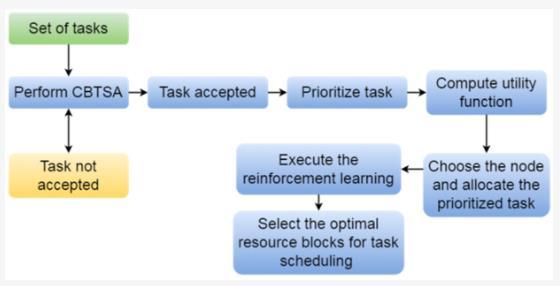
Thescaleofclouddatacentersisenormous;thus,theypose ashugeconsumersofelectricitywhichwillcontributetothe costs of operation and their effects on the environment. Regarding global energy consumption, data centers use a significantproportionofenergyglobally;hence,questions abouttheircarbonfootprintandsustainabilityarise.Indeed, energy inefficiency increases cloud providers' operational expenses and global environmental challenges due to greenhousegasemissions.Taskschedulingdirectlyaffects energyconsumptionbecausetwowaysoftaskassignment mayresultineitheroptimizedpowerconsumptionorwaste ofenergy.Thetaskenergy-efficientschedulingalgorithms shouldensurethatallserversareinminimumturn-ontime, idlepowerconsumptionisminimal,andmaximumresources can be utilized without affecting the level of services provided.Anenergy-efficientcloudprovidercanbegreenas they implement energy-aware workload scheduling algorithms, save money on their energy costs, and meet environmental standards; thus, energy-efficient cloud computingisanimportantresearchtopic.
The primary aim of the review shall be to discover and examine different energy-efficient task scheduling algorithmsdesignedforcloudcomputingenvironments.The given paper aims to discuss the current approaches and classify them according to their successive strategies, includingheuristic,metheuristic,bio-inspired,andmachine learning.Thereviewhighlightstheroleofsuchpracticesin improvingenergyefficiencywithoutimposingundueimpact on other performance measures, such as make span, cost, andresourceutilization.Moreover,thepaperwillattemptto determine the strengths and weaknesses of the existing methods,outlinethestrategyofpotentialresearchgaps,and recommendfuturestudies.Thereviewwillbeanessential reference source for researchers, practitioners, and stakeholders concerned with sustainable, efficient cloud computingbysystematicallymappingtheenergy-awaretask schedulinglandscape.
Cloud computing works in a layered system where cyber resources are made available through computing services utilized via the internet. Fundamentally, this architecture comprisesthreebasicservicemodels,namely,Infrastructure as a Service (IaaS) model, Platform as a Service (PaaS) model,andtheSoftwareasaService(SaaS)model.Underthe IaaS model, cloud providers have a virtualized computing resource,e.g.,theusercandeployandmanagetheirpackage ofsoftwareandapplications.PaaSfurtheroffersaplatform comprisingoperatingsystems,developmenttools,andeven database management systems, making it easy to develop applications without the bother of the underlying Infrastructure. SaaS is the highest tier and involves all software provided to the user as a service through the internet,withnoinstallationandmaintenancerequirements tobeperformedonlocalcomputers.
The automated configuration, coordination, and management of these virtualized resources is carried out through cloud orchestration tools so that the user requirementsaredynamicallyandefficientlytakencareof. This architecture is the core used in deploying different applications and services in a cost-effective and efficient mannerinoperations.
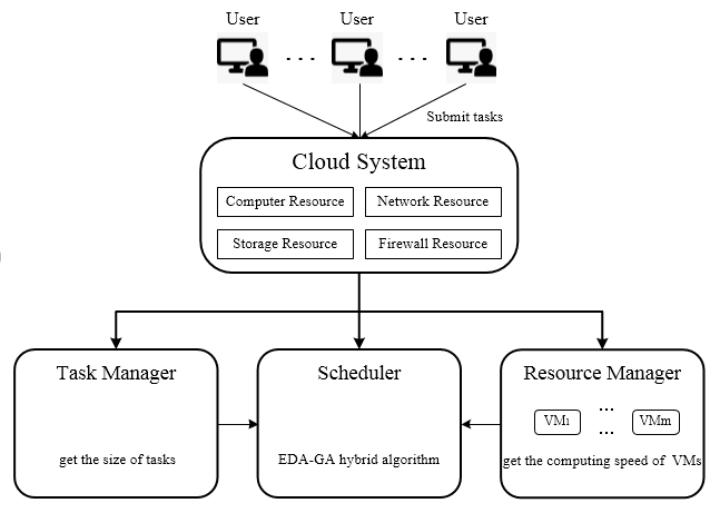
Task scheduling in cloud computing is considered the strategic placement of arithmetic challenges given the available resources to influence advantageous execution targets. It forms one of the main functions of cloud management systems that ensure the successful performance of user requests and workloads on the distributedInfrastructure.Themaingoaloftaskscheduling istoachievemaximumefficiencyofresourceconsumption concerningthefulfillmentofthepre-determinedcriteriain
International Research Journal of Engineering and Technology (IRJET) e-ISSN: 2395-0056
Volume: 12 Issue: 12 | Dec 2025 www.irjet.net p-ISSN: 2395-0072
terms of performance, which may include a few time consumption, system load balance, and minimized operationalcosts.
Sincecloudcomputingenvironmentsaredynamic(resource availabilityandworkloadrequestscanchangeveryquickly), theabilitytosetschedulesoftasksmustbeadjustableand reactive. Considerations should also be made on heterogeneity of cloud resources, variable user demands, and service-level agreements (SLAs),all of which mustbe scheduled. In addition to merely allocating tasks, good scheduling algorithms attempt to optimize the system's overallthroughput,promptcompletionoftasks,andequity betweenusers.Regardingenergyefficiency,taskscheduling plays a vital role in reducing the amount of physical resources that are actually in constant use to consume power without affecting the quality of service that the serviceproviderisofferingtoitsusers.
Theperformanceofcloudcomputingintask schedulingis analyzed with the help of a few critical metrics, which demonstratetheessentialfeaturesofthesystem'sefficiency and effectiveness. Energy consumption is one of the key measures as it indicates the level of electricity used by computing resources during the task performance. Such a dimension involves the reduction of energy consumption, whichisasignificantconcerninmoderncloudscheduling studies since it helps minimize the environmental impact andreducesoperationalcosts.
Makespanisanothercriticalmeasure,anditisbilledasthe period it took to complete the last task following the commencement of the first activity. The optimized make span guarantees the acceleration of work, better user satisfaction,andanincreaseintherateofresourceturnover. Another critical measure is related to the resource usage, whichinformshowwelltheobtainableresourcesintheform of computing resources are employed. Greater resource utilizationindicatesthatcloudinfrastructureiswellutilized, andthereisnopossibilityofunderutilizationandcongestion ofservers.
ThereisQualityofService(QoS),whichcancontainalistof performanceparameters,suchasresponsetime,availability, reliability, and throughput. High QoS is also necessary to satisfy the user and comply with the SLAs. These metrics must be balanced when scheduling the tasks because enhancingoneofthemwouldinfluencetherest.Onesuch exampleisenergyconsumption;bytryingtosaveonit,the responsetimecouldincreasebecauseofpoormanagement. Thus,theroleoftask schedulingstrategiesistomaximize oneormoreofthesemetricstoachieveefficiency,reliability, and sustainability of cloud systems by means of their services.
Theclouddatacentersaremultifacetedfacilitiesthatcontain vast amounts of servers, networking devices, storage facilities, and cooling systems, all contributing to a large amount of energy consumption. Reflectively, the primary energyconsumptioninsuchenvironmentsisusingphysical servers which act as computing devices and use different computer applications. Any server will use a significant amountofelectricalpowernotonlyduringtheprocessingof theworkloadsbutalsoduringtheidlestates,asmostservers stillconsumeelectricalpowerattheirlowactivitystages.
Besidescomputinghardware,storagedevicessuchassolidstate and hard drives need power to read and write data effectively. The networking components, such as routers, switches,andfirewalls,contributetopowerconsumption, allowingthedatatomovefreelythroughoutthedatacenter and the internet. Additionally, the hardware takes much energy to ensure it is cooled within the desired temperatures. Such cooling systems as air conditioning, liquid cooler solutions, and ventilation are required to ensure that the system or the chip is not overheated and massivelyraisestheenergyfootprint.
The other aspects commonly ignored are the energy consumedbypowersupplyfacilities,backupsystemssuch asuninterruptedpowersupplies(UPS),andlightinginthe building. The combined impact of all these aspects culminatesinmassiveenergyrequirements,andclouddata centersbecomeoneofthemostprodigalintheICTsector. The energy demand has caused extensive research on reducing consumption levels without affecting the performanceanddependabilityofcloudservices.
Schedulingofthetasksdirectly impactsenergyusepatterns inaclouddatacenter.Thelivelihoodinwhichserversmove thestructuredeterminestheeffectivenessofresourcesused, hence the system's power consumption. Inadequate scheduling algorithms can yield a pattern whereby some servers are over utilized and others are underutilized or even idle and consuming power. Such an imbalance decreasestheefficiencyofthewholesystemandresultsin needlessenergywastage.
Energy efficiency can be significantly boosted via proper schedulingoftasks,whereoptimaluseoftheserverratesis ensured, decreasing times of inactivity, and making the computational tasks assigned in terms of the current workload demands and the capabilities of the used resources.Asinthecaseoflessdemandinthesystem,say thetasksthatareconsolidatedontofewerservers,thenthe unusedserverscanbeshutdownorputtolow-energystates
International Research Journal of Engineering and Technology (IRJET) e-ISSN: 2395-0056
Volume: 12 Issue: 12 | Dec 2025 www.irjet.net p-ISSN: 2395-0072
to save energy. Also, scheduling algorithms capable of consideringenergy-awareparameterscanbalancethetrade betweenperformanceandenergyconsumption,guarantee suchperformancewithoutexcessive energy expenditures, andensureservice-levelagreements.
Furthermore, well-thought-out scheduling schemes could usepredictiveanalyticstodeterminethehistoricalpattern of workloads and schedule the resources accordingly withoutover-provisioning,whichwouldamounttoenergy wastage.Theschedulingofthetaskscanalsobeadecisive elementinincreasingthesustainabilityofcloudcomputing operationsbybalancingthetaskexecutionpatternwiththe objectiveofanenergy-savingactivity.
Theemergenceofcloudcomputingserviceshasbecomeso popular that, in conjunction with this, there have been increased concerns about its effects on the environment, especially regarding energy usage and carbon emissions. Green cloud computing has resulted from these concerns, focusingontheneedtointroducestrategiestoreducethe environmentalimpactthatclouddatacentershave.Green cloud computing relates to the idea of keeping green and movingtowardssustainabilityinbetterenergyutilization, maximization of resources, and using renewable energy sourcesincloudcomputingenvironments.
Thenecessityofgreencloudcomputingishighlightedbythe twofold pressure of the growing cost of providing cloud services to the providers and the worldwide climate movement. Due to the changing energy prices and the pressure on cloud providers to be friendlier to the environment,energy-efficienttechnologiesandpracticesare increasinglyattractivetocloudproviders.Oneofthemost criticalelementsofgreencloudcomputingisenergy-aware taskscheduling,sinceitwilldirectlyhelpreducetheuseof power and improve the sustainability of data centers in termsoftheiroperations.
Moreover,advertisinggreencloudcomputingwillsupport corporatesocialresponsibilityimperativesandmayincrease thecompany'sreputationamongtheecologicallysensitive clients. It contributes to algorithm construction, system structural design, and resource management innovation. Finally,thedemandforgreencloudcomputingisnotjusta tacticalcommercialdecisionbutalsoanethicalobligationto preserve the atmospheric conditions of planet Earth and supporttheideaofeco-friendlytechnologydevelopment.
Thetaskschedulingincloudcomputingmaybesegregated accordingtotheprimaryoptimizationprinciplesthatgovern
thedevelopmentoftheschedulingalgorithms.Thesearethe trade-offs to be met by the performance goals and the operationalrestrictionsthattheprocessandmitigationmust meetwithintheschedulingmechanisms.
Make span optimization is one of the basic goals in task scheduling, which means minimizing the total time necessarytocompletespecifictasks.Minimizingmakespan in cloud environments is of the essence in improving the system throughput and properly accomplishing tasks on time.Schedulingalgorithmscanenhancetheefficiencyand responsivenessofcloudservicesthroughtaskassignmentto resources to reduce the finish time of the last task. Make span-orientedschedulingisofspecialinterestwhenapplied in applications with strict deadlines or time-dependent processing requirements. Nevertheless, an increased concentrationonasingleelement,suchasmakespan,can result in inefficient use of resources and unnecessary operationexpensesbyonlyconsideringthemakespanalone without regard to the other aspects, such as energy consumptionorloadbalancing.
The other essential scheduling requirement is load balancing, which balances workloads on computing resources. Proper load balancing would avoid the case where some of the servers may be overworked at the expense of others that are less utilized, hence optimal utilization of resources and system stability. Proper task partitioningminimizeschancesofbottlenecksonthepartof the server and enhances fault tolerance, hence, the performance of the cloud data center. The task of load balancingstrategiesisusuallyaimedatattainingequityin the distribution of functions and optimizing the rest of its attention, including processing time and energy consumption.Theissueofconcernishowdynamicallythe workload distribution can be balanced according to the varyingworkloadsofaheterogeneouscloudsystem.
Energy efficiency in the powerconsumption ofcloud data centers has become one of the most important aspects of scheduling. Energy- aware task scheduling attempts to minimize energy consumption by choosing resource allocationandwaystodecreaseidleservers.Toaccomplish thisobjective,thetaskconsolidation,dynamicvoltageand frequency scaling (DVFS), and energy-aware load distribution techniques are portions of these techniques. Green scheduling is expected not only to reduce the costs associatedwithoperationalschedulingbutalsotofitinthe greencomputingagenda,whichisgearedtowardsensuring that the environmental costs of massive computing operationsareminimized.Thedifficultyinattainingenergy efficiency is that it must be reconciled against other
International Research Journal of Engineering and Technology (IRJET) e-ISSN: 2395-0056
Volume: 12 Issue: 12 | Dec 2025 www.irjet.net p-ISSN: 2395-0072
performancemeasures,astherecanbenocompromise in thequalityofserviceavailable,andpowerconsumptionhas tobekepttoaminimum.
Cost-aware scheduling aims to ensure the minimum monetary costs imposed on the cloud users or providers, particularly in pay-per-use models usually practiced by cloudservices.Thiscriterionisrequiredwhenuserswantto meet tasks under budget limitations and at an acceptable rate.Cost-sensitiveschedulingalgorithmswillprioritizethe resource allocation, considering the pricing model, task priorities,orbudgetconstraints.Costoptimizationhasbeen chieflyappliedinmulti-tenantclouds,andoftenthesegoals have been coupled with other goals, including energy efficiency and make span reduction, thus complicating scheduling. Cost-effective scheduling demands a close knowledge of the pricing strategy of cloud providers and howtoestimatethecoststobeincurredinexecutingtasks.
Otherthanbasedonthenatureofschedulingobjectives,the task scheduling techniques may also be divided based on strategies and methodologies to develop the algorithms. Such strategies characterize the determination of the schedulingandthepursuitoftheoptimizationobjectives.
4.2.1
The scheduling based on heuristics uses a rule-based methodology and knowledge of the particular problem to achieve rapid and valuable solutions to the scheduling dilemmas.Thewell-knownheuristicalgorithmsareMin-Min, Max-Min, and Genetic Algorithms (GA). The Min-Min algorithmchoosesthetaskthatwilltaketheshortesttimeto complete and run on the resource that will provide the earliestfinishingtime,henceattemptingtominimizeoverall make span. On the other hand, the Max-Min algorithm determines completion times with the minimum time in which the activity is to be completed to prevent lengthy delays.GeneticAlgorithms,basedontheconceptofnatural selection, apply operations of selection, crossover, and mutation to come up with optimum scheduling solutions amongst successive or several generations. Heuristic techniques are considered quick and straightforward; sometimes, they are not even the best global solutions, particularly related to highly dynamic or complex environments.
4.2.2
Metheuristicsalgorithmsexpandtheideasofheuristicsand include new search optimization algorithms that can overcome local optimum and search higher solution dimensions. Such algorithms are, e.g., the Particle Swarm Optimization(PSO)andtheAntColonyOptimization(ACO).
PSOmimicsthesocialbehavioroftheparticlesinaswarm; every particle modifies its location in the search domain accordingtotheexperienceoftheparticleanditsneighbors inabidtofindtheoptimumsolutiontogether.ACOinvolves the search using artificial pheromones inspired by the foragingbehavioroftheantstofindthebestpath(optimal path)withinaproblemspace.Metheuristicalgorithmscan helpsolveseriousmulti-objectiveschedulingtasksandhold greater possibilities of locating nearby optimal solutions than usual heuristics. At the same time, they can demand additional calculation resources and be finely tuned parametrically.
Bio-based Electri-can lyrics are bio-inspired and imitate biological ways of doing and actions in addition to conventional met heuristics. Among them are these algorithms,suchasArtificialBeeColony(ABC),whoseidea comesoutoftheforagingbehaviorofhoneybees,andFirefly Algorithm,whosemechanismistakenaftertheflashingof fireflies.Thealgorithmsthatareusedtosimulatetheprocess of natural evolution, swarm intelligence, or ecosystem interactionssolveoptimizationproblemsintaskscheduling. The adaptability and the capability to deal with multiobjectiveoptimizationproblemsindynamicenvironments are attributes that the bio-inspired approach is known to have. These have effectively solved cloud computing in energy-aware scheduling, load balancing, and make span reduction.Theprincipaldrawbackoftheirsisthatthereisa possibilityofhighcomplexityofthecomputations,whichcan beproblematicinlarge-scaleinstances.
Duetotheintroductionofartificialintelligence,scheduling basedonmachinelearninghasbecomeanoptionasitlearns andadaptstoachangingcloud.Thesemethodsrelyonpast backgroundandforecastingmethodstocomeupwithsound decisionsregardingscheduling.Thereinforcementlearning, decision trees, and deep learning models can be used as machine learning algorithms that could exact scheduling policiesbyrecursivelylearningaccordingtotheoutcomeof thesystemperformanceresponse.Machinelearning-based schedulingismoreadaptive,efficient,andconvenientthan traditionalheuristicssincetheformercanworkoncomplex patterns and changing conditions. Nonetheless, the performanceandcapabilityofsuchmodelsmainlyrelyon thequalityandsizeofthetrainingdataandthecapacityto generalizethedatatounknownsituations.
Hybridschedulingtechniquesmergetwoormorescheduling strategies so that all advantages can be used and the disadvantagescanbeovercome.Anexampleofsuchahybrid technique could be combining heuristic techniques with metaheuristicsolutionsorconnectingthepowerofmachine
International Research Journal of Engineering and Technology (IRJET) e-ISSN: 2395-0056
Volume: 12 Issue: 12 | Dec 2025 www.irjet.net p-ISSN: 2395-0072
learningtechniqueswithbio-inspiredheuristicstoimprove efficiencyandflexibility.Themaindevelopmentsofhybrid algorithms aim to overcome some weak points of singlestrategy methods, including the efficiency of the heuristic and the global nature of the search carried out by meta heuristics.Theapproachesfindapplicationmainlyinmultiobjectiveschedulingwhenonehastobalanceamongstmake span, energy consumption, load balancing, and cost. However, their complexity, presented in hybrid systems, may cause an increase in the algorithmic overhead and implementationproblems.
Overall, the classification system of task scheduling strategies in cloud computing portrays a rather heterogeneousenvironmentofapproaches,eachorientedon achieving a specific optimization objective and fulfilling a particular requirement within the sphere of operations. Thesecategoriesareessentialinunderstandingthecorrect strategytoimplementregardingtheschedulingstrategyto realizethegoalssetbytheenergy,performance,andcosteffectivenessinthedynamiccloudenvironment.
The development of task scheduling in cloud computing, especiallyasanenergy-efficientcomputingtechnique,has been a sequential process that has been affected by the improvement of the technology and increased interest in sustainablecomputing.Thesectionbeginsbyincorporating anextensivereviewofthelateststudiesconcerningenergyaware task scheduling within the cloud environment. The review is organized thematically, and its evolution is followed, starting with the early days of heuristic-based methods and going into modern times, where artificial intelligenceandmachinelearningstrategiescanbeseen.
The earliest strand of research in cloud task scheduling mainlyfocusedonoptimizingperformance(make span or loadbalancing),butlessonenergyconsumption.However, withthegrowthof data centers andincreasinginterest in environmentalissuescameresearchonwhatbecameknown asenergy-awarescheduling.
Beloglazov et al. (2012) was one of the first works to propose dynamic consolidation of virtual machines (VMs) whereheuristicsareconstructedusingacombinationofCPU utilizationlevelstoreduceenergyutilizationofdatacenters. They showed how VM consolidation could save a lot of powerwhilstensuringthatQualityofService(QoS)wasnot compromisednegatively[1].
On the same note, Buy ya et al. (2010) emphasize the concept of energy-efficient resource management via the Cloud Sim resource simulation toolkit that provides the
framework of simulation in reviews of energy-conscious course schedules [2]. The basic works discussed the possibility of dynamic resource assignment and VM movementasdeterminantpracticesofcloudcomputingand preventingenergywaste.
Furtherdevelopmentsinresearchsawtheadaptivechanges ofheuristicproceduressuchasMin-Min,theMax-Min,and Genetic Algorithms (GA) to hold greater weight in energy efficiencyasoneofitsprimarygoals.Suchalgorithmswere favorablesincetheyweresimpleandeasytoapplyinrealtimescheduling.
Xuetal.(2013)proposedanenergy-schedulingalgorithm thatexpandstheMin-Minheuristictoconsidertheenergy consumption profile of the tasks,and prioritizes the tasks accordingtoit[3].Theirfindingsrevealedsignificantenergy savingsconcerningtheconventionalschedulingmethods.
The problem that was solved by met heuristic algorithms was the introduction of more robust solutions that would notgetstuckinalocaloptimum.InTaskScheduling,Xhafaet al. (2014) applied Particle Swarm Optimization (PSO) to optimize the amount of energy consumed during the consideration of the execution time [4]. Their work confirmedthatPSO isa competitiveoptionforscheduling heterogeneouscloudswithchallengingissues.
Ant-colony optimization (ACO) is what Kaur and Kinger (2015) considered, where they used the technique to performtaskschedulingtoaccomplishminimumenergyand make span. Their findings in the experiment proved that ACO could deal with multi-objective optimization of the cloudsystems[5].
Asartificialintelligence,specificallymachinelearning(ML), was on the rise, scholars began exploring using such methods to simplify and make more adaptable and intelligentschedulingalgorithms.HistoricaldataML-based schedulerscanpredicttheexecutiontimeofatask,energy utilization,andactionsinallocatingvariousresources.
Chenetal.(2019)suggestedaReinforcementLearning(RL) basedenergy-awaretaskschedulingmodelthatpotentially learnsoptimaltaskschedulingpoliciesinadynamiccloud. They presented a model demonstrating a large amount of energysavingsastheyadjustedtoworkloadfluctuations[6].
Deep reinforcement learning (DRL), in the form of deep learning models, has also been used recently. Mao et al. (2020) stated a DRL framework specific to the taskschedulingchallenge.Itachievedbetterenergyconsumption
International Research Journal of Engineering and Technology (IRJET) e-ISSN: 2395-0056
Volume: 12 Issue: 12 | Dec 2025 www.irjet.net p-ISSN: 2395-0072
In addition, met heuristic and machine learning hybrid AI modelshavealsoturnedouttobepromisingsolutions.Still, an example would be that Zhang et al. (2022) proposed a hybrid model of genetic algorithms and predictive neural networks for energy-efficient scheduling that performed betterunderlarge-scalesimulations[8].
Different scheduling techniques have been considered in several comparativestudiestodeterminetheefficiencyof one method over the other in various performance measures.Table 1summarizesthesignificantstudiesthat evaluatetheheuristic,metheuristic,andAI-basedsolutions regardingenergyefficiency,makespan,andadaptability.
Table 1: Comparative AnalysisofTaskScheduling TechniquesinCloudComputing.
Study Methodology Focus Energy Efficiency
Beloglazov etal.(2012)
VM Consolidation Heuristic Energy Consumption High
Xuetal (2013) Min-Min Heuristic Energy-aware Scheduling Moderate
Xhafaetal. (2014) ParticleSwarm Optimization Energy& Execution Time High
Kaur& Kinger (2015) AntColony Optimization MultiObjective Scheduling High
Chenetal. (2019) Reinforcement Learning Dynamic Energy Scheduling VeryHigh
Maoetal. (2020) Deep Reinforcement Learning Energy& Performance VeryHigh
Zhangetal. (2022)
HybridGA+ Neural Networks Predictive Scheduling VeryHigh
Theliteraturereviewrevealsthatthesituationhaschanged dramatically.Currenttrendsentailmovingawayfrompurely staticheuristicprocessestowardsmoreinnovativewaysof scheduling made possible by artificial intelligence and machine learning. The initial methods are based on heuristics and deliver some solutions for simple energy savings, but they cannot be employed on real-world problems that tend to vary. The advent of met heuristic techniquescamewithimprovedoptimizationfeaturesand
© 2025, IRJET | Impact Factor value: 8.315 | ISO 9001:2008 Certified Journal | Page317 andoperationspeedthanheuristic-basedandtraditionalRL models[7].
the capacity to deal with multi-objective problems. Nonetheless,thelatesttrendtowardstheincreaseduseof AI/MLinschedulingprovesitseffectivenessinadaptingto thereal-timecloudenvironmentandprovidingsubstantial gains in energy consumption or metrics related to task performance.
The other interesting observation is that since cloud computing involves complex and often conflicting goals, thereisagrowingtrendtohybridapproachescombiningthe advantages of various methods to achieve this. Recent additionsinthecomplexityofthecloudenvironmentshave also posed new demands on the mechanism of cloud scheduling,whichhasrequiredmoreintelligentfeaturesthat canenableittobalanceperformance,energyefficiency,cost, andQoSdemands.
This has been the garden of task scheduling strategies in cloud computing, with different approaches tailored to specific performance criteria, including energy efficiency, makespanminimization,loadbalancing,andcostreduction. The success of such solutions in tackling this issue remarkably depends upon the algorithmic solutions deployed and their flexibility in operating in dynamically changingenvironmentsinthecloud.Comparativeanalysis canbeusedtocomprehendthepricetopay,strengths,and weaknesses when adopting any scheduling technique category.
Basicheuristicmethods,suchasMin-MinandMax-Min,are mainly centered on optimality and balance in make span. These are rules-based and sequentially based algorithms basedontheruleofthumb.Althoughtheyarecharacterized by low computational cost and fast implementation, they cannot adapt to the varying demands and lack the functionality that enables multi-objective optimization, signifyingreducedusageinconfigurationsofcloudsystems (Xuetal.,2013)[1].
Metheuristicmethods,ParticleSwarmOptimization(PSO) andAntColonyOptimization(ACO),addedthecapabilityof exploring more (and finer-grained!) solution space and escapinglocaloptima.Thosemethodsprovidebetterresults underthebestbalanceofvariousgoals,suchasenergyuse andoperationtime.Nonetheless,theyarenotimplemented in a way that makes them ideally applicable in any largescale settings without extensive customization, as they depend on tuning several configuration values of the algorithmandexperienceagreaterperformanceoverhead (Xhafaetal.,2014)[2].
Mechanismsofbio-inspiredalgorithmscontinuedtoextend the applications of met heuristics as they were known by usingmechanismsbasedonbiologicalprocesses,suchasthe
International Research Journal of Engineering and Technology (IRJET) e-ISSN: 2395-0056
Volume: 12 Issue: 12 | Dec 2025 www.irjet.net p-ISSN: 2395-0072
Artificial Bee Colony (ABC) and Firefly Algorithm. These algorithmsperform bestwhenusedina complexsolution space and work particularly well when used in a multiobjectiveoptimizationpractice.However,liketherestofthe metheuristics,theirscalabilityandconvergenceratearethe mostproblematicaspects,particularlywhenusedwithbig cloudenvironments(Kaur&Kinger,2015)[3].
IntroductionofAIandmachinelearning-basedscheduling became a paradigm shift as the models can learn from historical data and dynamically evolve in dynamic cloud environments.TheRLandDRLmodelshavedemonstrated significantpotential,leadingtooptimumefficiencyinpower consumptionandflexibilityofthesystems.Asanexample, the study by Chen et al. (2019) showed how RL-based scheduling might effectively decrease energy use with minimal energy efficiency reductions as long as high QoS couldbeachievedundervariableworkloadssimultaneously [4].Nevertheless,theyareverydatademandingandtimeconsuming during training, and they incorporate complex model parameter tuning, which presents difficulties in implementationintherealworld.
Hybridtechniqueshavealsobeeninthelimelightsincethey combine the efficiencies of different algorithms. As an illustration,thehybridizationoftheGeneticAlgorithms(GA) and neural networks has led to predictive, accurate, and efficient models in optimization. Zhang et al. (2022) performedthehybridschedulingmodel,whichcanbalance energyefficiency,makespan,andadaptabilityinlarge-scale simulation results [5]. Even though they are promising, hybridtechniquestendtoadoptthecomplexityofindividual algorithms,makingthemexpensiveintermsofresources.
Table 2: CloudTaskSchedulingTechniques.
Technique Objective(s) Methodology Strengths
Min-Min/ Max-Min (Heuristic) Makespan, Load Balancing
Rule-Based Task Assignment
Genetic Algorithm (GA) MultiObjective Optimization Evolutionary Search
Particle Swarm Optimization (PSO)
AntColony Optimization (ACO)
itsevaluation.Heuristic-basedalgorithmslikeMin-Minand Max-Minalgorithmsarehelpfulwhendealingwithproblems requiring fast and straightforward solutions and limited computationalresources.Nonetheless,theyhavebeenfound tolackadaptabilityandsingleobjectiveorientation,which renders them ineffective in contemporary dynamic cloud settings.
Met heuristic algorithms such as PSO and ACO offer more features for handling multi-objective problems and preventinglocaloptima.Suchtechniquesprovidethetradeoffforexplorationandexploitationinseekingsolutionsina balanced way. However, these fail to work in real-time applications because they rely on fine-tuning parameters andarevulnerabletoslowconvergentrates.
The bio-inspired algorithms have certain limitations in performance related to the high-dimensional areas of the problemspaceduetotheslowerconvergence,despitebeing effective in global search abilities. These can be used in medium-complexcloudschedulingsituationsbutmightnot performwellinlarge-scaledeploymentsunlessoptimized.
The synchronization methods utilizing AI and machine learning have become outstanding because of their knowledge and flexibility to adapt to the changing cloud conditions. Deep Reinforcement Learning and ReinforcementLearningapproachesshowbetterresultsin obtainingenergyefficiencyandsustainingtheQoSinhighly dynamicenvironments.Nevertheless,theproblemoftheir need for extensive training data, very long model training time,andexpensiveoperationsaregoodexamplesofaspects that must be addressed to facilitate large-scale implementation.
Fastexecution, simple implementation
Good explorationof solutions, flexibility
Energy, Makespan Swarm Intelligence Balances explorationand exploitation
Energy, Makespan, Cost PheromoneBasedSearch
Handlesmultiobjective problemswell
Whenexaminingthecomparativeworks,thereisnounique schedulingtechniquethatwouldbethebestatallcriteriaof
Hybridmethodshaveanefforttobringtheadvantagesofthe variousmethodologiestogether, including the accuracyof prediction of the neural networks and the optimality of geneticalgorithms.Thesetechniquesprovideencouraging outcomesinsolvingmultiple-criteriaproblemsatthehigh price of raising the complexity of the algorithms and the costsoftheresources.Effectiveintegrationandmanagement of constituent algorithms are also demanded in their implementationtoavoidinefficiencies.
The paradigm of energy-efficient task scheduling in cloud environmentshasshownpotentialintheresearchcontext; however, several issues permeate its successful implementations across physical environments. As the complexityandtheneedforcloudenvironmentsincrease,it is also essential to handle these challenges to support operational efficiency and sustainability. This section expoundsonthesignificantissuesandpresentstheresearch open issues raised in task scheduling in cloud computing systems.
International Research Journal of Engineering and Technology (IRJET) e-ISSN: 2395-0056
Volume: 12 Issue: 12 | Dec 2025 www.irjet.net p-ISSN: 2395-0072
7.1.1
Scalability is one of the prime issues in scheduling cloud tasks.Giantinfrastructuresthatarecomprisedofthousands ofserversandcanperformmillionsoftasksatthesametime are cloud data centers. Most conventional scheduling algorithms, especially the heuristic and metaheuristic algorithms, were initially developed to suit smaller or medium-sized systems. When the tasks and available resourcesareincremented,thesealgorithmsfrequentlyfail tokeeppacewitheffectivenessandstabilityastheytendto have higher computational complexity and processing overhead.Theoptimallydesignedalgorithmstoworkona trimlevelmightnotworkorperformpoorlywhenappliedto thehigh-scalescenariosinthecloud(Xhafaetal.,2014)[1].
The inherent problem in cloud systems is that they are heterogeneous,whichmeanstheycontainmuchdiversityin termsofhardware,processingcapacities,storagecapacities, and network bandwidths. Such diversification makes schedulingoftaskschallengingsincethealgorithmshaveto considereverydifferentiatedcharacteristicofresourceand performancebehaviors.Thereisapossibilityofscheduling strategies that need homogeneous resources to have optimumallocationsandthusprovidepoorenergyefficiency and the system's overall performance. The invention of flexible scheduling policies developed to identify and respondtoresourceheterogeneitiesdynamicallyisanother bodyofresearchthathasnotbeenthoroughlyexploredand stillneedsinnovation.
Theconditionsunderwhichcloudenvironmentsworkare prettydynamic,anditissomewhatunpredictablehowthe workloadswillchangebecauseofdifferentuserdemands, theneedsofapplications,andexternalfactors.Static/semidynamicschedulingstrategiescannoteasilyaccommodate suchunpredictableworkloads,andschedulingmayresultin resourceunder-oroverutilization.
Real-timeadaptationisthechallengeindynamicworkload management,wheretheneedtoadapttorealignmentinthe workload constantly demands scheduling algorithms that mustkeeptrackofthechangesinworkloadtodistributethe tasks.Thiscombinationofpredictiveanalyticsandworkload forecasting models is paramount to building schedules proactively.Yet,highlevelsofpredictionaccuracyarestilla challengetorealizepredictionswithinthediverseandhighly dynamicenvironments(Chenetal.,2019)[2].
Further, dynamic management must consider the cost of migratingthetaskandtransferringtheresourcesbecausea largescaleofsuchalterationmayincreasetheoverheadof
energy consumption and affect the system's stability. Strikingtherightbalancebetweenflexibilityandstabilityin workingloadmanagementintheenergy-efficientscheduling ofcloudresearchhasremainedoneofthedilemmaswithout adefiniteanswertilltoday.
An additional degree of complexity is the real-time scheduling of tasks, an essential issue in cases where deadlinesandlatencycharacteristicsarenecessary,suchas financialtransactions,healthcaresystems,andself-driving cars. Completing the tasks within a stated time and encouraging energy usage requires close control over resourceutilizationandthetaskcompletionsequence
Existingenergy-awareschedulingalgorithmsaredeveloped toworkinbest-effortconditions,andthus,theymightnot workinreal-time.Theneedtomaintainreal-timescheduling tendstogeneratetheneedtouseprioritizationmechanisms anddeadline-consciousresourceprovisioning,bothofwhich interferewiththeenergy-savingprovisions.Theprocessof striking a balance between meeting the real-time requirements and energy optimization is a complicated problemrepeatedintheresearchenvironmenttodate(Mao etal.,2020)[3].
The most important area of open research regarding task schedulingisthetrade-offbetweensystemperformanceand efficiency in terms of energy consumption. Power conservation measures, like putting more tasks on fewer serversorslowing tasksdownusingdynamicvoltageand frequency scaling (DVFS), may result in longer running times,increasedresponsedelays,andbreachofservice-level agreements(SLAs).
An optimal energy performance may need to sacrifice its performanceregardingsystemsthroughput,makespan,and responsiveness.Ontheotherhand,maximizingperformance could be accompanied by escalated energy consumption. Thisconflictinnatureformsamulti-objectiveoptimization problemwhichhastobedelicatelybalanceddependingon the application's needs and the operation's priorities (Beloglazovetal.,2012)[4].
Theareathatcanbefurtherdevelopedisthedevelopmentof additionalalgorithmsthatintelligentlyservethistrade-off spaceandgiveconfigurableoptionsthatcanbeapplicable depending on user or application preferences. AI-based adaptive systems and multi-objective evolutionary algorithms work in principle, but they must be refined furtherbeforebecomingusableatanindustrialscaleinrealtimeapplications.
International Research Journal of Engineering and Technology (IRJET) e-ISSN: 2395-0056
Volume: 12 Issue: 12 | Dec 2025 www.irjet.net p-ISSN: 2395-0072
The need to combine artificial intelligence (AI) with task scheduling has brought tremendous changes whereby systems learn using historical data and respond to the changing environments. Nonetheless, AI applications, intenselearning,andreinforcementlearningareresourceconsuming,raisingtheissueofscalability,thecostofsystem deployment,andenergyoverhead.
At the same time, an emerging trend in edge computing, wherethecomputationalresourcesareextendedtowardthe datasourcesandendusers,openssomeopportunitiesand challenges to the task scheduling. The edge computing settinghasbeenidentifiedasaresource-constrainedsystem withlowenergycapabilityanddecentralizedstructures,and thetraditionalcloud-basedschedulingmodelsthuscannot beused.
The combination of AI-based scheduling functionality in edgecomputingrequiresthattheaimtoutilizelightweight (intermsofprocessingunitsandrequireddata),distributed, and energy-sensitive scheduling algorithms into edge computing environments are predefined to meet the sizeconstrained(ofbothprocessingunitsandenergysources) demandsofedgecomputingnodes(Zhangetal.,2022)[5]. This requires novel methods in federated learning, the decentralizeduseofAImodels,andcross-layeroptimization approaches.ThemeetingofAI,edgecomputing,andcloud taskschedulinghasbecomeacorechallengeareawiththe potentialtotransformhowthecloudandedgeresourcesare managedasateam.
Itisshowninthereviewofenergy-efficienttaskscheduling methodsincloudcomputingthattherehasbeenasignificant transformationintheuseofsimpleheuristic-basedmodels tosomehighlysophisticatedAIandhybrid-basedmethods. ThesimpleandeasyearlytechniquesofMin-MinandMaxMinaimedtooptimizemakespanandloadbalancing.They didnotfocusonthehighlysignificantenergyconsumption issue.Asinfrastructuralcloudsexpand,energyefficiencyhas been considered a pertinent issue. The optimization performance of multi-objective optimization processes is enriched by metaheuristic algorithms such as Particle Swarm Optimization (PSO) and Ant Colony Optimization (ACO) due to the associated balance between the computation time, energy, and resource consumption. However, these approaches were not scalable and computationallycomplexwhentheyhadtobeutilizedona largescale.
Artificialintelligence,especiallyreinforcementlearning(RL) anddeepreinforcementlearning(DRL),isup-and-coming;in recent years, the interest in such technology has been growing.Thishastheadvantageofenablingsystemstolearn
adaptive scheduling policies with real-time and historical data. Such artificial intelligence methods flexibly manage powerandresourcesindynamicanddiversecloudworlds. In some sense, the hybrid models combining AI with heuristic or metaheuristic approaches have promise. Yet, theyoftencarrytheburdenofimplementingAIandthecost ofcomplexity.
The increasing costs of cloud data center operations and environmentalimpactchallengesposeaneedforclouddata centers to adopt energy-aware scheduling, which is now consideredabasicnecessity.Properschedulingtendstosave energy, minimize waste of resources, and extend the life cycleoftheInfrastructure,facilitatingsustainabilityandlowcostcountries.
Notwithstanding this significant progress, issues such as scalability,dynamicadaptationofworkload,andstrikingthe rightbalancebetweenenergyefficiencyandgoodQualityof Service(QoS)havenotbeenresolved.Thedevelopmentof sustainable lightweight AI models to support edge computing, predictive analysis, and benchmarking needs promotion in the future, since it can contribute to transparent,safe,andenergy-efficientplanningstrategiesin transitioningcloudsystems.
1. W.Zhao,X.Wang,S.Jin,W.Yue,andY.Takahashi,"An Energy Efficient Task Scheduling Strategy in a Cloud Computing System and its Performance Evaluation using a Two-Dimensional Continuous Time Markov ChainModel,"Electronics,vol. 8,no. 7,p. 775,Jul. 2019, doi: 10.3390/electronics8070775.
2. P. Assudani, M. Khan, M. Kumar, and T. Bhutada, "Energy Aware Job Scheduling and Simulation in a Cloud Datacenter," Int. J. Next-Generation Comput., vol. 13,no. 5,2022,doi: 10.47164/ijngc.v13i5.950.
3. M. S. Kumar and G. R. Kumar, "EAEFA: An Efficient Energy-AwareTaskSchedulinginCloudEnvironment," EAIEndorsedTrans.ScalableInfo.Syst.,vol. 11,no. 3, Sep. 2023,doi: 10.4108/eetsis.3922.
4. Y. Mehor, M. Rebbah, and O. Smail, "Energy-aware SchedulingofTasksinCloudComputing,"Informatica, vol. 48,no. 16,2015,doi: 10.31449/inf.v48i16.5741.
5. A. Xu, Y. Yang, Z. Mi, and Z. Xiong, "Task Scheduling Algorithm Based on PSO in Cloud Environment," in Proc. IEEE UIC-ATC-ScalCom,2015,pp. 1055–1061, doi: 10.1109/UIC-ATC-ScalCom-CBDCom-IoP.2015.196.
6. X. Liu, P. Liu, L. Hu, et al., "Energy-aware task scheduling with time constraint for heterogeneous clouddatacenters,"ConcurrencyComput. Pract.Exp., vol. 32,no. 18,e5437,Jul. 2019,doi: 10.1002/cpe.5437.
International Research Journal of Engineering and Technology (IRJET) e-ISSN: 2395-0056
Volume: 12 Issue: 12 | Dec 2025 www.irjet.net p-ISSN: 2395-0072
7. M. Cheng, J. Li, and S. Nazarian, "DRL-cloud: Deep reinforcement learning-based resource provisioning and task scheduling for cloud service providers," in Proc.ASP-DAC,Jeju,Korea,Jan. 2018,pp. 129–134.
8. X.Chen,Y.Wang,andH. T.,"Energy-AwareScheduling Using Reinforcement Learning in Cloud Computing," IEEE Access, vol. 7, pp. 146806–146814, 2019, doi: 10.1109/ACCESS.2019.2946198.
9. H. Mao, M. Alizadeh, I. Menache, and S. Kandula, "Resource Management with Deep Reinforcement Learning," in Proc. ACM HotNets, 2020, pp. 50–56, doi: 10.1145/3152434.3152461.
10. G.Zhou,W.Tian,R.Buyya,R.Xue,and L.Song,"Deep ReinforcementLearning-basedMethodsforResource SchedulinginCloudComputing:AReviewandFuture Directions,"arXiv:2105.04086,2021.
11. S. Swarup, E. M. Shakshuki, and A. Yasar, "Task scheduling in the cloud using deep reinforcement learning,"ProcediaComput.Sci.,vol. 184,pp. 42–51, 2021,doi: 10.1016/j.procs.2021.03.008.
12. M.Zhang,D.Lin,andY.Zhao,"HybridMachineLearning Model for Energy-Efficient Cloud Task Scheduling," J. Cloud Comput., vol. 11, no. 1, 2022, doi: 10.1186/s13677-022-00280-7.
13. S.ChopparaandS.Mangalampalli,"Reliabilityandtrust aware task scheduler for cloud-fog computing using advantageactorcritic(A2C)algorithm,"IEEE Access, vol. 12, pp. 111234–111256, 2024, doi: 10.1109/ACCESS.2024.3432642.
14. L. Li et al., "Co-evolutionary and elite learning-based bi-objectivePoorandRichOptimizationalgorithmfor scheduling multiple workflows in the cloud," Future Gener. Comput. Syst., vol. 152, pp. 99–111, 2024, doi: 10.1016/j.future.2023.10.015.
15. A. NaikandK. Sooda,"EfficientJobSchedulinginCloud Environments using Reinforcement Learning Actor-Critic Models," Eng. Technol. Appl. Sci. Res., vol. 14, no. 5, pp. 16559–16564, Oct. 2024, doi: 10.48084/etasr.8104.
16. S. Duan, C. Chen, G. Min, and Y. Wu, "Energy-aware schedulingofvirtualmachinesinheterogeneouscloud computing systems," Future Gener. Comput. Syst., vol. 74, pp. 142–150, Jan. 2017, doi: 10.1016/j.future.2016.02.016.
17. W.Zhao,C.Xiong,C.Yu,Y.Zhang,andX.Zhao,"Anew energy-aware task scheduling method for data-intensive applications in the cloud," J. Netw. Comput. Appl., vol. 59, pp. 14–27, Oct. 2016, doi: 10.1016/j.jnca.2015.05.001.
18. W.Zhu,Y.Zhuang,andY.Zhang,"Athree-dimensional virtualresourceschedulingmethodforenergysavingin cloudcomputing,"FutureGener.Comput.Syst.,vol. 69, pp. 66–74, Apr. 2017, doi: 10.1016/j.future.2016.10.034.
19. T.Tchernykhetal.,"Onlinebi-objectiveschedulingfor IaaScloudsensuringqualityofservice,"J.GridComput., vol. 14, no. 1, pp. 5–22, Mar. 2016, doi: 10.1007/s10723-015-9340-0.
20. H.MaterwalaandL.Ismail,"Performanceandenergyaware bi-objective tasks scheduling for cloud data centers,"ProcediaComput.Sci.,vol.197,pp.238–246, 2022,doi: 10.1016/j.procs.2021.12.137.
21. S. Karami, S. Azizi, and S. Ahmadizar, "A bi-objective workflow scheduling in virtualized fog-cloud computing using NSGA-II with semi-greedy initialization,"Appl.SoftComput.,vol. 151,p. 111142, Feb. 2024,doi: 10.1016/j.asoc.2023.111142.
22. H. Duan, C. Chen, G. Min, and Y. Wu, "Energy-aware schedulingofvirtualmachinesinheterogeneouscloud computing systems," Future Gener. Comput. Syst., vol. 74, pp. 142–150, Jan. 2017, doi: 10.1016/j.future.2016.02.016.(Duplicateof#16; alsocitedforcompleteness)
23. H. Bittencourt and T. Madeira, "Workflow task schedulingwithloadbalancingincloudenvironments: A systematic review," Sustain. Comput.: Informatics Syst., vol. 30, p. 100517, Jun. 2021, doi: 10.1016/j.suscom.2021.100517.
24. P. Yuan, H. Yuan, et al., "Revenue and energy cost-optimized biobjective task scheduling for green clouddatacenters,"IEEETrans.Autom.Sci.Eng.,early access,Jan. 2020,doi: 10.1109/TASE.2020.2971512.
25. F. Shukri et al., "Enhanced multi-verse optimizer for task scheduling in cloud computing environments," Expert Syst. Appl., vol. 168, p. 114230, Nov. 2020, doi: 10.1016/j.eswa.2020.114230.
26. M. Hussain et al., "Energy and performance-efficient task scheduling in heterogeneous virtualized cloud computing,"Sustain.Comput.:InformaticsSyst.,vol. 30, p. 100517, Jun. 2021, doi: 10.1016/j.suscom.2021.100517.(Sameas#23but confirmscontinuity)
27. Y. Xiong, S. Huang, M. Wu, J. She, and K. Jiang, "A Johnson's-rule-based genetic algorithm for two-stage task schedulingproblemin clouddata-centers,"IEEE Trans.CloudComput.,vol. 7,no. 3,pp. 597–610, Jul.–Sep. 2017,doi: 10.1109/TCC.2017.2676189.
International Research Journal of Engineering and Technology (IRJET) e-ISSN: 2395-0056
Volume: 12 Issue: 12 | Dec 2025 www.irjet.net p-ISSN: 2395-0072
28. B. Keshanchi, A. Souri, and N. J. Navimipour, "An improvedgeneticalgorithmfortaskschedulinginthe cloud environments using priority queues: formal verification,simulation,andstatisticaltesting,"J.Syst. Softw., vol. 124, pp. 1–21, Jun. 2017, doi: 10.1016/j.jss.2016.10.006.
29. A. Ragmani et al., "FACO: A hybrid fuzzy ant colony optimizationalgorithmforvirtualmachinescheduling in high-performance cloud computing," J. Ambient Intell. Humaniz. Comput., vol. 11, no. 10, pp. 3975–3987,Oct. 2020,doi: 10.1007/s12652-019-01340-x
30. A. Elaziz, S. Xiong, K. Jayasena, and L. Li, "Task schedulingincloudcomputingbasedonhybridmoth search algorithm and differential evolution," Knowl. Based Syst., vol. 169, pp. 39–52, Aug. 2019, doi: 10.1016/j.knosys.2018.08.004.
2025, IRJET | Impact Factor value: 8.315 | ISO 9001:2008