
International Research Journal of Engineering and Technology (IRJET) e-ISSN: 2395-0056
Volume: 12 Issue: 12 | Dec 2025 www.irjet.net p-ISSN: 2395-0072
International Research Journal of Engineering and Technology (IRJET) e-ISSN: 2395-0056
Volume: 12 Issue: 12 | Dec 2025 www.irjet.net p-ISSN: 2395-0072
Communico Corporation, 40-58, Hotwell Rd, Hotwells, Bristol, BS84UQ, United Kingdom ***
Abstract - Due to an inadequate information gap, poor verification of e-record collection, etc. There is a need for a smart library. With the advancement of information technology, libraries are becoming "smart libraries," which incorporate cutting-edge technologies such as artificial intelligence (AI), 5G, big data, cloud technology, etc.
Infrastructureasaservice(IaaS),platformasaservice(PaaS), and software as a service (SaaS) are all examples of the kinds of services made possible by cloud computing, which is an internet-based, remote-driven, and service-oriented technology.Librariescanimprovetheirservicesinmanyways byadoptingcloudcomputing withsecuritycertification, such as AWS certified security, which provides a higher level of protection for e-resources, lower costs for maintaining systems, more energy efficiency, and a more global online presence. This research aims to shed light on the general importance of smart library implementation on cloud computingviaasystematicliteraturereview(SLR).Fivepieces ofequipmentmust beinplace before thesmart library can be implemented: digital resources, internet service, thin client architecture, wireless access point, and a digital librarian.
The findings are used to propose a framework for an appropriate smart library. To sum up, it is suggested that libraries can be revitalised and kept relevant by adopting cloud-computing technologies, which will includethem inthe widespread Internet of Things (IoT) experience.
Key Words: Artificial Intelligence, Cloud, Library, Information Technology, Thin Client, Wireless Access Point, and Internet of Things.
Inthecourseofemployment,anelectronicdocumentthat offers evidence of an activity, transaction, or decision is received. [1] explained why it is of utmost importance to protectit asanevidencein accordancewiththeretention schedulesthathavebeenestablishedbythe institution an individual isworkingfor.Whenthisoccurs,theelectronic documentisthenconsideredane-recordandisrequiredto be stored in a secure location within an official e-records system[3].Thisprocessisdonetoensurethatauthorized personnel mayquicklyaccessthedocument. Ina scenario withdigitizedrecords,thestabilityoftherecordisputata
significantly greater risk due to the presence of security risks.Therefore,itisessentialtokeepinmindthatelectronic recordsarerecordsthatarestoredinanelectronicmedium. Creatinganelectronicrecord,accessingtherecord,working with the record, storing the record, erasing the record, or transferringtherecordtoadifferentmediumallinvolvethe useofacomputer.
TheNationalArchivesofAustralia(NAA)statesthat"wordprocesseddocuments,emails,databases,andphotographs" areexamplesofelectronicordigitalrecords[1].Thereare many different places that databases, hard drives, shared folders, email accounts, and other online services can be usedtostoreelectronicdocuments.Electronicrecordsarea highly significant asset for ensuring that the institution is properlyandefficientlyregulated,andthatitisaccountable toitsemployees,students,andtheuniversityenvironment thatitserves.
Electronic records enable decision-making easier, give evidence of university regulations, transactions, and activities, help the university stay organised, and provide supportintheeventofalegalchallenge[2].However,when a retrieval procedure is involved, it takes a longer time which disrupts the evenness of the administration and decision-making process. It also consumes time for the erecord manager as they hunt for that specific document, which is why there is a need for the security of e-records management. Information managers are adjusting their practicestoaccommodatetheeraofelectronicinformation bygainingaccesstomoreresourcesthatteachthemhowto handleandprotectelectronicrecords[3].
Accordingto[4],poorrecordsmanagementislikelytoresult ininformationgaps,whichleadtoinadequaterecordsand thelossofdocumentlegacy.Ontheotherhand,ensuringthat recordsarepreservedinasuitablesettingandcanbeeasily retrievedwhenevernecessaryislargelydependentonthe qualityoftherecordsmanagementsystemthatisinplace, suchasane-library[4] Withouteffectiverecord-keeping,it is exceedingly challenging to explain any choice that was made.Intheabsenceofevidencethathasbeenaccurately recorded,illegitimacyandfraudaredifficulttodetectand cannotbedealtwithappropriately.
International Research Journal of Engineering and Technology (IRJET) e-ISSN: 2395-0056
Volume: 12 Issue: 12 | Dec 2025 www.irjet.net p-ISSN: 2395-0072
Inaddition,adecentraliseddatacentrecanbeformedinthe register,anditcanbeextendedtotheelectroniclibraryto ensure good document management [5]. It is abundantly evidentthattheinformationinanelectroniclibrarymaybe managedthroughtheutilisationofcomputersystemsthat choose the pertinent content to be collected, organise it, makeitavailabletousers,andpreserveitforfutureuse.Elibrary, in contrast to conventional libraries, can communicatewithasignificantlylargernumberofpeople, makingthemparticularlyusefulinthecontextofacademic institutions[5]
According to [6], "Digital libraries are used for many different reasons, but largely for the ease of accessing information."Thisisalsoaffirmedby[7],whostatedintheir paperthat"Digitallibrariesprovetobeameetingplacefor many subjects and disciplines such as information management, data access, library science, data systems, document management systems, internet, artificial intelligence, data processing, human-digital contact, and electronicsecuritysystems."
1.1 Background of the study
Librarians and information managers in different universities are increasingly becoming more concerned aboutthebestwaytoeffectivelymanagee-recordssothat theycanmeetthemainmissionoftheinstitutiontosociety andhumanculturalandscientificheritage.Theyalsoaimto usetheavailableinnovationstoprovidetheinformationlife cyclefromcreationtodisseminationwithmorespeed,scope, currency,efficiency,effectiveness,quality,andproductivity [8].
Overthepast10years,therehasbeenagreatemergencein theuseofartificialintelligenceindifferentdomainssuchas fraud detection, phishing detection, facial recognition, etc. TheimpactofAIintheimprovementofeducationfromthe student,lecturer,andmanagementperspectiveshasbeena majorresearchinterestamongresearchersoverthepast5 years[8].
Researchconducted by [8]showsthatAIhasbeenwidely adopted and employed in education, especially by educational institutions, in a variety of ways. The authors concludedthatinstructorshavebeenabletoexecutevarious administrative tasks, such as reviewing and grading students' assignments, more successfully and efficiently using these platforms, and have been able to improve the quality of their institutional activities. On the other hand, because the systems make use of machine learning and adaptability, the curriculum and content have been individualized and customized to meet the needs of the students.Thishasencourageduptakeandretention,which hasimprovedthelearningexperienceforstudents[9].
On a similar note, different authors have leveraged the advantages of cloud computing in the educational sector. Theyarguedthatusingthecloud-computingtechnologywith
properdesignofAIhavebettersecurityperformanceover thetraditionalmethodofdeployment[10].
Thephrase"cloud"incloudcomputingreferstoacollection ofnetworks,muchlikeactualclouds,whicharecollectionsof water molecules. The user has limitless access to cloud computing capabilities whenever needed. Users typically preferamediatoroperatorfortheinternetserviceincloud computing rather than setting up their own physical infrastructure.Onlytheservicesthattheusersreallyused mustbepaidfor[9]
To lessen the workload in cloud computing, the workload canbemoved.Becausethenetworksthatmakeupthecloud carryalotoftheserviceload,runninganapplicationonlocal computersdoesnotputalotofstrainonthem.Asaresult, there is a reduction in the user's need for hardware and software[10]
The relationship is that e-records are available in the elibrary[11].Ifthereisasecurityloopholeinthelibrary,it will greatly affect the provided documents. To properly mitigatethesecurityrisk,if asmartlibrarythatcaneasily track all the activities of the users and provide adequate security measures in real-time is developed, then the universities can be able to use the medium as a security backupwhentheneedarises.
SinceAIandcloudcomputinghavebeenintegratedinsome universitysettings,ifthesetechnologiesareproperlyused fordevelopmentofthelibrary,duetothesecuritysettings, thesetechnologieswillhelptodevelopasmartlibrarywhich willreducethesecurityholespertainingtoe-library.
Thisresearchaimsto presentthebestpracticeforproper securitymeasureforane-library.Thisaimgivesrisetothe followingresearchobjectives.
Criticallyreviewtheneedforsecuringane-library.
ReviewtheintegrationofAIwithothertechnology forbetterlibrarydevelopment.
Present other required technologies for proper integrationofAI-basedproposedmodelintocloud computing.
Development a smart library framework which integratesintothecloudcomputinginfrastructure.
SincetheneedforAIintheuniversitiesareincreasinglyof greater demand, secured smart library in academic institutionshasbeenhasbeenofmajorimportance.Theyare concernedabouthowtoeffectivelydevelopasmartlibrary which can improve the academic settings and mitigate securityloopholesintheinstitutionwiththeaimofmeeting mainmissionoftheinstitutiontosocietyandhumancultural andscientificheritage.Theuseofavailableinnovationssuch as AI and cloud computing to provide the proper smart
International Research Journal of Engineering and Technology (IRJET) e-ISSN: 2395-0056
Volume: 12 Issue: 12 | Dec 2025 www.irjet.net p-ISSN: 2395-0072
library from creation to dissemination with more speed, scope,efficiency,effectiveness,quality,andproductivity,isof important.
1.4 Significant of the study
As it controls records throughout their lifecycle, proper smart library aims to control the records and papers connected to corporate processes, transactions, and decision-making [11]. For a university to govern its management processes and make effective decisions, managingelectronicdocumentsiscrucial.Ingeneral,asmart library encourages transparency and accountability while providingaccurateinformationthatenablesanorganisation to function successfully . However, if the security of this important asset is not properly addressed, a catastrophe couldresult;forthisreason,theproperimplementationof smart library which uses AI and integration into cloud computingisofimportanceinthisdigitalage.
1.5 Research limitation
AlthoughdetailedrolesofwhereAIandcloudcomputingcan help in securing e-records will be documented. The work evenproceedswiththeexpectedframeworkofhowtheAI and other technologies can be integrated into cloud computingforbetterlibrarysystem.However,thisresearch doesnotdeveloptheproposedmodelofthisresearch.
1.6 Research questions
RQ1:Whatise-recordsinthee-library?
RQ2:WhatistheICTroleforpropersmartlibrarysystem?
RQ3: Apart from AI and cloud computing, what other technologiescanbeintegratedtomakealibrarysmart?
RQ4: What is the best way to develop the smart library frameworkwhichusestheadvantageofcloudtechnologyin theuniversitysettings?
1.7 Definition of technical terms
E-Records
Anyinformationcreated,used,andstoredinamannerthata computer can only process is considered an electronic record. Email, documents, videos, text messages, backup tapes for disaster recovery, and information stored on portablemedialikememorysticks,BlackBerrysmartphones, orPDAsareallexamplesofelectronicrecords[12]
Library
A library is a structure or room that houses collections of differentrecordssuchasbooks,journals,andoccasionally movies and music CDs that the public or members of an institutioncanuseorborrow.
E-Libraries
Digital environment which stores different forms of erecordsforfreeorpaidaccess.
Smart Library
Asmartlibraryisanevolutionofthehybridlibraryandthe digitallibrary.
Cloud Computing
AccordingtoMicrosoft,cloudcomputingisthedistribution of computer services over the Internet ("the cloud"), includingservers,storage,databases,networking,software, analytics, and intelligence. This enables faster innovation, flexibleresourceallocation,andscaleeconomies.
Artificial Intelligence
Theideaandcreationofcomputersystemscapableofdoing activities that would typically require human intelligence, such as speech recognition, visual perception, decisionmaking, and language translation, is known as artificial intelligence(AI).
Record Management System
This area of management controls how organizations produce, acquire, store, use, access, and destroy records, whethertheyareinpaperorelectronicformat.
Methods
Thissectionprovidesadescriptionofthemethodsthatwere used to collect secondary data for the study using the systematicliteraturereview(SLR)togainacomprehensive understandinge-records,e-library,andtheimplementation of smart library. The systematic literature review is a common evidence-based research method that entails a technique that is well-coordinated, comprehensive, and rigorousforthepurposeofseekingoridentifyingrelevant publishedliteraturewiththegoalofanalysingthemwithin theframeworkofspecifiedresearchquestionsorhypotheses [13]. The systematic literature review is one of the most commonevidence-basedresearchmethods.Eventhoughthe approach was initially developed for use in the medical sciences,ithasnowfoundwidespreadapplicationinother disciplines, including business and cybersecurity [14]. Its transparency in the process of locating and selecting relevantliteratureorstudiestoreviewisoneoftheSLR's manyattractivefeatures;anotheristhattheprocedurecan bereproduced.Theseandotherfeaturescombinetomake theSLRanextremelyappealingtooltouse[15].Thisstudy employed the systematic literature review (SLR) methodologybasedontheformatspecifiedby[15],which provides a method that essentially includes three stages whichare.
1. Planning 2. Conducting
3. Reporting
International Research Journal of Engineering and Technology (IRJET) e-ISSN: 2395-0056
Volume: 12 Issue: 12 | Dec 2025 www.irjet.net p-ISSN: 2395-0072
Thatis,theSLR isa straightforwardapproachofreceiving input(researcharticles),processingit,andthenreportingit (i.e., output). The extended version of the Preferred Reporting Items of Systematic reviews and Meta-analysis (PRISM-S)framework[14]wasusedasaguideinselecting therelevantpeer-reviewedstudies.
The Planning Stage
Atthisstage,keywordstringswereformulatedinlinewith theresearchquestionsraisedinthisstudy.
2.2.1 Database Search
Accordingto[15],doingaliteraturereviewnecessitatesthe utilisation of electronic databases as a primary research instrument.Asaresultofthefactthatthedatabasescontain citationsandabstractsforresearchliterature,thechancesof obtaining pertinent research papers increased during the variouselectronicdatabasesearchesthatwerecarriedout. Thisisbecausethereisnotasingledatabasethatcansupply an exhaustive list of all the pertinent literature that one requiresforreview[16]
2.2.2 Inclusion Criteria
Inclusioncriteriaareusedinthesystematicliteraturereview toconsolidatethenumberofpublishedstudiestoanamount consideredreasonablebytheauthorthatwouldbesufficient for analysis [60]. There are five relevant criteria for includinganyarticlethatwasformulated,theyare:
1. Typeofpublication.
2. Publicationlanguage.
3. Timeline(orperiod)ofanalysis.
4. Relevanceofthepublication.
5. SectorofanalysisasshowninTable2.1.
A rigorous effort was also made toaccess other published studiesfromtheliteraturereviewsandbibliographiesofthe selectedstudypapers,ifpossible.
Table 1. SelectionorinclusioncriteriaoftheSLRstudy.
Code Type
Inclusion criterion
CR1 Typeofpublication Peer-reviewedjournal,books.
CR2 Languageofpublication English
CR3 Timelineofanalysis From 2003 to 2022 (search was donein2022)
CR4 Relevance Thearticletreatstherelevanceoferecords, e-library, threats, the ICT roleofsmartlibrary,andtheroleof cloudcomputingintheintegration.
CR5 Sectoroftheanalysis Education
Basedonthefirstcriteria(CR1)thestudyfocusesonpeerreviewed articles and the published books. CR2 limits the publication language of the selection criteria into English language. Publications published between 2003 to 2022 wereconsideredbasedonCR2.Moreover,publicationsthat are relevant to the need for e-record in e-library, security challengesinthisacademicdomainandhowICTcanhelpin improvingthesystemwereconsidered.
Table 2: Showsthesearchstrategyusedtogetthe expectedsearchpercriteria
Search text Database result number Included search
Role of e-records in elibrary 62 33 ICTrolesforuniversity librarysystem 22,700 18
andSmartLibrary
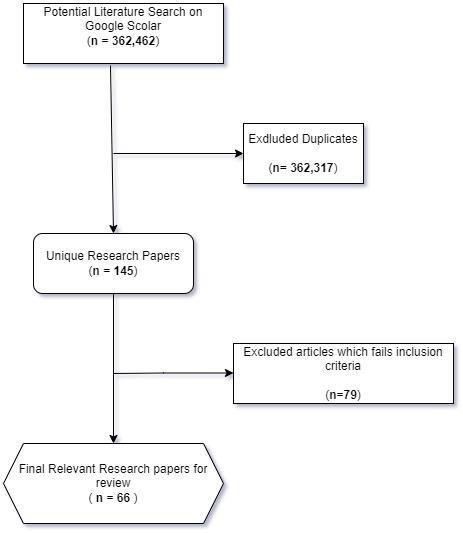
Fromtheinitialtotalof362,462articlesfound362,317were excluded based on these criteria. Then the remaining 145 articleswereanalysedinansweringtheresearchquestions. Theresultispresentedinthenextchapterofthestudy.
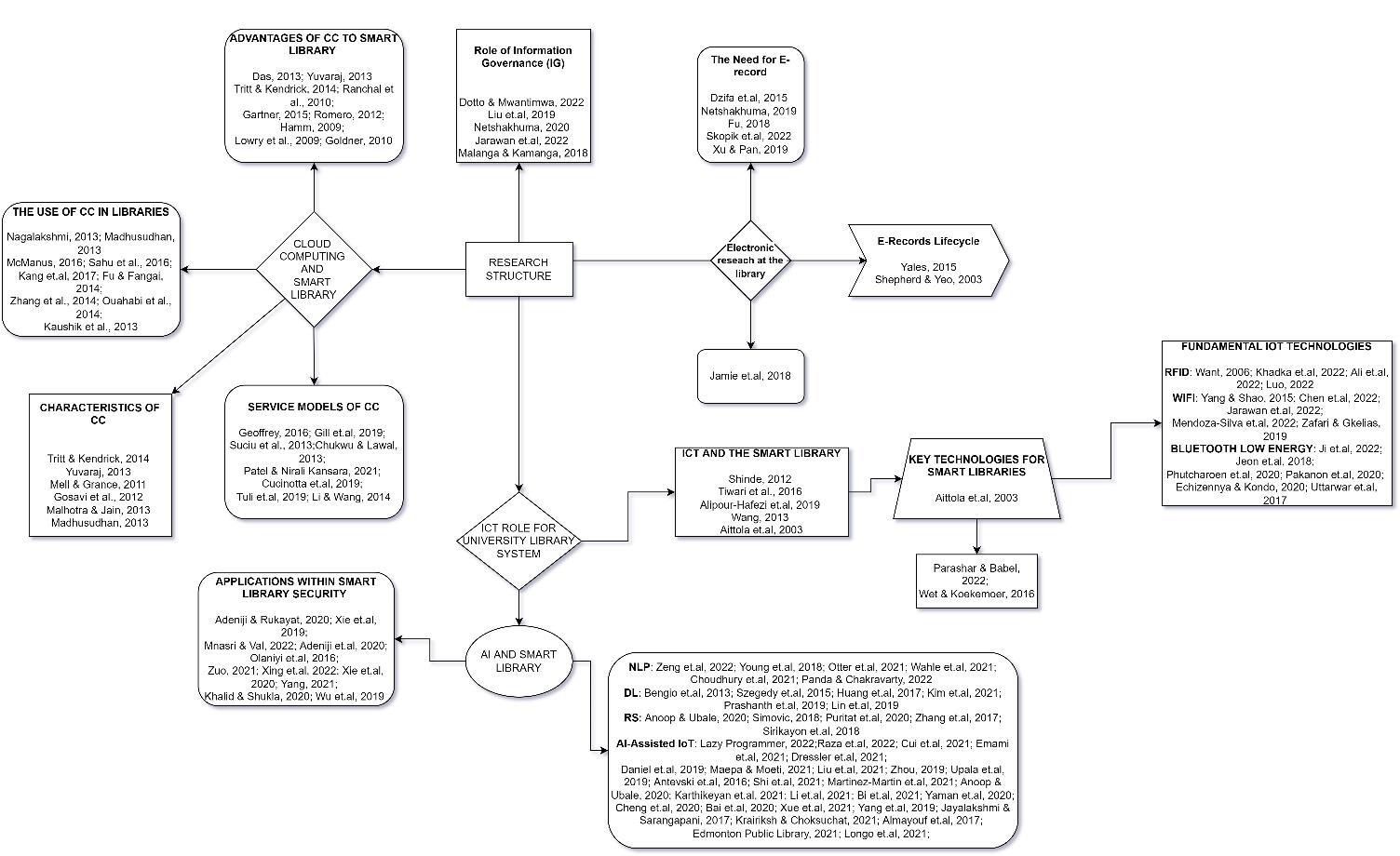
Coupled with the inclusion criteria (Table 1) there was a thorough search of relevant literature using several generatedkeywordssuchas(Figure1).
1. Electronicrecordsatthelibrary
2. Theneedfore-records
3. ICTandthesmartlibrary
Multiple databases were searched through the Google Scholar search engine (https://scholar.google.com) simultaneously.Thefollowingelectronicdatabaseswere usefulinprovidingliteratureforthisstudythroughGoogle Scholar;Academia,ScienceDirect,Emerald,andElsevier.A manualsearchthroughthereferencedlistofstudieswas donetofindrelevantstudiesthatmightbeusefultothe authorthroughanalysisofthemeta-dataofsearchresults fromthedatabase.Themeta-dataofselectedarticles are.
Title Author(s)
Dateofpublication
Nameofthejournal
AsshowninFigure2.2,theflowprocessfortheinclusion criteriaispresented.
International Research Journal of Engineering and Technology (IRJET) e-ISSN: 2395-0056
Volume: 12 Issue: 12 | Dec 2025 www.irjet.net p-ISSN: 2395-0072
2.3 The Conducting Phase - Data Extraction
HeretheGoogleScholarelectronicdatabaseswerequeried withthegeneratedkeywords.Whereveratleastoneofthe keywords was found in the study from the database searches, the publication was read online or downloaded. Theselectedreviewarticleswouldbescreenedforinclusion in line with the objectives of this study to maximise the veracity of the systematic literature review [18]. Downloadedstudieswerevettedbasedonpre-formulated criteria for inclusion. The initial number of studies was further trimmed to ensure that the article addresses the issuesandresearchquestionformulatedforthestudy.The initial search yielded 145 article results. After an initial analysisofthetitlesandabstracts,duplicatesarticleswere removed. Then articles that did not meet the inclusion criteria wereremoved.Aftertheseactivities,itresultedin the generation of a sample of 66 journal articles. The summary of keywords queried in the electronic search enginesisgiveninTable2
2: Thenumberofresearchpapersbysearch keywords.
International Research Journal of Engineering and Technology (IRJET) e-ISSN: 2395-0056
Volume: 12 Issue: 12 | Dec 2025 www.irjet.net p-ISSN: 2395-0072
2.4
ThisisthemostimportantpartofSLR.Atthisstageofthe SLRprocess,theresultsoftheanalysisarereportedtoshow whetheritwasabletoprovideanswersandinsight tothe researchquestions-i.e.,providingevidencethatitachieved thestudyaimsandobjectivesornot.Thisincludesinsights garnered fromrecommendations [19].Afteranalyzingthe selectedarticlesinthisstudy,theresultsofhowtheresearch questionwasansweredarereportedanddiscussedindetail inthenextchapter.
3.1 Overview
Forthefouraimsandobjectivesinthisresearch,5research questions were posed. This research used a systematic literature review to identify and evaluate the need for a bettersmartlibrary.Theresearchstartswiththeroleoferecordsine-library,theroleofICTinthee-library,howICT canbeusedforasmartlibrary,theimpactofAIinasmart library,andtheroleofcloudcomputinginthesmartlibrary. Thearticles'searchstrategyinFigure3.1providesvaluable datainthecontextoftheaimsofthestudy.Thisprovidesa holistic approach to understanding systematic approach towardsthecreationofthe proposed framework which is discussedinthischapter.
International Research Journal of Engineering and Technology (IRJET) e-ISSN: 2395-0056
Volume: 12 Issue: 12 | Dec 2025 www.irjet.net p-ISSN: 2395-0072
Table 3: Data gathering based on research questions (RQ).
S/N
Research Question [RQ]
1 Whatise-recordinthee-library?
Relevant Review Article
[21,32,33,34]
2 WhatistheICTroleforpropersmartlibrarysystem? [23,24,35,27]
3 Apart from AI and cloud computing, what other technologiescanbeintegratedtomakealibrarysmart?
4 What is the best way to develop the smart library framework which uses the advantage of cloud technologyintheuniversitysettings?
The research questions raised were used as a basis for discussingthedetailsofthefindings.
3.2 RQ1: What is e-record in the e-library?
Accordingto[29],electronicrecordsareonline-accessible digital files. Examples include e-journals, e-books, online databases in several digital formats, Adobe Acrobat documents (pdf), and Web Pages. However, according to [29],e-recordsarenecessaryeven whenthelawdoesnot require records to be kept permanently; records may be required to be preserved for an extended period in accordance with an established retention schedule. This explainswhyuniversitiesmustdiscoverabettermethodfor securingapapertodigitalinformation[60].Othersstruggle withthedifficultyofconnectingdocumentstodiverseforms andstylesofbusinesstransactions
3.3 RQ2: What is the ICT role for proper smart library?
Basedonthenumberofreviewedarticles(12%),thisseems to be the most important factor that can help to fix the challenges of e-records. According to the researchers, the majorrolesoftheICTare.
Itmaintainsadatabasebyorganising,storing,and retrieving files and media content, as well as gathering of other electronic materials, and provides digital services that are accessible from anywherewithalogin.
Itisessentialtotheempowermentandeducationof citizens.
Usingpropertechnology,itcanunlockalldoorsto knowledgewhilealsomaintainingthesecurityand integrityoftheuniversity.
3.4 RQ3: Apart from AI and cloud computing, what other technologies can be integrated to make a library smart?
As documented in the research, AI and cloud computing playsanimportantroleintheintegrationofsmartlibrary.
RFID: [36,37,38]
WIFI: [38,39,40,37]
Bluetooth low energy: [42,36,43,44]
AI-Assisted IoT: [45,46,47,48,49,50,51,52,53,54,55,40,56,57]
[37,58,59]
However,thesetechnologiesrelyonothertechnologiesto functionproperly.Thearticleinthisresearchshowsthat:
RFID
WIFI
Bluetoothlowenergy. IoT- areall important technologiestointegratea smartlibrary.
3.5 RQ4: What is the best way to develop the smart library framework that uses the advantages of cloud technology in university settings?
Toanswerthisresearchquestion,theauthorcandividethe solution into the construction stage, which will cover the layout, the data centre construction, the interface system construction,andtheintegrationwithcloudcomputing.
3.4.1 Construction
Forasmartlibrarytoworkinsuchawaythatmitigatesthe security risk of e-records, a systemic approach must be followed for proper construction. A smart service must utilisetheintelligentservicessuchasautoborrowmachine, reading machine, cloud, enter read card system, smart bookshelf,WIFI,individualservesystem,etc.Sincethereare manyresourcesthatcanbeavailableonthesmartlibrary,it isimportanttohaveanintelligentsecuritysystemthatwill keepthesmartlibrarysafefromlossofresources.
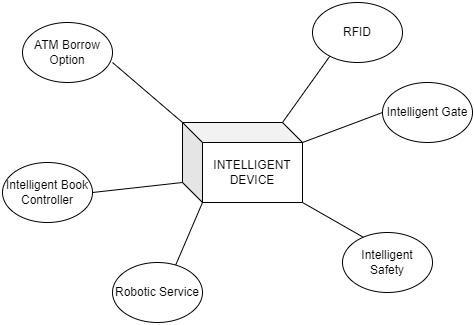
Thescenarioofsmartlibraryconstructionisof3scenarios, whichare(Figure1):
1. Intelligentdevice
2. Intelligentsecurityand
3. Smartservices
International Research Journal of Engineering and Technology (IRJET) e-ISSN: 2395-0056
Volume: 12 Issue: 12 | Dec 2025 www.irjet.net p-ISSN: 2395-0072
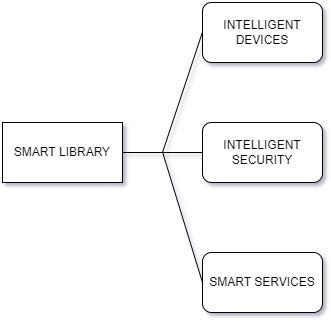
From Figure 3.2, the intelligent devices expected in the proposed smart library are listed. Through the intelligent gatesystem,bigdataaboutreadersenteringandexitingthe libraryiscollected.RFIDisakindofidentifiabletechnology fornon-touchobject,theRFIDnumberisassigned toeach physicalresource,sothatitwillbecomeeasiertomanage.
Anintelligentbookcontrollerisanimportantpartofasmart library. Each book controller is the bottom of book informationmanagement,itsmaindutyitistomanagethe bookandprovidespecialinformationforthereader.Ifsome books’positioniswrong,itcanbeautomaticallycorrected,it will be the source of the resources recommender engine [31].Atthesametime,itisalsoaplatformofexchangewith readers. Book controller exchanges with the information centre via level-hub, construct an information net in the library.
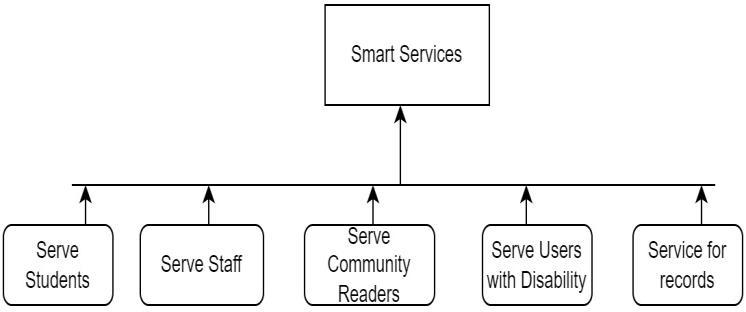
The purpose of a library is to provide service, and smart service can help readers feel better using intelligent technology. In summary, smart services include serving students,staff,communityreaders,anddisabledindividuals. This will foster the institutional economic growth and maintainacollectionrecord(Figure3).
To build a smart library, a database that includes library documents suchasbooks, e-books,journals, e-journals, eresources, etc., and a service for target information resources,suchaslibrarymembers’information,university achievements, recordkeeping, and collections, are very important. All the services in the library are based on databases,sothereisaneedtoconstructmoreperfectdata resources.
Figure 6 shows the relationship among the server object, devices,services,anddatabase.Alibraryprovidesservices for readers when intelligent devices visit all kinds of databases.Ifthereisnodatabase,thedeviceswilllosetheir functionofservice.Hence,itisthekeypointtoconstructa perfect data centre for the library. How to construct a big datacentreisgiveninthescenarioshowninFigure7
International Research Journal of Engineering and Technology (IRJET) e-ISSN: 2395-0056
Volume: 12 Issue: 12 | Dec 2025 www.irjet.net p-ISSN: 2395-0072
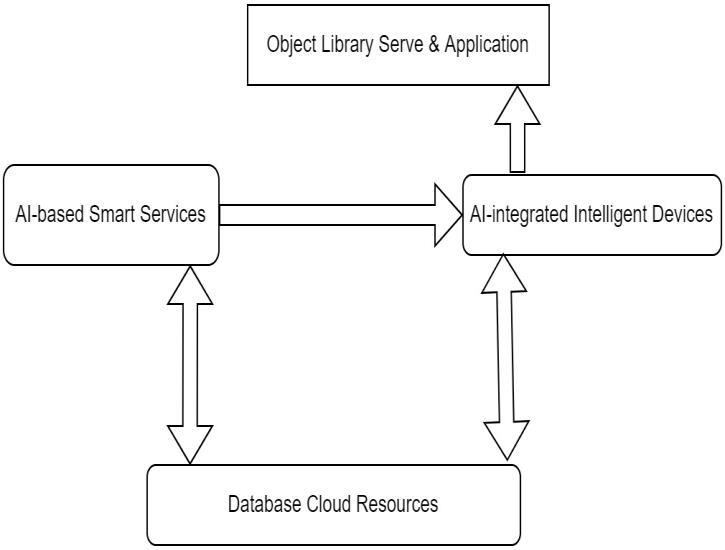
Database,intelligentdevices,smartdevices,and objectsrelationship
A data centre can be divided into four sections: large physicaldata,e-resourcedata,readerinformationdata,and specialdata[61].Inotherwords,whatisavailableisknown, whoneedsservicesisknown,whattheirrequirementsare, andhowtogivethem.Thesolutiontothesequestionsisthe routeofdata centreconstruction.Adatabasecan be filled withfourartificialandfourintelligentdevices.Forinstance, abookcanbeaddedtothephysicalbigdataeithermanually orbyscanningitsRFID.
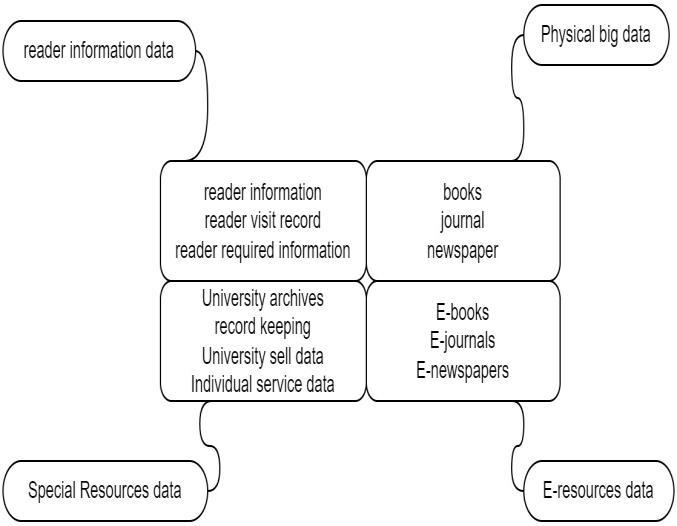
3.4.3 Interface System Construction
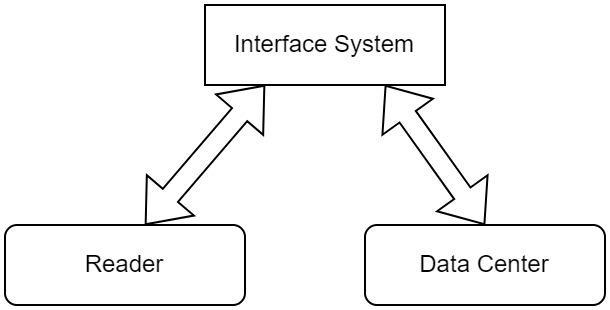
Thereader,datacentre,andinterfacesystemaredepictedin
Figure 8. Clearly, the interface system is the connection betweenthereaderandthedatacentre.Thelibraryoffers
servicesviaaninterfacesystem.Thesystemmaintainsthe data centre, which regulates all the complexity in the intelligent library, and delivers the required data to the reader. Important for the security of the proposed smart libraryaremanagementsystemssuchasanintelligentgate systemandasystemtopreventthelossofresources,among others.
Thenextchapterlinkstheexpectedimplementationofthe proposedsystemwithcloudcomputing
4.0
Results and Evaluation
4.1 Overview
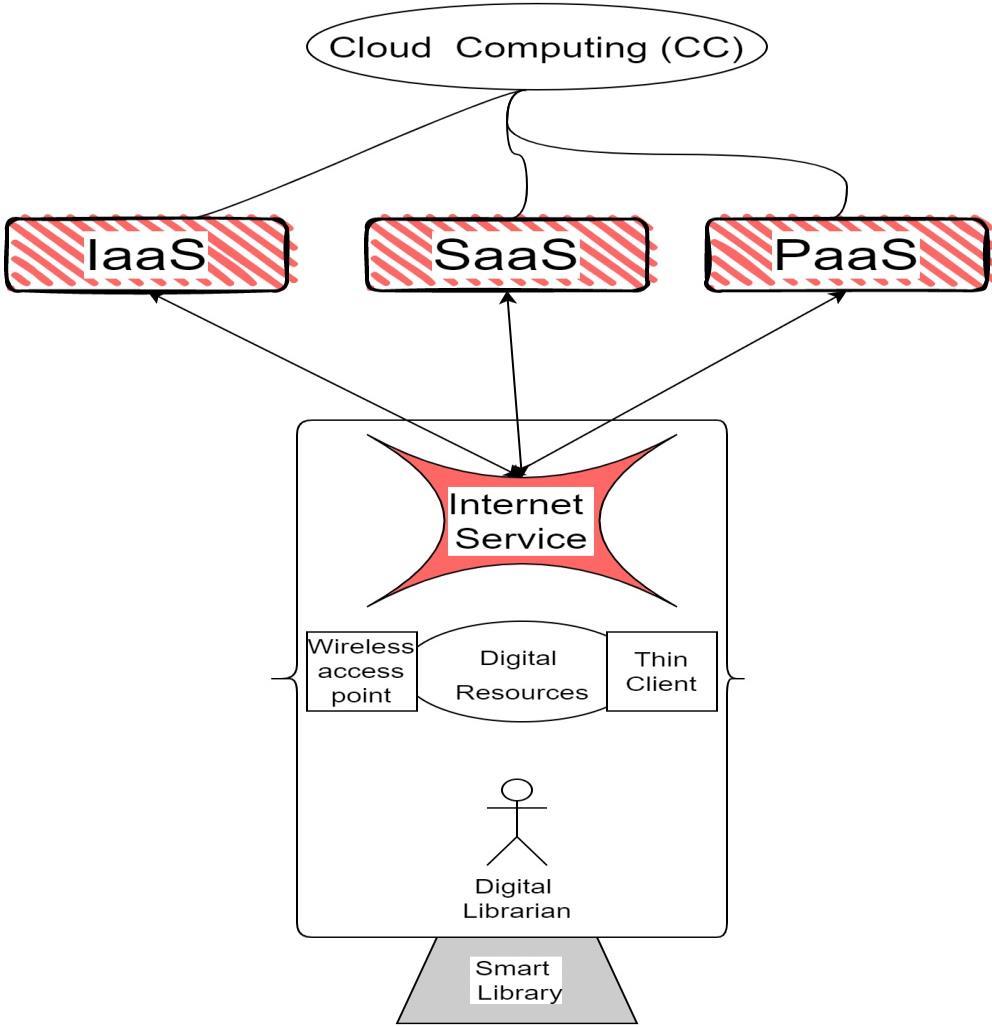
Intelligentlibrariesrequirehigh-speedInternetconnectivity, wireless access points, thin client architecture, a digital librarian,anddigitalresources.Theseservicesarenecessary fortheconstructionofacloud-basedsmartlibrary.Asmart library,asseeninFigure9,iscomprisedofdigitalmaterials, Internetservice,thinclientarchitecture,adigitallibrarian, and wireless access points after the design proposed in section24.Eachfacilitydisplayedinthediagrammustbe evaluated for its value by the intelligent library that is proposed.Theimplementationofasmartlibraryoncloud computing (CC) cannot progress if a required facility is absentornotinplace.
International Research Journal of Engineering and Technology (IRJET) e-ISSN: 2395-0056
Volume: 12 Issue: 12 | Dec 2025 www.irjet.net p-ISSN: 2395-0072
4.2 Internet access
CloudcomputingprovidesresourcessuchasIaaS,SaaS,and PaaS on remotely accessible Internet-connected devices. Internet service is essential for the access, exchange, and distribution of resources among people from all over the world. TheidentificationandselectionofthebestInternet service provider (ISP), the cost of bytes (in megabytes or gigabytes),thedurationand thespeed oftheinternetwill haveasubstantialimpactontheconsistencyofthequalityof library services. Internet connectivity is required for the librarytogainaccesstocloudcomputingresources.Access to all resources, including the operating system and applications,isdependentontheavailabilityofanInternet connection;therefore,itisatechnologicalfactorthatmust beconsidered.
4.3 Thin client architecture
Thinclientarchitecturecannotfunctionwithoutaserverand thinclientdevicesconnectedtoamonitor(displayunit).The thin client has a connected keyboard and mouse. This Server-clientinteractionrequiresaserverwithatleasta3.0 GHzprocessor,16GBRAM,a4TBharddrive,andGigabit Ethernet (Network Interface Card-NIC) for faster, more
robust, more efficient, and longer-lasting activities. Thin client architecture is a technology branch with multiple advantages.Inadditiontoeasingthecentralizationofvital functions, the technology can improve services and save money and energy. Thin clients immediately reduce IT support expenses, upfront purchase prices, capital costs, data centre space utilisation, licencing fees, and total administrationandoperationalcosts.
Using thin clients can also simplify the management of devices,apps,anddigitalresources.
Thinclientsaresafeguardedagainsttheuseofunauthorised software and the introduction of viruses, data cannot be transferred to a disc or saved elsewhere other than the server,andprocessing,management,andmonitoringofthe systemareeasilycentralised.
Inminimaltime,systemscanbevirtuallyprepared,packed, anddeployed.Thissuggests thatthin client allowsfor the quickandflexibleinstallationofsystemswithminimaleffort orexpertassistance.Thiswillresultingreaterproductivity andvirtuallyuniversalaccesstolibrarycontentandlibrarysupported applications; a dynamic and flexible IT environment will produce stable and long-lasting informationtechnologyinfrastructures.Establishingathin client architecture in the library will aid in the successful implementationofcloudcomputing.
Cloud-basedresourcesareaccessibletousersviatheWi-Fi infrastructureofthelibrary.WiMAXroutersarecapableof transferringdataatarateofroughly70megabitspersecond acrossarangeof5to15kilometresandcanbepositionedto provide360-degreecoverage.Thiswouldmakeitpossibleto develop a Wi-Fi network that extends beyond the library building. There are many benefits involved with placing a WAPinalibrary.Wirelessaccesspointsareinexpensiveto constructandmaintain,increaseproductivitybydecreasing thetimerequiredtoattendtoinformationaccessibility,are adaptive and versatile due to their capacity to expand networksignalforaccessbeyondthesurroundingarea,and areuser-friendly.Thus,wirelessaccesspointsfacilitateboth the delivery of documents and the distribution of information.
The digital resources of the library are information resources that have been converted to digital format or acquiredelectronically.Itisextremelybeneficialforalibrary tohaveelectronicformsofinformationtofacilitatetheusage oflibraryresourcesbyusers.
Thedeploymentofcloudcomputingrequiresminimalstaff. Managing Server/Thin client workstations and wireless access points requires the presence of at least two IT specialistswithsubstantialexperienceinsysteminstallation,
International Research Journal of Engineering and Technology (IRJET) e-ISSN: 2395-0056
Volume: 12 Issue: 12 | Dec 2025 www.irjet.net p-ISSN: 2395-0072
networking,andInternetadministration.ITpersonnelare responsible for monitoring usage flows and controlling authentication,authorization,andaccess(AAA).Evenifopen accessisthestandardforlibraryinformationdistribution,it isvitaltoinstitutionaliseameasureofcontrolovertheuseof libraryresourcestooptimiseuse,promoteaccess,andavoid misuse.
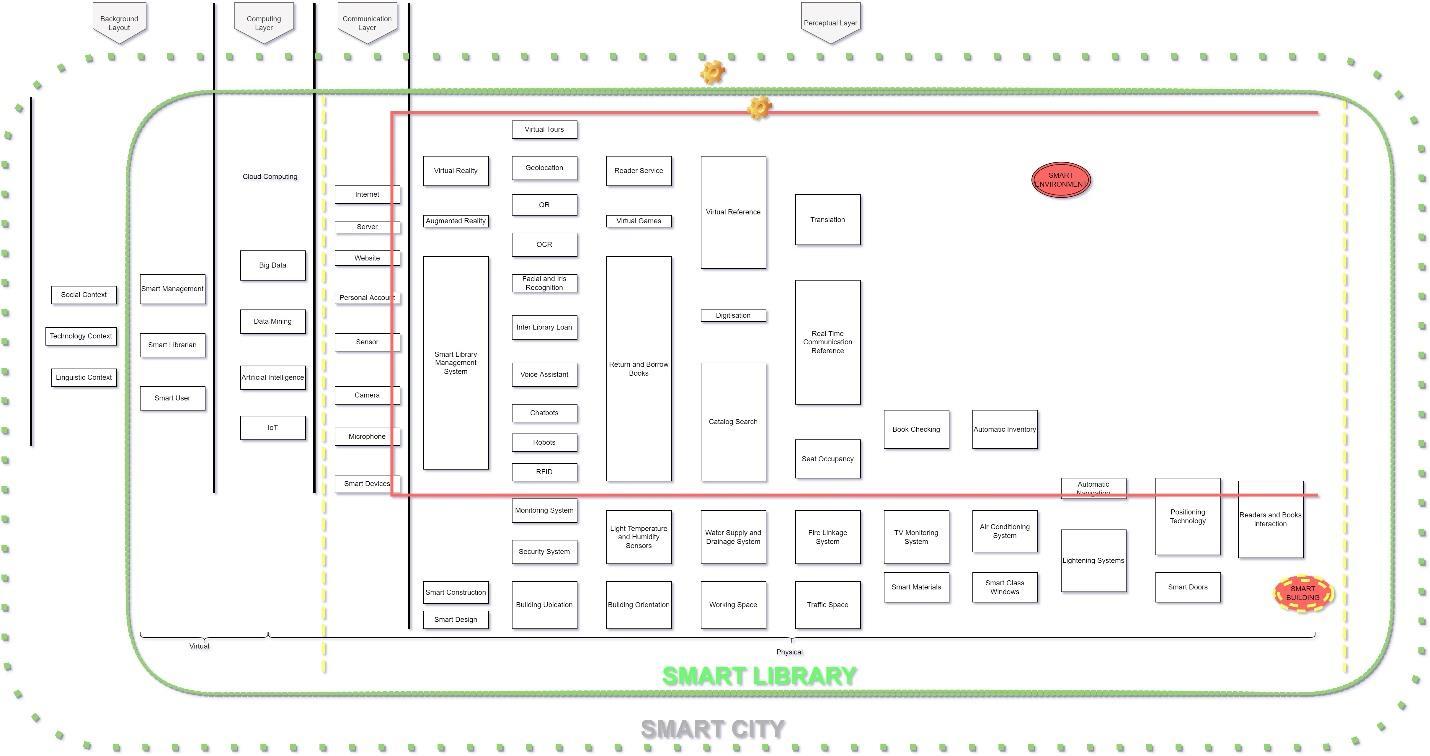
ThecompleteproposedframeworkisshowninFig.4.2.As shown in Fig. 4.2, four separate layers must be included, whicharethebackgroundlayer,whichislikeaninteraction layer that encompasses the social content, technological content,useraccess,librarianaccess,etc.
The next layer is the cloud layer, which stores the technologicalinvolvementofthecoreworkabilityofasmart libraryasdocumentedinsection2ofthisresearch.Bigdata, datamining,artificialintelligence,andtheuseofInternetof Things are all stored in either of the available services, as showninFig.4.1.
TheCommunicationlayeristhelayerthatenhancesuser-touser, user-to-computer communication. As shown in the diagram,differentformsofactivitiescanbeintegratedinthe perceptuallayer,however,integrationofthesecuritysystem
isveryimportantinthissmartenvironmentasshowninthe diagram.
Smart environments are the virtual environment that encompassesallthevirtualinfrastructureoftheproposed library, whereas, smart building is the environment that encompasses the necessary electronic devices for the continuousfunctionalityoftheproposedsmartlibrary.An environmentthatencompassesalltheactivitiesinthesmart librarycanbetermedthesmartcity,asshowninFig.4.2.
International Research Journal of Engineering and Technology (IRJET) e-ISSN: 2395-0056
Volume: 12 Issue: 12 | Dec 2025 www.irjet.net p-ISSN: 2395-0072
Cloud computing is already an integral part of every ICTrelatedorganization'sdailyoperations.Integratinglibraries withcloudcomputingtechnologieswilltransformlibraries intointelligentlibrariesandoptimiseandimprovelibrary servicesintheinformationage.Cloud-basedlibrariesarethe world'snewesttypeofe-Smartlibraries.Everylibrarymust establish a cloud-based, updated information delivery infrastructureandaconduciveatmospherethateffectively supportsresearch,learning,andteachingduetothecloud's securityadvantages.Inreality,librariesmustrevitaliseand preservetheirrelevancebyincorporatingcloudcomputing technologies,whichwillmakethempartoftheInternetof Things (IoT) experience that will soon dominate every sector.
Integrationoftheproposedmethodologyforactualizationof smart library as discussed in this research can involve differenttechnologies.Forexample,Wi-Ficaninvolvelow level programming language such as C, for the AI related devices, Python programming language can hasten the developmentofsuchinfrastructureetc.However,complete functionality of the proposed framework should be integrated using the application programming interface (API)whichwilleliminateanyformofprogrammingconflict.
This research has presented systematic literature review (SLR) on the need for smart library to counter challenges whichcanoccurinthee-resources. Theauthorofthispaper has also carefully presented a framework which can be implemented for proper smart library functionality. However, development and proper testing has not been done, the author recommends the integration of the proposedframeworkasthefuturework.
[1]R.K.Akanbi,H.K.Ali,andA.Ibrahim,“THEROLEOFELIBRARY AND E-RECORDS MANAGEMENT SECURITY IN ACADEMIC ENVIRONMENT,” BW Academic Journal, 2022. https://bwjournal.org/index.php/bsjournal/article/view/1 8
[2]V.W.Tsabedze,“ManagingElectronicRecordsinHigher Education Institutions,” Advances in higher education and professional development book series,pp.36–61,Jan.2020, doi:https://doi.org/10.4018/978-1-7998-1875-5.ch003.
[3]M. Balogh, W. Billingsley, D. Paul, and M. A. Kennan, “Attributes of Personal Electronic Records,” Archives and Manuscripts, vol. 50, no. 1, pp. 47–70, Sep. 2022, doi: https://doi.org/10.37683/asa.v50.10421.
[4]NuhuShadrack,“Electronic_Records_Management_and_ Public,” Scribd, 2025. https://www.scribd.com/document/697372080/Electronic -Records-Management-and-Public(accessedNov.29,2025).
[5]P.C.Agu,E.E.Njoku,S.Umaru,N.I.Eleke,I.H.Nwokoma, andO.T.Bashiru,“RecordsManagementandOrganizational Performance,” ARRUS Journal of Social Sciences and Humanities, vol. 2, no. 2, pp. 66–76, Mar. 2022, doi: https://doi.org/10.35877/soshum738
[6] H Thomas Hickerson, J. K. Lippincott, and L. Crema, Designing Libraries for the 21st Century.AssocofCollege& ResearchLibraries,2022.
[7]Muthusamy and Palanisamy, ResearchGate, 2024. https://www.researchgate.net/publication/375925690_Adv antages_and_Disadvantages_of_Digital_Libraries_A_Study
[8]E. Ben and R. Ebiefung, “DIGITAL LIBRARIES AND ARTIFICIAL INTELLIGENCE: A PANACEA FOR EFFECTIVE INFORMATION SERVICE DELIVERY IN THE 21 ST CENTURY,” Jun. 17, 2024. https://www.researchgate.net/publication/381479827_DIG ITAL_LIBRARIES_AND_ARTIFICIAL_INTELLIGENCE_A_PANA CEA_FOR_EFFECTIVE_INFORMATION_SERVICE_DELIVERY_I N_THE_21_ST_CENTURY
[9]M.Gunapala,A.Montague,S.Reynolds,andH.Vo-Tran, “Managing Change in University Libraries in the 21st Century:AnAustralianPerspective,” JournaloftheAustralian Library and Information Association,vol.69,no.2,pp.191–214, Apr. 2020, doi: https://doi.org/10.1080/24750158.2020.1756598.
[10]O. Parker, “Cloud Computing and AI in Education: RevolutionizingPersonalizedLearningWhileEnsuringData Security,” Sep. 20, 2023. https://www.researchgate.net/publication/384286273_Clo ud_Computing_and_AI_in_Education_Revolutionizing_Person alized_Learning_While_Ensuring_Data_Security
[11]Nasser and Chadi, “Leveraging Cloud Computing for Digital Education: Implications for Student Achievement,” Journal of Intelligent Systems and Internet of Things,vol.16, no.2,2025,doi:https://doi.org/10.54216/jisiot.160223.
[12]A. K. Julaihi, S. N. Jamaludin, N. K. Chik, and R. Johare, “Digital Record-KeepingPractices:ElectronicRecords and ArchivesintheCloud,” International Journal of Engineering Trends and Technology, vol. 72, no. 10, pp. 267–281, Oct. 2024, doi: https://doi.org/10.14445/22315381/ijettv72i10p126
[13]OjoJacobOlanrewaju,M.H.Mohammed,A.Mohammad, and Osheiza Fatima Momohjimoh, “Records management practicesinlibrariesoffederaluniversitiesinNorthwestern Nigeria,” LibraryandInformationPerspectivesandResearch, vol. 6, no. 1, pp. 215–231, Jan. 2024, doi: https://doi.org/10.47524/lipr.v6i1.216.
International Research Journal of Engineering and Technology (IRJET) e-ISSN: 2395-0056
Volume: 12 Issue: 12 | Dec 2025 www.irjet.net p-ISSN: 2395-0072
[14]B. S. Banad, “Role of Digital Libraries in the Changing EducationalEnvironment,” SocialScienceResearchNetwork, Jan.2023,doi:https://doi.org/10.2139/ssrn.4514725.
[15]R. Touray, “A Review of Records Management in Organisations,” OALib, vol. 08, no. 12, pp. 1–23, 2021, Available: https://www.scirp.org/journal/paperinformation.aspx?pap erid=113666
[16]C. Orlu, O. Akpaibor, and F. Jarigo, “Key contacts Data Retention and Disclosure Conundrum: Negotiating the ComplexitiesofFreedomofInformationAct(FoI)Disclosure Requests,” 2023. Available: https://www.templarslaw.com/app/uploads/2024/07/Data-Retention-andDisclosure-Conundrum.pdf
[17]M. E. Matlala and A. R. Maphoto, “Application of the records life-cycle and records continuum models in organizationsinthe21stcentury,” ESARBICAJournal:Journal of the Eastern and Southern Africa Regional Branch of the International Council on Archives,vol.39,no.1,pp.79–98, Dec.2020,doi:https://doi.org/10.4314/esarjo.v39i1.6.
[18]A. Saleem, “INFORMATION GOVERNANCE 1.1 Information Governance,” ResearchGate, Mar. 13, 2025. https://www.researchgate.net/publication/389813646_INF ORMATION_GOVERNANCE_11_Information_Governance
[19]B. O. Obande and H. Emmanuel, “The Stage of ImplementationsofE-LibrariesanditsChallengesinNigeria Higher Education Institutions in the 21st Century,” SSRN Electronic Journal, 2024, doi: https://doi.org/10.2139/ssrn.4756375.
[20]F. Adam and G. Ray, “The Role of Information and Communication Technology (ICT) in Enhancing the Innovative Learning Process,” IAIC Transactions on Sustainable Digital Innovation (ITSDI),vol.2,no.1,pp.54–60,Oct.2020,doi:https://doi.org/10.34306/itsdi.v2i1.352.
[21]S. N. Hirekhan and Veena Prakashe, “SMART TECHNOLOGY USED IN MAKING SMART LIBRARY,” ShodhKoshJournalofVisualandPerformingArts,vol.4,no.2, Dec. 2023, doi: https://doi.org/10.29121/shodhkosh.v4.i2.2023.5084.
[22]Y.M.Fromm,F.Martin,T.Gezer,andD.Ifenthaler,“Best PracticesforConductingSystematicReviews:Perspectivesof ExperiencedSystematicReviewResearchersinEducational Sciences,” Technology, Knowledge and Learning,Feb.2025, doi:https://doi.org/10.1007/s10758-025-09819-9.
[23]S.Jagadeesha,“TheFutureRoleofSmart Librariesfor SmartUsers:AnOverview,” InternationalJournalofResearch inLibraryScience,vol.10,no.1,pp.145–150,Mar.2024,doi: https://doi.org/10.26761/ijrls.10.1.2024.1741.
[24]S.Naik,“LibrariesintheDigitalEra:AnOverviewonthe RoleofICTandEmergingTechnologies,” INTERNATIONAL JOURNALOFCREATIVERESEARCHTHOUGHTS,vol.13,no.3, 2025,doi:https://doi.org/10.56975/ijcrt.v13i3.279525.
[25]M.Kumar,“ConnectingBooksandBytes:TheRoleofICT Implementation inModern Libraries,” vol.9,no. 1,p. 174, 2024, Accessed: Nov. 30, 2025. [Online]. Available: https://www.ijnrd.org/papers/IJNRD2401222.pdf
[26]AnilKumarMannarath,“Systematicliteraturereviewfor an effective research: a structured framework for social science researches,” Quality & Quantity, Nov. 2025, doi: https://doi.org/10.1007/s11135-025-02458-3.
[27]E. J. Kitinya, “Electronic Record-Keeping and ManagementEfficiency:ACaseStudyofSokoineUniversity ofAgriculture,Tanzania,” JournalofEducationLearningand Management, vol. 2, no. 2, pp. 324–328, Nov. 2025, doi: https://doi.org/10.69739/jelm.v2i2.1046.
[28]DEMOLA,RASAQ,MUSA,andKURANGA,“AVAILABILITY ANDUSEOFICTTOOLSFOREFFECTIVELIBRARYSERVICES DELIVERYINACADEMICLIBRARIESINKWARASTATE3,” 2025,doi:https://doi.org/10.70118/jaist.202501801.2.
[29]G.Koulouras,S.Katsoulis,andF.Zantalis,“Evolutionof BluetoothTechnology:BLEintheIoTEcosystem,” Sensors, vol. 25, no. 4, p. 996, Feb. 2025, doi: https://doi.org/10.3390/s25040996.
[30]G. Rama and D. D. Bhatt, “Impact and Usage of EResources in Academic Libraries,” Degres, vol. Vol.9, no. Issue 4, pp. 24–33, Apr. 2024, Available: https://www.researchgate.net/publication/384660198_Imp act_and_Usage_of_E-Resources_in_Academic_Libraries
[31]W. Anyim, Journal-asia.education, 2020. https://ijae.journal-asia.education/IJAE-html/7.html
[32]Q.Zhou,“Smartlibraryarchitecturebasedoninternetof things (IoT) and software defined networking (SDN),” Heliyon,vol.10,no.3,pp.e25375–e25375,Feb.2024,doi: https://doi.org/10.1016/j.heliyon.2024.e25375.
[33]Vani Rajasekar, J. Premalatha, K. Sathya, R Janani Varthini,andS.PadmaIshwarya,“Designanddevelopment ofdigitale-library,” NucleationandAtmosphericAerosols,Jan. 2021,doi:https://doi.org/10.1063/5.0068583.
[34]MiatulFarika,FransiskaTimoriaSamosir,andLailatus Sa’diyah,“UtilizationofE-BooksinE-LibraryApplicationsto Improve Digital Literacy of Librarians,” JIPI (Jurnal Ilmu PerpustakaandanInformasi),vol.9,no.2,pp.244–244,Nov. 2024,doi:https://doi.org/10.30829/jipi.v9i2.18654.
2025, IRJET | Impact Factor value: 8.315 | ISO 9001:2008
International Research Journal of Engineering and Technology (IRJET) e-ISSN: 2395-0056
Volume: 12 Issue: 12 | Dec 2025 www.irjet.net p-ISSN: 2395-0072
[35]G. Kavitha and P. Valarmathy, “E-library management system,” International journal of health sciences,Jun.2022, doi:https://doi.org/10.53730/ijhs.v6ns4.9418.
[36]Y. S Chaudhari and H. S Bhoye, “The Application of Information and Communication Technology in Libraries: Library Services, Effects and Challenges,” International Journal of Technology, pp. 38–44, Sep. 2024, doi: https://doi.org/10.52711/2231-3915.2024.00005.
[37]AsadUllahKhan etal.,“BeyondBookshelves,how5/6G TechnologyWillReshapeLibraries:Two-StageSEMandSFAHPAnalysis,” Technology in society,pp.102629–102629, Jun. 2024, doi: https://doi.org/10.1016/j.techsoc.2024.102629.
[38]G. O. Adigun, Yusuf Ayodeji Ajani, and R. T. Enakrire, “The Intelligent Libraries: Innovation for a Sustainable KnowledgeSystemintheFifth(5th)IndustrialRevolution,” Libri, vol. 0, no. 0, Jun. 2024, doi: https://doi.org/10.1515/libri-2023-0111.
[39]X. Su and N. Chen, “Intelligent Information Service System of Smart Library Based on Virtual Reality and Eye MovementTechnology,” Scientific Programming,vol.2022, pp. 1–12, Oct. 2022, doi: https://doi.org/10.1155/2022/9174756.
[40]J. Kehinde Opele, Y. Adeyeye, and H. Library, “Jewel Journal of Librarianship Application of Internet of Things (Iot) Technology in Library and Information Centres -A LiteratureReview,”2024.Accessed:Dec.07,2025.[Online]. Available: https://www.jeweljournals.com/admin/published/207015 59672.pdf
[41]W.Saibakumo,“Awarenessandacceptanceofemerging technologies for Awareness and acceptance of emerging technologies for extended information service delivery in academiclibrariesinextendedinformationservicedelivery in academic libraries in Nigeria Nigeria,” 2021. Available: https://digitalcommons.unl.edu/context/libphilprac/article /9747/viewcontent/auto_convert.pdf
[42]A. Ozeer, Y. Sungkur, and S. D. Nagowah, “Turning a TraditionalLibraryintoaSmartLibrary,” 2019International Conference on Computational Intelligence and Knowledge Economy (ICCIKE), Dec. 2019, doi: https://doi.org/10.1109/iccike47802.2019.9004242.
[43]A. Ozeer, Y. Sungkur, and S. D. Nagowah, “Turning a TraditionalLibraryintoaSmartLibrary,” 2019International Conference on Computational Intelligence and Knowledge Economy (ICCIKE), Dec. 2019, doi: https://doi.org/10.1109/iccike47802.2019.9004242.
[44]H. Adhikari, “Smart library Systems: Innovations and ChallengesintheInternetofThingsEra,” African Journal of Biomedical Research, pp. 12–22, Dec. 2024, doi: https://doi.org/10.53555/ajbr.v27i5s.8121.
[45]E. Uchenna, E. Chinyere, M. Chiemela, and A. Comfort, “(CLN)andAjalaComfortFROMTRADITIONALTOSMART LIBRARIES:ANEWPARADIGMFORINFORMATIONACCESS AND SERVICE INNOVATION IN DEVELOPING NATIONS,” AdvanceJournalofLinguisticsandMassCommunicationAdv. J. Lin. M. Com, pp. 5314–6414, 2025, doi: https://doi.org/10.5281/zenodo.17094140.
[46]M. E. E. Alahi et al., “Integration of IoT-Enabled TechnologiesandArtificial Intelligence(AI)forSmartCity Scenario:RecentAdvancementsandFutureTrends,” Sensors, vol. 23, no. 11, p. 5206, Jan. 2023, Available: https://www.mdpi.com/1424-8220/23/11/5206
[47]K.A.Wankhede,“SmartLibrariesandAITechnologies,” International Journal of Research in Library Science,vol.11, no. 2, pp. 20–27, Apr. 2025, doi: https://doi.org/10.26761/ijrls.11.2.2025.1865.
[48]S. Bi et al., “A Survey on Artificial Intelligence Aided Internet-of-Things Technologies in Emerging Smart Libraries,” Sensors, vol. 22, no. 8, p. 2991, Jan. 2022, doi: https://doi.org/10.3390/s22082991.
[49]A. Tella, Y. A. Ajani, and S. V. Adeyeye, “Smart library advocacy: Leveraging intelligent technologies as smart solutions for equitable knowledge access through a systematic review,” Journal of Electronic Resources Librarianship, pp. 1–16, May 2025, doi: https://doi.org/10.1080/1941126x.2025.2497729.
[50]R.Nishad,M.Sharma,S.RasikaLonkar,U.Meshram,and A.Dubey,“ArtificialIntelligenceinLibraries:Transforming the Library System,” International Journal of Research Publication and Reviews Journal homepage: www.ijrpr.com, no. 6, p. 2003, 2025, Accessed: Oct. 23, 2025. [Online]. Available: https://ijrpr.com/uploads/V6ISSUE2/IJRPR38752.pdf
[51]M.WangandZ.Xia,“ResearchonArtificialIntelligence in Libraries,” Proceedings of the 2025 3rd International Conference on Communication Networks and Machine Learning, pp. 519–526, Feb. 2025, doi: https://doi.org/10.1145/3728199.3728285.
[52]NeliTshabalalaandL.Dube,“Emergingtechnologiesand skillstoimproveservicedeliveryindigitallibraries,” South African Journal of Libraries and Information Science,vol.90, no. 2, pp. 1–12, 2024, doi: https://doi.org/10.7553/90-22393.
International Research Journal of Engineering and Technology (IRJET) e-ISSN: 2395-0056
Volume: 12 Issue: 12 | Dec 2025 www.irjet.net p-ISSN: 2395-0072
[53]H.Xu,W.Liu,L.Li,andQ.Zhou,“AnIoT-basedlow-cost architecture for smart libraries using SDN,” Scientific Reports, vol. 14, no. 1, p. 7022, Mar. 2024, doi: https://doi.org/10.1038/s41598-024-57484-2.
[54]A.Asemi,A.Ko,andM.Nowkarizi,“Intelligentlibraries:a reviewonexpertsystems,artificialintelligence,androbot,” Library Hi Tech,vol.ahead-of-print,no.ahead-of-print,Jun. 2020,doi:https://doi.org/10.1108/lht-02-2020-0038.
[55]G. Manoharan, Sunitha Purushottam Ashtikar, and M. Nivedha, “Integrating Artificial Intelligence in Library Management,” Advances in library and information science (ALIS) book series, pp. 144–157, Apr. 2024, doi: https://doi.org/10.4018/979-8-3693-2782-1.ch008.
[56]M. P. Dongare, “New trend in ICT and its impact on libraryservicesandfunctions:RegardswithIoT,” IP Indian JournalofLibraryScienceandInformationTechnology,vol.7, no. 1, pp. 14–17, Jun. 2022, doi: https://doi.org/10.18231/j.ijlsit.2022.003.
[57]Dr. M. S. G. Rathod, “The Rise of Smart Libraries: IntegratingIoT,CloudServices,andAIforNext-GenLearning Spaces,” InternationalJournalofResearchinLibraryScience, vol. 11, no. 2, pp. 211–226, Jun. 2025, doi: https://doi.org/10.26761/ijrls.11.2.2025.1883.
[58]S. Singh, “Internet of Things (IoT) and Library 4.0: BuildingIntelligentInformationEcosystems,” IOSRJournalof HumanitiesandSocialScience(IOSR-JHSS,vol.30,no.11,pp. 30–35, 2025, doi: https://doi.org/10.9790/08373011063035.
[59]A. U. Khan, S. U. Jan, M. N. Khan, M. Khan, and S. R. Chohan,“SmartServicesUtilizationinAcademicLibraries: An Assessment of Student Behavior Based on Expectation Confirmation Model,” Serials Review, pp. 1–14, Apr. 2025, doi:https://doi.org/10.1080/00987913.2025.2490301.
[60]I.A.DimeandO.C.Clement,“UseofCloud Computing Technologies for Library Services Delivery: A Survey of Librarians in University Libraries in Africa - E-LIS repository,” Rclis.org, Dec. 2023, doi: http://eprints.rclis.org/45721/1/Use%20of%20Cloud%20C omputing%20Technologies%20for%20Library%20Services %20Delivery.pdf.
[61]R. Khan, “Importance of Digital Library in Education,” InternationalJournalofResearchinLibraryScience,vol.7,no. 4, Nov. 2021, doi: https://doi.org/10.26761/ijrls.7.4.2021.1467.
[62]Mehdi Alipour-Hafezi et al., “A model for creating a virtual library inIranianuniversitiesof medical sciences,” TheElectronicLibrary,vol.37,no.4,pp.636–649,Sep.2019, doi:https://doi.org/10.1108/el-01-2019-0017.