
International Research Journal of Engineering and Technology (IRJET) e-ISSN: 2395-0056
Volume: 12 Issue: 11 | Nov 2025 www.irjet.net p-ISSN: 2395-0072
International Research Journal of Engineering and Technology (IRJET) e-ISSN: 2395-0056
Volume: 12 Issue: 11 | Nov 2025 www.irjet.net p-ISSN: 2395-0072
Basavaraj M Sandyal1 , Dr. Ashok Kusagur2
1M. Tech student, Power System Engineering, Dept. of Electrical and Electronics Engineering, University BDT College of Engineering, Davangere, Karnataka, India.
2 Associate Professor, Department of Electrical and Electronics Engineering, University BDT College of Engineering, Davangere, Karnataka, India.
Abstract - Solar power stands out as one of the most plentiful forms of renewable energy available today. significant and rapidly expanding. Getting the most electricity out of solar PV while minimizing losses is of the main design objectives of a PV system. Numerous methods for monitoring the PV system's peak performance point have been documented in various literatures in order to accomplish this. Theoretical information on creating and deploying an artificial neural network-based Maximum Power Point Tracking (MPPT) controller for a standalone Photovoltaic systems are implemented. MATLAB/Simulink is used to create a 5KW solar PV array. The neural network is trained and evaluated using real-time data regarding shifting environmental variables, such as temperature and irradiance changes. Simulation results are shown under rapidly fluctuating load circumstances, temperature, and sun radiation.
Solar photovoltaic (PV) systems, neural networks, and maximum power point tracking (MPPT) are the keywords.
ThesolarenergythatsustainslifeonEarthisalsoalimitlessandsustainablesourceofpower.Overthepast50years,alarge number of research have been conducted to examine various aspects of photovoltaic (PV) cell design and performance characteristics.TheultimateobjectivehasbeentodevelopfullyintegratedPVmoduleswhichmaysuccessfullycontendwith conventionalenergysources.
There is a growing trend toward the usage of solar cells in both industrial and domestic applications as solar energy is anticipatedtoplayasignificantpartinfuturesmartgridsasadistributedrenewableenergysource. Theglobaldemandfor energyisincreasingdaybyday,anditleadstoenergycrises.Alternativerenewableenergysourcesareneededtomeetthe growingdemandforenergyandenvironmentalproblems.Indiahashugesolarenergypotential.AccordingtotheNational InstituteofSolarEnergy(NISE),thecountry’ssolarpotentialisabout748GW.Theinstalledcapacityofsolarenergyis82.64 GW as of April 2024. Earlier solar photovoltaics were very expensive, but today they have become affordable for many consumersthankstotheimprovementoftechnologyandthemassproductionofsolarpanels.
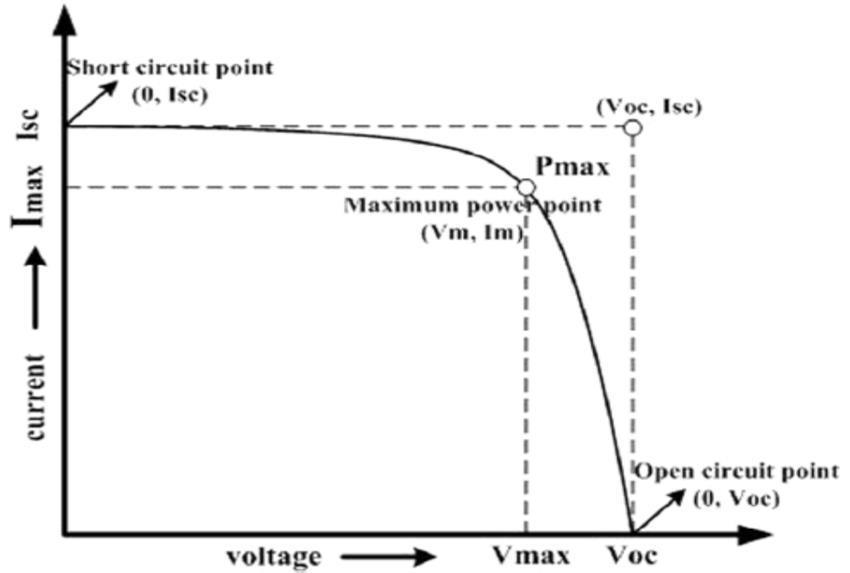
SolarphotovoltaiccellsarethebasicbuildingblockofaPVsystemthatconvertssolarenergyintoelectricity.ButPVcellshave poorconversionefficiencyanditfurtherdeterioratewithincreasingtemperatureanddecreasingirradiancelevelbecausethe outputcurrentandvoltageofsolarPVareafunctionofsolarradiationandpaneloperatingtemperature.TheV-Icharacteristic ofaphotovoltaiccell(Figure1)providesanon-linearcurveanditisobservedthatthereisapointonthecurveatwhichthecell producesmaximumpoweratagivenirradianceandtemperature.Thispointiscalledthemaximumpowerpoint(MPP)and occurswhentherateofchangeofpowerwithrespecttovoltageiszero.Variouscontroltechniquesknownasmaximumpower pointtracking(MPPT)areusedtomonitortheMPPofsolarcells.
International Research Journal of Engineering and Technology (IRJET) e-ISSN: 2395-0056
Volume: 12 Issue: 11 | Nov 2025 www.irjet.net p-ISSN: 2395-0072
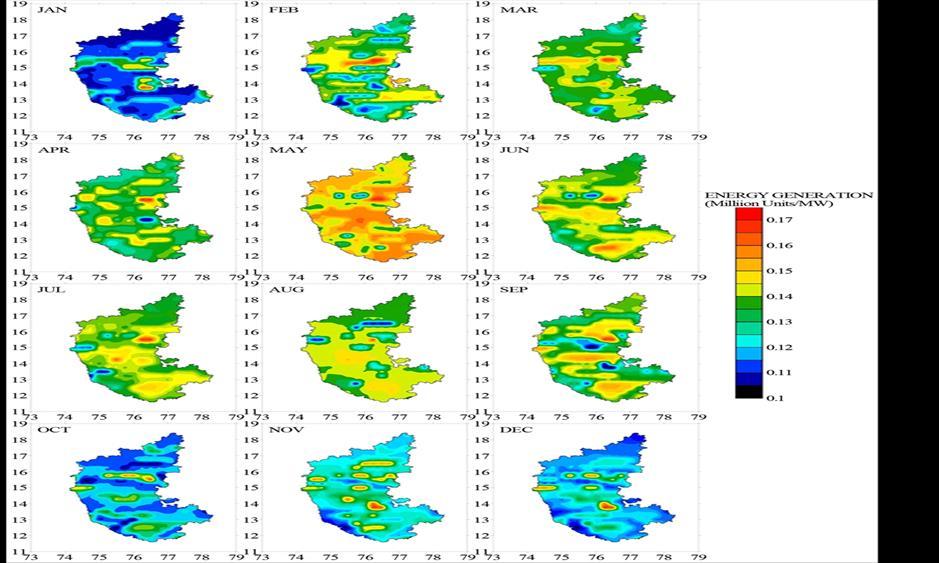
Karnataka has been instrumental in forward solar energy adoption in India, with several key milestones shaping its leadershipinthesector.In2009,thestatecommissioneda3MWsolarfacilityatYelasandrainKolardistrict recognizedasthe country’sfirstutility-scalephotovoltaicinstallation.ItwasalsothefirstinsouthernIndiatointroduceacomprehensivesolar policy,whichlaidthesubstanceforawiderangeofrenewableenergyinitiatives.Withanprojectedsolarpotentialof25GWand between240to300cleardaysannually,thestatepossessesfavorableconditionsforsolarpowergeneration.
OneofthemostprominentdevelopmentsisthePavagadasolarparkinTumakurudistrict,whichatonepointwasthelargest operationalsolarpowersiteglobally,withacapacityexceeding2,000MW.Karnatakaendurestoexpanditssolarinfrastructure throughlarge-scaleinstallationsandtargetedprogramsaimedatpoweringagriculturalpumpsandrooftops.TheRenewable EnergyPolicy2022–27hasadditionalacceleratedthismomentumbyofferingsubsidiesandencouraginginnovationssuchas floating solar systems on reservoirs and lakes. By early 2025, the state’s cumulative solar capacity had crossed 8.9 GW, reaffirming its position as a major contributor to India’s renewable energy objectives and its commitment to sustainable electricitygeneration.
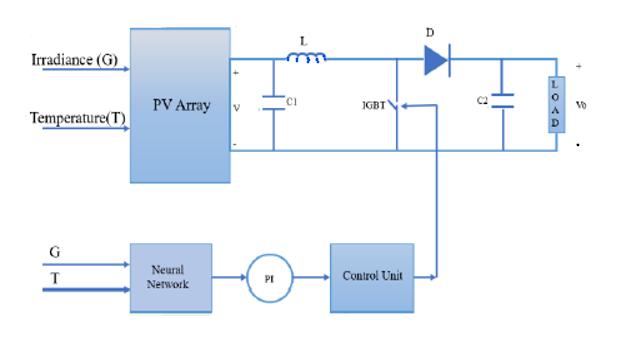
Attheforefrontoftheneuralnetwork-basedMPPTsystemblockdiagramliesthesolarphotovoltaic(PV)array,responsiblefor convertingincidentsunlightintousableelectricalpower.Thearray’soutputvoltageandcurrentare notablyinfluencedby environmentalvariables,particularlyambienttemperatureandsolarirradiance.Thesetwofactorsarefedintoanofflinetrained artificial neural network (ANN) controller, calibrated using empirical datasets, to predict the reference voltage correspondingtotheMaximumPowerPoint(Vmpp).Toensureefficientenergyconversion,thesystempaysatrainedneural controllerthatdeterminestheidealoperatingvoltagebasedonreal-timetemperatureandirradianceinputs.
Thiscontrollerinterpretsthenonlinearrelationshipamongenvironmentalconditionsandphotovoltaicbehaviortoestimate the voltage corresponding to the maximum power point (Vmpp). The calculated Vmpp is then fed into a pulse-width modulation(PWM)unit,whichgeneratesacontrolsignalfortheDC-DCboostconverter.
TheboostconverteradjustsitsdutycycleaccordingtothePWMinput,elevatingthearray’soutputvoltagetomatchVmpp.Its corecomponentsincludeaninductor,aswitchingdevice(suchasaMOSFETorIGBT),adiode,andanoutputcapacitorthat stabilizes the voltage supplied to the load. To maintain consistent concert near the maximum power point, the system uninterruptedlymonitorsthePVvoltageandcurrent,allowingthecontrollertorespondpromptlytochangesinloaddemand andsolarsettings.
International Research Journal of Engineering and Technology (IRJET) e-ISSN: 2395-0056
Volume: 12 Issue: 11 | Nov 2025 www.irjet.net p-ISSN: 2395-0072
Atthecoreofanyphotovoltaicsystemliesthesolarcell,adeviceengineeredtotransformsunlightintoelectricalenergy.The electricaloutputspecificallythecurrentandvoltageofthesecellsisinfluencedbyenvironmentalconditionsandmaterial properties. are dependent on solar radiation and panel operating temperature, which means that PV cells have a low conversionefficiencythatgetsworseasthetemperaturerisesandtheirradiancelevelfalls,Thisargument,whichisknownas theMPP,isreachedwhenthepowerchangeraterelativetovoltageiszero.TheMPPTofsolarcellsismonitoredusingA spectrumofmanagementapproaches.
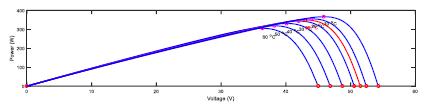
A Soltech 5 KW solar PV array is chosen for the simulation. It consists of one series and parallel strings. The electrical characteristicofthePVarrayisshowninTable1.Figure4 showstheV-IandPVCharacteristicsof5KWsolarPVarraywith varyingirradiationandtemperatureconditionrespectively.Fromthefigures,itisobservedthatwithanincreaseinirradiation level,powerincreaseswhilewithanincreaseintemperature,powerdecreases
Table1: Parameters of 5 KW solar PV Array
International Research Journal of Engineering and Technology (IRJET) e-ISSN: 2395-0056
Volume: 12 Issue: 11 | Nov 2025 www.irjet.net p-ISSN: 2395-0072
MATLAB/Simulinkisusedtocreatethesuggestedsystemwitha325WApollosolarmodule.Threemaincomponentsmakeup theentirecircuit:theANN-basedMPPTcontroller,thepowerconditioningstage(boostconverter+PWMcontrol),andthePV source.
PV array for solar power
•Astheinputsource,aphotovoltaicsystemgeneratesThedirectcurrentoutputparametersvoltageandcurrentareinfluenced byambienttemperatureandincidentsolarradiationlevels.
•Duetotheinherentnonlinearcharacteristicsofphotovoltaicmodules,theiroperatingpointshiftsinresponsetofluctuations in temperature and solar irradiance. Without an active control mechanism, the system fails to naturally align with the MaximumPowerPoint(MPP),resultinginsuboptimalenergyextraction.
Boost Conversion
ADC-DCboostconverterisadevicethatconvertstheoutputofthephotovoltaicarrayintoaDCvoltagethatcanbedirectly convertedtotheloadandallowsefficientpowertransfer.
ThemainpurposeoftheconverteristocontroltheAdjustingtheoutputvoltageatthephotovoltaicterminalstotheintended operatingthresholdwhichtheANNcontrollerestimates.
Thearrangementincludesaninductor,acapacitor,adiodeandaswitchingdeviceusuallyaIGBT-inawaythatallowsoneto easilycontrolconversionofenergy.
ANN-Powered MPPT Regulator
•Tworeal-timelinesarefedintotheANN,whicharetemperature(T)andirradiance(G).
•ItwasconfiguredtohavetenhiddenlayersanditwastrainedonhistoricalNASAdata.
•Inthegivenconditions,theVmppispredictedbythenetwork.
PWM Generator
MistakeisprocessedtocreatePWMpulsesthatcontroltheIGBToftheboostconverter.
•TheconvertercausesthePVarraytooperateattheVmppwhichtheANNpredictedthroughmodulatingthedutycycle.
Load
•Resistiveload(1003030Ω)isconnectedatconverteroutput.
•Theartificialneuralnetworkcontrollerisadynamiccontrolofthesystemparameterstomaintainthephotovoltaicarray workingatmaximumpowerlevels,irrespectiveofthechangesinloadconditions.
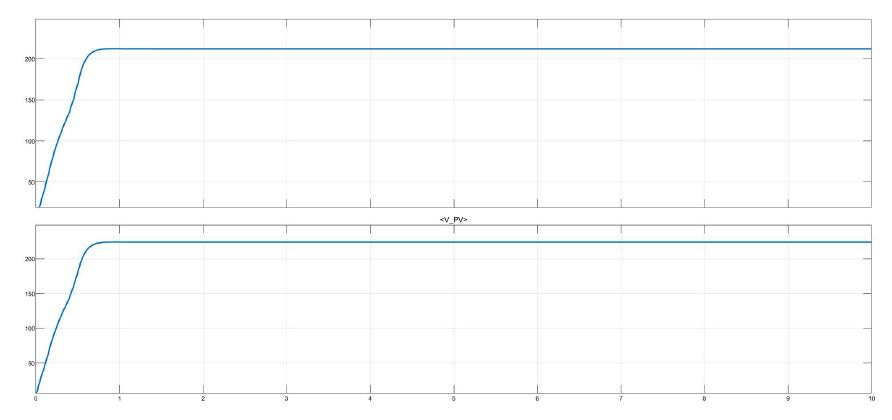
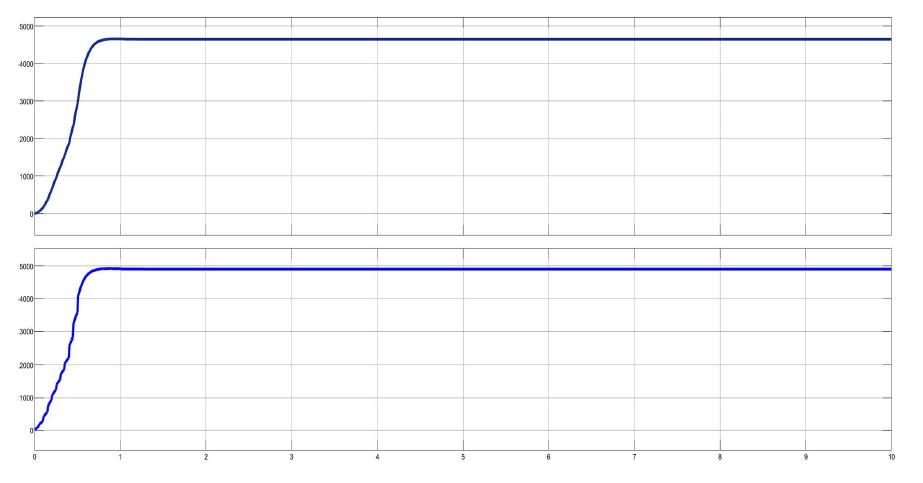
The 5KW solar photovoltaic (PV) array's MATLAB/Simulink simulation results show that a neural network-based MPPT controllerisremarkablyadeptatoptimizingpowerextractionunderarangeofenvironmentalcircumstances.Thephotovoltaic arraydemonstratedreliablepeakpowertrackingacrossawideirradiancerangefrom1000W/m²downto100W/m²under fixedtemperatureconditions.Whentemperaturewasvariedbetween20°Cand60°Catconstantirradiance,thesystemshowed predictableshiftsinmaximumpoweroutput,mainlyduetotheinverserelationshipbetweentemperatureandvoltage.Inspite oftheMPPTcontrollerbeingconfiguredforsteady-stateoperation,transientfluctuationsinoutputpowerandcurrentwere observedunderchangingloadconditions.
International Research Journal of Engineering and Technology (IRJET) e-ISSN: 2395-0056
Volume: 12 Issue: 11 | Nov 2025 www.irjet.net p-ISSN: 2395-0072
Theneuralcontrollerwastrainedonanextensivedatasetthatemulatedrealworldvariationsinirradianceandtemperature. This enabled swift and accurate final estimation of the voltage corresponding to the maximum power point, resulting in improved tracking precision and reduced oscillatory behavior associated to traditional MPPT techniques. The system’s adaptability and resilience under dynamic conditions affirmed the suitability of neural-based control for real time PV regulation.Itspotentialextendstomorecomplexscenarios,includinghybridenergyconfigurationsandenvironmentsaffected bypartialshading.
Case 1:-Normal load
2:-Over load
Acriticalaspectofharnessingsolarenergyefficientlyliesinextractingthehighestpossiblepowerfromphotovoltaicarrays. Maximum Power Point Tracking (MPPT) algorithms are specifically designed to optimize this output under varying environmentalconditions.AmongthekeyvariablesinfluencingPVperformanceareambienttemperatureandsolarirradiance, bothofwhichdynamicallyalterthearray’selectricalcharacteristics.power.Usingreal-timeinputdata(temperatureand irradiance)collectedfromapositionclosetohomeviatheNASAwebsite,theneuralnetworkistrainedandtestedona5KW solararrayselectedfromtheMATLABSimulinkpackage.AMATLABcodeforaSimulinkmodelisdevelopedtochangethePV terminalvoltageinordertotrackthemaximumoutput.Aneuralnetwork-basedMPPTcontrolsystemwithchangingload, temperature,andirradianceinputconditionsandtheirrelatedoutputsisshownintheimageasaSimulinkmodel.givesan overviewoftheresultsunderdifferentload,temperature,andirradianceconditions.
FutureresearchwillemployaneuralnetworkinordertoapplytheMPPTapproachtoarealisticsolarPVpanelconsideringthe effectofpartialshading.Itisalsopossibletooptimizeelectricityinawindandsolarpowersystemwiththehelpofaneural network.
[
1] Rakesh Kumar | Pramod Kumar Rathore “Performance Enhancement of MPPT Based Solar PV System using Neural Network” Published in International Journal of Trend in Scientific Research and Development (ijtsrd), ISSN: 2456-6470, Volume-6|Issue-5,August2022.
[2]Mr.S.SheikMohammed,Dr.D.Devaraj,“SimulationandAnalysisofStand-alonePhotovoltaicSystemwithBoostConverter usingMATLAB/Simulink”,2018.
[3]LSivaChaitanyaKumar,KPadma,“Matlab/SimulinkBasedModellingandSimulationofResidentialGridConnectedSolar PhotovoltaicSystem”,2014.
[4]DayaneshwarD.Khairnar,V.M.Deshmukh,“ReviewStudyonTopologiesofMultilevelInverters”,IJIRDISSN:2278-0211, Vol.3,Issue5,May2014.
[5]LakshmanRaoS.P,Dr. CijiPearl Kurian, Dr.B.K.singh,KumarAbhinav,Gaurav Nandy,“Designand SimulationofGrid ConnectedHybridSolar-WECSUsingSIMULINK/MATLAB”,2014.