
International Research Journal of Engineering and Technology (IRJET) e-ISSN: 2395-0056
Volume: 12 Issue: 12 | Dec 2025 www.irjet.net p-ISSN: 2395-0072
International Research Journal of Engineering and Technology (IRJET) e-ISSN: 2395-0056
Volume: 12 Issue: 12 | Dec 2025 www.irjet.net p-ISSN: 2395-0072
Ajay S Tippannavar
Ajay S Tippannavar, Department of Artificial Intelligence and Data Science, S J C Institute of Technology, Chikaballapur, India, -*** -
ABSTRACT - The exponential proliferation of digital misinformation ("fake news") on social media platforms presents a critical challenge to information integrity and democratic stability. The high velocity and volume of usergenerated content render manual verification methods unscalable. This research paper presents a comprehensive, systematic survey of Deep Learning (DL) methodologies employed for automated fake news detection, covering the period from 2022 to 2025. We critically analyse the architectural evolution from Convolutional Neural Networks (CNNs) and Recurrent Neural Networks (RNNs) to state-of-the-art Transformer-based models like BERT and Roberta. Furthermore, we examine the emerging threat of Large Language Model (LLM) generated disinformation. Our comparative analysis demonstrates that while Transformer models achieve superior accuracy (up to 98.4%), they impose significant computational overhead compared to lightweight LSTM architectures. The study concludes by proposing a roadmap for future research, emphasizing Explainable AI (XAI) and Federated Learningfor privacy-preservingdetection.
Keywords-Fake News Detection, Deep Learning, Natural Language Processing, Transformers, BERT, Bi-LSTM, Multimodal Learning, Generative AI.
NOMENCLATURE
DL: DeepLearning
NLP: NaturalLanguageProcessing
CNN: ConvolutionalNeuralNetwork
LSTM: LongShort-TermMemory
Bi-LSTM: BidirectionalLSTM
BERT: Bidirectional Encoder Representations fromTransformers
RoBERTa: RobustlyOptimizedBERTPretraining Approach
TP/TN: TruePositive/TrueNegative
FP/FN: FalsePositive/FalseNegative
The advent of Web 2.0 has democratized content creation, allowing information to bypass traditional editorial gatekeepers. While this fosters free speech, it has concurrently enabled the weaponization of information. "Fake news" is defined as intentionally fabricated information published with the intent to
deceive or mislead. The consequences of such misinformationareprofound,rangingfrommanipulating politicalelectionstoincitingsocialunrestandspreading publichealthmyths.
Research by Vosoughi et al. [1] indicates that falsehoods diffuse significantly farther, faster, deeper, and more broadly than the truth in all categories of information. This phenomenon is driven by the "novelty hypothesis," which suggests that fake news is more novel and emotionallyevocativethanreality.
Traditional detection approaches relied on feature engineering, extracting linguistic features such as ngrams, punctuation analysis, and readability scores. However, these methods are brittle and domain-specific. Deep Learning (DL) automates feature extraction, learninghierarchical representationsofdata.Thispaper provides a granular analysis of DL techniques, focusing on sequence modelling, attention mechanisms, and the newchallengeofAI-generatedtext.
The field of automated deception detection has evolved throughseveraldistinctphases.
Phase 1: Statistical Machine Learning (20152018): EarlyapproachesutilizedSupportVector Machines (SVM) and Naïve Bayes classifiers. These models relied heavily on "bag-of-words" approaches, which ignored the context and orderofwords.
Phase 2: Deep Sequence Modeling (20182021): The introduction of Recurrent Neural Networks (RNNs) allowed models to process text as a sequence. Researchers like Ruchansky et al. developed the CSI model, which combined textanalysiswithuserbehavioranalysis.
Phase 3: The Transformer Era (2021Present): The release of BERT by Google revolutionized NLP. Current state-of-the-art research focuses on fine-tuning pre-trained Transformerstodetectsubtlenuances,sarcasm, andframinginnewsarticles.
International Research Journal of Engineering and Technology (IRJET) e-ISSN: 2395-0056
Volume: 12 Issue: 12 | Dec 2025 www.irjet.net p-ISSN: 2395-0072
TheefficacyofDL modelsispredicatedonthequalityof inputrepresentations.
A. Preprocessing Pipeline
Rawtextundergoesafour-stagecleaningprocess:
1. Tokenization: Segmenting text into discrete units(tokens).
2. Noise Removal: Elimination of URLs, HTML tags,andnon-ASCIIcharacters.
3. Stop-word Removal: Filtering high-frequency, low-meaningwords(e.g.,"the","is").
4. Lemmatization: Reducing words to their base dictionaryform(e.g.,"better"->"good").
B. Word Embeddings (Vectorization)
To process text, discrete tokens must be mapped to continuousvectorspaces.
1. Word2Vec: Utilizesashallowneuralnetworkto predictawordgivenitscontext.
2. Contextual Embeddings: Unlike static embeddings, models like BERT generate dynamic vectors where the representation of a worddependsonitssurroundingcontext.
A. Convolutional Neural Networks (CNN)
Originally designed for Computer Vision, CNNs are appliedtoNLPtoextractlocalfeatures(n-grams).
MathematicalOperation:
A 1D convolution operation involves a filter (w) applied toawindowofwords(x)toproduceanewfeature(c):
c=f(w*x+b)
Where 'b' is the bias and 'f' is a non-linear activation functionlikeReLU.
B. Bidirectional LSTM (Bi-LSTM)
StandardLSTMsprocesstextfromlefttoright.However, context often depends on future words.Bi-LSTMs utilize two separate hidden layers to process the sequence in bothdirections.
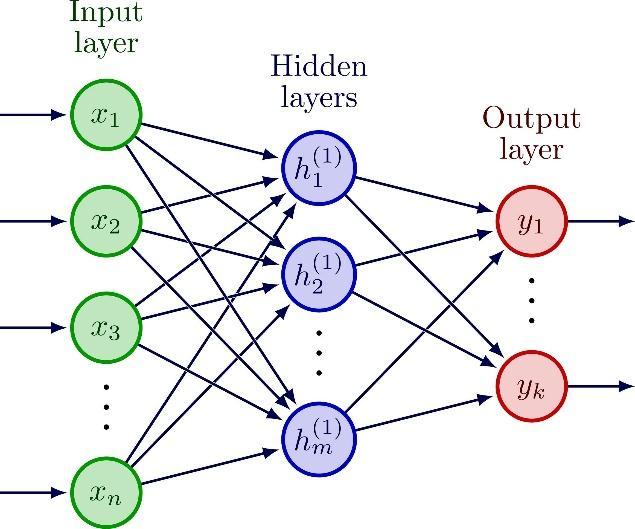
Fig. 1.Architecture of a Neural Network showing Input, Hidden,andOutputlayers.
Mathematical Formulation:
TheLSTMunitconsistsofthreegates.
Forget Gate: Decides what information to discardfromthecellstate.
f_t=sigmoid(W_f*[h_{t-1},x_t]+b_f)
InputGate:Decideswhichvaluestoupdate.
i_t=sigmoid(W_i*[h_{t-1},x_t]+b_i)
Output Gate: Decides what to output based on thecellstate.
o_t=sigmoid(W_o*[h_{t-1},x_t]+b_o)
The final representation is the concatenation of the forwardandbackwardhiddenstates.
C. Transformer Architectures (BERT)
The Transformer architecture relies entirely on SelfAttention mechanisms to draw global dependencies betweeninputandoutput[3].
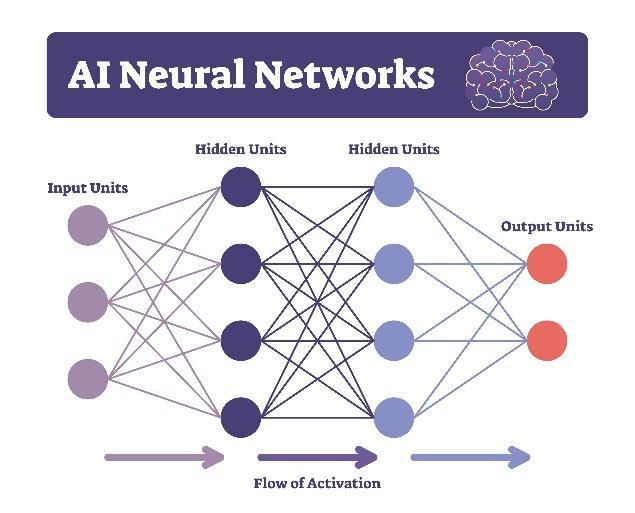
Fig. 2. Block diagram representing the flow of data in a DeepLearningsystem.
International Research Journal of Engineering and Technology (IRJET) e-ISSN: 2395-0056
Volume: 12 Issue: 12 | Dec 2025 www.irjet.net p-ISSN: 2395-0072
Self-Attention Mechanism:
The model computes a score for each word pair to determinehowmuchfocustoplaceonotherpartsofthe inputsentence.Thecoreformulais:
Attention(Q,K,V)=soft max((Q* K_ transpose)/sqrt (d_k))*V
Where Q (Query), K (Key), and V (Value) are vectors derived from the input embeddings. This mechanism allows BERT to handle sarcasm and subtle nuances betterthanRNNs.
D. Multimodal Fusion Networks
For news containing images, we employ a dual-branch network[4].
1. Text Branch: Uses BERT to extract textual features.
2. Image Branch: Usesa pre-trainedResNet-50to extractvisualfeatures.
3. Fusion Layer: Thevectorsareconcatenatedand passedthroughadenselayerforclassification.
V. SYSTEM IMPLEMENTATION & TRAINING
To reproduce the results found in the literature, specific trainingparametersareessential.
A.ComputationalEnvironment
Most state-of-the-art models require significant hardwareacceleration.
Hardware: NVIDIATeslaT4orV100GPU(16GB VRAM).
Software: Python 3.8, PyTorch 1.12, and HuggingFaceTransformerslibrary.
B. Loss Function
Forbinaryclassification(Fakevs.Real),theBinaryCrossEntropy Loss is minimized. It measures the difference betweenthepredictedprobabilityandtheactuallabel:
Loss = - [ y * log(p) + (1-y) * log(1-p) ]
Where 'y' is the actual label (0 or 1) and 'p' is the predictedprobabilityoutputbythemodel.
C. Optimization
The Adam Optimizer (Adaptive Moment Estimation) is preferred due to its ability to handle sparse gradients andadaptivelearningrates[5].
A. Dataset Description
We analysed performance across four standard benchmarks.
Table I: Dataset Statistics
Dataset Total Samples Source Type
ISOT 44,898 Reuters/PolitiFact TextOnly
LIAR 12,836 PolitiFact ShortText
Twitter15 1,490 Twitter Graph+Text
Fakeddit 1,063,106 Reddit Multimodal
B. Evaluation Metrics
1. Precision: Measures how many selected items arerelevant.
Precision=TP/(TP+FP)
2. Recall: Measures how many relevant items are selected.
Recall=TP/(TP+FN)
3. F1-Score: The harmonic mean of Precision and Recall,usefulforimbalanceddatasets.
F1=2*(Precision*Recall)/(Precision+Recall)
VII. COMPARATIVE ANALYSIS
We analysed five key studies from 2022-2025. Table II presentstheperformancecomparison.
Table II: Performance Matrix of Deep Learning Models
International Research Journal of Engineering and Technology (IRJET) e-ISSN: 2395-0056
Volume: 12 Issue: 12 | Dec 2025 www.irjet.net p-ISSN: 2395-0072
bidirectional training of Transformers which captures context from both sides of a word simultaneously. However, Roberta requires significantly higher computationalresources.WhileanLSTMmodelcantrain on a standard CPU in 4 hours, Roberta requires a GPU and approximately 12 hours for fine-tuning. Furthermore,Multimodal modelsshowhigherresilience against"out-of-context"misinformationwherethetextis truebuttheimageismisleading.
LSTM + Word2Vec [6] Multimodal CNN [4] Hybrid (LSTM+CLI P) [7] RoBERTa [8] Random Forest (Baseline) Comparative
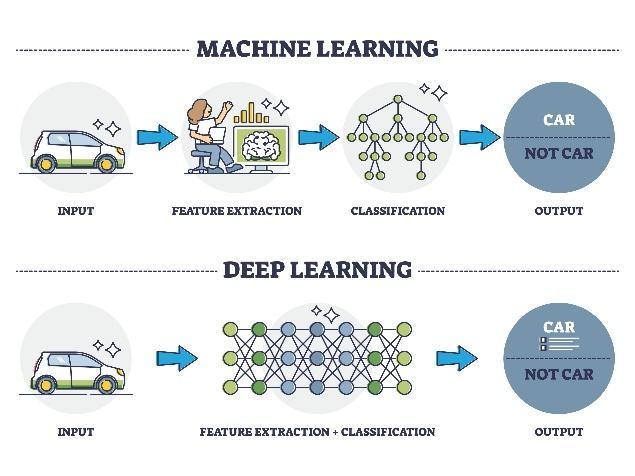
Fig. 3. Comparativeaccuracy metrics ofthesurveyed architectures.
Discussion of Results:
It is observed that Roberta outperforms LSTM-based models by a margin of 8.4%. This is attributed to the
A. The "Black Box" Problem (Explainability)
Amajorbarriertoadoptionisthelackofinterpretability. DL models provide a prediction but no rationale. Future systemsmustintegrateLIME(LocalInterpretableModelagnostic Explanations) to visualize which words triggeredthefakenewsclassification.
B. Defending Against Generative AI
With the rise of Large Language Models (LLMs) like ChatGPT, fake news can now be generated automatically with perfect grammar and style. Traditional models that look for "poor spelling" or "sensationalism" fail against LLM-generatedtext.Futureresearchmustfocuson"Style Analysis"and"PerplexityScores"todistinguishbetween humanandmachine-writtenmisinformation[2].
C. Federated Learning
To address privacy concerns, Federated Learning allows training models on user devices without centralizing data.Thisiscrucialforanalysingprivatemessagingapps (likeWhatsApp)wheremisinformationspreadsrapidly.
This systematic survey reviewed the landscape of Deep Learning for fake news detection. We identified a clear paradigm shift from sequence modelling (LSTMs) to context modelling (Transformers). While Roberta represents the current state-of-the-art in text accuracy, the complex nature of modern misinformation necessitates Multimodal Hybrid frameworks. Future research must prioritize interpretability and computationalefficiencytoenablereal-timedetectionon edgedevices.
[1] S. Vosoughi, D. Roy, and S. Aral, "The spread of true and false news online," Science, vol. 359, no. 6380, pp. 1146-1151,2018.
[2] J. Wang, Z. Zhu, C. Liu, R. Li, and X. Wu, "LLMEnhancedmultimodaldetectionoffakenews,"PLoSONE, vol.19,no.10,2024.
International Research Journal of Engineering and Technology (IRJET) e-ISSN: 2395-0056
Volume: 12 Issue: 12 | Dec 2025 www.irjet.net p-ISSN: 2395-0072
[3] J. Devlin, M.-W. Chang, K. Lee, and K. Toutanova, "BERT: Pre-training of Deep Bidirectional Transformers for Language Understanding," arXiv preprint arXiv:1810.04805,2019.
[4] I. Segura-Bedmar and S. Alonso-Bartolome, "Multimodal Fake News Detection," Information, vol. 13, no.6,p.284,2022.
[5]D.P.KingmaandJ.Ba,"Adam:AMethodforStochastic Optimization," International Conference on Learning Representations(ICLR),2015.
[6] A. Matheven and B. V. D. Kumar, "Fake News Detection Using Deep Learning and NLP," 2022 9th International Conference on Soft Computing & Machine Intelligence(ISCMI),2022.
[7] S. Kumari and M. P. Singh, "A Deep Learning Multimodal Framework for Fake News Detection," Engineering,Technology&AppliedScienceResearch,vol. 14,no.5,2024.
[8] A. Saadi, H. Belhadef, et al., "Enhancing Fake News Detection with Transformer Models," Engineering, Technology & Applied Science Research, vol. 15, no. 3, 2025.