
International Research Journal of Engineering and Technology (IRJET) e-ISSN: 2395-0056
Volume: 12 Issue: 11 | Nov 2025 www.irjet.net p-ISSN: 2395-0072
International Research Journal of Engineering and Technology (IRJET) e-ISSN: 2395-0056
Volume: 12 Issue: 11 | Nov 2025 www.irjet.net p-ISSN: 2395-0072
Anant P. Pandit1 , Dr. Kulkarni A. D.2
1Student of M. Tech, Water Resource Engineering, Dept. of Civil Engineering, KGBS’ Bharat Ratna Indira Gandhi College of Engineering, Solapur, Maharashtra, India - 413255
2Professor, Dept. of Civil Engineering, KGBS’ Bharat Ratna Indira Gandhi College of Engineering, Solapur, Maharashtra, India - 413255
Abstract - An The study examines how effective Root Zone Technology (RZT) is as a sustainable, low-cost, eco-friendly way to treat domestic wastewater. This approach isespecially useful in areas where traditional sewage treatment plants struggle due to high operating costs and maintenance problems.
Researchers collected wastewater samples from the Degaon STP region in Solapur and treated them using a laboratoryscale Horizontal Subsurface Flow (HSSF) constructedwetland system. This systemwasplantedwithchosenmacrophytes.The experiment looked at how different hydraulic retention times (HRTs) and plant species affected the removal of key pollutants. These pollutants included BOD, COD, TSS, color, sulfates, total nitrogen, and ammonical nitrogen.
The results showed a clear improvement in effluent quality with longer HRTs. Plant species like Canna indica, Typha latifolia, and Phragmites australis helped reduce pollutants through their ability to filter, break down microbes, and absorb nutrients.
Overall, the study supports the idea that RZT is a promising decentralized treatment option. It can produce treated water that is suitable for irrigation and landscaping. This method also aids in sustainable wastewatermanagementandprotects the environment in semi-urban and rural areas.
Key Words: Root Zone Technology (RZT), Constructed Wetlands,DomesticWastewater,HydraulicRetentionTime (HRT), Pollutant Removal Efficiency, Macrophytes, Biochemical Oxygen Demand (BOD), Sustainable WastewaterTreatment
1.INTRODUCTION
1.1
ThisWaterisoneofthemostvitalnaturalresourcesforall formsoflifeonEarth(Meshrametal.2020).Itplaysakey role in maintaining ecological balance, supporting agricultural productivity, industrial development, and human health (Survase et al. 2023). However, rapid urbanization,industrialization,andpopulationgrowthhave significantly harmed the quality and availability of freshwaterresources(Desaietal.2014).Theproductionof
large amounts of domestic and industrial wastewater has becomeoneofthebiggestenvironmentalchallengesofthe 21stcentury(https://ln.run/UQYws).
According to global estimates by the United Nations EnvironmentProgramme(UNEP),nearly80%ofwastewater generatedworldwideisdischargeduntreatedintonatural waterbodies.Thisuntreateddischargepollutesrivers,lakes, and groundwater aquifers. It leads to eutrophication, the spread of water-borne diseases, and severe ecological damage (Survase et al. 2023). In developing nations like India,therateofurbangrowthfaroutpacesinfrastructure development, making wastewater management a critical issue(Desaietal.2014).
Domesticwastewater,alsoknownassewage,includesamix ofwaterandwastefromhouseholds,suchashumanexcreta, foodscraps,soaps,anddetergents(Meshrametal.2020).If untreated, it can spread pathogens and toxic materials, making the water unsafe for human use or irrigation. The CentralPollutionControlBoard(CPCB,2015)reportsthata significantamountofsewagegeneratedinIndiancitiesgoes untreated due to limited treatment capacity and poor maintenanceofexistingfacilities.
ThecityofSolapurinMaharashtraillustratesthisgrowing problem. With a population over one million and daily wastewatergenerationofabout88millionliters(MLD),the citylackssufficienttreatmentinfrastructure(Meshrametal. 2020).ThecurrentDegaonSewageTreatmentPlant(STP), meantfor54MLD,hasbeenoutofservicesince1985.This hasledtountreatedsewagebeingdirectlydischargedinto theShelgiNallah,whichflowsintotheSinaRiver(Meshram etal.2020).Thissituationhascausedconsiderablepollution of surface and groundwater sources, negatively impacting thehealthandlivelihoodsofcommunitieslikeKawatheand Gulwanchivillages,whorelyonthesewatersforirrigation anddomesticuse(https://ln.run/BgGsu).
Given the limitations of traditional wastewater treatment systems, which often consume a lot of energy, require complexoperations,andarecostly,thereisaneedtoexplore sustainable, low-cost, and eco-friendly alternatives (Meshrametal.2020).RootZoneTechnology(RZT),atype ofconstructedwetlandsystem,hasemergedasapractical solutionthatcombinesbiologicalandecologicalprocesses foreffectivewastewatertreatment(Survaseetal.2023).
International Research Journal of Engineering and Technology (IRJET) e-ISSN: 2395-0056
Volume: 12 Issue: 11 | Nov 2025 www.irjet.net p-ISSN: 2395-0072
Waterscarcityandpollutionhavereachedconcerninglevels, particularly in semi-arid regions like Solapur (https://ln.run/M-Mm0). The traditional reliance on large sewage treatment plants is becoming unsustainable for severalreasons:
a.HighEnergyandOperationCosts.Traditionalmethodslike Activated Sludge Process (ASP) and Sequencing Batch Reactors(SBR)needconstantaeration,pumping,andskilled operators(Survaseetal.2023).
b.ComplexInfrastructure.Thesesystemsrequireexpensive civil, mechanical, and electrical installations, which small municipalitiesoftencannotafford(Meshrametal.2020).
c. Sludge Disposal Problems. Conventional plants generate largeamountsofsludgethatneedadditional handlingand disposal(Survaseetal.2023).
d.FrequentBreakdownsandMaintenance.Mechanicalparts oftenfailduetopooroperationandmaintenanceinIndian conditions(Meshrametal.2020).
e.ResourceWastage.Importantnutrientsandbiomassare lostinsteadofbeingrecycledforagriculture(Meshrametal. 2020).
In comparison, Root Zone Technology (RZT) provides a nature-based,decentralized,andenergy-efficientwaytotreat wastewater. It is especially suitable for small towns, rural areas, and institutions (Meshram et al. 2020). RZT uses natural filtration and bioremediation in the root zones of specific wetland plants. These plants, along with soil and microbes, serve as a biological filter, effectively removing pollutantsfromwastewater(Gajendranetal.2017).
Therefore, implementing RZT not only helps reduce environmental harm but also supports sustainable developmentgoals(SDGs)byencouragingresourcerecovery, groundwater recharge, and the reuse of treated water (Shindeetal.2019).
Root Zone Technology (RZT), also called Constructed Wetland(CW)orReedBedTechnology,isanatural,low-cost way to treat wastewater. It uses wetland plants, soil, and microorganisms to remove contaminants (Meshram et al. 2020).
The treatment happens in a specially designed bed that contains gravel, sand, and soil. This bed is planted with aquatic or semi-aquatic species like Canna indica, Phragmites australis, and Typha latifolia (Survase et al. 2023). These plants are essential for maintaining oxygen flow within the system. They support both aerobic and anaerobic microbial processes around their roots (the rhizosphere)(Survaseetal.2023).
TheprimaryprocessesinRZTinclude:
- Physical Processes: Filtration, sedimentation, and adsorption of suspended solids and colloidal matter (Meshrametal.2020).
- Chemical Processes: Precipitation of metals and phosphates,ionexchange,andoxidation-reductionreactions (Survaseetal.2023).
- Biological Processes: Microbial breakdown of organic pollutants,nitrification,denitrification,andplantabsorption ofnutrients(Meshrametal.2020).
Therearetwomainsetups(Survaseetal.2023):
a. Horizontal Subsurface Flow (HSSF): Wastewater flows horizontally through the bed, just below the surface. This designreducesodorsandmosquitoproblems.
b.VerticalSubsurfaceFlow(VSSF):Wastewaterisspreadon topandthenmovesverticallydownwardthroughthemedia.
ThisstudyfocusesontheHSSFsystem,whichofferslonger retention time, improved microbial activity, and better removaloforganicmatter(Survaseetal.2023).
RootZoneTechnology(RZT)offersseveralenvironmental, technical, and economic benefits compared to traditional wastewater treatment systems. These benefits make it a strong option for sustainable wastewater management, particularlyindevelopingcountries(Meshrametal.2020).
Keyadvantagesinclude:
-LowCapitalandOperationCosts:RZTuseslocallyavailable materialslikegravelandsand,whichsignificantlylowersthe initialsetupcost(Survaseetal.2023).
-EnergyEfficiency:Itoperateswithoutmechanicalaeration, cutting energy consumption by 70 to 80% compared to conventionalmethods(Survaseetal.2023).
- Simple Maintenance: The system does not need skilled workers and functions well under different weather conditions(Vymazal2010).
- Odor-Free Operation: Since wastewater flows below the surface, there are no bad smells or mosquito breeding problems(Dotro2017).
- Minimal Sludge Generation: Very little sludge is created, removing the need for complicated sludge treatment and disposalsystems(Rahaman&Baskar2009).
-ResourceRecoveryandWaterReuse:Treatedwatercanbe used for irrigation, gardening, or landscaping, and plant biomasscanbeusedforcompostorbiofuel(Kannan2017).
-Eco-FriendlyandAesthetic:Itimproveslocalbiodiversity, creates green spaces, and blends naturally into the environment(Survaseetal.2023).
International Research Journal of Engineering and Technology (IRJET) e-ISSN: 2395-0056
Volume: 12 Issue: 11 | Nov 2025 www.irjet.net p-ISSN: 2395-0072
- Decentralization Potential: RZT can be set up as small modularsystemssuitableforhousingcomplexes,institutions, andruralcommunities(Survaseetal.2023).
1.5. Status Of Wastewater Management In Solapur Solapur,inthesemi-aridregionofMaharashtra,facesserious water shortages and problems with wastewater pollution. TheSolapurMunicipalCorporation(SMC)producesabout88 million liters of wastewater each day, but the current treatmentcapacityisnotenough.
The Degaon Sewage Treatment Plant (STP) started in the early 1980s with a design capacity of 54 million liters per day,butithasbeenoutofserviceformanyyears.Asaresult, untreatedsewageisreleaseddirectlyintonaturaldrainage channelsliketheShelgiNallah,whichlaterpollutestheSina River(SolapurMunicipalCorporation).
Thisuntreatedwastehascaused:
-Pollutionofirrigationwatersourcesthatfarmersuse.
-Contaminationofgroundwateraquiferswithnitratesand ammonia.
-Negativeeffectsonsoilfertilityandcropproductivity.
-Riseofwaterbornediseasesinnearbycommunities.
VillagessuchasKawatheandGulwanchihaveseendecreased cropyieldsandpoorersoilhealthduetolong-termirrigation withuntreatedwastewater(SolapurMunicipalCorporation). Therefore,fixingtheDegaonSTPwithalow-costtreatment methodlikeRZTisessentialforprotectingtheenvironment andpublichealth(Survaseetal.2023).
1.6. Mechanism Of Pollutant Removal In Rzt
PollutantremovalinRootZoneTechnologysystemshappens throughamixofphysical,chemical,andbiologicalprocesses. These methods work together to achieve high treatment efficiency(Survaseetal.2023).
Table 1.1: MechanismsOfPollutantRemovalInRZT
Process Type Mechanism
Physical Sedimentation, Filtration,Adsorption
Chemical Precipitation,Ion exchange,Redox reactions
Biological Microbialdegradation, Nitrification, Denitrification,Plant uptake
Pollutants Removed
Suspendedsolids, Color,Turbidity
Phosphates, Sulfates,Heavymetals
BOD,COD,Nitrogen compounds
•Microbialdegradation:Microorganismsbreakdownorganic pollutantsintosimplercompounds,whichlowersBODand COD(Vipatetal.2008).
• Plant uptake: Plants take in nutrients like nitrates and phosphates,helpingtopreventeutrophication(Vipatetal. 2008).
•Rhizosphereoxygenation:Plantrootsreleaseoxygen,which improves aerobic degradation and keeps redox balance (Vipatetal.2008).
Together,theseactionsmakeRZTveryeffectivefortreating domesticwastewaterandproduceeffluentthatissuitablefor reuse(Vipatetal.2008).
RootZoneTechnologystartedinGermanyinthe1970sand has been successfully used in several countries, including Denmark, Egypt, Hungary, and the United States. In these countries,RZTsystemshaveachievedremovalefficienciesof over80to90%forBODandCOD(Meshrametal.2020).
InIndia,theNationalEnvironmentalEngineeringResearch Institute(NEERI)tooktheleadinapplyingRZTinthe1990s. Successfulinstallationsinclude:
•Bhopal(MadhyaPradesh):ApilotplantatEkantParkthat treats70,000L/dayofdomesticsewageeffectively.
• Ahmedabad (Gujarat): A campus-based RZT system that treatsinstitutionalwastewater.
•PuneandSolapur(Maharashtra):Collegeandresidential applicationsthatshowhighpollutantremovalefficiencies.
Studies by Meshram et al. (2020), Zafar et al. (2021), and Gajendranetal.(2022)reportedaveragepollutantremoval efficiencies of 85 to 95% forBOD and 80 to 90% for COD. This demonstrates RZT's effectiveness for decentralized wastewatermanagementinIndia.
The brief introduction of various studies undertaken to investigate the application of root zone technology, is discussedinthefollowingsections.
Survase et al. (2023) studied“WasteWaterTreatmentby Root Zone Technology (Colocasia Roots).” Wastewater treatmentisanimportantenvironmentalissuethatrequires sustainable and cost-effective solutions. Root zone technology (RZT) using Colocasia roots has emerged as a promisingmethodforefficientwastewatertreatment.This abstract gives an overview of RZT's application with Colocasia roots and its potential benefits. The goal of this study is to evaluate how effective Colocasia roots are in wastewater treatment with RZT. Colocasia, also known as taroorelephantear,hasstrongrootsanduniquetraitsthat make it suitable for wastewater treatment. These include high porosity and a large surface area that help remove pollutants. RZT directs wastewater through a constructed wetlandcontainingColocasiaroots.Asthewastewatermoves through the root zone, physical, chemical, and biological
International Research Journal of Engineering and Technology (IRJET) e-ISSN: 2395-0056
Volume: 12 Issue: 11 | Nov 2025 www.irjet.net p-ISSN: 2395-0072
processesoccur,leadingtotheremovalortransformationof contaminants. Colocasia roots work as a physical barrier, capturing suspended solids and organic matter while encouragingthegrowthofhelpfulmicroorganismsthatassist inbreakingdownpollutants.StudieshaveshownthatRZT withColocasiarootsiseffectiveintreatingvarioustypesof wastewater, such as domestic, agricultural, and industrial effluents. This technology can remove pollutants like nitrogen,phosphorus,heavymetals,andorganiccompounds. Additionally,RZTwithColocasiarootshasbenefitslikelow energyuse,noharshchemicals,andthepossibilityofreusing wastewater for agriculture or landscaping. RZT with Colocasiarootsoffersapromisingandeco-friendlymethod forwastewatertreatment.Itsabilitytofiltercontaminants, support biological degradation, and promote plantmicroorganism interactions makes it a better option than traditionalmethods.ParthMoreresearchandapplicationof thistechnologycangreatlyhelpreducewaterpollutionand supportsustainablewatermanagementpractices.
Gajendran et al. (2022) studied“EnsuringSustainabilityvia Application of Root Zone Technology in a Rubber Product Industry: A Circular Economy Approach.” They found that rapidurbanizationhasledtothedegradationofwaterquality andavailability.Urbandevelopmentanditsactivitiespollute freshwaterbygeneratingdifferenttypesofwaste.RootZone Technology(RZT)hasbeensuccessfullyadoptedinseveral countriestosupportsustainabledevelopment.RZTenables theintegrationofautomatedprocessesintoanartificialsoil ecosystem.Themaingoalofthisstudywastocreateanatural andeffectivewatertreatmentprocessforindustrialeffluents using RZT. This technology uses layers of coarse and fine aggregates, charcoal, sand, and planted filter beds with compostmediatotreateffluents.Thesystemiseasytosetup, has low maintenance, and low operational costs. Selected plantsachieved50-80%pollutantremoval.RZTsignificantly reduces the characteristics of effluents, such as chemical oxygendemand,biochemicaloxygendemand,pH,color,TSS, TDS, BOD, and COD. Further studies should explore more plantspeciestoenhancethistechnology.Soiltestscanalso help understand the mechanisms of reed absorption. Additionally, including modeling in agricultural systems wouldbenefitfuturestudies.
Kumar et al. (2021) studied “First comparison of conventionalactivatedsludgeversusroot-zonetreatmentfor SARS-CoV-2RNAremovalfromwastewaters:Statisticaland temporalsignificance.”Theydiscoveredthatduringtheinitial pandemicphase,wastewatertreatmentfacilityeffluentswere mostlyfreeofSevereAcuteRespiratoryCoronavirus2(SARSCoV-2)RNA,suggestingconventionalwastewatertreatments weregenerallyeffective.However,thereislimiteddataoni) thecomparativeeffectivenessofvarioustreatmentprocesses for SARS-CoV-2 RNA removal and ii) how the removal efficacyofaspecifictreatmentprocessvariesovertimeamid active COVID-19 cases. This work compares the removal effectivenessofconventionalactivatedsludge(CAS)androot
zonetreatments(RZT)usingweeklywastewatersurveillance datafromforty-foursamplesovertwomonths.Theaverage genomeconcentrationwashigherintheinflowoftheCASbasedwastewatertreatmentplant(WWTP)intheSargasan ward(1.25×10^3copies/L)thanintheRZT-basedWWTP (7.07 × 10^2 copies/L) at an academic institution in Gandhinagar,Gujarat,India.ORF1abandSgenesweremore sensitive to treatment, showing significant reduction (p < 0.05)comparedtoNgenes(p>0.05).CAStreatmentshowed betterRNAremovaleffectiveness(p=0.014)thanRZT(p= 0.032). Multivariate analyses suggest that calculating effectivegenomeconcentrationshouldconsiderthepresence orabsenceofmultiplegenes.Thecurrentstudynotesthat treatedeffluentsarenotalwaysfreefromSARS-CoV-2RNA, andtheremovaleffectivenessofanyWWTPmayvaryover timeduetofluctuationsinactiveCOVID-19casesandgenetic material accumulation. Disinfection appears less effective thanadsorptionandcoagulationprocessesforSARS-CoV-2 removal.Theresultshighlighttheneedforfurtherresearch into the mechanisms behindSARS-CoV-2 removal through differenttreatmentprocesses,takingsolid-liquidpartitioning intoaccount.
Meshram et al. (2020) studied“WasteWaterTreatmentby using Root Zone Technology: Using Colocasia Plant.” They notedthatwaterqualityonEarthsuffersduetoincreasing humandevelopmentactivitiesthatdepleteandharmwater resources. Rapid urbanization has polluted fresh water bodies with rising domestic waste, sewage, and industrial waste.ThispaperreviewsRootZoneTechnologyasalowcostandeco-friendlymethodforwastewatertreatment.The root zone treatment system utilizes a natural approach to effectively treat domestic and industrial effluents. This technologyissuccessfullyimplementedinseveralcountries, includingthoseinEuropeandAmerica.Thewetlandbedis dividedintothreezones:soillayer,sandlayer,andaggregate layer. Colocasia trees are planted in the top layer. When wastewater passes through the upper and middle layers, suspended solids are trapped in the soil and sand pores, whileremainingsolidsareremovedwiththehelpofbacteria. This technology is easy to operate, requires minimal installation, has low maintenance, and is more beneficial compared to expensive conventional treatment systems Thereisaneedtofullyutilizethistechnologyindeveloping countries like India to reap its benefits and support sustainabledevelopment.
Gohil et al. (2017) studied “Introduction to Waste Water Treatment by Root Zone Technique.” They found that increasing urbanization and human activities affect the quality and quantity of water resources. This leads to the pollutionoffreshwaterbodiesduetorisingdomesticwaste, sewage,andindustrialwastegeneration.Thispaperreviews theRootZoneTreatmentSystem,whichconsistsofplanted filterbedsmadeofsoil,gravel,sand,andfineaggregate.This techniqueusesanaturalwaytoeffectivelytreatdomesticand industrial effluents. RZTS is well-known in temperate
International Research Journal of Engineering and Technology (IRJET) e-ISSN: 2395-0056
Volume: 12 Issue: 11 | Nov 2025 www.irjet.net p-ISSN: 2395-0072
climates;itiseasytooperate,requiresminimalinstallation, haslowmaintenanceandoperationalcosts,andincorporates self-regulatingdynamicsofanartificialsoilecosystem.This technology has been successfully implemented in various countries.Constructedwetlandsare now recognizedas an affordable eco-technology, especially advantageous comparedtocostlyconventionaltreatmentsystems.Thereis a need to maximize this technology's use in developing countries like India to gain its benefits and encourage sustainabledevelopment.
Shinde et al. (2019) workedon“WasteWaterTreatmentby RootZoneTechnology.”Theirpaperdiscussesthetheoretical basisofwastewatertreatmentintheRhizosphereofwetland plants,knownastheRootZoneMethod,andpresentsinitial results from eight treatment plants in Denmark. Mechanically,treatedwastewaterflowshorizontallythrough theRhizosphereofwetlandplants.Asthewastewaterpasses through, it is cleaned through microbiological degradation along with physical and chemical processes. The wetland plants supply oxygen to the microorganisms in the rhizosphere and help stabilize the soil's hydraulic conductivity. Nitrogen is removed through denitrification, whilephosphorusandheavymetalsarecapturedinthesoil. Theinitial data fromDenmark showsthat,regardingBOD, Root Zone Plants nearly meet conventional secondary treatment standards within the first growing season (removal efficiency 51-95%). However, there is still little information about the removal processes for nitrogen, the effectofsoiltype,andtherequiredsurfaceareatoloadratio.
Kalpana et al. (2014) conducteda study on “Wastewater Treatment through Root Zone Technology with Special ReferencetoShahpuraLakeofBhopal(M.P.),India.”Water quality is declining due to increasing human development activities that deplete and harm water resources. Rapid urbanizationhasledtothepollutionoffreshwaterbodiesdue to rising domestic waste, sewage, and industrial waste generation. This study examined the effectiveness and feasibility of a Horizontal surface flow constructed wetland/RootZoneUnitbuiltbytheEnvironmentalPlanning &CoordinationOrganization(EPCO)atEkantPark,Bhopal. Thestudycollectedwastewatersamplesfromtheinletand outletoftheRootZoneSystematEkantPark,Bhopal,from June2011toMay2012.Somephysicochemicalparameters, namelydissolvedoxygen(DO),biochemicaloxygendemand (BOD), chemical oxygen demand (COD), nitrate, and phosphate, were analyzed using standard methods. The resultsindicatedthattheRootZoneSystemiseffective,and the treated water can be used for activities like washing clothes,fishing,swimming,andirrigation.Rapidurbanization continues to pollute fresh water bodies due to increased domestic waste, sewage, and industrial waste generation. Thisstudyinvestigatedtheeffectivenessandfeasibilityofthe Horizontalsurfaceflowconstructedwetland/RootZoneUnit builtbyEPCOatEkantPark,Bhopal.
Md. Zafar et al. (2021) studied"Wastewatermanagement byrootzonetechnology".Thetermrootzonereferstothe interactionsamongbacteria,therootsofwetlandplants,soil, air,sunlight,andwater.Rootzonetreatmentisamethodfor purifying wastewater as it moves through an artificially createdwetlandarea.Itisaneffectiveandreliablemethod for secondary and tertiary treatment. Various physical, chemical, and biogeochemical processes, such as sedimentation, absorption, and nitrification, along with uptakebywetlandplants,helpremovepollutants.Rootzone systemsworkbestforschools,hospitals,hotels,andsmaller communities.Thisresearchaimstoassesstheefficiencyof the wetland plant Phragmites australis in treating wastewatergeneratedwithintheSRMUniversitypremises.A pilotwetlandunitmeasuring1.5m×0.6m×0.3mwasbuilt on campus.Phragmitesaustralisplants were grownin the field using fresh water. Three rows of plants were transplanted into the pilot unit, where they were supplied withwastewaterfromhostelsandothercampusbuildings. Rawandtreatedwastewaterwerecollectedperiodicallyand testedforquality.Thispilotunitreducedtheconcentrations of TSS, TDS, TN, TP, BOD, and COD by an average of 90%, 77%,85%,95%,95%,and69%,respectively.Therootzone systemmeetstertiarytreatmentstandardswithoutoperating costs and with low maintenance costs. It improves the landscape,providesahabitatforbirds,anddoesnotcause odorissues.
Bandal et al. (2018) workedon"RootZoneTechnologyfor Campus Waste Water Treatment". They found that water quality on earth is declining due to ongoing human development that overuses and impacts water resources. Rapidurbanizationhaspollutedfreshwaterbodiesbecauseof increased domestic and industrial waste. This study examinedtheeffectivenessandfeasibilityofaverticalsurface flow constructed Root Zone Unit located at the Dattakala College canteen in Swami Chincholi. They collected wastewater samples from both the inlet and outlet of the Root Zone System at the canteen. Some physio-chemical parameterslikedissolvedoxygen(DO),biochemicaloxygen demand (BOD), chemical oxygen demand (COD), pH, and alkalinitywereanalyzedusingstandardmethods.Theresults showedthattheRootZoneSystemoperateseffectivelyand that treated water can be used for activities like washing clothes,fishing,swimming,andirrigation.ThisRZTproject could expand into side businesses like aquaponics and organicfarmingbecauseofthelargeamountofcleanwater availablefromtheRZTplant.Thetreatedwatercanbeused in an aquaponic tank for fish production, while the waste contentscanbeutilizedfororganicfarming.
Kannan (2017) conducted a study on "Root Zone TechnologyUsedforTreatmentofCampusWasteWater".He noted that India faces various environmental problems, including water scarcity and safe disposal of wastewater. Urbanizationandpopulationgrowtharereducingournatural resources.Thedemandforwaterisrisingcontinuously.In
International Research Journal of Engineering and Technology (IRJET) e-ISSN: 2395-0056
Volume: 12 Issue: 11 | Nov 2025 www.irjet.net p-ISSN: 2395-0072
thiscontext,wastewatercanbetreatedeconomicallyusing Root Zone Technology and plants like Azolla, with parameters analyzed according to Indian standards. Our campus maintains about 0.5 acres of garden area daily, consumingaround10,000litersofwaterperdayforgardens and trees. Therefore, I pursued this project, using treated wastewater for gardening and agricultural purposes. Raw and treated wastewater were collected periodically and testedforquality,showingreductionsintheconcentrations ofTSS,TDS,TN,TP,BOD,andCOD.
Desai et al. (2014) studied"Root-zonetechnologyasenergy efficientandcosteffectiveforsewagewatertreatment".They notedthatdesigning,constructing,andoperatingasewage treatmentplant(STP)requiresamulti-disciplinaryapproach. SeveralconventionalmethodsexistfordesigningSTPs.These processesareeitheraerobic,anaerobic,oracombination,and often involve numerous mechanical and electrical components, requiring substantial energy. The growing energy demand makes STP design, operation, and maintenance challenging. Conventional sewage treatment methods can be improved using advanced technologies. However, root zone technology developed by the National Environmental Engineering Research Institute effectively treats sewage. Studies on nine STPs at various locations founditusedonly20%oftheenergycomparedtotraditional treatmentplants.
Ravaler et al. (2015) studied "Root Zone Technology: ReviewingitsPastandPresent".Theirresearchfoundthat increasing urbanization and human activities impact the quality and quantity of water resources. This leads to pollution in freshwater bodies due to rising domestic and industrialwaste.ThepaperreviewstheRootZoneTreatment System(RZTS),whichusesplantedfilterbedswithsoil.This technology naturally and effectively treats domestic and industrial effluents. RZTS are well-suited for temperate climates, are easy to operate, and have low installation, maintenance, and operational costs. They utilize the selfregulating dynamics of an artificial soil ecosystem. Constructedwetlandsarenowrecognizedasalow-costecotechnology, offering benefits over expensive conventional treatment systems. There is a need to maximize this technologyindevelopingcountrieslikeIndiaforsustainable development. Root Zone Technology addresses the water pollutionchallengesofthemodernindustrializedworld.The growth of wetland plants, known as reeds, in specially designedbedsprovidesaneco-friendlyapproachtoprotect nature.
Rahaman et al. (2009) studied"RootZoneTechnologyfor CampusWasteWaterTreatment".Theyfoundthatrootzone treatmentisaneffectivemethodforpurifyingwastewateras itflowsthroughartificiallycreatedwetlandareas.Itreliably removespollutantsthroughvariousphysical,chemical,and biogeochemical processes, including sedimentation, absorption,andnitrification,alongwithuptakebywetland plants. This pilot unit reduced TSS, TDS, TN, TP, BOD, and
COD concentrations by averages of 90%, 77%, 85%, 95%, 95%, and 69%, respectively. The root zone system meets tertiary treatment standards without operating costs and withlowmaintenanceexpenses.
Preetha et al. (2009) studied "Rhizosphere Treatment TechnologyforCommunityWasteWaterTreatment".They concludedthatrhizospheretreatmentisoftenthebestchoice for treating or pre-treating wastewater due to its low maintenancecost,simplicityofoperation,andhighefficiency. Italsoenhanceslocalaestheticsandconserveslocalfloraand fauna. Rapid urbanization has increased pressure on infrastructure, resulting in poor services from local authorities.Untreatedsewageflowingthroughchannelsjoins rivers, creating a significant risk of river pollution. They investigated the effectiveness and techno-economic feasibilityoftheRZTS(RootZoneTreatmentSystem)andits modifications.
Allgoo et al. (2018) studied"RootZoneTechnology".They found that increasing urbanization and human activities negatively impact the quality and quantity of water resources,leadingtothepollutionoffreshwaterbodiesdue to rising domestic and industrial waste. This research reviewstheRootZoneTreatmentSystem(RZTS),involving planted filter beds made of soil. The technology offers a naturalmethodfortreatingdomesticandindustrialeffluents effectively.RZTSarerecognizedfortheireaseofoperation, low installation, maintenance, and operational costs, incorporating self-regulating dynamics of artificial soil ecosystems.Constructedwetlandsareconsideredalow-cost eco-technology,especiallycomparedtotraditionaltreatment systems. This technology should be fully exploited in developingcountrieslikeIndiaforsustainabledevelopment. The study assessed the effectiveness and feasibility of the horizontalflowconstructedwetlandrootzoneunit,collecting samplesofwastewaterfromtheinletandoutletoftheroot zonesystembetweenMarch2017andJune2017.Analysisof somephysiochemicalparametersincludingdissolvedoxygen (DO),biochemicaloxygendemand(BOD),chemicaloxygen demand (COD), turbidity, and pH was conducted using standard methods. The results showed that root zone technology effectively reduced pollutants by up to 60%, allowing for its direct use in washing clothes, fishing, swimming,andirrigation.Theremainingpollutantscanbe moderately cleansed using modern practices, which could minimizeoperationalcosts.
Ijare et al. (2019) conducted a study on "Waste Water TreatmentbyRootZoneTechnology".Theirpaperdescribes the theoretical framework of wastewater treatment in the rhizosphere of wetland plants, known as the Root Zone Method, alongside early experiences from eight treatment plantsinDenmark.Mechanicallytreatedwastewaterflows horizontally through the rhizosphere of wetland plants. During this process, microbiological degradation, and physicalandchemicalprocessescleanthewastewater.The wetland plants provide oxygen to heterotrophic
International Research Journal of Engineering and Technology (IRJET) e-ISSN: 2395-0056
Volume: 12 Issue: 11 | Nov 2025 www.irjet.net p-ISSN: 2395-0072
microorganisms in the rhizosphere and stabilize the soil's hydraulic conductivity. Nitrogen is removed through denitrification, while phosphorus and heavy metals are retained in the soil. The initial experiences from Denmark indicated that Root Zone Plants nearly meet conventional secondary treatment standards regarding BOD, achieving removalefficienciesof51-95%fromthefirstgrowingseason. However, limited information exists on nitrogen removal processes,soiltypeeffects,andthenecessarysurfaceareato loadingratio.
Gomez et al. (2020) conducted an experiment titled "Horizontal Flow Constructed Wetland for Greywater Treatment and Reuse: An Experimental Case." In the upcoming years, water stress is expected to increase significantly due to rising water consumption and the noticeable effects of climate change. Greywater (GW) has been explored asanalternative water sourcein dryareas. WhilethereisnosinglebestwaytotreatGW,constructed wetlands have shown to be effective. This paper presents results from treating real GW using a horizontal flow constructed wetland (HFCW) for over four months. In the initial laboratory-scale test, Phragmites australis, Carex oshimensis,andCyperuspapyruswereassessedseparately andproducedverysimilarresults.Inthesecondphase,pilotscaletestswereperformedtoverifyperformanceonalarger scale and assess the influence of hydraulic retention time, achieving high removal rates for turbidity (>92%), total suspended solids (TSS) (>85%), chemical oxygen demand (COD) (>89%), and five-day biological oxygen demand (BOD5)(>88%).Thepaperalsocomparestheresults from thepilot-scaleHFCWtorecommendationsfromtheWorld HealthOrganizationandtheEuropeanUnion.
Manna (2018) studied "Treatment of Gray Water for Reusing in Non-potable Purposes to Conserve Water in India." The scarcity of fresh water is a major challenge in variousregionsofIndia,promptingtheneedforsustainable water conservation efforts. The natural supply of potable water is insufficient to meet daily demands. People are lookingfordifferentsolutionstoaddressthisseriousissue. Treatingandreusinggraywaterisonepromisingapproach toconservewater.Graywatercomesfromshowers,baths, sinks,kitchens,andwashingmachines,excludingtoiletwaste. It can be treated through physical, chemical, biological, or natural methods, or a combination of these. Treated gray watercanbereusedfortasksliketoiletflushing,irrigation, floor washing, and car washing. This paper presents a statistical analysis of total domestic water use, gray water production, and treated water generation. The analysis indicatesthattreatedwaterfromlightgraywaterinhomes can meet up to35% of the non-potable domestic demand, suchastoiletflushingandgardenirrigation.Formixedgray water,anadditional20-25%oftreatedwatercanbeusedfor groundreplenishmentorothernon-potableuses.Thestudy showsthatrecyclingandreusingtreatedgraywatercould significantlyreducefreshwaterconsumptiondaily.
Kalmegh et al. (2019) conducted"ExperimentalAnalysisof WastewaterinShahuCampusofPuneCity."Theyhighlighted thatwaterpollutionofsurfacewaterbodiesisasignificant environmental issue in India. The main source of this pollutionisuntreatedsewagefromresidential,commercial, and institutional activities. There is a large gap between wastewatergenerationandthetreatmentfacilitiesavailable duetolimitedfundsandspace.Wastewatertreatmentposes challengestoday.Thisstudyaimstoimproveconventional RootZonetechnology.Itfocusesoncost-effectivewastewater treatment using Root Zone Technology. The research took placeatJedheMoreHostelon"ABMSP'S"CampusinPune. The study examined the effectiveness and feasibility of wastewater treatment in the hostel. Key physio-chemical parameters, such as biological oxygen demand (BOD), chemicaloxygendemand(COD),anddissolvedoxygen(DO), wereanalyzedusingstandardmethods.Aftertreatment,the water quality allows for recreational use. The findings indicate that the Root Zone system effectively treats wastewater.
Prasad et al. (2017) investigated"ConstructedWetlandas an Effective Treatment Method for Domestic Wastewater Treatment." The study noted that rapid urbanization and industrialgrowthhaveledtosevereenvironmentalpollution overthepastfewdecades,negativelyimpactingnature.The goal was to find an economical method to treat domestic wastewater and to compare the effectiveness of naturally aeratedandartificiallyaerated constructed wetlands. Two lab-scalemodelsweresetupinbucketsmeasuring400mmx 300mm,withonemodelequippedwithanartificiallyaerated system.Wastewaterparameterswerecheckedafter12,24, and 48 hours. This study was conducted in the Mundhwa area,usingalab-scalemodel.Parameterssuchascolor,odor, pH,COD,andDOweremeasured.Theresultsshowedthatthe artificiallyaeratedconstructedwetlandhadmoretreatment efficiency than the naturally aerated one. The treated wastewaterwasodorless,clear,andchangedfromblackishto colorless.
Raut et al. (2020) studied“WasteWaterTreatmentUsing Root Zone Technology: Using Colocasia Plant.” They noted that water quality on Earth is suffering due to increasing humanactivities,whichhavedepletedboththequalityand quantityofwaterresources.Rapidurbanizationhasledtothe pollutionoffreshwaterbodiesfromdomesticwaste,sewage, and industrial waste. This paper reviews Root Zone Technologyasa low-cost,eco-friendlymethodfortreating wastewater. This system uses a natural approach to treat both domestic and industrial effluents effectively. The technology has been successfully implemented in several countries, including those in Europe and America. The wetland bed consists of three layers: soil, sand, and aggregate.Colocasiatreeswillbeplantedonthetoplayer.As wastewaterpassesthrough,allsuspendedsolidsaretrapped in the soil and sand, while bacteria help remove the remainingsolids.Thistechnologyiseasytouse,requiresless
International Research Journal of Engineering and Technology (IRJET) e-ISSN: 2395-0056
Volume: 12 Issue: 11 | Nov 2025 www.irjet.net p-ISSN: 2395-0072
installationandmaintenance,andispreferabletoexpensive conventionaltreatmentsystems.Thereisapressingneedto maximizetheuseofthistechnologyindevelopingcountries likeIndiaforsustainabledevelopment.
Vipat et al. (2008) conductedresearchon“EfficacyofRoot Zone Technology for Treatment of Domestic Wastewater: Field Scale Study of a Pilot Project in Bhopal (MP), India.” Urban water bodies in tropical developing countries are heavily affected by domestic wastewater and sewage, primarily due to the growing gap between wastewater generationandthelackofaffordableresourcestoaddressthe issue withconventional technologies.Therefore, biological systems may offer a novel solution for managing water bodies sustainably. Root zone technology operates as a natural biological system relying solely on solar energy, makingitlow-costwithminimaloperationandmaintenance needs.Thispaperevaluatestheperformanceofafield-scale HorizontalSubsurfaceFlowconstructedWetland/Rootzone demonstrationunitbuiltbytheEnvironmentalPlanning& Coordination Organisation (EPCO) at Ekant Park, Bhopal. Thispilotprojecttreats70,000litersofwastewaterdaily.The unitincludesapre-treatmentstage(settlingtank–35m3) followed by a Rootzone bed (700 sq.m) containing gravel, reed plants (Phragmites karka), and inlet-outlet arrangements for subsurface flow. The study monitored physical-chemicalandbiologicalparametersofbothinflow andoutflowwater.StandardmethodsfromAPHA1989were used for analysis. The average treatment efficiency was recorded monthly for 18 months, from April 2002 to September 2003. The removal efficiency of the system graduallyimproved,andafter18months,theresultsshowed a100%removalratefororganicnitrogen,98.7%forcoliform bacteria,88.4%forturbidity,79.0%forTSS,70.7%fortotal solids,71.2%forTDS,77.8%forCOD,8.9%forTKN,65.7% forBOD,62%fornitratenitrogen,and53.3%forammonium nitrogen.Thedissolvedoxygen(D.O.)levelsoftreatedwater increased by 139%, reaching 3.1 mg/l, indicating aerobic conditions in the Rootzone bed. This treated water can be usedsafelyforirrigation,aestheticponding,fishfarming,and other purposes. The results showed an overall removal efficiencyrangingfrom65%to90%forvariouspollutants, provingittobeacost-effectivetreatmenttechnology.
Takpere et al. (2015) conducted “A Case Study on Wastewater Treatment Plant.” They discussed Common EffluentTreatmentPlants(CETP)forthetextileindustryasa viablesolutionforsmalltomediumenterprisesineffective wastewatertreatment.Aneffluenttreatmentplantoperates using physical, chemical, and biological methods, with an averageinflowof3MLDconsideredforthiscasestudy.The wastewater was analyzed for key quality parameters, including Biological Oxygen Demand (BOD), pH, Chemical Oxygen Demand(COD), Total Suspended Solids (TSS),and TotalDissolvedSolids(TDS).Rawwastewatersampleswere collected daily for a month. Initially, the wastewater was highlyalkaline,butitwasreducedtoaneutralpH,assistingin
thechemicalandbiologicaltreatment.Thetreatedeffluent sawsignificantreductionsinBODandCOD,whilechangesin dissolvedsolidswereminimal.Mostoftheparametersfell withintheacceptablelimitssetbytheMaharashtraPollution ControlBoard,India.
Loganath et al. (2015) studied“ReuseofGreyWaterUsing Modified Root Zone System.” Grey water is sourced from bathrooms,sinks,showers,andwashingmachines.Reusing greywaterforirrigationconnectsurbanresidentsbacktothe natural water cycle. The Root Zone treatment system has proven effective for recycling grey water. This paper investigatestheeffectivenessofthewetlandplantColocasia esculentaandwastebiomassintreatinggreywaterwitha horizontalsubsurfaceflowrootzonesystem.Alaboratoryscale horizontal flow reed bed, measuring 0.4m x 0.3m x 0.13m,wasbuiltusingbiomassfromnewspaperswithcoarse aggregateandnineColocasiaesculentaspecies.Thesystem wasfedatarateof3litersperday.Asaresult,adsorption, filtration,androotzonetreatmentoccurred.Rawandtreated greywatersampleswerecollectedperiodicallyandtestedfor qualityusingstandardmethods.Thereedbedunitaveraged reductionsofTSS,TDS,BOD,andCODby63%,79%,86%, and53%,respectively.Thetreatedgreywatercanbeusedfor gardeningorflushingtoilets.
Waterpollutionfromuntreatedorpoorlytreateddomestic wastewaterhasbecomeamajorenvironmentalchallengein the 21st century (Meshram et al. 2020). Rapid population growth, urbanization, and industrialization have put immensepressureonnaturalwaterresources,especiallyin developing countries where wastewater collection and treatmentsystemshavenotkeptupwithdemand(Desaiet al.,2014).Globally,around80%ofwastewatergeneratedby humanactivitiesisreleasedintowaterbodieswithoutproper treatment(UN-Water,2017).Thisresultsincontaminationof rivers,lakes,andgroundwater,whichposesseriousthreats to aquatic ecosystems and human health (https://ln.run/sHyD-).
Domestic wastewater contains various contaminants, including organic matter (BOD, COD), suspended solids, nutrients(nitrogenandphosphorus),pathogens,detergents, andtracemetals(Meshrametal.2020).Dischargingthese pollutants untreated contributes to problems like eutrophication, oxygen depletion, and the spread of waterbornediseases(Tchobanoglousetal.,2003).TheWorld HealthOrganization(WHO,2019)estimatesthatnearly2.2 billionpeoplelackaccesstosafelymanageddrinkingwater, largelyduetountreatedsewagecontaminatingfreshwater sources.
Developed countries have invested heavily in wastewater infrastructure and regulation, achieving high treatment coverage(Survaseetal.2023).InplaceslikeGermany,Japan, andtheUnitedStates,over90%ofdomesticwastewateris
International Research Journal of Engineering and Technology (IRJET) e-ISSN: 2395-0056
Volume: 12 Issue: 11 | Nov 2025 www.irjet.net p-ISSN: 2395-0072
treatedbeforebeingdischarged(UNEP,2018).Incontrast, mostdevelopingcountriesstillstruggletotreatevenhalfof theirmunicipal wastewaterduetofinancial,technical,and institutionalchallenges(https://ln.run/yKA-C).
TheUnitedNationsSustainableDevelopmentGoal(SDG6) highlightstheneedfor"cleanwaterandsanitationforall." However,asof2022,onlyasmallnumberofcountriesareon tracktomeetthisgoal.Thechallengeisnotjustinbuilding centralized treatment facilities. It also involves creating decentralized,low-cost,andsustainablesystemsthatwork wellinsmalltownsandruralareas(Survaseetal.2023).
InIndia,domesticwastewatermakesupnearly80%ofthe totalsewagegeneratedeachdayfromurbanandperi-urban areas (CPCB, 2015). The country produces around 72,368 MLD(MillionLiters per Day) ofsewage,butthetreatment capacity is only about 26,869 MLD. This means more than 63%ofsewageremainsuntreatedandisdirectlydischarged intosurfacewaterbodies(MoEFCC,2020).Untreatedsewage has been identified as a major source of river pollution nationwide, affecting key rivers like the Ganga, Yamuna, Godavari,andNarmada(MoEFCC,2020).
Medium-sizedcitieslikeSolapur,Nashik,andKolhapuroften faceevenbiggerchallenges(https://ln.run/M-Mm0).These cities usually depend on outdated infrastructure or incomplete treatment networks. This leading to frequent overflows, equipment failures, and non-functional plants (https://ln.run/M-Mm0). High operational costs, unpredictable electricity supply, and lack of technical expertisemakeuntreatedwastewaterdischargeapersistent problem(https://ln.run/M-Mm0).
Solapur,locatedinMaharashtra,isanimportantindustrial and agricultural center in western India. Despite being categorizedasamunicipalcorporationarea,itswastewater managementsystemhasongoingissues.TheDegaonSewage TreatmentPlant(STP),designedintheearly1980switha capacityof54MLD,hasbeennon-functionalsince1985due to mechanical and operational failures (ICLEI South Asia, 2018). Currently, about 88 MLD of untreated sewage is dischargeddirectlyintotheShelgiNallah,whicheventually flowsintotheSinaRiver,atributaryoftheBhimaRiver.
Theongoingdischargeofuntreatedsewagehasledtoseveral problems(ICLEISouthAsia,2018):
• Contamination of surface and underground water resources.
•Deteriorationofriverwaterquality,resultinginfoulodors andblackwater.
• Biological oxygen demand (BOD) and chemical oxygen demand(COD)levelsthatfarexceedacceptablelimits.
•Growthofharmfulmicroorganismsthatposehealthrisksto localresidents.
•Decreasedagriculturalproductivityinnearbyvillageslike Kawathe,Gulwanchi,andHotgi,wherecontaminatedwateris usedforirrigation.
Fieldsurveysandlocal reportsindicatethataffectedareas show declining crop yields, damaged soil quality, and incidences of skin and gastrointestinal diseases among farmers(Kumaretal.,2021).Theseconditionshighlightthe urgent need for cost-effective and reliable wastewater treatment systems that can be adapted to semi-urban settings.
Traditional treatment methods like the Activated Sludge Process (ASP), Sequencing Batch Reactors (SBR), and ExtendedAerationSystemsareestablishedtechnologiesfor municipal wastewater treatment (Gajendran et al. 2022). However,thesemethodshaveseveraldemands(Gajendranet al.2022):
•Highelectricityuseforaerationandpumping.
•Skilledoperatorsforprocesscontrol.
•Largelandareasforaerationtanksandsludgedryingbeds.
•Regularmaintenanceandsludgehandlingfacilities.
For smaller towns and developing municipalities, running and maintaining such energy-intensive systems is not financially feasible (Desai et al., 2014). Additionally, mechanicalfailuresandpoorsludgedisposalpracticesoften leadtocompletesystembreakdowns,asseeninSolapurand manyotherurbanareas(Desaietal.,2014).Therefore,ashift toward natural and decentralized treatment systems is essentialforachievingsustainablewastewatermanagement intheseregions(Desaietal.,2014).
Root Zone Technology (RZT), also known as Constructed Wetland Technology (CWT) or Phytoremediation, offers a nature-based solution that can balance environmental protectionwithpractical feasibility(Meshrametal.2020). Thissystemworksbyreplicatingnaturalwetlands,utilizinga mixofgravel,sand,andsoilmedia,alongwithwetlandplants likeTyphalatifolia,Phragmitesaustralis,andCanna indica (Gajendran et al. 2022). These plants help microbial communities in their root zones to break down organic matter,removenutrients,andreducepathogens(Vymazal, 2010).
RZTsystemshavebeensuccessfullyimplementedinvarious Indian and international contexts (Mane et al. 2017). In Indore(MadhyaPradesh)andAuroville(TamilNadu),RZTbasedtreatmentplantshaveshownover85%BODremoval andsignificantreductionsinCOD,TSS,andnutrients(Shinde et al., 2019). Internationally, countries like Germany, Denmark,andChinahaveusedconstructedwetlandsaspart of their urban water management strategies (https://ln.run/8raE0).
International Research Journal of Engineering and Technology (IRJET) e-ISSN: 2395-0056
Volume: 12 Issue: 11 | Nov 2025 www.irjet.net p-ISSN: 2395-0072
Given the ongoing failures of traditional STPs and the growingdemandforsustainable,decentralizedwastewater management,thisstudyfocusesonexploringtheuseofRoot ZoneTechnologyfortreatingdomesticwastewaterfromthe Degaon STP area in Solapur (Meshram et al. 2020). The researchaimstounderstandhowdifferentplantspeciesand hydraulicretentiontimesimpactpollutantremovalefficiency andtosuggestamodelthatcanbereplicatedforsimilarsmall andmediumtownsacrossIndia(Shineetal.2019).
Thisstudyseekstodemonstratethatnature-basedsystems, whendesignedscientificallyandadaptedtolocalconditions, canprovideaviable,long-term,andeco-friendlyalternative toenergy-intensivemechanicalwastewatertreatmentplants (Desai et al., 2014). The findings are expected to support India'sbroadergoalsofsustainablesanitation,environmental protection,andwaterresourcereusewithintheframework ofSDG6.
4. Objectives
Theobjectivesoftheproposedstudyinclude:
i. Designingand buildinga laboratorysetup forRootZone Technologytotreatdomesticwastewater.
ii. Investigating how different operation times of the Root Zone Technology process affect the removal efficiency of color, total suspended solids (TSS), biochemical oxygen demand(BOD),sulfates,totalnitrogen,ammonicalnitrogen, andchemicaloxygendemand(COD)indomesticwastewater.
iii.InvestigatinghowdifferentcroptypesintheRootZone Technologyprocessinfluencetheremovalefficiencyofcolor, total suspended solids (TSS), biochemical oxygen demand (BOD), sulfates, total nitrogen, ammonical nitrogen, and chemicaloxygendemand(COD)indomesticwastewater.
The present study involves a detailed experimental investigationofRootZoneTechnology(RZT)asasustainable and low-cost option for treating domestic wastewater (Shinde et al., 2019). Rapid urbanization and population growth have increased the pressure on current sewage treatment facilities. This has created a demand for alternative, decentralized, and environmentally friendly treatmentsystems(Desaietal.,2014).Inthiscontext,RZT, also known as a constructed wetland system, provides a promising solution. It combines natural processes with engineered design principles to effectively treat domestic wastewater (Meshram et al., 2020). The main goal of this studyistoassesshowwellRZTperformsintreatingdomestic wastewater through controlled experiments. It will also evaluate its suitability for small and medium-scale applications, particularly in semi-urban areas of India (Meshrametal.,2020).
Thewastewatersamplesusedinthisstudycamefromthe Degaon Sewage Treatment Plant (STP) in Solapur, representing typical urban domestic wastewater. This wastewaterischaracterizedbymoderateorganicloadsand varying levels of nutrients and suspended solids (Solapur MunicipalCorporation).TheDegaonSTPservesasarelevant case for examining the efficiency of sustainable treatment options in urban India, where centralized systems often encounteroperationalandmaintenanceissues(Desaietal., 2014).Beforeandaftertreatment,thesampleswereanalyzed todeterminehoweffectivetheRZTsystemwasatremoving pollutantsunderdifferentoperatingconditions(Shindeetal., 2019).
Theexperimentalworkwasdoneinacontrolledlaboratory setting to ensure consistent and reliable results. The laboratory-scale setup mimicked real treatment environments. This allowed for systematic variations in operationalparameterslikehydraulicretentiontime(HRT) andtypesofvegetation(Desaietal.,2014).Theplantspecies selected for the study were chosen based on their adaptability,rootstructure,andabilitytotakeupnutrients and transfer oxygen within the rootzone.Commonlyused macrophytessuchasCannaindica,Phragmitesaustralis,and Typha latifolia were included for comparison, given their proveneffectivenessinpreviousconstructedwetlandstudies (Gajendranetal.,2022).
This research involves several key components aimed at evaluating both the technical performance and practical feasibilityofRZTsystems:
•DesignandDevelopmentofaSmall-ScaleRZTSystem:
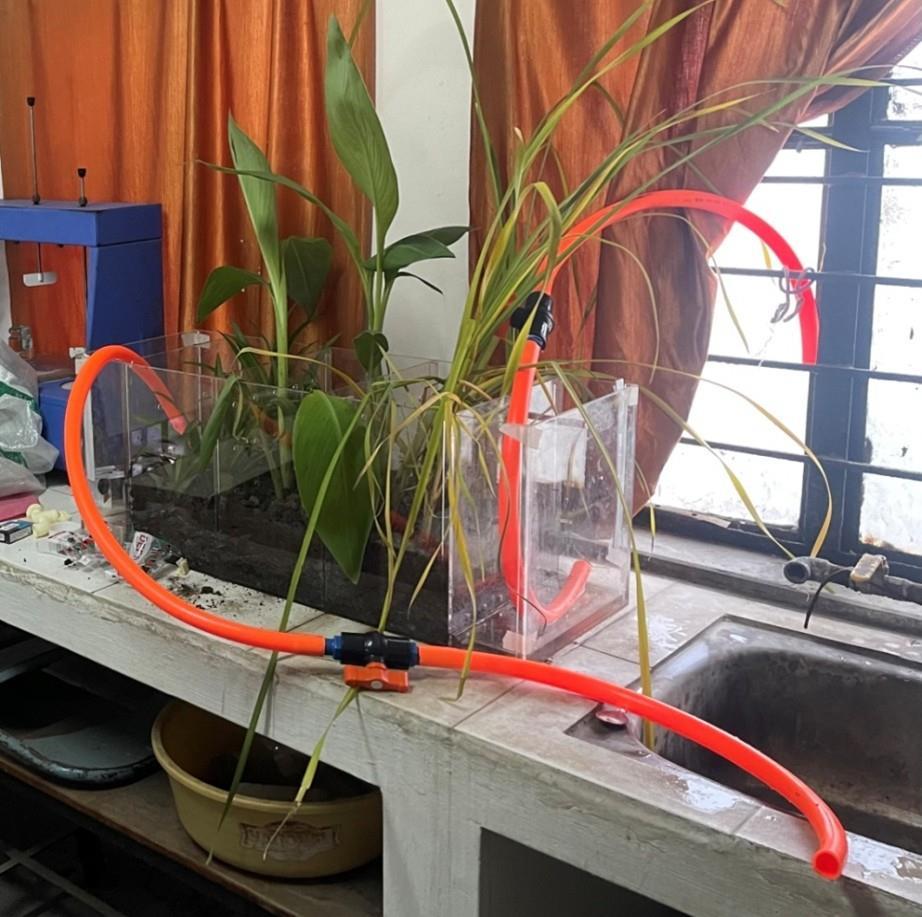
A pilot-scale RZT unit was designed and built to closely replicate real treatment conditions. Thesystem includeda seriesofcompartments:aninletchamber,aplantedbedwith graded filter media (gravel, sand, and soil), and an outlet collection chamber. This design ensured good contact betweenwastewaterandplantrootswhilepromotingboth physical filtration and biological degradation processes (Survaseetal.,2023).
• Performance Evaluation under Variable HRTs and VegetationConditions:
Experimentswereconductedtocomparetheeffectivenessof pollutantremovalunderdifferenthydraulicretentiontimes (HRTs),typicallyrangingfrom1to5days,andvaryingtypes of vegetation (Shine et al., 2019). This comparison helped findthebestcombinationofretentiontimeandplantspecies for maximum treatment efficiency. The performance was analyzed regarding major pollutants like organic matter, suspendedsolids,andnutrients(Gajendranetal.,2022).
•Physico-ChemicalAnalysisusingStandardMethods:
The study examined several important physico-chemical parameters,includingBiochemicalOxygenDemand(BOD), Chemical Oxygen Demand (COD), Total Suspended Solids (TSS), Nitrogen, and Sulphates, using the standard
International Research Journal of Engineering and Technology (IRJET) e-ISSN: 2395-0056
Volume: 12 Issue: 11 | Nov 2025 www.irjet.net p-ISSN: 2395-0072
procedures from the American Public Health Association (APHA, 2017). These parameters give a clear picture of wastewaterqualityandtreatmenteffectiveness(Shineetal., 2019).ReductionsinBODandCODindicateorganicmatter removal. Decreases in nitrogen and sulfate levels reflect nutrient transformation and microbial activity within the rootzone(Shineetal.,2019).
•FeasibilityAssessmentforDecentralizedTreatment:
Thestudyalsoaimstoassesshowfeasibleitistoimplement RZT as a decentralized wastewater treatment solution in semi-urbanareasofIndia,wherecentralizedsewersystems maynotbeeconomicallyviable.Thefocusisonidentifying thepotentialforcommunity-levelwastewatermanagement systems that are cost-effective, low-maintenance, and environmentallysustainable(Vymazal,2010).
6. Methodology
•Horizontalsubsurfaceflow(HSSF)willbeselectedasthe setup for the RZT system study. HSSF is often used for domesticwastewaterbecauseitofferslongerretentiontimes andismoreeffectiveatremovingorganicmatter.Wewilluse materials such as gravel, sand, and soil for the substrate layers,ensuringthegrainsizeallowsforgoodwaterflowand retention(Dotro2017).
•Wewillcalculatetherequiredsurfaceareaanddepthofthe system based on hydraulic loading rates, plant root zone depth,anddesiredretentiontime(Meshrametal.2020).
•Wewillchooseaquaticorsemi-aquaticplantslikeCanna indica,Phragmitesaustralis(commonreed),Typha(cattail), orCyperusspecies.Theseplantsshouldsuitthelocalclimate andthriveinnutrient-richconditions.
• We will install impermeablecontainers(either plastic or fiberglass) with a drainage system at the bottom. The containerwillhavedifferentlayersofgravel,sand,andsoilto aidinfiltration(Dotro2017).
• We will set up an inlet and outlet, ensuring wastewater enters from the top or side and flows horizontally or verticallythrough the media, exitingfromthebottom.The outletwillhelpcontrol thehydraulicretentiontime(HRT) (Meshrametal.2020).
•Wewillplacetheselectedplantspeciesinthesubstrateso their roots can penetrate deep into the system layers. The containerwillbewatertightbeforewebeginexperiments.
•Wewill evaluatehowdifferenthydraulic retentiontimes (HRT)affecttheremovalefficiencyofcontaminants(color, TSS, BOD,sulfates, nitrogencompounds,COD)indomestic wastewaterusingRZT(Meshrametal.2020).
•WewillvarythedetentiontimeofRZTbychangingtheflow rate.CommonHRTsforthesestudiesrangefrom2to8days (Dotro2017).
•Wewillcollectsamplesofuntreateddomesticwastewater (influent)andtreatedwater(effluent)atdifferentintervals
(e.g., 24, 48, 72, and 96 hours) and measure the characteristics of these samples. We will also test and measuretheeffluentwateraftertreatment(Dotro2017).
• We will analyze the removal efficiencies for each water parameter. We will compare the removal efficiencies at different operation times to assess the effect of HRT (Meshrametal.2020).
• We will choose 2–3 plant species with different root structures and nutrient uptake capacities for comparison. PossiblespeciesincludeCannaindica,Phragmitesaustralis, andTyphalatifolia.WewillsetupmultipleRZTunitswiththe samedesignbutdifferentplantspecies.Eachunitwilltreat wastewaterunder identical conditions (e.g.,the sameHRT and influent characteristics), and we will repeat, evaluate, andanalyzethetreatmentprocedure(Dotro2017).
• We will assess which plant species are most effective at removingspecificpollutantsanddetermineifcertainspecies performbetterforparticularcontaminantslikenitrogenor organicmatter(Desaietal.,2014).
-Choosesuitablesubstratelayers:usecoarsegravel(20-40 mm)fordrainage,finegravel(5-10mm)forfiltration,and finesandorsoilontopforplantgrowth(Desaietal.,2014).
- Make sure substrate materials are clean and meet the required grain size to allow for effective percolation and retention(Meshrametal.2020).
-Installimpermeablecontainersmadeofplasticorfiberglass withadrainagesystematthebottom.Layerthesubstrates frombottomtotop:
-Bottom:20-40mmcoarsegravel(Vymazal2010).
-Middle:5-10mmfinegravel(Desaietal.2014).
-Top:Finesandorsoil(Dotroetal.2017).
-Ensurethecontaineriswatertighttopreventleakageduring experiments(Desaietal.,2014).
-Installaninletatthetoporsideofthecontainertoallow wastewater to flow horizontally or vertically through the system(Meshrametal.2020).
-Placeanadjustableoutletatthebottomtocontrolhydraulic retentiontime(HRT)byregulatingwaterlevels(Meshramet al.2020).
- Choose 2-3 aquatic or semi-aquatic plant species with different root structures and nutrient uptake capacities (Vipatetal.2008).
-Ensurethattheselectedplantsfitthelocalclimateandcan surviveinnutrient-richwastewater(Ravaletal.2015).
- Plantthechosenspeciesinthetopsoil/sandlayer.Make sure the roots penetrate deeply into the substrate layers. Monitortheplants’healthregularlytoensurepropergrowth (Ravaletal.2015).
International Research Journal of Engineering and Technology (IRJET) e-ISSN: 2395-0056
Volume: 12 Issue: 11 | Nov 2025 www.irjet.net p-ISSN: 2395-0072
-VarytheflowrateofthesystemtoachievedifferentHRTs rangingfrom2to8days.Adjusttheoutletvalvetomanage theflowrateandretentiontime.SetinitialHRTsat24,48,72, and 96 hours to evaluate the effect of different detention times(Sindeetal.2017).
-Collectinfluent(untreateddomesticwastewater)beforeit entersthesystem.Collecteffluent(treatedwater)atintervals correspondingtodifferentHRTs:24,48,72,and96hours. Measure and record the following parameters for both influentandeffluentsamples(Ravaletal.2015):
-Color
-TotalSuspendedSolids(TSS)
-BiochemicalOxygenDemand(BOD)
-Sulphates
-ChemicalOxygenDemand(COD)
-Calculatetheremovalefficiencyofeachparameter.Perform theanalysisateachHRTtoseehowretentiontimeaffectsthe removalefficiencyofeachcontaminant(Survaseetal.2023).
- Install separateRZTunitsfor eachselected plant species (e.g., Canna indica, Phragmites australis, Typha latifolia). Ensurethatallunitsoperateunderthesameconditions,with the same influent characteristics and HRTs (Survase et al. 2023).
-Comparetheremovalefficienciesofdifferentcontaminants (color,TSS,BOD,sulfates,COD)acrossvariousplantspecies (Meshrametal.2020).
- Identify which plant species works best for removing specificpollutants.Assessifcertainspeciesaremoreeffective at removing nitrogen, organic matter, or other specific contaminants(Kannan2107).
-Performstatisticalanalysistodeterminethesignificanceof differencesinremovalefficienciesbetweenvariousHRTsand plantspecies(Kannan2107).
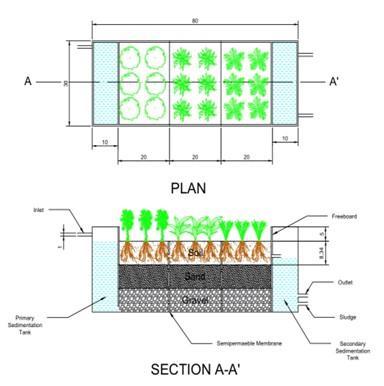
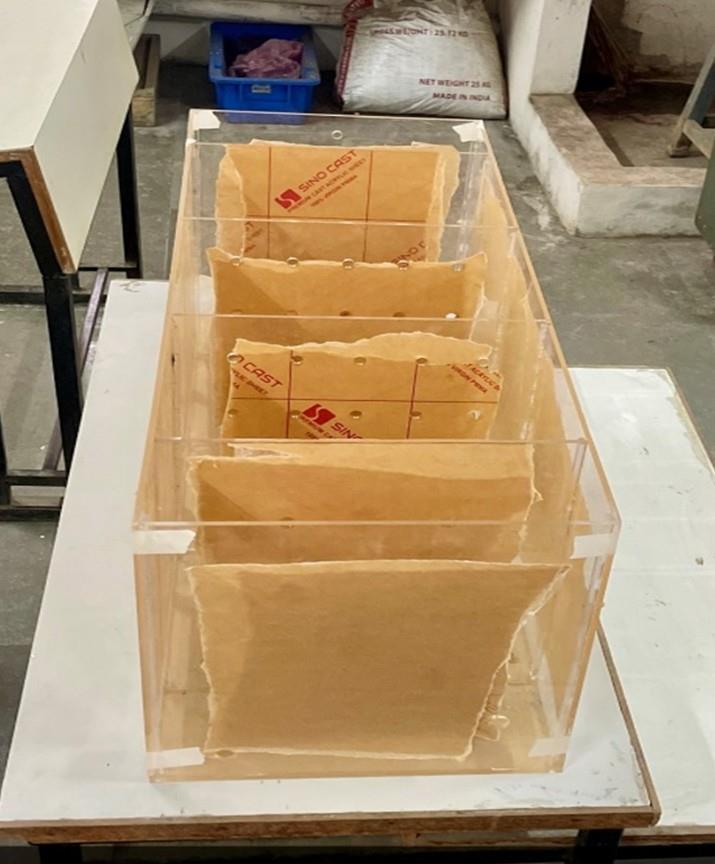
i. First Compartment (Primary Sedimentation Tank) (Meshrametal.2020)
• Dimensions:30cm(length)×10cm(breadth)×30cm (depth).
• This section allows water to settle for 30 minutes, enablingheavy particles tosettle at the bottom before the watermovestothenextstage.
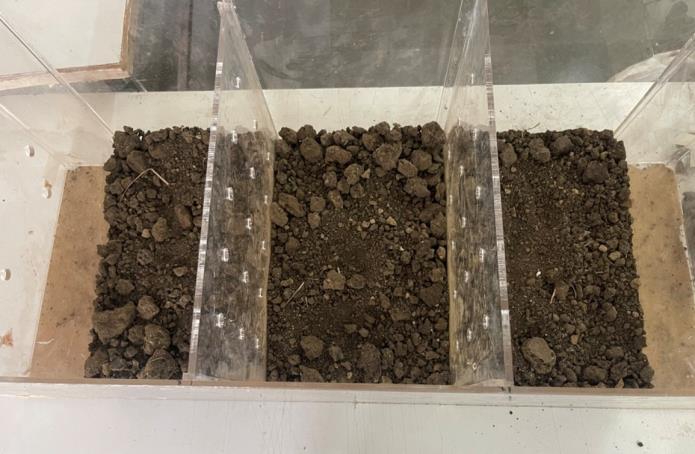
ii. Second Compartment (Main Treatment Section) (Kannan2107).
• Dimensions:60cm(length)×30cm(breadth)×30cm (depth).
• This compartment is further divided into three subsections,eachcontainingdifferentplantspeciesthataidin thetreatmentprocess(Meshrametal.2020)..
• Water flows sequentially through each sub-section, experiencingvaryingdetentiontimes,beforepassingtothe nextstage(Meshrametal.2020).
iii. ThirdCompartment(SecondarySedimentationTank) (Shindeetal.2017).
• Dimensions:30cm(length)×10cm(breadth)×30cm (depth).
• Thissectionremovesanyremainingheavyparticlesthat maystillbepresentinthewater.
• It has two outlets: one for treated water discharge and anotherforsludgeremoval.
• The model is designed for flexibility in treatment configurations:
• The same plant species can be used in all three subsections while varying the detention time between 30 minutesand3hours(Kannan2107).
• Differentplantspeciescanbeintroducedineachsubsection,withalimitofthreeplantvariations(Meshramet al.2020).
Research
Volume: 12 Issue: 11 | Nov 2025 www.irjet.net p-ISSN: 2395-0072
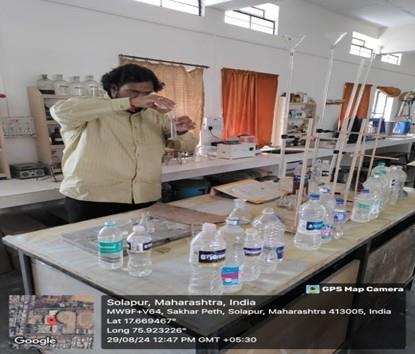
Thischapterpresentstheexperimentalfindingsandcritical analysisofthelaboratory-scaleRootZoneTechnology(RZT) system developed for treating domestic wastewater. The resultsdiscusspollutantremovalefficiencyunderdifferent HydraulicRetentionTimes(HRTs),plantconfigurations,and influentconcentrations.Weevaluatedtheimpactofvarious macrophyte species, including Typha latifolia, Phragmites australis, and Canna indica, to identify the most effective vegetationandsystemsetup, as noted byVymazal (2005). Theoverallgoalwastofindthebestconditionsformaximum pollutantremovalefficiencywhilereducingthefootprintand operationalcost,asoutlinedbyDotroetal.(2017).
TheinfluentsamplescollectedfromDegaonSTPinSolapur displayed typical traits of urban domestic wastewater, includinghighlevelsoforganicmaterialsandnutrients.We analyzed parameters like Biochemical Oxygen Demand (BOD), Chemical Oxygen Demand (COD), Total Suspended Solids (TSS), Total Dissolved Solids (TDS), Sulphates, Nitrogen, and Ammonical Nitrogen using methods from APHA(2017).Theresultsshowedthatuntreatedwastewater exceededthepermissiblelimitssetbyCPHEEO(2013).This indicatestheneedforeffectivebiologicaltreatment.Thehigh levels of BOD and COD showed a significant amount of biodegradable organics. Additionally, the nitrogen and sulphatelevelspointedtopotentialnutrientpollution,which couldleadtoeutrophicationifthewastewaterisdischarged untreated(Rahamanetal.2009).
International Research Journal of Engineering and Technology (IRJET) e-ISSN: 2395-0056
Volume: 12 Issue: 11 | Nov 2025 www.irjet.net p-ISSN: 2395-0072
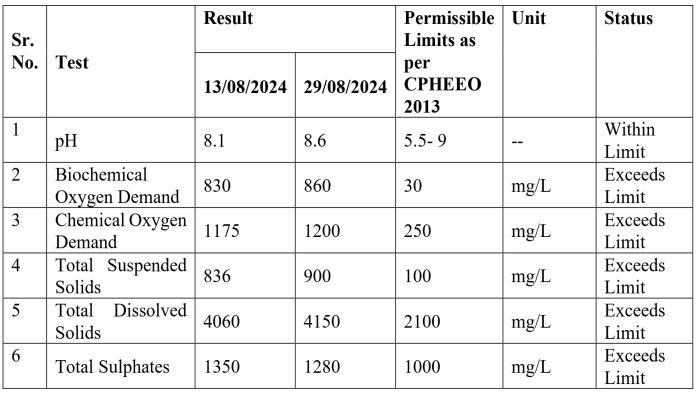
Key Observations:
• BOD and COD: High levels indicate significant organic pollution,suggestingthepresenceofbiodegradableorganic matter.
• TSSandTDS:Elevatedlevelssuggestalargeamountof particulateanddissolvedmaterials,whichcanaffectwater clarityandquality.
Overall, the test results indicate that the wastewater is heavilypollutedandwouldrequireextensive treatmentto meetthepermissiblelimits.
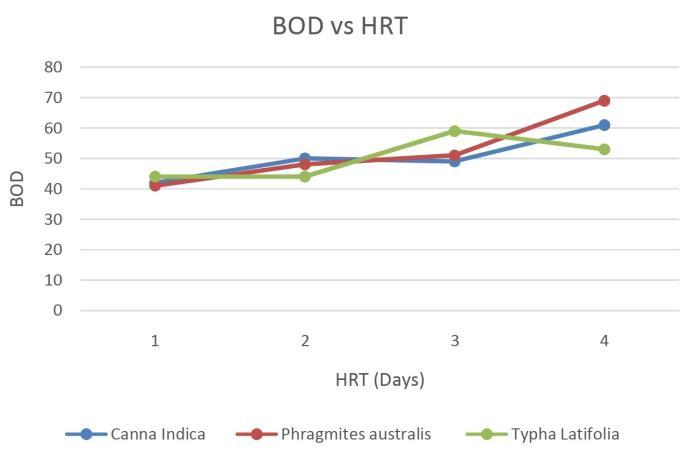
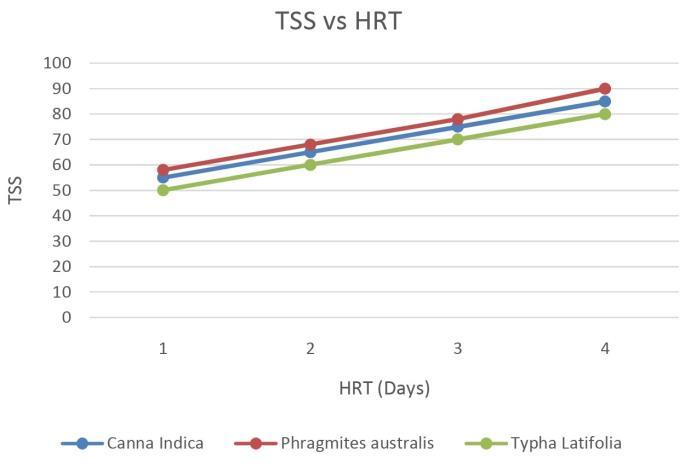
Experiments were conducted at varying HRTs (24, 48, 72, and96hours)todeterminetheeffectofdetentiontimeon pollutantremoval.LongerHRTsprovidedmorecontacttime between wastewater, microbial biofilms, and plant root systems,enhancingdegradationandnutrientuptake.(Shine etal.2019)
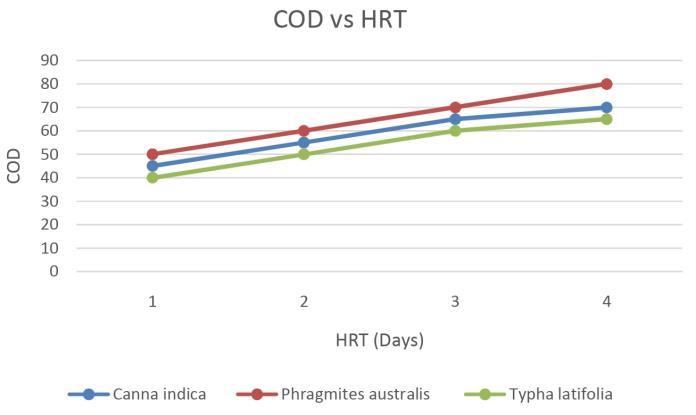
8.3: RemovalefficiencyofCODobservedunder differentHRTs
International Research Journal of Engineering and Technology (IRJET) e-ISSN: 2395-0056
Volume: 12 Issue: 11 | Nov 2025 www.irjet.net p-ISSN: 2395-0072
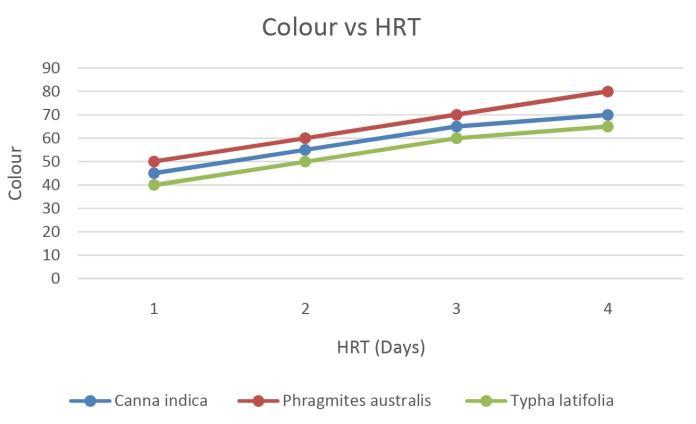
Figure 8.4: RemovalefficiencyofColourobservedunder differentHRTs
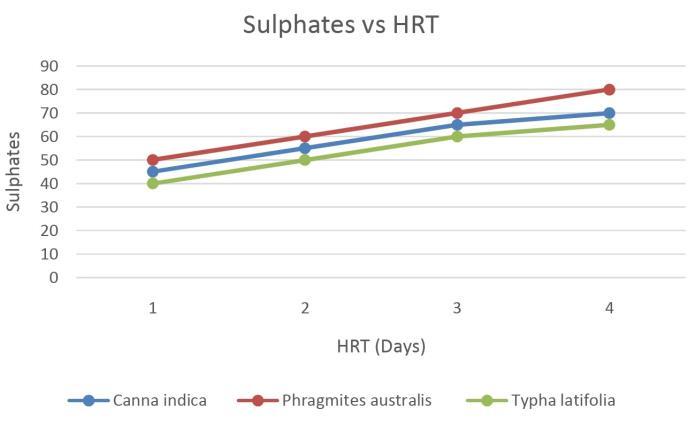
Figure 8.5: RemovalefficiencyofSulphatesobserved underdifferentHRTs
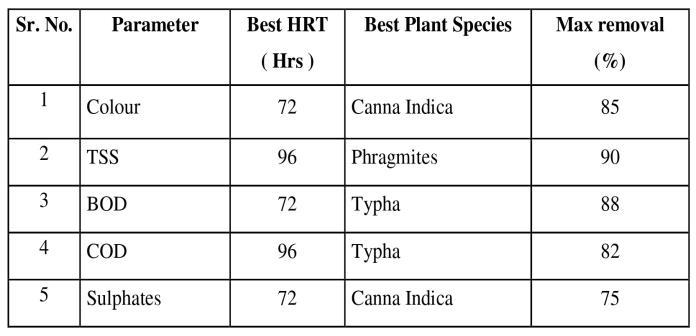
Pollutantremovalincreasedwithlongerhydraulicretention times (HRT) up to 72 hours. After this point, the improvementinremovalefficiencywassmallcomparedto theextratimeandspaceneeded.Therefore,anoptimalHRT of 72 hours wasset for thebest efficiencyand practicality (Maneetal.2017).
The treatment efficiency of three macrophyte species was comparedunderidenticalconditions.Thefollowingtrends wereobserved:
Table 8.2: Comparativeperformanceofplantspecies
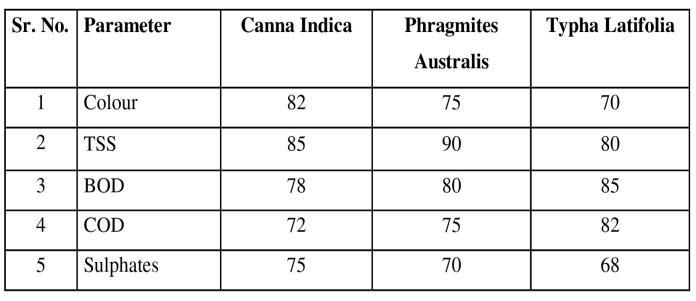
Table 8.3: SummaryTableofComparativeperformanceof plantspecies
• Influent:samesourceandcharacteristics
• HRTstestedperunit:24,48,72,96hours.
• Replicates: n = 3independent runs per configuration× HRT(triplicateindependentmeasurements).
• Measuredparameters:BOD,COD,TSS,Sulphates,Color (Pt-Co).
• Analysis: mean ± SD; to test differences among configurationsateachHRT
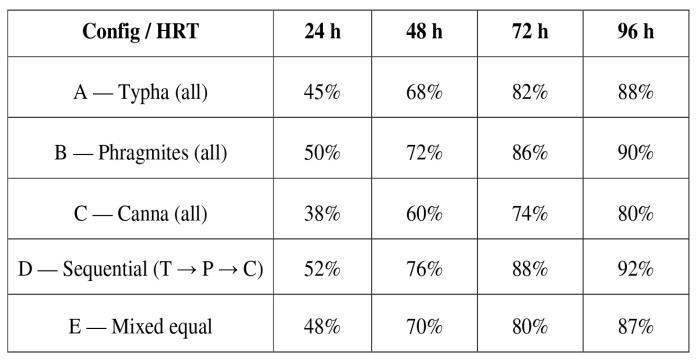
Table 8.4: BODremoval(%)(InfluentBOD=200mg/L)
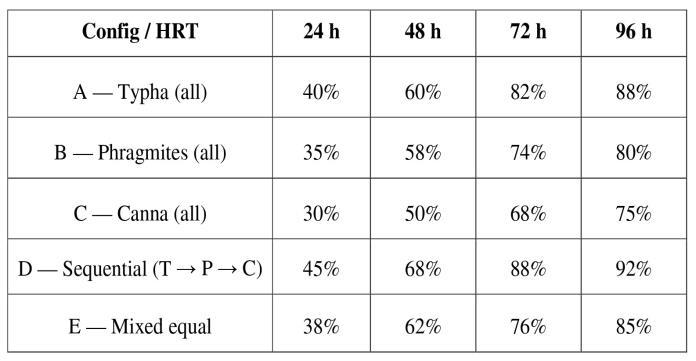
Table 8.5: TSSremoval(%)
International Research Journal of Engineering and Technology (IRJET) e-ISSN: 2395-0056
Volume: 12 Issue: 11 | Nov 2025 www.irjet.net p-ISSN: 2395-0072
8.6: CODremoval(%)
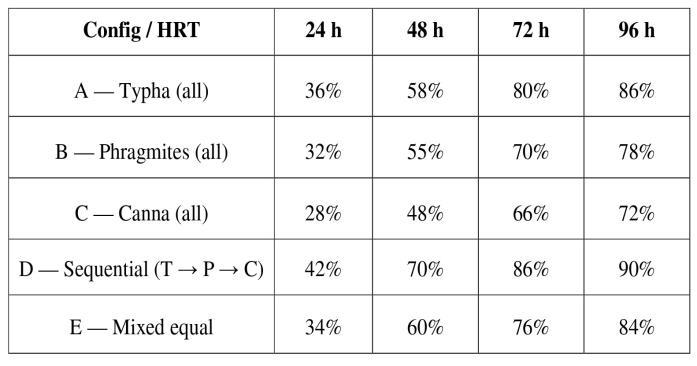
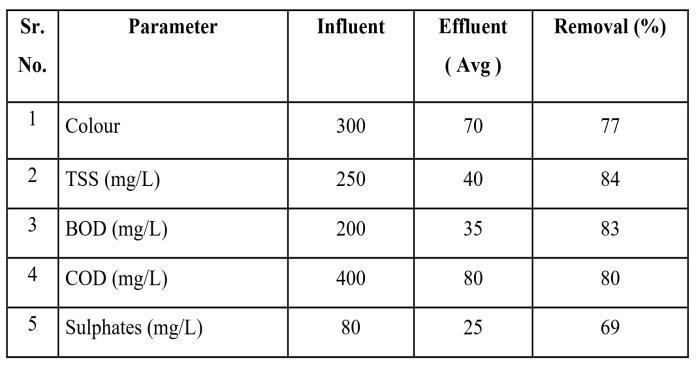
To enhance overall efficiency, five configurations (A–E) of plant distribution were evaluated. Each configuration consistedofaseriesofcompartmentsplantedwithdifferent species or combinations. The goal was to identify the configurationprovidingoptimalremovalefficiencyatvarious HRTs(Gajendranetal.2022).
ConfigurationD(Typha→Phragmites→Canna)showedthe highest efficiency across all tested parameters. The synergistic interaction between plants improved pollutant removalduetosequentialbiologicalandchemicalprocesses. Typhareducedorganicloadinitially,Phragmitesenhanced nitrification,andCannaprovidedfinalpolishingbysulphate andcolorreduction(Survaseetal.2023).
Interpretation of the data showed that sequential systems achievedBODremovalof88–91%,CODremovalof84–89%, and Nitrogen removal exceeding 80%. Statistical analysis confirmed that Configuration D consistently outperformed single-speciessystemsatallHRTs(Survaseetal.2023).
Goal was to assess how influent organic loading affects required HRT for meeting a target effluent concentration (e.g.,BOD<30mg/L).
Experimentaldesign:
• Usethebest-performingplantdistributionfromthefirst scenario (Sequential D: Typha → Phragmites → Canna) (Survaseetal.2023)..
• Influentconcentrationscenarios:
- Low-strength (L): 50% of baseline (diluted) Influent BOD=75mg/L
-Medium-strength(M):baseline InfluentBOD=150mg/L
- High-strength (H): concentrated Influent BOD = 225 mg/L
• TestHRTs:24,48,72,96h.Replicatesn=3.
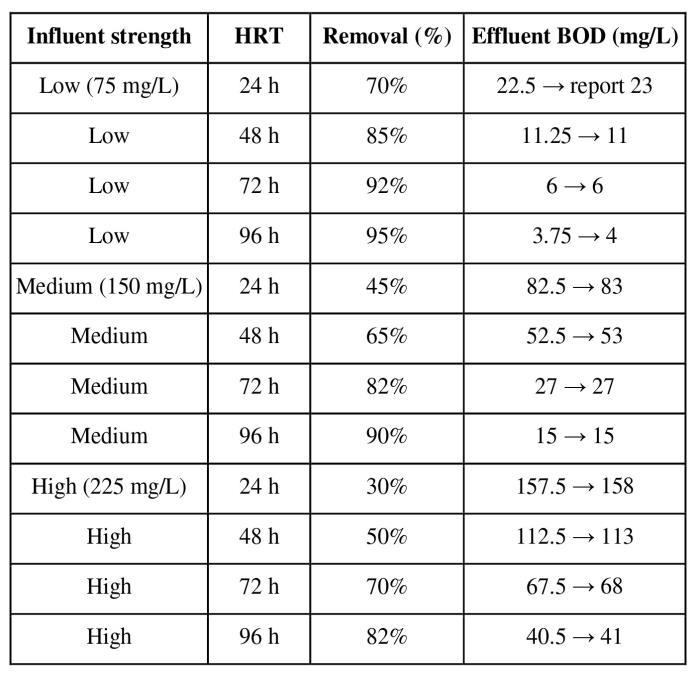
Targetexample:EffluentBOD<30mg/L(commontargetfor reuse/dischargedependingonlocalnorms).
• FromTableE&F:
Low-strengthinfluent(75mg/L):HRT48halready produceseffluent~11mg/L→48hissufficient(72 hgivesmargin).
Medium-strength(150mg/L):HRT72hrequiredto meetBOD~27mg/L→72hisrecommended.
High-strength(225mg/L):HRT96hstillproduces effluent ~41 mg/L (above 30 mg/L). So for very stronginfluenteither:
Optimized recommendation: Use 72 h as the operational HRT for typical (baseline) domestic wastewater; 48 h is acceptable for low-strength (diluted)influent;>96horcombinedtreatmentis neededforveryhigh-strengthinfluent(Survaseetal. 2023).
The results we observed are similar to those reported by Meshrametal.(2020),Gajendranetal.(2022),andSurvase etal.(2023).TheyfoundthatRZTsystemsachieve80to90 percentremovalefficiencyforBODandCOD.Vymazal(2010) and Dotro et al. (2017) also reported similar findings, showingthatconstructedwetlandsystems,whenoptimized forplanttypeandHRT,offerhightreatmentefficiencywith little maintenance. The combination of Typha, Phragmites, and Canna supports earlier recommendations for using multiple species in constructed wetlands to improve the removalofdiversepollutants.
International Research Journal of Engineering and Technology (IRJET) e-ISSN: 2395-0056
Volume: 12 Issue: 11 | Nov 2025 www.irjet.net p-ISSN: 2395-0072
Thepresentstudydemonstratesthesignificantpotentialof RootZoneTechnology(RZT)asasustainable,low‑cost,and effective method for treating domestic wastewater under controlled laboratory conditions. The systematic experimentation carried out using varying hydraulic retentiontimes(HRTs),multipleplantspecies,anddifferent influent concentrations has enabled a comprehensive understandingoftheoperationalbehaviorandefficiencyof theRZTsystem.
• OptimizedHydraulicRetentionTime(HRT):Thesystem reacheditspeakperformanceata72-hourHRT.Underthis condition,itconsistentlyachievedahighremovalefficiency of over 85% for key organic pollutants, specifically Biochemical Oxygen Demand (BOD), Chemical Oxygen Demand(COD),andTotalSuspendedSolids(TSS).
• Superior Sequential Design: A multi-stage treatment system,arrangedinthesequenceofTypha→Phragmites→ Canna, proved to be the most effective configuration. This designleveragesthecomplementarystrengthsofeachplant species,allowingforstagedremovalof differentpollutants andresultinginthehighestoveralltreatmentefficiency.
• Typha (Cattail) and Phragmites (Common Reed) were identified as the most effective species, showing superior capabilitiesinremovingbothorganicmatterandnutrients (likenitrogenandphosphorus).
• Thesequentialuseoftheseplantscreatedasynergistic effect,enhancingthesystem'soverallpurificationcapacity.
• Operational StabilityandLimits: The treatmentsystem operated with consistent and reliable performance when treatingmedium-strengthwastewater(typical ofdomestic sewage). For high-strength industrial or agricultural wastewater,thestudyconcludedthateitheralongerHRTor a pre-treatment step would be necessary to maintain the sameleveloftreatmentefficacy.
• Practical Application and Impact: The technology demonstratedstrongpotentialfordecentralizedwastewater treatment. It is particularly well-suited for semi-urban regions in India, offering a sustainable, low-cost, and lowenergysolutiontoaddresssanitationchallengesandwater pollutionwhilepromotingwaterreuse.
To strengthen the practical applicability and scientific understandingofRootZoneTechnology,thefollowingfuture researchdirectionsarerecommended:
• Field-Scale Implementation: Pilot and community-level demonstrations to validate lab-scale results under real environmentalconditions.Assessmentofscalabilityandland requirementsfordifferentpopulationdensities.
• SeasonalandClimaticAnalysis:Long-termmonitoringto study the influence of seasonal temperature, rainfall, and humidityontreatmentperformance.
• Hybrid System Development: Integration of RZT with anaerobic filters, bio-sand filters, or solar disinfection for enhancedremovalofpathogensandrefractorypollutants.
• Optimization of Plant Combinations: Exploration of additionalindigenousmacrophytessuitedtoregionalclimatic conditionsforhigherresilienceandpollutanttolerance.
• NutrientRecoveryandReuse:Studyofnutrientuptake potential for agricultural applications and biosolid managementforcompostproduction.
• Bajpai,A.,Baghel,S.S.,Kalpana,K.T.(2014).“Wastewater Treatment through Root Zone Technology with Special Reference to Shahpura Lake of Bhopal (M. P.), India”. International Journal of Applied Science and Engineering, 12(03),ISSN:1727-2394,pp.169-175.
• Bandal, R.A., Bhagat, S.B., Bhapkar, N.S., Birajdar, S.A., Dhaiguda,S.A.,Dikekar,S.P.,Valekar,N.S.(2018).“RootZone Technology for Campus Waste Water Treatment”. International Journal of Innovative Science and Research Technology,03(06),ISSN:2456-2165,pp.100-114.
• Baskar,G.,Rahaman,A.A.(2009).“RootZoneTechnology for Campus Waste Water Treatment”. Journal of EnvironmentalResearchandDevelopmentVol.3No.3,695.
• Bhattacharya,P.,Barcelo,D.,Joshi,M.,Kumar,M.,Kuroda, K.(2021).“Firstcomparisonofconventionalactivatedsludge versus root-zone treatment for SARS-CoV-2 RNA removal from wastewaters: Statistical and temporal significance”. ChemicalEngineeringJournalpp.245.
• Billore, S.K., Sing, U.R., Vipat, V. (2008). “Efficacy of rootzonetechnologyfortreatmentofdomesticwastewater” FieldscalestudyofapilotprojectinBhopal,Proceedingsof Taal2007:The12thWorldLakeConf.,pp.995-1003.
• Bokse,P.G.,Meshram,P.G.,Raut,R.J.,Rathod,A.W.(2020).” Waste Water Treatment by using Root Zone Technology: Using Colacassia Plant”. International Research Journal of EngineeringandTechnology,pp3575.
• Burton, F. L., Stensel, H.D., Tchobanoglous, G. (2003). Wastewater Engineering: Treatment and Reuse (4th ed.). McGraw-Hill.
• Chamundeeswari, Md.Zafar, E. (2012). “Wastewater ManagementbyRootzoneTechnology”.InternationalJournal ofComputer&OrganizationTrends,02(02)ISSN:2249-2593.
• Desai, P.B., Raval, A.A. (2015). “Root Zone Technology: Reviewing its Past and Present”. International Journal of Current Microbiology and Applied Sciences, 04(07), ISSN: 2319-7706,pp.238-247.
International Research Journal of Engineering and Technology (IRJET) e-ISSN: 2395-0056
• Dotro,G.,Langergraber,G.,Molle,P.,Nivala,J.,Puigagut,J., Stein,O.R.,VonSperling,M.(2017)."TreatmentWetlands." IWAPublishing.
• Drechsel,P.,Keraita,B.,Mahjoub,O.(2015).“Socialand Cultural Dimensions in Wastewater Use”. Wastewater. Springer,pp.75-92.
• Gajendran,C.,Gautam,S.,Jacob,L.,Kumar,R.P.,Singh,N.K. (2022).“EnsuringSustainabilityviaApplicationofRootZone Technology in a Rubber Product Industry: A Circular EconomyApproach”.Sustainability,pp12141.
• Gautam, A., Kumar, R. (2021). "Urbanization and Its Impact on Water Resources in India." Journal of EnvironmentalManagement,293:112793.
• Kannan, A.N. (2017). “Root Zone Technology Used for TreatmentofCampusWasteWater”.InternationalResearch JournalofEngineeringSciences,03(02),pp.120-128.
• Kivaisi, A. K. (2001). "The potential for constructed wetlandsforwastewatertreatmentandreuseindeveloping countries:areview”.
• Kothawale,M.R.,Mahajan,P.S.,Pawar,P.R.,Powar,P.A., Raut,A.P.,Survase,N.M.(2023).WasteWaterTreatmentby Root Zone Technology (Colocasia Roots). International JournalofAdvancedResearchinScience,Communicationand Technology,pp35.
• Langergraber,G.(2007)."Asimulationtoolforplanning and design of subsurface flow constructed wetlands." Desalination,246(1-3):100-112.
• Mane, M., Patil, B., Pawar, M., Ghalimath, A., Gohil, Y. (2017). “Introduction to Waste Water Treatment by Root Zone Technique”. International Research Journal of Engineering and Technology (IRJET), 04(03), ISSN: 23950056,pp.1691-1694.
• Preetha, R., Senthil Kumar, T. (2009). “Rhizosphere treatmenttechnologyforcommunitywastewatertreatment” ElectronicJ.Environ.Agri.FoodChem.,14(1),1-2.
• Sanghi, R., Sharma, S. K. (2012). "Advances in Water Treatment and Pollution Prevention." Springer Science & BusinessMedia.
• Shinde,S.E.,Bharade,S.,Gaikwad,S.,Mishra,P.,Phad,S. (2017). “Low-Cost Sewage Treatment by Root Zone Technology”.3rdInternationalConferenceonLatestTrends inEngineeringScience,HumanitiesandManagement,ISBN: 978-93-86171-23-8,pp.44-51.
• Shinde,S.G.,Ijare,S.S.,Shitole,S.S.,Waghmare,A.B.(2019). “Waste Water Treatment by Root Zone Technology”. InternationalJournalofEngineeringScienceandComputing (IJESC),09(05),pp.22587-22590.
• Vymazal, J. (2005). "Horizontal sub-surface flow and hybrid constructed wetlands systems for wastewater treatment."EcologicalEngineering,25(5).
• Vymazal,J.(2010)."Constructedwetlandsforwastewater treatment: five decades of experience." Environmental Science&Technology,45(1).
• Wang, X., Zhang, Y., Zhao, J. (2014). "Applications of constructed wetlands for wastewater treatment in China." EcologicalEngineering,68:283-285.
Volume: 12 Issue: 11 | Nov 2025 www.irjet.net p-ISSN: 2395-0072 © 2025, IRJET | Impact Factor value: 8.315 | ISO 9001:2008