
International Research Journal of Engineering and Technology (IRJET) e-ISSN: 2395-0056
Volume: 12 Issue: 05 | May 2025 www.irjet.net p-ISSN: 2395-0072
International Research Journal of Engineering and Technology (IRJET) e-ISSN: 2395-0056
Volume: 12 Issue: 05 | May 2025 www.irjet.net p-ISSN: 2395-0072
THEJESH T N 1 , DISHARANI R2 , MOHAMMED ISHAQH HUSSAIN3, SACHIN M4, RAKSHITH T S5
1 THEJESH T N, Assistant Professor, Dept. of Civil Engineering, CIT Gubbi, Tumkur.
2 DISHARANI R, 7th Sem student, Dept of Civil Engineering, CIT Gubbi, Tumkur.
3 MOHAMMED ISHAQH HUSSAIN, 7th Sem student, Dept of Civil Engineering, CIT Gubbi, Tumkur.
4 SACHIN M, 7th Sem student, Dept of Civil Engineering, CIT Gubbi, Tumkur.
5RAKSHITH T S, 7th Sem student, Dept of Civil Engineering, CIT Gubbi, Tumkur. ***
Abstract - Indiaisfacingaseverefreshwatercrisisdueto populationgrowth,changinglifestyles,andcontaminationof existingwatersources.Thecountry'sgroundwatertableis depleting rapidly, and the quality of available freshwater suppliesisdeclining.Thiscrisishasledtowidespreadwater scarcity,affectingmillionsofpeople,particularlyinruraland coastalareas.
Desalinationtechnologyhasemergedasaviablesolutionto address the growing need for clean water. However, traditionaldesalinationmethodsrelyonfossilfuels,which are unsustainable and contribute to greenhouse gas emissions.Solardesalinationoffersapromisingalternative, usingsolarenergytopowerthedesalinationprocess.This technology has the potential to provide clean water to millionsofpeople,particularlyinremoteandcoastalareas whereaccesstotraditionalwatersourcesislimited.
This report explores the potential of solar desalination technology in addressing India's freshwater crisis. It discusses the advantages and disadvantages of solar desalination, its feasibility in the Indian context, and its potentialtoprovidecleanwatertomillionsofpeople.
Key words- Freshwater crisis, desalination technology, solar desalination, water scarcity, renewable energy sustainablesolutionandcleanwateraccess.
Several regionsofIndiaare currentlyfacinga fresh water crisis, which varies in size and severity depending on the season. The fresh water issue has been caused by human actions rather than natural causes a result of human behaviour.ThecountryofIndianeedsmorefreshwaterasa resultofitsfast-growingpopulationandshiftinglifestyles. Thegroundwatertableisgettingdeeperanddeeperdueto the fierce struggle between competing users in the agricultural,industrial,andhouseholdsectors.Thequalityof availablefreshwatersuppliesisdecliningduetowidespread surfaceandgroundwatercontamination.Asmoreandmore disagreementsbetweenandwithingovernments,districts, regions, and even communities develop, fresh water is gainingcentrestageontheeconomicandpoliticalagenda.In
India,consumingcontaminatedwaterandlivinginunclean circumstancesdirectlycontributetothedeathofaboutone million children from diarrheal disorders. Water quality issuesbroughtonbypolluteon,excessivefluoride,arsenic, iron, or salt water intrusion impact around 45 million people.Numerouspeoplelackaccesstoenoughcleanwater, especiallyinthesummer.
• Solar desalination is its reliance on renewable energy sources. As the process uses the sun's energy to drive the desalination process, it does not rely on non-renewable fossilfuels,whicharefiniteandharmfultotheenvironment. Thismakessolardesalinationasustainableandeco-friendly approachtomeetingthegrowingdemandforcleanwater.
• No mechanical working parts hence, there is no loss of energy.
•Additionally,solardesalinationsystemscanbeconstructed in remote and rural areas where access to electricity is limitedornon-existent.Theprocesscanalsobecustomized to meet specific water quality requirements, making it a flexibleoptionforvariousapplications.
•Hardparticlesareeliminatedhence,seawatercanbeused formachinery
•Itcan overcomethe major water requirement incoastal region.
•Furthermore,solardesalinationsystemscanbedesignedto have low maintenance requirements and minimal environmental impact. Overall, solar desalination has the potentialtoaddressthechallengesofcleanwateraccessina sustainableandefficientmanner.
The main objective of the project is to Improve design of simple solar desalination is to be fabricated for the conversion of seawater into portable water which will be essential where large people residing along costal belt experiencingsevereofdrinkingwater.
International Research Journal of Engineering and Technology (IRJET) e-ISSN: 2395-0056
Volume: 12 Issue: 05 | May 2025 www.irjet.net p-ISSN: 2395-0072
Collection of and characterize various physiochemicalcharacteristicsseawatersample.
Todesign&studyaneffectiveprototypemodelof solardesalinationfortreatmentofseawater.
To determine the desalinator's efficiency in achievingtheremovalofsaltsandunwantedsolids.
To reuse the desalinated/treated water for the tertiarypurposeasperBISstandard.
1. PVC Wood
The Models for solar desalination can be built using PVC wood,commonlyreferredtoascompositewoodorsynthetic wood.PVCwoodisakindofengineeredwoodthatiscreated using a combination of wood fibers and plastic polymers, usually from recycled resources. Because it is more enduring, water-resistant, and needs less frequent maintenancethantraditionalwood,itisfrequentlyusedas an alternative. PVC wood is used in solar desalination modelsbecauseitdoesn'tcorrodeorrotwhenexposedto seawater.

2.
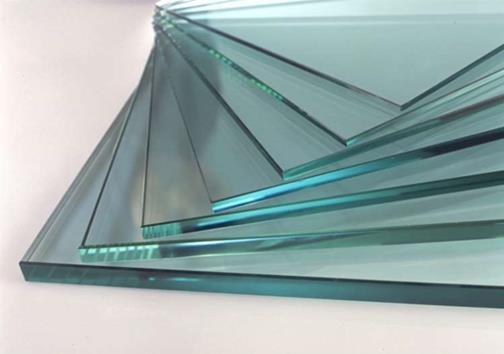
Insolardesalinationmodels,thedistillationunitorthesolar collector can both be covered with 4mm glass. The glass coveraidsinretainingheatandpreventingheatlossfrom theappliance.
Additionally, it permits sunlight to enter, which is necessary for the solar distillation unit to operate. The system's size, the anticipated wind load, and the
temperature gradient are only a few of the variables that affect the thickness of the glass. Higher wind loads and temperaturegradientscanbetoleratedbythickerglass,but it may cost more. Glass with a thickness of 4 mm is frequentlyusedinsmall-scalesolardesalinationsystemsand isreasonablypricedandeasilyaccessible.Here,theglassis positionedatan18-degreeanglesuchthatadropofwater getsasloptoslidedown.
Theprimarypurposeoftheblackabsorberinasolarstillis to absorb as much solar energy as possible and convert it intoheat.Thisheatisthenusedtoevaporatewater,whichis thefirststepinthedistillationprocess.Theblackabsorberis typicallymadeofamaterialwithahighthermalconductivity and a high absorptivity for solar radiation. Common materialsincludeblack-paintedmetalsheets,blackplastic, or blackened gravel. Black-painted aluminum or copper sheets are commonly used because they are efficient heat conductorsandcanwithstandprolongedexposuretowater andsunlight.

Asiliconeorpolysiloxaneisapolymermadeupofsiloxane. Theyaretypicallycolourlessoilsorrubber-likesubstances.
International Research Journal of Engineering and Technology (IRJET) e-ISSN: 2395-0056
Volume: 12 Issue: 05 | May 2025 www.irjet.net p-ISSN: 2395-0072
Silicones are used in sealants, adhesives, lubricants, medicine,cookingutensils,thermalinsulation,andelectrical insulation.

1. Collection of seawater sample:
a.Chooseasuitablelocationforseawatercollection,suchas abeachorpier.
b. Using a clean and sterile sampling container, collect enoughseawatersample.
c.Labelthecontainerwiththesamplinglocation,date,and timeofcollection.
d.Storethesampleinacoolerwithiceuntiltransporttothe laboratory.
2. Initial laboratory analysis of sample:
a. Conductapreliminaryanalysisoftheseawatersamplein the laboratory, including pH, acidity, alkalinity, turbidity, calcium and magnesium hardness, TDS, Permanent Hardness,chlorinecontent,sodiumcontentandBOD.
b. Record the results of the analysis for later comparison withtreatedwatersamples.
3. Fabrication of phototype:
Theplasticbottlebrickswerethenpreparedby
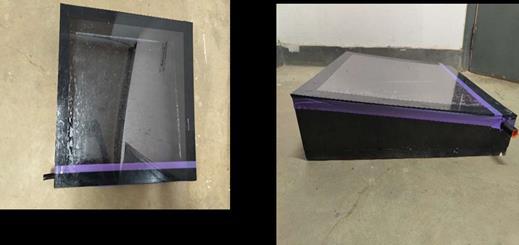
a. Fabricateasolarstillprototypeaccordingtodesign parametersfortreatingseawater.
b. Testtheprototypetoensureitmeetsperformance specifications.
4. Experimental analysis of sample:
a. Pour enough of the collected seawater sample into the solarstillprototype.
b. Allow the prototype to treat the seawater using solar energy.
c.Collectatreatedwatersampleandlabelitwiththedate andtimeofcollection.
d. Record the results of the analysis for later comparison withinitialreadingswithstandardvalues.
5. Collection of treated water and laboratory analysis:
a.Collectasufficientamountoftreatedwatersamplefrom thesolarstillprototype.
b.Transportthetreatedwatersampletothelaboratoryfor analysis.
c.Conductananalysisofthetreatedwatersample,including pH, acidity, alkalinity, turbidity, calcium, and magnesium hardness, TDS, Permanent Hardness, chlorine content, sodiumcontentandBOD.
6. Reuse of desalination water foe tertiary purpose:
a.Ifthetreatedwatermeetsthedesiredqualitystandards, reuseitfortertiarypurposessuchasirrigation,cleaning,or industrialprocesses.
b.Monitorthetreatedwaterqualityperiodicallytoensureit remainswithinacceptablelimits.
International Research Journal of Engineering and Technology (IRJET) e-ISSN: 2395-0056
Volume: 12 Issue: 05 | May 2025 www.irjet.net p-ISSN: 2395-0072
A. INITIAL CHEMICAL ANALYSIS OF SEAWATER SAMPLE
TABLE NO.: 1 Physico -chemical analysis of seawater sample.
Experimental
Acidity nil
Alkalinity
Calciumhardness(mg/las cacuio3) 420
Magnesiumhardness(mg/las cacbo3) 26
Totalhardness(mg/lascaco3) 446
Bio-chemicaloxygendemand D0=16
Turbidity 0.62
Cl-(mg/L)(±0.01) 544
B. FINAL CHEMICAL SNALYSIS OF COLLECTED SEAWATER
TABLE NO.:2 Chemicalanalysisofseawatersamples beforeandaftersolardesalinationprocess
Experimental
Acidity Nil Nil
•Abovetableshowscomparisonbetweeninitial,finaland standardvalues
•HencefromTableNo1itcanbeconcludedthatthevalues obtainedareunderthepermissiblelimit.
•ResultsafterconductiononvariousparameterslikeCa+2, Mg+2,totalHardness,BOD,turbidity,Cl-,pH,andalkalinity was98.43mg/lasCaCO3,19.83mg/lasCaCO3,118.26mg/l asCaCO3,0.997g/ml,19.2mg/lasCaCO3
C. PERCENTAGE EFFICIENCY FOR SOLAR DESALINATOR WITH DIFFERENT INPUTS
The actual efficiency of the distillatory for 6 hours of observationcanbeseeninTable4.3.Theactualefficiencyof the distillatory in this study tends to be Moderate the lowestefficiencyis16.58%,andthehighestis147.91%.Only atinypartofthefeedwaterbecomesdistillatewater,and mostofitbecomesbrine.Itcanbecausedusingsolarenergy andtheevaporationprocessthatisnotoptimal,theduration ofobservationisnotlong,thesurfaceareaoftheglassinthe distillatoryisnotlarge.
TABLE NO.: 3 % EfficiencyforSDfordifferentinput volumes.
• The percentage efficiency of a solar desalinator varies significantlybasedondifferentinputs,highlightingtheneed forcarefulconsiderationandoptimizationtomaximizeits overallperformance.
• As seen from above table. No 2, the average percent efficiencyObtainedwas73.47%.
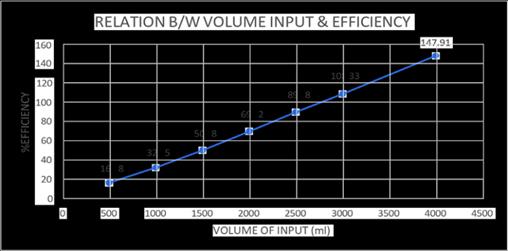
Fig: Relationshipbetweeninputvolumewith%efficiency.
International Research Journal of Engineering and Technology (IRJET) e-ISSN: 2395-0056
Volume: 12 Issue: 05 | May 2025 www.irjet.net p-ISSN: 2395-0072
•AbovegraphshowstheRelationshipbetweeninputvolume with%efficiency,wherex-axisrepresentsvolumeinput(ml) andy-axisrepresentsthe%efficiency.
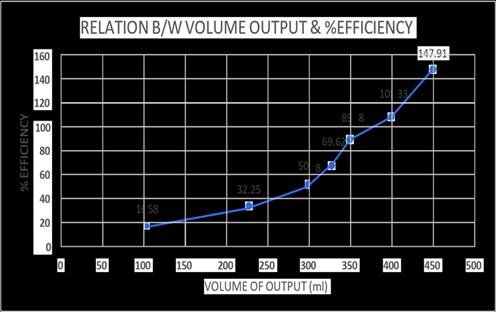
Fig:Relationshipbetweenoutputvolumewith%efficiency.
• Above graph shows the Relationship between output volumewith%efficiency,wherex-axisrepresentsvolume output(ml)andy-axisrepresentsthe%efficiency.
CHEMICALANALYSISOFSYNTHETICSEAWATER.
TABLE NO.:4 Chemicalanalysisofsyntheticseawater samplesbeforeandaftersolardesalinationprocess.
• Abovetableshowscomparisonbetweeninitial,final andstandardvalues
•HencefromTableNo:3itcanbeconcludedthatthevalues obtainedareunderthepermissiblelimit.
PERCENTAGE EFFICIENCY FOR SOLAR DESALINATOR WITH DIFFERENT INPUTES
The actual efficiency of the distillatory for 6 hours of observationcanbeseeninTable4.5.Theactualefficiencyof the distillatory in this study tends to be Moderate the
lowestefficiencyis17.16%,andthehighestis%.Onlyatiny partofthefeedwaterbecomesdistillatewater,andmostof itbecomesbrine.Itcanbecausedusingsolarenergyandthe evaporation process that is not optimal, the duration of observationisnotlong,thesurfaceareaoftheglassinthe distillatoryisnotlarge.
Table No.:5 %efficiencyforSDfordifferentinputvolumes
• The percentage efficiency of a solar desalinator varies significantlybasedondifferentinputs,highlightingtheneed forcarefulconsiderationandoptimizationtomaximizeits overallperformance.
• As seen from above table. No.:4, the average percent efficiency Obtainedwas74.41%.
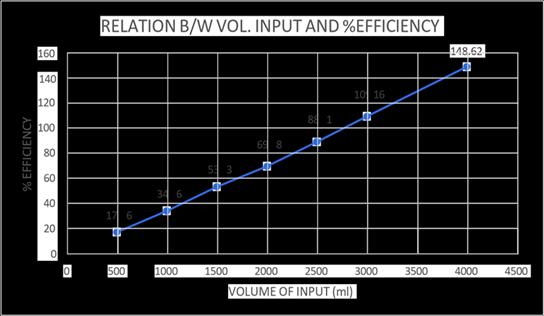
Fig: Relationship between input volume with % efficiency.
•AbovegraphshowstheRelationshipbetweeninputvolume with%efficiency,wherex-axisrepresentsvolumeinput(ml) andy-axisrepresentsthe%efficiency.
International Research Journal of Engineering and Technology (IRJET) e-ISSN: 2395-0056
Volume: 12 Issue: 05 | May 2025 www.irjet.net p-ISSN: 2395-0072
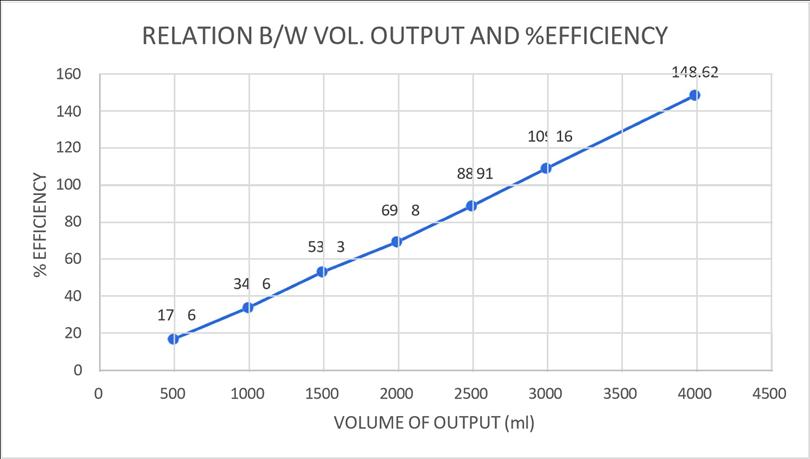
Fig: Relationship between output volume with % efficiency.
• Above graph shows the Relationship between output volumewith%efficiency,wherex-axisrepresentsvolume output(ml)andy-axisrepresentsthe%efficiency.
TABLE No.:6 Temperatureobservationoffeedwater, desalinatedwaterandglasscover.
Byutilizingsolarenergytoevaporateseawaterand subsequentlycondensingthevaporintofreshwater, this method presents a sustainable and economically viable alternative to traditional desalinationapproaches.
Yieldingpromisingoutcomessuchastheremovalof Ca+2,Mg+2,totalhardness,BOD,turbidity,Cl-,pH, andalkalinityto23.19%,76.26%,67.72%,54.83%, 36.61%respectivelyacceptablelevels.
These models rely on renewable solar energy to powerthedesalinationprocess,makingthemboth environmentally friendly and cost-efficient. The performanceofsolardesalinationprototypemodels is influenced by multiple factors, including the system'sdesign,thetypeofsolarenergycollector employed, and the efficiency of the desalination process.
Reference:
[1]. Abdel-Rehim, Z. S. (2007, NOVEMBER 05). Experimental andtheoretical studyofasolardesalination systemlocatedinCairo,Egypt.SCIENCEDIRECT,217(1-3), 52-64.
[2]. Abujazar,M.S.(2016,may02).Theefffectsofdesign parameter on productivity performance of solar still for seawaterdesalination.sciencedirect,178-193.
[3]. Arjunan, T. (2009, DECEMBER). Status of solar desalinationinIndia.SCIENCEDIRECT,13(9),2408-2418.
[4]. Gálvez, J. B. (2009, September 30). Seawater desalination by an innovative solar- powered membrane distillationsystem:the.ScienceDirect,567-576.
The value of the temperature's desalinates water and the glassinthedesalinatorincreaseswiththesun'sintensity.It istheplatethatabsorbsthesun'senergyasitreceivesitat thattimeandusesittoevaporatethefeedwatercontained in the desalinator. Black's Principle states that the heat absorbedisequaltotheheatreceivedbythesubstanceand will be proportional to the increase (change) in the temperatureofthesubstance.
Basedonthe findings of thisstudy,it can beinferred that solar desalination demonstrates great potential as a technologyforconvertingseawaterintofreshwater.
The seawater sample was brought from Murudeshwarandinitiallaboratoryanalysiswere conductedonvariousparameterslikeCa+2,Mg+2, totalHardness,BOD,turbidity,Cl-,pH,andalkalinity to420mg/lasCaCO3,26mg/lasCaCO3,446mg/las CaCO3,0.62g/ml,544mg/lasCaCO3.
[5]. Towardssustainablesalineagriculture:Interfacial solar evaporation for simultaneous. (2022, april 01). ScienceDirect.
[6]. Wazwaz, A. (2020, OCTOBER). Improved and Modified Design of Seawater Solar Desalinator Prototype. 202011thInternationalRenewableEnergyCongress(IREC). RESEARCHGATE.

THEJESH T N
AssistantProfessor, DepartmentofCivilEngineering, CITGubbi,Tumkur.
International Research Journal of Engineering and Technology (IRJET) e-ISSN: 2395-0056
Volume: 12 Issue: 05 | May 2025 www.irjet.net p-ISSN: 2395-0072




DISHARANI R
7th SemStudent, DepartmentofCivilEngineering, CITGubbi,Tumkur.
MOHAMMED ISHAQH HUSSAIN
7thSemStudent, DepartmentofCivilEngineering, CITGubbi,Tumkur.
SACHIN M
7thSemStudent, DepartmentofCivilEngineering, CITGubbi,Tumkur.
RAKSHITH T S
7thSemStudent DepartmentofCivilEngineering, CITGubbi,Tumkur.
© 2025, IRJET | Impact Factor value: 8.315 | ISO 9001:2008 Certified Journal | Page172