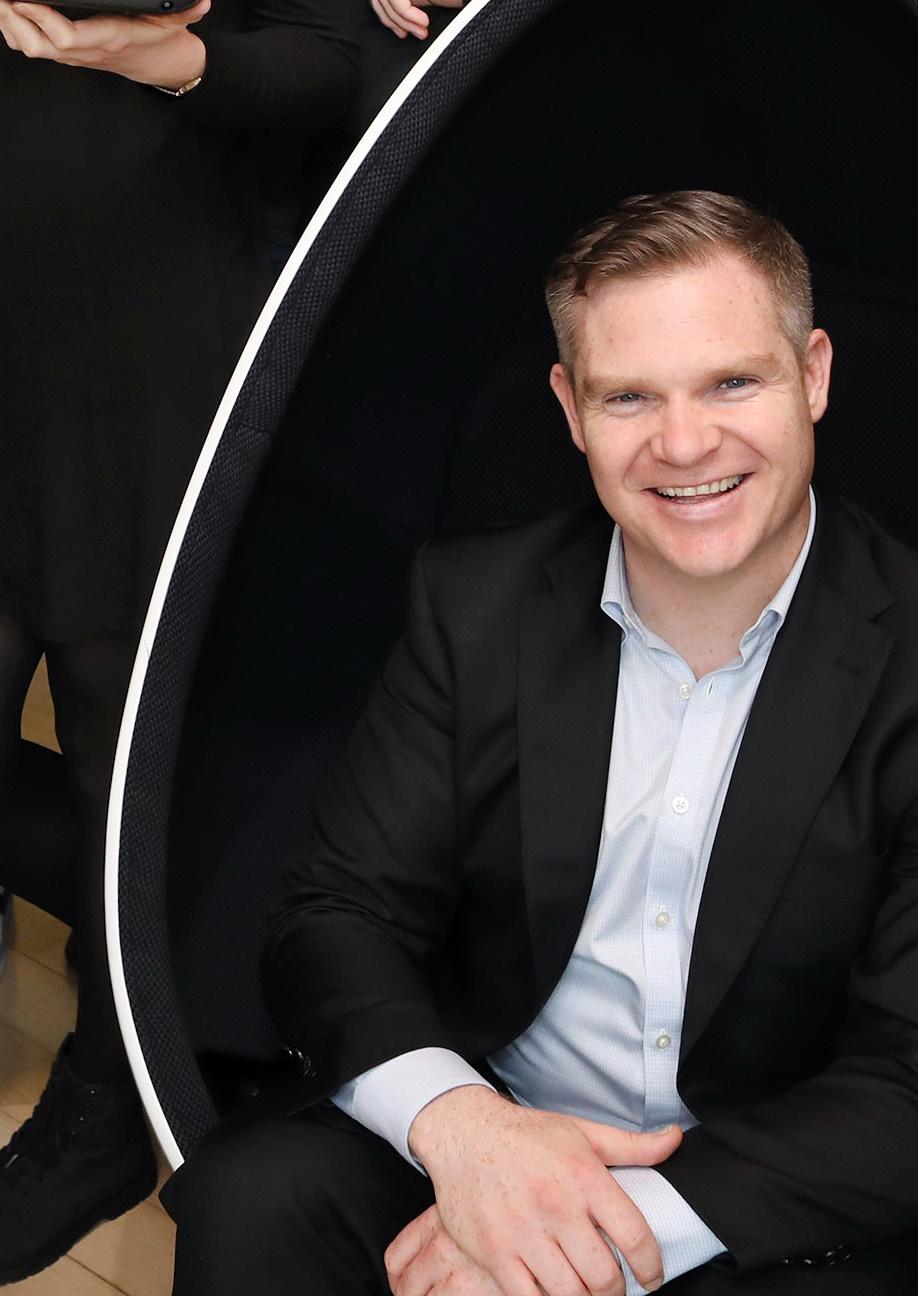
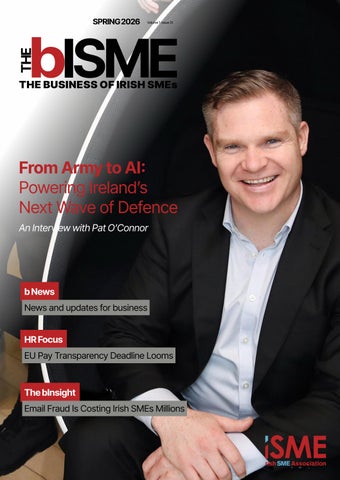
An Interview with Pat O’Connor

Finding the right government support for your business has never been easier. The National Enterprise Hub is the single source of information on over 250 government supports. Whether you’re looking for grants, training or advice, you’ll find it all in one place. The National Enterprise Hub Support starts here




4. A Message from the Chief Executive: ISME CEO Neil McDonnell discusses SME Resilience Amid Global Shifts
17 Kildare Street, Dublin 2, Ireland.
Phone : (01) 662 2755
E-mail: info@isme.ie
Web: isme.ie
Published by iSME
Editorial: gopika@isme.ie
Design: ciara@cnocii.ie
Advertising: marketing@isme.ie
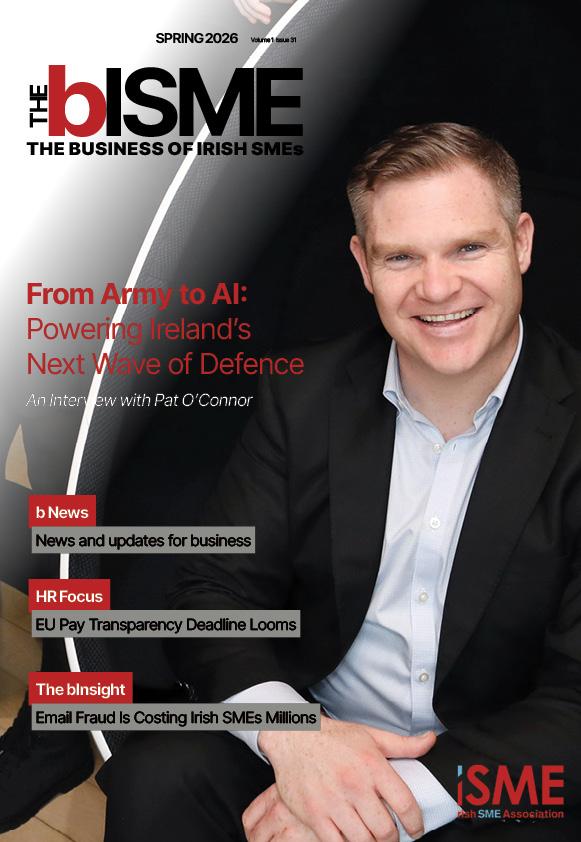
6. b Events: Key events for SMEs this quarter
8. The b News: News and updates for business
12. The b Interview: The bISME chat to Pat O’Connor, VRAI
16. HR Focus: Read the latest on EU Pay Transparency
18. Finance Focus: How businesses and farms can access suitable bank finance
20. b Issue: Key changes to work permits in Ireland that employers need to know
22. Sustainability Focus: Chemical rules and their growing impact on SME supply chains
24.The b Insight How email fraud is costing Irish SMEs millions
26. Another side of:
The bISME talks to ISME Sales & Marketing Manager, James Mailley about his interests and hobbies
28. Member Feature The Institute of Child Education and Psychology (ICEP)
Colleagues,
April sees the beginning of a second month of war in the Middle East, where oil infrastructure is being targeted. We have already seen an increase in inflation as a result, and this trend is likely to continue, since there will be a long tail to infrastructure repair. This is likely to prove very difficult to manage for our SME base. We have asked Government to consider direct enterprise energy supports HERE.
ISME launched our Indigenous Enterprise Policy on 25th March. This is intended to address the imbalance in our economy between a highly productive and profitable FDI sector, and an SME sector that struggles with both. While they are not as lucrative as big business, our micro businesses (<10 employees) nonetheless are responsible for 47% of employments, 42% of total earnings, 40% of income tax, 41% of PRSI, and 36% of VAT. Our priority with this new policy is to direct government attention to Ireland’s “everyday entrepreneurs.”
We believe there has been too much focus of late on innovation-driven enterprise and on exporting businesses. We see many brilliant businesses (“hidden champions”) which are not high technology or export-intensive, but which are highly productive. We should and we must encourage those to scale. Scaling a business is the fasted way to generate higher productivity, via economies of scale.
An indigenous enterprise policy that scales small business will require the Department of Finance to provide:
1. Tax policy (both personal and enterprise) which encourages scale.
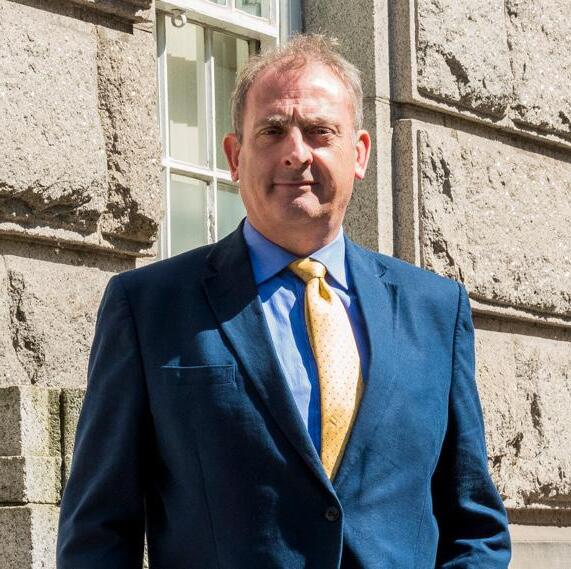
Neil McDonnell, Chief Executive, ISME
2. Investment policy that encourages the diversion of capital from unproductive deposits into productive venture capital, working capital or equity.
The Low Pay Commission is currently considering its recommendations for the rate of the national minimum wage. This is an issue that has raised real unease among many SME sectors, particularly childcare, retail, hospitality and nursing home care. ISME is facilitating a meeting among trade association representatives on 1st April to consider whether we can make a coordinated response to Government on the issue.
You will have seen an increase in audiovisual output lately, since the arrival of our new Head of Sales & Marketing James Mailley. It’s not just for us, if you have visual content about your business you would like the marketing team to share, drop an email to marketing@isme.ie
Lastly, we are about to commence work on our prebudget submission 2026. Most of the submission will be directed at delivery of our indigenous enterprise policy, but if you have priority policy areas you would like to see addressed in Budget 2027, please let us know asap.
Neil McDonnell ISME CEO
Having difficulty getting a new business loan or restructuring your existing debt with your bank?
Established by the Minister for Finance, Credit Review is here to help.
Talk to the credit experts today on 0818 211 789 or visit creditreview.ie
Event – Book your free tickets now!
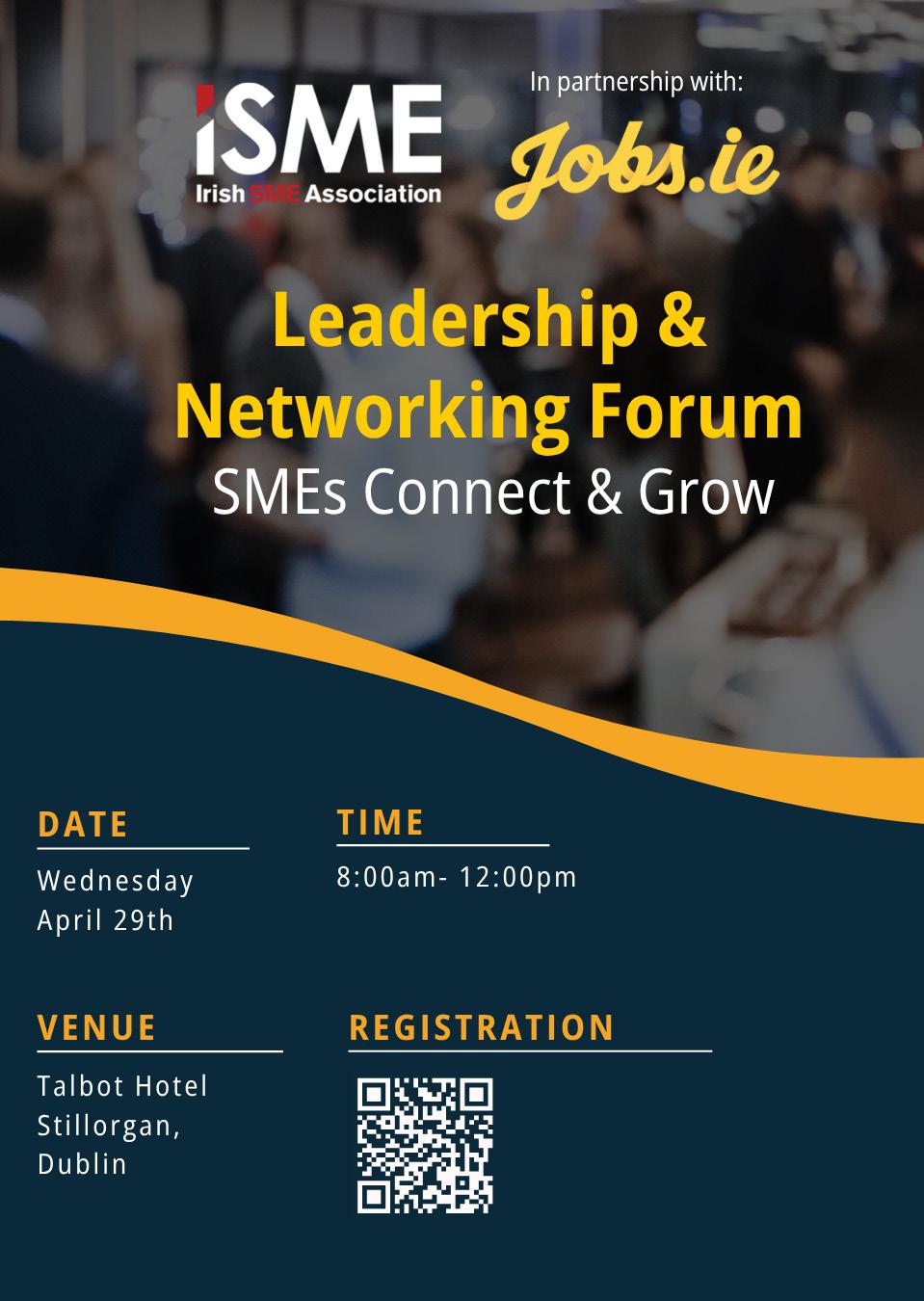
We are delighted to introduce the ISME Leadership and Networking Forum – in partnership with Jobs.ie.
This exciting new event series is created to bring practical insights and expert guidance directly to SMEs across Ireland.
The first stop in the series takes place on Wednesday 29th April in Talbot Hotel, Stillorgan, Co Dublin from 8am-12pm.
Attendees can expect:
• Update on the SME business landscape from ISME’s CEO
• Keynote speaker on talent insights, trends, and hiring success for SMEs
• Practical advice on HR, Health & Safety, and Sustainability
• Network with other local likeminded business owners and leaders
• Pitch My Business – showcase your business to attendees
ISME are proud to collaborate with Jobs.ie on these events where employers can share best practice and gain practical insights on protecting and growing their business.
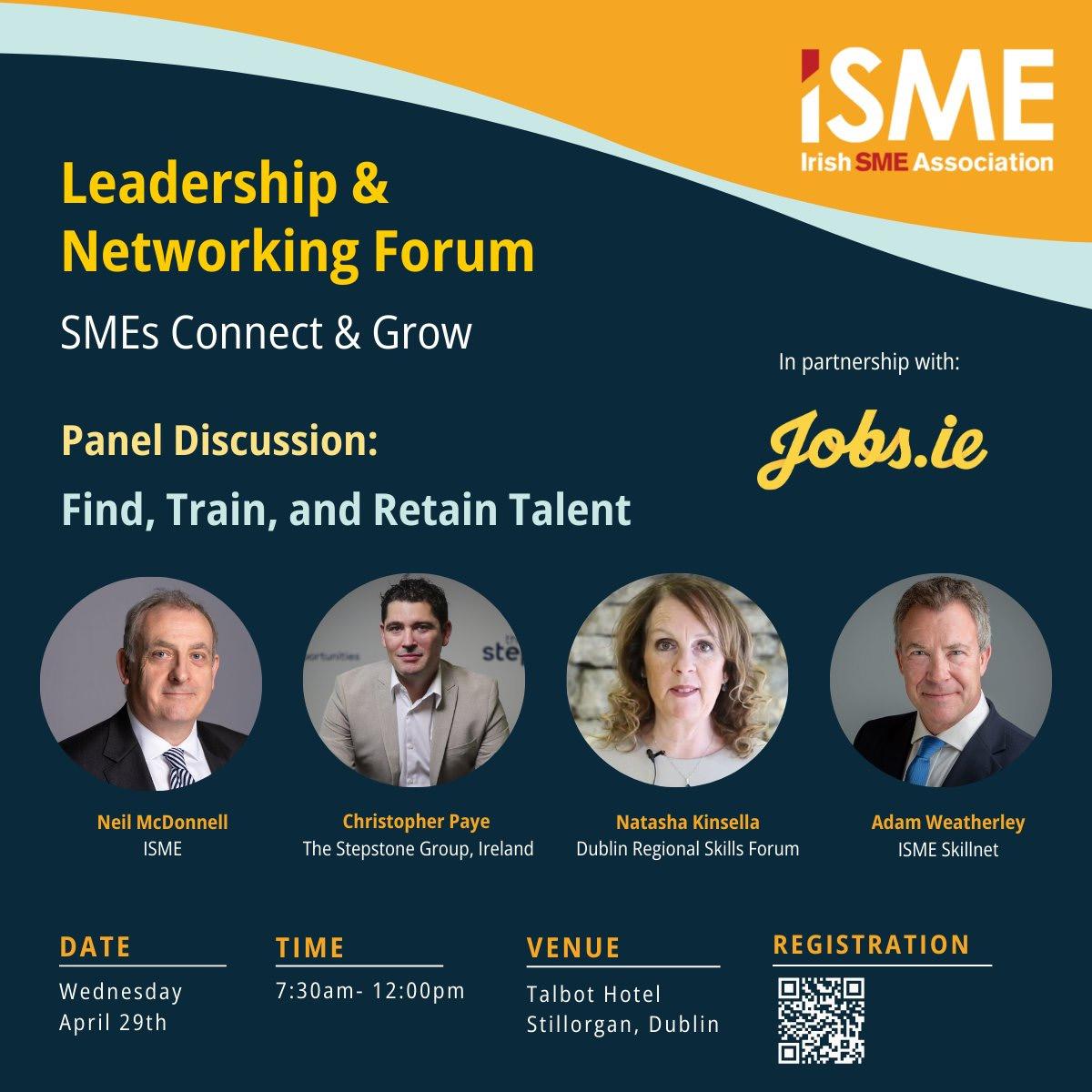
PROGRAMME
Welcome: Neil McDonnell, CEO
Keynote Speaker: Christopher Paye, Country Director, The Stepstone Group, Ireland
Learning Update:
• Adam Weatherley, L&D Manager, ISME Skillnet
• Natasha Kinsella, Regional Skills Manager, Dublin Regional Skills Forum
Panel Discussion: Topic: Find, Train, and Retain Talent
• Neil McDonnell, CEO, ISME
• Christopher Paye, Country Director, The Stepstone Group, Ireland
• Adam Weatherley, L&D Manager, ISME Skillnet
• Natasha Kinsella, Regional Skills Manager, Dublin Regional Skills Forum
HR Issues for Business: ISME HR Team
Energy Updates: Kathleen Moore – SME Business Decarbonisation Supports Executive, Sustainable Energy Authority of Ireland (SEAI)
BeSMART – Managing Health & Safety for SMEs: Olamide Taiwo –Higher Executive Officer, Health & Safety Authority (HSA)
Book Your Tickets Now
Pitch my business & Networking: Each attendee will have a 2-minute slot to give an elevator pitch to promote their business. A great opportunity to network with fellow business people in your area. Don’t forget your business cards!
your
Carlton Hotel Blanchardstown, D15 EYX5, Wednesday, 13 May 2026
To support small business owners and managers, the Health and Safety Authority is hosting a practical morning seminar focused on managing everyday workplace dangers. This session will explore the most common hazards affecting small workplaces and provide straightforward steps to reduce risk and prevent injuries.
All employers are required to carry out a risk assessment and put appropriate control measures in place to protect their employees. Small businesses often face similar types of hazards across sectors, including:
• Manual Handling: Lifting, carrying, pushing, or pulling tasks that may lead to musculoskeletal injuries.
• Slips and Trips: Wet floors, poor housekeeping, uneven surfaces, or trailing cables.
• Work at Height: Even lowlevel tasks on ladders or platforms can result in serious injury.
• Vehicle Operations: Movement of forklifts, vans, deliveries, and pedestrians on-site.
• Work Equipment: Machinery and tools that must be properly maintained and used safely.
• Fire Risks: Storage of combustibles, lack of precautions, or inadequate emergency arrangements.
• LPG and Gas: Hazards related to the handling, installation, or storage of LPG cylinders and gas systems.
• Chemical Injuries: Exposure to hazardous substances used in cleaning, maintenance, or production.
Understanding these risks is the first step in keeping your workplace safe and preventing injuries.
This brief and highly practical morning seminar is designed to help small business owners, supervisors, and managers strengthen their approach to workplace safety. The session will outline essential safety practices that every small business should have in place and guide you through straightforward steps to reduce risks and prevent common injuries.
You will gain practical insights on identifying hazards, implementing controls, and meeting your safety responsibilities as an employer. The goal is to help your business remain safe, resilient, and compliant.
Seminar Locations:
Carlton Hotel Blanchardstown, D15 EYX5, Wednesday, 13 May 2026
Preventing workplace injuries is essential for every small business. With the right knowledge, practical tools, and clear guidance, employers can protect their staff, reduce risks, and build a safer, more resilient workplace. The upcoming seminar, combined with free HSA resources such as BeSMART.ie and hsalearning courses, offers small businesses the support they need to meet their responsibilities and strengthen their safety culture.
Register for the Seminar here
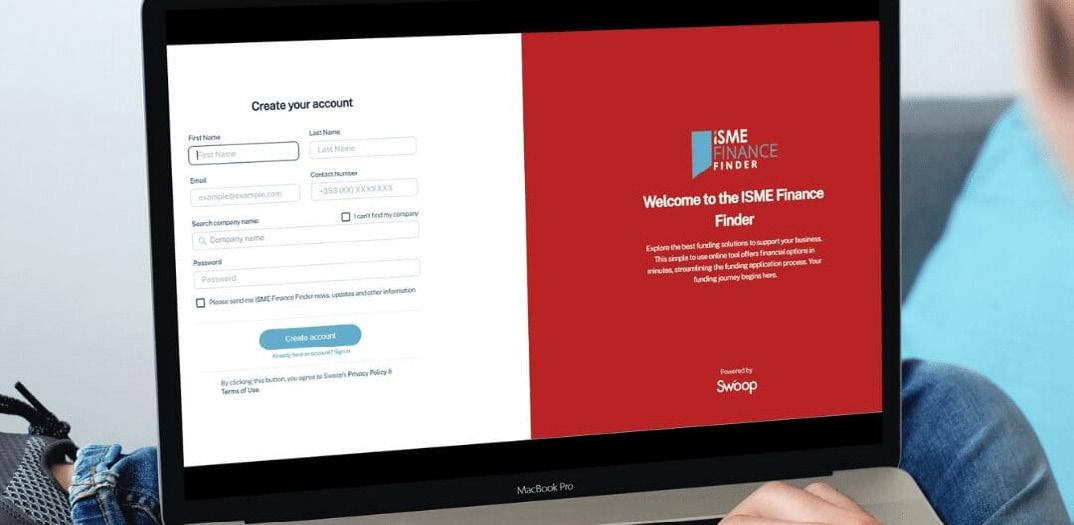
The ISME Finance Finder, developed in partnership with Swoop Funding, is an online platform designed to streamline access to finance for Irish SMEs. It offers a centralized solution for businesses seeking funding options to start, expand, improve cash flow, refinance debt, acquire assets, or invest in new markets.
Key features include:
• Comprehensive Funding Options: Access to loans, equity, grants, and asset finance tailored to various business needs.
• Expert Guidance: Support from a team of funding specialists to assist with queries and application processes.
• Application Tools: Provision of templates and resources to facilitate funding applications.
• Dedicated Support: Availability of a hotline and email support five days a week for funding-related inquiries.
• Regular Updates: Finance updates and alerts to keep businesses informed of new opportunities
Additionally, businesses can avail of a complimentary 30-minute one-on-one consultation with Swoop’s funding experts, offering confidential and obligation-free advice.
For more information or to begin your funding journey, visit the ISME Finance Finder here.
To support Members to deal with the ever-changing world of HR and employment law, we have created a portal to give you access to guides, templates, contracts, policies and more to support you in managing HR in your business. We have curated the information based on the HR Life Cycle: Attraction, Recruitment, Onboarding, Policies & Training, Performance Management and Exit.
You can also find information from government agencies and other third parties in our General Information & Resources page, links to the top downloads and view our selection of blogs including Statutory Sick Pay FAQs and EU Directive on Transparent and Predictable Working Conditions.
To find out how it works and looks, click on the video about the portal here. To use the ISME HR Hub log into the Members Area, click on the top left button.
Skillnet Ireland has launched its new strategy, ‘Empowering Enterprise 2026-2028, A Strategy for Next Generation Capability’ which sets out Skillnet Ireland’s ambitions for the future of Irish business and workforce. The strategy presents a roadmap for strengthening Ireland’s competitiveness and enabling business transformation through digitalisation, artificial intelligence (AI) and sustainability.
The new strategy seeks to expand Skillnet Ireland’s ongoing activities by supporting 100,000 business over the course of the coming three years to 2028. Skillnet Ireland will increase the number of new Irish SMEs engaged in talent development and upskilling with Skillnet Ireland for the first time, supporting 15,000 new businesses, including 1,000 start-ups and scale-ups focussing on innovation capability, over the next three years.
Further information about ‘Empowering Enterprise 2026-2028, A Strategy for Next-Generation Capability’ is available at www.skillnetireland.ie/ strategy-2028.
Do you want to get a handle on your increasing energy costs but know very little about ‘energy’? Why not register for SEAI’s FREE Introduction to Energy Management Training?
In this 2- hour online workshop, delivered by one of Ireland’s leading energy consultants, you will be guided through the creation of an energy action plan for your business, including:
• Creating the business case
• Assigning an Energy Coordinator
• Writing your energy statement
• Tracking your energy consumption
• Identifying potential areas to save energy & costs
Creating your energy action plan
There are a selection of 2026 workshop dates available, so you can choose the right time for you:
Q1 2026 Business Trends Survey
How did your business find the first quarter of 2026? In an everchanging business environment, we want to hear from you on how your organisation has been impacted by completing our Complete the Trends Survey for Q1 2026 here.
Share your insights and experience on currency volatility and SME Payments
Learn more or register here Energy Efficiency Training for SMEs | Business | SEAI
Check out other SEAI events here
We’re gathering direct insight from ISME members to better understand how currency movements and cross-border payments are affecting day-to-day business. Your input will help shape more practical, cost-effective solutions tailored to the real challenges members are facing. The survey is straightforward and should take no more than 2 minutes to complete. Access the survey here.
As business costs continue to rise and income for so many at the moment has been challenged, we want you to take ADVANTAGE of your ISME Membership to reduce your costs and add value to your business through the buying power of ISME. Browse the listingS to make savings of up to 50%. To access these offers, Members need to log into isme.ie via the Members Area.
Research from HRLocker reveals that three-quarters of Irish SMEs believe they would fail an unannounced Workplace Relations Commission (WRC) inspection, highlighting a widespread confidence gap. The Irish SME HR Report, based on a survey of 400 organisations with 20–249 employees, spotlights significant documentation gaps, slow response times, and limited inspection rehearsal as key drivers of this uncertainty.
Read more here
ISME has published the results of its latest member survey identifying the priority issues facing SMEs in 2026, with business costs and labour costs overwhelmingly dominating concerns.
For 78% of respondents, business costs rank as the single biggest issue facing SMEs.
Read more here.

ISME has called for a fundamental shift in Ireland’s economic strategy to better support indigenous businesses and reduce the State’s reliance on multinational corporations.
In a new policy paper, ‘Indigenous Enterprise Policy’, ISME warns that Ireland’s growing dependence on a small number of multinational firms poses significant risks to both the wider economy and the sustainability of public finances.
ISME says the Government must now move beyond merely acknowledging these risks and promote the growth of Irish-owned businesses across all sectors. ISME’s policy paper argues that Ireland’s current tax and funding structures do not adequately incentivise entrepreneurs to scale their companies, limiting the development of larger indigenous companies and reducing the number of firms that grow into significant domestic employers.
The organisation is calling for a range of reforms to address these challenges, including:
• A tax system that encourages entrepreneurs to scale their businesses rather than exit through sale
• Improved access to affordable capital for SMEs
• Reform of investment schemes to make them usable and attractive to investors
• Greater support for lifelong learning and workforce development
• A more strategic approach to FDI that strengthens linkages with indigenous enterprise
Read full article here
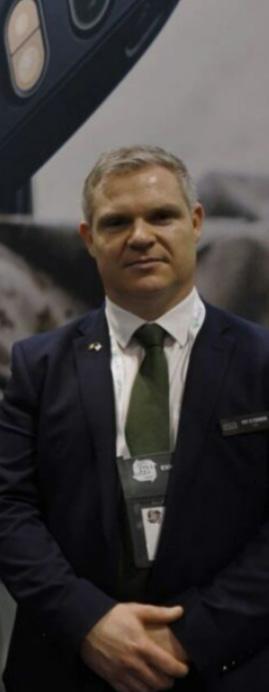
Can you tell us about your personal journey from Defence Forces member into the world of virtual reality?
I served in the Defence Forces for 20 years, serving in a variety of roles across reconnaissance as a Cavalry officer, then in communications as spokesperson for a number of the Chiefs of Defence, and spent over 3.5 years deployed on overseas missions in Liberia, Syria, Israel, and briefly in Lebanon, Sierra Leone & Chad.
I retired in early 2018 in order to co-found VRAI with a good friend of mine Niall Campion, a defence technology company, of which I am CEO. Niall had the product vision to see that a number of technologies were maturing around the same time that we believed could make simulation ubiquitous across industries – they were virtual reality, data & AI, IOT & cloud.
8 years later we now focus on human performance data in simulation and how to use it to transform how people are trained and prepared for complex operational environments.
We are HQ’d in Dublin, have a UK subsidiary based in Newcastle, England, and a US subsidiary based out of Orlando, Florida.
I had an itch to try and build a business, it always interested me and I felt the time was right after having a great 20 year career, serving overseas, commanding a cavalry unit, working closely with three CHODs. I had no regrets and wanted to take what I had learned and see if I could apply it in business. I did worry if I would lose a sense of purpose being out of public service and miss the camaraderie of serving in the military, but the fact I am still working so deeply in the defence industry has allowed me to feel like I am still contributing and in some way still a part of it.
What do you see as the principle risks for Irish security at present, and how should they be mitigated?
Ireland has underinvested in defence and security for decades, that has left us vulnerable in a world that is increasingly dangerous. The main threat is probably not a conventional one, but a hybrid threat that can significantly undermine our economy and ability to continue to attract FDI and ultimately erode the tax base that we use to pay for the rest of our society’s needs. We know we are vulnerable, and have seen the warnings from the hack of the HSE during COVID, the recent hack of a multinational company based



in Cork, the ongoing surveillance of our critical subsea infrastructure, and the threats of drones during the visit of President Zelensky last year.
We need to start seeing what we spend on our defence and security as an investment rather than a cost.
Ireland’s economy essentially skipped the industrial era, going straight from a broadly agrarian based economy, to the digital one we have today. Ireland’s historical under investment in defence, ironically, presents us with an opportunity to do the same in terms of defence capability.
We can skip the industrial age of legacy defence equipment provided by a small number of nations, to an information age capability based on Ireland’s deep pool of tech talent, IP and capital that our decades of attracting predominantly US FDI has delivered, in partnership with the best international companies.
Ireland has an opportunity to become a leader in dual use technology, and VRAI intends to be one of the leaders in that space.
Since the start of the year, we have seen generational shifts in Europe’s approach to defence spending, with up to €800Bn committed by the EU, plus the move towards 3.5% of GDP for many EU member states. Ireland, as net contributors to the EU budget, will be funding significant allocation of EU funding towards defence for the coming decade and I believe its important that Irish tax payers money is not only funding others nations defence, but also being used to fund Irish defence capability, while creating high value jobs in Irish companies, funding R&D in our universities and research institutes, and driving exports from our indigenous economy.
In Ireland, we are likely to see significant growth in defence spending as the government has widely signalled following the Commission on the Future of Defense Forces report. The question is, does the Irish public want to see all of that investment leave the state to the international defence industry, or would they like some of it to stay in Ireland to not only deliver defence capability, but also deliver positive economic outcomes for our society in terms of jobs, investment and sovereign capability.
What are the opportunities for Irish SMEs under the EU SAFE initiative?
Whether its SAFE, or other EU funded defence programmes, its critical that Irish SMEs are supported by government to ensure we are getting a return on investment from what the Irish tax payer is contributing to the EUs defence spend.
Since last year, we have seen generational shifts in Europe’s approach to defence spending, with up to €800Bn committed by the EU, plus the move towards 3.5% of GDP for many EU member states. Ireland, as net contributors to the EU budget, will be funding significant allocation of EU funding towards defence and security for the coming decade.
I believe its important that Irish tax payers money is not only funding others nations defence, but also being used to fund Irish defence capability, while creating high value jobs in Irish SMEs, funding R&D in our universities and research institutes, and driving exports from our indigenous economy.
What do you see as being the most impactful technologies on Irish business in the coming decade?
I believe that technology and national security are now intrinsically linked, and having sovereign national capabilities will be critical to our future success as an economy.
We may not be able to compete with the hyperscalers in AI, but we do have a rich “dual use” technology base in Ireland that we should be leveraging to create niche capabilities that we can lead in, attract the best talent to and build capability around.
Its not very original but AI will obviously be the defining technology of the next decade, and is very likely to transform society and the SMEs operating within it. AI will also have a significant impact on our nation’s defence and security, as will space based technologies, quantum, autonomous systems and robotics. Underlying all of these will be the need to access cheap and reliable energy.
To what extent does the absence of a security clearance system impact the ability of Irish companies to engage in defence business?
This is a real challenge for any company who needs to scale contracts from Ireland in the defence and security space. The lack of a national security clearance system is very hard for other nations to understand and immediately raises concerns about a business. It makes it very difficult for Irish companies to engage with classified information, work on restricted projects, visit restricted sites etc. This applies to R&D, so not only commercial work, but also many EU funded projects would require security clearance to participate.
This could ultimately mean that Irish companies who win large contracts at scale internationally will either miss the opportunity, or could be forced to move their company from Ireland to another jurisdiction that can provide the necessary clearances to fulfil the contract.
This is a lose-lose for Ireland, as we would lose the IP and talent of that company, we lose the jobs and tax income from our society, and its making it even more difficult to get a return on investment for the billions in funding we will be providing to EU defence and security spending in the next decade.
Many leaders speak about resilience, innovation and strong teams as key drivers of success. What principles guide you when building and sustaining a high-performing business?
We focus on top quartile talent, so we hold ourselves to account that we won’t hire if we don’t believe the person is in the top 25% of potential candidates for a role. A players are motivated by being around other A players, it pushes them to improve and get better – no one wants to be the weak link in that environment.
We look for indicators of how that can manifest –people who are intrinsically motivated to do what they do, people who can operate in the grey areas where there is no clear black or white answer for what to do, and some evidence that this person is top quartile through what they have achieved in the past, personally or professionally.
Once you have those types of people you need to create the right conditions for them to flourish – give them a sense of purpose, ensure they feel a mastery of their subject and have the right levels of autonomy to execute on their task. Ensure you have the right cognitive diversity – mix scientists with designers, sales people with engineers.
The final part is straightforward and candid feedback about how you are performing - how we can each improve, what we should stop, start and continue to do to improve our performance.
This is the ideal, you can’t always achieve this and things inevitably go wrong along the way, but its certainly what guides me what I think about high performance teams.
And finally, outside of work, what helps you stay grounded and energised amid the demands of running a growing tech company?
I am married to Jeanine and we have two young boys, 5 & 3, so regular life easily keeps me grounded and energised, I’m ultimately doing what I’m doing for them. We try to spend lots of time outdoors at the weekend, we are lucky where we live close to the Dublin & Wicklow mountains, Marley park and not too far from the sea.
I am a very purpose driven person, and very proud to have served in the Defence Forces for 20 years, with 3 and half years of that serving in complex overseas deployments with both the UN and EU, so being able to continue to contribute to Ireland’s defence in any small way through my advocacy is very motivating.
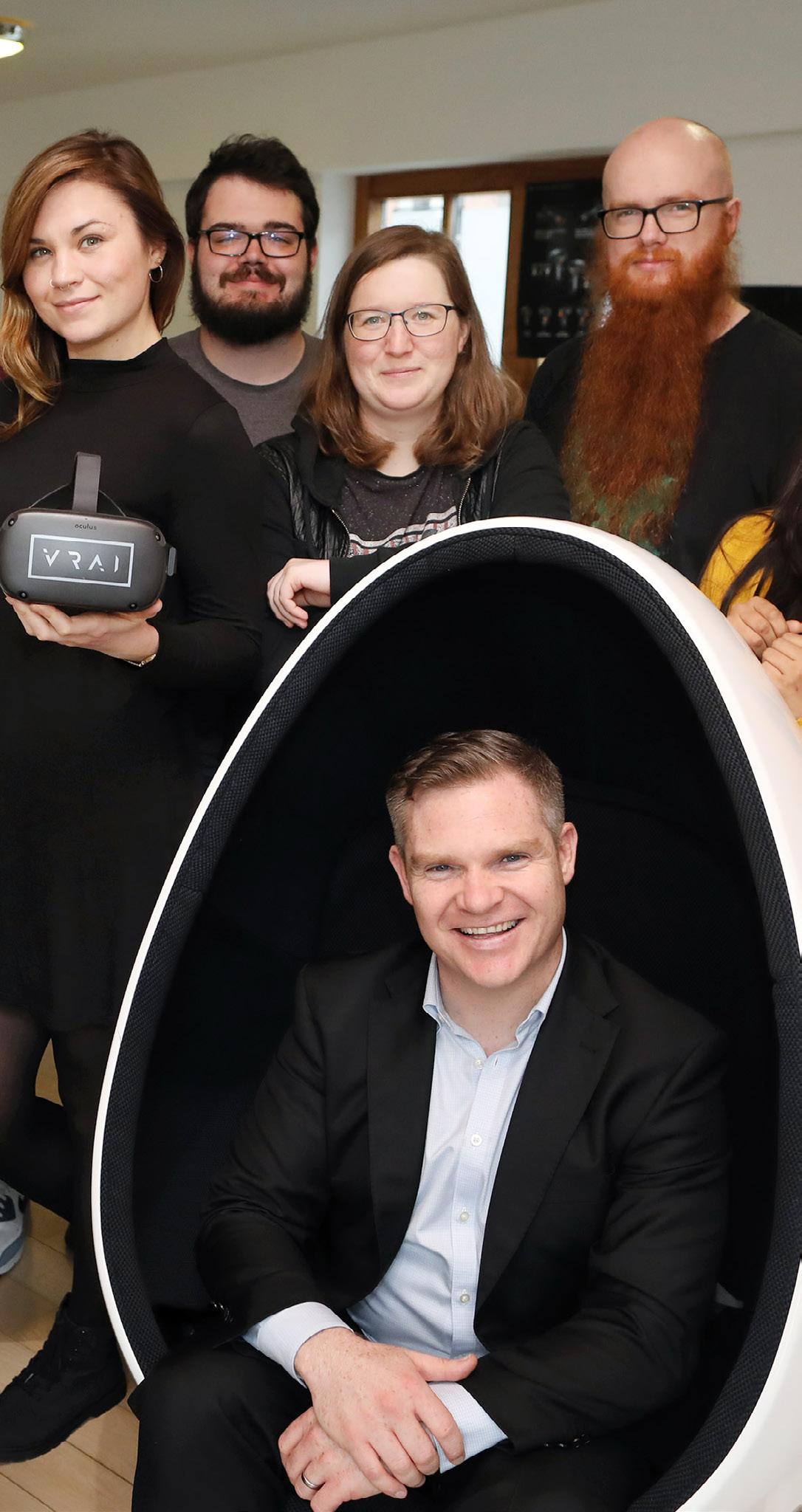

There are just a few weeks remaining before the EU Pay Transparency Directive is due to come into force, on June 7th 2026.
As of this month the Department of Equality has said that work is continuing on the legislation required to fully transpose the EU’s Pay Transparency Directive, but acknowledged the required measures will not be fully completed by the June 7th deadline, and so implementation will happen on “a phased basis”. They advised that ‘employers will not be penalised for not having all elements of the directive completed in June 2026 and the department will be working with stakeholders to communicate this message’.
Direction from the Government on this issue is needed as a matter of priority so that employers can understand what “phased basis” means and what exact measures are required to be put in place by them.
At this point if employers haven’t already started, it’s important that they begin to think about and prepare for what’s to come, so they are ready to act once measures required of them become clearer.
The directive requires transparency in salary setting and reporting, and for members that do not have formal pay frameworks, it means building structured salary bands, documenting objective criteria for progression and ensuring consistency in comparable roles. Employers will need to be able to defend any pay differences as fair, objective and non-discriminatory.
The aim of the Directive is to ensure Employers adopt fair gender-neutral compensation practices and take action to identify any compliance gaps. Some of the changes that will likely affect employers are as follows:
Employers will need to review their approach to interviews and job advertisements to ensure pay transparency for job applicants:
• The salary range or initial pay level for a vacancy must be made available to the job applicant prior to the job interview.
• Any pay and salary information that is included
in job advertisements will need to be reviewed to ensure it is based on gender neutral criteria for the position concerned.
• Recruitment and interview processes will need to be reviewed to ensure candidates are not asked questions about their current or historic salaries. Employers will not be able to ask candidates about their salary history.
• Job offers will need to be grounded in role value and market data, not linked to a candidate’s previous earnings.
From a labour perspective, this is designed to prevent historic pay inequalities, particularly gender-based disparities, from being perpetuated.
An Employee will have the right to access their pay information and how it compares to colleagues doing similar roles, and as an employer you will need to facilitate this:
• Employees will have the right to request and receive in writing, information on their individual pay level and the average pay levels, broken down by gender, for categories of workers performing the same work as them or work of equal value to theirs. While employees will not be able to view individual salaries, they will be entitled to receive average pay bands or levels for colleagues doing the same work or work of equal value.
• Employers will need to ensure that pay gaps within comparable roles or categories of workers can be objectively justified, by experience, performance, qualifications or market scarcity, and that those justifications are documented.
‘Categories’ of workers includes not only employees performing the same role but also roles of equal value. So, this means that two roles which appear quite different may be considered work of equal value when analysed against objective criteria like qualifications, skills, effort and decision making. Organisations will need to establish methodologies to guide the assessment of work of equal value.

It may be worthwhile to think about how you are going to inform employees about their pay information rights as they will need to be informed and then reminded on an annual basis, of their right to receive the relevant pay information and of the steps required to exercise that right.
Employers need to be asking: Do we have clearly defined salary bands? Can we objectively justify differences in pay for similar roles? Do we have reliable data systems to provide required information? Have we assessed potential financial exposure if gaps need correction?
Pay secrecy clauses will no longer be permitted
Pay secrecy clauses will no longer be permitted. While many employees may prefer not to openly share their
salaries, the legal right to do so will exist. Employers will no longer be permitted to include a contractual obligation prohibiting employees from disclosing their pay. That will inevitably influence workplace culture as employees may share this information more. Organisations with inconsistent or poorly structured pay arrangements may see increased employee relations challenges.
Employers will need to review employment contracts to see if they include pay secrecy clauses and ensure that any such clauses are either amended or removed before the new pay transparency obligations come into effect.
ISME HR is available at HR@ISME.ie OR ph: 01 6622755 for any related or other HR queries.



Set up in 2010, as a response to the global financial crisis, Credit Review has a simple mission: to assist viable SMEs and farms to access the bank finance they need to grow and develop their business.
New legislation was recently signed into law to strengthen and future proof Credit Review’s role by establishing the Credit Review Service as an independent statutory body.
The legislation preserves the core function – providing impartial appeals for viable small businesses refused credit or loans by Irish banks. It also empowers the government to extend its scope to non-bank lenders in the future, reflecting the growing role of alternative funding sources for SME and farm credit.
According to Minister of State Robert Troy “The work the Credit Review Office has done since it was established in 2010 has given valuable assistance to viable SME and farm businesses in obtaining bank credit. Placing the office on a firm statutory basis recognises that value and endorses the Credit Review Service as a permanent feature of the SME credit landscape in Ireland.”
This reform is about confidence and fairness. The new law aims to help small businesses have confidence in the lending system with Credit Review acting as a watchdog as well as providing appeals on specific credit decisions by banks, enabling SMEs and farm borrowers to challenge lending decisions they believe are wrong.
Strong oversight and clear appeals pathways are essential to supporting entrepreneurship, investment and sustainable job growth. Credit Review reinforces consistency in the lending system while recognising the evolving nature of business finance.
When a business applies for a review, a Reviewer from the Credit Review team is assigned to assess whether the business is viable and will, in the future, have sufficient cash to pay back the loan or meet restructuring obligations. The review team includes a panel of expert credit professionals across Ireland, with frontline SME and farming finance experience. They are credit experts who are familiar with the banking sector and how it works, and they also understand what it takes to run a successful business.
Once the Reviewer has received the relevant documentation on record with the bank, he/she will contact the borrower to discuss in detail and better understand the business by looking at its track record, existing debts, future potential, management and markets, as well as the reason for the new credit application or restructuring request. The bank is also asked to provide details on how it views the business, and specifically why it has refused to lend.
Catherine Collins, Head of the Credit Review Service explains “In most cases that come to Credit Review, we can support the borrower by recommending a credit solution that works for both the business and the bank. However, where the Reviewer is unable to recommend the credit facility requested, we will suggest a roadmap to make future bank applications more likely to succeed, and we will signpost SMEs towards other government supports that can help them to grow and develop their businesses. The service also operates a helpline for business borrowers having difficulty getting credit. Prevention can be better than a cure, so call the helpline for information if you feel your application isn’t going well, before you get a final ‘No.’”
Credit Review encourages all business borrowers who feel they are having difficulty accessing credit to contact them. In addition to its appeals process, Credit Review operates a helpline service providing useful information and assistance over the phone to SMEs and farmers. Sometimes credit issues can be resolved without needing a formal appeal. The Credit Review website also has a number of accessible, easyto-understand, information notes on banking and credit issues that can help businesses successfully access credit.
The appeals process is flexible and responsive where credit experts will engage directly to provide comprehensive insights into the credit application/ decline process.
Visit www.creditreview.ie to request a call back, or call the helpline directly on 0818 211789
by MSS The HR People

Hiring non-EEA talent continues to play an important role in helping Irish businesses address skills shortages. For many employers, from small and growing organisations to larger established companies, employment permits are now a regular part of recruitment planning.
However, Ireland’s employment permit system has undergone significant change over the past year. Between new legislation, the introduction of a digital application platform and salary threshold increases which came into effect in March 2026, employers should take time to review how international hiring is managed.
Where an organisation recruits someone from outside the EEA, UK or Switzerland, an employment permit is generally required before employment can begin. Applications should typically be submitted at least 12 weeks in advance, meaning workforce planning needs to start earlier than many employers expect.
In April 2025, the Department of Enterprise, Trade and Employment introduced Employment Permits Online (EPO), replacing the previous permit application system.
The new platform provides a single portal for all employment permit applications and introduces several practical improvements, including real-time application tracking, enhanced security through two-factor authentication and electronic document signing.
While the move to a fully digital system is a positive development, employers have experienced some early challenges during registration and account verification. It is also worth noting that draft applications from the previous system were not transferred and must be re-entered.
From our experience at MSS The HR People, employers benefit from registering on the EPO platform in advance rather than waiting until a recruitment need arises.

One of the most important upcoming changes was the increase in minimum salary requirements from 1st March 2026.
Updated minimum annual remuneration levels include:
• General Employment Permits - €36,605
• Critical Skills Employment Permits - €40,904 under the lower salary band
• Healthcare assistants and home carers - €32,691
In practical terms, roles that currently qualify may no longer meet eligibility requirements since March 2026. Employers negotiating offers now for roles starting later in the year should ensure salaries align with the updated thresholds.
We are already seeing businesses reassess recruitment budgets and timelines to avoid delays or the need to revise contracts after submission.


Despite improvements to the system, several challenges remain common.
The ‘Labour Market Needs Test’ continues to cause difficulties where advertising requirements are not completed correctly or properly documented. In addition, the 50:50 rule requiring at least half of the workforce to be EEA nationals at the time of application, can unexpectedly affect growing businesses hiring multiple international employees.
Applications are also frequently delayed where salary details or employment contracts do not fully align with permit criteria.
Employment permits work best when treated as part of workforce planning rather than an administrative step at the end of recruitment. Employers should consider:
• Registering on the Employment Permits Online system
• Reviewing 2026 hiring plans against new salary thresholds
• Allowing sufficient lead-in time for applications
• Checking workforce composition before applying
• Confirming eligibility requirements before issuing contracts
Ireland’s employment permit system is becoming more streamlined and digital, but it remains strongly compliance-focused. With the new online platform now in place and salary increases in effect since March 2026, employers who plan ahead will avoid unnecessary disruption.
International recruitment remains a valuable route to accessing skills and supporting business growth, provided the process is managed correctly from the outset.
For guidance or support with employment permits, contact MSS The HR People on info@mssthehrpeople. ie or visit our website at www.mssthehrpeople.ie
Sustainability ambitions at EU level are underpinned by chemical controls and are being reinforced through sector-specific measures and stronger authority surveillance. As the green transition accelerates, chemical regulation is evolving in ways that increasingly shape how SMEs design, source and manage products across their value chains. What was once seen as a technical compliance requirement is now a supply chain issue with clear commercial consequences, particularly in light of geopolitical pressures. Many enterprises are already alert to supply chain security risks driven by global events, and that same approach is increasingly relevant to regulatory oversight, which is shaping supply chain stability and continuity.
Frameworks such as Safe and Sustainable by Design, evolving packaging legislation and extended producer responsibility schemes are integrating chemical compliance into ESG commitments through enhanced transparency and reporting.
Recent developments highlight this shift. Earlier this year, enforcement findings under the Classification, Labelling and Packaging (CLP) Regulation revealed that nearly one in five hazardous mixtures checked had not been properly notified to poison centres, pointing to ongoing compliance gaps. This also underscores the importance of regularly reviewing Safety Data Sheets (SDSs), which remain fundamental to safe use and regulatory alignment across supply chains.
At the same time, the REACH restriction on microplastics has already eliminated many widespread uses. As the transition period advances, the first reporting deadline for emissions related to derogated uses in May 2026 is approaching, requiring relevant operators to submit emissions data, with pharmaceutical and medical technology sectors following in 2027.
Meanwhile, the new Toy Safety Regulation expands scrutiny of substances used in consumer products, with ongoing recalls bringing this into sharper focus across retail. Substance evaluations, such as that of ethanol used in hand sanitisers, demonstrate how regulatory

decisions can shape formulation and sourcing strategies while carrying broader socioeconomic impacts.
For SMEs, structured due diligence on chemical content, emissions and product safety is becoming central to strengthening supply chain transparency within ESG commitments. Coupled with horizon scanning of regulatory developments, this enables more coherent oversight. Such visibility is critical: if a supplier fails to meet requirements, if a substance becomes restricted or if classifications change, the consequences can cascade across the value chain.
Supply chains are becoming more compliancesensitive. Procurement, reformulation and sales strategies must increasingly factor in regulatory exposure. Monitoring emerging restrictions, understanding reporting timelines, keeping Safety Data Sheets up to date and engaging with suppliers are now key elements of prudent business management. In the current geopolitical landscape, competitiveness depends on the ability to anticipate change and manage supply chain exposure.
Through ISME, SMEs have a collective voice in shaping how these frameworks evolve. Active engagement helps ensure that regulatory ambition remains grounded in practical realities, while allowing SMEs to influence outcomes that affect their competitiveness and continuity.

Irish small and medium enterprises (SMEs) have lost nearly €19 million (€18.9m) to email-related scams over the past two years, highlighting a growing and increasingly sophisticated threat facing the sector.
New figures from FraudSMART, the fraud awareness initiative led by Banking & Payments Federation Ireland (BPFI), show that the average loss per incident now exceeds €22,000 — a significant hit for businesses already operating under tight margins. At the centre of this trend are invoice redirection scams, where what appears to be a routine email from a trusted supplier turns out to be anything but.
According to Niamh Davenport, Head of Financial Crime at BPFI, the scale of email-related fraud targeting Irish SMEs is a serious cause for concern. She points out that fraudsters often gain access to — or convincingly mimic — supplier email accounts, using them to inform businesses of supposed changes to bank details. While no immediate payment is requested, the real risk emerges later, when a legitimate invoice is paid and the funds are unknowingly transferred into an account controlled by criminals.
Davenport also highlights the growing sophistication of CEO impersonation scams. Although less common, these attacks can be particularly deceptive, as fraudsters pose as senior executives and use urgency or authority to pressure employees into sharing sensitive information or authorising payments.
The scale of the issue is reinforced by new research conducted by FraudSMART in partnership with ISME. More than two-thirds (67%) of SMEs reported being targeted by a financial scam in the past 12 months, while 78% encountered unexpected or urgent requests that raised suspicion. Despite this, over half (53%) of businesses still lack formal fraud awareness guidelines or staff training programmes — leaving a critical gap in their defences.
Neil McDonnell, CEO of ISME, is direct about what that
means in practice. Fraud has become a day-to-day business risk for SMEs, he says, and falling victim is not only financially damaging but can fundamentally undermine trust within a business. Employees are often the ones targeted and need to be supported to play a key role in fraud prevention. Prevention, he adds, doesn’t have to be complicated — verifying changes to supplier bank details, introducing dual approval for higher-value payments and ensuring all staff are trained to recognise the warning signs can make a real difference.
1. Policies and procedures: Ensure a verification process is in place for requests to change supplier bank account details.
2. Dual authorisation: Require two people from the business to approve any thirdparty payment electronically.
3. Fraud awareness and training: Ensure staff receive appropriate training on emailrelated fraud and phishing emails.
4. Invoice checking: Review invoices thoroughly and ensure there are no irregularities.
5. Updated operating systems: Keep computer and mobile operating systems up to date and set them to update automatically.
6. Think before you post: Avoid sharing too much personal information on social media.
Further information is available at FraudSMART.ie. Businesses can also download a free copy of the FraudSMART ‘Protect your business from fraud’ guide.

A Must‑Attend FREE Safety Seminar for Small Business Owners and Managers
Can your business afford a serious workplace injury?
Running a small business is demanding and one incident can set everything back. Workplace injuries can be very costly, but most are predictable and preventable... if you know what to look out for.
In this morning seminar, Health and Safety Authority inspectors will break down the everyday workplace hazards that most commonly lead to injuries, including:
Manual handling
Slips, trips and falls
Work at height
Vehicle operations
Work equipment and machinery
Fire and chemical risks
LPG and gas safety
Cork: Wednesday, 18 March 2026 th REGISTER HERE

This seminar will help you to:
Recognise key workplace hazards and understand the factors that can lead to injuries.
Plus other hidden day‑to‑day dangers
These hazards often lead to incidents that can injure your staff, disrupt your operations and result in costly claims and downtime that no small business can afford.
You’ll also be able to talk with HSA specialists and get information and guidance unique to your business.
Access the most relevant and up‑to‑date safety management information, guidance, and training materials.
Reflect on your own and your business’s approach to risk management and identify opportunities to strengthen safety culture and performance.
If you want peace of mind, stronger safety procedures, or reassurance that you're doing things right, this event is for you.
Small business owners Managers and supervisors
Worker representatives
Health and safety professionals
What interests/hobbies do you have outside of work?
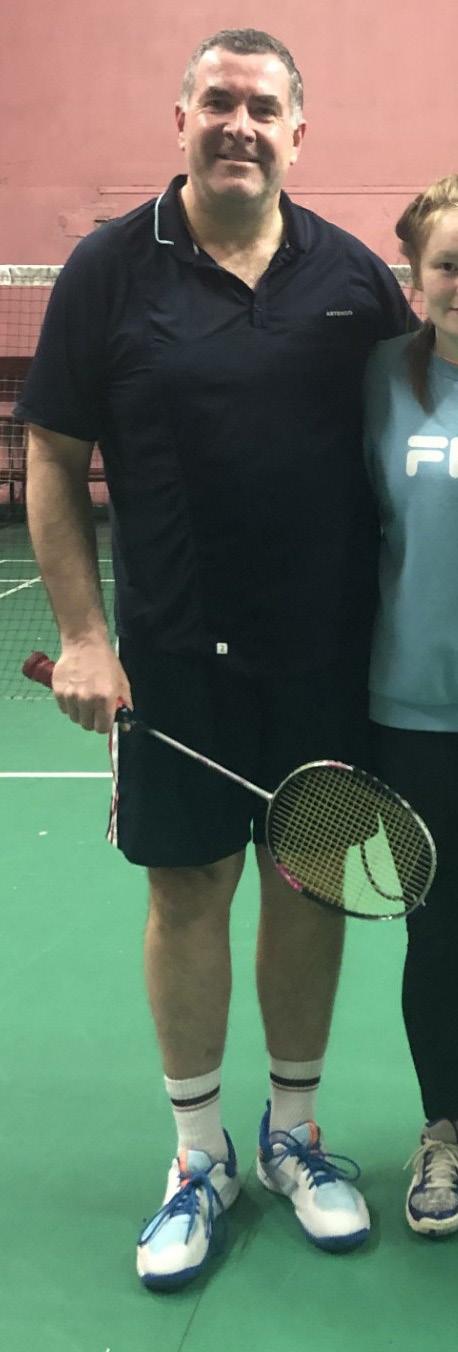
Neither of my parents drove, so I was cycling everywhere when I was old enough to be allowed. Back then, I saw the bike more as a utility and a way to get me from A to Z, but in my mid-teens I grew to love cycling as an incredible way to also stay healthy! These days, I try to get out once a week and am part of a group of neighbours of similar ability. Each year, we go down to Killarney to ride in the Ring of Kerry cycle. It’s always an amazing experience and no matter how late you cross the finish line, there is always an amazing crowd to cheer you on. Needless to say, the atmosphere and craic in the town that evening is another reason we love this annual pilgrimage! I also grew up playing badminton and have been able to play in a local league in Dundalk in recent years. This club has the perfect balance of the social aspect of badminton alongside some fiercely competitive players.
For hobbies, I’m not sure if listening to podcasts can be classified as a hobby, but it’s something that I do on a daily basis. I have also rediscovered the joy of reading on the train journeys to and from work.
Why do these hobbies interest you?
With the sports, it is a mixture of the need to have a base level of fitness and trying to stay reasonably healthy. Cycling and badminton require very different types of strength, flexibility and stamina, so I think they complement each other very well. With books, I love how the stories take you to a totally different place and provide often much needed escapism. It also means I am constantly improving vocabulary as I always make sure I record any words I don’t understand. I’m a great believer in keeping the brain as well as the body active.
Do you have an interesting story about your hobby?
We have lived in our house for over 19 years and know our neighbours really well. Last year, my wife and several neighbours’ wives started a book club, so the husbands decided to do the same! To our great surprise, the husband’s group did actually read the books rather than it just being used as a chance to meet for a couple of drinks. Like many things in life, after the third then fourth book, this good habit has been firmly established. Having an additional bit of structure and deadline around a good habit is sometimes all that’s needed to make it stick.
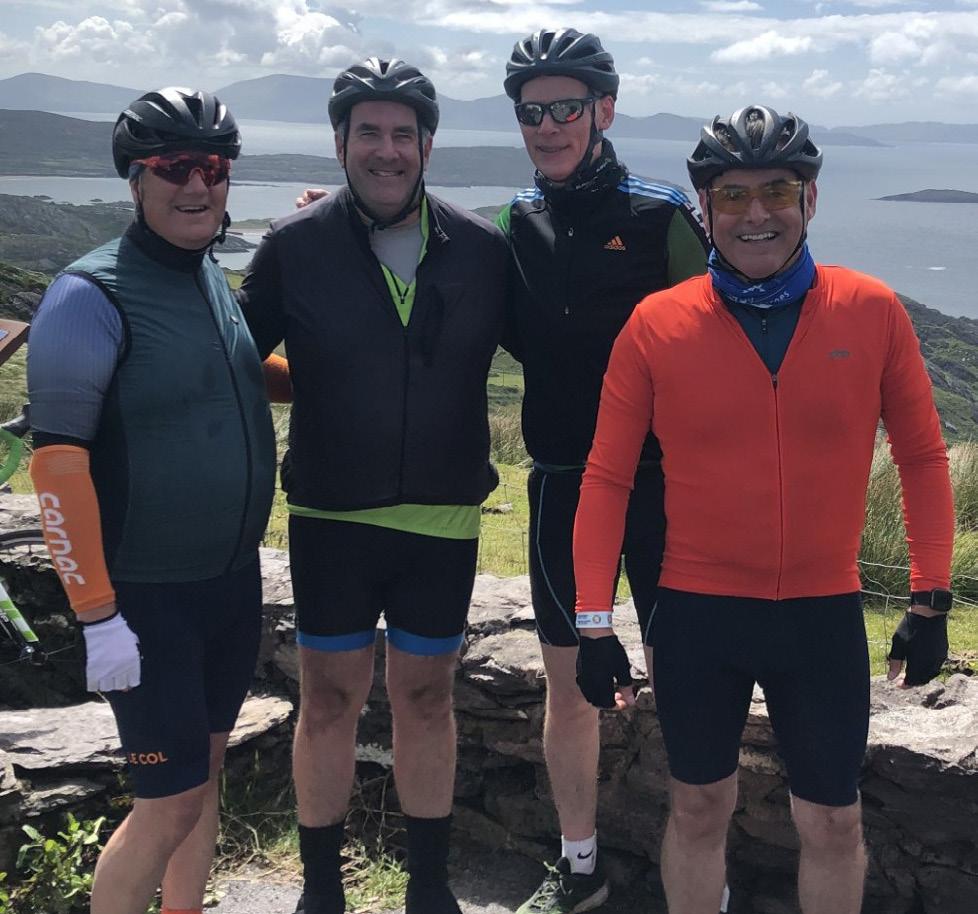
Are there any hobbies or challenges would you like to try?
There is an annual cycle called Chase the Sun where you set off in Belfast at sunrise on the longest day of the year and have to reach Enniscrone before sunset. At 340km, it’s the same as doing two laps of the Ring of Kerry on the same day!
Talk to us about the work you do at ISME?
There are two parts to my role at ISME. The first is Marketing where we create regular monthly newsletters and our quarterly bISME online magazine that keeps our members up to date with everything from the latest HR updates, new and existing ISME partners that can help members save money and improve productivity, training and development through the ISME Skillnet, and profiles of the ISME team like this one! For all SMEs in Ireland, it’s an incredibly challenging time. We always strive to give practical advice - not only in reducing input costs, but connecting with other SMEs for best practice and growing the top-line sales. When I say “we”, this is all done brilliantly by Gopika who many members will know! Gopika also keeps the ISME social network channels updated - this continues to be an important communication channel as people increasingly get their news and information here. As well as keeping existing members informed, we work hard to attract new members to ISME through in-person events, webinars, and the lobbying efforts of Neil McDonnell our CEO and the board. This advocacy and lobbying is a key component of ISME’s proposition and as Ireland’s only independent business association for SMEs, we are proud of impact we have had over the last 30 years with policy at Government level.
I’m also responsible for sales and am delighted to have Daragh recently join the team. Sales and Marketing work side by side to first effectively communicate why SMEs should join ISME, then make sure we deliver on our promise to help these businesses grow and fully realise their potential.
How important do you think it is to have an interest outside work and how do you think it can benefit your work?
I believe it is crucial. In my own experience, having extended periods where you just working then sleeping quickly descends into the law of diminishing returns. You think you are still being productive because of all the hours you are working, but the reverse is true. Quality of your impact beats quantity every time. As the saying goes, when you can’t see the woods for the trees, by making time for hobbies and/or sports, you get to effectively recharge your batteries and it’s where I often have my best ideas.
Do you think this balance is something individuals and particularly employers need in their life to have a successful business?
Very much so. Few people on their deathbeds will say “My only regret was not doubling the size of my business” Of course, there are always exceptions, but most people I know are motivated to be successful as a business owner or employee to make a better life for themselves and their families. Having a balance of working hard then being able to enjoy the fruits of this labour, for me, keeps you sharp, motivated, and able to realise your potential. This applies equally to employers and employees.

A series that highlights the lives and interests of ISME members and staff. In this edition, The bISME talks to ISME Sales & Marketing Manager, James Mailley about his interests and hobbies.

The Institute of Child Education and Psychology (ICEP) Europe is an independent higher education institution delivering accredited postgraduate programmes and professional development courses through blended and online learning, with a specialist focus on inclusion, special education, and psychology. Founded in 2001 by Dr Deirdre MacIntyre and Dr Moya O’Brien, the Institute has served over 30,000 professionals from more than 75 countries.
ICEP Europe has been a pioneer in developing flexible, high-support learning models that combine in-person teaching with engaging digital delivery to provide accessible, modern higher education. Since 2007, the Institute has collaborated extensively with universities and higher education institutions across Ireland and the UK, and it also boasts a long history of involvement in large-scale national and international research projects.
In line with ICEP Europe’s mission to drive inclusion in both education and professional practice, we are preparing to launch the Master of Science (MSc) in Psychology this upcoming April. The first of its kind in Ireland, this 2-year MSc is delivered part-time and primarily online, and is designed to widen access to psychology for graduates from diverse backgrounds. Crucially, this part-time MSc in Psychology is carefully designed to enable working professionals to broaden their skills and enhance their qualifications while maintaining a balance between work, study, and family commitments.
Whether the ultimate goal be career change or career enhancement, this course is specifically geared to graduates who do not hold formal qualifications in psychology. More broadly, the programme contributes to addressing the shortage of psychologists in the workforce by providing a rigorous, research-led pathway into psychology education to a broader pool of learners.
While providing a comprehensive foundation in psychological science, the programme also embeds a continuous emphasis on inclusion and accessibility in practice, equipping students with essential tools for understanding and assessing behaviour, and for pre-empting and managing potentially difficult situations. For those who have always wanted to study psychology, key takeaways from this programme include enhanced psychological literacy, applied knowledge and skills, and a deeper understanding of diverse perspectives.
More information on the course is available here.
Further advancing our commitment to inclusion, and in response to increasing awareness and interest in workplace diversity, the Institute is also developing a short training course on neuro-inclusive practices aimed at managers and team leads working in small-tomedium enterprises. This fully online training will offer a practical, actionable guide to supporting neurodiverse employees across a range of work environments. Broadly speaking, this course aims to help professionals at all levels build awareness and empathy and to provide practical strategies to foster an inclusive and productive work environment. Those taking this course can expect to develop a holistic understanding of how to support a wide range of employees, including those with autism or ADHD, creating inclusive, supportive, and strong work cultures where creativity, focus, and problemsolving capabilities - talents frequently associated with neurodiversity – are recognised and leveraged. If your organisation is interested in collaborating with ICEP Europe on the development of bespoke training courses tailored to your organisational needs, please contact us at info@icepe.eu.