




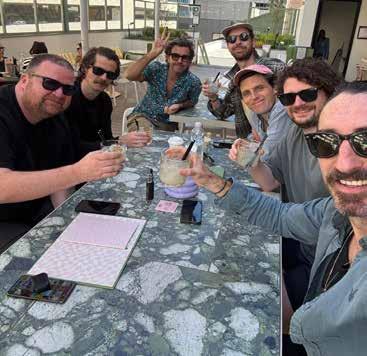
Here’s another idea for anyone looking to make new friends and connections, whether you’re new to Perth or just not quite settled yet. We’re starting a new social group in Highgate, and while it’s sponsored by Molly’s Irish Pub, it’s not about the drink. They’re offering a space

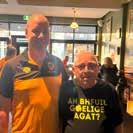
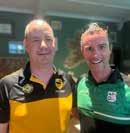
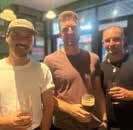
in their venue and free finger food 1 night per month, to help us get something off the ground. If you or your partners or friends might be interested, I promise it’s a casual, safe space to get started making new friends and connections in Perth.
Each event we’ll be inviting people from existing Irish groups and companies in Perth to give people ideas of what you can get involved in, like Irish Theatre, GAA, volunteering opportunities, other social groups like Cold Dips, Breath Work etc. And it can just be a place to meet some people in the same boat as yourself and go off and do your own thing!
Claire Wynne
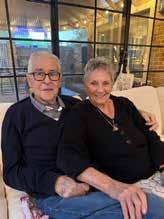
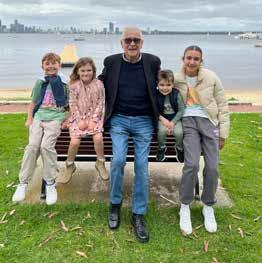
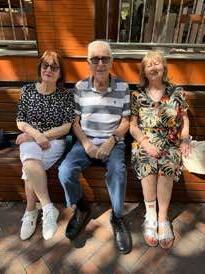
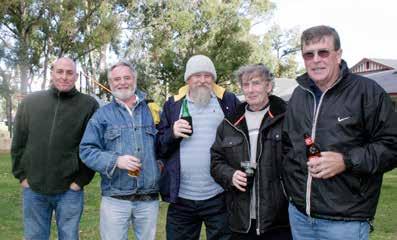
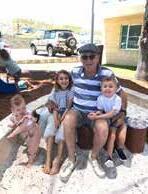
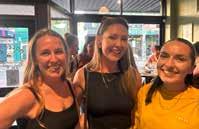
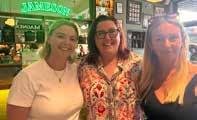
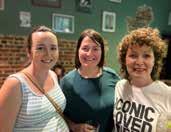
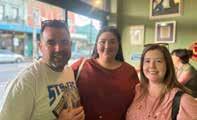
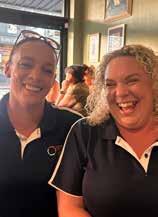
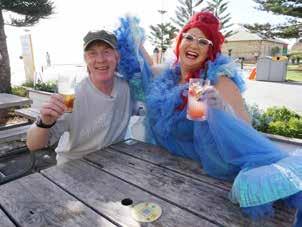
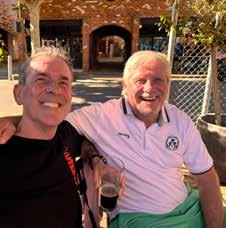
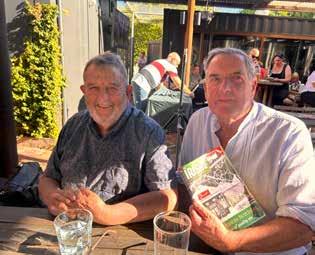
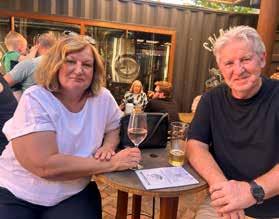
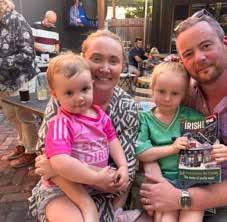
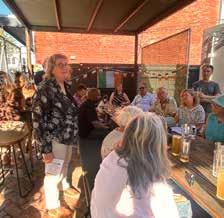
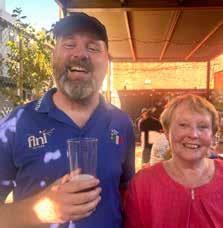
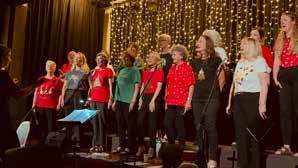
The first Mo Chara meeting was held at Mollys Irish Pub, on Monday 12th Jan, (pictured) and will be held on the first Monday of every month after that.
MAKE NEW FRIENDS AND CONNECTIONS



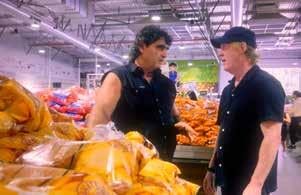
Arandom pitstop in a Wheatbelt town while filming his latest TV show ‘Hector Oz/Nz’ for TG4 showed the gregarious fast (and bilingual) talking Hector Ó hEochagáin just how ‘Irish’ Western Australia has become.
Irish Scene spoke with Hector and found out what adventures and ‘craic’ he had in WA and Australia early last year.
By Maria Collins
It’s just, it’s brilliant!’.‘I love being in the middle of nowhere, I don’t know why. We make our best television in the middle of nowhere. Because sometimes the stories in the city, mothaíonn sé mar an gcéanna. They feel the same. *Ach níl mé ag caitheamh anuas ar na cathracha ach nuair a théimid amach faoin tuath, just faighimid stuff difirúl*.’*But I’m not putting the cities down but when we go out into the countryside, we find different stuff.’”
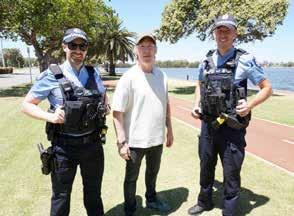
Hector and the film crew had just eight days in Western Australia to travel and shoot everything they needed, so the clock was always ticking.
“It was Saturday night, half-past ten at night, we’d been filming all day and were on our way back to Perth when we stopped off at this place,” said Hector. “It looked like there was nothing happening but we stopped at the Williams Motel and walked in. There’s a lad from Claregalway behind the bar, there’s three Irish lads at the bar, drinking beer. There’s a girl from Limerick behind the counter, there’s a girl from Clare over there. And they were like, what the f*** are you doing in Williams? So pizzas agus beers agus photos. Ach fear as baile Clár na Gailimhe an áit an bhfuilim i mo chónaí serving me beer behind the bar, thousands of miles from Claregalway.
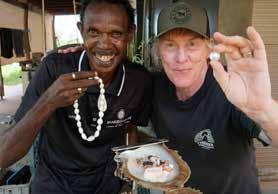
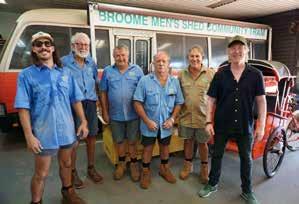
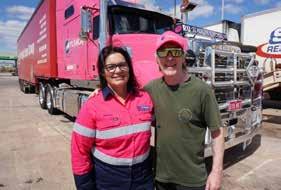
Unlike this random happy encounter and despite Hectors easy going and carefree attitude the show is tightly organised and focused. Episode three of the seven slot series sees Hector (and his faithful film crew) in Western Australia. This leg began in Perth where he met Spud King Tony Galati and the state’s most famous Sharon. He examined why so many Irish workers flock to WA and met an ex-pat whose career is soaring as a flying doctor. Getting out of the city, he rode with a trailblazing female trucker, heard the heartbreak of a Stolen Generation survivor and stargazed in the shadows of ancient astronomers while in Broome he tapped into secret men’s business and met a man with deep ties to the iconic pearl industry.
Hector is particularly proud of the episode they made in the West, ‘gurbh é ceann do na cláracha is fearr a rinneamar riamh’, one of the best they’d ever done. It had gotten the most views and traction on social media – a testament to the growing community here in Perth. Hector had mentioned in his
show there was a ‘different vibe’ to Perth so I asked him why he thought that was.
‘Tá sé iarghúlta. Tá sé difriúl ó gach áit eile. Aon duine a théann go WA, tuigeann siad nach bhfuil siad in aice le aon duine eile. It’s a hippie joint. It’s a country place. When WA is doing well, the rest of Australia is doing well. I really enjoyed that. I wasn’t interested in putting the emphasis on Melbourne or Sydney. Bhí mé ag iarraidh dul go Brisbane, bhí mé ag iarraidh dul go Perth. Bhí mé ag iarraidh an taobh eile don mór-roinn a fheicéail. Just thaithin na scéalta liom. Thaithin na scéalta go mór liom. The Spudman, fear na bprátaí, [...]‘Yeah bhí an fear sin an ghreannmhar. Fiú an slí ina raibh sé gléasta. Bhí sé difriúl.’ The Spudman, fear na bprátaí [...] Yeah, that fella was gas. Even the way he dressed. He was different.”
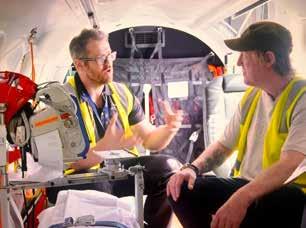
Hector enjoyed his visit with the iconic Royal Flying Doctors Service in WA where he met with Irish doctors Johnny Iliff and David McIlroy and gets shown around. Hector asked one of them if he’ll ever come home and the hesitation is something we can all relate to. Life is good here he says. Never say never, says Hector.
It is a theme he encounters again and again in his chats with Irish people in WA and beyond, the fear they can never move home, despite it being their initial plan. “Tá faitíos orthu and that’s not right,” Hector said. “We’ve got to get things right in this country where a mortgage is not so hard, prices of houses are not out of people’s range. People abroad are afraid to come back and try and get a mortgage because it’s so expensive. And to come back and rent because it’s so expensive. It’s gone on too long. We’ve trained the best people and we’re losing them. And even though they’re making a few quid abroad, they’re afraid to come back and we’ve got to change that.”
Hector was getting his windows repaired at the time of our Zoom chat but first had to drive the workers to his house in Claregalway. He joked that he had a message for the Irish diaspora.
We need the window fixers of Australia to come back. Please help us back in Ireland. We have no plumbers, we’ve no electricians, no teachers, no guards. Please help us and come back to poor old Ireland.”
On that note, I asked him if he understood the draw to Australia, in particular.
“So where can you wear flip-flops in Ireland? At the swimming pool and then you have to pay 500 euro to join the gym to get to the bloody swimming pool,” he replied. “Ah no, but seriously, Irish people have been going to Australia ‘le fada, fada an lá’. You know, there’s grannies and grandads that backpacked around Australia in the 60s, 50s. There’s people who had been sent on those ships, the convicts. There’s been a conveyor belt of Irish for many, many reasons. Some sent there by the colonisers, some after the famine. I didn’t realise that a couple of thousand Irish people went to work in the Southern Alps of New Zealand in the coal mines. So like, it’s always been the final frontier. It’s a land of opportunity, a land of a new chance. It gives you the possibility of another life. And as long as that’s there, it’ll always pull us. There’s not one parish in Ireland, or street, or road or laneway that doesn’t know someone down there. We’ve lost 3 lads from Calregalway to Australia. I’ve got a 20 and 21 year-old. What are the chances of them moving to Australia? Pretty high!.”
On the topic of Ireland’s deep roots in Australia I asked Hector if he’d ever heard of the Fenian’s Catalpa escape from Western Australia when it was still the Swan River Colony? He hadn’t so I gave him a brief outline and he vowed to check it out in his spare time. He’s in for a treat.
This was not Hectors first trip to Australia and WA. He made another TV travel show nearly 20 years ago, so I was keen to ask him what differences he noticed on this visit. He said the biggest thing was being able to fly out to the outback and the ease at which they could fly around the state. It was clear that he had a huge appreciation for this often forgotten side of Australia.
“We like to push the boat out a bit and I knew we were going to get that in Western Australia,” he added. “I was in and out of Perth three times in eight days. In the airport going to Broome and other places so… it’s just a spectacular place when you realise that the whole of Western Australia is so remote. I just loved the remoteness of it. I love that. I love that it’s just Mother Nature. And it has to be like that, it’s the world’s most remote city.”
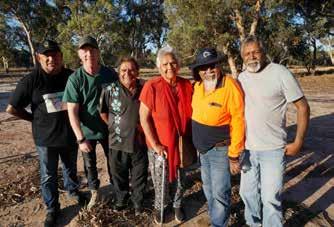
“The Irish and Aboriginal people have a long, long, relationship,” he said. “That was an interesting thing I realised that there’s so many surnames that are Irish. You know, you have Aboriginals with surnames like Murphy, Rabitt and Quinn. You know they related to us, even though their land was being conquered and colonized, they related to us because we were a persecuted people.” The night Hector spent with an elder underneath the stars in the WA outback was a special highlight of the trip while a visit to an old industrial school they used to keep Stolen Generation children was something that will stay with him for the rest of his life.
One aspect of Irish culture he sees thriving is the Irish language. “I can feel it from my social media,” he told Maria. “Irish is all around us now. It’s flourishing because of
the content that’s around us. Before, it was just watching telly. Imagine a world without DuoLingo. Imagine a world without social media content. Imagine a world without Instagram or TikTok content creators. Take all of that back. TG4 started 30 years ago. TG4 is the Taj Mahal, it’s the pilgrimage, it’s the temple. So every language like that, everyone needs a language station to help it grow. So that’s the first step, watching

Employment Contracts & Policies
Unfair or Unlawful Dismissal
Workplace Safety & Compliance
Independent Contractors
Bullying, Harassment & Discrimination
Employment & Industrial Litigation
HR
Recruitment, Onboarding & Retention
Performance & Conduct Management
Workplace Investigations, Mediation & Conflict Resolution
EEO, Anti-Bullying & Discrimination
Training
Restructure & Redundancy Support
Business Structures & Setup
Company & Trust Formation
Buying or Selling a Business
Leasing, Taxation & Stamp Duty Advice
Debt Recovery & Commercial Litigation
Wills, Probate & Estate Planning
Powers of Attorney & Guardianship
Disputes (Neighbours, Fences, Building)
Commercial & Retail Shop Leases
Restraining Orders

Faic - what are you doing today? The day you lie on the couch and watch ten hours of sport with nothing to do, faic.
A frása as Gaeilge that always makes you laugh?
Pleidhcíocht (messing)
A word as Gaeilge that sums up Australia?
Dochreidthe - unbelievable
One phrase that Irish learners in Australia could start using today?
TG4. You can watch the cartoons as Gaeilge. Daddy can watch the football as Gaeilge. I feel the language is omnipresent as Gaeilge. It’s just all around. You can now look at teachers online and say I like the way he or she teaches it. But like, the embarrassment of speaking your cúpla focal is now disappearing. And I see it in the ciorcal comhrás in the groups in Australia. Is there a pride in the Irish language because you’re far away from home. You know the Irish in New Zealand, Canada and Australia, they’re not giving out about their teacher 20 or 30 years ago. They don’t blame their teacher like a generation did. I don’t accept that anymore. The Irish language is waiting with open arms. It doesn’t care if you get the Aimsir Chaite wrong or the Modh Coinníollach wrong. It’s just like a big house, knock on the door and in you go, everybody’s welcome.”
An focal is fearr leat sa Ghaeilge?
Your favourite Irish word Loinnir - the sparkle on the ocean. Or the feeling of having three pints of stout before lunchtime.
The most underrated phrase sa Ghaeilge?
Foirfe - perfect
This interview will be published just before Valentine’s Day. Do you have a frása or a focal to give us for Lá le Vailintín?
Ar mhaith leat deoch? Would you like a drink?
Hector’s latest book, An Irish Word a Day!, follows on from his last publication which was the Irish Book of the Year, The Irish Words You Should Know. Beside each focal is the story behind it. It’s a book he’s immensely proud of and one he never thought he would write.
He’s excited about what’s to come for the Irish language, something he feels is on an upward trajectory like never before. It was an absolute pleasure to interview Hector. His enthusiasm for storytelling, the Irish language and culture and the connection to people is impressive.
Ní féidir a shéanadh an tionchar a bhí aige ar an nGaeilge sna blianta beaga anuas. Tá Gaeilge ag fás agus beatha teanga í a labhairt.


by Lloyd Gorman
Albany marks a historic milestone in 2026 – the first bicentenary celebration in Western Australia, with more to follow suite.
It is 200 years since the first Europeans (including Irish) arrived on this remote part of the Australian coastline – Kinjarling to the indigenous people– with a view to establishing a permanent outpost. It would be another three years before Perth was established in 1829 as the administrative centre of the Swan River Colony and for decades to come Albany was the point of arrival and departure for all newcomers, including the throngs of prospectors seeking their fortune in the gold rush era. Albany was the nursery for WA.
Albany 2026 (Balgang Albany) will stage a year long programme of events in honour of Albany’s rich history, including ‘Lighting
the Sound’ in March. An Australian first, it promises to be spectacular and also to beat an Irish art record in the process.
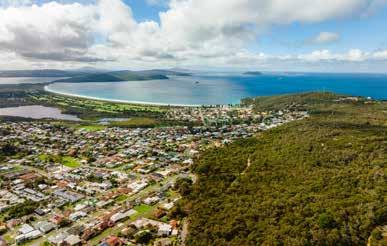
Albany from the air
“Finnish light artist Kari Kola, codesigned and led by Menang Elders and the Albany community, and presented by FORM, Lighting the Sound will transform Albany’s natural coastline and landmarks into an immersive and meditative light experience over three weekends,” say organisers. “Visible from key locations around the Albany townsite, the dramatic illumination of the landforms in and around King George Sound, will divert eyes and attention outward from the coast towards the life-giving source of the ocean, the focus of so much ancestral, cultural, ecological and historical meaning. The embodies the Menang-first approach and principles of reconciliation central to the Albany 2026 vision,” publicity material states. “Rooted in the wisdom of the Menang (or Bloodroot) plant, from which the region’s First Nations people take their name, this communityowned initiative celebrates tens of thousands of years of unbroken connection, creating the opportunity for Menang people to tell their story. This Australian-first project honours a history that extends far beyond 200 years and is anticipated to be the largest light
installation on Earth to date. Lighting the Sound sets a global benchmark for public art experiences grounded in story and place.”

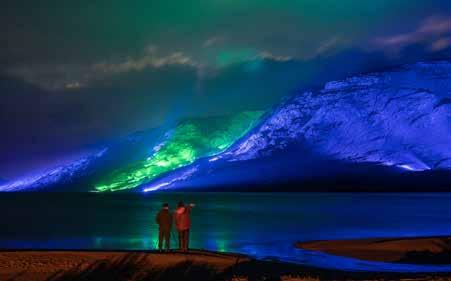
As it happens that ‘global benchmark’ for the largest light show on earth belongs to the west coast of Ireland.
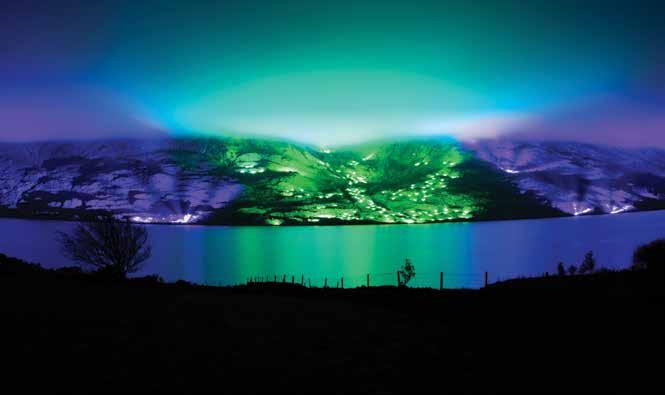
For Galway 2020 – when the City of the Tribes was the European Capital of Culture – the same Finnish artist – heading a team of 15 – used mountains beside Lough Na Fuaiche (Loch NaFooey), Connemara as the backdrop for a similar light show called ‘Savage Beauty’, his biggest illuminated artwork in a collection of nearly 2,000 exhibits (or any light based artwork anywhere) up to that point. In a massive illumination, Kola Kola made a light roof over the deep glacial valley and about a thousand green and blue lights to bathe the landscape in a haunting, almost supernatural glow. The illuminated area covered 500 hectares (measuring around 6.5km wide and 700 metre high) and was even visible from space. When they came in low rolling clouds added another level of spectral special effects.
“I wanted to play with scale, and also with the two colours,” Kari recalled. “There was a big valley through the mountains which I wanted to glow green, with the sides of the mountains in deep blue. Also, from the top overlooking the valley, I wanted to create a ‘roof’ of light with really strong blue beams.”
It was a massive logistical operation to install all the lights and equipment – including 11 generators and 20km of cabling. “There was no road access, so we needed to use helicopters to drop the gear,”
he said. “It was really extreme, working in the mountains in this kind of weather [high winds and heavy rain], with a tight timetable and no backups...“We also had six local sheep farmers, who knew how to work in the terrain, a boat crew for logistics, a three-man helicopter team, six electrician/ generator guys, a local production team, and security.”
Kari and his team overcame these hurdles to have ‘Savage Beauty’ (taken from an Oscar Wilde description of Connemara) ready in time for a four night display, starting on 14 March 2020. An estimated 20,000 people were expected to show up for the opening night and even walk through the exhibit but there was one obstacle that could not have been predicted or prevented – COVID 19. In what would be the very early days of the pandemic restrictions on public gatherings meant the public event could not go ahead as planned. Instead of a live audience enjoying the spectacle it was filmed and shared online.
At the time Helen Marriage, creative director for Galway 2020 said; “I am so proud of Kari Kola and his brilliant team who have worked day and night for the past fortnight in some of the most challenging weather conditions to create this wonderful artwork. We’ve been really moved by how welcome the local community has made us during this time. Their support has been invaluable. While regrettably we have had to cancel the live exhibitions of Savage Beauty following government guidance on public gatherings
due to Covid-19 virus, I’m thrilled that we are able to share this special digital edition so that as many people as possible are able to experience this extraordinary artwork.”
Now, almost exactly six years to the day later the successor to Savage Beauty will open on March 13 and run over that weekend and the following two weekends (20-22 and 27-29). This time around however Kari is extending his ambition and the scale of the project. If Savage Beauty spanned a mountainous area of about 5km then a 15km stretch of Albany’s already rugged and breath taking coastline will be dramatically illuminated for the duration of nine stunning lights. All the official publicity and promotional material for the Albany event uses imagery from Connemara to give an impression of what to expect. For those who want to get up close there will
Preparations for Perth’s (Boorloo) bi-centenary in three years time are ramping up. January 7 2026 was the deadline for community groups to apply for a place on the 2029 Bicentenary Planning Advisory Group, marking 200 years since the establishment of the Swan River Colony.
Organisations with broad community reach, strong cultural governance, and proven experience in inclusive engagement – especially those with connections to regional, remote, First Nations, and multicultural communities – were encouraged to apply. The advisory group was set up to guide the development of themes and approaches for the historic occasion and ensure that diverse voices and communities are represented throughout the planning process. “The 2029 Bicentenary is a unique opportunity for all Western Australians to reflect on our shared history and celebrate the diversity that makes our State so vibrant,” said Premier Roger
be guided walking tours or for those who would rather observe from a distance there will be designated viewing locations in ANZAC Peace Park and the town centre. Albany, like Ireland, gets plenty of windy weather so you will need to dress warmly to get the most out of the night! As Regional Development Minister, Dublin born Stephen Dawson is urging as many people to experience the event as possible. “Albany’s natural beauty will take centre stage thanks to this incredible Lighting the Sound event,” he said. “With this spectacular event set to attract tens of thousands of people to the Great Southern, it will prove a win for local tourism providers, businesses and the region’s remarkable wine region. This is another example of how the Cook Government is working to ensure our regions remain vibrant and attractive places to visit and call home.”
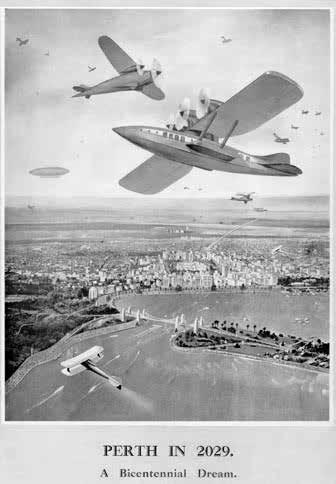

An artists impression of Perth in 2029, published in the Western Mail Centenary Edition, 1929
Cook “We recognise that community partners are uniquely placed to help guide this milestone and have a key role to play in helping to shape a respectful and inclusive event, right from the start. This is more than a celebration; it’s a chance to shape the legacy we leave for generations to come. I look forward to seeing the ideas and energy our community partners will bring to planning this historic occasion.” The City of Perth has already earmarked $2 million towards the cause and the state government has yet to announce how much it will put into the pot, but it will need to be at least as much as the council has allocated. Given the early and influential contribution made by Irish figures to the establishment and development of Western Australia it will be interesting to see how that history is reflected in the programme of events and activities. The Irish community should proudly claim our part in that story.
One local project that should inadvertently capture the history of our
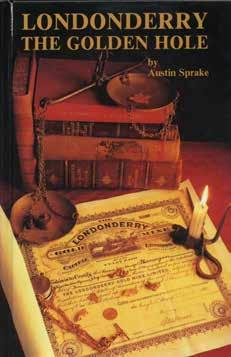
the treasure in their tent, night, suitably armed end of the third week of risk was becoming too the treasure into town, firewood. On Sat June 23rd, weighed 4280 ounces of of the finest specimens quantity of gold would now $10,000,000. Imagine keeping kind of discovery which is prospector, but the reward of
arose from this find resulted called “Londonderry the
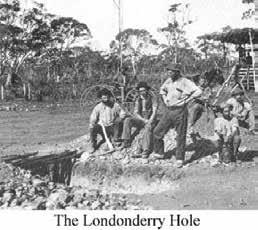

Miners at the ‘Londonderry hole’ in the early days of WA
Area: 72,908 sq km ( 28,150 sq miles )
Population: 751,151
Capital: Fredericton
50th anniversary of FHWA. To mark these events, the Society (FHWA) has launched a project to collect everything we can find about the people who lived in these ghost towns of Western Australia, so their stories are not forgotten. This is a massive project as multiple primary and secondary sources need to be examined and indexed for more than 530 ghost towns! If you would like to volunteer your time, please visit: https://ghostswa.au/”. Or contact
Currency: Australian Dollar
Language: Local dialects, English, French
FHWA meetings in 2026 will take place on February 10: Kalamunda Library/February 19: Rockingham Library/March 9: Dalkeith/ Nedlands Probus and April 14: Murray District Probus Club. FHWA also has the Irish Special Interest Group, which was due to meet on 18 January at its research centre
Recruitment and Labour hire
by Lloyd Gorman
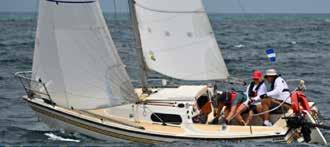
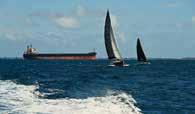
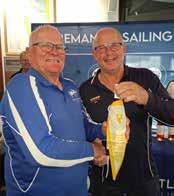
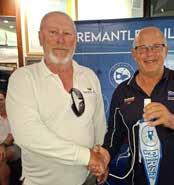
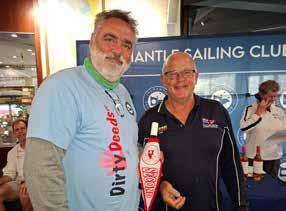
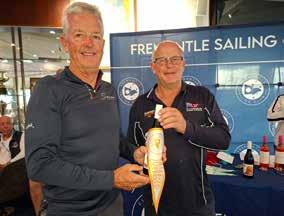
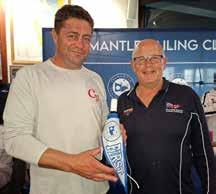
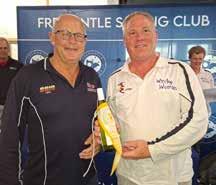
It's just as well the Catalpa Classic in Rockingham is an annual commemorative sailing race rather than a re-enactment –otherwise the six fleeing Fenians might not have evaded the clutches of the British empire!
While the course of the regatta follows the paths taken by the iconic whaleboat/ escape vessel as it evaded the British armed steam boat Georgette – each side in the chase represented by members from the organising clubs – the final outcome of the historic episode is up for grabs each year as sailors compete for bragging rights in the event that has been described as: ‘a modern tribute to the 1876 escape of the Fenians aboard the Catalpa’.
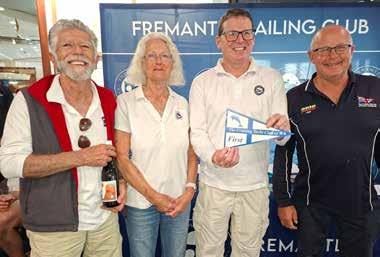
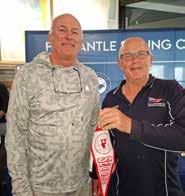
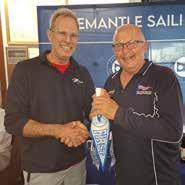
“Fremantle Sailing Club (FSC) [representing the British authorities and flying red flags] claimed the [2025] Catalpa Classic in emphatic fashion, finishing a full 40 minutes ahead of The Cruising Yacht Club of WA (TCYC) [playing the part of the Catalpa Fenians) and flying green flags],” the victorious club posted on social media on November 23, 2025, after the event. “Back to jail you go, Fenians!
Congratulations to Myra Stanbury, who steered SAMI to
secure the overall win.”
It was not the first time Myra Stanbury romped home to claim the prize and as far as winners go she has a special interest in seafaring matters. She is an expert on shipwrecks along the WA coast and has a long standing background with the WA Maritime Museum.
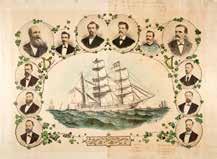
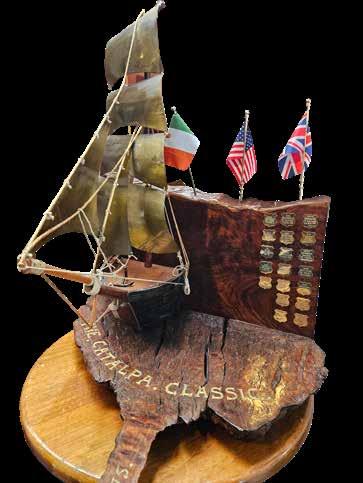
The Catalpa Classic has been staged by the FSC and TCYC for many years now but the most recent one also included participants from East Fremantle Yacht Club (EFYC) “with promising signs to build on for next season,” FSC said.
For its part East Fremantle said the event delivered ‘a glorious escape’. “The Catalpa Classic once again brought history to life as TCYC and FSC hosted the annual re-creation of one of the most audacious maritime escapes in the world,” EFYC said. “In 1876, six Irish Fenian prisoners broke free from Fremantle Prison and fled aboard the American whaling ship Catalpa, escaping British pursuit under the protection of international waters. Today, that drama unfolds on the water as the Fenian Fleet
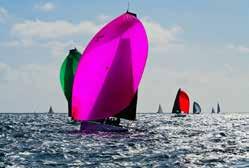
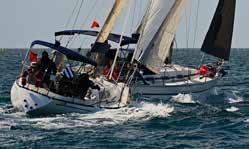
races to evade the chasing Authorities.” It said conditions were ideal for the historic race. “Although storms were forecast, the opening races of the EFYC Inshore Series enjoyed near-perfect sailing conditions,” the club added. “A steady westerly and slight to moderate seas set up a clean, single-tack reach both to Rockingham in the morning and back to Fremantle in the afternoon. The wind angle kept most spinnakers packed away, with fleets sailing primarily under Jib and Main...Next year’s Catalpa Classic will mark the 150th anniversary of the famous Fenian escape, and EFYC has been invited to rejoin the Fenian Fleet for this milestone edition. It promises to be a celebration of
sailing, storytelling, club spirit, and the enduring legacy of one of the greatest maritime breakouts in history.”
Talking of history, the FSC website includes a two page account of ‘The Catalpa Story’ as part of the information about the race. But the site also offers a summary of the event. “The race is named after the Catalpa, a whaling ship used in one of the most audacious prison breaks in Australian history. In 1876, six Irish Fenian prisoners escaped from Fremantle Prison with the help of American sympathisers. They were rowed out to the Catalpa, anchored off Rockingham, and sailed to freedom in international waters. The race playfully
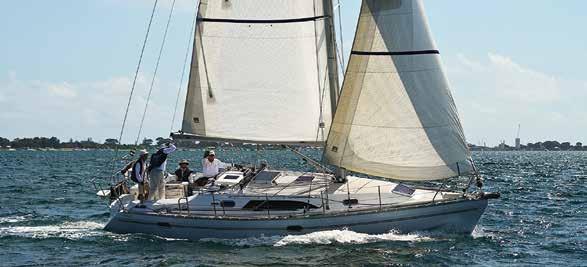
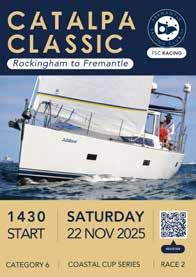
reenacts the historical escape: TCYC boats represent the Fenians and FSC boats represent the Authorities chasing them. This blend of spirited competition and historical tribute makes the Catalpa Classic a unique fixture in WA’s sailing calendar.”
Editors note: To be perfectly honest this writer was not previously aware of the Catalpa Classic and only learned of it by serendipity in early January but we will be watching out for it in the future, particularly this year’s Classic, on the 150th anniversary.
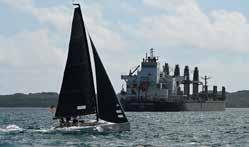
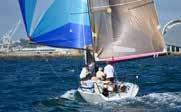
We will be shouting for the ‘Fenians’ boats. It was a pleasant surprise to find out about the race and the commitment by the clubs and individuals involved to honour that tradition. It is yet another example of how the Catalpa is as important to West Australian’s as it is to the Irish community. The March/April edition of the magazine will pay homage to the 150th anniversary and will include an interesting collection of stories to mark the occasion, many with a maritime theme!
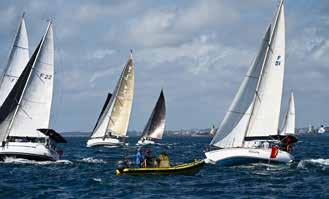
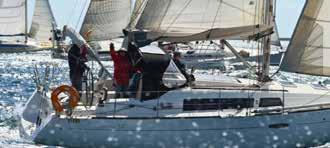


Open - 7 days 11am Till Late Lunch & Dinner
MEALS SERVED ALL DAY

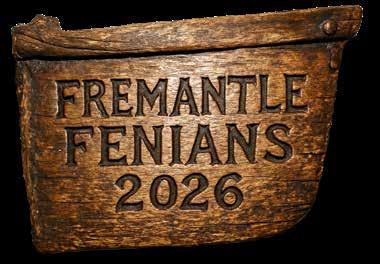
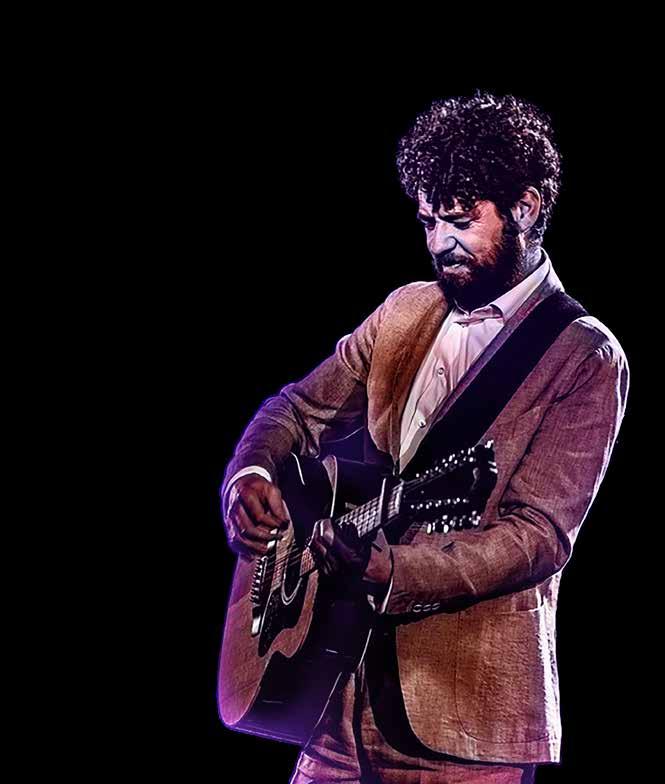
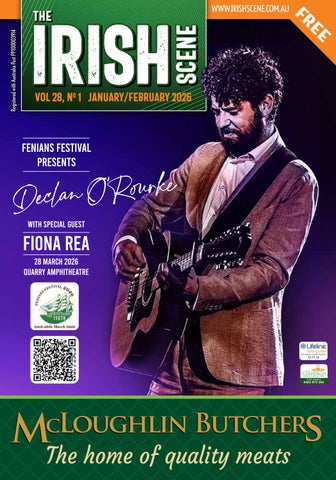
Acclaimed Irish singer songwriter Declan O’Rourke will perform his only Australian concert as part of Fenians Festival 2026 to mark the 150th anniversary of the Catalpa escape. Internationally renowned the troubadour will play under the stars at the Quarry Amphitheatre in City Beach on Saturday 28 March, supported by local artist Fiona Rea. O’Rourke – who spent much of his childhood in Australia –is passionate about recreating important historical stories and he was proud to take part in the first Fenians Fremantle & Freedom Festival. His concert promises to be a highpoint in a packed festival.
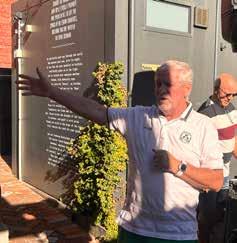
The programme for this years festival – which runs from March 23 to 31 – was launched at the Hougoumont Hotel in Fremantle in early January, see photos. Committee chair Margo O’Byrne thanked the hotel for its strong support for the festival and reminded the gathered crowd
to look up at the venue’s impressive mural by artist Fintan Magee that honours the six Fenians, their experiences and what they represented.
“Its a connection story between Ireland and Australia and those of us of Irish heritage who are living in Fremantle and surrounds, we are the ones to carry on this story,” Margo said. The festival contains something for everyone and begins on Monday March 23 with a production of Theatre 180’s amazing CinePlay called Catalpa: Flight to Freedom at Fremantle Prison.
Another very special event on Wednesday 25 March will be an afternoon with regarded Irish poet Tony Curtis, a master craftsman conjuring striking images out of the ordinariness of words. Tony, like Declan, has followed the Fenian story and given it expression, and has also participated in other Fremantle Fenians Festivals.
On Friday 27 March a day long History Symposium with expert speakers and panels will be jointly hosted by the Buffalo Club and The University of Notre Dame at the Buffalo Club (54 High Street). The Symposium will be followed by at 5pm a trad music session with Fiona Doyle and Friends in the Club’s Ladies Lounge and then The Ocean Waifs, music with Tommy O’Brien and friends upstairs at the Club from 7.30pm.
During the day of Saturday 28 March – the night of Declan O’Rourke’s concert – the Buffalo Club will be the setting for an ‘Oral History in the Pub’ event with Fenian history custodians sharing their stories and a Q&A on Saturday 28 March, with other venues to be confirmed. Keep an eye on the FFF socials.
The Fenian’s Festival Family Day on Sunday 29th promises to be an action packed day at the WA Maritime Museum

(entry by donation). There will be an hour long ‘Catalpa Tour’ at 11am, 1pm and 3pm while model boat building workshops will be at 10am, 12.15am and 2pm. There will be a chance to learn and enjoy Irish dance and song with Torc Ceili at 11am and 1pm. Other family friendly activities throughout the day will include face painting, craft activities, kids story time, the Shamrock Trail and a screening of the brilliant animated Irish film Song of the Sea. A live podcast ‘The Catalpa Escape’ will also be held at the museum at 4pm with Michael Barker, Fremantle Shipping News interviewing Jim Ryan, the great grandson of Catalpa Captain George Anthony.
After the podcast it will be ‘Irish Night’ at Clancy’s Fish Pub in Cantonment Street.
Jim Ryan and the Catalpa Escape will be revisited in a slightly different format with host Fred Rea at The Mighty Quinn Tavern, Yokine.
A weekend of tribute, courage, and community 150 Years since the Bold Fenian Escape (1876–2026)
SATURDAY 4 APRIL
Na Fianna Catalpa GAA Gaelic Football
The Captain George Anthony Cup – A Gaelic football honouring Captain George Anthony, captain of the Catalpa
SUNDAY 5 APRIL THE CATALPA FESTIVAL
12:00pm – 5:00pm | Rockingham Foreshore – Culture, music, storytelling, and remembrance – rescue unfolded.
MONDAY 6 APRIL
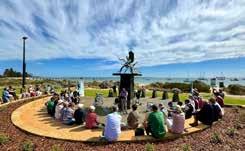
Commemorative Ceremony at the Wild Geese Memorial Hosted by the Irish Australian Heritage Association
11:00am – 12:00pm A reflective and meaningful tribute to the Fenians, their supporters, and the legacy they carried across generations.








Mé Lá Fhéile Bríde
Beannachtaí na féile Bríde oraibh go léir! Bean an-speisialta ab ea Bríd atá fós ceiliúrtha againn in Éirinn agus timpeall an domhain. Tá dhá scéal ag baint léi; ceann Críostaíochta agus ceann págánach. Ba bhandia í sa thréimhse Ceilteacha a thugadh síolmhaireacht, beocht agus an tearrach léi. Bhíodh féile mhór in ómós de Bhríde go bliantiúil ar an gcéad lá mí Feabhra a cheiliúradh deireadh an gheimhridh agus teacht an earraigh. ‘Imbolc’ a ghlaoigh siad air.
Nuair a tháinig an Chríostaíocht go hÉirinn, úsáideadh go leor scéalta do na bhandéithe agus na déithe chun an reiligiúin nua a mhíniú do na Ceiltigh. Ach, bhí bean eile i gceist le Lá Fhéile Bríde. Ba as Cill Dara í. Tá go leor scéalta fuithi tar éis teacht Naomh Pádraig. Deirtear gurbh í an chéad bheansagairt in Éirinn.Tá fiannaíocht ar an scéál faoin gclóca a bhí aici, scéal a léiríonn an tionchar agus an cumhacht a bhí aici. Deirtear gur thug Rí na Laighin cead aici séipéal a thógáil ar an áit ina chuir sí a clóca. Ach, nuair a chuir sí aníos é, thosaigh sé ag fás agus ag fás agus ag fás. Bhí ionadh an domhain ar an Rí agus d’aontaigh sé chun cabhrú le Bríd as sin amach. Bhunaigh sí Séipéal Chill Dara gar d’ionad adhartha don bhandia, Bríd. Bhí í féin agus Naomh Pádraig cairdiúl lena chéile agus chabhraigh siad chun Chríostaíocht a dhaingniú in Éirinn. Déantar croisanna Bhríde sa lá atá inniu ann chun í a chuimhniú.
Happy St.Brigid’s Day to you all! Brigid was a very special woman who continues to be celebrated in Ireland and around the world. There are two stories associated with her; a Christian story and a pagan story. She was a Celtic goddess who brought new life, fertility and the season of spring. She was

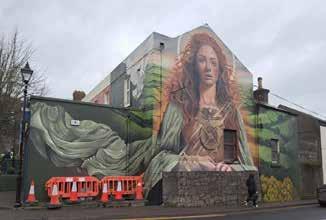
honoured at an annual festival called Imbolc which celebrated the end of the winter and the coming of spring.
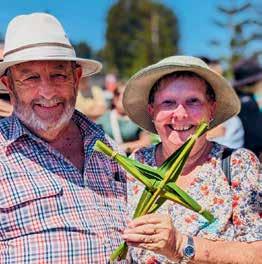
When Christianity came to Ireland, many of stories of the Celtic goddesses and gods were used to explain the story of Christianity to the Celts. But there was another woman who we associate with St. Brigid’s Day. She was from Kildare. There are lots of stories about her after St. Patrick’s arrival. It is said that she was the first female priest in Ireland. The story of her cloak is legendary and one which portrays her influence and power. It is said that the King of Leinster gave Brigid permission to build a church on the space where her cloak would cover. When she put it down, however, it grew and grew and grew. The King was shocked and agreed to help Brigid from then on. She established a church in Kildare near a place of pagan worship to the goddess Bríd. She and St. Patrick were friendly and both helped to consolidate Christianity in Ireland. Brigid’s crosses are still made today to remember Brigid.
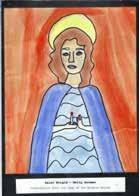
Australian born Molly Gorman’s depiction of St Brigid for her confirmation
Frásaí úsáideacha: Beannachtaí na Féile Bríde ort/oraibh!Happy Brigid’s Day to you/ye. bandia - goddess clóca - cloak crois Bríde - Brigid’s cross an t-Earrach - spring síolmhaireacht - fertility
Grá in Éirinn: Tá Lá le Vailintín beagnach buailte linn. Deirtear go bhfuil droch-cháil ar na hÉireannaigh mothúcháin a léiriú, grá ach go háirithe. Bhí mé ag déanamh machnaimh ar an nóisean sin agus ní aontaím leis. Tá focail álainn ag baint leis an ngrá sa Ghaeilge: ‘Cuisle mo chroí’, the beat of my heart; ‘rún mo chléibh’, the love of my chest/bosom; ‘mo ghrá geal’, my bright love; ‘mo mhúirnín dílis’, my dearly beloved/ my one true love’. Cinnte, bíonn srianadh mothúcháin ar siúl ag na hÉireannaigh, ach seans go raibh an saoirse teanga sin cailte leis an mBéarla.
Tá ceangailt mhór idir na seanscéalta agus an grá. Bhí grá folaitheach idir Diarmuid agus Gráinne, bhí geasa grá á dhéanamh ag Niamh Chinn Óir ar Oisín agus grá tairseach a bhí idir Lir agus a pháistí.
Bhí mé sa charr ag éisteacht le hIarla Ó Lionáird le déanaí - amhránaí sean-nóis ó Chúil Aodha. Bhí ‘Caoineadh na Trí Mhuire’ á chasadh aige, amhrán goltraí, álainn a léiríonn an brón a bhí ar Mhuire ina dhiaidh bhás Íosa. Tá rud éigint spioradálta faoi cheol na hEireann, faoi na dánta, scéalta agus na hamhráin a léiríonn cailleadh agus grá. Ní féidir leat doghra gan grá a bhí ionat ar dtús. Cé go raibh daoirse ar na hÉireannaigh thar na blianta, níor chailleamar an cultúr riamh mar bhí na cuimhní caomhnaithe go deo sna scéalta agus an ceol. Tá tírghrá láidir ar na hÉireannaigh agus diaspóra na hÉireann agus seans go leanann ár nósanna ar aghaidh de bharr sin. Beannachtaí na Vailintíne oraibh go léir!

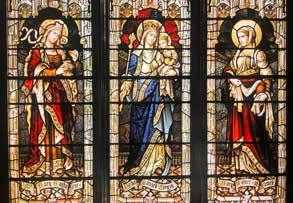
Translation: Valentine’s Day is almost upon us. It’s said that Irish people have a bad reputation for expressing emotions, particularly love. I was reflecting on this and I have to disagree. There are beautiful words associated with love in the Irish language. Cuisle mo chroí’, the beat of my heart; ‘rún mo chléibh’, the love of my chest/bosom; ‘mo ghrá geal’, my bright love; ‘mo mhúirnín dílis’, my dearly beloved/ my one true love’. For sure, Irish people suppress their emotions, but maybe that freedom of language was lost with English.

There’s a big connection between the old stories and love. Diarmuid and Gráinne’s love was forbidden, Niamh Chinn Óir performed love spells on Oisín and Lir had constant love for his children.
I was in the car recently, listening to Iarla Ó Lionáird - a sean-nós singer from Cúil Aodha - singing ‘Caoineadh na Trí Mhuire’.
A beautiful, sorrowful song that portrays the love and grief of of Mary in the aftermath of Jesus’ death. There’s something spiritual about the music of Ireland, the poems, the stories and the songs that portray loss and love. You can’t experience sorrow without love, first. Even though the Irish were oppressed over the years, we never lost our culture. The memories were preserved in our music, stories, poems and songs. The Irish and Irish diaspora have a strong love of our country and maybe that’s why our traditions continue on. Happy Valentines Day to you all!
Based in Western Australia, Maria runs weekly classes for adults and children both online and in-person with Na Fianna Catapla GAA Club. With students from all over Australia, Maria incorporates the beauty of the Irish language and history of the land in engaging and interactive classes. Follow @cuplafocalcrew on Instagram to keep updated on the latest news and next Gaeilge event happening near you!
By Peter Murphy

Readers of the Irish Scene may recall an article published in the magazine (Sept/ Oct 2024) regarding the vandalism of an ancient peppermint tree (Agonis flexuosa) in Wellington National Park, Ferguson Valley. The loss of the tree caused public outrage,
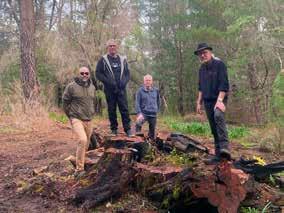
while receiving interstate and international media coverage. A Western Australian state government utility, Department of Biodiversity, Conservation and Attraction (DBCA), responsible for looking after WA’s natural tourism assets, is alleged to have been involved in its vandalism.
This is not the first time a government utility has been involved in the untimely demise of a tree of significance. In 1995, a sacred tree near Collie, said by First Nations people (Nyoongar) to contain the spirits of two of their people, was bulldozed by the then Department of Conservation and Land Management (CALM), while an ancient jarrah tree near Wellington Mills (said to be up to 600 years old) was also decimated by CALM. Back then, the government utility claimed it was a mistake. Yet thirty years on we’re still hearing the same bullshit. Who was it that said: the biggest mistake is the one we never learn from?
The ancient peppermint tree in Ferguson Valley before it had been vandalised, had stood proud in the jarrah forest for hundreds of years. It had survived fires, storms, drought, floods, disease, grazing animals, and the colonial settler’s axe. It was also said by the Nyoongar people to be a ‘birthing tree’ (where women gave birth beneath).
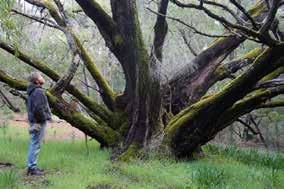
It also became a symbol of resistance by conservationists in their fight to end logging in the native forest. Tasmanian forest campaigner, Bob Brown, in the 90’s (then a Senator in Federal Parliament) –before hundreds of people – stood in the shade of the majestic giant to give one of

his rousing speeches; why the forest needed to remain standing if we were going to help mitigate climate change.
Being a nature-based-tour-guide of over 30 years, I had the privilege in showing -off the tree’s magnificence to domestic, interstate, and international tourists; its snaking gnarly trunk; spread-out octopus limbs; canopy of soft elongated aromatic leaves; while sitting in its shade evoked a spiritual experience. So imagine my shock when I took some French tourists to see the tree (July, 2024) to find all that remained was a stump.
I stewed on it for a couple of days; thinking how a tree of such significance and in a national park could end up being a mere stump. So I decided to contact the media, including the Irish Scene – who with several other media outlets –published articles on it. Bob Brown, on hearing of the tree’s vandalism distributed a media release, while also sending an email (Aug 23 2024) to Premier Roger Cook calling for those responsible to be punished.
Meanwhile, DBCA (known for its culture of secrecy) claimed it had no knowledge of the tree’s existence. Rattled by the huge media onslaught seeking answers, including outrage from the public, First Nations elders, tour operators, and Bob Brown, the Cook government went into damage mode and with then Minister for the Environment, Reece Withby promising there’d be an inquiry into how tree had met its fate, while those responsible would be reprimanded or punished. For several weeks all those concerned waited patiently for the minister’s inquiry to conclude. DBCA meanwhile declined to speak to the media; how on their watch the act of vandalism was allowed to occur and name those responsible.
Meanwhile, I continued to make my own inquiries. I learned through some local people that DBCA – as part of an upgrade to tourism facilities in WNP – had hired a
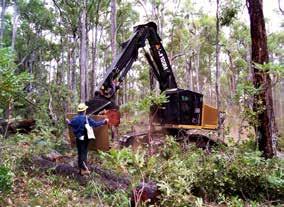
contractor to log and remove some feral pines that had spread throughout the native forest in a location known as Patterson Road (Ferguson Rd) not far from the peppermint tree. Being familiar with the logging industry and their practices, the contractor to complete the work I estimated would have required a truck, bulldozer, skidder, 30 tonne logging machine, and possibly up to four workers.
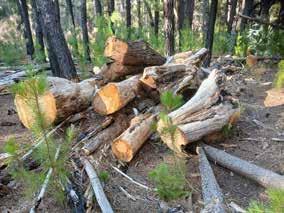
The feral pines were logged and stacked around July/August 2024 and then at some point, for some unknown reason, the work appeared to have stopped and the site abandoned.
Meanwhile, standing about 100 metres away the majestic peppermint tree

had been reduced to a stump and the surrounding area thrashed.
Curious to know what became of the remains of the tree I followed a set of tracks for about 200 metres through the forest.
My FOI application requesting documents is as follows:
1) Copy of the document(s) of expression(s) of interest, on behalf of DBCA, to engage a contractor(s)/tender(s) to fell and remove the pine trees from the site.
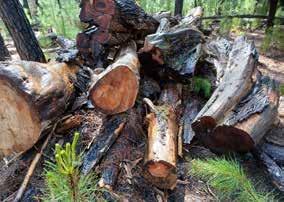
I found what remained of the tree dumped in a riparian zone (creek) registered with the Department of Indigenous Affairs. Why, I wondered, as it seemed had they been deliberately dumped in this way rather than salvaged for the fine-woodcraft industry ready to be transformed into beautiful furniture or used for some other productive purpose at least? Meanwhile Reese Withby – still under pressure from Bob Brown and the media to release the results of his inquiry – joined DBCA’s culture of secrecy and had the inquiry shelved. Determined to find-out the truth how the tree had met its fate and those responsible, I decided to submit a Freedom of Information application (Sept 9 2024). It cost me $30 to submit the application (FOI Act 1999), while I had to be specific as to what information/ documents I was seeking and why.
My application (by letter) included, photographs, GPS location, date, time, etc, while it had to be posted to the government utility you’re seeking answers; in my case DBCA who must respond within 45 calendar days. And while my application didn’t relate directly to the vandalism of the ancient tree, all evidence pointed directly to DBCA’s contractor as being responsible.
2) Copy of the document(s) which led to DBCA awarding of a contract(s) to fell and remove the pine trees from the site.
3) Copy of the document(s) between the successful contractor(s)/tender(s), and DBCA, subsequent to it awarding of the contract to fell and remove the pine trees from the site.
4) Copy of the document(s) of the bidamount accepted by DBCA on behalf of the contractor(s)/tender(s) to fell and remove the pines from the site.
5) Copy of the document(s) subject to the successful contractor(s)/tender(s) instruction(s) on behalf of DBCA to rehabilitate the surrounding native forest ecosystem once the pine trees were felled and removed from the site.
My application was received and acknowledged by a DBCA FOI Projects Officer (Oct 21 2024).
While my application was being processed, I received a phone call from the same DBCA FOI Projects Officer asking if I wished to proceed with my application. Why the question I asked him? He proceeded to tell me he’d been in conversation with the DBCA Wellington District Manager (Collie) who had questioned the veracity of my application, while the contractor’s job (according to him) was to tidy up the site, and that no trees were to be removed from the site. Here, I thought, the ‘smoking gun’: DBCA had hired a contractor to carry out work on the site.
I followed-up my phone conversation with the DBCA FOI Projects Officer with an email (Oct 23 2024) explaining how I’d inspected the site, and rather than it being tidied up (as claimed by the DBCA District Manager) it resembled a rubbish tip, and that numerous pine trees had been removed (felled), and dumped in a nearby riparian zone. I

also forwarded him three photographs as evidence. The DBCA FOI Projects Officer responding to my email (Oct 23 2024) refused to accept my photographs as evidence, by claiming they didn’t fit within the scope of my original application. I responded by email (Oct 25 2024) reminding him the photographs were initiated as a result of his phone call and therefore within the scope of my application. I also asked him to provide me with the name of the DBCA District Manager he’d spoken to, which he declined. That same afternoon (Oct 25 2024) I received a phone call from DBCA’s Wellington District Manager (who gave me his name and position). During our conversation he admitted work had been carried out on the site (while he was on holidays) by a professional arborist, and on his return (from holidays) he’d inspected the site which he claimed had been carriedout to his satisfaction. It was the first time I’d ever heard of an arborist being used to remove (log) feral pines. Throughout our conversation I could tell by the tone of his voice he wanted me not to proceed with my FOI application.
Meanwhile, environment minister Reece Whitby responded to Bob Brown’s email. Whitby in his email (Nov 11 2024) blamed the contractor who went outside the scope of his work brief and cut down the whole tree, which was a mistake, but decided not to take the matter further.
Weeks passed before I received a letter of response from DBCA (Nov 28 2024) to my FOI application. However, my request for the documents was denied, on the basis there was no record of work having being carried out on the site, and that any related documents could not be found or didn’t exist. It was signed by DBCA’s South West Regional Manager (Bunbury). How could the documents possibly not exist, I thought? The work carried out on the site was major, while also confirmed by DBCA’s district manager to have taken place. Surely the government tender procurement guidelines (WA Procurement Guidelines Act 2020)
that states all tenders must be submitted and recorded electronically, including the accepted tendered-sum, must be on the public record.
Not satisfied with DBCA’s decision, I then requested an ‘Internal Review’ (FOI Act 1992) to DBCA (Dec 8 2024) to obtain the documents. However, this was also denied (Dec 20 2024) on similar grounds to my original application: no such documents
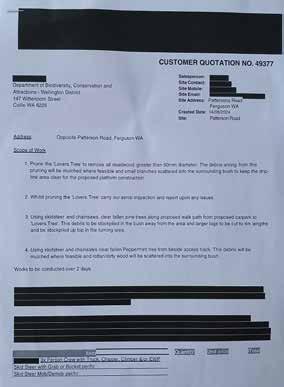


exist or could be found. It was signed by the head of DBCA’s Regional and Fire Management Services. However, to my great surprise, accompanying the letter was a heavily redacted document purporting to be a contract drawn-up between DBCA, and a contractor for work to be carried out on the site in question. How could this possibly be, I thought, when DBCA had denied my original application on the grounds no work had been carried out on the site, and no documents existed; especially tender documents advertising for the work to be carried out?
The heavily redacted document (2 pages when there should have been 3) dated June 14 2024, and with Customer Quotation No. 49377, appeared to be written by a person yet to complete primary school level, while point 4 states: clear fallen Peppermint Tree from beside access track. This debris will be mulched where feasible and rotten/dirty wood will be scattered into the surrounding bush. Unbelievable, I thought, the tree was still alive when it was vandalised, while it stood over 20 meters from the access track (not beside it as the document claimed), while most of its remains – rather than been mulched – dumped in the riparian zone.
Still not satisfied, I then sought legal advice from the Environmental Defenders Office (Perth) who informed me that under the FOI Act 1999) I had the right to lodge a complaint to the Office of the Information Commissioner (Perth) against DBCA denying my request for the documents I believed to be in its possession. I wrote to the Office of the Information Commissioner (Jan 21 2025) seeking an ‘External Review’ of the documents denied. I received a letter of response from the Commissioner (Feb 3 2025) informing me they would proceed with my request for an external review. Here I presumed justice would prevail. It was during this period I received a number of phone calls and emails from people affected by the vandalism of the tree; one being a well known Perth artist who wanted
to produce a piece of art using the stump as a subject. I was also contacted by a Nyoongar elder – who on visiting the stump – disgusted not only had the tree been vandalised – its remains had been dumped in an Aboriginal site of significance. It took until March 17 2025 to receive a letter of response from the Office of the Information Officer to my external review. The letter asked me to reconsider proceeding with my review, and to also provide the Commissioner with new and relevant submissions – as an opportunity to correct any factual errors in the review assessment – before the matter was finalised. Like DBCA, the Commissioner was also questioning the veracity of my claims. The letter then went on to mention how the Commissioner in support of DBCA, was of the opinion the requested documents could not be found or didn’t exist, and that work on the said site (claimed by me in my original FOI application) never took place. And it is the Commissioner’s assessment the decision by DBCA to refuse access to the documents under section 26 of the FOI Act therefore justified. All this, when it was confirmed several times by DBCA that work had taken place on the site, and by a contractor (hired by DBCA), while I also had the document to prove it. Meanwhile, I continued-on with my detective work. I also continued to take tourists (some who in the past had seen the tree in its magnificence) to the site and who were horrified to find the tree was no more.
In Aug 28 2025 I received a letter from the Office of the Information Commissioner reminding me I had two weeks to consider the matter further and if not, then the Commissioner was likely to stop dealing with the matter under section 67 of the FOI Act, on the basis it lacked substance. The Commissioner concluded its letter by stating: My decision finalises my role in this matter and this office’s file is now closed, while reminding me I still had the option of taking my appeal to the Supreme Court

within 21 days of its decision. What would be the point in pursuing the issue further, I thought? It had already cost me a great deal of stress, money, resources, including countless hours writing submissions (something government bureaucrats haven’t a clue or couldn’t give a rats), while I’d also exhausted every avenue afforded to me under the FOI Act, and besides the government bureaucrats would be paid for their time (in court) defending their dodgy decisions.
Summary: The FOI Act 1999 was originally designed so the average citizen could challenge laws and decisions government made they genuinely disagreed with. However, as citizens became savvier in the workings of government (due to the WA Royal Commission into WA Inc), they began to ask too many questions (under the Act). So government – over the years –to maintain secrecy – began to water the Act down by amending it several times in their favour without public consultation. As it stands, the Act is a farce and a cruel hoax on the average citizen who genuinely believes a wrong has been committed by government; in this case the deliberate vandalism of a tourism icon that belonged to all Australians.
It’s time the citizens of WA had a wellfunded inquiry into the failures of the FOI Act 1999, beginning with an independent body not connected or associated with government or its utilities. Irish poet, Fenian, and political prisoner, John Boyle O’Reilly, remembered for his brave stand in saving a giant tuart tree from the axe near Bunbury (1868) wrote: “The tree of democracy will never bear fruit, unless it is watered from the well of justice, independence and fair play in the hearts of the people.”
Footnotes: In England (July 2025) two men were sentenced to four years and three months jail for vandalising the famous Sycamore Gap Tree. This was about the same time the ancient peppermint tree in Wellington National Park (Ferguson
Valley) was being vandalised. The judge, who sentenced the two men for ‘criminal damage’, said it was a deliberate act of ‘sheer bravado’ carried out by two tree surgeons (arborists). And while the SGT (before being vandalised) was said to be 125 years old, the ancient peppermint tree (before being vandalised) was reported to be up to 800 years old, yet no ‘criminal damages’ were laid against the vandals; an indictment on how we Australians value our natural heritage.
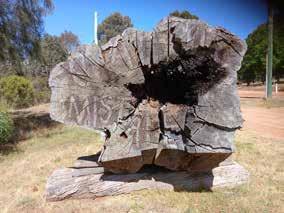
During the writing of this article, I visited the peppermint tree stump (Dec 2026), as if paying respects to an old friend who’d recently passed away. And to my great surprise, I found protruding from its stump, a healthy sprout of peppermint leaves. Amazing, I thought, and which proved the tree was still alive when vandalised (not dead as claimed by DBCA). So too did the Sycamore Gap Tree re-sprout after been vandalised, while the National Trust (UK) have implemented a management
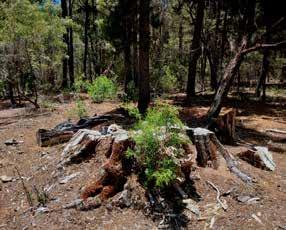
plan to make sure its protected for future generations. Will the WA government and DBCA do the same for the old peppermint tree? I doubt it.
Peter Murphy is a freelance writer and a regular contributor to The Irish Scene.

$4.20
$9.00
$11.00
$9.00
$14.00
$14.00
$10.00
$6.00
$21.00
$38.00


When The Coronas played in Perth on Sunday, 23 November 2025 at Magnet House, they did so with something many bands spend a lifetime chasing: longevity, relevance, and a crowd that still sings every word back at them.
Speaking to The Irish Scene ahead of their Perth show, frontman Danny O’Reilly reflected on the band’s enduring connection with Australia — and why Irish crowds abroad often feel even more intense than those back home.
“It’s funny,” O’Reilly said. “Irish people who are away from home almost feel more Irish. You’ll see more Irish flags at our shows in Australia than you would in Dublin.”
There’s a sense, he explains, that distance amplifies identity. Fans request songs sung in Irish, chant football anthems, and belt out lyrics with a pride sharpened by homesickness. And while Australians in the crowd may initially watch on in confusion, they’re quickly swept up in the atmosphere.
“There’s a kinship there,” O’Reilly said. “Irish people and Aussies don’t take themselves too seriously. We enjoy a good night out, good music, and having fun. That energy just clicks.”
That connection has turned Australia into one of the band’s most reliable touring territories. From sold-out rooms in Sydney to packed shows in Melbourne and Perth, O’Reilly says the past few years have been particularly memorable. One standout moment came in Sydney’s Coogee Beach precinct, where he was repeatedly stopped in the street — not by locals, but by Irish expats.
“I thought, ‘Oh my God, we’ve made it in Australia,’” he laughed. “But it was all Irish people.”
$21.00
$21.00
$21.00
$19.00
$35.00
Perth in particular holds a special place for the band. Having returned multiple times over the past decade, the city has become a regular and welcome stop on their Australian tours. O’Reilly describes it as more laid-back than Australia’s east coast capitals — a quality that mirrors Ireland itself.
“Perth feels closer to home,” he said. “It’s not as mile-a-minute as Sydney. There’s more of an ‘enjoy your life’ vibe. I think that’s why so many Irish people end up there.”
The Coronas’ continued success comes at a time when Irish music is enjoying a global surge. Artists like Amble, Kingfishr, and Kneecap have broken through internationally, while homegrown audiences are more receptive than ever to Irish accents, stories, and even the Irish language.

“It’s a really strong time for Irish music,” O’Reilly said. “We’ve always punched above our weight musically, and it’s great to still be part of that conversation.”
Now working on what will be their ninth studio album, O’Reilly jokes that the band’s defining achievement may simply be survival. He recently floated a potential album title to his bandmates: The Last Band Standing
“That longevity is something to be proud of,” he said. “If people only wanted to hear the old songs, we’d still be happy doing that. But the fact there’s still an appetite for new music — that’s what keeps the fire lit.”
That creative hunger has guided the band through evolving sounds and songwriting approaches. While early records were built around acoustic guitars, newer material has emerged from demos, keyboards, and collaborative writing — not to chase trends, but to avoid stagnation.
“You can’t write thinking about what’s popular,” O’Reilly said, citing producer Rick Rubin’s belief that
by Daniel Holmes
the only person you need to impress is yourself. “If you’re doing that, you’re already in trouble.”
A group traditional and fiddle county’s tributes woman promising also heavily GAA club right. Elaine the vigil of the kookaburra to the
The band has weathered significant turning points, including the departure of guitarist Dave Burke and the disruption of the COVID-19 pandemic — an especially surreal period for a band named The Coronas. Each moment forced a reassessment of purpose, but never extinguished their desire to continue.
Looking ahead, O’Reilly envisions more albums, more touring, and perhaps even a nostalgia-fuelled anniversary run as the band approaches 20 years since their official formation in 2007.
“As long as people want to come see us, we want to keep doing it,” he said.
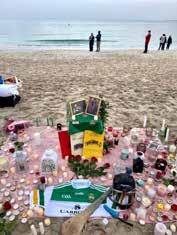
Perth’s Irish community – like many others in Australia and across he world – came together to hold a vigil in the wake of the shocking murder of 23 year old Tullamore teacher Aisling Murphy while she was jogging in broad daylight in her home town of Tullamore, Co. Offaly in January.
And if The Coronas were a drink in an Irish pub?
“A Jägerbomb,” O’Reilly laughed. “A burst of energy. Arms in the air. Singing at the top of your lungs. Hugging a stranger beside you.”
That, more than anything, explains why their shows — whether in Dublin or Perth — still feel like home.
Hundreds of Irish people – including families with young children, took part in an evening time vigil and walk at the Flame of Remembrance in Kings Park on January 19, organised by the Claddagh Association and supported
traditional music at vigil tonight #AshlingMurphy in Perth,”.
Similar were staged across including the Amphitheatre at Kangaroo Point, Brisbane and all based Irish Australian Queensland. by Anna



By Razanne Al-Abdeli
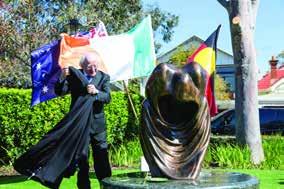
In a Subiaco park on a day bathed in sunshine, a man is looking at a statue. It’s more than simply looking. He is transfixed. And there is a tear in his eye. The statue is of a woman grieving, her veiled head bowing low, arms cradling only emptiness. It personifies the grief only a mother could give – a keening – in memory of the Irish girls who disappeared beyond the shores, headed to a place called the Swan River colony. The man is Fred Rea. He worked to have this statue built back in 2017. On the ground circling her is a prayer, ‘We remember those who were forced to leave our country in search of food and security.’
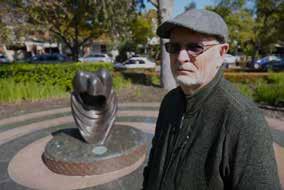
The commonly told history of Perth often begins with the arrival of the first British convicts. However, to Fred the story begins and continues from the wombs of the young girls eternalised in this statue. Their stories have largely been erased from the chapters of Australian history. He wants to change that. Fred, 76, a co-founder of Irish Scene and the chair of the West Australian Irish famine commemoration committee first uncovered their story in 2014.
“I was completely in the dark,” he says. “And then I’d heard about these young girls who had come to Australia, and it was like a Pandora’s box. It opened up and suddenly I found out there were these ships, with so many of these girls.”
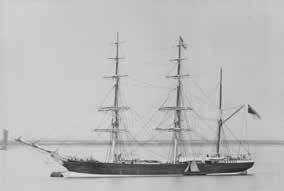
In 1853, a ship named Palestine arrived in Fremantle carrying 33 mostly orphaned Irish girls aged between 15 and 24. They had come from workhouses during Ireland’s Great Famine, An Gorta Mór, seeking a better life. What they hadn’t known was they were being brought for another reason.
Family History WA researcher Joanne Hyland says the Swan River colony was facing an issue. “We only had male convicts come to WA. They didn’t want, what they imagined, loosely moralled women to distract the men from doing good work. But they knew they needed women to be the wives of convict men,” says Hyland.
Ireland was also facing a similar problem.
“The young [Irish] men after the Famine were leaving to go overseas and work,” she says. “So you had a lot of young women and no marriageable partners. They were known


as the bride ships because a lot of those girls ended up married. Whether they knew it or not, it was going to happen. At one point it was 11 men to one woman. It was a mess.” Fred leads the effort to identify and remember these young women: the Irish Bride Ships Legacy Project. He estimates the number of descendants in the thousands.
“I meet older Australians every so often who say, ’I’m descended from one of the girls’. They want to know more about it. And we’re hoping their children’s children will have something to go to. To find out who their great grandmother was.”
In the 1800s, Ireland’s economy was struggling.
With the population soaring and the British exporting most of its food, poorer
Irish families turned to potatoes for breakfast, lunch and dinner. Those without land rented small plots from wealthier landowners, paying them with labour rather than money. But in the summer of 1845, Ireland woke to find their potatoes completely destroyed by a mysterious disease. It was identified too late as being a manageable fungus, phytophthora infestans.
The British government dismissed it as a punishment from God on the Catholic population. Rents went unpaid. Landlords evicted families in the masses. A million died of starvation. It was during this time that a young girl Mary Ann Taylor became an orphan. Her great grandson former Wanneroo mayor Bill Marwick tells her story with sad pride.
“Mary was orphaned in that terrible time. She was illiterate but she had a heart of gold. And there were stories around that.”
to you.


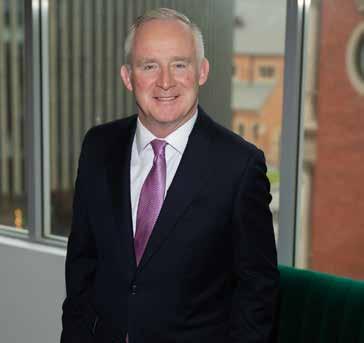



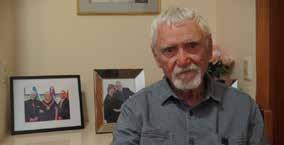
Young Mary Ann Taylor managed to find a place in a workhouse set up by the British. She would spend long hours in needlework in exchange for harsh and humiliating living experiences. But it was a lifeline. Bill did not always know about his ancestry, however. It was in the 1980s, he began to ask questions.
“Who was this lady? What did she look like? Family members didn’t know very much about her,” he says. “Although there were living relatives at the time who could tell me nice things. One of my uncles said she was as Irish as Paddy’s goat,” Marwick chuckles. “She never lost her accent or her big heart.”
His curiosity continued until he described ‘a moment of pure gold’. A list published in the Perth Gazette in 1853 showed Irish girls who had arrived in Fremantle. In that list, Mary Ann Taylor.
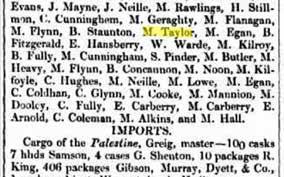
fortunate because people were still dying in the streets and hunger and disease was rife. When she arrived, she had only just turned eighteen.”
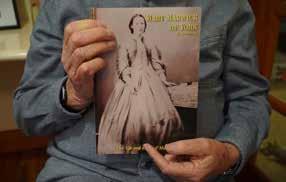
In 2016, Marwick published decades of research in his book ‘Mary Marwick of York’. It was that book which was also a moment of gold for Fred. “I got very interested,” Rea says, “I even went to Ireland where she was born. And out of that we found out there were two ships that arrived in the 1850s, the Palestine and the Travancore. And it all started with a girl called Mary. I felt these girls needed recognition for their contribution to Western Australia. But once we did the memorial, we said, well there’s no database for these girls.”
Fred’s attempts to locate descendants were not easy. His efforts relied on wordof-mouth and a simple Facebook page. In 2022, he approached historian Dr Caroline Smith.
“Every so often, he would ask me about different [history] projects he was interested in,” says Smith. “We sat down and he told me about what he’d already done to gather information about the girls and then we kicked it off.”
“Mary was one of those fortunate few from the workhouses. She would help other people with soups and foods and custards and so on,” says Marwick. “But they couldn’t bring them all. That was very
At the State Library of WA, Smith spends hours looking over handwritten index cards listing passengers of the Palestine and Travancore. Where records end, she looks to records at Family History WA, tracing wives of convicts. Compiled into a data list, the recently launched website now has hundreds of entries.


“Some people get in contact with [Fred] and ask about their family. Some of these people have done their own research as well and some have written books about their family history,” she says.
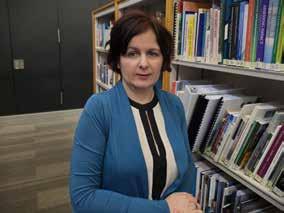
Among them, none other than Dr Carmen Lawrence – former WA premier and Australia’s first female state leader.
Travelling with Mary Ann Taylor aboard the Palestine was another young woman, Johannah Duggan. Their great grandchildren met for the first time in 2017 at the unveiling of the memorial.
Like Marwick, Dr Carmen Lawrence spent her life not knowing until she too began to ask the same questions.
“I’d always known there were Irish in the family,” she said. “My grandmother had what sounded like an Irish accent,” she says. “Over time you start to think…where do we come from?”
Dr Lawrence’s great grandmother too came from a workhouse during the Famine. “A million dead, a million fled.”
She now spends her days just outside of Perth researching her family’s bride ship legacy.
“I look at the workhouses,” she added. “I look at transportation. I look at the political story that was simultaneously going on. I take the journey with them on the boats. From there, I’ve just tried to trace what happened to them. Not just the bride ship girls but the convicts. Who they married, what happened to their children.” The task for Lawrence has not been easy. Many Irish records were destroyed by the British or never kept at all.
“Because they’re women, they don’t appear in any public records either. At the time only men could hold property. So their records are thin and the footprints they left behind are basically through their husbands and their children. These people couldn’t write,” Lawrence says. “There weren’t going to be lots of lovely little letters home describing the experience of being in the colony. In Ireland when people were leaving they held a wake as if they were dead. Because they were, effectively, dead.”

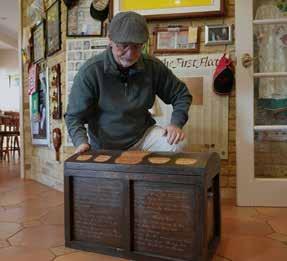
The journey to the Swan River colony from Ireland took the girls a difficult four to five months. Each carried a simple travel box for essentials.
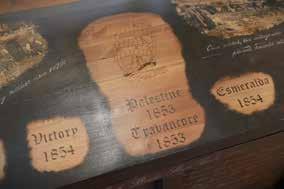
The highlight of the journey became ‘Crossing the Line’. A celebration once the ships crossed the equator. But the daily reality was difficult. “The food was boring,” Hyland says. “The men were allowed to bathe but the women were not. There was a water allowance per day so you washed in that. If there was bad weather, [the deck] would be closed up. It could become smelly or noisy. And if people became sick, you were crammed with them.”
When their bare feet finally hit the Australian sand in the summer of 1853, they faced a new set of hardships. The colony was barely 30 years old. Roads were rough. Houses made of mud and straw. But mainly, the colony was not made for women. “Women needed other things that weren’t catered for. They needed to give birth and had all sorts of privacy requirements,” Hyland says.
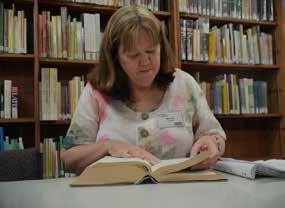
With some convicts already inclined to violence, the girls were at risk. Roads were deserted and the only way to get anywhere was to walk.
“There were girls that were raped on the road if they were travelling alone. They would have known they were vulnerable but they hadn’t any other way,” Hyland says.
Some of the girls refused to leave the depot.
“I think some of the girls had unrealistic expectations about what it would be like. So when some of them refused, they just put them on rations of bread and water to make them leave. Most of them were forced into marriage that way.”
Most of the girls married in the first year. Children quickly followed. Often around a dozen. Some girls were also taken to neighbouring settlements like Northam or York where Marwick was born, and Toodyay where Dr Lawrence’s great grandmother was taken. Today it’s a one hour and 20 minute drive. On foot they walked for three days. Men often accompanied them to keep them safe. Men like the ship’s surgeon or their medical officer.



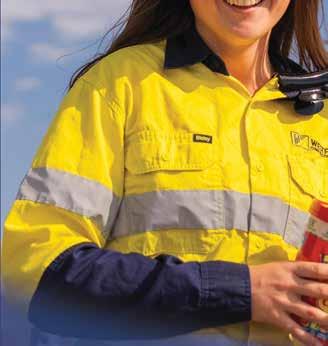
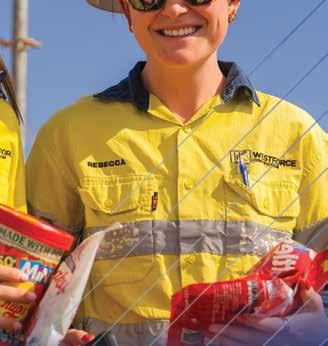


“The Palestine and Travancore girls didn’t complain. They’ve had so much hardship at home and were hoping for a better life. So they just got on with it,” says Hyland.
The girls were sometimes cheeky, however. Marwick laughs describing a time when his great grandmother was taken to court for ‘abusive language’ hurled at another lady. The magistrate, by then very much used to these issues, dismissed the case and asked the two ladies to leave his courtroom. Yet what remains is the legacy and generational pride.
“I’m very proud of my Irish heritage and particularly proud of Mary. Her contribution was amazing. No question about it. Amazing woman,” says Marwick with a smile and a gleam in his eyes. “At least 10 of [her descendants] were either mayors or shire presidents or councillors. One was in the Senate. One won the Victoria Cross. It just goes on and on, and all these wonderful mums raising families throughout WA,” he says.
Fred returns to the memorial in Subiaco, sculptured by Joan and Charles Smith, at least once a year when the WA Irish famine commemoration remembers the mothers who never heard of their daughters again.
“Her name is Uaigneas,” he says, looking at the woman. “In Gaelic, her name means the eternal expression of loneliness.”
He stands quietly.
“Every year, I can’t [speak]. I find it very hard. I get emotional. Because I remember when I first came to Australia in 1972. [They] were the loneliest years of my life. So, I understand how the girls felt.”
The statue’s Celtic knots, he explains, symbolise the intertwining of Irish and First Nations’ cultures.
“They would have understood what it’s like when people come in and colonise an area. Take over their homes and take all the land away. Just give it away.”
After three successful years as Committee for Perth CEO Dublin born and bred business woman Paula Rogers has taken on a new challenge. Her appointment as the first chair of the new Leadership Group for the Queen Elizabeth II precinct – the biggest healthcare campus of its kind in the southern hemisphere – was announced on December 12 by a fellow Dubliner, Stephen Dawson, minister for Science, Innovation and Medical Research.
“The Precinct Leadership Group will play a pivotal role in shaping Western Australia's future as a national hub for health and medical research translation and innovation,”
Mr Dawson said.
“Paula Rogers' extensive experience

in stakeholder engagement and strategic leadership makes her an outstanding choice to lead this group. We are another step closer to the Cook Government's vision of creating a world-class biomedical industry and research precinct that will benefit Western Australians and patients across the world.”
Paula – who sometimes compared Dublin and Perth in her time as CFP chieftain – said it had been a privilege to promote her adopted
“Committee for Perth has never been stronger – thriving, ambitious, and united in purpose,” she said.
“The organisation is ready for its next chapter, and I am excited to continue cheering on Perth and the Committee while embracing new opportunities and enjoying time with my new grandchild

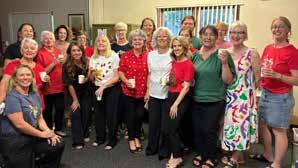
While there was sadly no Irish pantomime last Christmas the Irish Choir Perth staged their (ninth) annual Christmas concert at the Shenton Park Community Centre in December. The choir – directed by Hilary Price – joined
forces with Tommy O’Brien and friends to put on a matinee and evening show full of Irish songs, trad music and Christmas carols and festive fun. The spirit of the season was alive and well at the packed out events.


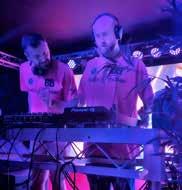
Dublin duo –Bissett and Robbie G – who together form Belters Only released their new album Do 4 Luv last month brought their brand of luv to Fremantle for a major event in early January.
“Belters Only at Port Beach Brewery was something special,” Shannon Molloy (Shanwa) told Irish Scene.
That alone made the night feel meaningful. My DJ mate Colin (Reburn) has lived in Australia for Australia for 17 years and said it was the first time he’s ever seen a real “one more tune” chat actually work here. And he wasn’t wrong.
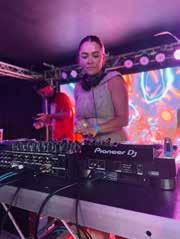
The whole room erupted, everyone chanting, no lights on, no security clearing people out. They just played another track because the crowd genuinely demanded it. That moment felt straight out of Dublin.

“The kind of night that reminds you why dance music culture matters. A crowd of all ages, full of energy, respect, and a proper atmosphere from the moment the doors opened. Outside felt like a classic Irish daytime house party. Sun, beers and timeless house tracks rolling all afternoon. Inside, the Splooge Lounge was all about showcasing Irish and local talent, and it was stacked. Mostly Irish DJs, incredible energy, and Mayba B playing her very first set.

SERVICES INCLUDE:
• Income Tax Returns
• Business & Instalment Activity Statements
• Preparation & lodgement of objections to
• GST and ABN registrations
• Company Secretarial services
• Bookkeeping
Belters Only brought their signature highenergy sound, but what really stood out was how strong the local and Irish community showed up together. Thick as Thieves, Keltik Australia and Splooge Lounge created something that genuinely felt bigger than a normal event. It didn’t feel like a gig. It felt like a cultural moment.”

In recent years the Irish media has never been more full of stories about the Irish in Australia but in early January the Irish Independent published a lovely story about an Irish man home from Australia at home in Ireland.
Aidan Coughlan, 38, from Ballybrit, Galway and his partner of four years Sonia Wikohika originally from Taupo, New Zealand live together in Perth, WA. The couple flew back to Ireland on Christmas Eve.
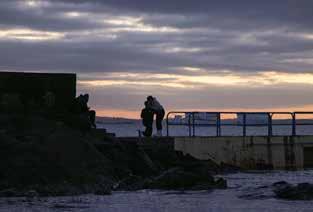
“We were still jet lagged so we woke early Christmas morning and I had said to him, will we go for a walk?,” she told the masthead. “He always brings me to the prom [in Salthill] whenever we're back in Ireland so it was nothing unusual. We parked down the road and walked to the end of the prom where we kicked the wall, a
tradition of his growing up.”
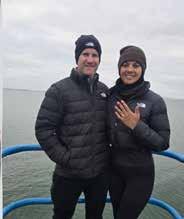
While kicking the wall is a local tradition she couldn’t have predicted what came next. They walked down to the Blackrock Diving Tower where early morning swimmers were already in the cold Atlantic water. Just as they stopped there she turned around to see Aidan get down on one knee. “I was so shocked” she said. “I did not see that coming at all – after all it was my idea to go for the walk!”. The magic moment was actually spotted and captured by local photographer Paul Savage who happened to be in the right place at the right time to snap a fantastic photograph. When his daughter saw the image she shared the image on a local community group asking if anyone knew the identity of the couple, which of course (being Ireland) someone did.

Shop 14, Woodvale Boulevard Shopping Centre 931 Whitfords Avenue, Woodvale WA 6026
P: (08) 9309 9992 E: meatconnoisseur@bigpond.com facebook.com/MeatConnoisseur
“{Aidan] really took me by surprise” Sonia told the paper. “It was my best Christmas to date – despite the cold weather!”.”


Please contact our recruitment team by sending your resume to kirsty@ pipelinetechnics.com.au
• Wet And Dry Plant Hire
• Culvert/Drainage Installation
• Pipeline Construction
• Mining & Resources Sustaining Capital
• Utilities & Infrastructure

• Bulk And Detailed Earthworks
• Private Utilities And Infrastructure
• Early Contractor Involvement
• Infrastructure Remediation
• Poly Welding Specialists For unmatched expertise and industry experience, contact us today to discuss your high quality project
Yard: 118 Maddington Rd, Maddington WA 6109
Head office: 2 Iluka Ave, Mullaloo WA 6027
Regional office: Suite 3 53 Christie retreat, York WA 6302






Pipeline Technics are currently recruiting for experienced Excavator Operators on projects in the Metro and South-West region. We pay top rates and accommodation if applicable.
FIFO and metro projects current opportunities:
• Experienced Final Trim GPS excavator operators/ Experienced Pipelayers
• Competitive Top Rates + penalties
• Work with long term contracts
• Tier one clients and major miners
• Great team culture and first-class equipment
• Potential for upskilling and advancement for the right candidates

Claddagh exists to support, connect and care for Irish people across WA, especially during challenging times. We do this in many ways, from providing emergency assistance and hosting free visa clinics, to running community fundraisers and delivering our much-loved Seniors program.
See more photos at Claddagh.org. au or scan the QR code right.

Here’s a snapshot of some recent moments that have brought our Claddagh community together lately!
Annual Seniors Christmas Lunch at The Mighty Quinn – Monday 8 December
On Monday 8 December 150 Claddagh Seniors gathered for a delicious Christmas lunch at the Mighty Quinn. It was a fantastic afternoon filled with great food, lively music from Broken Pokers, a free raffle featuring generous prizes kindly donated (See picture). Thank you to the team at the Mighty Quinn for their impeccable service, wonderful food and continued support of Claddagh. We are already looking forward to our St Patrick’s Lunch!


A big go raibh míle maith agat to our amazing volunteers who make days like this possible. Community connection like this is at the heart of what Claddagh is all about. Check out these snaps from Volunteer Paul.
at The Irish
Festival, Palace Cinemas 7-10 November 2025
Claddagh was delighted to be involved in this year’s Irish Film Festival, supporting the event across the weekend. Our wonderful volunteers were on hand to greet and welcome guests, assist attendees and help keep everything running smoothly, all while soaking up the fantastic atmosphere. It was a pleasure to be part of such a vibrant celebration of Irish storytelling, culture and creativity. A heartfelt thank you to Enda, Nicole and the entire Irish Film Festival team for having us, and congratulations on delivering an outstanding festival across Australia showcasing powerful Irish films, raw and honest interviews, and the richness of Irish culture on screen.

• Tuesday 24 February – Movie & Light Lunch at Event Cinema, Innaloo
• Monday 23 March – St Patrick’s Lunch at The Mighty Quinn
• Saturday 28 February – Join us for Seniors Digital Training (10am–12pm)
• Bookings essential: Call 08 9249 9213 or email admin@ claddagh.org.au to secure your spot.

If your community group need a venue to hold a committee meeting or AGM, please contact Shauna at 08 9249 9213 or email admin@claddagh.org.au for further information.

Navigating migration pathways is one of the biggest challenges many Irish people face in WA. That’s why Claddagh offers free visa clinics with registered migration agent Patricia Halley (MARA 1383611) from Visa4You.
Whether you’re applying for a visa, working towards permanent residency, or exploring citizenship, these clinics provide trusted advice and peace of mind. Available to all Claddagh members – Not a member yet? Join for just $25!
Bookings: 08 9249 9213 |admin@claddagh.org.au

Saturday 13 December saw our first Claddagh Connect event. It was a pleasure to meet new people, reconnect with familiar faces and feel a warm sense of community in the room. We are excited about the potential from these meet-ups and hope to host many more in the future. We would love to hear from you; what kind of events would you like to see from Claddagh in 2026? Let us know, send us a message or email! Thanks again for making our first Claddagh Connect such a success!
On Friday 5 December we had the pleasure of welcoming Hon. Alanna Clohesy MLC and Bryan to the Claddagh office for a chance to catch up. Alanna has been a tremendous supporter of Claddagh for many years, having previously sponsored the dishwasher and fridge for our new premises. During the visit Alanna generously presented the team with a hamper for the Seniors Christmas lunch. Go raith míle maith agat Alanna and Bryan for your generosity and continued support!
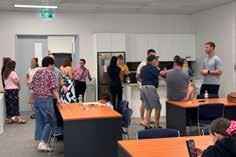
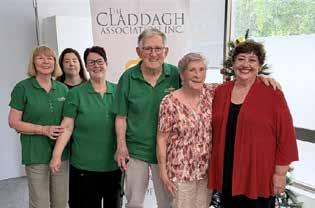
Claddagh is here to provide support, care and connection for the Irish community in WA experiencing hardship or find themselves in difficult circumstances. How You Can Help:
To support these needs of both individuals and families, Claddagh must fundraise throughout the year. If you would like to support Claddagh’s work you can:
• Donate: Visit claddagh.org.au to donate.
• Volunteer: Your time can make a world of difference – sign up today!
• Become a member: For just $25, you can join Claddagh.
• Host a fundraiser: Got an idea in mind? Give us a call if you would like to collaborate. See our website for full details – QR code below. Need Support? We’re Here for You
If you or someone you know needs help, please reach out: Email: admin@claddagh.org.au | Phone: 08 9249 9213 Crisis Line (Urgent Support): 0403 972 265


Morley, 6062.
08 9249 9213 | admin@claddagh.org.au

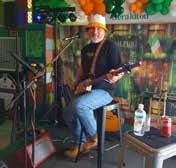
As the club rounded out the year, we finished with some special events. The club prides itself on helping its members in time of need. We have held numerous fundraiser events over the years and recently, the club yet again responded to the call when they were made aware that the Green family were needing support due to family illness.
Local musician Anne Williams, in conjunction with the club, organised a Singalong Christmas carols event that was held in early December and was attended by a large crowd of our members. Even Santa Claus himself appeared with proceeds and donations being made to the Green family in their time of need. We would like to thank Anne Williams and our members for supporting this important event.
Another event in December was Ceili in the Snug. For those of you that have been to the Midwest Irish Club, inside our main building, which is an old church and school, we have a little stage area called the Snug. The club organised local Musician Johnny David to play to a small intimate crowd of approximately 20 members. The theme of the night was Irish music and culture, and Johnny did not disappoint with his repertoire of Irish songs. The night was a success, and the club is already arranging the next Ceili in the Snug scheduled for 14 January 2025 with more dates to be advertised in the new year.
Finally, as we come to the end of the 2025 year and move into 2026, the club would like to thank its members for continuing to support this great club. We would also like to take this opportunity to acknowledge the musicians who have entertained our members this year:
Local Musicians: Johhny David, Geoff Udy, James McDonald, Shanghai, The Tossers, Anne & Tobi Williams, Jay Gaynor, Solitary Sounds, The Ball Boyz, Melodics, Johnny Gigantaur, Salty Bush, Archie Bunker, Darcy Hay, C4, Ian Wegler, Carly Markam, Rob Harding, The Hippy Perth Irish Musicians: The Deadly Woodbines and The Healys.
We look forward to keeping the Irish Scene community updated on the goings on at the Midwest Irish Club in 2026, until next time.
Regards, Simon Miller
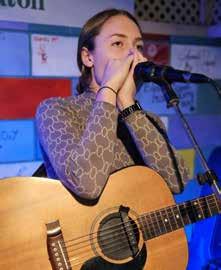
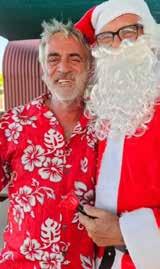
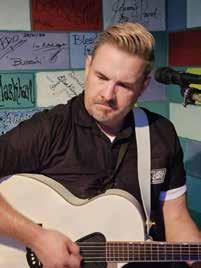

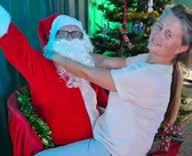
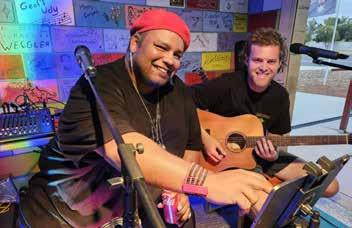
AIHA FILM CLUB SEASON concludes Wednesday March 7, 7.45pm


Encouraging and promoting an awareness of Australia’s Irish Heritage
Meets fourth Tuesday of the month, with exception of December. At 7.30pm May 24 ‘Phosphorescence’ by Julia Baird, to be presented by Trish Dooey
June 28 TBA to be presented by Cecilia Bray
THE FOURTH TUESDAY BOOK CLUB Jan 27 ‘That Bligh Girl’ by Sue Williams, presented by Joe Purcell. Feb 24 ‘The Art of Keeping Secrets’ by Rachael Johns, presented by Gayle Lannon. Meet at presenter homes. Convenor Mary Purcell, m.purcell@telstra.com
Venue Irish Club Committee Room, 61 Townshend Road, Subiaco Admission Free. All welcome. Light refreshments provided. Tea and coffee from the Bar $2 Contact Convener Mary Purcell, m.purcell@telstra.com
St Brigid’s Festival – AIHA will participate at Kidogo Arthouse Fremantle on Sunday Feb 1 at 2pm presented by Torc Ceili. Bookings and bread baking competitions https://www.trybooking.com/events/landing/1515688
AIHA FILM CLUB SEASON Wednesdays February 4,11,18,25, March 4
BLOOMSDAY - James Joyce Literary Competition presentations

Sixteenth annual outdoor Irish Film Festival with a programme of rarely seen and some classic Irish cinema. Private garden cinema, 7.45pm nightly. Ample parking available. Big fifteen-foot cinema screen. Programme will be released in January to database and on website and facebook. Flyers available.
Plus Each night a supporting Irish short film or documentary, together with tea/coffee and cakes. Ice creams $3. Venue Kensington (South Perth)
To mark the 100th anniversary of the publication of Ulysses, the AIHA will hold a celebratory event on June 16th , officially known world-wide as Bloomsday, after Leopold Bloom in Ulysses. At the event, the shortlisted entries from our competition will be staged as readings, drama, music and visual presentations by solo or groups The overall winner will be chosen by popular vote on the night and will receive a cash prize.
Entry Donation $15 to cover catering and costs, pay at the gate.
Seating Come early for best seats, bring deckchair if running late Enquiries Tony Bray - Ph 9367 6026, check our website and facebook
We thank our adjudicators Frank Murphy and Frances Devlin-Glass
Date Thursday June 16 at 7.30pm
Venue Irish Club Theatre, 61 Townshend Road, Subiaco (to be confirmed)
Admission AIHA members $20, Non-members $25, includes light refreshments
Prizes Best Edwardian dressed male or female. Plus special Irish raffle Bookings https://www.trybooking.com/BZAVU
ANNUAL GENERAL MEETING is planned for Sunday 22 February at 3pm. Nominations for committee welcome. THE JOURNAL Quarterly magazine for members since 1993. Articles celebrating the Irish Heritage in Australia. Editor Teresa O’Brien. Copies can be purchased. Correspondence to journal@irishheritage.com.au

Featuring “Your Ugly Too” with a supporting Irish documentary, together with tea/coffee, homemade cakes, Irish wheaten bread and jams. Ice creams $3. At Kensington (South Perth). Donation $15 to cover catering and costs THE FOURTH TUESDAY BOOK CLUB March 26 and April 23, 7.30pm, Irish Club Committee Room, 61 Townshend Road, Subiaco All welcome. Light refreshments provided. Convener Mary Purcell, m.purcell@telstra.com
SAINT PATRICKS FESTIVAL Saturday 16th March, Leederville Parade and Irish Festival, 10am. Join our vintage car float in the parade and our presentation of the Brendan Awards 2022 and 2023 at the concert in the early afternoon. This prestigious award recognises individuals or groups with a record of dedicated service and outstanding achievement in one or more aspects of Australia's Irish heritage. Meanwhile we invite nominations for 2024 ANNUAL GENERAL MEETING Sunday 24 March, 3pm, Irish Club Committee room. There will be special motions for Life Membership nominations. Please consider joining as a committee member, volunteer or an event coordinator. CATALPA COMMEMORATION ROCKINGHAM Annual commemoration of the escape of six Fenian convicts on 17-18 April, 1876. With oration, verse, music drama and song at the Catalpa Memorial, Rockingham Beach, Easter Monday, 1 April, 11am to 12 noon. Free public event. Guest speakers and dignitaries including Mayor Deb Hamblin and city councilors; Federal Minister Madeline King; State Minister Stephen Dawson; Somer Bessire-Briers from US Consulate; actor Michael Sheehy; musician Ormonde Og Waters; and more Coordinated by David McKnight. ANZAC DAY Thursday 25 April, 8am. AIHA at invitation of Subiaco RSL lay wreaths for Irish ANZACS at Fallen Soldiers War Memorial on the corner of Rokeby and Hamersley roads. Morning tea follows. Subject to confirmation MEMBERSHIP 1 January to 31 December, 2024
MEMBERSHIP 1 January to 31 December, 2026
Family membership $65; Concession (Centrelink and unwaged students with ID) $55
Family membership $65; Concession (Centrelink and unwaged students with ID) $55
Distant (200 kms from Perth) $45; Membership fee includes tax deductible donation of $20 Pay Online – https://irishheritage.com.au/membership/registration/ Or Bank Transfer: Bank: Commonwealth, BSB: 066-192 Account No: 1054 6502
Check our website https://irishheritage.com.au/news-blog/ for a selection of exclusive interviews conducted by committee member Gill Kenny and other articles of note. If you click on the interview with Aine Tyrrell you will arrive at our YouTube channel. Aine is really interesting - victim of domestic violence, successful singer, living in a bus and rearing 3 children. She has great perspectives on life and had a real Irish chat with Gill. Easter Monday Annual Catalpa Commemoration was professionally videod this year. The link will be on our website as soon as available. We thank Gill and Patricia Bratton for this new member feature.
Distant (200 kms from Perth) $45; Membership fee includes tax deductible donation of $20 Pay Online – https://irishheritage.com.au/membership/registration/ Or Bank Transfer: Bank: Commonwealth, BSB: 066-192 Account No: 1054 6502

AIHA has approved charity and tax deductable status. www.irishheritage.com.au
AIHA has approved charity and tax deductable status. Deductable Gift Recipient Status
AIHA Website The JOURNAL
Members of AIHA receive 4 editions of the Journal each year. Latest edition for March 2022, Vol 31, No 1 is available. We now have a library of 30 years of Journal and are compiling an index of every article title, author and subject detail to be made available on our website from May this year. We anticipate almost 2,000 titles in the index. Contributors can email editor Julie Breathnach-Banwait on journal@irishheritage.com.au Non-members

Happy New Year to youse all. I hope it will be a good one. Now I know the Rugby World Cup is in 2007 but the table for the competition has just been released. It looks quite favourable draw for Ireland although Scotland is improving, and Ireland might well be past their peak. Time will tell. As I write about this, it brought back memories of the game over the last fifty years or so and some of the players I met during that time. My article is about rugby. I do hope you have some interest in the game.
I never discovered what sport my father played when he lived in Kells Co. Meath and when he went to the Teachers training College in Dublin. I do know he played (and taught) golf. He taught some of his sisters to play and encouraged and taught their daughters. When he was no longer with us, I was sent to a boarding school where they played rugby and hockey. I had never witnessed a game of rugby. It seemed to be a favourite of the more elite schools. I did not have a hockey stick, so my decision was easy. Yes, I played rugby. It took me five years before I made a team. It was with some pride that for my last year, on the second XV, I had to mark and play against a scrum half who eventually played for Ireland. It wasn’t Roger Young who was some three years my senior. Roger of course went to South Africa but had to give the game away because he couldn’t afford to insure his hands. Or so the rumour went. He was a dentist. He still lives there.
In 1973, I thought I had played my last game when in Belfast. But not to be. In those days the ball was always slippery (we only ever had one ball) and the pitches were always muddy. At that time, some players might have played
a whole game without ever touching the ball. Thank goodness there was always a certain comradery about the game no matter where it was played. Tough on the field, best friends in the bar afterwards. I played in eight different countries. All right, forgive me, The Isle of man was one of them! I loved the game especially the Internationals. Maybe it was because there was only ONE international team in the island. I believe international hockey followed the same outcome.
Of course I have many stories about the game. I will talk about one or two of them here.
I was in Madrid for fifteen months. I assumed at that time, that rugby was not played in Spain. I was wrong. I joined a local rugby team there. It was very strict. You had to have a licence to play and produce it for inspection by a referee before the match. They were also very strict on drinking. The night before one game, I took my girlfriend to the bar where my rugby friends supposedly partook of a few wines (in their case) and quite a few small glasses of beer (for me).
The conversation with the barman was in Spanish but I will give you the gist of it here in English.
‘Da-veed, I thought you were down to play tomorrow,’ (It was Friday night).
‘Yes,’ I replied. ‘The game is at 12.’
‘Ah Da-veed, it is not possible that I serve you the beer.’
‘Why not?’ I asked indignantly.
‘Because you play tomorrow,’ he returned as if surprised by my question.
My argumentative skills in Spanish were not up to this conversation. We went to another bar.
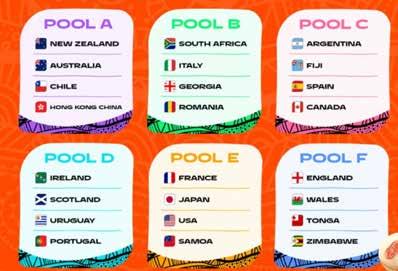
At the next practise, they told me to play inside centre. The out half was very fast off the mark, so I had to take off just before the ball came out of the scrum to keep up with him.
The captain told me that there was no game that week. They invited me to go with them to what I thought was a function. It turned out to be a B international between Spain and Italy. What a shock I got when I saw my out half ‘friend’ on the team for Spain. He also turned out to be the captain of the Spanish team. No wonder I could not keep up with him. The coach labelled me as a
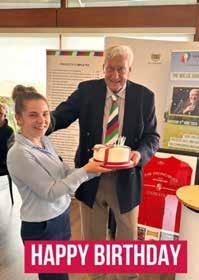
Tom Kiernan. The ex-Irish full back who was known for ‘safe but slow.’
When I was around seventeen, I stayed with an aunt and uncle in Ballymoney for a short time. They had two spoilt daughters who were younger than me.
They could see I was bored so they organised a game of golf for me with a retired bank manager. He duly arrived to collect me in a small Austin A40. Another passenger was in the car who had trouble fitting into the passenger seat. It turned out to be Willie John McBride who had just been picked to tour South Africa with the British Lions. His golf turned out to be miserable. It was like holding a toothpick in his hand. We spent a lot of time on the tricky Portstewart course looking for his ball. I won’t go into his life story here, but he had an interesting life, and he is still going strong with an 85th Birthday party last year. I quote from a comment made after the celebration.”
“He was immensely popular in South Africa, having famously led the 1974 British & Irish Lions to an undefeated series, no small feat! I recall him as a towering figure, striding onto the stage and leaning over the microphone. He looked up at the audience, then bowed his head in a moment of dramatic silence that dragged on and on, just a tad too long. The crowd started to shift uncomfortably, unsure if he was contemplating the meaning of life or battling stage fright.
For a moment, I genuinely believed this giant of a man had finally met his match and that nerves had taken hold. But then, after what felt like an eternity, he lifted his head, fixed his gaze on the now somewhat relieved South African crowd, and in a thick, fiery Northern Irish accent, he declared, “We focked you up.”
That instant broke the silence like a thunderclap, and laughter erupted throughout the room. Once the dust settled and I managed to pick myself up from the floor, I realised I had just witnessed
not only a humorous moment but also one of the most memorable rugby teases I’ve ever heard. He went on to deliver what I still regard as one of the finest speeches by a sporting celebrity I have ever had the pleasure of hearing.
From that evening on, Willie John McBride endeared himself forever to South African rugby fans, not just for his formidable skills on the field but for the charm, wit, and unexpected humour he brought to the stage.
When I arrived in Australia, I had a difficult time obtaining a job as a Systems Analyst. At the beginning, I sold computer systems, worked as a waiter and sang at the weekends. I needed something more permanent. I applied for a job to coach basketball at one of the top Schools in Sydney, Cranbrook School. It was a ‘Rugby School’, and I fitted in perfectly. One of my final games was to play scrum half to Geoff Richards. Geoff was an English- born fullback who played in one of the Wallabies’ greatest ever victories. A former England trialist, (the rumour was that he had played for England), but he did play for the Barbarians before emigrating to Australia to be head of P.E. department at Cranbrook. He captained/coached the Australian 7 a side team for several years and worked for the Australian Institute of Sport where he gained a greater understanding of the sport sciences so essential for world class performance. Following his playing career, he became more involved in coaching and coached the Australian U17 and U19 teams and was assistant coach of the Australian U21 and Australia A teams.
In 2000 he returned to England to take up the position of the first fulltime Head Coach of the England Women’s National team.
He is now retired but acts as a consultant to various businesses, educational and sporting organisations.
Rugby was not big when I arrived in Perth forty years ago. I coached and played for the 2nd XV at Scotch College before giving up the game to play football. All right soccer for you Aussies. I miss the camaraderie of the rugby game. It still exists among many of us but it’s simply ‘ALL TALK,’ nowadays. We have over a year to mull about the up coming World Cup.
AND it is in Australia.
Next time I hope to talk about “The Flight of the Earls.’ Until then, as always, may your God go with You.
David MacConnell

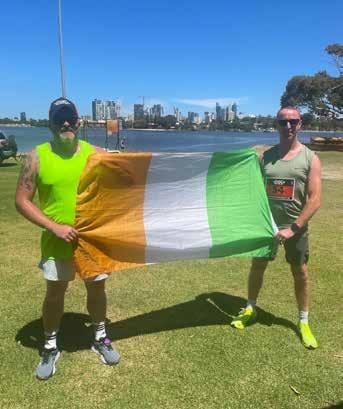
Sligo had a lot to do with a global endurance event that passed through Perth late last year. Organised by a company in the West of Ireland town The Great World Race – 7 Marathons 7 Continents 1 Week (15-21 November) – was won
by a Sligo runner, one of two Yeats Country natives to compete.
The duo and fellow competitors followed an eight loop course of 5.275km – operated by the West Australian Marathon Club in Burswood –with Optus Stadium and Crown Casino as the backdrop.
“Antarctica was the toughest one,” Michael McDermott who won the half marathons section told the Irish Times after he crossed the finish line. “It was meant to be the first one. We were supposed to that on the Saturday morning. It was -10 degrees that day, and it was too warm to arrive there, because the runway had started getting slippy as the sun was so high so David had to change that with less than 12 hours notice. So we ran South Africa first and then we flew out to Antarctica that evening. The race in South Africa started at 7am and we flew out to Antarctica then at 4pm, we ran that race at 1am that night. When we arrived in Antarctica it was -16 with a wind factor of -33 then. We went from 30 degrees to South Africa to -33 in Antarctica. Then we flew back to South Africa and we got onto the private jet there. There was a red carpet up to the private jet, this jet was used by Madonna before. We then arrived in Perth, and ran the Perth marathon. That was 38 degrees, it was the warmest weather we
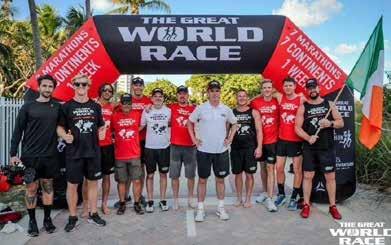
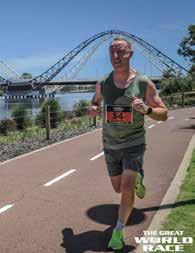

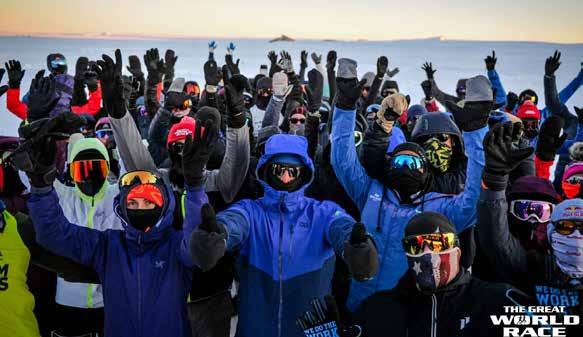
The competitors braved the antarctic before coming to WA
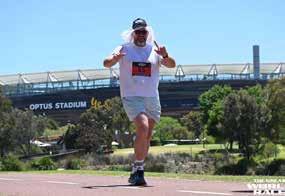
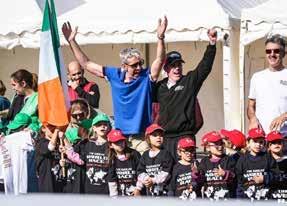





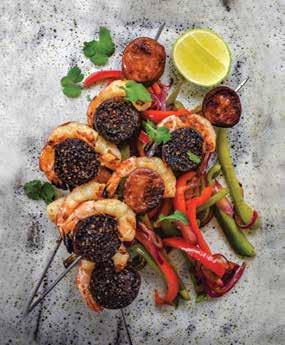
Turn Up the Flavour with Clonakilty
This Australia Day
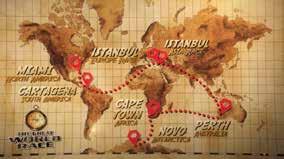
ran in. We did all that in the space of 40 hours. Antarctica was just class. It’s untouchable. People go out there in October to set everything up, tents and toilets and gas lines and stuff like that. Once the season is finished then, that’s all taken off. You leave no trace. We were sprayed going out there so that we didn’t carry any pesticides or diseases. Everything is untouched.”
His close friend, Adrian McHale, also from Sligo, took part in the Perth leg on November 17 and crossed the final finish line in Miami, USA, just five days later, clutching an Irish tricolour.
Race director and physican David Kelly, also from Sligo, was waiting to congratulate him and to ask him how we was doing. “Its about having the right mindset, if you want to finish it, you will finish it,” Adrain said after gathering his breath. He praised the sense of community and support around the event. “I’ve been in difficult times before because I lost a child in 2017, so little AJ is always on my mind and never far away and sometimes when you’re pushing your way through pain like this its the closest you feel to them so and I’d say that to anyone whose suffered..infant loss or are going through
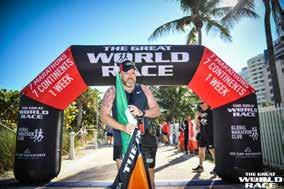
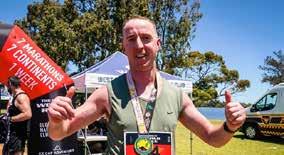
a dark time, things get better, it will pass but please please please, just never give up, just do something for yourself and push forward because trust me there is no way I should have done that,” he laughed.
As well as doing it as a personal challenge both Michael and Adrian raised funds and awareness for their respective charities of choice.
The entry fee per person is €49,500, which can be paid in three instalments, which covers most of the costs involved for competitors. That includes a round trip by a private chartered jet from Cape Town to Antartica and a business charter flight from the South African capital to Perth and the other international locations.
“We make it easy to make a once-in-a-lifetime journey around the world,” the event website states. “We’ll take care of all of the logistics and accommodations so you can focus on running 7 marathons on 7 continents in just one week. The cost to visit Antarctica alone can cost up to €20,000 to visit Antarctica, making The Great World Race a competitively priced venture.”
The first Great World Race – which also included a marathon in Perth – was held in November 2024.
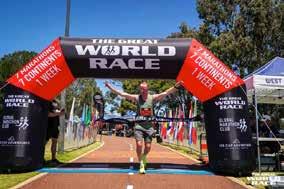
by Lloyd Gorman
Just on the topic of mega endurance trials I wanted to share this story with Irish Scene readers. My brother Gary told me about the latest exploits of an old neighbour of ours. Sam O’Neill used to live just around the corner from our house in Curragh View, Brownstown, Co. Kildare. As teenagers we were members of a very short lived band and were also both interested in becoming journalists and visited the offices and printing press of the local paper The Leinster Leader in Naas. That was forty years ago and that was about the last time we knew each other.
Gary, who lives in the UK, has gone from running marathons to ultra marathons and mentioned that they have some contact now, mainly discussing running. When Sam turned 50 three years ago she set a personal goal to run 100 marathons, 50 of them to raise funds for the Irish charity GOAL.
On January 1 Sam set out on an even more ambitious challenge that must set the standard for some kind of record, to run 500 marathons locally in 500 days. As we went to press she was about ten marathons in, and counting.
Sam’s story is an inspiration for anyone and everyone. Back in 1980 when we were youngsters she watched her dad train on the Curragh plains to take part in the first organised marathon event in Dublin. “Every day, he'd slap on his running shoes and vanish for what felt like an eternity, only to return spent but oddly jubilant. One fateful day, I thought, "Hey, how hard can this running stuff be?" I decided to tag




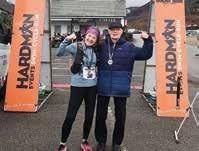
along with my old man, blissfully ignorant of the ordeal that awaited me. So, there we were, side by side, and off we went into the great unknown. After what felt like a trek across the Sahara (but was just a measly kilometre on The Curragh), I was toast. I begged to throw in the towel, but Dad had zero sympathy and ordered me back home. It was a crushing defeat. I dragged my miserable self back, walking and whinging all those "endless" miles (again, just under a kilometre). Fast forward to 2016, 36 years later, and it's Dad's 75th birthday. I wanted to gift him something unforgettable. He hadn't run in decades, and I was more of a couch potato than a sprinter. So, what did I do? I bought us both entries to a marathon. Oh, sweet revenge, you were mine!
We embarked on a year of training, hitting the roads four to five times a week. With some stellar coaching and a whole lot of determination, we reached that glorious marathon finish line together after 4 hours and 45 minutes. The moral of the story? You can tackle a marathon at any age, and it doesn't take superhuman powers. The secret sauce is simple: Coaching, Clubs, and Consistency (the three super C's). If you've ever considered giving running a whirl, join a club. And let's bust a myth right now – not everyone in these clubs is an Olympic contender. So, join up, make new pals, and embrace a fresh way of life.”
You can follow Sam’s progress on social media. Go Sam.
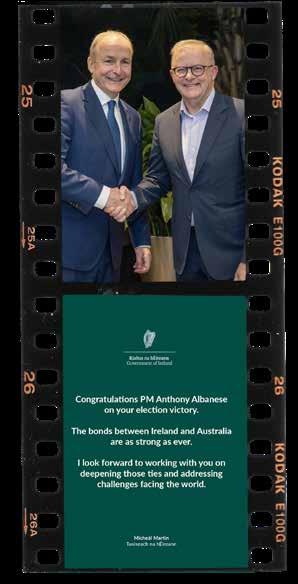
by Lloyd Gorman
Taoiseach Michael Martin finally got to press the flesh of Prime Minister Anthony Albanese in late November last year.
Back in May Mr Martin had congratulated his counterpart on his return to power but this was the first time he could personally connect with him in person. The two leaders met on the fringes of the #G20 meeting in South Africa but for his part Mr Martin at least will hoping the fleeting meeting will be followed by other more substantial encounters in the near future. “Looking forward to Ireland celebrating 80 years of diplomatic relations with one of our closest friends next year,” the Cork politician said on social media, with a photo of the moment they met.
Mr Albanese reciprocated with a similar online posting: “Australia and Ireland have a real friendship Our shared values and generations of people to people links make our partnership one of the strongest,” he said.
We think this is the first time Mr Albanese – who has claimed to be “half Italian, half Irish” – has publicly spoken about the relationship between Ireland and Australia since he first became PM in May 2022.
He inherited the ‘Irish side’ from his beloved, and belated, mum. Regular readers will know Irish Scene tried in vain time and again during Mr Albanese’s first term in office to ask him about his Irish heritage and about his trip as a much younger man to Dublin in 1988! Those advances were either shot down or ignored.
Mr Albanese frequently and proudly talks up his Italian side but rarely refers to his supposed Irish roots. In fact he has only done so once as PM when he was making a toast to President Joe Biden at a state dinner in The White House in October 2023. “Mr President, speaking as one man with Irish ancestry to another – although I am also, of course, half Italian, so you don’t have to guess my religion – I know
Albo’s own photo from his Dublin trip in 1988
you won’t object to me quoting a Dubliner,” Mr Albanese said to his good friend while raising a glass. Mr Albanese went on to quote “the familiar words of William Butler Yates” (twice from two different poems) which he said captured “the essence of the bond between our two nations – in all its warmth and its easy strength”.
Based on that little spiel you’d be forgiven for thinking Mr Albanese goes around citing Irish poetry as a way of expressing his Irish identity but this occasion was the exception to the rule.
Anyhow, now that the Irish PM has looked Albo in the eye and shaken his hand his statement indicates he is keen to follow it up with something meaningful, particularly as the two nations have had formal government to government relations since 1946.
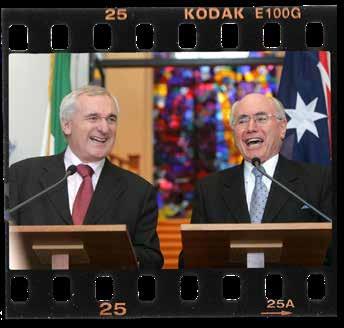
The Irish are taking the milestone seriously and preparations have been underway for some time. According to Simon Harris, Tánaiste and Minister for Foreign Affairs and Trade, senior government officials met in Dublin in November 2024 to work on issues of mutual interest, including the strong historic ties and bilateral relations and “defending multilateralism and the rules based international order”. Two government ministers had visited Australia on the St. Patrick’s Day ticket and the government was also represented at the ANZAC Day events in Ireland. Canberra had also appointed a new ambassador to Ireland. [Ireland too has a new ambassador in Canberra].
“I look forward to marking the 80 years of diplomatic relations with Australia in 2026. Ireland’s mission network will begin engaging with its Australian counterparts this year to plan events for this significant anniversary of diplomatic relations,” Mr Harris told the Dáil as far back as May 2024.
“Planning is also now well advanced for the opening of our new Consulate General in Melbourne in early 2026. This will represent a worthy contribution to the celebrations of the anniversary of diplomatic relations as well as further demonstrating the mutual desire to strengthen bilateral ties as well as of our intent to provide assistance to the strong and growing Irish community in the State of Victoria. The 2026 programme for St. Patrick’s Day in Australia will also have a strong focus on celebrating 80 years of diplomatic relations.”
Its been a while since the Republic of Ireland established a new diplomatic outpost in Australia. In fact it was 26 years ago, in the year 2000. The Taoiseach of the day – Bertie Ahern – came to Sydney to hold the proverbial scissors and snip a ribbon to officially declare the opening of the new Consulate General, the second mission in Australia after the embassy in Canberra.
On that trip Mr Ahern – who failed to get the backing of Fianna Fail to be the party’s candidate in the recent presidential election – invited the PM of the day John Howard to come to Ireland. Howard cashed in the invite in June 2006 and visited the country on official business. [Interestingly, as we read in the last edition of Irish Scene Albo was reportedly in Ireland in 2005 for a wedding] Mr Howard certainly wasn’t the first Australian PM to do so but he was the last. Technically speaking there have been seven PM’s since (Kevin Rudd (200710 and 2013) Julia Gillard/Tony Abbot/Malcolm Turnbull, Scott Morrison and Anthony Albanese).
Twenty six years is a sizeable chunk of 80 and a relatively long time between drinks. We don’t know if Taoiseach Martin even had time or the idea to ask his Australian counterpart over but the prospect is there and not beyond the bounds of possibility.
Another drawcard for the Fianna Fail/Fine Gael/Independents coalition government (which is now one year old) is the fact that Ireland will hold the presidency of the European Union from July to December 2026. If Albo’s
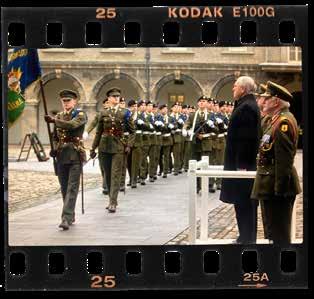
administration has any heavyweight issues with the EU to deal with in that time and he needs to be there then it is likely he would have to travel to Ireland. And as we have seen he is not afraid to jump on a plane and travel to far flung corners of the world in the pursuit of Australia’s national interest.
If he was to go he would probably need to make a speech or hold a press conference, or both. Would he mention his Irish heritage and his trip to Dublin in the summer of 1988? For sure the Irish media would want to know as much as possible about his background. But would he want to talk about it? The evidence to date suggests he wouldn’t.
If he did this publication – and more than a few of our readers – would be very interested to finally find out more. But if he proved to be evasive and elusive about the subject that would be fascinating.
The last edition of Irish Scene was hot off the press and winging its way to our brilliant advertisers and other distribution points when one of our stories hit the mark with the story of the week. In a secret ceremony at The Lodge, the official residence of the PM in Canberra, in late November Albo tied the know with his partner of five years, Jodie Haydon. News of the nuptials were only released to the media the next day while the newly weds escaped all the fuss for a quick honeymoon. It was newsworthy because he is the first Australian PM to get married while in office and most people enjoy a love story and a good wedding.
While the other media were playing catch up we predicted the special occasion was imminent (‘Its wedding bells for Albo – but something doesn’t ring true’, Irish Scene, November/December 2025). In part that story looked at a report by the Irish Times that Mr Albanese was in Ireland in 2005 for a wedding (we don’t know whose wedding). Every Australian Irish Scene has ever made who has been to Ireland for a wedding had a whale of a time and fell in love with the romance of the country and the character of its people. And in July 2022, just after his election as prime minister, Irish Scene revealed how he had also been to Ireland (Dublin specifically) in the summer of 1988. On the face of it one might think Albo would have a bit to say about Ireland and things Irish if only someone could just pop that question!
Its wedding bells for Albo – but something doesn’t ring true
Bforward to working together to deepen ties and face global challenges. So the idea of Mr Martin officially inviting his

Tebbutt ended amicably enough in early 2019. Later that same year he met his fiance Jodie Haydon. Everybody deserves another chance at lifelong happiness with the right partner, good luck to them. Weddings are momentous occasions in life. So it was intriguing to learn Mr Albanese travelled to Ireland twenty years ago for one, according to Irish Times journalist Padraig Collins in an article published on Saturday May 4.
“Albanese, who has Irish heritage through his late mother Maryanne Ellery, visited Ireland for a wedding in 2005,” Collins wrote. “He is long overdue a return visit if the Irish government sees fit to invite him.” Back in May Taoiseach Michael Martin congratulated Mr Albanese on his “election victory” and said he looked

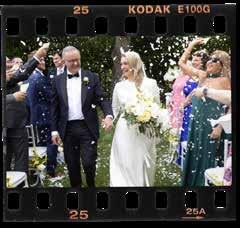

by Lloyd Gorman
More than three million people flew through Perth airport over Christmas and the New Year holiday while a record 1.8 million passed through Dublin airport over the same period. Cork, Belfast and other regional airports also saw tens of thousands of people from far and wide come and go with the seasonal migration.
Waiting outside the arrival gates for many of them were countless family and friends, emotional and eager to be reunited with their loved one. Moving amongst the throngs too at some airports were reporters or presenters for TV, newspapers and other media on hand to capture the unfolding anticipation of the pending reunions. Tears and weeping embraces make for telly gold, magnificent moments of reunification. Inevitably the heart warming coverage includes stories of people returning home from Australia in general and Western Australia in particular.
out celebrating. I’m sure they’ll have a taste of Dublin hospitality. Including lots of drinks.” Ryan said: “It’s been chaotic and special. I’m happy to finally be here after 14 years, and see my family. I’m sweating, I’m shocked. But yeah, I’m happy to be here.”
The same festive family caught the attention of Irish Independent journalist Deirdre Barry in a piece published on December 23; “Sisters Colette Kelly, Pauline Cowley, Anne Cowley, Patricia Nolan and her husband Patrick Nolan were dressed in their festive finery to welcome home their nephew Ryan Kelly, who hasn’t been home from Perth in 14 years. Their sister, and Ryan’s mother, was home for Christmas last year.
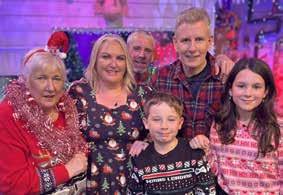
In December 2024 the Late Late Toy Show staged a surprise reunion live on air for mum Carol O’Brien family in Navan, Co. Meath and her son and his family from Perth.
On December 21 Irish Sun reporter Danielle Russell Masterson published one of the first airport stories, including about the Nolan family who were rocking elf hats as they waited for Ryan Kelly to arrive from Perth, Australia, after a 14 year gap.
“Aunt Pat Nolan, from Donaghmede, said: “Ryan, he’ll be with all his cousins. They’re going
“You should have been here that day,” Colette Kelly said.
“Our sister has lived in Australia for over 30 years – the last time Ryan was home was when he was about 14 years old.” Ryan said he was planning on making the most of his trip to the Northern Hemisphere and will embark on a European tour after spending Christmas in Ireland.”
On Christmas Eve Kevin Galvin from the Irish Independent reported about ‘Tears of Joy’ as Kingdom dwellers flock back at Cork Airport’. “Arriving on her own, but in remarkably good
spirits despite a very arduous journey, was Joanne Lynch, who was ticking into her 30th hour on the road, having taken the ultra-longhaul flight from Perth to London Heathrow, and arriving back into Cork to head to her native Spa, near Killarney,” wrote Galvin. ““I’ve been in Australia for 16 months. I’m in a place called Newman in Western Australia now, which is out in the desert. It’s very hot! I’m after leaving 41-degree heat to come back to this, but I’m absolutely loving it over there,” said Joanne, who is a sponsored PE teacher in a local primary school, having trained to teach in secondary schools. No plans to come home at the moment — the money is too good!” said Joanne, who also plays tag rugby league with a local team in Perth. “I probably have more Aussie friends than Irish friends; you really have to submerse yourself in the Aussie culture. What I’m looking forward to most is the nights out, the music, and the craic — you just can’t beat coming home!.”
A headline on another article by John O’Shea for Echolive.ie on December 22 sounded a very similar sentiment; ‘Being home for Christmas, nothing beats it': Flying home to Cork for festive season’.
Amongst those featured were Ballincollig based Margaret Larkin Finnerty who was waiting for her son, Sean, on his way back from Curaçao, an island close to Venezuela in South America. “Margaret said she was delighted to have her son back on Leeside for Christmas,” wrote O’Shea. “It is absolutely brilliant having
them home, whenever they can come. I am really looking forward to Christmas. We will enjoy Christmas now and we will have a few days with him, before his wife, Gabriella, flies into Dublin on Monday. So, we will have him to ourselves for a few days. Then, when Gabriella arrives, we will all get together in my daughter’s house out in Dripsey.”
Just one piece of the family jigsaw puzzle was missing. “I am just sorry my other son, Brian, can’t come from Perth, in Australia, because he is coming in March for a wedding,” she said.
An article by Fintan O Toole published in the Irish Times on December 23 told how the Irish Christmas has for many decades exposed the nation’s ‘separation anxiety’. Today we can quickly, easily and cheaply make a phone or video call from Perth to anywhere in Ireland, a technology that would have not seemed unimaginable only a few decades ago. O’Toole wrote about a hotelier in Mayo who in 1981 wrote to the minister for tourism to express frustration at the need to insert 38 five pence pieces into a telephone slot to make a three minute call to Europe. And that was if you could get a line, with just ten lines out of Westport at the time getting through to Dublin was not always easy. Those with a phone at the time also had to book in advance to make an overseas call at Christmas time and faced hefty bills for even the quickest of calls.
It was against this background that Gay Byrne used his significant media might to hold an annual ‘Christmas call’, where listeners in their thousands wrote to ‘Uncle Gaybo’ to plead their case in the hope of winning a phone call with loved ones overseas.



O’Toole pointed to the winning letter from 1992, written by one Monica Murray in Ballyfermot, Dublin, contained in the book ‘PS Gay’, written by Suzy Byrne, the daughter of the radio and TV personality.
“Dear Gay, I would like to have a telephone call from my son Patrick in Western Australia,” Mrs Murray wrote. “I will tell you why. In the last five years I have been seared by the pain of my loved ones leaving. First my beloved brother, who felt he had enough hard blows from this country and left for Canada. Then my lovely daughter of 25 who trained as a nurse in the Meath hospital, and done her midwifery in the Rotunda, got fed up with temporary status and went to
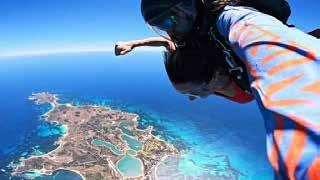
California to nurse in Stanford. Then my son of 24 went to Australia with his wife.”
That son, Patrick, was stuck in Perth because: “he is a carpenter who works for himself, he doesn’t work all the time, only when gets has a contract...[is] just a bit down at the moment and would love to have all the family close together once again but he cannot come. So we would love to hear his voice. Hoping I haven’t bored you.”
That Christmas eve the show’s roving reporter Joe Duffy was despatched to the Murray residence where instead of hooking her up with a precious phone at the right moment pulled back the front curtains to the sitting room to reveal Patrick, his wife and their daughter standing outside in the front garden. You can imagine the rest. The Star newspaper was also involved and published a double page spread of photos and words the next day under the heading; ‘Dramatic Reunion Brings Christmas Joy to Family’. Even the Irish Time’s own radio reviewer reported that: “when the neighbours turned it into an impromptu street party, Duffy reminded them not to worry about still being in their nighties. It was radio, after all.”
On the flip side of joyous heart warming homecomings, unfortunately there are also heart breaking ones.
The amazing work of the Kevin Bell Repatriation Trust will be well known to Irish Scene readers, members of the Irish community and affected families but may not be widely aware to general society so it is good to see it getting as much coverage and appreciation as possible. On January 3, 2026 Catholicnewsagency.com published a story about the KBRT under the heading ‘A homecoming of mercy: The charity that returns Ireland’s dead’.
“The Christmas season in Ireland is marked by the return of family members living abroad and by the strong tradition of visiting family graves,” wrote Patrick Passmore. “Those themes of returning home and respect for the deceased lie at the heart of the work of one of Ireland’s
most remarkable and humane charities, the Kevin Bell Repatriation Trust (KBRT). Since it was founded in 2013, the trust has brought home the bodies of more than 2,000 Irish people who have died abroad in sudden and tragic circumstances. The trust typically has three or four repatriations underway at any given time.”
Sadly that was the true of the recent Christmas break which saw a number of young Irish people suddenly die in Australia.
Kevin Bell had been in Australia and Thailand before he continued his travels in New York, where on June 16, 2013 he was killed in a hitand-run on his way home from a night out. HIs parents Colin and Eithne, from Newry, found themselves thrust into the situation where they had to deal with the sudden and dramatic death of their son and the totally alien process of trying to have his body brought back to Ireland at short notice.
“And when Kevin came home, it was obvious that Newry too had lost a son with the reaction to the news that broke,” Colin told the Catholic website. “I can only describe it as Newry came around us like a blanket. In the space of a week, 150,000 pounds [$202,000] was raised to bring Kevin home.”
It was from this trauma the Trust was born.
“Coincidentally, at this time, the son of a Belfast family, Steven Clifford, was killed in Thailand”, the article said. “We contacted the family and said, ‘Look, we have this money; we’ll pay to bring your son home.”
A week later a young man from Sligo died in Las Vegas and the Bells – who still had 150,000 pounds that had been raised for them – reached out to the family to do the same for them.
“We decided then that we would make this Kevin’s legacy,” Colin Bell said. “Kevin was a big character who loved life and always said that he would be famous. So in a way his name is out there and it’s well known throughout the world. I’m sure he’d be very pleased with that fact.”
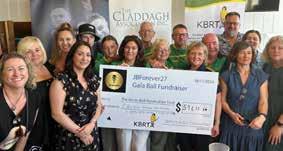

CONTACTS: MARTY BURKE 0410 081 386
It has been a very busy couple of months at the club, we’ve had junior trials, senior presentation evening and the club AGM, pictured.
Junior trials have seen a record number of players attend, from under 8s up to under 18s. This year we had over 700 kids come along over the two weeks, showing how much the club is growing year on year. It was only three years ago our numbers were sitting around 250 juniors, now we have over 500 and unfortunately have had to turn kids away this year just due to the size of the facility. However, we are working closely with the Shire of Wanneroo to secure a larger oval which will ensure our growth can continue. A big thanks needs to go to Karen Harris, Emma Martin and Lisa McStay for there help and organisation over the course of the trials, and to all coaches and volunteers who ensured it ran smoothly.

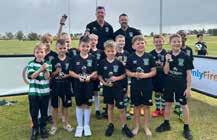
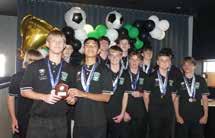
This year’s senior presentation was held at The Pavilion in Mindarie and was a spectacular event. It sold out in record time and a great night was had by all. A big congratulations goes out to all the winners on the evening and to Ash Dailly who was this year’s club person of the year. Ash has worked tirelessly to ensure we have a canteen to be proud of on match days, as well as giving the club a very valuable revenue stream that allows us to remain one of the cheapest state league clubs in Perth At the Current AGM held in November members voted and agreed to the election of Marty Burke to continue as President of the club. It will be Marty’s 115th year at the club, and even as he gets older his love and enthusiasm continue to grow. Marty will be supported by our superb committee who work tirelessly each season. Big thanks to all our major sponsors, Live Lounge Wanneroo, Acclaim accounting, Glasgow Skin clinic, Colgan’s and Joondalup Obstetrics.
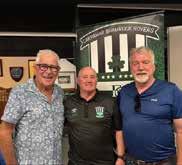
It all began on 24th Jan 1984 at a meeting held in the Briar Patch tavern. The meeting got underway at 8:20. Mick Manning was elected as the first president of Shamrock Rovers FC. Mick’s reign saw the club progress from Div 4 – winning it in the first year – promoted to Div 3. The progress continued over the next few seasons, culminating in the club gaining promotion to the Amateur Premier League in 1990. In 1997 the first team won the league and cup double, the first Amateur team to do so. The club also saw many successes at Youth, Reserve, Social and Masters levels. In 2010, after winning the Amateur league for the 5th time, Mick called a meeting to discuss the future of the club going forward. It was decided to set the club’s sights on State League, to bring the club to the next level. Winning the State league in 2014 was one of Mick’s proudest moments. This was just one of the highlights of Mick’s reign in Shamrock Rovers. In 2018 Mick stepped back from the committee, but his love and support for Rovers never wavered. From a personal point of view, I was delighted to have served with Mick on behalf of Shamrock Rovers and over the years we became good friends. Mick was fully supportive of the 2020 merger with Carramar, when the merged clubs became Carramar Shamrock Rovers, and the club has gone from strength to strength, building on the many years of work from Mick. The man was a true legend. Mick passed away on 24th November 2025. Carramar Shamrock Rovers extends our deepest sympathies to Mick’s family and friends. Rest in peace my old pal. Marty Burke, President, Carramar Shamrock Rovers.


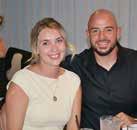
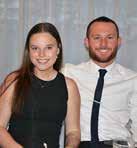
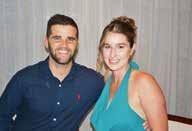
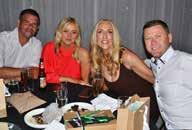
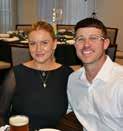

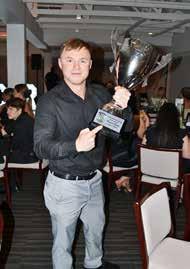
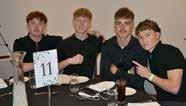
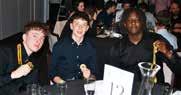


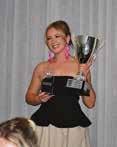
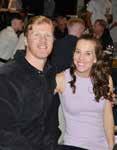

BY PAULA XIBERRAS
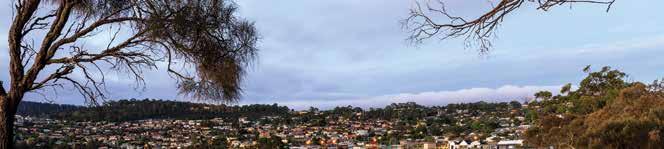
BY PAULA XIBERRAS
A chance reading of a little-known Roman woman ended up becoming the topic of Kaarina Parker’s first novel ‘Fulvia’. Fulvia, although not written about much in the history books was a trail blazer. She went beyond the traditional aspirations of women of the day.
Travelling to Rome to create a future for herself she marries Clodius a senator from an aristocratic family who is not enamoured of the ruling class. Popular among plebians, Fulvia supports her husband as he advances through the senate ranks.
I spoke to Kaarina Parker who has Irish and Māori heritage and who, as well as an author is also a model and activist.
When Kaarina was studying ancient roman studies at the University of Melbourne, she read Fulvia was one of Marc Antony’s wives. Fulvia was written about in ambitious terms and of course this intrigued Kaarina. The essay she wrote on Fulvia remained with her well after her studies were completed.
Kaarina was amazed at how Fulvia became an exception to women of the time in managing to make a name for herself in a patriarchal society. She even held the first political meeting in her home, traditionally, the sacred place of females, angering many like Cicero. However, with the respect shown to her by the lower classes, she became the first plebian princess, and the lower classes loved her.
Sadly, there was not a lot of information about Fulvia, just her birth and married history and Kaarina say this book aims to fill that gap. A testament to her exceptionality, was that Fulvia was the only woman other than a goddess at that time and the first imperial woman to be imprinted on a coin, with an image taken from the last thirty years of her life. The bronze and gold coin profile is all we have to suggest her appearance.
Kaarina is working on a sequel to Fulvia. Kaarina says the first book covered the first part of Fulvia’s life and was about her finding power with Clodius and the second about is about what she does with that power during her marriage to Marc Antony.
Fulvia by Kaarina Parker is published by Echo.
BY PAULA XIBERRAS
I recently interviewed Karen Herbert about her mixed genre, psychological, medical thriller, supernatural, romance, ‘The Ghost Walk’.
The novel’s main protagonist Ruby Rose Gillespie is a woman who has had a lung transplant. Her surgeon Dr Gabriel Beaufort who was a classmate of Ruby’s is now her lover.
When Ruby returns to hospital with a fever, Gabriel s body is found in the wetlands near the hospital.
The story was inspired by Karen’s real-life friend and fellow author Jo Giles who, like Ruby in the novel lives with cystic fibrosis.
When I ask Karen why she wrote a psychological medical thriller, supernatural, romance, she says it didn’t start that way she just wanted to write ‘a good cracking crime story’.
The novel is unique in that it features a protagonist, Ruby, who is living with a health issue that is not central to the novel. Also uncommon to most novels is the central character is a woman in her midforties, involved in a romance.
The novel was not intended to have a supernatural aspect, but it just wrote itself that way says Karen.
Karen tells me after a recent visit to Tasmania she is ‘Thinking of doing a novel in Tasmania’s high country with fly fishing’.
The Ghost Walk by Karen Herbert is published by Echo.
Whensix Irish political prisoners (Fenians) made a daring escape from Western Australia in 1876, little is known of what became of them after their arrival in America. Did they return to Ireland? Marry and have a family? Go back to their revolutionary ways? Live a long and fruitful life? Live long enough to see Ireland win its independence from Great Britain? All questions scholars, historians, and lay historians never asked or unable to answer. That is up till now.
Fremantle to Freedom (120 page coffee-table-book) written and edited by Irishmen, Peter Murphy and Fred Rea – who for over thirty years collectively and meticulously researched the famous Catalpa Escape – may help answer some of those vexing questions.
Told through the eyes of the last surviving member of the Catalpa 6, James McNally Wilson, chapter
by chapter, Peter and Fred’s book intertwines fact and fiction, while taking the reader on a journey rarely spoken or written about.
Fremantle to Freedom begins with Wilson’s childhood in Ireland; how he ended up a British soldier; how in 1864 he recited the Fenian oath in a Dublin tavern; his arrest for treason in 1866; his court martial; his imprisonment in some of Britain’s most notorious jails; his transportation to Western Australia on the convictship Hougoumont; serving time in Fremantle Prison; working on convict-chain-gangs in the bush; how he and his comrades escaped from Fremantle Prison; their voyage to America on the Catalpa; what became of him and his five comrades when in America, including those who helped mastermind their escape. Filled also with photographs,
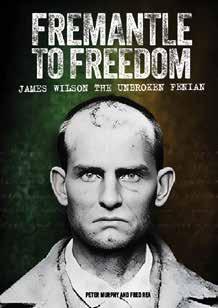
illustrations, maps, newspaper articles, letters, yarns, songs, and poetry, the book takes the reader on a journey that not only adds another page to one of the most daring prison escapes in Australia’s colonial history, but written and presented in a way that will leave the reader wanting to learn more.
To celebrate the 150th Anniversary of the Catalpa Rescue Fremantle to Freedom will be released February 2026. To order your signed copy please contact: Fred Rea fredrea@iinet.net.au or call the authors
Fred Rea 0418 943 832
Peter Murphy 0439 976 507
PRICE $50 + Postage

by GRAEME MACRAE BURNET / TEXT
PUBLISHING $32.99
Benbecula is a brooding, eerie, haunting, macabre, account of the real life MacPhee murders of 1857 when, in the words of our narrator, Malcolm MacPhee, ‘my brother Angus did to death my father, my mother and my aunt, all in the most brutal and purposeful fashion’. Set on the remote Hebridean island of Benbecula, this is a tale of madness and identity, highlighting how landscape, lifestyle and isolation can affect the inhabitants of remote communities. As storyteller, Malcolm, the eldest of the four MacPhee siblings, recounts the harsh and seemingly mundane life of toil on the island, and how, due to Angus’ homicidal spree, he (Malcolm) is now ostracised by the islanders, with the exception of Mrs. MacLeod, who comes to clean his house and supervise his bathing once a month. Sister, Marion and brother, John have both quit Benbecula for jobs on the mainland, leaving Malcolm alone with his thoughts. He reminiscences about Angus’ behaviour, and how, following his extended work for a shoemaker on the mainland, his brother returned home prone to bouts of violence, and on occasions having to be tied up until the rage passed. There are hints that the MacPhee’s were considered ‘odd’ by their neighbours even before Angus killed his family, and perhaps Malcolm is more like his brother than he would care to admit. Benbecula is not a ‘whodunnit’ crime story, but rather a dissection of underlying remote community suspicion and discontent. Through its firstperson narrative it represents a deep dive into a mind teetering on the brink. Is Malcolm to be believed as a reliable storyteller? Should we take
his words as face value? In his well-documented appendix, Burnet describes the original crime, based on contemporaneous witness statements, parish registers, letters and records from the Criminal Lunatic Department (who supervised Angus’ incarceration) and the Statistical Accounts of Scotland. The tale Burnet relates in this novella is very closely aligned to the known facts, but how he does so exhibits an exquisitely masterful touch, while the language used evokes an unsettling atmosphere of all that is strange and mystifying.
by RICHARD KERBAJ / BLINK $36.99
How good it is to see ABC Entertains giving ‘Spooks’, one of my all-time favourite TV programmes from the early 2000s, a reprise. Not only is ‘Spooks’ a taught, well written series featuring the nefarious activities of intelligence officers in Section D of MI5, it acted as a springboard to launch the stellar careers of Nicola Walker (‘Unforgotten’) and Keeley Hawes (‘Ashes to Ashes’). While ‘Spooks’ was all fiction, The Defector is factual, recounting an improbable tale of Cold War cloakand-dagger, spies and counter spies, covert operations. In 1971, when a drunken Russian, Oleg Lyain, staggered in to Tottenham Court Road police station and declared that he was a KGB officer, the constabulary were duly skeptical. However, Lyalin’s claim proved to be true and his defection turned out to be pivotal in righting the fortunes of Britain’s MI5 which, until then, had been rocked by scandal and failure and was heavily reliant on the CIA for information and support. Sent undercover to the UK by the KGB, Lyalin soon succumbed to London’s ‘fast life’ of fine restaurants, bars,
by John Hagan


parties and women. At one stage, although married with a daughter, Lyalin boasted having five mistresses. Dubbed the ‘super spy’, Lyalin went on to reveal a web of agents who had infiltrated the UK secret service (was UK Prime Minister Harold Wilson a Soviet plant?) lifting the lid on past covert operations while divulging a future Soviet plan to pollute a British river with radioactive waste. Thanks to Lyalin’s insights, Britain was able to uncover and expel 105 Russian agents; his information led to the unmasking of Anatoly Golitsyn, who until then was well trusted by MI5, but who had been feeding erroneous information about KGB operations and operatives. Drawing on recently declassified intelligence documents, plus dozens of interviews with former spies, Kerbaj reveals something of the labyrinthine, and sometimes incompetent, workings of intelligence operations while managing to capture the motivations and psychology of the principal players in this gripping read. Thanks to Kerbaj’s extensive knowledge of the ‘spying business’ (he recently penned the award winning ‘Secret History of the Five Eyes’) The Defector reads like a John le Carre novel, with the author devoting a separate section to bring the reader right up to date with his appraisal of Vladimir Putin and Russia’s current espionage culture and ambitions.
by ANNABEL CRABB / ALLEN & UNWIN $24.99
And indeed, there is, (maybe more than one!) with our narrator, Shawn the Prawn providing a witty introduction and setting the scene for an engaging, humorous and truly informative book. Yes, I know the subtitle is, ‘The kids guide to Australia’s amazing democracy’, but forget that, this is an engrossing and illuminating paperback for all ages. I certainly gained insights into, and greater understanding of, our democratic system and all its quirks. Crabb, with the valuable assistance of Walkley award-
winning cartoonist, First Dog on the Moon, romps through how Federation was established, the development of our Constitution (the most important single document in Australia’s system of government), the powers and interactions of both the House of Representatives and the Senate, how Australian politicians are elected and the responsibilities of the various Ministers and Departments together with the workings of the press and media on the Hill. Each of the seven chapters contains a wealth of information, and Crabb’s use of bold font to emphasise points, together with engaging maps and tables, plus First Dog’s creative and appealing images, make, what could be a dry and challenging topic into one of fun. Crabb’s narrative uncovers so many ‘you must be joking’ facts about the uniqueness of the Australian political system. Interestingly, all the fountains around Parliament House are to help stop busybodies eavesdropping on important conversations. Or that the building contains more than 2700 clocks, or that there are 4500 trees plus 135,000 plants in the 23 hectares of Parliament’s landscaped gardens. Then there was Alfred Deakin, who served three times as our elected PM, while moonlighting for 13 years as a secret political correspondent for the Morning Post, a job for which he was paid the not insignificant sum of 500 pounds a year. A press gallery journalist in Canberra from 1999 to 2003, Crabb, now a political pundit for the ABC, knows our democracy inside and out, and in the final pages of this entertaining book, which so successfully distils important information into entertainment, she includes an extensive glossary and suggests what to look for on a visit to Parliament House. [PS. Shawn the Prawn is indeed a real 350-million-year-old tiny coral fossil found in the floor of the grand Marble Foyer in Parliament House].
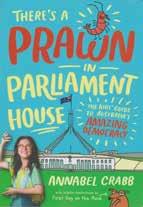
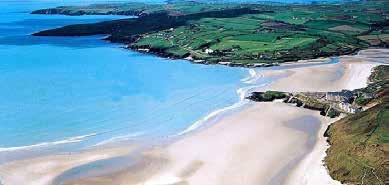
West Australian Tom O’Driscoll, 75, recently committed the story of his family’s history to print – dating back to his Irish ancestor.
A native of Skibbereen, Co. Cork, Johannah O’Driscoll left from London in November 1865 on board the ‘Robert Morrison’* and arrived in Fremantle in early March 1866.
Her first position was as housemaid in York. She married James McClymans in October 1866 and the couple went to live at Seabrook, near Northam where James had been granted 100 acres.
‘A Family History & Their Legacy O’Driscoll and McClymans of Grass Valley WA’ was launched at the Grass Valley Tavern in mid November 2025, attended by about 150 people.
Thirty one of his 32 (3rd Great-Grandparents) were all Irish, an ancestry the O’Driscoll Clan has always cherished.
“The book was written a little by accident,” Tom told Irish Scene. “About 15 years ago a group of us were going to Ireland and one of the group going was a first cousin, who grew up in Grass Valley, as I did, and his adult daughter. She said I should write a small article so that the group could have a bit of history so I did do a small article. Anyhow, we went to Ireland and in particular our "home" town of Skibbereen. After I returned I thought my original article (about five pages long) was too scant and I had omitted to mention a few things so I improved it. Well, it went out of control and it eventually turned into a 400 page book! I have now been to Skibbereen three times! I have done a family tree on Ancestry. com with about 9,000 people in it. Don’t worry, they are not all O’Discrolls.
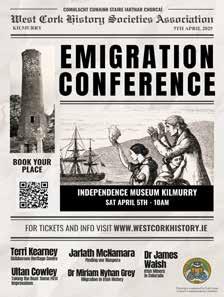
[They include the McClymans, McBreen’s, Dunne’s, Davison, and McGuigans (to name a few]. Don't worry, they are not all O'Driscoll's. I have tried to expand every persons pedigree that married into our family here in Australia. I have successfully researched the baptism's of my Great Grandparents, Jeremiah O'Driscoll and found all the siblings, including his sister, Johannah. Registrations of Births, Deaths and Marriages in Ireland commenced in 1864, so these preceding events from say 1835 onwards are taken from Church Records.”
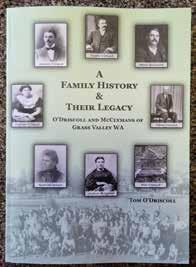
Tom’s extensive research did not reveal exactly why Johannah left Ireland but he has his own theories. “Behind every decision there are certain, let's say historical facts,” Tom added.
“Ireland was governed by the British. They had scant regard for the Irish, with much less regard for the Roman Catholics living under their control. Our family were of course Catholics and therefore they were "inferior" to the English. Most Catholics were given fewer liberties. They had to drop the ‘O’ off O'Driscoll, could not own land (only lease or rent it), could not own a business,
could not vote, education was not a priority and the ability to use it, for the Irish was not there etc. They were second class citizens. There was a resentment that the Catholic Irish had for the system. It was difficult for people to leave Ireland. To afford to have a fare saved was difficult, especially if you were a young person. Johannah was roughly about 22 years of age. She could scarcely sign her name on say Birth Certificates for her children etc. She must have been taught to sign, probably by her semi-literate husband, but I am sure she would not have been able to read or for that matter to write. Her prospects in Ireland were very limited. When the ‘Land and Emigration Commission’ (an English Government body) advertised that they would assist certain people, say young females, to leave Ireland, sail to a new country, then the offer would have been a way that she could leave these troubles far behind herself.”
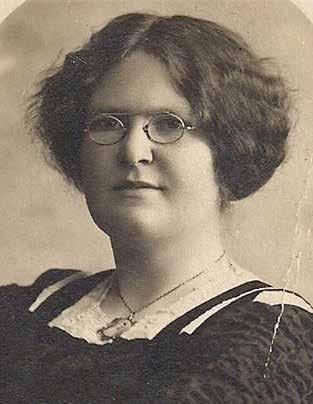
Born into a farming family at “Chillamoning Farm”, Grass Valley, and after a varied career in finance, mining and hospitality – including ten years as the publican of the ‘Colliefields Hotel’ in Collie, which he now calls home, Tom began started to study the family tree in earnest. He said that in Ireland his forebears were illiterate. “To compensate they became story tellers,” he said. “Story telling is the origin of the O’Driscoll name! Retelling stories was a family trait and a great base for many stories {in the book). They began as low citizens of British controlled Ireland, shepherds in Western Australia, building to become substantial in Grass Valley and beyond. It is a snap shot from Ireland into today’s world.”
*The long sea journey to Western Australia could be arduous on passengers at the best of times, but particularly so depending on circumstances of each particular voyage. An article published in The Perth Gazette and Independent Journal of Politics and News on 31 January 1862 reveals just how difficult the passage could be. News of the Robert Morrison – which was making its maiden voyage to Fremantle – arrived with the convict ship
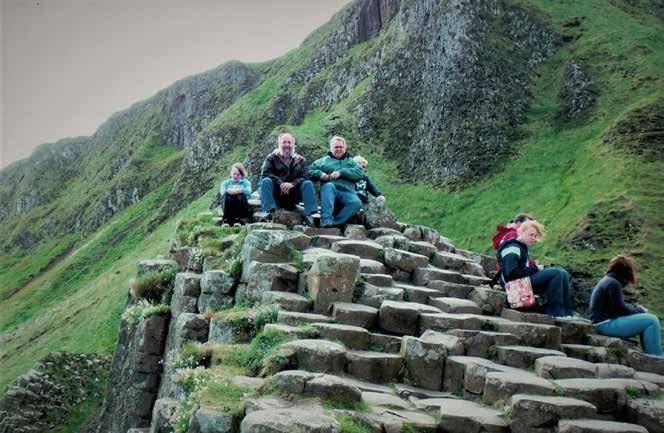
Tom, left, pictured here at the Giant’s Causeway, has visited Ireland three times
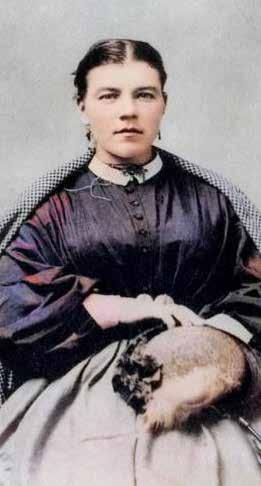
Johannah O'Driscoll
to the then Swan River Colony, the ‘Lincelles’ which arrived in Fremantle in January 1862, carrying 304 convicts, 70 pensioner guards and others. The wind powered Lincelles took longer than expected to arrive at its destination because of “calms” and because it ran out of water and had to stop in at Simon’s Bay in the Cape of Good Hope at the southern tip of the Cape Peninsula, South Africa. While she was there the ship learned the ‘Morrison’ had also taken refuge. The Lincelles was able to depart first and carried two letters from passengers from the Morrison.
0ne of the letters, dated December 21, said the "Morrison" has no chance of getting off for a week or ten days; the passengers were all well on board, although of course tired with their long voyage. “Our misfortunes seem to have no end; we lost our jibboom at Gravesend, our mast off the island of St Salvador; caught fire off the Canaries; had to put in at the island of St. Jago for water; and we are now at the Cape with a smashed windlass; both mates are dis charged, and four men in jail for repeated acts of drunkenness and insubordination.”
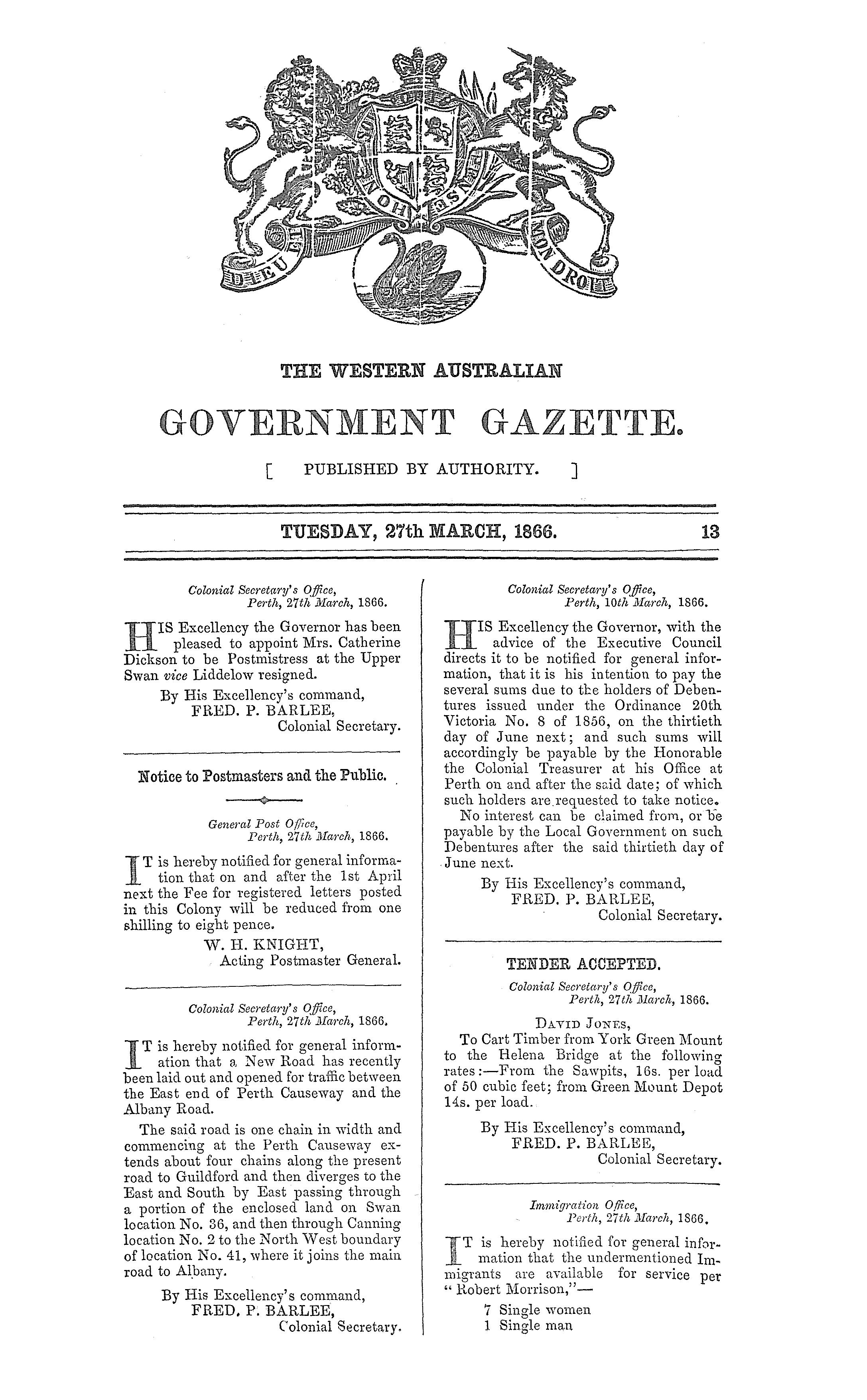
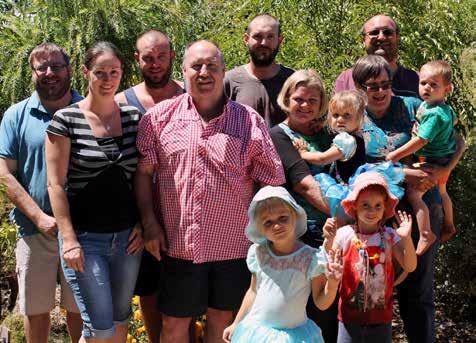
No doubt the passengers were more than happy to finally reach dry land and get on with their lives.
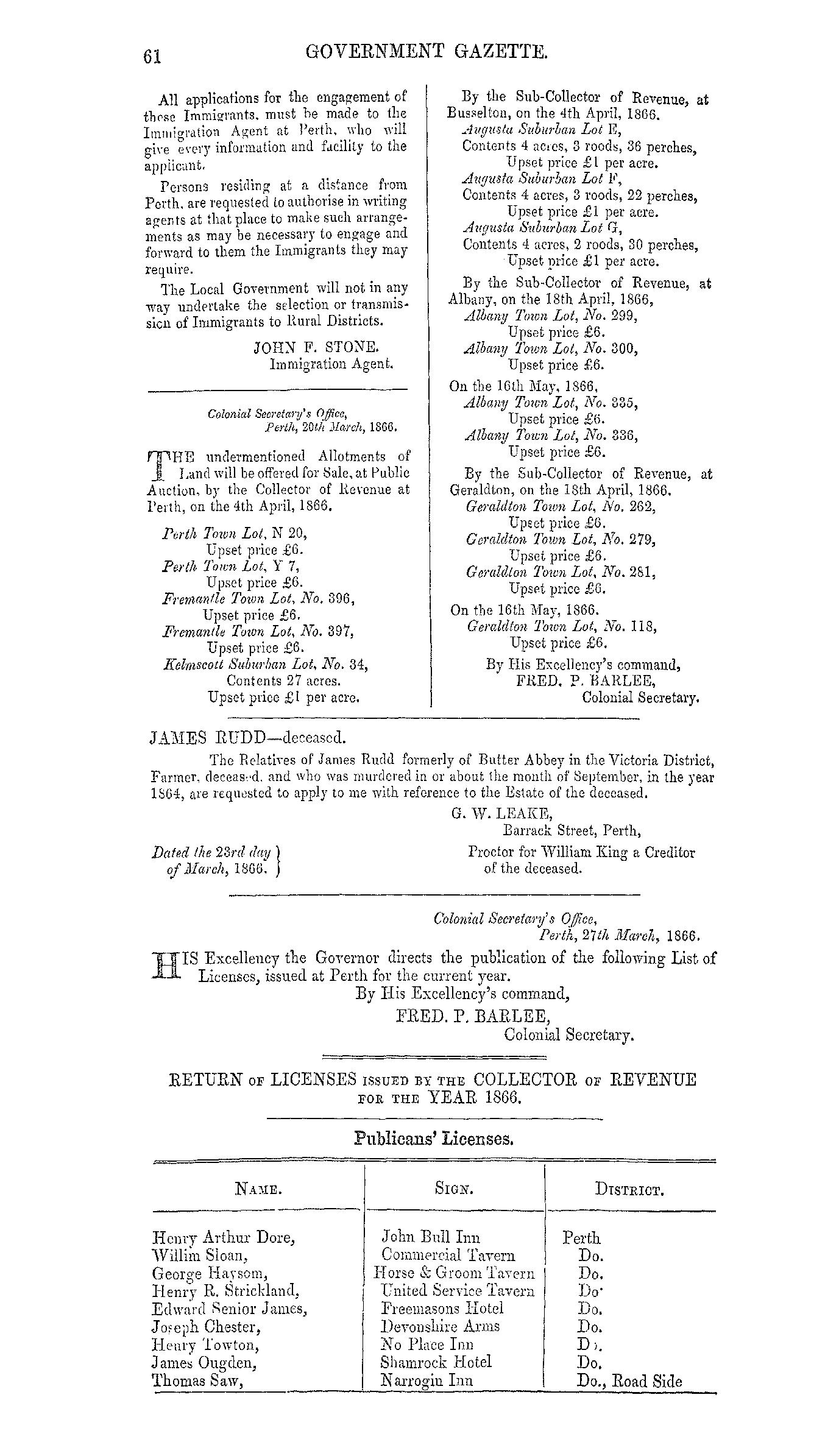
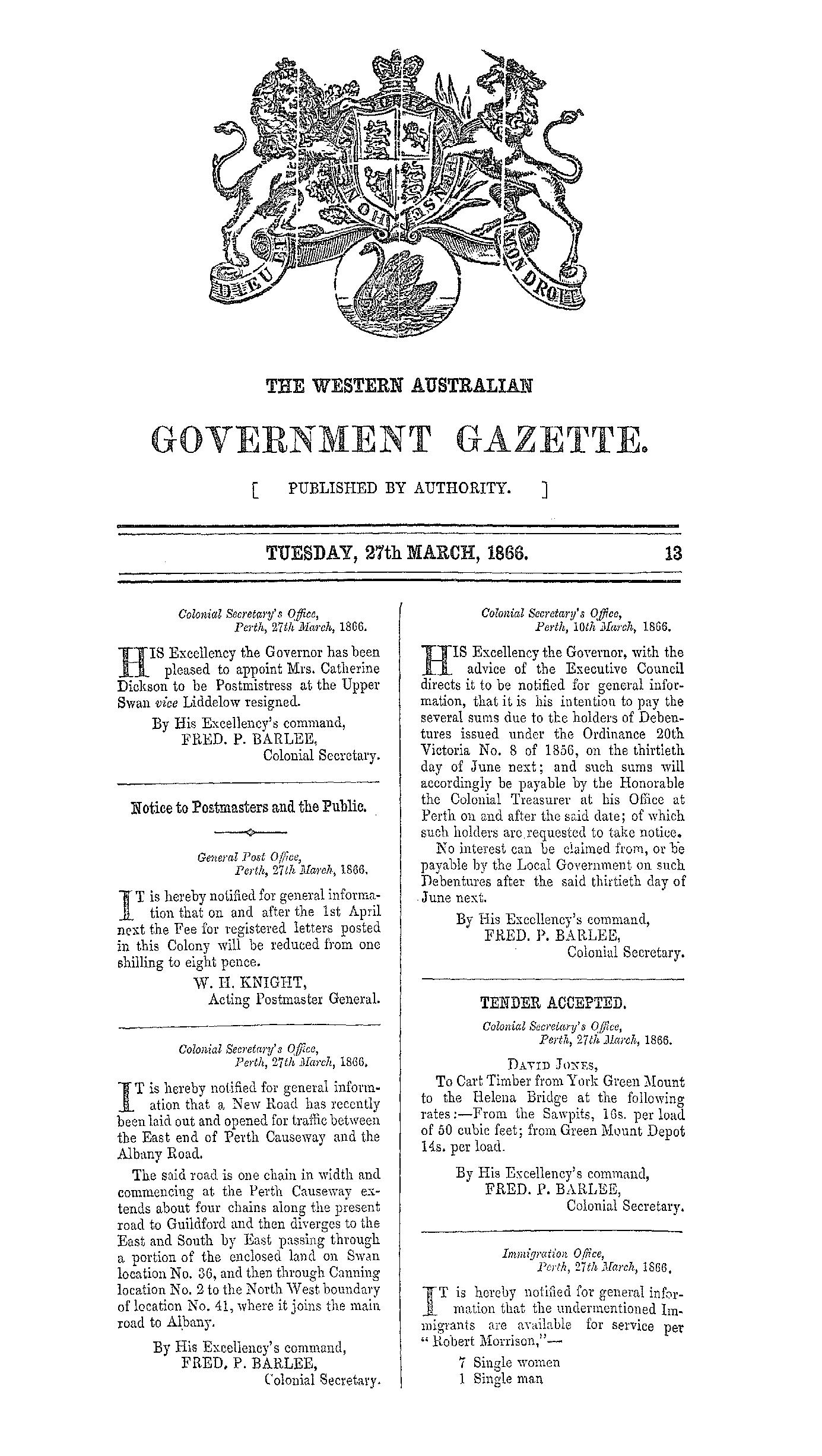
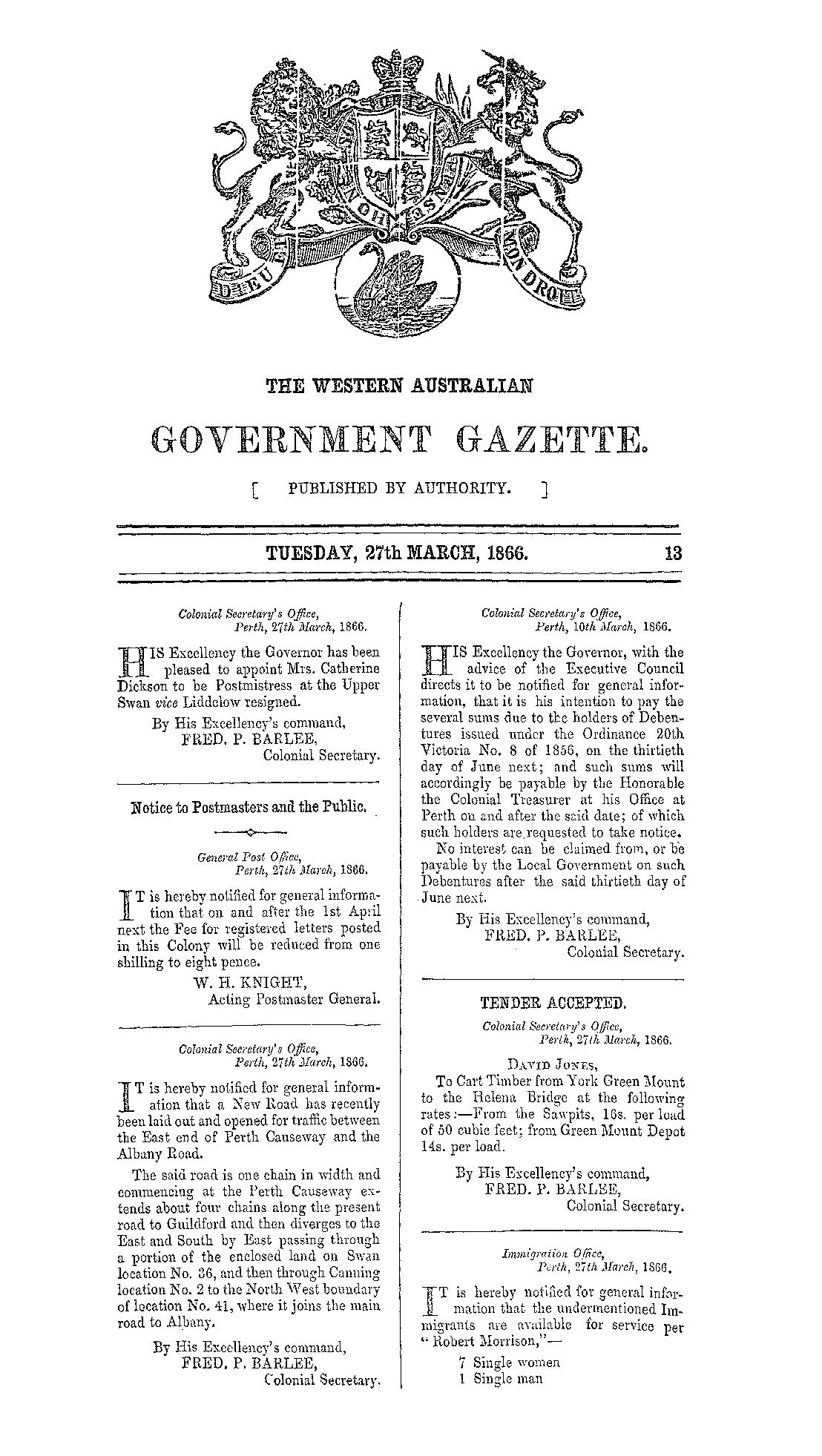

by Joe Matthews
Many thanks to the guys and girls from Western Swans and Perth Shamrocks senior There has been discussions about establishing a GAA club in the northern suburbs for a number of years. Before Christmas, a small group of us came together and decided that rather than continuing the discussion, we would move forward and make it happen. Our first step was to confirm that the level of support existed to sustain a new club. We used social media to gauge interest, and the response was overwhelmingly positive. That support gave us the confidence and encouragement to proceed with our plans.
One of the core reasons for establishing the club is the absence of any GAA presence in the northern suburbs, despite a large and growing Irish community. Many families here are well established, permanent, and raising young children. Given the size and spread of the northern suburbs, a lot of Irish families feel disconnected and isolated. While there are excellent Irish businesses and initiatives in the area, what has been missing is a single organisation to bring everyone together.
From the outset, we agreed that the club must be rooted in the community, with families and young people at its centre. Our ambition is to build a true community club with strong participation across all levels. That is why we have set ourselves the goal of providing men’s and women’s football, hurling, and, in time, junior teams across all codes. Alongside this, we are committed to developing a strong social side to the club, including family days, mothers and others, dads and lads, walks, runs, and inclusive events that bring everyone together.
Our inaugural meeting took place in early January, with strong attendance and positive engagement. Club committees have now been established, and we are already functioning with a clear structure and defined roles. The meeting was also attended by local MLA Caitlin Collins, whose presence and support further reinforced the importance of this initiative within the wider community.
We have secured training facilities at Christchurch Park in Currambine on Saturday mornings for the coming month and are currently
Some of those at the first meeting in the Templebar Pub in the Iluka
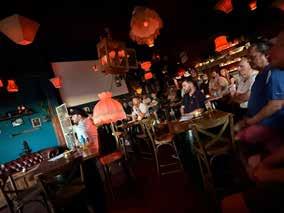
working to secure additional midweek evening training sessions as the club continues to grow.
We have received significant support from the wider GAA community in Perth and across Western Australia, and there is a shared belief that there is both room and need for another club in the city. In addition, we have had positive engagement with a number of potential main sponsors who have expressed strong interest in supporting the club.
As a club, we want to be open, inclusive, and reflective of the diversity of the local community. We aim to cater for as many people as possible, whether they are experienced players, newcomers to the games, or simply looking to be involved socially.
As a new club, we are actively seeking players for both men’s and women’s teams, footballers and hurlers, as well as anyone willing to contribute through coaching, management, administration, or helping to build the social fabric of the club.
Club President Joe Matthews with Hillarys MP Caitlin Collins and Jamie Donnelly, Club Vice President
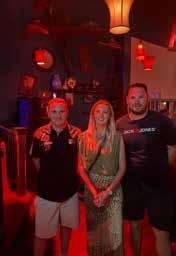
Our immediate goal is to field a team at the Perth 7s, followed by entering teams in the upcoming season, with ongoing planning for both football and hurling.
This is an exciting time, not just for those involved in establishing the club, but for the wider Irish community in the northern suburbs. We believe this club can become a lasting cornerstone of the community for years to come. For further information, or if you would like to get involved, please message our Facebook page Northern Suburbs GAA Club.”
By Australasia Gaelic Games PRO
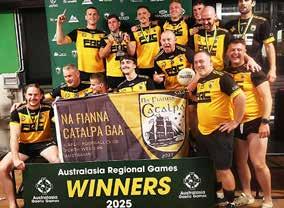
Cairns played host to the seventh Australasia Regional Games on Saturday 15 November 2025, with a record 18 teams competing in what was the biggest tournament yet.
The pristine Watsons Oval grounds buzzed with energy throughout the day as players and supporters from across Australasia gathered under tropical skies and 30-degree heat.
Teams travelled from far and wide with Na Fianna Catalpa (WA), Flinders O’Neill (SA), Young Melbourne, Geelong Gaels and Gold Coast Gaels making the trip to Far North Queensland to compete with “local” teams: Townsville Wolfhounds, Four Mile (Port Douglas) and hosts Cairns Chieftains – delivering a fantastic day of Gaelic football and hurling.
The intermediate men’s and women’s football competitions, and the debut of a hurling contest were welcome additions to this year’s tournament.
Townsville Wolfhounds claimed the women’s intermediate title with a narrow victory over Young Melbourne, while Na Fianna Catalpa made their cross-country trip from WA a memorable one, winning the men’s intermediate final against hosts Chieftains. Outstanding achievements for two relatively new clubs – and with Na Fianna Catalpa’s burgeoning underage scene, the future bodes well for the club. The hurling final saw the Gaels of Gold Coast and Geelong produce a gripping match, with Gold Coast edging out Geelong by 2 goals after extra-time.
In the women’s senior football competition, reigning winners Gold Coast Gaels came through a thrilling semi-final extra-time battle against Geelong to set up a decider with 2019 winners Flinders O’Neill. The South Australians, already in strong mid-season form, proved too strong and deservedly took home their second title.
The men’s football competition was loaded with quality, with the top 4 teams in the 6-team
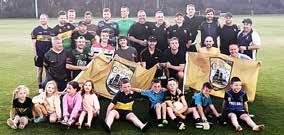
Na Fianna Catalpa made their cross-country trip from WA a memorable one, winning the men’s intermediate final against hosts Chieftains
group only separated by points difference. But it was the Gold Coast men who got the rub of the green on the day. Overcoming Wolfhounds by a point in the semi-final, the Gaels set up another all-Queensland tie against Cairns Chieftains in the final. Drawing on their experience, the Gaels maintained their composure to close out a hardfought two-point victory, and in doing so claimed a memorable football-hurling double for the club.
Ned Sheehy, Chairperson of Australasia Gaelic Games, praised the tournament’s success: “These games really capture what our Gaelic games community is about – players and supporters travelling great distances to compete in a spirit of sport and friendship. The growth in numbers at this tournament is truly impressive, and Cairns Chieftains, who were only established less than three years ago have set a fantastic example of what’s possible for our regional teams.”
A special thanks goes to Cairns Chieftains for hosting this year’s tournament, as well as all volunteers, officials, the Irish dancing group, the pipe band, and all who contributed to another fantastic Regional Games.
Tournament All-Stars
Men’s Intermediate Football
Michael Kelly – Na Fianna Catalpa
Chris Cassidy – Na Fianna Catalpa
Ronan Dunne – Na Fianna Catalpa
Paddy Clarke – Na Fianna Catalpa
Ben Madigan – Na Fianna Catalpa (Best on Ground)
Lewis George – Cairns Chieftains
Jonah George – Cairns Chieftains
Ryan Boland – Cairns Chieftains
Nick Levesy – Townsville Wolfhounds
Aidan Jenkins – Townsville Wolfhounds
Na Fianna Catalpa travelled up to Perth to join the Junior Academy on Sunday 30 November 2025 for a great day of GAA games and comradery. Its great to see the youngsters play and develop, and get to know each other. Well done to everyone involved. More of the same in 2026.
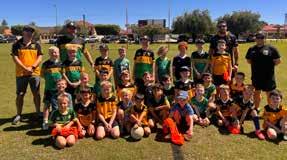
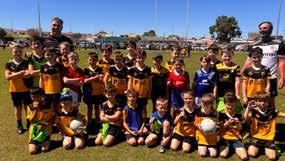
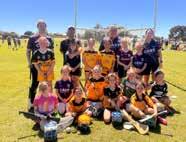
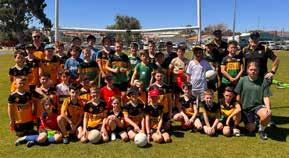
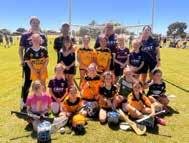


To all of the AIDA WA dancers for a very successful 2025 locally as well as interstate and internationally. In September we hosted the AIDA WA Bun and Tus Feis and it is so wonderful to see the dancers, some of whom are competing for the first time ever, grace the stage with such confidence and enjoyment.
We hope everyone had a very Merry Christmas and we look forward to seeing you all in 2026.
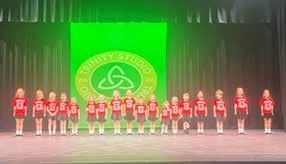


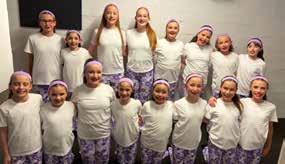
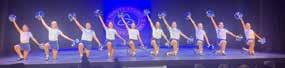


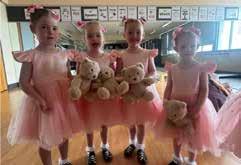
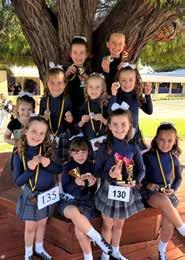
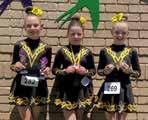
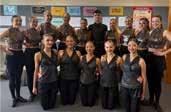
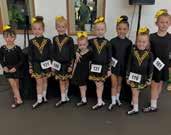
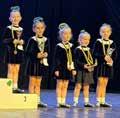
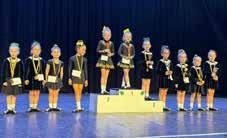
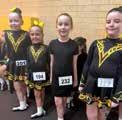
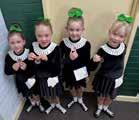




GILLIAN O’MARA
It is with deep sadness, that we learned of the passing of Gillian O’Mara on the 26th November 2025.
Gillian was a highly respected historian and was described by Bill Marwick as “The Sleuth.” She was a member of many research and historical associations and was a great help to the WA Irish Famine Commemoration Committee in the research of the Irish Bride Ships. For more than four decades, she gave outstanding service to FamilyHistoryWA through Special Interest Groups, indexing projects, and the production of datasets, guides, and books.
The Friends of the Battye Library (Inc.) showed their appreciation of Gillian’s commitment and generosity by listing her as a “Gem of Time” — an honour that permanently acknowledges the contribution of outstanding men and women to the recording, collection, and preservation of Western Australia’s history.
We extend our sincere condolences to her husband Phil, daughters Katrina and Kristine, and their families.
Gillian’s work has enriched the lives and research of countless genealogists, and she will be remembered with great respect and affection.
Slán abhaile, a chara.
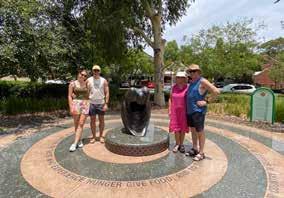
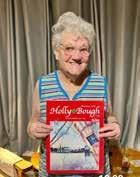
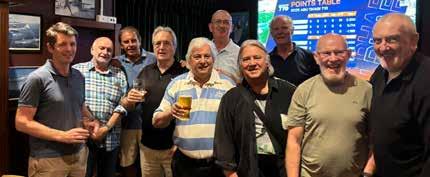
Past pupils of Blackrock College
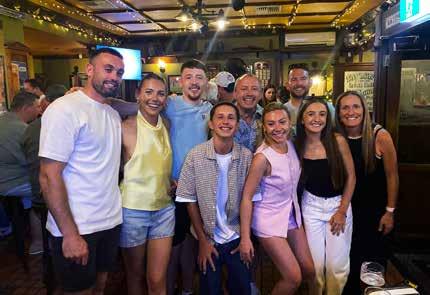
More Christmas cheer happening around Perth with local Irish dancers and parents.
Lily Morrow always looking for a Fred to have a photo taken with. Well, Lily found one and no refelection but, from the stone age? Lily sure gets around!
By the time you read this, Sean McDonagh will have retured from his annual pilgrimage to Mayo in Ireland. Welcome back Sean and the seniors Gatherining in Wanneroo can’t wait to load you with a few jobs!

We are sad to share the passing of Catherine (Catie) Jones on the 12th December 2025. Her last days were filled with strong emotions and meaningful reflection with her sons Mark and Paul.
Catie was the distributor of The Irish Scene in the Greenmount / Swan View area for many years. She was a dear friend to many and and will be missed greatly. Sadly, a week later, Catie’s sister Jennie passed away in Ireland. They are both at peace now and for sure having a great chat! Go raibh sí i síocháin.
Tony (A Minute of Tony) Synnott looks in great form at his retirement village. Tony, for many years contributed his very popular column to The Irish Scene and was able to find out many secrets from those willing to share their story. Thank you Tony, for all you did for The Irish Scene and hope your health improves in 2026.
Celebrating over 50 years in Australia, old An Oige friends, Fred Rea, Tim Mullins and Jimmy Lynam
Where did the years go boys?
Enjoying a few drinks and taking in the beauty of the Swan River, Bronagh Doherty, Kathleen Doherty and Lilly Rea
L-R: Geraldine Hourihane and Partner Roy Short from Co.Cork visiting her brother Ray and Thomas Hourihane enjoying Mandurah
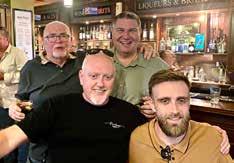
Jon Smyth and the old crew from Rosie O’Grady’s in Northbridge (now Johnnie Foxes) enjoying annual get together in Durty Nelly’s in Shafto Lane.
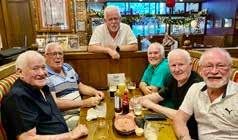
Jim, Michael, Bernard, Gus, Patrick and Jim enjoying Friday ‘Happy Hour’ in the Woodvale Tavern, who wouldn’t be happy at $8.50 a pint?

Happy couple, Matt McKernan and Dara McAleer enjoying a Christmas night out
Like so many of us in the Perth Irish active community, I was deeply saddened to hear of the passing of Michael (Mick) Manning. I say active because no one embodied that word more than Michael. If help was needed, Michael was there. If something had to be done, Michael did it. His loss is felt far and wide.
Michael was born on August 11th, 1943, in Kilbride, Co. Meath, to Michael and Annie Manning, one of nine children. Family meant everything to him, and it was deeply moving to see some of his sisters travel all the way to Perth to farewell him.
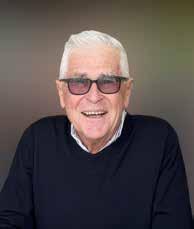
As a young man, Michael worked on dairy farms before learning his trade as a roof plumber alongside his brother-in-law Tony. Roofing became a lifelong trade and a source of pride for him. In 1974, when the opportunity arose to work in Australia, Michael did what he always did — he took the chance with courage and determination, arriving to work up north in his early days here.
In 1977, fate stepped in at the Briar Patch Tavern in Victoria Park, where Michael met his future soulmate, Val. Together they built a life filled with love, laughter, and community. Lisa and Kelly soon followed, and Michael and Val married in 1984 — a partnership that was strong, loyal, and deeply loving.
That same year, Michael became a proud co-founding member of Shamrock Rovers. From that moment on, the club became part of his very being. As Lisa beautifully said at his funeral, “He didn’t just love Rovers — he lived for them. We grew up as children of Shamrock Rovers and the Irish Club — our second homes.”
There was no role in the club Michael wouldn’t take on — president, secretary, pitch marker, kit washer alongside Val, barman, canteen worker, occasional linesman, even water boy. He gave everything, never asking for anything in return. His dedication was unmatched, and it’s no surprise that he became known, and will always be remembered, as “Mr Shamrock Rovers.”
But Michael’s commitment went far beyond football. He
cared deeply about people. He took time with young players and families, listening to their worries, guiding them through the difficult choice of whether to stay in Australia or return home. He reassured them, encouraged them, and helped them see a future here. He lifted people up — always kind, always steady, always believing in others.
Everything Michael did was done with integrity. He was genuine, kind, and true.
Michael was the winner of the prestigious AIHA 2017 Brendan Award but for someone who never seeks recognition, he was proud to receive. The Irish Scene reported at the time, “Mention the name Michael ‘Mick’ Manning in any place where a soccer ball is kicked or Irish people in Perth gather in company and there will be a generous number of stories about what a solidly reliable and unassuming bloke he is and hardworking disciple of football. Mick might have blown a few referee whistles in his time, but never his own trumpet, so, the recognition of the Irish Australia Heritage Association’s award is very well deserved. He received the gong for his untiring commitment and passion to his favourite sport and the Irish community”.
A proud Irishman to his core, Michael was deeply patriotic. For many years, he helped organise the annual Easter Commemoration at the Irish Club. Republicanism was in his blood, and Ireland was never far from his heart.
He took great joy in bringing his family back to Ireland, making it a second home for them. He loved driving them around the country, sharing stories of where he played as a boy and the pubs he frequented as a young man — stories filled with laughter, history, and pride.
When Lisa was crowned the International Rose of Tralee in 2001, there was no prouder man alive.
In recent years, Michael found happiness in the simple things — catching up with friends for a coffee and a chat, spending precious time with his grandchildren, and enjoying a pint of Guinness.
In March 2024, Michael was diagnosed with mesothelioma, an aggressive cancer caused by asbestos exposure many decades earlier. True to his nature, he faced it with courage and determination. As Lisa said, “He tried so hard and was so strong. Good Irish stock.”
Val’s words captured Michael perfectly:
“Goodbye to a hard-working husband. A great father to Lisa and Kelly. I hope there’s a happy hunting ground where the three of us can meet you again, Mick. We will think of you every day for the great husband and father that you were. We will never forget you, dearest Mick.”
— Love always, Val, Lisa and Kelly.
Kelly shared this moving tribute:
“To me, Dad was the person I looked to for guidance — the person who made me feel safe in this world. I loved absolutely everything about him. His gentle humour, his warmth, his kindness, his determination to fix things, and his willingness to help anyone, anytime. He gave so much of himself without ever expecting anything in return.”
Kelly added, “Michael was rightly recognised with a 25-year Community Service Award — though he never needed recognition to do good”.
Michael had a great admiration for Ned Kelly — hence Kelly’s name. On a family trip to Melbourne, they travelled to Glenrowan to visit places tied to Ned Kelly’s story, creating memories that will be treasured forever.
The Perth Irish community has lost a true gentleman — a devoted family man, a loy al friend, and someone whose quiet chats and warm presence will be deeply missed.
In the words of Pádraig Pearse:
“Life springs from death; and from the graves of patriot men and women spring living nations.”
Michael, you were a patriot. Your spirit lives on through your children, your grandchildren, and all those whose lives you touched.
Slán go fóill, a chara.
Fred Rea
(Thanks to the Manning family for allowing us to use Michael’s Eulogies).