
DEALING WITH CONFLICT
January 2026

Standing in my dignity
I was created with worth that cannot be taken away. My value is not decided by how others treat me.
I am steady and grounded and whole - even when storms rise around me.
I can meet anger with calm and disrespect with quiet clarity. I do not need to fight for my dignityI only need to remember it.
My calm brain can steady a storming one. My peace is my strength.
I speak truth kindly. I set boundaries firmly and I choose to walk in respect - for myself and for others.
I am worthy of kindness, fairness and peace

6.1
1 INTRODUCTION
Ernest Hemingway maintained that ‘It is good to have an end to journey towards, but it is the journey that matters in the end.’ We reflect on that journey in this Toolkit.
1.1 CONFLICT IS INEVITABLE
Peace is not the absence of conflict but the ability to deal with it and it is more than a set of actions. It is a mind-set. Conflict is inevitable but combat is optional. A whole industry has grown up around the area of conflict management. Facilitators are brought in at great expense to deal with situations that have escalated to the point where resolution is extremely difficult, if not impossible. There are many styles when dealing with difficult conversations and issues. Each of us may have a preferred option including avoidance.
1.2 AVOIDING CONFLICT IS NEVER A VIABLE STRATEGY
Avoiding conflict usually leads to an escalation of the issue. The ability to manage conflict appropriately for oneself and others in the school community does not happen by accident. It is the result of deliberate work and shared commitment to build an understanding and common purpose. Before events become critical, it is essential to build your team.
By team, we mean all in the school community: staff who understand their responsibility and role in resolving issues, a Board of Management that understands its role in this regard, parents who share a common purpose and children who are taught the skills to deal with the inevitable conflicts they meet in an appropriate manner.
Conflict is a normal part of any healthy relationship. People cannot be expected to agree on everything. However, conflict can destroy a team that has not spent time learning the skills and appropriate ways of managing it. It is essential to have many conversations to set boundaries making it clear what is okay, what is not okay and why. We cannot take responsibility for other peoples’ emotions. They are allowed to be sad, angry, confused, afraid, etc. However, if their behaviours are not okay, boundaries have to be set.
The key is not to fear or avoid conflict but to learn to resolve it in a healthy or appropriate manner. When mismanaged, conflict can do great harm to a relationship. When handled in a respectful positive way, it provides an opportunity to strengthen the bond between two people. When dealing with people remember, you are not dealing with creatures of logic, but creatures of emotion. People do not hear compassion for instance – they feel it. Conflicts trigger strong emotions based on our perceptions of a situation and maybe not on facts. It is influenced by life experiences, culture, values and beliefs.
As a school leader, you deal with many complaints. Some have the capacity to create conflict. Some develop legs and take on a life of their own. Most drain your energy and take up much time – time you had hoped to devote to the teaching and learning in the school.
1.3 IS IT UP TO ME TO SOLVE THIS ISSUE?
A word of warning!!! As school leaders, we can expect that we are there to solve every problem and, if we do not, we have somehow failed. Other people can have the same expectation. Not every problem is yours to solve. Expectations need to be managed – our own expectations of self and the expectations others have of us. The expectations of self are sometimes the hardest to manage.
A complaint presents us with an opportunity. It can be viewed as a gift. Responding well to a complaint creates loyalty on the part of the complainant, if well-handled, and gives the opportunity to display the values of the school community.
To sum up, in the Toolkit we will look at the following questions: How will you manage yourself?

Where do rights and responsibilities fit in? What part does communication play?
2 PREVENTION IS BETTER THAN CURE
2.1 FACTORS THAT MINIMISE THE NEGATIVE EFFECTS OF CONFLICT

A prepared school team – BoM, Leadership Team, Teaching, SNA and Ancillary Staff, who are trained and practiced in responding calmly and professionally to conflict and to difficult situations
A well understood and discussed school culture which values dialogue and respectful engagement between people when difficulties and conflict arise
Effective policies and procedures which are clear and understood by all who may have recourse to them
A DRaW (Dignity, Respect at Work) Charter and Policy.
2.2 HIGH ROAD, LOW ROAD – CONFLICT 101
Daniel Goleman uses ‘high road’ and ‘low road’ to describe the two main pathways the brain can take during emotionally charged situations, especially when it comes to conflict.
The Low Road
Fast, instinctive, emotional reaction, triggered by the amygdala when we feel threatened and leading to fight, flight, or freeze reactions
Responses are reactive, automatic, and often unskilful
Examples:
• Snapping back
• Shutting down
• Becoming aggressive or defensive.
Goleman calls this an ‘emotional hijack’ because the emotional brain overrides rational thinking.
The High Road
Slow, thoughtful, deliberate reaction, using the prefrontal cortex the part of the brain responsible for reasoning, empathy, and self-control
This reaction allows a person to pause, reflect, and choose a constructive response. Leads to:
• Better emotional regulation
• Clearer thinking
• More respectful, solution-focused dialogue. This is where emotional intelligence (EQ) operates at its best.
Key Idea
Conflict offers a moment where you can:
• Instinctively drop to the Low Road (react)
• Or intentionally take the High Road (respond).
The High Road requires:
• Awareness of triggers
• Self-regulation
• Empathy
• Choosing dignity and calmness over impulse.
2.3 PERSONAL PREPARATION FOR CONFLICT
Personal preparation for conflict is really about building inner stability, clear communication habits, and practical strategies you can use when pressure rises. While this should be ideally be applied to all staff, it is particularly important that the school leadership team (Principal, DP and ISN Team) are prepared), as they are most likely the people who will have to deal with conflict. This preparation is largely based on self-awareness and character formation. Here’s a simple, effective framework you can rely on:
1. Strengthen Your Mindset Before Conflict
Stay calm by default
Practice slow breathing (4 seconds in, 6 seconds out).
Use grounding techniques such as focusing attention on your feet or your breath.
Rehearse staying composed under pressure.
Adopt a constructive attitude
Expect that conflict will happen; don’t fear it.
View it as a problem to solve, not a battle to win
Remind yourself: ‘I can stay calm even if others don’t.’
2. Know Your Triggers
Understanding what sets you off lets you avoid emotional reactions. What comments or behaviours irritate you?
How does your body feel when tension rises? (Tight chest, faster breath, etc.)
Plan responses for these moments e.g., ‘If I feel attacked, I will pause before speaking.’
3. Build Strong Communication Skills
Listen first - Most conflict escalates because people don’t feel heard
Practice:
• Letting them finish speaking
• Summarising what they said: ‘So you’re upset because…’
Speak calmly and clearly
• : ‘I feel concerned when…’
Neutral tone.
Slow pace (the calmer you sound, the calmer the other person may become).
4. Improve Your Emotional Regulation
Conflict becomes easier when your nervous system is under control
Practice brief mindfulness daily
Use postponement: ‘Let’s take 5 minutes and come back to this’ Keep your posture open (shoulders down, unclenched hands).
5.. Build Confidence Through Practice
Role-play conversations
Reflect after conflicts: What worked? What didn’t?
Seek training in conflict management or active listening.
7. Protect Your Well-being
Self-care isn’t optional it’s prevention
Sleep, hydration, physical activity, and breaks all matter You cannot regulate others if you are dysregulated yourself.
2.4 HAVING A SCHOOL STRATEGY FOR CONFLICT – THE 4 P PLAN
Having a school-wide strategy for dealing with conflict is the best way to ensure that when it does “kick off”, staff involved will have the best chance of not succumbing to an emotional hijack and of keeping it on the High Road. The 4 P Plan is such a strategy. All staff should be trained to respond to conflict using the 4 Ps:
Pause
Postpone
Ponder
Prepare.
Pause – take a deep breath (literally, or metaphorically). This reduces the chance of a staff member reacting emotionally.
Postpone – having listened to the complainant, urge the person to agree to a meeting to properly discuss the issue e.g.
‘I have a meeting now / I need to get back to my class now. Can I ring you later to arrange a suitable time where we can meet and resolve these issues.’
The purpose of Postpone is to move the issue to a more professional and less emotional setting where a properly prepared meeting can lead to a resolution of the issues. It also provides an opportunity for a staff member to bring the issues to the attention of the School Leaders who can then assist by arranging the meeting and / or advising the staff member.
Ponder – the postponement of the issue to a later meeting gives an opportunity to assess the issues, to conduct background research and to think about the how a resolution.
Preparation – this gives time to decide and agree
Where the meeting will take place
Who will attend the meeting
What time the meeting will take place
The agenda and purpose of the meeting.
It is, therefore, vital to have in place a system which will enable the creation of a habit of PPPP. This will entail discussion and practice, via scenarios, to ensure that all who need to be prepared understand and are confident in using the 4P Strategy, if required.
2.5 VIDEO: COMPOSURE AND COURAGE: MANAGING AGGRESSION WITH DIGNITY
This presentation outlines how a school leader might stay on the “High Road” during a difficult and aggressive situation. It proposes having a mindset of quiet dignity and the belief that a calm, controlled approach will be infinitely more valuable than allowing yourself to be emotionally hijacked.
Click here to watch the video
Ethos and Culture
Ethos is the moral heartbeat of a school. It comes from the school’s values, leadership, relationships, traditions, policies, and most importantly the lived experience of students and staff.
A school’s culture is the shared ‘feel’ of the place its values, behaviours, relationships, and unwritten rules. Strong culture doesn’t come from one thing but from many interconnected elements working together.
The following chart illustrates the relationships and differences between Ethos and Culture.
Aspect Ethos Culture
Definition
The underlying values, beliefs, and moral purpose of the school (the why)
Focus Principles, identity, character, purpose
Source
Timescale
Visible Through
Vision, mission, philosophy, tradition, leadership values
Deep-rooted, long-term, slow to change
Mission statement, rituals, symbols, guiding values
The everyday behaviours, practices, and atmosphere in the school (the how)
Actions, routines, interactions, norms
Staff behaviour, student behaviour, daily habits, systems
Adaptive, responsive, can shift faster with leadership and practice
Communication, relationships, consistency of practice, classroom climate
Expressed In What the school stands for What the school actually does
Driven By Beliefs, moral purpose, worldview
Examples
Key Question
Alignment Test
Respect for all, inclusion, dignity, fairness, spiritual values
‘Why do we do things this way?’
Does behaviour reflect the stated values?
Behaviour, expectations, reinforcement, routines
How teachers speak to students, how conflict is handled, consistency of rules
‘How do we do things around here?’
Does daily practice match the declared ethos?
2.6 POLICIES AND PROCEDURES
Having policies and procedures which are clear and understood by all staff will greatly assist when you meet a conflict situation. Consider having the following policies in place and ensuring that staff have had an opportunity to discuss and understand them and how they might be used in different scenarios: -
Parental Complaints Procedure
Positive Communication Policy Code of Conduct
Bí Cinéalta and Anti-Bullying Policies and Practices
INTO Working Together Procedures
DRaW Charter and Policy
The 4P Plan for Conflict Resolution.
2.7 ESCALATING CONFLICT – WHAT NOT TO DO/SAY
The following tips are sure-fire ways of starting an argument or escalating a developing conflict. Notice how easy they are to implement!!! Being aware of and avoiding these can maintain a calm and positive approach when dealing with challenging issues:
• Put off as long as possible dealing with an issue or situation
• Bring up ‘stuff’ - go back on old battles and refer to incidents from the past
• Say something hurtful
• Use words or phrases such as ‘You never...’ ‘You always...’ ‘That’s typical of you...’ ‘You make me feel...’ in an argument
• Walk away from the person - blank them out
• Bang doors or items on the table
• Sigh during the course of the conversation
• Throw your eyes up to heaven
• Use facial expressions gesturing contempt- contempt is disrespect for someone
• Use a sharp tone of voice
• Use a sarcastic tone of voice
• Talk over the other person
• Lose control. When you lose your temper you lose control of your words, judgement and actions
• Threaten a person with a consequence of non-acceptance of your position
• Label the person. Common labels are selfish, lazy, stupid, mean, rude, obnoxious
• And finally, the best of all - don’t listen.
Any combination of these things will guarantee an escalation of a conflict.
In any argument, there is a constant struggle between the need to be right and the need to preserve the relationship.
3 DRAW CHARTER AND POLICY
A DRaW Charter and Policy is ideally developed by a Whole Staff working together over a number of sessions (Croke Park Hours). The process of developing the Chart and Policy is more important than the actual policy
When staff build a Dignity & Respect Charter themselves: it fits their context it builds trust it clarifies expectations it reduces conflict it strengthens culture it improves behaviour and everyone feels responsible for upholding it.
A generic policy can never achieve the same level of buy-in, clarity, or impact.
A DRaW Charter is a one-page chart which outlines the agreed: School Values
School Vision
School Mission Rights of Staff in the school Responsibilities of Staff in the school An outline of acceptable behaviours among staff An outline of unacceptable behaviours among staff.
A strong Dignity & Respect at Work Policy sets out: What respectful behaviour looks like What is unacceptable Who is responsible for what How concerns are raised and resolved How staff are supported.
4 INTERPERSONAL COMMUNICATION SKILLS
4.1 MANAGING A MEETING – THE 4P PLAN IN ACTION
Preparation for the meeting – Content
Always try to be as prepared as possible for interpersonal meetings: take the time to consider the issues beforehand do as much ‘research’ as possible seek advice from colleagues or others be clear on what you want from the meeting take time to manage your emotions and to avoid stress – this is a skill which is only acquired with practice.
Preparation for the meeting - Environment
Consider the following:
Timing: ensure that there is adequate time set aside to deal with the issues without interruption
Location:
• privacy is generally required
• A neutral space can sometimes be more effective e.g. is it better to meet a staff member in a neutral space in the school rather than your office?
Environment: ensure that the participants are comfortable and consider carefully the seating arrangements i.e. you behind a desk, everyone around a table or you sitting ‘with’ the participants (beside, opposite or in a circle).
Setting the Tone of the Meeting
A constructive tone is governed by:
Tone of Voice: The same sentence can mean several things, depending on the tone of voice used. The mood of the conversation will be set by the level of emotion, the volume and the calmness, or lack of, in your voice
Friendliness: Be friendly and cordial and provide a warm welcome to the meeting. A friendly welcome can assuage anxiety in others and reassure them that you are trying to understand and help. Sometimes, depending on the situation, a cup of tea might be appropriate.
Attitudes you wish to Portray during the Meeting
Confidence: It is important to seem confident, but not over-confident or aggressive in the meeting. Confidence comes from good preparation or knowing that you will not be rushed into making a decision before the end of the meeting
Respect: Everyone deserves respect and simply using someone’s name or maintaining eye contact conveys this. People will engage more openly in communication with you if they feel respected. Active listening always engenders respect
Empathy: Empathy is achieved when the other participants feel that you genuinely wish to understand their point of view, their feelings and their emotions around the issue at hand
Open-mindedness: A willingness to understand the other’s viewpoint is a pre-requisite for good communications. Is there any point in discussing an issue with someone who has already made up their mind and who, you believe, will not or cannot, change it?
During the Meeting
Active Listening: You should not engage in interpersonal communication unless you can be fully present and able to listen to what others are saying. Stay alert and interested in the other person while listening and try not to interrupt
‘When people talk, listen completely. Most people never listen.’ Ernest Hemingway.
Non-verbal Communication: Be fully aware of the messages, conscious or unconscious, you are conveying to others through non-verbal signals. These can be in conflict with the meaning you are seeking to create in the other person’s mind. Non-verbal signals are given by our tone of voice, facial expressions, eye movements, eye contact and limb movements
Asking the right questions: Asking pertinent questions is sometimes necessary to ensure that you fully understand what the speaker means. Asking pertinent questions also shows that you are listening and want to understand
Summarise and Clarify: Verbalise the other person’s position and clarify your understanding of it for them. If necessary, you can ask them further questions until you are both satisfied that you understand their position
Be clear and concise: Conveying a message clearly and concisely is the essence of good communication. Good preparation is the key to exercising this skill. Practice saying what you want to say in the clearest manner and with the fewest words
Be assertive: Assertive communication is the ability to express positive and negative ideas and feelings in an open, honest and direct way. It recognises our rights whilst still respecting the rights of others. It allows us to take responsibility for ourselves and our actions without judging or blaming other people. Assertiveness in this context involves having the moral courage to be honest. Be careful not to confuse assertiveness with aggressiveness.
The 7–38–55% Rule suggests that when people communicate feelings or attitudes especially when the message is unclear or ambiguous listeners interpret meaning from three channels:
7% from the actual words used (verbal)
38% from tone of voice (vocal)
55% from body language (facial expression, posture, gestures)*
This means that in emotional conversation, people tend to trust voice and body language more than words When discussing feelings or attitudes, people judge your message mostly by tone and body language, not by your words especially if the message is mixed or unclear.
It does not mean words don’t matter. It means that in emotional conversations, non-verbal cues carry more weight.
4.2 THE 7 – 38 – 55% NON-VERBAL COMMUNICATION RULE
Where the Rule Comes From Psychologist Albert Mehrabian conducted studies in the 1960s on how people interpret liking, disliking, and emotional meaning when the verbal and non-verbal messages don’t match.
For example:
Someone says, ‘I’m fine’ (verbal) but they sound irritated (vocal) and their body language shows tension (non-verbal)
People will believe the tone and body language, not the words.
What the Rule Actually Means
This rule does NOT apply to all communication. It applies specifically to:
Emotional content
Attitudes (liking/disliking)
When verbal and non-verbal messages conflict or are ambiguous. In these cases, people rely far more on: how you sound how you look than what you say.
Why It Matters (Practical Implications for Conflict & Communication)
People believe behaviour more than words
If a staff member says: ‘I’m not annoyed,’ but their body language is defensive, others will trust what they see
Tone and body language set the emotional temperature
Warm tone + open posture = safety Harsh tone + closed posture = threat
In conflict, non-verbal signals often escalate or de-escalate the situation
Calm voice + slow pace + relaxed posture = de-escalation Tense face + clipped tone + pointing = escalation
Your message must be congruent
When words, tone, and body language match, the listener feels: trust, clarity, safety and respect. This is known as congruence, a key skill in emotionally intelligent communication.
4.3 BOUNDARIES AND SAFETY
When preparing for any meeting which may involve conflict, you must seriously consider professionalism and psychological safety. Trust and Safety are vital to the success of any meeting. This is the goal of Meeting Preparation (PPPP).
Where there are signs of aggression, one might use phrases such as:‘I want to hear your concerns, but we must be respectful’ ‘If shouting continues, we’ll pause and reschedule.’
Keep the door open but stay in control. Have another staff member present if needed.
If aggression escalates:
End meeting immediately
Follow safety/reporting protocols
Involve security or call Gardaí, if required
Document everything: date, time, witnesses, what was said.
5 DIFFICULT CONVERSATIONS – 8 STEP APPROACH
5.1 WHAT IS A ‘DIFFICULT CONSERVATION’?
Difficult conversations involve talking about issues which we would rather not discuss because we fear the consequences. Some subjects make us feel vulnerable or affect our self-esteem. The issues at stake are usually important and the outcome often uncertain. Conversations can also be difficult when we care deeply about the subject matter or about the people we are communicating with.
Difficult Conversations have within them three interlinked, overlapping themes: Facts and intentions and who is to blame
Feelings and emotions, real or imagined, valid or invalid
Identity and self-esteem issues arising from what we believe the conversation tells us about ourselves.
Recognising these interlocking themes is essential if we are to transform a difficult conversation into a learning conversation where each party benefits and a ‘win-win’ situation is established.
5.2 TO AVOID OR ADDRESS THE ISSUE
School leaders often face the dilemma of whether to confront an issue head-on or whether to avoid having a difficult conversation in the hopes that things will improve of their own accord.
At the heart of this dilemma is the nagging feeling that, if we choose avoidance, while we may be ‘keeping the peace’ and preserving harmony in the workplace, we are also: torturing ourselves with feelings which will grow and fester being taken advantage of not being respected not standing up for ourselves hoping that tact will win out in the end.
On the other hand, we feel that things may be a lot worse if we choose confrontation.
Avoid or confront? As a school leader, ask yourself the question ‘Is letting this go in the best interests of the children in my care?’
5.3 DIFFICULT CONVERSATIONS ARE PART OF THE LEADERSHIP ROLE
Difficult conversations are part of life. They occur every day in all environments. Most of us will face the ‘avoid or confront’ dilemma many times in our professional and personal lifetimes.
From time to time, it becomes the painful, or joyful, duty of a school leader to have a difficult conversation. Tact is good and may mask the situation for a time, but it is not the answer to the problem.
Avoidance is never the answer, and neither is procrastination. Eventually, the bullet must be bitten, the Rubicon crossed and the music faced. While it will be difficult, preparation, attitude and understanding will always get you the best possible result.
5.4 GOING FOR THE ‘WIN-WIN’ – THE 8 STEP APPROACH
In their book ‘Difficult Conversation. How to discuss what matters most.’ the authors stress that the ultimate goal is to transform a difficult conversation into a learning conversation which ultimately benefits both parties.
The following 8-step approach to resolving difficult conversations is based on the work of Mary Raftery of Consensus Mediation.
STEP 1: The Purpose
Crystal clarity about why you want to have the difficult conversation and what you what to achieve from it is essential. The most common problem with contemplating the purpose of a conversation is to think only about what you want to achieve and to ignore what it is that you want the other person to get from it. Thinking that you can change the other person or concentrating on the issues alone is being one-sided and that will not work.
If your purpose involves any of the following, think again:
‘Fixing’ the other person or ‘make him/her’ change his/her attitude or behaviour?
‘Giving out’ to vent your frustration or irritation?
Ignoring what the other person might have to say because you are too annoyed and past caring about their ‘excuses’
Trying to prove a point
Trying to win or prove that you are right.
The goal should be:
Solving the problem
Improving things for both of you in terms of your work and relationship
Keeping calm and remaining professional.
Coming to terms with such a purpose is not always easy. It is hard to apply this purpose to someone who has really upset you and who ‘drives you mad’’. Take the time to take yourself in hand and begin by having a difficult conversation with yourself.
Be clear before the meeting about:
What you want from the meeting?
What the other person wants from the meeting?
What you want for this working relationship?
What you do not want for this working relationship?
STEP 2: Open Frame
Having set yourself up with a positive purpose and outlook, you need to project that right from the start of the meeting. There will be only one chance to get it right and to set the tone.
An open frame guides the conversation in a manner that Let’s the person know there is an issue to be sorted Has room for each person’s viewpoint Doesn’t trigger a defensive response.
Rather than judgementally viewing the issues in terms of right and wrong, try to see that there are ‘different viewpoints” or ‘a gap between what happened and what was expected.’
Open Frame
Set the context clearly and simply
Neutral, non-judgemental and friendly tone
Open mind
Open body language
Open ears
Narrow Frame
Beating around the bush or ‘sugar coating the issues’
Blaming phrases e.g. ‘You are always…’, “Your attitude is….”
Foregone conclusions e.g. ‘You are not fit for….’ ‘You have no interest in….’
The Open Frame seeks to reassure the other person: around any anxieties they might have in relation to the meeting that you have positive intentions for the meeting.
STEP 3: Inquire
Understanding the other person’s point of view is our first objective. That can only be achieved by encouraging them to talk and ensuring that we are actively listening with empathy to build a rapport between us, leading to influence and behaviour change.
‘If your first objective in the negotiation, instead of making your argument, is to hear the other side out, that’s the only way you can quiet the voice in the other guy’s mind. But most people don’t do that. They don’t walk into a negotiation wanting to hear what the other side has to say. They walk into a negotiation wanting to make an argument. They don’t pay attention to emotions and they don’t listen.’
Chris Voss, FBI Negotiator and Author
Open questions best encourage the other person to talk e.g.
‘What did you think about what happened today?’
‘What did you find difficult about the incident?’
‘How did it make you feel when ……...?’
Clarify your understanding of what the other person is saying by asking questions if necessary and by paraphrasing it for them. This demonstrates that you are actively listening and interested in what they are saying.
STEP 4: Share
Now it is your turn to speak.
Stick to the facts – talk about what you saw or heard
Have concrete examples if talking about what someone else saw or heard
Talk about how it made you feel
Present the ‘facts’ as being from your own point of view. Allow room for the other person to discuss the ‘facts’ from their point of view.
Be careful of ‘facts’ – they can be influenced by our perceptions, prejudices and emotions at the time. You may both have experienced the incident or event differently
Do not to present your ‘facts’ as conclusions – that sounds judgemental and even opinionated and will not encourage discussion.
Make sure that you:
Use a non-judgmental calm, professional tone with open body language and eye contact
Reiterate your positive intentions (from the Opening Stage) to find a way forward and get the situation resolved
Ensure you finish with an invitation for them to share their response to what you have said.
STEP 5: Emotions
‘It’s not objective reality that causes our feelings, rather it’s the spin or interpretation we put on objective reality that leads us to feel angry, frustrated or hurt.’
Mary
Raftery, Consensus Mediation
The influence of emotions on how we view facts and intentions is what distinguishes a difficult conversation. The issues involved will inevitably stir emotions in one or more parties to the conversation and you need plan for that. Before engaging in a difficult conversation ensure that you plan to:
Pause Acknowledge Clarify
Pause: It is important to be in a calm and prepared state of mind when entering a difficult conversation. No matter how prepared one is, emotions may still be triggered and when that happens we need to pause, detach a little and re-focus before continuing. Preparation and practice are the most effective means to perfect the maintenance of a calm and unruffled exterior.
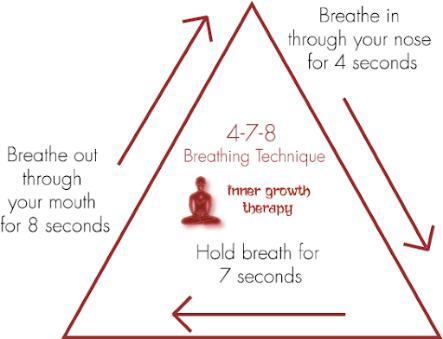
Taking a deep breath or using the 4 – 7 – 8 Breathing Technique helps calm the mind and prepare for what is to come
Before you start, be clear about:
Your feelings about the issues and why you feel as you do How will you avoid reacting to the triggers?
How you can detach yourself from strong emotions which might cloud your thinking and ability to see the other person’s point of view.
Acknowledge: Emotions take a person’s brain away from rationality which will quickly derail the conversation. Once emotions take over, argument and logic will not work. If the person needs to ‘vent,’ it is best just to listen quietly. Skilfully acknowledging the emotion post venting will help bring them back to rational thought. You might use phrases such as:
‘I realise that this is upsetting for you….’
‘I can feel your frustration…’
‘I know this is not what you were expecting….’
The skill is in using an appropriate tone and authentic phrasing without sounding patronising or condescending which would be disastrous. Convey your interest and concern, being careful not to give the impression that you agree with their views or condone their behaviour. There may be a second, or even a third milder ‘venting episode.’ Be supportive by listening and showing concern.
Clarify Concerns: Emotional outbursts are a clear signal that a person’s need is not being met. You need to clarify what that need is so that it can be addressed. Careful questioning, in a nonjudgemental manner, will be required here:
‘What is it that has most upset you….’
‘What did you find the most difficult aspect of the incident…’
Finally clarify what you understand the issues and needs to be by paraphrasing what you have learned e.g. ‘Am I right in saying that you were upset because …….’ This can summarise the discussion for all parties to ensure that no-one is being misunderstood or that critical information has not been overlooked.
STEP 6: Needs
‘Every criticism, judgment, diagnosis, and expression of anger is the tragic expression of an unmet need.’
Marshall Rosenberg, Creator of ‘Non-Violent Communication’
The main aim of all difficult conversations is to move from polarised argument to problem solving for both parties. This can only be achieved when we are clear on what is at stake for each party. A genuine search for the core issues demonstrates your care and concern and desire to resolve the situation and moves the focus to discussing what we can do to resolve the issues.
Use closed questions, in a calm and supportive manner, such as
‘What is most annoying you here……’
‘Can you tell me a little more about what is important to you….’
‘What is it that you want me to understand about how you see the issues…’
STEP 7: Options
In their book ‘Getting to Yes’ (1981), Fischer and Ury suggest ‘inventing options for mutual gain’ as a means of achieving ‘win-win’ rather than ‘zero-sum’ for the parties concerned.
Moving to discussing options has several advantages:
It gives recognition, involvement and choice to the parties and leads to a feeling of fair play
It moves the dynamic from disagreement to collaboration. Ownership of the options means they will mean more to the participants and will be more likely to succeed when agreed
Participation in finding the solutions can save face for the participant who may have painted themselves into a corner
As the conversation is moving toward discussing options for a solution, the core issues for each side are becoming clearer and easier to name and discuss.
Some things are not negotiable e.g. School Policy, DES Circular, Health and Safety issue etc. Where this occurs it must be clearly stated and the focus moved to issues which can be negotiated to ‘winwin.’
Sometimes, a person is not prepared to engage with options. In that case the school leader may move the focus to the consequences for the school and the person involved if the issues are not resolved e.g. a teacher who refuses to collaborate with her colleagues in planning might be asked to consider the positive consequences of engaging with others in planning for the pupils, younger teachers and reducing the workload for herself. She might also be reminded of some negative consequences such as her reputation and standing with her peers, her promotional prospects, her lack of being able to share professional ideas. Care must be taken when ‘making visible the invisible’ so that it is not interpreted as a threat.
STEP 8: Way Forward
The last step is to record what has been agreed and adopt an action plan to implement the options agreed. These are best expressed as SMART goals:
Specific – the nitty gritty of who does what exactly, and when Measurable – the metric by which we will know that the goal has been achieved
Achievable – goals that are realistic and practical
Relevant – ensuring that the goals are focussed on the agreement
Time-bound – review and completion deadlines.
5.5 PREPARING FOR A DIFFICULT CONVERSATION
Always take time to prepare for a difficult conversation This can normally be done by scheduling a meeting which gives you the time and space to prepare If it is not possible, concentrate on listening, inquiring and establishing the core needs and concerns Explain that you need to reflect on the issues or do some research and invite them to make another appointment to progress the conversation.
Using the Template
Appendix I contains a preparatory template which prompts you to consider and prepare for each of the 8 stages. Contemplate each stage and make notes on the template.
Be Calm, Cool and Collected
To bring the difficult conversation to a successful conclusion, you need to remain focussed and in control of your emotions. The following techniques will help:
Be aware of the signs of distress in yourself and how you will manage them
Take 3 or 4 deep breaths
Count to 10
Pretend you are an outside observer – a ‘fly on the wall’ – to the conversation
Tell yourself that you are calm and in control and that you are ignoring or managing the triggers which might upset you
Be aware of what might make you feel undermined or vulnerable
Be aware of what might cloud your judgement and cause you to misread the situation.
6 CHALLENGING CONVERSATION SCENARIOS
The following scenarios provide a guide as to how a school leader might approach a challenging conversation.
6.1 CLASS ALLOCATION COMPLAINT
Scenario:
Ursula has taught in the school for 25 years- the past 10 years as a SET. She has accosted you in the corridor to complain that she has not been given a SET post again this year. You have spoken at a Croke Park meeting about the value of SET experience for classroom teachers (after at least 5 years classroom teaching). You have already separately indicated to Ursula that you would be moving her back to the classroom next year. SET was her first choice in the preference sheet and she did not fill in the other two preferences. She is very aggrieved and upset.
Initial Reaction:
A public corridor is not the best location for this conversation. You explain to Ursula that you are engaged in another task at present and make an appointment to meet her in your office as soon as possible. You might say something like ‘Ursula, I am meeting the Chair of the BoM in half an hour. and I need to prepare for that now. Can we discuss this later in my office – it’s more private there. Would 2.30 suit you?’
Preparation:
Go back over your diary to find the dates when you discussed the value of SET teaching for all classroom teachers and when you advised her that you would be moving her to the classroom. Fill in the difficult conversation template.
STEP 1: Purpose
It is not your intention to upset Ursula, rather to give all teachers with at least 5 years of classroom experience an opportunity of SET teaching. You want Ursula to understand that all teachers deserve the chance to experience SET teaching and to bring that back to the classroom. You want her to realise that she is trained to teach all classes and that her SET experience will be invaluable in the classroom. You want her to work with you to promote the SET experience as being a valuable one for all teachers’ careers. You do not want her to become disaffected, but it is time for her to progress her teaching career.
STEP 2: Open Frame
You will clearly set out the issue in a non-judgemental, collegial manner and let her know that you wish to understand her upset and point of view. You will avoid words or body language which might trigger a defensive reaction.
STEP 3: Inquire
You will encourage Ursula to talk about her upset and why she feels she has the right to remain in SET. You will listen actively to hear her arguments and her emotions.
STEP 4: Share
When you are sure that she has finished, you will calmly lay out your reasons for wanting to move Ursula – sticking to the facts of what you have discussed with the staff and with her.
STEP 5: Emotions
Firstly, be aware of what might set you off emotionally and plan for it. You may feel undermined and angry – put it to one side. Only rational thinking can resolve this issue. Secondly, acknowledge her emotions – ‘I know you are upset, but can you work with me on this…’ Thirdly, encourage her to name her concerns – ‘what upsets you most about moving back to the classroom….’
STEP 6: Needs
Encourage her to elaborate her concerns to see if you can establish her core opposition to moving back to the classroom – is she afraid that she will be ‘out of touch?’ Does she feel threatened by the move because she does not think she is any longer able to teach a class? Is this impacting her selfesteem? Does she need support to catch up with the curriculum after 10 years of more targeted teaching? Is she anxious about the change in pace, in workload?
STEP 7: Options
It is important to be clear that all teachers need to experience SET teaching because that will benefit Teaching and Learning throughout the school. That point cannot be conceded.
However, you might invite her to suggest ways in which a more structured class rotation might be put in place – a Class Rotation Policy giving clarity to all teachers as to their career path with the school. Ideally, she will agree that the SET experience benefits all teachers and children in the school.
Remind her of the great work she has done in the school as a classroom teacher and as a SET. Seek to reassure her that she is a highly competent teacher who will easily manage the transition. Address the option of support and upskilling for her, from yourself and colleagues. Let her suggest what she would need and how it might be provided.
If she refuses to engage with options or to suggest her own, you will focus the conversation on the needs of the school and, possibly, on your responsibility to organise the Teaching and Learning in a manner which best benefits the children.
STEP 8: Way Forward
Lay out SMART goals to achieve what has been agreed, hopefully:
• Supports for Ursula in moving to Rang IV
• Work on preparing a Policy on Class Rotation.
6.2
SPLIT CLASS COMPLAINT
Scenario
Due to growing numbers in the school, you must have a split class next year. The children have been together as a class since Junior Infants but must be split next September into Rang III, Rang III/IV and Rang IV. You have discussed the criteria for selecting children for the split class with the class teachers and SET and have agreed that all children must have friends in the new class and that this class would better suit children who do not require constant supervision to complete a learning task. The children were told yesterday which class they will be going into. Pricilla’s mother is on the phone and is apoplectic with rage because Pricilla’s best friend is going into the Rang III and her daughter does not deserve to be put into the ‘slow’ class and that Pricilla is being ‘singled out’ and not being given fair play.
Initial Reaction
Having listened for 5 minutes or more on the phone, you express your regrets that Pricilla’s mother is so upset and ask if she would be free to come in for a meeting in the afternoon. You express every confidence that, between you, you will sort it out.
Preparation
Establish how long the teachers have been working on the issue and confirm the criteria used. Check how Pricilla is and if she is upset in class today. Check with the teachers how many friends she will have in the split class and where her ‘best friend’ will be. Fill in the difficult conversation template.
STEP 1: Purpose
It is your intention to reassure Pricilla’s mother that Pricilla will have friends in the new class and that it is not for “slow” children, rather for children who have a better self-motivation and capacity to complete learning tasks with less supervision. You want her to reinforce a positive message and to reassure Pricilla about her new class. You do not want her to feel that her daughter is being treated unfairly or to negatively colour Pricilla’s perception of her new class.
STEP 2: Open Frame
You will clearly set out the issue in a non-judgemental manner and let her know that you wish to understand her upset and point of view. You will avoid words or body language which might trigger a defensive reaction. You are aware of the possibility that Pricilla’s mother may try to record the meeting. You will inform her that you will take notes during the meeting and give her a copy at the end. Should it arise, you will state that you do not wish her to record the meeting.
STEP 3: Inquire
You will encourage Pricilla’s mother to talk about her upset and why she feels that Pricilla has not been treated fairly. You will listen actively to hear her arguments and her emotions.
STEP 4: Share
When you are sure that she has finished, you will calmly lay out the reasons for putting Pricilla into the mixed class – sticking to the facts and the criteria you have discussed with the teachers.
STEP 5: Emotions
Firstly, be aware of what might set you off emotionally and plan for it. You may feel undermined and angry, and you have met Pricilla’s mother before and do not like the woman – put it to one side. Only rational thinking can resolve this issue. Secondly, acknowledge her emotions – ‘I know you are upset, but can you work with me on this…’ Thirdly, encourage her to name her concerns – ‘what upsets you most about Pricilla’s new class….’
STEP 6: Needs
Encourage her to elaborate her concerns to see if you can establish her core opposition to moving back to the classroom – what is the basis for her saying that Pricilla has only one friend (the teachers have told you that she is a very popular girl in the class)? Is she genuinely concerned about the pace and workload on the split class compared to the straight class? Does she feel threatened by the move because of her relationship with some of the other parents? Has she been narrowing her options for compromise by telling others that this is not a suitable class for Pricilla and that she will ‘sort it out’? Is this impacting her self-esteem?
STEP 7: Options
It is important to be clear that this decision has been made and cannot he undone. To do so would unleash a flood of requests and demands to change the class assignments. That point cannot be conceded. You can offer reassurance and offer to meet Pricilla’s mother in October to discuss how she is getting on with her new classmates.
However, you might invite her to suggest ways in which the school might help children who are worried about moving into a new class where they do not know all of the children. She might suggest ways of helping children make new friends. She might suggest how parents could support their children in transitioning to the new class.
Remind her of the facts that Pricilla has friends in the new class and she has been chosen for her ability to pay attention, her work ethic and the fact that she is such a dependable girl.
If she refuses to engage with options or to suggest her own, you will remind her that the decision is ultimately yours and that a lot of thought and consideration has gone into this class selection. If she threatens to move Pricilla and her 5 siblings to another school, you must be prepared to express your regret, but that the class is set for next year.
STEP 8: Way Forward
Lay out SMART goals to achieve what has been agreed, hopefully: Reassurance and positive feedback for Pricilla from home and school
Reinforcing for Pricilla the fact that she has lots of friends in the new class
Support from home and school for Pricilla and the other children in establishing new friendships.
6.3 UNDERPERFORMING TEACHER
Scenario
The BoM appointed Séamus to a permanent position two years ago and he was assigned to Rang III, where he is again this year. For the first year everything went very well. However, you have not received any Cúntais from him since November, but he told you that they were on the way. You had been meaning to chase them, but you have been busy. He broke a leg three weeks ago. It has now come to your attention that the children have only 3 copies for all subjects and they have not been corrected and there was a lack of clear planning for the substitute teacher to follow. After an hour in the classroom, you can see that the children are well behind the other Rang III in most subjects and that there is a lack of structure and routine in the classroom. You spoke to the other teacher. She was shocked because Séamus had been telling her that everything was fine: they had agreed the number and purpose of copies at the beginning of the year, and they had been planning together. He was telling her that his class were up with hers in all subjects. When you rang him to ask about the end of year reports, he said that things had been getting on top of him lately and promised to do the reports from home. They were up on the system the following day, but when you checked them most of them were copied and pasted from one or two originals.
Initial Reaction
You are devastated and feel duped. How did this happen? You are angry because Seánie has been untruthful with his colleague and with you. You are particularly upset about the end-of-year reports. There will be a lot of work for the next teacher to make up with this class. You will have to have a serious conversation with him. He has promised to meet with you next week because he needs to collect some personal effects from the classroom and he is now on crutches. You agree to meet him after school in your office.
Preparation
Establish the facts: the copies agreed at the beginning of the year and when exactly they were last corrected and the standard of those corrections; the state of his long-term plans; the progress of the class in each of the basic subjects; the lack of Cúntais; the end-of-year reports and the deception of his colleague and yourself. Fill in the difficult conversation template.
STEP 1: Purpose
It is your intention to find out exactly what Séamus’s difficulty is. You know that he was very competent in his first year. You need to address his deceitful behaviour, which cannot continue. You need him to be truthful with you so that you can help him get back to doing his work properly. You want him to realise how damaging to himself, to the children and to the school his behaviour has been. You want him to clearly understand that he must never let things get out of hand again without seeking help.
STEP 2: Open Frame
You will clearly set out the issue in a non-judgemental, manner and let him know that you wish to understand his upset and point of view. Your manner will be that of a professional school leader seeking to help a NQT get back to what he can do well. You will avoid words or body language which might trigger a defensive reaction. You are aware of that he may be embarrassed at being ‘caught out.’
STEP 3: Inquire
You will encourage Séamus to talk about the issues which led to this state of affairs with the class. You will encourage him to talk about why he felt it necessary to deceive his colleague, you and potentially the parents. You will listen actively, to hear his arguments and emotions.
STEP 4: Share
When you are sure that he has finished, you will calmly lay out the reasons for your concern and personal upset, sticking to the facts you have collated.
STEP 5: Emotions
Firstly, be aware of what might set you off emotionally and plan for it. You do feel duped, embarrassed in the eyes of the rest of the staff and very angry – put it to one side. Only rational thinking can resolve this issue. Secondly, acknowledge his emotions – ‘I know you are embarrassed, so let’s ensure that it never happens again…’ Thirdly, encourage him to name his concerns – ‘what caused you to become overwhelmed….?’
STEP 6: Needs
Encourage him to elaborate his concerns to see if you can establish the core reason for him getting out of his depth. Why did he not feel that he could confide in his colleague or in you? Why did he not seek help before you found out? What has captured his focus to the detriment of his work in school? Can he resolve this? Has he become disenchanted with teaching?
STEP 7: Options
It is important to be clear that this standard of work is absolutely unacceptable; that deceiving his colleague and the principal is unacceptable. These points cannot be conceded.
You will invite him to suggest ways in which you can support him in getting back to where he was in his first year in the school in terms of teaching. You will offer to assist him in regaining the confidence of his colleague and other staff members and ask him how this might be done.
If he refuses to engage with options or to suggest his own, you will remind him that you must absolutely insist that he engage with you in rehabilitating his work ethic and standards. You may have to remind him of the provisions of Section 24, but that you would hope that, between you, you can resolve matters for both of you – it is not too late.
STEP 8: Way Forward
Lay out SMART goals to achieve what has been agreed, hopefully:
• Support from you in structuring his work in school
• Assisting him in re-establishing a positive relationship with his colleague and other staff members
• Commitment from him to teaching and the school.
6.4 BULLYING COMPLAINT
Scenario
Reggie De Burgh rang the school to complain vociferously that his son, Osvaldo, is being ‘mercilessly’ bullied by his classmates in school and is refusing to go to school this morning. The school secretary is upset by his tone and calls you out of class to come to the phone.
Initial Reaction
This is the first you have heard of Osvaldo being bullied – he strikes you as a boy who is well able to stand up for himself. You listen to Reggie on the phone for a few minutes and then explain calmly to him that, under the School’s Anti-Bullying Policy, you will ask the Relevant Teacher to investigate the issue immediately. In this case, the Relevant Teacher is Osvaldo’s Class Teacher. You ask him if he can provide any further details such as the names of the alleged bullies, to assist with the investigation. He cannot – says that Osvaldo was too upset to go into detail. You ask Reggie if he could come into the school tomorrow afternoon to meet with you to discuss the matter when the investigation will be complete. Reggie agrees and says that his wife, Letitia, will accompany him.
Preparation
Establish the facts: Osvaldo’s Class Teacher has carried out an investigation and has found no evidence of bullying. Osvaldo is evasive about how he is being bullied and by whom. The teacher (Rang II) tells you that she has noticed that, for the past week, he is more subdued than usual. She tells you that she devotes a few minutes each day to dealing with any unpleasant incidents in the playground after the breaks. There have been no incidents involving Osvaldo. He is a very competitive child and likes to be top of the class. Lately, and unusually, he has been having difficulty with Maths. He is finding it hard to grasp the concept of subtraction and is unusually quiet during the Maths class. All the other teachers report no difficulties in the playground involving Osvaldo. Fill in the difficult conversation template.
STEP 1: Purpose
It is your intention to enlist Osvaldo’s parents in trying to resolve why he does not want to go to school and why his father says he is being ‘mercilessly bullied’ in school when the investigation found no evidence of it. You want his parents to know that you are concerned about Osvaldo and want to resolve the issue. You do not want them to think that you are ‘covering up’ bullying or that the teachers do not know what is happening in the school.
STEP 2: Open Frame
You will clearly set out the issue in a non-judgemental, manner and let them know that you wish to understand his upset and point of view. Your manner will be that of a professional school leader seeking to resolve an issue which is causing distress to a child. You will avoid words or body language which might trigger a defensive reaction. You are aware that Reggie is a very successful businessman with a reputation for being direct.
STEP 3: Inquire
You will encourage Reggie and Letitia to talk about the issues which, in their opinion, have led to Osvaldo refusing to go to school. You will try to gently probe for evidence of the bullying or the names of children who are involved. You will also gently enquire about his competitive nature. You will listen actively to hear their arguments and emotions.
STEP 4: Share
When you are sure that he has finished, you will calmly lay out the fact that the investigation has found no evidence of bullying or even an unpleasant incident involving Osvaldo. His teacher has noticed his recent upset due to Maths. You will stick to the facts you have collated.
STEP 5: Emotions
Firstly, be aware of what might set you off emotionally and plan for it. You can expect to feel that they will not believe you and will be thinking that you are covering up for the teachers – put it to one side. Only rational thinking can resolve this issue. Secondly, acknowledge their emotions – ‘I know that you were very angry on the phone this morning and it is very upsetting for you when Osvaldo says he is being bullied, but …’ “We seem to have a conflict of evidence here, and I can understand that you may feel disbelieved, but let’s explore this further …’ Thirdly, encourage them to name their concerns – “has anything like this every happened before ….?’
STEP 6: Needs
Encourage them to elaborate their concerns to see if they name any other reason for the upset. What are their expectations for Osvaldo in school? They are supportive of his learning, but how do they treat mistakes? Is there a culture of ‘winning’ and ‘being the best’ without acknowledging mistakes and personal development at play here? Do the parents feel that Osvaldo must be the best to prove something to themselves, or others? How long has he been upset? Has he mentioned bullying before now?
STEP 7: Options
It is important to be clear that you and his teachers are absolutely committed to resolving this issue for Osvaldo. You want him back in school as a happy boy who can play with his friends and learn without fear of mistakes.
You will invite them, in the absence of evidence to the contrary, to consider that there may be reasons other than ‘bullying’ for Osvaldo’s behaviour because you cannot find any evidence of bullying in school, but you do know that his progress in Maths has been upsetting him lately. Suggest that home and school monitor Osvaldo’s behaviour and mood for the next week and then compare notes again.
If they refuse to engage with options or to suggest their own, you will
• state that the Relevant Teacher has conducted an investigation in accordance with the AntiBullying Policy and found no evidence of bullying
• report the complaint and the result of the investigation at the next BoM meeting
• refer them to the Parental Complaints Procedure if they are not satisfied.
Reiterate that your concern is to quickly establish what is causing Osvaldo’s upset.
STEP 8: Way Forward
Lay out SMART goals to achieve what has been agreed, hopefully:
• Support at home and at school for Osvaldo to overcome his issue
• Monitoring and efforts by parents and teachers to discuss the issues with Osvaldo to see if we can find out more about what exactly is upsetting him
• Contact between home and school to ensure that we are all made aware immediately if something of importance arises (names of ‘bullies’, upset over Maths, other new evidence…)
• Further meeting at the end of next week
• Further meetings on a weekly basis until the matter is resolved.
7 USEFUL RESOURCES
7.1 IPPN RESOURCES
PowerPoint on Conflict delivered to IPPN Principal’s Conference 2025.
Developing a Dignity in the Workplace Charter & Policy
7.2 RECOMMENDED READING
James W Carey Communication as Culture: Essays on Media and Society Routledge 1992.
McLean, S. (2003). The basics of speech communication Boston, MA: Allyn & Bacon.
Roger Fischer, William Ury, Bruce Patton Getting to Yes Houghton Mifflin 1991.
Bruce Patton, Douglas Stone, and Sheila Heen Difficult Conversations. How to discuss what matters most Penguin Publishing 1999.
Sonia Gill Successful Difficult Conversations in School: Improving Your Team’s Performance, Behaviour and Attitude with Kindness and Success.
Jacinta Kitt Positive Relationships, Behaviours and Emotions: The Heart of Leadership in a School NAPD 2017.
Albert Mehrabian Non-verbal Communication ISBN: 0202309665.
7.3 USEFUL WEBSITES
1. www.consensusmediation.ie
Mary Raftery gives a free download on the 8 steps for handling difficult conversations. The site also offers online courses in mediation and difficult conversations.
2. Sonia Gill – YouTube.
7.4 CONFLICT MANAGEMENT
It is possible to research more information on this subject via the internet.
Thomas-Kilmann Conflict Mode Instrument (TKI) is an assessment tool measures an individual’s typical behaviour in conflict situations and describes it in terms of assertiveness and cooperativeness.
Albert Mehrabian Communication Model. The 7-38-55 rule and the various interpretations of it since proposed.