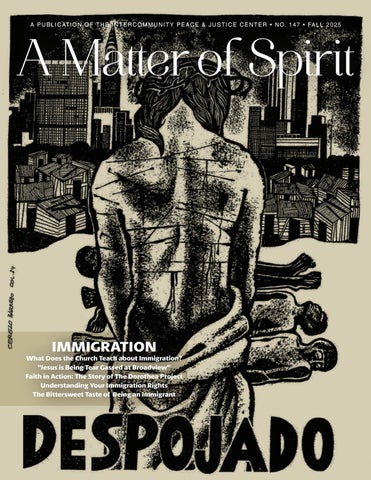
IMMIGRATION
What Does the Church Teach about Immigration?
“Jesus is Being Tear Gassed at Broadview”
Faith in Action: The Story of The Dorothea Project
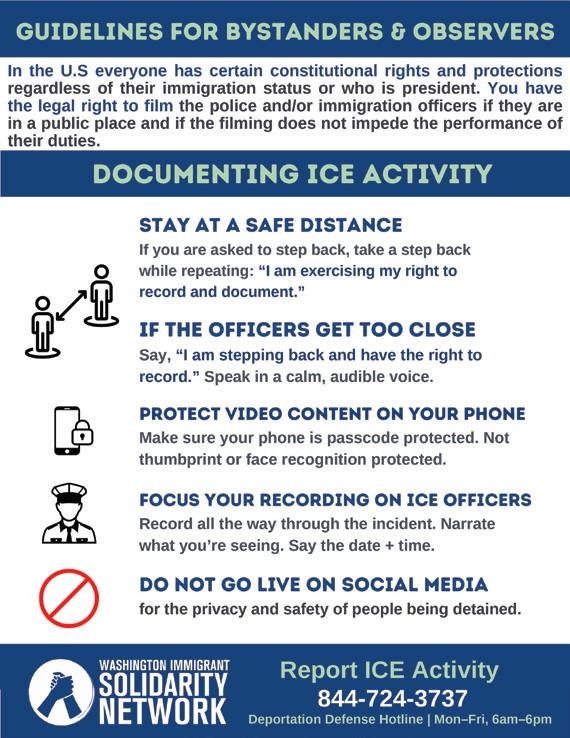
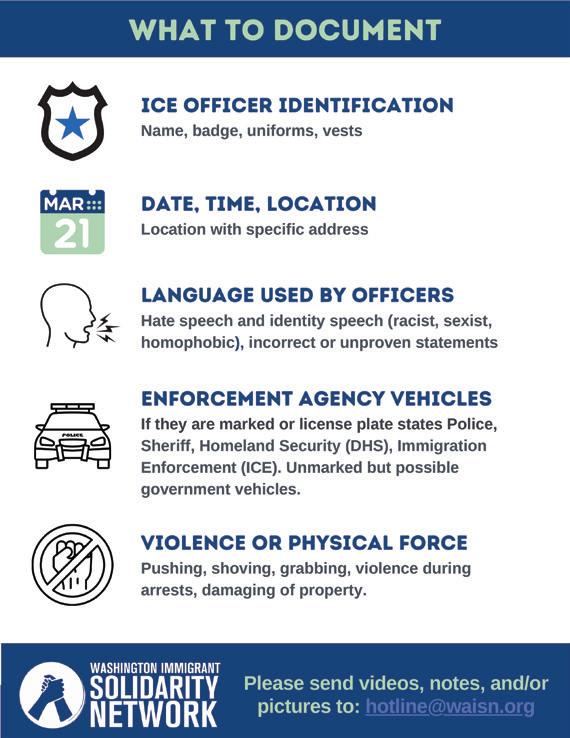
Understanding Your Immigration Rights
The Bittersweet Taste of Being an Immigrant
“Jesus put his own body, his own life, on the line for the poor and for the marginalized and people who had less power than empire and systems…”
From the Editor
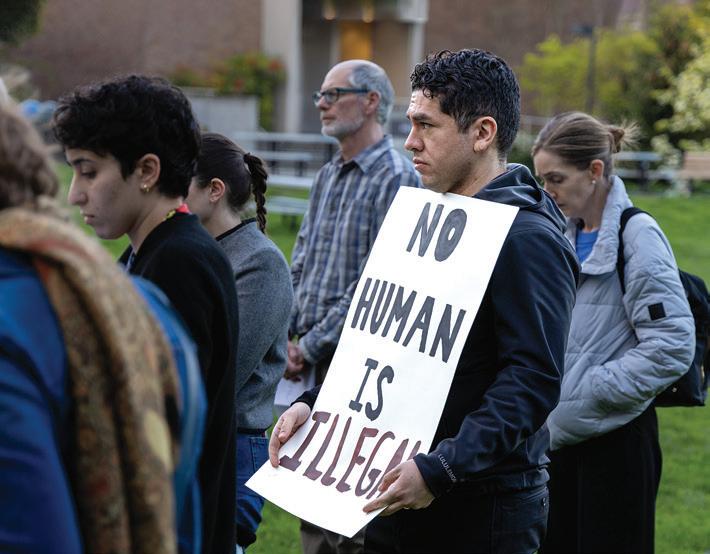
On September 9, more than 100 protesters gathered to confront U.S. Immigration and Customs Enforcement officials in Rochester, New York—about 15 minutes away from my house—after they attempted to detain a group of roofers working on a local house. While ICE managed to detain one worker, community members quickly arrived and created a human chain, preventing officers from reaching the rest of the group. Protesters were able to put enough pressure on ICE that they eventually left without making any further arrests.
This successful action wasn’t done by trained responders or activists; local residents showed up in larger part thanks to a Facebook Live from Rev. Myra Brown, pastor of Spiritus Christi, an independent Catholic church in Rochester, who was called by a local organizer when ICE arrived. “More than 200 people eventually showed up,” Brown said in an interview with U.S. Catholic. “It was a great force of folks to send a very strong message to ICE that we were not going to stand down, and we’re not going to allow them to just come in and start taking people, without our putting our own bodies on the line.”1
This issue of A Matter of Spirit shows how people of faith are called to do just that: put their own bodies on the line when it comes to protecting immigrants and refugees. This isn’t a new idea; in “What Does the Church Teach about Immigration?”
Leonardo D. Mendoza lays out church teaching on migration going back more than 75 years. “Pope Pius XII’s encyclical Exsul Familia, published in 1952, is frequently regarded as the foundational document of the church’s contemporary teaching on migration,” he writes, outlining how Pope Pius connected the plight of the holy family to that of migrants today.
1 Cassidy Klein, “Rochester, New York, Faith Groups Stand in Support of Immigrants,” U.S. Catholic, October 1, 2025, https://uscatholic. org/articles/202510/rochester-new-york-faith-groups-stand-insupport-of-immigrants/
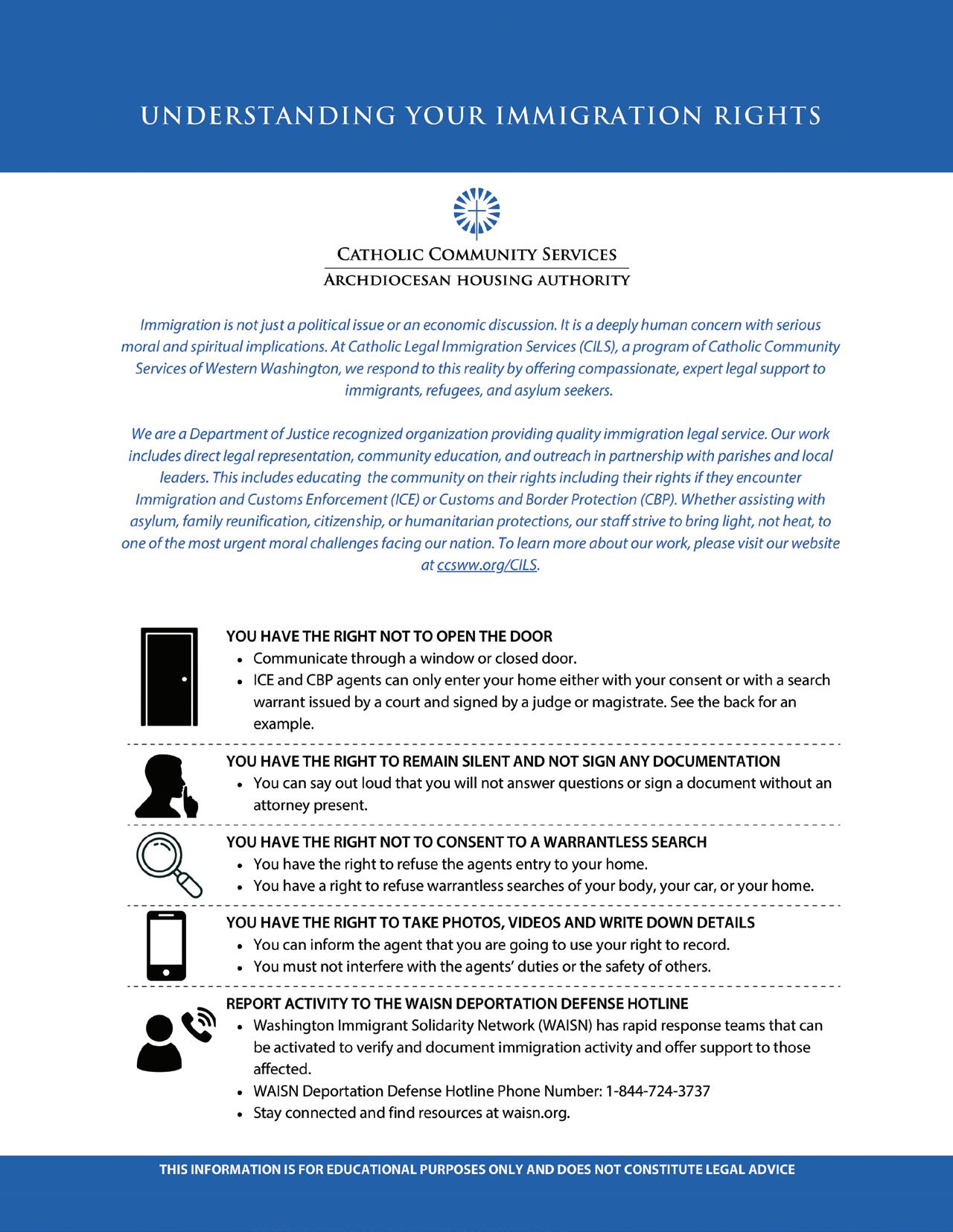
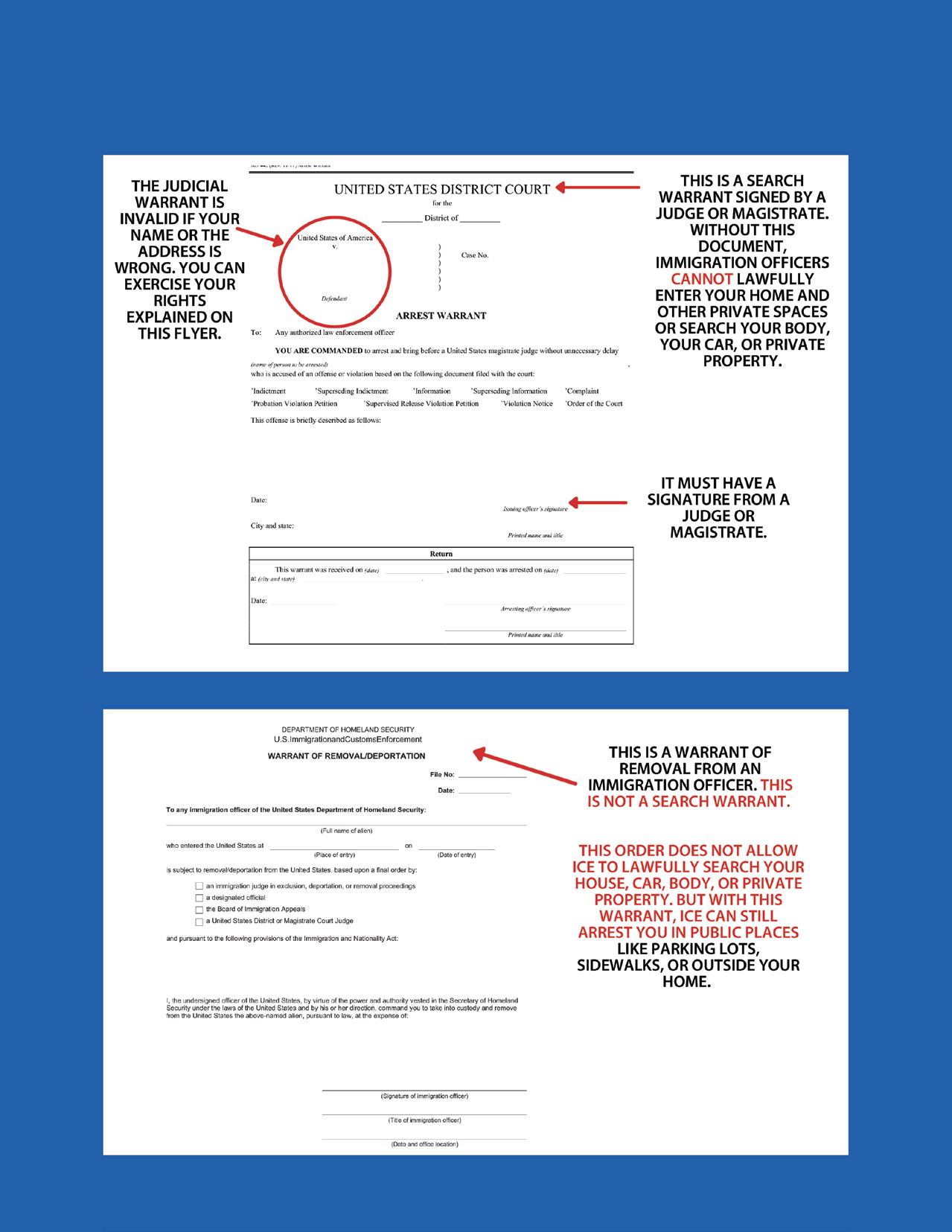
The remainder of the articles model how people around the country are living out the church’s teachings by, as Brown says, putting their own bodies on the line. “Jesus is Being Gassed at Broadview” is an open letter from Chicago-area clergy who were hit with pepper bullets and pepper sprayed after praying at Broadview Detention Center in Illinois. “As Christians, we cannot look away,” these clergy write. “We must act to stop this evil and witness to the goodness and dignity of all God’s children.” “Faith in Action” outlines the founding of The Dorothea Project, a movement of Catholic women that seeks to mobilize members to live out Catholic social teaching; one of their first actions was a letter-writing campaign to U.S. bishops in support of migrants. This issue also includes concrete resources on knowing your rights if ICE shows up at your door and what to do as a bystander during ICE activity. Finally, in the final article Seattle Auxiliary Bishop Eusebio Elizondo reflects on his own experience immigrating to the United States, putting a human face on the experience of immigrating to this country.
“Jesus put his own body, his own life, on the line for the poor and for the marginalized and people who had less power than empire and systems,” said Brown. “That’s what it means for us as Christians to follow Jesus, to take up our cross and to follow him, to count the cost of justice. And to trust that God will give us what we need in those moments. We don’t know if we’re going to win some or lose some in those moments. But what we do know is that we follow Jesus. His journey took him to the cross, on behalf of the people. Sometimes our journey will take us to our cross.”
We hope the articles in this issue give you courage and resources to take your own journey following Christ in support of our migrant siblings.
—Emily Eckwahl-Sanna, Editor
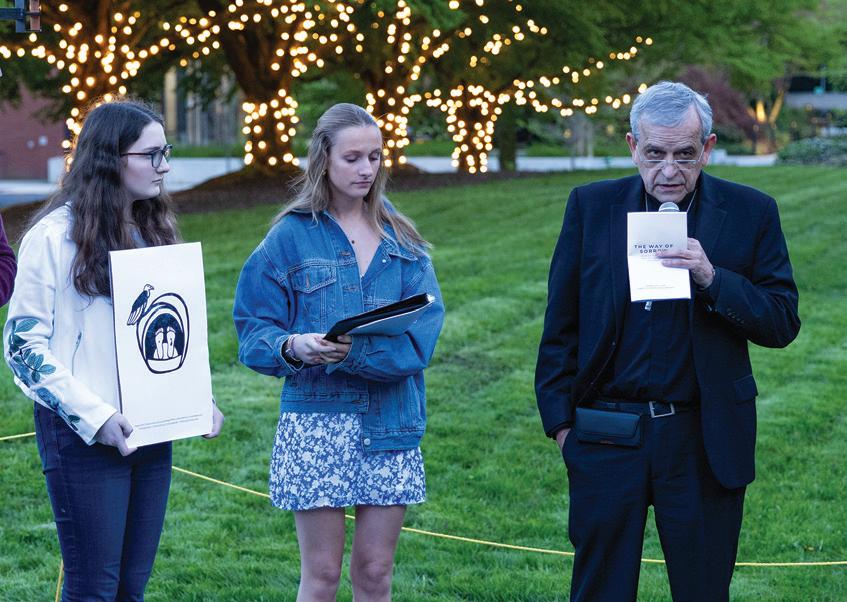
Participants at IPJC's The Way of Sorrow, Stations of the Cross, held on Seattle University’s campus, April 2025.
All photos in this issue © IPJC photos by Paul Dehmer, unless noted.
What Does the Church Teach about Immigration?
BY LEONARDO D. MENDOZA
Migration has been an enduring aspect of human history, and the Roman Catholic tradition has consistently recognized the dignity, rights, and humanity of migrants. From mid-20th-century teachings such as Exsul Familia (On the Spiritual Care of Emigrants) to the contemporary reflections of Pope Francis and Leo XIV, the church’s stance emphasizes both the moral obligations of host societies and its pastoral responsibilities. These documents collectively articulate a vision of migration rooted in the gospel, the exemplar of the holy family, and the imperatives of justice and solidarity.
POPE PIUS XII
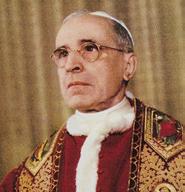
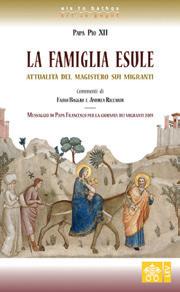
Pope Pius XII’s encyclical Exsul Familia, published in 1952, is frequently regarded as the foundational document of the church’s contemporary teaching on migration. The encyclical draws upon the image of the holy family—Joseph, Mary, and Jesus—and the forces that compelled them to flee into Egypt to escape violence. Pius presents the biblical story as both a theological model and a moral imperative. He presents the holy family as the “first exiles,” thereby establishing the church’s concern for migrants not in abstract principles but in the tangible experience of Christ himself.
As the encyclical underscores, the church must provide unwavering support to migrants in all circumstances, particularly when they encounter poverty, displacement, statelessness, or discrimination.
In Exsul Familia, the Catholic Church articulates several fundamental themes that remain pertinent in contemporary society:
• the right of individuals to relocate when they are unable to secure a dignified existence in their home country,
• the responsibility of nations to regulate migration with justice and compassion,
• and the church’s direct pastoral obligation to accompany migrants.
The comprehensive pastoral care laid out in this document includes advocating for migrants’ civil rights, ensuring their access to worship in their native languages, and providing practical assistance to families attempting to rebuild their lives.
Pope Pius XII clearly perceives migration as an area where the church offers solace to the afflicted while challenging structures that exacerbate inequality or engender forced displacement.
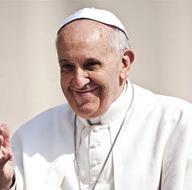
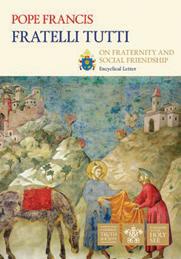
Seven decades later, Pope Francis expanded and deepened Pope Pius’ vision in his 2020 encyclical Fratelli Tutti (On Fraternity and Social Friendship). Although not exclusively focused on migration, the text repeatedly returns to this theme, as Francis acknowledges that global migration constitutes a pivotal moral issue in the 21st century.
POPE FRANCIS
Francis criticizes the “closed world” mentality that prioritizes national interests or cultural defensiveness over human solidarity. Migrants, he contends, are not threats or burdens but Catholics’ “brothers and sisters,” whose presence prompts societies to broaden their moral horizons.
In Fratelli Tutti, Francis asserts that migrants possess an inalienable dignity that must never be compromised by political calculations or economic apprehensions. He advocates for a “culture of encounter,” a social disposition that seeks dialogue, openness, and mutual transformation. This is directly opposed to what Francis describes as a “throwaway culture,” which discards human beings when they become inconvenient. For Francis, migration challenges Christians and nations to rediscover the biblical command to welcome the stranger, for in doing so, one welcomes Christ himself.
In Fratelli Tutti, Pope Francis emphasizes the structural dimensions of migration. He acknowledges that individuals often migrate not out of personal choice but due to pressing circumstances such as war, poverty, environmental degradation, or persecution.
“Migrants are not strangers but neighbors; not threats, but gifts.”
Consequently, genuine care for migrants extends beyond mere hospitality at borders. It includes efforts to create conducive environments that enable individuals to flourish in their home countries. However, until such conditions materialize, countries must prioritize ensuring safe passage, humane reception, and comprehensive social integration for those seeking a new life.
Francis’ pastoral perspective is further emphasized in a letter he wrote to the U.S. Conference of Catholic Bishops that addresses the escalating tensions surrounding immigration in the U.S. context. Francis urged the bishops to perceive the migration crisis not as a political issue but as a profoundly human and spiritual phenomenon. He encouraged them to support and guide migrants with closeness, humility, and compassion, particularly those who are separated from their families or face the threat of deportation.
Francis challenged the U.S. bishops to assume the role of courageous shepherds, actively defending the rights of migrants, denouncing injustices within immigration systems, and promoting unity among Catholics who may hold differing political viewpoints. He cautioned against ideological divisions that obscure the church’s unequivocal moral teachings.
For Francis, the credibility of the church’s witness hinges on its ability to stand with the vulnerable and uphold a consistent ethic of life that encompasses migrants and refugees.
POPE LEO XIV
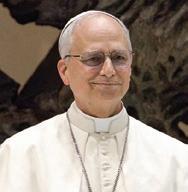
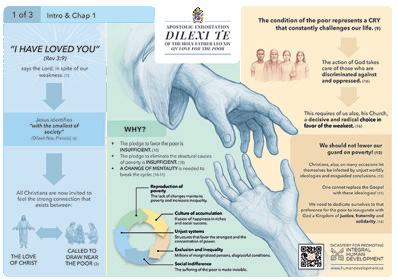
Pope Leo XIV’s recent apostolic exhortation, Dilexi Te (On Love for the Poor), further enriches the church’s reflection on migration. The document emphasizes that love for the poor, including migrants and refugees, is not a supplementary dimension of Christian life, but is at its core.
The exhortation explicitly recalls the migrant: “In every rejected migrant, it is Christ himself who knocks at the door of the community.” This reinforces the teaching found in earlier documents such as Exsul Familia and Fratelli Tutti, which assert that the stranger is not a burden but a neighbor.
The church and civil society alike must shift from indifference to encounter, from exclusion to integration. By elevating the migrant as a privileged place of encounter with Christ, Dilexi Te extends the call to recognize the dignity of every human person. It also urges the transformation of structures that cause displacement and exclusion and the construction of communities of solidarity rooted in the gospel.
ACROSS PAPACIES AND DOCUMENTS, SEVERAL CONSISTENT THEMES EMERGE:
• Migration is a profoundly Christian concern: It addresses human dignity, the preferential option for the impoverished, and the example of the holy family.
• Nations possess both the right to regulate borders and the obligation to do so in a manner that upholds fundamental human rights.
• The church must provide pastoral care to migrants while simultaneously addressing the structural causes of displacement.
• Christians must cultivate a spirit of hospitality, encounter, and solidarity that transcends political or cultural divisions.
In a world increasingly shaped by migration, the Roman Catholic tradition offers a rich and challenging vision. Migrants are not strangers but neighbors; not threats, but gifts. Caring for them entails adhering to the path of Christ himself.
Leonardo D. Mendoza is a doctoral student in integrative studies in ethics and theology at Loyola University Chicago.
Photo:
Jesus is Being Tear Gassed at Broadview: An Open Letter from Chicago Clergy
On October 17, 2025, more than 100 Chicagoarea clergy signed and published this open letter, calling for the support of migrants and condemning ICE attacks on peaceful protesters outside of detainment facilities. Among those who signed are many Catholics, including Passionist Father Enzo Del Brocco, the president of Catholic Theological Union; Jesuit Father Patrick Gilger, a professor at Loyola University in Chicago; and Dominican Father Brendan Curran of The Resurrection Project. You can read the original letter and see the names of all those who signed here: bit.ly/Chicago-Clergy-Open-Letter
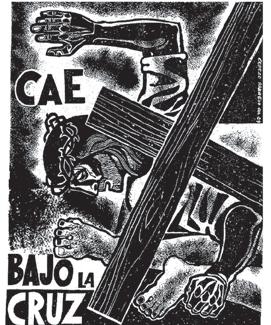
“Can I use my pastoral expense account to buy a gas mask?” It’s a question dozens of Chicago pastors asked our church boards this month. Few of us expected to be met with this degree of hostility and cruelty at the Broadview detention center, as we remain committed to nonviolent action and the peaceful exercise of our First Amendment rights. Our group comprises dozens of pastors and is still only a fraction of the clergy who are showing up and standing in support.
Unfortunately, peaceful actions—such as prayer and communion—have meant little to ICE agents. They lob tear gas, use pepper spray and bully sticks, body slam and drag protestors. One of our colleagues was hit in the face multiple times with pepper balls and rubber bullets. This is the brutality we are now accustomed to. We come offering bread and prayer, hope for justice and healing—we leave washing pepper spray out of each other’s eyes.
We willingly submit to these risks. What Kristi Noem and her ICE agents are doing is immoral. They aren’t arresting criminals; they are arresting our neighbors. They are tearing families apart. They wait at bus stops to detain children and use them as bait to lure parents from their homes. People of all ages are in hiding, businesses shuttered, and our friends and congregants— the people we have been ordained to serve—are being taken to Broadview in unmarked vans.
Despite these facts, pastors are asked by well-meaning people—those both inside and outside the church—why we put our bodies on the line. Aren’t the ICE agents simply doing their job and following the law? Why do we oppose their actions? And what does any of this have to do with the teachings of Jesus?
It isn’t lost on us that the Rev. Martin Luther King, Jr. encountered the same questions. After Bull Connor aimed his hoses at protestors and King was arrested, he penned his famous “Letter from the Birmingham Jail.” In it, he says that there are just and unjust laws, and one has not only the option but the moral obligation to refuse unjust laws. We oppose the laws and orders that
allow for the hunting and terrorizing of immigrant communities.
But it’s not only the words of the King that inspire our actions. It’s the teachings of Jesus. Specifically, The Sermon on the Mount is an instruction manual for nonviolent action on behalf of the persecuted. Here Jesus blesses the poor, the meek, the hungry, the peacemakers and the persecuted, and promises them the kingdom of heaven.
We accept that following Christ’s example may mean we are mocked and assaulted, opposed and even arrested. Jesus has guidance for this as well, saying, “Blessed are you when people insult you, persecute you, and falsely say all kinds of evil against you.” If he were living today, we believe he might add “pepper spray, body slam and arrest you” to his beatitude.
Jesus further stipulates how we must treat strangers. He famously told his disciples, “I was a stranger and you invited me in.” When asked what he meant by this, he said, “Whatever you did to one of the least of these brothers and sisters of mine, you did unto me.”
“We accept that following Christ’s example may mean we are mocked and assaulted, opposed and even arrested.”
In other words, when our friends and congregants are kidnapped, forced into hiding, torn away from their families— those things are happening to Jesus in real time. As Christians, we cannot look away. We must act to stop this evil and witness to the goodness and dignity of all God’s children. For us, the stakes couldn’t be higher. As Matt 25:46 clarifies, those who refuse hospitality to the stranger, refuse to see Jesus in the faces of the persecuted, stand condemned.
The good news, of course, is that anyone at any time can change their heart. It applies to all of us. Those who have been sitting on the sidelines can get involved. They can join us at Broadview but there are many other ways to help. They can write to [their local and national] officials, go to protests in their communities, support families with food and necessities and reach out to those who are fearful.
The Trump administration and the ICE agents, too, can have a change of heart. They can set aside their indifference and cruelty. They can put away their assault rifles and bully sticks. They can give up their pepper spray and rubber bullets. They can choose not to do this, cross to the other side of the fence and join us for communion.
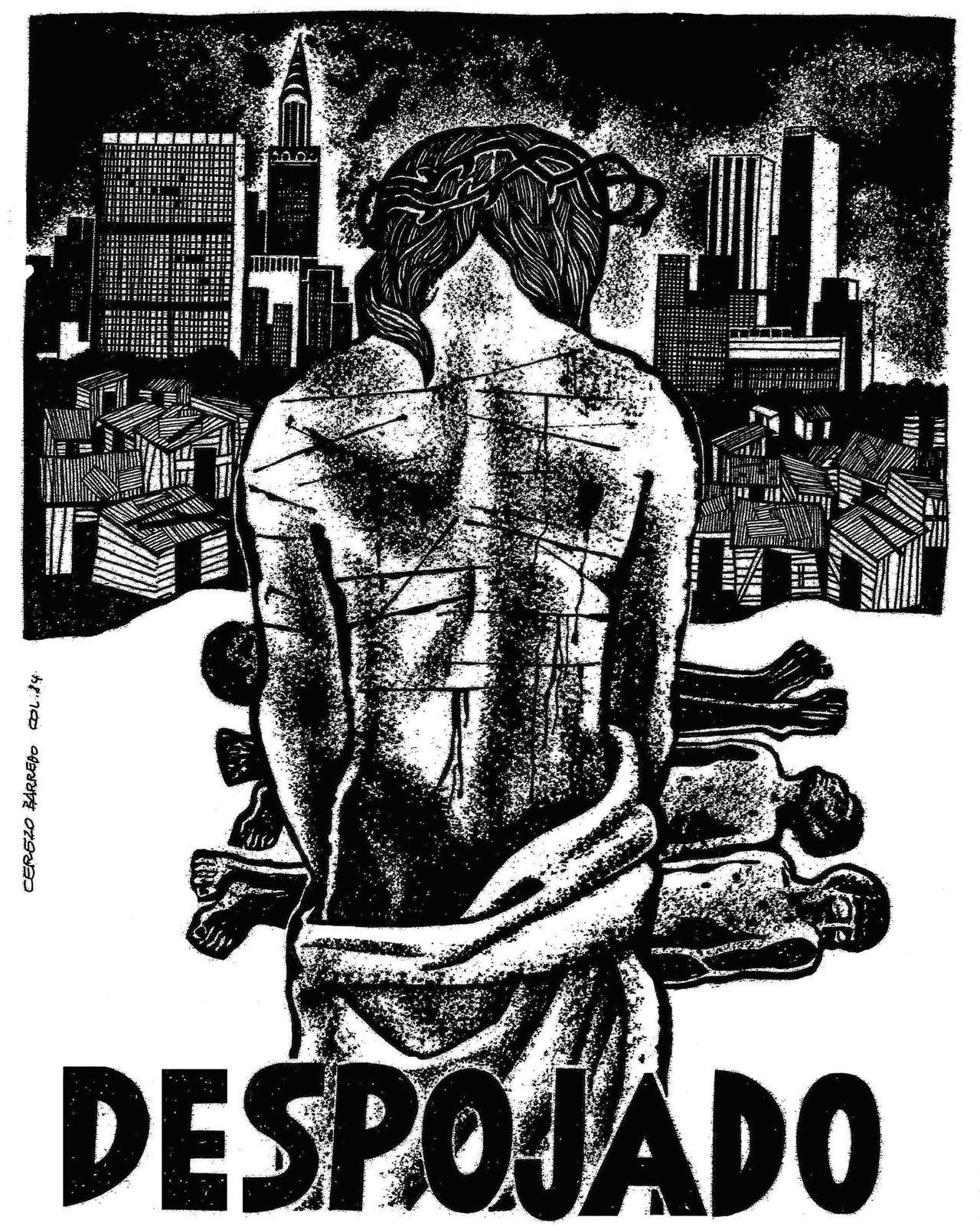
Maximino Cerezo Barredo, Viacrucis IX, 1984, servicioskoinonia.org
FAITH IN ACTION: The Story of The Dorothea Project
BY LAUREN WINTER
When I first learned about The Dorothea Project, it wasn’t through an organization or campaign—it was through a Facebook post. Katie Holler wrote about how she wanted to live her faith in defense of all people and communities. She wanted dignity and justice. She wanted peace.
Those words stayed with me. I didn’t know exactly what to expect when I clicked the Zoom link she shared, but I knew I’d find other Catholic women who felt that same tug— who wanted to live their faith boldly and beautifully in a world that felt increasingly fractured.
That first meeting had maybe a dozen of us. We were cautious but hopeful, unsure what this would become but certain the Holy Spirit was doing something new.
Over time, the group found its name and its rhythm. We became The Dorothea Project, drawing inspiration from three sources of courage and compassion: Dorothy Day, who embodied radical hospitality; Thea Bowman, whose prophetic witness called for unity through justice; and Our Lady of Sorrows, whose heart teaches us to suffer with others rather than turn away. Together, they represent our three pillars: formation, action, and prayer.
Our mission is simple: to spread the good news of Catholic social teaching, to help our fellow Catholics understand that it’s not an optional part of faith but its living expression— and to mobilize women to become witnesses of that truth in the world.
One of our first actions, this past July, was a letter-writing campaign, urging U.S. bishops to speak out against the current inhumane treatment of migrants. An article on the campaign in the National Catholic Reporter quotes the sample letter:
In the spirit of Christ, who Himself was a refugee, I ask you to help lead our local Church in defending the vulnerable and promoting policies that reflect the Gospel as well as Catholic Social Teaching… As a shepherd of the Church, your voice carries moral authority and hope. In light of the Church’s teachings on human dignity, the preferential option for the poor, and the call to welcome the stranger, I believe now is the time for bold and courageous leadership in defense of the marginalized.
In just two weeks, The Dorothea Project members sent more than 150 letters to 75 bishops. And the project has continued to grow quickly. What began as a handful of women on a Zoom call has become a network of hundreds. We now have regional chats and local meetups forming organically across the country.
This August, we took our first major step together in the form of our Feast of St. Maximilian Kolbe Campaign, a national day of prayer and public witness for immigrants, migrants, and refugees.
The idea began as a simple conversation: What if we used the church’s liturgical calendar as a framework for action? Feast days remind us that holiness is not abstract; it’s incarnate in people who lived the gospel in their own time.
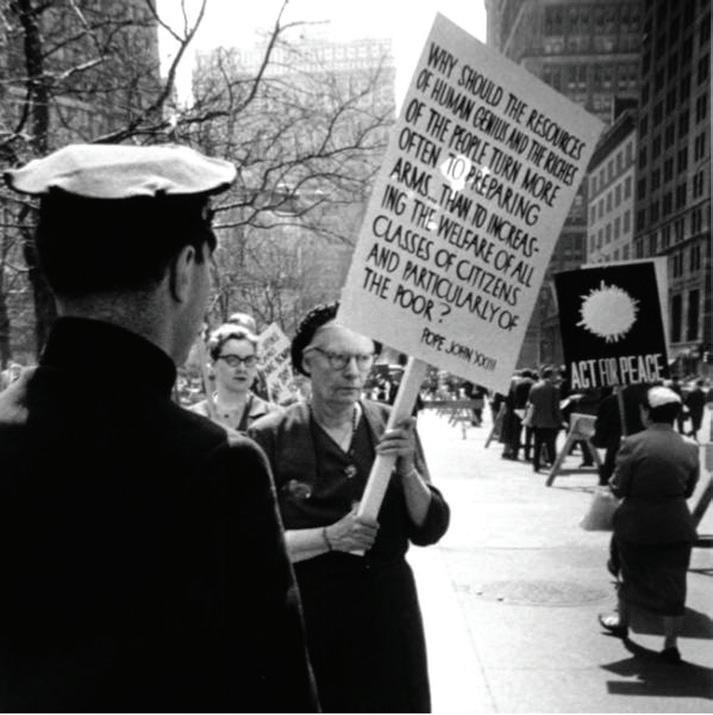
April 17th 1959: Dorothy Day arrested at City Hall protesting the mandatory “Operation Alert” civil defense drill. Photo:Wikimedia.
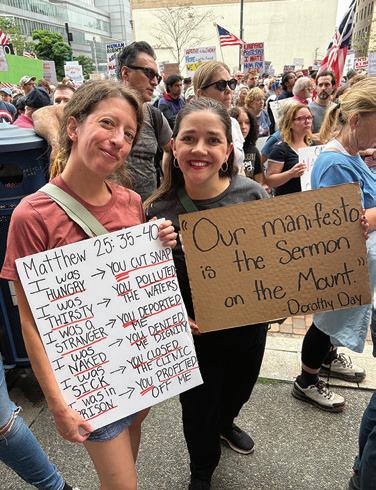
They give us spiritual and practical anchors around which the faithful can rally.
We chose St. Maximilian Kolbe for our first campaign, because his life so powerfully reflects the heart of Catholic social teaching. Imprisoned at Auschwitz, Kolbe offered his life in exchange for another man’s, choosing love over selfpreservation. His witness reveals that every life, no matter how forgotten, has infinite value.
In that same spirit, we dedicated his feast day, August 14, to prayer and advocacy for immigrants and detainees—those often treated as disposable in our world today.
Our campaign invited women across the country to unite in prayer, fasting, and concrete action. We asked them to pray the rosary for immigrants and refugees, to write to their bishops and representatives, and to participate in public witnesses outside courthouses, detention centers, and parish grounds. Some gathered in small groups; others stood alone. But in every case, they stood as Catholics who refuse to look away.
One of the most impactful parts of the campaign was encouraging members to email their parish priests, asking them to speak on immigration from the pulpit and to shepherd and guide the faithful on this urgent moral issue.
The response was extraordinary. Women prayed more than 300 rosaries across the United States. They held public witnesses in Pennsylvania, Michigan, Florida, Minnesota, California, and Washington, D.C. In many cases, these were the first public Catholic actions for immigrant justice in those local communities.
The day wasn’t about numbers; it was about courage, unity, and fidelity. It showed us that Catholic women—often underestimated—can be a prophetic voice in the church when we act together.
The campaign also reminded us what the Dorothea Project is working toward in the long term: bringing Catholic social teaching to life as a grassroots effort on the parish and diocesan level through formation, prayer, and courageous public witness.
Some women involved in the Project are drawn to the theological side—studying encyclicals and papal documents—while others feel called to outreach, organizing, or intercessory prayer. But all of us share the same conviction: that fidelity to Christ means defending the dignity of every human person.
At its heart, The Dorothea Project is about accompaniment. It’s women encouraging women to stand firm in faith, to speak truth with charity, and to bring the church’s social teaching to life in their own communities.
The Maximilian Kolbe campaign reminded us that transformation begins small—a few people, a shared prayer, a spark of faith. But as those sparks gather, they can light something much larger.
The Dorothea Project began with a Facebook post and a dozen women on a Zoom call. Now, it’s hundreds of Catholic women across the country praying, organizing, learning, and acting in fidelity to Christ.
Our work is still humble, still forming. But we believe that when the church’s social teaching is lived out fully—with intellect, with courage, and with love—it has the power to renew the world.
The gospel was never meant to stay in our hearts. It’s meant to be carried into the streets.
Lauren Winter is a Catholic mom, small-business owner, and organizer with The Dorothea Project. She is passionate about equipping Catholic women to live out the church’s social teaching with clarity, courage, and hope.
Left: 2025 “No Kings” protest in Pittsburgh. Author Lauren Winter (pictured left) and Katie Holler(right).
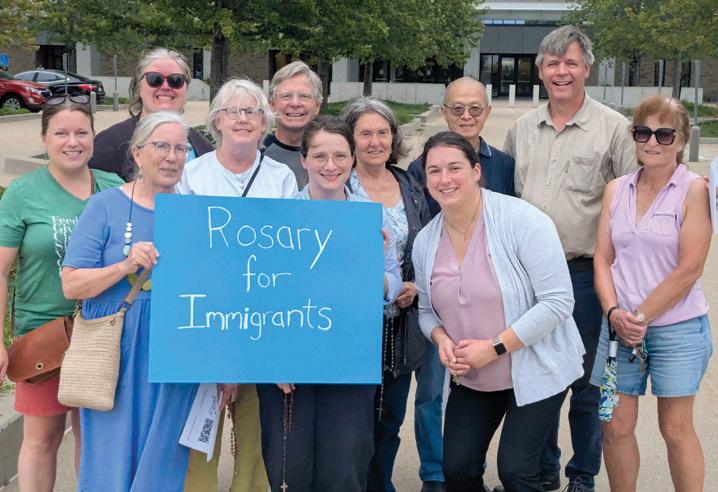
Right: Minnesota St. Kolbe Feast Day Action
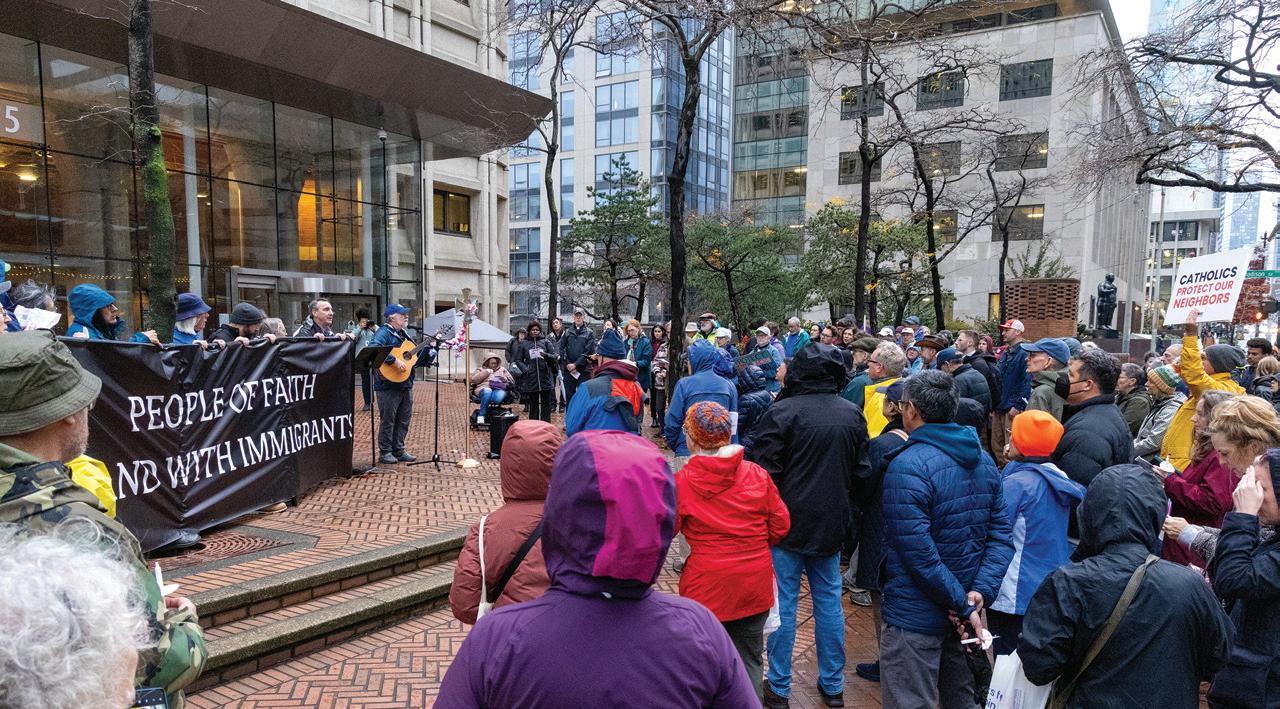
One of more than 120 public witnesses across the United States on November 13, the
Feast Day of St. Cabrini. Federal Building Seattle, WA.
The Bittersweet Taste of Being an Immigrant—and the Homeland Without Borders
BY BISHOP EUSEBIO ELIZONDO, M.SP.S.
From the Ice Age to our own time, the people of the Earth have migrated in search of better living conditions— for themselves, their herds, or their crops. Before the creation of countries and legal borders, people eventually ceased to be nomads and settled into an ongoing struggle for survival in lands that so often yielded only thorns, only to pick up and move again in search of a better life.
That common story of migration is my own story as well. By the decision of God, the giver of all life, I was born on Mexican soil. Of my 22 years as a priest of the Missionaries of the Holy Spirit, I have lived 20 of them in the United States. I have been privileged to carry out a ministry for the church and for my congregation as an immigrant among immigrants.
How many joys, dreams, and hopes come with arriving in a new land, experiencing a new culture, and learning a new language? Migration brings many beautiful surprises and lessons in every sense—from the way we eat to the way we praise God in the sacred liturgy. How beautiful it is to discover people of different races and languages striving to be faithful to Jesus’
command to evangelize all peoples and opening themselves to the possibility of loving one another as Christ loved us. In this way, we all become siblings, children of the same heavenly Creator of all.
“How beautiful it is to discover people of different races and languages striving to be faithful to Jesus’ command to evangelize all peoples and opening themselves to the possibility of loving one another as Christ loved us.”
And yet how painful it is to experience not being welcomed simply for having a different skin color, for not speaking perfect English, or for having an accent that reveals your foreign roots.
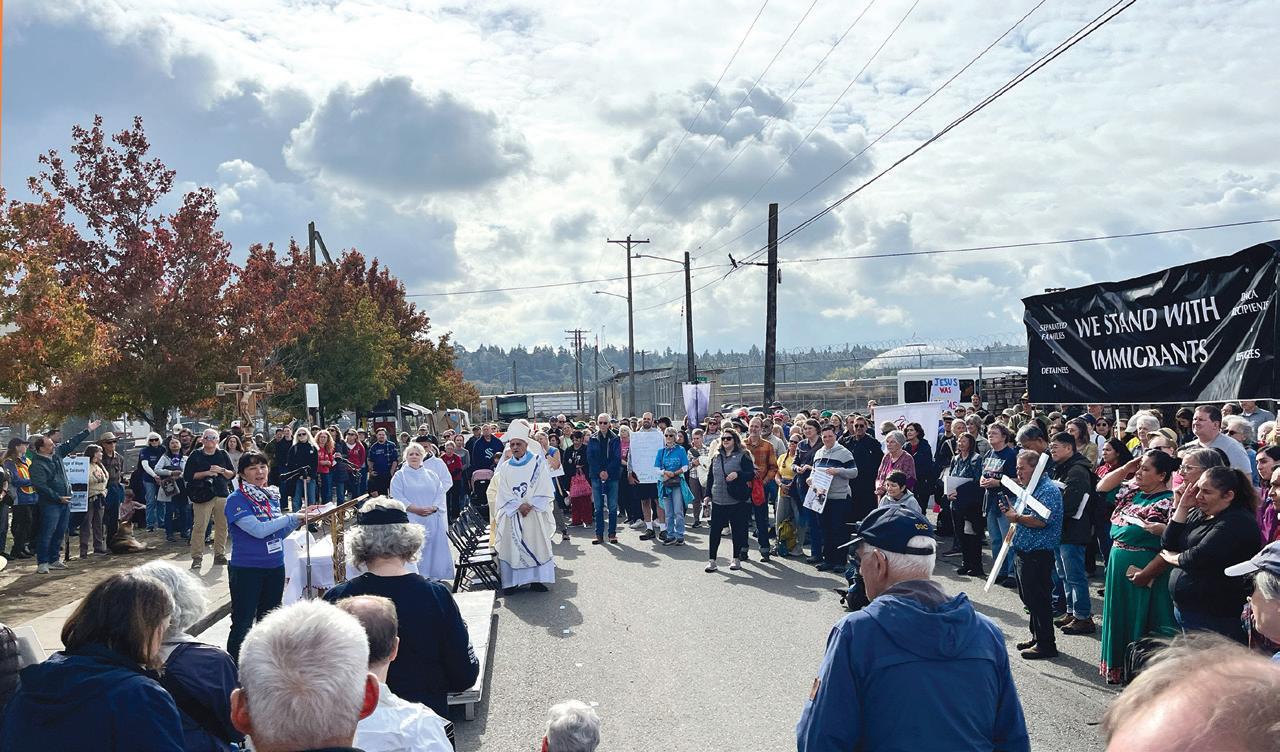
Bishop Eusebio Elizondo (far right) leads prayer at The Way of Sorrow, Stations of the Cross, held on Seattle University’s campus, April 2025, led by Youth Action Team Interns (left)
How sad it is to realize how short human memory can be—how it selects only those memories that confirm our own ideas about other people, and not the full story, with its light and shadows, laughter and tears, that together make up the fabric of our lives.
One of this country’s oldest and most beautiful traditions is Thanksgiving Day—a day when we remember the welcome extended by the Native peoples of this land to the first English settlers as they shared a peaceful meal. What began as friendly encounter soon turned into oppression and dispossession: Those people who had crossed the ocean quickly forgot that they were guests and made strangers of those people born on the land.
Over the years, great waves of Europeans fleeing poverty and hunger in their homelands arrived from Ireland, England, Italy, and Germany, full of energy and dreams, traditions, and faith. They quickly “Europeanized” these new territories—for better and for worse—without regard for the Indigenous peoples and their traditions, which were almost entirely wiped out.
Every country has the right to autonomy and to form its own laws to serve its citizens—to protect its economy, security, and stability. But hunger cannot wait months or years to be legalized; the hungry need bread today. This nation, so proud of being the most powerful in the world, was built through the hard work of immigrants—thousands of them Mexican. Latino/a immigration (not only Mexican) over the past 20 years has been extraordinary, reaching the enormous numbers we estimate today—some 12 million people, many of whom are undocumented. Far from causing economic recession, this has fueled growth in all areas of the economy—agricultural, industrial, and urban.
Over the past year, in my ministry as Auxiliary Bishop and Vicar for Hispanic Ministry in the Archdiocese of Seattle, I have personally witnessed the deep joy my Hispanic brothers and sisters feel upon discovering the support of a Hispanic bishop. Yet I have also felt firsthand the sting of racism, prejudice, and the preconceptions held against anyone who does not have light skin or blond hair or who does not speak English with a native accent—even within some of our parish communities and among members of the clergy.
I have spoken clearly and firmly about the Catholic Church’s position in favor of charity, justice, dignity, and respect for all our brothers and sisters who work tirelessly in jobs that citizens do not want to do, receiving wages far below what is just— simply because they lack official residency papers.
In collaboration with various Hispanic civil and ecumenical organizations, I have participated in massive marches through downtown Seattle to denounce the mistreatment, abuse, and even deaths suffered by undocumented immigrants and to promote laws that recognize, value, and support the enriching presence of immigrants, the majority of them Catholic.
The eternal Word of God became an immigrant to our world and to our human nature. As a child, Jesus lived as an immigrant in Egypt with his parents. In his own land, he suffered the oppression of a conquering empire—and above all, he experienced the desolation of not being understood, even as he sought to show through his life that we are all brothers and sisters, children of the same Father.
“The eternal Word of God became an immigrant to our world and to our human nature.”
In this world we are but pilgrims, journeying toward our true and eternal homeland—where our citizenship will be determined solely by how we have loved, in the way of Jesus. Until we reach that common homeland, let us continue to labor in this world, with that bittersweet taste of being immigrants. Yet even as I accompany others on this earthly pilgrimage, I recognize within myself another, more mysterious migration— the journey of an undocumented heart searching for its true home.
My heart has made me an undocumented missionary wherever I have not yet been recognized as a brother. I will remain a foreigner in this world until the day when the Creator of all and of everyone finally welcomes me into God’s heart— the same heart from which I once came forth to begin my pilgrimage.
I have spent my life trying to learn the universal language of humanity, stammering words of fraternity, justice, peace, freedom, dignity, and joy—and even now, at this stage of my life, I still cannot express myself clearly or fluently. I have not yet learned to master the rules of grammar inscribed deep within this human race in which I am immersed. I continue to make spelling mistakes in the text of my existence—mistakes that keep me from completing, with any real success, even the elementary school of life.
Photo © Christian Lue, Unsplash
“ ... a homeland beyond the limits of political geography—a homeland whose riches I have slowly discovered with wonder. There, the common language is love, and we all speak it with our own particular accent, according to the gifts of each heart.”
The faith of my parents granted me the rights of a homeland beyond the limits of political geography—a homeland whose riches I have slowly discovered with wonder. There, the common language is love, and we all speak it with our own particular accent, according to the gifts of each heart.
My longing is to one day obtain full citizenship in that universal nation. But first, I must pass the exam of humanity— until I understand that every person in this world shares a common origin and an even more common destiny.
The long process of citizenship in this ineffable homeland obliges us, the applicants, to joyfully promote its greatness. It moves us to proclaim that this homeland possesses a vast subsoil of forgiveness, capable of freeing countless millions
oppressed under the weight of their errors. It compels us to cry out that this enchanting nation has immense shores of justice, so deep that it continually draws from its depths treasures of human dignity previously unimagined.
Bishop Eusebio Elizondo, M.Sp.S. was appointed Auxiliary Bishop of Seattle in 2005. He was born in Monterrey, Mexico and previously chaired the USCCB Committee on Migration. Elizondo is the first Hispanic bishop in Seattle. He serves as the archdiocese's Vicar General, Vicar for Hispanic Ministries, and Vicar for Vocations.
Catholics from across Western Washington,October 4th gathered at St. Leo, Tacoma, to make a pilgrimage to the Tacoma Northwest Detention Center. Sponsored by the Archdiocese of Seattle, Mass was served outside the detention center by Bishop Eusebio Elizondo.
Visible Signs of a God Whose Love Knows No Exclusion
BY ANNA ROBERTSON

In Luke’s gospel, we have a story about the wideness of God’s mercy. Traveling near the border of Samaria and Galilee, Jesus is approached by a group of lepers asking for healing. In ancient Israel, lepers were the lowest of the low, relegated by their communities to lives of squalor, suffering, and exclusion. Any of Jesus’ contemporaries hearing this story would have heard “leper” and thought “outcast.” In healing them, Jesus was not only relieving them of a physical affliction; he was restoring them to belonging in the community.
Lest the gospel writer’s audience miss the memo, he reiterates his point about God’s expansive love by telling us that the only one of the 10 lepers who stopped to thank Jesus was a Samaritan. We recall here an earlier parable in Luke’s gospel, where the only person to offer mercy to a man waylaid by the side of a dangerous road was also a Samaritan. In Jesus’ day, the enmity between neighboring Samaritans and Judeans was at a fever pitch. Just as any ancient listener would have heard “leper” and thought “outcast,” they would have heard “Samaritan” and thought “enemy.” And yet, twice the author of the Gospel of Luke lifts up a despised Samaritan as the model Jesus-follower, first demonstrating mercy in the parable of the Good Samaritan and now exemplifying thanksgiving in today’s gospel. These outsiders and enemies are not only the recipients of Christ’s love but model disciples, signs of the very love they have received.
Earlier this month, I participated in a pilgrimage that ended at Tacoma’s Northwest Detention Center, one of the largest immigrant prisons in the United States. There, outside the chain-link fence that surrounds the for-profit prison, Auxiliary Bishop of Seattle Eusebio Elizondo presided over a Mass for several hundred Catholics and people of goodwill. Our witness offered a visible sign of the church’s solidarity with migrants at a time when they have been relegated to the status of the leprous Samaritan—reviled, scapegoated, excluded, and dehumanized. This is what the church is meant to be: a visible sign of a God whose love knows no exclusion. Just as the gospel writer, by featuring a protagonist who was not only a leper but a Samaritan, refused to let their listeners off the hook, so we should refuse to let each other off the hook when we seek to claim God’s preferential love for ourselves or to cast others outside its scope.
Reflection questions:
n What might it look like for you to move your church or community toward being a “visible sign of a God whose love knows no exclusion”—particularly in light of the villainization of and violence directed at migrants in the United States today?
n How can you practice a life marked by mercy and thanksgiving, as the Samaritans of Luke’s gospel model?
n What groups of people do you revile, exclude, scapegoat, or vilify? Ask for the grace to be healed of your hatred and restored to belonging in Christ’s love.
SOURCE: Ignatian Solidarity Network’s “Rise Up” reflection series, https://ignatian solidarity.net/blog/2025/10/13/visible-signs-of-a-god-whose-love-knows-no-exclusion/.
LOOKING BACK
Sacred Salmon Pilgrimages
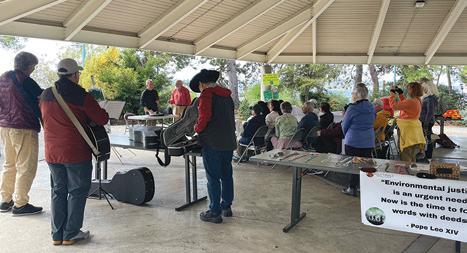
More than 10 Catholic communities in Washington State hosted a pilgrimage of creation focused on salmon recovery and restoration. All the events featured beautiful encounters with natural spaces where salmon are or were once plentiful. We are grateful to the community leaders who animated these engaging and insightful experiences.
Way of the Masks
This nine-stop journey gathered communities across the Pacific Northwest to reflect on the interconnectedness of all creation. The actions focused on mobilizing folks to participate in the public comment period on the Roadless Rule. More than 1,200 individuals attended one of the events.
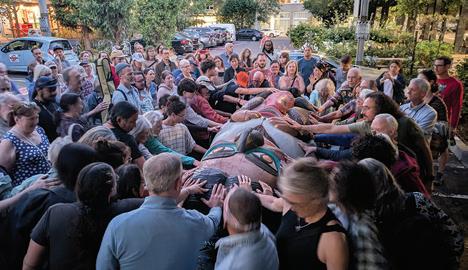
This, together with significant press coverage, raised awareness and elevated Indigenous wisdom and leadership. We were grateful to support the Olympia and Seattle gatherings and to witness Auxiliary Bishop Eusebio Elizondo offer a reflection at the Seattle stop.
Photo © Sierra Club
Care for Creation-Sacred Salmon Pilgrimage to the Kirkland marina, St. John Vianney/Holy Family parishes.
“Bear Becomes Person” totem pole at the Portland stop. The pole and masks traveled the journey carved by Jewell James, of House of Tears, Lummi Nation.
New Youth Leadership Team
Early this fall, we welcomed our fifth cohort of Youth Action Team interns and fellows! This year we have 20 powerful youth leaders working for immigrant justice, increased access to health care, and greater access to housing.
One Church, One Family Vigil
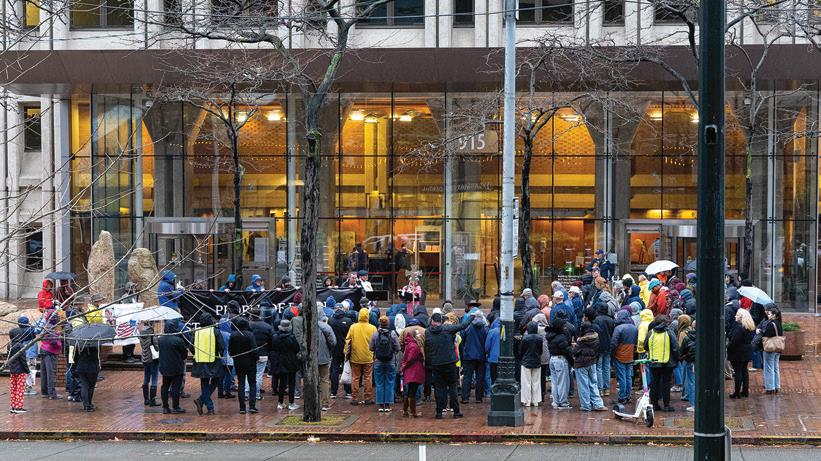
More than 200 Catholics gathered in downtown Seattle in front of the Federal Building to celebrate the feast day of St. Frances Xavier Cabrini, patron saint of immigrants. This was one of more than 120 public witnesses throughout the United States and featured powerful testimony, grounding prayer, and invitations to accompaniment and action.
LOOKING FORWARD
IPJC Community Assembly– SAVE THE DATE
Saturday, January 31, 9a.m.–5p.m.
St. Edwards Catholic Church, Seattle
Join us for this inaugural annual gathering! The day will be a beautiful intergenerational and multicultural encounter that brings together women religious, Youth Action Team interns, parish leaders, community partners, women’s justice circle facilitators, and people committed to justice. Together we will build relationships, ground ourselves spiritually, and strategically take action together. Details and registration to come soon.
Immigration Actions
Please look for upcoming immigration actions in the winter and early spring. We are looking toward Lent, Easter, and Pentecost as a time to gather Catholics to act for immigrant justice.
Donations
IN HONOR OF Judy Byron, OP
IN MEMORY OF John W. Maney
Susan Snow
If you would like to honor a loved one, you may note with your contribution and we will include in the upcoming issue.
NW Ignatian Advocacy Summit
March 5–7, Seattle University
The fourth annual summit will gather the community for three days of connection, learning, and action. As in the years past, there will be robust programming for high school and college students throughout the three days. Each evening, the greater community is invited to participate in intergenerational conversations and storytelling, with our whole community converging Saturday morning for a town hall. This year we are expanding the issue focus of the summit to include immigration and access to housing in addition to salmon protection. Details and registration forthcoming.
Laudato Si' Movement WA, Earth Day Summit
Saturday, April 25th, Seattle University
Details to come soon.
One Church, One Family vigil, November 13th, the Feast Day of St. Cabrini, Federal Building Seattle, WA.
Intercommunity Peace & Justice Center 1216 NE 65th St Seattle, WA 98115-6724
SPONSORING COMMUNITIES
Adrian Dominican Sisters
Congregation of the Sisters of St. Joseph of Peace
Jesuits West
Sisters of the Holy Names of Jesus and Mary, U.S.-Ontario Province
Sisters of Providence, Mother Joseph Province
Sisters of St. Francis of Philadelphia
Tacoma Dominicans
AFFILIATE COMMUNITIES
Benedictine Sisters of Cottonwood, Idaho
Benedictine Sisters of Lacey
Benedictine Sisters of Mt. Angel
Dominican Sisters of Mission San Jose Dominican Sisters of Racine Dominican Sisters of San Rafael Sinsinawa Dominicans
Sisters of Charity of the Blessed Virgin Mary Sisters of St. Francis of Redwood City
Sisters of St. Joseph of Carondelet
Sisters of St. Mary of Oregon
Society of the Holy Child Jesus
Sisters of the Holy Family
Sisters of the Presentation, San Francisco Society of Helpers
Society of the Sacred Heart
Ursuline Sisters of the Roman Union
EDITORIAL BOARD
Don Clemmer
Emily Eckwahl-Sanna
Sheila Edwards
Cassidy Klein
Andrea Mendoza
Will Rutt
Editor: Emily Sanna
Copy Editor: Cassidy Klein
Design: Sheila Edwards
A Matter of Spirit is a quarterly publication of the Intercommunity Peace & Justice Center, a 501(c)3 nonprofit organization, Federal Tax ID# 94-3083964. All donations are tax-deductible within the guidelines of U.S. law. To make a matching corporate gift, a gift of stocks, bonds, or other securities please call (206) 223-1138. Printed on FSC® certified paper made from 30% post-consumer waste.
Cover: Maximino Cerezo Barredo, Viacrucis X, (“Stripped”),1984, servicioskoinonia.org.
Back Cover: Max Böhme, Unsplash ipjc@ipjc.org • ipjc.org
Prayer
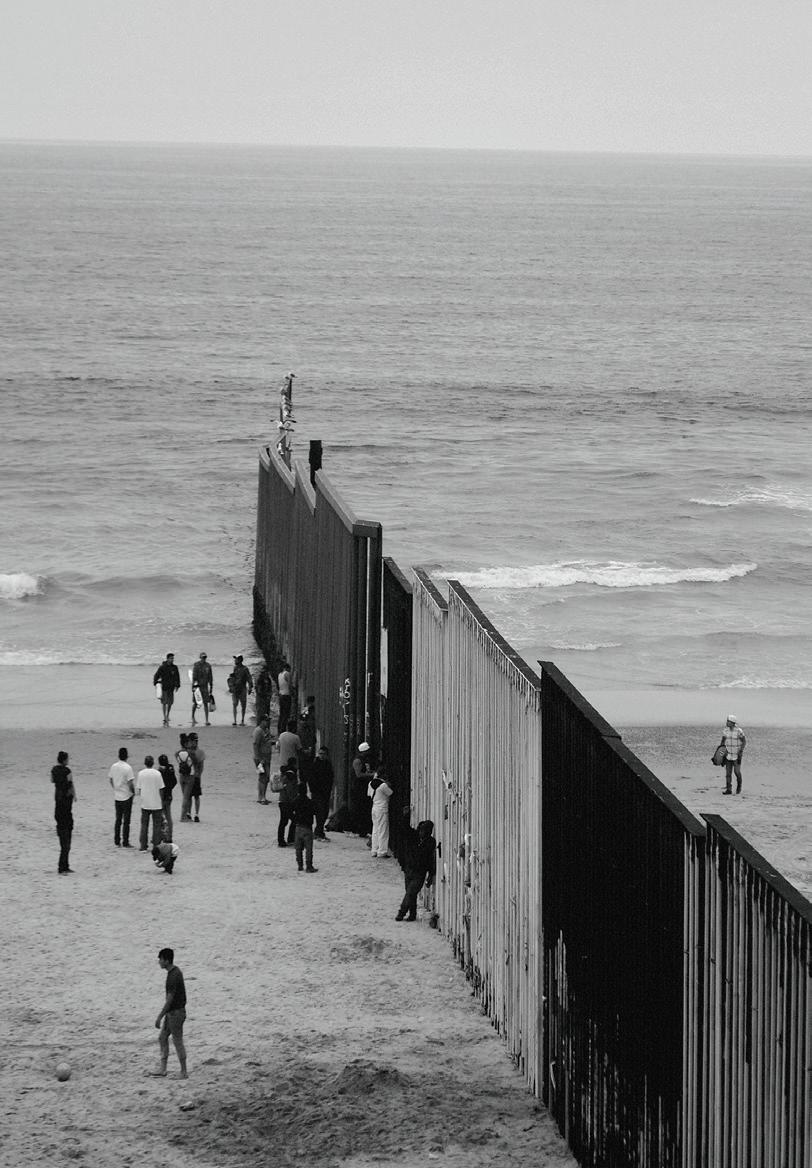
Blessed are You, Lord Jesus Christ. You crossed every border between Divinity and humanity to make your home with us. Help us to welcome you in newcomers, migrants and refugees.
Blessed are You, God of all nations. You bless our land richly with goods of creation and with people made in your image. Help us to be good stewards andpeacemakers, who live as your children.
Blessed are You, Holy Spirit. You work in the hearts of all to bring about harmony and goodwill. Strengthen us to welcome those from other lands, cultures, religions, that we may live in human solidarity and in hope.
God of all people, grant us vision to see your presence in our midst, especially in our immigrant sisters and brothers. Give us courage to open the door to our neighbors and grace to build a society of justice.
—PAX CHRISTI