The Inya Institute Quarterly Newsletter

Spring 2026 www.inyainstitute.org
From August to December 2025, the United Nations Development Programme (UNDP) published a series of reports on youth in Myanmar. Drawing on data collected in 2024 for a Myanmar Youth Survey (MYS), the reports – covering youth migration, youth employment and education, youth safety and well-being, and youth perceptions and action on climate and environment – portray a generation navigating an unprecedented convergence of crises. Since the 2021 coup, an estimated 300,000 to 500,000 young people are thought to have relocated to other countries, reflecting a widely shared desire (between 33 percent in Sagaing, Tanintharyi, and Mandalay and 60 percent in Rakhine) to escape deteriorating economic circumstances, insecurity, and a severely disrupted education system.
Yet for many remaining in Myanmar, migration is simply not an option. Financial, legal, and logistical barriers as well as family responsibilities, prevent safe mobility to foreign countries, leaving many feeling trapped. In the aftermath of the 2021 coup, the path from education to employment for Myanmar’s young people has been severely disrupted: 17 percent of youth are not in employment, education, or training (NEET), and the figure rises to 25 percent for women. Where jobs are available, they are predominantly informal and rural, with low-skilled work offering low wages.
In this issue
Compounding these challenges is a pervasive climate of insecurity shaped by ongoing conflict, crime, and the threat of conscription by both the Tatmadaw and Ethnic Armed Groups (EAOs). These pressures have contributed to significant mental health burden, with many young people reporting frequent stress, anxiety, and uncertainty about their future, alongside widespread distrust in public institutions and limited access to support systems. However, the growing mental health crisis is not evenly distributed across the country, with the highest levels reported in Chin, Kayah, Rakhine, and Kachin states.
The reports also highlight climate issues as an intensifying layer of vulnerability. Despite a high level of awareness of deteriorating conditions, only about one-third of young people surveyed reported being “Very concerned” or “Concerned” about these issues, suggesting that more immediate economic and safety pressures are taking precedence.
Despite these conditions, young people continue to express a desire for stability, opportunity, and action but face real constraints, including limited access to education and information. The reports point to the need for the international community to remain engaged in supporting youth in Myanmar, particularly through investing in higher, vocational, and environmental education.
The Inya Institute team in Yangon
Reflections from the Field 3 Seeing Strength: A Photovoice Study of Resilience Among Karen Migrant Students by Dr. M. Barrett Reflections from the Field 6 Funding the Fight: Diaspora Donations and the Spring Revolution by D. Avila Testimony 8 Casting Votes for Myanmar’s 2025 General Elections: Between Rejection and Coercion - Part 2 Recent Activities 12
Intern 14 Upcoming Events 15 New Books on Myanmar 16
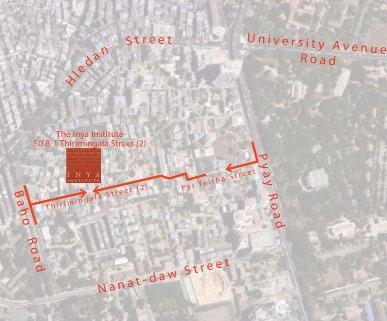
Address in Myanmar:
50 B-1 Thirimingala Street (2)
8th Ward
Kamayut Township Yangon, Myanmar
+95(0)17537884
Address in the U.S.: c/o Center for Burma Studies
101 Pottenger House
520 College View Court
Northern Illinois University
DeKalb, IL 60115 USA
+1 815-753-0512
Director of Publication:
Dr. François Tainturier
Administrative Assistant: Thin Thin Thar
Digital Resources and Info Assistant: Shun Lai Pyae Sone
Education and Training Manager: Pyae Phyoe Myint
U.S. Liaison Officer: Carmin Berchiolly
Contact us: contact@inyainstitute.org
Visit us on Facebook: facebook.com/inyainstitute.org
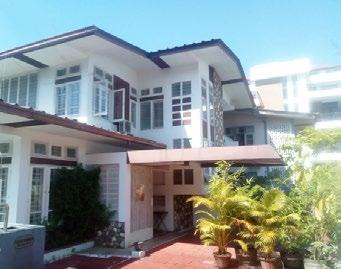
Library: It currently holds a little more than 900 titles and offers free access to scholarly works on Myanmar Studies published overseas that are not readily available in the country. It also has original works published on neighboring Southeast Asian countries and textbooks on various fields of social sciences and humanities. Optic fiber wifi connection is also provided without any charge.
Library digital catalog: Access here.
Working hours: 9am–5pm (Mon–Fri)
Digital archive: It features objects, manuscripts, books, paintings, and photographs identified, preserved, and digitized during research projects undertaken by the institute throughout Myanmar and its diverse states and regions. The collections featured here reflect the country’s religious, cultural, and ethnic diversity and the various time periods covered by the institute’s projects developed in collaboration with local partners.
Digital archive: Access here
The Inya Institute is a member center of the Council of American Research Centers (CAORC). It is funded by the U.S. Department of Education under Title VI of the Higher Education Act (2024-2028).
Institutional Members
Center for Burma Studies

Center for Asian Research
Southeast Asia Program
Northern Illinois University Arizon State University Cornell University
Center for Southeast Asian Studies Carolina Asia Center York Asia Center for Reseearch
Northern Illinois University University of North Carolina-Chapel Hill York University
Academic Board
Maxime Boutry, Centre Asie du Sud-Est, Paris
Jane Ferguson, Australian National University
Lilian Handlin, Harvard University
Bod Hudson, Sydney University
Mathias Jenny, Chiang Mai University
Ni Ni Khet, University Paris 1-Sorbonne
Alexey Kirichenko, Moscow State University
Christian Lammerts, Rutgers University
Mandy Sadan, University of Warwick
San San Hnin Tun, INALCO, Paris
Juliane Schober, Arizona State University
Nicola Tannebaum, Lehigh University (retd)
Alicia Turner, York University, Toronto
U Thaw Kaung, Yangon Universities’ Central Library (retd)
Board of Directors
President: Catherine Raymond (Northern Illinois University)(retd)
Treasurer: Alicia Turner (York University, Toronto)
Secretary: François Tainturier
Jane Ferguson (Australian National University)
Lilian Handlin (Harvard University)
Nicola Tannenbaum (Lehigh University)(retd)
Thamora Fishel (Cornell University)
Aurore Candier (Northern Illinois University)
Reflections from the Field
Seeing Strength: A Photovoice Study of Gender and Academic Resilience among Karen Migrant Students in Thailand
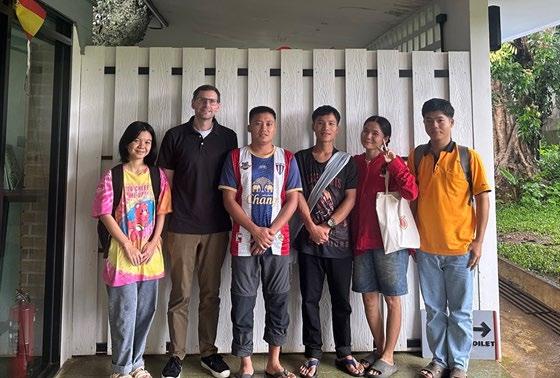
Dr. Michael Barrett was one of our 2025 CAORC-INYA Scholars Fellows. Ethnic Karen youth, displaced by decades of conflict in south-eastern Myanmar, face profound trauma with limited access to culturally informed support. Michael’s study addresses a critical gap in understanding how gender shapes resilience among these youth, a factor overlooked in existing trauma recovery research. The findings will offer innovative insights for designing trauma-informed and culturally responsive education models, advancing global efforts to support conflict-affected populations, and setting a new standard for addressing trauma through gender-sensitive approaches.
Data collection took place from July 6, 2025 – August 5, 2025 in a region shaped by decades of cross-border migration and cultural exchange, the Tak Province of Thailand. This study specifically focused on Thoo Mweh Khee (TMK) Migrant Learning Center, which is a well known school located in the small border town of Phop Phra. TMK is located only two miles from the Myanmar border and has positioned itself as a practical schooling option for over 3,000 students from the Karen State. Migrant Learning Centers are unaccredited institutions that provide students with a strong education rooted in indigenous culture along with much needed safety and stability away from the war in their homeland. While not formally recognized by either the Thai or Myanmar governments, migrant learning centers have garnered a reputation of prestige among the Karen community and many families work hard in order to pay the tuition and boarding fees so their children can attend.
Research Design, and Implementation
This study employed a qualitative, participatory photovoice design grounded in a constructivist paradigm and
guided by decolonial research principles that center participants’ voices and lived experiences.
Participants
The participants in this study were all enrolled in bachelor’s-level programs at Thoo Mweh Khee Migrant Learning Center. Four students took part, two male and two female, ranging in age from 20 to 22. These students were selected through purposive sampling to ensure they met specific criteria required for the study. In particular, an equal number of male and female students were sought, and recruitment was limited to those currently enrolled in TMK’s bachelor’s programs.
Of the four Karen students recruited, two were 22 years old, one was 21, and one was 20. Only one of them attended TMK as a K-12 student, while the others enrolled at the learning center for the first time when beginning their undergraduate studies, having completed their K-12 education in the Karen State of Myanmar (Burma). Three students self-identified as Christian and one as Buddhist. The Buddhist student was also a member of the Poe Karen subethnic group, while the others were S’gaw Karen. All students were fluent in S’gaw
Karen, Burmese, and English, and the Poe Karen student also spoke the Poe Karen language.
Data Collection
Data collection centered on a participatory photovoice method, engaging students in creating photographs and discussing their meanings during weekly sessions over a four-week period. At the start of the study, each student was given a Camp Snap camera. These digital devices are screen free and were chosen to encourage meaning-focused image making rather than reviewing or editing photos in the moment. Before receiving any official prompts, I provided an overview of how to use the cameras and guided students through three practice prompts.
When the first official prompt was given, students also received clear guidelines. They were asked to take 10–15 photos for each prompt. They were permitted to photograph people only after obtaining verbal consent and explaining the project and how the photo might be used. Because the students live near the Myanmar border without documentation, they were also reminded to prioritize safety and avoid taking any risks while photographing. The weekly prompts were:
Week 1: By next week, take 10 - 15 photos of something or someone that helps you stay strong when life is hard? Week 2: By next week, take 10 - 15 photos showing what people expect from boys/men and girls/women in the Karen community? Week 3: By next week, take 10 - 15 photos of people and places that help you feel safe and accepted? Week 4: By next week, take 10 - 15 photos of things, people, or places that help you keep working hard or stay focused on your schoolwork, even when it feels difficult?
At the end of each week, the cameras were returned and all images were uploaded to a computer. Each student selected 4–5 photos from their set that best represented the prompt, and these became the basis for that week’s conversation.
Each week the group met at a familiar coffee shop near the school to create a comfortable setting. Students ate lunch together and then separated by gender, as the topic of gender expectations was considered sensitive. Each conversation lasted about one hour, with two students in each group sharing their photos and explaining the meanings behind them. Each session began with the invitation, “Tell us about this photo and how it relates to the prompt.” Students led the conversation while I asked follow-up questions and encouraged them to comment on one another’s images.
Data Analysis
The analytic process followed approaches commonly used in photovoice research. Data were analyzed through a three-stage process that moved from
detailed, within-case coding to broader cross-case synthesis. All audio recordings were transcribed verbatim using otter. ai, and handwritten facilitator notes were reviewed alongside the transcripts to ensure completeness and context.
In the first stage, each transcript was examined individually through open coding using Atlas.ti. This process involved reading each conversation line by line and assigning descriptive codes that closely reflected participants’ words and ideas. These initial codes captured a wide range of concepts, actions, and reflections drawn from the week’s prompt. At the end of this stage, axial coding was used to organize and connect the initial codes. Related codes were grouped into broader categories, and attention was given to relationships among conditions, actions, and outcomes described by participants. This step reduced redundancy and created a set of higher-order categories that reflected patterns within each conversation.
The next stage involved pattern coding to compare male and female responses within each weekly prompt. Categories generated during axial coding were examined side by side. This process identified similarities, differences, and nuances in how male and female students expressed resilience in their school setting and engaged with cultural expectations. This stage allowed for a deeper look at gendered influences while staying connected to each prompt’s context.
This led to the final stage where a cross-case thematic analysis was conducted. Themes from all four female conversations were compared with themes from all four male conversations.
This structure allowed for the identification of overarching patterns that spanned the full data set. This final synthesis connected prompt-specific findings to broader insights about how gendered cultural expectations shape the academic resilience of Karen migrant students.
Results and Conclusions
This study examined how Karen migrant students articulate and enact resilience in relation to gendered cultural expectations, and how these practices shape their academic engagement and persistence. Analysis of the photovoice interviews revealed that students shared many common strategies for resilience, but that these strategies were expressed and valued differently depending on gender.
Across male and female participants, spirituality was consistently described as a foundation of resilience. Practices such as prayer, chanting, reading Scripture, and preaching were central sources of strength, calm, and purpose. Music and journaling were also important coping tools, offering emotional regulation and companionship in times of loneliness or stress. Students emphasized that safe relationships with mentors, peers, teachers, and family members provided crucial emotional and social support. Domestic tasks and routines such as cooking, studying, or following timetables were also described as grounding practices that supported persistence in the face of difficulty. Together these shared strategies highlight that resilience was not an individual endeavor but rather one embed-
Credit: Michael Barrett
ded in daily routines, relational networks, and spiritual traditions.
Despite these commonalities, gendered cultural expectations strongly shaped how resilience was performed and understood. Female students framed resilience as relational, introspective, and rooted in responsibility for others. They emphasized caregiving for siblings or younger children in dormitories, taking on domestic work, and serving as role models. While they openly acknowledged vulnerability through stories of crying, loneliness, or frustration, they consistently described resilience as the ability to endure those emotions with dignity and self-control. For them, success was framed as avoiding failure in the eyes of family and community and as contributing to collective well-being rather than seeking individual achievement.
Male students, by contrast, emphasized resilience as strength, leadership, and self-sufficiency. Their sense of worth was tied to physical labor, the ability to carry heavy loads, and the public performance of preaching or speaking. Expressions of vulnerability were often quickly reframed as problems to be “handled” privately through journaling or solitary reflection. Friendships were described more in terms of collaboration and problem-solving than as sources of emotional safety, reflecting cultural expectations of masculine stoicism and reliability. In this way, girls tended to perform resilience through responsibility and caregiving, while boys expressed it through strength and leadership.
These gendered patterns extended into students’ academic engagement. Both groups described education as deeply valuable, contrasting the opportunities of schooling with the limited futures available in their home villages. Yet their paths to persistence diverged. Girls linked their academic efforts to emotional safety, responsibility to others, and long-term hope. They sustained their studies through structured routines, motivational tools, and obligations to their families and dormitory peers. For them, education was not only about personal advancement but about serving others and not burdening their families. Boys, in contrast, connected academic persistence to identity and public roles. School became a stage where they could demonstrate competence, reliability, and leadership. Preaching, mentoring younger students, or helping friends study were tied directly to their academic self-concept. However, boys were also
more vulnerable to being pulled away from school by expectations to enter manual labor or military service, reflecting the weight of traditional masculine roles on their futures.
An important finding of this study is the interplay between cultural continuity and emerging change. Students consistently described rigid gender norms, yet they also pointed to areas where flexibility was beginning to appear. In urban and school-based contexts, girls increasingly took on leadership roles and boys sometimes described helping with domestic work. Schools were seen as relatively more equitable than families or communities, although they continued to reinforce certain gender norms, such as restrictions on dress or appearance. This tension reflects a transitional moment in which migration and education create spaces for renegotiating gender roles, even as traditional expectations continue to exert significant influence.
Taken together, these findings show that Karen migrant students’ resilience is both shared and gendered. All participants drew on spirituality, music, routines, and relationships, but cultural norms shaped the forms these practices took and how they were recognized by others. For girls, resilience was expressed through caregiving, endurance, and relational responsibility. For boys, it was expressed through strength, leadership, and stoicism. Education functioned as both an opportunity for equity and a site where cultural expectations were reproduced. Resilience for these students was moralized and relational, understood not simply as coping with adversity but as fulfilling obligations to family, community, and faith. While moments of shifting roles were present, traditional expectations continued to filter how students imagined their futures, making resilience less about resisting culture and more about adapting within it.
New Perspectives
Through this fellowship I have gained a deeper appreciation for how resilience among Karen migrant students is not only an individual capacity but also a culturally mediated performance shaped by gendered expectations. Before beginning this project, I tended to view resilience as an internal trait or as a set of coping strategies that individuals draw upon. The photovoice process illuminated that for these students, resilience is inter-
twined with moral identity, communal responsibility, and cultural definitions of femininity and masculinity. Girls consistently framed endurance and caregiving as central to their persistence, while boys highlighted strength, leadership, and stoicism. This has shifted my perspective toward seeing resilience as something that is performed within cultural frameworks, rather than as a purely personal quality. Another new perspective has been the recognition that schools serve as both sites of constraint and opportunity. On one hand, they reproduce gendered norms through dress codes and implicit expectations, yet on the other hand, they also provide spaces where girls can take leadership roles and boys can participate in care-oriented activities. I now view education not simply as a neutral pathway for advancement but as a dynamic arena where cultural norms are both reinforced and renegotiated.
Emerging Research Questions
My current research has raised several new questions that I hope to pursue in future studies.
1. How do shifts in gendered resilience practices among Karen migrant youth in school-based contexts influence long-term trajectories of identity, leadership, and career aspirations?
2. In what ways do schools in migration settings function as sites of cultural reproduction and transformation, particularly regarding gender norms, and how do these dynamics affect educational equity?
These questions build directly from the findings of my photovoice study and reflect my growing interest in how resilience practices intersect with broader processes of cultural change and continuity.
Reflections from the Field
Funding the Fight: Diaspora Donations and the Spring Revolution
Drake Avila, a Master’s Degree student at the Asian Studies Department of Cornell University, was one of our 2025 CAORC-INYA Scholars Fellows. For his project, Drake interviewed resistance fighters and activists along the Thailand-Myanmar border about their Facebook campaigns to solicit donations from the Myanmar diaspora. Through these interviews, he sought to understand what social media strategies resistance groups use and how much they rely on diaspora donations for sustaining their movements. Comprehending how and when resistance groups receive donations will provide a unique lens for understanding the trajectory of Myanmar’s post-coup conflict and how long it will last.
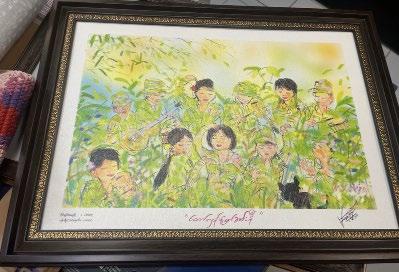
, taw hlan yay nhote kan ni, or revolutionary lipstick, emblazoned in crimson as the namesake cosmetic under a thicket of lush leaves blooming with scarlet lips. Women in uniform danced in the painting, their camo blending almost seamlessly with the jungle foliage. As I packaged the painting to be sent to Virginia, I smiled ruefully. I never spotted the writing on the painting I had borne from Mae Sot to upstate New York.
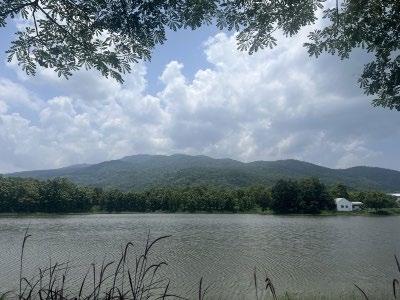
The last time I saw those words, lakewater glistened with reflected sunlight as I sat down on a bench with a kindly uncle. We looked down at a Facebook page named revolutionary lipstick. “Lipstick is slang for bullets,” Ko Tolkien explained. To morning joggers on a nearby path, he probably looked like a tenured professor at Chiang Mai University.
Like a teacher, he valued his “kids”, but besides encouraging them to read
broadly and write, he regularly led them through the forested mountains of Kayin State to ambush Myanmar military soldiers. Sporadic guerilla warfare didn’t require many supplies, so he didn’t engage in any of the flashy Facebook fundraising campaigns that many resistance groups relied on.
At least not until 2024, when orders from on high directed him to take his band of guerillas to the flatlands abut-
Credit: Drake Avila
ting the Sittaung River. Without the shelter of dense jungles atop forbidding mountains, battling the Myanmar military would be a protracted affair, requiring more bullets. Bullets don’t come cheap, and the orders didn’t come with money or supplies.
At a loss, he turned to a woman who had been supporting him since he left the comforts of a well-paid Yangon psychiatrist for the hardships of revolution in the jungle. She was a doctor in-exile turned revolutionary fundraiser, organizing social media campaigns for deserving resistance outfits seeking the substantial support that could come from diaspora donations. She told him to come to a Zoom meeting with other fundraisers armed with a pitch for why they should help his group get support. He did. Donations flowed in from 15 countries, unsurprisingly including diaspora metropoles like Singapore and the U.S. but also coming in lower amounts from distant corners like Denmark and Kenya. Their Bago plains operation got off the ground.
In the acronym-laden parlance of Burmese politics, fundraisers are termed “FRs”, and they stand between resistance groups and the online Myanmar public. Even revolutionaries from behemoths like the Karenni Nationalities Defence Force, file into Zoom meetings and pitch themselves at the mercy of unseen fundraisers – anonymity granted by the platform’s “camera-off” button. Ko Gabyar, a KNDF member, shared a dim view of these meetings. “It is kind of fixed,” but also “you feel like you had to compete”.
A Chiang Mai based-activist I’ll call Queen criticized the fundraisers’ place
in the diaspora – at once intimately connected to Myanmar but also fundamentally divorced from ground realities. “They also feel power. They play an important role even though they are abroad… A lot of FR could be doing sushi in the us, they are not middle class, they are working class. That feeling of being able to command armed groups in your own country. It feels good.” In general, she saw fundraisers as mostly people who had fled Myanmar in the 90s after the 1988 Uprising.
This class dimension may have pulled her into the world of FRs, when friends in a Kayah State-based resistance group asked her to represent them in a pitch meeting. “I was invited to impress FRs. They respect people of higher socioeconomic background who are well spoken and understand global affairs,” she said. As a former employee at various western non-governmental organizations, she fit the bill.
Ultimately, she blames the fundraiserunderpinned donation system for fueling resistance fragmentation. Securing fundraiser support enables small resistance groups to survive without reaching a level of desperation that would prompt merging with larger, more effective armed groups. If correct, this could partially explain why Myanmar has the most warring parties – about 2,600 – of any conflict in the world.
Ko Gabyar and Ko Tolkien separately echoed Queen’s views. An extremely prominent fundraiser once asked Gabyar for a direct introduction to the KNDF leader Marwi in exchange for completing his donation campaign in just a few days.
He directed her to reach out to them through proper channels. More dramatically, the fundraiser that helped asked Ko Tolkien to assassinate a regime informant that had been in the news for landing Civil Disobedience Movement members in prison. He declined, saying he led a resistance group not a hit squad. She was actually the fundraiser that got him into his first pitch meeting.
Not all fundraisers seem as domineering, and some resistance groups seem very capable of forging strong bonds with fundraisers as part of developing more consistent support beyond the endless cycles of campaigns.
The painting to Virginia reached a dental hygienist who participated in 88 and moved to the US shortly after. She went by Ma Nway. She had no connection to Ko Tolkien’s armed group, though she would be handing off the paintings to whoever had won them in a raffle for their Revolutionary Lipstick campaign. These serendipitous links are a sign of the ties that bind the diaspora and myriad resistance groups.
Ma Nway found resistance groups to support almost immediately after the coup, determined to help however she could, albeit from a distance. Initially just a donor, in 2023 she became a fundraiser and has been involved with 115 campaigns, raising nearly $143,000 for resistance recipients. In that time, a Kayin group has stood out to her. Supporting them since the coup, she compared their members to a “younger brother is very nice and sweet and helping and is taking so much responsibility.”
Credit: Drake Avila
In 2023 a grim realization dawned. “I should meet them before they die.” One trip to their spartan jungle camp turned to three – each time dental equipment in hand. For some, it was the first dental cleaning. Besides combatting cavities, she also toured the tangled insurgent politics of Kayin. “They need to make friends with DKBA and BGF, and when you travel, you need to pass their gates,” she explained, referring to the largely neutral Democratic Kayin Benevolent Army and military-aligned Border Guard Force.
Nway Oo’s visits and acceptance of resistance coexistence with unsavory BGF and DKBA characters seemingly contradicts Queen’s view of fundraisers as uniformly ignorant of ground realities. While eager to act as the group’s social media manager, she never presumed to tell them how to fight their war – a far cry from other fundraisers rumored to act as commanders from afar. One person does not a sample size make, but the group that invited her offers a potent reminder of the agency of resistance cells to cultivate passionate supporters in the diaspora.
For me, to study diaspora donations to the Spring Revolution is to study how people agitate for change in a place dearly near and painfully far. The third country grant generously provided by the Inya Institute embodies a different incarnation of this question. How do we study a place so intellectually proximate to our curiosities, but so inaccessible? My only answer is to empathize with those that face a parallel problem of distance and closeness.
Testimony
Casting Votes for Myanmar’s 2025 General Elections: Between Rejection and Coercion - Part 2
This is the second part of the Inya Institute’s account on Myanmar’s general elections that, without surprise, led to the victory of the junta’s proxy party, the USDP, and Min Aung Hlaing being sworn in as Myanmar’s President in April 2026.
This account is based on anecdotal evidence collected from people met during casual encounters and residing in the Yangon, Ayeyarwaddy, and Sagaing regions, and the Shan State.
Voters' personal feelings on the election and their decisions
All of the people approached for their opinions do not feel any special about the elections and most are inclined to dismiss it as a sham election. They believe that, whatever they eventually decide (casting their vote or not), the military regime will ultimately win the elections since they have already planned and prepared for their victory—UEC abolished a number of political parties deemed ‘non-junta
compliant’ while allowing others that the junta can easily control. A 26-year-old female engineer from Kale shared that
“this election is the most ridiculous and nonsense throughout Myanmar political history.”
The Taung Gyi-based female teacher also shared a lack of interest in the election. Yet, she is concerned about travel restrictions before and after the election that may apply to young people and
recurring conflicts in areas that the military regime has recaptured to the armed resistance forces.
In addition to a lack of interest, most people reported being unwilling to cast their votes. This said, they mentioned they would ultimately make their decision about casting their vote or not depending on the circumstances close to or on the voting day. The freelance teacher from Taunggyi had the following comment,
“I am from a Pa-O village with a small population. If so, I will stand out from the village community if I do not vote. Consequently, the village leaders and other villagers who voted might punish ‘socially’ my family members who still live in the village even though this social punishment cannot impact me directly. They will not invite my family to the village ceremonies such as weddings, or funerals anymore. My family would find it difficult to survive in such an environment if this happened.”
The same case is mentioned by the Yangon-based 34-year-old female teacher mentioned above as follows:
“I am the only Civil Disobedience Movement (CDM) person in my ward where many university teachers reside. My family members want me to cast a vote. They have a strong concern that if I do not go and cast a vote, residents will notice and they will be inquired about it.”
These concerns make the participants indecisive whether they should go and cast their votes or not.
News about Min Aung Hlaing stating, as reported in the official media outlets, that “it is the voters’ right to decide whether to cast a vote or not” elicited many comments from the public pointing to security concerns in relation to people’s decision to vote or note. Facebook posts about Min Aung Hlaing’s statement included comments such as the following ones: “It seems so convincing but, in reality, what if they [the military authorities] note all the people who don’t cast their vote as they already have our information [from the voters’ lists]?”; and “Is there any example showing that he [Min Aung Hlaing] did as he had said?”
As soon as they learned about it, most people consulted expressed negative opinions about Min Aung Hlaing’s statement. They responded that whatever
he says, they do not believe him. The freelance teacher from Taunggyi mentioned that his statement does not impact her decision and added that “whatever he says in the media, that man will force us to vote.” The 54-year old male store owner from Yangon had the following comment,
“The military leader’s words are not a good guarantee for the citizens who are not willing to vote. He always talks like that. He forced us to make Smart Cards and took our information. He'll create votes for himself. We don't even need to vote."
For those not willing to vote, some excuses are being prepared in case local authorities conduct checks. Among the excuses considered are a lack of information in relation to immigration status or lack of information disseminated by ward officers.
A 45-year-old housewife from Mawlamyine said,
“In case if I am questioned on whether I voted or not, I would give the reason that I was sick at that time; therefore, it was impossible for me to go to vote, and I believe that they are not smart enough to trace all people.”
The Yangon-based 54-year-old shop owner considered offering the following reason: ”I was at my farm in Naypyitaw at that time and it is not easy for me to go back to Yangon.” Anecdotal evidence points to a large number of people in Yangon who had decided to travel to avoid casting a vote on election day.
The uncertainty about the overall process and participation has made people confused and made it difficult for them to take a decisive stance. This was confirmed by the people from Kale, Taunggyi and Yangon consulted for this account. The Yangon-based male shop owner and former female teacher, who had to cast a vote January 11 (phase 2), mentioned they would observe the situation on December 28 and make a decision based on their assessment of the situation.
The 35-year-old female engineer from Kale explained that even though there are no rumours regarding the election in Kale and no announcement by the military about voters’ list and anything for no voters yet, the family members are concerned about their security. They do not know what will happen to them and what they should do currently.
Similarly, the Taunggyi-based freelance teacher participant explain,
“Some of my family members need to travel, so they are worried that the election will impact this. And then, will it be safe travelling during the election period if they do not vote? Possibly, we cannot get travel permission also. Moreover, we heard some rumors in which our village leaders and some villagers will ban no voters in the village. My family will vote due to such concerns.”
Perhaps, because of the urban settings and the population density, both conducive to a greater anonymity, it is in Yangon that most people consulted for this piece expressed their firm decision not to cast a vote. Although ward officers were asked to invite the city’s residents for meetings about how to cast a vote as per the UEC guidelines, most people showed no interest in these meetings. The Yangon-based 23-year old female student noted that: “My neighbors in Yangon would resist casting their vote unless they were pressured or threatened.”
Common rumors widely circulating
Following the early November internet connection breakdown and the angry public reaction, it was rumored that the military regime, as it was preparing for the general elections, was behind the incident and involved in the installation of a more advanced firewall system. Most people consulted agreed with this rumor.
In Yangon, a number of people consulted mentioned rumors about possible attacks by People Defence Forces (PDFs) before or on the voting day that might happen in the city.
Lastly, the Taunggyi-based freelance shared what villagers, perhaps mixing fears and misinterpretations, said: “The head of the village will ban those who will not vote.” She also mentioned the tacit view that,
“Some people say that no matter which party the citizens vote for, or no matter if the voters resort to spoiled ballots [by putting two ballots into the envelope and showing their rejection of the election], USDP will rig the election to win them
Changes in the environment before the election
In the run-up of the elections, significant changes could be noted in Kale as compared to Yangon, Taunggyi, and Pathein. In Kale Township, the tension between the military and armed forces became stronger. The military accelerated their attack and tried to occupy the places along the India-Myanmar road. The Kale-based 26-year-old female engineer said the following,
“In October and November, both internet connection and phone lines broke down for one and half months. I lost the connection with my family at that time. I am not sure whether this has anything to do with the election because some people assume that the military needs to control the IndiaMyanmar road and border areas so that they can rebuild the relationship with the Indian Government.”
The Yangon-based store owner shared his experience about a recent trip and said: “They’ve increased security heading into Naypyidaw. At the checkpoints, they’re inspecting and searching vehicles.”
People’s experience on election day
On December 28, the 33-year old former teacher and Pathein residents had to go to the polling station because as she recounts,
“In the evening before the election day, the officers came to each household and gave us the tokens for every family member showing their voting number (eg. voting no-123). They told us to bring it and show it when we go to the polling station. So it was hard not to go there. And around mid-afternoon, they went through
the neighborhoods and with a loudspeaker summoned anyone who had not voted yet to do so and ensure that citizens’ rights are not lost.”
On election day, according to this former teacher, most of the ward residents said they had randomly pressed on the different buttons of the electronic voting machine in each of the three rooms (assigned for each parliament) as they didn’t know the parties and their representatives. In doing so, the residents used the following phrase: အသုပ်စုံ, athote-sone, a metaphor for ‘mixed salad’.
People’s anticipation and concern after the election
A number of persons approached for this account fear that, after the elections, the situation will only get worse. The Taunggyi-based female teacher mentioned that the military will try to recapture most of the areas they had lost to resistance forces after winning the elections. She added that some groups such as Pa-O National Organization (PNO) who are in partnership with the military authorities will take over a more proactive role in political and administrative affairs of the Shan State. According to her, PNO had won previous elections; therefore, she thinks there won’t be any significant changes. She concluded: “Actually, it is beyond my knowledge to predict what will happen next after the election.”
The Yangon-based store owner also shared his thoughts compared it to previous times:
“After the election, they will declare the NUG an illegal insurgency. It is a move that resulted in the military’s crackdown after the 1990 election.”
The 34-year old former teacher shared that,
“Nothing will change. They use sugar-coated words like ‘the election must be free and fair’, ‘They will accept the results of the election’. But we already know that USDP will win and he [Min Aung Hlaing] will change his uniform. And the country will be disadvantaged.”
The Kale-based 26-year-old female engineer also said,
“I do not know exactly what will happen next after the election. Personally, the local situation will be the same but the military regime will have the advantage of diplomatic affairs and international relations, especially, I think most of the ASEAN countries will accept them sooner or later after the election.”
In Taunggyi, the freelance teacher shared the view that the citizens are concerned about the possible negative impact of the elections on the overall political situation and this impact may lead to increased conflict in their region. Even though their areas are currently at peace, they are anxious that it may become a conflict zone again.
Overall, based on these random conversations, people reported their views of the 2025 election as being sham elections. These views explain their lack of interest in knowing more about the parties and their platforms since they are quite certain about the results of the election. However, due to implicit or explicit pressure about casting vote in specific areas, people may decide to cast the vote or not. On the political and economic fronts, most respondents do not anticipate any significant changes after the election. Their concerns, however, are focused on armed conflicts that will probably continue in various areas of the country.
Upcoming Opportunity at Inya

2026 Languages of Myanmar Course Series
Karen – S’gaw Kachin – Jinghpaw Shan – Tai Long
June 14-July 2 (U.S. ET)
June 15-July 3 (Myanmar & Thailand Time)
June 14-July 2 (U.S. ET)
June 15-July 3 (Myanmar & Thailand Time)
June 14-July 2 (U.S. ET)
June 15-July 3 (Myanmar & Thailand Time)
Online registration now open!
What
Who
When
The Inya Institute is pleased to announce its 2023 language course series on three prominent languages spoken in Myanmar: (1) Kachin – Jinghpaw; (2) Karen - S’gaw; and (3) Shan - Tai long.
The three-week language course will equip participants with the essential skills needed to communicate confidently and effectively in Shan language in a broad range of situations. Our team of language teachers received training from and had course materials reviewed by U.S. trained language instructors.
No prior knowledge of these languages is required.
The language course is open to undergraduate, graduate, postgraduate students, professionals, researchers, and NGO workers of any nationality, wherever they are based in Myanmar, Southeast Asia or the U.S.
The language of instruction will be English.
Karen-S’gaw Language classes will be held online:
• U.S. EDT: 8:30-10:00pm, Sundays to Thursdays, June 14-July 2, 2026;
• Thailand Time: 7:30-9:00am, Mondays to Fridays, June 15-July 3, 2026;
• Myanmar Time: 7:00-8:30am, Mondays to Fridays, June 15-July 3, 2026.
Kachin-Jinghpaw Language classes will be held online:
• U.S. EDT: 8:30-10:00am, Sundays to Thursdays, June 14-July 2, 2026;
• Thailand Time: 7:30-9:00pm, Mondays to Fridays, June 15-July 3, 2026;
• Myanmar Time: 7:00-8:30pm, Mondays to Fridays, June 15-July 3, 2026.
Shan-Tai Long Language classes will be held online:
• U.S. EDT: 8:30-10:00am, Sundays to Thursdays, June 14-July 2, 2026;
• Thailand Time: 7:30-9:00pm, Mondays to Fridays, June 15-July 3, 2026;
• Myanmar Time: 7:00-8:30pm, Mondays to Fridays, June 15-July 3, 2026.
• For International participants, the course fee will be $80 (undergraduate students) and $380 (any other applicants). Payment of the course fee will be through Paypal and will help to cover the cost of the language teachers’ tuition. It will have to be made two weeks before the language course starts. Graduate students in difficult financial situation may benefit from a fee reduction and are invited to contact us: contact@inyainstitute.org
To apply, go to the following link: International Undergraduate Students | International Graduate Students and Others
How
• For Myanmar participants (whether based in Myanmar or elsewhere), the course will be free of charge.
To apply, please go to the following link: Myanmar Participants
Application deadline: June 5, 2026, 4 pm, Myanmar Time
We look forward to your participation!
Recent Activities
Digitization and Digital Preservation Workshop on Februrary 19-20, 2026
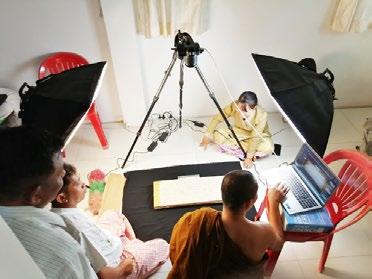
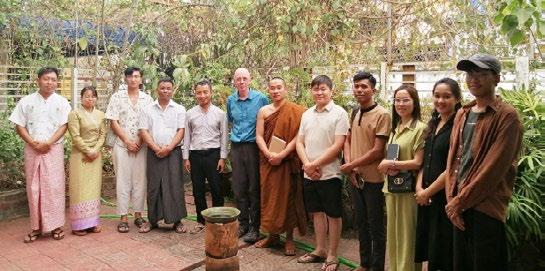
On February 19-20, the institute welcomed ten participants from Northern and Southern Shan State, and the Mandalay and Yangon regions for a digital and digital preservation workshop.
Led by Dr. David Wharton, the participants learned what equipment is best recommended for digitizing collections of old records (with a focus on manuscripts, photos, newspapers or magazines, movie posters, maps etc...), how to handle the equipment, how to digitize the items, and how to process the digitized files.
The workshop introduced the following topics to the participants: -software used for digitization and
main steps to operate it; -equipment needed for digitization and how to install and place all this equipment properly around old records to digitize;
-shooting (by the camera) of old records to digitize;
-editing of the pictures by the software; -discussing funding opportunities supporting the digitization of collections of old records at risk.
The workshop placed strong emphasis on practice, inviting participants to manipulate the equipment and recognize the importance of setting the software and all the equipment correctly for optimum results.
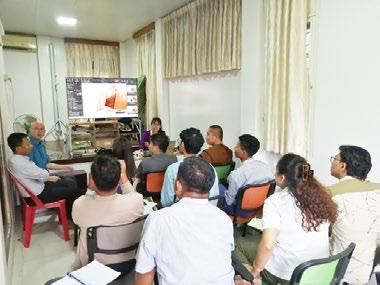
The participants who had been selected on the basis of their interest in digitizing collections that they have identified in various parts of the country and are currently at risk were invited to discuss their own digitization projects. After the workshop, a feedback form was also sent to them: besides sharing their views about the workshop, they could also offer explanations as to how the institute could help with their digitization projects.
We will follow up with each of them and support their initiatives in the best way we can, including grant-writing.
The workshop was funded by UCLA’s Modern Endangered Archives Program.
Recent Activities
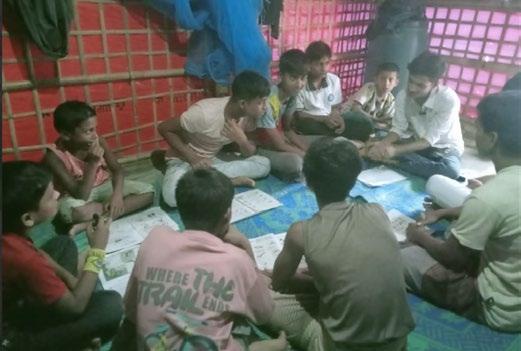
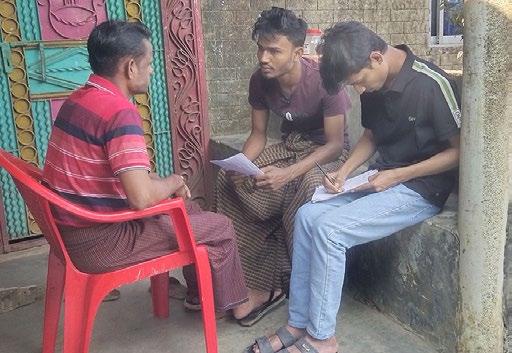
2025-26 Myanmar’s Borderlands Research and Mentoring Program: Photo Records of Data Collection

2026 International Interdisciplinary Conference on Myanmar’s Borderlands (IICMB)
Interconnectedness Across Myanmar’s Borderlands | July 10-12, 2026 co-organized by
Inya Institute, Cornell University’s Southeast Asia Program (SEAP), TheHILLS Myanmar, and the Kachinland Research Centre
Deadline for Submitting Proposals extended to April 30, 2026
Submit your proposal here!
Bulla Muhe, Lin Thiha, and Mohamad Faizel (Group 6) conducting field work on displacement and the effect on primary and secondary education for children in Rohingya refugee camps in Bangladesh
New Intern at Inya

My name is Nay Myo Hlaing and I am 23 years old. I am from a rural area in Rakhine State. I am currently living in Yangon. I am a person who is passionate about studying social issues and understanding the challenges facing communities.
I began my university education during a very difficult time in Myanmar. The COVID-19 pandemic and the political instability after the 2021 coup had an impact on my education pathway. I experienced uncertainty about my future. Therefore, I decided to work as a volunteer in a local civil society organization, Youth Capacity Building. In working as a volunteer, I participated in different programs such as humanitarian aid programs, and environments and gender and gender-based violence programmes. It allows me to further explore social issues, engage different stakeholders, and listen to community voices. It encourages me to work in social work in community development sectors. While working as a volunteer, I got a chance to participate as a junior researcher in the Center for Social and Research Development. In this role, I assisted in field data collection and engaged with members of rural communities and different stakeholders. These experiences help me to realize that applied social research supports informed decision-making.
I relocated to Yangon in 2024 and achieved a one year scholarship program which focused on research and community development. Currently, I am studying at CLRI (Community Leadership and Research Institute). In this program, I am learning about community project cycle management, cultural competency, environmental studies, and research methods.
I am passionate about social research and want to continue exploring this field. I am seeking opportunities where I can apply the research knowledge I am gaining at CLRI. While studying at CLRI, I applied to the EU Mobility Programme Myanmar (EMPM) and received the opportunity to work as an intern at Inya Institute. This experience has further motivated me to continue learning and contributing to research to support positive social change in Myanmar. During my time at the institute, I will investigate the opportunities and risks of online job opportunities.
Annual Membership
Membership of the Inya Institute is now available for Institutions as well as Individuals!
Despite Myanmar’s current multidimensional crisis, the Inya Institute continues to operate in Yangon providing educational and training opportunities to Myanmar students, supporting scholarship by Myanmar and International researchers in Myanmar and in third countries, and offering language learning opportunities for those interested in Myanmar’s linguistic diversity. It is also one of the few libraries currently open to the public in Yangon. Interconnectedness between Myanmar, the U.S., the Myanmar diaspora in the U.S. and elsewhere is more important than ever and the institute is keen to support this value as shown by the activities presented in this newsletter. You can be part of this so please consider becoming a member of the Inya Institute! Contact us at: contact@inyainstitute.org
I NSTITUTIONAL MEMBERSHIP
Any recognized academic or educational institution in the United States or Canada may become an Institutional Member of the institute. If a representative of an institutional member chooses to send a delegate to serve on the board of directors, he/she has an opportunity to shape the institute’s programs and activities.
Other benefits include: (1) Recognition of institutional member status in the institute’s quarterly newsletter; (2) Publishing of members’ scholarly events in the institute’s quarterly newsletter; (3) Invitation to join online events, including conferences and webinars, organized by the institute.
Annual institutional membership dues are $400.
I NDIVIDUAL MEMBERSHIP
Anyone may become an Individual Member of the institute, upon application and acceptance by the institute.
Benefits: (1) Inclusion in the institute’s listserv of those institutions and individuals receiving the quarterly’s newsletter; (2) Invitation to join online events, including conferences or webinars, organized by the institute; (3) Reduced fees for the language learning opportunities developed by the institute.
Annual individual membership dues are $25.
Upcoming Events On Myanmar
March Events
1. Nations, DissemiNation, ImagiNation and its people: Internal Exiles in post-coup Burma
CSEAS Friday Lecture Series, University of Michigan
Location: Online Via Zoom
Date: March 20, 2026, 12:00-1:00 PM
Speaker: Ei Thin Zar
While the nationalizing of education—in which the very idea of nation is disseminated—makes a certain kind of citizen that the nation requires, in a double gesture of hope and fear, it also produces forms of exclusion. The desire to be included in the very thing that excludes creates ‘internal exiles’ with lost identities—individuals who are ‘a stranger to one’s own country, language, sex and identity.’ In the case of Burma, the education system fashions the desired type of citizen, specifically the Burmese-speaking, Buddhist Burman. At the same time, this process establishes the constituted outside as Others (non-Burman or nonBuddhist). However, in the aftermath of the 2021 coup, a distinctive educational space arose, enabling its participants to imagine new forms of social belonging.
Drawing from Homi Bhabha’s two distinct forms of nation—the pedagogic and the performative—this presentation explores how the nation’s people are made in a double narration: one as the objects of nationalist pedagogy in the fixed discourse of the nation, and the other as the. subjects of the processes that erase those discursive fixations.
More info here
2. Unsettled Futures: Speculation,
Urban Life, and Political Uncertainty in Contemporary Myanmar
Location: The Kahin Center, Cornell University
Date: March 26, 2026, 12:15-1:30 PM
Speaker: Courtney Wittekind
Why has speculation become a dominant way of engaging with the future in moments of profound political uncertainty? This talk takes up this question through Myanmar’s proposed 20,000-acre “New Yangon City,” launched during the country’s democratic transition of 2011-2021. Drawing on ethnographic research in peri-urban Yangon, I show how farmers
living in the shadow of this urban project turned to speculation when democratic and developmental promises repeatedly faltered. I argue that this vernacular speculation was less about profit than about acting on uncertainty amid compounding crises. Over time, speculative practices reshaped political participation and shifted collective demands toward individualized wagers structured by unequal access to land, capital, and time. Extending my analysis into Myanmar’s post-coup moment, I conclude by highlighting speculation as a defining feature of political life across Southeast Asia today.
More info here
April Events
1. Beyond the Text: Fieldwork, Communities, and the Emotional Archives of Myanmar
Location: IEAS Conference Room, UC-Berkeley
Date: April 8, 2026, 5 PM
Speaker: Tharaphi Than This talk reflects on two decades of navigating Myanmar’s living and institutional archives—from national repositories in Yangon and university libraries to newspaper collections at SOAS and the British Library. Alongside these formal sources, I draw on experiences gathered through interviews with women soldiers, sex workers, teachers during Cyclone Nargis, humanitarian workers during the 2025 Mandalay earthquake, CDM educators, and communities in the delta and conflict-affected regions. These encounters form a constellation of “living archives” that challenge, complicate, and humanise textual knowledge. I discuss the skills, habits, and sensitivities required to work ethically with both people and documents, and how researchers can unlearn biases shaped by distant backgrounds, languages, and cultures. The session offers practical guidance for students preparing to engage Myanmar’s archives and communities— approaching individuals not as subjects of study but as teachers whose experiences, emotions, and worldviews fundamentally reshape how we understand the field. More info here.
2. Concepts, Categories of Knowledge, and Buddhist Imaginary: Burmese History and Semantic Shifts in Concepts
Location: The Kahin Center, Cornell University
Date: April 16, 2026, 12:15-1:30 PM
Speaker: Aurore Candier
While living and working in Burma for over twenty years, Aurore Candier conducted research on the evolution of knowledge and concepts among Burmese elites, especially as evolved in their encounters with other cultures in the early and modern periods. Through conceptual history and discourse analysis, Candier has investigated the semantic shifts in Burmese words and concepts through a diachronic corpus made up of texts from different literary genres and traced the progressive changes in the imaginary and thought of the Burmese Buddhist universe. She has explored semantic changes in Burmese concepts and categories of knowledge such as “reform,” “time,” categorizations of “people,” “secular knowledge,” and “astrology.” She has forged an intervention which challenges some of the most basic assumptions of Burmese historiography, especially as conceived of in the classical sense.
More info here
New Books On Myanmar
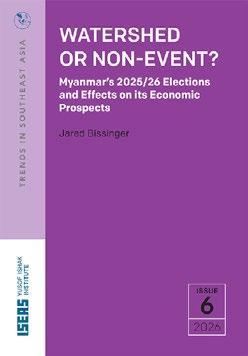
Watershed or Non-event?
Myanmar’s 2025/26 Elections and Effects on its Economic Prospects
Jared Bissinger
ISEAS – Yusof Ishak Institute, 2026
Few economic actors see Myanmar’s election as fundamentally changing the country’s political situation. However, views on its potential economic effects are more nuanced. For economic actors, a scenario in which an election—however illegitimate—improves stability and predictability is preferable to a scenario in which Myanmar neither returns to democracy nor sees an improvement in stability. Despite the lack of democratic credentials, Myanmar’s election may provide a limited economic recovery. Myanmar’s election is, however, unlikely to transform the country’s economy in the way the 2010 election did. Key constraints— including capital controls, foreign exchange requirements, trade licences, logistics, and electricity shortages—will likely remain, though some relaxations and improvements are possible. A large wave of FDI in internationally competitive sectors, capital-intensive sectors, and sectors with long payback periods is unlikely.
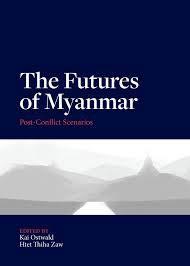
The
Futures of Myanmar: Post-Conflict Scenarios
Kai Ostwald, Htet Thiha Zaw
Asia Pacific Foundation of Canada, 2026
What futures are plausible for Myanmar? What forces are shaping them? And what choices—by domestic actors and international partners—might shift trajectories over time? Rather than offering a single narrative or prescription, the volume adopts a scenario-based approach, recognizing that Myanmar’s path forward will likely be uneven, contested, and shaped by interacting political, economic, and social dynamics. Each chapter in the Futures of Myanmar examines a key dimension of the country’s post-coup trajectory, and is grounded in empirical realities while remaining attentive to uncertainty. Myanmar’s future is not predetermined, but neither is it infinitely malleable. Structural constraints, power asymmetries, and regional geopolitics matter—but so do agency, ideas, and institutional choices.