IN front
the doctor is in
Rest Easy → Are all those screens keeping you from getting the sleep you need? By Dr. Malcolm Hedgcock
F
or some reason, human beings spend a third of their lives asleep. For the
lucky few for whom sleep comes easily, bedtime is a blissful part of life. Unfortunately, 40 percent of Canadians report at least one feature of disordered sleep every week. That’s why insomnia is one of the most common reasons for visits to the family doctor and costs a huge amount of money in lost productivity.
Experts used to think that insomnia was simply a symptom of another medical illness, such as depression or chronic pain. We now know that it can actually be a disease unto itself with its own constellation of consequences. Beyond making you feel lousy, poor sleep is associated with depression, anxiety and car diovascular disease in the long term. We also see higher rates of substance abuse in people with insomnia, possibly because they’re using drugs and alcohol to get to sleep. Despite the mag nitude of the problem, we still have very limited resources for dealing with insomnia. That said, most people can find some relief by adopting a few simple strat egies—and sticking to them. My first recommendation is to start a sleep diary (templates can be found online). These diaries can help clarify the severity of the problem. They act as a baseline, so the effect of various interven tions can be tested objectively. I typically avoid using medi cation for insomnia unless abso lutely necessary. I focus on what is called “sleep hygiene” or the pattern of behaviours as we wind
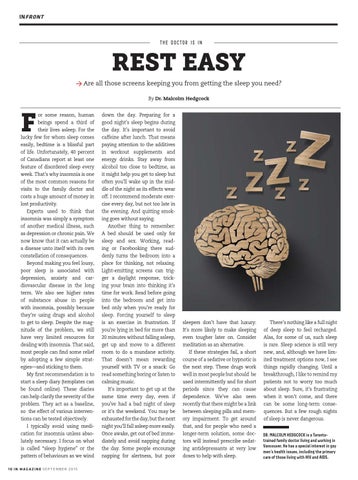
down the day. Preparing for a good night’s sleep begins during the day. It’s important to avoid caffeine after lunch. That means paying attention to the additives in workout supplements and energy drinks. Stay away from alcohol too close to bedtime, as it might help you get to sleep but often you’ll wake up in the mid dle of the night as its effects wear off. I recommend moderate exer cise every day, but not too late in the evening. And quitting smok ing goes without saying. Another thing to remember: A bed should be used only for sleep and sex. Working, read ing or Facebooking there sud denly turns the bedroom into a place for thinking, not relaxing. Light-emitting screens can trig ger a daylight response, trick ing your brain into thinking it’s time for work. Read before going into the bedroom and get into bed only when you’re ready for sleep. Forcing yourself to sleep is an exercise in frustration. If you’re lying in bed for more than 20 minutes without falling asleep, get up and move to a different room to do a mundane activity. That doesn’t mean rewarding yourself with TV or a snack: Go read something boring or listen to calming music. It’s important to get up at the same time every day, even if you’ve had a bad night of sleep or it’s the weekend. You may be exhausted for the day, but the next night you’ll fall asleep more easily. Once awake, get out of bed imme diately and avoid napping during the day. Some people encourage napping for alertness, but poor
sleepers don’t have that luxury: It’s more likely to make sleeping even tougher later on. Consider meditation as an alternative. If these strategies fail, a short course of a sedative or hypnotic is the next step. These drugs work well in most people but should be used intermittently and for short periods since they can cause dependence. We’ve also seen recently that there might be a link between sleeping pills and mem ory impairment. To get around that, and for people who need a longer-term solution, some doc tors will instead prescribe sedat ing antidepressants at very low doses to help with sleep.
There’s nothing like a full night of deep sleep to feel recharged. Alas, for some of us, such sleep is rare. Sleep science is still very new, and, although we have lim ited treatment options now, I see things rapidly changing. Until a breakthrough, I like to remind my patients not to worry too much about sleep. Sure, it’s frustrating when it won’t come, and there can be some long-term conse quences. But a few rough nights of sleep is never dangerous. Dr. Malcolm Hedgcock is a Torontotrained family doctor living and working in Vancouver. He has a special interest in gay men’s health issues, including the primary care of those living with HIV and AIDS.
1 0 I N M a g a z in e s e p t e m b e r 2 0 1 5
10 Doctor.dw.indd 10
18/08/2015 1:42:49 PM