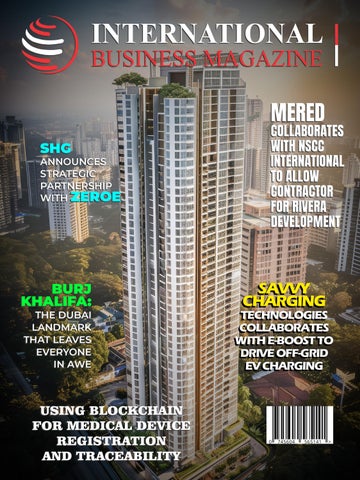
INTLBM_Issue_31_WEB

Page 1


Managing Director

Shashank M

Co-Founder & CEO

Shankar V Shivaprasad

Chief Editor Shankar V Shivaprasad

Editor

Ujal Nair

Assistant Editors

Medhaj Nair

Head of Production

Shank Mendez

Head of Research

Sara Watson

Head of Media Sales

Charles Grey

Media Sales Manager

Chris Young

Advertising contact chris@intlbm.com

Content Managers: Daniel Edwards, Sumana Shankar, Ana Watson

Content Writers:

Baldeb Ram, Vandana Ankitha

Business Development

Leo Morgan, Alisha Taylor, Jane Sanders, James Smith, Jason Brown, David Johnson, Stella Grace, John Davis, Nancy Miller, Alex Milo

Graphic Designer Chandan R

Video Editor C Gidieon Sam Issac

Account Manager

Agnes Wong

Registered Address: Sharjah Media City (Shams), Al Messaned City, Al Bataeh, Sharjah, United Arab Emirates, P.O. Box: 515000

Office Address: Suite No 502, Al Tawhidi 1 Building, Floor 5, Khalid Bin Al Waleed Road, Bur Dubai, Dubai, UAE. Email: info@intlbm.com Phone: +971 503211164

.......Note From

EDITORIAL Welcome

In the vast landscape of global business, collaborations have always played a pivotal role in driving innovation. What stands out today, however, is the growing convergence of distinct industrial sectors—where the fusion of one technology with another creates meaningful value for customers in the shortest possible time. At the core of every successful partnership or technological integration lies a simple yet powerful philosophy: satisfying the needs of the target audience. Whether delivered as a product or a service, this principle transcends geographic boundaries and cultural differences across the globe.

This philosophy is the driving force behind the inclusion of interdisciplinary domains such as Fintech with UX Design, and Blockchain with Medical Devices. These combinations demonstrate how thoughtful integration can enhance usability, trust, efficiency, and overall customer experience. When technology is aligned with human-centered design or critical healthcare needs, the result is not merely innovation, but impact.

Modern corporates and conglomerates have come to realize that long-term sustainability is no longer achieved by building multi-million-dollar infrastructures or hiring vast workforces alone. Instead, true competitive advantage lies in creating solutions that make a tangible difference in the lives of users. The emphasis has shifted from scale to significance.

At the same time, the global population has adopted a more humane and inclusive outlook. The success of new projects, products, and services is now shaped less by geopolitical boundaries and more by the intelligent application of technology. In this evolving ecosystem, cross-industry collaboration is not just beneficial—it is essential for meaningful progress.

We have curated some of the most insightful news and articles in this magazine. As you turn the pages, you’ll discover content that is engaging, relevant, and truly worth your time.

Be sure to check out our website at www.intlbm.com

Revolutionizing the Road: The Future of Automotive Service Innovation in the Middle East 2025

Petromin is a leading Saudi multinational company established in 1968 through a Royal Decree as a joint venture between Saudi Aramco and ExxonMobil. Petromin Corporation has established a strong presence in Saudi Arabia, India, Egypt, Pakistan, Malaysia, Morocco and the UAE. Its products are also exported to more than 40 markets across the MENA region.

Petromin used to be a fully lubricant company, and it transformed into an automotive company, and built a strong

market. Today, Petromin is recognised as a leader in the automotive services industry, with a portfolio spanning lubricants manufacturing, fuel retail, quick and express maintenance, multi-brand aftersales services, auto parts solutions, fleet management, vehicle distribution, and electric mobility.

Operating in a network across 1100+ locations covering showrooms, fuel stations, automotive service centres, charging network and logistics locations supported by

a workforce of 5000+ professionals, Petromin reaches millions of customers each year across eight business segments. The company aspires to become a globally recognised mobility solutions powerhouse, known for exceptional service quality, seamless experiences, and outstanding value. Petromin’s mission focuses on putting customers first by harnessing innovation, operational excellence, and environmentally responsible practices.

The company’s eight business segments are strategically structured to support car owners throughout the entire vehicle lifecycle, from purchase and ongoing maintenance to resale when required and electrification at the end. They are as follows:

• National Motor Company – Uniting World Class Brands under one umbrella. Some well-known brands are Nissan, Stellantis portfolio, Foton commercial range, Volvo EVs. NMC delivers a superior ownership experience through its wide network of showrooms, service centres, and parts outlets, backed by dependable after-sales support.

• National Transportation Solutions Company– Fleet and leasing solutions management provider, multimodal mobility, electric buses, decarbonisation roadmap.

• National Fuel Company – The service centres are located across Saudi Arabia and Egypt, and they

offer a one-stop mobility solutions providing Fuel retail, energy stations, and EV charging solutions.

• Petrolube – Manufacturing and distribution of automotive and industrial lubricants.

• National Car Maintenance Company – Its vehicle care maintenance providing constitutes of multibrand aftersales network, quick service centres and workshops.

• National Auto Parts (NAP) – one of the largest distributors of automotive parts for brand vehicles, and considered a pioneer in the spare parts value chain.

• National Auto Trust Company – It’s a Used car platform. Its three platforms, GoGo Motor, GoGo ProShield and FinPal provide simple solutions for customers interested in vehicle ownership and auto warranties.

• Electromin – A subsidiary of Petromin, it operates one of the largest EV charging networks; It is also one of the largest distributors of Volvo Electric Vehicles in Saudi Arabia. It comprises the EV ecosystem, charging networks, BEVs, NEV distribution, and smart e-mobility services. Rapidly expanding its presence across the globe, it is no wonder that this year, International Business Magazine honoured Electromin with the title of ‘Fastest Growing Company of the Year Saudi Arabia 2025.’

The other seven business verticals have also performed well in every field, which made International Business Magazine honour Petromin with the coveted title of ‘Excellence in Automotive Service Innovation Middle East 2025.’

In the annual edition of the awards event of International Business Magazine, Petromin has been felicitated with two more awards, this time, for leadership.

Mr Shoaib Jawaid, Group Chief Strategy Officer, has been recognised in the global arena for his winning the ‘Strategy Officer of the Year, Saudi Arabia 2025.’ Mr. Kalyana Sivagnanam, Group CEO got the ‘Business Person of the Year Saudi Arabia 2025’ title. They have won international recognition for their exceptional leadership, visionary strategy, and commitment to excellence. It also reflects their efforts in driving sustainable practices and contributing meaningfully to the broader business community.

Importance of Award Titles

The four awards underscore Petromin Corporation’s strong leadership in the automotive sector, particularly within the UAE. The management’s capability to provide a complete range of products and services across the automotive sector, while delivering effective solutions, has yielded significant results.

Interview with the Petromin Management Team: Vision and Mission

To gain more information about Petromin’s vision and its commitment to providing high-quality services, we spoke with Mr Shoaib Jawaid, Group Chief Strategy Officer. Here is the updated version of our conversation:

Interviewer: Mr. Shoaib Jawaid, Congratulations to you and your company for winning four reputed award titles.

Thank you. We are very proud to be here at this prestigious venue.

Q1: Tell us about the ecosystem created by Petromin Corporation.

This ecosystem is designed for the new vehicles to the used cars. We are distributors of Stellantis, Foton and Volvo vehicles in Saudi Arabia. We have one of the largest numbers of fuel stations in Saudi Arabia. Then we have the spare parts and lubricants business. Especially when it comes to the lubricant business, we got a lion’s share. Then, we have multi-brand automotive services network. In all, we can help a person right from purchasing a vehicle to the after-sales stage, and if he/ she want to sell it off, we can still assist in helping them.

Q2. How did Petromin Services and Business Verticals become popular?

Our subsidiaries have 800 touch points in Saudi Arabia. At the same time, we are also expanding internationally, especially across the UAE, India, Malaysia and Egypt. The major point, is that we service 40+ export markets in the MENA region.

Our technician workforce is one of the largest in the UAE, which is known for offering a one-stop solution when it comes to the automotive sector.

Our team also spoke with Mr. Kalyana Sivagnanam, Group CEO of Petromin Corporation. Here are the details of our conversation.

Interviewer: Congratulations, Mr. Kalyana Sivagnanam, Group CEO of Petromin Corporation, on winning a reputed award title, especially when it comes to leadership. Thanks to the International Business Magazine team for recognising and awarding me with this amazing title.

Q1. Can you kindly brief us on Petromin’s achievements in the automotive sector?

Leveraging the expertise of our skilled technical team and advanced service centres, we provide comprehensive solutions for all automotive needs. With a widespread network of service centres across Saudi Arabia and the MENA region, we adhere to best practices to ensure every customer receives reliable, high-quality support for their vehicles.

Q2. Everyone is excited about Vision 2030 and how companies react to the vision. What are your points?

The automotive sector is a crucial segment of the UAE and MENA economy. The demand for traditional model vehicles and EVs is on the rise. With Petromin and Electromin playing a critical role in the vehicle services category, we have strictly followed emission reduction strategies that are an integral part of attaining sustainability goals as per Vision 2030. With suitable support from Governments and our dedicated technical team, we are confident that the dream will come true.

Towards the Future

The automobile sector is also growing exponentially in various dimensions. With AI becoming an integral part of many industries, companies such as Petromin have designed policies and procedures that safeguard Mother Earth’s interests.

Petromin Corporation has proved that with an experienced management team and a dedicated workforce, it is possible to achieve the impossible when it comes to sustainability. With Vision 2030 firmly in view, the company firmly believes its approach will bring a positive impact on the global climate.

Human-Centered Innovation: Why Fintech Needs Better UX Design to Stay Competitive

The fintech market has never been more crowded. With most products offering similar features and pricing, technology alone no longer sets companies apart. The primary driver of customer decisions now is user experience — clarity, ease of use, trustworthiness, and personalization of the product in day-to-day use.

People are looking for financial products that help them simplify choices, reduce anxiety, and feel like a seamless part of their daily lives. In a complicated world, if an app causes confusion or friction, a consumer will switch apps quickly. Given this context, human-centered design (HCI) has evolved from a social construct to an essential component of successful competitive strategy in broader markets among financial technology companies. HCI distinguishes Fintech companies by focusing on intuitive, inclusive, and emotionally supportive experiences to establish long-term loyalty, while creating a defensible advantage in the field.

Why UX Matters More in Fintech Than in Any Other Industry

Unlike retail or entertainment, managing money is an inherently emotional act. User behavior in fintech is constantly shaped by high stakes: stress, trust, risk, and uncertainty. In this environment, poor UX is not just inconvenient — it is financially dangerous. Confusing interfaces increase cognitive load, which leads directly to customer mistakes, transaction abandonment, and, critically, customer churn.

This anxiety-inducing reality is why well-designed experiences provide excessive returns for businesses. Excellent UX design for fintech is a direct pipeline to corporate performance: it improves conversion rates by clarifying flows, it promotes compliance by ensuring that users understand “the critical steps” involved in an interaction, and it increases lifetime value (LTV) by creating lasting trust. Companies that intentionally invest in

Representational Image

simplifying complex financial workflows consistently outlive competitive firms in key adoption and retention metrics. Simply put, better UX in fintech translates to reduced mental friction toward risk, turning an anxietyprovoking chore into a confident choice.

AI & UX: Personalization Without Overwhelm

Artificial intelligence has promised to move finance from “one-size-fits-all” to hyper-specific advice. However, UX determines whether this intelligence feels empowering or intrusive.

From “Smart” to Actually Helpful

AI-driven personalization must simplify financial choices, not complicate them. This includes delivering automated savings recommendations, proactive alerts about budget deviations, and adaptive dashboards that surface the most relevant information first. The fintech design challenge is translating raw computational “smartness” into genuine user helpfulness, where the user feels guided, not manipulated.

Designing for Explainability

In financial services, users must be able to trust the machine, and trust is built on transparency. Explainable AI (XAI) is a non-negotiable requirement for a flawless user experience in fintech. Transparent design patterns — such as visual explanations for why an investment was suggested, confidence levels attached to risk warnings, or human-readable summaries of complex models — are essential to building confidence. When users understand why the AI made a suggestion, they are more likely to act on it.

AI as an Invisible Co-Pilot

Best-in-class experiences place AI in the background: quietly enhancing the workflow without demanding constant attention. The concept of the “Invisible CoPilot” covers essential, high-utility functions such as instantaneous fraud detection, automatic transaction categorization, and sophisticated, chat-based problem resolution. When AI becomes an almost invisible layer of support, the user experiences efficiency, not technology.

However, innovative technology means nothing if it isn’t available to everyone. The next major competitive frontier is designing for accessibility.

Accessibility & Inclusivity as Competitive Advantages

Accessibility should never be viewed as an obligation imposed by law; it represents a huge and untapped market space. A fintech product intended for everyone needs to cater to a variety of different demographics, including those with disabilities, older customers, non-native speakers, and those with lower digital and financial literacy levels.

By applying an inclusive design lens, businesses unlock powerful opportunities. This begins with fundamental improvements, such as clearer information architecture and the use of simplified, jargon-free language. It extends to offering adaptive interfaces that cater to vision or motor impairments, as well as providing multilingual UX and simplified onboarding flows for those new to the platform.

Furthermore, innovative financial education microinteractions, such as context-sensitive tooltips, help messages, and progressive disclosure of complex terms, ensure comprehension and confidence. The ultimate insight is that inclusive fintech app design inherently creates a simpler, more robust, and ultimately more universal experience for every customer.

Frictionless Security UX

Security and trust are the currency of finance, but historically, they have been locked in a bitter trade-off with usability. Traditional security measures, such as complex passwords,

Representational Image

tedious knowledge-based questions, and multi-step multi-factor authentication (MFA), introduce frustrating friction. In fintech, this friction is catastrophic, leading directly to user abandonment during high-value moments like onboarding or large transactions.

The mandate for modern fintech is to design security that is robust yet nearly invisible, improving user experience financial services, the ultimate goal of every defense measure. This means designing security that is robust yet nearly invisible. The future is Passwordless Futures, which deploy various methods of authentication that are seamless — including biometrics, secure passkeys, and behavioral analytics — all of which improve the speed and security of transaction approvals.

Companies should also ensure they create Transparent Approvals. If a user is asked to give consent or approval, the UX must fully inform the user of what they are approving — with clear summaries and humanreadable terms, not legal jargon. Finally, companies should utilize Visible Security, which employs clear, visual cues (e.g., confirmation screens, trust badges, immediate feedback) to continually reassure users that their data is secure, without requiring them to verify every step in the process. When security feels seamless, trust can be established more quickly.

How Fintech Companies Can Adopt Human-Centered Innovation

Fintech companies seeking to stand out through UX must integrate these principles into their product planning, development, and enhancement processes. Companies must understand that creating strong internal capabilities for UX design financial services is an essential investment in sustainable market leadership.

Integrate UX Early in the Product Lifecycle

True innovation starts with designing from the problem, not the feature list. UX researchers and designers should define the user’s needs before engineers even code the first line, because we need to ensure that our solutions are inherently valuable, not just technically feasible. Teams should figure out the real problem

they are trying to solve, and what the emotional and practical context is around it.

Cross-Functional Collaboration

Building great fintech experiences requires collaboration across product, engineering, design, compliance, and AI teams. When these groups operate as one, it’s easier to balance creativity with regulatory demands, technical feasibility, and user expectations. Shared ownership creates more coherent, trustworthy experiences.

Data-Informed Yet Empathy-Driven Decisions

Analytics reveal patterns, but empathy reveals motivations. Fintech organizations need both. Quantitative data should be complemented with interviews, usability testing, journey mapping, and other qualitative methods that uncover how people feel when using financial tools. This blend leads to smarter, more human-centric decisions.

Continuous Iteration

Fintech changes fast, and user behavior evolves just as quickly. A commitment to continuous improvement — regular testing, incremental updates, and responsiveness to feedback — keeps products relevant and reduces long-term technical and UX debt. Iteration ensures the experience grows with the user, not away from them.

Wrapping Up

In today’s crowded fintech landscape, technology alone is no longer enough to stand out. The real competitive edge comes from crafting experiences that feel intuitive, trustworthy, inclusive, and emotionally supportive. When financial tools reduce stress, clarify decisions, and meet people where they are, they become more than just utilities — they become trusted partners.

For fintech executives, the message is clear: the time for surface-level design is over. Investment in senior UX leadership, dedicated user research, and iterative design testing is a mandatory investment in sustainable market leadership. The most successful fintech of tomorrow won’t just move money faster; it will make people feel more confident, secure, and financially empowered.

SHG Announces Strategic Partnership with Zeroe

Sunset Hospitality Group (SHG) has officially signed a strategic partnership with Zeroe to implement a unified data infrastructure to operationalize their 2024 – 2026 Sustainability Roadmap. This collaboration represents the next stage of their ESG transformation, shifting the focus toward data-driven, intelligent sustainability management that aligns with leading international frameworks such as ISO 14001, ISO 26000, and the UN Global Compact.

As the hospitality sector faces rising expectations for audit-ready sustainability metrics and consistent ESG disclosures, SHG is strengthening its internal systems to keep pace with global standards. The rapid diversification of SHG’s portfolio across regions has increased the need for comparable, verifiable ESG data, prompting the Group to transition and establish a more structured foundation for future reporting and target-setting.

Through the partnership, SHG and Zeroe will begin by creating a consolidated view of sustainability data across UAE operations, including energy, water, waste, and emissions. This phase focuses on transforming and consolidating existing reporting structures into a centralized, automated platform. It also supports SHG’s commitment to move from qualitative reporting toward quantifiable impact measurement, enabling datadriven decision-making, benchmarking, and continuous improvement across the group.

Rania Roufael, Chief People Officer at Sunset Hospitality Group, highlighted the importance of the agreement:

“Signing this partnership with Zeroe reflects our commitment to building a smarter, stronger ESG foundation across all operations. As we continue to expand, we need a unified approach that ensures our performance is

Representational Image

Representational Image

measured consistently, transparently, and in line with global expectations.”

Nigora Rapilbekova, Sustainability & Safety Director at Sunset Hospitality Group, added:

“This collaboration allows us to understand our current data landscape and make informed decisions about the systems required for long-term ESG governance. It is a critical step toward building a reliable, scalable sustainability framework that supports our growth.”

Farouk Jivani, CEO of Zeroe, commented on the partnership: “We are pleased to work with Sunset Hospitality Group at this pivotal stage in their sustainability systems

journey. Establishing trustworthy and traceable data is fundamental to meaningful progress, and SHG’s proactive approach positions them well for the future.”

As the partnership evolves in step with SHG’s international expansion, it will unify all sustainability data into a single source of truth, creating seamless flow across the organization, elevating reporting quality, enabling informed target setting, and strengthening data-driven decisions that enhance ESG performance and operational efficiency. This foundation will anchor SHG’s long-term sustainability strategy, supporting responsible growth and more efficient resource management across its global footprint.

Mubadala and Aldar Expand Al Maryah Island with AED 60bn

Mubadala Investment Company, an Abu Dhabi sovereign investor, and Aldar have launched a landmark joint venture to expand Al Maryah Island, unlocking the next phase of growth in the international financial district and further enhancing Abu Dhabi’s global position as the “Capital of Capital”.

With a gross development value exceeding AED 60 billion, the north side of Al Maryah Island holds the final undeveloped bank of land, which spans almost 500,000 sqm. The project will comprise 1.5 million sqm of new office, residential, retail, and hospitality space — seamlessly integrating commerce, community, and lifestyle, and further elevating Al Maryah Island’s distinctive blend of international business and luxury living.

The mixed-use development will significantly enhance ADGM, Abu Dhabi’s international financial centre and the region’s leading IFC. ADGM has experienced unprecedented momentum, with more than 11,000 active licences now registered in the free zone, positioning it among the fastest-growing financial hubs worldwide. Demand for space is exceptionally strong, with almost 40,000 individuals already based within the financial district. The expansion of Al Maryah Island will deliver more

than 450,000 sqm of additional Grade A office space – effectively doubling the island’s total supply and reinforcing its position as a leading global financial hub.

Due to the influx of international investors and professionals, luxury homes at Al Maryah Island are in high demand with branded residential properties such as the W and St. Regis currently under development. The new expansion is expected to further support this influx by adding more than 3,000 luxury residences on the waterfront.

The expansion will further enhance Al Maryah Island’s position as Abu Dhabi’s leading lifestyle and business destination, introducing new experiences that build upon the island’s fully integrated urban ecosystem. Already home to The Galleria — the capital’s premier luxury shopping destination, Cleveland Clinic Abu Dhabi, ACTIVE – one of the UAE’s largest and most advanced urban sports hubs, and the UAE’s most Michelin Guideawarded dining location; Al Maryah Island will continue to redefine modern city living with an additional 40,000 sqm of experiential luxury retail, dining, and a worldclass marina.

At the forefront of the island’s next phase is the Al Maryah Waterfront enhancement project, featuring a striking bay fountain with water shows soaring up to 75 metres high. This new centrepiece will anchor a reimagined coastline, adding vibrant dining, leisure, and event spaces that complement the island’s existing energy and appeal.

With business and leisure visitors expected to grow, demand for hotel space will also increase. The masterplan includes new hotels, building on the existing luxury offering anchored by the Four Seasons and Rosewood Abu Dhabi.

Dr Bakheet Al Katheeri, Chief Executive Officer of UAE Investments Platform at Mubadala, said: “This landmark joint venture marks a defining moment in realizing the full potential of Al Maryah Island. As Abu Dhabi’s premier business and lifestyle destination, Al Maryah has always embodied Mubadala’s long-term commitment to cultivating globally competitive, future-ready destinations. By unlocking the island’s final major landbank, we are accelerating its evolution into one of the world’s most dynamic financial and lifestyle hubs — expanding its commercial strength, enhancing its residential and retail offering, attracting international investors, and reinforcing its vital role at the heart of Abu Dhabi’s economic diversification journey.”

Talal Al Dhiyebi, Group Chief Executive Officer of Aldar, said: “This expansion represents a pivotal milestone for Abu Dhabi’s continued growth as a global financial centre, with ADGM at its heart. With Mubadala and Aldar’s proven track record in master planning and delivering iconic destinations, we are collaborating to create a world-class, mixed-use environment that will attract leading businesses, investors and talent from around the world. It will support the UAE’s vision for a diversified and knowledge-based economy while enhancing the capital’s allure as a place to live, work and invest.”

Salem Al Darei, Chief Executive Officer of ADGM Authority, said: “Today’s landmark expansion of Al Maryah Island

marks a pivotal step in strengthening Abu Dhabi’s standing as a global capital for finance. With ADGM at the heart of this transformation, the development reflects our ambition to create one of the world’s most progressive and connected financial districts, an ecosystem where international institutions, investors, and innovators can thrive. This next chapter reinforces Abu Dhabi’s longterm economic vision and accelerates our journey in shaping a dynamic, future-ready hub that sets new global benchmarks for growth, opportunity, and impact.”

Improving connectivity is core to the area’s broader infrastructure plans. The masterplan envisions the creation of a sustainable, connected environment with 2.5 km of air-conditioned pedestrian corridors, more than 12,000 parking spaces, and 20% open space in the heart of Abu Dhabi’s financial district. Three new bridges are proposed to connect the north side of Al Maryah Island to Reem Island and Abu Dhabi mainland, which will also ensure that Saadiyat Island is less than a 10 minute drive. Enabling works are scheduled to commence in 2026.

The joint venture — held 60% by Aldar and 40% by Mubadala — builds on a strategic partnership spanning more than two decades between the two entities. Most recently, Mubadala and Aldar entered into series of joint ventures across multiple real estate asset classes in Abu Dhabi, including commercial, retail, residential, and logistics.

The partners bring a strong precedent of collaboration on Al Maryah Island, demonstrated through projects including Al Maryah Tower and the upcoming One Maryah Place. They are also nearing legal completion of a retail joint venture that will own and operate Abu Dhabi’s premier shopping destinations, including The Galleria Al Maryah Island Yas Mall and the upcoming Saadiyat Grove Mall.

The expansion of Al Maryah Island joint venture marks the next chapter in this long-term partnership, which is shaping the future of Abu Dhabi’s most important destinations.

DEWA Partners with Dell Technologies to Develop Utility Sector

HE Saeed Mohammed Al Tayer, MD & CEO of Dubai Electricity and Water Authority (DEWA), welcomed a high-level delegation from Dell Technologies led by Adrian McDonald, President for Europe, Middle East & Africa; Walid Yehia, Managing Director – Gulf; and Mohammad Amin, Senior Vice President – CEEMETA at Dell Technologies. The meeting was attended by Marwan Bin Haidar, Executive Vice President of Innovation and the Future at DEWA, and Mohammed Bin Sulaiman, CEO of Moro Hub, part of Digital DEWA, the digital arm of DEWA.

Discussions focused on strengthening co-operation in deploying cutting-edge technological solutions that advance Dubai’s smart infrastructure, green initiatives and the digital transformation of the utility sector. Al Tayer affirmed that, in line with the vision and directives of Dubai’s wise leadership to make AI the cornerstone of future initiatives and services in the emirate, DEWA is harnessing the latest Fourth Industrial Revolution technologies, particularly AI, to enhance performance and productivity. He emphasised the critical role of robust IT infrastructure, AI and Big Data analytics in building more resilient, efficient and customercentric utility services.

The meeting also highlighted opportunities for Dell Technologies to leverage its global expertise in digital transformation to accelerate DEWA’s ambitious road maps for sustainable energy, integrated water management and comprehensive smart city integration. The two sides explored collaboration in modernising critical infrastructure through next-generation IoT, edge computing and data centre solutions to improve grid reliability, seamlessly integrate renewable energy sources and optimise water distribution networks. They also examined how AI, advanced analytics and machine learning can transform operations through predictive maintenance of critical assets, dynamic demand forecasting and personalised customer engagement.

A key theme was promoting sustainable digital expansion by advancing green data centre technologies, energyefficient designs and cutting-edge cooling solutions, complementing Dubai’s sustainability agenda. The discussions concluded with a shared commitment to fortify cybersecurity frameworks to protect Dubai’s critical utility infrastructure and ensure its long-term security and resilience.

ACWA Power partners with AfDB to Boost Sustainable Energy and Water Projects

ACWA Power, the world’s largest private water desalination company, leader in energy transition and first mover into green hydrogen, has signed a Cooperation Framework with the African Development Bank (AfDB) during the Africa Investment Forum held in Rabat, Morocco, to significantly strengthen collaboration in the development, investment and financing of power generation and water desalination projects across the African continent.

The Framework establishes a clear structure for cooperation in identifying, developing, and financing energy and water projects. Both parties aim to accelerate the financing of up to USD 5 billion of sustainable energy and water projects across Africa between 2025 and 2030.

Hashim Ghabashi, President Africa Region – ACWA Power commented: “This Cooperation Framework with the African Development Bank is a testament to our unwavering commitment to Africa. The Continent represents a vital market for ACWA Power, and this partnership will significantly accelerate our ability to deliver transformative power and water projects. Execution of this Framework with

AfDB is a crucial step toward achieving energy and water security for millions.”

The cooperation will focus on appraising and supporting renewable energy, desalination, and grid-connected power projects on the Continent, with a particular emphasis on sub-Saharan Africa. This aligns closely with Mission 300, a joint initiative of the AfDB and the World Bank Group, which aims to bring electricity to 300 million people in sub-Saharan Africa by 2030. In addition to financial collaboration, the Framework includes a focus on Environmental and Social (E&S) Development.

The Framework marks a major milestone, reinforcing both ACWA Power’s and AfDB’s commitment to sustainable, inclusive growth in Africa’s energy and water sectors. By combining ACWA Power’s global project development expertise with AfDB’s deep financing capabilities and regional insights, this cooperation is designed to accelerate energy access, enhance water security, and promote green investment.

Representational Image

Savvy Charging Technologies Collaborates with e-Boost to Drive Off-grid EV charging

Savvy Charging Technologies recently announced a landmark strategic partnership with e-Boost, part of Pioneer Power Solutions (NASDAQ: PPSI), to introduce the region’s first fully mobile, on-demand, and off-grid electric vehicle charging platform across the UAE and the wider GCC.

This collaboration brings together Savvy’s regional leadership in sustainable mobility solutions with e-Boost’s proven expertise in advanced mobile EV charging systems deployed across the United States. Together, both companies aim to accelerate EV readiness, strengthen charging infrastructure resilience, and eliminate griddependency challenges that currently limit large-scale EV adoption.

A Major Step Toward the Future of Mobility

The new platform delivers rapid, flexible, and gridindependent EV charging that can be deployed anywhere, anytime. It is designed to support fleet operators, logistics companies, automotive networks, property developers, and smart city initiatives seeking scalable EV charging without civil works, permitting delays, or reliance on utility infrastructure.

Muhammad Jamal, CEO of Savvy Charging Technologies, stated:

“This partnership reflects our commitment to building a cleaner, smarter, and more accessible energy ecosystem for the region. By combining Savvy’s innovation with e-Boost’s proven technology, we are enabling EV charging

at the edge — wherever the customer needs it. This is not just a product; it is a breakthrough for mobility, sustainability, and operational efficiency in the UAE and GCC.”

Strengthening the Region’s Sustainability Ambitions

The partnership aligns with the UAE’s Net Zero 2050 vision and supports national and regional goals to accelerate EV adoption. The off-grid platform offers a practical and scalable solution for organizations transitioning their fleets to electric, addressing key challenges such as:

• Charging access in high-utilization fleet operations

• Limited grid capacity across industrial and commercial zones

• High-speed deployment requirements

• Temporary or remote charging needs

Call for Collaboration

Savvy Charging Technologies invites industry leaders, government agencies, fleet operators, and investors to explore collaboration opportunities across deployment, infrastructure expansion, & sustainable mobility initiatives.

“The momentum around electrification in the GCC is rising fast,” added Jamal.

“This partnership positions us at the forefront of delivering high-impact, next-generation charging solutions that are essential for enabling the region’s clean energy transition.”

MERED Collaborates with NSCC International to Allow Contractor for Rivera Development

MERED, one of the award-winning international real estate developers, has appointed NSCC International as the enabling works contractor for Riviera Residences, its landmark waterfront development designed by Pritzker Prize-winning architects Herzog & de Meuron on Al Reem Island, Abu Dhabi. The appointment marks another significant milestone in the construction of one of the capital’s most anticipated residential projects.

With this appointment, NSCC International will take the lead on the project’s enabling works phase, encompassing all piling and shoring activities. Founded in Abu Dhabi in 1968, NSCC has grown from a marine contractor into a multidisciplined regional leader in ground engineering. Over the decades, the company has delivered the foundations of some of the Middle East’s most technically demanding and prestigious developments, such as Zayed International Airport Terminal A, Reem Hills, Zayed National Museum, and Al Raha Beach Development in Abu Dhabi, as well as the Etihad Museum and The Address Residence Skyview in Dubai, alongside numerous landmark projects throughout Saudi Arabia, Qatar, and Oman.

Michael Belton, CEO of MERED, said: “Partnering with NSCC International represents our continued commitment to delivering Riviera Residences with the highest standards of precision and quality. NSCC’s deep technical expertise and reputation for excellence across the region make them an ideal partner for a project of this scale and architectural ambition. Together, we are shaping a residential community that reflects both the innovation and natural beauty of Abu Dhabi’s coastline.”

Khalil N. Khouri, Group CEO of NSCC International, added: “Riviera Residences embodies world-class design and engineering, and our team is proud to contribute to its foundation. With our decades of experience and commitment to safety and technical excellence, we look forward to setting the groundwork for what will become one of Abu Dhabi’s most distinctive residential destinations.”

Located on Al Reem Island, Riviera Residences is strategically positioned within Abu Dhabi Global Market, one of the capital’s most dynamic districts, home to international

Representational Image

schools, premium offices, advanced healthcare facilities, and leisure amenities. The island continues to attract strong investor interest, with off-plan property prices rising by 38% year-on-year during Q2 2025, reflecting confidence in its long-term value.

Envisioned as a lush sanctuary within the city, Riviera Residences is set to redefine waterfront living in Abu Dhabi with more than 400 elegantly designed apartments and 12 exclusive villas, including sky villas, ocean villas, and a penthouse. The project blends contemporary architecture with Abu Dhabi’s rich pearl-diving heritage, expressed through luminous mother-of-pearl façades that capture natural light. The interiors, amenities, and lobby emphasize timeless elegance, seamless functionality, and meticulous detail.

Residents will have access to four swimming pools, a world-class fitness centre, wellness spaces, indoor and outdoor yoga decks, padel and table tennis courts, and dedicated spaces for families and social gatherings. Riviera Residences will also include a premium waterfront promenade lined with cafés, boutique retail, and fine dining, offering panoramic views of the Azure Lagoon, Al Reem skyline, and Saadiyat Island, and easy access to the island’s pristine beaches.

The enabling works are now underway, with main construction set to follow. Once completed, Riviera Residences will stand as an architectural landmark that combines sustainable design, refined living, and a strong sense of place on Abu Dhabi’s evolving waterfront.

Omantel Collaborates with Be’ah to Boost e-waste Management in Oman

Omantel and the Oman Environmental Services Holding Company (Be’ah) have announced a collaboration to enhance e-waste management practices in the Sultanate of Oman and achieve shared sustainability objectives. The partnership aligns with both organizations’ sustainability commitments as well as national objectives under Oman Vision 2040.

The collaboration looks into improving the efficiency of the e-waste collection and recycling programs across the Sultanate, increasing public awareness around the issue, and launching joint environmental initiatives that reflect the partners’ shared commitment to responsible and sustainable resource management. A joint working team will oversee the development and roll-out of community initiatives, measure their impact, and identify new areas for collaboration. Electronic waste typically includes telecommunications and IT devices such as mobile phones, computers, routers, modems, and servers, as well as household electrical and electronic appliances that have reached the end of their operational life.

As part of this effort, Omantel and be’ah have already begun working with Evergreen Gulf Recycling Hub to ensure the proper flow of electronic waste to approved recycling facilities.

The partnership also explores opportunities to integrate artificial intelligence and Internet of Things technologies into be’ah’s facilities to enhance real-time monitoring and improve overall system visibility, enabling more informed decision-making. By combining Omantel’s advanced digital infrastructure with be’ah’s operational expertise in waste management, the two organizations aim to drive a meaningful shift in the sector’s overall performance and efficiency.

Commenting on the partnership, Lujaina Al-Kharusi, Vice President Governance, Regulatory and Compliance at Omantel, said: “As the electronic-waste management sector continues to evolve, our collaboration with be’ah reflects a shared vision to build a more sustainable Oman. Omantel is proud to leverage its technological strengths to

support innovation, efficiency, and resilience in this important sector.”

Dr. Mohab Ali Al-Hinai, Vice President of Sustainability & Circular Economy at be’ah, commented: “This partnership with Omantel marks an important milestone in our journey toward developing an integrated system for electronic waste management in the Sultanate. By combining modern technologies with our operational expertise, we aim to drive a qualitative transformation in this vital sector and strengthen Oman’s position as a regional hub for environmental innovation and sustainable technology.”

Earlier this year, Omantel and be’ah were jointly recognized with the Forbes Middle East Sustainability Leaders Award 2025, honoring their notable contributions to sustainability in the region.

Arabian Ethicals Partners with Accord Healthcare to Elevate Patient Accessibility

Arabian Ethicals, a Ghobash Group enterprise with a 48-year legacy of advancing the UAE’s healthcare ecosystem, and Accord Healthcare, one of Europe’s fastest-growing pharmaceutical companies, headquartered in the United Kingdom, are pleased to announce a strategic partnership aimed at enhancing the availability and accessibility of essential cancer therapies and critical oncology treatments for patients across the UAE.

Strengthening Access to High-Quality, Life-Saving Treatments

This partnership marks an important milestone in strengthening patient access to high-quality treatments in the UAE. Arabian Ethicals, with its long-standing role in the UAE healthcare supply chain, continues to support hospitals, clinics, and pharmacies in both public and private sectors with reliable access to trusted pharmaceutical, medical, and wellness brands. The collaboration with Accord Healthcare aligns with Arabian Ethicals’ growth strategy of widening access to essential treatments, improving service standards, and reinforcing its position as a trusted healthcare partner in the UAE.

Commitment to Better Patient Care and Service Excellence

Ebru Yavuz, General Manager of Arabian Ethicals, said: “This partnership reflects our commitment to widening access to essential treatments and consistently raising service standards across the UAE. Arabian Ethicals has long supported healthcare providers nationwide, and working with Accord Healthcare strengthens our ability to meet patient needs, particularly in critical areas such as oncology.”

By collaborating closely with leading global manufacturers, Arabian Ethicals remains committed to elevating healthcare delivery and ensuring consistent availability of highquality, internationally approved products.

Expanding Access to Accord’s Robust Oncology Portfolio

The partnership combines Arabian Ethicals’ strong presence in the UAE and market-access capabilities with Accord Healthcare’s extensive global portfolio and proven manufacturing expertise, particularly in oncology, where Accord has deep heritage.

Accord’s portfolio includes 37 oncology-related treatments, including key chemotherapy products that support care for prevalent tumour types such as breast and prostate cancer, alongside hematological conditions and supportive oncology care.

Introducing New Innovations to the UAE

The collaboration enables the introduction of upcoming products from Accord’s global pipeline, including biosimilars and novel therapies. This innovation pipeline is reinforced by Accord’s ongoing investments, including Accord Biopharma, London, its research and development facility in the United Kingdom focused on biologics and vaccines.

Shared Mission to Improve Patient Outcomes Across MENA

Hany Mashaal, Commercial Director MENA at Accord Healthcare, commented: “We are pleased to partner with Arabian Ethicals in expanding the availability of vital and affordable oncology and essential cancer therapies across the UAE. This collaboration supports our mission to ensure patients benefit from Accord’s global expertise in generics, biosimilars, and oncology, and to deliver meaningful solutions that address evolving healthcare needs.”

A Long-Term Partnership to Support Healthcare Providers

This collaboration marks the beginning of a broader effort by both organizations to expand treatment access and support healthcare providers with reliable, high-quality solutions. The partnership reinforces their shared commitment to improving patient outcomes across the UAE.

Burj Khalifa: The Dubai Landmark That Leaves Everyone

in Awe

The Tallest Building in the World

Whenever someone thinks of Dubai, the first image that comes to mind is the Burj Khalifa. Standing at 828 meters, this incredible structure truly pushes the limits of human imagination. For most travelers planning a trip to Dubai, the first step is booking their burj khalifa tickets, because the tower is always busy and lastminute tickets are often hard to find.

Why Tickets Matter

Located right in the heart of Downtown Dubai, the Burj Khalifa attracts thousands of visitors every single day. That’s why many people prefer buying burj khalifa tickets online in advance—to avoid the long queues and secure their preferred time slot. Even before entering the tower, the atmosphere around it feels exciting. Visitors take photos, the fountains dance around the base, and the entire area glows with energy.

A Design That Speaks for Itself

One look at the Burj Khalifa is enough to realize that it’s not an ordinary building. Its design is inspired by the Hymenocallis flower, giving the tower a graceful, unique shape. It starts wide at the base and becomes thinner as it rises, helping it stay stable against strong winds. Construction began in 2004 and took about six years, with thousands of engineers and workers bringing this dream to life.

The Magic of the Observation Decks

To be honest, the real experience of the Burj Khalifa begins when you go to the top. The tower offers two main observation areas:

• At The Top – Levels 124 & 125

• Level 148 – The Premium Experience

A Walk Through Dubai’s Story

Inside the Burj Khalifa, various exhibits and displays tell the story of Dubai’s transformation—from a small trading port to a global icon. Visitors can see architectural models, construction visuals, and materials that were used in the building process. These little details make the entire visit more engaging and meaningful.

The Night View Hits Different

If you visit in the evening, the experience becomes even more magical. The Dubai Fountain show takes place right at the base of the tower, with water jets shooting high into the air, dancing to music and lights. With the Burj Khalifa glowing in the background, the whole scene feels almost cinematic. Visitors pause, record videos, and enjoy the moment.

So Much to Explore Around the Tower

The area around the Burj Khalifa is full of places to explore, including:

• Dubai Mall

• Souk Al Bahar

• Cafés and restaurants

• Indoor attractions and entertainment spots

You can easily spend an entire day here without running out of things to do.

Final Thoughts: A Memory That Stays

The Burj Khalifa is not just a building—it’s an experience. The thrill of going up, the incredible views, and the lively atmosphere around it all come together to create a memory you won’t forget. A trip to Dubai simply feels incomplete without visiting this iconic landmark.

The elevator ride itself feels futuristic—it climbs at an incredible speed while showing a multimedia display. And once you step out onto the observation deck, the view is breathtaking. On one side is the desert, on the other is the Arabian Sea, and in between lies a shining, modern city. It’s a moment where everything feels perfectly balanced.

Using Blockchain for Medical Device Registration and Traceability

The healthcare innovations are happening at a rapid pace, and the medical device manufacturers are very enthusiastic in their adoption of the technologies that fundamentally change the safety and compliance standards. One of these innovations, blockchain, can be considered a major transformative solution, and a company like Pharmaknowl can be a leader in implementing this change. Making use of blockchain’s unchangeable and open characteristics, registration is becoming more convenient, and the traceability of the devices is getting very high.

In short, this technology is changing the way that regulatory bodies, manufacturers, and healthcare providers interact and authenticate critical data.

What is Blockchain in the Medical Device Industry?

Blockchain is an online digital ledger that optimally supports decentralisation and security, records transactions, and authentically verifies them. Each record, or “block,” is connected to the previous one, so it is almost impossible to change the data without being noticed. Medical devices can utilise blockchain to hold:

The details of the manufacturing process

• Regulatory submissions

• Quality checks and certifications

• The distribution and supply chain information

• The performance of the device in the market, along with the adverse event reports

Since blockchain is a system that records every moment in the life of a device in an unchangeable way, it makes the data trustworthy and also helps the regulatory framework be more efficient.

How Decentralised Ledger Technology Enhances Medical Device Registration

Medical device registration is an elaborate procedure, where several different parties, producers, regulatory bodies, and distributors are involved not only in the process but also in various geographical areas. Conventional ways of doing things demand a lot of documentation, manual monitoring, and separate databases, which not only postpone the issuing of permits but also make it possible the occurrence of mistakes to occur.

Block chain technology can simplify the registration process of a device in a manner that is:

Real-Time Data Sharing

The registration data being available to all the stakeholders in real time helps them to reduce the delays as well as the problems of communication that result from misinterpretation.

Automated Compliance Checks

Smart contracts are able to check automatically if the device is in line with the set standards, even before it is submitted.

Secure Documentation

Immutable records are documents that cannot be changed even if you want to; hence, the regulatory documents will be safe and secure.

Representational Image

Device registration is made to be very fast, efficient, and transparent at all times, while tightly regulated FDA, EU MDR, and other regulatory requirements are still respected.

Enhancing Device Traceability

Traceability is essential for patient safety and meeting regulations. It is often hard in conventional systems to follow a device through its lifecycle, that is, from production to end-use, especially when there are several parties involved. Blockchain solves this problem by:

• Each device is given a unique digital identity.

• Every transaction, such as manufacturing, shipping, and distribution being recorded on the blockchain.

• Healthcare providers and regulators should be able to access the device history instantly.

Such a drilldown of the traceability is quite helpful, among other things, in identifying the recalled items, investigations of adverse events, and prevention of

counterfeit devices so that patients can be sure that the devices they are provided with are the real ones and are safe.

Benefits of Blockchain in Regulatory Compliance

The use of blockchain in medical device registration and traceability can be very beneficial in many ways, such as:

Data Integrity

Since the records are tamper-proof, there is, therefore, less chance of document falsification.

Audit Readiness

Regulators get quick and direct access to authentic data, which helps them to easily conduct their inspections and audits.

Global Consistency

With blockchain, it is easier to submit documents to different countries as the records are maintained in a standard and secure way across the regions.

Representational Image

Cost Savings

The reduction in the administrative overhead and the paperwork is caused by the automation and the use of digital tracking.

Enhanced Patient Safety

The capability to quickly respond to device-related issues is made possible by accurate and real-time traceability.

Integrating Blockchain with Other Technologies

Simply put, blockchain technology yields great results when it is harmonised with technologies that are also on the rise, namely:

IoT Sensors

In this way, devices can be self-sufficient in uploading usage and performance data to the blockchain.

Artificial Intelligence (AI)

With the help of predictive analytics, compliance risks that are even capable of going unnoticed can be anticipated.

Cloud Platforms

Make storage flexible and open up easy access to worldwide stakeholders.

Such an integration paves the way for a fully digital ecosystem of medical device registration, thus giving more room to the regulators and manufacturers for efficient operations, with patient safety kept intact.

Challenges and Considerations

Along with the advantages of using blockchain in the registration of medical devices, there come some difficulties.

Technical Complexity

The system is quite complicated and can only be handled by very skilled personnel for its implementation as well as for its maintenance.

Regulatory Acceptance

Regulatory authorities have to accept blockchain records as legal documents.

Data Privacy

Patient and device data, which are highly sensitive, must follow GDPR, HIPAA, and other similar privacy standards.

Integration with Legacy Systems

Current databases will have to be changed in order that they can work with blockchain.

Solving these problems and solutions depends on a partnership between the regulatory authorities, technology providers, and device manufacturers.

Summary

By maintaining data integrity, offering real-time transparency, enabling automated compliance, and enhancing patient safety, blockchain technology is instrumental in medical device registration and traceability. Besides, the technology can help lower administrative costs and regulatory challenges in worldwide healthcare systems.

Award Winners 2025 Asia

JSCB

JSCB

Name of the Company Category

Country Name of the Company Category

Award Winners 2025 Middle East

Award Winners 2025 Europe

Award Winners 2025 Africa

Award Winners 2025 America

Turn static files into dynamic content formats.
Create a flipbook