High School Program of Studies
2026 - 2027
2026 - 2027
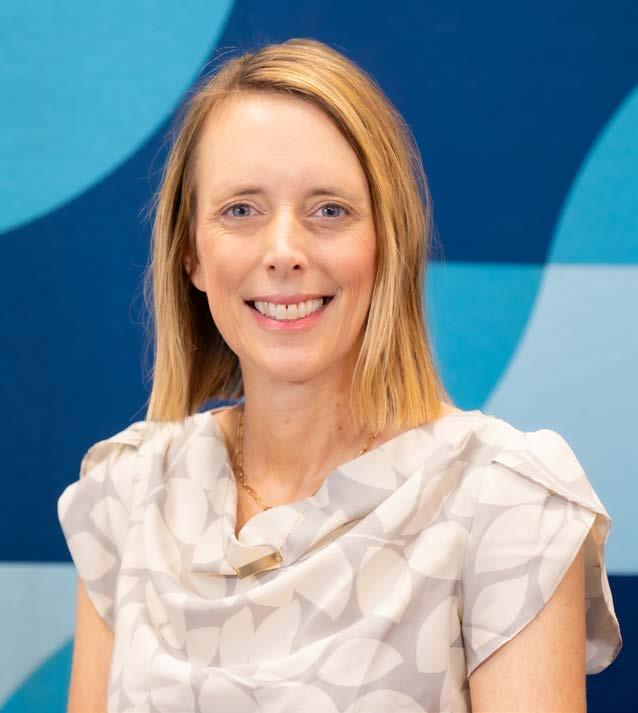
HS SCHOOL PRINCIPAL
Dr. Kate McKenna
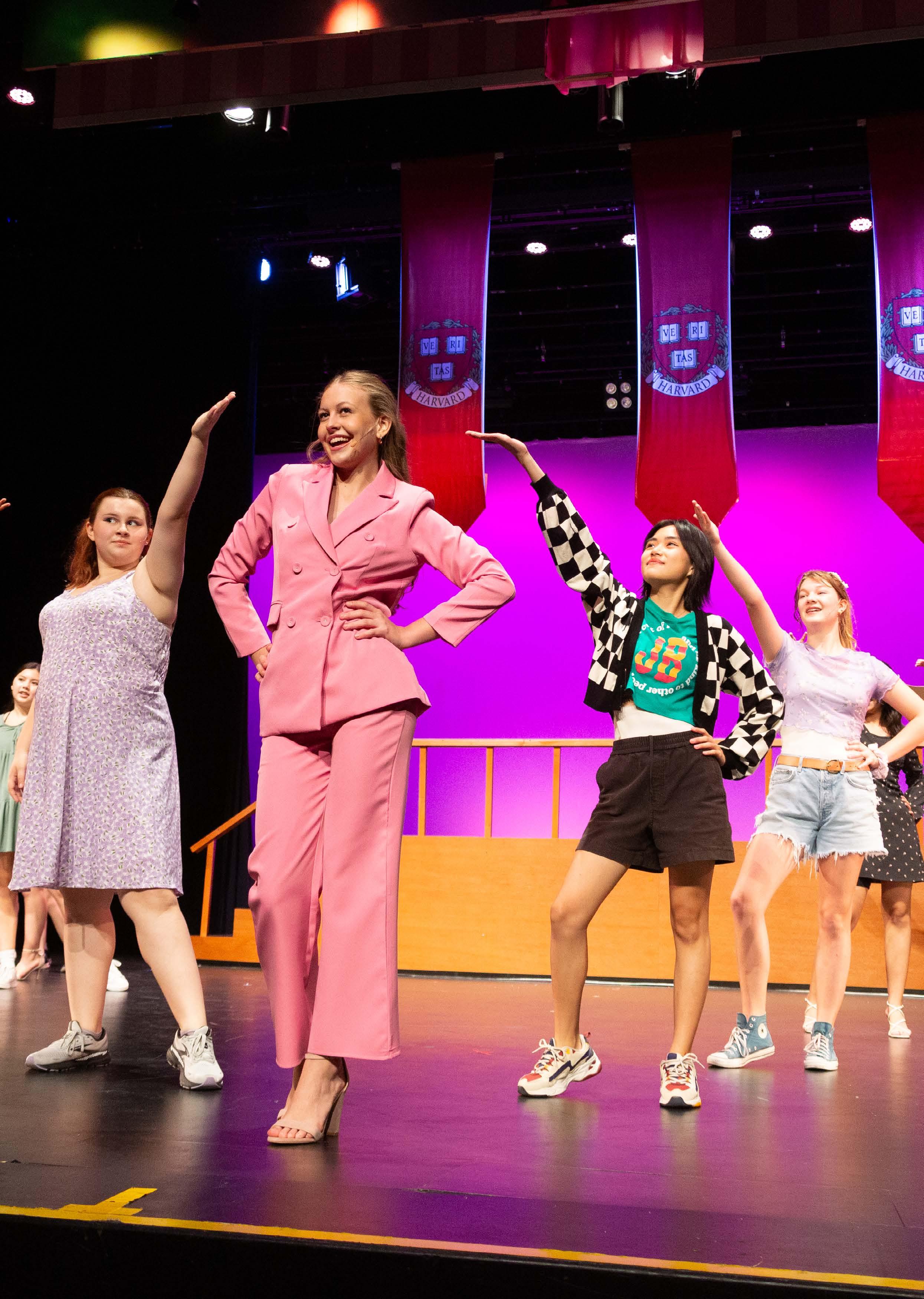
As the High School Principal at ISB, I am both excited and immensely proud of the comprehensive experience we offer. Our students can access and embrace a wide range of outstanding opportunities across academics, athletics, the arts, activities, and service-learning during their time here.
With so much on offer, it can sometimes be challenging to fully appreciate the breadth of learning choices and pathways available in the High School. Whether you are a current ISB student, a brand new member of our community, or a Grade 8 student preparing for this transition, please take the time to explore this newly updated Program of Studies booklet carefully. It is your guide to building a graduation pathway that best suits your goals and interests.
For the 2026-27 school year, we are thrilled to announce that we have continued to expand our curricular offerings. We have added further Advanced Placement (AP) courses and are now offering dual-enrollment courses through Syracuse University’s Project Advance. The highly-developed IB Diploma Program also remains an excellent option. We are excited to continue providing these diverse, personalized pathways, allowing students to build a program that aligns with their passions and positions them strongly for admission to leading universities across the globe.
We urge you to carefully read this comprehensive Program of Studies booklet. Please consult with your parents, teachers, and counselors in the coming months as you make informed decisions about the right course of study for the years ahead.
Regards,
Dr. Kate McKenna High School Principal

Andy Vaughan
High School is an exciting time in your education as you discover and dive deeper into your passions through pathways that set you up for successful entrance into Universities across the globe. The wide array of subject offerings available at ISB are complimented by a net of programs that support our students' needs beyond the classroom.
Every student is a member of a smaller grade level advisory, which provides an opportunity for all students to engage in Social Emotional Learning. Students will also engage in grade level appropriate discussions through advisory to support their study skills and guide their subject choices. This can involve working with other grade levels, or using established programs such as the Morrisby Career Profile in Grade 10 to support students subject choices that honor their potential.
All students are assigned and supported by a School Counselor from Grade 9 who assists with academic and social emotional guidance. Students are also assigned a College Counselor who supports subject selection, especially as students move into their final two years of school to provide College and Career guidance as they prepare for success beyond ISB.
Through the regular use of data and teacher feedback our Learning Support Team, School Counselors and High School Leadership Team identify students needing support, whether it be academic, social emotional or a combination. This can often be short term targeted interventions through our 1:1 coaching program or longer term support to help our students achieve their potential.
No matter your pathway through High School, the structures supporting our students aim to help all students reach their academic and personal potential.
Andy Vaughan High School Dean of Students
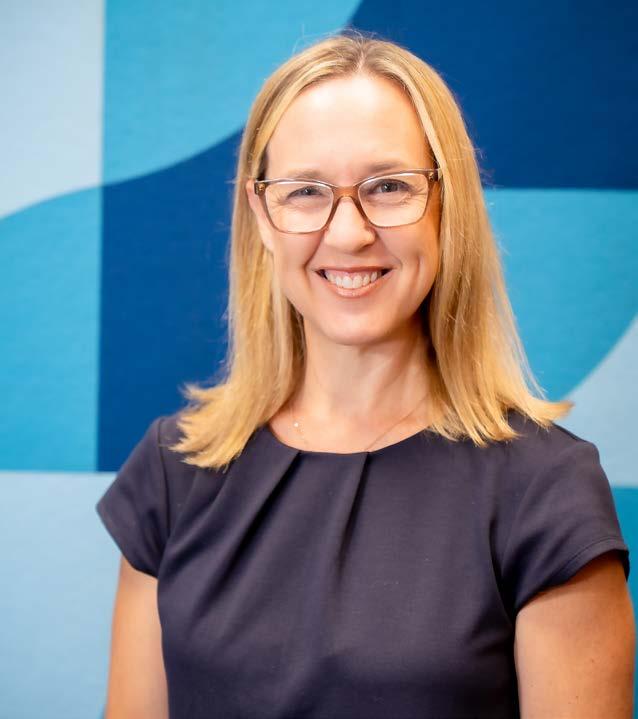
DEAN OF ACADEMICS
Kristen Feren
The High School at International School Bangkok (ISB) offers a premier learning environment focused on opportunity and challenge. Our robust US and international curriculum is designed to ensure all students can learn at the highest levels and achieve their personal best. Students begin their journey in Grade 9 with foundational courses in core subjects: English, World Language, Mathematics, World Studies, Science, Arts & Design/Technology, and Physical Education & Health. Starting in Grade 10, students begin to gain the flexibility to choose a more personalized pathway, allowing them to deepen their interests and foster a lifelong love of learning.
Our commitment to excellence is reflected in our rigorous learning pathways offering both Advanced Placement (AP) and the International Baccalaureate (IB) courses. Many universities around the world may require an IB Diploma or a specific set of AP exam results for admissions. Students can choose to follow one of these pathways, or pursue a personalized program. Students are advised to consult with their university counselor to determine a “best fit” academic pathway based on their goals and aspirations beyond ISB.
We are also excited to announce our new partnership with Syracuse University! Starting in the 2026-27 school year, students in Grade 11 & 12 will have the opportunity to further personalize their learning through college level dual-enrollment courses.
In addition to these globally recognized academic programs, ISB offers a wide range of robust and innovative courses that empower students to foster their individuality and creativity. From arts and humanities, to STEM and a wide range of physical education courses, our varied curriculum caters to a broad spectrum of interests. The flexibility of our learning pathways ensures that each student can chart their own academic course, and embrace a personalized learning experience that goes beyond the traditional classroom setting.
We invite you to be part of a community that champions academic excellence and fuels curiosity. Our students shape their success by choosing from prestigious and globally recognized pathways—the deep inquiry of the AP Capstone, the global view of the IB Diploma, the experience of taking a real university course in high school, or the flexibility of our ISB curriculum. Here at ISB, students become part of a community that celebrates academic excellence, preparing them for impact in the global community.
Kristen
Feren
Dean of Academics
The ISB High School Diploma provides an appropriately challenging High School Diploma for all ISB students meeting ISB graduation requirements. This Diploma pathway can be fulfilled by students choosing any one of the Learning Pathways described below.
The Advanced Placement (AP) program at ISB allows students to pursue college level courses and exams while still in high school. Students can pursue AP courses from Grade 10 onwards, though most students will take AP courses in Grade 11-12. Each AP course at ISB is a yearlong course. The AP exam in May is required for the AP designation to be placed on the student transcript.
The AP Capstone™ program provides a rigorous academic experience, fostering skills such as research, collaboration and communication. It prepares students for the challenges of higher education and beyond. Students pursuing the AP Capstone Diploma™ are required to take AP Seminar and AP Research, in addition to 4 other AP courses. Students must earn a score of 3 or higher on all designated AP courses, to obtain the AP Capstone Diploma™.
Syracuse University Project Advance (SUPA) is a premier concurrent enrollment program that allows ISB students to earn official Syracuse University college credits while taking rigorous, university-level courses right here on our high school campus. Taught by ISB faculty who are certified as Syracuse University adjunct professors, these courses use the same curriculum and standards as their on-campus counterparts, providing students with genuine college experience, academic confidence, and valuable, transferable credits. At ISB these course allow students to pursue their interests and passions in authentic ways.
The International Baccalaureate (IB) program offers an ambitious curriculum with an international outlook. Students can pursue the full IB Diploma or IB Courses. Students enrolled in an IB course complete the course over two years. Students are required to complete both coursework and exams at the end of the second year, for the IB designation to be placed on the student transcript.
The full IB Diploma program is widely recognised as an excellent preparation for higher education. The IB Diploma allows students to become specialists in three subjects studied at ‘Higher Level’, whilst keeping up their intellectual development in other areas at ‘Standard Level’. To fulfill the programme requirements students must choose subjects from each of the six IB subject groups, which includes the study of two languages and the IB Diploma Core; the Extended Essay, Theory of Knowledge and CAS.
The ISB Hybrid Diploma is a learning pathway that supports students to mix and match ISB, AP and IB courses over their four years of high school. This pathway allows students to tailor their education to specific goals and aspirations for higher education and beyond. Students taking an AP or IB course are required to take the corresponding exam for each course.
Students pursuing this college preparation learning pathway can choose from a variety of ISB developed courses in Grades 9-12. Our ISB courses provide students with a rich and well rounded educational experience, grounded in US common core standards.
Regardless of the pathway chosen, all ISB graduates receive offers from a variety of world renowned Colleges and Universities, who recognise the excellence and rigor of our program of studies. ISB’s challenging curriculum, exceptional teaching and multiple opportunities for our students to develop their skills and attributes, ensure that ISB graduates are well prepared for future success in college and beyond.
All ISB High School students will receive an ISB High School Diploma once students have successfully completed the required credits (see page 12).
Students may also gain further qualifications or an accredited Diploma, with additional requirements outlined below:
ISB AP PATHWAY AND AP CAPSTONE DIPLOMA™
ISB AP AND SUPA PATHWAY
ISB IB PATHWAY
ISB HYBRID PATHWAY
Students may take a number of individual AP courses or may take the AP Capstone Diploma™, which comprises AP Seminar and AP Research plus four other AP courses, earning a Grade 3 or above in each. Students may take up to 3 AP courses in Grade 10, 4 in Grade 11, and 4 in Grade 12.
Students may take a number of individual AP courses or may take the AP Capstone Diploma™in addition to Syracuse University (SUPA) courses. Students may take up to 3 AP courses in Grade 10, 4 in Grade 11, and 4 in Grade 12 in addition to SUPA courses..
Students must take 3 subjects at Higher Level and 3 at Standard Level, plus IB Core (EE, TOK and CAS).
Students may take a number of ISB, AP and IB courses to fulfill graduation requirements, gaining individual AP and IB certificates. Students may take up to 3 AP courses in Grade 10. Students may take up to a combination of 4 AP or IB HL courses in Grade 11, and up to a combination of 4 AP or IB HL courses in Grade 12. *Students may not take 4 IB HL courses.
Note: Students considering a hybrid pathway should do this under the guidance of their university counselor.
Here are some possible pathways for students based on their personal strengths and interests. Yours may be similar - or completely different! Discuss with your counselor and university counselor about the right pathway for you.
• Wanted to attend university in USA or Belgium Pathway: IB Diploma
“I wasn’t sure where I wanted to go to university until this year, which is why I’ve always tried to keep my options open. As someone with interests in a wide range of subjects, the interdisciplinary style of the IB program felt like the right choice. I’ve really come to appreciate how much crossover exists between my higher-level subjects (even across seemingly different areas like economics and physics!) The program allows me to thoroughly specialise in my HL courses while still maintaining a level of academic challenge in my SL ones. The CAS project was a great opportunity to push me to expand my leadership skills in service learning. I’m currently planning to study either supply chain management or accounting, and the IB has been essential in keeping my pathways open for either route. While the program has been demanding, I’m grateful for the opportunities it has given me to grow both academically and personally.”
• Wants to attend university in USA
Pathway: AP Capstone
“As someone passionate about learning and making a difference, I wanted to choose a pathway that reflected my interests, challenged me academically, and gave me lifelong skills. After taking AP US History in Grade 10, I realized that I thrived from diving deep into a specific subject and challenging myself to master it in a year's time. APUSH also sparked an interest in history that I wouldn't have discovered otherwise. By choosing my current pathway, I've gotten the chance to delve into several more specific subjects, pursue rigor, balance academics with music and community service, and open doors to future opportunities.”
Wants to attend university in China
• Pathway: AP Pathway
"Realizing early on that I wanted to major in engineering, I chose AP courses for their flexibility which allows me to solely focus on the subjects that align with my field, like math and physics. Additionally, the one-year structure of AP courses gives me the freedom to experiment with other subjects, offering more variety compared to the two-year commitment of IB courses. I also prefer taking a test right after completing a one-year course rather than a two-year course, as it spreads out the content across two smaller exams instead of one massive final exam. Since the universities that I'm applying to prioritize SAT scores and major-related classes, this made my decision even easier, as I could use the time IB students spend on TOK or EE to study or go to the gym instead."
Wants to attend university in Australia
• Pathway: IB Diploma
“Choosing the IB Diploma was a thoughtful decision for me, guided by my future goals. As someone aiming to study at an Australian university, the IB offered a clear pathway to meeting the entry requirements. But it wasn’t just about ticking the boxes—it was about exploring a program that allowed me to develop my skills and showcase my passions. The biggest challenge I faced was deciding on the right subjects. When IB Computer Science was no longer available it made me rethink my choices. I took the time to research which subjects aligned with my strengths, interests, and the university courses I’m aiming for. My advice? Start by looking at the subjects offered at your school and how they align with the programs you’re considering for university. Think about what excites you and what will set you up for success."
• Wanted to attend university in USA Pathway: Hybrid Diploma pathway.
“When it came to planning my high school pathway, I knew I wanted flexibility and a wide range of options to explore my interests. Combining IB and AP courses gave me the perfect opportunity to do just that. With this mix, I was able to take courses like IB Business Management and AP Comparative Government and Politics, which align perfectly with my passion for understanding the dynamics of business and politics on a global scale. This pathway has been great for me because it allowed me to tailor my learning to my strengths and interests while keeping my options open for U.S. college applications.”
Wants to attend university in New Zealand or Australia Pathway: IB Diploma
“As the IB program is greatly recognised in the countries in which I am planning on going to; Australia and New Zealand, I have chosen to stick with the IB curriculum. I believe that the skills and knowledge I am gaining throughout this course all help me prepare for my future. The IB curriculum also aligns with many of my interests in specific subjects including IB Sports Exercise Health Science, IB English Language and Literature and IB Biology. As the IB curriculum is a 2 year course I find that I am able to explore concepts in depth and earn a deeper understanding in a manageable way.”
Wants to attend university in USA or UK
• Pathway: IB Diploma
“The IB Diploma was a natural choice for me because of its balanced approach to depth and breadth, as well as its international recognition, which keeps my future university options open. I selected my HL courses—Math AA, Physics, and Economics—based on my strongest interests in 10th grade, while my SL subjects complement these, ensuring a solid foundation for potential STEM pathways, particularly in countries like the UK where two sciences are often required. I am also proud of my bilingual ability to learn academically in both English and Thai. By taking English Literature A and Thai Language and Literature A, I aim to earn the IB Bilingual Diploma, a credential that reflects my cultural and academic versatility."
Wants to attend university in Canada
• Pathway: IB Diploma
“At the time I needed to choose my courses, I was still unsure about my pathways,including country preferences and majors. I chose the IB diploma course because it widens my options as it is widely recognized and accepted worldwide. I also wanted to experience the profound sense of accomplishment that comes from pushing myself academically and personally through a rigorous curriculum.
Though some courses have been challenging, it has significantly enhanced my English proficiency, self-organization and critical thinking skills. I’m looking forward to majoring in marketing, especially focused on pharmaceuticals. I believe the studies I’m doing in the IB program are equipping me with global awareness, problem-solving, and analytical skills essential to excel, especially in pharmaceutical marketing. The strong foundation will enable me to thrive in the competitive world of pharmaceutical marketing and also make a meaningful impact on healthcare and society. As a bonus I can continue to study Japanese as part of the program! "
Credit and Graduation Requirements
International School Bangkok awards a High School Diploma when graduation requirements are met by attending four years of High School in grades 9-12 and acquiring a minimum of 25 credits. For students who join ISB mid way through their high school career an examination of these requirements in the context of the requirements of their previous institution may be needed.
ENGLISH 4
MATH 2
SOCIAL STUDIES
Required every year, with English 9 and English 10 taken in Gr9 and Gr10 respectively.
Students are recommended to take 4 years of mathematics. Most students will take an ISB math class in Gr9 & 10 (teacher placement) and specialize their math pathways in Gr11 and Gr12.
2 All Gr9 students are required to take World Studies 9. Students are recommended to take 3-4 years of Social Studies.
SCIENCE 2 All Gr9 students are required to take Science 9. All Gr10 students are required to take Science 10. Students are recommended to take 3-4 years of a lab based science or alternative science courses.
WORLD LANGUAGE 2
ART, DESIGN & TECHNOLOGY
PHYSICAL EDUCATION
1.5
Students are recommended to take 2-3 years of the same language.
Most students continue their language learning from middle school. This includes students studying a native language (Language A) or a Language of Acquisition (Language B).
Students have options to complete the required number of credits taking any combination of appropriate courses. This includes Fine or Performing Arts courses, as well as courses in Design, Technology and Computer Science.
1.5 All Gr9 students are enrolled in PE 9. Students are required to complete an additional 0.5 PE credit and most students enroll in PE class in Gr10.
HEALTH 0.5
Students are required to complete Health 9 (not for credit) and Health 10 (earning a 0.5 credit).
ELECTIVES 9.5 All courses on offer at ISB are able to be taken for elective credit once the student has completed mandatory courses and credits in the different disciplines.
TOTAL 25 A minimum total of 25 credits are required for graduation.
COMMUNITY SERVICE
0.25
THAI LANGUAGE
THAI LANGUAGE & CULTURE
Students are required to participate in a DELVE week experience every year they are enrolled in the High School. Participation in and the successful completion of DELVE reflection, earns a 0.25 credit for each experience.
Students new to Thailand and ISB are required to complete one ‘in-Thailand’ DELVE experience. This can fulfill part of the Thai Language and Culture requirement (see below).
Students must actively engage in community service throughout each academic year, demonstrating commitment through planning, action, and reflection. Joining at least one ISB service club or council is mandatory, with attendance at meetings and evidence of participation in planned events, required.
All Gr11 and Gr12 students are enrolled in Core. Students are supported through University & College Seminars during this taught period. Core also supports students in completing the Community Service requirement, through scheduled reflective sessions as well as developing a portfolio highlighting creative and physical activity experiences. Students who are not completing the full IB Diploma, have a free period during Core outside of the scheduled University Seminar & community engagement sessions.
Students pursuing the full IB Diploma will have their TOK course, CAS and the Extended Essay program delivered during the Core block, in addition to University Seminars. These students will earn 1 full credit for TOK over the two years of the program.
All Thai passport holders are required to take a Thai language course in High School. Students will be placed in the most appropriate course relevant to their learning pathway, based on proficiency level.
Students new to Thailand and ISB are required to participate in Thai Language & Culture experiences. Students can fulfill this requirement through one or more of the following:
• Semester course in Thai Language and Culture (0.5 credit) OR
• Online self paced course in Thai Language and Culture (0.25 credit) AND
• Participate in a designated DELVE (Language and Culture) trip in Thailand
ISB has set guidelines for minimum course load, course success and course credit. These guidelines are summarized below:
• Credit is awarded for courses on a semester basis. One half credit (0.5) is awarded for successful completion of the semester.
• Students must complete required courses in Gr 9 and Gr 10. Students must also complete the required credits in each subject area, earning a minimum of 25 credits for graduation.
• Students are required to carry at least 7 courses each semester. For students enrolled in Gr 11 and Gr 12, Core constitutes one of the 7 courses.
• Enrollment in a sequential course may be subject to the recommendation of the teacher, Head of Department and Dean of Academics.
• Marks alone are not the sole indicator of the successful completion of a course. Attendance and participation in a course are also considered.
Grade Level Requirements
2
Essentials, Core, Extended* (teacher placement)
Essentials, Core, Extended AP Math* (teacher placement)
on language placement or chosen proficiency pathway)
on language placement or chosen proficiency pathway)
Students are encouraged to complete their four year Personalized Pathway to Graduation form.
For further details regarding credit, course load and graduation requirements, please refer to the HS Handbook.
At ISB, we offer a variety of Advanced Placement (AP) courses to challenge and engage students in advanced academic study. Most AP courses have specific prerequisites and require a teacher recommendation. To apply for an AP course, students must submit an application form, which will be part of the discussion process for enrollment.
Students in Grade 10 may take up to three AP courses per year, while students in Grades 11-12 may take up to four AP courses per year. All AP courses are yearlong and require a significant commitment to ensure success.
For guidance on selecting AP courses, consult with your counselor or teachers. They are here to support you in making informed decisions and achieving success in the AP program.
Courses
COURSES AVAILABLE TO STUDENTS IN GRADE 10
AP COURSES
COURSES OFFERED FOR THE ACADEMIC YEAR 2026-2027
AP Human Geography
AP Macroeconomics
AP US History
AP Physics 1
AP Statistics
AP Pre-Calculus
AP Computer Science A
AP 2-D Art & Design
AP 3-D Art & Design
AP Seminar
AP English Language & Composition
AP English Literature & Composition
AP Comparative Government and Politics
AP Human Geography
AP Macroeconomics
AP Microeconomics
AP Psychology
AP US History
AP Biology
AP Chemistry
AP Environmental Science
AP Physics 1
AP Physics 2
AP Physics C
AP Statistics
AP Pre-Calculus
AP Calculus AB
AP Calculus BC
AP Computer Science A
AP 3-D Art & Design
AP 2-D Art & Design
AP Seminar
AP Research
AP African American Studies (Via Global Online Academy Only)
AP Art History (Via Global Online Academy Only)
This matrix contains general guidelines, but requirements for specific universities and programs can vary, even change. It is essential that students conduct their own research to ensure their high school diploma and course selection meets their needs.
AP Calculus AB, AP Research and AP Seminar may not be accepted. AP results may be from 2 sittings. SAT must be from 1 exam.
Architecture
(may require portfolio, interview, or exam)
Art, Design, Performing Arts
(may require portfolio or audition)
May require 3+ APs or SAT
Required: AP Calculus, AP Physics
May require 3+ APs or SAT
No specific courses required
Recommend relevant APs
Required: 5 APs OR 3 APs with SAT, with AP Calculus BC, and AP Chemistry or AP Physics
May also require SAT May also require SAT
Business / Commerce
May require 3+ APs or SAT
Recommend: AP Calculus
No specific courses required Recommend relevant APs
Required: 3-5 APs in relevant subjects
Recommended: AP Calculus BC, AP Physics, AP Art & Design
Recommend: 3+ APs with scores of 3+ in relevant subjects
Foundation courses are accessible with only a US high school diploma
Required: 5 APs OR 3 APs with SAT, with AP Calculus BC
Required: 3-5 APs in relevant subjects, including AP Calculus
Recommend: AP Calculus, AP Physics, AP Art & Design
Computer Science
Economics
May require 3+ APs (including AP Calculus AB) or SAT
Required: AP Calculus
Required: 5 APs OR 3 APs with SAT, with AP Calculus BC
Required: 3-5 APs in relevant subjects, including AP Calculus, and 2 sciences
No specific courses required Recommend relevant APs
Recommend: AP Calculus, with most selective programs preferring BC
Recommend: AP Physics, AP Computer Science, AP Calculus BC
May require 3+ APs (including AP Calculus AB) or SAT
Recommend: AP Precalculus; AP Calculus preferred
Required: 5 APs OR 3 APs with SAT, with AP Calculus BC
Required: 3-5 APs in relevant subjects, including AP Calculus
Recommend: AP Calculus
Engineering
May require 3+ APs (including AP Calculus BC and or AP Physics 1 and 2, or C, and or AP Chemistry), or SAT
May require AP Calculus, AP Chemistry and AP Physics 2 or C
English Literature May require 3+ APs or SAT No specific courses required
Recommend: AP English Language and AP English Literature
Humanities / Bachelor of Arts
May require 3+ APs or SAT No specific courses required
Law May require 3+ APs or SAT
Medicine May require 3+ APs (including Chemistry) or SAT
Psychology May require 3+ APs or SAT
Not available as a first undergraduate degree
Required: 5 APs OR 3 APs with SAT, with AP Calculus BC and AP Physics
Social Sciences May require 3+ APs or SAT
Not available at the undergraduate level
Required: 5 APs OR 3 APs with SAT
AP Calculus BC may be required
Required: 3-5 APs in relevant subjects, including AP Calculus BC, AP Physics and at least 1 other science
Required: 3-5 APs in relevant subjects, including AP English Language, AP English Literature, and/or APs in social studies
Required: 5 APs OR 3 APs with SAT
AP Calculus BC may be required
Science May require 3+ APs (including Calculus, and one of Chemistry, Biology or Physics 1 and 2) or SAT
Recommend: AP Calculus for BSc (not required for BA). AP Biology recommended
May require AP Calculus
Required: 5 APs OR 3 APs with SAT
Required: AP Calculus
Recommend: AP Chemistry and one other science, AP Statistics.
Required: 5 APs OR 3 APs with SAT, with AP Calculus BC, AP Chemistry, and either AP Biology or AP Physics
Required: 5 APs OR 3 APs with SAT
AP Calculus BC may be required
Required: 5 APs OR 3 APs with SAT
AP Calculus BC may be required
Recommend: AP Calculus and AP Physics
Recommend: AP English Language and AP English Literature
Required: 3-5 APs in relevant subjects No specific courses required.
Recommend relevant APs
Required: 3-5 APs in relevant subjects, including English and social studies
Not available at the undergraduate level
Required: 3-5 APs in relevant subjects, including AP Biology and AP Chemistry
Recommended: AP Calculus BC
Required: 3-5 APs in relevant subjects, with one of AP Biology, AP Chemistry, AP Physics, or AP Calculus BC
Required: 3-5 APs in relevant subjects
Not available at the undergraduate level
Recommend: AP Pre-Calculus, AP Statistics, AP Psychology
No specific courses required
Recommend relevant APs
Required: 5 APs OR 3 APs with SAT
AP Calculus BC may be required
Required: 3-5 APs in relevant subjects including AP Calculus BC and 2 sciences
Recommend: AP Calculus, with AP Chemistry and one other science
Students pursuing the IB Diploma pathway can explore a wide range of courses offered across the six IB Subject Groups. Each course is available at both Standard Level (SL) and Higher Level (HL), allowing students to tailor their learning to their interests and goals. IB Diploma Student take six IB courses, three at Standard Level and three at Higher Level.
Students pursuing the full IB Diploma must take:
• At least one course in Group 1
• Either a second course in Group 1 or a course in Group 2
• Note that English is required, either in Group 1 or Group 2
• At least one course in Group 3
• At least one course in Group 4
• At least one course in Group 5
• A course in Group 6 or a second course in Group 2, 3 or 4
To apply for an IB course or the full IB Diploma, students must submit an application form. This will be part of the discussion process for enrollment.
For guidance on selecting the right IB courses and navigating the program requirements, consult with your counselor or teachers. They are here to support you in making informed decisions and achieving success in the IB program. In rare cases students may opt to take official IB courses through an online platform called Pamoja. This is paid for by the student’s family.
GROUP 1:
Language A
Chinese Language and Literature
English Language and Literature
English Literature
Japanese Language and Literature
Korean Literature
Thai Language and Literature
GROUP 2: Language of Acquisition
GROUP 3: Individuals and Societies
Chinese B
English B
French B
Spanish B
Business Management
Economics
Environmental Systems and Societies
History
Psychology
STANDARD LEVEL (SL)
Chinese Language and Literature
English Language and Literature
English Literature
Japanese Language and Literature
Korean Literature
Thai Language and Literature
Plus: School Supported Self Taught Literature (SSST) in a variety of languages
Chinese B
English B
French B
Spanish B
Spanish Ab Initio
Business Management
Economics
Environmental Systems and Societies
History
Psychology
GROUP 4: Sciences Biology
Chemistry
Environmental Systems and Societies
Physics
Sports, Exercise and Health Science
GROUP 5: Mathematics
Analysis & Approaches
Applications & Interpretation
GROUP 6: the Arts Theater Visual Arts
Biology
Chemistry
Environmental Systems and Societies
Physics
Sports, Exercise and Health Science
Analysis & Approaches
Applications & Interpretation
Theater Visual Arts
This matrix contains general guidelines, but requirements for specific universities and programs can vary, even change. It is essential that students conduct their own research to ensure their high school diploma and course selection meets their needs.
ARCHITECTURE
(may require portfolio, interview or exam)
ART, DESIGN, PERFORMING ARTS
(may require portfolio or audition)
BUSINESS / COMMERCE
(IB Business Management not required)
Computer Science
(IB Computer Science not required)
May require HL Visual Arts
May require HL/SL Physics, Chemistry and Math AA
May require Visual Arts No specific courses required
Recommend relevant IB courses
May require HL/SL Math AA or HL AI
May require HL/SL Math AA or HL AI
Required: HL Math AI, or 1 of SL Chemistry, Physics or Math AA
No specific courses required Recommend relevant IB courses
Required: HL/SL Math AA or HL AI
May require HL Maths, Physics or Visual Arts
Recommend DT* or Visual Arts for portfolio
Recommend relevant IB subjects at HL
Recommend: HL Math, Physics and/ or Visual Arts
Recommend DT* or Visual Arts for portfolio
No specific courses required
Recommend relevant IB courses
Recommend: SL Math AA
(Only 3 of 130 unis require HL Math)
May require HL/SL Math AA or HL AI
ECONOMICS May require HL/SL Math AA or HL AI
May require HL/ SL Physics and Chemistry
Recommend: HL/ SL Math AA
May require HL/SL Math AA or HL AI
Required: Math or Physics
SL AI not accepted
May require HL/SL Math AA or HL AI
No specific courses required
Recommend: SL Math AA
Recommend: HL Math No specific courses required
Recommend: HL/ SL Math AA or HL AI
Recommend: SL Math AA
(Only 9 of 130 unis require HL Math)
No specific courses required
Recommend: SL Math AA
ENGINEERING
Recommend: HL Math and one HL science
May require HL/ SL Chemistry and Physics, and HL/SL Math AA or HL AI
ENGLISH LITERATURE
Recommend: HL English Literature
No specific courses required
Recommend: HL English Literature
HUMANITIES / BACHELOR OF ARTS
No specific courses required
No specific courses required
LAW No specific courses required Not available as a first undergraduate degree
MEDICINE
PSYCHOLOGY (IB Psychology not required)
SOCIAL SCIENCES
Recommend: HL Chemistry Not available at the undergraduate level
Required: HL Math AA, SL Physics, and one of HL Physics, Chemistry, Biology or Computer Science
No specific courses required
Recommend: HL Math and HL Physics
Recommend: HL Math and Physics
May require HL/ SL Math AA or HL Math AI
May require HL/ SL Math AA or HL Math AI
No specific courses required
Recommend: HL English Literature No specific courses required
Recommend: HL English Literature
Recommend: HL English Literature No specific courses required
Recommend: HL/ SL Math AA or HL AI
Recommend: HL/ SL Math AA or HL AI
May require specific grade in English
Recommend: HL English Literature Not available at the undergraduate level
Required: HL Chemistry and either HL Biology or HL Physics
Required: HL Chemistry, and one other HL science
Recommend HL Biology and SL Math AA Not available at the undergraduate level
No specific courses required
May require HL/ SL Math AA or HL Math AI
No specific courses required
Recommend: SL Math AA for BS.
No specific courses required
Require: HL in relevant subjects No specific courses required
SCIENCE
Required: HL/SL Math AA or HL AI, and one science
Required: HL/SL Math AA or HL AI, and one science
Required: HL Math, with one of HL Physics, Chemistry or Biology
Required: HL/SL Math AA or HL AI, and one or more HL sciences
No specific courses required
Recommend: SL Math AA
*Class of 2027 only
At ISB, we believe we are in a transition moment in education where rigor and credentials still matter–yet at the same time, students are being asked to express themselves with more authenticity. Through our new SUPA courses, and purposefully designed two year course sequences, we invite students to engage in real university learning while having the time and space to develop their own interests.
Students who choose to take a course at ISB through Syracuse University’s Project Advance (SUPA) will have the opportunity to earn actual university credit and will have a Syracuse University transcript. With this dual enrollment option, students earn both ISB High School credit and Syracuse University credit. Students may also choose to take SUPA courses only for ISB credit.
While the following sequences are an option, students are also free to choose one course, or to mix and match to create a personalized sequence. Students are encouraged to take SUPA courses alongside ISB or AP courses.
SEQUENCE #1 – IDEAS TO IMPACT
For anyone who has an idea.
SUPA: Introduction to Entrepreneurship
SUPA: Design Thinking (27-28 school year)
SEQUENCE #2 – RESEARCH TO IMPACT
For anyone who wants to learn about and conduct science research.
SEQUENCE #3 – ARTISTRY TO IMPACT
For anyone who has a story to tell.
SUPA: Undergraduate Research I
SUPA: Undergraduate Research II (27-28 School year)
SEQUENCE #4 –PERFORMANCE TO IMPACT
For anyone with a passion for sport and wellness
SUPA: Writing Culture: Introduction to Creative Nonfiction
SUPA: Introduction to Film and Media Arts: Digital Photography
ISB Course: Sport, Exercise, and Health Science Fundamentals
SUPA: Principles of Contemporary Issues in Sport Management (27-28 school year)

Curt Nichols
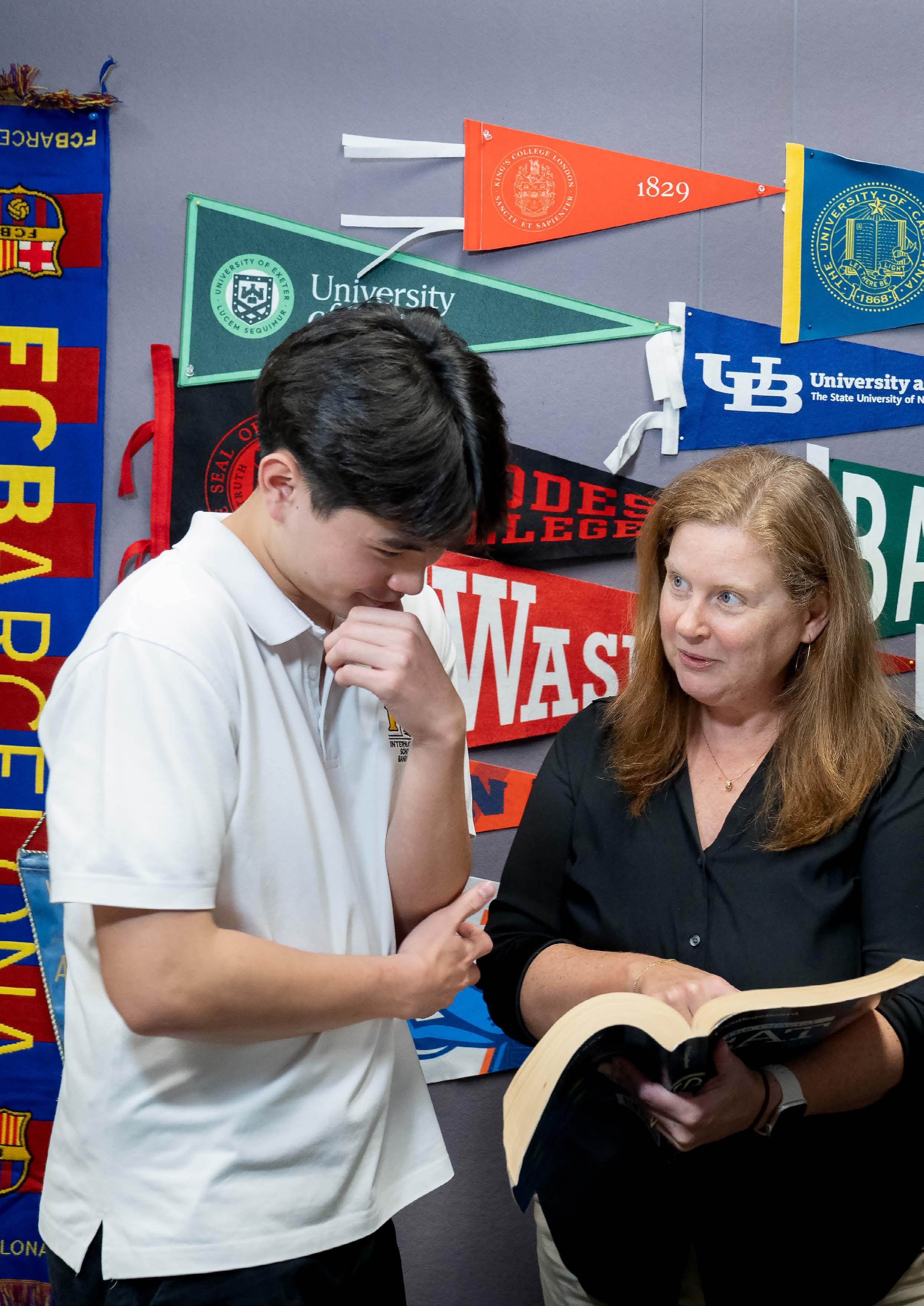
University counselors collaborate closely with the school counselors to support students in selecting academic programs and courses. For Grade 9 students, initial meetings with the school counselor ensure that proposed courses meet graduation requirements, prerequisites, and teacher recommendations. Following this foundational step, students are encouraged to consult their assigned university counselor for guidance tailored to specific university admission goals. All Grade 10 students meet with both their school and university counselors simultaneously to ensure course choices align with ISB requirements and individual university aspirations. Finally, Grade 11 students who are not enrolled in the full IB Diploma program are strongly encouraged to meet with their university counselor before finalizing their course selections.
Starting in Grade 9, students are assigned a university counselor to receive individualized coaching. This partnership extends beyond course selection to foster holistic development in preparation for university choices and the application process. In Grades 9 and 10, university counselors engage with students through large and small group sessions, supplemented by opportunities for one-on-one mentorship. This approach delivers age-appropriate information, helping students build an authentic and meaningful foundation of academic and co-curricular pursuits.
In Grades 11 and 12, the two-year Junior and Senior Seminar curriculum guides students through identifying and evaluating a broad range of post-secondary options worldwide. This curriculum equips students with the tools to connect their academic achievements, personal talents, and aspirations with suitable opportunities for future studies. Recognizing the diversity of learners, university counselors work closely with students and families, tailoring their support to each student’s unique intellectual, personal, and social needs, ensuring their well-being is affirmed throughout the process.
The goal of the university counseling program is to empower students to effectively apply to and select universities that align with their ambitions and potential. Our university counselors are deeply invested in the lives of their students, supporting them throughout high school to achieve academic success and thrive in their future endeavors.

Chris Mott
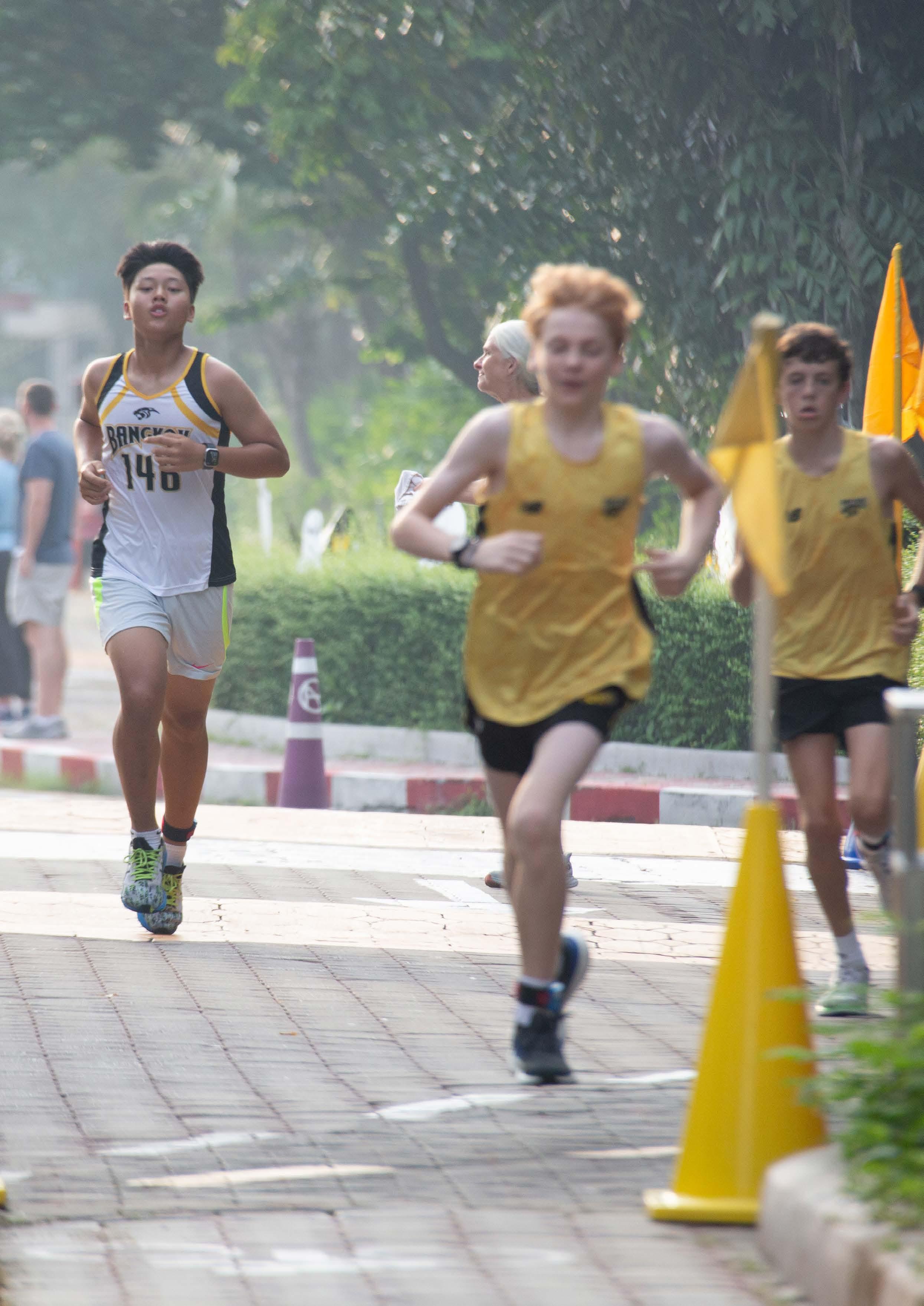
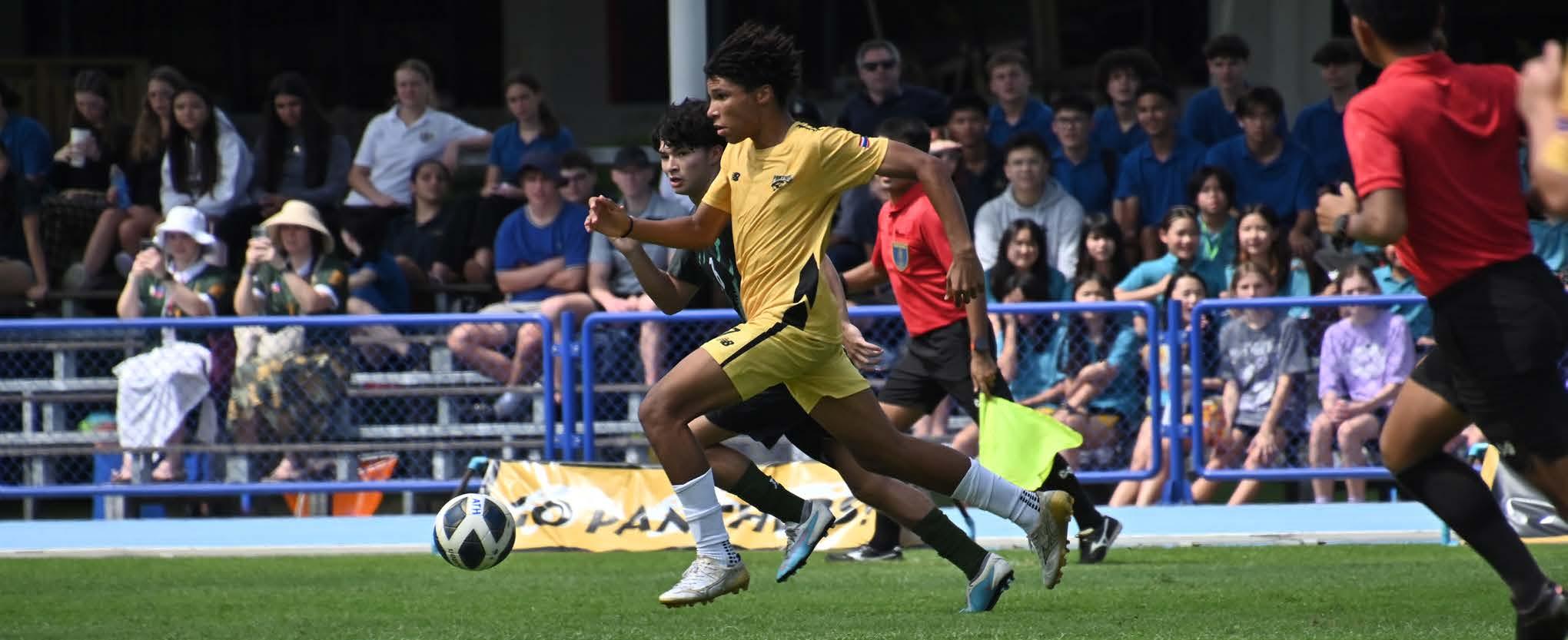
Locally we are a member of Bangkok Metropolitan Athletic Conference (BMAC) which provides our students with opportunities from Under 11 through Varsity level sports. In addition we offer our Varsity Athletes the opportunity to participate in the International Association of Southeast Asia Schools (IASAS) conference. This offers students international travel opportunities for all of our three season sports.
The International School of Bangkok Athletic program aims to enhance, support and extend student-learning outside of the classroom. The ISB vision, mission, and definition of learning drive what we do as an athletic department and as coaches. The program aims to help each athlete reach his/her full academic AND athletic potential, become a passionate, reflective student-athlete, become a caring, global citizen, and lead a healthy, active, balanced lifestyle.
ISB coaches are educators and role models. We cultivate leadership and emphasize character to nurture respectful, resilient competitors. We model integrity, champion sportsmanship, and develop a growth mindset, every day. Our teams strive for excellence, enrich our community, and reflect our core values at home and abroad. Success is measured in growth, achievement, impact, and enjoyment.
Within our athletic program, everyone counts, everyone contributes, and everyone earns recognition. We prepare with purpose, play with passion, and represent our school with pride. We carry ourselves with dignity, confident that no matter the outcome, we have delivered our best effort.
ISB offers an athletic experience that inspires achievement and transforms lives. Go Panthers!
COORDINATOR
Peter Assimakopoulos
Through service learning, students work together to create a world, a community, a neighbourhood, and a school that enriches their sense of social responsibility.
As a school, we believe that our students can make a difference through action in our community and surrounding communities. The CAS and Service Learning Program prioritises problem-solving, self-accountability, and reflective skills in a live and applied setting.
Examples of service learning connections at ISB are Habitat for Humanity builds, creating opportunities to meet and interact with the boys from Pakkret Reception Home for the Boys, working with TerraCycle in Klong cleanups and upcycling plastics, teaching Maths and other subjects at Bumble Bee Free Library, and many more.
Our aim for students is to explore new possibilities, create learning experiences, and embrace and adapt to new challenges by actively participating in a personalised program. Understanding that students are members of a local and global community with responsibilities towards each other and the environment. And most importantly, the program provides students with opportunities to connect with each other and have fun!
“...if you believe in something, you must not just think or talk or write, but must act.” Peterson (2003)

DIRECTOR OF FINE PERFORMING ARTS
Anthony Giles
One thing that makes ISB special is that we think of The Arts differently and value learning through The Arts as something important for all students. With twenty arts staff and over thirty dedicated classrooms, twenty seven practice rooms, two theaters and an outdoor stage, we offer a full array of fine and performing arts courses (over sixty) that sit alongside classes in English, Math, Science, Social Studies, and World Languages because we believe learning in and through The Arts is unique, and as important as these other areas of study in providing a well rounded education. Borrowing the lead singer for U2, Bono’s quote with a twist, “Art can change the world because Art changes students in the way they think about the world and the possibilities they can imagine rearranging it.
“Every artist at ISB is encouraged to grow and create whether in dance, drama, film, music, or visual arts.” Variya Tongtip, ISB Dancer and Actor
“We have an Arts Council that works really hard to plan events that allow students to perform or display their artwork in the community.” Chris Rogers, ISB Visual Artist and Designer
“I love The Arts at ISB because of the amazing opportunities I have to collaborate with peers and because I get to be a part of the community through art.” Boonyanin Pakvisal, ISB Film Maker and Photographer
The English Department is committed to ISB’s mission to inspire students to achieve their academic potential, become passionate and reflective learners, act as caring global citizens, and lead healthy, balanced lives. Within this mission, our goal is for students to reach their full potential in reading, writing, speaking, and listening.
We believe that students should engage with a rich foundation of language and literature through a balance of whole-class mentor texts and text sets. Through the study of literature and language, students strengthen their comprehension, expression, and critical thinking, while developing an appreciation for the beauty and power of language, imagination, and the human spirit.
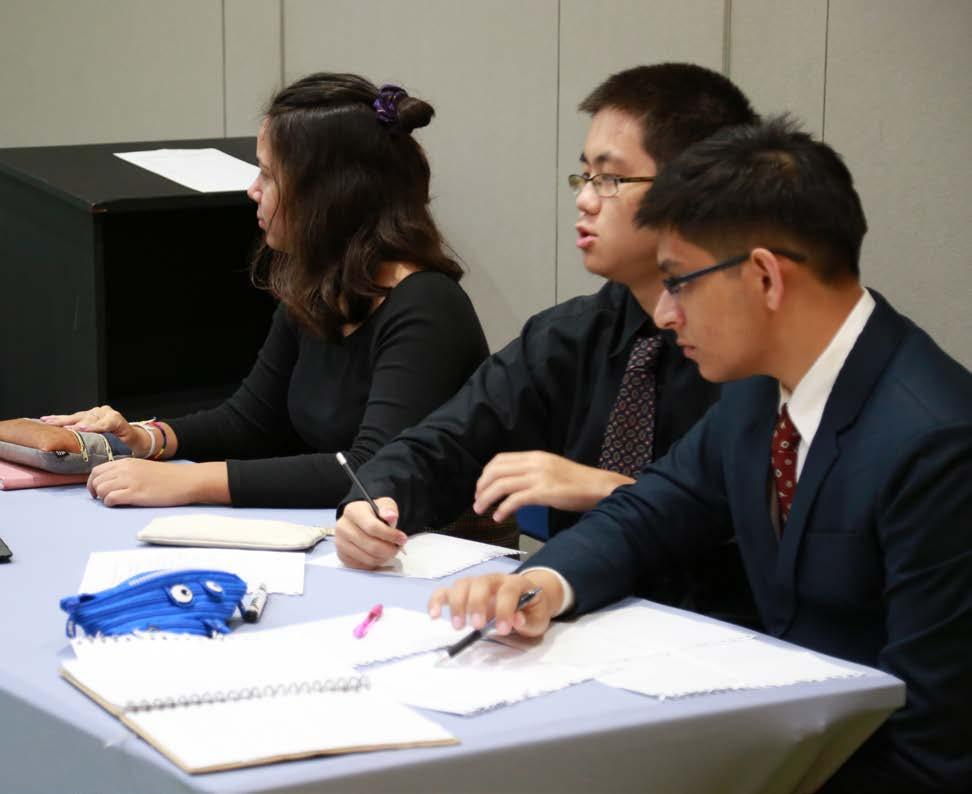
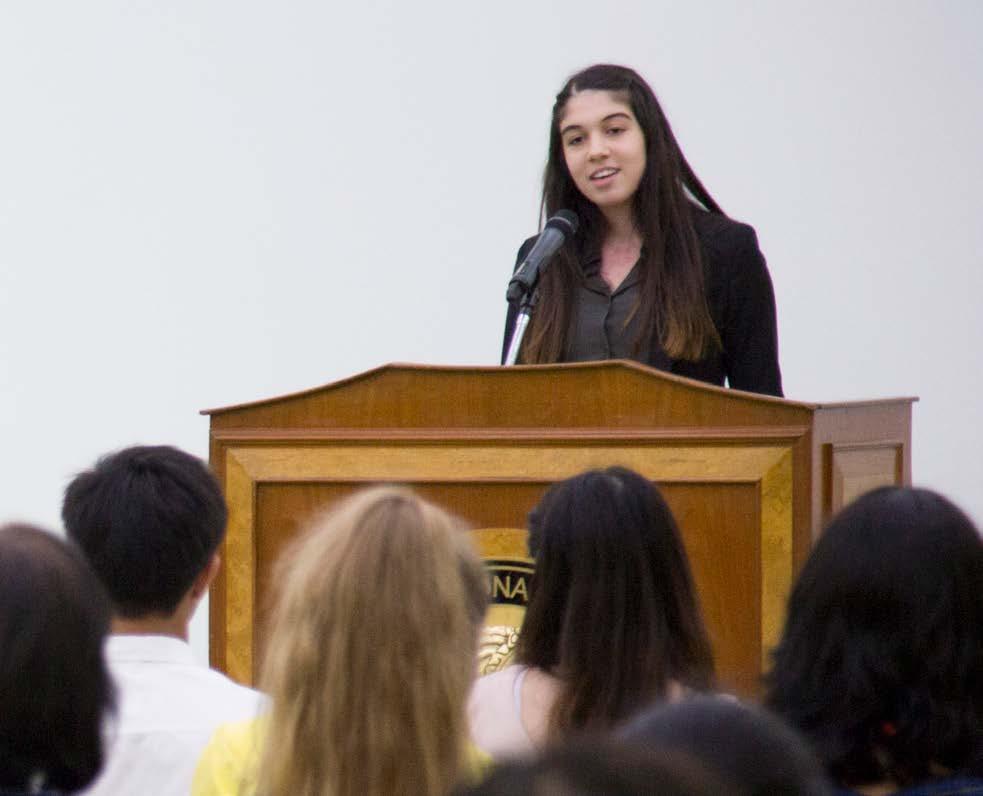
The English Department fosters growth in reading, writing, speaking, and listening through diverse forms of writing and communication. We recognize reading as a cornerstone of language development, enhancing both oral and written fluency; therefore, we maintain a robust independent reading program to cultivate a lifelong love of reading. Technical skills, such as grammar and vocabulary, are consistently developed through online curricula and targeted mini-lessons. Speaking is also a key area of focus: students engage in a range of oral activities, from small-group discussions to formal presentations, such as the annual “TENTalks,” which are shared with the wider ISB community.
English 9
Transitional English 9
Media Studies*
Creative Writing*
Public Speaking*
English 10
Transitional English 10
Media Studies*
Creative Writing*
Public Speaking*
AP Seminar
English 11
AP Seminar
AP Research
AP Language & Composition
AP Literature & Composition
B English Lang/Lit SL/ HL
IB English Lit SL/HL
SUPA: Writing Culture: Creative NonFiction
Media Studies*
Creative Writing*
Public Speaking*
English 12
AP Seminar
AP Research
AP Language & Composition
AP Literature & Composition
IB English Lang/Lit SL/HL
IB English Lit SL/HL
SUPA: Writing Culture: Creative NonFiction
Media Studies*
Creative Writing*
Public Speaking*
This table shows the courses available to students at each grade level. English 9 and English 10 are required courses for graduation.
ISB AP Capstone Diploma™ requirements are to take AP Seminar and AP Research in consecutive years, plus four other AP courses. ISB recommends that students take at least one AP English course in conjunction with AP Seminar and AP Research.
All students wishing to take advanced courses must have the prerequisites and demonstrate the necessary Habits and Attitudes towards Learning (HAL) required for success in an advanced academic setting.
*Indicates ISB Elective English courses for subject area credit.
Grade: 9 | Length: 1 year | Credit: 1
Prerequisite: Grade 8 English or Humanities or equivalent
*NCAA Approved
English 9 is a required, yearlong course that invites students to explore how stories, ideas, and language shape the way we see the world. Through a range of literary and non-literary texts, students develop the analytical, creative, and communicative skills essential for success across high school and beyond.Units of study align with the Common Core State Standards and focus on key questions that encourage critical thinking and meaningful transfer of skills. Students engage with multiple genres and text types while crafting analytical essays that develop interpretation, organization, and clarity of expression. Emphasis is placed on the writing process—drafting, revising, and refining ideas through workshops and regular conferences with teachers. In addition to writing, students develop speaking and listening skills through presentations, discussions, and a culminating podcast project that emphasizes voice, perspective, and audience awareness. Technical language study, including grammar, syntax, and vocabulary, is integrated through targeted mini-lessons and the NoRedInk program.
Grade: 10 | Length: 1 year | Credit: 1
Prerequisite: English 9 or equivalent
*NCAA Approved
English 10 is a required, yearlong course that challenges students to examine how language and storytelling shape understanding across cultures and time. Through novels, memoirs, plays, speeches, and news media, students analyze authorial choices and develop the critical reading and writing skills essential for success in advanced English pathways. Units of study are aligned with the Common Core State Standards and framed by essential questions that foster inquiry, analysis, and transfer of learning. Writing instruction emphasizes analytical and persuasive essays as well as personal memoirs, guiding students through drafting, revision, and reflection to strengthen clarity and depth of thought. Assessments are designed to
allow students to demonstrate their growth as thinkers, writers, and speakers while preparing them for entry into IB, AP, or ISB English courses in Grade 11. Technical language study—including grammar, punctuation, syntax, and vocabulary—is reinforced through targeted mini-lessons and the NoRedInk program. The course culminates in a Ten Talk, an oral presentation in which students synthesize and showcase the reading, writing, and communication skills they have developed throughout the year.
Grade: 11 | Length: 1 year | Credit: 1
Prerequisite: English 10
*NCAA Approved
English 11 is a yearlong course that invites students to explore enduring questions of meaning and purpose through the study of origin myths, novels, memoirs, and drama. Students analyze how writers use language and form to express human experience while developing their own voices as critical thinkers and writers. Units of study are aligned with the Common Core State Standards and framed by essential questions that foster inquiry, analysis, and transfer of learning. Writing instruction emphasizes analytical essays and argumentation, guiding students to craft precise, purposeful claims supported by close textual evidence. Students also write personal and modified memoirs that connect their lived experiences to the universal themes explored in literature. Speaking and listening are integral components of the course. Regular Socratic Seminars encourage students to engage as both speakers and listeners, deepening their understanding through dialogue and reflection. English 11 is a strong alternative to students who do not require the IB Diploma or AP. Students in this course develop the necessary skills for success in university.
Grade: 12 | Length: 1 year | Credit: 1
Prerequisite: English 11
*NCAA Approved
English 12 is a standards-based curriculum and continuation of the English 11 program. The course aims to prepare students for the rigors of
university coursework and provide opportunities to investigate complex literary and non-literary texts. Units of study are developed according to the Common Core State Standards. This course includes a strong professional writing component, and students produce career-preparatory documents in preparation for their future, beyond school and university. Personal choice is an integral part of the course, as students select novels and other texts for study, based on their interests. Additionally, visual literacy is an essential component of this course. Students formally analyze advertisements, film, and other forms of media. Throughout the course, students make connections between selected texts and key global issues. Emphasis is placed on developing academic writing skills, with a focus on clear communication of purpose for a range of audiences. Students develop the skills to become powerful writers of argumentative and informational texts. They also develop speaking skills through a variety of informal and formal oral activities. This class is a strong alternative to students who do not require the IB Diploma or AP. Students in this course develop the necessary skills for success in university.
Grade: 9 - 12 | Length: 1 year | Credit: 1 (Arts credit may be granted – may be repeated for credit)
Prerequisite: None.
Students in the Media Studies elective design, produce, and publish content under PantherNation, the school’s flagship online magazine. Guided by best practices in contemporary journalism, the course focuses on reporting news, events, and issues relevant to high school life and the wider world. Students develop practical skills in writing, interviewing, editing, and multimedia production as they create written and video stories for both online and print publication. They generate topics, cultivate reliable sources, and collaborate through peer review and editorial meetings. Success in this course requires responsibility, creativity, and curiosity. Students are expected to meet deadlines, communicate with clarity and conviction, and continuously refine their craft as writers and digital storytellers.
Grade: 9 - 12 | Length: 1 semester | Credit: 0.5
Prerequisite: None
*NCAA Approved
Creative Writing offers students the opportunity to develop their craft as writers of prose and poetry while becoming more attentive, discerning readers. The course emphasizes the creation of vivid, effective writing across a variety of genres and styles. Students study exemplary texts, experiment with techniques of composition, and engage in close reflection on their own work. Instruction takes place primarily through full-class workshops, peer editing, and one-on-one conferences with the teacher. The course fosters both creative expression and critical awareness, helping students understand writing as a deliberate craft and a powerful means of communication. Students are expected to produce original written work on a regular basis.
Grade: 9 - 12 | Length: 1 semester | Credit: 0.5
Prerequisite: None
*NCAA Approved
The purpose of this course is to strengthen students’ confidence and skill in oral communication and active listening. Through frequent opportunities to speak before an audience and respond thoughtfully to others, students learn the principles of effective delivery, organization, and content while developing strategies for managing speaking anxiety. Students study and analyze exemplary speeches as models of powerful communication. Instruction emphasizes a functional and practical approach to public speaking, including informative, impromptu, and persuasive forms. Core skills such as organization, body language, eye contact, vocal control, and visual support are practiced throughout the course. Students compose and deliver creative monologues, original oratories, persuasive speeches, debates, and oral interpretations of literary works.
SUPA: Writing Culture: Introduction to Creative Nonfiction
Grade: 11 - 12 | Length: 1 year | Credit: 1
Prerequisite: Successful completion of English 10 or English 11 with a minimum final grade of 5, AND a recommendation from the student's current English teacher.
This dual-enrollment course with Syracuse University provides an introduction to creative nonfiction (CNF), a genre that encompasses many kinds of prose: memoir, biography, travel writing, science writing, and literary journalism, to name a few. CNF writers almost always—in some way or other—focus on the tensions that emerge between individuals and the world around them. Thus, the title of this course, “Writing Culture,” refers to writing about oneself and others in the context of a broader culture. In this class, students will read and reflect upon a variety of creative nonfiction texts, as well as compose their own essays. Students will have the freedom to explore a wide range of topics and experiment broadly with voice, style, form, and the use of research to enrich their writing. Creative nonfiction also draws from poetic approaches to language, including imagery, metaphor, tone, and shifts in point of view and perspective. Students taking this course may opt to earn credit from Syracuse University
Grade: 11 - 12 | Length: 1 year | Credit: 1
Prerequisite: Grade of 5 or above in English 10 and a recommendation from the student's current English teacher.
*NCAA Approved
The AP English Language and Composition course focuses on the development and revision of evidence-based analytic and argumentative writing,
the rhetorical analysis of nonfiction texts, and the decisions writers make as they compose and revise. Students evaluate, synthesize, and cite research to support their arguments. Additionally, they read and analyze rhetorical elements and their effects in nonfiction texts—including images as forms of text— from a range of disciplines and historical periods. Students enrolled in this course will actively prepare themselves for the AP Language exam.
College Board - AP Language and Composition webpage
Grade: 11 - 12 | Length: 1 year | Credit: 1
Prerequisite: Grade of 5 or above in English 10 and a recommendation from the student's current English teacher.
*NCAA Approved
AP English Literature and Composition allows students to evaluate and understand works of fiction, poetry, and drama from various periods and cultures. The focus of the course will be on intensive reading and discussion of the literature. The course is intended to provide students with an academic experience parallel to that of a collegelevel literature course. This course will also include a writing component that focuses on expository, analytical and argumentative writing about the literature through both discussion and essay format. Students enrolled in this course will actively prepare themselves for the AP Literature exam.
College Board - AP Language and Composition webpage
Grade: 10-12 | Length: 1 year | Credit: 1
Prerequisite: Grade of 5 or above in English 10 or English 11 AND a recommendation from the student's current English teacher.
*NCAA Approved
Note for rising Grade 10 Students: Students wishing to enroll in AP Seminar concurrently with English 10 must have earned a final grade of 6 or above in English 9 AND receive a teacher recommendation
AP Seminar is a foundational course that engages students in cross-curricular conversations that explore the complexities of academic and realworld topics and issues by analyzing divergent perspectives. Students learn to investigate a problem or issue, analyze arguments, compare different perspectives, synthesize information from multiple sources, and work alone and in a group to communicate their ideas.
AP Seminar can be taken as a standalone course, or as part of an AP Capstone Diploma™, along with AP Research*.
College Board - AP Seminar webpage
(Standard Level)
Grade: 11 - 12 | Length: 2 years | Credits: 2
Prerequisite: Grade of 5 or above in English 10
*NCAA Approved
The IB Diploma English Language and Literature course is a two year study of both language and literature. This program’s intent is to promote an appreciation of the wealth and subtleties of language, visual literacy, and the exploration of what is ‘text’. Three areas of exploration include: (1) readers, writers, and text, (2) time and space, and (3) intertextuality. Through the study of
works of literature linked to non-literary bodies of work, students will develop an understanding of relationships between texts and a variety of perspectives, cultural contexts, and local and global issues with an appreciation of how they contribute to diverse responses. Students are assessed through a combination of formal examinations, written coursework and oral activities. The formal IB examination comprises two essay papers, one requiring the guided analysis of unseen non-literary texts, and the other a response to a question based on the literary works studied. The IB assessment requirements also include an individual oral assessment. Students in this course also maintain a learner portfolio which includes creative written tasks in a variety of genres. Students who take this course will be expected to take the Standard Level IB Diploma English A Language and Literature examination.
IBDP Language and Literature Subject Guide
(Higher Level)
Grade: 11 - 12 | Length: 2 years | Credits: 2
Prerequisite: Grade of 5 or above in English 10 and a recommendation from the student's current English teacher.
*NCAA Approved
The IB Diploma English Language A course is a two year study of both language and literature. In this course students will engage with a wide range of texts, in a variety of media and forms, from different periods, styles, and cultures. Through the study of both fiction and non-fiction, this course seeks to foster skills of critical interpretation and analysis. Students actively work to develop skills in listening, speaking, reading, writing, viewing, presenting and performing. Units focus around developing an understanding of relationships between texts and a variety of perspectives, cultural contexts, and making literary connections to local and global issues with an appreciation of how they contribute to diverse responses and open up multiple interpretations. Students are assessed through a combination of formal examinations, written coursework and oral activities. The formal IB examination comprises two essay papers, one
requiring the guided analysis of unseen non-literary texts, and the other a response to a question based on the literary works studied. The IB assessment requirements also include an individual oral assessment and a literary essay. Students in this course also maintain a learner portfolio which includes creative written tasks in a variety of genres. Students who take this course are expected to take the Higher Level IB Diploma English A Language and Literature examination.
IBDP Language and Literature Subject Guide
(Standard Level)
Grade: 11 - 12 | Length: 2 years | Credits: 2
Prerequisite: Grade of 5 or above in English 10
*NCAA Approved
The IB Diploma English A: Literature Standard Level course is a two-year program that fosters deep appreciation for the craft of literature and cultivates critical reflection on reading and writing. Students engage in close and critical study of literary works within their historical, cultural, and artistic contexts, developing insight into the relationships between readers, writers, and texts. Through the study of seven literary works , spanning drama, fiction, poetry, and non-fiction, students explore the significance of context and intertextuality,connecting literature to the broader human experience. Assessment includes formal examinations, written coursework, and oral activities. The IB examination consists of two written papers as well as an individual oral assessment. Students maintain a learner portfolio that includes both creative and analytical writing across a range of genres. Students enrolled in this course are expected to complete the IB Diploma English A: Literature Standard Level examination.
IBDP Language A Literature Subject Guide
(Higher Level)
Grade: 11-12 | Length: 2 years | Credits: 2
Prerequisite: Grade of 5 or above in English 10 and a recommendation from the student's current English teacher.
*NCAA Approved
The IB Diploma English A: Literature Higher Level course is a two-year program that deepens students’ appreciation for the craft of literature and develops their ability to think and write critically about texts. Through the study of ten works across drama, fiction, poetry, and nonfiction, students engage in close and analytical reading, exploring how writers use language, structure, and style to create meaning within specific cultural and historical contexts. Students are encouraged to make significant connections among texts and to express their interpretations with clarity, organization, and eloquence in both written and oral forms. The course emphasizes the study of context, intertextuality, and the dynamic relationships between readers, writers, and texts. Assessment includes formal examinations, written coursework, and oral activities. The IB examination consists of two written papers as well as an individual oral assessment and a higher-level literary essay. Students maintain a learner portfolio that includes both creative and analytical writing across a range of genres. Students enrolled in this course are expected to complete the IB Diploma English A: Literature Higher Level examination.
IBDP Language A Literature Subject Guide
“To learn a language is to have one more window from which to look at the world.”
Chinese proverb
"Do you know what a foreign accent is? It's a sign of bravery." – Amy Chua
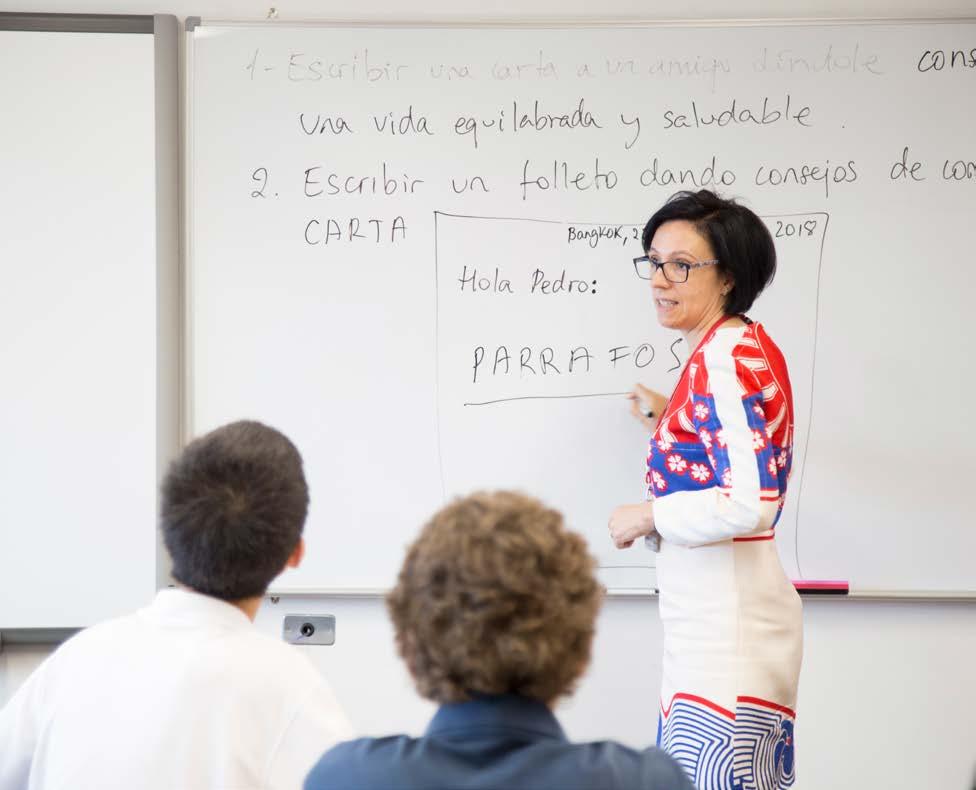
The World Language Department is committed to helping students explore the richness of languages and cultures, understanding that each new language learned opens doors to new ways of thinking, communicating, and connecting with the world. Learning a language is more than memorizing vocabulary; it is discovering different perspectives, developing empathy, and gaining the skills to navigate our globalized world with confidence. Our language program not only fosters linguistic proficiency but also cultivates essential skills such as critical thinking, creativity, and adaptability, enabling students to embrace a world of opportunities in every aspect of life: personal, academic, and professional.
Important Note: native/near native speakers may not take Language Acquisition (B) courses in their mother tongue.
NATIVE LANGUAGE (LANGUAGE A)
Chinese Native I-IV
Korean Native 1-IV
Japanese Native 1-IV
French Native I-IV
Spanish Native 1-IV
Thai A Language
Thai A Literary Studies
Chinese Native I-IV
Korean Native I-IV
Japanese Native I-IV
French Native I-IV
Spanish Native I-IV
Thai A Language
Thai A Literary Studies
Thai A Language & Literature
Chinese Native I-IV
Korean Native I-IV
Japanese Native I-IV
French Native I-IV
Spanish Native I-IV
IB Chinese A Lang & Lit SL/HL
IB Korean A Lit SL/HL
IB Japanese A Lang & Lit SL/HL
IB Thai A Lang & Lit SL/ HL
Thai Lang & Lit
Thai A Lang & Lit
Thai A Literary Studies
Diploma Thai
IB Self Taught Lit SL
Chinese Native I-IV
Korean Native I-IV
Japanese Native I-IV
French Native I-IV
Spanish Native I-IV
IB Chinese A Lang & Lit SL/HL
IB Korean A Lit SL/HL
IB Japanese A Lang & Lit SL/HL
IB Thai A Lang & Lit SL/ HL
Thai Lang & Lit
Thai A Lang & Lit
Thai A Literary Studies
Diploma Thai
IB Self Taught Lit SL
LANGUAGE OF ACQUISITION (LANGUAGE B)
French I-IV
Mandarin I-IV
Spanish I-IV
Thai Language & Culture
French I-IV
French Advanced
Mandarin I-IV
Mandarin Advanced
Spanish I-IV
Spanish Advanced
Thai Language & Culture
IB Chinese B SL/ HL
IB French B SL/ HL
IB Spanish B SL/ HL
IB Spanish Ab Initio SL
French I-IV
French Advanced
Mandarin I-IV
Mandarin Advanced
Spanish I-IV
Spanish Advanced
Thai Language & Culture
IB Chinese B SL/
HL
IB French B SL/
HL
IB Spanish B SL/
HL
IB French Ab Initio SL
IB Spanish Ab Initio SL
French I-IV
French Advanced
Mandarin I-IV
Mandarin Advanced
Spanish I-IV
Spanish Advanced
Thai Language & Culture
Students entering Grade 9 typically continue their language learning from Middle School and are placed in the next sequential class.
Students new to ISB usually take a placement test in the language to determine language proficiency. Students are placed in the most appropriate yet challenging language class based on the recommendation of the language teacher.
For students to access IB Language B SL/HL in Gr11, they need to reach the equivalent language at level III as minimum entry point.
Further details regarding prerequisites and recommendations, are available as part of the subject description for each course.
All students wishing to take advanced courses must have the prerequisites and demonstrate the necessary Habits and Attitudes towards Learning (HAL) required for success in an advanced academic setting.
Grade: 9 - 12 | Length: 1 year | Credit: 1
Prerequisite: no previous study of French
*NCAA Approved
This course is designed to help students develop a basic proficiency in listening, speaking, reading and writing and prepare them for further study of the French language. The communicative approach is used to introduce vocabulary and structures through the functions of the language. Authentic materials and cultural information are interwoven throughout the course to provide a framework for proficiency in the language and an appreciation of the cultures of the countries where French is spoken.
Grade: 9 - 12 | Length: 1 year | Credit: 1
Prerequisite: French I
*NCAA Approved
This course continues to develop the language skills in French through a communicative approach. Speaking, listening, reading and writing activities relate to topics that reflect student interests. The materials and activities emphasize authentic situations and require thinking, recall and creativity. Students are encouraged to express their own needs and interests in the French language. Supplementary materials relating to culture help to further develop the students’ reading and writing skills as well as a continued cultural awareness of the French speaking world.
Grade: 9 - 12 | Length: 1 year | Credit: 1
Prerequisite: French II
*NCAA Approved
In this course, previously learned vocabulary and structures are reinforced, serving as a transition into new material. The students’ understanding of how the language functions is expanded allowing them to become more confident in speaking, listening, reading, and writing, while continuing to make the French language relevant to their daily lives. The stress is on continued authentic communication, cultural awareness and relying on French for comprehension.
Grade: 10 - 12 | Length: 1 year | Credit: 1
Prerequisite: French III
*NCAA Approved
This course is designed to provide strong preparation for success in the Spanish Language B program, particularly for those interested in taking IB Spanish B at the Higher Level or those that need additional preparation for the Standard Level course. Students will benefit from an additional year of Spanish study, enabling them to further develop language skills and knowledge of the French speaking world. Students will also be able to study French for all four years of High School and consequently gain greater fluency in the language.
Grade: 10-12 | Length: 1 year | Credit: 1
Prerequisite: French IV
This course is designed for Grade 10 students who are not yet eligible to take the IB programme, as well as for those who do not plan to pursue IB but wish to continue studying French beyond French IV. The aim of the course is to help students develop a high level of proficiency in French while fostering an appreciation and understanding of the diverse cultures of the French-speaking world. Authentic materials are used throughout the course to integrate and strengthen the four language skills: reading, writing, listening and speaking. The language of instruction is French.
Grade: 9 - 12 | Length: 1-4 years | Credits: 1-4
Prerequisite: native or near native French speaker
*NCAA Approved
This course is designed to support native or nearnative speakers in further developing their language proficiency and preparing them for more advanced study of the language.
Through the engagement with a wide range of literary and non literary texts, students will strengthen their interpretation and analytical skills, gaining a deeper understanding of the French
language.Students will also strengthen their ability to communicate clearly and effectively by completing written assignments, and participating in structured oral communication activities.
*Students will be placed in the appropriate level (I–IV) based on their language proficiency and the teacher’s recommendation.
(Standard & Higher Level)
Grade: 12 | Length: 1 year | Credit: 1
Prerequisite: IB French A Language & Literature Year 1
*NCAA Approved
The IB French A Language & Literature Year 2 course is the second year of a two-year course that aims to develop a variety of linguistic skills through the study of a wide range of texts, to promote an appreciation of the wealth and subtleties of the language and to facilitate the clear expression of ideas. Students engage in the close study of literary works, and examine issues generated by the study of topics such as gender, history and evolution of the language, language and power, and language and mass communication.
Requirements of the course include both oral and written critiques,comparative and textual analysis ,individual oral commentaries, essays and creative writing assignments.
IBDP Language A Language & Literature subject guide
(Standard & Higher Level)
Grade: 11 - 12 | Length: 2 years | Credits: 2
Prerequisite: Recommendation of current French teacher
*NCAA Approved
The focus of this program is on language acquisition and on awareness of the cultures of the French World. The aim of the program is to give students the opportunity to reach a high degree of competence in French and to develop an appreciation and awareness of the cultures where French is spoken. Authentic materials will be used to integrate the language skills of reading, writing, listening and speaking. The language of instruction is French.
IBDP Language B subject guide
(Standard Level)
Grade: 12 | Length: 1 year | Credit: 1
Prerequisite: French Ab Initio Year 1
*NCAA Approved
The ab initio is a two-year, IB standard level program for students who have little or no previous experience of learning the target language. The approach is communicative in that it focuses principally on interaction between speakers and writers of the target language. The main aim of the program is to prepare the learner to use the language appropriately in a range of situations and contexts and for a variety of purposes. Equal emphasis will be given to the teaching of the language skills of listening, speaking, reading and writing. An additional aim is for students to develop an awareness of the cultures of the Francophone World.
IBDP Language ab initio subject guide
Grade: 9 - 12 | Length: 1 year | Credit: 1
Prerequisite: no previous study of Spanish
*NCAA Approved
This course is designed to help students develop a basic proficiency in listening, speaking, reading and writing and prepare them for further study of the Spanish language. The communicative approach is used to introduce vocabulary and structures through the functions of the language. Authentic materials and cultural information are interwoven throughout the course to provide a framework for proficiency in the language and an appreciation of the cultures of the countries where Spanish is spoken.
Grade: 9 - 12 | Length: 1 year | Credit: 1
Prerequisite: Spanish I
*NCAA Approved
This course continues to develop the language skills in Spanish through a communicative approach. Speaking, listening, reading and writing activities relate to the topics which reflect student interests. The materials and activities emphasize authentic situations and require thinking, recall and creativity. Students are encouraged to express their own needs and interests in the Spanish language. Supplementary materials relating to culture help to further develop the student’s reading and writing skills as well as a continued cultural awareness of the Spanish-speaking world.
Grade: 9 - 12 | Length: 1 year | Credit: 1
Prerequisite: Spanish II
*NCAA Approved
In this course, previously learned vocabulary and structures are reinforced, serving as a transition into new material. The students’ understanding of how the language functions is expanded allowing them to become more confident in speaking, listening, reading, and writing, while continuing to make the Spanish language relevant to their daily lives. The stress is on continued authentic communication, cultural awareness and relying on Spanish for comprehension.
Grade: 10 - 12 | Length: 1 year | Credit: 1
Prerequisite: Spanish III
*NCAA Approved
This course is designed to provide strong preparation for success in the Spanish Language B program, particularly for those interested in taking IB Spanish B at the Higher Level or those that need additional preparation for the Standard Level course. Students will benefit from an additional year of Spanish study, enabling them to further develop language skills and knowledge of the Hispanic world. Students will also be able to study Spanish for all four years of High School and consequently gain greater fluency in the language.
Grade: 10-12 | Length: 1 year | Credit: 1
Prerequisite: Spanish IV
This course is designed for Grade 10 students who are not yet eligible to take the IB programme, as well as for those who do not plan to pursue IB but wish to continue studying Spanish beyond Spanish IV. The aim of the course is to help students develop a high level of proficiency in Spanish while fostering an appreciation and understanding of the diverse cultures of the Spanish-speaking world. Authentic materials are used throughout the course to integrate and strengthen the four language skills: reading, writing, listening and speaking. The language of instruction is Spanish.
Grade: 9 - 12 | Length: 1-4 years | Credits: 1 – 4
Prerequisite: native or near native Spanish speaker
*NCAA Approved
This course is designed to support native or nearnative speakers in further developing their language proficiency and preparing them for more advanced study of the language.
Through the engagement with a wide range of literary and non literary texts, students will strengthen their interpretation and analytical skills, gaining a deeper understanding of the Spanish
language. Students will also strengthen their ability to communicate clearly and effectively by completing written assignments, and participating in structured oral communication activities.
*Students will be placed in the appropriate level (I–V) based on their language proficiency and the teacher’s recommendation.
(Standard & Higher Level)
Grade: 12 | Length: 1 year | Credits: 1
Prerequisite: IB Spanish A Language & Literature Year 1
*NCAA Approved
The IB Spanish A Language & Literature Year 2 course is the second year of a two-year course based on the study of both language and literature. It aims to develop a variety of linguistic skills through the study of a wide range of texts, to promote an appreciation of the wealth and subtleties of the language and to facilitate the clear expression of ideas. Students engage in the close study of literary works, and examine issues generated by the study of topics such as gender, history and evolution of the language, language and power, and language and mass communication. Requirements of the course include both oral and written critiques,comparative and textual analysis ,individual oral commentaries, essays and creative writing assignments.
IBDP Language A Language & Literature subject guide
(Standard & Higher Level)
Grade: 11 - 12 | Length: 2 years | Credits: 2
Prerequisite: Recommendation of current Spanish teacher
*NCAA Approved
The focus of this program is on language acquisition and on awareness of the cultures of the Hispanic World. The aim of the program is to give students the opportunity to reach a high degree of competence in Spanish and to develop an appreciation and awareness of the cultures where Spanish is spoken. Authentic material will be used to integrate the language skills of reading, writing, listening and speaking. The language of instruction is Spanish.
IBDP Language B subject guide
(Standard Level)
Grade: 11 - 12 | Length: 2 years | Credits: 2
Prerequisite: little or no previous study of Spanish
*NCAA Approved
The ab initio course is a two-year, IB standard level program for students who have little or no previous experience of learning the target language. The approach is communicative in that it focuses principally on interaction between speakers and writers of the target language. The main aim of the program is to prepare the learner to use the language appropriately in a range of situations and contexts and for a variety of purposes. Equal emphasis will be given to the teaching of the language skills of listening, speaking, reading and writing. An additional aim is for students to develop an awareness of the cultures of the Hispanic World.
IBDP Language ab initio subject guide
Grade: 9 - 12 | Length: 1 – 4 years | Credits: 1-4
Prerequisite: native or near native speaker
*NCAA Approved
This course is designed to support native or nearnative speakers in further developing their language
proficiency and preparing them for more advanced study of the language.
Through the engagement with a wide range of literary and non literary texts, students will strengthen their interpretation and analytical skills, gaining a deeper understanding of the Japanese language.
Students will also strengthen their ability to communicate clearly and effectively by completing written assignments, and participating in structured oral communication activities.
In addition, students will learn 600 Kanji Characters from the Education Kanji List regulated by the Japanese Ministry of Education and Science, in order to gain the reading and writing skills necessary for IB Japanese A language and literature course.
*Students will be placed in the appropriate level (I–IV) based on their language proficiency and the teacher’s recommendation.
(Standard & Higher Level)
Grade: 11 - 12 | Length: 2 years | Credits: 2
Prerequisite: Native speaker & teacher recommendation
*NCAA Approved
The IB Japanese A Language & Literature course is a two-year program based on the study of both language and literature. It aims to develop a variety of linguistic skills through the study of a wide range of texts, to promote an appreciation of the wealth and subtleties of the language and to facilitate the clear expression of ideas. Students engage in the close study of literary works, and examine issues generated by the study of topics such as language, culture, society, media, global issues and change. Requirements of the course include both oral and written critiques,comparative and textual analysis,
individual oral commentaries, essays and creative writing assignments.
IBDP Language A Language & Literature subject guide
Grade: 9 - 12 | Length: 1 – 4 years | Credits: 1-4
Prerequisite: native or near native speaker
*NCAA Approved
This course is designed to support native or nearnative speakers in further developing their language proficiency and preparing them for more advanced study of the language.
Through the engagement with a wide range of literary and non literary texts, students will strengthen their interpretation and analytical skills, gaining a deeper understanding of the Korean language.
Students will also strengthen their ability to communicate clearly and effectively by completing written assignments, and participating in structured oral communication activities.
*Students will be placed in the appropriate level (I–IV) based on their language proficiency and the teacher’s recommendation.
(Standard & Higher Level)
Grade: 11 - 12 | Length: 2 years | Credits: 2
Prerequisite: native or near-native speaker and recommendation of current Korean teacher
*NCAA Approved
The IB Korean A literature course, students expand their worldview by appreciating works of high literary value from various countries and diverse historical contexts. Furthermore, it enables them to gain profound insights into the society in which they live. Literary works are studied within their
literary and cultural context through students’ close and critical reading. Through this study, students gain insight into social issues and various aspects of life that arise in the world they live in. The course requirements include both oral and written criticism, comparative commentary, essays, and creative writing assignments. Students can expect to have regular individual conferences with teachers to move forward as readers and writers.
Grade: 9 - 12 | Length: 1 year | Credit: 1
Prerequisite: no previous study of Mandarin
*NCAA Approved
This course is designed to help students develop a basic proficiency in listening, speaking, reading and writing and prepare them for further study of the Mandarin language. The communicative approach is used to introduce vocabulary and structures through the functions of the language. Authentic materials and cultural information are interwoven throughout the course to provide a framework for proficiency in the language and an appreciation of the cultures of the countries where Mandarin is spoken. Students will learn both traditional and simplified characters so that they can function in any Chinese speaking country.
Grade: 9 - 12 | Length: 1 year | Credit: 1
Prerequisite: Mandarin I and teacher recommendation
Prerequisite: Mandarin I and teacher recommendation
*NCAA Approved
This course continues to develop the language skills in Mandarin through a communicative approach. Speaking, listening, reading and writing activities relate to the topics that reflect student interests. The materials and activities emphasize authentic situations and require thinking, recall and creativity. Students are encouraged to express their own needs and interests in the Mandarin language. Supplementary materials relating to culture help to student’s reading and writing skills as well as a continued cultural awareness of the Mandarin speaking world. Students will learn both traditional
and simplified characters so that they can function in any Chinese speaking country.
Grade: 9 - 12 | Length: 1 year | Credit: 1
Prerequisite: Mandarin II and teacher recommendation
*NCAA Approved
In this course, previously learned vocabulary and structures are reinforced, serving as a transition into new material. The students’ understanding of how the language functions is expanded allowing them to become more confident in speaking, listening, reading, and writing, while continuing to make the Mandarin language relevant to their daily lives. The stress is on continued authentic communication, cultural awareness and relying on Mandarin for comprehension. Students will learn both traditional and simplified characters so that they can function in any Chinese speaking country.
Grade: 10 - 12 | Length: 1 year | Credit: 1
Prerequisite: Mandarin III
*NCAA Approved
This course is designed to provide strong preparation for success in the Mandarin Language B program, particularly for those interested in taking IB Mandarin B at the Higher Level or those that need additional preparation for the Standard Level course. Students will benefit from an additional year of Mandarin study, enabling them to further develop language skills and knowledge of the Chinese speaking world. Students will also be able to study Mandarin for all four years of High School and consequently gain greater fluency in the language.
Grade: 10-12 | Length: 1 year | Credit: 1
Prerequisite: Mandarin IV
This course is designed for Grade 10 students who are not yet eligible to take the IB programme, as well as for those who do not plan to pursue IB but wish to continue studying Mandarin. The aim of the course is to help students develop a high level of proficiency in Mandarin while fostering an appreciation and understanding of the diverse cultures of the Chinese-speaking countries. Authentic materials are used throughout the course to integrate and strengthen the four language skills: reading, writing,
listening and speaking. The language of instruction is Chinese.
Grade: 9 - 12 | Length: 1-4 years | Credits: 1 – 4
Prerequisite: native or near native speaker
This course is designed to support native or nearnative speakers in further developing their language proficiency and preparing them for more advanced study of the language.
Through the engagement with a wide range of literary and non literary texts, students will strengthen their interpretation and analytical skills, gaining a deeper understanding of the Chinese language. Students will also strengthen their ability to communicate clearly and effectively by completing written assignments, and participating in structured oral communication activities.
Students will learn to read and write both traditional and simplified Chinese characters, enabling them to communicate effectively in any Chinese-speaking country.
*Students will be placed in the appropriate level (I–IV) based on their language proficiency and the teacher’s recommendation.
(Standard & Higher Level)
Grade: 11 - 12 | Length: 2 years | Credits: 2
Prerequisite: native or near native speaker and recommendation of current teacher
*NCAA Approved
The IB Mandarin A course is a two-year program based on the study of both language and literature. It aims to develop a variety of linguistic skills through the study of a wide range of texts, to promote an appreciation of the wealth and subtleties of the language and to facilitate the clear expression of ideas. Students engage in the close study of literary works, and examine issues generated by the study
of topics such as language, culture, society, media, global issues and change. Requirements of the course include both oral and written critiques, comparative commentaries, essays and creative writing assignments. Students will learn both traditional and simplified characters so that they can function in any Chinese speaking country.
IBDP Language A Language & Literature Subject guide
(Standard & Higher Level)
Grade: 11 - 12 | Length: 2 years | Credits: 2
Prerequisite: Recommendation of current Chinese teacher
*NCAA Approved
The focus of this program is on language acquisition and awareness of Chinese culture. The aim of the program is to give students the opportunity to reach a high degree of competence in Mandarin and to develop an appreciation and awareness of the cultures where Chinese is spoken. Authentic materials will be used to integrate the skills of reading, writing, listening and speaking. The language of instruction is Mandarin. Students will learn both traditional and simplified characters so that they can function in any Chinese speaking country.
IBDP Language B Subject outline
Grade: 9 - 12 | Length: 1 semester | Credit: 0.5
Prerequisite: no previous study of Thai
*NCAA Approved
This course is designed for students who are interested in exploring Thailand and who want to learn enough Thai to get around. It will focus mainly on oral communication and Thai culture. Students will be immersed in Thai language and culture through the communicative approach. Authentic materials and cultural information are interwoven in the course to provide a framework for proficiency in the language and appreciation of Thai culture. In this course, students will learn functional Thai in an enjoyable way and gain an appreciation of our host country’s culture. Students may choose the online option which also requires a DELVE trip in Thailand.
Grade: 9 - 12 | Length 1 – 4 years | Credits: 1 – 4
Prerequisite: Teacher recommendation
*NCAA Approved
This course is designed to help “near native” speakers develop their language skills and to prepare them for further study of the language. The aim of this course is to target the individual needs of students so that they can become proficient in all the language skills.
This course may be repeated for credit upon the teacher’s recommendation.
Grade: 9 - 12 | Length 1 year | Credit: 1
Prerequisite: Thai A Language or equivalent
*NCAA Approved
This course focuses on developing advanced literacy in both language and literature. Students will engage with a range of text types that align with each unit’s themes, exploring a variety of literary genres, conducting text analyses, and practicing oral communication. Through diverse reading, writing, and speaking activities,students will enhance their proficiency across all language skills. Additionally, students will learn and apply literary terminology as they read and analyze texts, selected articles, and a collection of literary works. Select units will incorporate Thai history, along with news and current events, to enrich students' understanding of Thai society through the cultural dimensions found in the texts and works studied in the course. Speaking skills will be strengthened through both formal and informal oral activities. Grammar and vocabulary are woven into all four language skills, enabling students to build linguistic accuracy and depth naturally as they advance through the course.
Grade: 10 - 12 | Length: 1 year | Credit: 1
Prerequisite: Thai A Literary Studies or equivalent
*NCAA Approved
The aim of this course is to continue to develop a high degree of competency in both language and literature at a more advanced level. Through the study of a variety of literary genres and text types, students will use language expression and figurative
language purposefully in different situations. Each unit of study offers a variety of literary genres, written tasks, and oral communication opportunities. Students will further develop speaking skills through a variety of formal and informal oral activities. Grammatical usage and vocabulary will be studied within the context of the four language skills.
Grade: 11 - 12 | Length: 2 years | Credit: 0.5 per year
Prerequisite: Native Thai speaker taking IB Diploma not taking IB Thai A,
Native Thai speakers enrolled in IB and AP classes not taking IB Thai A
*NCAA Approved
This course is a two-year program designed for full IB diploma Thai native speakers who are not taking Thai A as an IB subject or are enrolled in IB and AP classes.. Students meet every other day for 45 minutes and are grouped by ability level. The course aims to further develop their language skills and deepen their knowledge and understanding of Thai culture and societal context. Throughout the course, the three modes of communication—receptive, productive, and interactive—are employed to study and analyze the Thai language.
(Standard & Higher Level)
Grade: 11 - 12 | Length: 2 years | Credits: 2
Prerequisite: Thai A Language & Literature or Teacher recommendation
*NCAA Approved
The IB Thai A Language & Literature and the ISB Thai A Language & Literature courses are twoyear programs running concurrently based on the study of both language and literature. Both aim to develop a variety of linguistic skills through the study of literary and non-literary texts, to promote
an appreciation of the wealth and subtleties of the language and to facilitate the clear expression of ideas. Students will explore the various ways in which language choices, text types, literary forms and contextual elements all affect meaning. Through close analysis of various text types and literary forms, students will consider their own interpretations, as well as the critical perspectives of others, to explore how such positions are shaped by cultural belief systems and to negotiate meanings for texts. Requirements of the course include guided textual analysis, comparative essays, written tasks, individual oral commentaries and presentations.
*Students in the ISB Thai A Language & Literature course will not take the IB exam.
IBDP Language A Language & Literature Subject guide
(Standard Level)
If a student is interested in pursuing the IB Diploma, and wishes to study a Language A in his/her native language, ISB supports students through the School Supported Self Taught Program (SSST). This is a 2 year course in Literature for Language A and is available for students to study at Standard Level (SL) only.
Students may take this course either through Pamoja, an online platform supporting SSST languages, or with a private tutor.
Families are responsible for arranging the tutor. ISB will provide tutors with the requirements of the IB in addition to administrative support and materials. In addition, ISB will require regular progress reports from tutors with the award of a pass/fail grade and credits. Interested students should contact the IB Coordinator to learn more about the program.
The ISB IB Language Tutorial Program policy is as follows:
• This option is only available for IB Diploma students wishing to pursue their ‘mother tongue’ language.
• ISB will reimburse for the actual costs incurred
by a parent for tutoring or Pamoja up to a maximum of 75,000 Thai Baht per year if the cost for the tutoring is not normally paid by the employer of the parent(s). In the case of partial reimbursement by the employer, ISB will reimburse the difference up to 75,000 Thai Baht.
• Students may only pursue ‘Language A’ languages not currently offered at ISB.
• Negotiations regarding the conditions of employment are between the tutor and the parent/ guardian of the student. The tutor is not an employee of ISB.
• Students must be of sufficient proficiency in the target language.
• Approval for participation in the Language A Tutorial program must be given by the student’s parents, counselor and IB Coordinator.
• All instruction will take place outside of regular school time unless agreed with the IB Coordinator.
• Students who take this option must still fulfill ISB’s graduation and attendance requirements.
• IB Diploma students pursuing the self-taught language will have class time scheduled for them to work in during the regular school day and the IB Coordinator, in consultation with tutors on progress, will award Pass/Fail on the semester report card and transcript.
Students considering this option should read the course descriptions for English A Literature SL to gain an understanding of the nature of the course. Additionally it must be understood that Language A Literature courses work with language while teaching literary analysis skills, but are not language classes. Significant amounts of reading are undertaken and assessment is through written tasks and oral presentations of literature knowledge, analysis and understanding. This course focuses on the refinement of language skills and provides the opportunity for students to explore the culture(s) of the language through discussion, argument and debate.
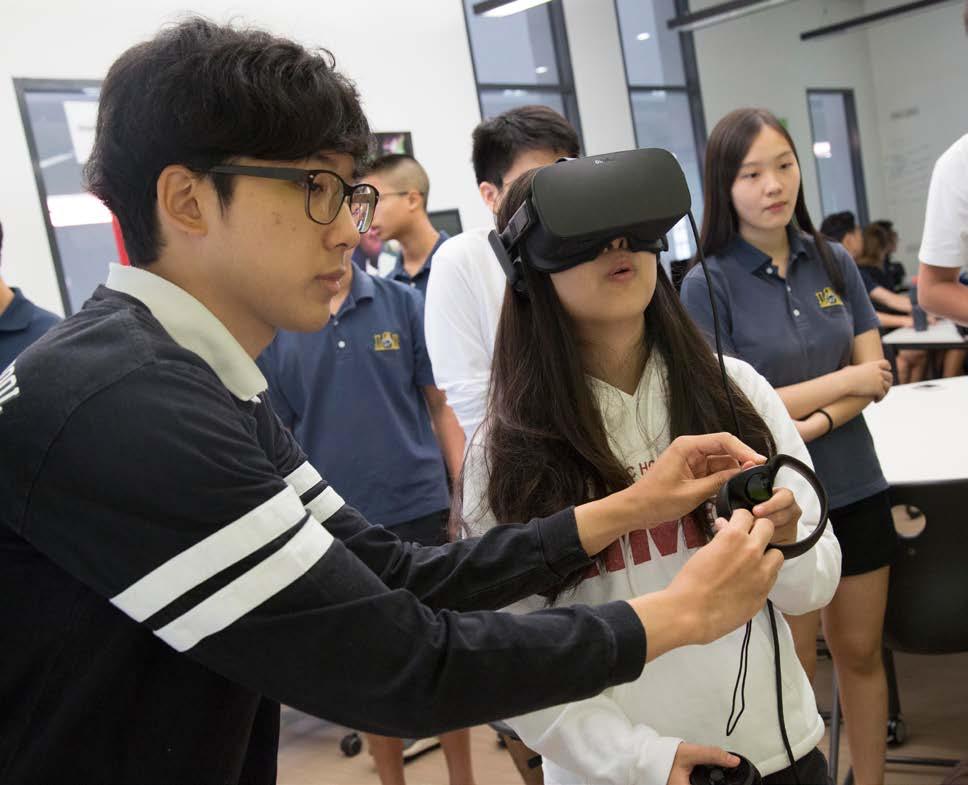
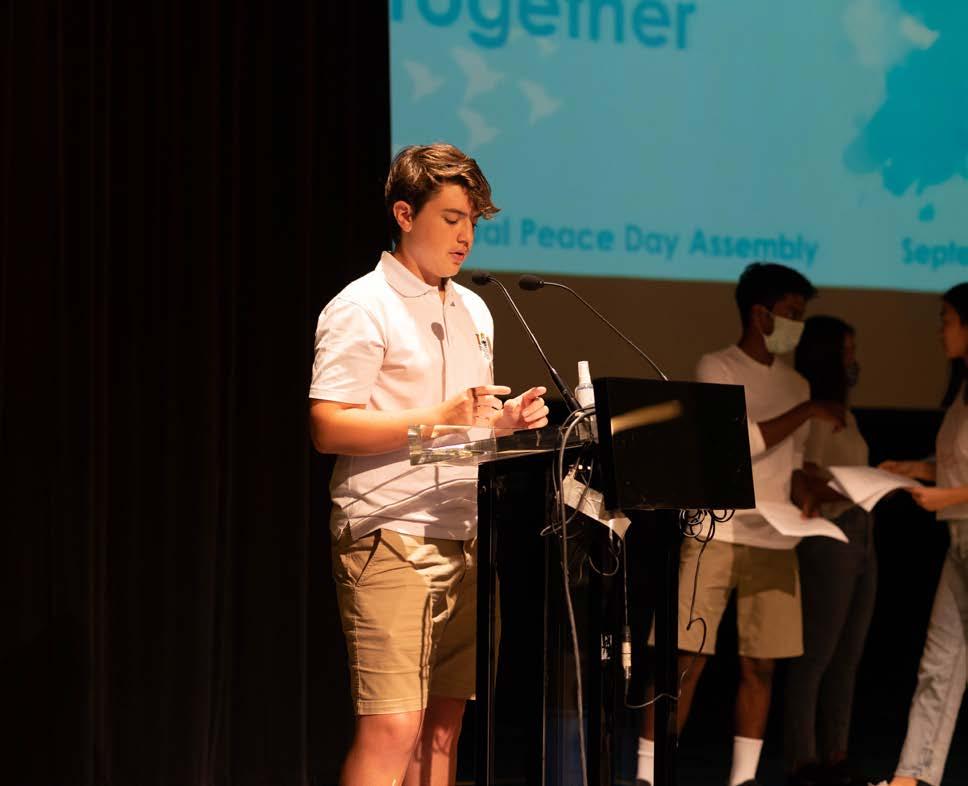
The High School Social Studies programme develops students’ capacity to think critically about the human experience and to make informed decisions that support responsible social action. Students are encouraged to reflect on their own identities while recognising and respecting the perspectives of others within a global context. Our aim is to nurture globally minded thinkers who evaluate information with an open mind, reason critically, plan strategically, and work effectively both independently and collaboratively to understand local, regional, and global issues.
World Studies 9 is a required foundation course for all ninth-grade students. It establishes the essential skills needed for the various pathways available in grades 10-12. In grade 10, students may continue with World Studies 10, which, like World Studies 9, is thematically structured through the C3 framework and introduces multiple disciplines within the social sciences. Alternatively, students may choose from three Advanced Placement courses available to 10th graders in 2026-27: Human Geography (the recommended AP option for grade 10), Macroeconomics, or U.S. History.
In grades 11 and 12, students pursuing the IB Diploma, or those wishing to include IB courses as part of their graduation pathway, have six Group 3 subjects to choose from, all offered at both Standard and Higher Level.
A minimum of two Social Studies credits is required for graduation, while four credits are recommended for students planning to attend college or university. It is strongly advised that all students continue with a Social Studies course through their senior year.
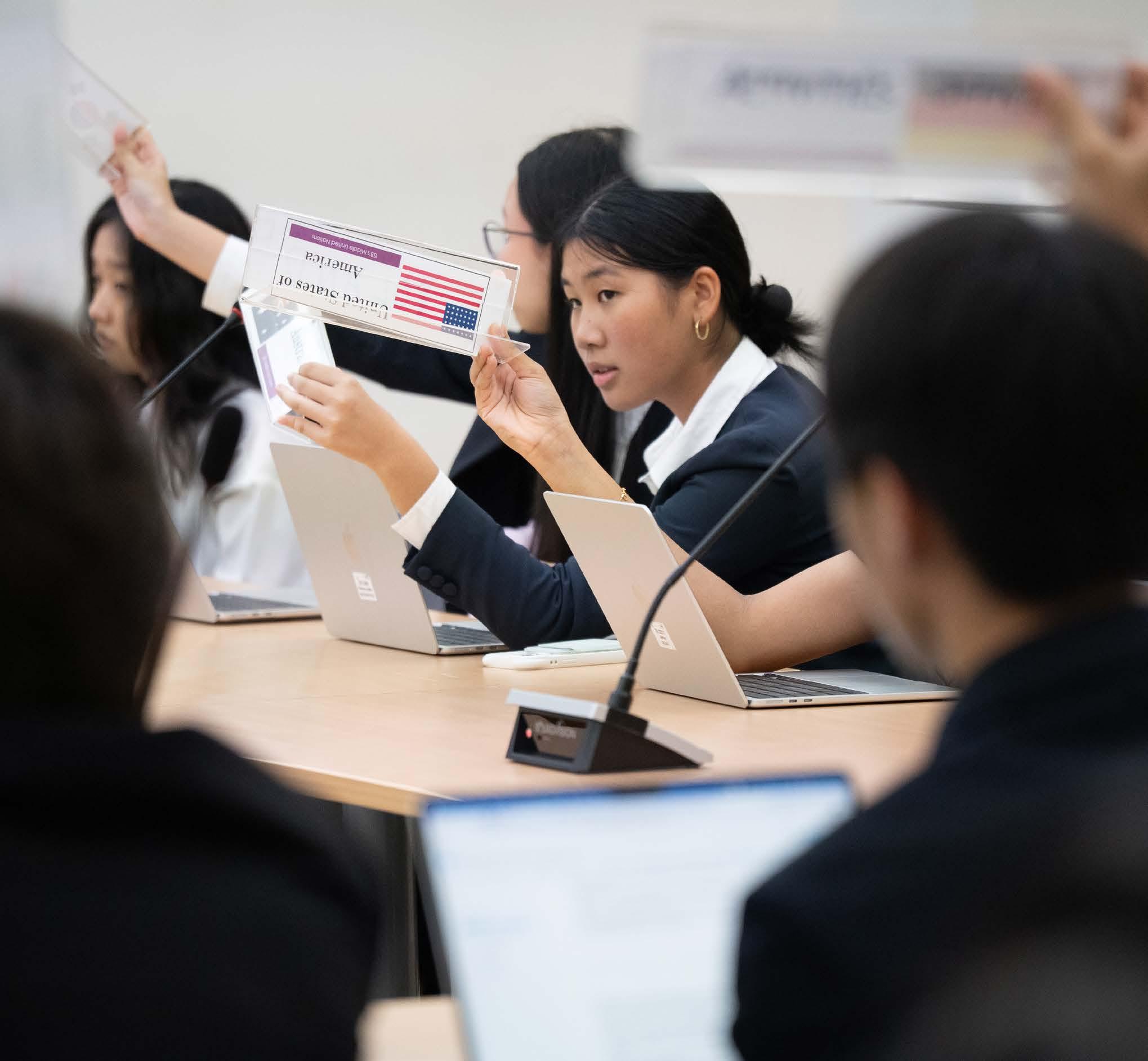
World Studies 9
World Studies 10
AP Human Geography
AP Macroeconomics
AP US History
Social Bases of Behavior*
AP Human Geography
AP Macroeconomics
AP Microeconomics
AP US History
AP Comparative Government & Politics
AP Psychology
AP Research
IB Business Management SL/HL
IB Economics SL/HL
IB Environmental Systems & Societies SL/HL
IB History SL/HL
IB Psychology SL/HL
Social Basis of Behavior*
SUPA: Introduction to Entrepreneurship
AP Human Geography
AP Macroeconomics
AP Microeconomics
AP US History
AP Comparative Government & Politics
AP Psychology
AP Research
IB Business Management SL/HL
IB Economics SL/HL
IB Environmental Systems & Societies SL/HL
IB Geography SL/HL
IB History SL/HL
IB Psychology SL/HL
Social Basis of Behavior*
SUPA: Introduction to Entrepreneurship
World Studies 9 is a required course for graduation.
In Grade 10 students may opt to take the World Studies 10 course, or an AP Social Studies course. The recommended AP course for Gr 10 students is AP Human Geography. Grade 10 Students can also take the AP US History or Macroeconomics course.
All students wishing to take advanced courses must have the prerequisites and demonstrate the necessary Habits and Attitudes towards Learning (HAL) required for success in an advanced academic setting.
Students who take AP Macroeconomics course in Grade 10, cannot take the IB Economics course in Grade 11-12.
*Indicates ISB Elective credit.
This is a required course for all grade 9 students
Grade: 9 | Length: 1 year | Credit: 1
Prerequisite: None
*NCAA Approved
World Studies 9 introduces students to the global patterns and power dynamics that have shaped societies from the early modern era to today. Students explore how access to resources, belonging, power, and geography interact to define how communities organize and respond to change. Inquiry in this course centers on how people create, challenge, and maintain systems. They ask compelling questions such as How have borders created both division and belonging? and What makes a system of power fair?
Students will examine the legacy of colonization, the evolution of civic and national identities, and the forces that both unite and divide communities. Emphasis is placed on developing disciplinary habits of mind: analyzing sources, reasoning with evidence, and communicating conclusions clearly. The course builds a foundation for Social Studies by cultivating global awareness, civic literacy, and the skills necessary for thoughtful participation in a changing world.
This is a required course for all grade 10 students not taking an AP Social Studies class (AP Human Geography, AP Macroeconomics or AP US History).
Grade: 10 | Length: 1 year | Credit: 1
Prerequisite: None
*NCAA Approved
World Studies 10 explores the global forces that have shaped the modern world and continue to influence how societies interact today. Students investigate questions of global interdependence, identity, innovation, conflict, and power through historical and contemporary case studies. Each unit centers on a compelling question that drives inquiry into the forces connecting societies, questions such as: What does it take to turn conflict into cooperation? What should innovation be for: progress, profit, or the common good?
Through comparative and case-based investigations, students examine how citizens, institutions, and global actors respond to shared challenges like inequality, environmental change, and governance. Emphasis is placed on developing civic reasoning,
evaluating diverse sources of evidence, and constructing well-supported arguments about the modern world. The course builds toward readiness for advanced studies in Social Sciences by strengthening skills in research, analysis, communication, and informed action.
Grade: 10 - 12 | Length:1 year | Credit: 1
Prerequisite: None
Understanding why people do what they do has been questioned, pondered and researched for centuries. Anyone interested in this course shares the fascination of philosophers and scientists who have been dedicated to understanding individuals, groups and societies in general. Disciplines in the social sciences have proposed and developed a range of plausible theoretical frameworks to explain what shapes human behavior. What is unquestionable is that individuals influence groups and groups influence individuals. The social environment plays a significant role in who each individual is, how they behave, and how individuals and groups interact. In order to understand the social factors which influence individual and group behavior this course will investigate several broad social issues and mental processes related to social influence. The course combines the disciplines of psychology (and some sociology) to consider topics such as personal and social identity, human attraction, conformity, obedience, discrimination, stereotyping, culture, social responsibility, and the role of the media. The course is a hands on, topic based course which encourages individual enquiry and student choice in demonstrating their learning. In this discursive course students are required to be willing to enter discussion and share their opinions.
Grade: 10 - 12 | Length: 1 year | Credit: 1
Prerequisite: A grade of 5 or above in World Studies 9, World Studies 10, or an equivalent course (e.g., AP Macroeconomics or AP U.S. History). Students in the EAL program must also demonstrate Advancedlevel English proficiency and receive a recommendation from their EAL teacher.
*NCAA Approved
AP Human Geography is our recommended AP Social Studies class for 10th-graders. It is a year-long course that introduces students to the patterns and processes shaping human understanding, use, and modification of Earth’s surface. Through data analysis and geographic inquiry, students examine spatial patterns, human-environment interactions, and the social, political, and economic forces driving global change.
The course culminates in the AP Exam, which includes multiple-choice and free-response components weighted equally. Students will develop skills in analysis, map interpretation, and evidence-based reasoning while exploring seven key units::
1. Thinking Geographically
2. Population and Migration Patterns and Processes
3. Cultural Patterns and Processes
4. Political Patterns and Processes
5. Agriculture and Rural Land Use Patterns and Processes
6. Cities and Urban Land Use Patterns and Processes
7. Industrial and Economic Development Patterns and Processes
Grade: 10 - 12 | Length: 1 year | Credit: 1
Prerequisite: A grade of 5 or above in World Studies 9, World Studies 10, or an equivalent course (e.g., AP Macroeconomics or AP Human Geography). Rising Grade 10 students in the EAL program must also demonstrate Advanced-level English proficiency and receive a recommendation from their EAL teacher.
*NCAA Approved
U.S. History is a one-year comprehensive survey course in which students examine U.S. History in detail and in-depth, and is open to all students interested in America’s role in the world past to the present. The course emphasizes historical thinking skills as well as reading and writing at college level. The course has two major goals: understanding of the U.S. and its relation to our present-day world, and prepare students for college-level writing and discourse, particularly with respect to historical thinking. In addition, the course prepares students for the Advanced Placement exam in May. In order to be successful in the course, students must demonstrate understanding of historical content from the nine time periods from 1491 to the present, test with multiple choice questions, and successfully write Short Answer Questions (SAQ), Long Essay Questions (LEQ), and Document Based Questions (DBQ).
Grade: 11 - 12 | Length: 1 year | Credit: 1
A grade of 5 or above in World Studies 9, World Studies 10, or an equivalent course (e.g., AP Macroeconomics or AP U.S. History).
*NCAA Approved
Explore how countries around the world make decisions, manage power, and address their biggest challenges. In this course, you’ll analyze the political systems of China, Iran, Mexico, Nigeria, Russia, and the United Kingdom to understand what shapes each nation’s approach. Key skills developed include:
• Connecting political concepts to real-world events
• Comparing political systems, policies, and behaviors
• Analyzing data for patterns and insights
• Reading critically and forming strong arguments
AP US History College Board Site
Grade: 11-12 | Length: 1 year | Credit: 1
Prerequisite: A grade of 5 or above in World Studies 10, or an equivalent course (e.g. AP Macroeconomics or AP U.S. History).
*NCAA Approved
AP Psychology introduces students to the scientific study of human behavior and mental processes. Through topics such as biological bases of behavior, learning, cognition, development, personality, and social psychology, students explore how humans think, feel, and act. Emphasis is placed on applying key theories, analyzing data, and evaluating research to understand real-world behavior.
Students should be ready to read and write at a college level. The course concludes with the AP Exam, which can earn college credit.
Grade: 10 - 12 | Length: 1 year | Credit: 1
Prerequisite: A grade of 5 or above in World Studies 9, World Studies 10, or an equivalent course (e.g., AP Human Geography or AP U.S. History). A grade of 5 or above in Math Core or Extended 2.
*NCAA Approved
In this course you will learn about the principles of economics that apply to an economic system as a whole. You will use graphs, charts, and data to analyze, describe, and explain economic concepts. As this course is being run as a year-long course there will be opportunities to explore some topics in more depth and allow for more project-based learning. However, preparation for the May AP examination is the main focus of this course. Skills developed in this course include:
• Defining economic principles and models
• Explaining given economic outcomes
• Determining outcomes of specific economic situations
• Modelling of economic situations using graphs or visual representations
If a student takes Macroeconomics in Grade 10 they will not be able to take IB Diploma Economics in Grades 11/12.
AP Macroeconomics College Board Site
Grade: 11 - 12 | Length: 1 year | Credit: 1
Prerequisite: A grade of 5 (AP 3) or above in AP Macroeconomics
*NCAA Approved
In microeconomics you will study the principles of economics that apply to the behavior of individuals within an economic system. You will use graphs, charts, and data to analyze, describe, and explain economic concepts. As this course is being run as a year-long course there will be opportunities to explore some topics in more depth and allow for more project-based learning. However, preparation for the May AP examination is the main focus of this course. Course Content includes:
• Unit 1: Basic Economic Concepts
• Unit 2: Supply and Demand
• Unit 3: Production, Cost, and the Perfect Competition Model
• Unit 4: Imperfect Competition
• Unit 5: Factor Markets
• Unit 6: Market Failure and the Role of Government
Grade: 11-12 | Length: 1 year | credit: 1
Prerequisite: AP Seminar
AP Research, the second sequential course in the AP Capstone™ experience. It allows students to deeply explore an academic topic, problem, issue, or idea of individual interest. Students design, plan, and implement a yearlong investigation to address a research question. Through this inquiry, students further the skills they acquired in the AP Seminar course by learning research methodology, employing ethical research practices, and accessing, analyzing, and synthesizing information. Students reflect on their skill development, document their processes, and curate the artifacts of their scholarly work through a process and reflection portfolio. The course culminates visual representations
(Standard & Higher Level)
Grade: 11 - 12 | Length: 2 years | Credits: 2
Prerequisites: A grade of 5 or above in World Studies 10, or an equivalent course (e.g. AP Human Geography or AP U.S. History).
*NCAA Approved
The aim of this course is to develop an understanding of business theory as well as an ability to effectively apply principles, practices and skills to business case study situations. Students will examine a diverse range of cultural and economic situations in which modern-day businesses operate and will be asked to consider ethics and social responsibility in an international business context. Syllabus topics include: marketing, types of organizations and their environment, human resources, operations, accounting and finance.
Students will learn about the business world via a case study approach; successful students will take a keen interest in current affairs and the world around them. IB assessments will challenge students to assess a business situation and through critical thinking, analysis and synthesis suggest an appropriate course of action or at times make a recommendation.
The course is anchored by four key concepts; creativity, change, ethics, and sustainability.
IBDP Business Management Course Guide
Differences between IB Business and IB Economics
(Standard & Higher Level)
Grade: 11 - 12 | Length: 2 years | Credits: 2
Prerequisite: A grade of 5 or above in World Studies 9, World Studies 10, or an equivalent course (e.g., AP Human Geography or AP U.S. History). A grade of 5 or above in Math Core or Extended 2.
*NCAA Approved
This course is focused on six real world issues. Phrased as questions they are,
• How do consumers and producers make choices in trying to meet their economic objectives?
• When are markets unable to satisfy important economic objectives—and does government intervention help?
• Why does economic activity vary over time and why does this matter?
• How do governments manage their economy and how effective are their policies?
• Who are the winners and losers of the integration of the world’s economies?
• Why is economic development uneven?
Topics to be studied include basic market microeconomic theory, market failures and government intervention, macroeconomic theory including economic growth, inflation, unemployment, international trade and the particular economic challenges facing developing nations.
Both SL and HL students develop quantitative skills, but HL students will need to further develop these as appropriate, in analysing and evaluating economic relationships in order to provide informed policy advice. These skills are specifically assessed in HL paper 3. The SL course will sit for only 2 exam papers. The HL course includes one major additional topic, Theory of the Firm
All economics students will create a portfolio of commentaries analyzing and evaluating economic current events; called the Internal Assessment (IA).
Economics students will not examine policies, theories or case studies regarding the successful operations of business firms (marketing, managing human resources, etc). Students interested in these topics should consider IB Business Management.
The course is anchored by nine key concepts; scarcity, choice, efficiency, equity, economic wellbeing, sustainability, change, interdependence, and intervention.
IBDP Economics Course Guide
Differences between IB Business and IB Economics
(Standard & Higher Level)
Grade: 11 - 12 | Length: 2 years | Credits: 2
Prerequisite: Biology II or Chemistry II with a grade of 5 or above
*NCAA Approved
IB Environmental systems and societies is a two-year interdisciplinary course in which students develop a sound understanding of the interrelationships between natural processes, natural resources, and human activities on the Earth. Students will evaluate the scientific, ethical and socio-political aspects of a wide range of pressing environmental issues including their own relationship with their environment. Topics of study include the ecosystem, human population changes, conservation, biodiversity, pollution management, global warming and environmental value systems. Field research skills are also developed and a field trip is part of the course. The students will learn to plan and carry out field studies, statistically analyze data, evaluate their findings, and effectively communicate their results in lab reports.
**Note: If included in an IB Diploma this course may be designated either as Group 3 or Group 4 or both.
(Standard & Higher Level)
Grade: 12 | Length: 1 year | Credit: 1
Prerequisite: IB Geography Year 1
Geography is a dynamic subject that is firmly grounded in the real world and focuses on the interactions between individuals, societies and the physical environment. It investigates the way that people adapt and respond to change and evaluates management strategies associated with such change. The course examines key global issues, such as population, climate change, resource consumption and globalization through detailed case studies at a variety of scales. The course is designed around five big concepts: place, power, process, possibilities and perspectives. These concepts drive the essential questions asked in each unit. Within group 3 subjects, Geography is distinctive in that it occupies the middle ground between social sciences and natural sciences. The Geography course integrates both physical and human geography, and ensures that students acquire elements of both scientific and socioeconomic methodologies. There is a required trip (2-
days) to the ISB Wilderness Campus to do fieldwork on river processes.
IBDP Geography Course Guide
(Standard & Higher Level)
Grade: 11 - 12 | Length: 2 years | Credits: 2
Prerequisite: A grade of 5 or above in World Studies 10, or an equivalent course (e.g., AP Macroeconomics or AP U.S. History). Students in the EAL program must also demonstrate Advanced-level English proficiency and receive a recommendation from their EAL teacher.
*NCAA Approved
DP History is a dynamic, evidence-based course that challenges students to think critically about the past and its influence on the present. The course emphasizes historical inquiry, inviting students not just to study history, but to “do history” by analyzing evidence, evaluating perspectives, and forming independent interpretations.
As a world history course, DP History explores global, regional, and national developments through comparative and thematic approaches. Students investigate major turning points, power shifts, and human experiences across time and place. Using the IB’s key historical concepts - cause and consequence, continuity and change, perspectives, and significance - students connect specific events to broader global contexts.
The course is structured around four inquiry contexts: focused studies, thematic studies, regional studies, and an individual historical investigation, allowing students to pursue topics of personal interest. Through these, they develop essential skills in sourcing evidence, constructing arguments, and engaging with multiple viewpoints.
DP History encourages students to see history as both an academic discipline and a lived human experience that shapes identity, culture, and society. By examining interactions between individuals, societies, and systems of power, students become informed, principled thinkers capable of recognizing bias, weighing evidence, and appreciating diverse perspectives.
IBDP History Course Guide
(Standard & Higher Level)
Grade: 11 - 12 | Length: 2 years | Credits: 2
Prerequisite: A grade of 5 or above in World Studies 10, or an equivalent course (e.g., AP Macroeconomics or AP U.S. History). Students in the EAL program must also demonstrate Advanced-level English proficiency and receive a recommendation from their EAL teacher.
The IB Psychology course provides an in-depth exploration of psychological concepts, theories, and research methods to understand human behavior. The course emphasizes learning through practical application across four key contexts:
1. Health and Wellness: This context explores the psychological factors affecting physical and mental health.
2. Human Development: This context covers cognitive and emotional development, identity formation, and early life experiences.
3. Human Relationships: This context covers the psychological foundations of social interactions and relationships.
4. Learning and Cognition: This context covers cognitive processes involved in learning and information processing.
Higher Level (HL) students study additional topics such as cultural, motivational, and technological influences on behavior. Throughout the course, students are encouraged to critically assess evidence, apply psychological insights creatively, and deepen their understanding through real-world assessments and hands-on research, including an interview, an observational study, a survey, and an experiment.
IBDP Psychology Course Guide
Grade: 11 - 12 | Length: 1 year | Credit: 1
Prerequisite: A grade of 5 or above in World Studies 10, an equivalent course (e.g., AP Macroeconomics or AP U.S. History) or a recommendation from a current Social Studies teacher.
This dual-enrollment course with Syracuse University is an introductory course intended to provide students with a solid foundation in understanding the vital role played by entrepreneurs and entrepreneurship in the 21st century global economy. During this course, students will assess, explore, critique, and celebrate the phenomenon of entrepreneurship. Entrepreneurship is approached as a way of thinking and acting, as an attitude and a behavior. The emphasis is on entrepreneurship as a manageable process that can be applied in virtually any organizational setting. Moreover, our interest is in sustainable entrepreneurship, or entrepreneurship over the life cycles of people’s careers, of organizations as they evolve from start-up enterprise to sizeable corporation, and of societies as they move from undeveloped to post-industrial. However, our principal focus will be on the creation of new ventures, the ways that they come into being, and factors associated with their success. This is a course that encourages ideas and questions, and students are encouraged to develop and defend their own own conclusions. It is also a course that integrates a number of different disciplines, ranging from sociology and psychology to economics, finance, marketing, and human resource management. Further, it is a course that mixes theory with practice, and you will be challenged to apply principles, concepts and frameworks to real world situations.
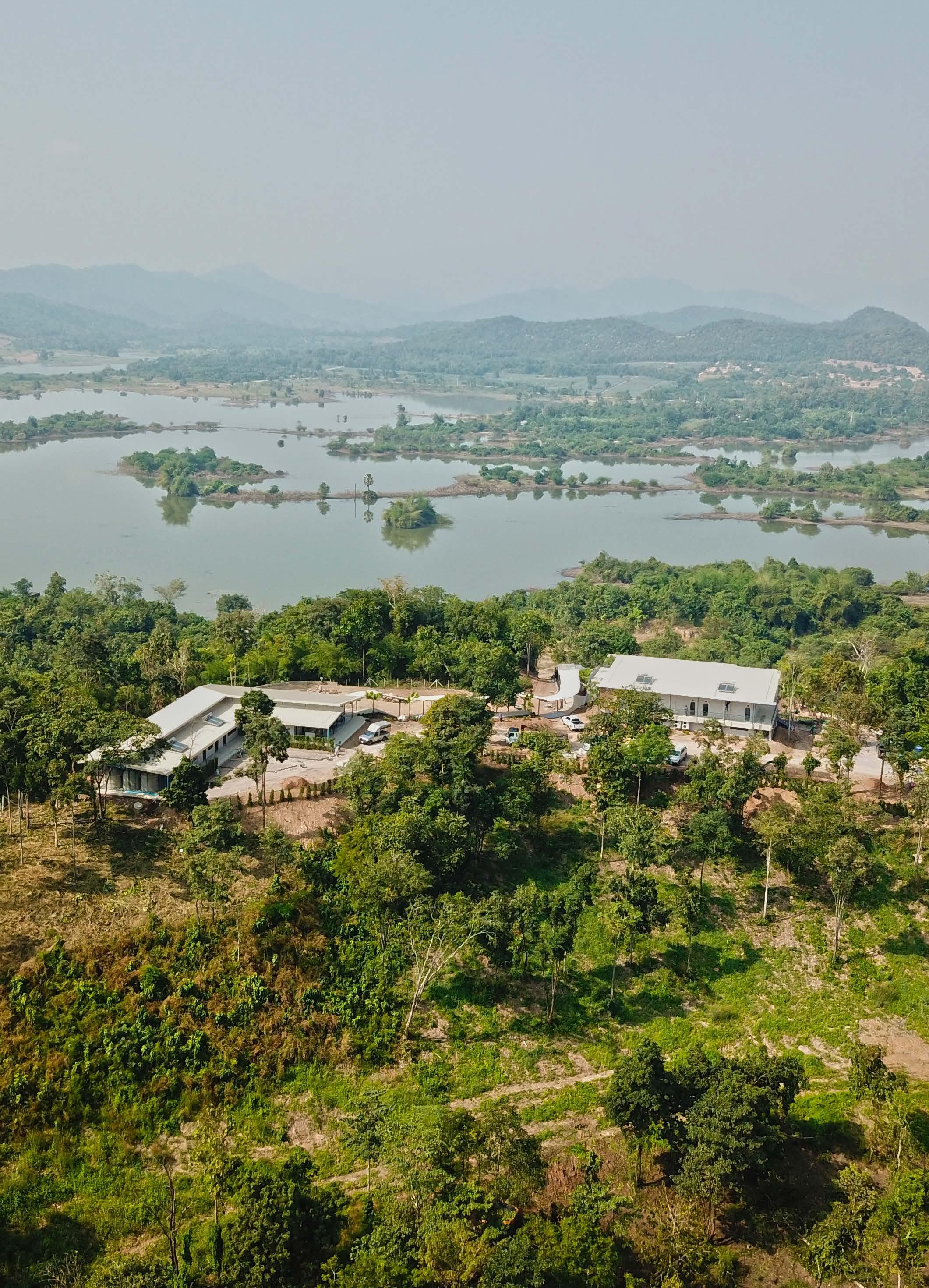
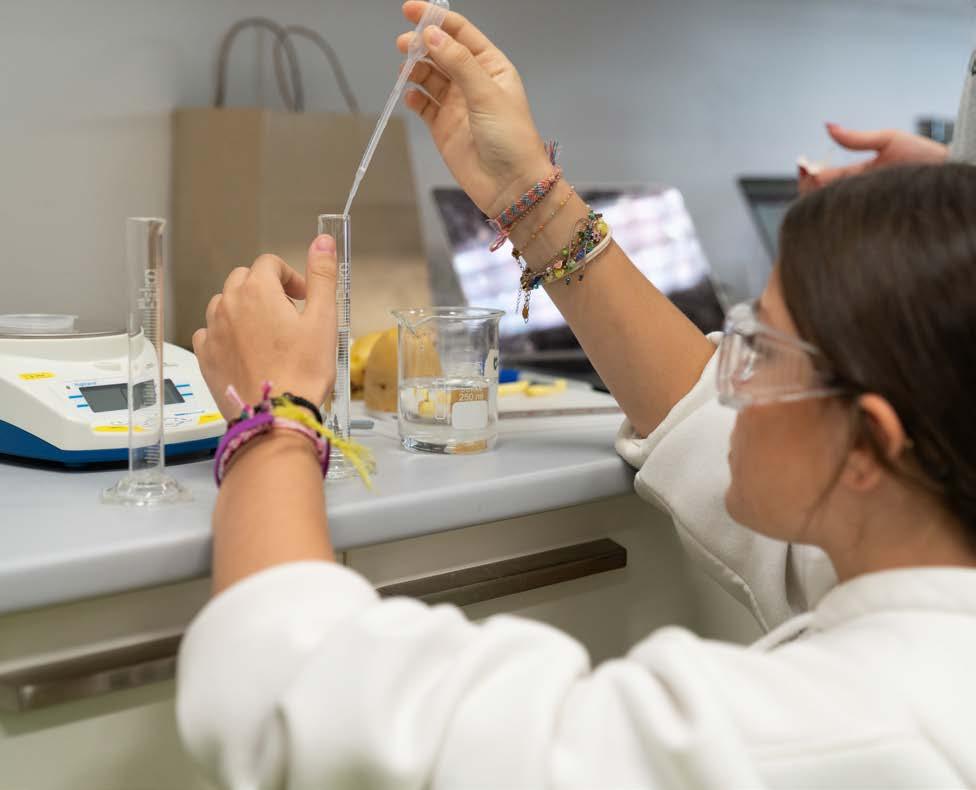
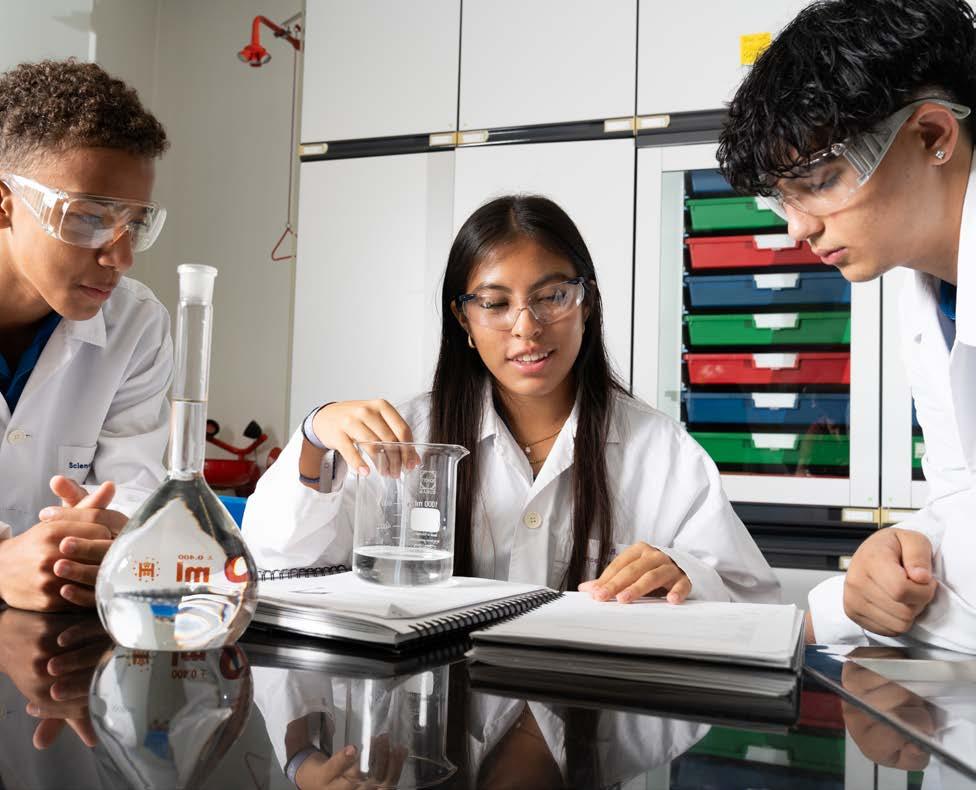
The goal of science education at ISB is to develop scientifically literate students who think critically to solve problems and make informed decisions in their world. The science curriculum is designed to develop conceptual understanding, skills, processes and attitudes through exploration and inquiry. Through a rich program of activities, students will be challenged to develop individual thinking and critical attitudes concerning the methods of science and the limitations of the scientific method. We believe that the acquisition of knowledge through laboratory inquiry is the basic activity of science. Therefore, students will be continually challenged to explore through a well-designed series of laboratory activities in each course, including the use of technology to help students form valid conclusions from their experimental results and communicate those findings effectively.
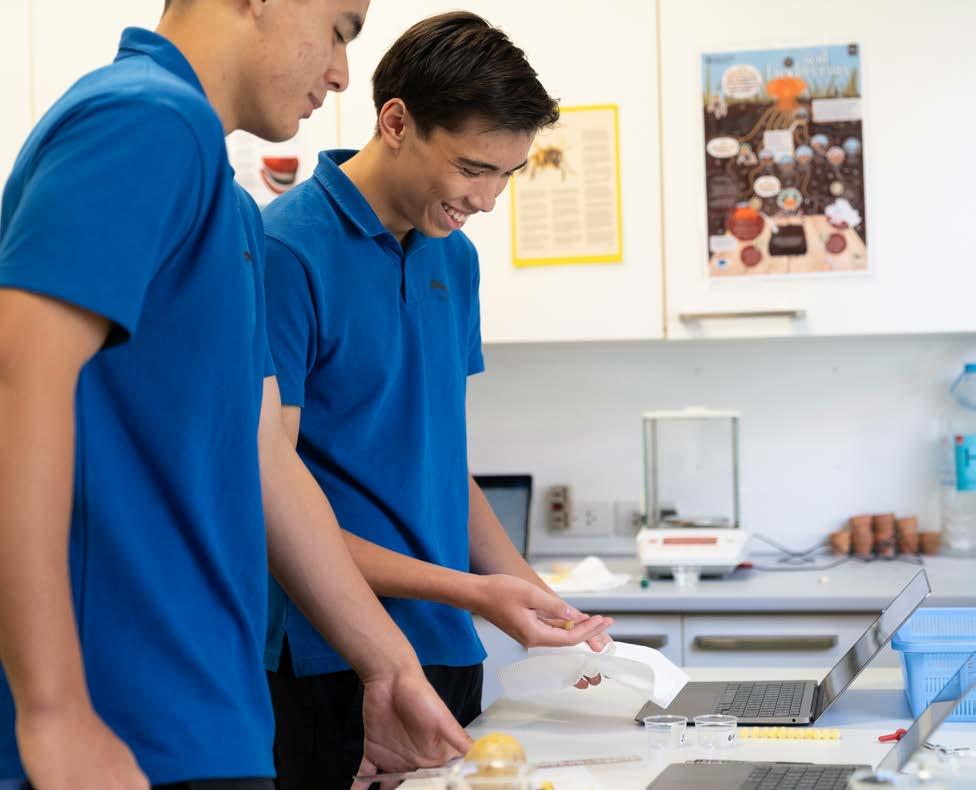
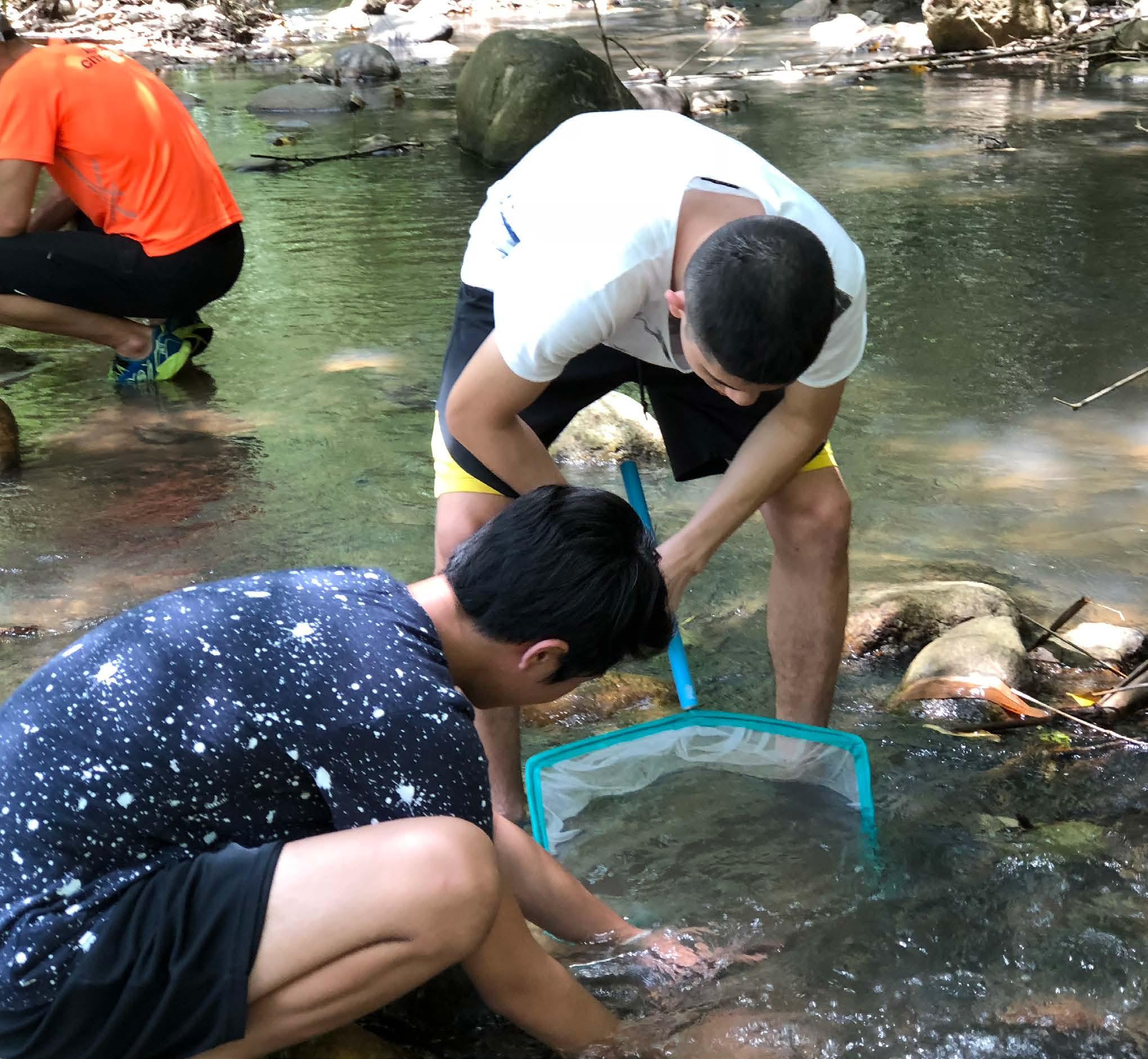
Science 9
Science 10
AP Physics 1*
AP Computer Science A**
Experimental Science I
AP Biology
AP Chemistry
AP Environmental Science
AP Physics 1
AP Physics 2
AP Physics C
AP Computer Science A
IB Biology SL/HL
IB Chemistry SL/HL
IB Environmental Systems & Societies SL/HL
IB Physics SL/HL
IB Sports, Exercise & Health Science SL/ HL
SUPA: Undergraduate Research Program Year 1
Science 9 and Science 10 are required courses for graduation.
Experimental Science II
AP Biology
AP Chemistry
AP Environmental Science
AP Physics 1
AP Physics 2
AP Physics C
AP Computer Science A
IB Biology SL/HL
IB Chemistry SL/HL
IB Design Technology SL/HL
IB Environmental Systems & Societies SL/HL
IB Physics SL/HL
IB Sports, Exercise & Health Science SL/HL
SUPA: Undergraduate Research Program Year 1
*Students who take AP Physics 1 in Grade 10 will not be able to take the IB Physics course in Gr11 and 12.
**AP Physics 1 or AP Computer Science can be taken in Gr10, with teacher approval as an additional science or DT elective.
All students wishing to take advanced courses must have the prerequisites and demonstrate the necessary Habits and Attitudes towards Learning (HAL) required for success in an advanced academic setting.
Further details regarding prerequisites and recommendations, are available as part of the subject description for each course.
Grade: 9 | Length: 1 year | Credit: 1
Prerequisite: None
*NCAA Approved
Science 9 is a laboratory science course that provides an introduction to physics and chemistry. Science 9 provides a solid foundation in content knowledge in the physical sciences and emphasizes the development of scientific thinking. Students are encouraged to investigate phenomena, make models explaining the physical reasons for those phenomena, and testing models through experimentation. Experimental skills, including scientific inquiry and communication, and data logging and management techniques are developed through the course.. Students will develop knowledge and conceptual understanding of kinematics, forces, work, energy, atomic structure, chemical bonding and reactions.
Grade: 10 | Length: 1 year | Credit: 1
Prerequisite: Science 9
*NCAA Approved
Science 10 is an introductory laboratory science course that continues on the topics learned in grade 9 to provide an introduction to biology and environmental science. Throughout the year, Science 10 students develop content knowledge and science skills by investigating biological phenomena and conducting experiments. When appropriate, physics and chemistry concepts from Science 9 will be revisited, allowing students to experience the interdisciplinary nature of the natural sciences. Special attention will be devoted to developing an understanding of how to plan, conduct, analyze, and report on experimental work.
Grade: 11-12 | Length: 1 year or 2 years | Credit: 1 / 2
Prerequisites: None
*NCAA Approved
Experimental Science can be taken for one or 2 years and allows students to continue to study the sciences using an integrated systems and
processes approach and is intended for students not taking a DP or AP science class. The study of experimental science involves students working individually and in groups in the laboratory and in the field, gaining experiences that are related to the application of Science. Students will apply investigative and problem-solving skills, effectively communicate scientific information and understanding, and appreciate the contribution that a study of science makes to our understanding of the world. In addition, each student must participate in a multidisciplinary collaborative science project.
Grade: 11-12 | Length: 1 year | Credit: 1
Prerequisite: Biology II with a grade of 5 or above
*NCAA Approved
AP Biology is an advanced and rigorous course that allows students to explore the core scientific principles, theories, and processes that govern living organisms and biological systems. Students will conduct hands-on laboratory work to investigate natural phenomena. Units of study include Chemistry of Life, Cell Structure & Function, Cellular Energetics, Cell Communication and Cell Cycle, Gene Expression and Regulation, Heredity, Natural Selection and Ecology. Students that take this course will be required to sit the AP Biology examination.
Grade: 11-12 | Length: 1 year | Credit: 1
Prerequisite: Chemistry II with a grade of 5 or above
*NCAA Approved
AP Chemistry is a fast-paced, advanced chemistry course that provides a first-year university-level understanding of chemical concepts. Students will learn methods and tools used to carry out chemical investigations. Units of study include atomic structure and properties, compound structure and properties, properties of substances and mixtures, chemical reactions, kinetics, thermochemistry,
equilibrium, acids and bases, and thermodynamics and electrochemistry. Students are expected to spend a significant time practicing and mastering content outside of class. Students taking this course will be required to sit the AP Chemistry examination.
Grade: 11-12 | Length: 1 year | Credit: 1
Prerequisite: Biology II or Chemistry II with a grade of 5 or above
AP Environmental Science is an interdisciplinary, lab-based course that examines how the natural world works, how humans influence ecological systems, and how those impacts can be managed. Students investigate energy resources, biodiversity, pollution, climate change, land and water use, and sustainable solutions through data analysis, field work, and scientific inquiry. The course emphasizes critical thinking, evidence-based decision-making, and real-world environmental problem-solving to prepare students for the AP exam and future study in environmental and life sciences. Students that take this course will be required to sit the AP Environmental Science examination.
Grade: 10-12 | Length: 1 year | Credit: 1
Prerequisite:
For rising Grade 10 students: Science 9 with a grade of 6 or above; Math Core 2 with a grade of 6 or above; Math Extended with a grade of 5 or above
For rising Grade Grade 11/12 students: Physics II with a grade of 5 or above; Math (Core or extended) with a grade of 5 or above
*NCAA Approved
AP Physics 1 is an advanced and rigorous course that allows students to explore the core scientific principles, theories, and processes that govern the world around us. It covers the topics typically associated with the first semester of an algebra-based physics course in a US university. Students will conduct hands-on laboratory work to investigate natural phenomena. Units of study include kinematics, dynamics, circular motion, Gravitation, Energy, Momentum, Simple Harmonic
Motion, Rotational motion and Fluids. Students who take this course will be required to sit the AP Physics 1 examination.
Grade: 11-12 | Length: 1 year | Credit: 1
Prerequisite: AP Physics 1 with a grade of 5 or above
*NCAA Approved
AP Physics 2 is a continuation of the content learned in AP Physics. It covers the topics typically associated with the second semester of an algebrabased physics course in a US university. Topics studied include thermodynamics, electric force, fields and potential, electric circuits, magnetism and electromagnetism, geometric optics, waves, sound, and physical optics, and modern physics. Students taking this course will be required to sit the AP Physics 2 examination.
Grade: 11-12 | Length: 1 year | Credit: 1
Prerequisite: AP Physics 1 with grade of 5 or above Previously or concurrently enrolled in Calculus.
*NCAA Approved
AP Physics C is a one-year course that covers the content typically encountered in the first two semesters of calculus-based physics at the university level. Students taking this class should have a strong interest in and understanding of mathematics and physics. This course prepares students to take two AP Physics exams, AP Physics: Mechanics and AP Physics C: Electricity and Magnetism. Students will begin the class by studying mechanics and will learn kinematics, Newton's laws, work and energy, systems of particles and linear momentum, rotation, oscillations, and gravitation. The second half of the course will cover electric fields, electric potential, conductors, capacitors, dielectrics, electric circuits, magnetic fields, and electromagnetic induction. This course requires a significant outside-of-class commitment and students taking this course are required to sit for both AP Physics C examinations.
(Standard Level & Higher Level)
Grade: 11 - 12 | Length: 2 years | Credits: 2
Prerequisite: Biology II with a grade of 5 or above
*NCAA Approved
IB Biology Standard Level (SL) and Higher Level (HL) students are taught together in the same class over a two-year period. The course provides a comprehensive study of the living world through four unifying biological themes: Unity & Diversity, Form & Function, Interaction & Interdependence, and Continuity & Change. These themes are explored through the key concepts of Molecules, Cells, Organisms, and Ecosystems.
All students engage in inquiry-based laboratory investigations that emphasize experimental design, data collection and analysis, and critical thinking. While the core curriculum and classroom experiences are shared, HL students complete additional topics and more in-depth study to meet the higher-level requirements of the IB program.
The course emphasizes scientific inquiry, biological understanding, and the interconnectedness of life, preparing students for further study in the life sciences.
IBDP Biology Course Guide
(Standard Level & Higher Level)
Grade: 11 - 12 | Length: 2 years | Credits: 2
Prerequisites: : Chemistry II with a grade of 5 or above
*NCAA Approved
IB Chemistry Standard Level and Higher Level are taught together in one classroom as a single course. All students follow a broad study of key chemistry themes—Models of Atomic Structure, Models of Bonding and Structure, Classification of Matter, Chemical Reactions, Rates of Reaction, and Chemical Change—connected by the central
concepts of Structure and Reactivity. Students engage in an extensive inquiry-based laboratory program and must participate in the IB collaborative science project. While SL and HL students learn the core material together, HL students explore additional depth and complexity, with more content and greater rigor.
IBDP Chemistry Course Guide
(Standard Level & Higher Level)
Grade: 11 - 12 | Length: 2 years | Credits: 2
Prerequisites: Physics II with grades of 5 or above; Match (Core or Extended) with grades of 5 or above
*NCAA Approved
IB Physics Standard Level and Higher Level are taught together in one classroom as a single course. This course allows an in-depth study of physics themes: Space, time & motion, Particle nature of matter, Wave behavior, Fields, and Nuclear & Quantum Physics, with each theme connected by the key concepts; Energy, Particles, and Forces. Students will be involved in an extensive inquiry-based laboratory program. In addition, each student must participate in the IB Collaborative Science project. While SL and HL students learn the core material together, HL students explore additional depth and complexity, with more content and greater rigor.
IBDP Physics Course Guide
(Standard Level and Higher level)
Grade 11 - 12 | Length: 2 years | Credits: 2
Prerequisite: Biology II or Chemistry II with a grade of 5 or above
*NCAA Approved
IB Environmental systems and societies is an advanced two-year interdisciplinary course that requires students to explore the scientific, geographic, and economic principles that affect our natural world. Students will explore a wide range of pressing environmental issues. including changes to ecosystems, human populations, and biodiversity, food production systems, air pollution and global climate change. While all students will explore the issues and potential solutions through the lenses of
systems, sustainability and perspectives, HL students will explore the topics in greater depth and through the additional lenses of law, economics and ethics. Although this is an interdisciplinary course, the independent investigation follows the same process as other science courses and therefore students need to have mastered scientific skills taught in grades 9 and 10. Field research skills are developed during a mandatory field trip in Grade 11. Students taking this course will be required to sit the IB ESS examination.
**Note: If included in an IB Diploma this course may be designated either as Group 3 or Group 4 or both.
IBDP ESS Course Guide
(Standard Level & Higher Level)
Grade: 11 - 12 | Length: 2 years | Credits: 2
Prerequisite: Grade of 5 in Biology or equivalent, Physical Education 9 and teacher recommendation
*NCAA Approved
This course aims to support students to acquire the knowledge and understanding to apply scientific principles to sport. Students cover a range of core and option topics and carry out practical (experimental) investigations in both laboratory and field settings. Such areas as Anatomy, Biomechanics, Training Programme Design, Nutrition, Exercise and Immunity and Skill Acquisition are just some of the areas studied from an individual and global context. This provides students with the opportunity to develop the skill set to apply scientific principles and critically analyse human performance. The internal assessment is based upon practical experimental investigations and not physical performance. This course suits students who like to apply science to sport. SL and HL courses share the core syllabus. HL students study to a greater depth and breadth. Careers for sports science graduates include sports science research, physiotherapy, anything to do with medicine, nutrition, sport and leisure management, sports media, osteopath, podiatrist, teaching, coaching, sports technician and sports marketing.
IBDP Sports & Exercise and Health Science Course Guide
(Standard Level & Higher Level)
Grade: 12 | Length: 1 year | Credit: 1
Prerequisite: IB Design Technology Year 1
Students will develop a deep understanding of design, creativity, innovation, materials, and manufacturing techniques in theory and practice. D&T takes thoughts and explores the possibilities and constraints associated with products and/ or systems in our world. It is human-centred and focuses on the needs, wants and limitations of the end user. The course is divided into two elements of assessment: a Design Project where students use the design cycle to research, design, make, and evaluate a design opportunity or problem to solve for users or clients. This is 40% of their final Grade. The other 60% of their final mark is from external exams that comprise theory and content. At standard level the course covers, ergonomics, sustainable production, modelling, resource management, innovations and classic design. At Higher Level, in addition to the Standard Level topics, the course covers user-centered design, sustainability, markets and commercial production. The class is hands-on activities and content using the Invention Center’s workshop and spaces to understand the course material and enhance learning within the IB framework.
IBDP Design Technology Course Guide
Grade: 11 - 12 | Length: 2 years | Credits: 2
Prerequisite: Grades of 5 and above in previous science courses
SUPA: Undergraduate Research Program (Year 1 & 2)
This multi-year program is a collaboration with Syracuse University's Project Advance. The program's core goal is to immerse students in the process of structured, objective research through carefully guided, first-hand projects.
This foundational course establishes the essential concepts and initial execution for conducting academic research. Students move from an initial idea to a fully planned and initiated project. The course is designed to teach students the essential cycle of academic inquiry, beginning with Project Design, where they learn to define, develop, and refine a detailed research question and scope. This leads into Planning & Proposal, requiring students to master background literature searching and prepare a comprehensive research proposal with a detailed plan of investigation. This course guides students through the full research cycle, including experimental work, data compilation, analysis, and interpretation, culminating in the Communication phase, where standard scientific writing and presentation formats consistent with scholarly publications are introduced.
Upon completion, students will be able to:
• Identify a research project and prepare a detailed execution plan.
• Conduct hands-on research and apply basic statistical tests.
• Gain experience presenting critical literature reviews and their own work (oral and written).
• Develop critical thinking skills by engaging in peer review.
This advanced course is dedicated to revising, refining, and completing the significant research project begun in URP 150, focusing on advanced analysis and professional dissemination of findings. The immediate focus of the research is Project Completion, which involves continuing the experimental work of the previous year to its full conclusion. Simultaneously, students must conduct a thorough Data Deep Dive to reevaluate initial findings, identify any gaps in data or analysis, and address these through deeper engagement with journal article searches. To facilitate sophisticated analysis, students will gain practical experience with Advanced Tools, potentially including modern data analysis software such as ChatGPT, Python, and/or R. The ultimate goal of this work is Manuscript Preparation: structuring the research findings into a complete manuscript suitable for professional submission.
Upon completion, students will be able to:
• Complete a significant research project, including the collection, analysis, and interpretation of primary data.
• Apply statistical analysis to provide meaningful insights into research findings.
• Present the refined project effectively in a public forum.
• Prepare a manuscript suitable for submission to an appropriate journal.
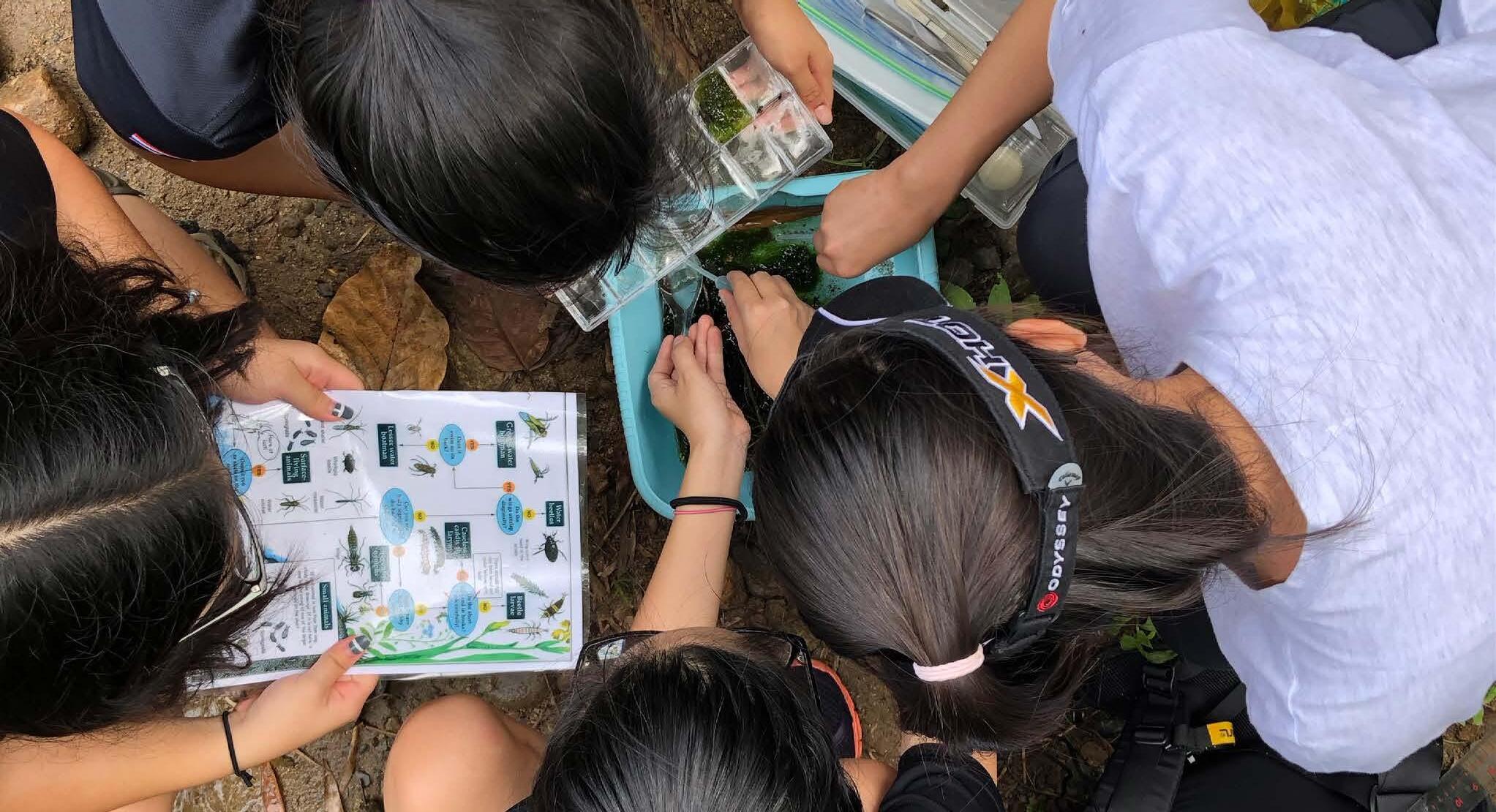
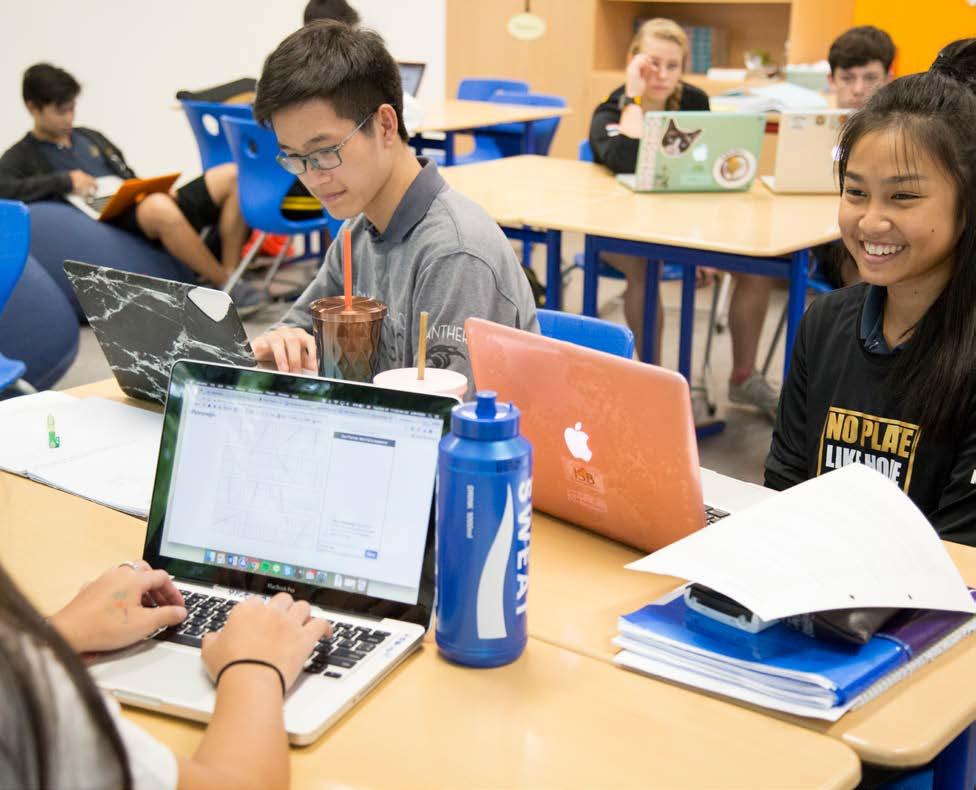
The ISB High School Mathematics program aims to develop confident, curious, and capable young mathematicians who enjoy engaging with challenging ideas and finding meaning in problem-solving. Our courses are designed to nurture both understanding and fluency, helping students not only learn how to do mathematics, but also why it works.
Students experience a balance of rigor and support as they build connections across algebra, geometry, statistics, and calculus. Through exploration, reasoning, and the use of technology, they learn to think critically, communicate ideas clearly, and approach unfamiliar problems with creativity and persistence.
We offer a range of mathematics courses that meet students where they are and prepare them for future success, whether that means strengthening foundational understanding or pursuing advanced mathematical study through IB and AP courses. Across all levels, our goal is for students to leave ISB as confident problem solvers who appreciate the beauty, logic, and power of mathematics.
All students are required to have a graphing calculator (T1 84 plus is recommeded).
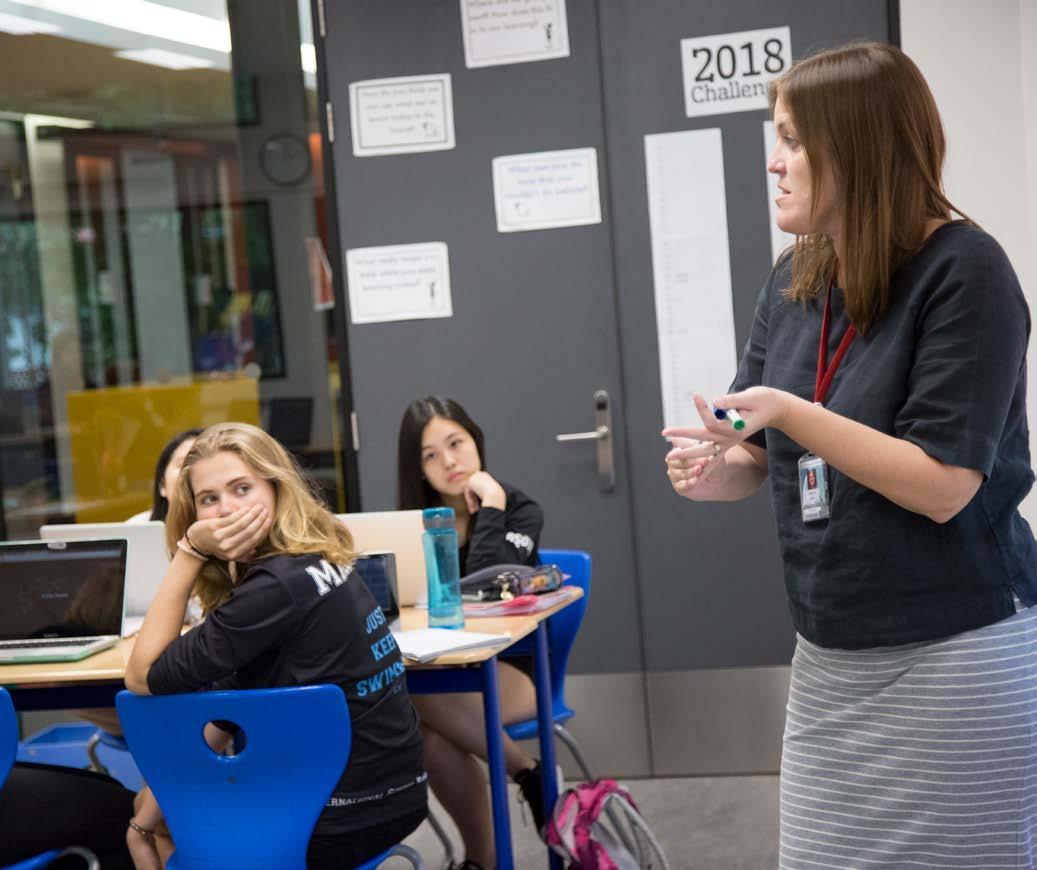
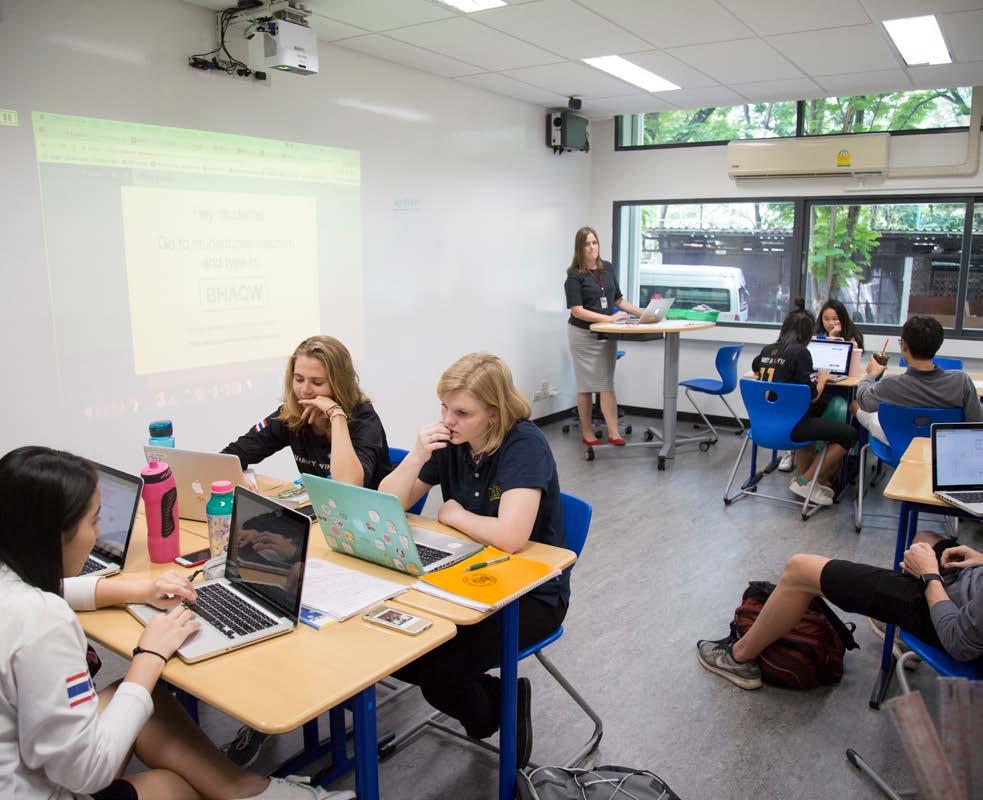
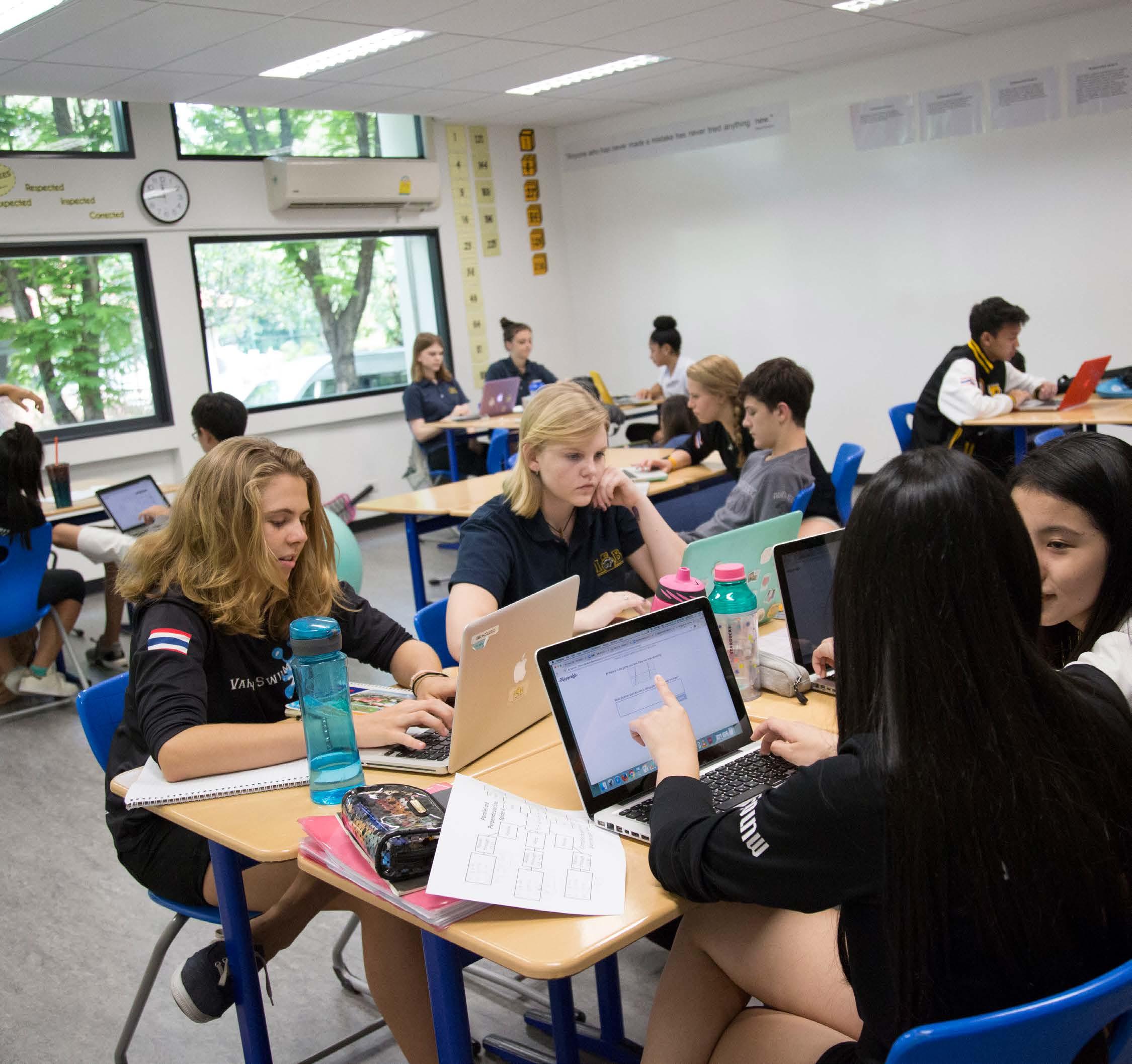
Essentials, Core, Extended I or II
Essentials, Core, Extended I or II
Precalculus*
AP Statistics*
AP Precalculus*
Introduction to Statistics
Personal Finance
Precalculus
AP Statistics
AP Precalculus
AP Calculus AB
AP Calculus BC
IB Analysis & Application SL/HL
IB Application & Interpretation SL/ HL
Multivariable Calculus
Introduction to Statistics
Personal Finance
Precalculus
AP Statistics
AP Precalculus
AP Calculus AB
AP Calculus BC
IB Analysis & Application SL/HL
IB Application & Interpretation SL/ HL
Multivariable Calculus
In Grades 9 & 10 students will be placed through teacher recommendation in the most appropriate yet challenging math course that supports their level of mathematical proficiency.
*Students in Grade 10 can opt to take Precalculus or an additional AP math course as a math elective. Students should discuss their mathematics learning pathway for Grade 11 & 12 with their math teacher and university counselor.
All students wishing to take advanced courses must have the prerequisites and demonstrate the necessary Habits and Attitudes towards Learning (HAL) required for success in an advanced academic setting.
Further details regarding prerequisites and recommendations, are available as part of the subject description for each course.
Because the AP Calculus AB course is a subset of the Calculus BC course, students may not take both courses at ISB.
Length: 1 year | Credit:1
Prerequisite: A teacher recommendation from Math 8 Core
*NCAA Approved
Math Essentials 1 is typically taken in Grade 9 and is the first course in a two-year sequence designed to strengthen students’ confidence and understanding in mathematics through an emphasis on foundational skills, problemsolving, and real-world applications. The course helps students build fluency in core algebraic and geometric concepts while developing strategies for reasoning, communication, and the effective use of technology.
Students begin by reinforcing key algebraic concepts such as simplifying expressions and solving linear equations, then apply these ideas to explore data analysis and statistics. Later in the year, they study geometric reasoning through topics such as right triangle trigonometry, area, and volume. The course concludes with an introduction to quadratic functions and further development of algebraic thinking.
Math Essentials 1 focuses on making mathematics accessible, meaningful, and connected to everyday life, providing students with the skills and confidence needed to continue their mathematical journey in Math Essentials 2.
Length: 1 year | Credit: 1
Prerequisite: Successful completion of Math Essentials 1
*NCAA Approved
Math Essentials 2 is typically taken in Grade 10 and builds on the foundation established in Math Essentials 1, continuing to strengthen students’ mathematical understanding and confidence while preparing them for future study in Standard Level IB Mathematics or Statistics.
The course begins with a review of linear equations and functions before extending to topics such
as area and perimeter of polygons and circles, graphing and solving linear inequalities, and systems of linear equations. In the second semester, students explore polynomials, quadratic equations and functions, and statistical testing, while also applying their skills to the study of volume and surface area of three-dimensional figures.
Math Essentials 2 emphasizes practical understanding, problem-solving, and the use of technology to connect mathematics to real-world contexts.
Students who successfully complete this course will be prepared to continue their studies in IB Mathematics: Applications and Interpretations SL as part of the IB Diploma Program or pursue Introduction to Statistics (followed by Personal Finance or AP Statistics). Students seeking to access the AP Precalculus pathway may choose to take Math Core 2 before advancing to that course.
Length: 1 year |
Credit: 1
Prerequisite: A teacher recommendation from Math 8 Core
*NCAA Approved
Math Core 1 is typically taken in Grade 9 and is the first course in a two-year sequence designed to strengthen students’ understanding of mathematics through a balance of skills, concepts, and applications. The course builds confidence in algebraic and geometric reasoning while helping students appreciate the language, structure, and real-world relevance of mathematics.
Students begin the year by reinforcing key numeracy and algebra skills, including simplifying expressions and solving linear equations. They then explore the connections between geometry and algebra, investigating topics such as congruence, similarity, and the relationships between area, volume, and right triangle trigonometry. The course also includes data analysis, probability, and an introduction to quadratic functions, emphasizing the use of technology to visualize and model mathematical relationships.
Math Core 1 aims to help students develop both mathematical fluency and problem-solving confidence, providing a strong foundation for continued study in Math Core 2.
Length: 1 year | Credit: 1
Prerequisite: From Core 1: A grade of 5 or above or a teacher recommendation
From Essentials 1: A grade of 6 or above AND a teacher recommendation
*NCAA Approved
Math Core 2 is typically taken in Grade 10 and builds on the foundation established in Math Core 1, supporting students as they strengthen their mathematical fluency and prepare for advanced study in either the IB Standard Level courses or our AP Pathway (including AP Precalculus followed by AP Calculus).
The course focuses on developing a deeper understanding of functions and their applications, beginning with quadratic, exponential, logarithmic, and rational functions. Students will also expand their knowledge of probability and statistics, including hypothesis testing, and will be introduced to circular functions as a foundation for future learning.
Math Core 2 emphasizes conceptual understanding, problem-solving, and the effective use of technology to model and interpret mathematical relationships.
Students who successfully complete this course will be well prepared to continue with IB Mathematics Standard Level or AP Precalculus. Students who do not wish to pursue an IB or AP pathway may consider Introduction to Statistics as their next course.
Length: 1 year | Credit: 1
Prerequisite: A teacher recommendation from Math 8 Extended
*NCAA Approved
Math Extended 1 is typically taken in Grade 9 and is the first course in a two-year sequence designed for students who are ready to engage with mathematics at a deeper and more rigorous level. The course introduces students to the language, structure, and applications of mathematics, emphasizing conceptual understanding alongside procedural fluency. Students learn to connect ideas across algebra, geometry, and statistics while using technology to explore patterns, test conjectures, and solve meaningful problems.
Throughout the year, students will strengthen their foundation in linear algebra and number sense, deepen their understanding of geometric reasoning, begin a study of triangle trigonometry, and expand their work with data, statistics, and probability. The course encourages curiosity, persistence, and flexible thinking, all essential qualities for success in higher-level mathematics.
Students who successfully complete this course will continue on to Math Extended 2, while those who excel may be ready to progress directly to AP Precalculus. Students who prefer a steadier pace of learning may consider Math Core 2 as their next course.
Length: 1 year |
Credit: 1
Prerequisite:
From Extended 1: A grade of 5 or above or a teacher recommendation
From Core 1: A grade of 6 or above AND a teacher recommendation
*NCAA Approved
Math Extended 2 is typically taken in Grade 10 and is designed for students preparing to pursue Higher Level IB Mathematics. The course emphasizes conceptual understanding alongside procedural fluency, encouraging students to explore the “why” behind mathematical ideas and to think flexibly and critically when solving unfamiliar problems.
Students in this course engage with larger, more complex, and open-ended problems that require persistence, creativity, and independent reasoning. While the level of challenge can be demanding at times, this struggle is supported and intentional—a key part of building the confidence, resilience, and analytical thinking essential for success in the IB Diploma program.
Topics include advanced functions (polynomial, exponential, logarithmic, and trigonometric), sequences and series, conic sections, circular geometry, and an introduction to probability and statistical inference. Students will deepen their algebraic fluency and develop their ability to communicate mathematical reasoning with clarity and precision.
Students who excel in this course will be well prepared to continue into either IB Mathematics Higher Level courses in Grade 11 or AP Calculus BC.
Length: 1 year | Credit: 1
Prerequisite: Successful completion of Essentials 2 or Core 2
*NCAA Approved
Introduction to Statistics extends students’ understanding of data and probability developed in the Essentials and Core pathways, helping them apply statistical reasoning to analyze real-world situations and make informed decisions. The course emphasizes data analysis, problem-solving, and the use of technology to explore and interpret statistical information. Topics include data representation and interpretation, probability, simulations, inferential statistics, normal and binomial distributions, sampling techniques, confidence intervals, and hypothesis testing. Students use exploratory methods to identify patterns, evaluate claims, and draw conclusions based on data.
Students who successfully complete this course may choose to continue with AP Statistics for a deeper, more rigorous study of statistical analysis. Alternatively, they may take Personal Finance, a course designed to apply mathematical thinking to financial literacy and decision-making.
Length: 1 year | Credit: 1
Prerequisite: None
Personal Finance is a project-based course designed to help students develop the numerical literacy and financial awareness needed to make informed decisions in their daily lives. Rather than focusing on traditional problem sets, students engage in authentic, real-world applications of mathematics through projects, presentations, and data-driven decision-making. The course emphasizes the use of spreadsheets as a primary analytical tool, enabling students to organize, model, and interpret financial information effectively.
The topics that students will explore in this course includes credit and credit cards, taxes, mortgages, retirement planning, investing (including mutual funds, ETFs, stocks, and bonds), statistics in sports, and data presentation. There will also be a focus on real-life financial planning, including purchasing vehicles, insurance, short-term and student loans, budgeting, and the F.I.R.E. (Financial Independence, Retire Early) lifestyle.
Throughout the year, students learn to approach numerical information critically and responsibly, building the financial fluency and confidence to navigate an increasingly complex financial world.
Length: 1 year |
Credit: 1
Prerequisite: Successful completion of Math Extended 2
From Core 2: A grade of 5 or above or a teacher recommendation
Precalculus develops a deep and connected understanding of functions as the foundation for advanced mathematical study. Students explore how functions model relationships between quantities, examining how changes in one variable dynamically affect another. This conceptual focus prepares students for success in AP Calculus and beyond.
Throughout the course, students study a variety of function types, including linear, quadratic, polynomial, rational, exponential, logarithmic, trigonometric, and piecewise functions—and learn to construct and interpret models that represent real-world data and phenomena. They analyze these models through features such as zeros, asymptotes, and extrema, and use them to interpolate, extrapolate, and draw conclusions within meaningful contexts.
Students also learn to evaluate the assumptions and limitations of mathematical models, recognizing that all models depend on context and approximation. By examining functions from multiple perspectives: algebraic, graphical, numerical, and verbal, students develop a comprehensive understanding of how functions behave and interrelate.
Students who successfully complete this course will be well prepared to continue with AP Calculus AB or BC
Note: This course will run concurrently with the AP Precalculus course. The content of the course is the same as AP, however students undertaking this course will not be registered for the AP Exam and there will be no AP designation on the High School transcript.
Length: 1 year | Credit: 1
Prerequisite: Successful completion of Math
Extended 2
From Core 2: A grade of 5 or above or a teacher recommendation
*NCAA Approved
AP Precalculus develops a deep and connected understanding of functions as the foundation for advanced mathematical study. Students explore how functions model relationships between quantities, examining how changes in one variable dynamically affect another. This conceptual focus prepares students for success in AP Calculus and beyond.
Throughout the course, students study a variety of function types, including linear, quadratic, polynomial, rational, exponential, logarithmic, trigonometric, and piecewise functions—and learn to construct and interpret models that represent real-world data and phenomena. They analyze these models through features such as zeros, asymptotes, and extrema, and use them to interpolate, extrapolate, and draw conclusions within meaningful contexts.
Students also learn to evaluate the assumptions and limitations of mathematical models, recognizing that all models depend on context and approximation. By examining functions from multiple perspectives: algebraic, graphical, numerical, and verbal, students develop a comprehensive understanding of how functions
behave and interrelate.
Students who successfully complete this course will be well prepared to continue with AP Calculus AB or BC
Length: 1 year | Credit: 1
Prerequisite: Successful completion of Math Extended 2 or Introduction to Statistics
From Core 2: A grade of 6 or above AND a teacher recommendation
*NCAA Approved
AP Statistics is an introductory, college-level course that develops students’ ability to collect, analyze, and draw conclusions from data. The course emphasizes both the conceptual understanding and practical application of statistics, enabling students to make informed decisions in a world increasingly shaped by data.
Students explore major topics including data collection and experimental design, descriptive and inferential statistics, sampling distributions, probability models, confidence intervals, and hypothesis testing. They use technology, simulations, and real-world investigations to recognize patterns, quantify variability, and evaluate the reliability of conclusions. Writing and communication are central to the course, as students learn to clearly articulate their reasoning and interpret statistical results in context.
AP Statistics encourages critical thinking and problem-solving across a wide range of disciplines—from science and social studies to business and sports analytics.
With teacher recommendation, some students may take AP Statistics in conjunction with Math Extended 2, AP Precalculus, or AP Calculus, as the course complements and strengthens the analytical and modeling skills developed in those classes.
Students who successfully complete this course are well prepared to continue their study of mathematics, social sciences, or data-driven fields at the university level.
Length: 1 year |
Credit: 1
Prerequisite: A Grade of 5 or above in AP Precalculus
*NCAA Approved
AP Calculus AB is equivalent to a first-semester college calculus course and introduces students to the foundational concepts of differential and integral calculus. The course emphasizes a multirepresentational approach—students explore problems and communicate solutions graphically, numerically, analytically, and verbally—to build a connected understanding of how calculus models change and motion in the real world.
Students study limits, derivatives, integrals, and the Fundamental Theorem of Calculus, learning to analyze functions, interpret rates of change, and determine accumulation. Through these concepts, students develop fluency in connecting graphical behavior to symbolic representations and contextual meaning.
Technology is used extensively to visualize relationships, verify analytical work, conduct experiments, and interpret results, reinforcing a balance between conceptual understanding and procedural skill. Clear communication of reasoning and justification is emphasized throughout.
Students who successfully complete this course are prepared to take the AP Calculus AB exam, which may lead to university credit or advanced standing in mathematics.
Length: 1 year | Credit: 1
Prerequisite: A grade of 6 or above in AP Precalculus
*NCAA Approved
AP Calculus BC is equivalent to a full-year college calculus course and extends the concepts introduced in AP Calculus AB. While both courses cover fundamental topics such as limits, derivatives, integrals, and the Fundamental Theorem of Calculus, AP Calculus BC moves at a faster pace and explores these concepts in greater depth, adding advanced topics such as integration techniques, differential equations, parametric and polar functions, and sequences and series.
The course emphasizes a multirepresentational approach, where problems and reasoning are expressed graphically, numerically, analytically, and verbally. Students use technology to explore and verify results, interpret solutions, and communicate mathematical reasoning with precision.
Students who successfully complete this course are prepared to take the AP Calculus BC exam, which may lead to university credit or advanced placement in mathematics. Grade 11 students who excel in this course may choose to continue their mathematical studies in Grade 12 by taking Multivariable Calculus
Length: 1 year | Credit: 1
Prerequisite: Successful completion of AP Calculus BC AND a teacher recommendation
*NCAA Approved
Multivariable Calculus extends the principles of single-variable calculus to functions of several variables, integrating graphical, numerical, and analytical representations. Students will develop a deep understanding of vector functions, partial derivatives, iterated integrals, and vector calculus. This includes applications of Green’s Theorem, Stokes’ Theorem, and the Divergence Theorem. This course is equivalent to a third-semester college calculus course. Throughout the course, emphasis is placed on clear communication of methods, reasoning, and justifications, with regular use of technology to model three-dimensional systems, confirm analytical work, and interpret results.
(Standard Level)
Grade: 11 - 12 | Length: 2 years | Credits: 2
Prerequisite: A grade of 5 or above in Math Essentials 2 or Math Core 2 or by teacher recommendation
*NCAA Approved
IB Mathematics: Applications and Interpretation
SL is designed for students who enjoy exploring mathematics in real-world, data-rich contexts and who wish to develop their ability to model and interpret the world around them. The course emphasizes applications of mathematics, combining algebraic, statistical, geometric, and technological approaches to problem-solving.
Students learn to use technology, mathematical modeling, and data analysis to investigate practical problems and communicate findings effectively. Core topics include algebra, functions, geometry, trigonometry, statistics, probability, and introductory calculus, all developed through applied and contextualized tasks.
All students complete an Internal Assessment (IA), an individual exploration that applies mathematics to a topic of personal interest.
This course is ideal for students planning to pursue university studies in fields such as social sciences, environmental studies, business, psychology, design, or applied data-driven sciences
IBDP Mathematics: Applications and Interpretations Course Guide
(Higher Level)
Grade: 11 - 12 | Length: 2 years | Credits: 2
Prerequisite: A grade of 5 or above in Math Extended 2 or by teacher recommendation
IB Mathematics: Applications and Interpretation HL extends the conceptual and analytical depth of the Standard Level course, emphasizing the use of mathematics as a tool for modeling, analysis, and decision-making in complex, real-world contexts. In addition to mastering all SL topics at greater depth, HL students study advanced content in statistics, probability, calculus, and modeling, with a focus on interpretation, reasoning, and the integration of technology. In addition to the assessment components of SL, students will also complete Paper 3, a technology-active assessment that features extended-response modeling problems requiring creativity, interpretation, and critical thinking.
This course suits students who enjoy applying mathematics to investigate and interpret real data and who may pursue university studies in applied sciences, engineering design, architecture, environmental systems, business analytics, computer science, or the social sciences.
(Standard Level)
Grade: 11 - 12 | Length: 2 years | Credits: 2
Prerequisite: A grade of 5 or above in Math Core 2 or by teacher recommendation
*NCAA Approved
IB Mathematics: Analysis and Approaches SL is designed for students who enjoy developing mathematical arguments, exploring abstract relationships, and honing their analytical thinking skills. The course emphasizes fluency in algebraic manipulation, logical reasoning, and problem-solving across a range of mathematical contexts.
Students study algebra, functions, trigonometry, calculus, statistics, and probability, focusing on understanding and constructing mathematical arguments rather than solely applying formulas.
Technology is used to enhance understanding and support exploration, but the emphasis remains on analytical processes and precise mathematical communication.
All students complete an Internal Assessment (IA), an individual exploration that applies mathematics to an area of personal interest.
This course is well suited for students who enjoy theoretical and symbolic mathematics and who plan to pursue university studies in fields such as mathematics, engineering, physical sciences, computer science, or economics
IBDP Mathematics: Analysis and Approaches Course Guide
(Higher Level)
Grade: 11 - 12 | Length: 2 years | Credits: 2
Prerequisite for HL: A grade of 5 or above in Math Extended 2 or by teacher recommendation
*NCAA Approved
IB Mathematics: Analysis and Approaches (Higher Level) extends the theoretical and analytical depth of the Standard Level course,
emphasizing the development of abstract reasoning, mathematical proof, and advanced problem-solving. Students explore both the structure and beauty of mathematics while learning to apply rigorous thinking to complex and unfamiliar problems.
HL students master all SL topics at greater depth and study advanced content in calculus, vectors, complex numbers, and proof, with a strong emphasis on precision, logical argument, and the interconnections between algebraic and graphical representations. Beyond the assessment components of SL, students also complete Paper 3, which features extended-response problems requiring creativity, reasoning, and a high level of conceptual understanding.
This course suits students who enjoy theoretical and symbolic mathematics and who may pursue university studies in mathematics, physics, engineering, computer science, economics, or other fields that demand strong analytical and quantitative skills.
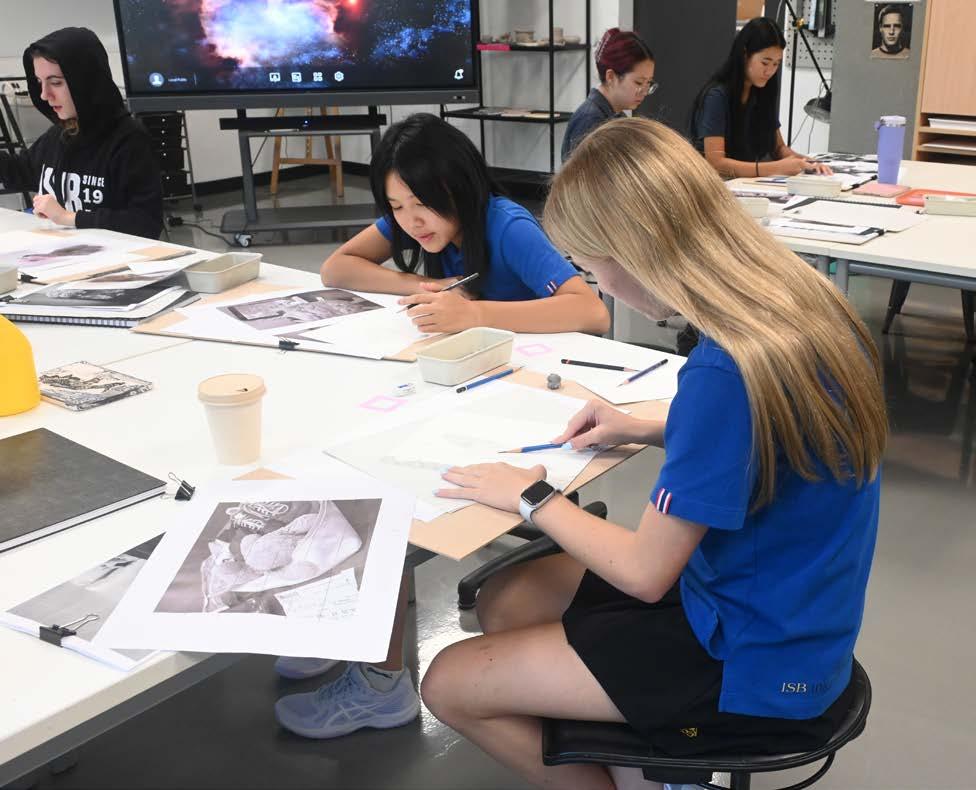
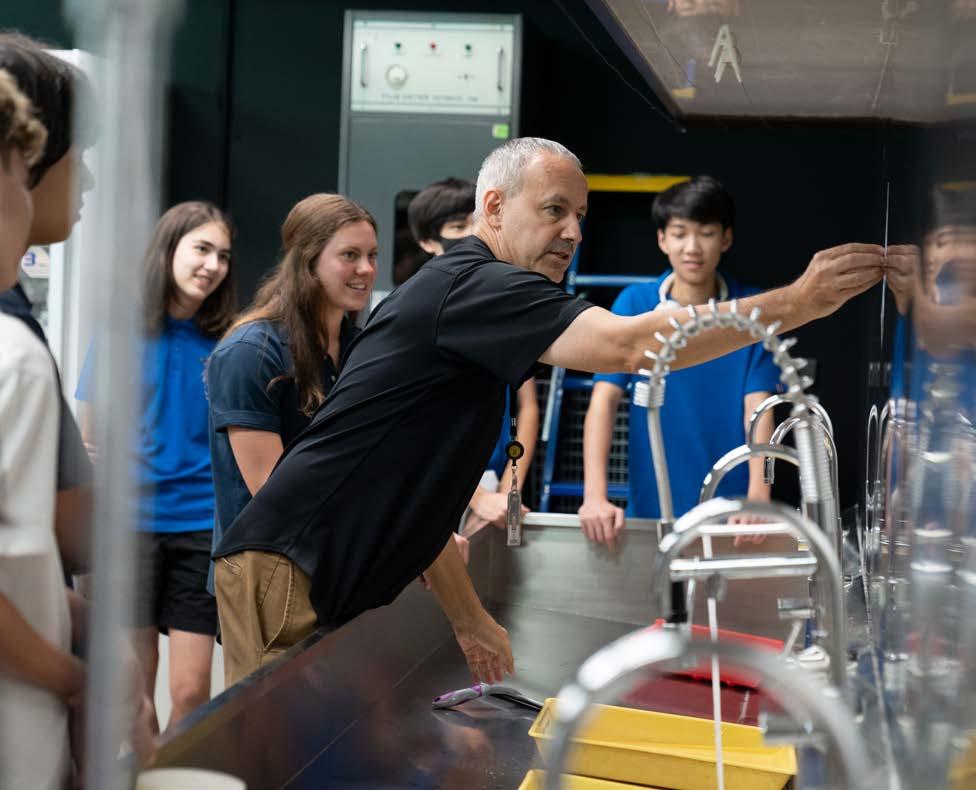
The ISB High School Fine & Performing Arts Department is composed of a body of specialized subject areas including design, media arts, photography, visual arts, music and theater. Arts education benefits the student because it cultivates the whole child, gradually building many kinds of literacy while developing intuition, reasoning, imagination and dexterity into unique forms of expression and communication. An education in the arts helps students learn to identify, appreciate, and take part in the traditional art forms of their community. The arts are often an impetus for change, challenging old perspectives from fresh angles of vision, or offering original interpretations of familiar ideas. The High School Fine & Performing Arts Department seeks to engage students in a process that helps them develop the self-confidence, self-discipline, co-operation and self-motivation necessary for success in life, whilst equipping them with the skills that will enable them to enjoy, appreciate and participate in some aspect of the arts throughout their lives.
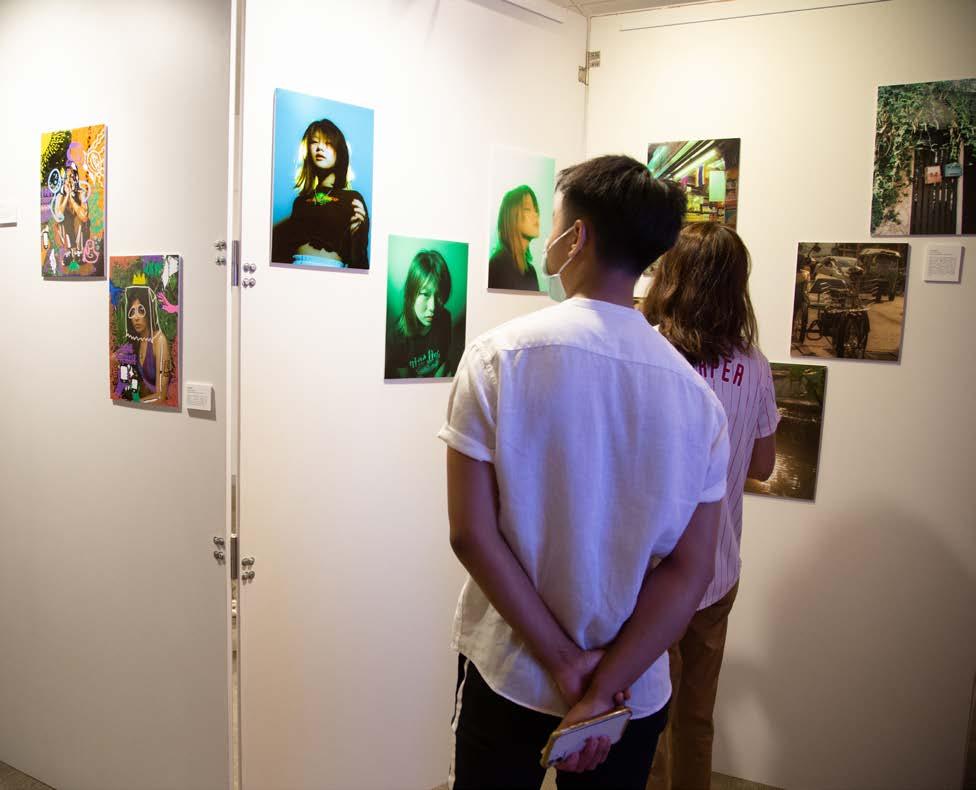
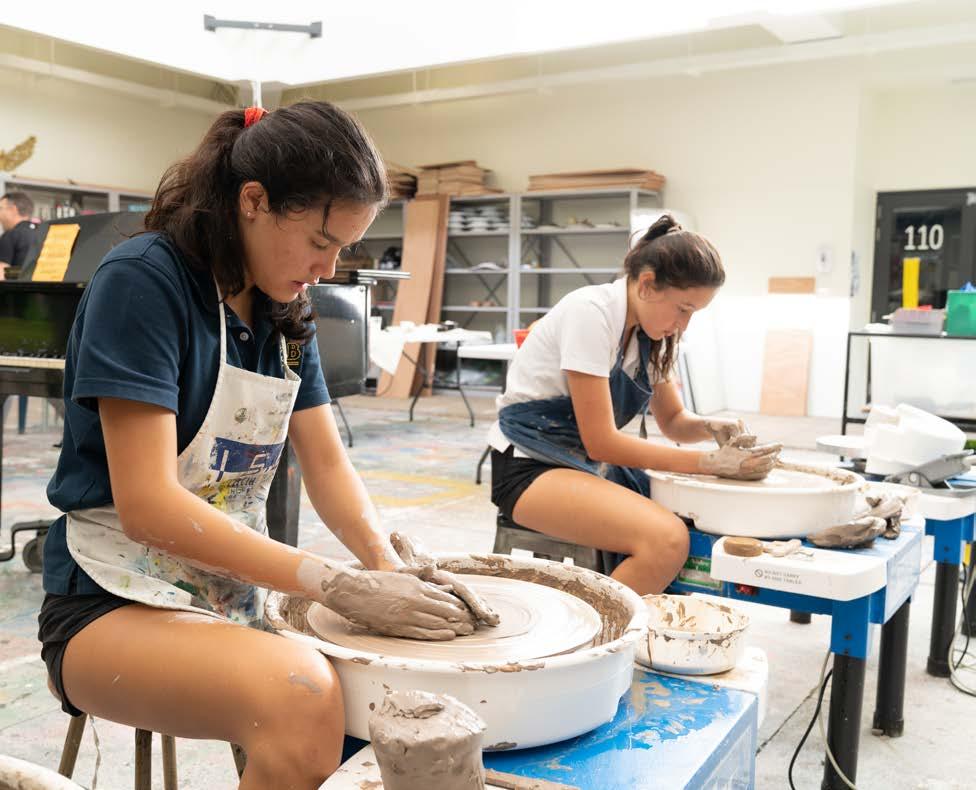
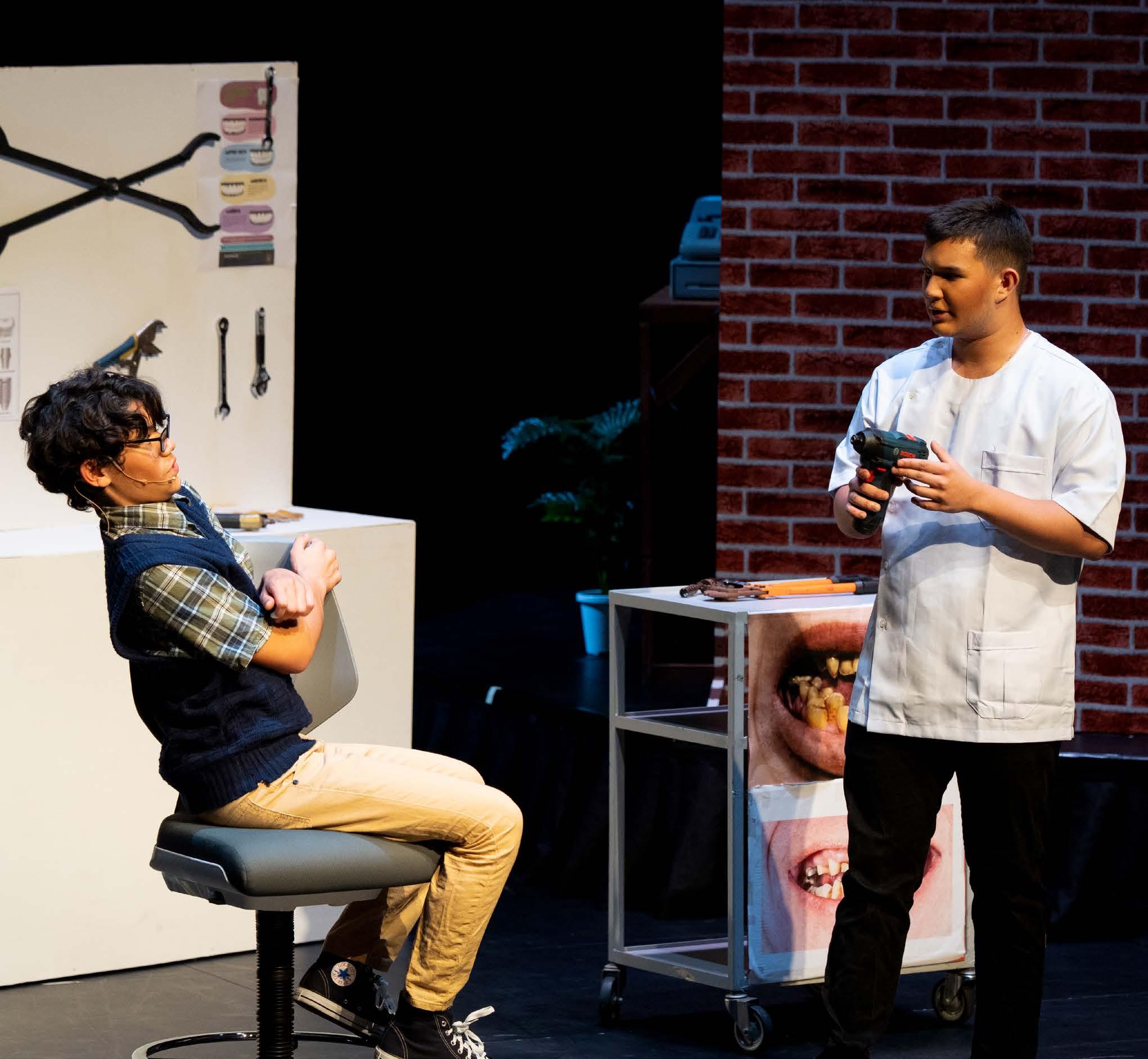
Visual & Photography
2-D Art: Drawing And Painting 1 & 2
2-D Art: Printmaking 1 & 2
3-D Art: Sculpture
3-D Art: Ceramics 1 & 2
Digital Media: Graphic Design & Illustration 1 & 2
Digital Media: Film & Animation 1 & 2
Photography 1 & 2
2-D Art: Drawing And Painting 1 & 2
2-D Art: Printmaking 1 & 2
3-D Art: Sculpture
3-D Art: Ceramics 1 & 2
Digital Media: Graphic Design & Illustration 1 & 2
Digital Media: Film & Animation 1 & 2
Photography 1 & 2
Advanced Studio Art & Photography
AP 2-D Art & Design
AP 3-D Art & Design
2-D Art: Drawing And Painting 1 & 2
2-D Art: Printmaking 1 & 2
3-D Art: Sculpture
3-D Art: Ceramics 1 & 2
Digital Media: Graphic Design & Illustration 1 & 2
Digital Media: Film &Animation 1 & 2
Photography 1 & 2
Advanced Studio Art & Photography
AP 2-D Art & Design
AP 3-D Art & Design
IB Visual Arts SL/HL
SUPA: Intro to Film & Media Arts-Digital Photography
2-D Art: Drawing And Painting 1 & 2
2-D Art: Printmaking 1 & 2
3-D Art: Sculpture
3-D Art: Ceramics 1 & 2
Digital Media: Graphic Design & Illustration 1 & 2
Digital Media: Film &Animation 1 & 2
Photography 1 & 2
Advanced Studio Art & Photography
AP 2-D Art & Design
AP 3-D Art & Design
IB Visual Arts SL/HL
SUPA:
Intro to Film & Media Arts-Digital Photography
Media Studies
Media
Music
Digital Music Production
Chamber Choir
Chamber Orchestra
Wind Ensemble
Digital Music Production
Chamber Choir
Chamber Orchestra
Wind Ensemble
Digital Music Production
Chamber Choir
Chamber Orchestra
Wind Ensemble
Advanced Music Theory & Analysis
Digital Music Production
Chamber Choir
Chamber Orchestra
Wind Ensemble
IB Music SL/HL
Advanced Music Theory & Analysis
Most level II courses have a prerequisite of students having taken the course at level I or through portfolio application to the subject teacher.
Courses in Fine and Performing Arts are available as both semester long and yearlong courses. Some courses can be taken for repeat credit.
Further details regarding prerequisites and recommendations, are available as part of the subject description for each course.
All students wishing to take advanced courses must have the prerequisites and demonstrate the necessary Habits and Attitudes towards Learning (HAL) required for success in an advanced academic setting.
*Grade 10 students can take AP 2D or 3D Art and Design with teacher approval.
Students taking AP 2D or 3D Art and Design in Gr10 are eligible to pursue IB Visual Art for Gr11-12
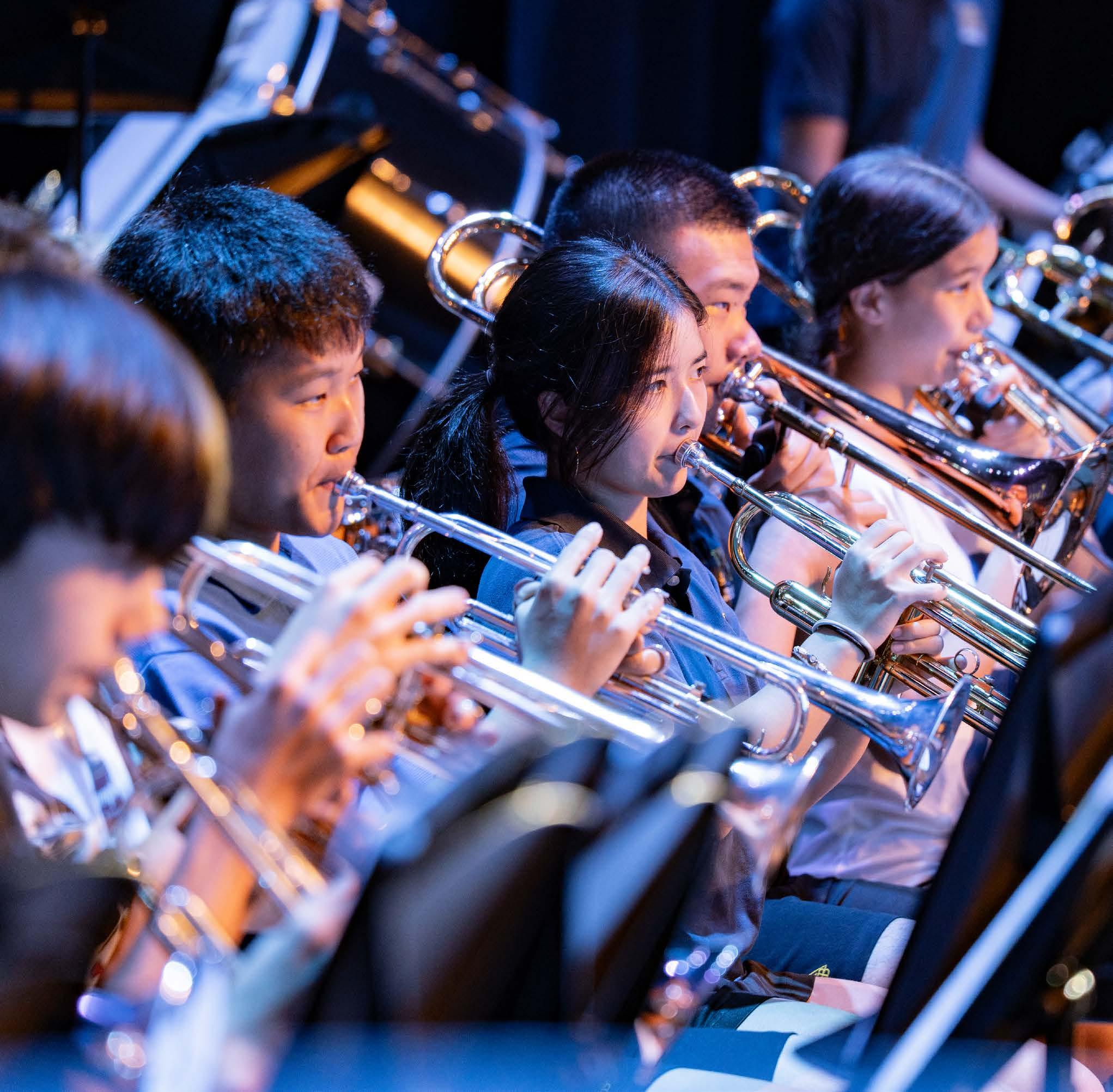
Grade: 9 - 12 | Length: 1 semester | Credit: 0.5
Prerequisite: none
This course provides students with an introductory hands-on experience in drawing and painting techniques. It focuses on observational practice so students can learn how to see and utilize various media, including graphite, charcoal, watercolors, and acrylic paint. Students will keep an Artist's Journal, a creative sketchbook where they’ll keep practice drawings, ideation, and artist research. This journal helps students think about their work, figure out what they like, and start finding their own unique artistic voice. Drawing is taught as both a standalone discipline and in preparation for painting projects. This introductory class is all about developing students’ creative thinking and learning the essential drawing and painting skills they need to express their personal ideas.
Grade: 9 - 12 | Length: 1 semester | Credit: 0.5
Prerequisite: MS Advanced Art, 6 or higher in Drawing & Painting or another Level 1 Art Course with teacher approval
Drawing & Painting 2 expands upon the learning in Level I with the main goals of students refining their use of different media, such as graphite, charcoal, watercolor, acrylic paint, mixed media and developing their own unique style. The students’ Artist's Journal becomes their personal idea sketchbook, helping them plan and complete art projects that they design themselves. Students will study influential artists and interpret their approaches, techniques, and artistic intentions to inform their own work.
Grade: 9 - 12 | Length: 1 semester | Credit: 0.5
Prerequisite: none
Printmaking 1 is a beginner-friendly class, where students will create repeatable art. Students will
gain an introduction to printmaking techniques, including relief printing, drypoint, and silkscreen, without needing any prior drawing knowledge or skills. Students will use hand printing methods and a printing press to create original prints on different kinds of paper. The course focuses on using design and compositional elements to support the ideas students develop. At the end of the course, students will have a small portfolio and the confidence to bring their ideas to life through print.
Grade: 9 – 12 | Length: 1 semester | Credit: 0.5
Prerequisite: MS Advanced Art, 6 or higher in Printmaking 1 or another Level 1 Art Course with teacher approval
This course takes everything students learned in Printmaking 1 and pushes them to become independent artists who can develop their ideas into unique, well-composed prints. Students will move beyond just exploring and start mastering their favorite printmaking methods such as creating detailed block prints, screen prints, or etchings. They will learn and decide on independent and distinctive techniques to best bring their ideas and stories to life. Part of this class is dedicated to planning and making self-directed art projects. Students will have the opportunity to choose the topic and the process. The course focuses on helping students develop their ideas and concepts so they're well crafted and have meaning. Students learn how to print high-quality, limited sets of their work.
Grade: 9 - 12 | Length: 1 semester | Credit: 0.5
Prerequisite: none
This course introduces students to the unique world of three-dimensional art. Moving beyond drawing flat images, students will work in a studio designed to immerse them in the role of a sculptor. Students will use a wide variety of materials and techniques such as wood, plaster, foam, and mold making to help them solve creative challenges. Part of this course involves students taking their own ideas and figuring out inventive ways to bring them to life using these different materials. In everything they build, students will learn how artists use shape,
space, and structure to make compelling art. This class is all about students developing their creative thinking and learning the essential building skills they need to express their personal ideas.
Grade: 9 - 12 | Length: 1 semester | Credit: 0.5
Prerequisite: none
This hands-on, beginner-friendly course is all about learning how to use the principles of design (like shape and balance) to build ceramic forms, using hand-building techniques such as pinch pots, coils, slabs, and molds. Students will study influential ceramic artists and learn about their approaches, techniques, and artistic intentions to inform their own creations. By making art with their hands, students will learn how to create unique pieces, how to think carefully about them (critique), and how to appreciate the creations of others.
Grade: 9 - 12 | Length: 1 semester | Credit: 0.5
Prerequisite: MS Advanced Art, 6 or higher in 3-D Art 1 or another Level 1 Art Course with teacher approval
This hands-on studio course builds on all the skills students learned in Ceramics I, while focusing on more advanced building techniques and developing personally relevant concepts. Students will learn how to throw on the potter’s wheel while also exploring advanced glazing and surface decoration techniques. They will continue to expand their understanding of traditional and contemporary ceramic practices and use their increasingly expanded range of techniques and methods to develop sophisticated ceramic pieces.
Grade: 9 - 12 | Length: 1 semester | Credit: 0.5
Prerequisite: none
In this beginner-friendly course, students will learn how designers and illustrators communicate ideas using images, color, type, and layout. They will explore digital drawing, photo editing and manipulation techniques, vector tools, and design fundamentals while creating digital illustrations,
and printed and web-based graphics design pieces. Through creative, hands-on projects students will develop core skills in Adobe Photoshop, Illustrator and other industry standard software. By the end of the semester, students will have a small digital portfolio and the confidence to make their ideas come to life on screen.
Grade: 9 - 12 | Length: 1 semester | Credit: 0.5
Prerequisite: MS Advanced Art, 6 or higher in Digital Media or Level 1 Art Course with teacher approval
In this advanced course, students will continue to build upon the knowledge and skills developed during Digital Media: Graphic Design and Illustration I. They will dive deeper into the worlds of illustration and graphic design by strengthening and refining their layout design, typography and visual storytelling skills. Through more complex vector and raster based creative challenges, students will continue to develop their knowledge of the Adobe Creative suite, all the while developing their own visual style. The semester ends with a self-chosen final project that showcases students’ personal styles and artistic interests. Perfect for students who enjoyed Digital Media 1 or who want to build a stronger design and illustration portfolio.
Grade: 9 – 12 | Length: 1 semester | Credit: 0.5
Prerequisite: None
This course explores basic elements of film language, including cinematography, editing, and sound design. It will explore how those elements apply to the creation of short films as well as animation through a range of contemporary and traditional techniques, from claymation to digital animation. Inspired by animations from artists and film makers around the world, students will work in a variety of forms that include both carefully constructed frame-by-frame animation, as well as streamlined digital animation. This course will introduce the use of DSLR cameras and cinematic lighting to capture hand constructed work and Adobe Animate to create digital work.
Grade: 9 – 12 | Length: 1 semester | Credit: 0.5
Prerequisite: MS Advanced Art, Digital Media Animation I or teacher approval
This course will pick up where Film & Animation 1 left off, digging deeper into a wider selection of traditional media and digital tools as well as investigations into screenwriting and directing. Course content will include a more in-depth approach to visual storytelling on projects that require more time and attention to detail in order to create more immersive worlds. Traditional forms will be approached cinematically, using more advanced techniques with DSLR cameras and cinematic lighting. This course will also introduce additional animation software such as Adobe Character Animator and Blender for the creation of 3D digital animations.
Grade: 9 – 12 | Length: 1 semester | Credit: 0.5
Prerequisite: none
This foundational course introduces students to the principles and techniques of traditional photography, focusing on the fundamentals and manual operation of the SLR and digital SLR camera. Much of the time in this course is spent in the Darkroom producing images. The curriculum explores the critical importance of “seeing light” and “seeing concept” in creating images. Students learn both cameraless and lens-based techniques, with practical, hands-on instruction in Darkroom photo printing. Students will study influential photographers and learn about their approaches, techniques, and artistic intentions to inform their own image-making.
Grade: 9 – 12 | Length: 1 semester | Credit: 0.5
Prerequisite: MS Advanced Art, 6 or higher in Photography I or Level 1 Art Course with teacher approval
Equipment Requirements: Students will be required to supply their own DSLR with full manual capabilities. (may be repeated for credit)
This advanced course strengthens foundational analog skills while further building Digital SingleLens Reflex (DSLR) capture and specialized techniques. The curriculum emphasizes sophisticated control over both natural and artificial light (including flash and studio strobes). Technical focus areas include slow and fast exposures. Students will receive instruction in Darkroom processes alongside digital asset management and photo editing (e.g., Adobe Lightroom and/ or Photoshop). Conceptual study continues to emphasize the critical role of light and concept in image creation, supported by their analysis of historical and contemporary photographers.
Grade: 10 – 12 | Length: 1 semester | Credit: 0.5
Prerequisite: 2 semesters of Visual Arts or Photography courses and/or permission of the instructor.
Advanced Studio Art & Photography is designed for committed and passionate student-artists who wish to explore and develop their art-making in a more independent and self-directed manner. Focused on creating a body of work, this course provides students with opportunities to explore and develop material and conceptual breadth and depth in and around an individually sourced theme/topic. In undertaking this course, students will also work across a range of traditional and contemporary approaches to art-making, with the overall aim of developing an individualistic approach to art-making. To support this, historical and contemporary issues in Studio Art/ Photography will be discussed and explored via written and visual means, and the student will keep a portfolio to document their material and conceptual development. Students should
expect their best work to be displayed for the school community, and offered for print in school publications.
Grade: 10 - 12 | Length: 1 year | Credit: 1
Prerequisite: Teacher approval based on portfolio review. A minimum of one-year of visual arts courses is strongly recommended.
May run concurrently with AP 3-D Art and Design.
AP 2-D Art and Design is a robust, college-level twodimensional design course. Students refine and apply 2-D skills to ideas they develop throughout the course. In AP 2-D Art and Design students develop skills using materials and processes such as graphic design, photography, collage, printmaking, and others. As the course concludes students will submit a portfolio to be externally assessed. This portfolio is assessed on students’ ability to practice, experiment, and revise their own work while communicating their ideas about art and design.
AP 2-D Art and Design Course Guide
Grade: 10 – 12 | Length: 1 year | Credit: 1
Prerequisite: Teacher approval based on portfolio review. A minimum of one-year of visual arts courses, ideally a ceramics or sculpture course, is strongly recommended.
May run concurrently with AP 2-D Art and Design.
AP 3-D Art and Design is a robust, college-level three-dimensional design course. Students refine and apply 3-D skills to ideas they develop throughout the course. In AP 3-D Art and Design students develop skills using materials and processes such as ceramic work, wood, wire, paper, and others. As the course concludes students will submit a portfolio to be externally assessed. This portfolio is assessed on students’ ability to practice, experiment, and revise their own work while communicating their ideas about art and design.
AP 3-D Art and Design Course Guide
(Standard & Higher Level)
Grade: 11 - 12 | Length: 2 years | Credits: 2
IB Visual Arts is a rigorous two-year studio course designed for students who want to explore personal ideas, experiment widely, and develop their own creative voice through sustained art-making. Students will work like an artist in a contemporary studio setting—investigating themes, researching artists, trying new materials, participating in critiques, and documenting their thinking and experimentation in a visual arts journal. At Standard Level, students complete an Artistic Inquiry Project, a Connection Study, and submit five resolved artworks. At Higher Level, students complete an Artistic Inquiry Project, an Artist Project, and submit five selected resolved artworks from a wider body of work. Because the course demands independence, curiosity, and consistent studio engagement, students must apply for approval before enrolling by submitting 1–2 artworks and a short written justification, supported by a high school art teacher.
IBDP Visual Arts Course Guide
SUPA: Introduction to Film and Media Arts: Digital Photography
Grade: 11-12 | Length: 1 year | Credit: 1
Prerequisite: Teacher approval based on portfolio review. A minimum of one-year of visual arts courses is strongly recommended, ideally in Photography.
This dual-enrollment course with Syracuse University provides a comprehensive foundation in the technical and narrative aspects of the photographic medium, empowering students to master essential exposure controls including aperture, shutter speed, and ISO. Through a rigorous
curriculum encompassing lighting, color correction, and post-production in Adobe Photoshop, students develop the technical proficiency required to manage the full lifecycle of a photographic project from initial capture to final print. Beyond technical mastery, the course emphasizes the power of visual storytelling, challenging students to use the lens as a tool for telling their own unique stories. Through a combination of lectures, peer critiques, and contemporary analysis, students cultivate a critical eye and a distinct aesthetic voice, ultimately applying these principles to produce visually compelling images that resonate on both a technical and personal level.
Students taking this course may opt to earn credit from Syracuse University.
Grade: 9 - 12 | Length: 1 year | Credit: 1
Prerequisite: None (may be repeated for credit)
Students in the Media Studies Elective design, produce and distributeMedia Publications under the flagship title PantherNation, our online school magazine. Publications are influenced by best practices and trends in journalism with a focus on news, events and issues relevant to high school students. Students develop the skills necessary to produce written and/or video accounts of news stories, features articles, editorials, and sports coverage that are then published in both online and hard copy formats. Students also generate topics, identify and maintain sources, conduct interviews with various school personalities, peer edit each other’s work, and ‘keep a finger on the pulse’ of HS student life at ISB. Those who select this elective must be responsible enough to meet deadlines, creative enough to produce engaging stories, eloquent enough to write and speak with conviction, and be interested in the art of writing and video production to the point of seeking to continually improve the quality of both media platforms.
Grade: 9 - 12 | Length: 1 semester or 1 year | Credit: 0.5 / 1
Prerequisite: None (may be repeated for credit)
The Yearbook stands as a testament of time for ISB, holding significant moments of High School life for our community. Students in the class will employ a number of different editorial and arts skills; including editing, graphic design, photography and photoshop. Interested students are encouraged to join this class for a semester, or for higher impact as a team leader, commiting yearlong to this important artefact.
Grade: 9 - 12 | Length: 1 semester | Credit: 0.5
Prerequisite: other music class or music portfolio
Students will explore the dynamic world of modern music production by learning to compose, arrange, and record their own original tracks. Using appropriate software and an accessible and versatile digital audio workstation, students will dive into the creative process of building songs from the ground up. The course emphasizes hands-on learning, with students composing drum patterns, bass lines, chords, and melodies using MIDI tools, as well as recording live instruments and vocals with microphones. Students will develop technical skills in microphone setup, audio recording, and editing, while also honing their artistic voice through various genres. Lessons in music theory and improvisation are integrated, enabling students to make informed and creative musical decisions. By the end of the course, students will have completed several projects showcasing their ability to blend live recordings with digital elements, preparing them for further exploration in music technology or performance. This course is intended for musicians looking to bridge traditional and digital music-making.
Grade: 9 - 12 | Length: 1 year | Credit: 1 (may be repeated for credit)
Prerequisite: none
This course is for students who are looking to enhance their vocal techniques and broaden their cultural awareness through engaging and challenging choral repertoire. Choir also provides opportunities for students to develop their selfconfidence, social awareness and leadership skills. Study includes vocal production, music literacy, communication, cultural and historical context, improvisation, composition, and artistry through a variety of genres and composers. Students will hone their listening skills and enhance their ensemble singing through performances in concerts throughout the year. Members are eligible to participate in the IASAS Cultural Convention as well as AMIS honor groups.
Grade: 7 – 12 | Length: 1 year | Credit: 1 (may be repeated for credit)
Prerequisite: Prior enrollment in Chamber Orchestra or by audition
Chamber Orchestra is a mastery-focused ensemble, designed for dedicated string players aiming for advanced performance skills. The repertoire includes original orchestral works and contemporary compositions. Students focus on mastering techniques, such as thumb positions, advanced shifting, and intricate bowing styles. Leadership opportunities including section leadership allow students to develop as ensemble leaders. This level includes large-scale performances. Students in Chamber Orchestra may have opportunities such as the IASAS Cultural Convention and AMIS auditions. Students are expected to practice rigorously and contribute to high-profile concerts that showcase their technical mastery and musical artistry.
Grade: 7 – 12 | Length: 1 year | Credit: 1 (may be repeated for credit)
Prerequisite: Prior enrollment in Sinfonietta or by audition
Note: Enrollment in this course by High School students is by special arrangement only.
String Sinfonietta is an intermediate ensemble for experienced string players seeking to refine their skills and explore complex repertoire. Students focus on expressive phrasing, advanced bowing styles, shifting, vibrato control, and ensemble communication. Repertoire spans various musical genres and historical periods, demanding precision and artistry. Students are introduced to shifting and vibrato, building confidence in applying these techniques in ensemble settings. Students represent the school in two major performances per school year. Extensive home practice is expected, and participation may lead to opportunities such as IASAS Cultural Convention and AMIS auditions. This level emphasizes musical interpretation and polished performance in a variety of settings.
Grade: 6 - 10 | Length: 1 year | Credit: 1 (may be repeated for credit)
Prerequisite: Prior enrollment in Concert Orchestra or by audition
Note: Enrollment in this course by High School students is by special arrangement only.
Concert Orchestra is for students who have mastered basic skills and are ready to expand their technical and expressive abilities. They progress through the Essential Elements Books 2, focusing on tone quality, advanced bowing techniques, rhythm, and pitch accuracy. They perform a diverse repertoire, exploring musical styles and historical contexts. Performance preparation and individual practice are essential, with students working towards polished ensemble performances. Each semester includes at least one public concert, where students demonstrate their growth as developing musicians.
Grade: 9 - 12 | Length: 1 year | Credit: 1 (may be repeated for credit)
Prerequisite: MS band experience, recommendation by MS band director, or by approval from HS band director
In Wind Ensemble, students experience collaborating with peers in a large wind and percussion ensemble (concert band), developing advanced musical skills and performing
challenging yet exciting pieces for the ISB community. The band’s repertoire is wide ranging and encompasses many styles, including jazz, marching band arrangements, pop music, contemporary and standard band repertoire, and world music. Students have opportunities to build their skills in diverse areas including solo and jazz improvisation, ensemble playing, music theory, and cultural and historical understanding, as well as building confidence, adaptability, courage, and creativity through regular classes and concerts. Students have many opportunities to share and celebrate their learning with audiences at various performances throughout the year. Students who participate in Wind Ensemble may wish to audition for co-curricular groups such as AMIS Honor Band and IASAS Cultural Convention. Students are highly encouraged to sign up for Wind Ensemble to further extend their band experiences and credit each year in high school.
Grade: 11-12 | Length: 1 year | Credit: 1
Prerequisite: teacher recommendation
The Advanced Theory & Analysis course is for students who wish to deepen their understanding of how music works. Running concurrently with the IB Year 2 Music course, it develops strong analytical, theoretical, and aural skills that support both academic and performance-based musical growth. Students explore a wide range of musical traditions and genres through the lenses of harmony, melody, form, rhythm, and texture. The course emphasizes practical musicianship, score study, creative problem-solving, and critical listening. Through regular written analysis, composition exercises, and collaborative inquiry, students build a robust toolkit for understanding musical structure and expressive intent. By the end of the course, students will be able to read, interpret, and analyze music with confidence; describe how musical elements shape artistic meaning; and apply theoretical understanding creatively and expressively in their own musicianship.
(Standard & Higher Level)
Grade: 12 | Lenght: 1 | Credit: 1
Prerequisite: IB Music Year 1
The IB Music course encourages inquiry into creative practices and performance processes. Music study develops listening, creative and analytical skills, as well as encouraging cultural understanding and international-mindedness. In this way, music is a catalyst for expanding critical thinking - a crucial life skill. Throughout the course, students are encouraged to explore music in varied and sometimes unfamiliar contexts and are challenged to engage practically with music as researchers, performers and creators.
Students who have studied at GCSE/ABRSM/Trinity level are well-prepared for the course and it will of course suit students who want to go on and study music in higher education as well as those who are seeking to broaden their musical and artistic perspectives. SL Music is adequate as a stand-alone music qualification for general higher education entry. For those seeking to study music as a major at university, HL is recommended.
The course consists of three, intrinsically linked aspects:
• Exploring music in context
• Experimenting with music
• Presenting music
Each of these components are studied in terms of the student as researcher, performer and creator.
Music Course Guide
Grade: 9 - 12 | Length: 1 semester | Credit: 0.5
(may be repeated for credit)
Prerequisite: None
Drama offers both experienced and nonexperienced drama students the opportunity to explore and create theater, as well as develop confidence and communication skills. Students will be involved in the group and individual activities that are geared towards performing both devised works and published texts. These may be chosen from a variety of styles, time periods and cultures. The course emphasizes supportive ensemble work while developing individual skills in the areas of improvisation, voice, movement, characterization, scene writing, textual analysis, and interpretation. Assessments in this course are mainly on performance and the process of creating a performance. Students will learn the techniques of theater performance for the stage and will be expected to devise original performances using these skills. They will develop their responding skills through self and peer assessments both verbally in class as well as written and recorded analyses of their performed pieces.
Grade: 10 - 12 | Length: 1 year | Credit: 1
Prerequisite: Previous Drama experience preferred
Advanced Drama offers students the opportunity to study theater and performance in greater depth over a year long program. Building on the foundational skills of acting, devising and text work introduced in the elective course, Advanced Drama delves into theater theory in more depth. Students will study the work of influential practitioners, explore complex theatrical styles, learn about theater traditions from around the globe examining the relationship between culture and performance, research the role of a director in interpreting text for the stage, and devise thoughtful and mature performance work. Assessments will focus on four areas: research, exploration, performance and analysis and will include both performed and written assignments. Students will learn alongside first year IB Theatre students, offering opportunities for deeper learning and collaboration. Please note this is a year-long course and cannot be joined in semester two.
(Standard and Higher Level)
Grade: 11 - 12 | Length: 2 years | Credits: 2
Prerequisite: previous drama experience and/or teacher recommendation
IB Theatre is for students who want to further and deepen their knowledge of theater beyond the elective course. Students will learn through participation in a range of theatrical activities and research. As ‘makers’ of theater, students will explore and have the opportunity to increase their knowledge and skills in specific areas of performance and production by working as researchers, writers, designers, performers, and technicians. Every member of the class participates in theatrical productions that are directed, acted, and technically crafted by the students themselves. Students attend and critique external theatrical productions and attend theater workshops, both in and out of school as such opportunities present themselves. Students will complete reflective writing, rehearsal journals, production portfolios, and self/peer assessment.
During the first year of the course, the students will study a range of practitioners such as Artaud, Boal, Grotowski or Brecht, and a range ofl styles such as theater of the absurd, physical theater or naturalism. They will also look at different world theater traditions and conduct individual and group research. They will devise original theater, prepare scripted work, and start to consider how theater can push beyond the traditional stage and utilize a range of multimedia and technical sources. They apply their learning to complete three (SL) or four (HL) IB assessments.
IBDP Theatre Course Guide
Design, Technology and Engineering is a process that links creativity and innovation across a range of technologies and contexts. It is an iterative process where all students benefit from learning about, and working with contemporary, emerging and traditional technologies that shape the world in which we live.
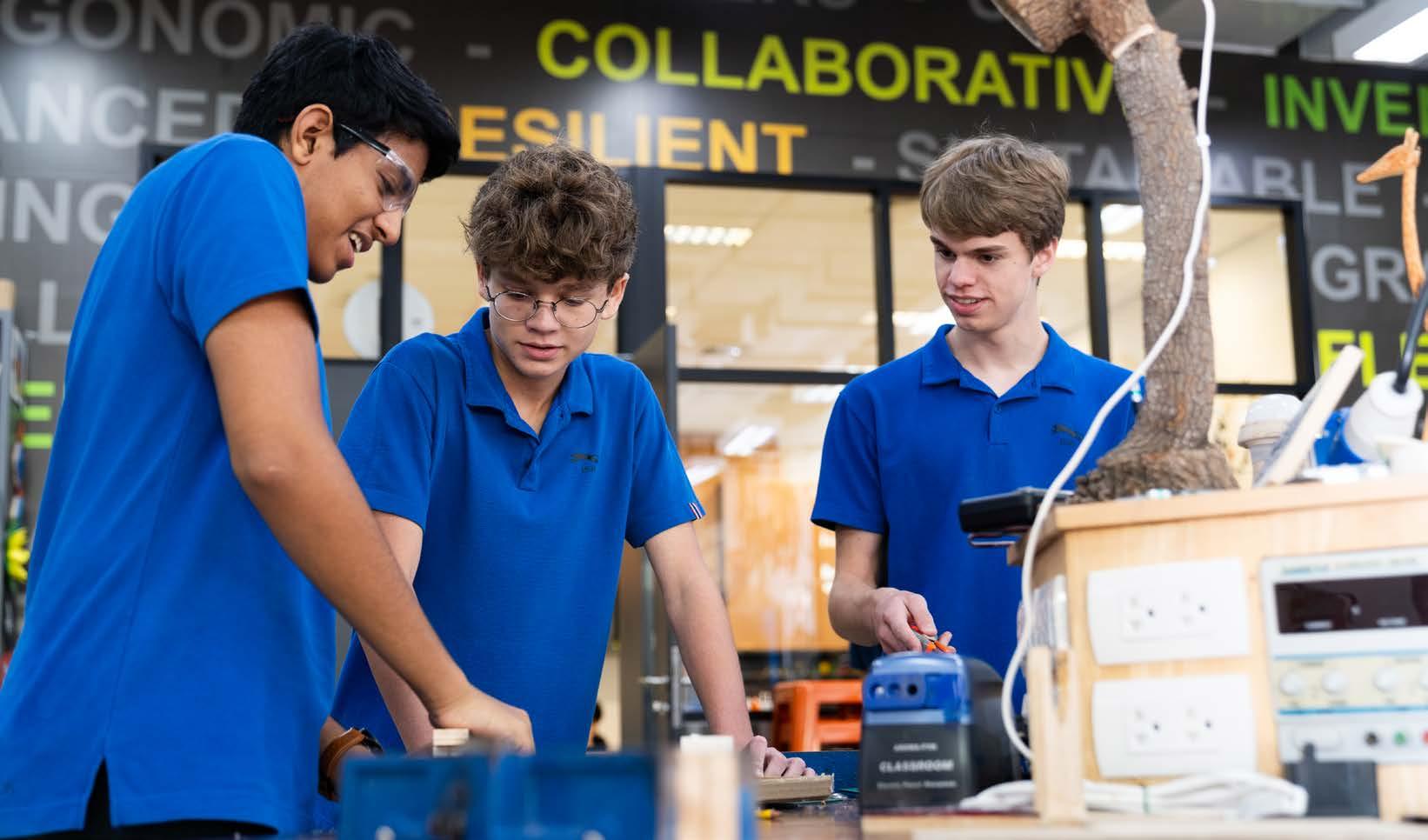
Design Technology I/II
Robotics I/II
Intro to computer Science
Computer Science II
Intro to Physical Computing
Coding Games
Artificial Intelligence
Design Technology I/II
Robotics I/II
Intro to computer Science
Computer Science II
Intro to Physical Computing
Coding Games
Artificial Intelligence
AP Computer Science A*
Design Technology I/II
Robotics I/II
Intro to computer Science
Computer Science II
Intro to Physical Computing
Coding Games
Artificial Intelligence
AP Computer Science A
Design Technology I/II
Robotics I/II
Intro to computer Science
Computer Science II
Intro to Physical Computing
Coding Games
Artificial Intelligence
AP Computer Science A
IB Design Technology SL/HL
Most level II courses have a prerequisite of students having taken the course at level I or through portfolio application to the subject teacher.
Courses in Design, Technology & Engineering Arts are available as both semester long and yearlong courses.
All students wishing to take advanced courses must have the prerequisites and demonstrate the necessary Habits and Attitudes towards Learning (HAL) required for success in an advanced academic setting.
*Students can take AP Computer Science A in Grade 10 with teacher approval.
(may be repeated for credit)
Grade: 9 - 12 | Length: 1 semester | Credit: 0.5
Prerequisite: None
Students will learn and use creativity, the design cycle, materials, and manufacturing techniques in the Invention Center. Skills include hands-on making, computer-aided-design and manufacturing techniques. Emphasis on creativity, problem-solving, service and empathy techniques is undertaken throughout the class. A final portfolio project will follow the design cycle to create individual and/or collaborative projects covering topics such as industrial design, textile design, engineering, sustainability and architecture.
Grade: 9 - 12 | Length: 1 semester | Credit: 0.5
Prerequisite: HS Design & Technology I
Emphasis is placed on self-directed projects using the design cycle to create projects based on problem solving and design opportunities. Students will continue to apply design and making skills and principles learned in D&T I while engaging with more depth the topics preparing them for further study. In this course you will learn more about ergonomics, sustainable production, CAD/ CAM modelling, mass production, innovation, classic design, user-centered design, resource management and innovation & markets. Students will design and build projects, and will appropriately document and evaluate the process and product in a project portfolio.
Grade: 9 - 12 | Length: 1 semester | Credit: 0.5
Prerequisite: None
The objective of this course is to use a handson approach to introduce the basic concepts in robotics, mechanical design, and programming. The course utilizes the VEX robotics platform to teach concepts including the design cycle, block coding as well as C++ based programming, engineering documentation, and the technical aspects of principles such as gear systems, sensor control, DC motors, transmitters and microprocessors. This course will be an introduction
to the basics of the VEX robotics platform, and will include elements of basic programming, use of design software, and some basic mechanical principles. Later units will be project based and require students to follow the engineering design cycle to create a solution to a prescribed challenge.
Grade: 9 - 12 | Length: 1 semester | Credit: 0.5
Prerequisite: Engineering & Design - Robotics I
The course utilizes the VEX robotics platform to teach concepts including the design cycle, block coding as well as C++ based programming, engineering documentation, and the technical aspects of principles such as gear systems, sensor control, DC motors, transmitters and microprocessors. More advanced physics and engineering principles relevant to specific project challenges will be introduced in each unit. Students will design and build robots to address the task at hand, and will appropriately document and evaluate the process and product in an engineering portfolio. The grades will be based on the design cycle in their engineering journal.
(Higher & Standard Level)
Grade: 12 | Length: 1 year | Credit: 1
Prerequisite: IB Design Technology Year 1
Design technology is a problem-solving and innovation approach that places a strong emphasis on understanding the needs and perspectives of the intended end user(s). It is a flexible and iterative process that can be applied to a wide range of challenges, from product development to service design and beyond.
The new design technology curriculum explores three themes: design in theory, design in practice and design in context. Through these,
design technology students will develop longenduring knowledge and understanding of the design thinking process. The study of their interconnections will provide students with opportunities to explore different perspectives and conceptual frameworks.
The course is divided into two elements of assessment: a Design Project where students use the design cycle to research, design, make, and evaluate a design opportunity or problem to solve for users or clients. The class is hands-on activities and content using the Invention Center’s workshop and spaces to understand the course material and enhance learning within the IB framework.
Design Technology Course Guide
Grade: 9 - 12 | Length: 1 semester | Credit: 0.5
Prerequisite: none
This is an introductory course in algorithmic thinking and coding using Java. Students will have the opportunity to use their logical and procedural thinking abilities to solve computational problems. Students will learn about variables, conditional statements, iterative statements, and functions. The culminating project of the module will require students to plan, design, develop and evaluate a software solution for a real-world problem.
Grade: 9 – 12 | Length: 1 semester | Credit: 0.5
Prerequisite: Intro to Computer Science
This course takes students beyond programming fundamentals and into the world of dynamic, interactive software design using Python. Students will master sophisticated programming techniques and advanced data structures to manage complex collections of data and build powerful applications. We will explore how to harness Python's libraries to analyze information and create interactive
programs. Building on this, students will explore the world of cybersecurity, getting hands-on experience in identifying common threats, understanding network basics, and applying defensive programming to protect software from real-world attacks.
Grade: 9 - 12 | Length: 1 semester | Credit: 0.5
Prerequisite: None
This is an introductory course that provides an understanding of electrical engineering fundamentals, as well as the basics of programming and building circuits. Using a powerful digital prototyping platform like the Arduino, students will undertake tasks such as reading data from a sensor or activating lights based on changes in the environment. They will explore existing prototypes, learn to modify code, and adapt designs. For the final project, students will apply their design thinking skills to design, code and build products that address specific needs within the community.
Grade: 9 - 12 | Length: 1 semester | Credit: 0.5
Prerequisite: Intro to Computer Science
In this course, students will design and develop games through hands-on practice. They will learn how to use Unity, a professional game development tool and become familiar with the methodologies of constructing a game using such assets as graphics, sounds, and effects, and controlling events and behavior within the game using the C# programming language. The course requires students to independently acquire skills by following tutorials (text and video) while solving problems and creating content. Students will work in teams to brainstorm and develop new games in response to a theme or challenge. In doing so, they will develop their skills in communication, projectand time-management, and creative problemsolving.
Grade: 9 – 12 | Length: 1 semester | Credit: 0.5
Prerequisite: None
This course provides a practical guide to the new and emerging Artificial Intelligence tools that are transforming industries. Students will
gain hands-on experience with a variety of AI platforms, focusing on real-world applications. We will cover text generation for writing, image and video synthesis for media, code assistance for development, music composition for artists, and data analytics for business. You will not only learn how to use these tools but also why they are impacting a wide variety of disciplines and careers. Leave this class with a portfolio of AI-assisted projects and a new way of thinking about problemsolving.
Grade: 10 - 12 | Length: 1 year | Credit: 1
Prerequisite: Intro to Computer Science
*NCAA Approved
AP Computer Science A is designed to introduce students to the systematic study of algorithms, data structures, and software development.
Students will learn to code fluently in Java and understand the principles that underpin modern software engineering. Through engaging projects and collaborative learning, you will develop critical thinking skills and a foundational understanding of computing and the rapidly evolving tech industry.
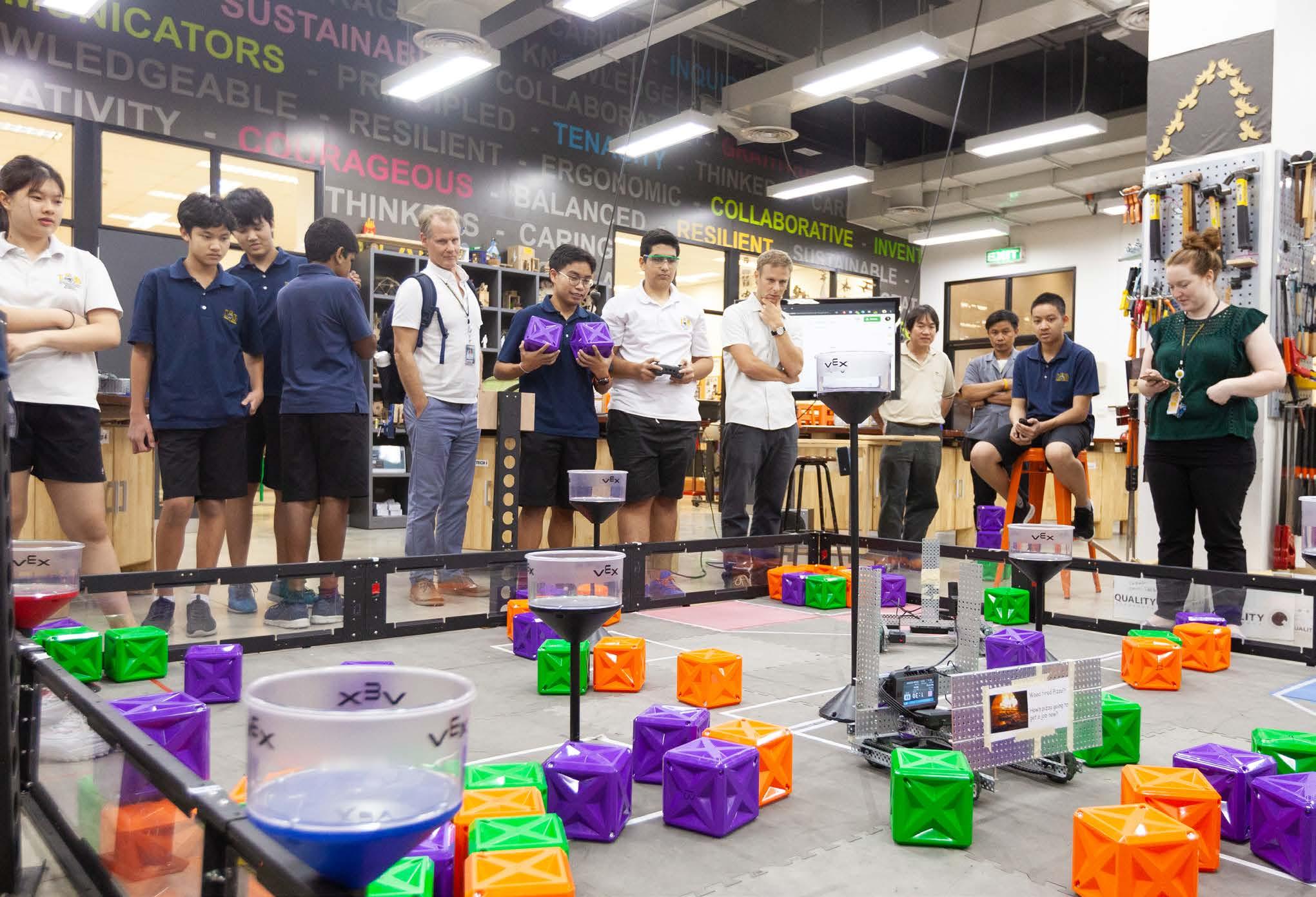
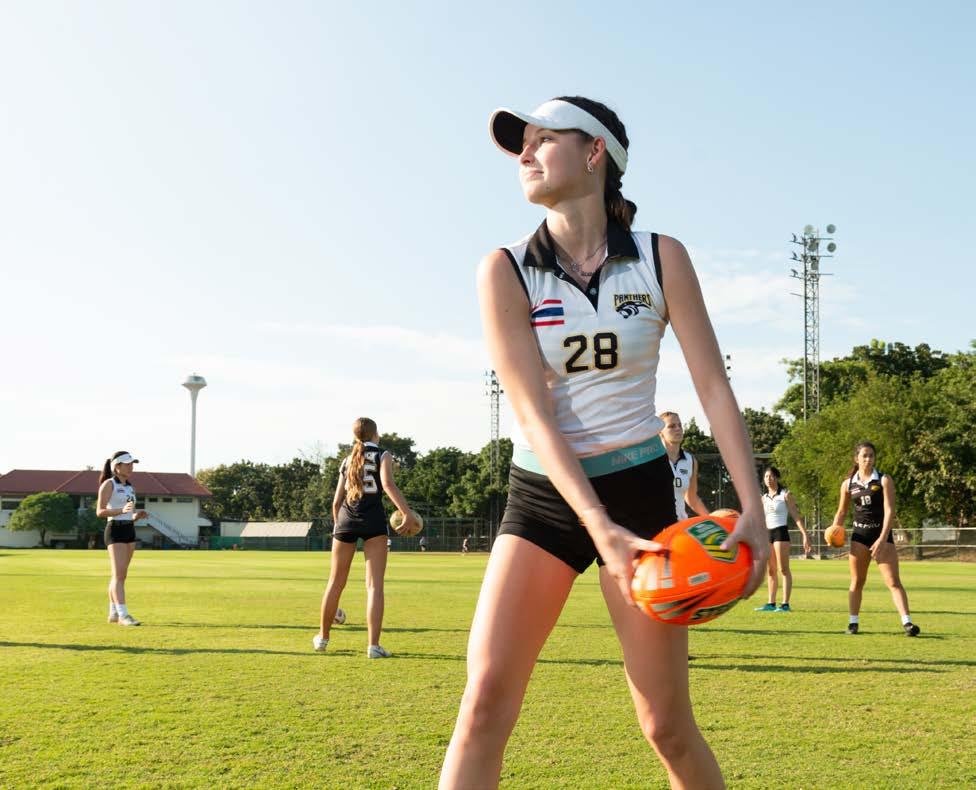
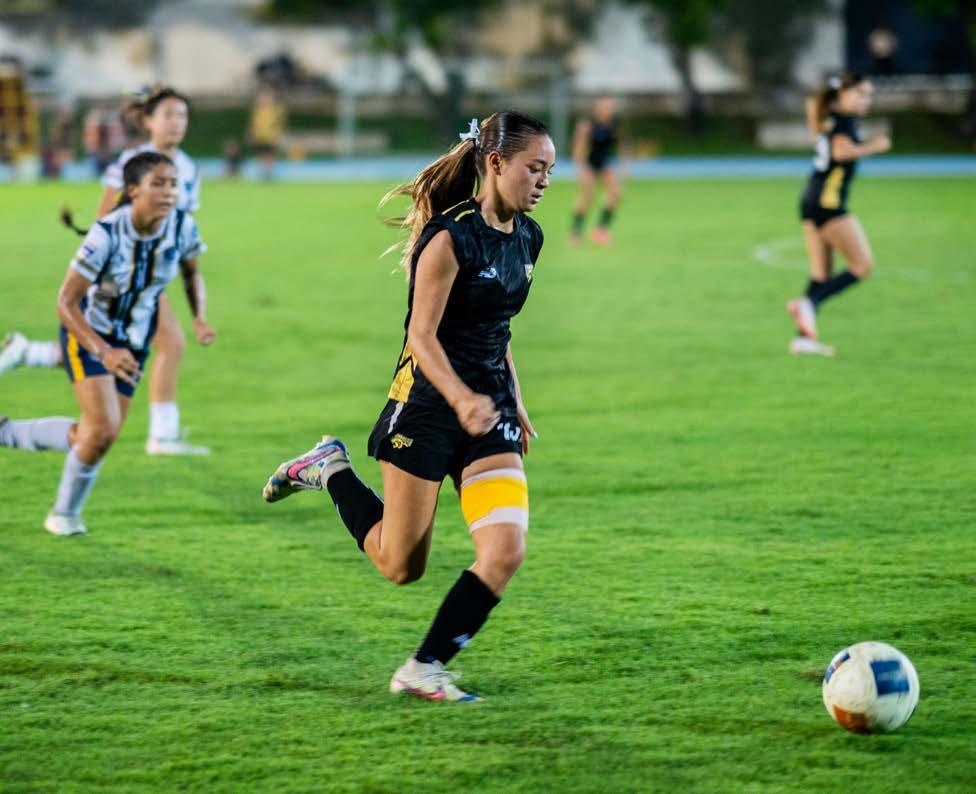
Students must successfully complete three semester courses in Physical Education and one semester of Health prior to graduation. All grade 9 students will complete a full year of physical education. Following grade 9 PE, students may choose any of the other elective courses to fulfill the remaining 0.5 credit (except for SEHS and Personal Fitness 2). The electives on offer include a diverse range of activities, catering for a wide variety of interests within our student population. Health is generally taken during Grade 10. Classes should not be repeated for credit, as variety is encouraged. PE elective courses may also be used to fulfill CAS requirements.
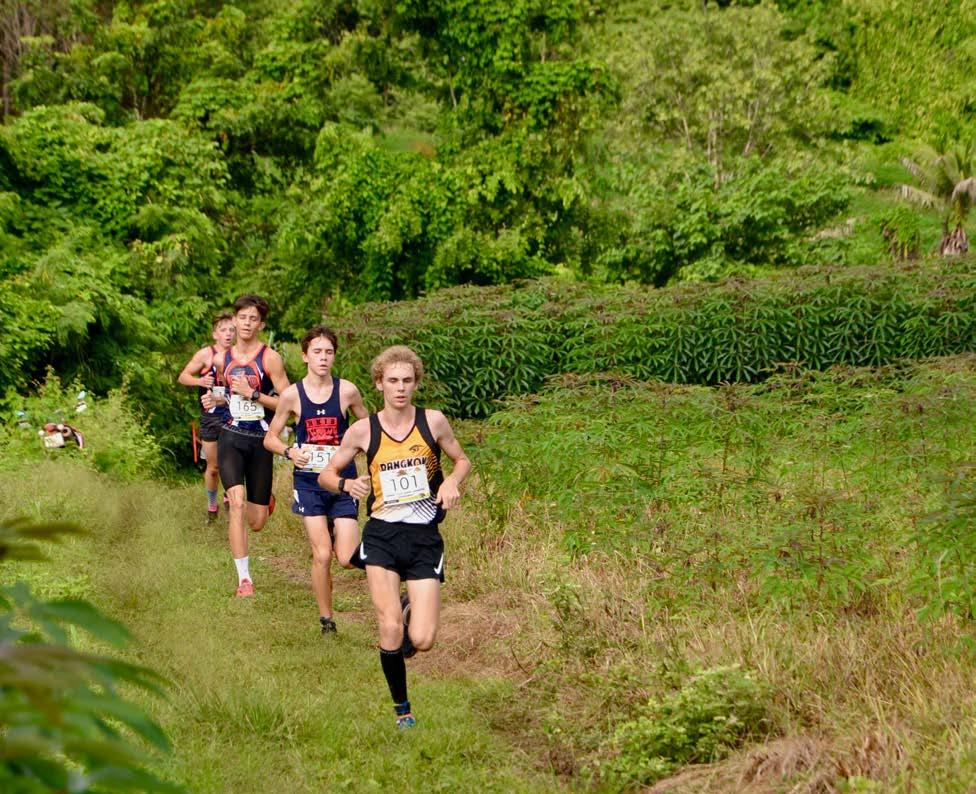
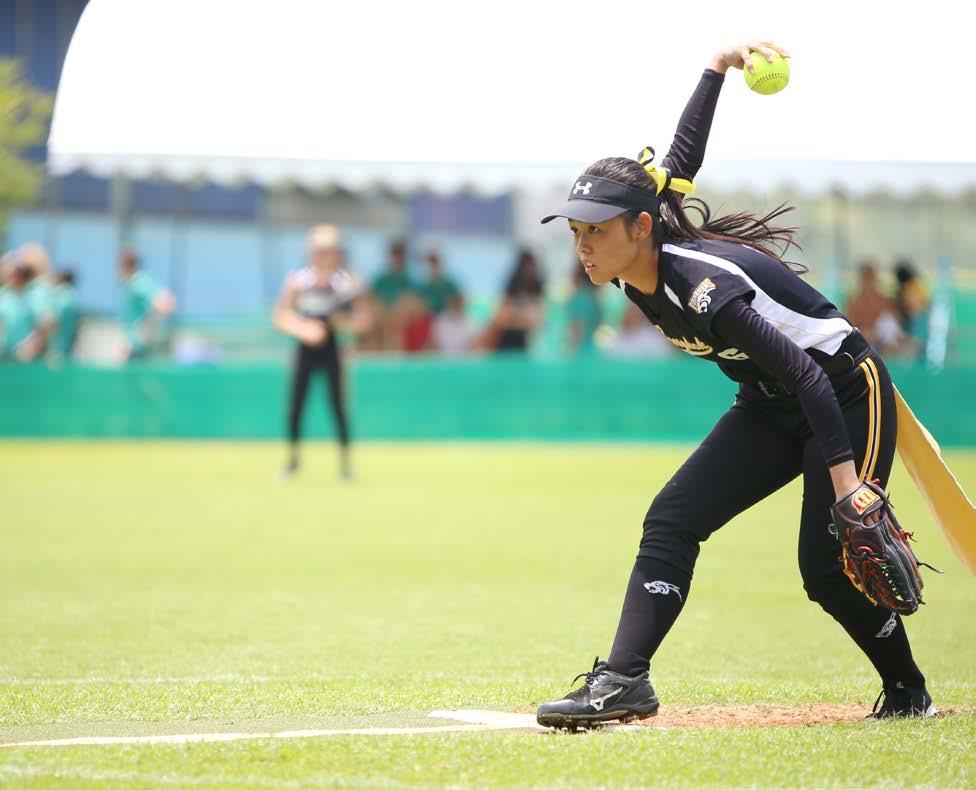
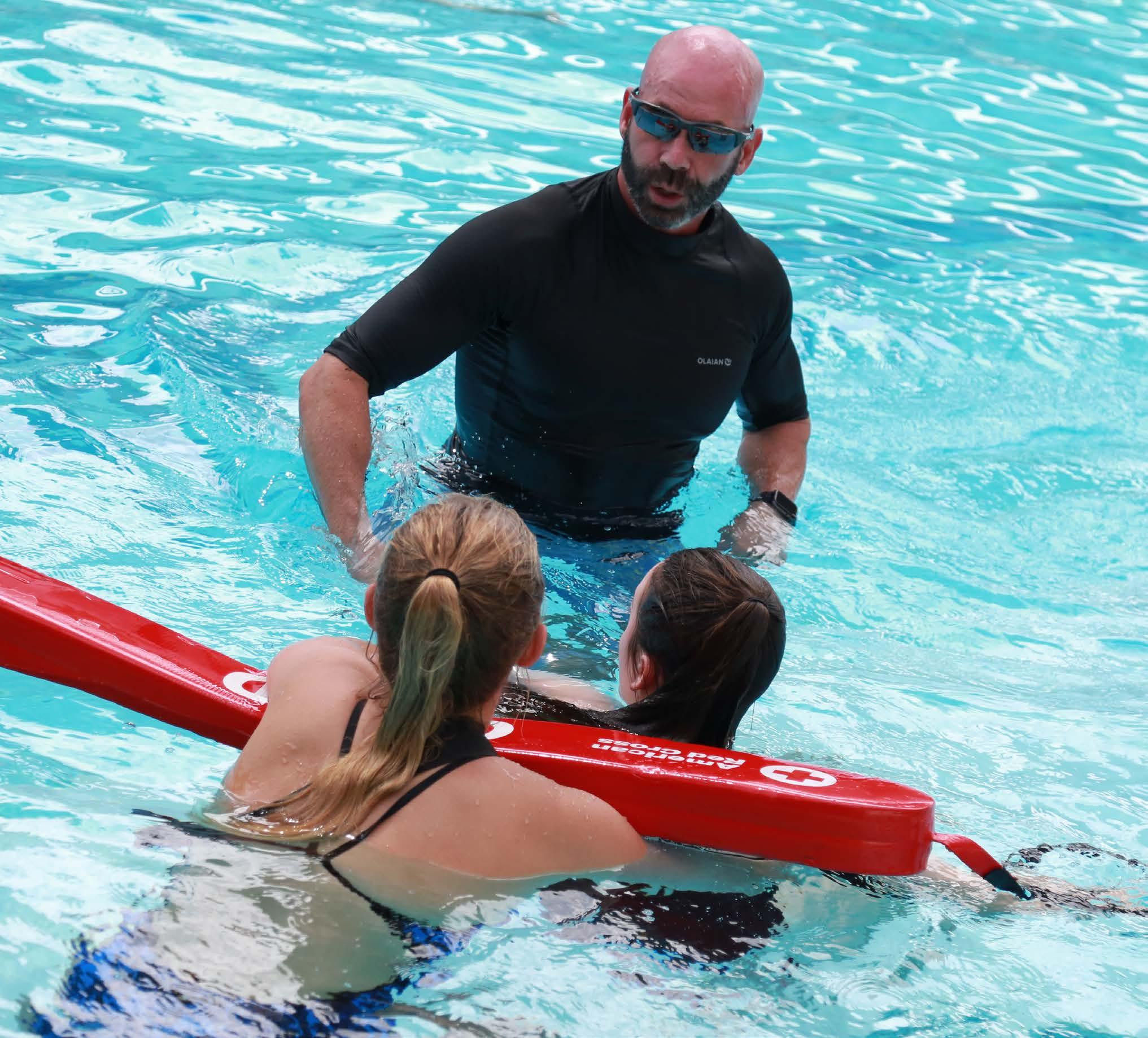
Health 9
Personal
Alternative Pursuits
Athletic Movement & Conditioning
Lifeguard Certification
Team Sports Concepts
Personal Fitness I
Personal Fitness II
Power Fit
Alternative Pursuits
Athletic Movement & Conditioning
Lifeguard Certification
Sport, Exercise, and Health Science Foundations
IB Sports Exercise & Health Science SL/HL
Team Sports Concepts
Personal Fitness I
Personal Fitness II
Power Fit
Alternative Pursuits
Athletic Movement & Conditioning
Lifeguard Certification
Sport, Exercise, and Health Science Foundations
IB Sports Exercise & Health Science SL/HL
PE9, Health 9 and Health 10 are required courses.
All students wishing to take advanced courses must have the prerequisites and demonstrate the necessary Habits and Attitudes towards Learning (HAL) required for success in an advanced academic setting.
(Required for all Grade 9 students)
Grade: 9 | Length: 1 year | Credit: 1
Prerequisite: none
The course focuses on individual and team sports. It also provides an introduction to the fitness principles, workouts, and the components of health-related fitness. Students are required to demonstrate the skills and techniques necessary to perform a variety of physical activities. Students must also demonstrate an understanding of basic concepts, strategies and rules, applying them in various contexts. Students will explore various roles within the class and practice skills including cooperation, conflict management, communication and coaching. Assessment and maintenance of one’s personal fitness level is a daily focus and understanding the concepts and principles to improve one’s health and performance is an expected outcome. This course is required for all grade 9 students.
(Required for all Grade 9 students)
Grade: 9 | Length: 0.5 semester | Credit: PASS/FAIL
Prerequisite: none
The goal of Grade 9 Health is to build on the health literacy skills acquired during Middle School. Students develop values, attitudes, competencies and beliefs that will empower them to commit to their own and others’ health and wellbeing throughout their lifetime. Students are provided with opportunities to acquire, as well as, effectively apply the knowledge, attitudes and skills necessary to understand and manage emotions, set and achieve positive goals, feel and show empathy for others, establish and maintain positive relationships, and make responsible decisions. This is a requirement for all Grade 9 students and takes place throughout semester one.
(Required)
Grade: 10 - 12 | Length: 1 semester | Credit: 0.5
Prerequisite: none
The Health curriculum focuses on developing health literate students by building a firm foundation of knowledge and skills in all five dimensions of health: mental, social, physical, emotional and spiritual. The course encourages students to reflect deeply on their own health and the aspects that influence health and wellbeing. Emphasis is placed on helping students lead healthy, active and balanced lives and to be resilient, responsible members of the global community. This class is required for graduation and is generally taken in grade 10.
Grade: 10 - 12 | Length: 1 semester | Credit: 0.5
Prerequisite: Physical Education 9
Team Sports Concepts explores a range of team sports through a concept-based approach, focusing on the development of skills and tactical understanding to enhance students’ overall comprehension of team sports. The key concepts examined include Defending, Attacking, Game Analysis, and Game Sense. Each unit integrates a variety of complementary team sports, enabling the transfer of knowledge and understanding across different game contexts. Students apply these concepts effectively in both familiar and unfamiliar game situations, while also developing individual performance and decision-making skills. The course is delivered in an engaging, fast-paced environment that encourages active participation, collaboration, and strategic thinking through team-based games.
Grade: 10 - 12 | Length: 1 semester | Credit: 0.5
Prerequisite: Physical Education 9
Various aspects of physical fitness, strength and conditioning will be covered to help students reach personal fitness goals. This class will explore the many facets of fitness training and give students the understanding and ability to develop a personalized program that is balanced and specific to their own needs. Students will explore personal adaptation to training by utilising heart rate monitors and will explore target zones for maximum results. A primary goal is for students to realize their personal pathway to health and fitness. Progress will be monitored through personal fitness plans, fitness logs and reflections demonstrating student growth, adaptation and understanding.
Grade: 11 - 12 | Length: 1 semester | Credit: 0.5
Prerequisite: Physical Education 9, Personal Fitness I & Personal Fitness Teacher Approval
This course is designed for the fitness enthusiast and student-athlete who can independently design, implement, and apply him or herself to a fitness plan for personal achievement. Heart rate monitors will be used weekly to record cardiovascular output. Each student will be responsible for assessing and adjusting their personal fitness plan. Pre- and Postassessment measurements, along with heart rate and daily workout logging are required. Detailed workout plans that identify their understanding and knowledge of fitness and sports specific training will provide them with the skill sets to meet any fitness goal. The students will be expected to meet with the teacher to discuss and reflect on their plan.
Girls Only
Grade: 10 - 12 | Length: 1 semester | Credit: 0.5
Prerequisite: Physical Education 9
This course is specifically designed with females in mind. This female-only course will foster a cooperative and comfortable environment in which to exercise with the aim of developing the personal
health and wellness of every participant. Students will learn how to design and lead circuit workouts, use functional movements with both plate-loaded and free weights and learn how to set goals and create programs that work towards achieving those goals. Sessions in the fitness room will be enhanced with the inclusion of female-specific theory sessions, including fueling for performance and the effects of the menstrual cycle on training and performance.
Grade: 10 - 12 | Length: 1 semester | Credit: 0.5
Prerequisite: Physical Education 9
The aim of this course is to expose students to a wide range of sports that will hopefully encourage them to choose to invest their time in, and to ultimately promote a healthy lifestyle. Alternative and Individual Pursuits provides a platform for students to discover hidden talents and passions, and find fun through potentially new, alternative sporting fields. Students will be introduced to activities with a focus on individual/dual sports and outdoor activities. There will be an element of choice, as the units on offer can be flexible depending on the needs of the students. Some units available are Net games such as badminton, short tennis, tennis and table tennis; Target games such as golf, archery, frisbee golf; Personal Challenge, such as Wall-climbing, gymnastics, Muay Thai, Skateboarding and Parkour; Movement Composition, like dance, circus or tiktok and Aquatic pursuits such as swimming, kayaking and underwater activities. Students will learn how to push themselves outside their comfort-zones, be reflective about their own development, grow socially as leaders, be positive supporters, and develop friendships.
Grade: 10 - 12 | Length: 1 semester | Credit: 0.5
Prerequisite: Physical Education 9
This is an advanced course in Strength and Conditioning. It will give students the knowledge to prepare, train and apply ‘functional fitness’ components in their own athletic pursuits. They
will experience a wide variety of movement patterns that will combine aerobic conditioning and muscular strength activities. There will be a focus on ‘motor pathway’ training and ‘physical literacy’ enhancement, which will optimize students’ fitness and elevate their athleticism. Fitness training sessions will include a range of complex movements that require experience in power, strength and mobility exercises. Other areas covered include strategies for injury prevention and treatment methods, designing and implementing sports-specific training programs and using technology to analyse and enhance athletic performance.
As this is an advanced offering, students need to speak to Mr McHale about their level of experience before committing.
Grade: 10 - 12 | Length: 1 semester | Credit: 0.5
Prerequisite: Physical Education 9 and ability to complete a 300m swim (freestyle and/or breaststroke)
This course provides students with the essential skills and knowledge required for pool safety and emergency response. Following the American Red Cross (ARC) lifeguarding curriculum, the course covers pool rescues, Professional Rescuer CPR, First Aid, and AED usage.
Through a combination of classroom theory and hands-on practice at the pool, students will develop critical surveillance skills to recognize and prevent injuries, perform various water rescues, and provide life-saving care. This comprehensive training prepares students to respond confidently to a wide range of emergencies.
While the course follows the American Red Cross program, it does not award official ARC certification. Instead, students have the opportunity to earn a Certification of Completion from International School Bangkok (ISB). To qualify for this school-issued certificate, students must meet the following criteria:
• Written Examinations: Achieve a score of 80% or higher.
• Practical Skills: Achieve a score of 80% or higher in all assessed physical rescues and medical simulations.
• Practicum: Students seeking certification are expected to volunteer for one lifeguarding practicum to demonstrate their skills and duties in a real-world environment.
Students are welcome to take this course for credit without pursuing the ISB certificate. Those choosing this path will gain valuable life-saving knowledge and skills and will be graded based on their completion of course components and general participation.
Grade: 11 | Length: 1 year | Credit: 1
Prerequisite: Grade of 5 in Biology or equivalent, Physical Education 9 and teacher recommendation
Recommended to be taken with SUPA - Principles of Contemporary Issues in Sport Management in Grade 12
This course provides students with a dynamic and future-focused exploration of the human body in motion. Blending biology, physics, and sports performance, the course equips students with both academic knowledge and practical skills that are directly applicable to real-world contexts. With its three central themes, this course offers a rigorous yet engaging foundation that connects scientific theory with sport, preparing students for success in further study, athletic pursuits, and health-related careers.
1. Anatomy & Physiology (Body Systems and Human Performance)
Students discover the remarkable ways the human body powers sports and exercise, exploring how the musculoskeletal, cardiovascular, and respiratory systems work together to achieve peak performance. By connecting scientific theory directly to real athletic movement and health, they see how the body becomes stronger, faster, and more efficient
2. Nutrition & Energy Systems
This theme explores how the body powers movement, recovers from training, and adapts to it. Students explore the science of hydration, nutrition, and energy systems to uncover what truly drives performance. In a world where health and wellness take center stage, these insights are game-changing for athletes, coaches, managers, and future health professionals.
3. Psychology & Individual Differences
Students learn that qualities such as mental toughness, motivation, personality, and resilience can be the difference between good and great performances. This theme not only sharpens selfawareness and coping strategies but also reveals how psychology fuels success and well-being in sport. Future athletes, coaches, and trainers gain powerful tools to unlock potential, on and off the field.
(Standard Level & Higher Level)
Grade: 11 – 12 | Length: 2 years | Credits: 2
Prerequisite: Grade of 5 in Biology or equivalent, Physical Education 9 and teacher recommendation
*NCAA Approved
This course aims to support students to acquire the knowledge and understanding to apply scientific principles to sport. Students cover a range of core and option topics and carry out practical (experimental) investigations in both laboratory and field settings. Such areas as Anatomy, Biomechanics, Training Programme Design, Nutrition, Exercise and Immunity and Skill Acquisition are just some of the areas studied from an individual and global context. This provides students with the opportunity to develop the skill set to apply scientific principles and critically analyse human performance. The internal assessment is based upon practical experimental investigations and not physical performance. This
course suits students who like to apply science to sport. SL and HL courses share the core syllabus. HL students study to a greater depth and breadth. Careers for sports science graduates include sports science research, physiotherapy, anything to do with medicine, nutrition, sport and leisure management, sports media, osteopath, podiatrist, teaching, coaching, sports technician and sports marketing.
IBDP Sports & Exercise and Health Science Course Guide
Grade: 11 – 12 | Length: 1 year | Credit: 1
Prerequisite: Sport, Exercise, and Health Science Fundamentals
Offered as a dual enrollment option through Syracuse University's Project Advance (SUPA) program this course introduces the fundamentals of sport management by examining modern challenges and topics. The course covers core concepts, industry sectors, unique characteristics of sport, and the social and ethical responsibilities of managers, often using a case study method and a hands-on project to apply learning.
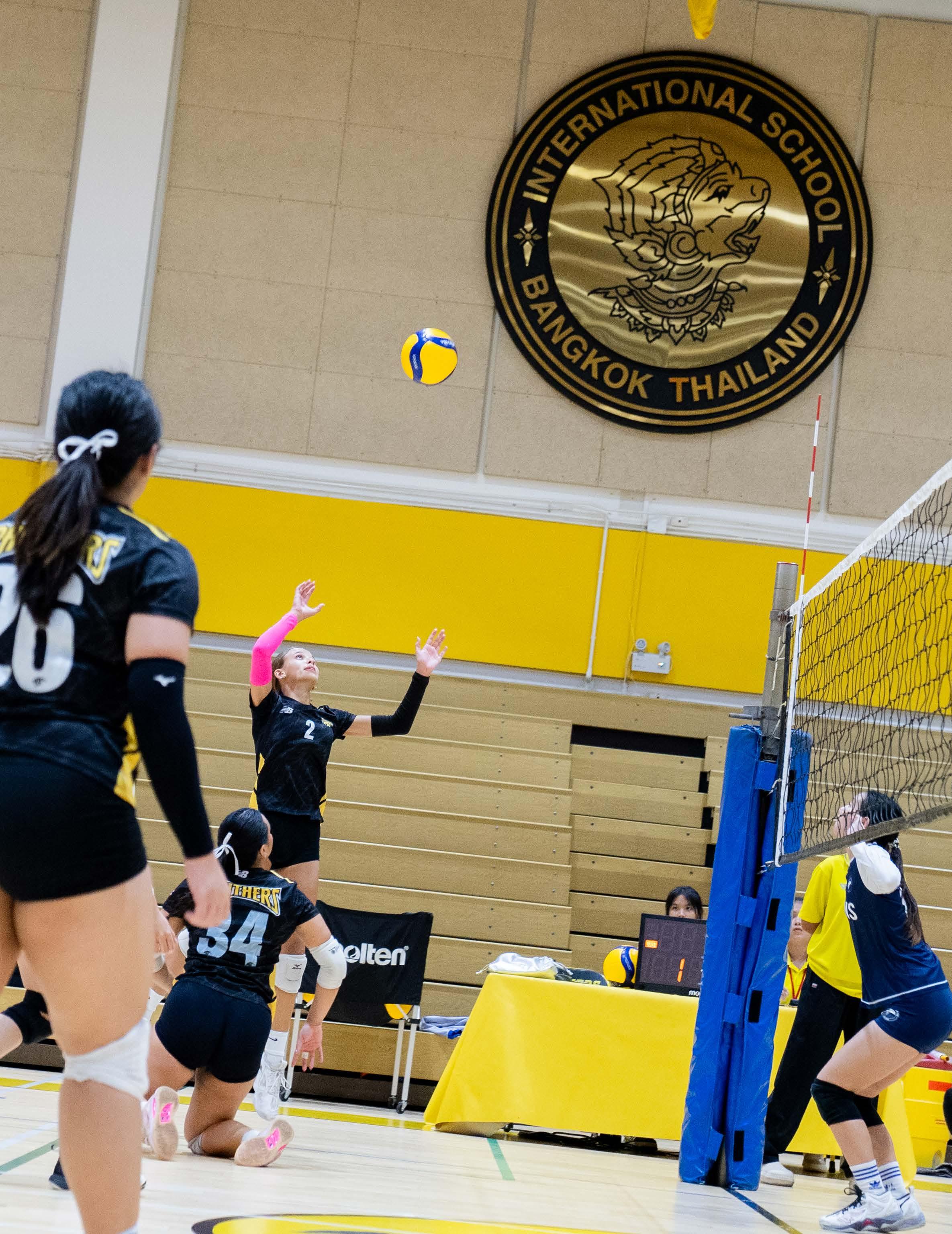
Our team supports students who are acquiring English as an Academic Language and/or neurodiverse learners. Our team offers in-class support, direct services, and assists learners to succeed with academics and beyond at ISB.
The Learning Support team works intensively with students who have identified learning needs and also offers coaching to any high school student who requires support in a specific area of learning. The Learning Support team believes in a mentor mindset to support students with their individual learning needs through frequent check-ins, goal-setting, and individualized approaches. In addition to the support provided to all students, the LS team works closely with identified students. Support is offered through co-taught classes, Intensive Studies classes, support in the Learning Hub, and one-to-one coaching. The emphasis of learning support is to help students develop strategies to enable them to take ownership of their own learning.
The EAL team works with multilingual learners using a Sheltered Immersion Model to develop English language proficiency for social and academic success. Our program aims to enhance language learning, facilitate access to high

school classes, uphold high academic standards, and foster cross-cultural understanding. English Language Learners are identified through WIDA assessments and supported and monitored using school-developed and WIDAinformed tools. Language instruction, academic skills, and content learning are supported in both EAL and content classes. Native language is integral to identity and a strong resource for learning. For these reasons, EAL students are encouraged to develop their native language to aid content understanding and English language learning. EAL support is available to all EAL students throughout their years at ISB.
Grade: 9 - 10 | Length: 1 year | Credit: 1 (Elective credit)
Prerequisite: EAL program placement
In EAP courses students develop academic language and skills for English, science, and social studies courses at ISB. Students are introduced to a variety of spoken and written texts connected to their content studies. In addition, effective study and academic skills, along with vocabulary development are taught. For half of each period, teachers assist students with the language and content of their English, social studies and science classes. The goal of EAP is for students to become proficient in the language of their academic studies.
Grade: 9 | Length: 1 year | Credit: 1 (English credit)
Prerequisite: EAL program placement
Transitional English 9 is designed for English language learners who are developing academic language proficiency and preparing for entry into English 10. This course supports students in accessing English Language Arts content with an intensive focus on literary analysis, academic writing, and oral language development. Units of study include a range of literary and non-literary texts, with learning outcomes aligned to the grade 9 English standards.
Students engage in a variety of reading, writing, listening, and speaking tasks to strengthen both their language skills and their understanding of literary concepts. Emphasis is placed on argumentative, narrative, and analytical writing, with students receiving frequent feedback through writing conferences. The course also incorporates structured opportunities for collaboration, discussion, and language practice. Scaffolding, vocabulary instruction, and the integration of multimodal supports ensure students are equipped to thrive in
English Language Arts.
Transitional English 9 fulfills ISB's English requirements for grade 9
Grade: 10 | Length: 1 year | Credit: 1 (English credit)
Prerequisite: EAL program placement
Transitional English 10 is designed for English language learners who are developing academic language proficiency and preparing for entry into grade 11 English courses. This course supports students in accessing English Language Arts content with intensive focus on literary analysis, academic writing, and oral language development. Units of study include a range of literary and non-literary texts, with learning outcomes aligned to the grade 10 English standards.
Students engage in a variety of reading, writing, listening, and speaking tasks to strengthen both their language skills and their understanding of literary concepts. Emphasis is placed on argumentative, narrative, and analytical writing, with students receiving frequent feedback through writing conferences. The course also incorporates structured opportunities for collaboration, discussion, and language practice. Scaffolding, vocabulary instruction, and the integration of multimodal supports ensure students are equipped to thrive in the English Language Arts.
Transitional English 10 fulfills ISB's English requirements for grade 10.
(Higher Level & Standard Level)
Grade: 11 - 12 | Length: 2 years
Credits: 2 (English credit)
Prerequisite: English language learner and teacher recommendation
*NCAA Approved
The purpose of the course is to provide students with the linguistic skills and intercultural understanding needed to communicate effectively in a variety of contexts where English is used. Students will develop their written and oral communication skills through the study of authentic examples of both written and spoken texts. Students strengthen their skills in the four assessed domains of listening, reading, speaking, and writing, and learn to interpret and produce a wide range of authentic written and spoken texts. They will produce a range of texts that demonstrate awareness of audience, purpose, structure, style, and register. Students will also engage in oral activities that encourage meaningful discussion of issues related to course themes. At the Higher Level, the study of literature from Englishspeaking cultures is an essential component, enabling students to explore both language and culture in depth. Throughout the course, ongoing assessments reflect the IB assessment objectives and also contribute to the overall ISB grade.
IB English B fulfills ISB’s English requirements for grades 11 and 12.
IBDP Language B Course Guide
Grade 9 - 12 | Length: 20 classes | Credit: N/A
Prerequisite: Placement by recommendation
Coaching is a one-to-one intervention using targeted check-ins and goal-setting. Coaching sessions support students with any part of the academic program where they are experiencing a challenge. Students meet with a learning coach and develop a personal plan to assist them with their self-identified goals. Coaches help students with strategies or specific skills as appropriate. When not meeting with their coach, students work in the Learning Hub. Student progress is reviewed after 20 sessions (approximately half a semester). Students then review their goals and progress with their coach and either exit the program, continue with coaching, or are offered more intensive academic support.
Grade: 9 - 12 | Length: 1 year | Credit: 1 (Elective credit)
Prerequisite: Learning support program placement
Intensive studies is a course for students with additional learning needs. Students work in small group settings to develop learning strategies and skills. Intensive Studies is designed to improve student:
• Self-awareness
• Self-management skills
• Self-advocacy skills
• Self-efficacy
• Academic skills
To support this development, students set, monitor and achieve SMART goals, while simultaneously improving their academic skills. Core features of our program are regular one-to-one learning conversations and reflections.
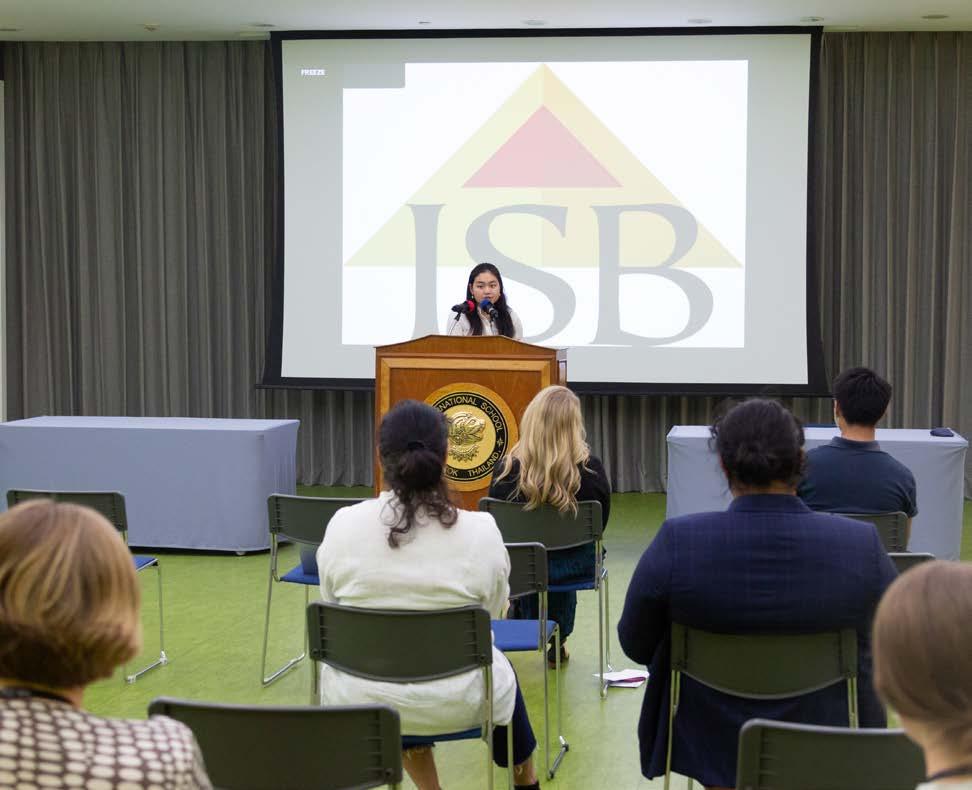
At ISB students in Gr11 and Gr12 all participate in Core, which is a class dedicated to supporting students with four different elements: University Counseling Seminars, or CAS (Creativity, Activity, Service), Theory of Knowledge (ToK), and the Extended Essay (EE)..
Students who take the full IB Diploma attend all sessions to help them fulfill the IB Diploma Core and receive guidance through the College seminars.
Students who have opted to take the AP Capstone, Hybrid or ISB Diploma attend CAS and College & University Seminars, during Core. The remaining periods are free.
A calendar rotation is published at the beginning of the academic year to show which sessions are held during the Core period.
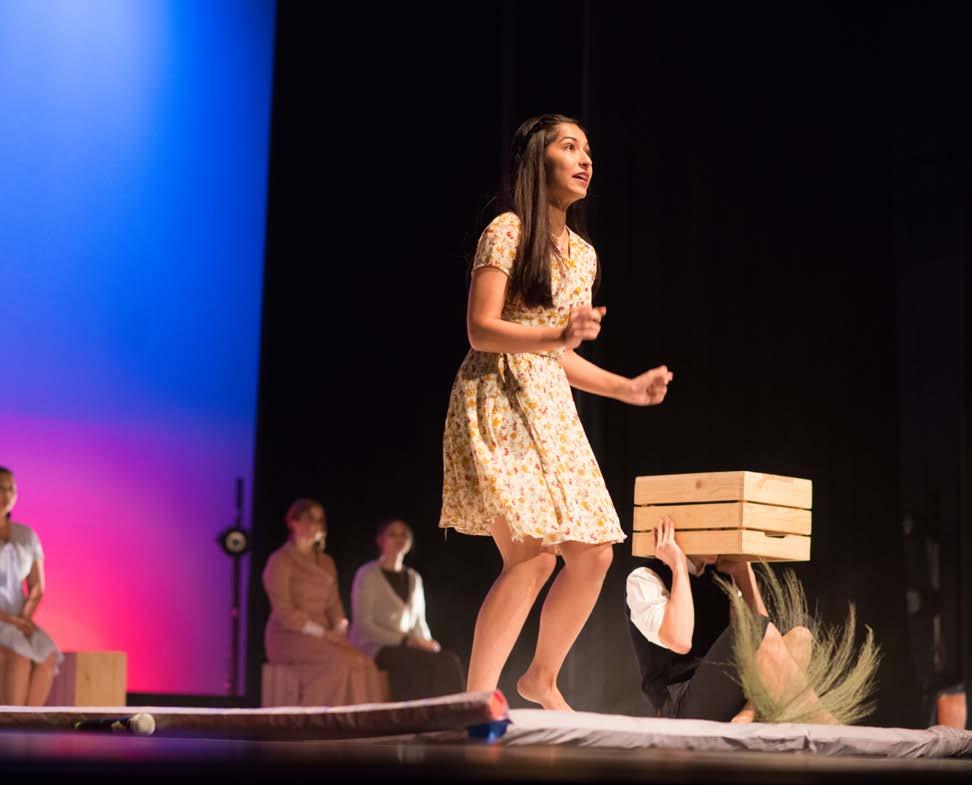
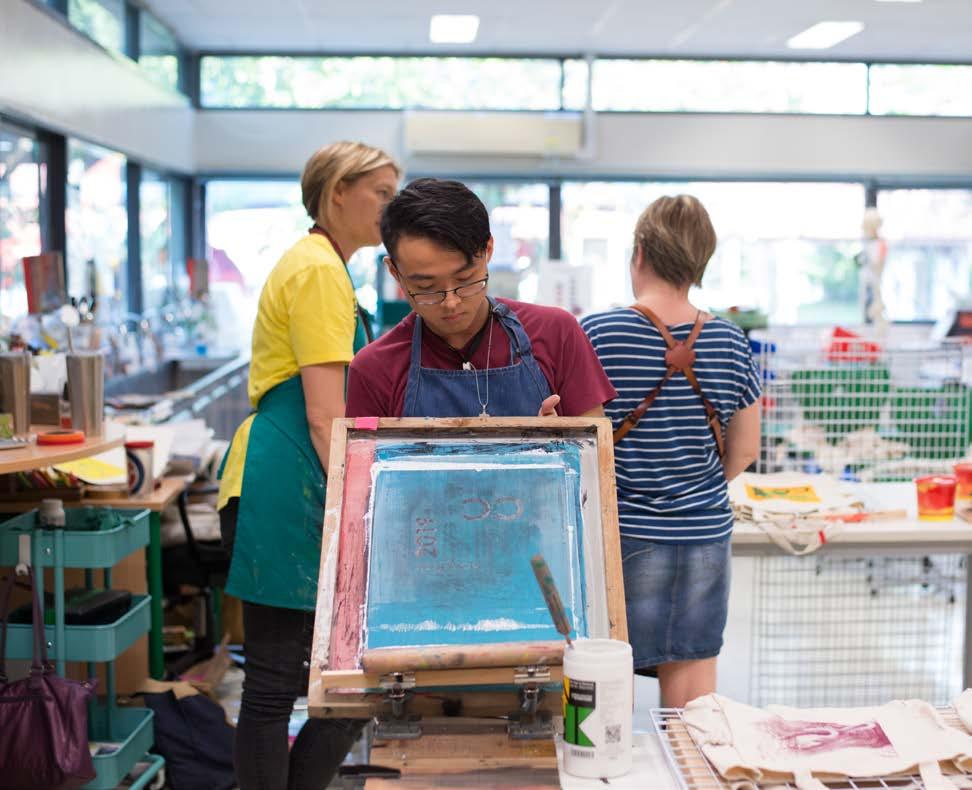
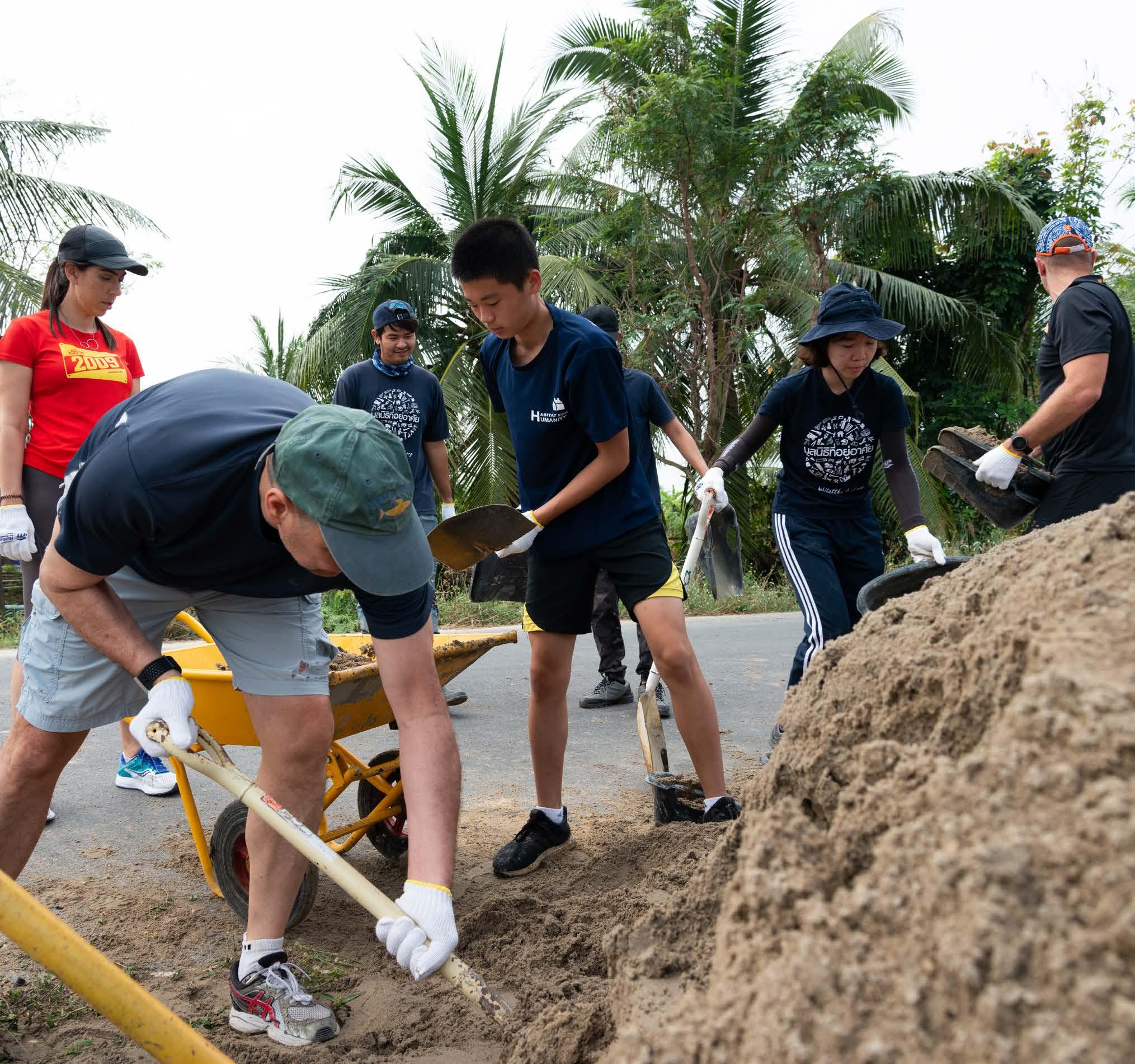
Grade: 11 and 12
University Seminars offer a chance for juniors and seniors to get important information relevant to their university search and eventual application process. There is a great deal of shared knowledge—things that everyone needs to know and understand about the process no matter where they want to go—that complements the individual meetings students (and their families) have with their university counselor.
Juniors:
• The importance of self-reflection and the vital role it plays in being able to determine what characteristics a college or university presents that make it a good match.
• How to research universities—determining what your priorities and preferences are throughout the journey will guide your search.
• Essay writing—putting those self-reflection skills onto paper in the manner that is best suited for different countries’ application styles and requirements.
• Preparing for the Junior-Led Conference to present your university preferences and research to your university counselor and parents.
• How to ask for letters of recommendation.
• Testing—what, if anything, is required for where you want to go?
Seniors:
• Finalizing your balanced application list.
• Getting applications done! The importance of deadlines.
• Finishing and finessing the final essay draft(s).
• Hitting the submit button and what to expect next.
• How to choose your destination college or university.
• Transitioning from high school student to independent higher education student/young adult.
(Community Service for students in G9 and G10, and CAS program required for all G11 and G12 students)
Education neither begins nor ends in a classroom or exam room. Essential aspects of education exist outside of both. In recognition of this, all students must meet key outcomes by participating in activities at ISB and in the community. Students are required to join at least one ISB service club or council, with attendance at meetings and evidence of participation in planned events required. All students at ISB are required to submit a Service portfolio at the end of their high school journey.
In Grades 11 and 12, students will be guided through Core sessions to help them plan, take action, and reflect on their experiences with creativity, activity, and community service (CAS). During this time, they are expected to document their service, activity, and creativity experiences in a learning portfolio as part of their Core requirements. Students pursuing the full IB Diploma will also complete an extended CAS Project, which challenges them to demonstrate initiative, collaboration, and sustained commitment toward a meaningful goal.
All students are required to complete CAS, which is the acronym for Creativity, Action, and Service. The CAS requirement is designed to be an enjoyable yet challenging component of a student’s education. All three activity elements should be represented.
• Creativity – covers the range of art, craft, debate, forensics, drama, music, choir, filmmaking, photography and/or the application of creativity in designing and carrying out service projects.
• Activity – includes participation in individual and team sports, physical training or expeditions.
• Service – includes a range of community or social service activities. Volunteer work helping the less fortunate or involvement in environmental projects are ideal service activities.
As a result of their CAS experience as a whole, including their reflections, there should be evidence that students have:
• Increased their awareness of their own strengths and areas for growth
• Undertaken new challenges and developed new skills
• Planned and initiated activities
• Worked collaboratively with others
• Shown perseverance and commitment to activities
• Engages with issues of global importance
• Considered the ethical implications of their actions
Documenting CAS Experiences
Students will document and reflect on their CAS experiences using the ISB’s core values as learning competencies
Although there is no credit for CAS as such, elective classes can be taken for CAS to complete CAS requirements.
Required for all IB Diploma Students
Grade: 11 - 12 IBDP | Length: approximately 40 hours of independent learning
The extended essay (EE) is a compulsory, externally assessed piece of independent research presented as a formal piece of academic writing. It is an indepth study of a focused topic, undertaken through one of two research pathways: either a subjectfocused or an interdisciplinary pathway (combining two Diploma Programme subjects). It enables students to investigate a topic of special interest that they have chosen themselves, a passion project. The EE is the capstone of the Diploma Programme and encourages the development of independent research skills expected at college or university.
The Extended Essay is:
• awarded in combination with the grade for Theory of Knowledge (ToK) and contributes up to three points to the total score for the IB Diploma.
• a piece of independent research or investigation on a topic chosen by the student, undertaken in consultation with a supervisor in the school.
• based on one of the approved Diploma Programme subjects, or on an interdisciplinary topic that combines two subjects, and presented as a formal piece of writing of no more than 4,000 words.
• the result of approximately 40 hours of independent work by the student.
• required to achieve a grade D or higher, in combination with a passing grade in TOK, to be eligible for the award of the IB Diploma.
The extended essay aims are to enable students to:
• experience the intellectual excitement of independent research and exploration.
• engage in student-led inquiry on a topic of personal interest.
• develop skills in research, critical thinking, selfmanagement, and communication.
• reflect on the process and learning gained through producing the extended essay..
Required for all IB Diploma Students Grade: 11 - 12 | Length: 4 semesters* | Credit: 1
The TOK course provides students with an opportunity to explore and reflect on the nature of knowledge and the process of knowing. It is a core element of the IB Diploma. The course is taught in Grades 11 and 12, over approximately 100 hours. Students reflect on the knowledge, beliefs and opinions that they have built up from their years of academic studies and their lives outside the classroom. The course is intended to be challenging and thought-provoking—as well as empowering— for students.
The course centres on the exploration of knowledge questions, which are a key tool for both teachers and students. These are contestable questions about knowledge itself, such as: “What counts as good evidence for a claim?”, “Are some types of knowledge less open to interpretation than others?”, or “What constraints should there be on the pursuit of knowledge?”. While these questions may initially seem slightly intimidating, they become much more accessible when considered with reference to specific examples within the TOK course.
The TOK curriculum is made up of three deeply interconnected parts.
• The core theme—Knowledge and the knower: This theme encourages students to reflect on themselves as knowers and thinkers, and to consider the different communities of knowers to which we belong.
• Optional themes: This element provides an opportunity to take a more in-depth look at two themes of particular interest to teachers and students. The given themes all have a significant impact on the world today and play a key role in shaping people’s perspectives and identities. Teachers select two optional themes from a choice of five: knowledge and technology; knowledge and language; knowledge and politics; knowledge and religion; and knowledge and indigenous societies.
• Areas of knowledge: The areas of knowledge (AOK) are specific branches of knowledge, each of which can be seen to have a distinct nature and sometimes use different methods of gaining knowledge. In TOK, students explore five compulsory areas of knowledge: history; the human sciences; the natural sciences; mathematics; and the arts.
• There are two main assessments during the course. The Exhibition, which takes place at the end of Gr11 and the TOK Essay, which is tackled in Gr12.
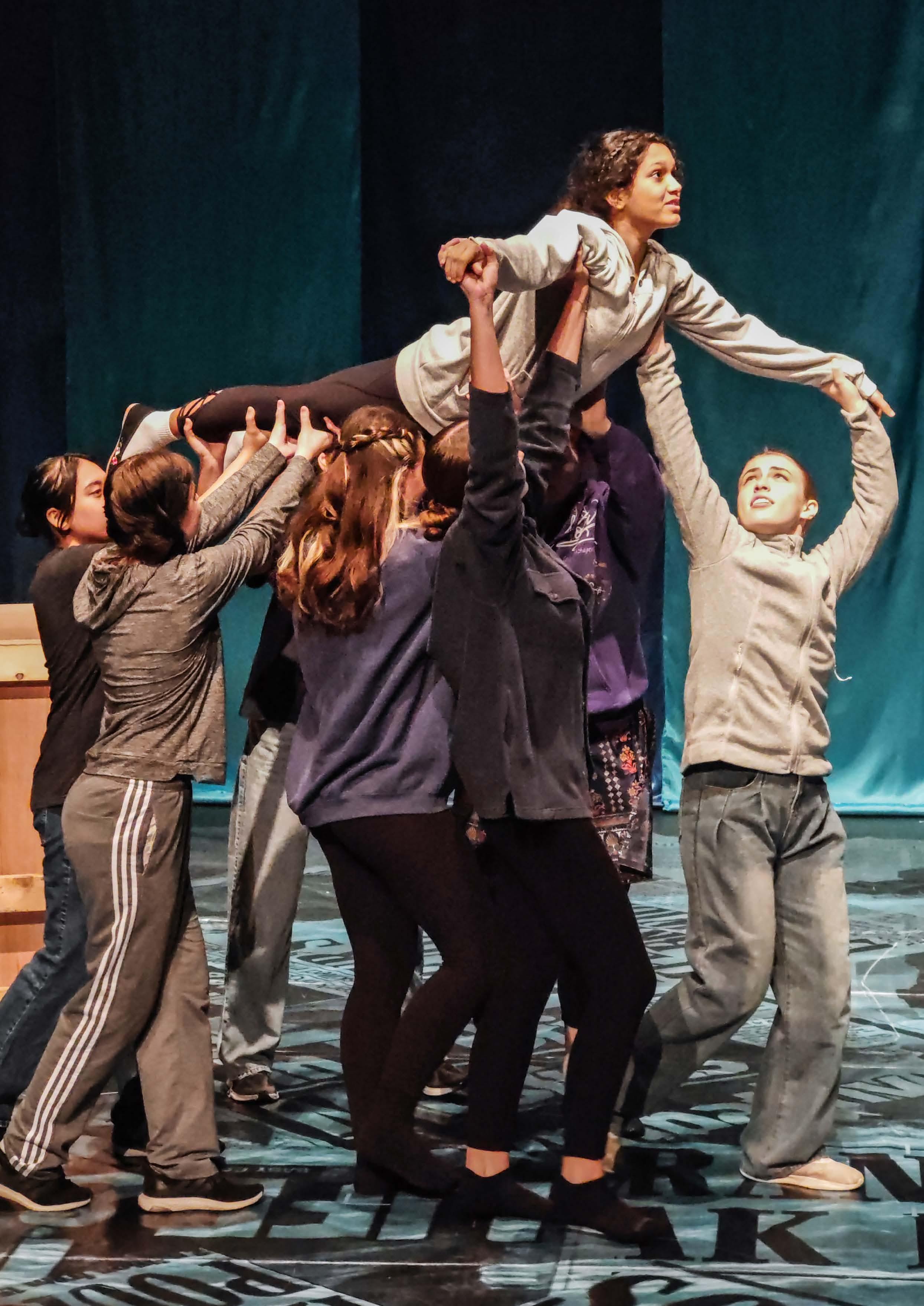
We are pleased to continue our partnership with the Global Online Academy (GOA) by offering a whole range of courses through GOA for the next academic year. This is a great opportunity for students to explore Online Learning, make Global Connections and explore New Ideas. These enrichment courses provide opportunities for students at ISB to extend learning in a chosen subject, or offer alternative courses for students that are not available at ISB.
GOA is a fully accredited course provider (NEASC 2016); GOA courses are recognised by colleges and universities and can be taken for ISB credit. Students may opt to take GOA classes Pass/Fail or for a Grade. Declarations must be made immediately after mid-semester grades are published.
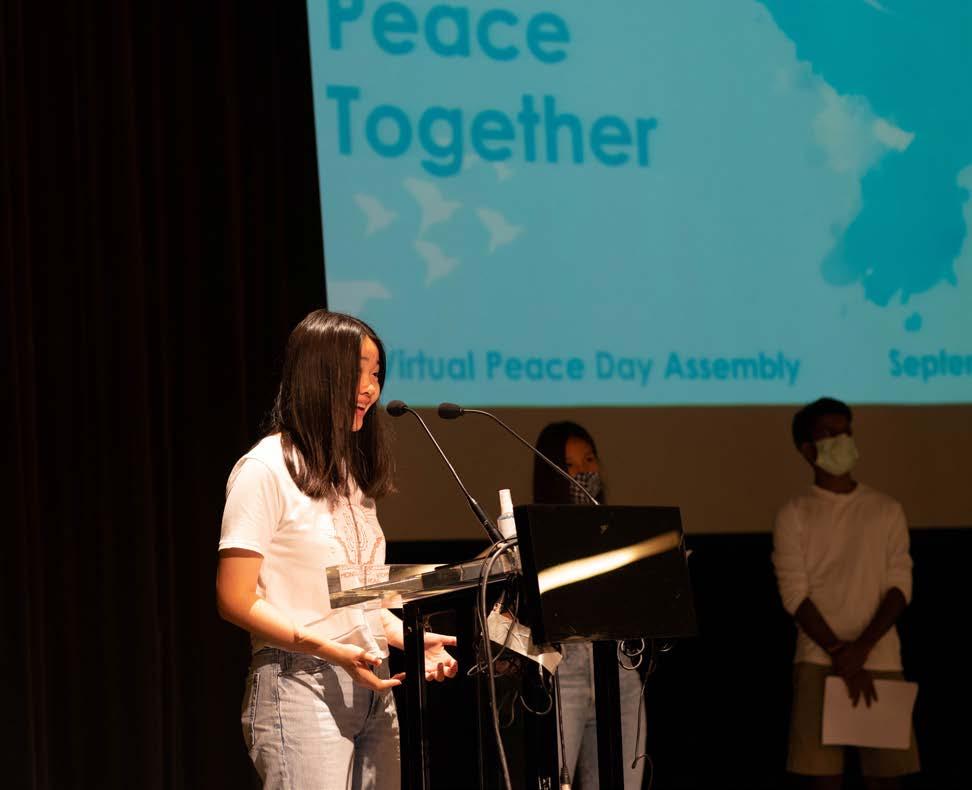
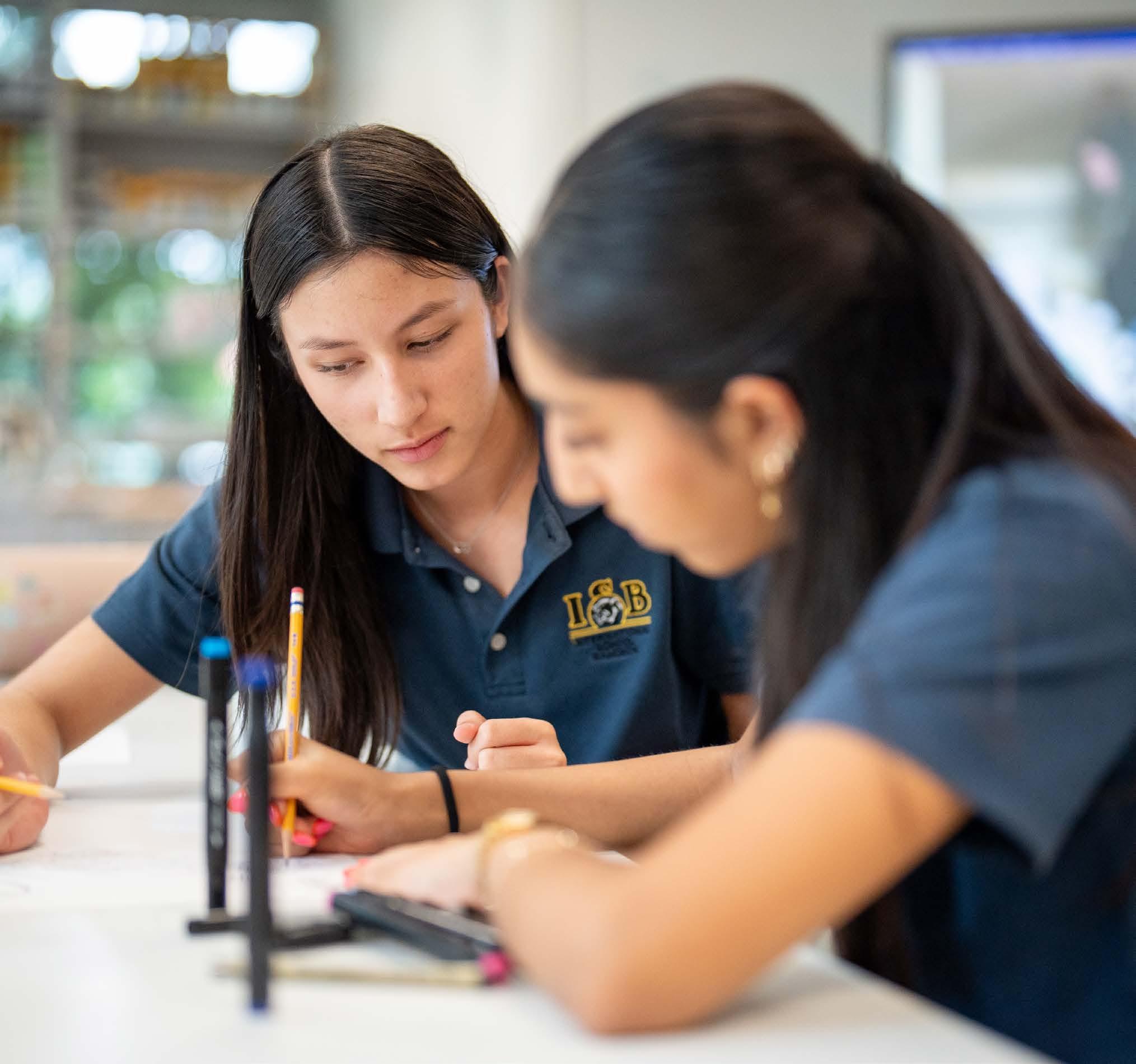
Grades: 10 - 12 | Length: 1 semester
Credit: 0.5 Pass/Fail or Graded
Prerequisite: Discussion with counselor and approval for course of study
ART, MEDIA & DESIGN
BUSINESS, ECONOMICS & FINANCE
AP® Art History*
Architecture
Arts Entrepreneurship
Computer Science II: Game Design & Development
Creative Nonfiction Writing
Digital Photography
Fiction Writing
Filmmaking
Graphic Design
Music Composition & Production
AP® Macroeconomics*
AP® Microeconomics*
Arts Entrepreneurship
Business Problem Solving
Capitalism: Past, Present & Future
Entrepreneurship in a Global Context
Introduction to Blockchain & Cryptocurrency
Introduction to Branding & Marketing
Introduction to Economics
Investing I
Investing II
Personal Finance
COMPUTER SCIENCE & ENGINEERING
GLOBAL STUDIES
Computer Science I: Computational Thinking
Computer Science II: Analyzing Data with Python
Computer Science II: Game Design & Development Cybersecurity
Introduction to Artificial Intelligence
Introduction to Blockchain & Cryptocurrency
Problem Solving with Engineering & Design
AP® African American Studies*
AP® Comparative Government & Politics*
AP® Human Geography*
Applying Philosophy to Global Issues
Capitalism: Past, Present & Future
Climate Action & Sustainability
Discourse Across Difference
Entrepreneurship in a Global Context
Genocide & Human Rights
Global Health
International Relations
HEALTH SCIENCES
JUSTICE, ETHICS & HUMAN RIGHTS
Anatomy & Physiology
Biochemistry: Medicine, Drugs & Addiction
Bioethics
Global Health
Health & Fitness
Introduction to Organic Chemistry I
Introduction to Organic Chemistry II
Medical Problem Solving I
Medical Problem Solving II
Applying Philosophy to Global Issues
Bioethics
Discourse Across Difference
Genocide & Human Rights
Introduction to Legal Thinking
Perspectives on Gender & Culture
Prisons & Criminal Justice Systems
Race, Culture & Community
MATHEMATICS & QUANTITATIVE REASONING
PSYCHOLOGY & NEUROSCIENCE
Data Visualization
Game Theory
Linear Algebra
Multivariable Calculus I: Vector and Differential Calculus Multivariable Calculus II: : Integral Calculus
Number Theory
Problem Solving with Engineering & Design
Abnormal Psychology
AP® Psychology*
Developmental Psychology
Introduction to Psychology
Neuropsychology
Positive Psychology
Social Psychology
At ISB we require students to take 7 classes. If a student wishes to pursue a course through GOA this would constitute either a 7th class (with permission) or an 8th class.
Only one GOA semester course may be taken per semester.
The additional cost for each semester's GOA course is $367.50 USD.
GOA now offers a selection of year-long AP courses* which can be taken for credit at ISB. At ISB we believe our AP students are best supported by ISB teachers, however student may request approval from the Dean of Academics to take a GOA online AP course when there is a scheduling obstacle
or, in the case of AP® Art History or AP® African American Studies, when a course is not currently offered at ISB. ISB’s AP course limits apply.
The GOA course catalog is available online. For course details, and to see what semester courses are offered in 2026-27, please visit the GOA website.
If you are interested in taking an enrichment course through GOA please talk to your counselor about how this could fit in with your overall program of studies. Please note that GOA courses are very challenging, often involve navigating timezones, and require exceptional Habits and Attitudes towards Learning (HALs).