Grade 6 Curriculum Guide


Grade 6 Curriculum Guide
DuringMYP1,studentscompletefourorfiveunitsofworkinEnglishLanguageandLiterature (ELL) Throughout each unit, students carry out text comprehension exercises, interpret visual information, and produce written text in different formats In addition, students plan and execute oral presentations and compare and contrast genres and authors The key concepts of each unit are discussed throughout and a final reflection is carried out, with studentsconsideringhowtheyinteractedwiththekeyconceptandtheATLskillscoveredin theunit
Unitsthatmaybeselectedfortheyearareasfollows:
● Charlie and the Chocolate Factory by Roald Dahl: Students will explore the key concept of Creativity by focusing on the work of a famous author and use this as the basis to create theirown6thticketwinner ThisunithasaclosetietoVisualArts, in which their characters are brought to life through stop motion animation Students will also study newspaper article writing and produce articles based on theirticketwinner
● Indigenous Stories: Students learn about various indigenous groups from around the world and some of the stories that form part of their culture They will turn the storiesintoplayscriptstobeperformedinacombinedunitwithPerformingArts.
● OurLanguages: This unit is a deep dive into the history of languages Students will be exposed to various historicalversionsofEnglish(includingShakespeare,Beowulf andChaucer)andhavethechancetoexplorethehistoryoftheirownlanguages
● SPAG: Spelling, punctuation and grammar within the English language is ongoing throughoutallunits
● The Life of Explorers: Linking to our I&S unit on exploration and survival and the wonderful Kon-Tiki and Fram museums in Oslo, students will learn the necessary skillsofdiaryandbiographywritingthatfitswithinaspecifichistoricalcontext
In MYP Year 1 Norwegian Language and Literature (NLL), units are based on conceptual ideas and the studies require student involvement in developing inquiry questions related to a global context Thelearningprocessalsoincludesattaining,practicing,andmastering identified approaches to learning skills The assessment of formative and summative learningrecordsthestudent’slevelofcompetenceinNorwegian
Unit 1 Written, Oral and Visual Communication: In the NLL first unit, students produce a text, apply all three forms of communication and provide a rationale and stylistic choices in terms of linguistic, literary and visual devices,whiledemonstratingawarenessofimpact on an audience. Students will also identify and comment upon significantaspectsoftexts andidentifysimilaritiesanddifferencesinfeatureswithinandbetweentexts
Unit2LanguageandStructureinMediaText: In Unit 2, students produce advertisements They are asked to employ organizational structures that serve the context and intention and use referencing and formatting tools to create a presentation style suitable to the contextandintention
Unit 3 Grammar-A Language About Language: For Unit 3, students produce written text usingappropriateandvariedvocabulary,sentencestructureandformsofexpression.They are expected to use correct grammar, syntaxandpunctuation Spell,writeandpronounce withaccuracy
Unit 4 Text Analysis: In the final unit, students are asked to analyze the context and purpose of text in various ways relevant to significance, differences, text features, identity and author/creator choice Students are asked to justify their opinions and ideas, using examples, explanations andterminology.Theywillproducetextsthatdemonstratethought and imagination while exploring new perspectives and ideas arising from personal engagement with the creative process, using details and examples to support theirideas. Theirfinalprojectisanoralpresentation
DuringLanguage&Literature(LL)fortheMYPYear1,studentsareassessedonthe following,equallyweightedcriteriatwiceperyear Whenevaluatingsummative assessments,teachersassignanoveralllevelfrom1-8 Atreporttimes,inJanuaryand June,allevidenceastudenthasprovidedforeachcriterionisconsidered Summative gradesonreportsareassigned1-7 See“MYPGradeDescriptors&Boundaries”onpage28
CriterionA:Analysing, MaximumLevel:8
AttheendofMYPYear1(Grade6),studentsshouldbeableto:
i identifyandcommentuponsignificantaspectsoftexts
ii. identifyandcommentuponthecreator’schoices
iii justifyopinionsandideas,usingexamples,explanationsandterminology
iv. identifysimilaritiesanddifferencesinfeatureswithinandbetweentexts.
CriterionB:Organizing, MaximumLevel:8
AttheendofMYPYear1(Grade6),studentsshouldbeableto:
i employorganizationalstructuresthatservethecontextandintention
ii organizeopinionsandideasinalogicalmanner
iii usereferencingandformattingtoolstocreateapresentationstylesuitabletothe contextandintention
CriterionC:Producingtext,MaximumLevel:8
AttheendofMYPYear1(Grade6),studentsshouldbeableto:
i. producetextsthatdemonstratethoughtandimaginationwhileexploringnew perspectivesandideasarisingfrompersonalengagementwiththecreative process
ii makestylisticchoicesintermsoflinguistic,literaryandvisualdevices, demonstratingawarenessofimpactonanaudience
iii selectrelevantdetailsandexamplestosupportideas
CriterionD:Usinglanguage, MaximumLevel:8
AttheendofMYPYear1(Grade6),studentsshouldbeableto:
i useappropriateandvariedvocabulary,sentencestructuresandformsof expression
ii writeandspeakinanappropriateregisterandstyle
iii usecorrectgrammar,syntaxandpunctuation
iv spell(alphabeticlanguages),write(characterlanguages)andpronouncewith accuracy
v useappropriatenon-verbalcommunicationtechniques
Students in English Language Acquisition (ELA) develop English skills in the essential processes of listening, reading, speaking and writing The course is organized into three levelsofproficiencyspanningsixlearningphases:
● EmergentLevel:Phases1-2
● CapableLevel: Phases3-4
● ProficientLevel:Phases5-6
Studentsareassessedandmovethroughthephasesoflearninguntiltheyhavegained thenecessaryskillstoparticipateinEnglishLanguageandLiterature(ELL) Tasks,resources andassessmentsaredifferentiatedtomeettheneedsofstudentsinvariousphases(See AimsofLanguageAcquisition)
At times throughout the year, ELA may align with ELL At those times, both classes are taught together, albeit with differentiated tasks and assessments Otherwise, ELA is taught as a separate class to ensure the delivery of a bespoke learning programme for each student
ELAUnitsforGrade6include:
● Anovelstudyof‘CharlieandtheChocolateFactory’
● Newspaperwriting
● Combiningroleplaywithstorytelling
● Turningindigenousstoriesintoplays
● Ongoingspelling,punctuationandgrammarworkshops
Norwegian Language Acquisition (NLA) is a course for emergent, capable and proficient communicators It is taught within the MYPframeworkforLanguageAcquisition(LA)andin combination with “Basic Norwegian for Language Minorities” from the Norwegian national curriculum The course is organized into three levels of proficiency spanning six learning phases:
● EmergentLevel:Phases1-2
● CapableLevel: Phases3-4
● ProficientLevel:Phases5-6
A student’s phase is determined according to their oral, visual and written Norwegian proficiency Students intending to remain in Norway on a long-term basis should eventuallytransferintoNorwegianLanguageandLiterature(NLL)
At times, when deemed pedagogically beneficial, NLA students participate in NLL classes. This decision is based on ongoingevaluationofastudent’slanguageskillsbytheirNLLand NLA teachers. However, students enrolled in NLA are still assessed with Language Acquisition criteria at their level of proficiency A full transition from Norwegian Language Acquisition to the Norwegian Language and Literaturecoursehappensafteranevaluation bytheNLA/NLLteachersandindialoguewiththestudentandtheirparents
NLAYear1units,differentiatedforallphases,areasfollows:
● Myself,MyFamilyandMyFriends
● MyDailyLife(includingcelebrations!)
● TheHumanBody
● Food
● Myclothes
● SyntaxandGrammar
The MYP Year 1 French for Grade 6 aimstointroduceanddevelopstudents'understanding of the French language and French speaking cultures It is equally designed to equip students with a skills base for further language learning Essential processes of listening, reading, speaking, and writing French are covered These skills are very much interactive andinterrelated,thoughinsomeinstances,teachersmaywishtofocusonasinglearea
In Grade 6 students begin with Phase 1 of the Emergent level (see Aims of Language Acquisitions). The mainsourcebookisentitled French.Studentsaccessadditionallearning resources, too Vocabulary, grammar, syntax, and pronunciation is covered in all units FrenchunitsforMYP1inGrade6areasfollows:
● Etsionapprenaitunenouvellelangue? WhoamI?Whoismyfamily?Whoaremy friends?Whatshouldwelearntobothintroduceandtalkaboutourselves?
● Où te sens-tu chez toi? Where do I live? How would I describe my home and my city?
● Quelestleprogrammeaujourd’hui?HowdoIdescribemydailyroutine,schoollife, andhobbies?WhatthingsdoIlike?
Language Acquisition is organized into three levels of proficiency spanning six learning phases
Theseareasfollows:
● EmergentLevel:Phases1-2
● CapableLevel: Phases3-4
● ProficientLevel:Phases5-6
Phases1-6representadevelopmentalcontinuumofadditionallanguagelearningas studentsmovethrougheachlevelofproficiency Phase6alignswiththeskilllevelofa fluentspeaker Dependingonastudent’sprioradditionallanguage-learningexperiences, studentsmaybeginlanguageacquisitioninanyphaseonthecontinuumandexitfrom anyphaseonthecontinuum
Assessmenttodeterminelanguagedevelopmentisongoing.Asastudent’s proficiency increasesinEnglishorNorwegian,theygainthenecessaryskillstotakepartinLiterature& Languageclasses. InFrench,studentsfocusonacquiringskillstobecomecapable communicators Whenevaluatingsummativeassessments,teachersassignanoverall levelfrom1-8.
Atreporttimes,inJanuaryandJune,allevidenceastudenthasprovidedforeachcriterion isconsidered Summativegradesonreportsareassigned1-7 (See“MYPGradeDescriptors &Boundaries”onpage28) DescriptorsofthelearningaimsforLanguageAcquisitionare asfollows:
InordertoreachtheaimsofemergentlanguageacquisitioninEnglish,Norwegianand/or French,studentsshouldbeableto:
CriterionA:ListeningMaximumLevel:8
i. identifyexplicitandimplicitinformation(factsand/oropinions,supportingdetails) inawidevarietyofsimpleauthentictexts
ii. analyseconventionsinawidevarietyofsimpleauthentictexts
iii analyseconnectionsbetweenawidevarietyofsimpleauthentictexts
CriterionB:ReadingMaximumLevel:8
i identifyexplicitandimplicitinformation(factsand/oropinions,supportingdetails) inawidevarietyofsimpleauthentictexts
ii analyseconventionsinawidevarietyofsimpleauthentictexts
iii analyseconnectionsbetweenawidevarietyofsimpleauthentictexts
CriterionC:SpeakingMaximumLevel:8
i useawiderangeofvocabulary
ii useawiderangeofgrammaticalstructuresgenerallyaccurately
iii useclearpronunciationandintonationinacomprehensiblemanner
iv communicatealloralmostalltherequiredinformationclearlyandeffectively
CriterionD:WritingMaximumLevel:8
i useawiderangeofvocabulary
ii useawiderangeofgrammaticalstructuresgenerallyaccurately
iii organizeinformationeffectivelyandcoherentlyinanappropriateformatusinga widerangeofsimplecohesivedevices
iv communicatealloralmostalltherequiredinformationwithaclearsenseof audienceandpurposetosuitthecontext
InordertoreachtheaimsofcapablelanguageacquisitioninEnglish,Norwegianand/or French,studentsshouldbeableto:
CriterionA:ListeningMaximumLevel:8
i. identifyexplicitandimplicitinformation(factsand/oropinions,supportingdetails) inawidevarietyofsimpleandsomecomplexauthentictexts
ii. analyseconventionsinawidevarietyofsimpleandsomecomplexauthentictexts
iii analyseconnectionsbetweenawidevarietyofsimpleandsomecomplex authentictexts
CriterionB:ReadingMaximumLevel:8
i identifyexplicitandimplicitinformation(factsand/oropinions,supportingdetails) inawidevarietyofsimpleandsomecomplexauthentictexts
ii analyseconventionsinawidevarietyofsimpleandsomecomplexauthentictexts
iii analyseconnectionsbetweenawidevarietyofsimpleandsomecomplex authentictexts
CriterionC:SpeakingMaximumLevel:8
i useawiderangeofvocabulary
ii useawiderangeofgrammaticalstructuresgenerallyaccurately
iii useclearpronunciationandintonationinacomprehensiblemanner
iv communicatealloralmostalltherequiredinformationclearlyandeffectively
CriterionD:WritingMaximumLevel:8
i useawiderangeofvocabulary
ii useawiderangeofgrammaticalstructuresgenerallyaccurately
iii organizeinformationeffectivelyandcoherentlyinanappropriateformatusinga widerangeofsimpleandcomplexcohesivedevices
iv communicatealloralmostalltherequiredinformationwithaclearsenseof audienceandpurposetosuitthecontext
ProficientLevel:Phases5–6
InordertoreachtheaimsofproficientlanguageacquisitioninEnglishandNorwegian, studentsshouldbeableto:
CriterionA:ListeningMaximumLevel:8
i identifyexplicitandimplicitinformation(factsand/oropinions,supportingdetails) inawidevarietyofcomplexauthentictexts
ii analyseconventionsinawidevarietyofcomplexauthentictexts
iii analyseconnectionsbetweenawidevarietyofcomplexauthentictexts
CriterionB:ReadingMaximumLevel:8
i identifyexplicitandimplicitinformation(factsand/oropinions,supportingdetails) inawidevarietyofcomplexauthentictexts
ii analyseconventionsinawidevarietyofcomplexauthentictexts
iii analyseconnectionsbetweenawidevarietyofcomplexauthentictexts
CriterionC:SpeakingMaximumLevel:8
i useawiderangeofvocabulary
ii useawiderangeofgrammaticalstructuresgenerallyaccurately iii useclearpronunciationandintonationinacomprehensiblemanner
iv. communicatealloralmostalltherequiredinformationclearlyandeffectively
CriterionD:WritingMaximumLevel:8
i useawiderangeofvocabulary
ii. useawiderangeofgrammaticalstructuresgenerallyaccurately
iii organizeinformationeffectivelyandcoherentlyinanappropriateformatusinga widerangeofcomplexcohesivedevices
iv communicatealloralmostalltherequiredinformationwithaclearsenseof audienceandpurposetosuitthecontext
Individuals and Societies (I & S) is a combined humanities subject During the MYP Year 1, Grade 6 students are challenged toknowandunderstand, investigate,communicateand think critically Students must plan, evaluate and document sources in an appropriate format, and identify bias Students present information in a range of different formatseg, maps, timelines, graphs and sketches Students are also active in note taking and discussions Each unit concludes with a reflection on the learning process and what has beenachieved TheMYPYear1unitsareasfollows:
● An Introduction to Individuals and Societies: What is an individual? What is a society? Where did they start and why? Students will learn to analyse sources, create bibliographies, form high quality research questions,carryoutresearchand how to organise their thoughts cohesively. We start from the cradles of civilization andventureforth!
● Looking Behind the Wrapper: Students will learn about the history of chocolate, from its ceremonial usage in meso-America up to its modern usage as an everyday commodity Ghana is used as a case study and focus for the development of human and physical geography skills Ghana’s history and culture are also explored, with concepts such as colonialism, workers rights and exploitationbeingexplored TheunitlinkswithEnglish,MathematicsandVisualArts
● BiomesAroundtheWorld: Students will investigate thedifferentbiomesthatmake up our planet and develop an understanding of the interactions between biomes. This includes learning about natural disasters, deforestation and the relationship betweenhumansandthenaturalworld.
● Exploration and Adventure: In this exciting unit, students will learn about the lives and exploits of some of Norway’s most accomplished (and unfortunate) explorers and how their work impacted the wider world We will also look at explorers from individual cultures and their legacies Students will also have the opportunity to develop outdoor survival skills with two experienced outdoorsmen so thattheycan experiencesomeoftheruggedlifeofexplorersforthemselves
DuringIndividuals&Societies(I&S)fortheMYPYear1,studentsareassessedonthe following,equallyweightedcriteriatwiceperyear Whenevaluatingsummative assessments,teachersassignanoveralllevelfrom1-8 Atreporttimes,inJanuaryand June,allevidenceastudenthasprovidedforeachcriterionisconsidered Summative gradesonreportsareassigned1-7 See“MYPGradeDescriptors&Boundaries”onpage28
CriterionA:Knowingandunderstanding, MaximumLevel:8
AttheendofMYPYear1(Grade6),studentsshouldbeableto: i usevocabularyincontext
ii. demonstrateknowledgeandunderstandingofsubject-specificcontentand concepts,usingdescriptions,explanationsandexamples
CriterionB:Investigating, MaximumLevel:8
AttheendofMYPYear1(Grade6),studentsshouldbeableto: i explainthechoiceofaresearchquestion
ii. followanactionplantoexplorearesearchquestion
iii collectandrecordrelevantinformationconsistentwiththeresearchquestion
iv. reflectontheprocessandresultsoftheinvestigation.
CriterionC:Communicating, MaximumLevel:8
AttheendofMYPYear1(Grade6),studentsshouldbeableto: i communicateinformationandideaswithclarity
ii organizeinformationandideaseffectivelyforthetask
iii listsourcesofinformationinawaythatfollowsthetaskinstructions
CriterionD:Thinkingcritically, MaximumLevel:8
AttheendofMYPYear1(Grade6),studentsshouldbeableto:
i identifythemainpointsofideas,events,visualrepresentationorarguments
ii useinformationtojustifyanopinion
iii identifyandanalysearangeofsources/dataintermsoforiginandpurpose
iv identifydifferentviewsandtheirimplications
Mathematics is taught in accordance with the International Baccalaureate MYP Mathematics Guide, which provides an overview of topics suggested for MYP Year 1 in Grade 6 It is largely based on inquiry, where the approach to the subject is through practical work, exploration and associating maths with real world contexts Mathematical concepts are linked to applications within interdisciplinary units as well as acquisition of skills and approaches within the subject itself Grade 6 uses two IB accredited math textbooks as well as the IXL platform as a resource for acquiring knowledge and completingextrapractice
Mathematicsisassessedaccordingtofourcriteria:
● CriterionA:KnowingandUnderstanding
● CriterionB: InvestigatingPatterns
● CriterionC:Communicating
● CriterionD:ApplyingMathematicsinRealLifeContexts
For Criterion A and Criterion C, levelled tests and quizzes are used to assess knowledgeof the topic Inquiry-based assignments, such as investigation exercises, are often used to assess Criteria B, C and D. In addition to classwork and homework, a minimum of two assessmentspercriterionconstitutethebasisofsummativegradesatreportingtimes
The content of mathematics in the MYP Year 1 focuses on building knowledge and understandingthefollowingconcepts:
● Problemsolvingusingmathematicalcontextsusingthefouroperations
● Numberorderandstructure ofpositiveandnegativedirectednumbers
● Fractions,PercentageandDecimals
● AlgebraandSimplifyingofTerms
● Geometry(AnglesandShapes)
● Graphs,Statistics&Probability
During Mathematics for the MYP Year 1, students are assessed on the following, equally weighted criteria twice per year When evaluating summative assessments, teachers assign an overall level from 1-8. At report times, in January and June, all evidence a student has provided for each criterion is considered Summative grades on reports are assigned1-7.See“MYPGradeDescriptors&Boundaries”onpage28.
CriterionA:Knowingandunderstanding,MaximumLevel:8
AttheendofMYPyear1(Grade6),studentsshouldbeableto:
i selectappropriatemathematicswhensolvingproblemsinbothfamiliarand unfamiliarsituations
ii applytheselectedmathematicssuccessfullywhensolvingproblems
iii solveproblemscorrectlyinavarietyofcontexts
CriterionB:Investigatingpatterns,MaximumLevel:8
AttheendofMYPyear1(Grade6),studentsshouldbeableto:
i applymathematicalproblem-solvingtechniquestorecognizepatterns
ii describepatternsasrelationshipsorgeneralrulesconsistentwithfindings
iii verifywhetherthepatternworksforotherexamples
CriterionC:Communicating,MaximumLevel:8
AttheendofMYPyear1(Grade6),studentsshouldbeableto:
i useappropriatemathematicallanguage(notation,symbolsandterminology)in bothoralandwrittenstatements
ii useappropriateformsofmathematicalrepresentationtopresentinformation
iii. communicatecoherentmathematicallinesofreasoning
iv organizeinformationusingalogicalstructure
CriterionD:Applyingmathematicsinreal-lifecontexts,MaximumLevel:8
AttheendofMYPyear1(Grade6),studentsshouldbeableto:
i identifyrelevantelementsofauthenticreal-lifesituations
ii. selectappropriatemathematicalstrategieswhensolvingauthenticreal-life situations
iii. applytheselectedmathematicalstrategiessuccessfullytoreachasolution
iv explainthedegreeofaccuracyofasolution
v. describewhetherasolutionmakessenseinthecontextoftheauthenticreal-life situation
The objectives of MYP Sciences encompass the factual, conceptual, procedural and metacognitive dimensions of knowledge The subject is presented with emphasis on understanding and utilising scientific method as a means of explaining the world around us Integrating the sciences as a whole lets students understand the core concepts, theories, processes and interconnectivity of the different branches of science, and how theirinteractionsallowforagreaterunderstanding
Student work is presented inavarietyofwaysforvariouscriteria.Scientificreports,whichis the work one does before performing an experiment, is a particular focus Students are challenged to inquire, plan and investigate. Reading and writing tasks, posters, discussion, observational records, and use of scientific language are additional opportunities for studentstoprovideevidencefortheirlearning.
DuringtheyearthefollowingtopicswillbetaughtinGrade6Science:
● LabEquipment:Identification andsafetyguidelines
● Strength Through Structure: How can we use our knowledge about forces and physicallimitationstoconstructstrongbridges?
● The Nature of Science: Principles of science and scientific method, working experimentally,structuringanalysisofexperimentalresultsandobservations
● IntroductiontoChemistry:Physicalandchemicalchangesinmatter,aswellasthe relationshipbetweenmatterandenergy
● Robotics and Programming: Principles of algorithmic thinking and visual programmingofmicrocontrollers
● Studying theLivingWorld: Characteristics of life and structure of living organisms, throughscientificresearchinnature.
DuringSciencefortheMYPYear1,studentsareassessedonthefollowing,equally weightedcriteriatwiceperyear Whenevaluatingsummativeassessments,teachers assignanoveralllevelfrom1-8 Atreporttimes,inJanuaryandJune,allevidencea studenthasprovidedforeachcriterionisconsidered Summativegradesonreportsare assigned1-7 See“MYPGradeDescriptors&Boundaries”onpage28
CriterionA:Knowingandunderstanding, MaximumLevel:8 AttheendofMYPYear1(Grade6),studentsshouldbeableto:
i outlinescientificknowledge
ii applyscientificknowledgeandunderstandingtosolveproblemssetinfamiliar situationsandsuggestsolutionstoproblemssetinunfamiliarsituations
iii interpretinformationtomakescientificallysupportedjudgments
CriterionB:Inquiringanddesigning, MaximumLevel:8 AttheendofMYPYear1(Grade6),studentsshouldbeableto:
i outlineanappropriateproblemorresearchquestiontobetestedbyascientific investigation
ii outlineatestablepredictionusingscientificreasoning
iii outlinehowtomanipulatethevariables,andoutlinehowdatawillbecollected iv designscientificinvestigations
CriterionC:Processingandevaluating, MaximumLevel:8 AttheendofMYPYear1(Grade6),studentsshouldbeableto:
i presentcollectedandtransformeddata
ii. interpretdataandoutlineresultsusingscientificreasoning
iii discussthevalidityofapredictionbasedontheoutcomeofthescientific investigation
iv discussthevalidityofthemethod
v. describeimprovementsorextensionstothemethod.
CriterionD:Reflectingontheimpactsofscience, MaximumLevel:8 AttheendofMYPYear1(Grade6),studentsshouldbeableto:
i summarizethewaysinwhichscienceisappliedandusedtoaddressaspecific problemorissue
ii describeandsummarizethevariousimplicationsofusingscienceandits applicationinsolvingaspecificproblemorissue
iii applyscientificlanguageeffectively
iv documenttheworkofothersandsourcesofinformationused
The MYP Design course aimstochallengestudentstoapplypracticalandcreativethinking skills in a variety of design situations Inquiry and problem solving are at the heart of the subject, and the students learnandapply thedesigncycletocompletetwounitsofstudy The final solutions they create can range from a model, or prototype,aproductorsystem aslongasitisonethattheyhavedevelopedandcreatedindependently
All students are expected to be actively involved in the whole design process, rather than justthefinalsolution.
TheYear1Designunitsareasfollows:
● Looking Under the Wrapper: Students will design and create a wrapper for a chocolate bar thatreflectsandcelebratesthecountrywherethecocoaisgrown.In thiscase,thecountrywillbeGhana
● Identity and Flag Design: Students will inquire into how flags are used and represent communities of people Therewillbeafocuson“ThirdCountryKids,”both the problems they face and the benefits of being from multiplecultures/heritages Studentswillthendesignandsewaflagforacommunitythatdoesn'thaveone
DuringDesignfortheMYPYear1,studentsareassessedonthefollowing,equallyweighted criteriatwiceperyear Whenevaluatingsummativeassessments,teachersassignan overalllevelfrom1-8 Atreporttimes,inJanuaryandJune,allevidenceastudenthas providedforeachcriterionisconsidered Summativelevelsonreportsareassigned1-7
See“MYPGradeDescriptors&Boundaries”onpage28
CriterionA:Inquiringandanalysing, MaximumLevel:8
AttheendofyearMYPYear1(Grade6),studentsshouldbeableto:
i explainandjustifytheneedforasolutiontoaproblem
ii. stateandprioritizethemainpointsofresearchneededtodevelopasolutiontothe problem
iii. describethemainfeaturesofoneexistingproductthatinspiresasolutiontothe problem
iv. presentthemainfindingsofrelevantresearch.
CriterionB:Developingideas, MaximumLevel:8
AttheendofyearMYPYear1(Grade6),studentsshouldbeableto:
i developalistofsuccesscriteriaforthesolution
ii presentfeasibledesignideas,whichcanbecorrectlyinterpretedbyothers
iii presentthechosendesign
iv createaplanningdrawing/diagramwhichoutlinesthemaindetailsformakingthe chosensolution
CriterionC:Creatingthesolution, Maximum:8
AttheendofyearMYPYear1(Grade6),studentsshouldbeableto:
i outlineaplan,whichconsiderstheuseofresourcesandtime,sufficientforpeersto beabletofollowtocreatethesolution
ii demonstrateexcellenttechnicalskillswhenmakingthesolution
iii. followtheplantocreatethesolution,whichfunctionsasintended
iv listthechangesmadetothechosendesignandplanwhenmakingthesolution
CriterionD:Evaluating, Maximum:8
AttheendofyearMYPYear1(Grade6),studentsshouldbeableto:
i outlinesimple,relevanttestingmethods,whichgeneratedata,tomeasurethe successofthesolution
ii outlinethesuccessofthesolutionagainstthedesignspecification
iii outlinehowthesolutioncouldbeimproved
iv outlinetheimpactofthesolutionontheclient/targetaudience
For the MYP Year 1 Visual Arts program, students sketch and plan in their arts process journals, produce a final piece of art work, complete a well researched written piece of work with source citation, and record ongoing reflections about their art making process and outcomes Visual Arts is assessed using the four criteria as outlined by the IB In MYP Arts the process used to create art work, and the ability to demonstrate creative thinking, are as important as the final artwork itself Students’artisticskillsduringYear1aretypically at the“novicestage”
MYPYear1VisualArtsstudentscompletetwounitsofworkasfollows:
KenteandOtherFormsofGhanaianPatterns:
In this integrated unit, students combine visual art with their learning in Individuals & Societies to examine historicalpatternshistoricallyusedinGhana.Specificallyinvisual arts, students will focus on the patterns found in Kente fabric and use them as inspirationwhiletakingpartinprintmaking.
This is an integrated unit combining visual art and English language and literature Students create stop motion animations of book scenes and/or theirownwriting Inin small groups, students learn about the process of stop motion, create storyboards and plans, discover how armature is used in claymation,determinescaleandexplore how scale modelling brings an element of realism to an animation, The project ends withfilming,editing,anddistributingtheirshortfilmforviewing
During Year 6, the students will go on a journey through the performing arts, giving them the foundation of performance skills and introducing them to the importance of music in performances Performing Arts is assessed using the four criteria as outlined bytheIB The process involved in the creation of pieces is as important as the final product and this process will be assessed Assessment tasks will often be practical performance work, but written tasks will also inform part of the assessment Students’ performance skills during Year1aretypicallyat the“novicestage”
MYPYear1PerformingArtsstudentscompletethefollowingunitsofstudy:
● Introduction of Dramatic skills: Students will have an introduction to some key dramatechniques,suchasmime,tableauxandnarration
● Charlie and The Chocolate Factory CharacterCreation:Students will be creating their own characters in English and using them in performing arts to practice improvisationskillswhileincharacter.
● Norwegian Culture Through Creative Performance: Students will be focussing on Norwegian music. Through analysing different styles of Norwegian music and beginningtounderstandhowmusiciscreated
● FromPagestoPerformance: Students will becreatingscriptsbasedonindigenous storiesfromaroundtheworldandperformthemingroups
ForArtsfortheMYPYear1,the“novicestage,”studentsareassessedonthefollowing, equallyweightedcriteriatwiceperyear Whenevaluatingsummativeassessments, teachersassignanoveralllevelfrom1-8 Atreporttimes,inJanuaryandJune,allevidence astudenthasprovidedforeachcriterionisconsidered Summativegradesonreportsare assigned1-7 See“MYPGradeDescriptors&Boundaries”onpage28
CriterionA:Investigating, MaximumLevel:8
AttheendofMYPYear1(Grade6)Novicestage,studentsshouldbeableto: i investigateamovement(s)orgenre(s)intheirchosenartsdiscipline,relatedtothe statementofinquiry ii describeanartworkorperformancefromthechosenmovement(s)orgenre(s)
CriterionB:Developing, MaximumLevel:8
AttheendofMYPYear1(Grade6)Novicestage,studentsshouldbeableto: i practicallyexploreideastoinformdevelopmentofafinalartworkorperformance ii. presentaclearartisticintentionforthefinalartworkorperformanceinlinewiththe statementofinquiry
CriterionC:Creating/Performing, MaximumLevel:8
AttheendofMYPYear1(Grade6)Novicestage,studentsshouldbeableto: i createorperformanartwork
Note:TheMYPartsobjectiveandassessmentcriterionC(creating/performing)is thesameforallyeargroups/stages Theincreaseinsophisticationofskillsis determinedbytheskillsetdevelopedthrougheachunit,overtheyearsofstudy
CriterionD:Evaluating, MaximumLevel:8
AttheendofMYPYear1(Grade6)Novicestage,studentsshouldbeableto: i appraisetheirownartworkorperformance ii reflectontheirdevelopmentasanartist
During the MYP 1 year for Physical and Health Education (PHE), students are active in activitiesandsportswhichencouragestudentcollaboration,leadershipandself-reflection
PHE unitsofstudyforGrade6promoteknowledgeacquisitionandskillprogressioninareas of aesthetic movement and athletic skills Other areas of focus may also include: coming to class prepared, behaviour, sportsmanship, collaboration, engagement, effort, skill acquisitionanddevelopment
Assessment of some criteria will be completed using oral presentations and/or written assignments Performance may include developing skills such as accuracy, timing, coordination, efficiency, control, speed and the use of personal space and flow Weekly reflections and adjustments may be necessary in order to discover ways to improve skills intheareasoffocus
ThefollowingtopicsmaybetaughtduringtheGrade6year
● Basketball
● Ultimatefrisbee
● Handball
● Kickball
● Badminton
● Movementgames,suchasCapturetheFlag
DuringPhysicalandHealthEducation(PHE)fortheMYPYear1,studentsareassessedon thefollowing,equallyweightedcriteriatwiceperyear Whenevaluatingsummative assessments,teachersassignanoveralllevelfrom1-8 Atreporttimes,inJanuaryand June,allevidenceastudenthasprovidedforeachcriterionisconsidered Summative gradesonreportsareassigned1-7 See“MYPGradeDescriptors&Boundaries”onpage28
CriterionA:Knowingandunderstanding, MaximumLevel:8 AttheendofMYPYear1(Grade6),studentsshouldbeableto:
i outlinephysicalandhealtheducation-relatedfactual,proceduralandconceptual knowledge
ii identifyphysicalandhealtheducationknowledgetodescribeissuesandsolve problemssetinfamiliarandunfamiliarsituations
iii applyphysicalandhealthterminologytocommunicateunderstanding
CriterionB:Planningforperformance, MaximumLevel:8 AttheendofMYPYear1(Grade6),studentsshouldbeableto:
i identifygoalstoenhanceperformance
ii. constructandoutlineaplanforimprovingphysicalactivityandhealth.
CriterionC:Applyingandperforming, MaximumLevel:8 AttheendofMYPYear1(Grade6),studentsshouldbeableto:
i recallandapplyarangeofskillsandtechniques
ii recallandapplyarangeofstrategiesandmovementconcepts
iii recallandapplyinformationtoperformeffectively
CriterionD:Reflectingandimprovingperformance, MaximumLevel:8 AttheendofMYPYear1(Grade6),studentsshouldbeableto:
i identifyanddemonstratestrategiestoenhanceinterpersonalskills
ii describetheeffectivenessofaplanbasedontheoutcome
iii describeandsummarizeperformance
One of the key features of the MYP is its focus on interdisciplinary teaching and learning Students demonstrate interdisciplinary learning when they bring together concepts or knowledge from several subjects (disciplines) to show new understandings or solutions that would have not been possible through the study of a single subject This is beneficial to students as it allows them to use knowledgetofosternewunderstandingsanddevelop flexible thinking Additionally, interdisciplinary study develops collaboration and teamwork andgivesstudentsaholisticapproachtostudyingreallifeissuesandideas
Every MYP year group completes at least one interdisciplinary unit (IDU) for specialised, in-depth study, and this week is called “IDU Week”.Theyeargroupworkssolelyonthisunit for several days, often participating in day trips and attending specialeventswithexperts Students present their final productstothe schoolcommunityattheconclusionoftheIDU Week IDU’sareevaluatedwithspecificinterdisciplinaryassessmentcriteriaasfollows:
● CriterionA-Evaluating
● CriterionB– Synthesizing
● CriterionC– Reflecting
Assessment criteria are differentiated for Grade 6, grades 7-8, and Grades 9-10. Achievement levels for IDU are recorded on the term report cards, dependingontheterm inwhichIDUweekisheld TheGrade6IDUisasfollows:
Grade UnitandSummary
6 “Roots” Studentscreatea cookbookwithrecipes fromstudents'heritages
Individuals&Societies, English,Norwegian,and Design
Identitiesand Relationships
StudentsreceivereportsinJanuaryandJune. MYPgradesarecalculatedbyadding togetherthefourcriterialevelsforeachsubject,orthethreecriteriafortheInterdisciplinary Unit.Gradeboundariesaredescribedhere:
1 1-5
Producesworkofverylimitedquality Conveysmanysignificant misunderstandingsorlacksunderstandingofmostconceptsandcontexts Veryrarelydemonstratescriticalorcreativethinking Veryinflexible,rarely usingknowledgeorskills
2 6-9
3 10-14
Producesworkoflimitedquality.Expressesmisunderstandingsorsignificant gapsinunderstandingformanyconceptsandcontexts Infrequently demonstratescriticalorreactivethinking Generallyinflexibleintheuseof knowledgeandskills,infrequentlyapplyingknowledgeandskills
Producesworkonanacceptablequality Communicatesbasic understandingofmanyconceptsandcontexts,withoccasionally significantmisunderstandingsorgaps Beginstodemonstratesomebasic criticalandcreativethinning Isofteninflexibleintheuseofknowledgeand skills,requiringsupporteveninfamiliarclassroomsituations
4 15-18
5 19-23
Producesgood-qualitywork Communicatesbasicunderstandingofmost conceptsandcontextswithfewmisunderstandingsandminorgaps Often demonstratesbasiccriticalandcreativethinking Usesknowledgeandskills withsomeflexibilityinfamiliarclassroomsituations,butrequiressupportin unfamiliarsituations
Producesgenerallyhigh-qualitywork Communicatessecure understandingofconceptsandcontexts Demonstratescriticaland creativethinking,sometimeswithsophistication Usesknowledgeandskills infamiliarclassroomandreal-worldsituationswithsupport
6 24-27
7 28-32
Produceshigh-qualitywork,occasionallyinnovativework Communicates extensiveunderstandingofconceptsandcontexts Demonstratescritical andcreativethinking,frequentlywithsophistication Usesknowledgeand skillsinfamiliarandunfamiliarclassroomandreal-worldsituations,often withindependence
Produceshigh-quality,frequentlyinnovativework Communicates comprehensive,nuancedunderstandingofconceptsandcontexts Consistentlydemonstratessophisticatedcriticalandcreativethinking Frequentlytransfersknowledgeandskillswithindependenceandexpertise inavarietyofcomplexclassroomandreal-worldsituations
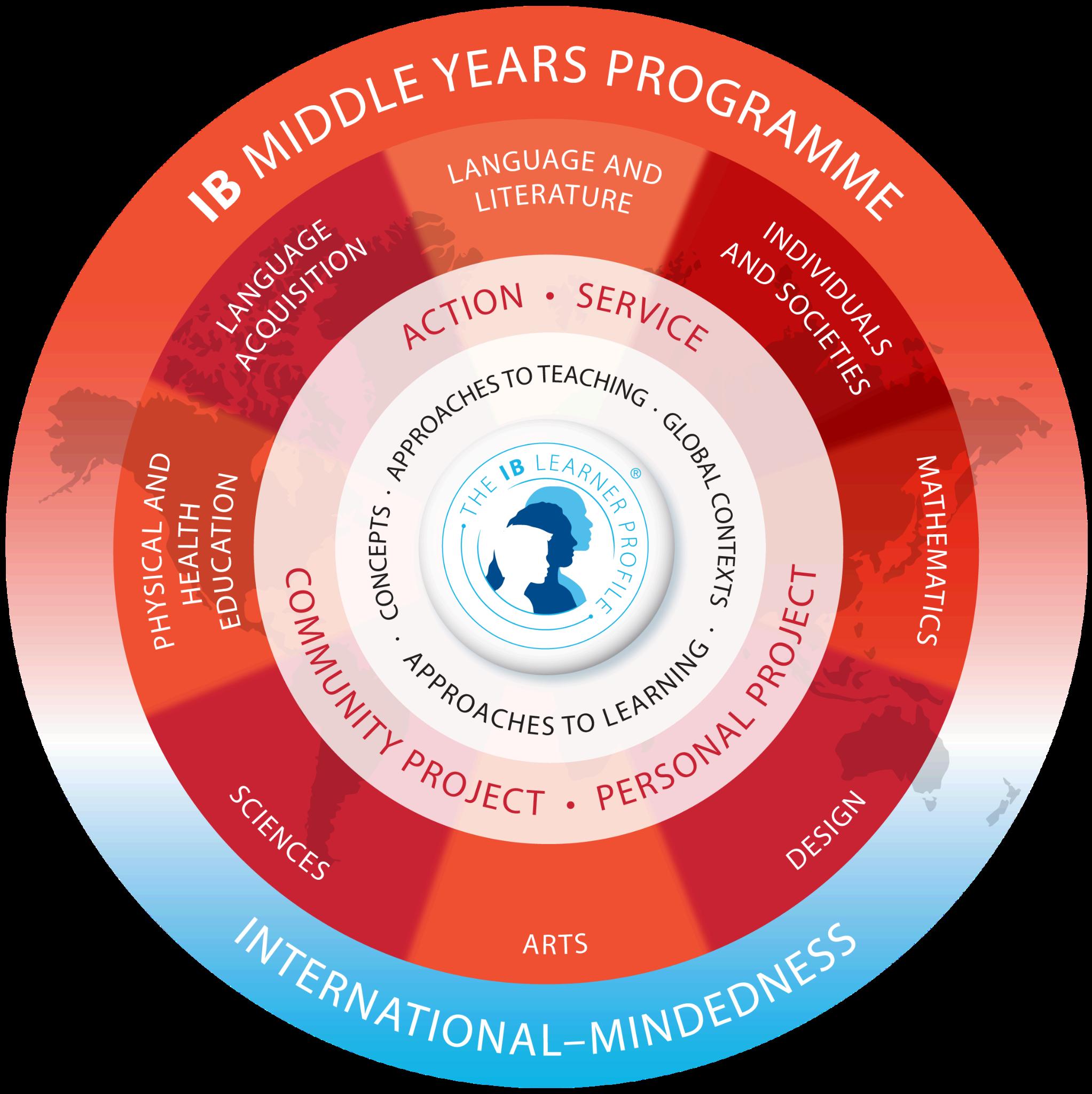

The aim of all IB programmes is to develop internationally minded people who, recognizing their common humanity and shared guardianship of the planet, help to create a better and more peaceful world. As IB learners we strive to be:
We nurture our curiosity, developing skills for inquiry and research. We know how to learn independently and with others. We learn with enthusiasm and sustain our love of learning throughout life.
We develop and use conceptual understanding, exploring knowledge across a range of disciplines. We engage with issues and ideas that have local and global signi cance.
We use critical and creative thinking skills to analyse and take responsible action on complex problems. We exercise initiative in making reasoned, ethical decisions.
We express ourselves con dently and creatively in more than one language and in many ways. We collaborate e ectively, listening carefully to the perspectives of other individuals and groups.
We act with integrity and honesty, with a strong sense of fairness and justice, and with respect for the dignity and rights of people everywhere. We take responsibility for our actions and their consequences.
We critically appreciate our own cultures and personal histories, as well as the values and traditions of others. We seek and evaluate a range of points of view, and we are willing to grow from the experience.
We show empathy, compassion and respect. We have a commitment to service, and we act to make a positive di erence in the lives of others and in the world around us.
We approach uncertainty with forethought and determination; we work independently and cooperatively to explore new ideas and innovative strategies. We are resourceful and resilient in the face of challenges and change.
We understand the importance of balancing di erent aspects of our lives intellectual, physical, and emotional to achieve well-being for ourselves and others. We recognize our interdependence with other people and with the world in which we live.
We thoughtfully consider the world and our own ideas and experience. We work to understand our strengths and weaknesses in order to support our learning and personal development.
The IB learner pro le represents 10 attributes valued by IB World Schools. We believe these attributes, and others like them, can help individuals and groups become responsible members of local, national and global communities.