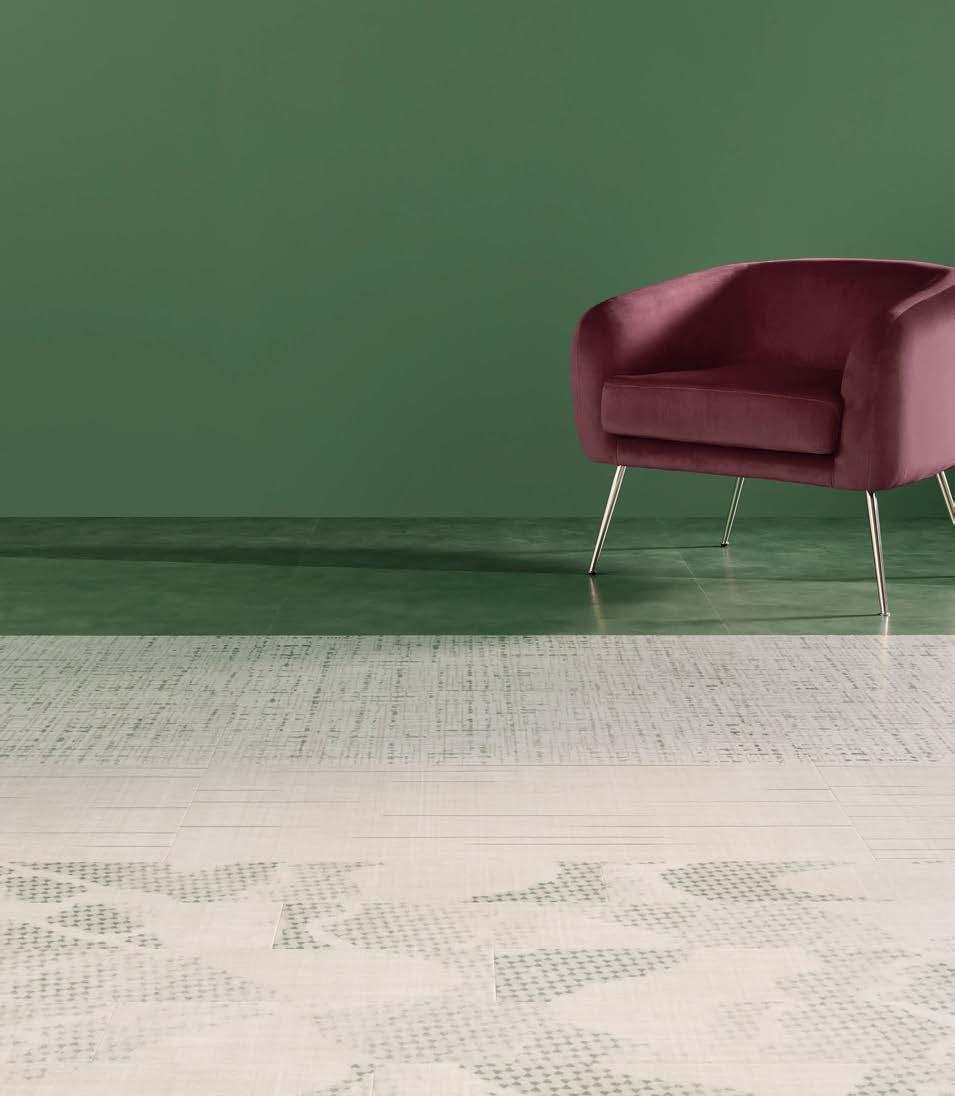
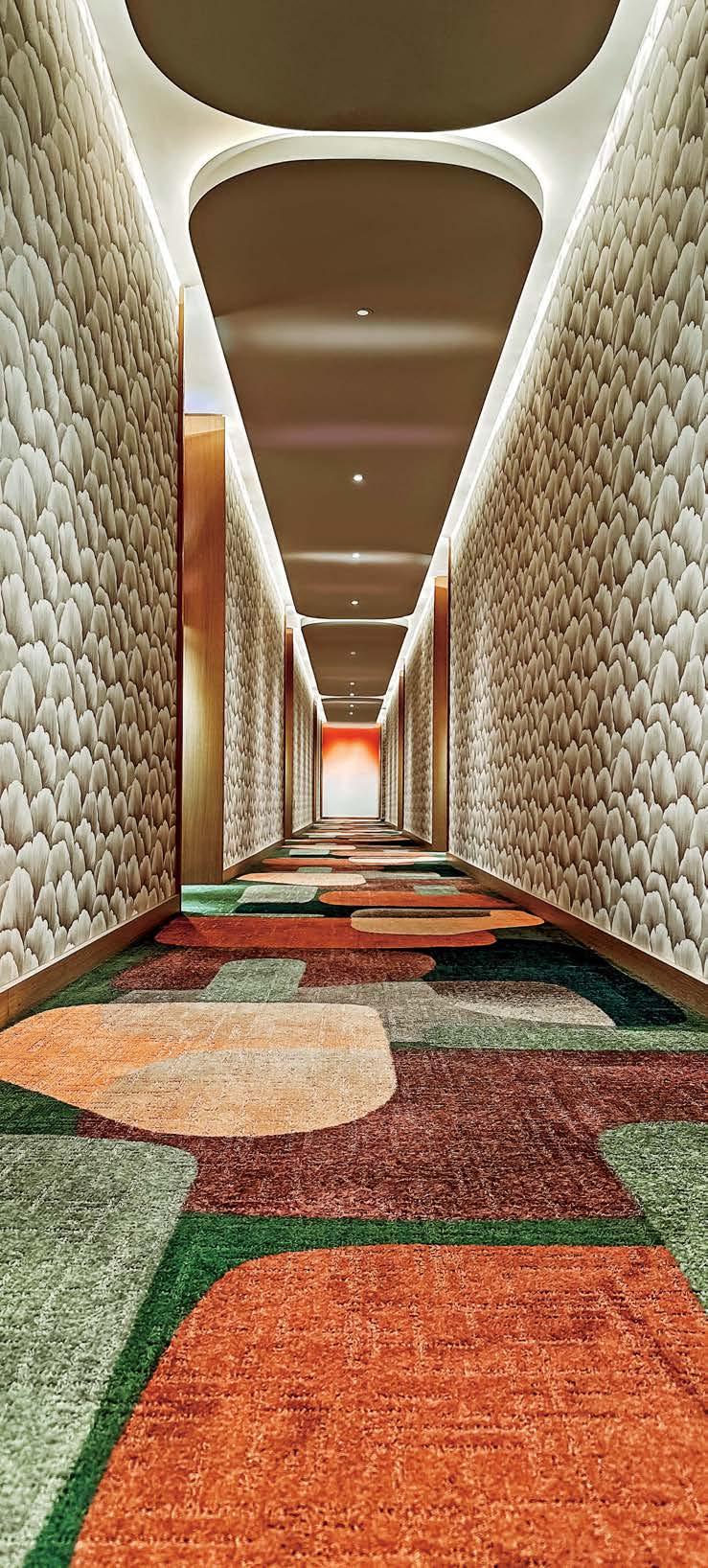
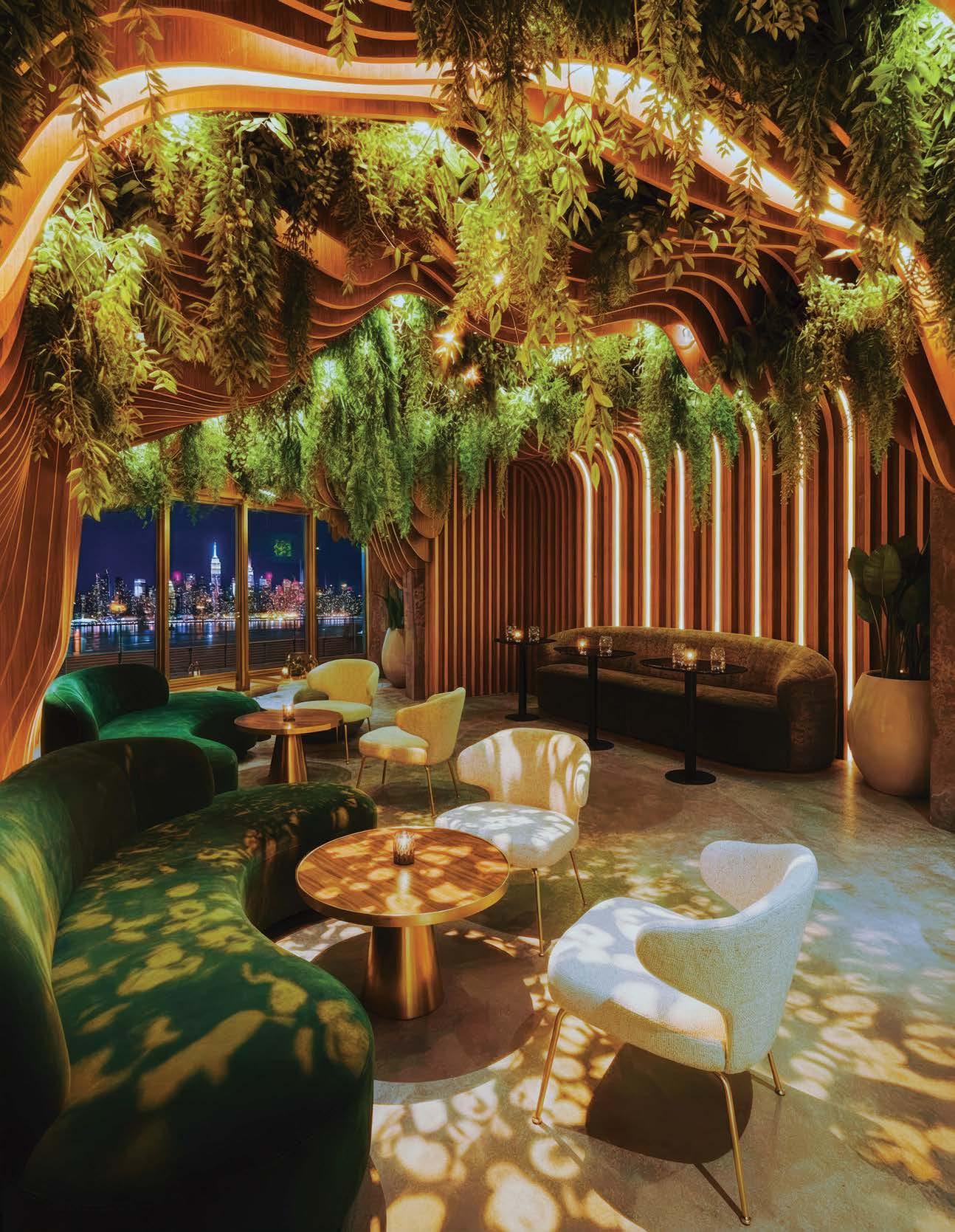
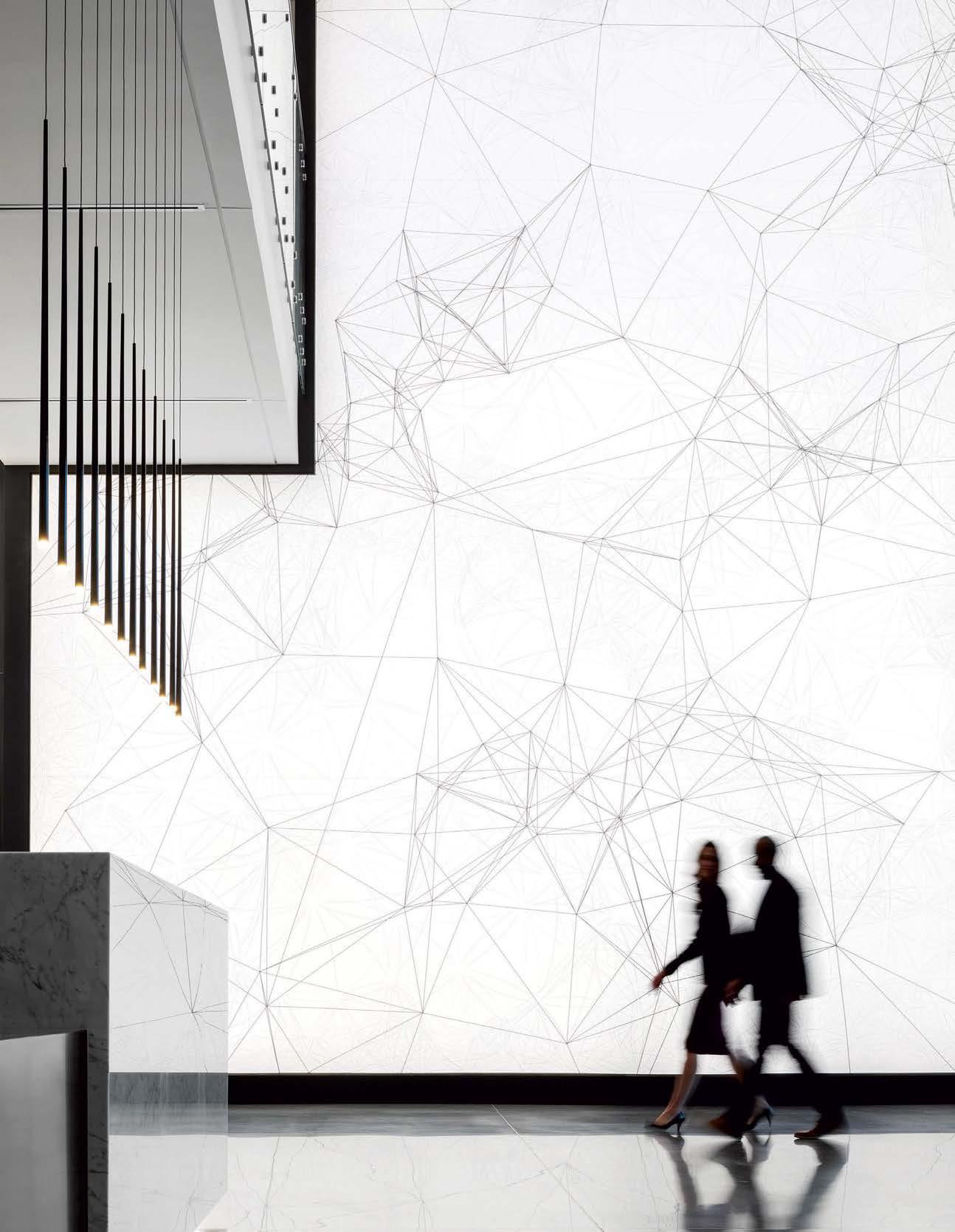
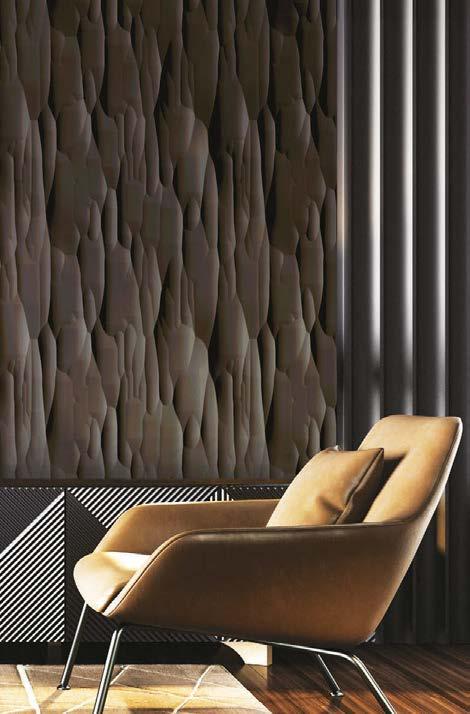
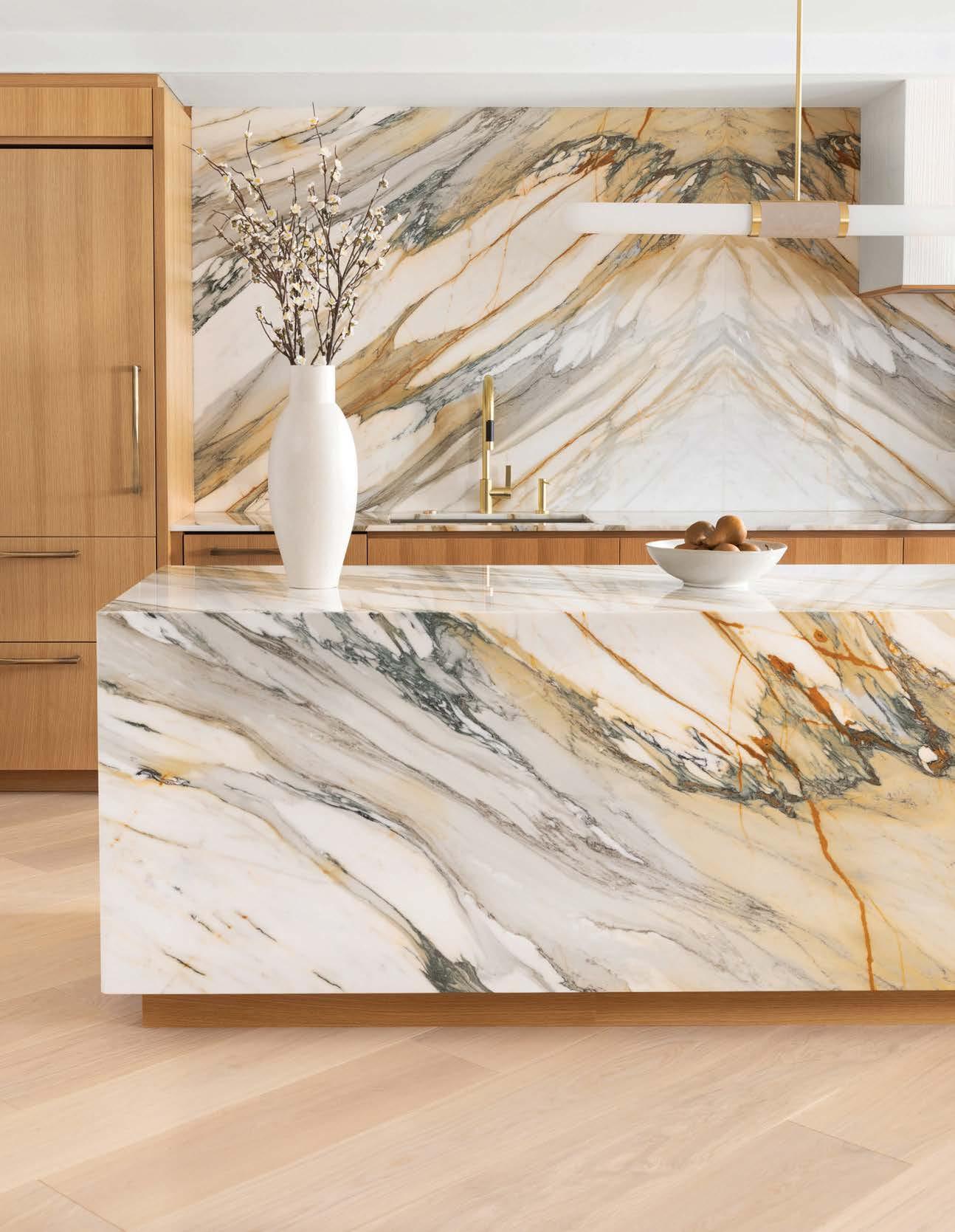
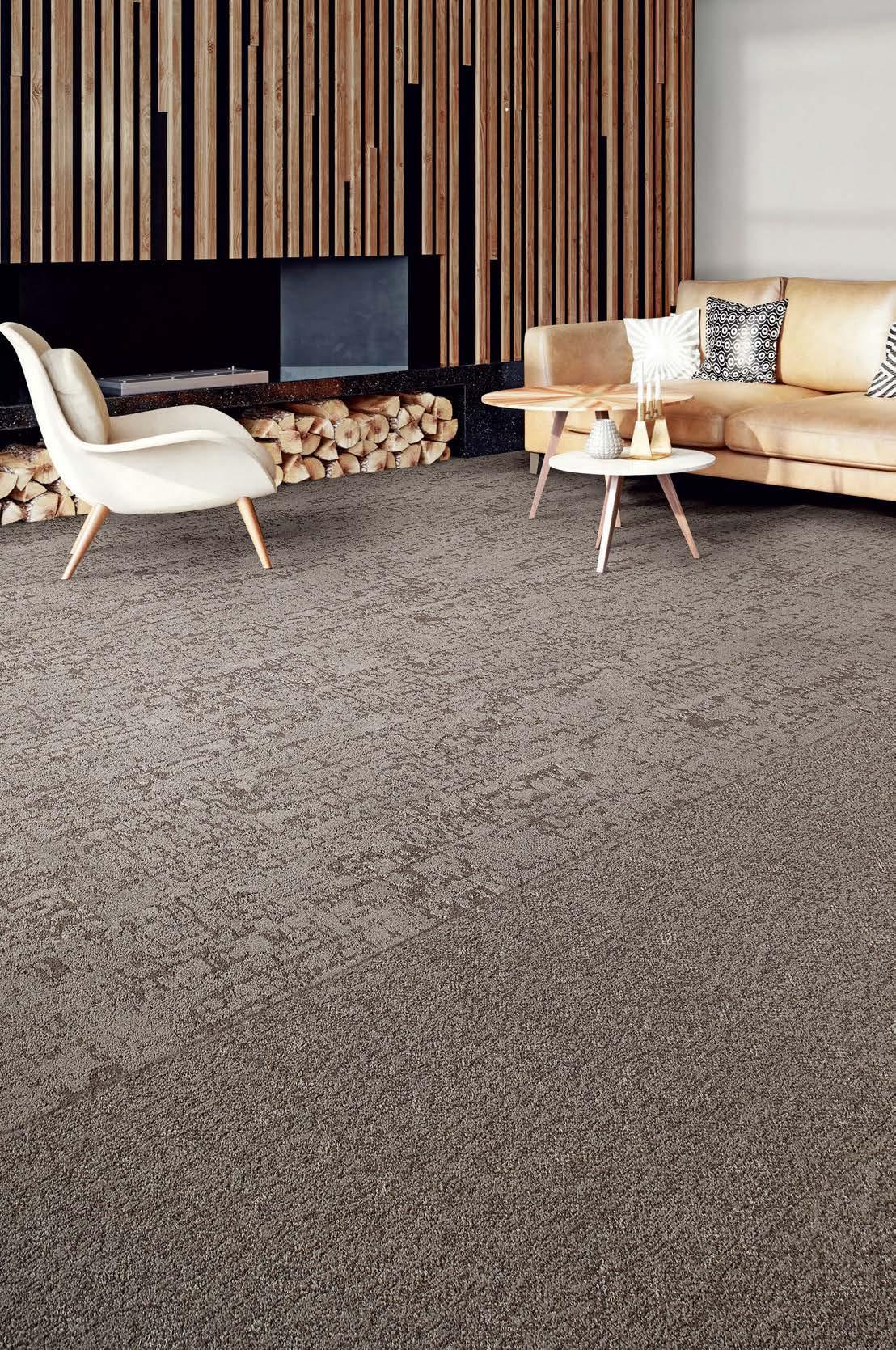
Barcelona Wall Scape, Photograph by Kendall McCaugherty
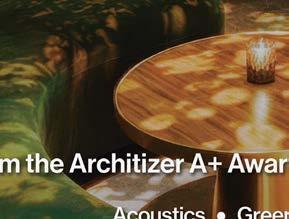
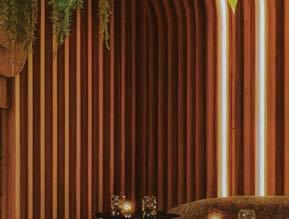
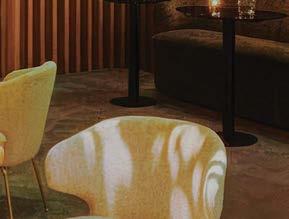
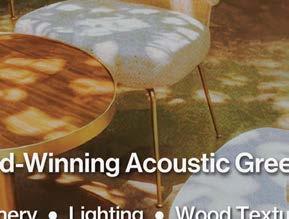
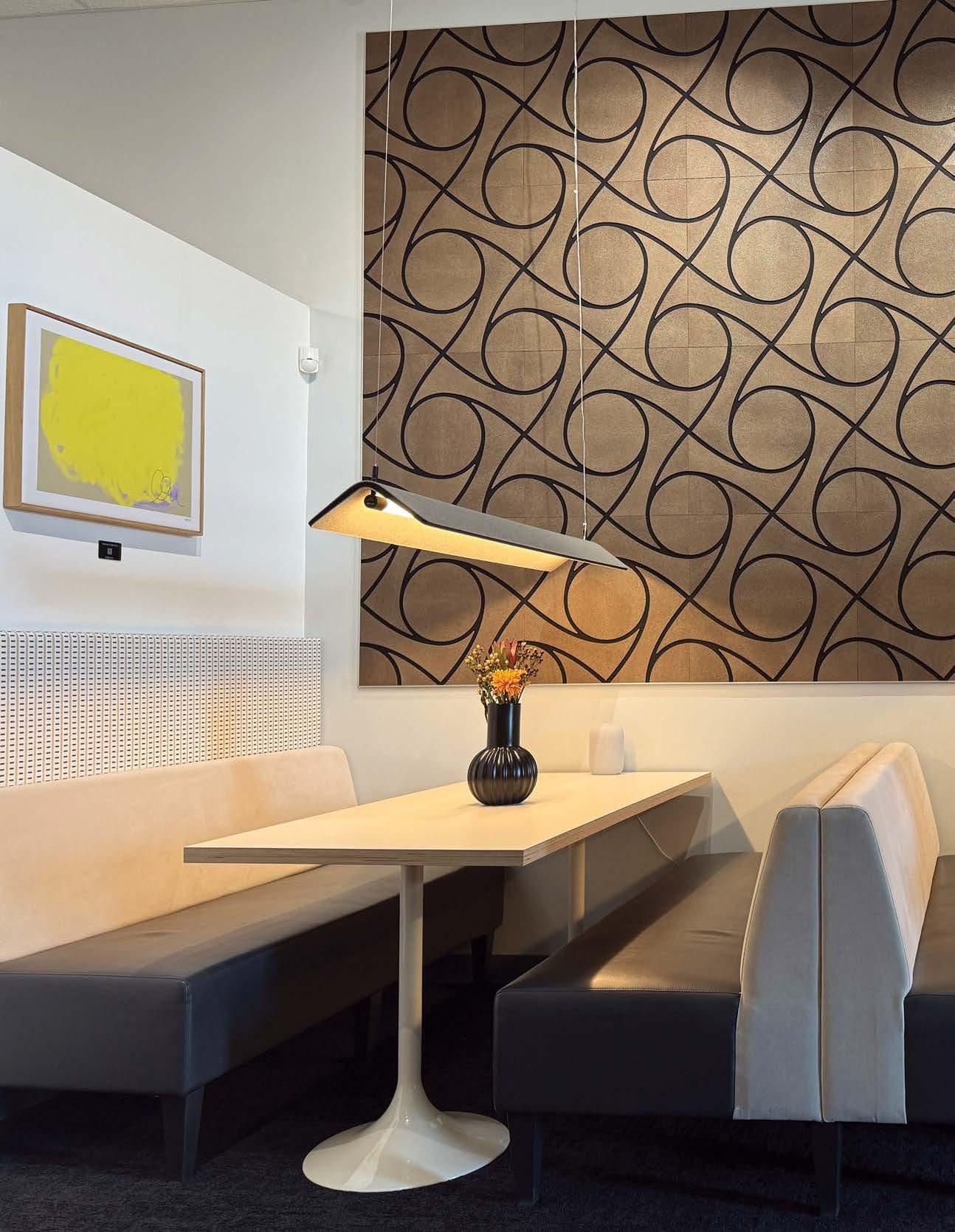
If creativity is in your nature, our new family of Wood Textures is your acoustic solution. Maximize style and minimize echo with an exquisite suite of colors and textures.
turf.design

Photography:ShubhamSharma/courtesyofM Moser Associates. CONTENTS
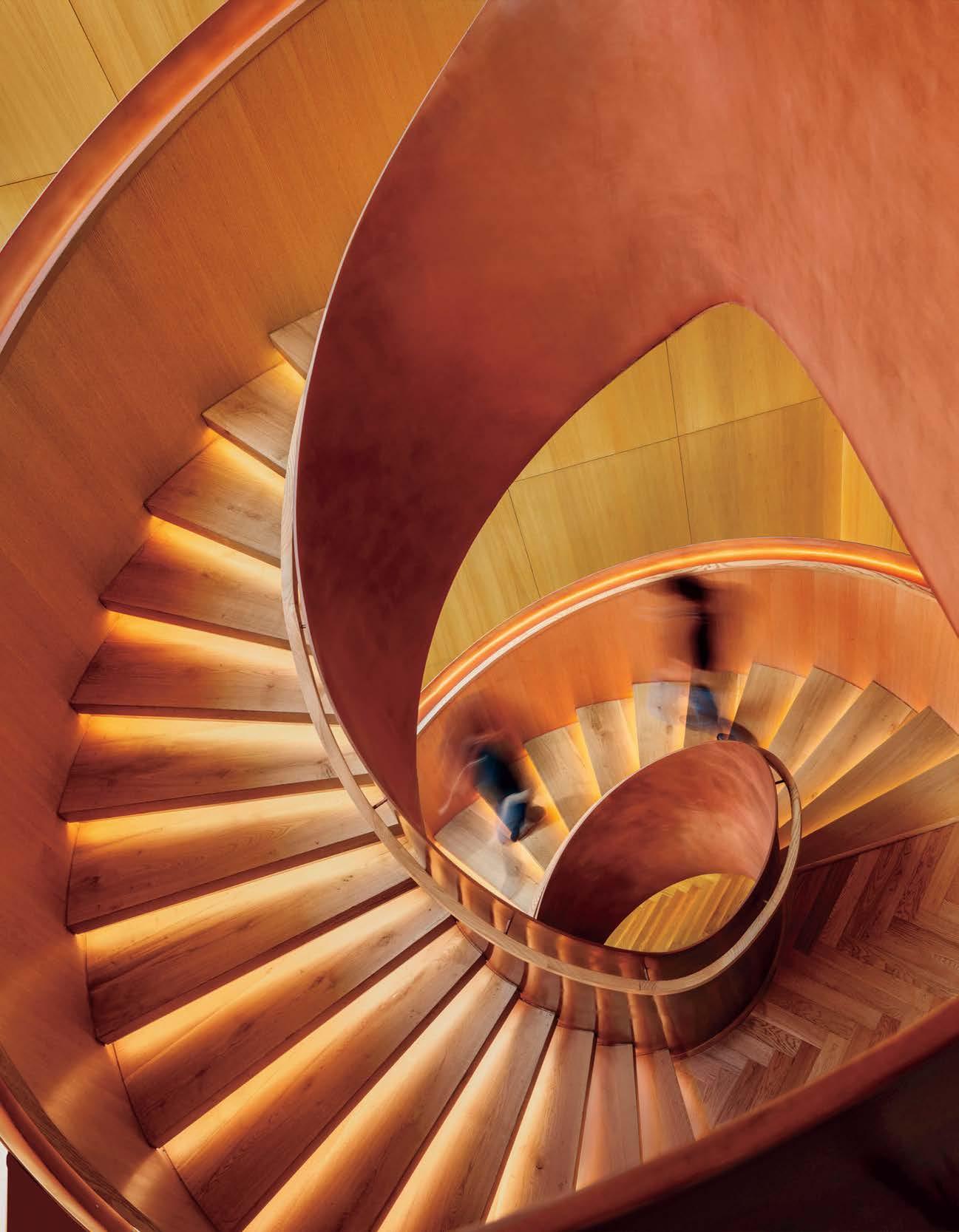
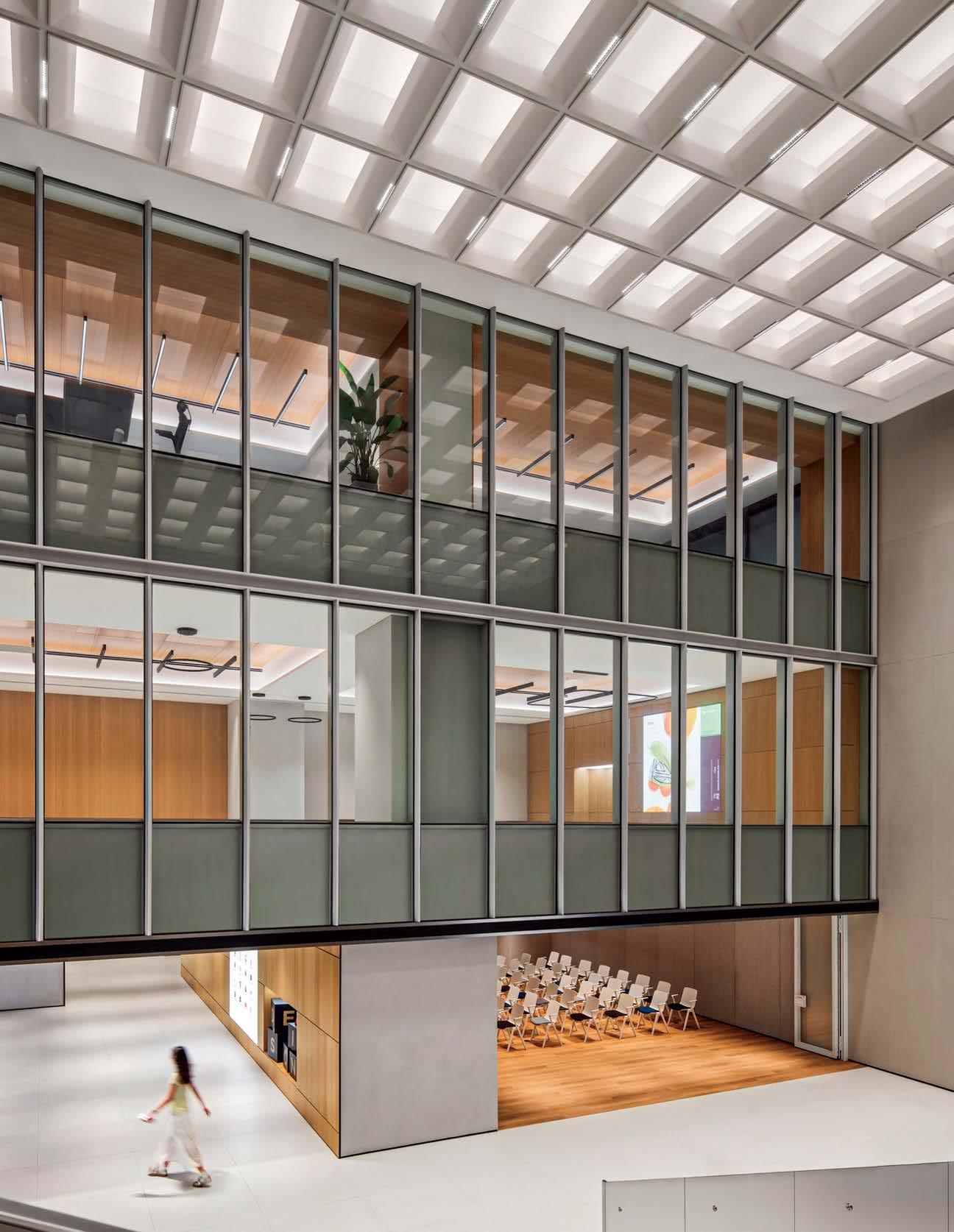
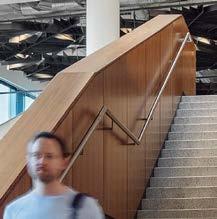
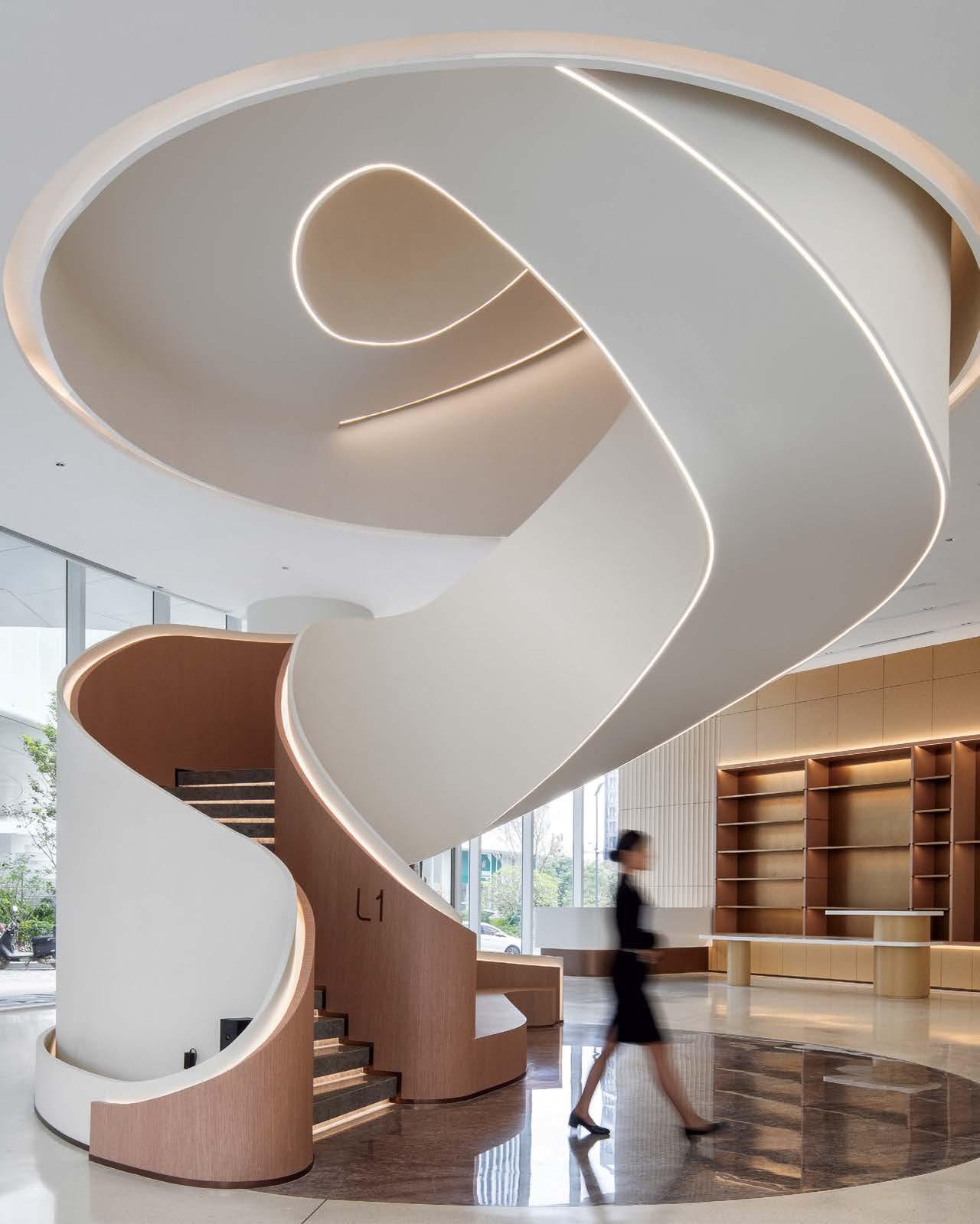
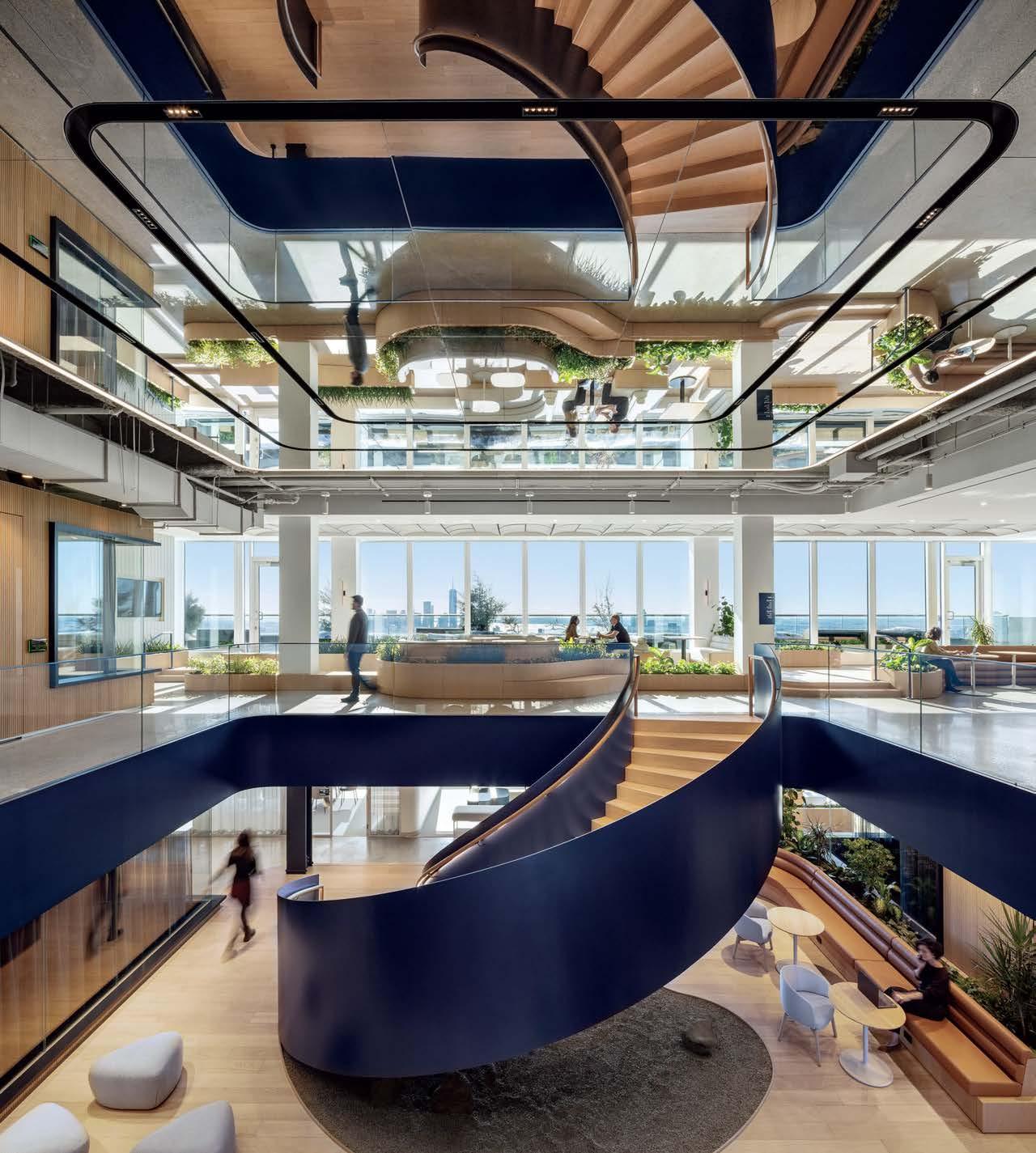
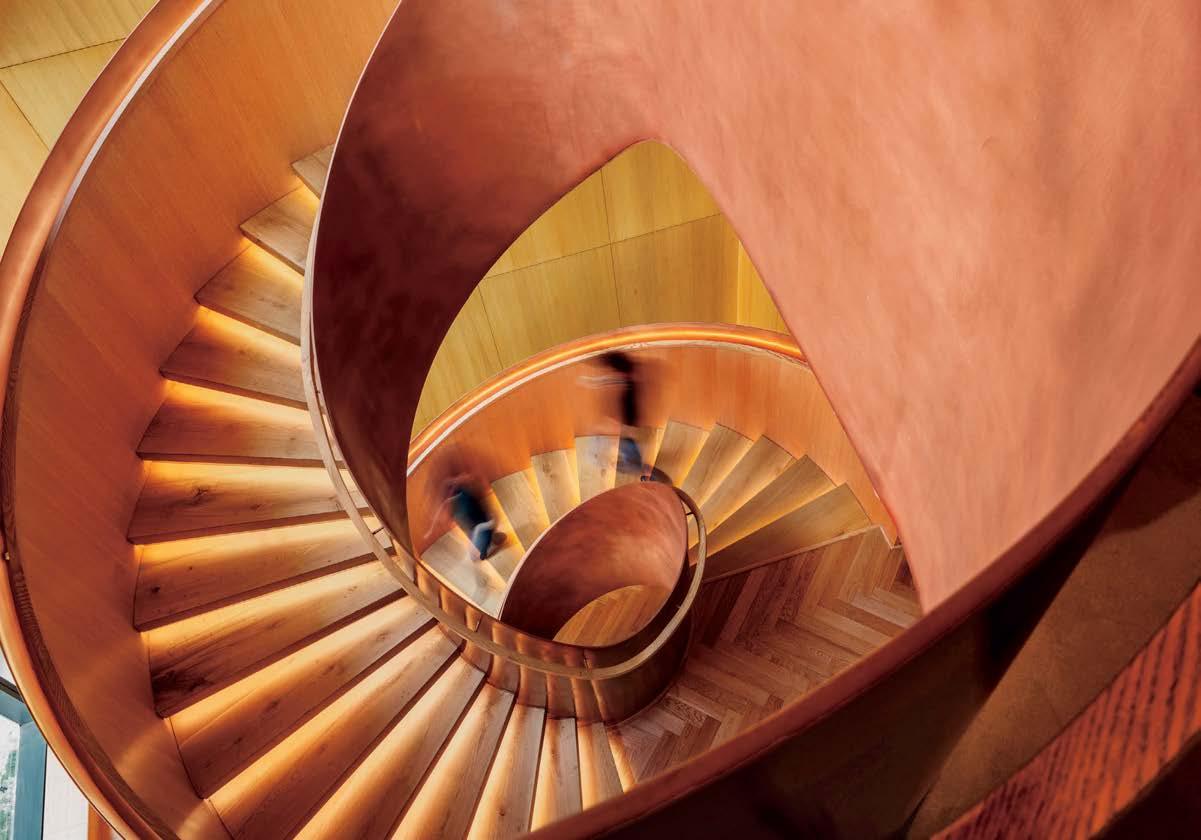
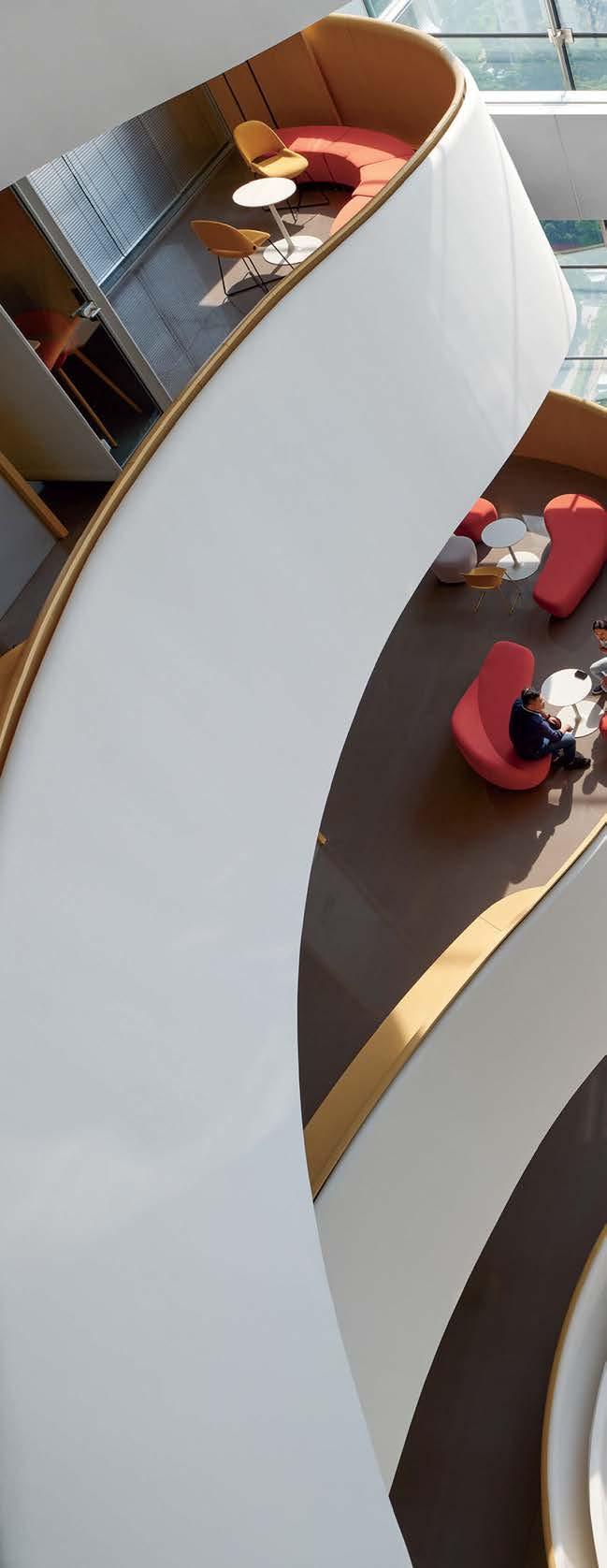
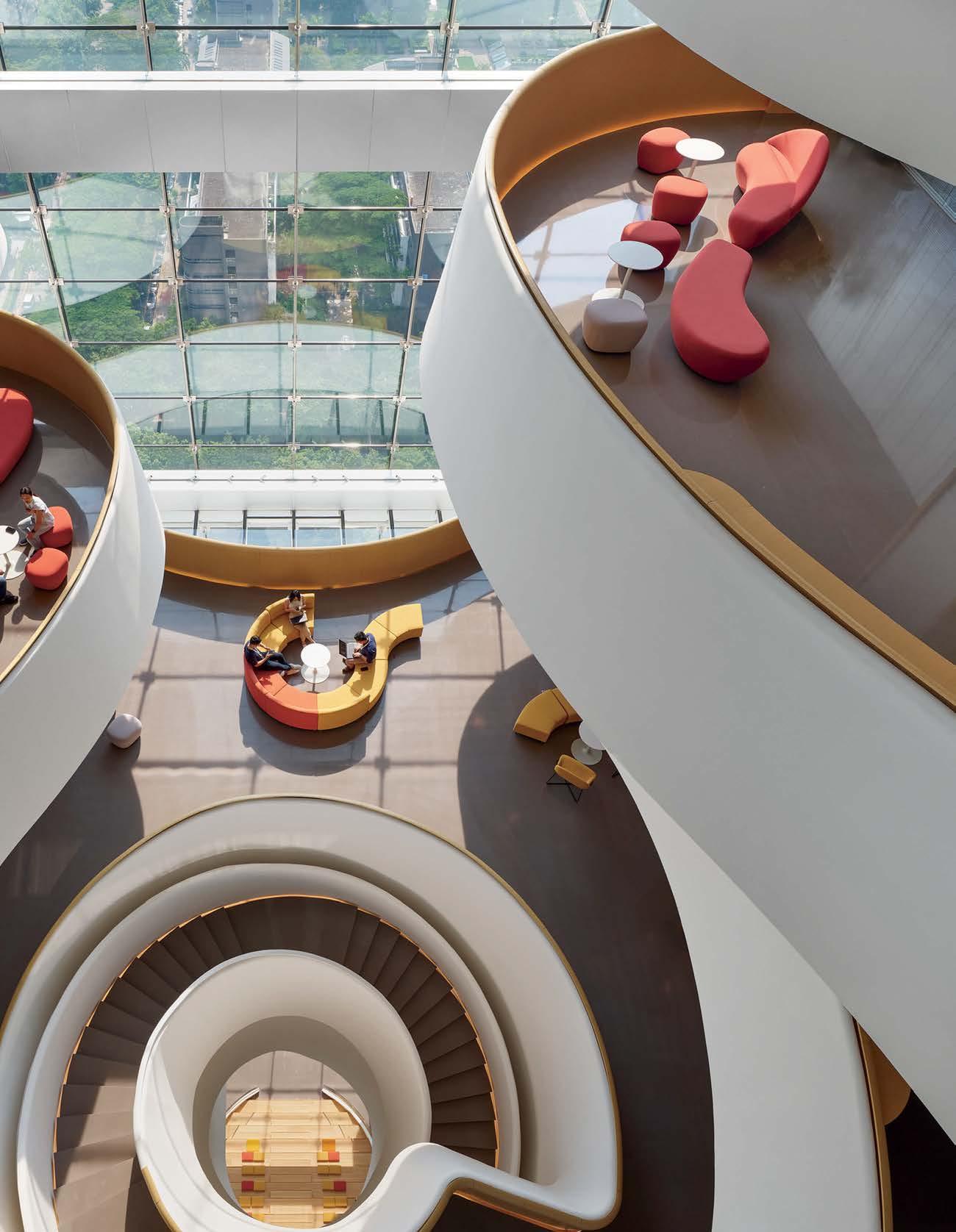
For the India headquarters of Diageo, the British multinational producer of such alcohol brands as Guinness, Smirnoff, and Johnnie Walker, M Moser Associates—number 16 among Interior Design’s 100 Giants, which this issue is devoted to— referenced the materiality of distillation stills and liquor aging barrels for the sweeping copper and oak helical staircase connecting the 83,000 square foot workplace’s three floors.
140 TENANT APPEAL by Dan Howarth
Rottet Studio and Ziegler Cooper Architects equip Rone Residences, a Houston rental building, with refinements more often seen in higher‑ budget properties.
150 TROPICAL PARADISE by Elizabeth Fazzare
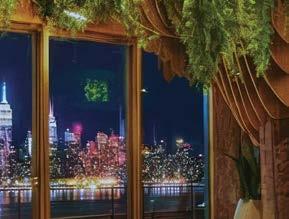
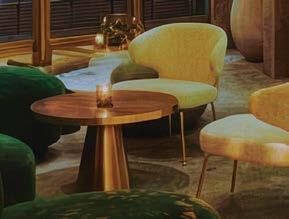
Lush vibes usher in a new era for Pier Sixty Six, a 1960’s resort in Fort Lauderdale, Florida, its interiors vibrantly reimagined by Jeffrey Beers International.
160 DRI VING THRU by Peter Webster
IA Interior Architects delivers a sense of forward dynamism with Speedee Labs, a new R&D facility within McDonald’s Chicago headquarters.
168 BREATHING NEW LIFE by Rebecca Dalzell
At Kilroy Oyster Point, a 50 acre site redeveloped into a biotech hub in South San Francisco, California, Rapt Studio infuses amenity spaces with coastal nods, energetic art, and a sense of community.
176 RE ADY FOR TAKEOFF by Rebecca Dalzell
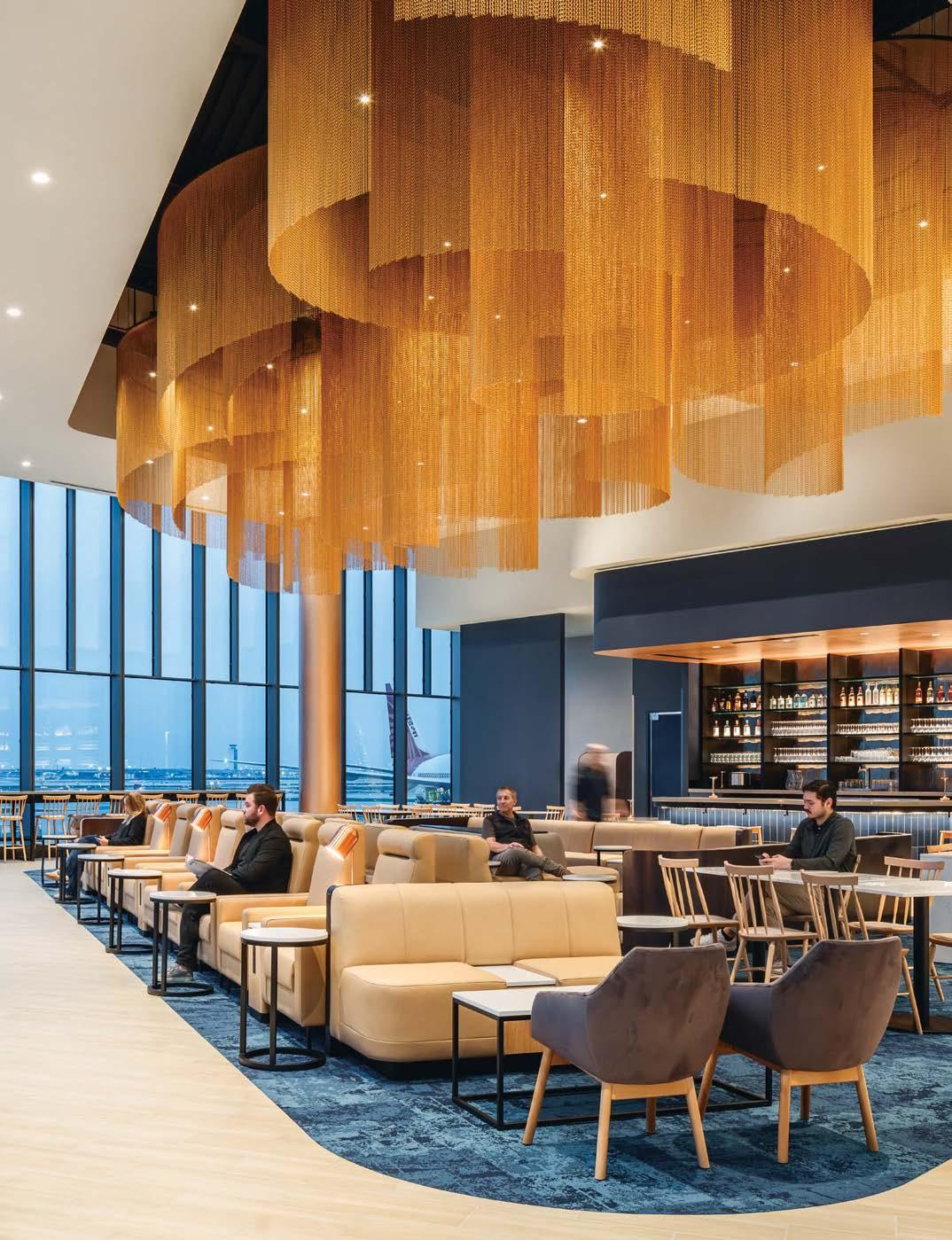
Travelers are treated to serenity and style, local and global influences, plus a womblike immersion room in the Delta Sky Club by HOK at Salt Lake City International Airport.
184 WELCOME IN by Annie Block
From the U.S. to China, workplace to hospitality, projects by top and rising firms embrace storytelling and sustainability, creating spaces people want to be in.
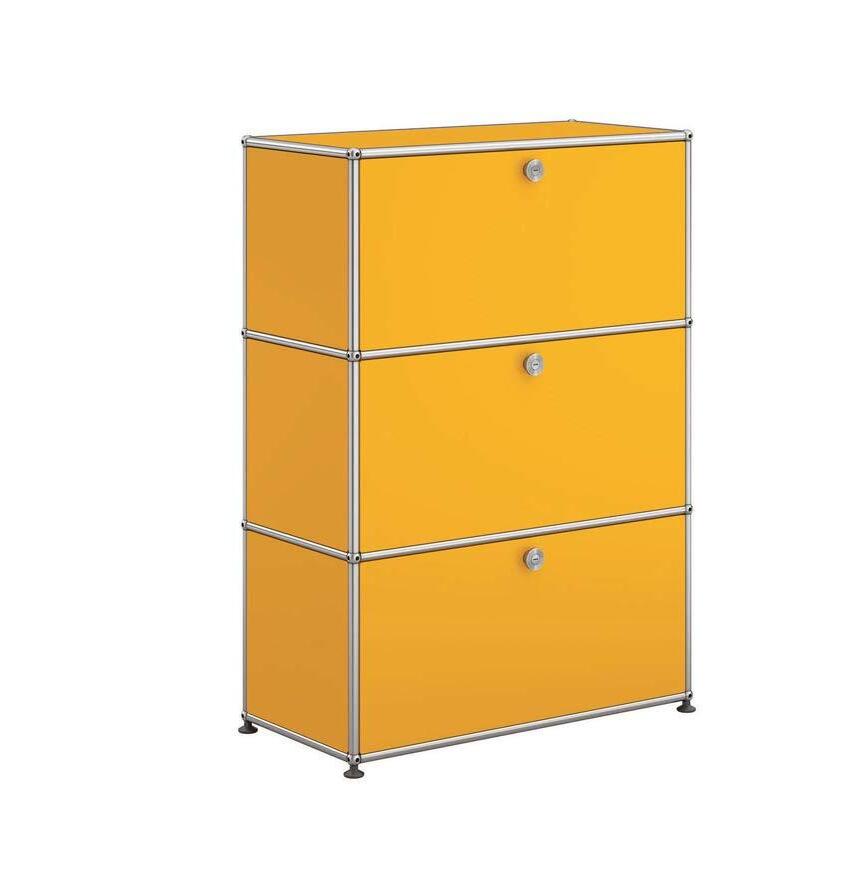
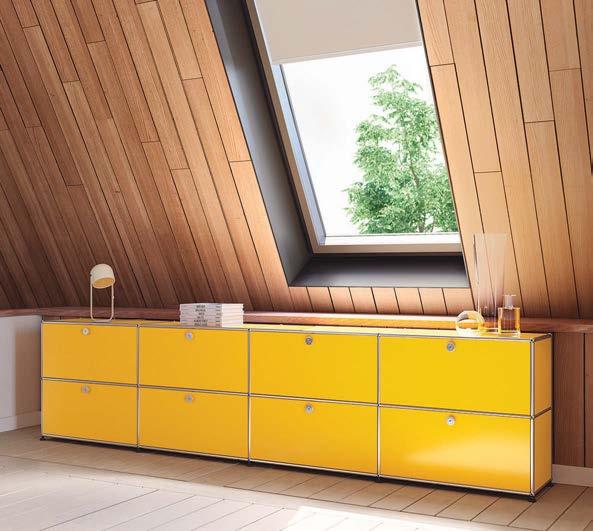
new! usm haller storage unit g118 designed by fritz haller & paul schaerer, 1963 - made in switzerland by usm modular


special giants section
Essays,rankings, charts, trends,products, andprojects about, for, andby theindustry’s top domestic and international firms.
29 100 GI ANTS
101 RI SING GIANTS
23 HE ADLINERS
202 CONTACTS
207 INTERVENTION by Lauren Gallow
















Color That Connects

editor in chief chief content officer
Cindy Allen, hon. IIDA
MANAGING DIRECTOR
Helene E. Oberman
EXECUTIVE EDITOR
Annie Block
SENIOR EDITOR
Georgina McWhirter
MARKET DIRECTOR
Rebecca Thienes
ASSISTANT EDITOR
Lisa Di Venuta
ASSISTANT TO THE EDITOR IN CHIEF
Nicole Vega
EDITOR AT LARGE
Elena Kornbluth
CONTRIBUTING EDITORS
Stanley Abercrombie
Raul Barreneche
Mairi Beautyman
Edie Cohen
Rebecca Dalzell
Jesse Dorris
Laura Fisher Kaiser
Craig Kellogg
Jane Margolies
Murray Moss
Jen Renzi
Peter Webster
Larry Weinberg
CONTRIBUTING
PHOTOGRAPHERS
Benny Chan/Fotoworks
Jimmy Cohrssen
Art Gray
Eric Laignel
Michelle Litvin
Garrett Rowland
DESIGN DIRECTOR
Karla Lima
CREATIVE SERVICES
Marino Zullich
PRINT OPERATIONS MANAGER
Olivia Padilla
SENIOR PREPRESS AND IMAGING SPECIALIST
Igor Tsiperson
digital
DIGITAL CONTENT MANAGER
Carlene Olsen
WEB PRODUCER
Michelle Yee
interiordesign.net @interiordesignmag @intdesmag @Interior Design Magazine
CHIEF EXECUTIVE OFFICER
Erica Holborn
PRESIDENT
Bobby Bonett
CHIEF OPERATING OFFICER
Michael Shavalier
CHIEF DESIGN OFFICER
Cindy Allen
DESIGN FUTURIST AND EXECUTIVE VICE PRESIDENT
AJ Paron
SENIOR VICE PRESIDENT, CLIENT SERVICES AND OPERATIONS
Caroline Davis
VICE PRESIDENT, BUSINESS DEVELOPMENT
Laura Steele
SENIOR DIRECTOR, VIDEO
Steven Wilsey
president
Bobby Bonett
marketing + events
VICE PRESIDENT, EVENTS
Jeanine Kelly
DIRECTOR, CLIENT STRATEGY
Kasey Campbell
SENIOR DIRECTOR, MARKETING OPERATIONS
Rachel Senatore
DIRECTOR, CREATIVE SERVICES
Carly Colonnese
MANAGING GRAPHIC DESIGNER
David Timoteo
SENIOR DESIGNERS
Zeynep Kiris
Paige Miller
sdg business development MANAGER
Laury Kissane 773-791-1976
CHAIRMAN
Adam I. Sandow
CONTROLLER
Emily Kaitz
VICE PRESIDENT, HUMAN RESOURCES
Lisa Silver Faber
DIRECTOR, INFORMATION TECHNOLOGY
Joshua Grunstra

advertising
NATIONAL SALES DIRECTOR
Rachel Pettit 908-655-6268
NORTHEAST SALES DIRECTOR
Greg Kammerer 646-824-4609
NEW YORK SALES DIRECTOR
Tamara Stout 917-449-2845
FLORIDA + CANADA Colin Villone 917-216-3690
MIDWEST + WEST COAST
Meredith Barberich 415-342-8830
Julie McCarthy 847-567-7545
SALES OPERATIONS MANAGER
Drew Mount
GENERAL idsales@interiordesign.net
subscription information
CONTINENTAL U.S. 800-900-0804 ALL OTHERS 847-559-7336 interiordesign@omeda.com
3651 FAU Boulevard
Boca Raton, FL 33431
interiordesign.net



















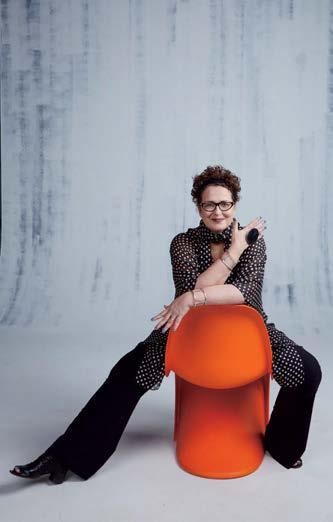
There’s a type of moment that few ever truly experience. No, not the eureka thing—I mean that exquisite flash of pleasure in our overexerted minds that sparks only when, after excruciatingly checking and rechecking an idea, a plan, or a course of action, we realize…it’s all good! Fork in the road, door #1 or door #2, red or blue pill—we were right; we went in the correct direction. Everything is working, and once again we stand as supreme leaders of the galaxy. Woohoo!
When that happens to me, as it just did with my once-over of our latest issue, I feel an irrepressible urge to reach for my stash of particularly delicious nougats (and to hell with the scales). I’d be delighted to share them, incidentally, but in this case I can’t exactly hand one over. What I can offer is that master-of-the-universe (virtual) crown. The only requirement: Reach inside and follow the crumbs to our (drum roll!) 49th Giants of Design extravaganza.
There, you’ll see that our industry—yours and mine alike—is, at this very moment, not only the place to be, but the place to stay and prosper, no matter what recent history has thrown our way (or will throw in the year ahead). No sweets here, but we’re exceedingly proud to present an issue that unites our “bankable” Giants’ works with our monthly portfolio of amazing stories and features—nothing less than opulent fare.
Quick examples? Let’s start with HOK, making a giant impact at the Delta Sky Club in Salt Lake City International Airport. The space is equal parts trendy (cool, comfy lounge chairs facing remarkable runway and mountain views) and tranquil (a burnished fireplace suspended beneath rippling stainless ceiling panels over watery-blue carpet, à la the Great Salt Lake). IA Interior Architects packs a big-design punch at McDonald’s Chicago headquarters, unveiling a new R&D facility complete with a backlit “cheese wall” installation—anything but cheesy—along with training labs, test kitchens, and even a fan favorite store featuring oversize McDonald’s cup pendant lights that’ll make you chant “supersize me!” Plus, an eclectic roundup from eight top 100 and Rising Giant firms proves that no matter the segment—workplace, education, hospitality, and beyond—design has the power to make a meaningful difference (okay, picture gigantic! ) in how we live, work, learn, and come together.
By the by, 49th, barring acts of nature, is always followed by 50th. Take the hint: It’s gonna be a big one…or should I say, GIANT (ha!)?
xoxo
Follow me on Instagram thecindygram
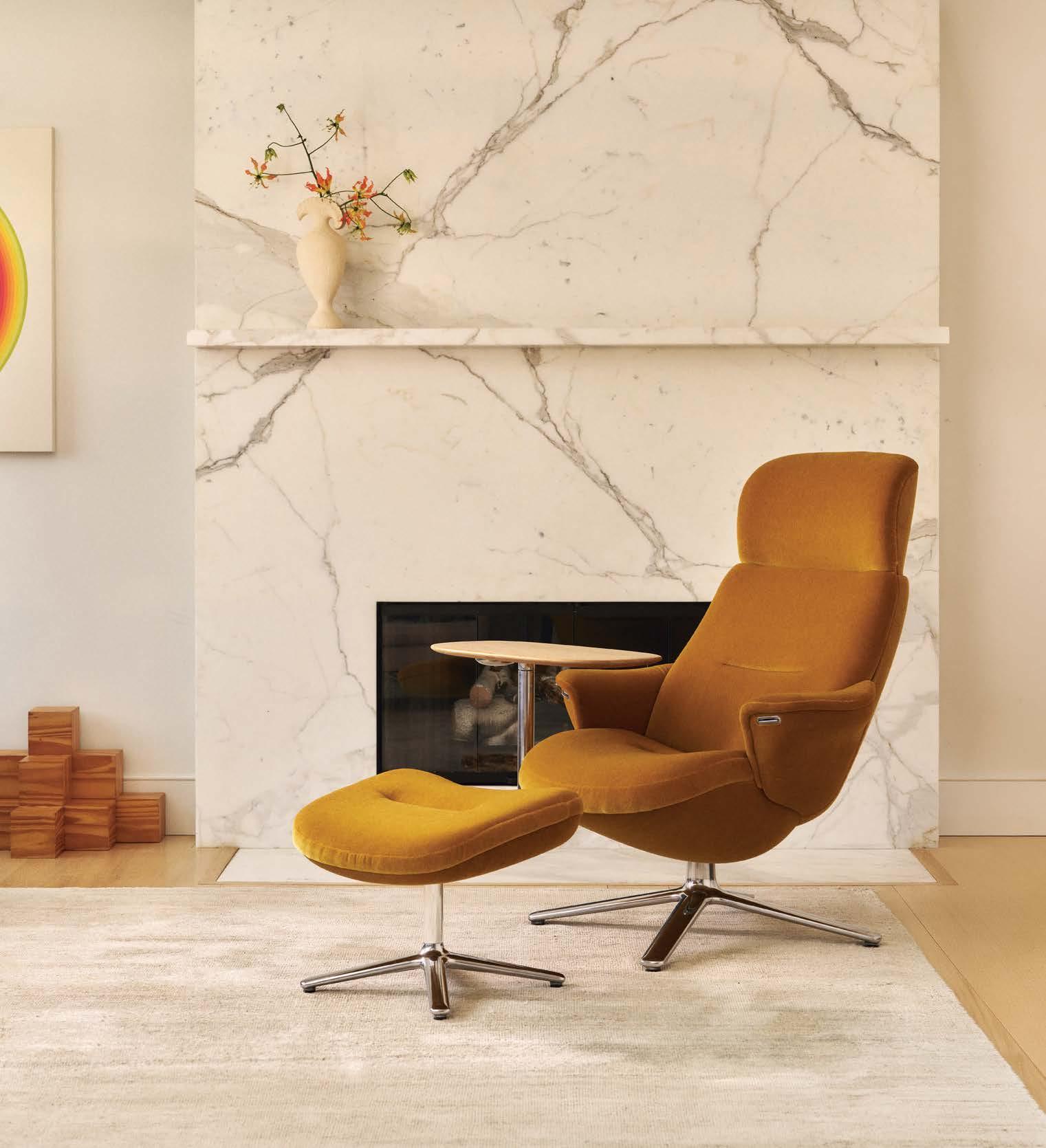
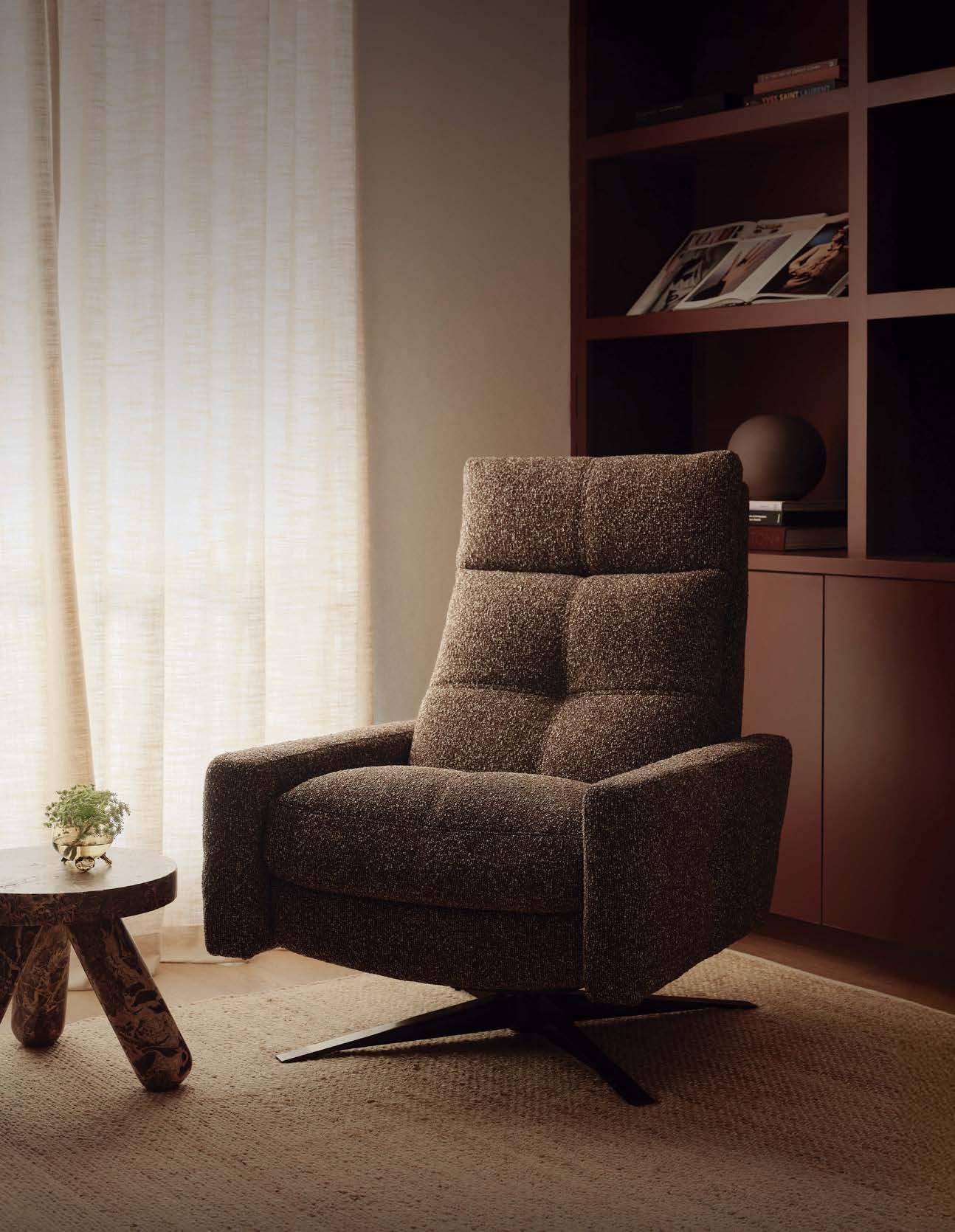
Designed by Niels Diffrient, delivering Dynamic Comfort through a powered recline, adjustable headrest, and integrated surface—each element of the Diffrient Lounge works harmoniously to respond to your movements, providing continuous support for work, rest, and everything in between.
Designs for Healthy Work, Life, and Planet
“We are a collective of future-forward thinkers driven to face the critical challenges of our time, improve people’s lives, and heal the planet”
“Ready for Takeoff,” page 176
director of interiors: Sarah Oppenhuizen, AIA. firm hq: San Francisco. firm size: 1,271 architects and designers worldwide.
current project: Jacksonville Jaguars Stadium of the Future in Florida.
honors: Metropolis Planet Positive Firm of the Year Award.
glam: While earning her bachelor’s in architecture at the University of Southern California, Oppenhuizen worked crowd control on the Emmy Award’s red carpet. grub: She’s also appeared in a Quiznos TV commercial. hok.com
“Driving Thru,” page 160
senior designer: Erin Dayrit
creative director: Chad Finken. office site: Chicago.
office size: 45 architects and designers.
current projects: Offices for a law firm, a multinational beverage corporation, and an association-management company, all in Chicago.
honors: Interior Design Best of Year Award; Society of Experiential Design Honor Award. predictor: Dayrit, who leads workplace design strategy nationwide, is currently enrolled in IIDA’s Certified Design Futurist program.
narrator: Finken channels creative energy from his fine-art background to help clients tell their stories through immersive environments. interiorarchitects.com


“Tenant Appeal,” page 140


founding principal, president: Lauren Rottet, FAIA, FIIDA. principal: Chris Evans. firm hq: Houston.
firm size: 75 architects and designers nationwide. current projects: The Ritz-Carlton Hotel and Residences in Houston; Goldman Sachs campus in Dallas; Wynn Al Marjan Island resort in Ras Al Khaimah, United Arab Emirates.
honors: Interior Design Best of Year Awards; International Property Award.
nurture: Rottet is the doting grandmother of 3-year-old Lia and 1-year-old Isla.
nature: Evans, an avid outdoorsman, recently took his son on a camping and paddle-boarding adventure. rottetstudio.com
“Tropical Paradise,” page 150 firm site: New York.
firm size: 40 architects and designers. partner: Nora Liu Kanter.
current projects: 419 Park Avenue South office-toresidential conversion in New York; Adero Scottsdale Resort in Arizona.
partner: Tim Rooney.
current projects: 40/40 Club renovation in New York; One & Only Papagayo resort in Costa Rica; Hilton Aruba Caribbean Resort & Casino.
honors: Interior Design Best of Year Awards honoree. sculpt: Lui Kanter is a ceramicist, which provides another channel to express her artistic skills.
chop: During college, Rooney worked his way up the line of a country-club restaurant kitchen, inspiring his passion for hospitality design. jeffreybeers.com





“Breathing New Life,” page 168
ceo, chief creative officer: David Galullo, AIA. creative director, head of design innovation: August Petersen, IIDA. firm hq: San Francisco.
firm size: 30 architects and designers nationwide. current projects: Roblox headquarters expansion in San Mateo, California; Duolingo headquarters in Pittsburgh; confidential AI project in Tokyo.
honors: Interior Design Best of Year Award honoree. the boot: Galullo returned from Tuscany, Italy, in December and is headed there again in May for a month. the birds: Petersen is an avid woodworker, birdhouses being his current obsession.
raptstudio.com
“Tenant Appeal,” page 140 founder, senior principal: Scott Ziegler, AIA. firm hq: Houston. firm size: 60 architects and designers.
current projects: The RitzCarlton Hotel and Residences, and Kinkaid School additions, phase III, in Houston; 415 Colorado apartment tower in Austin, Texas.
honors: Houston Business Journal Top 50 Largest Architecture Firms List; Scenic Houston Star Award. wind: Ziegler is a keen sailboat racer.
snow: He is also a downhill ski enthusiast. zieglercooper.com


hdrinc.com/interiors
Welcome to the 49th annual edition of our Interior Design Giants of Design coverage, in which we survey the most lucrative firms to find out how much they made, how many projects they worked on, what’s trending in various verticals and geographic regions, and how many practitioners they employed (plus what they’re billing and being paid). Together, these data points help us gauge industry health and resilience.
So, what did the 2025 results reveal? At the start of last year, we braced ourselves for volatility, particularly around tariff impacts. We were prepared for the sky to fall. But those predictions did not materialize. Not that tariffs didn’t impact business, but those impacts were mostly seen on a project-by-project basis rather than manifesting as an industry-wide bloodletting. Turns out there were no left turns—just consistency vis-à-vis the previous few years. In fact, some metrics ticked up a little bit, telling the story of slow, gentle progress. Take fee income, which grew 1 percent, to $6.38 billion, continuing a run of record-high tallies despite a forecasted dip. That news is even more amazing when you consider the 100 Giants only passed $5 billion for the first time in 2023. Zoom out further, and the top 200 firms hit $7 billion in combined fees last year, another first. Looking ahead, the Giants are expecting a slight 2 percent drop for 2026.
Project numbers also showed small but steady growth, climbing to 84,397—a 1.4 percent increase. This means firms are still maintaining the high levels from 2023, when volume surged 22 percent YOY. In fact, project volume is up a wowzers 18 percent since 2019. And here’s the real surprise: Giants believe they’re poised to do even more work in 2026. They forecast an increase (of 6 percent) for the first time since COVID, ending a pessimistic streak. Another landmark number worth celebrating: 105,231. That’s how many projects the 100 and Rising Giants together completed in 2025.
As has been the case for the last few years, the slight majority of projects was renovation versus new construction. Some 86 percent of the work is domestic—same as it’s been. The south remains the strongest market, a trend expected to continue, with 93 percent of the 100 Giants anticipating growth in U.S. locations, driven by the Southeast region. Remember what we said earlier about consistency?
Meanwhile, the 100 Giants continue to diversify while they await the full recovery of the two most lucrative segments—hospitality and corporate office, down 15 and 18 percent, respectively, since 2019—plus residential (down 5). All three verticals are struggling to a similar degree as last year. Prepandemic, corporate design fees were 40 percent of the overall pie but now comprise only 24 percent, reflected in a dollar value that has been holding steady at around $1.5 billion. There was plenty of fee growth in other verticals, though: Cultural/sports center was up 25 percent YOY (and 134 percent since 2019!), data centers up 23 percent, and government up nearly 8 percent—thought that’s the only segment of this trio comprising more than 10 percent of overall fees. Stay tuned: We’ll dig deeper into individual segments in our July issue, where Giants coverage continues.
On the staffing front, while the total roster of interior design employees is down slightly industry-wide, suggesting further rightsizing after a postpandemic rally, there is a bright spot: Hiring is up at the principal/partner level. And the lower headcount of project managers reported last year is likely an indication of how hard it is to find and hire mid-level designers rather than evidence of any widespread downsizing. Median ID fees earned per employee jumped 12 percent to nearly $300,000, well surpassing pre-COVID levels. Billing rates also rose slightly for principals/partners and for designers, remaining stable for project manager/directors. Median salaries, meanwhile, increased for principals/partners and dipped slightly for the other levels, likely another post-rally correction.
To recap, while we were expecting more volatility across the board, what emerged instead was resilience. Firms maintained momentum, fees hit record highs, and project pipelines stayed robust even as Giants navigated ongoing sector shifts and staffing adjustments. The industry proved it could weather external pressures without the dramatic swings many anticipated. And while 2026 will likely be no less uncertain, hopefully it’s comforting that stability—and adaptability—is the big takeaway.
GIANTS SNAPSHOT
$6.4B 2025 interior design fees
Number of projects
84,397
2026 forecast
89,322
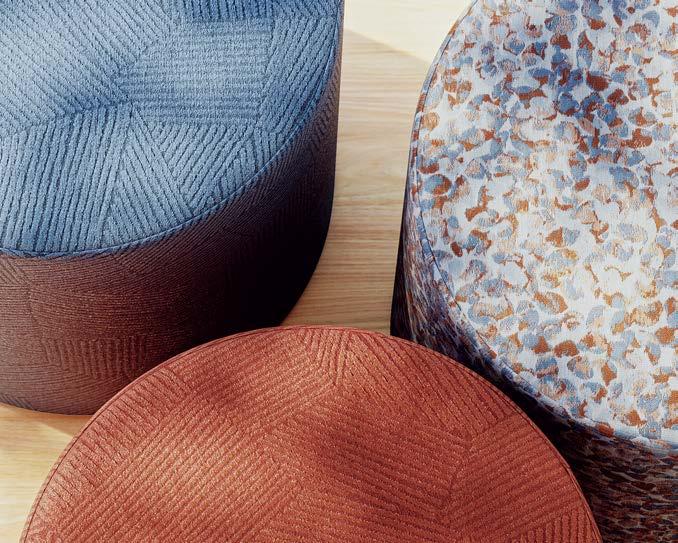

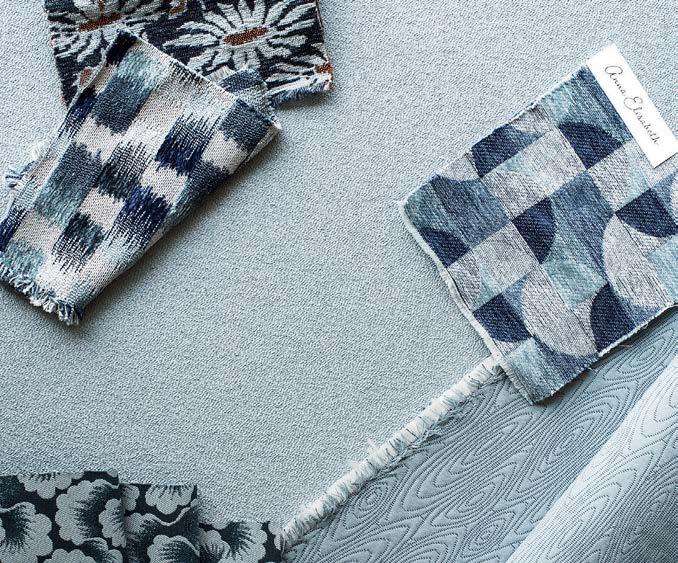
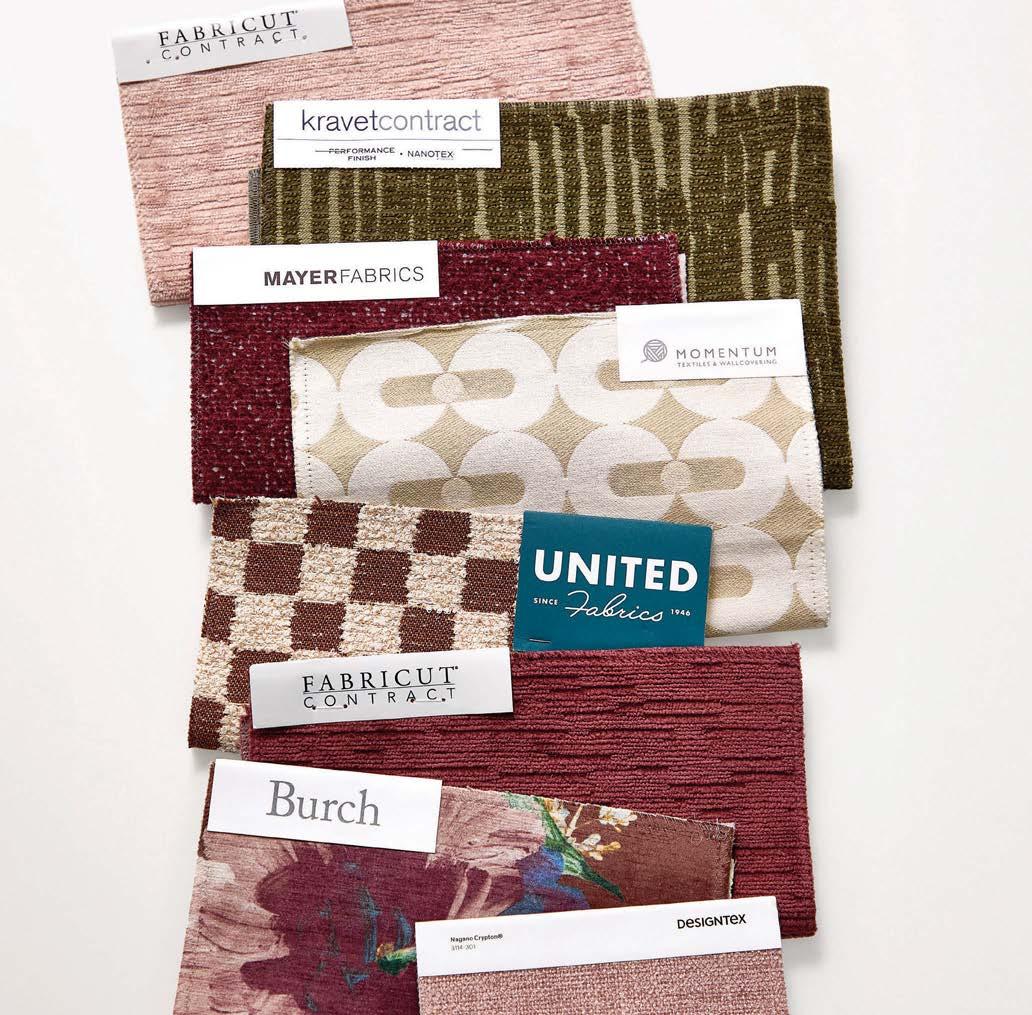
According to a survey by the research experts at Thinklab, designers are asking for more color and more pattern in performance fabrics. Enter the inventor of the category, Crypton, producer of the industry’s most specified fabric in the toughest commercial environments, and the 30-year-strong guiding force behind the largest and most trusted textile brands, such as Burch, Designtex, Kravet, Momentum Textiles & Wallcovering, and Stinson.
Whether for hospitality, healthcare, education, senior living, or workplace, designers can go to these brands and ask for Crypton by name to receive durable, stain-resistant, and aspirational indoor performance fabrics made with Crypton’s scientific advances. All Crypton offerings are Greenguard Gold–certified and free of harmful chemicals like PFAS, and many of the new partner collections are made at Crypton Mills in North Carolina, supporting American-made production and sustainability. Recent highlights include Montage Weaves, a textural and playful series by Kravet Contract; Designtex’s wellness-oriented Biophilia line; and the hospitality-ready and plentiful (more than 180 SKUs!) Anna Elisabeth Crypton Contract collection.
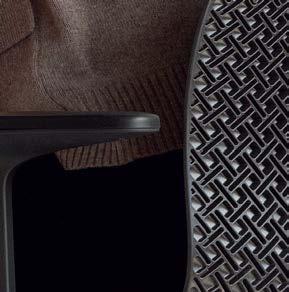
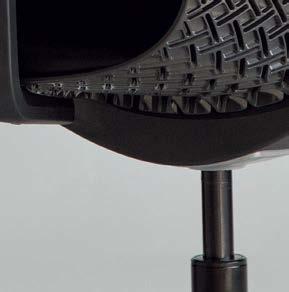
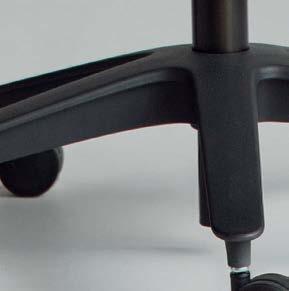
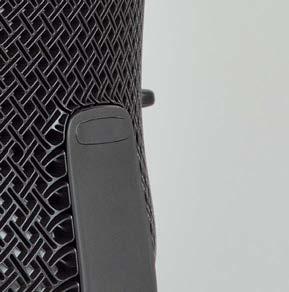
Comfort that’s made to move.
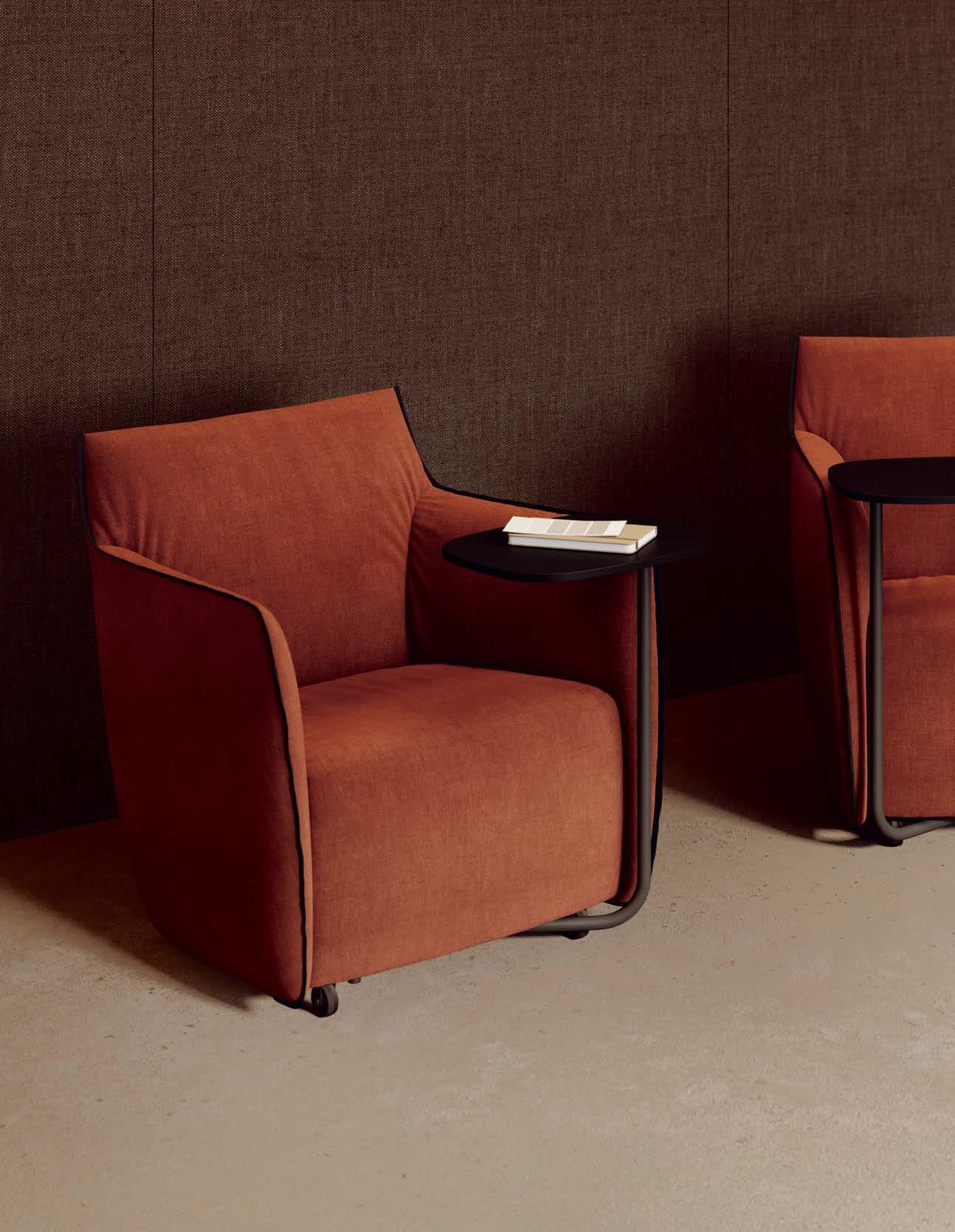
With a soft, inviting shape, casters and an optional tablet, Agyl blends casual comfort with practical mobility.
































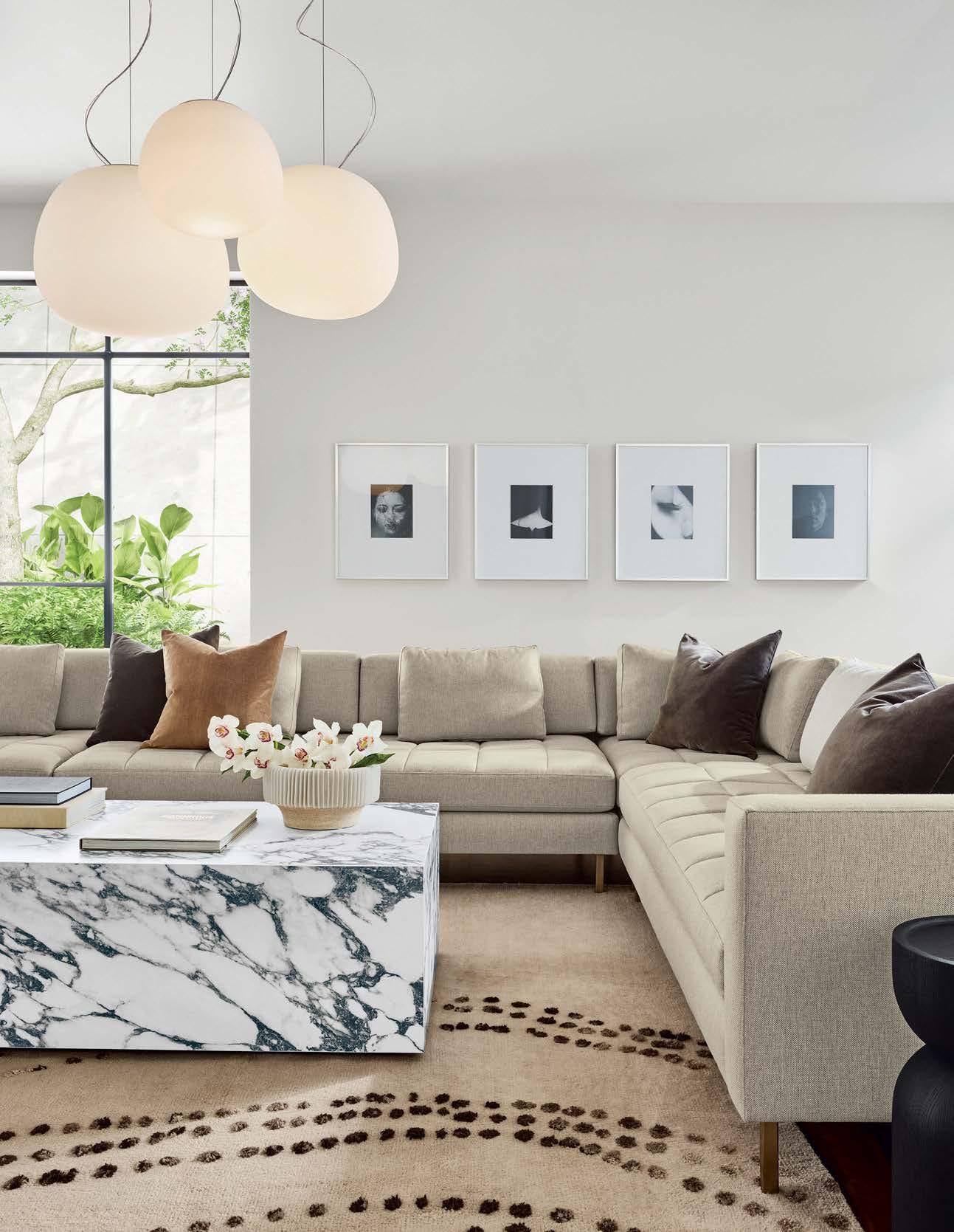


“Flexibility is the defining trend in educational environments. Spaces must adapt to new technologies, evolving pedagogical methods, and diverse user preferences. There’s a shift toward real-world, hands-on learning environments, especially in the health science and STEM fields, with a focus on colocating programs to foster collaboration. The challenge to create spaces that are both future-ready and responsive needs, supporting personalized learning and student wellbeing.”
—Audrey Koehn, DLR Group
“Across corporate interiors, we’re seeing culture-building, wellness, and technology We’re bringing a retail mindset to corporate interiors, using brand to shape the guest leveraging flexible kit-of-parts furniture partitions to respond to head count changes, and specifying durable, sustainable finishes that stand up over time. The resulting workspaces are not only efficient and code-compliant but also communicate the client’s brand and values with the same clarity we bring to national retail programs.”
—Sean McGuinness, Sargenti Architects



“Workplaces, residential developments, environments are adopting hospitality to create comfort and of belonging—a blending typologies that is expanding hospitality means. Hospitality spaces are taking on a broader social role, becoming catalysts for community connection and urban renewal, helping to reenergize neighborhoods and foster local pride.”

“One trend is that people want to be productive anywhere and everywhere: restaurants, bars, guest rooms, public areas, prefunction spaces. There’s also a growing focus on recovery, restfulness, reset, and comfort. There’s stress in the world, and hospitality good at helping people recover from that. Finally, there’s more clarity about—and AI-powered research providing deeper insights into—our target guests: what they want, what they’re willing to pay for.”
—Ron Swidler, The Gettys Group
“The hospitality sector feels unsettled. There’s been considerable workforce movement and turnover, creating uncertainty; a backlog of deferred maintenance and upgrades from disrupted improvement cycles; and ongoing shifts through brand mergers, hotel closures, and conversions. This means we are often designing for properties in transition.”
—Krista Ninivaggi, Woods Bagot

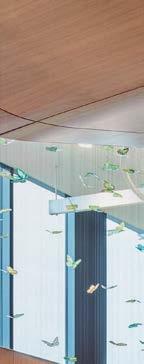
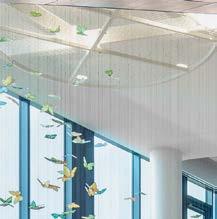
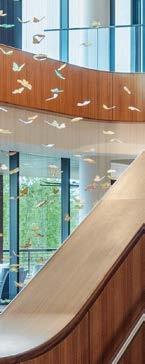
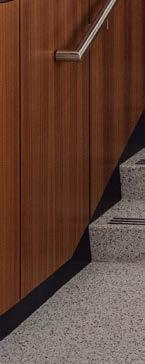

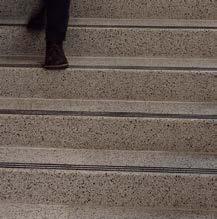
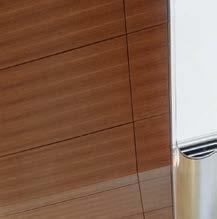
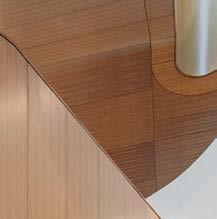


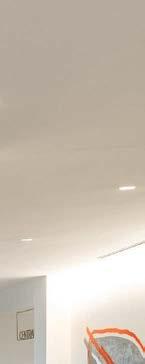
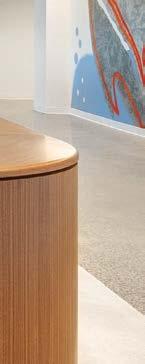
“The lobby’s organic, treelike volumes reach upward as if growing toward knowledge itself”
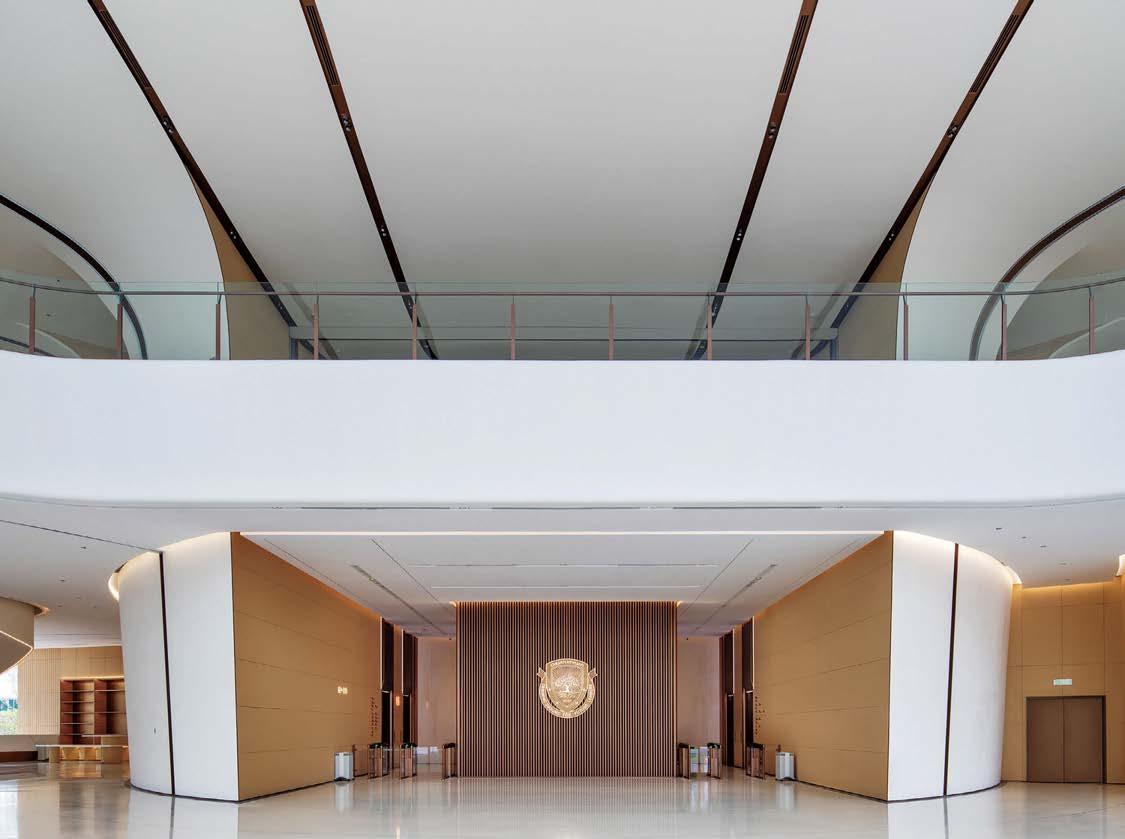
Oppo Chang’an Training Center
Dongguan, China
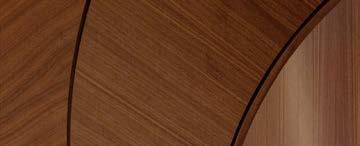
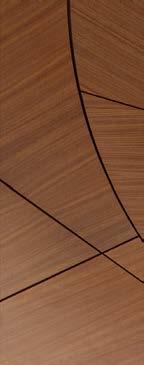
Making its debut on the list, the multidisciplinary built-environment consultancy SJ Group is represented here by subsidiary firm B+H’s interiors for a new training center on the campus of another corporate giant, the consumer electronics manufacturer Oppo. Part of a multiphase project that also includes a low-rise R&D building and a ringloop connecting structure—more than 861,000 square feet in all—the 20-story center incorporates a hotel, auditorium, and top-floor “sky” library along with workspaces, classrooms, and training facilities. But it’s the doubleheight lobby that really stops the show. A freestanding staircase in glass fiber–reinforced gypsum rises treelike through the space, its flowing form a sculptural presence of upward reaching curves that meld seamlessly with the ceiling. Organic as those shapes may be, they are the product of an intensely technical process—digitally modeled and prototyped to reconcile their fluid geometry with the practical demands of integrating lighting and mechanical systems while maintaining structural integrity. The subtly textured art-paint finish of the GRG volumes contrasts with the material covering many of the surrounding walls and architectural elements: terra-cotta tiling, chosen for both its environmental credentials and its traditional associations. Installing the ceramic cladding required multiple review rounds to achieve the precise alignment and flawless detailing the futurist setting demanded. The result is an arrival space where fabrication logic and material research are inseparable from the aesthetic experience. —Peter Webster
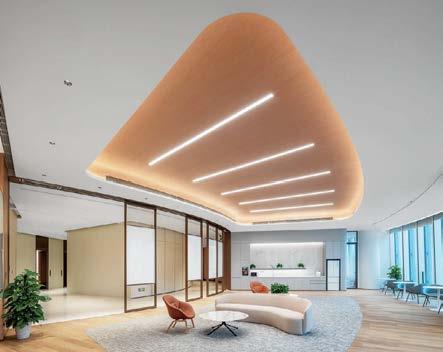
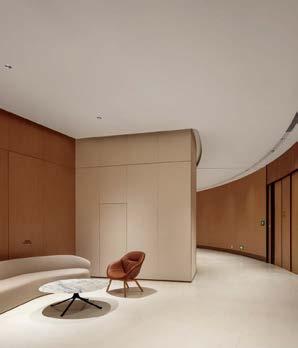
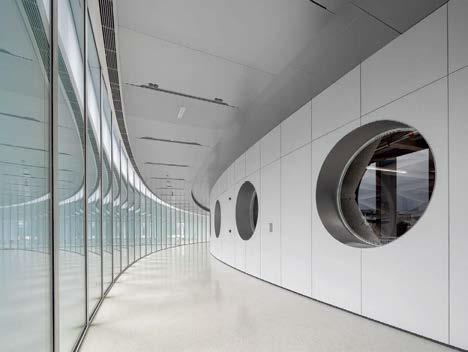
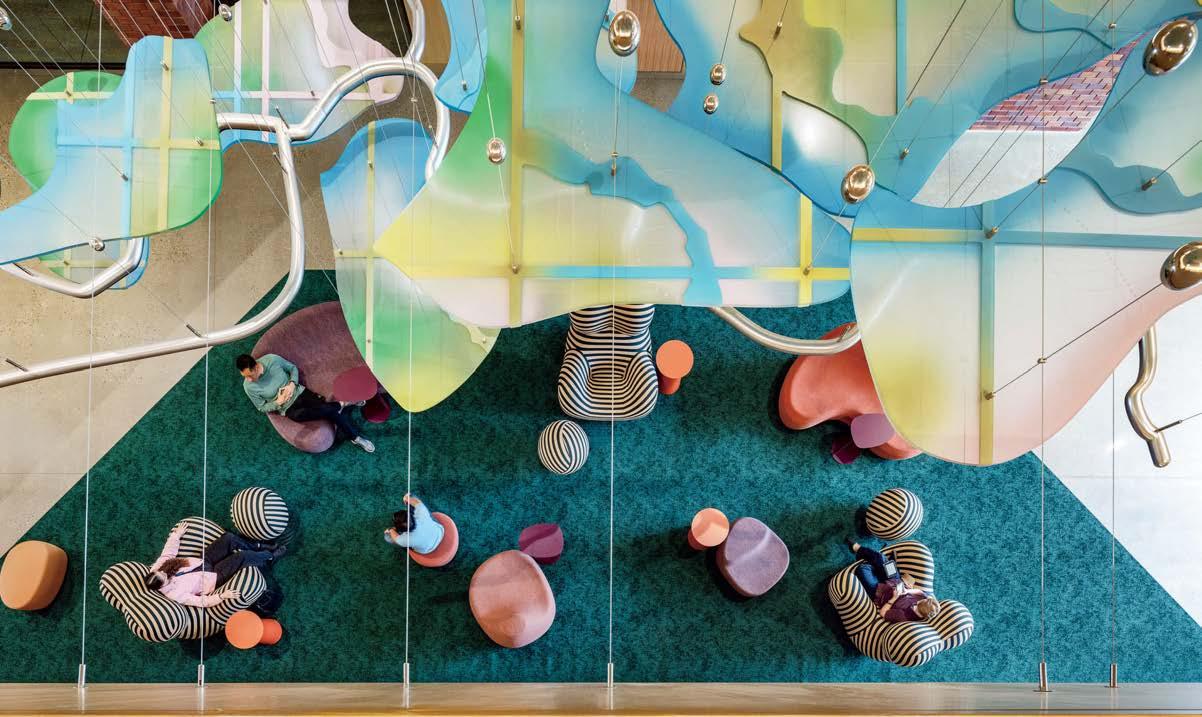
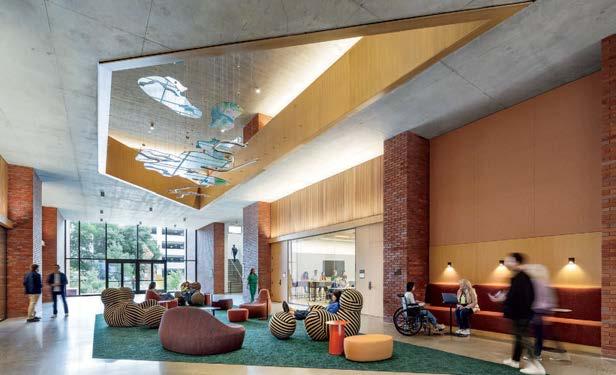
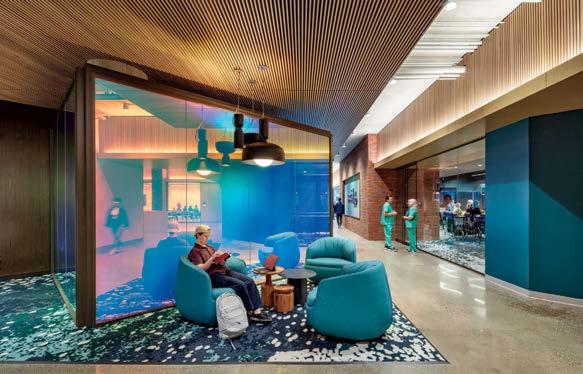
Aggie Square is an ongoing development reshaping UC Davis’s health campus into a dense, research‑driven district where academia, industry, and the surrounding neighborhood converge. Phase 1 occupies 8.25 acres and delivers 594,500 square feet across two interconnected ZGF‑ designed buildings—200 and 300 Aggie Square—organized around a new ¾‑acre plaza and a porous, community‑facing ground floor. Architecture and interiors work in tandem to dissolve traditional research‑campus boundaries. Light‑filled ground levels open in all directions, with maker spaces, classrooms, and event areas forming a public realm anchored by warm woods, exposed concrete, and local red‑clay masonry. Monumental stairs and open vertical connections act as social spines, linking floors and encouraging movement, visibility, and collaboration. Building 200 houses flexible wet‑lab neighborhoods with side‑loaded cores, shared service zones, and interior glazing that maintains visual continuity between lab and write‑up areas. Building 300 emphasizes offices, instructional spaces, and coworking labs, with study nooks and informal meeting areas that support teaching and entrepreneurial activity. Both structures run fully electric, drawing on the region’s renewable power grid to achieve net zero operational carbon and exceed state energy standards. A district‑wide public‑art program and strong community‑benefits commitments under score Aggie Square’s role as an economic catalyst for South Sacramento, even as its architecture sets the tone for future phases. —Peter Webster
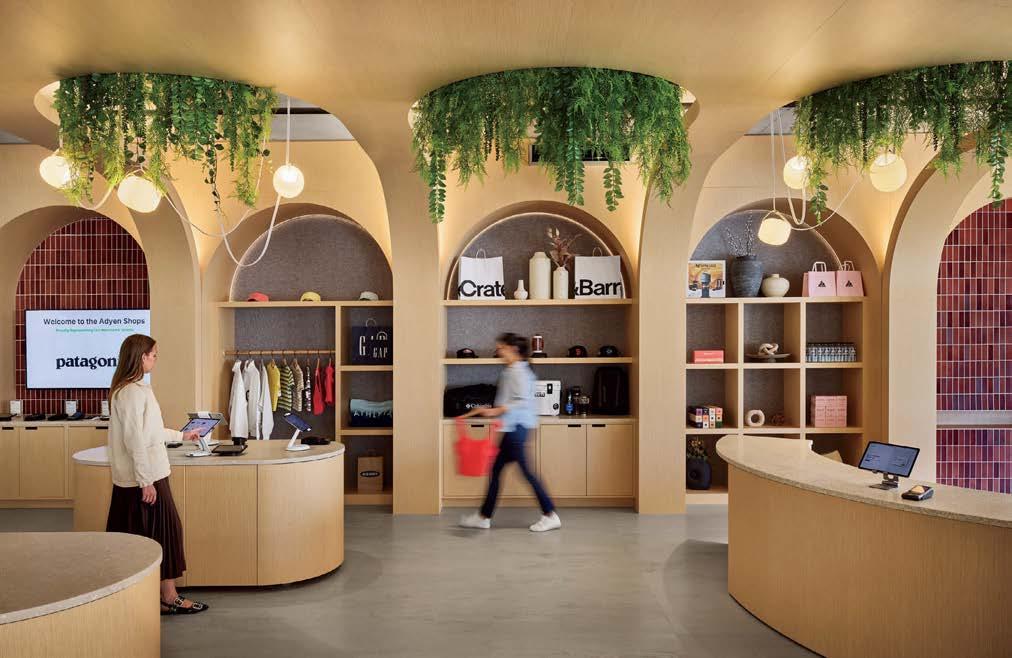
Adyen, San Francisco
When a company is scaling quickly, its workplace can say a lot about where it’s headed. That’s certainly the case at this 125,000-square-foot office for the fast-growing Dutch fintech organization. It needed a new U.S. headquarters that could match its ambitions—as well as lay the groundwork for the next decade of its practice, which offers a platform for enterprise businesses to accept e-commerce, mobile, and point-of-sale payments. Huntsman conceived strategic interventions throughout an existing six-floor building, embedding Adyen’s DNA throughout. In addition to carving out space for staff expansion, the scope entailed creating interiors that accommodate neurodiversity and a breadth of working styles, from headsdown to collaborative. A library on the fifth floor, for instance, offers a quiet, focused setting. Phone rooms feature dimmable, user-controlled lighting, while Club Adyen, a music-filled social place, offers varying levels of energy and calm. The team also devised a second-floor demo area to replicate retail and restaurant environments. Filled with Fireclay tile, blond rift oak, and abundant greenery, its users might think they’ve been transported to a coffee shop in the city’s Mission District—and that’s exactly the point.
—Lila Allen
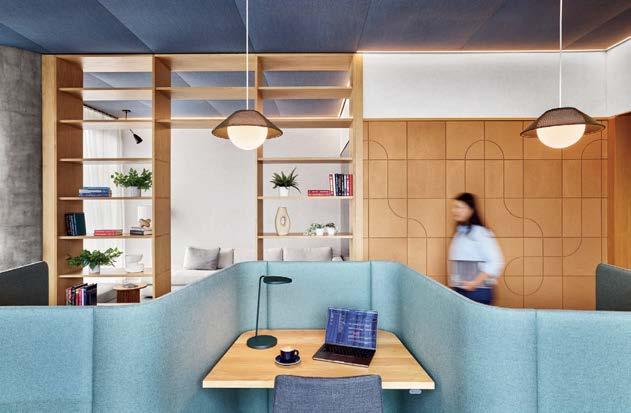
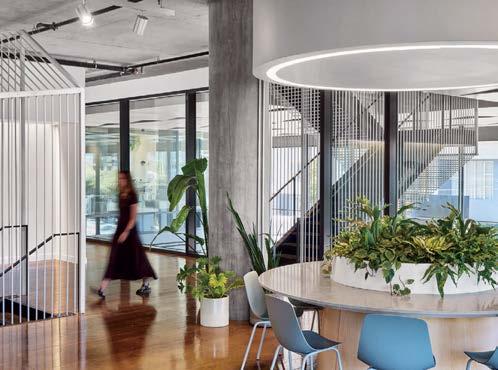
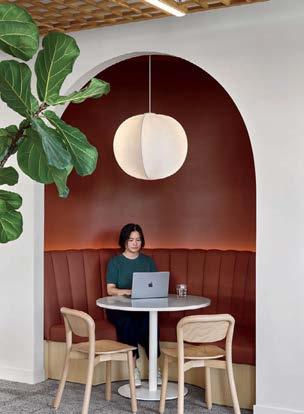









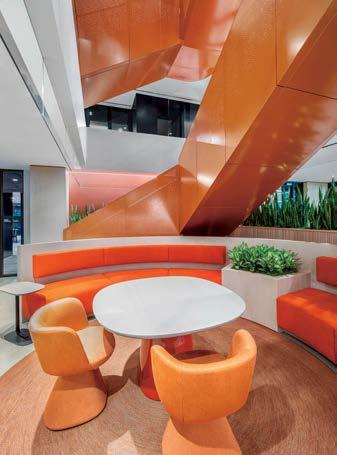
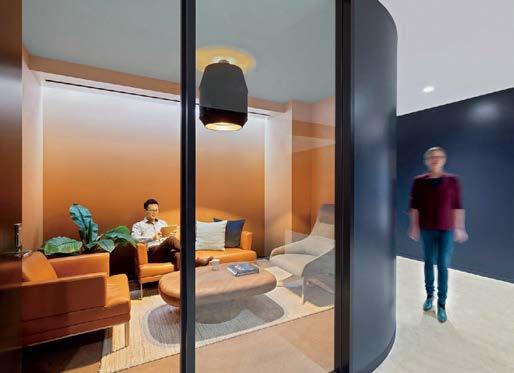
Colorful metal staircases are a hallmark of Macquarie Group offices worldwide. They symbolize the Australian financial services company’s values of openness and connectivity—and the importance it places on design. Its 17-year-old workplace in Houston, though, fell short, with only a tight stair linking the three floors. Gensler Houston updated the 70,450-square-foot office to better reflect its entrepreneurial spirit and create a more equitable experience for 550 employees. A reimagined stair is key to this charge.
The team focused on breaking down real and perceived barriers to improve sightlines and foster collaboration. The slab opening was enlarged and a generous atrium around the stair was instated. The stair itself has been reclad in perforated steel, its rust orange a nod to Houston’s industrial roots. Shared amenities like lounges and meeting rooms anchor the landings, naturally drawing employees to each level; the reception and main café, filled with greenery and custom millwork banquettes, sit in the middle of the stack. Colors signify different functions—navy for gathering and conference areas, crisp white for perimeter workspaces. Natural materials, exposed ceilings, and polished-concrete flooring further evoke the city’s grit, while paintings by Aussie artists Joshua Andree and Seth Birchall subtly link to headquarters. —Rebecca Dalzell



New York
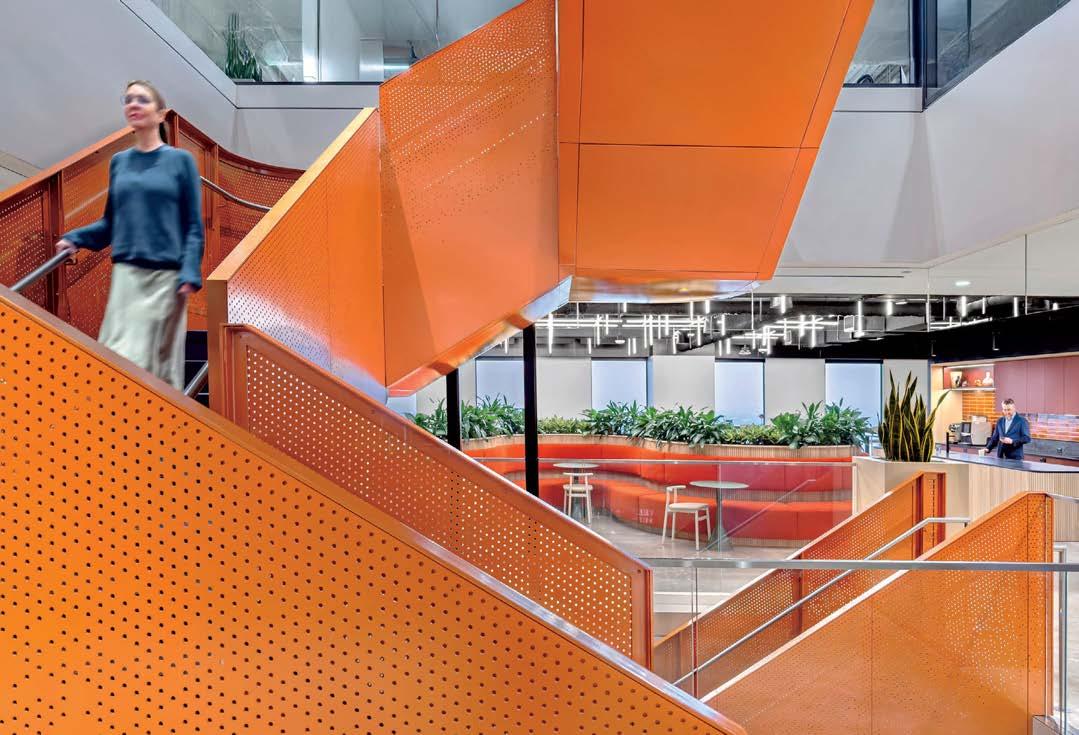
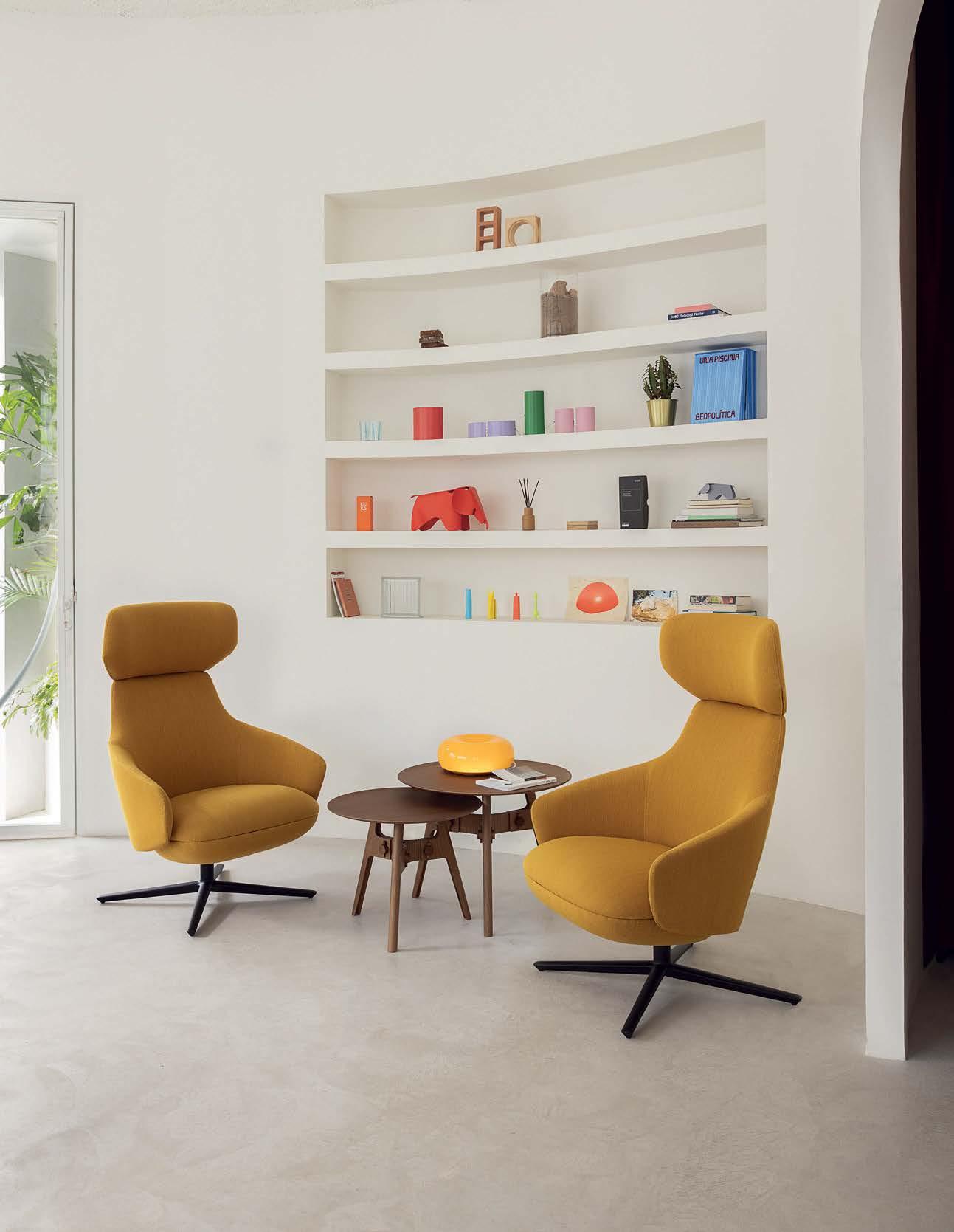
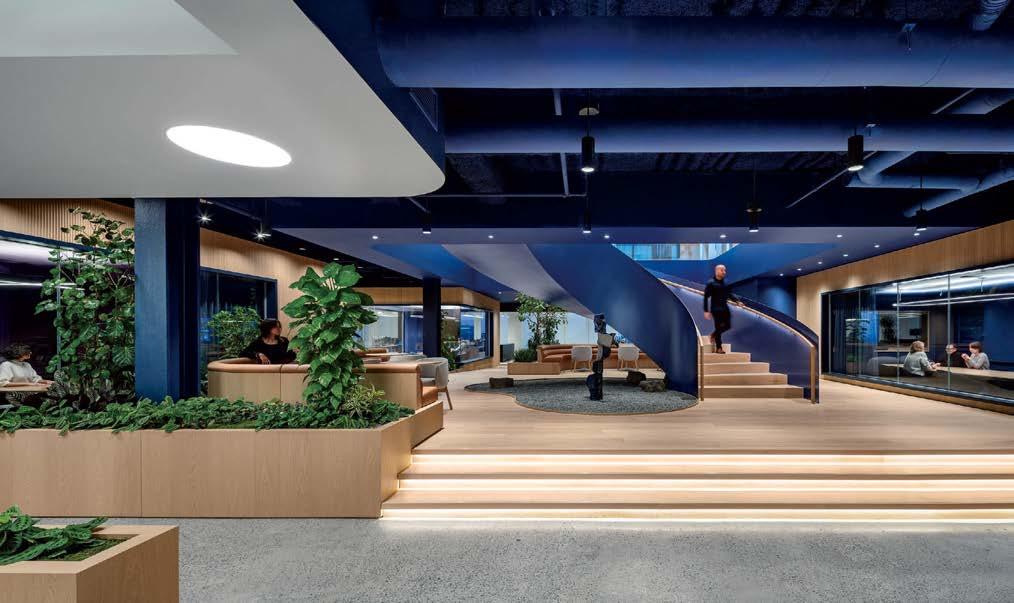
For its Manhattan workplace, the biopharmaceutical company tapped Architecture Plus Information (now merged with Perkins&Will) to design a dynamic, hospitality-forward space that would bring employees back to the office and encourage in-person collaboration. It also needed an adaptable configuration: Roivant convenes its full employee base several times a year for company-wide gatherings. As such, “The client needed a space that felt full of energy, whether hosting its entire workforce or only its New York–based staff,” explains associate principal and studio director Virginia Chiappa Nunez. The strategy hinges on choice. A variety of desking, offices, and flexible work lounges are located on the entry floor, characterized by bright, open areas. Darker, more intimate zones offer contrast and a graphic theme to draw movement toward communal and event spaces. With collaboration areas, lounges, and even terraces wired for connectivity, staffers can work anywhere and everywhere. A wide, spiraling central staircase offers a 360-degree view of the action, serving as both literal and symbolic connective tissue. —Stephen Treffinger
“It’s
a space designed to bring people back together, because that’s where their best ideas happen”
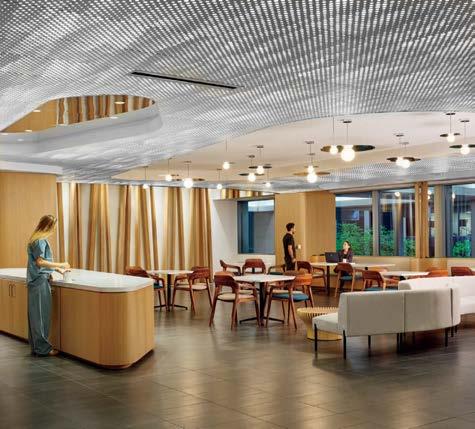
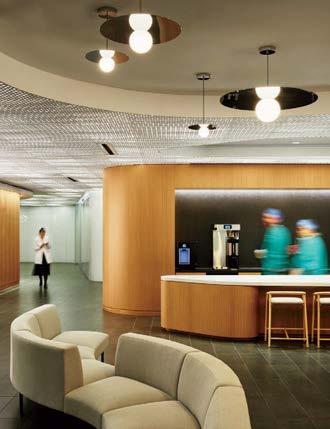
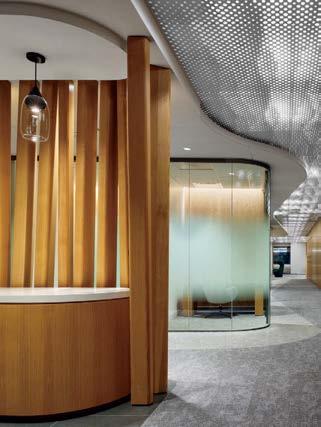
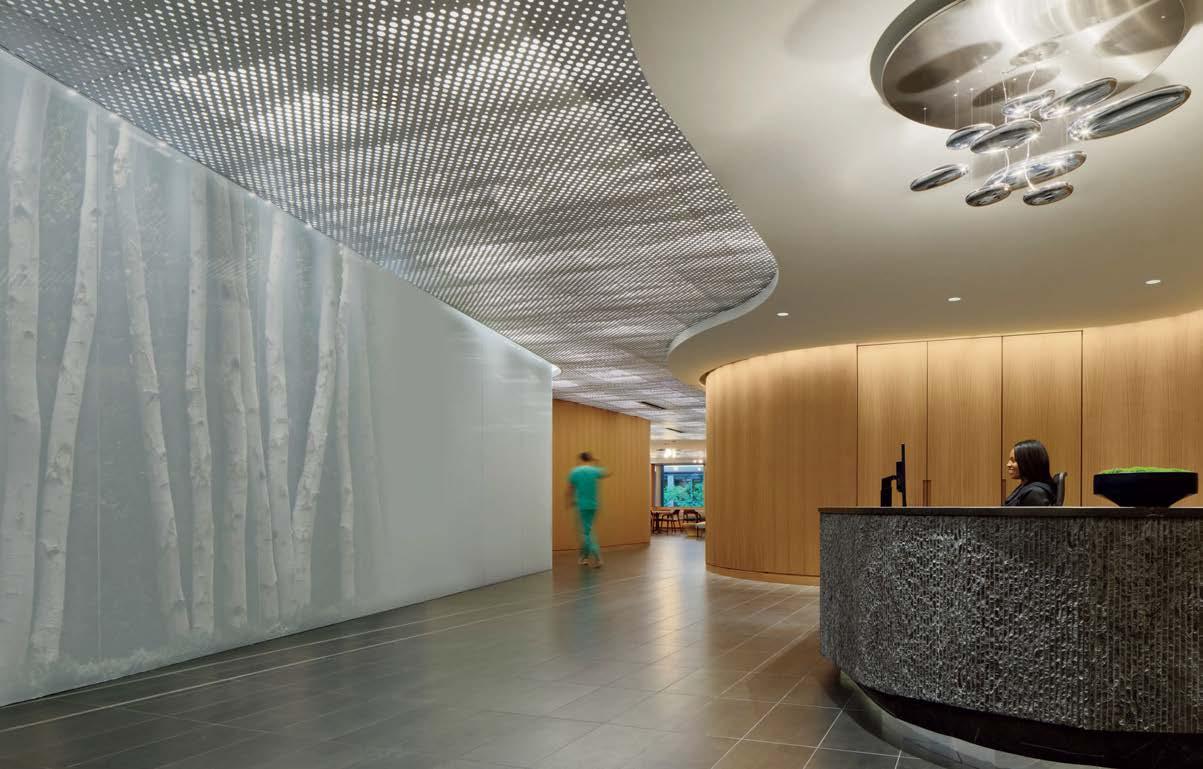
This 20,000-square-foot, biophilic-informed oasis adjacent to the hospital supplants a series of dated, siloed, and scattered offices. Conceived in concert with physicians and Blue Cottage (Cannon’s in-house strategy consultancy), the amenity-rich hub reads more retreat than workplace: encompassing quiet rooms, collaboration zones, and meditation, massage, and fitness spaces, plus chef-prepared meals, amid a Zen landscape that fosters community and counters staff burnout. Upon arrival, the custom stone reception desk, hewn into a rocklike mass, anchors the lobby, beneath Ross Lovegrove’s pebble-esque Mercury pendant fixtures, while transparent frosted glass fronts an indoor birch-and-moss forest. Curving forms flow into the café/lounge, where trunklike lengths of oak partition seating areas, chromated spheres suggest water droplets, and a sculptural island stands on porcelain tile flooring. Beyond, work areas layer angular oak screens, Mater’s organic Liuku pendants, and meeting rooms enclosed by more frosted glass, their circulation guided by a perforated metal ceiling that yields a dappled daylight effect.
—Lisa Di Venuta





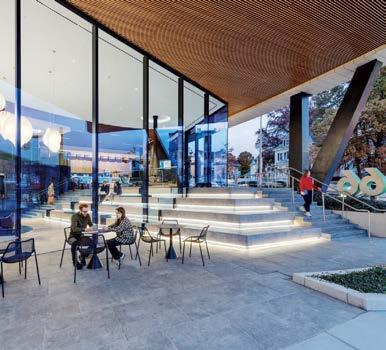
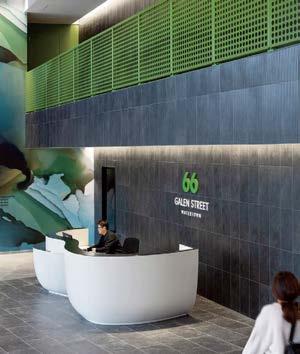
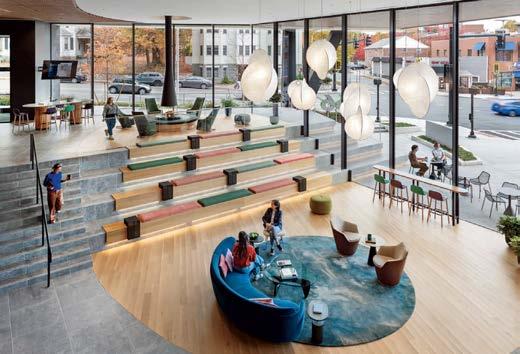
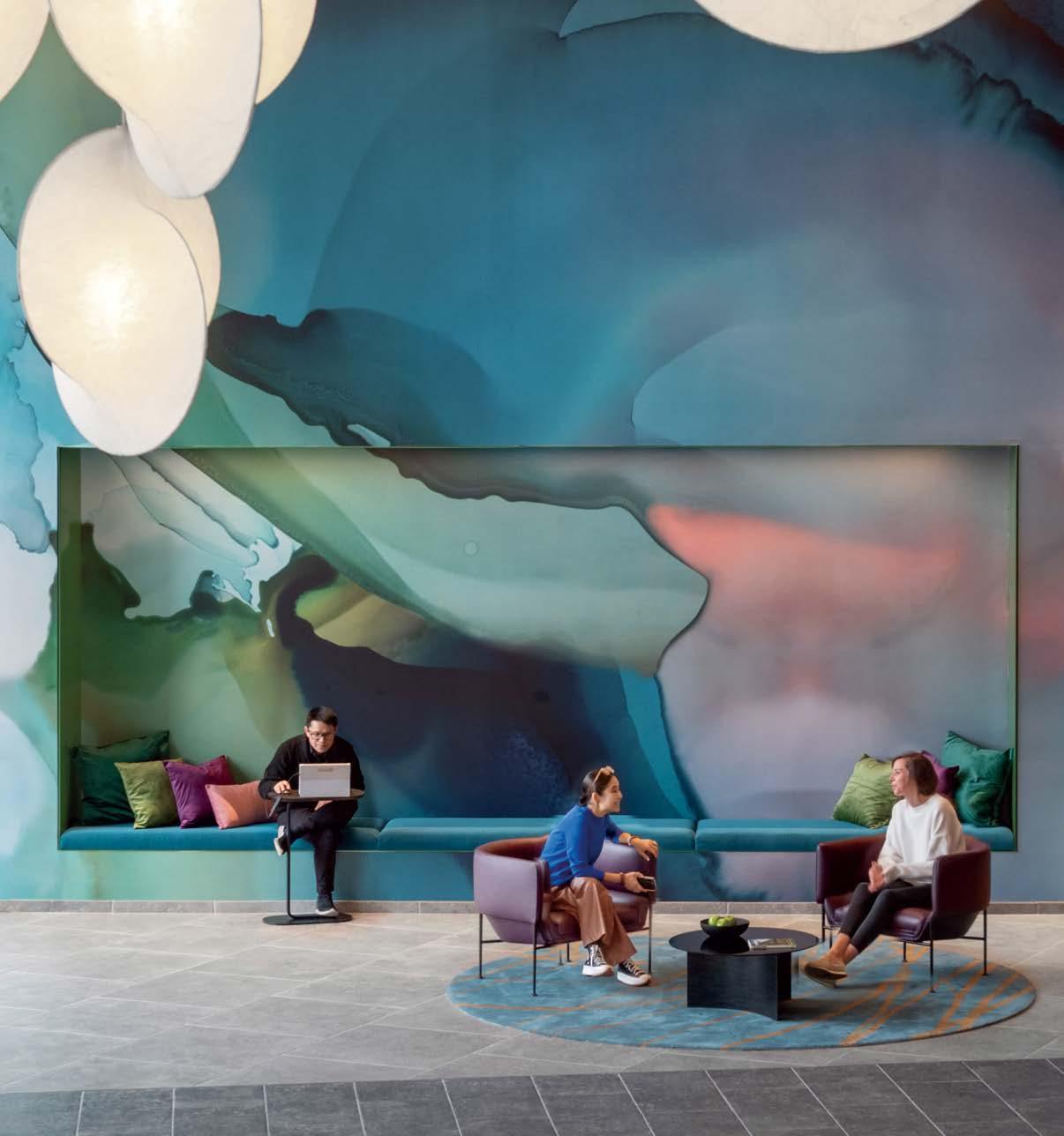
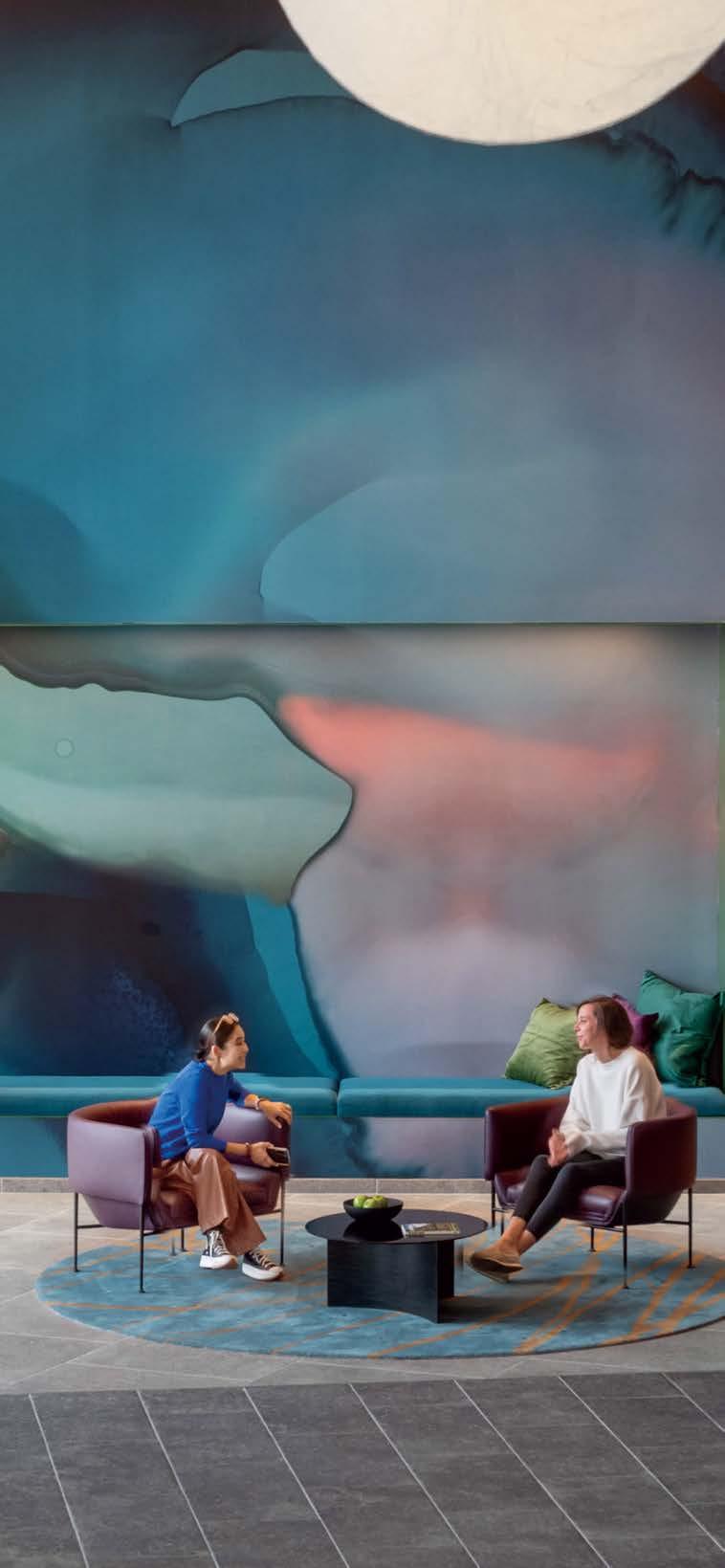
An underutilized site just steps from the Charles River has been transformed into a community-connected life science campus, where innovation is echoed in both the architecture and interiors. Elkus Manfredi Architects designed the 225,000-square-foot lab facility to offer flexible, wellness-focused spaces that draw inspiration from multifamily housing and contemporary workplaces. The building introduces a crucial connective urban element to a once unnavigable neighborhood, with nearly 40 percent of the site dedicated to open space and pathways linking major transit options. From the lobby, bleachers pierce through a double-height glass facade to become public-facing exterior seating, creating gathering spaces both inside and out. An expansive interior wall is washed with large-scale watercolor-style graphics that evoke movement and progress. A recessed section of this wall forms a cushioned niche for casual work, while circular rugs define intimate seating areas for informal confabs. Stretched-fabric light fixtures are suspended at varying heights overhead, complementing the abundance of natural light that floods in through glazing. With a suite of high-performance design strategies and integrated renewable energy features—including a rooftop solar array and EV charging infrastructure— the building is as considerate of the environment as it is of its users and the Watertown community at large.















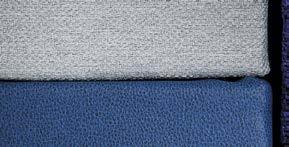






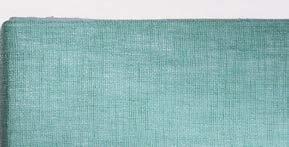

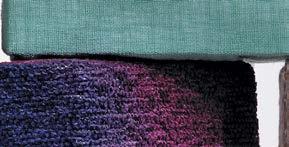




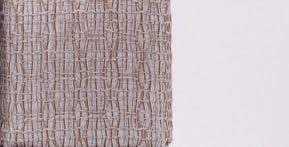
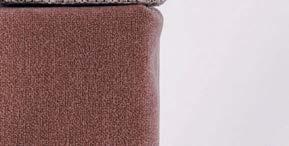
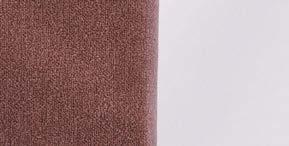









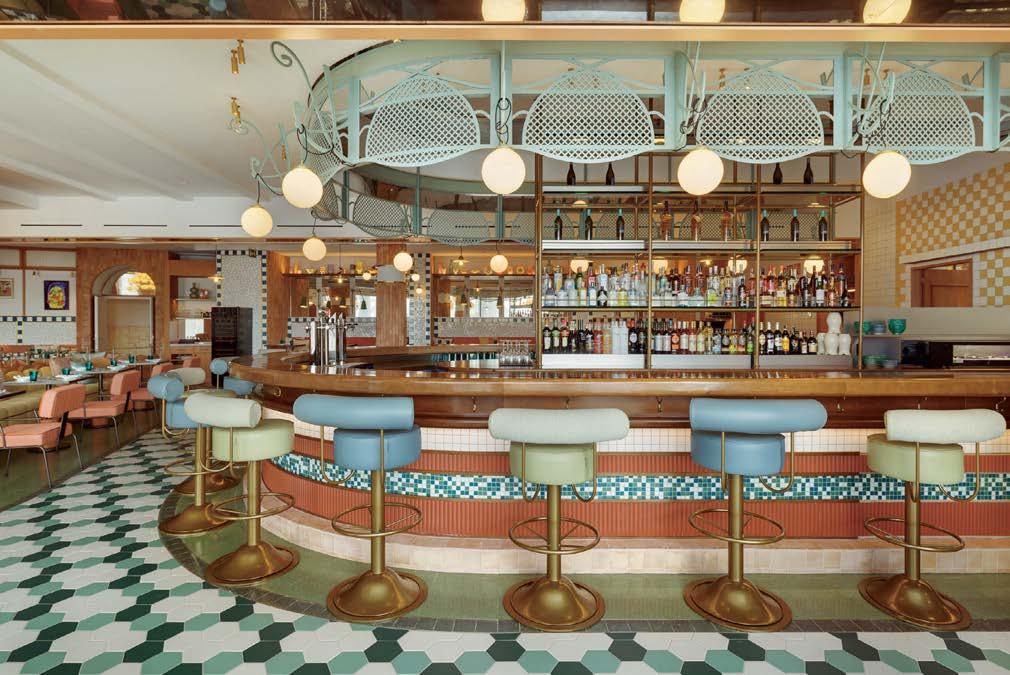
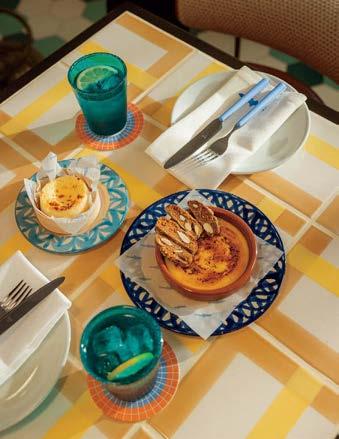
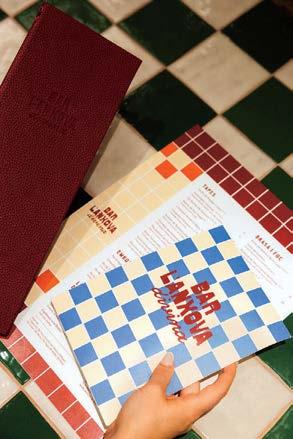
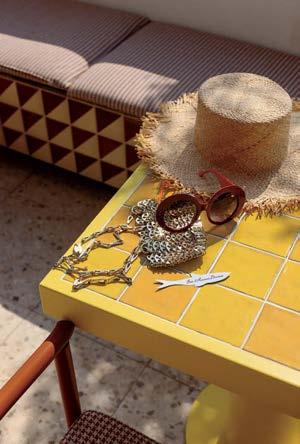
Long gone are the days when the hotel restaurant was simply a luxurious location to enjoy an over-the-top breakfast buffet. With culturally informed menus and interiors, a new generation of high-style eateries has even locals vying for a reservation. At the SLS Barcelona, AvroKO has cooked up an instant neighborhood classic in L’Anxova Divina, a 3,600-square-foot tapas bar whose sun-bleached palette evokes “Joan Miró painting on his summer holiday in Spain,” says Lexie Aliotti, director of projects at AvroKO’s New York studio, which counts Michelinstarred chefs Kyle and Katina Connaughton, Brian Kim, and Danny Meyer as clients. Drawing connections to the country’s decorative heritage are Antoni Gaudí-esque trencadís shard mosaics, a Modernisme-inspired spearmint-metal gantry over a horseshoe-shape bar, and glazed checkerboard and terra-cotta tiling, locally sourced from Maora Ceramic and Todobarro. Meanwhile, sculptural seating upholstered in pastel, jewel-tone, and geometric-print fabrics adds new age flair. Surrealism isn’t an overt design reference, but after a few glasses of vermouth and a plate of patatas bravas, it may begin to feel that way. “Like any good dream state,” Aliotti adds, “this irreverent mix of many simultaneous ideas creates an intangible, funky beauty.” —Elizabeth Fazzare
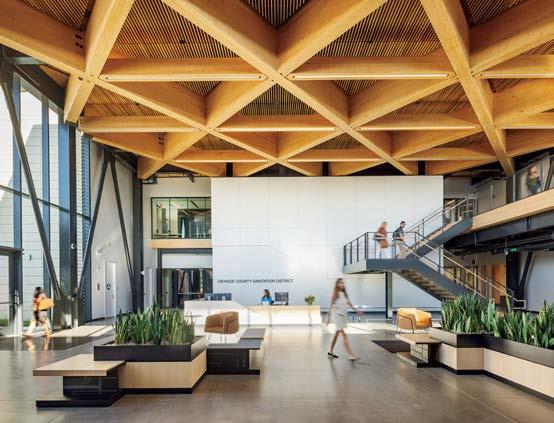
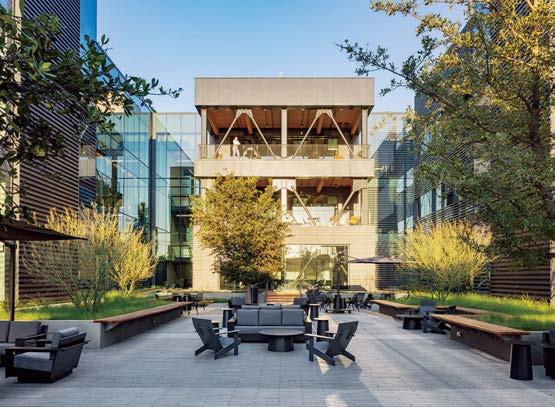
“Healthy interiors and biophilia combine to raise the bar for government buildings”
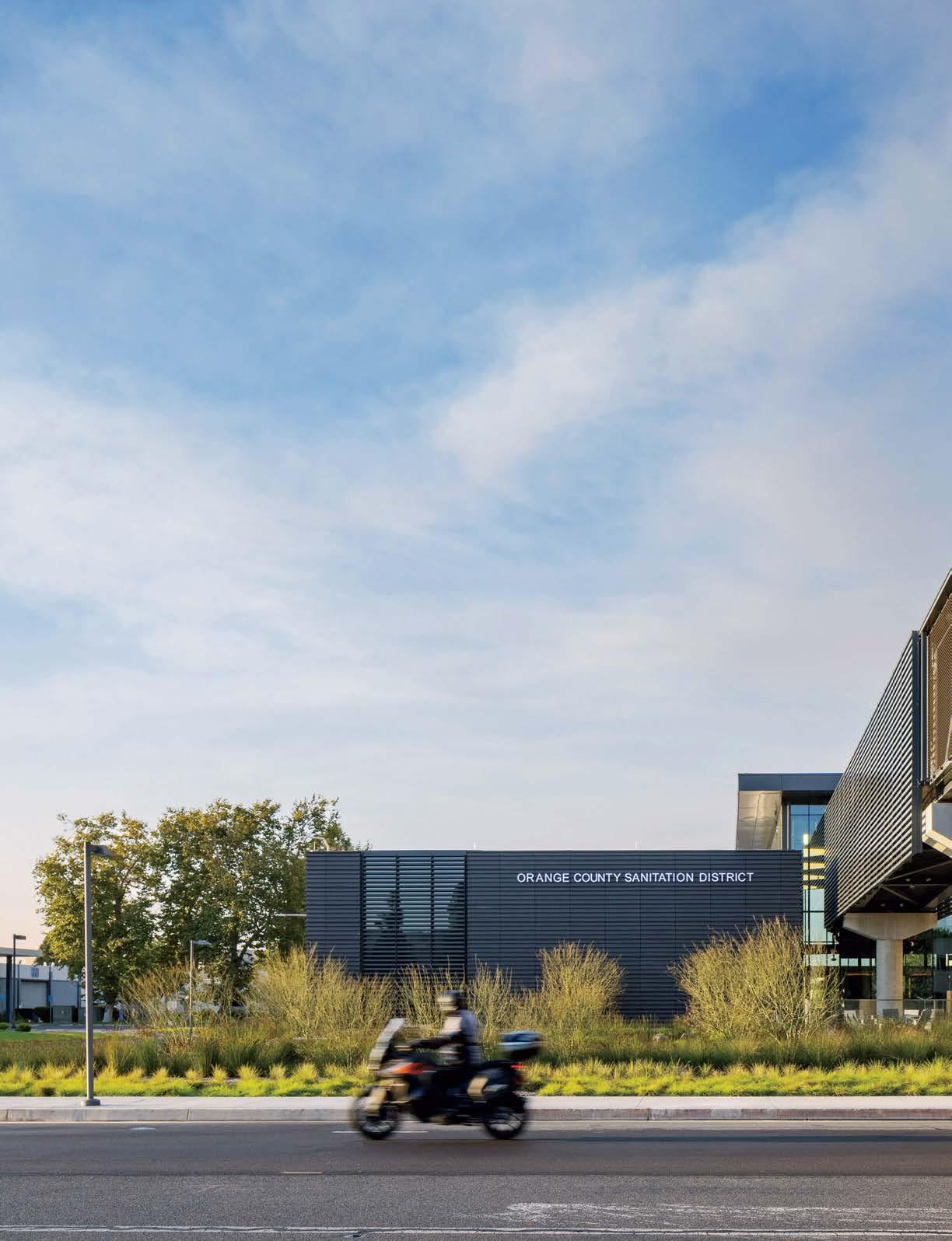
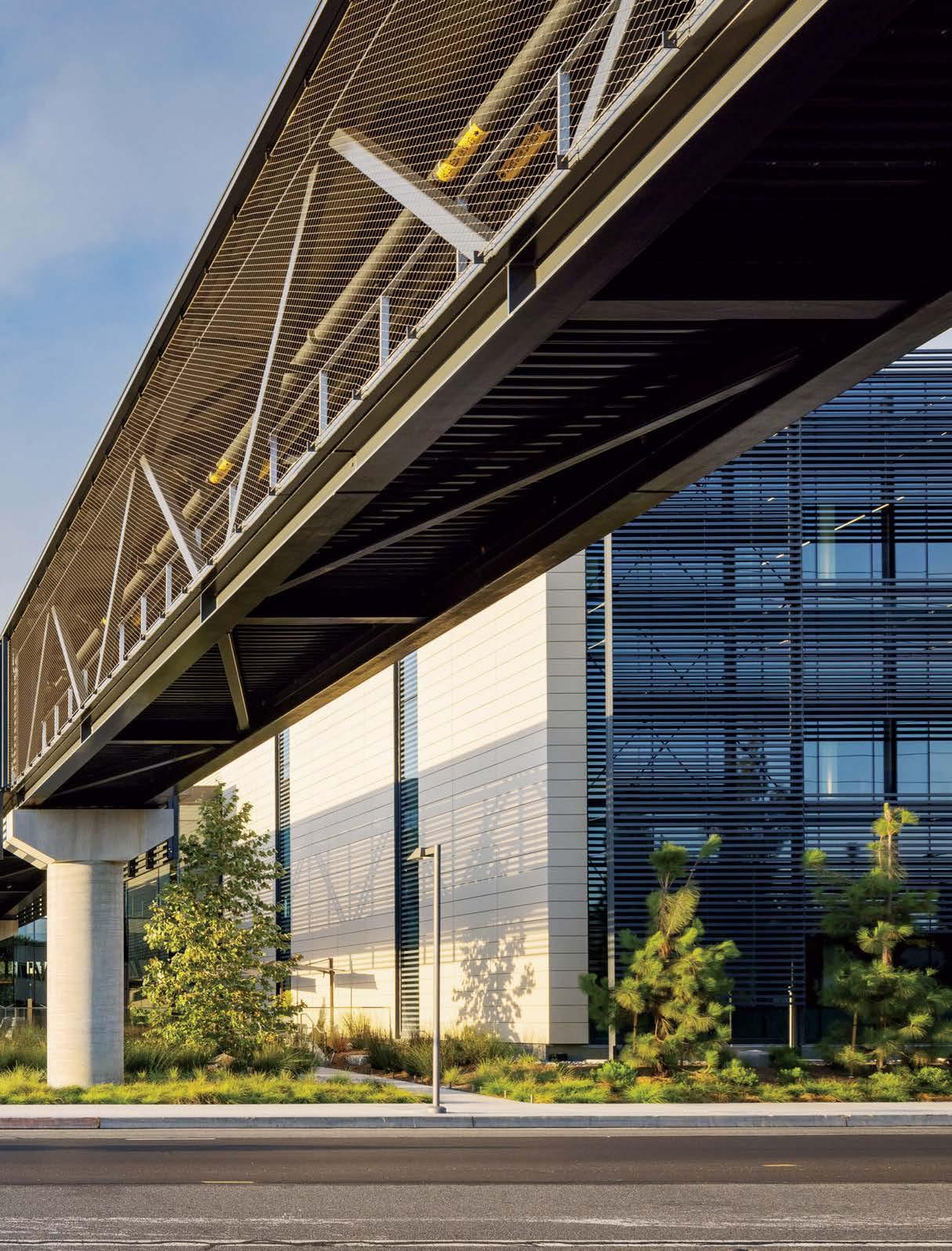
hdrOrange County Sanitation District Headquarters Fountain Valley, California
This cost-conscious, eco-minded project, located on a former industrial site, is the first mass-timber, net zero–energy building for a public utility in Southern California. Linked via a pedestrian skybridge to the wastewater-treatment plant across the street, the 109,000-square-foot, three-story building serves as both workplace and community destination, with immersive exhibits educating visitors, tour groups, and field-tripping schoolkids. (Because of the potential adolescent-joke nature of the plant’s function, humor is incorporated into the storytelling signage.)
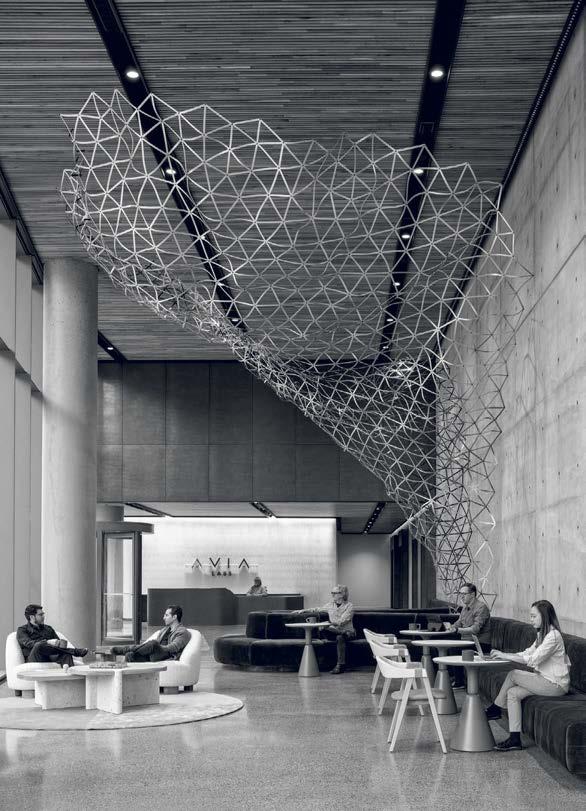
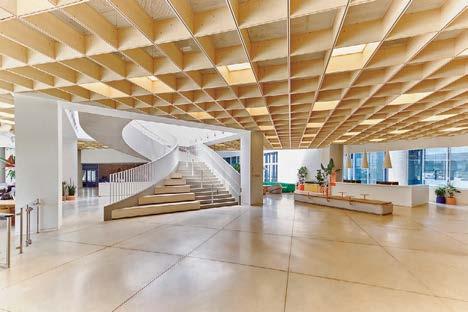
The double-height lobby flaunts a mass-timber diagrid structure—its layout inspired by the sanitation plant’s anaerobic digester—that pairs with a wood-slat ceiling providing acoustic dampening and integrated lighting. The office proper emphasizes collaboration and wellness, with abundant daylighting, easy-access common spaces, and enticing terraces and interior courtyards with native plantings. Numerous features helped put the all-electric building on track to achieve LEED Gold status. The timber was shipped by train from Oregon when needed to reduce carbon footprint and avoid storage costs. Passive solar shading and the building’s orientation maximize daylight while reducing heat gain. Interiors are 90 percent Red List–free. And much of the on-site energy needs are met with biofuel—captured as a waste product from sewage processing. —Stephen Treffinger
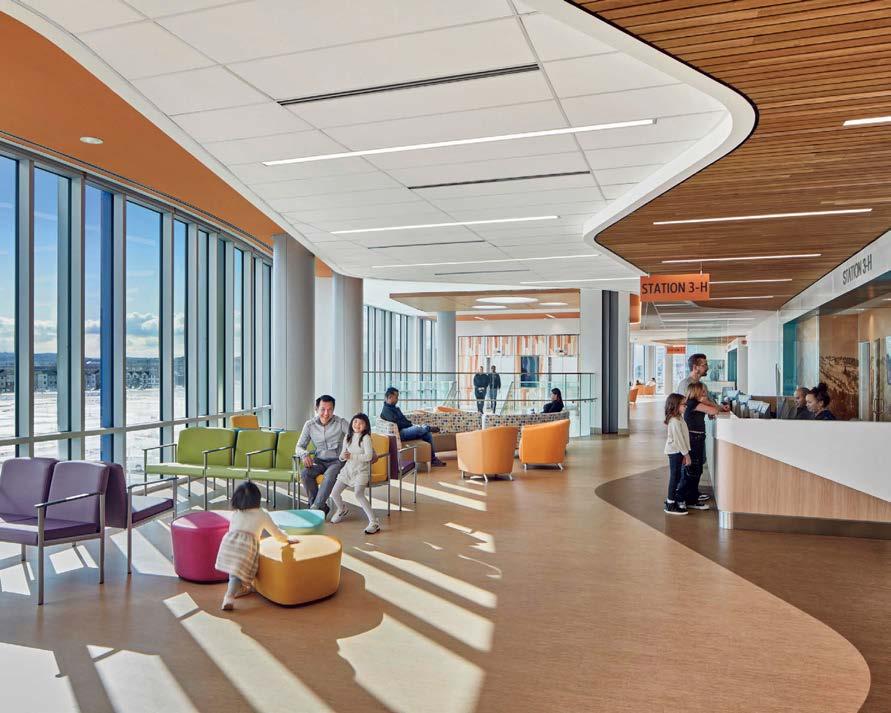
Intermountain Primary Children’s Hospital, Larry H. & Gail Miller Family Campus, Lehi, Utah
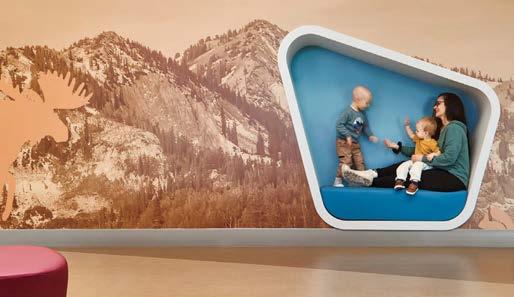
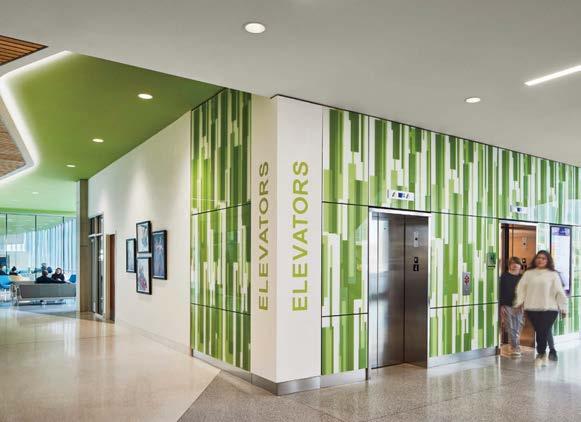
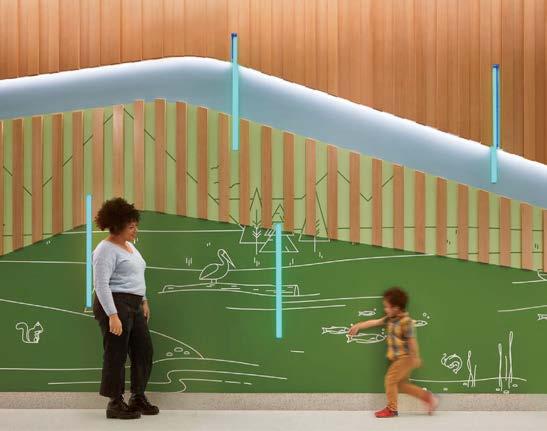
Distraction can work wonders with kids, turning a stressful moment into a silly one. Never is it a more important tool than in a healthcare setting, whose tubes and alarms can be downright scary. For this 486,000-square-foot pediatric hospital, Page, now part of Stantec, worked with VCBO Architecture to harness the power of positive distraction in turning its five floors into places of discovery and adventure. The team gave children engaging things to focus on, making them more relaxed when they see a doctor—and helping them heal. Taking inspiration from Utah’s natural landscapes, each floor became an immersive environment with distinct hues, images, and surprises. Realistic graphics on the walls of the Alpine level reflect the surrounding mountains, as do custom padded seating nooks in the waiting area. On the Space floor, an astronaut-themed MRI room lets kids pretend they’re climbing into a space shuttle instead of a foreboding piece of medical equipment. Elsewhere, zinc inlays of fish or paw prints in the terrazzo floor serve as creative wayfinding and moment of playfulness for kids looking down. Even a walk to the cafeteria becomes a game, with colorful motion-activated light strips that intensify and diminish as people walk by. —Rebecca Dalzell
Linea, Charlotte, North Carolina
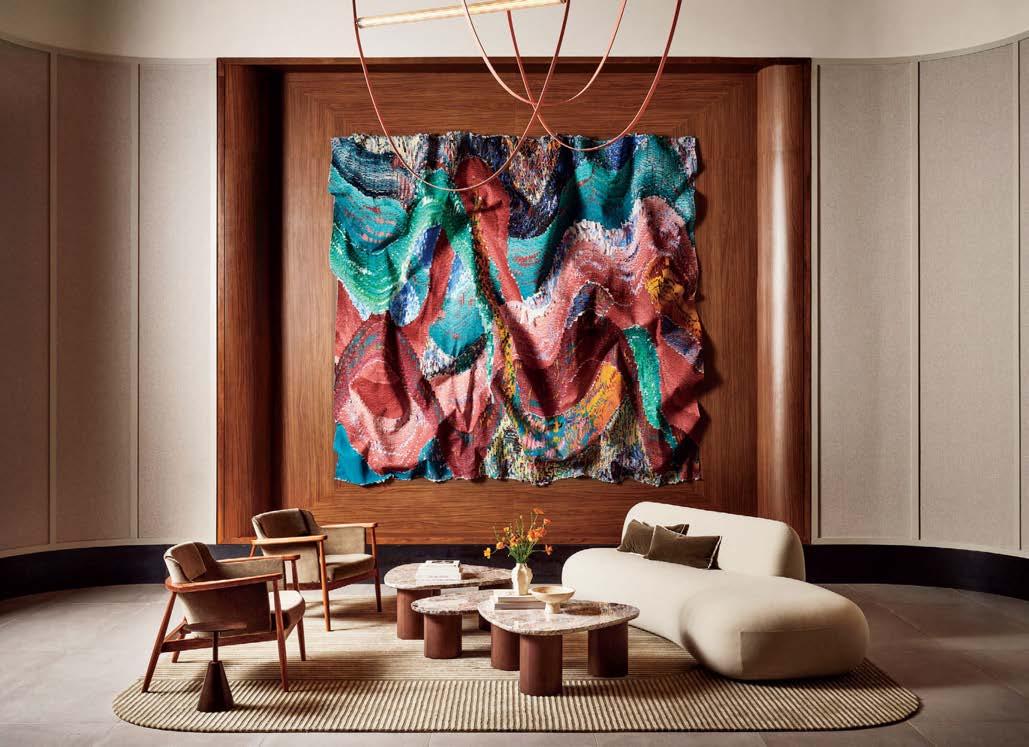
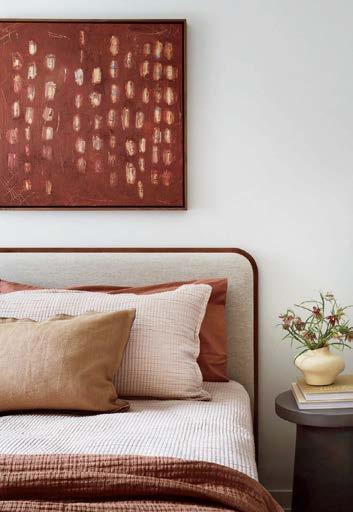
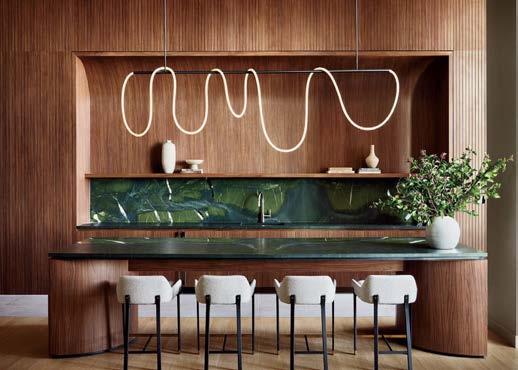
This 370-unit luxury residential development fosters connectivity. Located in the city’s South End, a creative hub that was once a locus of textile manufacturing and millwork, the property abuts the Charlotte Rail Trail, sits close to a light-rail stop, and connects by way of a skybridge to a new luxury office tower with ground-floor retail and dining destinations. The interiors are similarly rooted in place and community, with numerous tenant perks and a decor that draws from the area’s rich history. In the lobby, woven textures and warm tones prevail, juxtaposed by quietly industrial elements: See the gray terrazzo reception desk, walnut-framed furniture, and soothing, neutral-tone fabrics. Art from local makers also makes an appearance, such as the lobby’s Eruption Series (2024) by Kenny Nguyen, a mixed-media piece made from dipping silk in marbleized acrylic paint and mounting it to canvas. The earthy hues continue into the apartments themselves, which range from studios to three bedrooms, some with private work/study nooks. The 23rd floor, with jaw-dropping city views, is devoted to amenities, including a coworking space, game room with LED rope–lit bar, moody sound lounge with a community record collection, and an outdoor pool. —Stephen Treffinger
“It
feels inviting and enveloping because of its simplicity and modernity, not in spite of it”
Residence, New York
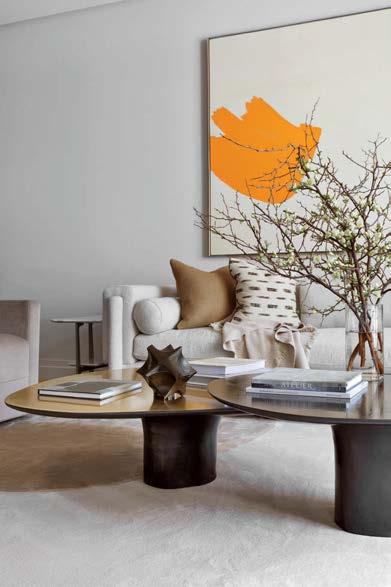
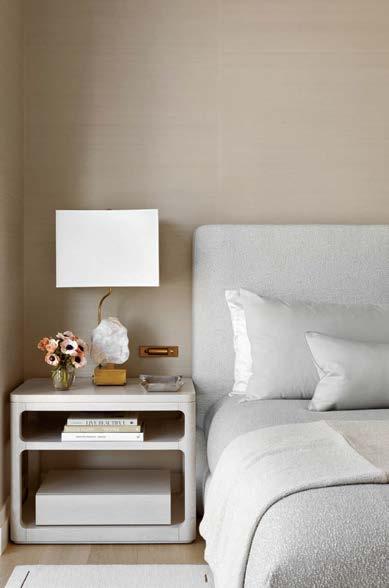
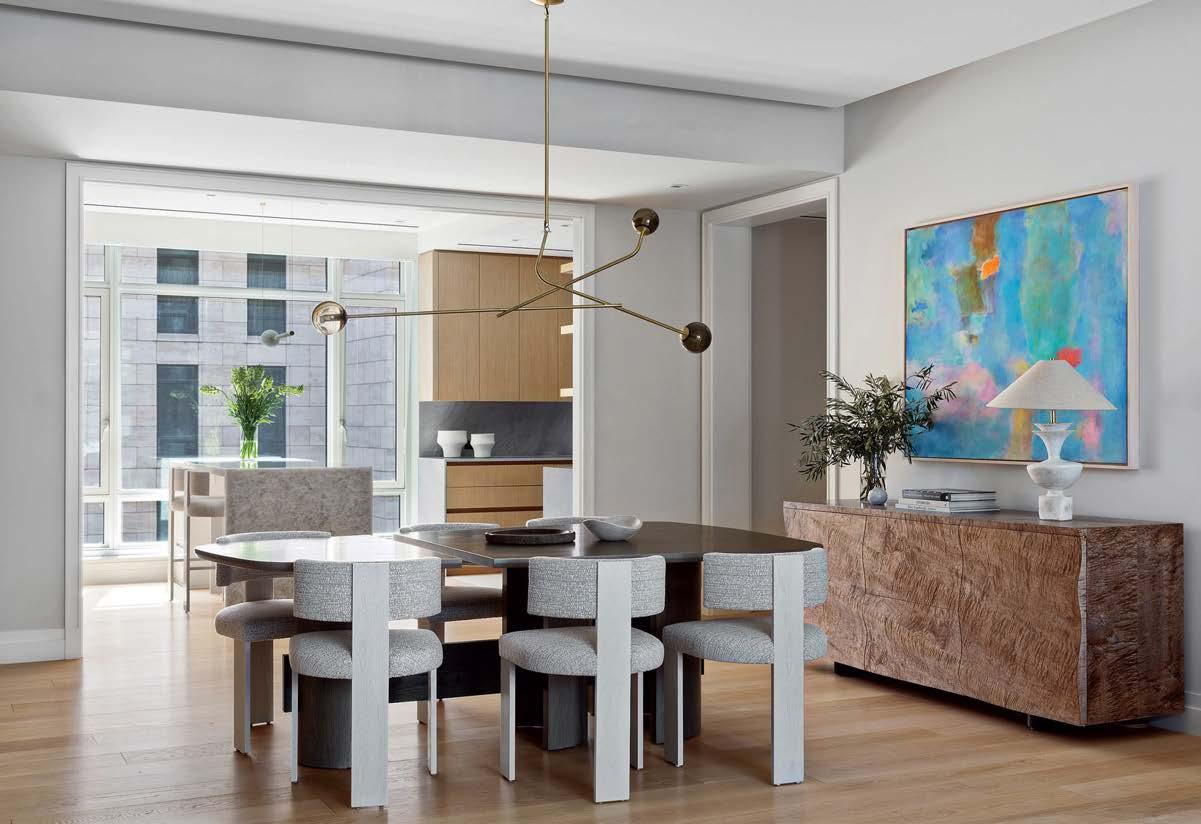
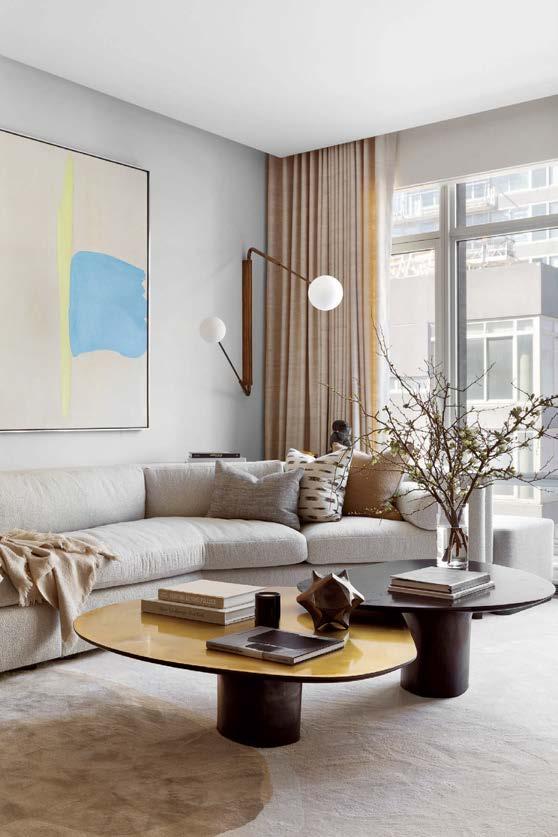
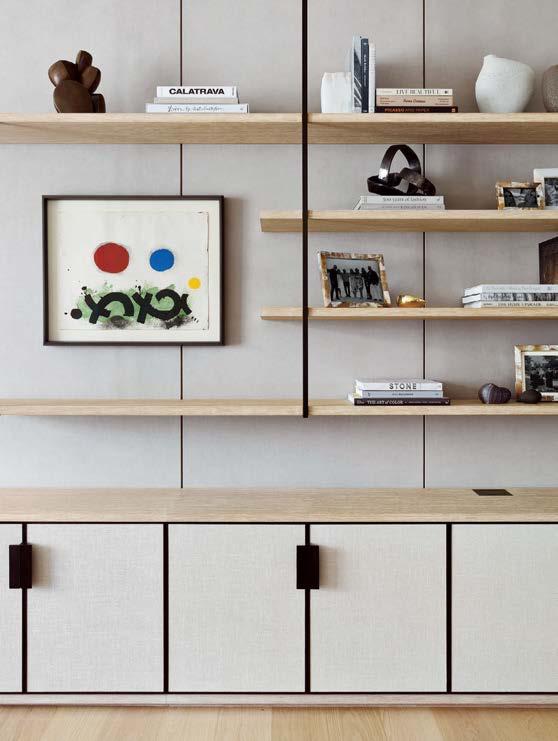
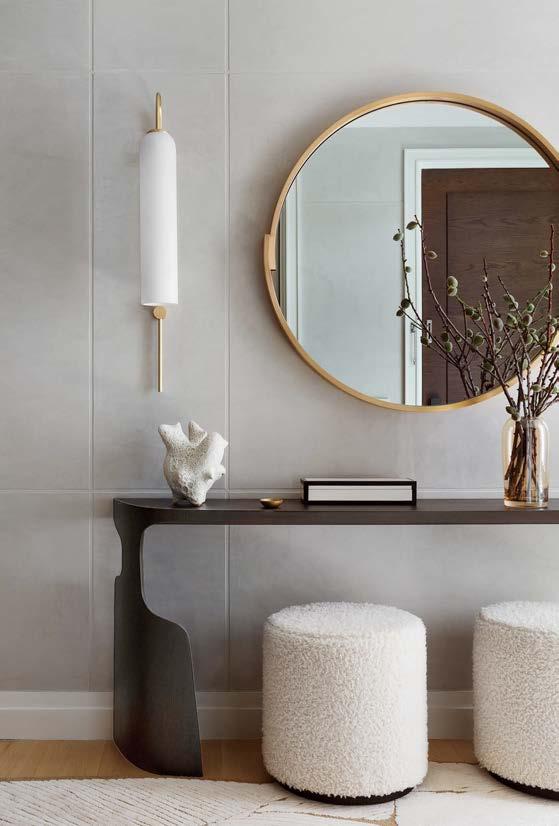
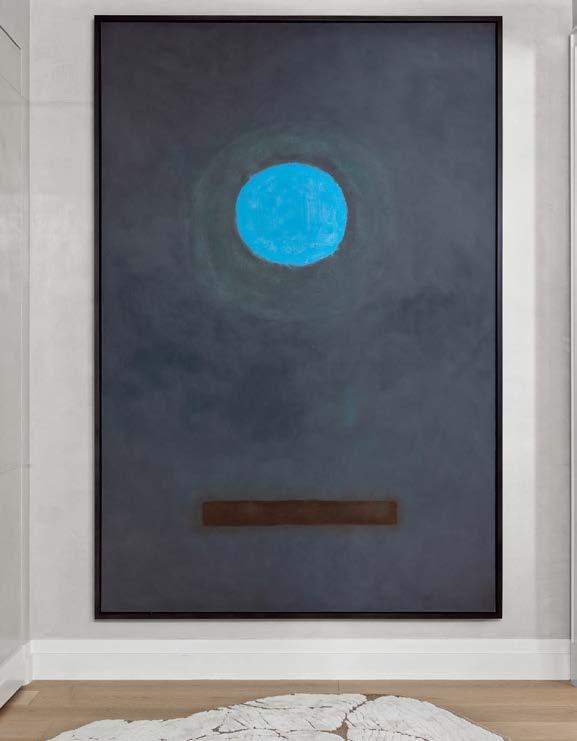
The vertically integrated firm tackles design at every scale, from master planning and architecture to interiors, product, and branding. Several of those practice areas came into play at this 2,540-square-foot pied-à-terre for a fun-loving family, a repeat client for whom Workshop/ APD has also completed houses in Palm Beach, Florida, and on Nantucket, Massachusetts. Like those homes, “Everything here needed to be effortless and comfortable and show off the client’s incredible style and art, but also serene and visually calming, a refuge from the city’s chaos,” interiors principal Nicole Ficano says. In a relatively new TriBeCa tower, the three-bedroom apartment centers on the foyer and its large-scale Adolph Gottleib painting, with the eat-in kitchen off to one side and the living-dining area, library, and bedrooms to the other. With no architectural interventions needed, efforts were focused on a facelift: electrical and lighting alterations, building in copious millwork, and installing contemporary furnishings, many by local artisans, around blue-chip art pieces. The latter is evident in the dining area, where an Esteban Vicente oil on canvas gently colors the sophisticated neutrals of Workshop/APD’s custom Partis table, Nina Seirafi’s Gary chairs, and a figured-maple Payette credenza by Token, and the living area’s Friedel Dzubas Color Field acrylic above Egg Collective’s Howard sofa. Angular pendant and sconce fixtures by Neri&Hu and Paul Matter add a dose of urban edge. —Edie Cohen



















AvroKO
Consolidation is accelerating, with 100 Giants expanding their reach through a wave of 2025 deals. Among the most notable: Architecture Plus Information and HYL Architecture joined forces with Perkins&Will; Corgan brought on Dyer Brown & Associates; Stantec purchased Page; Ware Malcomb acquired CBRE Design Collective; and CHIL Interior Design and B+H came under SJ Group. These moves signal more than scale. Firms are broadening expertise, strengthening sector footholds, and diversifying services. The influx of new practices on the 100 Giants list further underscores a field in transition. These are all indicators of industry maturity, which tracks with the overall stability we saw in 2025 despite the economic uncertainty. Now, we’re waiting to see whether consolidation will spark long-overdue process innovation, particularly in how design services are structured and delivered.
new construction vs renovation projects: 47/53
$298,306 ID FEES PER EMPLOYEE
TOTAL INTERIOR DESIGN STAFF
20,279
domestic vs international projects: 86/14

“Data-driven
solutions craft an inviting, biophilic workplace where versatility rules”
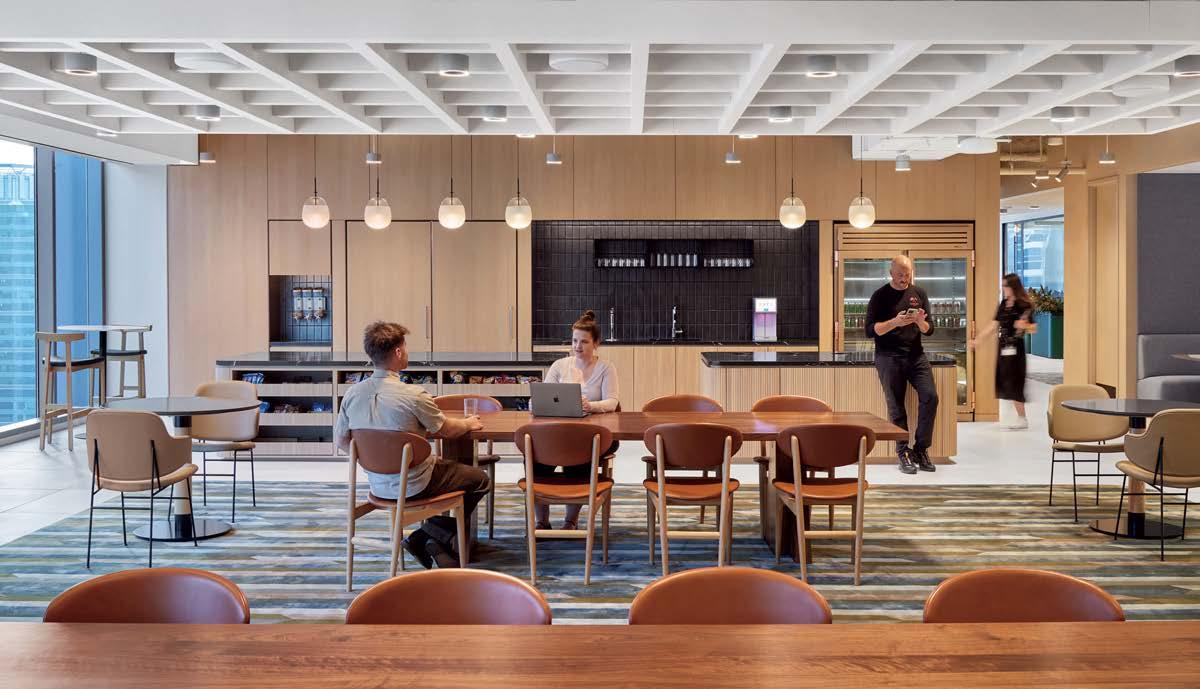
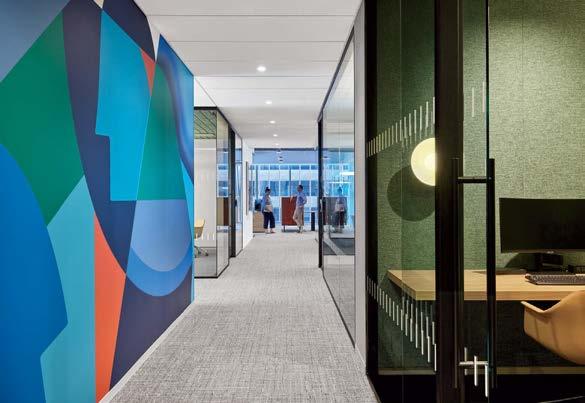
Workplace design has gone through several iterations in the postpandemic era, from 6-foot separation to packed open floor plans with too few conference rooms. The takeaway? Like many industries’ new work schedules, a hybrid solution is best. But because one size never fits all, Studios turned to employee-survey data to help inform its interiors for FTI Consulting’s 54,800-square-foot bi-level office in the Chicago Loop. What the responses showed is that, “Open space was no longer nirvana,” principal Todd DeGarmo says. Instead, his team created smarter spaces: smaller meeting rooms near the quieter core, shared workspaces toward the windows, and a central “network lounge” versatile enough to host a breakout session, daily work, or an all-hands meeting. Between them, a sculptural stair wrapping a faux tree with a real trunk provides vertical connection as well as daylit sight lines. The material palette has similar industry-meets-organic inspiration, with warm wood walls; furniture, workstation dividers, and phone booths with tactile upholstery; and custom biophilic rugs. “We played on the neighborhood’s contrasts,” DeGarmo adds, as it’s home to “both gridded Miesian architecture and some of the most glorious green spaces of any American city,” while pops of warm red-orange and cool blue tie to FTI branding. —Elizabeth Fazzare
giants #29
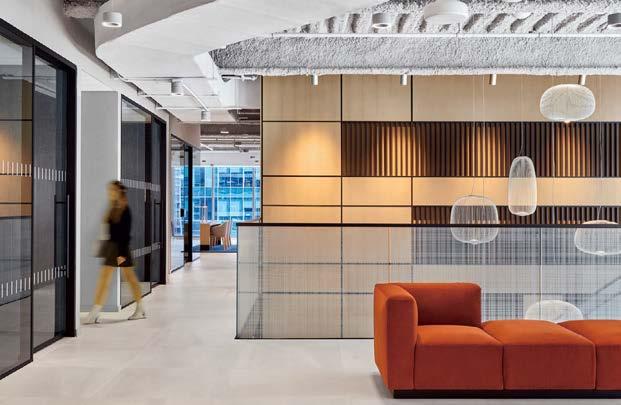
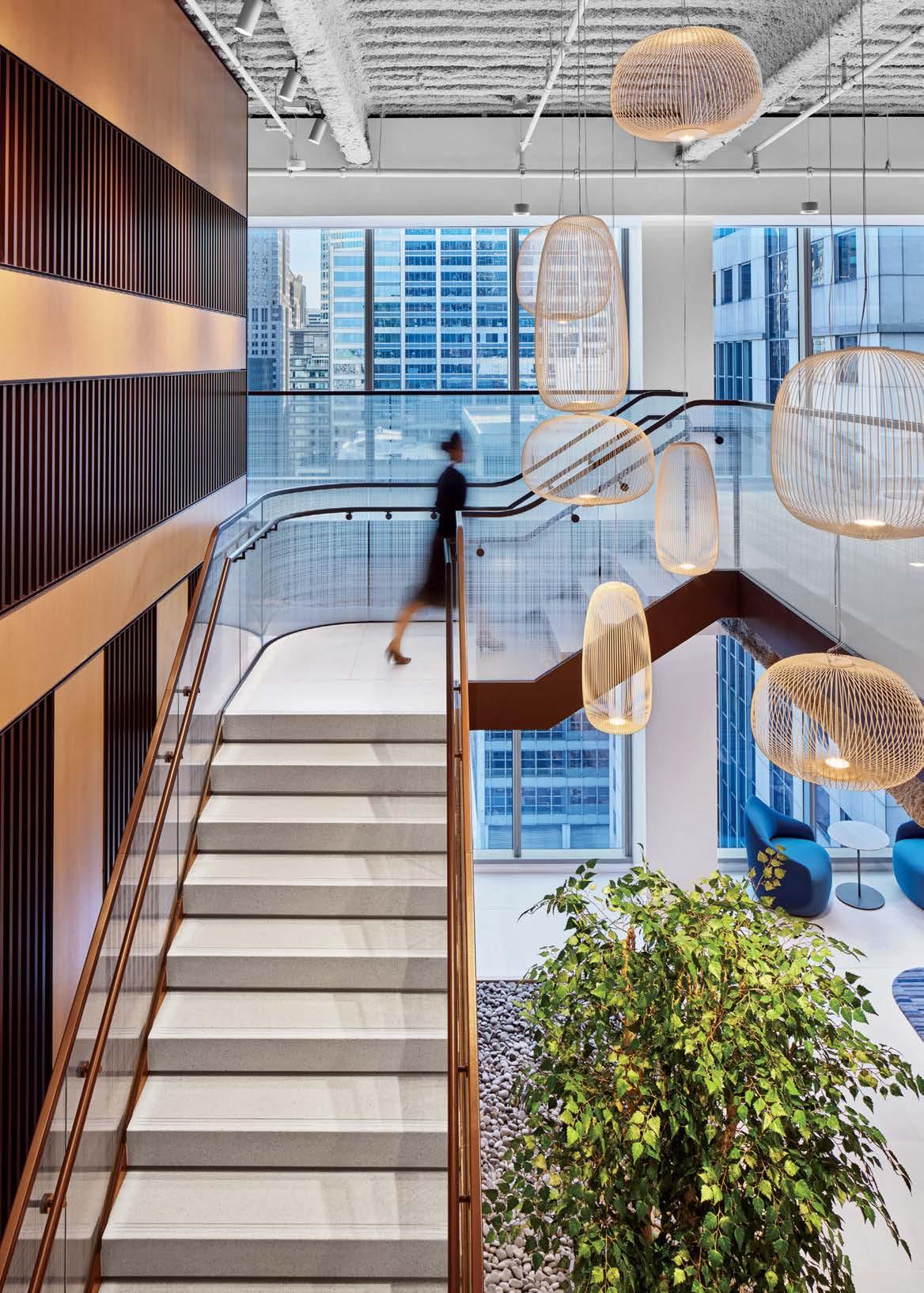
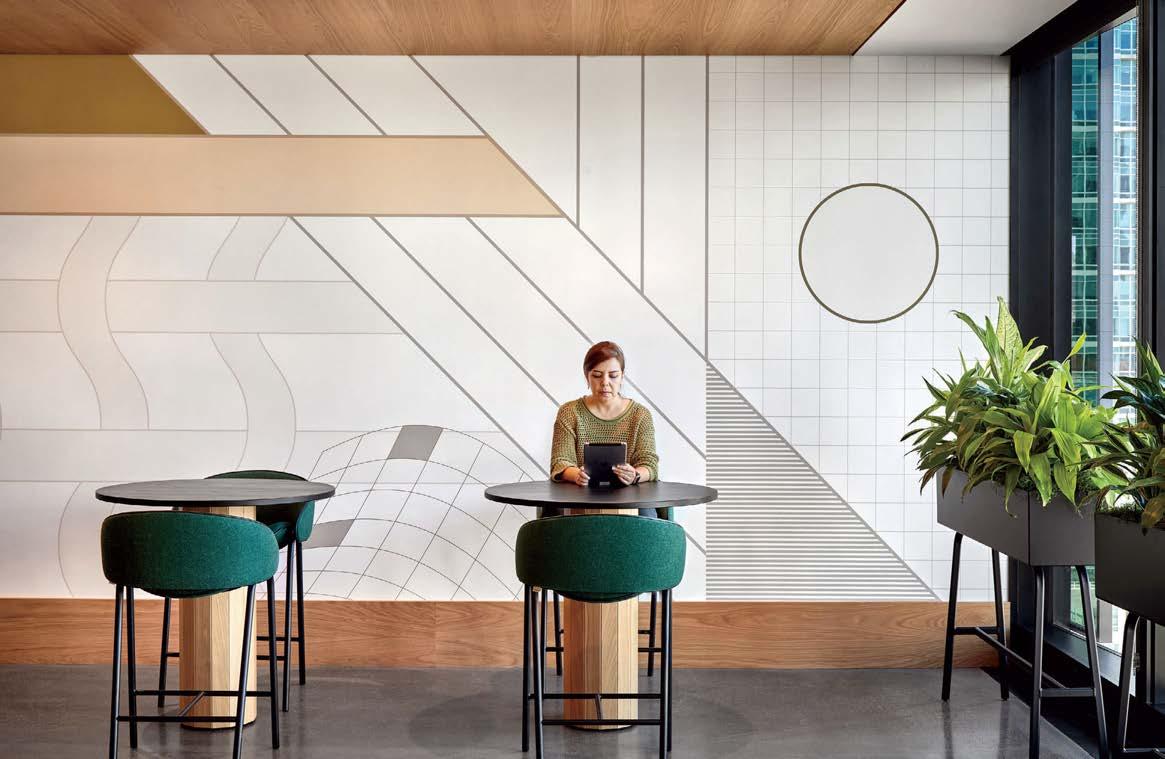
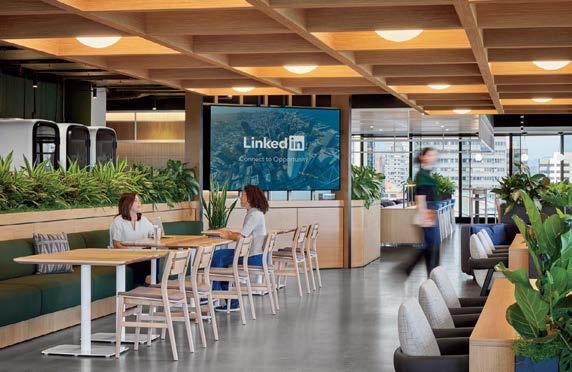
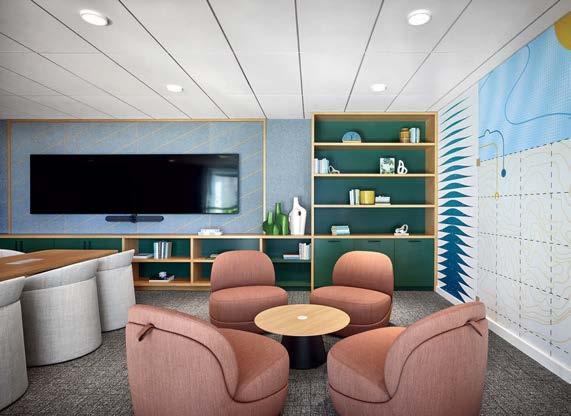
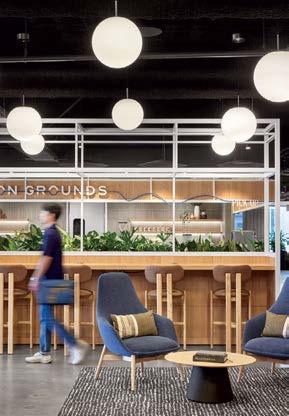
In the return-to-office era, the workplace is being reprogrammed as a platform for human contact. As the world’s largest professional social network, LinkedIn’s raison d’être is creating space for connection, and with the help of local firm Revel, the tech giant recast an entire floor of its SoMa office to do just that. Located midway up the 26-floor tower, the client’s new amenity floor serves employees throughout the workday, offering flexible café- and lounge-style seating for mobile working, a host of large group meeting spaces with rearrangeable furniture, and a surf shack–inspired all-day coffee bar. Intended as a more laid-back alternative to the office’s main canteen a few floors below, the coffee hub was conceived to evoke the feel of San Francisco’s outer beach neighborhoods, where surfer culture rules and the daily pace slows. Coastal blues and greens conjure the mellow vibes of shore life, while lush greenery throughout helps bring the outdoors in. Geometric wall graphics give a wink and a nod to the shapes of the timber-frame architecture at Sea Ranch, the iconic 1960’s planned community in nearby Sonoma County. Meant as a soft landing space no matter the occasion, this amenity floor is certainly working overtime.
—Lauren Gallow
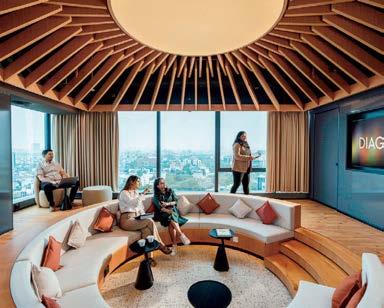
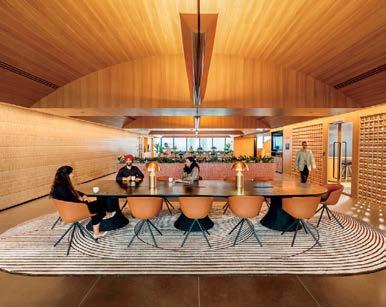
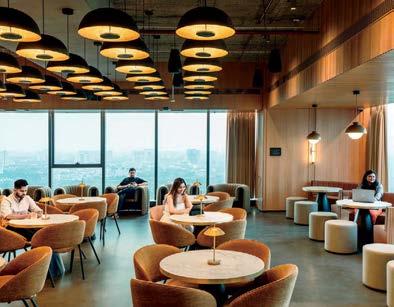
This British multinational looms large over the alcohol industry: The force behind such megabrands as Guinness, Smirnoff, and Johnnie Walker produces 40 percent of the globe’s Scotch whiskey. When the company relocated its India headquarters from Bangalore to New Delhi, it tapped M Moser Associates to design the 83,000-square-foot interior. A sweeping copper-and-oak helical staircase referencing the materiality of distillation stills and liquoraging barrels connects all three floors—and breaks corporate norms, its level of richness, even glamour, more akin to the luxury hospitality sector than to workplace.
Work clusters and social areas for the 300 employees are distributed along wings to the east and west, with abundant communal zones (a boon for teambuilding) anchoring the upper levels. There’s the Well, a slinky sunken lounge that encourages dialogue and exchange, and the Distillery, featuring a bar with a standout wall clad in thin red Lakhori bricks typical of 16th-to-19th-century Mughal and Nawabi architecture. Elsewhere, Jali screens and handmade tiles also speak to the culture, and human and environmental health permeate everything, from ergonomic furniture and locally sourced materials to real-time air-quality monitoring. The Spring wellness suite extends that sense of care by way of a yoga studio, multifaith room, and quiet zones for the neurodiverse. —Georgina McWhirter
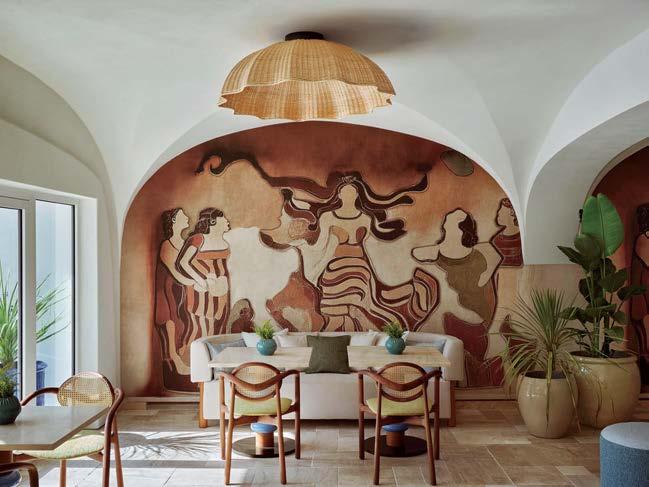
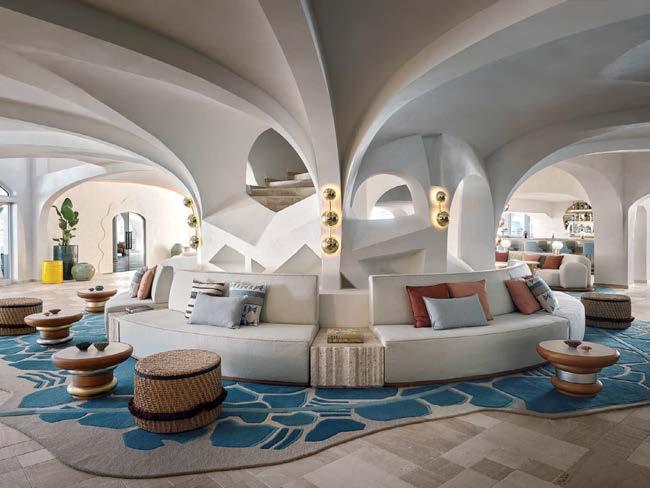
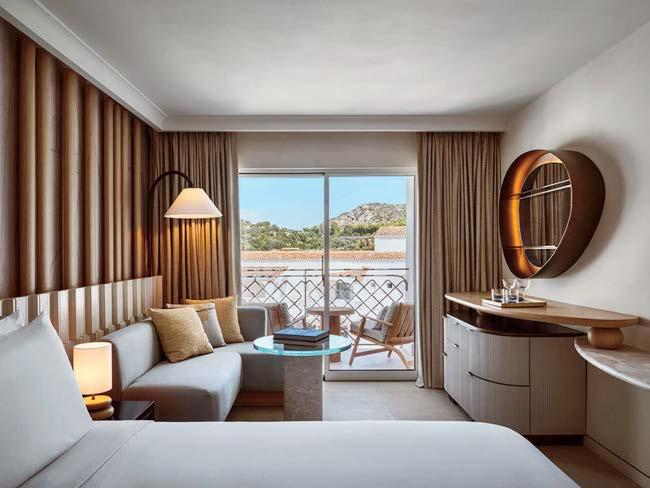
W Sardinia–Poltu Quatu, Italy
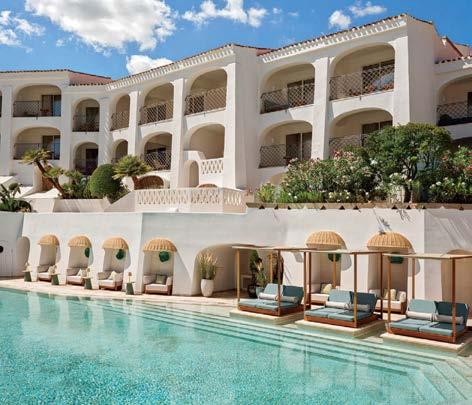
Having worked their magic on the vivacious W Rome, Interior Design Hall of Fame members and firm cofounders Will Meyer and Gray Davis have reprised the brand collaboration, this time in coastal Sardinia, specifically Poltu Quatu, which translates to hidden port in the local dialect. Getting there is a trip—and so is a stay at the 154-key hotel. Comprising nearly 160,000 square feet, the complex of whitewashed structures cascades along a cliff, overlooking the Marina dell’Orso and La Maddalena Archipelago, with direct access to the Mediterranean Sea. The site led to such movement-oriented schemes as waves over underwater scenes, shifting daylight playing off reflective surfaces, and sinuous architectural arches. Further helping tie property to place is the palette of ceramics, sun-washed neutrals, and marine-blue pops, which mix with seashore-inspired relics, locally sourced accessories, and commissioned artwork. In the latter camp is a mural of the Phoenician goddess Tanit, which emblazons a wall in the restaurant bearing her name. Custom ceramic headboards and wallcoverings inspired by the island’s ancient Nuragic civilization outfit guest rooms. The lobby’s sweeping curvatures allude to area caves and grottos said to be inhabited by Janas, the benevolent fairies from Sardinian folklore that protect sailors. —Edie Cohen
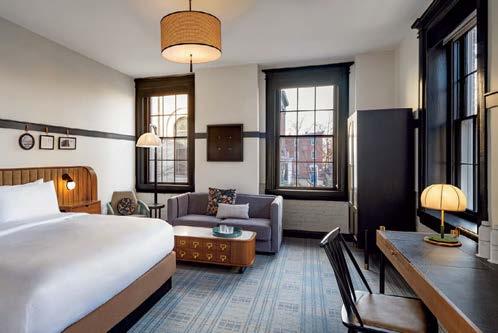
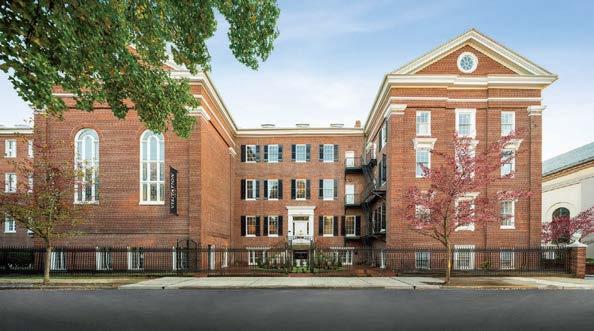
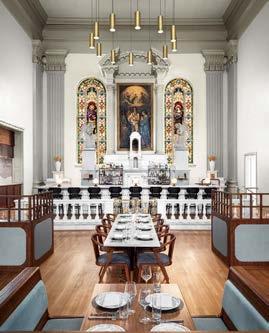
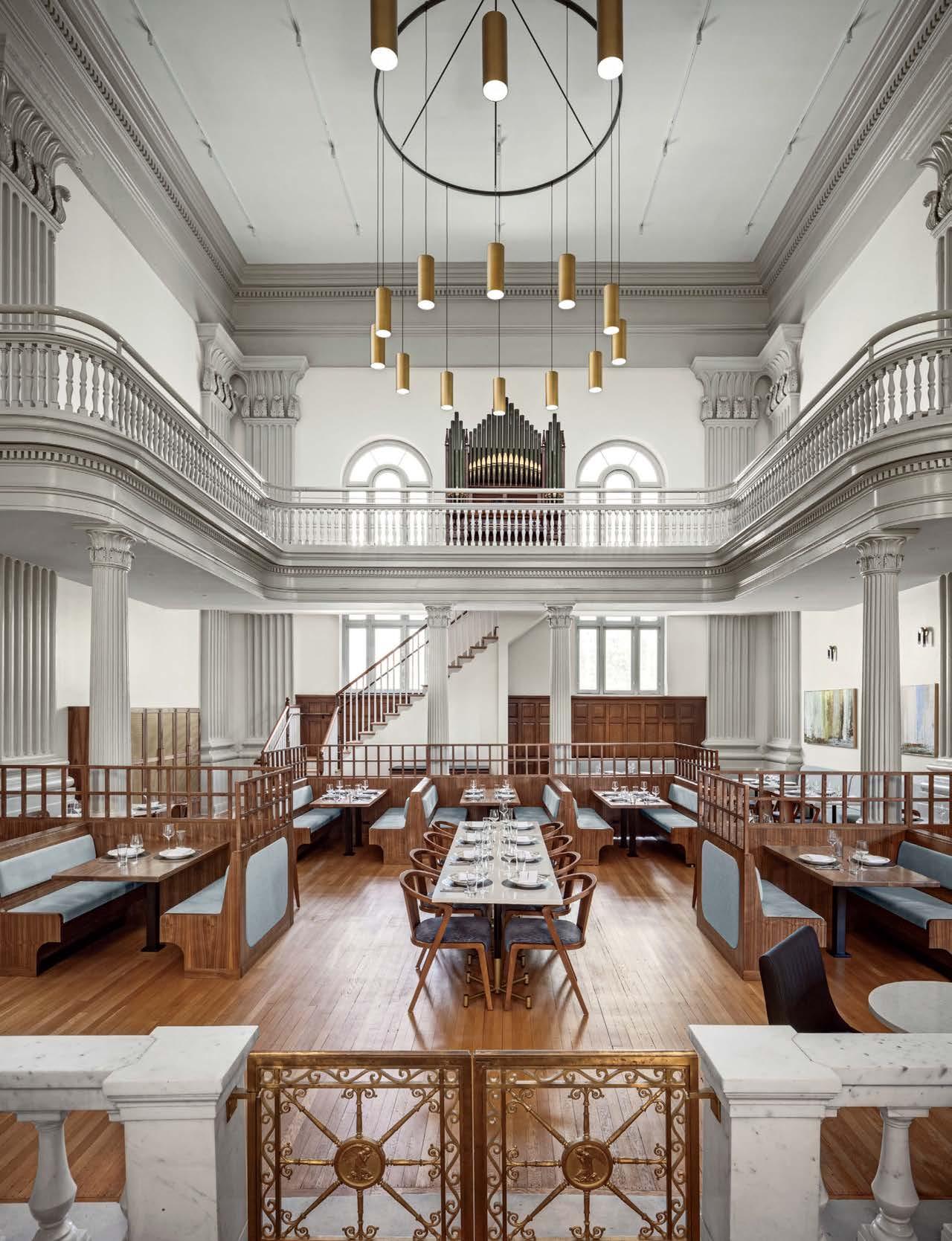
Habited nuns and white-socked schoolgirls once traipsed the halls of this 1820’s Catholic convent and academy. Now, it’s a 65-key boutique hotel where guests can dine on steak and wine in the deconsecrated chapel. Wye Oak Tavern is said restaurant, a modern American venue by celebrity chefs and Frederick, Maryland, natives Bryan and Michael Voltaggio, and its restored shell is a sight to behold—tuned to perfection by OTJ with the help of church officials and historians. The original marble altar, featuring statues of kneeling angels, was reimagined as a bar surveyed by soaring, painstakingly preserved stained-glass windows. In what was once the nave, dining banquettes recall pews, and tubular brass-finished chandeliers allude to the balcony’s untouched pipe organ. Guest rooms and communal lounges convey a sense of restrained luxury aligned with the strict austerity of the original convent and schoolhouse, but with a cosseting twist. Of note are the more than 250 objects uncovered during the renovation, such as a 19th-century green-glass medicine bottle, displayed throughout for guests to enjoy. For those who would like to stay long-term, the redbrick complex also houses 25 condominiums ranging from 1,500 to 2,500 square feet, all single-level and conceived to appeal to empty nesters.
—Georgina McWhirter
“The concept reinterprets 200-year-old church elements through a contemporary architectural lens” 100 giants #37
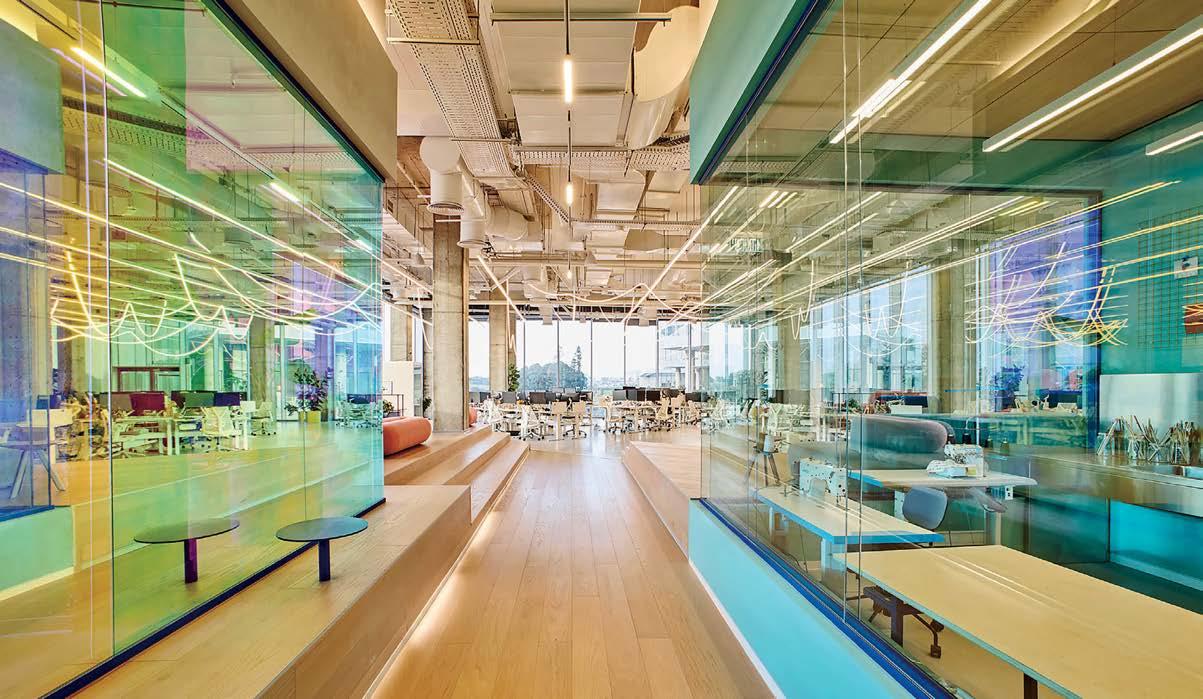
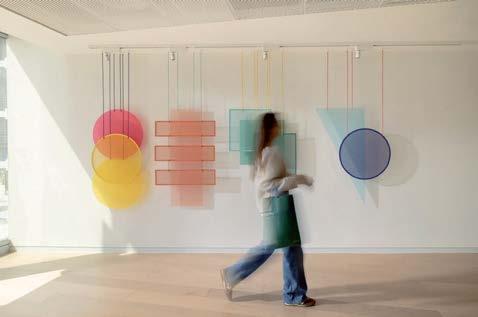
The software company just turned 20 years old, and its ground-up headquarters not only befits its longevity but also reflects its innovative ethos. Replacing Wix’s former mall-based warren is a 700,000-square-foot, human-centered campus of seven, 10-story buildings organized around “Wix Streets,” an internal thoroughfare that unifies the structures and encourages collaboration and spontaneous interaction among the more than 3,000 employees. Synchronizing with the Mediterranean Sea vistas visible through ample glazing are airy interiors marked by sun-washed pastels and warm woods. In the double-height lobby, vertical baffles form a hovering timber grid and a broad stairway doubles as amphitheater-style seating. Iridescent glass panels and rope light fixtures define team zones, with swaths of recycled pulp helping damper acoustics. Modular ceilings pair with demountable partitions so meeting rooms can swell or shrink as needed, without touching infrastructure. In typical tech fashion, amenities abound, with five restaurants, vegetable gardens, maker spaces, climbing walls, and an employee-run store among the perks. Another is the durable seamless flooring throughout, making the entire workplace dog friendly. —Lisa Di Venuta














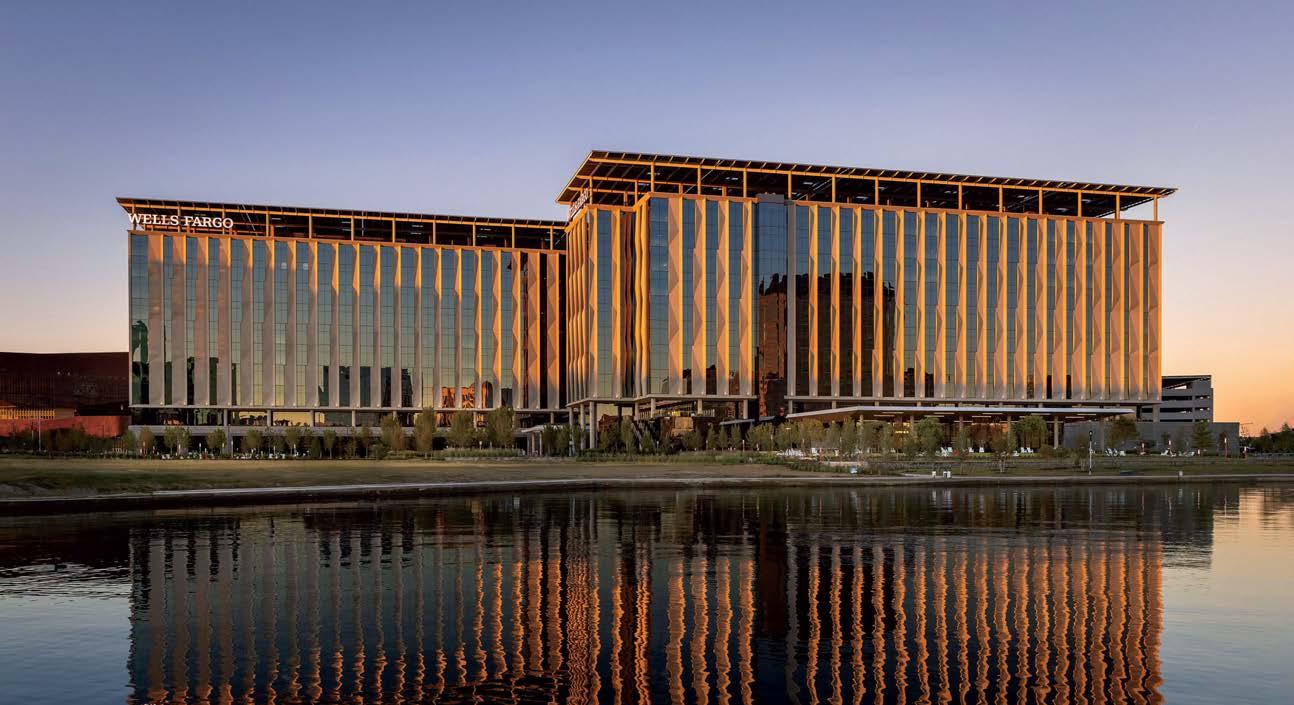
Wells Fargo, Irving, Texas
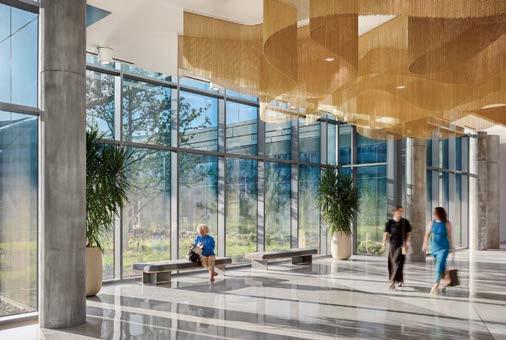
Just outside Dallas, Wells Fargo’s new Texas campus hums with energy. Formulated to generate more power than it uses, the 22-acre headquarters plays host to more than 4,000 employees and is the largest net-positive corporate campus ever built in the U.S. Local firm Corgan designed the two 10-story office buildings and adjacent parking garage, with rooftops covered in solar panels. While the PV arrays deliver electricity, expansive glazing that welcomes the bright Southwest sun reduces the need for artificial lighting inside. On hot days, sensors automatically adjust the tint of the electrochromic glass to reduce heat gain and maintain interior comfort. Regionally sourced materials—terrazzo for floors, wood for ceiling soffits—link back to the natural environment, while a terrace extending from the dining hall provides outdoor access and picturesque views of nearby Lake Carolyn. The exterior’s faceted precast-concrete panels form a geometric pattern inspired by the rippling lake surface, as does a hanging sculptural element made of metal chains that gently flows across the lobby ceiling. Low-carbon concrete, a lake-water irrigation system for site plantings, and PVC-free interior materials helped the campus earn LEED Platinum, a testament to its holistic concept that does well by people and the planet. —Lauren Gallow
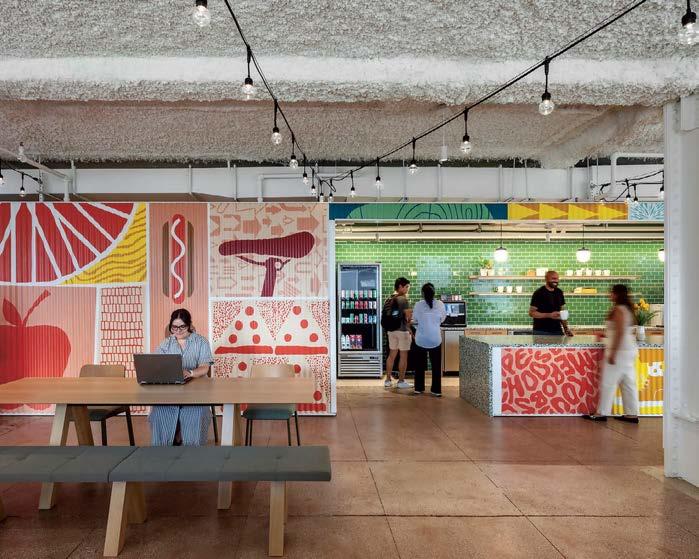
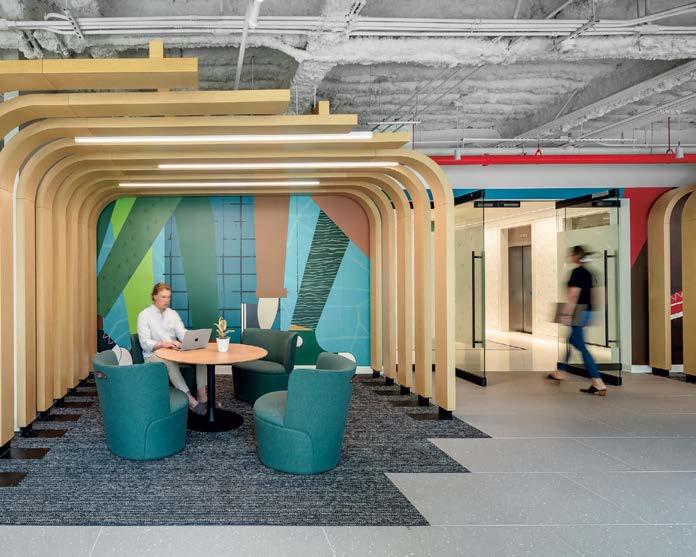
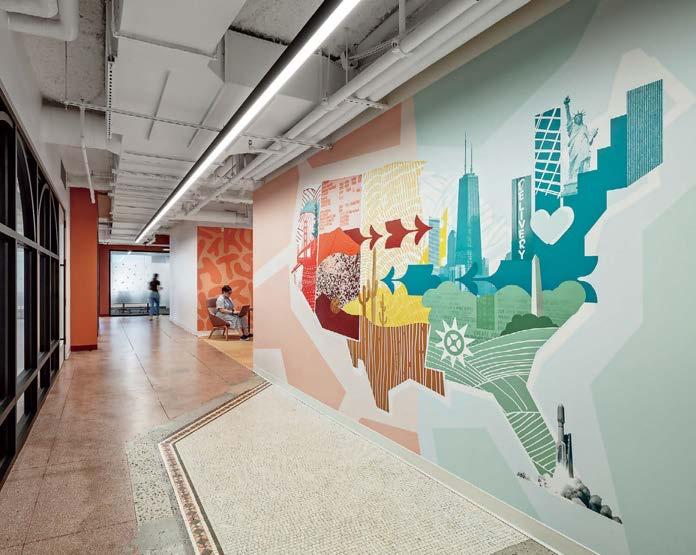
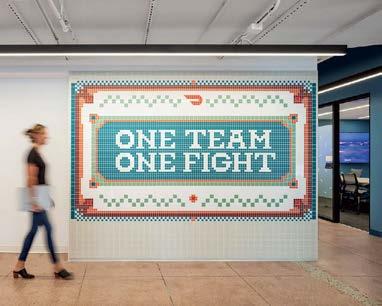
The delivery drivers who deftly weave around New York’s street grid day and night are an integral part of the urban fabric. It’s no wonder, then, that the DoorDash flagship was conceived as a tribute to the Big Apple’s energy, rhythm, and neighborhoods. HKS translated the identity of each of the city’s five boroughs into distinctive “neighborhoods” within the tech company’s 36,800-square-foot office, with color-coordinated graphics and architectural gestures inspired by NYC landmarks—stadiums, bridges, pocket parks—aiding with wayfinding. Moving through the dynamic workspace is meant to feel like traversing the island itself, passing scaffolding-esque canopies over communal tables and dark metal trims around glazed meeting rooms that echo the facades of skyscrapers. Hyper-local references—a hand-painted mural evocative of bodega signage, a mosaic nodding to subway-tile typography—further connect the space to Gotham’s identity. In the cafeteria, popular foods are illustrated in bold hues across walls, while limegreen subway tiles behind the service station add another metropolitan spin. Together, these elements create a fitting hub for the team that connects the community with its groceries, takeout, and everyday essentials, while also celebrating the city—from its streets to its sandwiches. —Dan Howarth
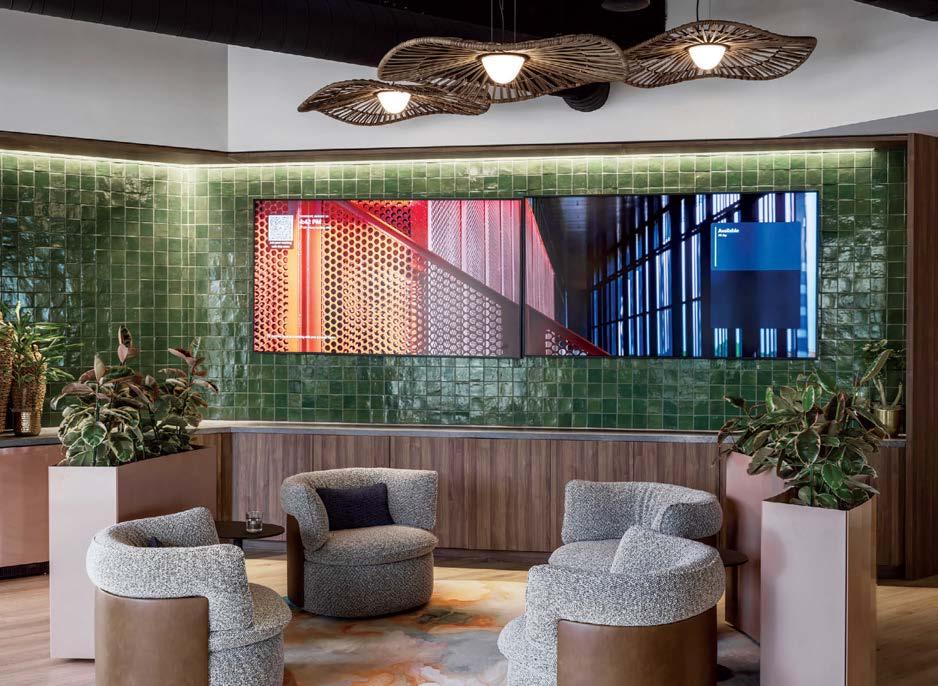
The workspace proper prioritizes adaptable, multipurpose zones, easily accommodating 35 to 55 employees without architectural changes. Key to implementing that plan was a shift from deskdominated layouts to open spaces for both individual concentration and collaboration. Every seat— from high tables to banquettes—is ergonomic, with access to power outlets. Proof of concept? Within its first six months, weekly attendance was at 75 percent, surpassing previous averages, and more than 650 external visitors were hosted, cementing community connections. —Edie Cohen 100 giants #13
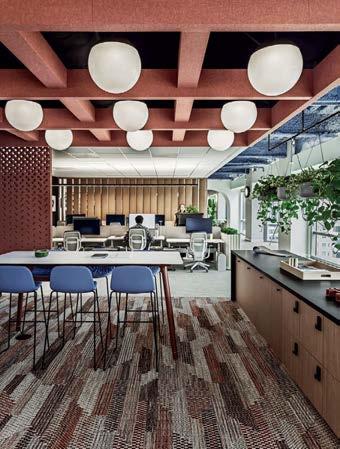
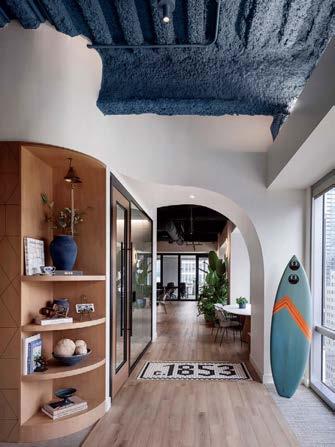
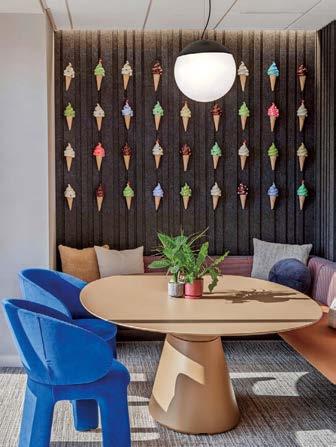
You could argue that a studio’s best project is its own. With intimate knowledge of operations and a vision for the future, the endeavor invites boundary-stretching solutions and process innovation. Such was the case for SmithGroup’s new San Diego workplace, one of 20 throughout the U.S. Spanning 8,060 square feet on the 18th floor of a downtown waterfront tower with bay views, it is supremely tied to place yet references the firm’s widespread legacy. To wit: A blue-toned exposed ceiling demarcating primary circulation alludes to the famed Coronado Bridge, while a floor mosaic cites the year of SmithGroup’s founding (1853!). Various artwork and objects suggest other office sites or personal touches, such as a painting of ice cream cones depicting the staff’s favorite flavors.
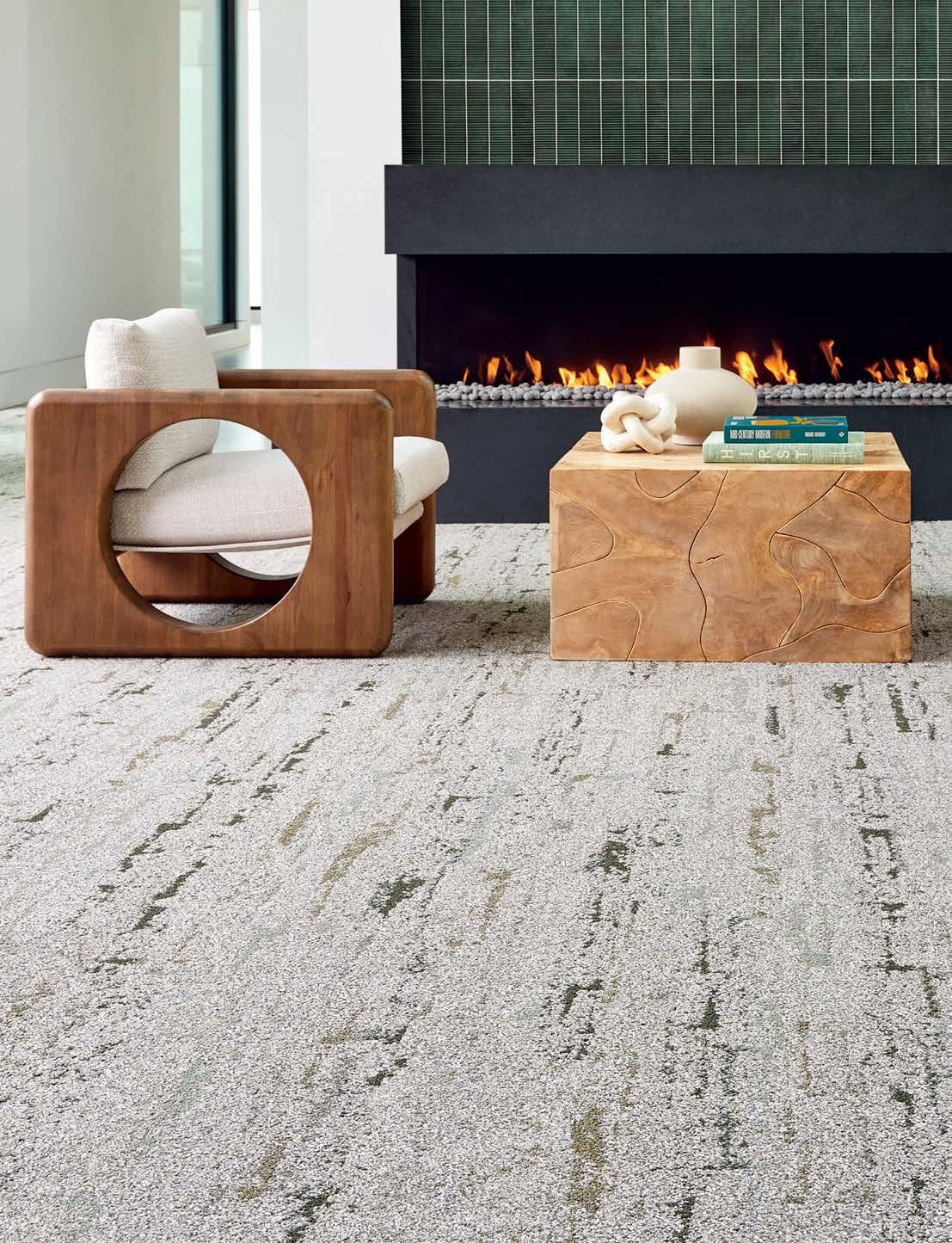


Acoustic products and ingenious eco-friendly finds keep trending with designers and clients alike what are giants specifying?
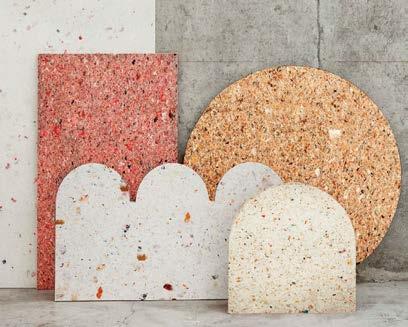
1. Fylo acoustic wall paneling made from upcycled plastic bottles in electric orange by Impact Acoustic. impactacoustic.com
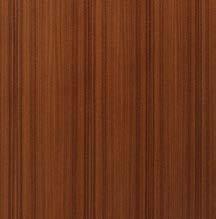
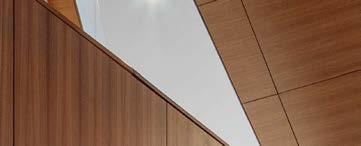
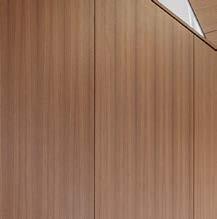
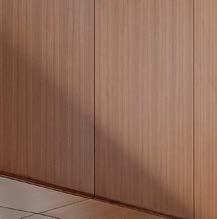
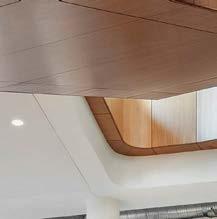
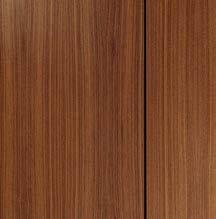
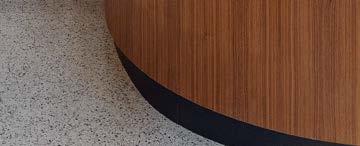
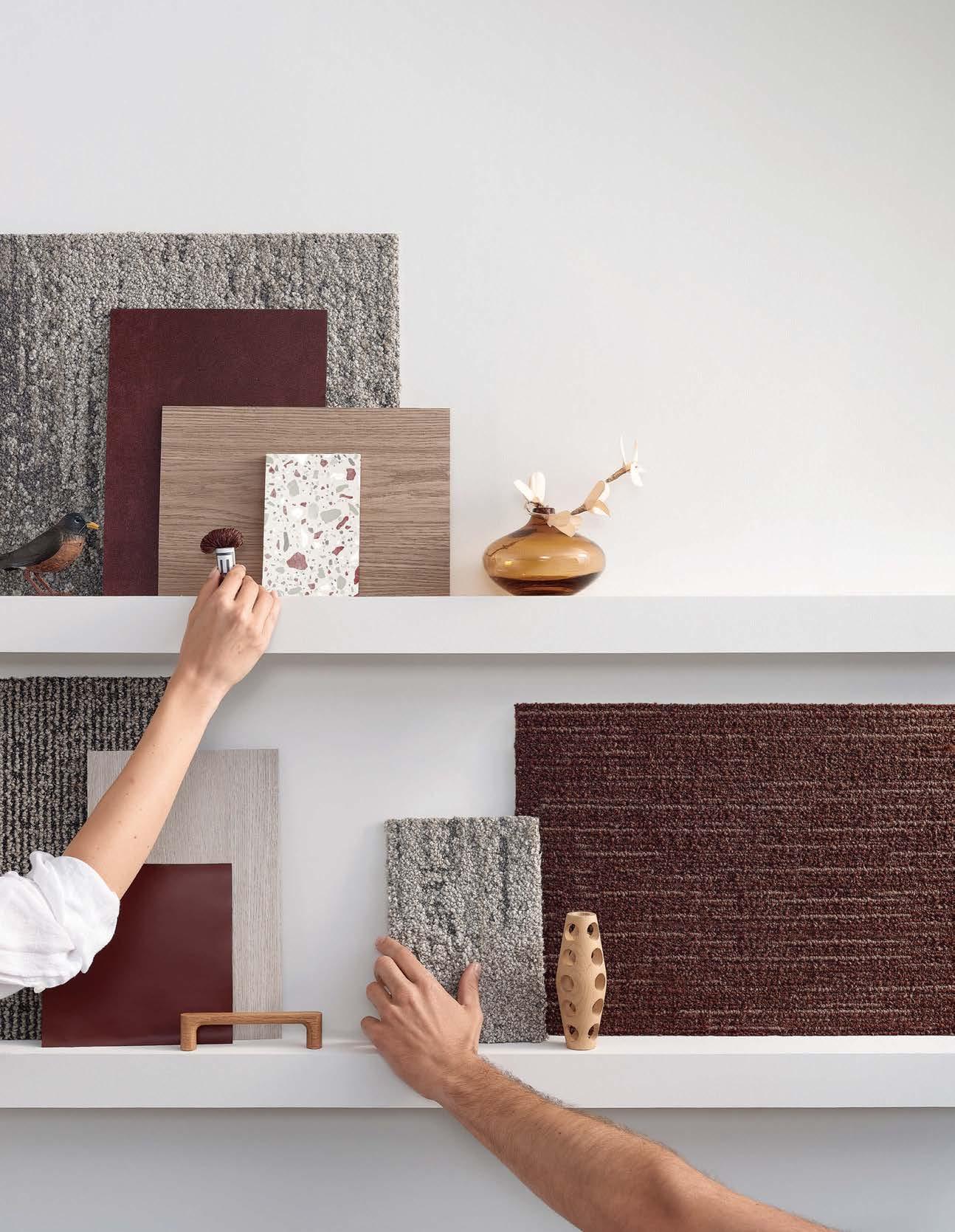
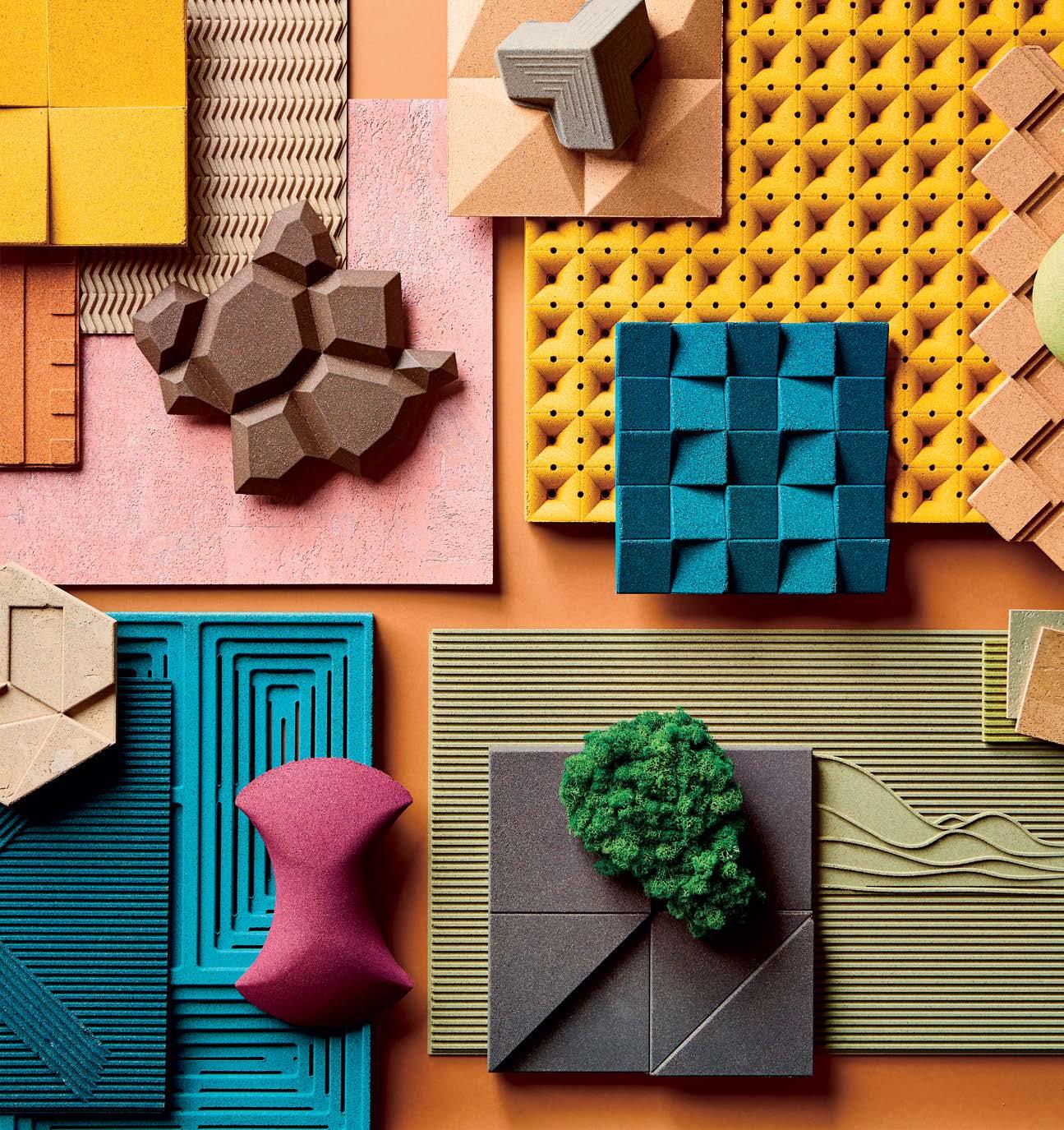
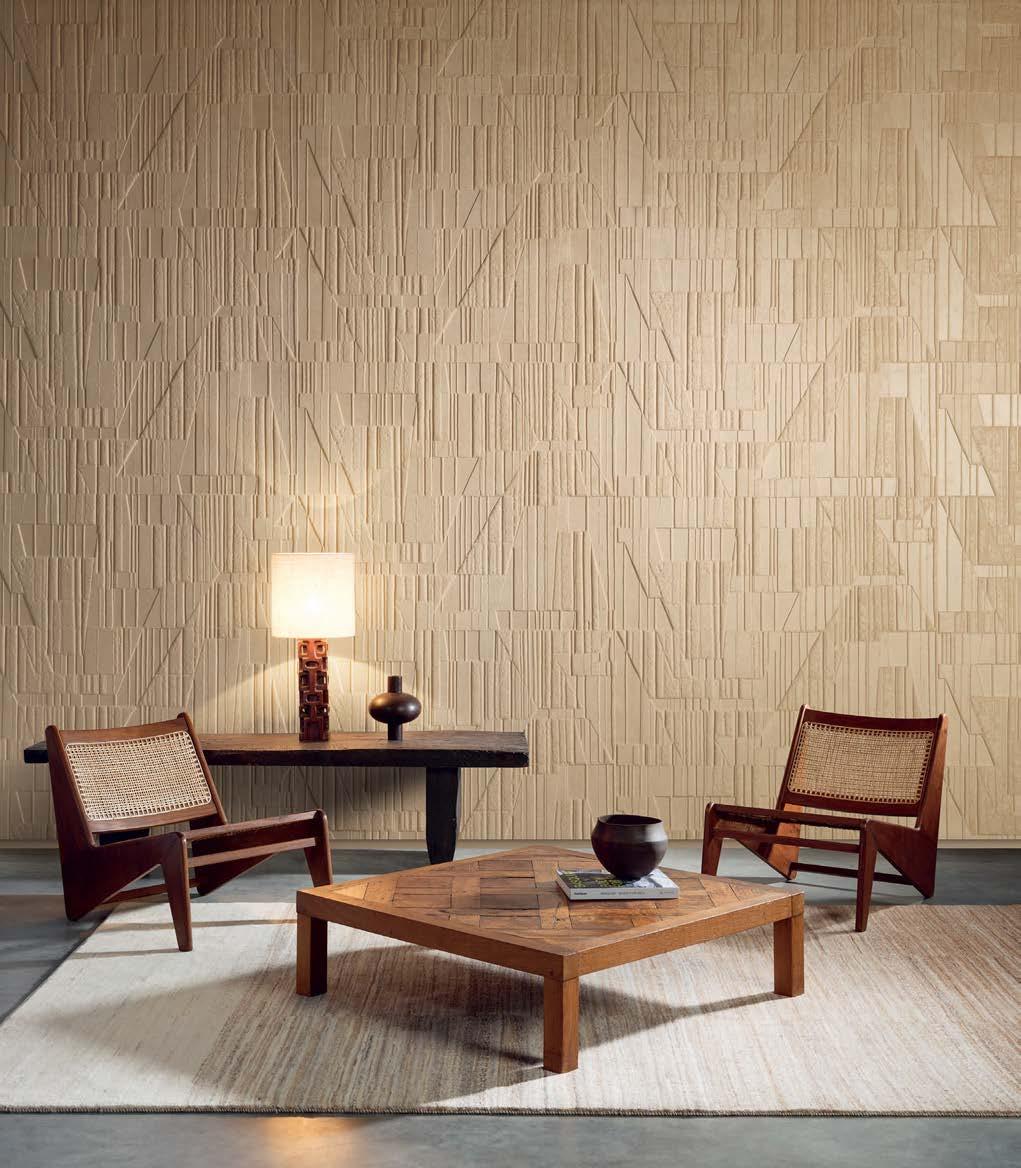
2. Flat Cut wood texture pattern digitally printed on Linear panels of acoustic PET felt (incorporating recycled content) by Turf. turf.design
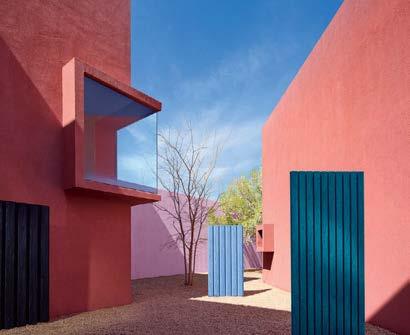
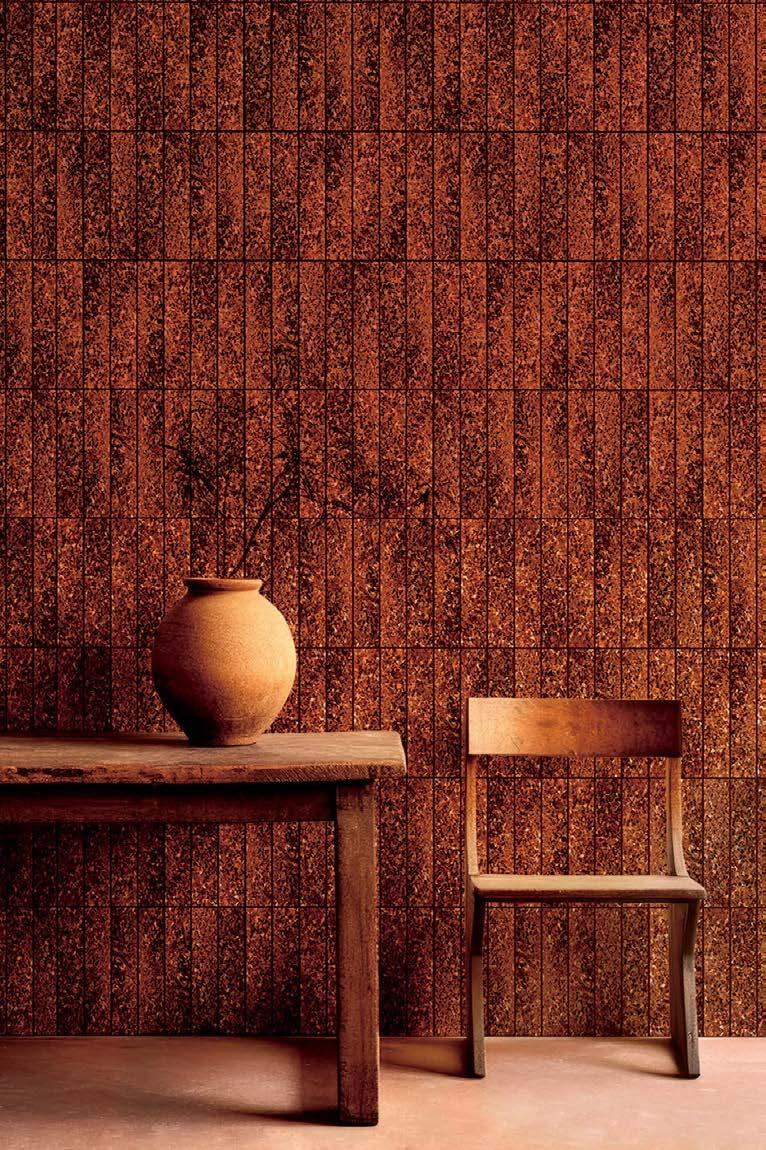
“Across all sectors, design teams are excited by a wave of sustainable, sensoryrich materials that are redefining how spaces function and feel” —Wil Drennan, LS3P
3. Plush acoustic material made from recycled plush toys by Pierreplume. pierreplume.fr
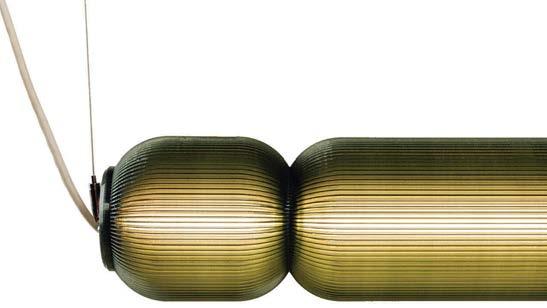
4. Somari Cylinder Horizontal LED fixture fabricated of 3D-printed PETG in Clover colorway by LightArt. lightart.com
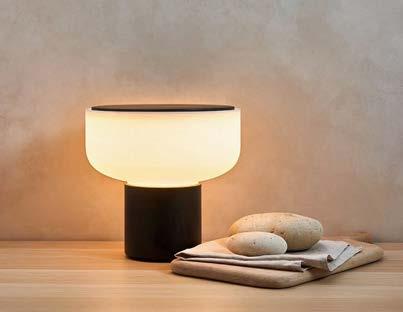
5. Studio Elk’s Arpeggio table lamp 3D printed of plant-based polymers with water-based painted finish by Gantri. gantri.com
6. Bio-based and biodegradable wall cladding made from dried, compressed apple waste from cider production by Adaozañ. adaozan.fr
100 giants market




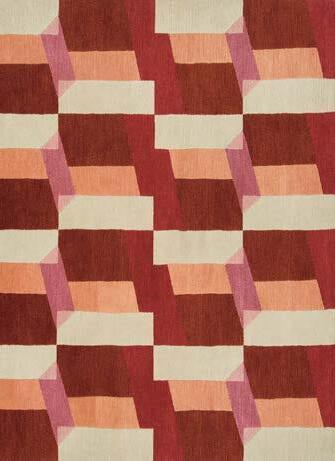
1. Gensler’s Block Echo III hand-knotted wool rug in garnet by Warp &Weft. warpandweft.com
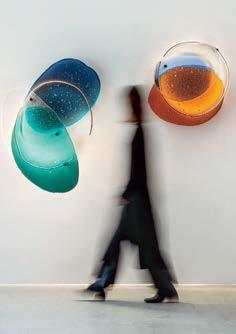
2. Crisalide wall lights in layered glass by Draga & Aurel through Todd Merrill Studio. toddmerrillstudio.com
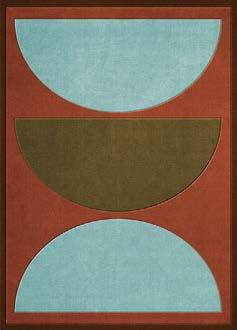
3. Coppa Canella hand-tufted wool rug by Layered. us.layeredinterior.com
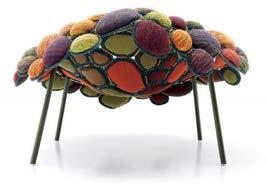
4. Estúdio Campana’s Miriade armchair with steel frame and Maglia Rasata knit upholstery cushioned with biodegradable, recycled polyester fiber padding by Paola Lenti. paolalenti.it
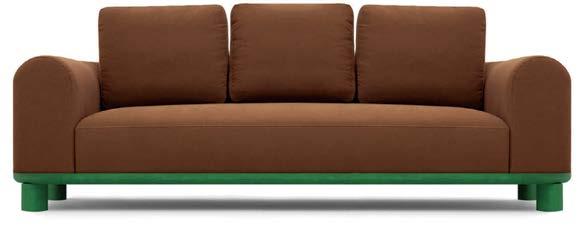
5. Ferriani Sbolgi’s Matilde upholstered sofa with greenlacquered beech base (color and fabric strategy by Studio Marcante–Testa) by San Lò. shop.sanlodesign.it/en
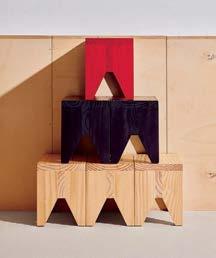
6. Marc Morro’s Manolito stools of solid FSC-certified pine with red, black, and natural oil-wax finishes by Hay. hay.com
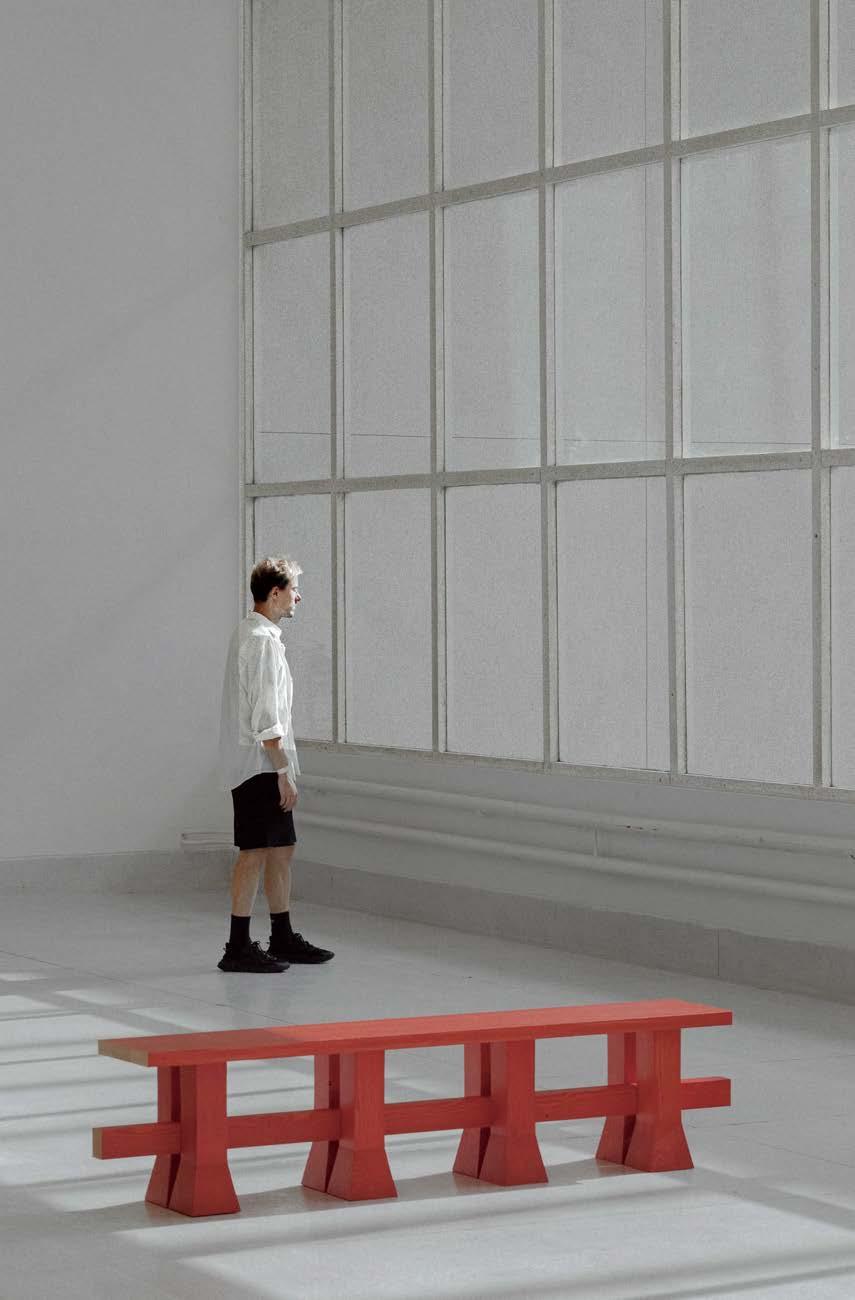
7. Arnaud spruce bench in red by Jiri Krejcirik. jirikrejcirik.com
“Interiors
are embracing richer color saturation. Design teams are gravitating toward materials and products that balance luxury with personality, reflecting a shift from strict minimalism”
—David Taglione, ICRAVE, a
Journey studio
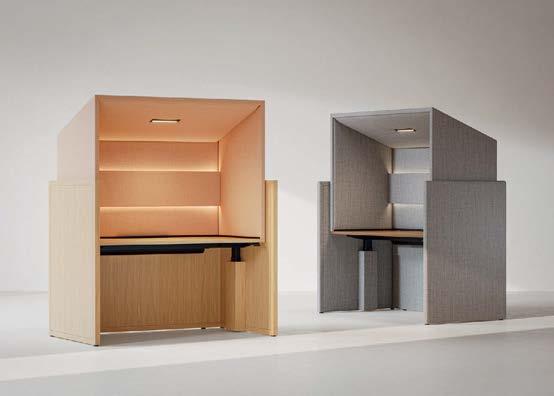

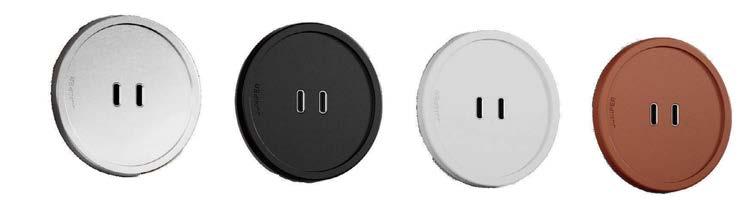
“Teams are gravitating toward products that simplify operations and extend the life of a space: modular systems, serviceable components, and other solutions that reduce churn, respond well to evolving work patterns, and keep spaces adaptable without driving cost” —James Kerrigan, Jacobs
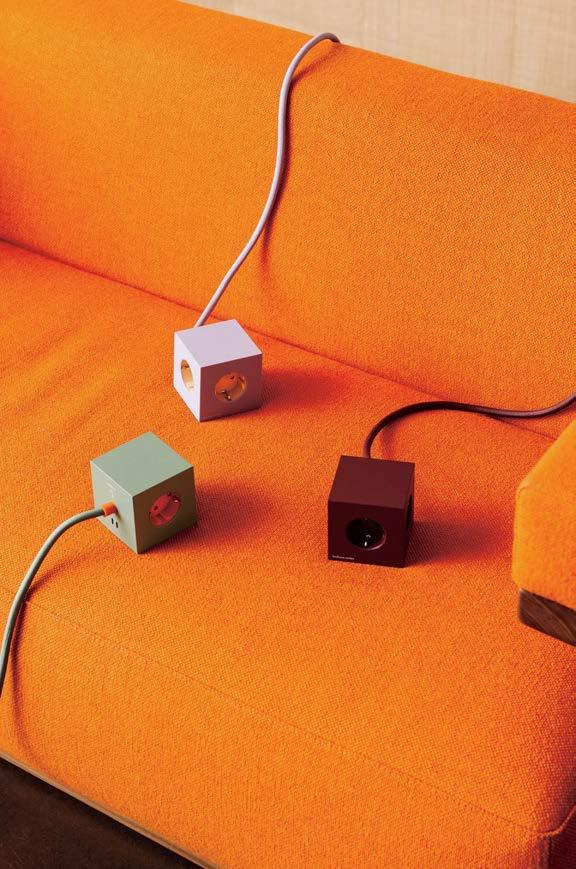
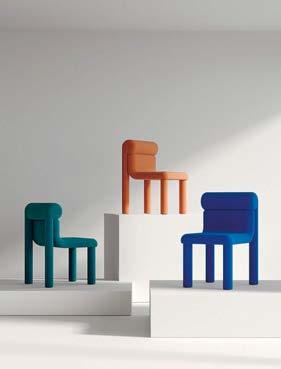
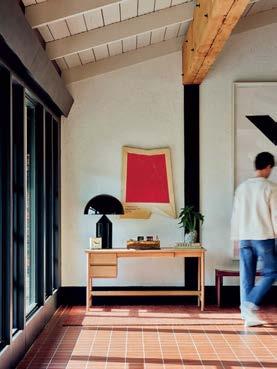
Not-so-common office finds with a focus on flexibility are ascendant
1. Ground Control flush-mount circular electrical outlets hardwired for US use with tamper-resistant NEMA 5-15 receptacles and 65W USB-C chargers by Juniper. juniperdesign.com
2. Gensler’s Canopy workstation with wood veneer, laminate, or upholstered base; height-adjustable desk; upholstered privacy hood; integrated lighting with optional occupancy sensor; and power/cable management by KFI Studios. kfistudios.com
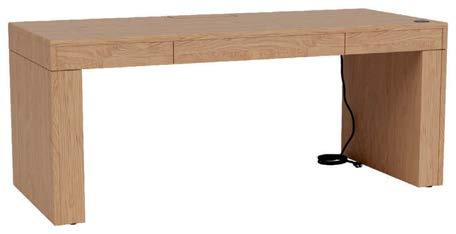
3. Artisan desk with ash veneer surfaces, solid wood legs, integrated cable routing, and hidden power-strip pocket by Branch. branchfurniture.com
4. Gensler’s Lincoln sit-stand desk crafted of responsibly sourced North American hardwood with electric height adjustment and customizable width, storage, wood choices, and hardware finishes by Room & Board. roomandboard.com
5. Square 1 cube power strips featuring three US Type B sockets, two USB-C ports, built-in magnetic base, and adhesive mounting plate by Avolt. us.avolt.com
6. Levantin Studio’s fully upholstered Tacto chairs by Uneven Objects. unevenobjects.com












Design by Arik Levy

The story of 2025 for the Rising Giants is pretty much the same as for the topmost 100 firms: stability. One of the biggest positives is fee income, which climbed a modest but solid 4 percent, from $555.5 million to $578 million. This is welcome news after a slight downturn (of that same percent) last year. While it wasn’t quite the surge that Rising Giants predicted—they’d forecast a 14 percent bump-up for 2025—it’s still an all-time-high fee for this cohort. Looking ahead, they’re expecting a 10 percent rise for 2026.
The financial picture gets even brighter when you drill down. The median fee per interior design staff member, at $208,348, jumped 12 percent year-over-year and now surpasses pre-COVID levels by a margin of 4 percent. Billing rates continue their steady climb as well: up some 6 percent for principals/partners and 3 percent for project managers/ directors, while designers held steady. The upshot? Across the board, Rising Giants are consistently making more money since before the pandemic, and so are the practitioners themselves. In 2025, the biggest jump was seen for project manager/directors, who enjoyed an average salary raise of 3 percent YOY, to $113,750—a sign of a competitive market for this experience level.
On the project front, overall volume held relatively steady, dipping just slightly from 21,534 to 20,834—though that figure still towers over the 12,000 projects Rising Giants completed in 2019. Better yet, these firms are anticipating a 14 percent gain for 2026. As for how those projects break down, new construction declined ever-so-slightly in comparison to renovation: two percentage points, to 43 (same as the 100 Giants). Meanwhile, the proportion of overseas projects edged up from 8 to 10 percent for these domestic-skewing studios. The Southeast and Southwest regions are expected to lead U.S. growth again this year, as they consistently have, with 95 percent of firms predicting domestic expansion.
Sector-wise, the top three moneymakers remain hospitality, workplace, and residential—which combined account for two-thirds of overall fees (Rising Giants are traditionally a bit less diversified than the 100 Giants). The biggest fee-growth segments were government (up 60 percent YOY), cultural/sport centers (50 percent), and healthcare (29 percent, though comprising a smaller slice of overall fees than in recent years). Rising Giants have also seen a nice rebound in hospitality work. The vertical is up a healthy 24 percent after a decline the previous year and currently stands at an all-time revenue high. This bounce tracks with anecdotal reporting that suggests more hotel work is going to these smaller boutique firms. Alas, workplace, which had finally hit full postpandemic recovery in 2024, was down again. Rising Giants predict more growth in hospitality, healthcare, and government sectors for 2026, with a generally positive outlook.
FF&C value, at $16.5 billion, shot up quite significantly YOY, but we’ve seen some wild swings in this data point, since it’s easily skewed by individual firms’ numbers. As such, we don’t put overmuch stake in big fluctuations, whether in the positive and negative direction. Staffing numbers, which had pinballed up and down over the last few years, dipped across the board in 2025, specifically and most notably at the project manager/director level. This is likely a small rightsizing after the postpandemic restaffing surge.
While 2025 was mostly steady, if a bit down in some key areas, 2026 is looking to be a solid year, given the overall stability after weathering what felt like a tumultuous 12 months. What stands out is how the Rising Giants maintained their footing even when growth fell short of ambitious forecasts: Fees hit record highs, hospitality work rebounded strongly, and firms are positioning themselves for double-digit gains ahead. For Risers, resilience continues to be the defining characteristic.
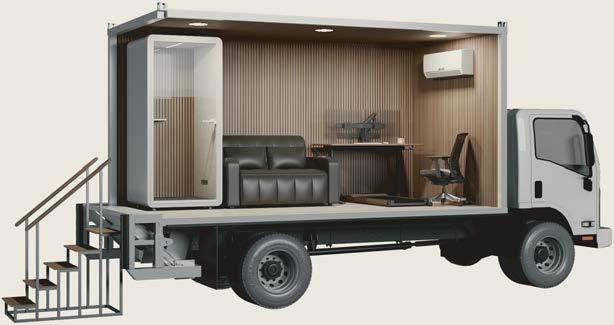
Designing Workplaces That Support Focus, Movement, and Recovery
A complete workplace wellness system for healthier, high-performance offices.
Modern workplaces demand more than furniture They require infrastructure that supports how people actually work— moving, focusing, and recovering throughout the day
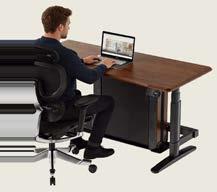
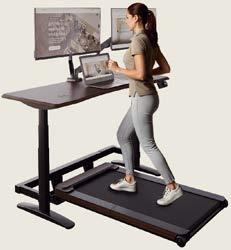
MOVE - WELLNESS WORKSTATION
Move while you work.
Sit, stand, and walk
Reduce sedentary fatigue
Auto-folding walking pad
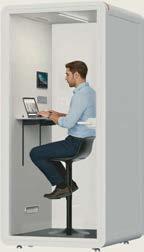
FOCUS - FOCUS POD
Privacy, when you need it.
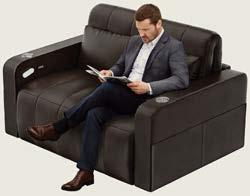
RECOVER - RECHARGE LOUNGE
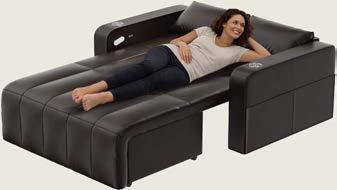
Rest. Recharge. Refocus.
One-touch electric transformation
Support short breaks at work
Office-friendly design

Soundproof for 30 dB reduction
Ideal for private calls and meetings Compact footprint
“Clients love the marketing story, but it is still dictated by cost impact on the project. Certifications are only acquired if required by the regulations.”
—Dean Maddalena, StudioSIX5
“Clients are becoming more sophisticated with their knowledge of sustainability and occupant health. This means they are asking for more specifics and expecting their buildings to deliver on these While there is certainly some shift dialogue to a more carbon-focused conversation, it does not mean have lost the priority of other aspects, like water, occupant health, and ecology. We all need to approach sustainability in a more holistic to be able to tackle all these at once. We rely on the help the manufacturer industry help us achieve these goals.”
—Ruth
Baleiko, The Miller Hull Partnership

How is the client conversation around sustainability evolving?


“The focus has shifted from lofty ESG language to tangible results: data, performance, and real returns. When done right, sustainability helps companies cut attract and keep talent, and build longvalue. Clients expect numbers they can trust—verified savings, measurable impacts, third-party validation. Energy use, waste reduction, and carbon exposure now matter more than any slogan. AI, IOT sensors, and digital twins are giving companies new ways to act on sustainability goals. They help track performance in real time, predict problems before they happen, and make efficiency part of everyday operations.”
—Jennifer
Treter, Hendrick

“Our large
corporate
clients look at sustainability very differently than our average client, who is more interested in budget and schedule.”
—Michael Rait, BR Design Associates
“We have to embrace the small progressions, because in some ways it doesn’t feel like this conversation has evolved in the last few years. We have clients coming to the table with established sustainability goals and commitments to measurable certifications like LEED. We also have clients who say they’re happy to include sustainable measures as long as they don’t add cost (although they’re often happy to use anything we can do in messaging when they need it).
I’m encouraged that we’ve recently had multiple clients interested in ‘creative demo.’ They’re willing to invest a little more in the demolition process: on fees for the design team to dig in and see what is salvageable and in the cost for contractors to separate and package materials so they can be repurposed or recycled.”
—Alissa
Wehmueller, Helix Architecture + Design



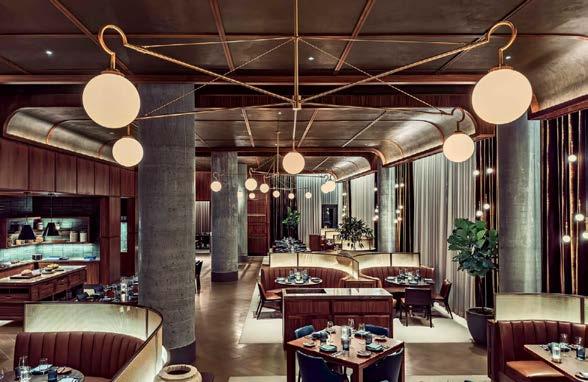
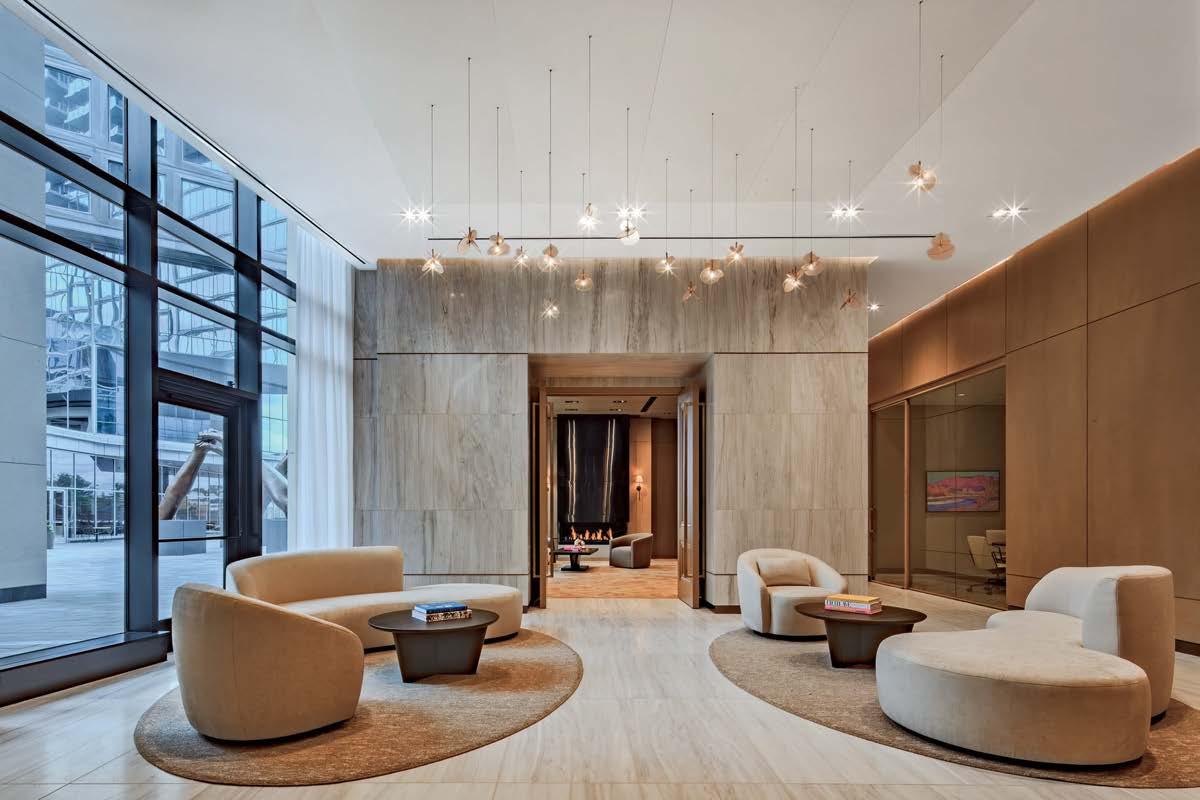
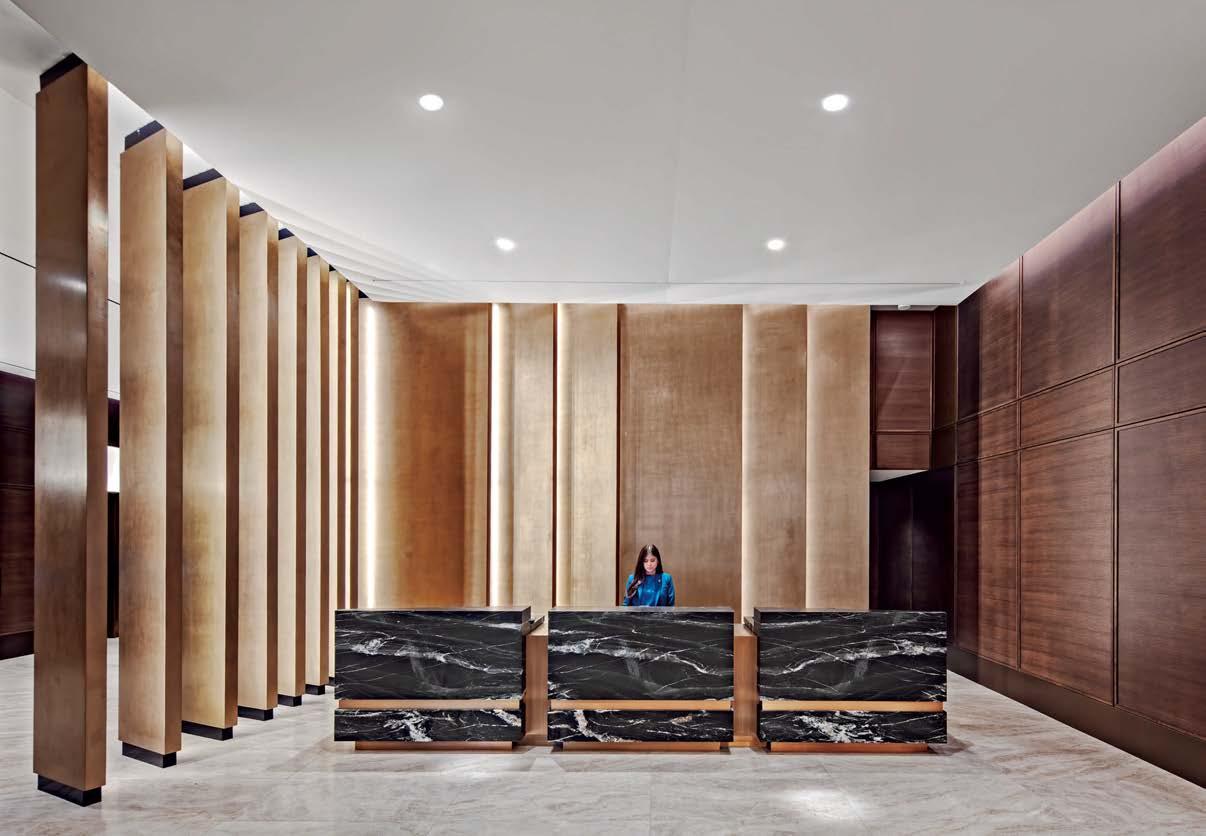
Real estate developer Robert E. Simon Jr. was an idealist. In the 1960’s, he bought nearly 7,000 acres of Virginia farmland and founded the planned community of Reston, an integrated, affordable garden city 20 miles west of Washington. That vision informed the public spaces of JW Marriott Reston Station, a 243-key hotel and 94-unit residential condominium occupying a new building by Nunzio Marc DeSantis Architects. EDG’s 200,000-square-foot scope sought to evoke Reston’s small-town sensibility and its connection to nature with interiors that feel intimate and approachable yet city-suburb sophisticated.
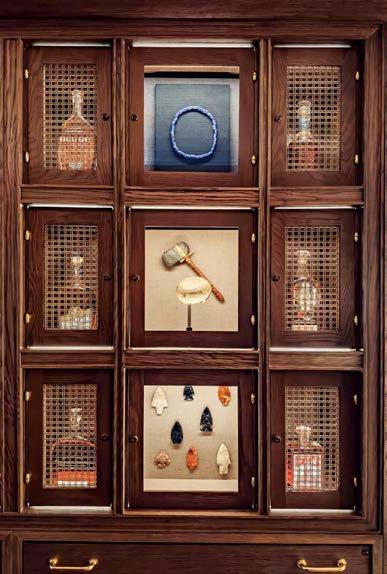
The hotel entrance sets the tone with plastered fin walls that dematerialize the end of the lobby and catch light and shadow throughout the day. Conceived as a civic gathering space, the Simon restaurant creates a sense of history with walnut paneling, a vaulted metallic plaster ceiling, and a museumlike gallery displaying a collection of arrowheads. The adjacent oval-shape bar layers bronze mirror and oak for a dynamic interplay of light and reflection. Throughout, the palette favors materials that appear worked by hand, alluding to Reston’s agrarian roots, such as visible joinery and textured stone. But modern accents, like a lounge’s swooping brass chandelier by Milan studio Morghen, keep the vibe firmly urbane.
—Rebecca Dalzell
“The hotel is both contemporary and reflective of the area ’ s enduring character”
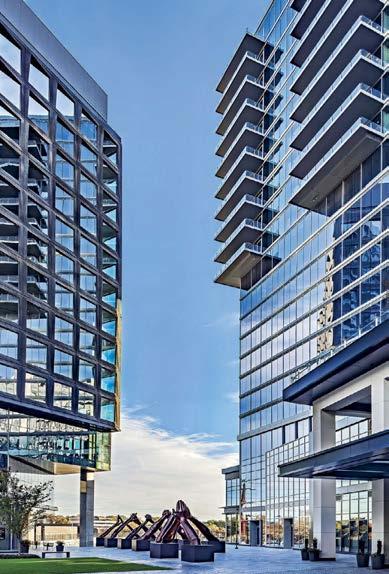
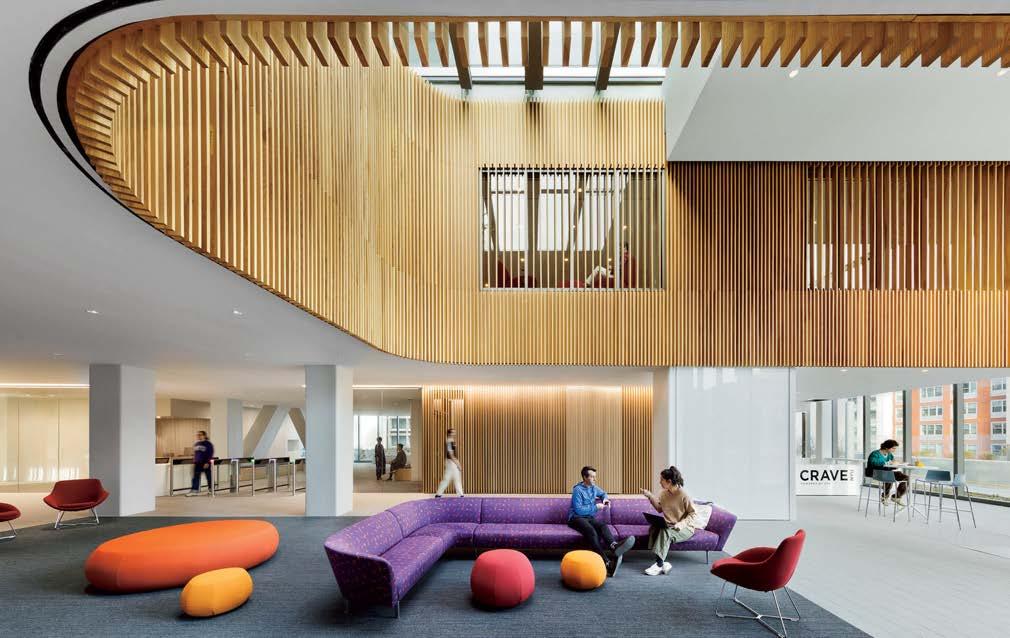
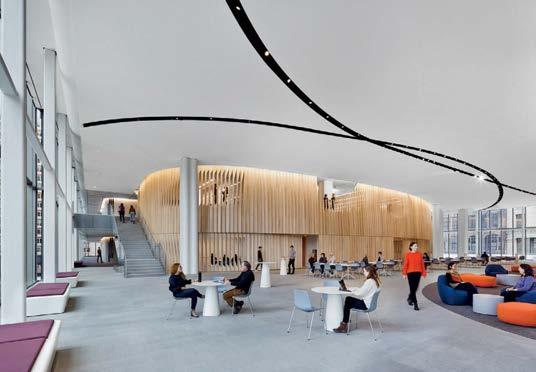
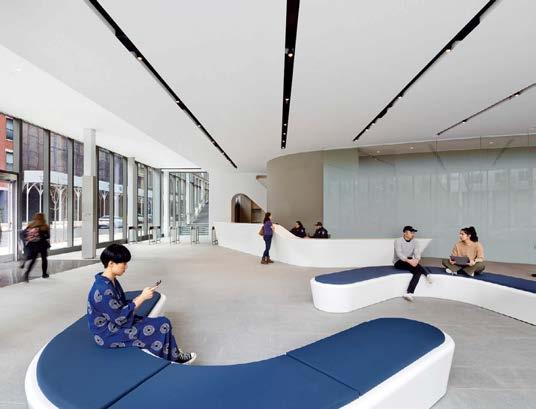
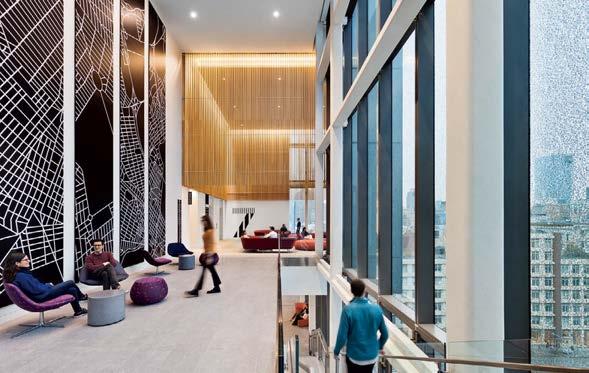
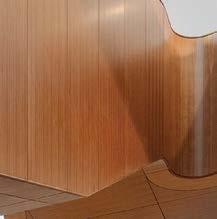
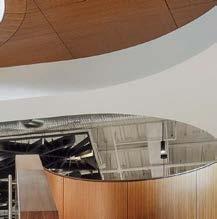
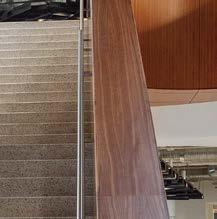
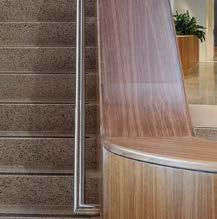
NYU has no shortage of noteworthy architecture, and the institution’s most recent addition is no exception. Rising beside I.M. Pei’s brutalist Silver Towers, the green-glass John A. Paulson Center houses an athletic complex, theater and music rehearsal and performance spaces, first-year student and faculty residential towers, and a new commons area. It also contains more classroom space than any other building on campus. Tasked with furnishing and finishing this wide array of facilities, Spacesmith collaborated with the architectural teams at Davis Brody Bond and KieranTimberlake, as well as the university’s Office of the Provost, to outfit the expansive mixed-use building. In the double-height spaces, curved walls are wrapped in wood fins that add rhythm and texture while signaling architectural elements such as skylights, auditoriums, and circulation cores. One grand balcony overlooking the cityscape features tall black panels etched with Manhattan’s urban grid in white. Custom-designed upholstery fabrics reference the university’s signature purple alongside the russet tones of neighboring buildings. In select areas, planters and sculptural seating snake across concrete floors, creating dynamic pockets for conversation. The scope also encompassed the design and layouts for the 425-bed dormitory, establishing a comfortable home away from home for students in the heart of Greenwich Village. —Dan Howarth



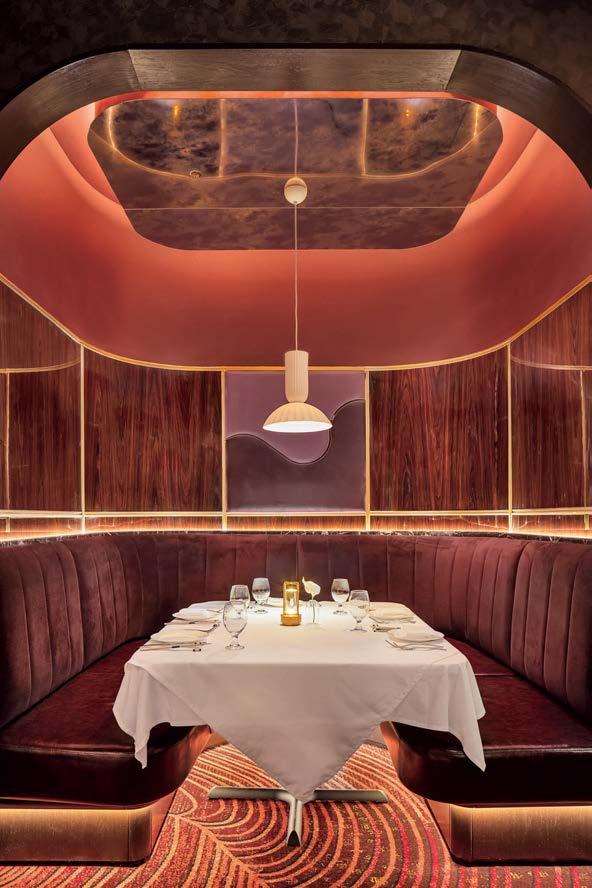
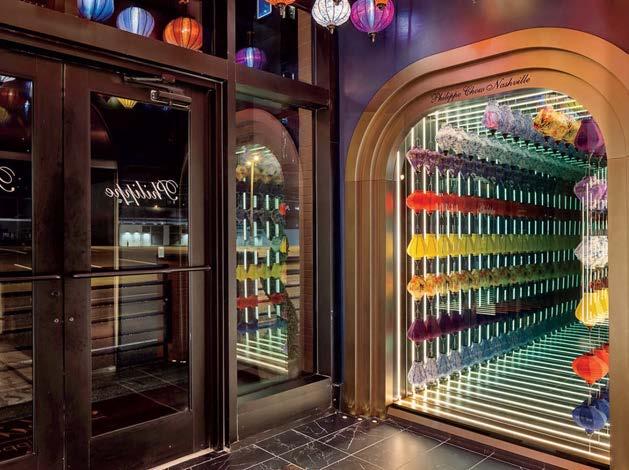
Built in 1906, the recently revitalized Cummins Station once again serves as a commercial hub for Tennessee’s Music City. Among the former railway warehouse’s high-end tenants is the fourth location of chef Philippe Chow’s eponymous restaurant, bringing his signature Beijing-style cuisine to the southeastern U.S. Due to preservation restrictions, nothing could be mounted on the building’s brick exterior. Instead, passersby are drawn in to the 8,200-square-foot, 200-seat establishment by an art piece illuminated in the entry vestibule. This mechanized installation of colorful
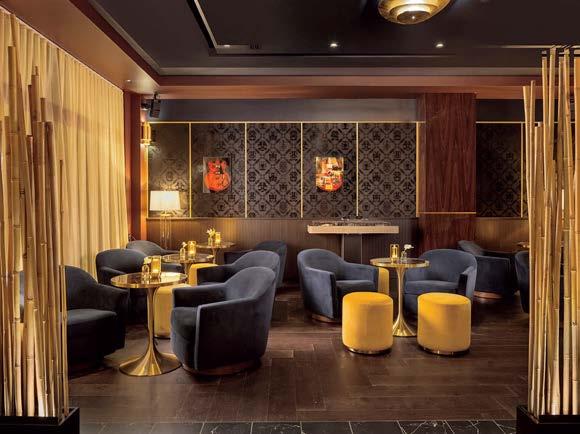
Chinese lanterns is set against an infinity mirror and framed by a golden arch for a striking first impression. Beyond is the opulent dining room, where damask wallcoverings contrast with tambour wood and glossy finishes. Curved architectural elements subtly echo the shapes of train carriages. Intimate booths feature dark wood-effect paneling outlined in brass, merlot-hued upholstery, and sumptuous Chinese-red surfaces overhead. A 60-foot-long trail of suspended porcelain ginkgo leaves floats above, while, below, uplit partitions of dried bamboo also reference East Asian flora. But there are local nods, too: Nashville’s music history adorns the walls of the moody cocktail lounge in the form of shadow boxes fitted with guitar parts. —Dan Howarth
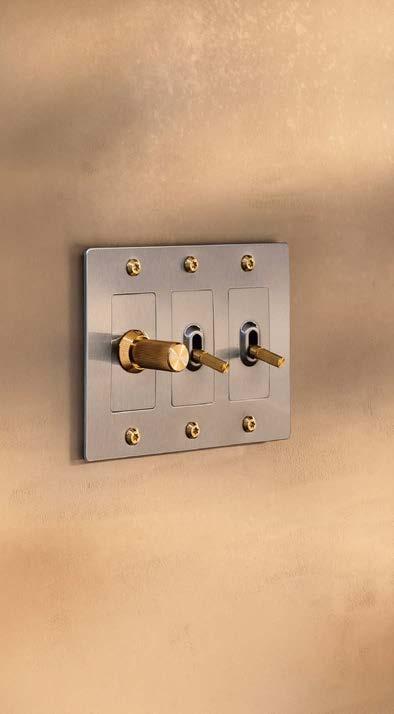
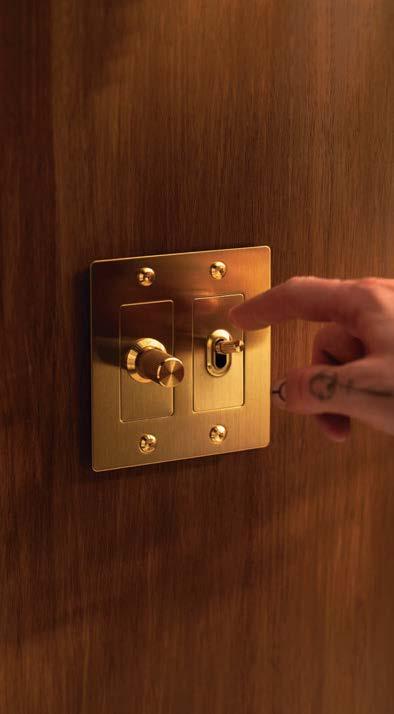
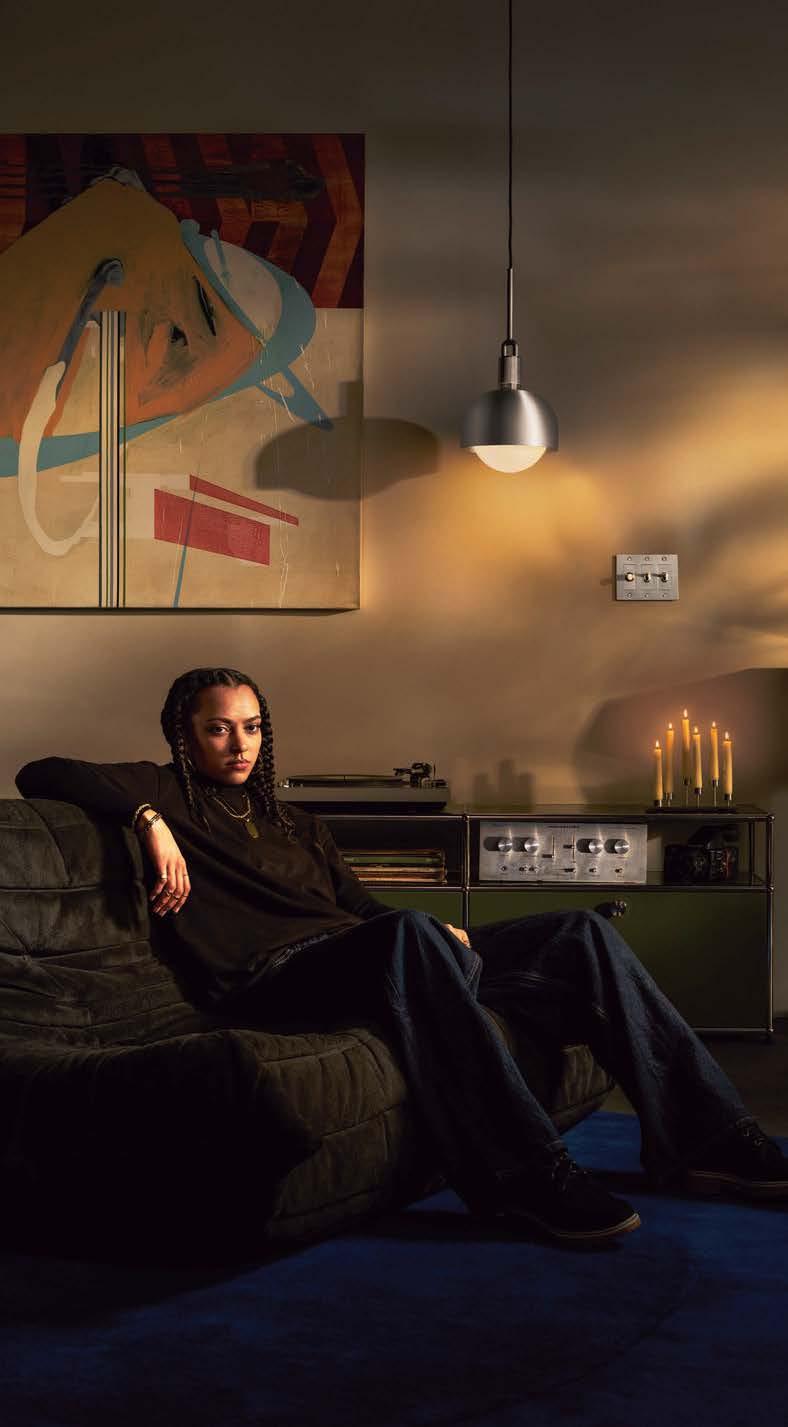
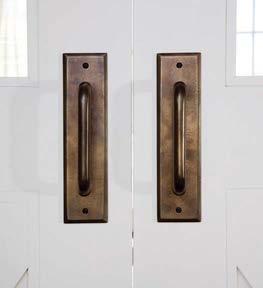
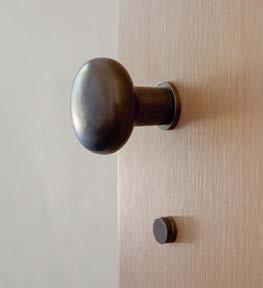
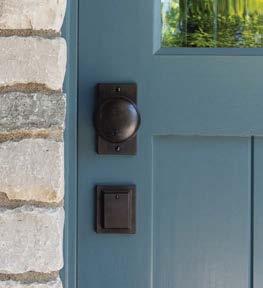
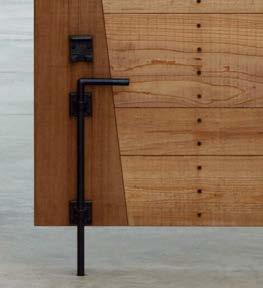
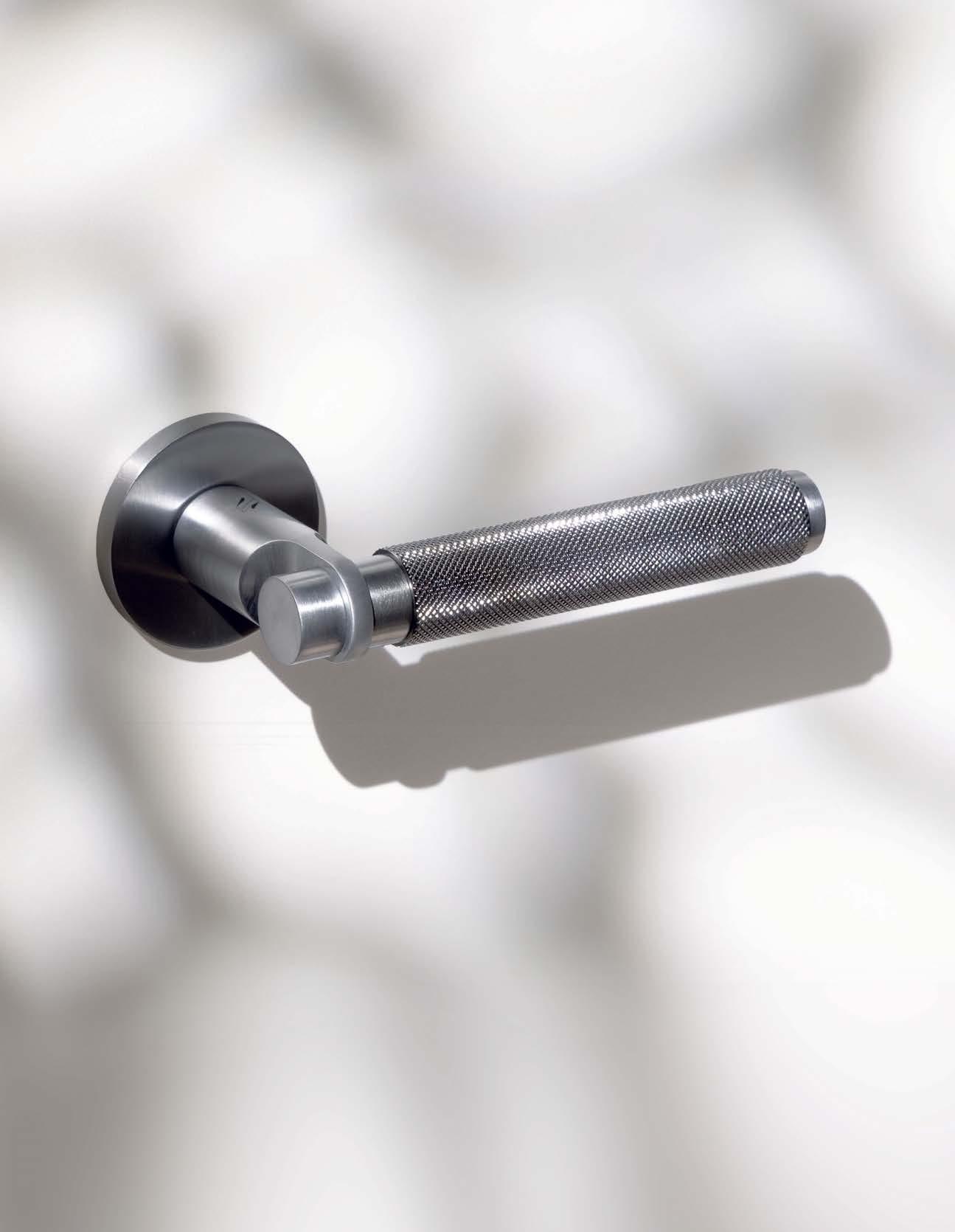
From lighting to hardware, switches, furniture and accessories, Buster + Punch’s collections are precision crafted from solid metal, for effortless combinations that prove details are everything.
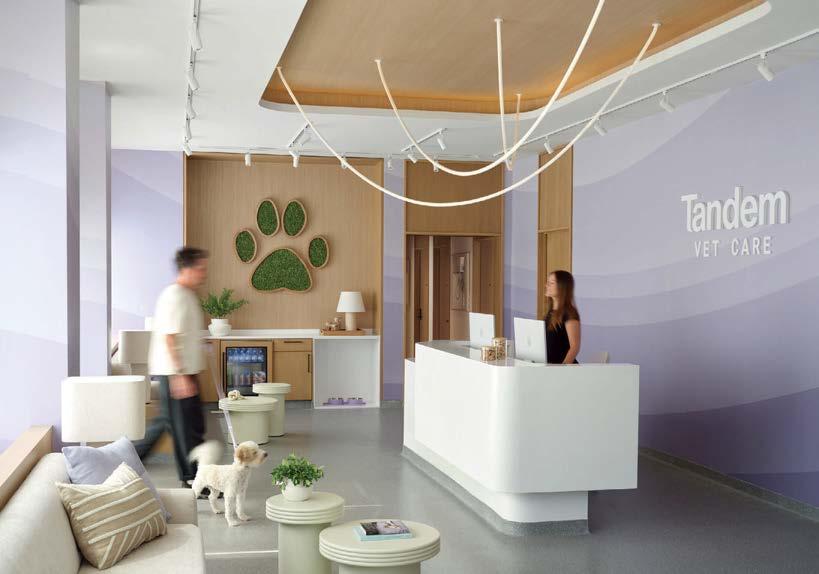
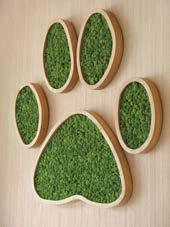
Tandem Vet Care, Somerville, Massachusetts
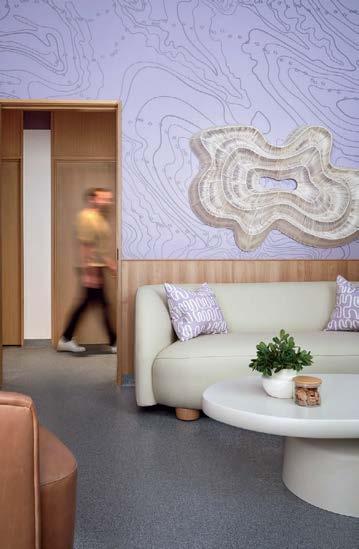
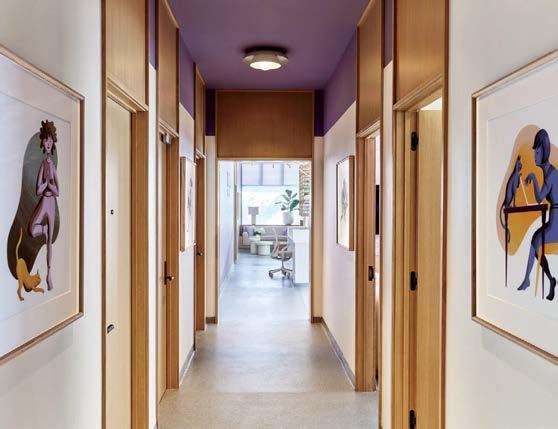
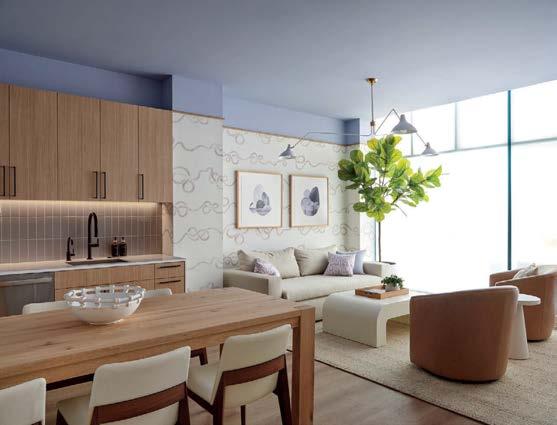
At this animal clinic in the Boston suburb of Somerville, paws are expected— and pause is encouraged, thanks to the calming concept by principal Dan Mazzarini and his team. For the 4,775-square-foot project, they devised not only the complex technical areas but also places where providers and pet parents can find respite. It begins in the bright and airy reception, anchored by a custom desk in crisp-white solid surfacing, surrounded by the soothing lavender palette that’s throughout. What looks like pale millwork on the ceiling and some walls is actually cellulose wallcovering that’s PVC-free, biodegradable, and FSC–certified (it’s Woods–Figured Red Oak by Momentum Textiles & Wallcovering). A 4-by-4-foot feature paw by Greenwalls is all natural too, made of preserved reindeer moss. Since veterinary medicine ranks among the most stressful professions, taking care of the caretakers was a critical part of the program. The staff lounge goes beyond the usual break-room formula, with a dreamy blue-violet ceiling, soft yet chic seating, and live greenery. Though the facility may be for cats and dogs, all these welcoming spaces are about hospitality—“our shining moment,” as Mazzarini puts it. And that’s true whether you’re on two legs or four. —Lila Allen

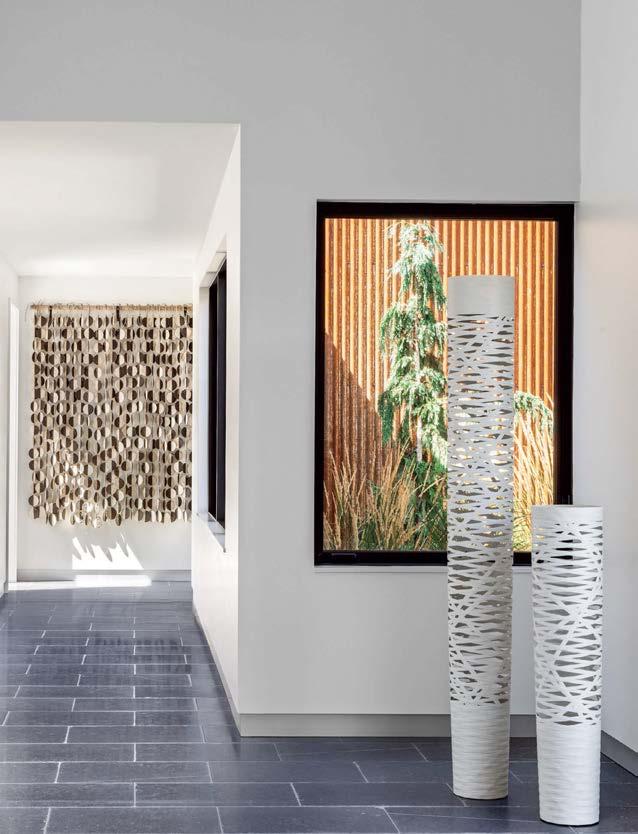

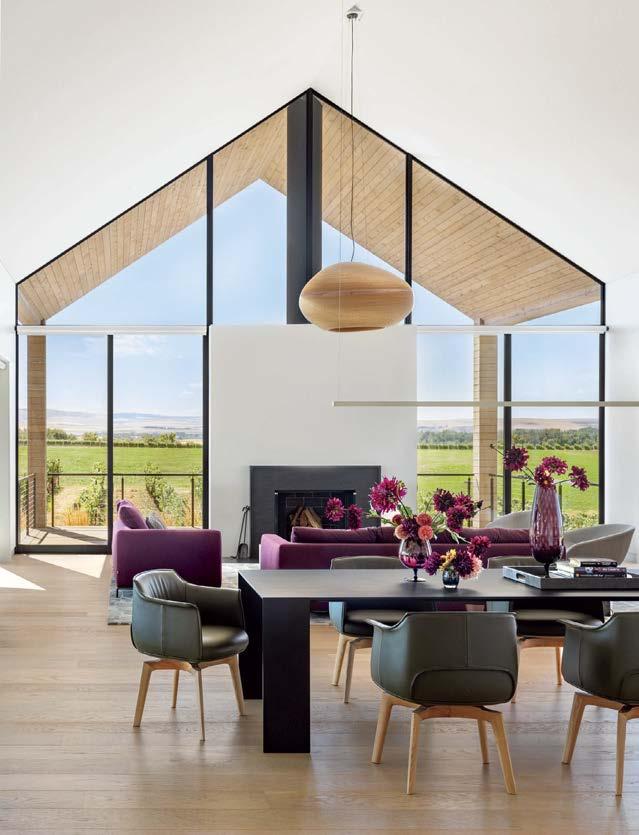
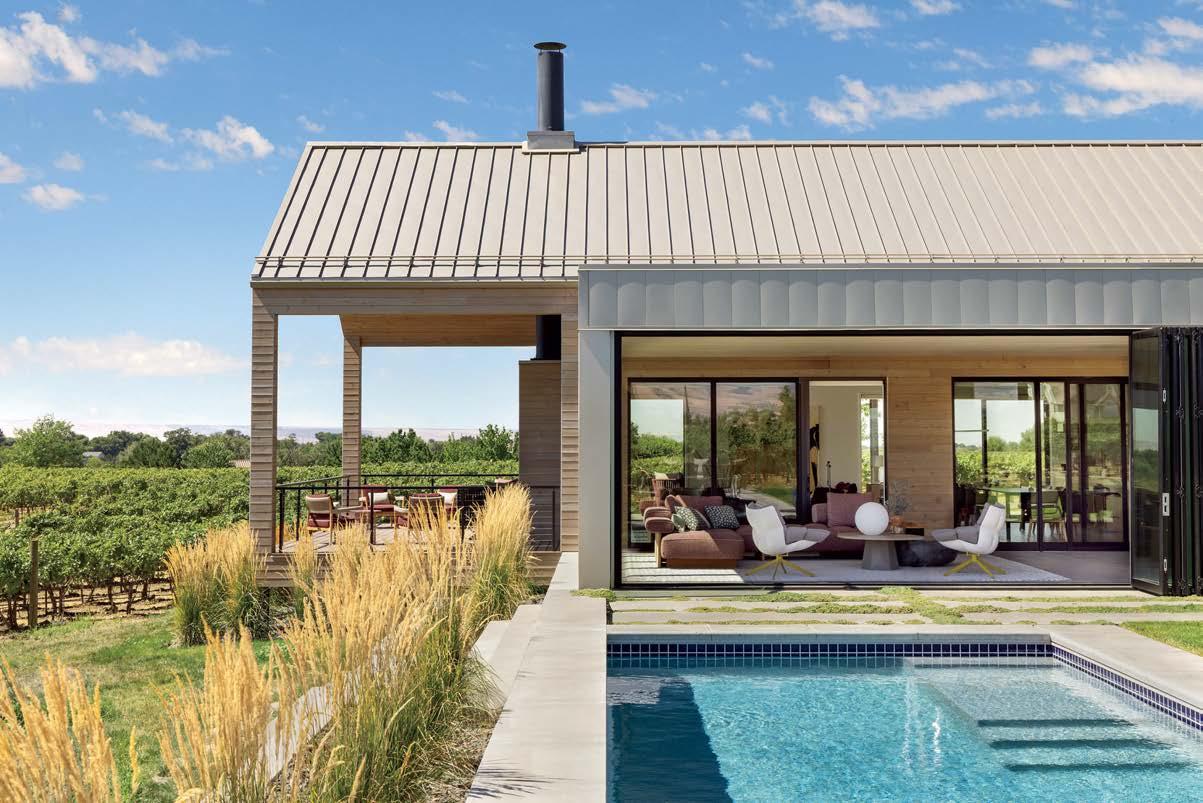
For a family of passionate oenophiles, few settings could be more appealing than a home surrounded by vines. Newly constructed in Washington’s most prolific wine region, the architecture and interiors respond directly to the rural landscape through both form and materiality. Gray stone flooring, for instance, echoes the area’s basalt rock— ideal for grape growing—while cedar cladding references the wooden stakes that support the vines. The dwelling comprises three gabled volumes, shaped to recall the historic barns of the agrarian surroundings, and a fourth cuboid block wrapped in weathered corrugated metal in homage to the region’s industrial structures. These are offset from one another to accommodate programmatic needs and oriented to capture sweeping views of the Blue Mountains. In the central portion, a pitched ceiling soars above the living spaces and extends beyond a double-sided fireplace to shelter an alfresco terrace. Throughout, interiors are intentionally minimal, ensuring that nothing competes with the vistas framed by expansive walls of glass. Smaller connecting volumes link the four primary forms and enable seamless single-level living. The unconventional layout creates a series of plein-air rooms, including a kitchen, bocce court, sculpture garden, and pool area, all easily accessed through retractable walls that facilitate the indooroutdoor lifestyle synonymous with wine country. —Dan Howarth

“All the flavors of wine country are decanted into this residence amid the vines”
rising giants #135
SoMA at 25 Water Street, New York
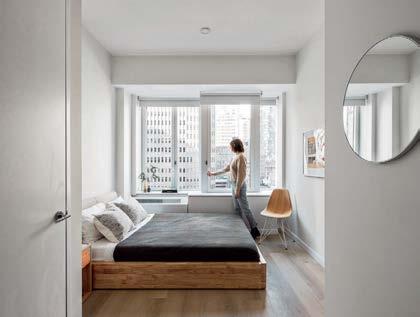

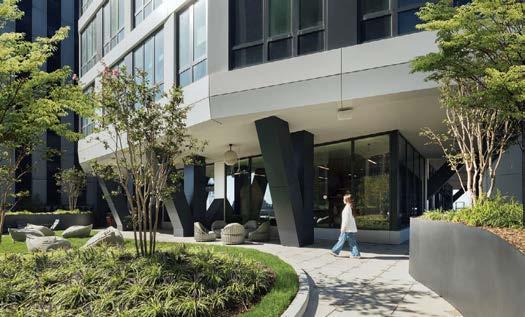
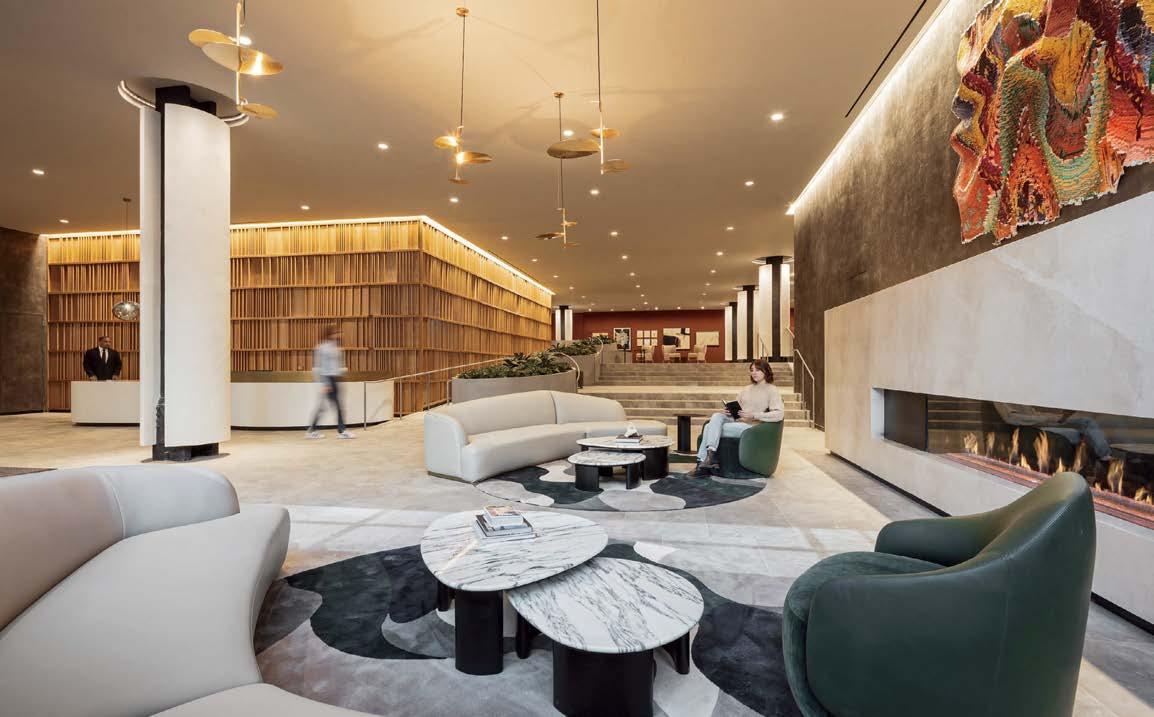
In cities across the country, what once were buzzing office towers full of nineto-fivers are slowly metamorphosing into apartments, transforming into peoplecentric places for community. As the need for housing spikes and office buildings sit empty postpandemic, the shift is picking up steam in metropolises like New York, where CetraRuddy has completed the country’s largest workplaceto-residential conversion to date. Located in the Financial District, the project revamps a 1969 Brutalist high-rise as a 1,320-unit multifamily block. Adding horizontal bands of windows across the lower 21 floors and injecting two central light wells helped lasso daylight into the structure, while a rooftop addition introduces another six floors of residential units plus two amenity floors, the latter including a coworking space that opens to an outdoor terrace and pool. In total, 100,000 square feet of amenities across the building address modern creature comforts, with wellness spaces aplenty, including a gym, sauna, salt room, and sport courts. Softening the building’s austere language was the order for the interiors, with new serpentine walls and curving built-ins, natural and organic materials for lobby seating, and planters with greenery galore. Bright finishes throughout help welcome the light, and an emphasis on sustainable and recycled interior elements prime SoMA for the future. —Lauren Gallow
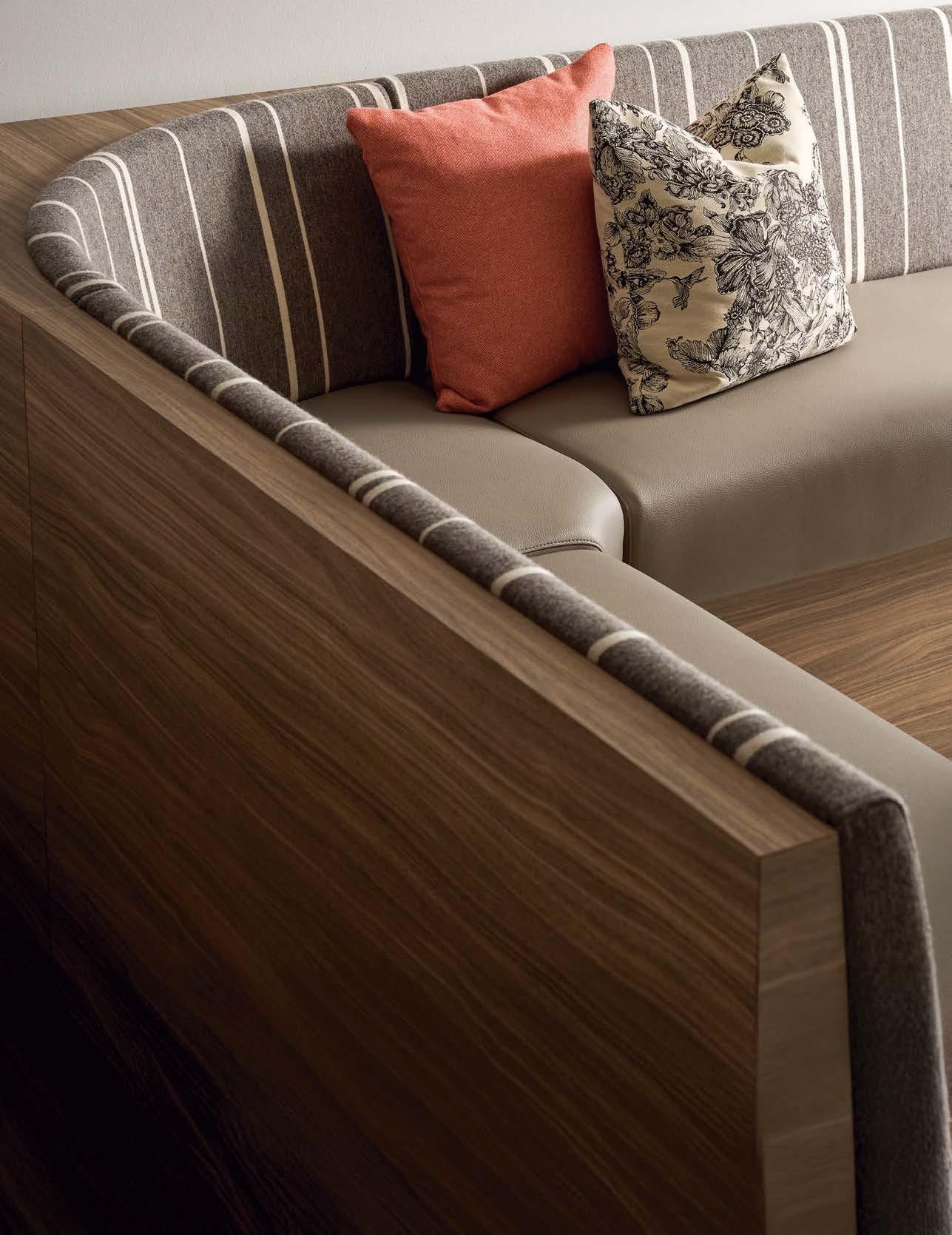
Cozy Corner
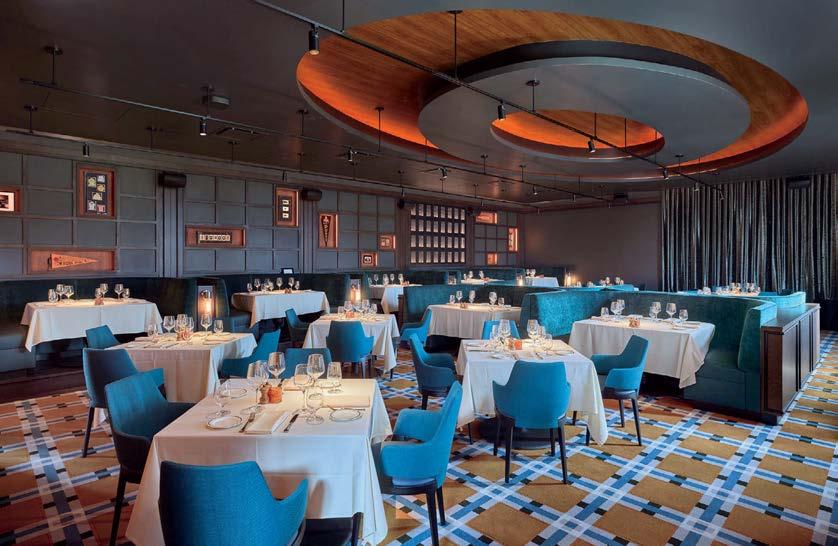
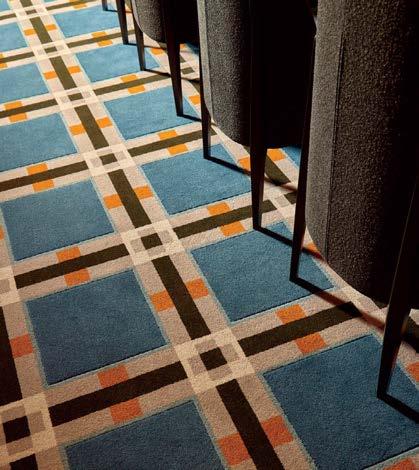
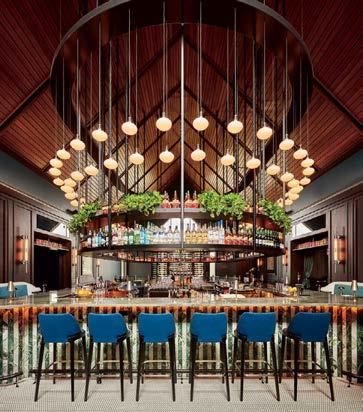
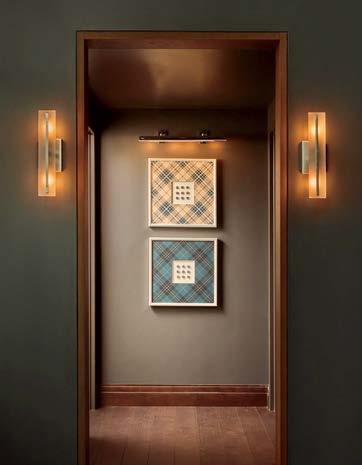
The social anchor of Purdue University’s Birck Boilermaker Golf Complex is the Pete Dye Clubhouse, named for the famed designer behind this course and so many others. Inside, a 5,000-square-foot steakhouse pays tribute to the school and its golf legacy through an elevated, twist-on-tradition scheme that channels the sport’s visual language. Introducing the clubby tone is a two-story wine wall in the main vestibule, the centerpiece of which is a portrait of Dye and his wife and codesigner, Alice (together affectionately known as the first family of golf course architecture). The restaurant and bar area, which combined seat 179 plus another 28 on the terrace, are heavy on the fairway references: Perdue-branded plaid fabric, cubbies displaying golf memorabilia, velvet drapes, backlit whiskey lockers, a scorecard mosaic, and even artificial-turf accents. The pattern and palette of the plush carpeting falls somewhere between plaid and Piet Mondrian. Below a soaring multipendant chandelier, circular cocktail and raw bars decorated with Italian tile dominate the main area— curved elements that, juxtaposed with a peaked ceiling, are meant to reflect the surreal shape of a golf course. —Stephen Treffinger
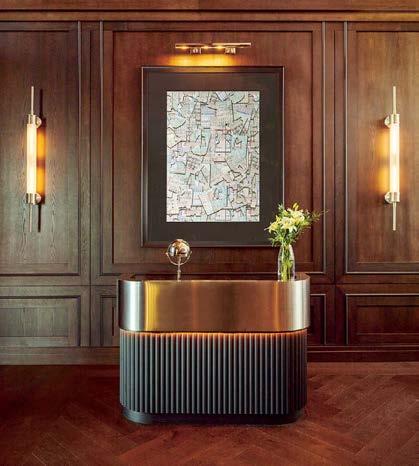
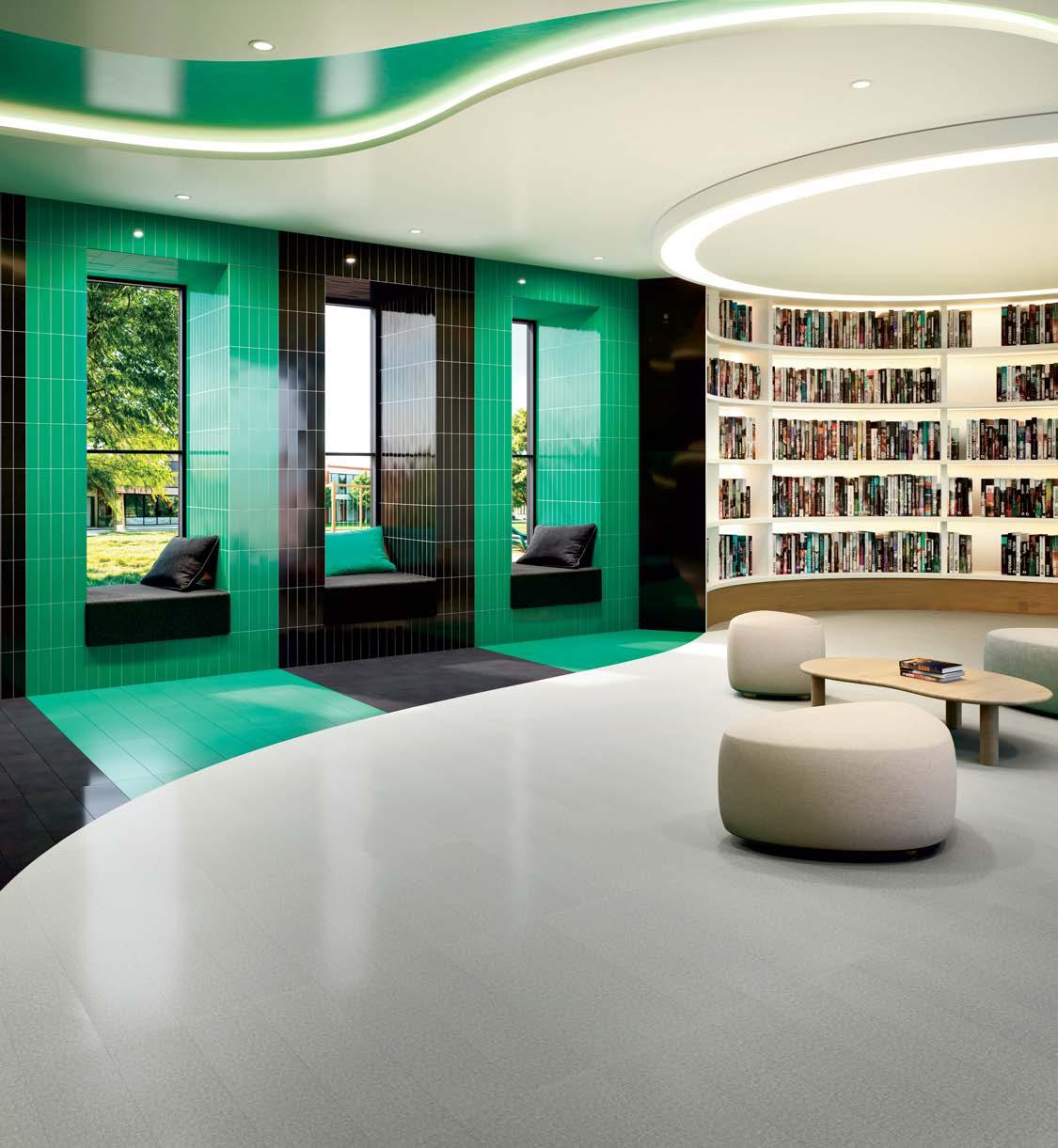
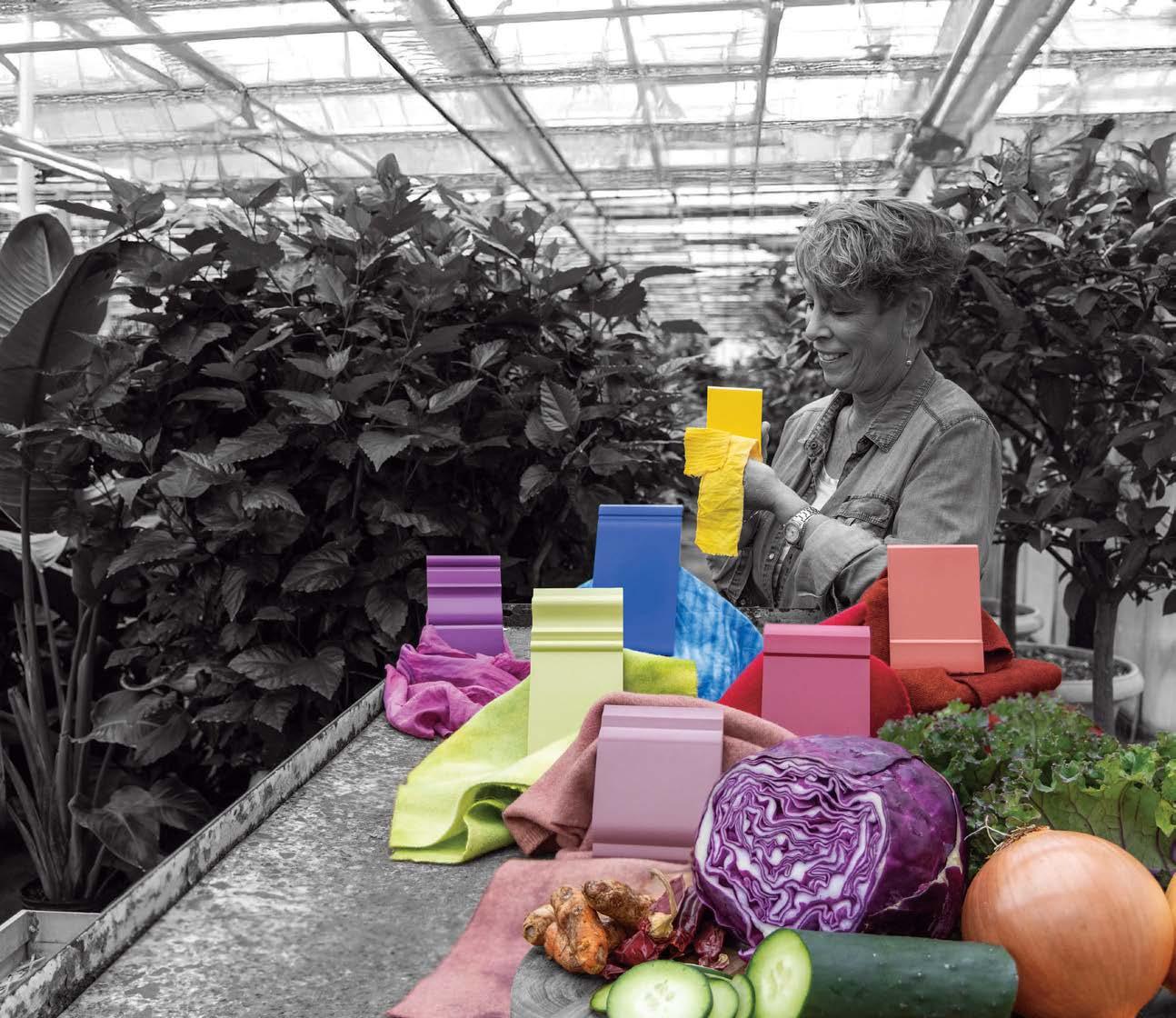
With Colorology, effortlessly match and harmonize floor, wall, and mosaic tile to create seamless spaces.
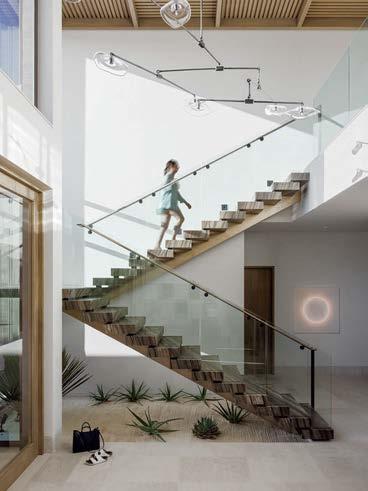
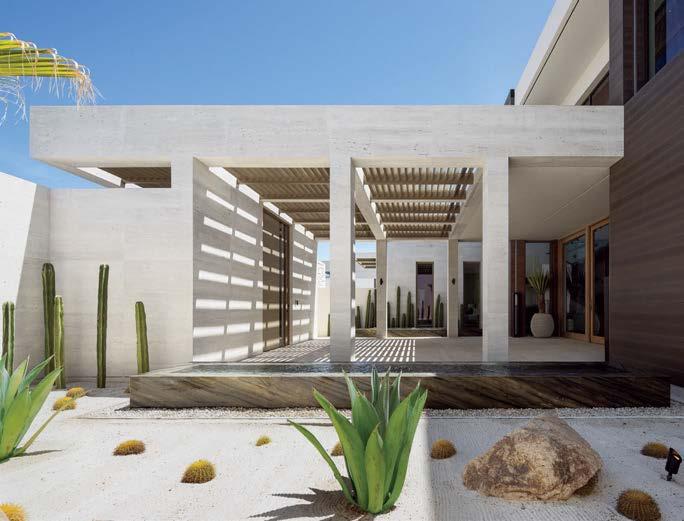
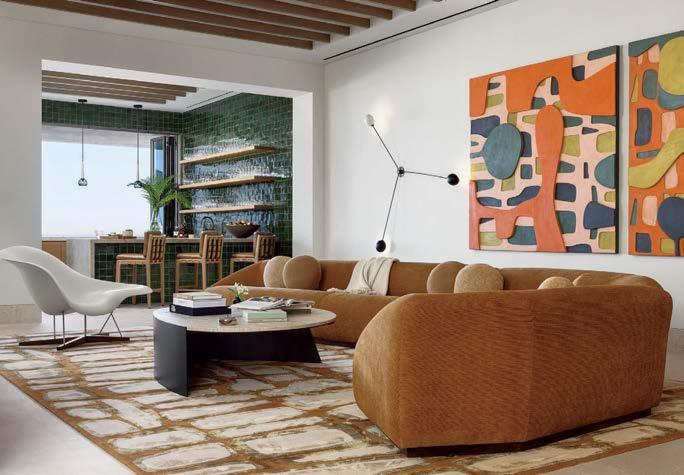
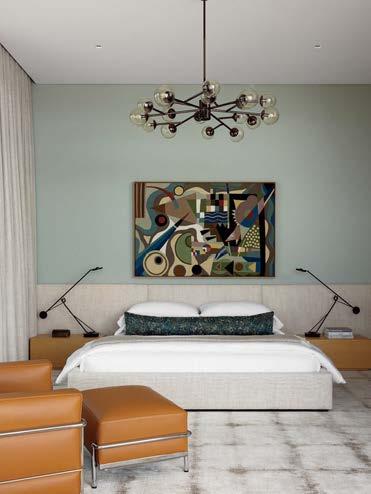
Nicknamed Mundo Maravillosa (Spanish for wonderland ), a residential retreat in the resort town’s ritzy Chileno Bay community was designed for a family that loves to host and entertain. Contemporary architecture pairs with a natural palette that feels refined but also quite personal. The structure itself is crafted from travertine and local plaster, creating a quiet backdrop that allows the furnishings and artwork to shine. Nearly all major furniture pieces were custom made, rendered in earth tones that harmonize with the surrounding landscape. Many of the floorcoverings—including the one in the main living area—are also bespoke, created by cutting and reshaping multiple rugs to form an abstract pattern mimicking the local terrain. A thoughtfully curated collection of sculptural pieces, playful textures, and large-scale mixed-media compositions from local and international artisans animates the clean architecture, supplying color, depth, and a narrative quality.
And then there’s the views: The clients can take in the Sea of Cortez and surrounding features from the comfort of shaded patios, lightdrenched terraces, and even the primary suite, which offers an indoor/ outdoor shower plus two private terraces: one for watching the sun rise over the ocean, the other for enjoying the mountain sunsets.
—Stephen Treffinger
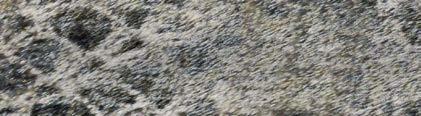
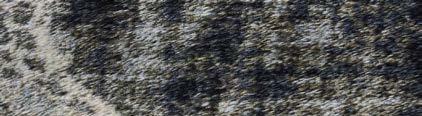

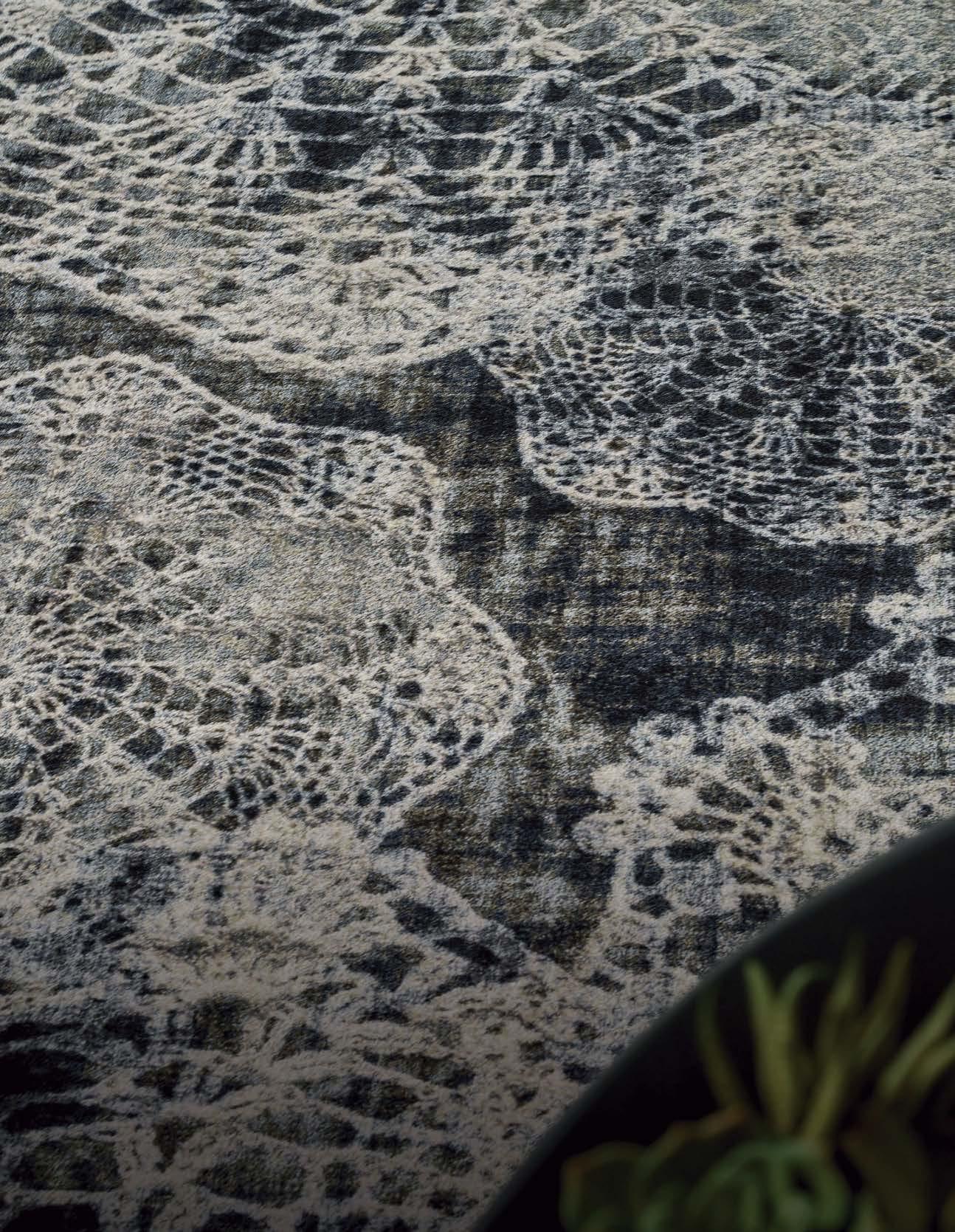
The Alt-Era collection is a study in textile reinvention, channeling the deep comfort of heirloom textures and the enduring character of classic wear. This seamless transformation is powered by the unparalleled detail of PrintWorks technology, reproducing every gradient with fiber-level precision. A modern aesthetic, built for lasting appeal.
23,846
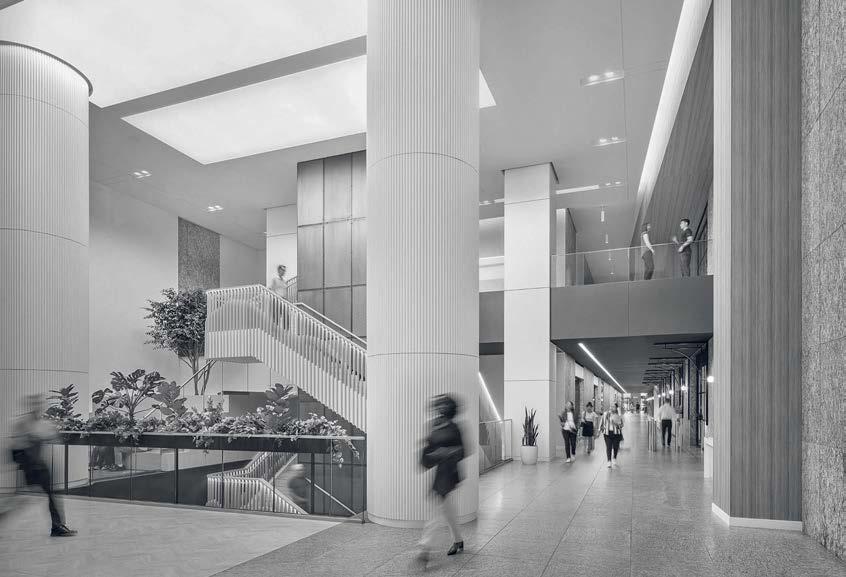
Rising Giants are reimagining the workplace as a catalyst for connection. The emerging measure of success? Emotional engagement and team energy rather than utilization rate. With hybrid schedules entrenched and fluctuating occupancy prevalent, in-person time is precious, fueling demand for high-impact collaboration zones, mentorship-supportive spaces, and hospitalityinspired amenities that encourage belonging and recharging. Firms believe the most effective offices are grounded in behavioral insights, conceived to balance focus and interaction. Technology is also giving designers an edge, with AI-driven planning tools, sensor-informed environmental tuning, and more sophisticated acoustical integration reshaping infrastructure.
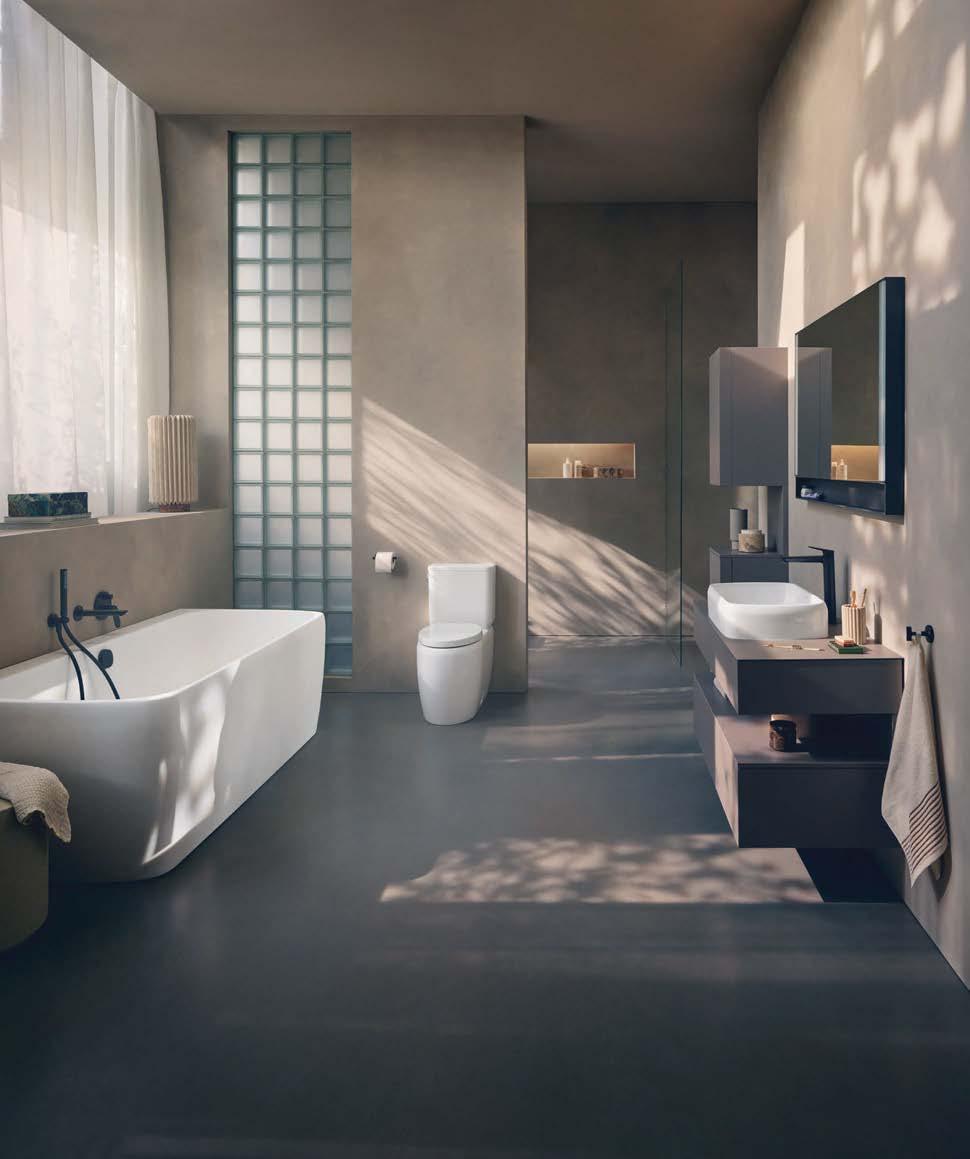
VANITY FAUCETS
MIRRORS
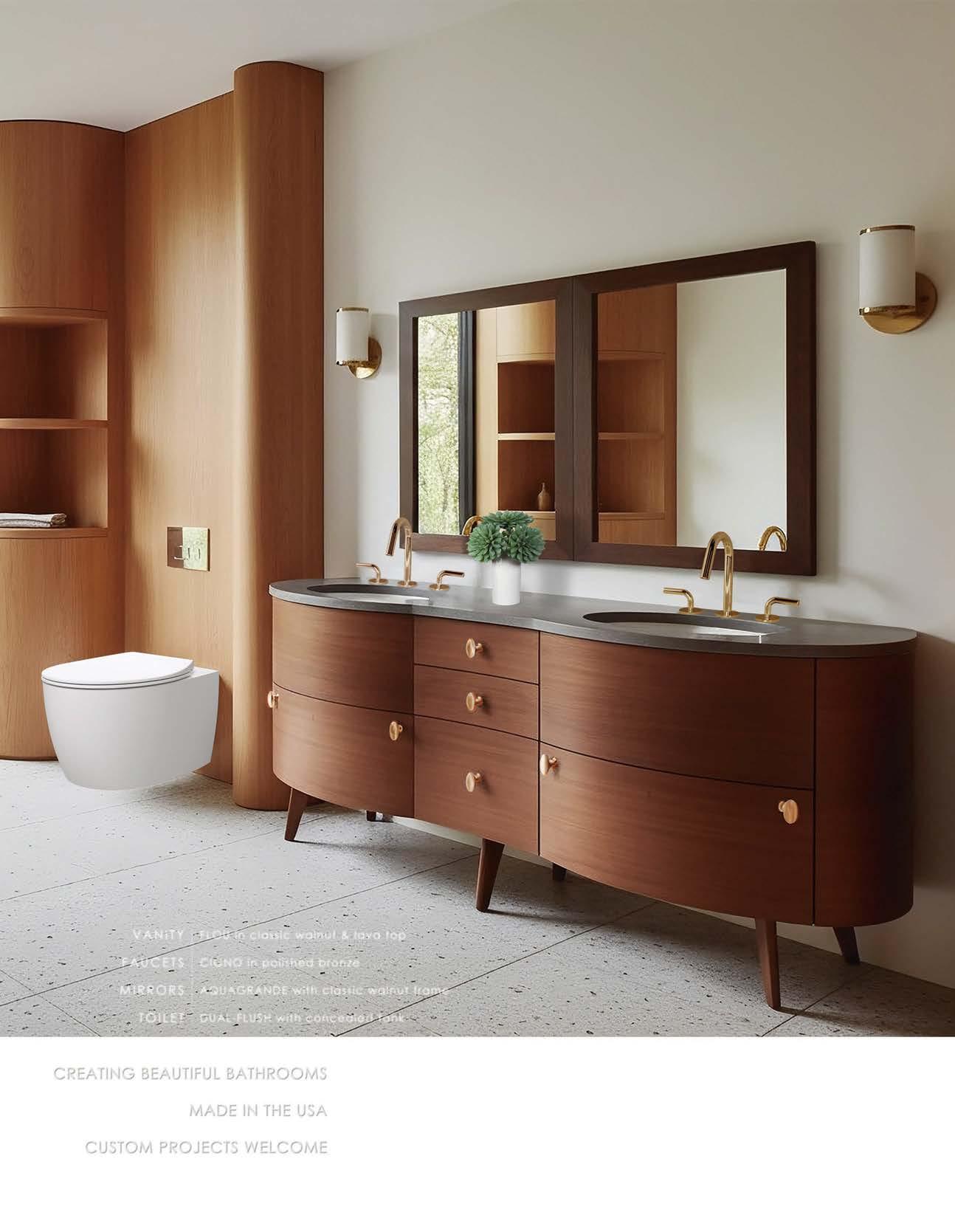
CIGNO in polished bronze
TOILET FLOU in classic walnut & lava top
AQUAGRANDE with classic walnut frame
DUAL-FLUSH with concealed tank
CREATING BEAUTIFUL BATHROOMS MADE IN THE USA
CUSTOM PROJECTS WELCOME


















Tightened capital, high costs, and construction escalation have compressed schedules and heightened scrutiny at every phase. Tariffs and global market fluctuations are limiting spec options, extending lead times, and making short-term cycles unpredictable. Labor shortages compound delays while influencing material selections, pushing teams toward solutions that maximize efficiency and reduce maintenance. In response, these firms are recalibrating. Strategies include delivering realistic FF&E budgets earlier in the design phase to manage expectations and avoid sticker shock, rethinking sourcing strategies to build in flexibility and hedge against trade disruptions, and leveraging design visuals to secure additional funding before proceeding. The result is a more strategic, frontloaded process that prioritizes long-term durability and operational savings without sacrificing any personality. rising giants
Rising Giants report that economic volatility is reshaping the project process.
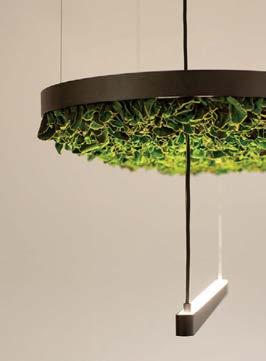
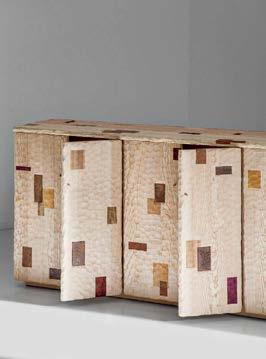
what are giants specifying?
Pieces with patina evocative of—and steeped in— the natural world are on the rise
1. Hoverlight suspended LED luminaire integrating Velvet Leaf preserved Tibouchina plants by Greenmood. greenmood.us
2. Helena table made of scrap wood by Studio Vasco Fragoso Mendes. vascofragosomendes.com
3. Exhuma mirror in sand-cast molten stainless steel with bronze accents by EWE Studio. ewe-studio.com
4. Hongo stool/table made of two types of clay using the Japanese nerikomi marbling technique by Tina Vaia. tinavaia.com
5. Nectarum lamp carved from serpentine travertine and onyx, including green jade and pink varieties, by Sten Studio. stenstudio.com
6. Bark sideboard of carved French ash with wood inlays and stoneware tiles by Ferréol Babin through Friedman Benda. friedmanbenda.com
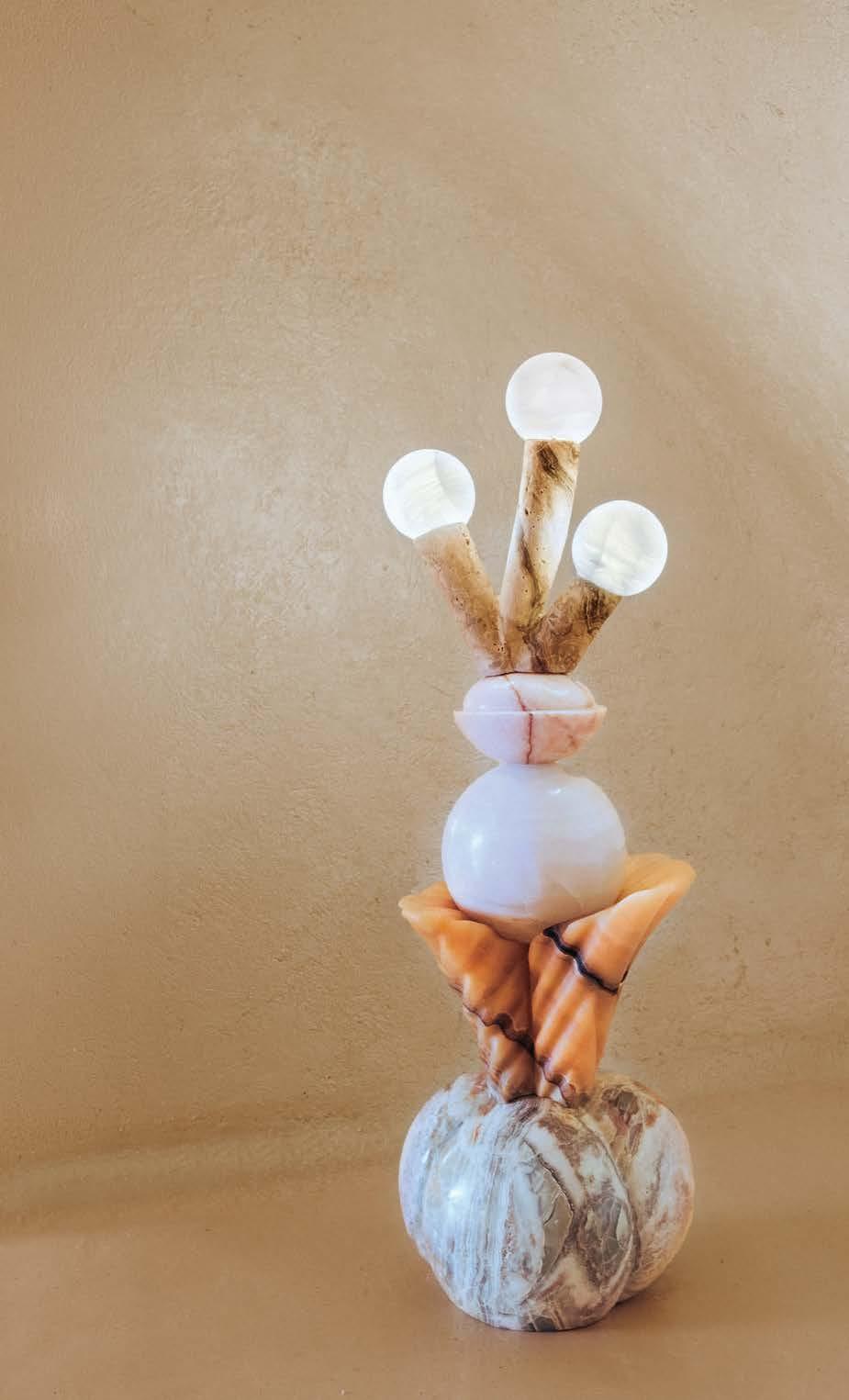
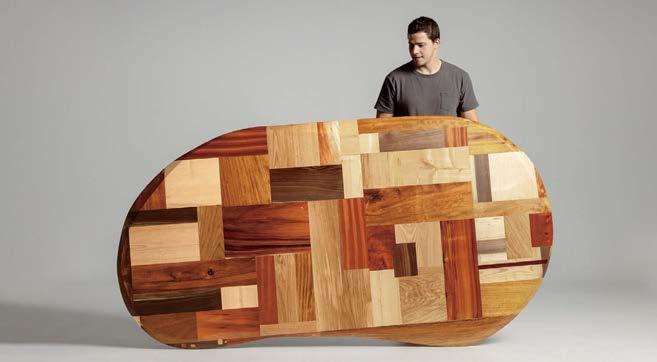
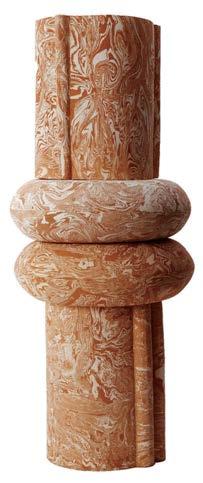
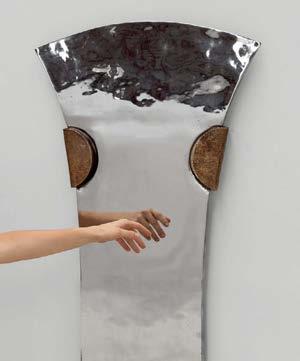
“The spaces that will define the coming years are those that reveal themselves slowly: layered, tactile, and emotionally resonant” —Clint Nagata, BLINK Design Group
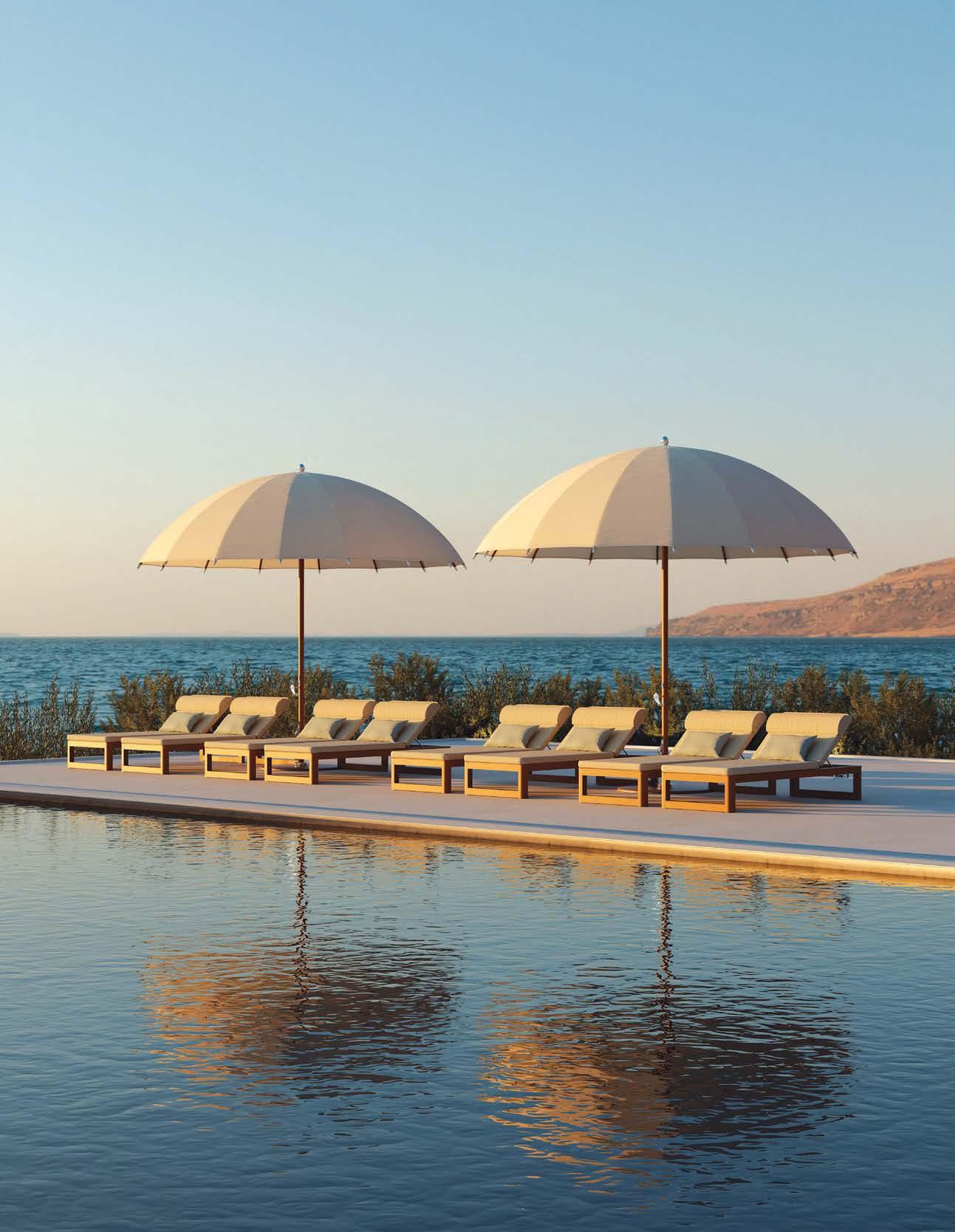
American-made products finished by hand bring soul to commercial projects
1. Monoscope Nautilus sconce with blown-glass diffuser and wood and brass accents by Allied Maker, based in Long Island, New York. alliedmaker.com
2. Notos floor lamp with woven horsehair shade by Ben & Aja Blanc, based in Providence, Rhode Island. benandajablanc.com
3. Concavo glass sconce by Tracy Glover Studio, based in Pawtucket, Rhode Island. tracygloverstudio.com
4. Tina Frey’s Orbit cast-bronze chair by TF Design, based in San Francisco. tf.design
5. Delf dining table with ceramic inlay by Danny Kaplan Studio and Lesser Miracle, both based in Brooklyn, New York.dannykaplanstudio.com, lessermiracle.com
6. Ilkka Suppanen’s Rizoma coffee table sculpted of Plasterglass with low-iron glass top by Ralph Pucci International, based in New York. ralphpucci.com
7. Cheever cabinet knobs and pull and Nostrand cabinet knob, all of solid brass by Ellis Works, based in Brooklyn, New York. ellis-works.com
8. Conduit chair with powder-coated steel frame, mahogany armrests, and sunrise/orange stripe woven textile seat upholstery and sling back by Silla, based in Marfa, Texas. sillamarfa.com
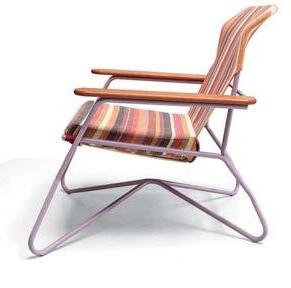
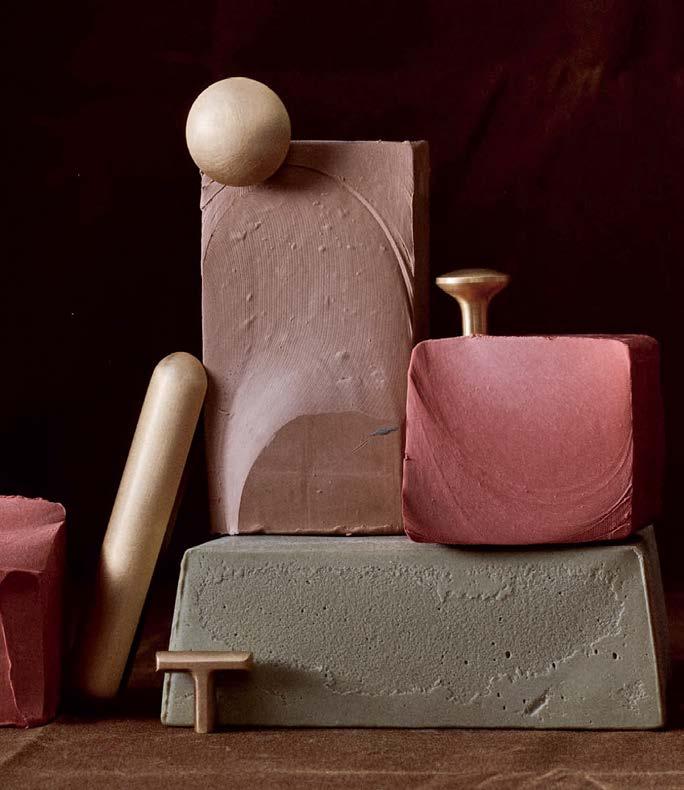
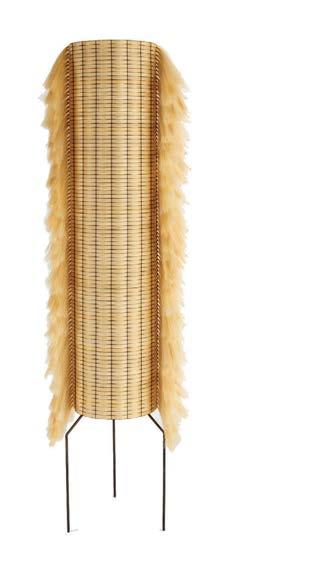

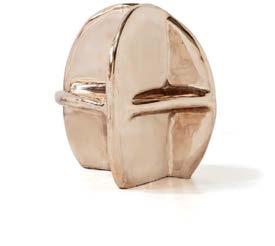
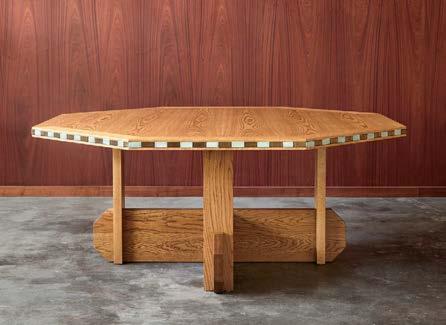
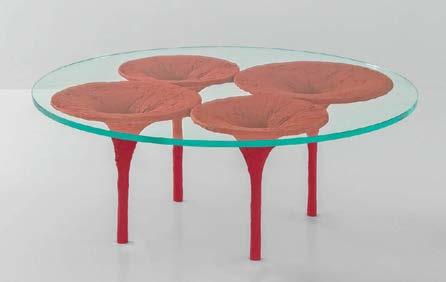
“One consistent theme is an appreciation for local craftsmanship. Our designers are passionate about promoting regional makers who bring authenticity and storytelling to a space”
—Ann Fritz, ESG Architecture & Interior Design
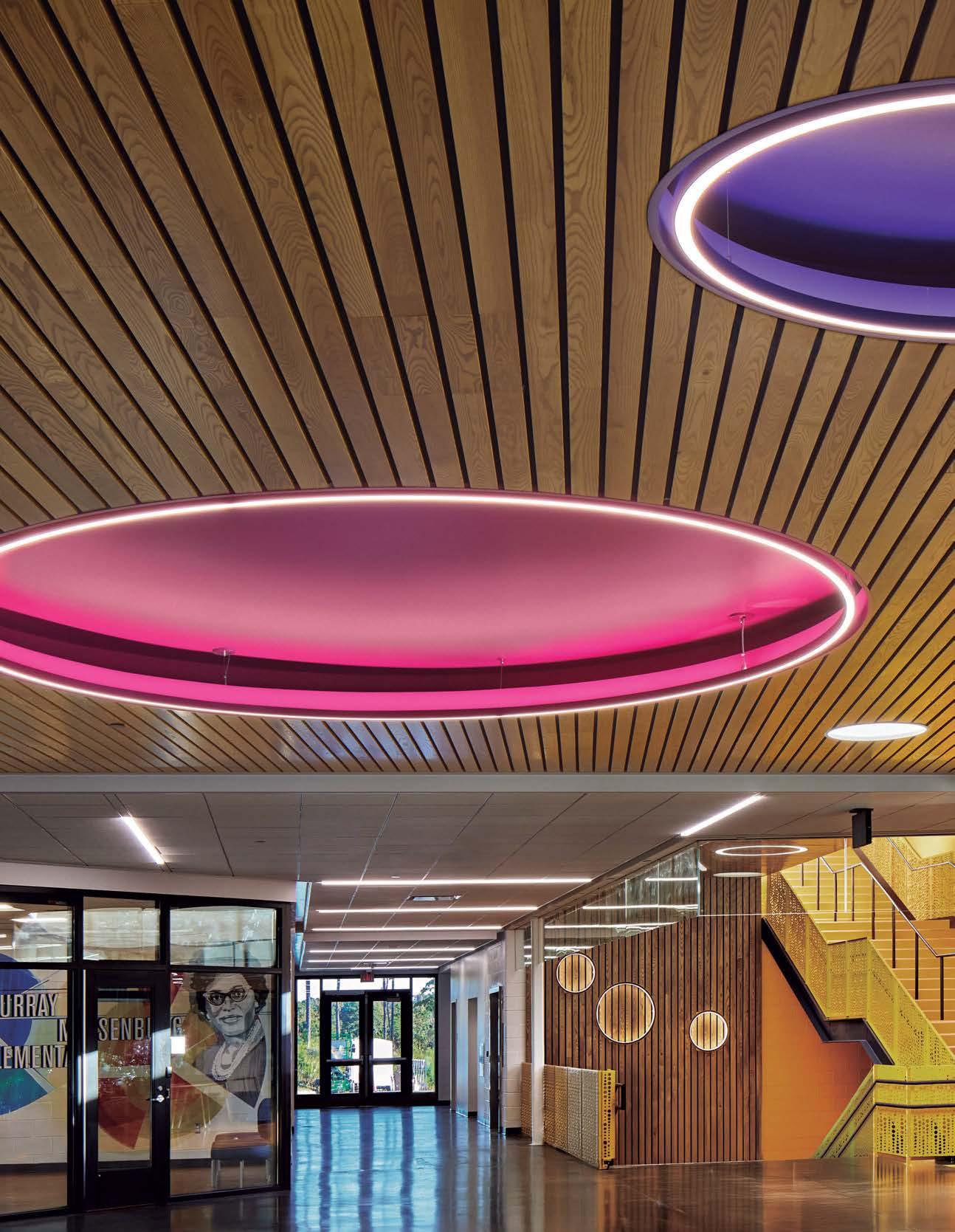



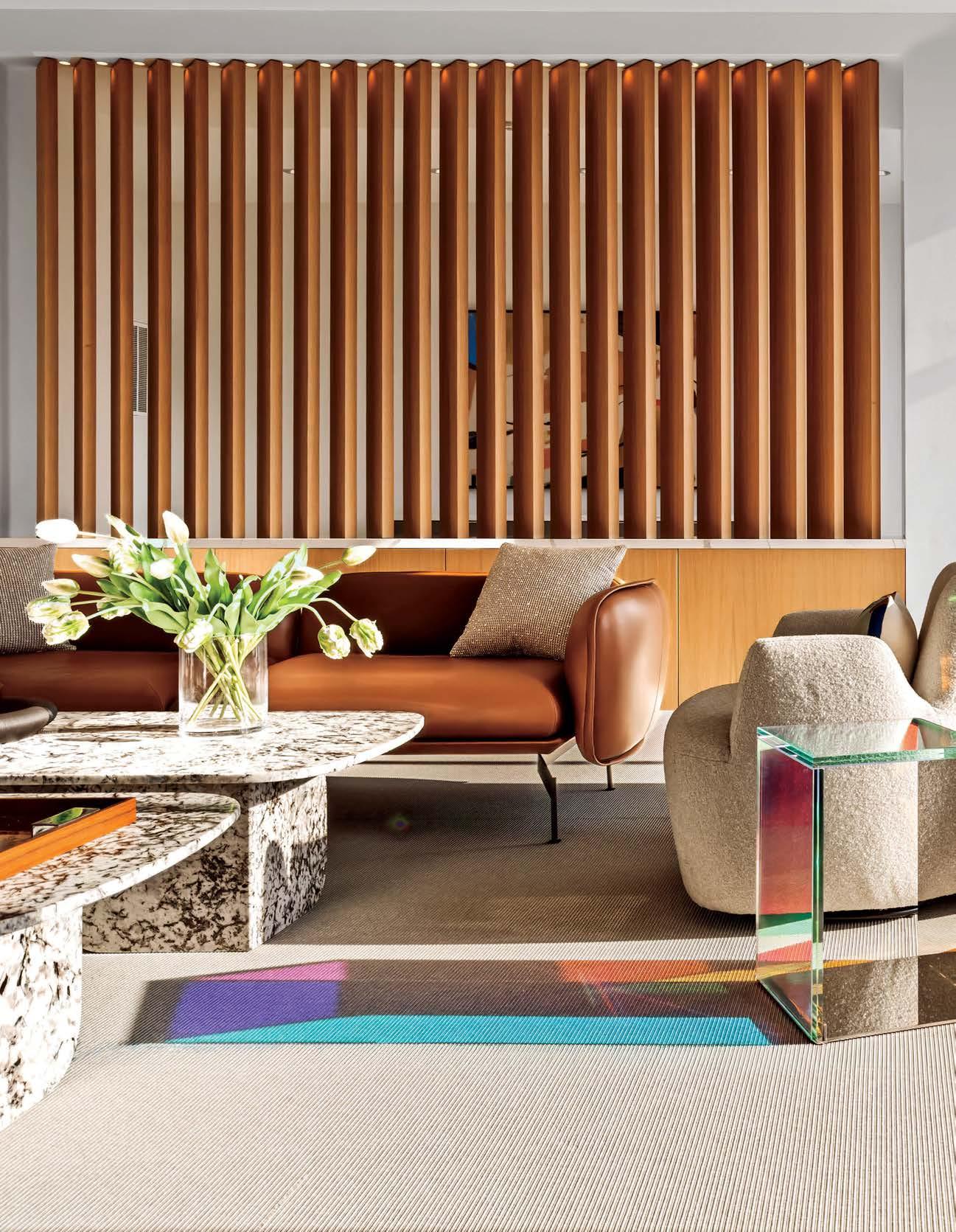
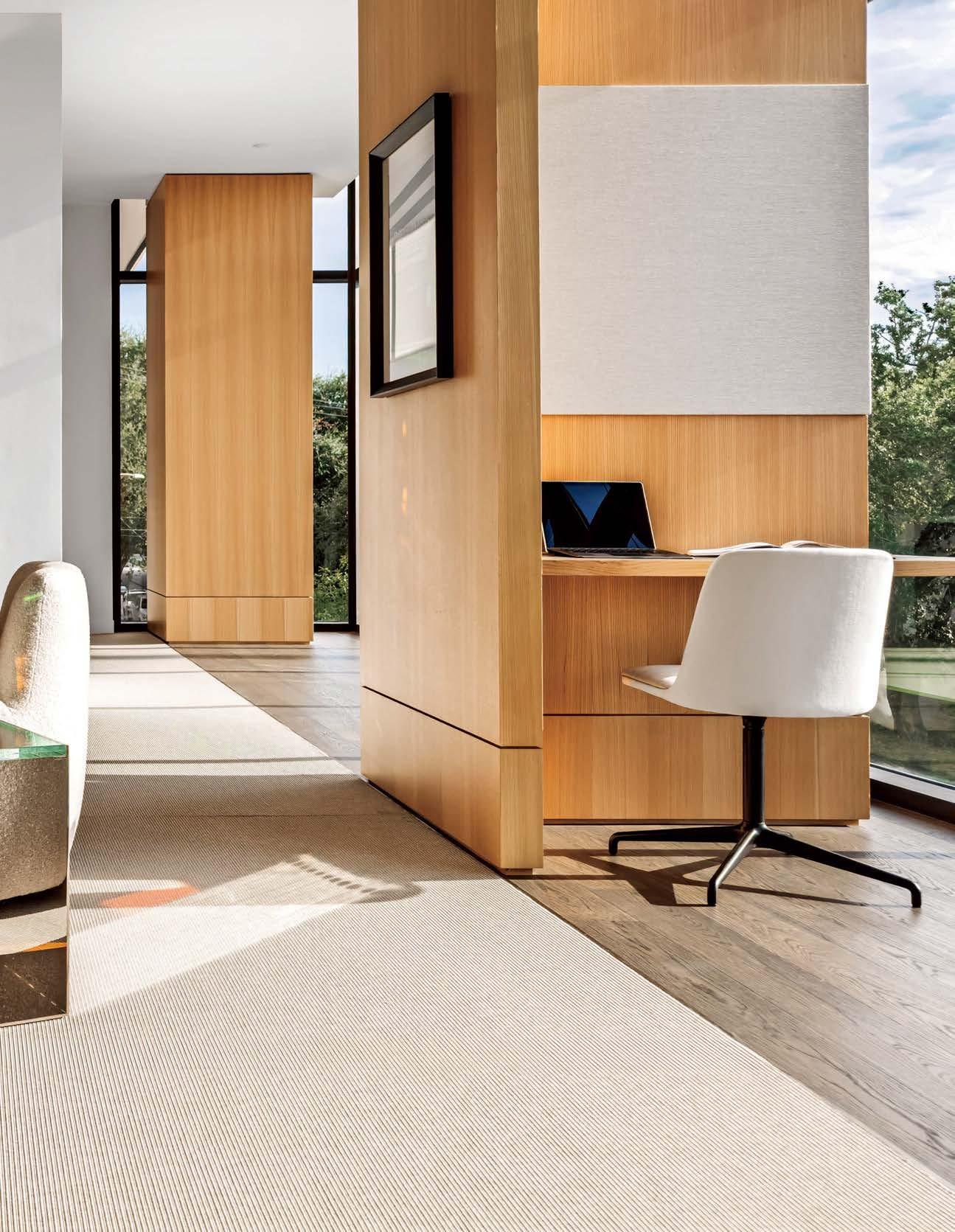
often seen in higher‑budget properties
Interior Design Hall of Fame member Lauren Rottet— founding principal of Rottet Studio, which ranks 86th on our 100 Giants list—is best known for ultra-high-end residential projects, such as the recently completed 98-story Central Park Tower in New York. But when she was approached to work her magic on the interiors of Rone Residences—a 12-story rental-apartment building by Ziegler Cooper Architects with a much tighter budget that also happens to be close to her home in the Houston enclave of River Oaks—Rottet gladly accepted the opportunity because she firmly believes that “design is for everyone.”
Comprising 209 one- to three-bedroom units, the Trammell Crow Company development targets two key demographics: older River Oaks residents wishing to downsize without leaving the neighborhood, and younger up-and-comers who want to live in the affluent area but aren’t quite ready for a mansion. The building is located on Westheimer Road, a historic thoroughfare that runs from downtown through some of the city’s liveliest districts. “It’s the most walkable urban street in Houston,” reports Rottet Studio principal Chris Evans, who grew up in the area. To all involved,
it was imperative that whatever rose on the prominent corner site fit within its context. “White and black brick were chosen for the exterior finishes to match the neighborhood’s vernacular, integrating the residences into the fabric of River Oaks,” notes ZCA founder and principal Scott Ziegler.
The vitality of Westheimer informed the building in other ways as well. While most residential developments in Houston “turn their back to the street,” Evans observes, “this one was a really unique opportunity to focus toward it.” Floor-to-ceiling glass wraps the first two stories of the major corner, connecting the interior to the property’s landscaping and the neighborhood scene beyond—“providing an intriguing and inviting space for the community to gather,” Ziegler explains. Ditto the double-height lobby, where a series of arched openings forms a grand enfilade of communal spaces parallel to the avenue. A double-sided fireplace bifurcates a lounge area furnished with comfortable seating from which tenants can watch the street life through enormous windows. “We created a lot of nooks and crannies,” Evans says, “so residents can enjoy the public sphere but also have their own space within it.”
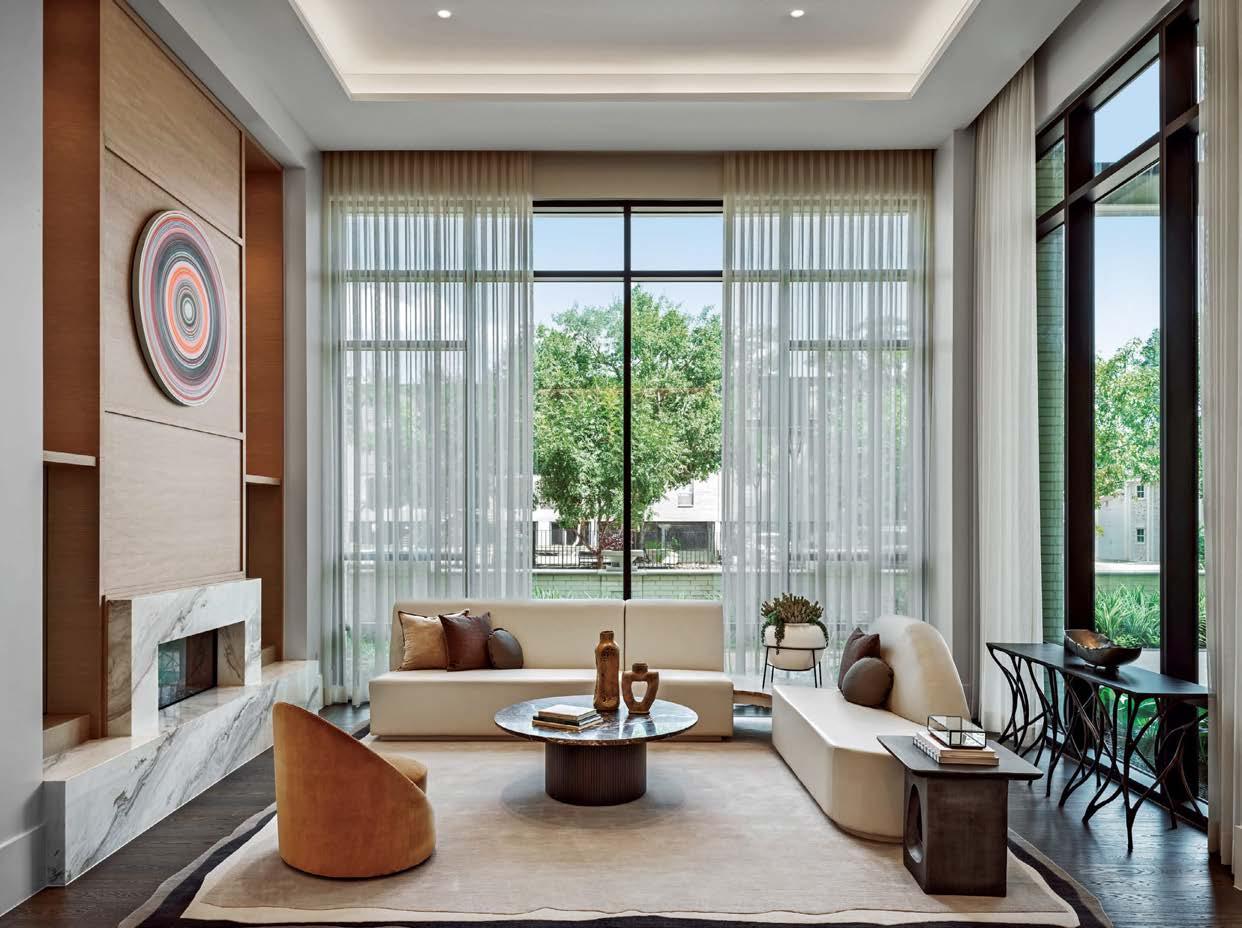
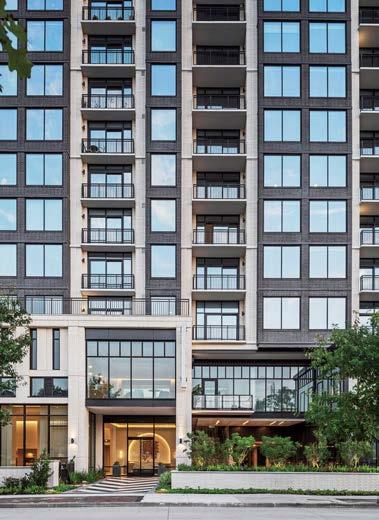
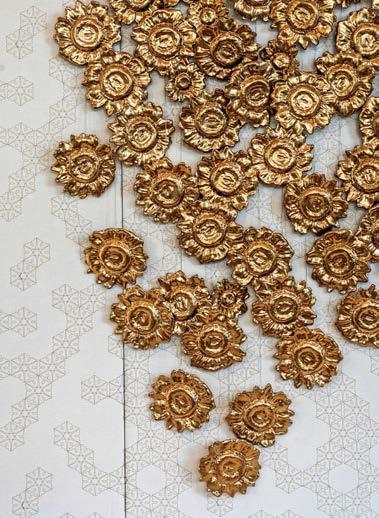
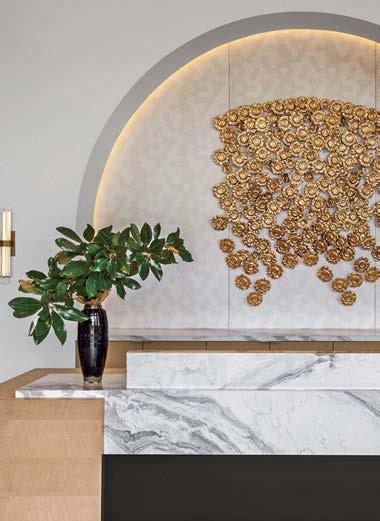
Previous spread: The second‑floor coworking lounge is among the luxury‑grade amenities at Rone Residences, a new 12 story, 209 unit Trammell Crow Company rental building in Houston by Rottet Studio and Ziegler Cooper Architects.
Opposite: A double sided fireplace bifurcates the lobby lounge furnished with custom sofas, Lauren Rottet’s Artis club chair, and Pilate, a David Hardaker painting.
Top, from left: ZCA clad the building in dark and light brickwork sympathetic to its River Oaks locale. Joe Davidson’s cast metal wall installation Golden Halo glitters in reception. A custom marble desk and Rottet’s Fascio sconce complete the composition.
Bottom: The lobby’s oak veneered, barrel‑vaulted mailboxes are inspired by the Menil Collection’s nearby Byzantine Fresco Chapel.
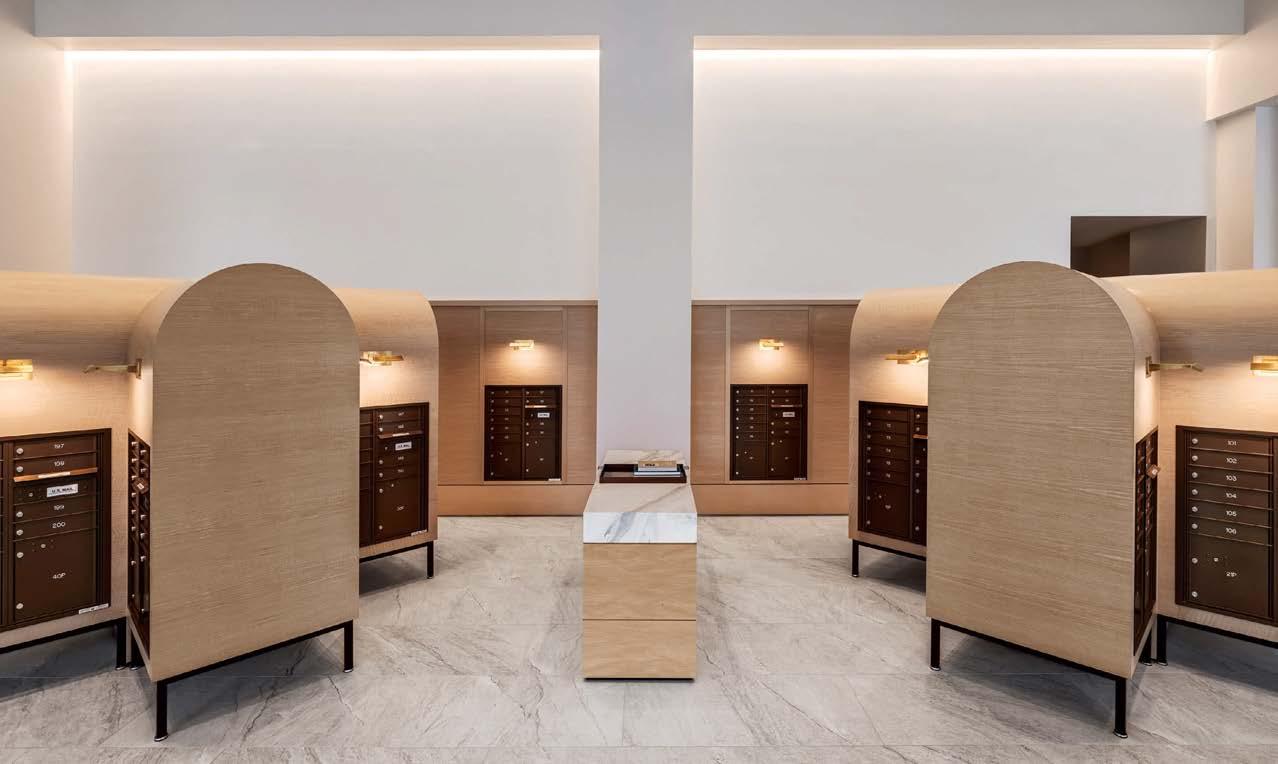
“We created nooks and crannies so residents can enjoy the public sphere but also have their own space within it”
Top: A trio of Jean Alexander Frater prints punctuates the study, a quiet retreat off the lobby. Center: Sectional and swivel seating, flanking a bronze-glass side table, appoints the fourth-floor amenity suite’s media room. Bottom: Pairs of Grupa’s Echo sofas and marble coffee tables center the coworking lounge.
Opposite top, from left: At its perimeter, Hee Welling’s Rely task chair outfits a study alcove. Arches encircle the lobby rotunda, where the flooring is porcelain tile. Opposite bottom, from left: Nick Sheridan’s oak and brushed-brass Penna 64 pendant hangs above the billiard room table. Sunlight refracts through Rottet’s prismlike Dichroic side table in coworking.
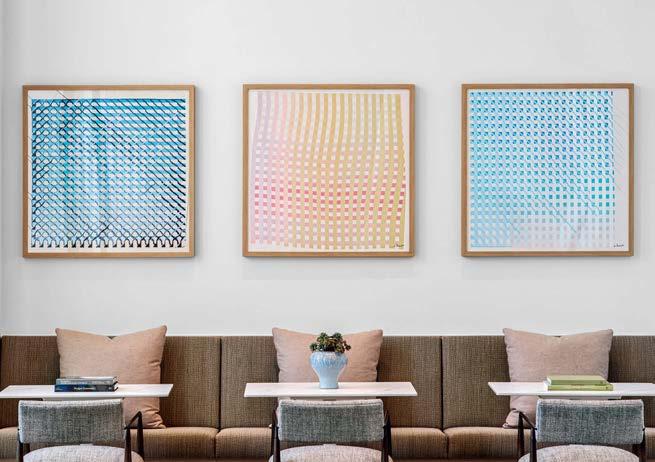
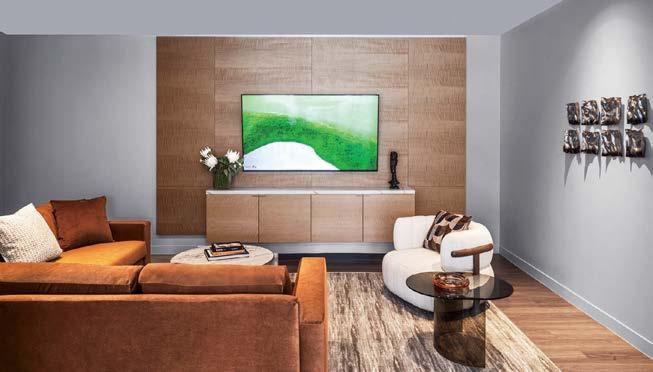
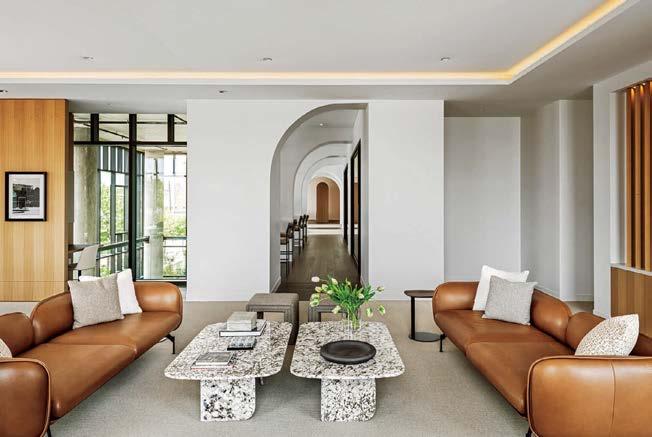
In an unexpected but surprisingly compelling move, Rottet merges the lounge area with the mail room—an adjacent space defined by two freestanding cruciform structures sheathed in oak veneer that house the mailboxes. If these volumes have architectural heft, it’s because the team took cues from Houston’s Byzantine Fresco Chapel—a purpose-built gallery at the nearby Menil Collection that once housed 13thcentury church frescoes—to create scaled-down interpretations of its vaulted forms. The striking repositories lend an ecclesiastical flourish to a utilitarian space that, Evans acknowledges, “is usually so boring,” even if it often serves as a meet-cute location in rom-coms. “We love the notion of these being somewhat like a set design,” he concurs.
The proximity of the Menil campus—along with memories of the once-famed Westheimer Road Street Festival, “a great, vibrant, out-of-control street party,” Evans recalls from his childhood—prompted the curation of bold artworks throughout the communal spaces. These include Joe Davidson’s constellation of gilded cast-metal rosettes bespangling the wall behind the reception desk and David Hardaker’s painting of rainbow-hued concentric circles hanging above the fireplace—all of them adding bursts of color and shimmer to the otherwise understated palette.
On the floor above, additional common spaces cater to a variety of needs. The central area of the coworking lounge accommodates informal gatherings, while the room’s glass-walled perimeter is lined with study alcoves reminiscent of library carrels. Screened by oak partitions and acoustic separators, the daylightflooded desks allow residents to work in a public setting while still enjoying a sense of privacy. A broad corridor—flanked by a pair of small conference rooms on one side and bar-height work counters overlooking an atrium on the other—leads to multifunctional areas where residents can mingle, whether they choose to interact or not. “There’s a saying we use a lot in hotels: alone, together,” says Rottet, “and I think these spaces do that so well.”
Expanding on Rottet’s point, Evans suggests that the way the volumes on both levels unfold one after another is cinematic—specifically evoking the lateraltracking sequences that define the movies of fellow Houston native Wes Anderson. He sees the layout as “a diorama of various spaces,” capable of hosting multiple activities simultaneously. That vision is epitomized by a suite of amenity spaces on the fourth floor, where a group can watch the playoffs in the media room while a couple takes a turn at the nearby
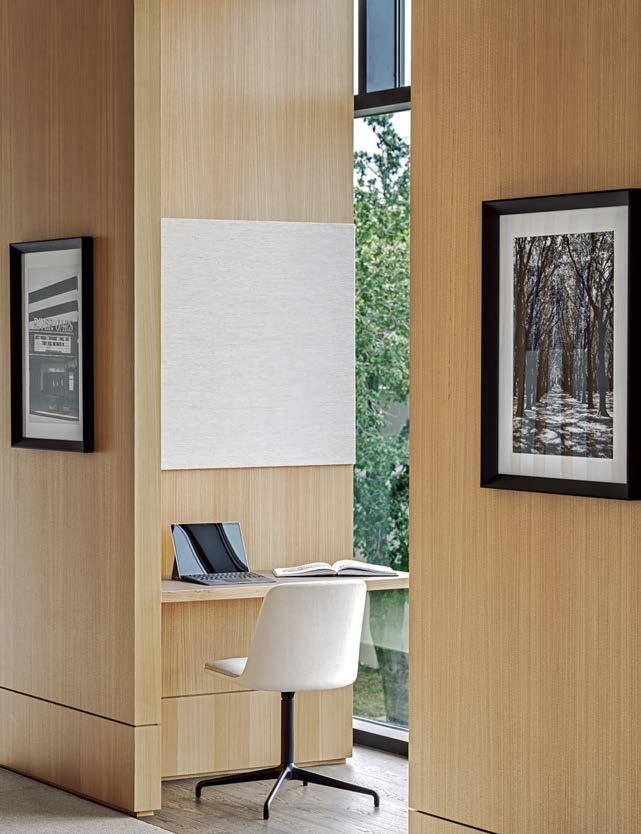
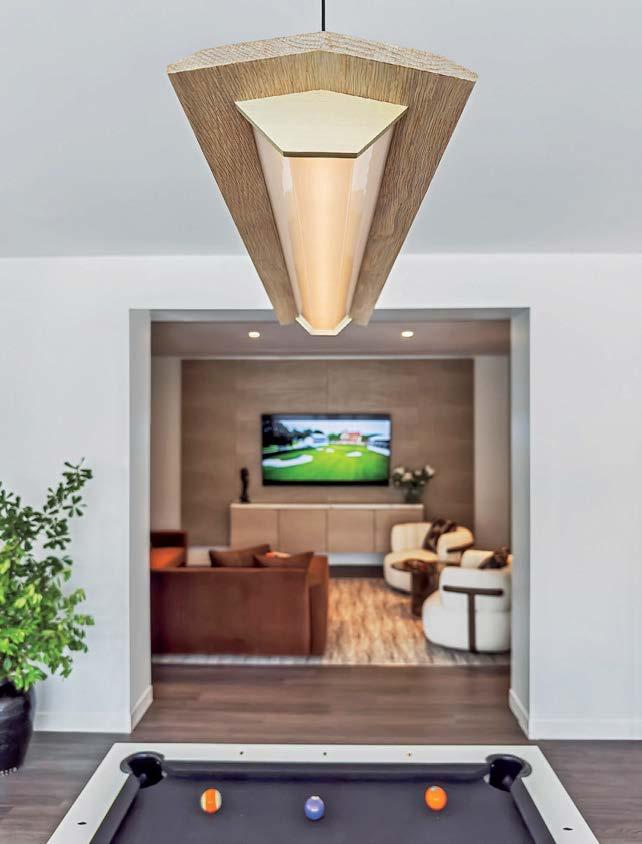
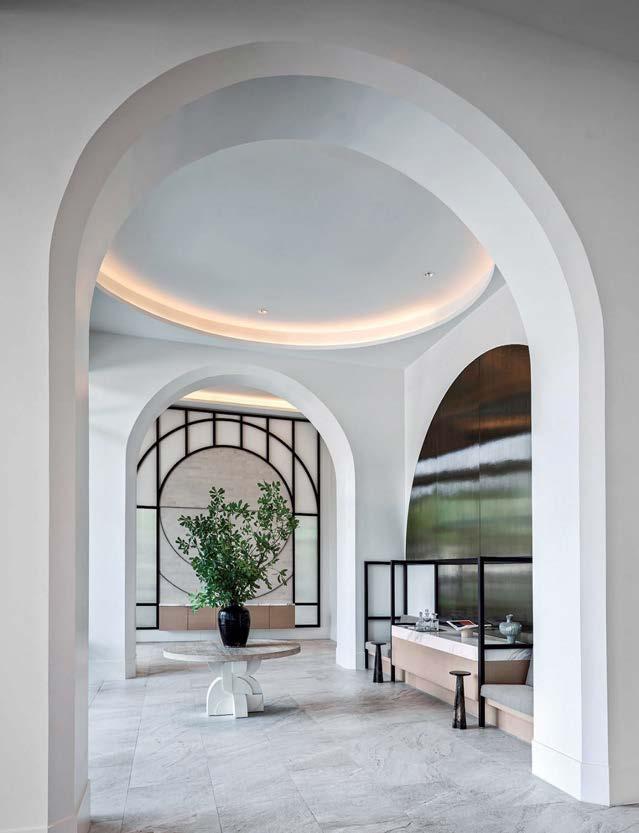

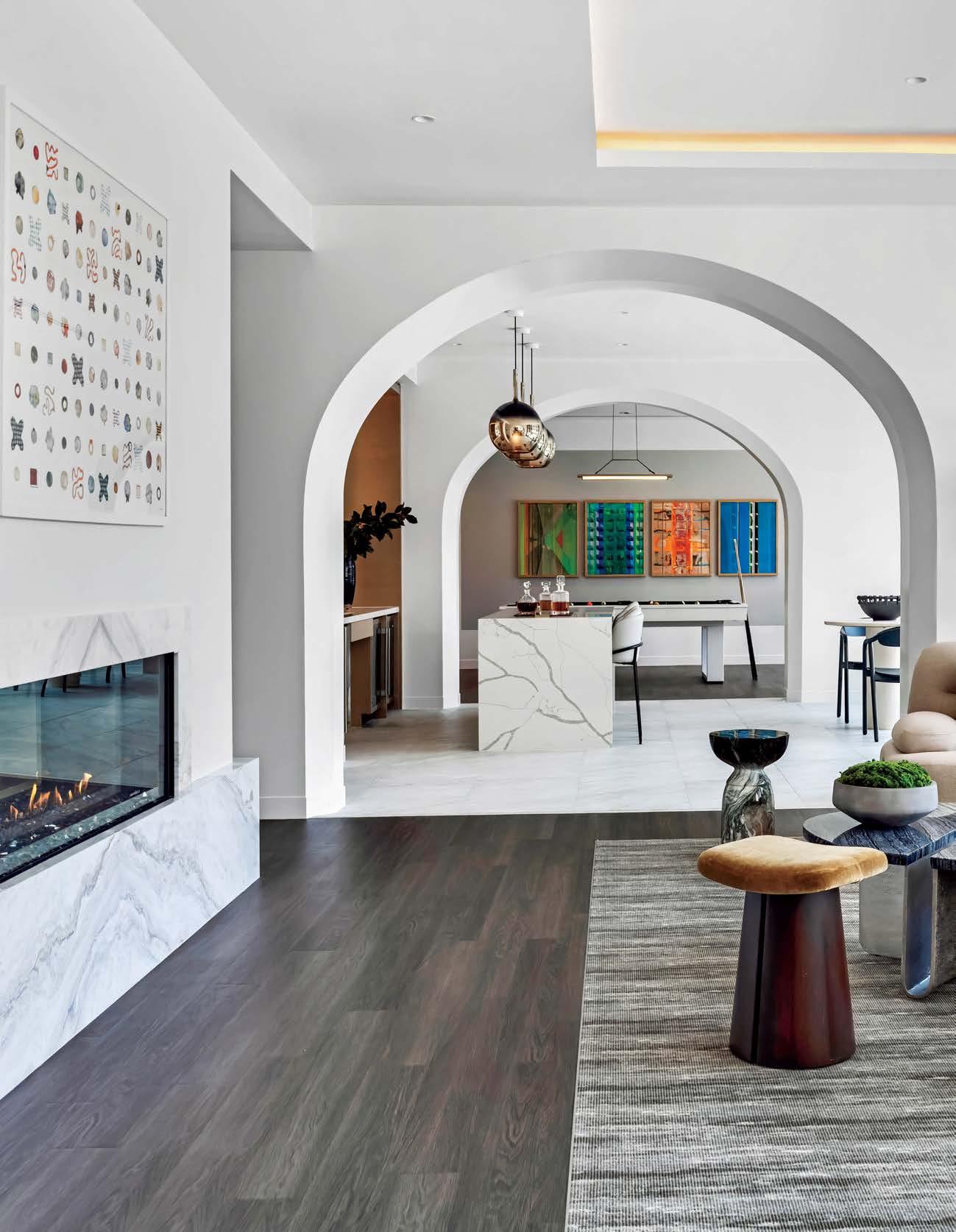
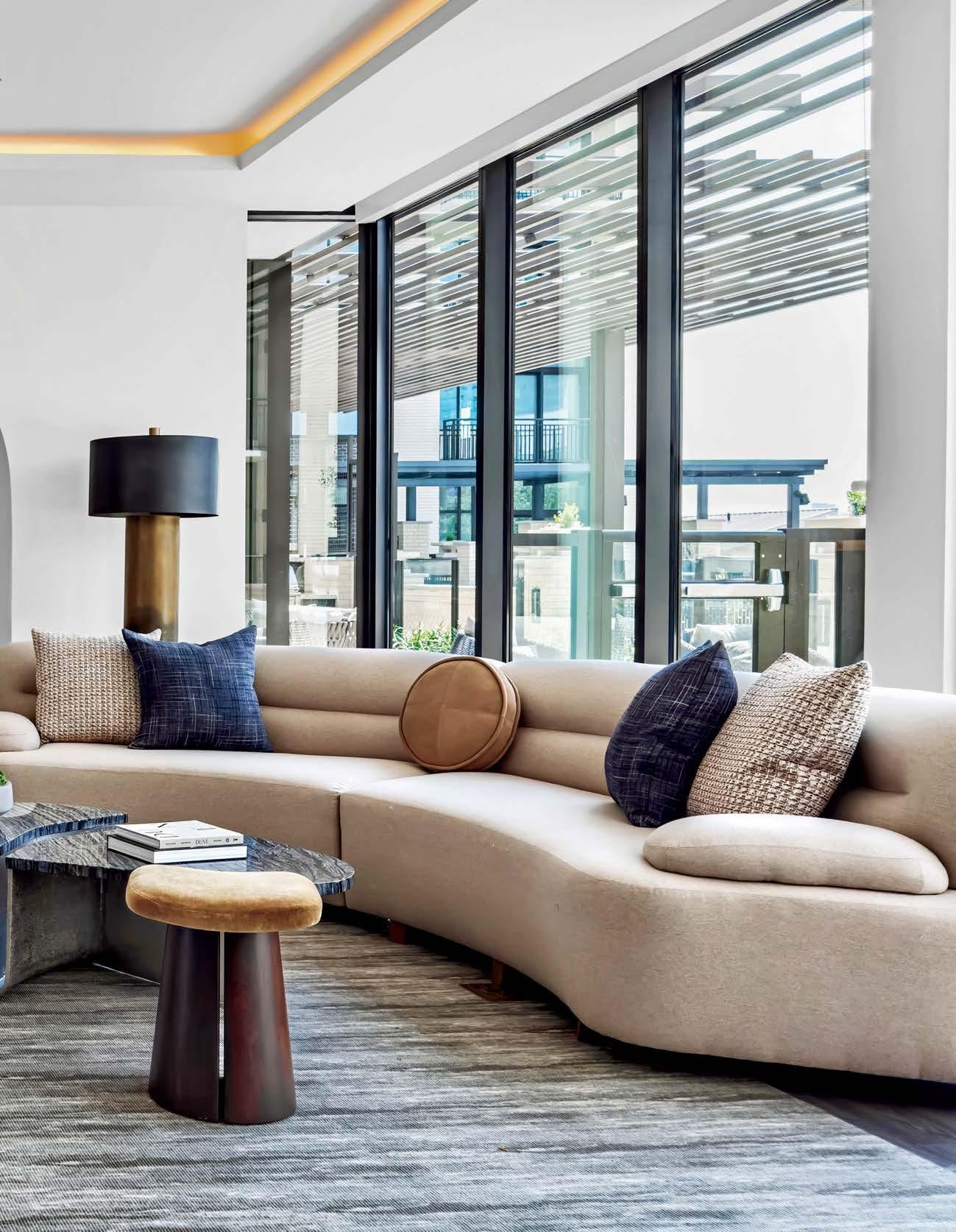
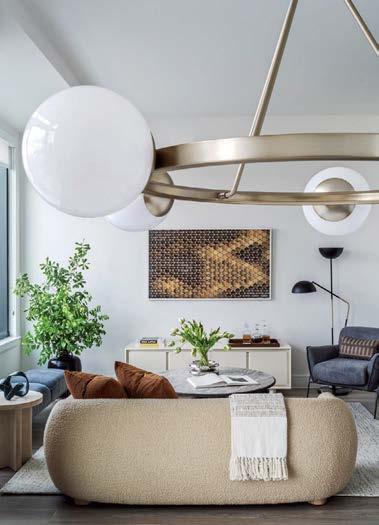
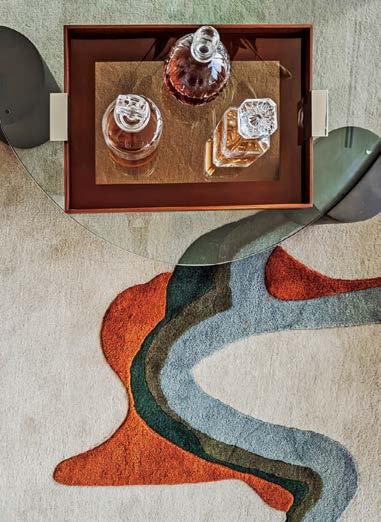
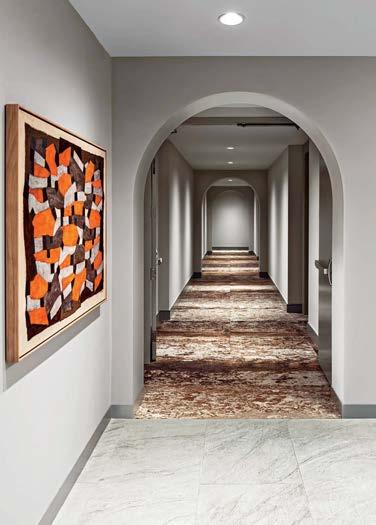
Top, from left: A model apartment’s living room features Ross Cassidy’s Laszlo loveseat. A custom rug anchors the 12th-floor sky lounge. A corridor features Tom Dixon’s Iron carpet and Tectonic Displacement by Frédéric Heurlier Cimolai. Bottom: With an open kitchen, the amenity suite’s private dining room includes a custom table and Katy Skelton’s Ellis pendant fixture.
Opposite: A bouclé-upholstered bed pairs with Stephanie Beukers’s Geometric Abstract painting in the model apartment’s bedroom.
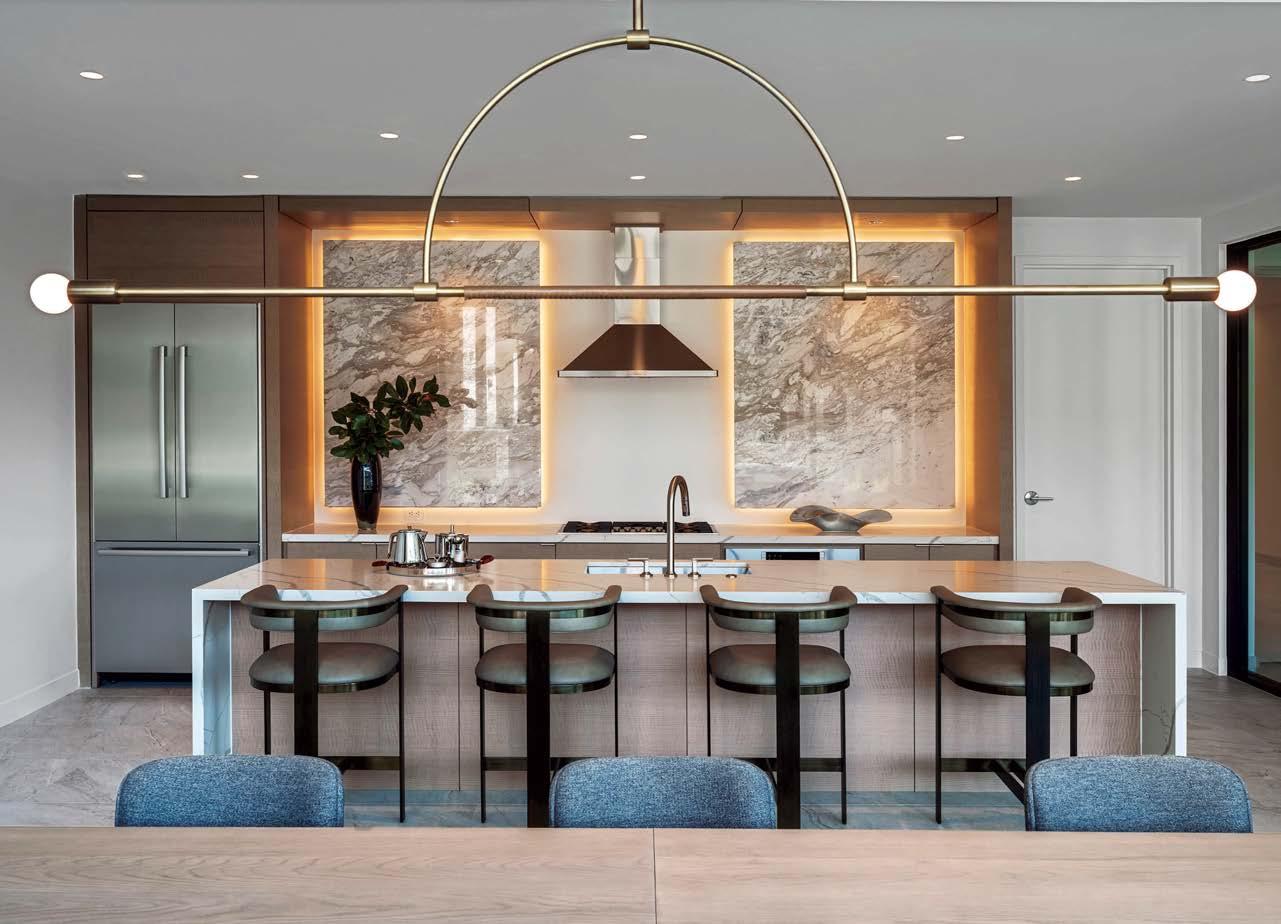
billiards table, neighbors catch up over coffee in the self‑service café, and a committee meets by the lounge fireplace overlooking the outdoor pool deck. “It gave us an opportunity to create spaces for different activi ties, but to have them all together,” Evans reiterates.
Rottet Studio also selected the finishes for the apartment interiors, continuing the neutral palette so renters can layer in their own furniture—whether new contemporary pieces or antiques from their former River Oaks homes. Model apartments feature sculp tural yet comfortable furniture with statement brass
PROJECT TEAM
lighting to add touches of drama. ZCA took great care with the building’s bones, ensuring that natural light, pleasing proportions, and smooth connections were all considered. “If you took every finish out, the spaces would still be beautiful,” Rottet acknowledges. Work‑ ing to a stricter budget than usual for her studio meant that “everything becomes thoughtful.” Though aimed at democratizing design for the rental market, the “Lamborghini and Ferrari convention” she recalls parked out front suggests that Rone Residences fit right into the tony neighborhood.
JEFF HORNING; MARQUEZ COLBY; KEERTHANAASREE PARANTHAMAN; SHAOFANG XUE; ALLISON GRIEB; TAYLOR MOCK; HANNAH RAE; MARIAH BURAS; ANNA HOLICK; STEPHEN DAHMANN: ROTTET STUDIO. JIM ZEMSKI; DONALD HICKEY; BAILEY WACHOWSKI: ZIEGLER COOPER ARCHITECTS. LUM LIGHTING DESIGN: LIGHTING CONSULTANT. KW LANDSCAPE ARCHITECTS: LANDSCAPE CONSULTANT. VSM 2: STRUCTURAL ENGINEER. KIMLEY-HORN: CIVIL ENGINEER. JORDAN & SKALA ENGINEERS: MEP. HOAR CONSTRUCTION: GENERAL CONTRACTOR. PRODUCT SOURCES
FROM FRONT PROSTORIA: SOFA (COWORKING). &TRADITION: TASK CHAIR. ROTTET COLLECTION: SIDE TABLE (COWORKING), CLUB CHAIR (LOBBY LOUNGE), TRAY (SKY LOUNGE). FOUR HANDS: ARMCHAIR, COFFEE TABLES, OTTOMANS (COWORKING), SIDE CHAIRS (STUDY), ARMCHAIRS (MEDIA ROOM), COFFEE TABLE (LIVING ROOM), DINING CHAIRS (DINING ROOM). BLU DOT: WALNUT SIDE TABLE (COWORKING), GLASS SIDE TABLE (MEDIA ROOM). EGE CARPETS: CARPET (COWORKING, CORRIDOR). GUBI: COFFEE TABLE (LOBBY LOUNGE). MADE GOODS: CONSOLE. ART + LOOM: RUG. HEINE'S CUSTOM DRAPERIES: CURTAINS. HTXMADE: CUSTOM SECTIONAL (LOBBY LOUNGE), CUSTOM TABLE (DINING ROOM). BERNHARDT HOSPITALITY: SIDE TABLE (LOBBY LOUNGE), ROUND TABLE (ROTUNDA), COCKTAIL TABLE (LIVING ROOM). CARNEGIE FABRICS: WALLCOVERING (RECEPTION). VISUAL COMFORT & CO.: SCONCE. WEST ELM: TABLES (STUDY), CONSOLE, ROUND CHANDELIER (LIVING ROOM), BENCHES (LIVING ROOM, BEDROOM), NIGHTSTAND (BEDROOM). ARHAUS: COFFEE TABLE (MEDIA ROOM). VERELLEN: SECTIONALS (MEDIA ROOM, AMENITY LOUNGE). SIENA: CARPET. DOC & HOLLIDAY: POOL TABLE (BILLIARD ROOM). CERNO: PENDANT FIXTURE. CB2: SIDE TABLES (ROTUNDA), SOFA (LIVING ROOM), FLOOR L AMPS (LIVING ROOM, BEDROOM), BED (BEDROOM). GLOBAL VIEWS: FLOOR LAMP (AMENITY LOUNGE). TOV FURNITURE: MARBLE SIDE TABLE. MAIDEN HOME: STOOLS (AMENITY LOUNGE), COFFEE TABLE (SKY LOUNGE). PENTA: PENDANT FIXTURES (CAFÉ). NUEVO: ARMCHAIR (LIVING ROOM). POTTERY BARN: SIDE TABLE. LOLOI RUGS: RUGS (LIVING ROOM, BEDROOM). SHOP: CUSTOM RUG (SKY LOUNGE). INTERLUDE HOME: BARSTOOLS (DINING ROOM). KATY SKELTON: PENDANT FIXTURE. REJUVENATION: TABLE LAMP (BEDROOM). THROUGHOUT KNOWN COLLECTION: WOOD FLOORING. THORNTREE SLATE: FLOOR TILE. BENJAMIN MOORE & CO.: PAINT.
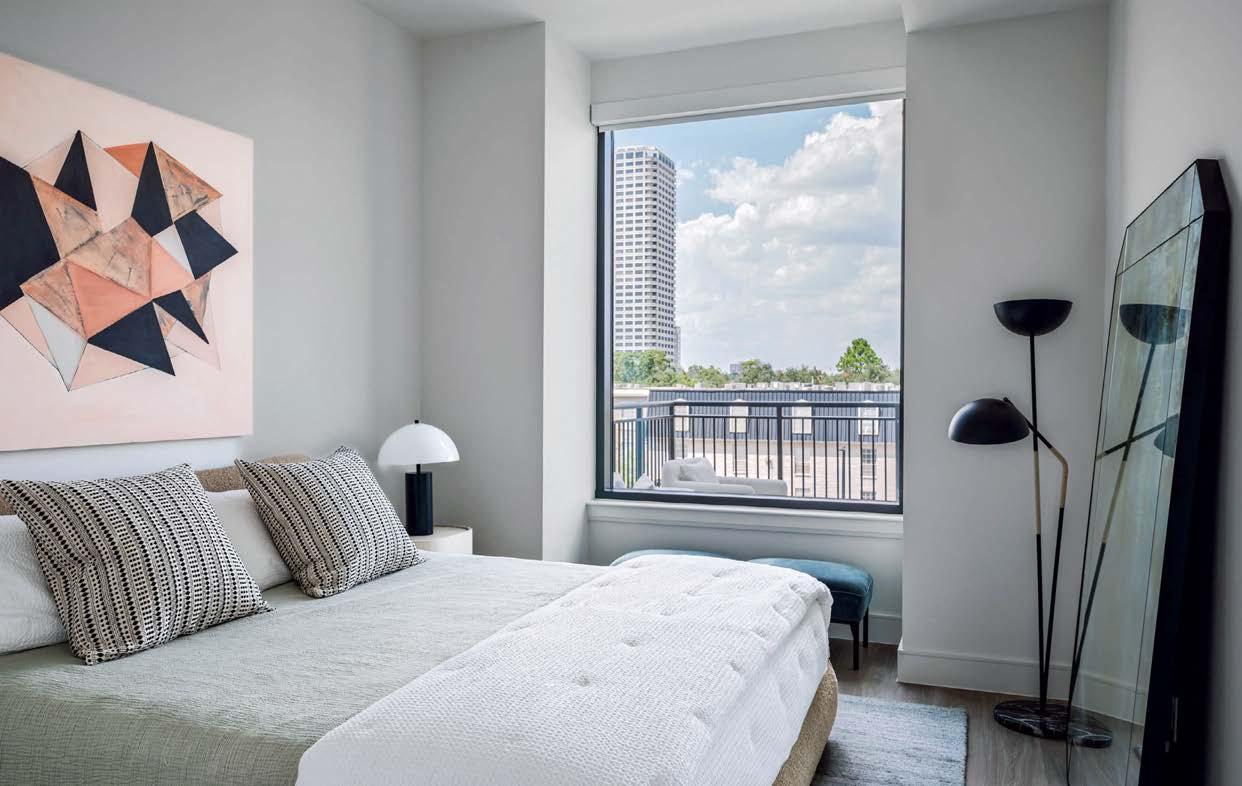
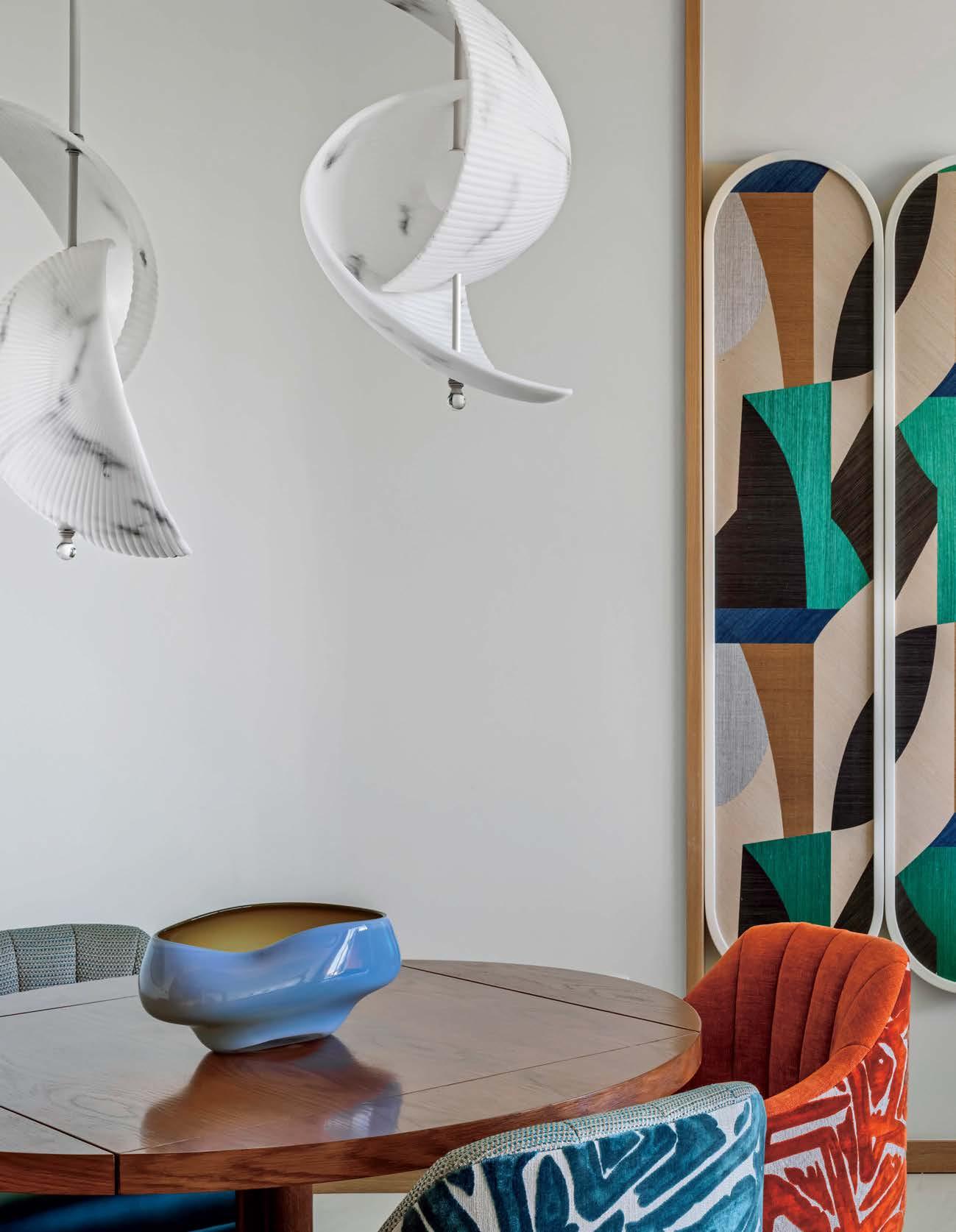
Lush vibes usher in a new era for Pier Sixty-Six, a 1960’s resort in Fort Lauderdale, Florida, its interiors vibrantly reimagined by Jeffrey Beers International
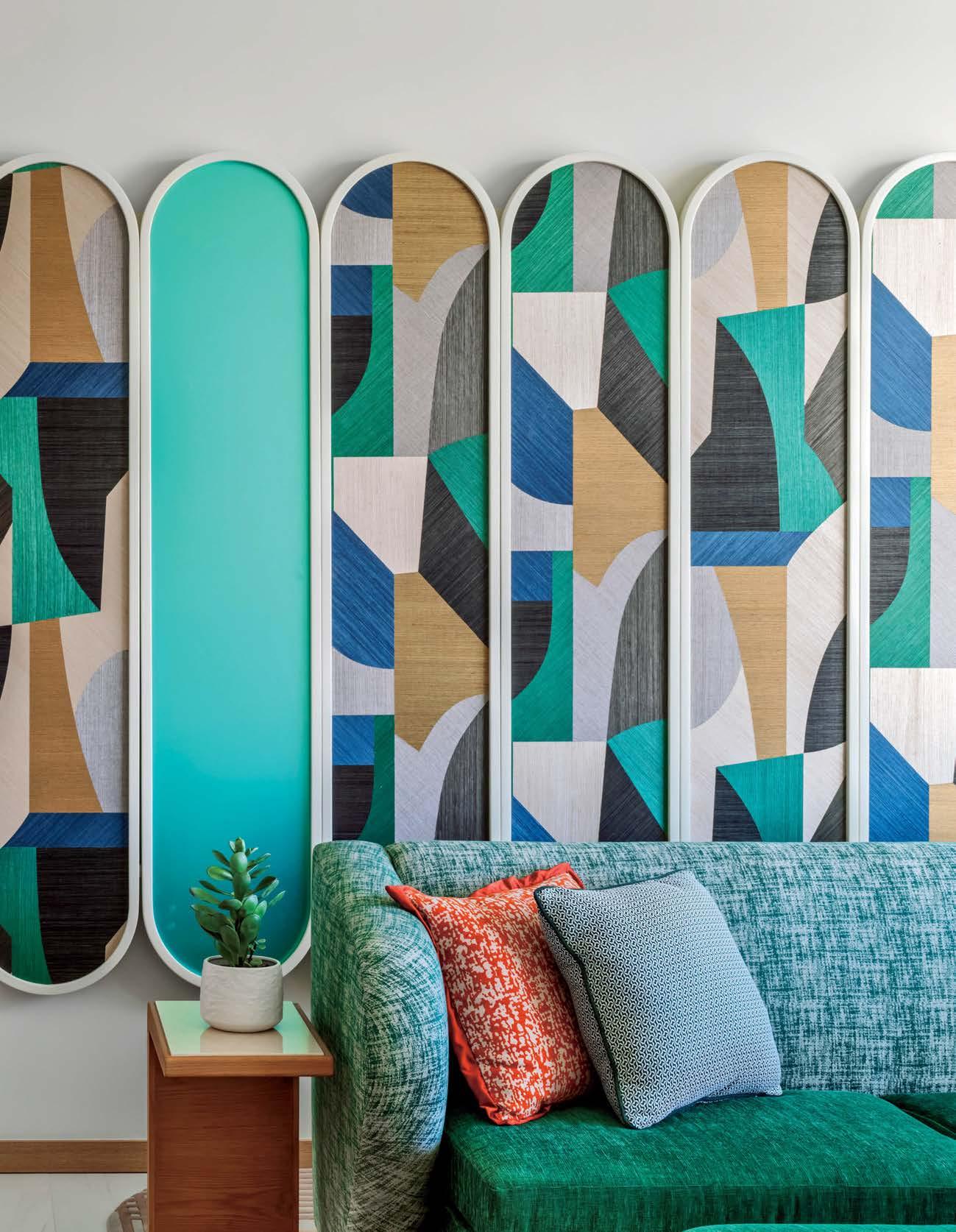
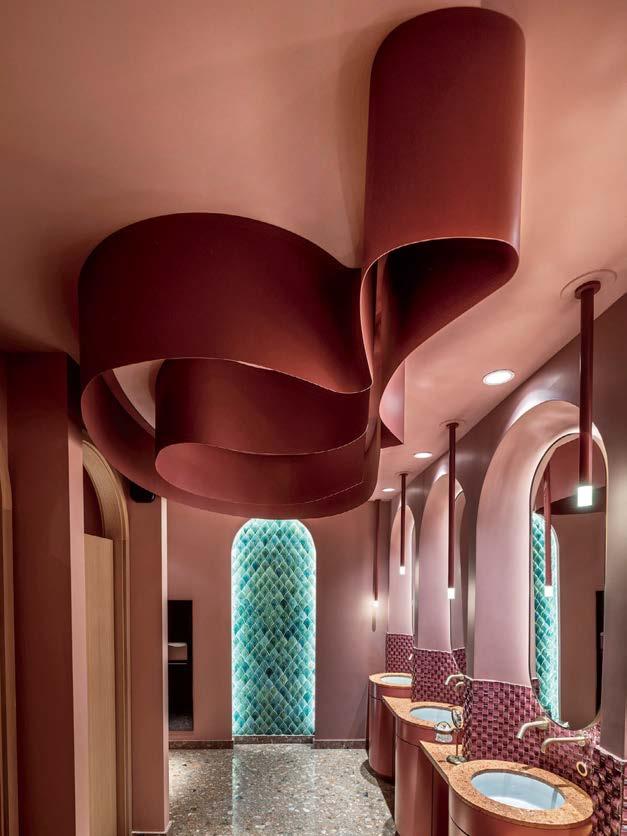
Since the 1950’s, a prime site on the Stranahan River in Fort Lauderdale, Florida, has endured: first, as a Phillips 66 gas station, then as a two-story lodge, and finally, in 1965, as Pier 66, which encompassed a marina along the Intracoastal Waterway and a 17-story hotel with a rare-for-its-time revolving rooftop lounge in the spire. Rumor has it that the elevator took 66 seconds to reach this peak, and that the space made one whole rotation every 66 minutes. Today, that spire no longer spins, but its community significance has been reborn as the beacon of Pier Sixty-Six, a now 32-acre complex that encompasses residences, shops, and restaurants, plus the marina and a 325-key resort hotel, composed of the historic tower plus new lobby and guest-room structures, their interiors by Jeffrey Beers International and architecture by Garcia Stromberg and HKS.
“To give new life to a property with such a legacy requires a bit of soul searching,” begins Nora Liu Kanter, a partner at JBI. Along with copartners Michael Pandolfi and Tim Rooney, Liu Kanter succeeded founder, CEO, and Interior Design Hall of Fame special-tribute recipient Jeffrey Beers after his death in March 2024. (Beers’s older son Justin has taken up the gauntlet as chief development officer and managing member of the New York-based studio, which ranks 106th, up from 124th, among Interior Design’s Rising Giants.) “The challenge lies in capturing the past while bringing it into the modern day”—and winning the public’s love in the process, she adds.
Thankfully, the teams were up to the task. Drawing inspiration from the site’s mid-century yachting heritage as well as the
Previous spread: For the hotel portion of Pier Sixty-Six, a 1960’s property in Fort Lauderdale, Florida, with renovated interiors by Jeffrey Beers International and new architecture by Garcia Stromberg and HKS, one of the 67 suites exhibits the project’s tropical, coastal, and contemporary South Florida theme via a surfboard-reminiscent custom sisal wall screen, warm-tone velvet upholstery, and seagull-like custom pendant fixtures in its living room. Top, from left: In the restroom of the Orchid Room, the members club lounge, an archway fitted with glazed ceramic tile pops against a powdercoated ribbonlike ceiling fixture. Dried florals backdrop the custom host stand, faced in Verdi Alpi, at the Garden Room, the members club restaurant. Bottom: Of the suites, 26 are housed in the new Harbour Villa building, its lobby outfitted with custom pendants and Stephane De Winter’s Radoc stools.
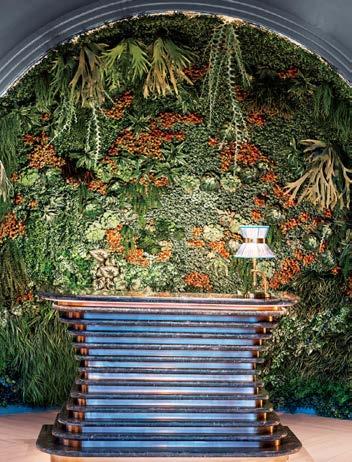
Opposite top: Luxury yachts informed the oval main lobby bar, capped by a custom crystal chandelier. Opposite bottom: The grand staircase with Calacatta Gold–style porcelain floor tile links the lobby with the hotel’s amenity spaces and pool deck.
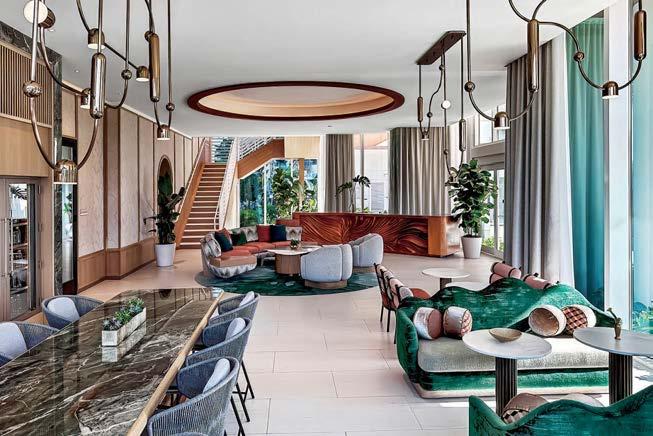
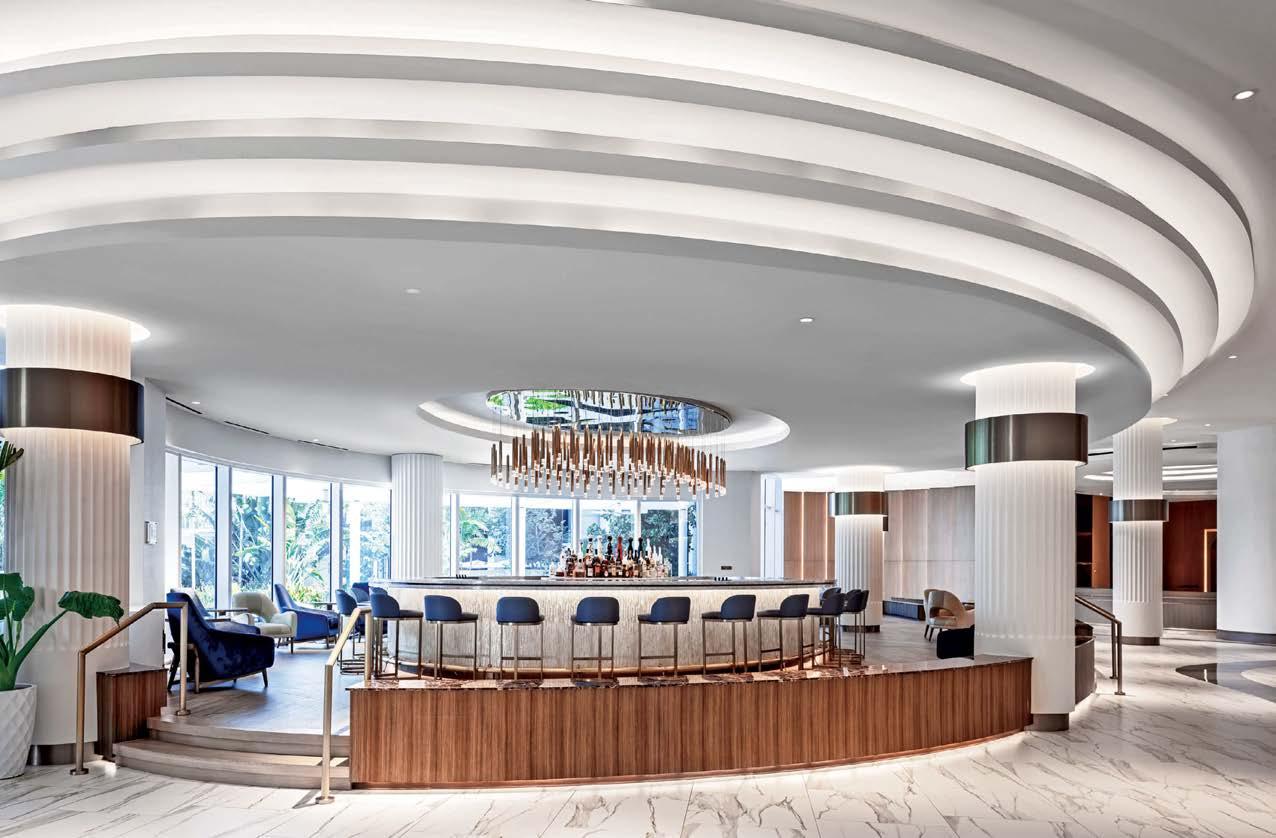
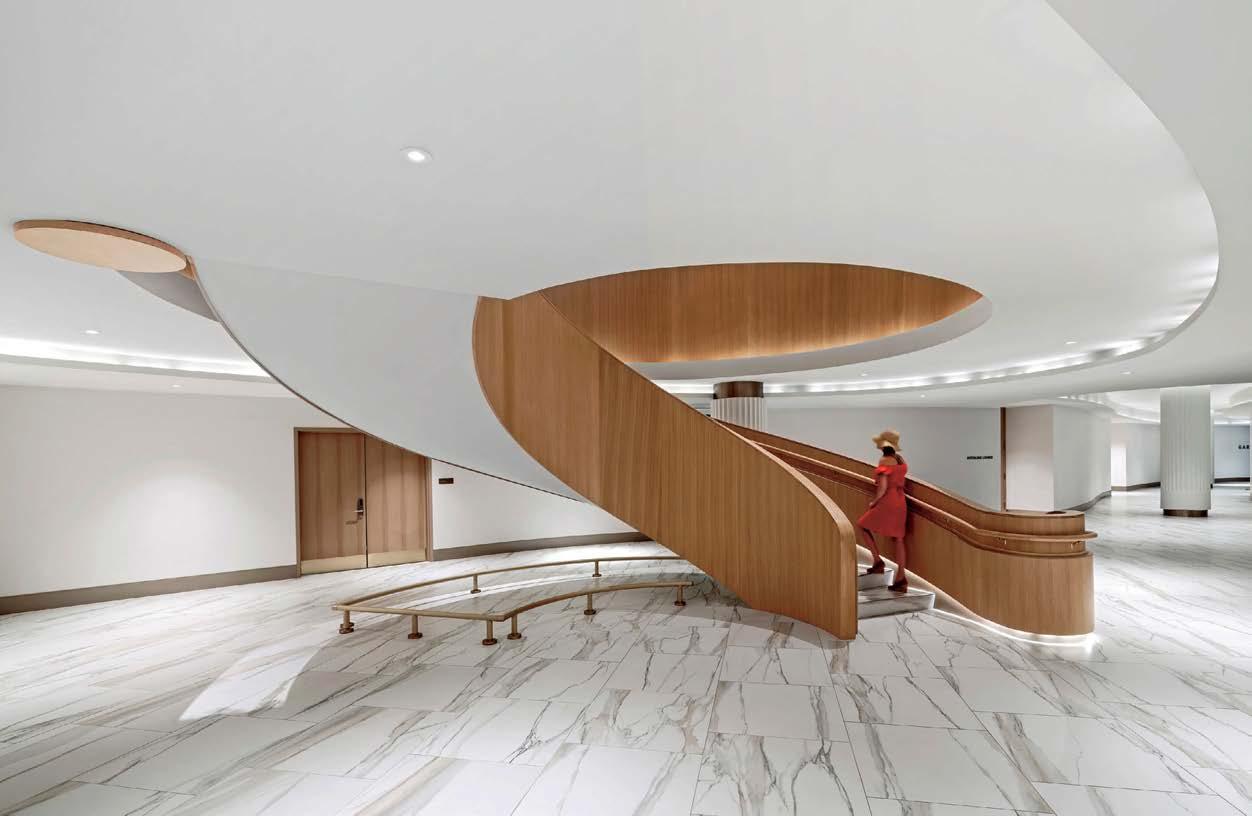
“There’s an ocean-inspired throughline everywhere, but each area has its own unique playfulness”
tropical, coastal environment of South Florida, the resort’s architecture and interiors abstract nautical forms. The historic tower was preserved and restored, capped with Pier Top, a new lounge that “resembles the flybridge of an elegant yacht,” describes Christian MacCarroll, principal and office design leader at HKS, which also served as architect of record for the hotel’s interiors and comes in sixth on our 100 Giants ranking. For the new lobby and nine-story main structures, both attached to the historic tower, curved balconies, large expanses of glass, and a sail-like porte cochere, centered by a century-old banyan tree, announce the design references from the street. Inside, JBI’s interventions— wavelike ceilings and light fixtures; curvilinear stone, wood, and mosaic finishes; an energetic nature-inspired palette— underscore the scheme.
The complex hosts a varied program, including the 500,000 square feet of hotel facilities, two fitness centers and pools, nine dining experiences, an events center, a members club, and a spa. All are conceived to hug the marina, directing views toward its 164 slips, where Joe Lewis, owner of Tavistock Development Company, which owns Pier Sixty-Six, docks his vessel. To guide resort guests, club members, residents, and public visitors through the spaces that surround this central apex, HKS employed “controlled access, intimate scale, and layered landscaping, reinforcing privacy without visual separation” to maintain the open, airy, indoor-outdoor experience the climate allows,
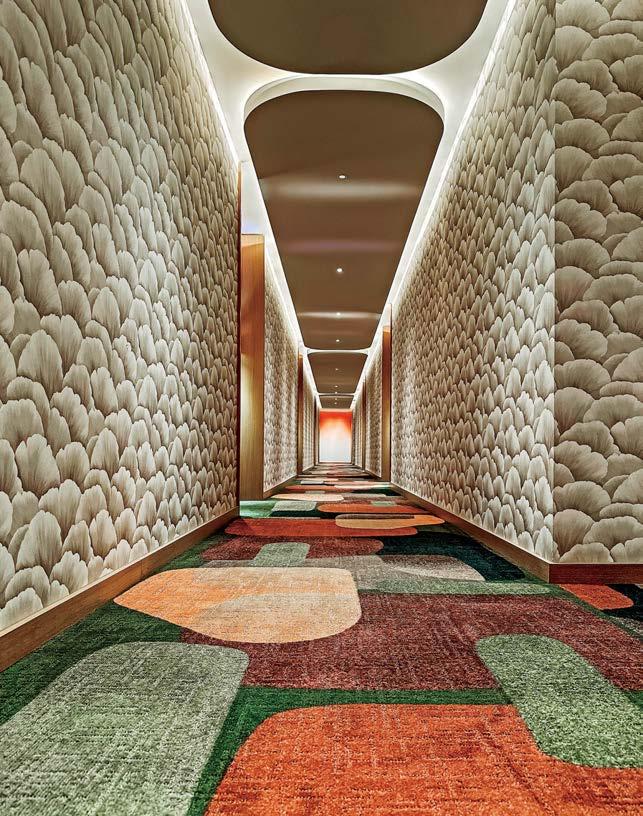
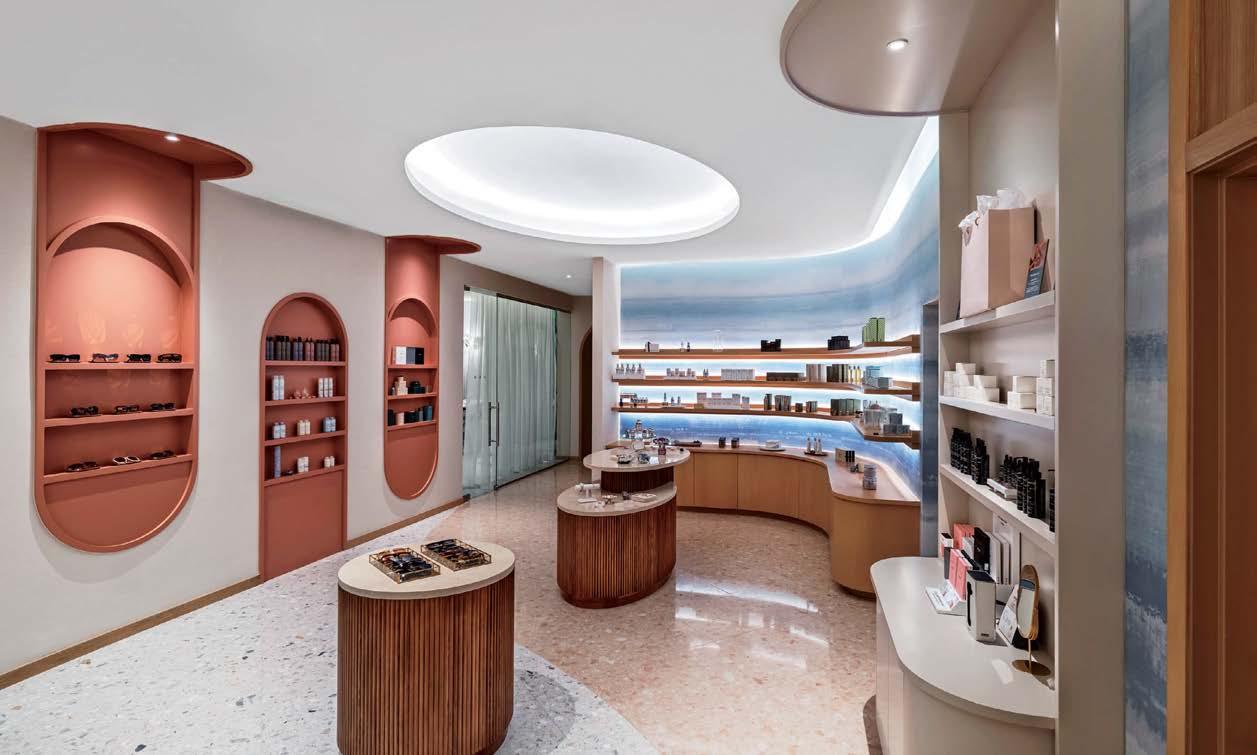
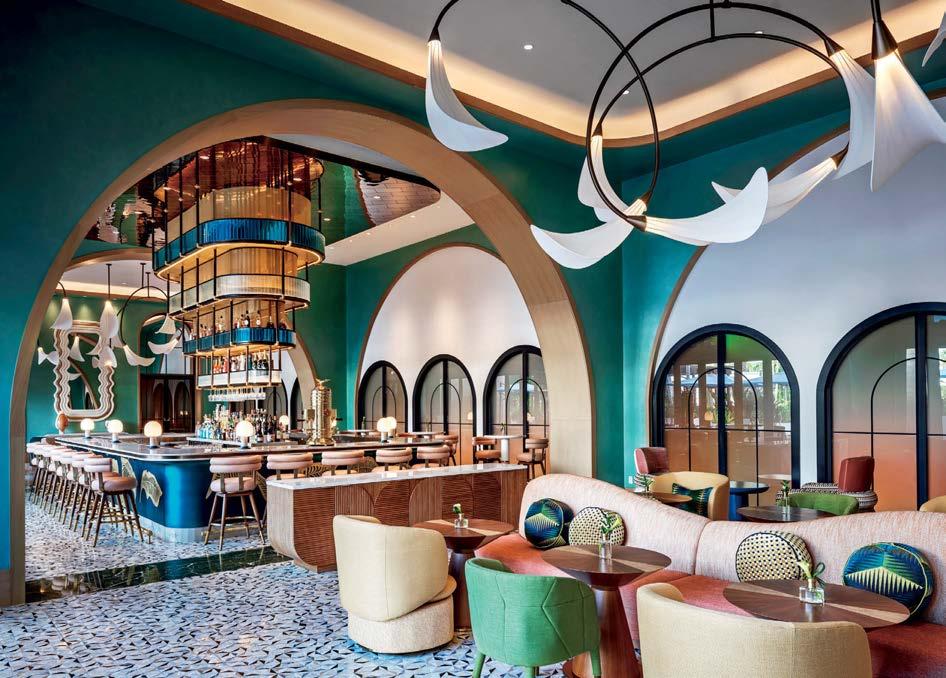
Opposite top: Vinyl wallcovering and custom carpet bring dimensionality to a Harbour Villa corridor. Opposite bottom: At Zenova spa, curvilinear product displays, a pastel palette, washi-paper wallcovering, and terrazzo flooring build a calming environment.
Top: In the stone mosaic–floored Orchid Room, tropical foliage inspired the color scheme and custom calla lily-shape pendants; a mirrored ceiling gives a doubleheight illusion to the glass bottle display, also custom. Bottom: White-oak millwork and an aquatic-inspired rippling ceiling define the event center’s elevator core.
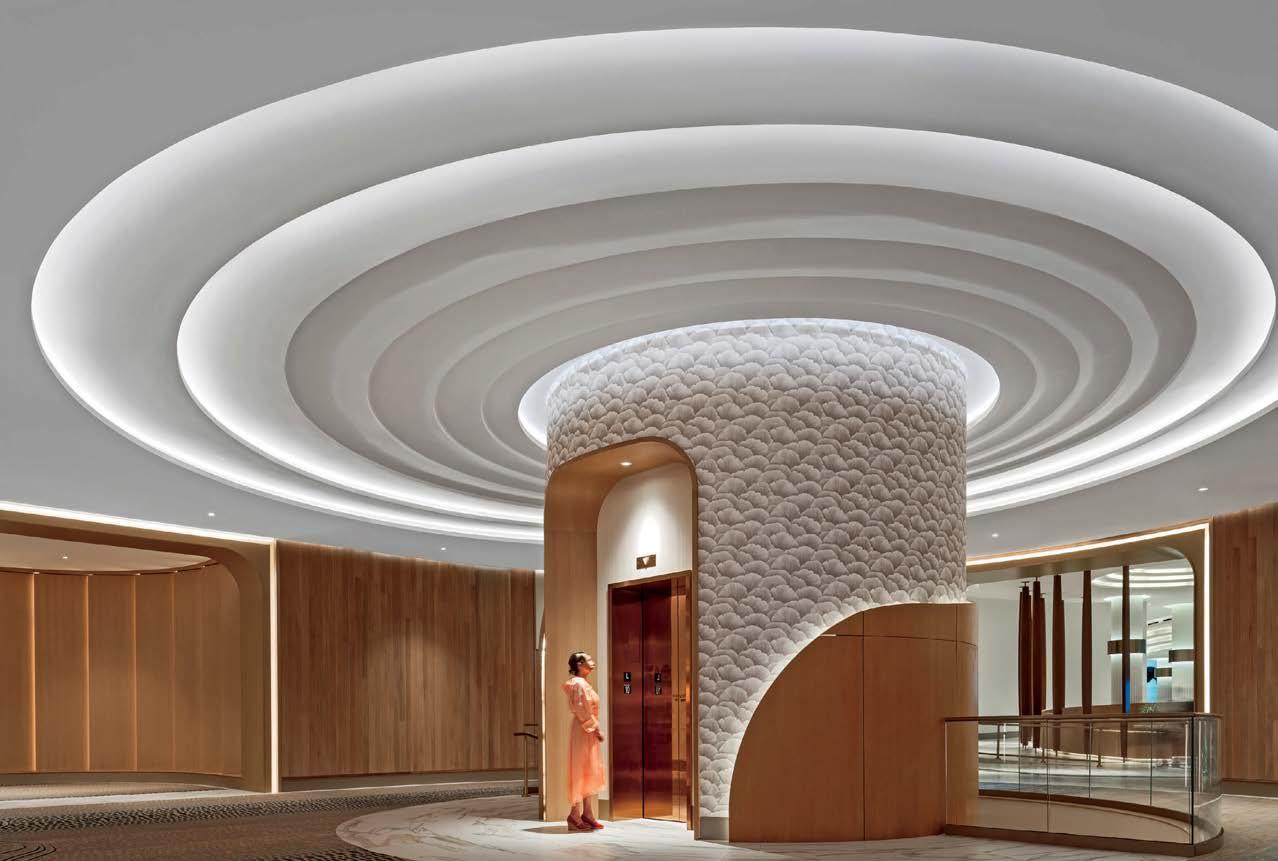
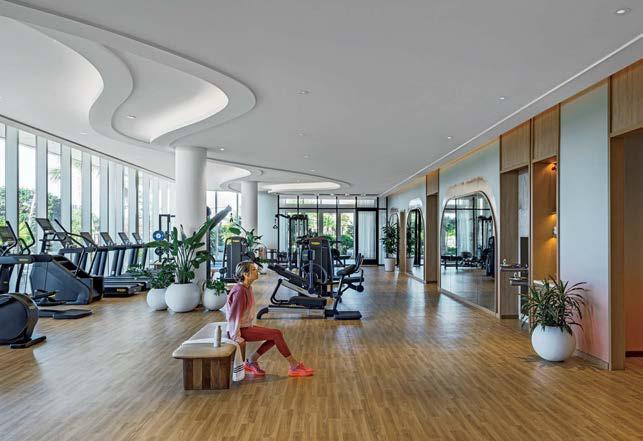
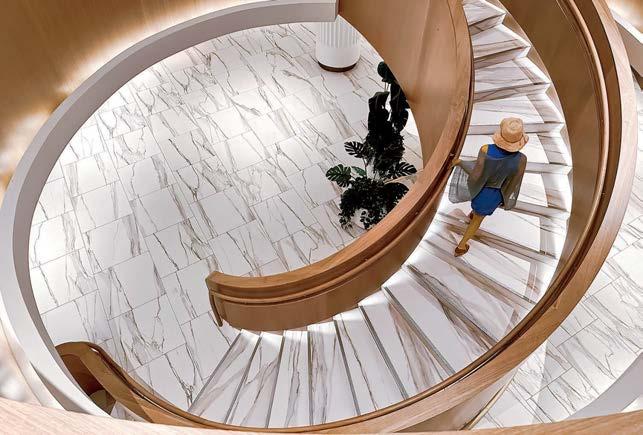
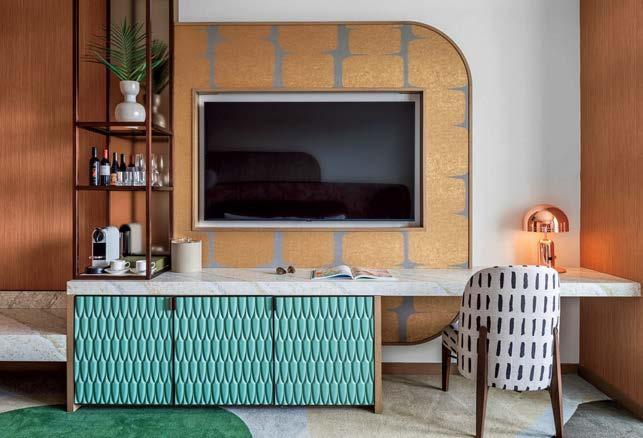
Top: Harbour Villa has its own gym, which also boasts an undulating ceiling plus Noé Duchaufour-Lawrance’s Catia bench, wood-look composition-rubber flooring, and marina views. Center: Flanked by white-oak balustrades, the grand stair spirals up two floors. Bottom: Ocean waves also inspired the integrated credenza’s ceramic-tile front in one of the 258 standard guest rooms, where all furniture and finishes are custom.
Opposite: Skewing Memphis, the Orchid Room is also top-to-bottom custom furnished, its archways lined in stained oak.
MacCarroll says. From JBI, there’s an ocean-inspired throughline everywhere, but each area has its own unique “playfulness,” Rooney notes, “layering textures and color in a way that speaks to the vibrancy of the region.”
The journey starts in the sun-filled main lobby, a rounded glazed space preceding the historic tower that’s been envisioned as a modern yacht club, its ovoid bar faced in shimmering mosaics and lit by a dazzling crystal chandelier. White fluted columns, white-oak detailing, and gleaming white porcelain floor tile veined like marble enhance the sense of luxury. Curving forms continue throughout, where they pick up increasingly bold colors. In the guest rooms and suites, rich green, red, and blue seating meets softer yellows and oranges in the wallcoverings and upholstered headboards, the latter tufted to achieve a statement-making three-dimensionality. Teal cabinet fronts on mid century–inspired credenzas are textured to evoke the glimmer of moving water. In the 67 suites, some of them housed in the ground-up, four-story Harbour Villa building, its architecture, as well as that of Pier Sixty-Six’s four new residential buildings, by Garcia Stromberg, and the Zenova spa, hues are even softer, the pink, clay, and apricot tones referencing Florida’s sunrises and sunsets. The 3,000-square-foot presidential suite, in the historic tower, combines all these moves—pastels and pale millwork, intense hues, a rippled ceiling—with panoramic Atlantic Ocean vistas.
The concept has its most flamboyant iteration in the members club, where the Garden Room restaurant and Orchid Room lounge boast overt tropical references. The former greets diners with a peacock-motif mosaic floor and a lush oasis behind its host stand and continues the theme with flamingo-shape table lamps, feathercapped columns, and live greenery. But more subtle are the forms in the Orchid Room, its custom flower-inspired pendant fixtures hanging like abstract sculptures over café tables at curved banquettes paired with myriad custom chairs that wear a chic mix of fabrics. Pizzazz comes, again, through color: metallic turquoise wall paint, gold-detailed Memphis-inspired mirrors, a jewel-tone bottle tower anchoring the generous horseshoe bar.
As one moves through this multiroom lounge, visual discoveries unfold, in the same way they do across different zones of the
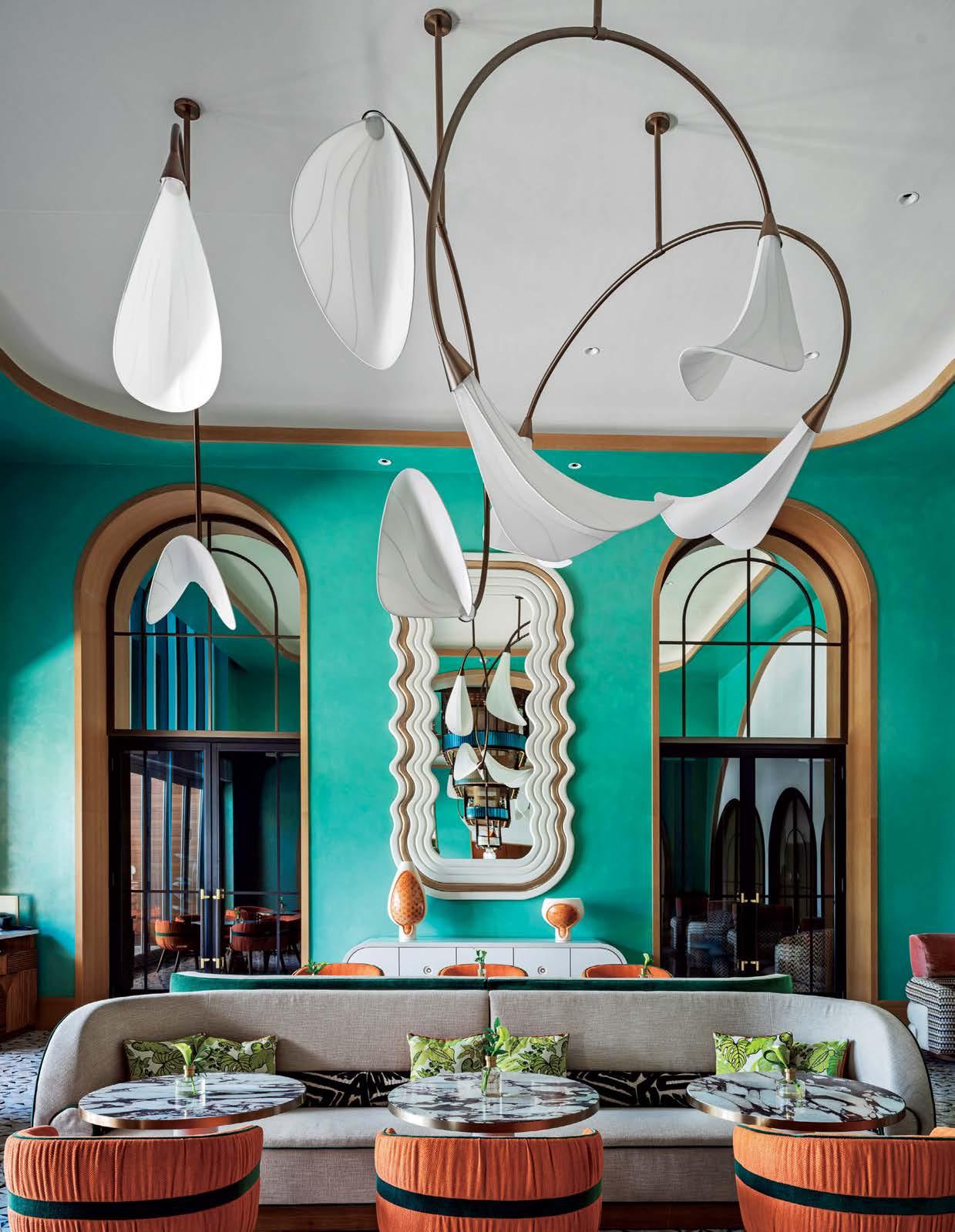
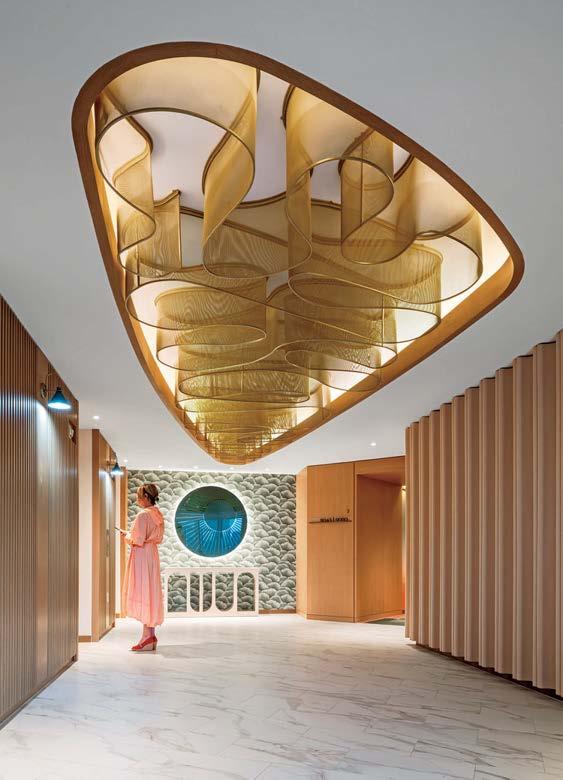
resort property itself. “We were looking to create curiosity from one space to the next,” Rooney explains. For a project of this scale, it was crucial to avoid sameness. A client open to embracing a playful, site-specific interior palette was a bonus. “Marble and wood are timeless, signature materials for us,” Rooney adds “This project was an exploration of pattern and color, with a whimsy that made it really fun to work on.”
PROJECT TEAM
AIJUN WU; TATIANA DARMOGRAY; JAVIER ODDO; KELSEY VERILLO; FANIA MUTHIA; DEBRA M C GOWAN: JEFFREY BEERS INTERNATIONAL. PETER STROMBERG; LEYLA MURILLO; CASEY LAMROUEX: GARCIA STROMBERG. MATTHEW CLEAR; JEFFREY BUSH; PATRICK BRADY; OLIVER COX; NICHOLAS BROW; PATRICIA LANZAS; ADAM FOX; DONALD CULVER: HKS. NELSON WORLDWIDE: ARCHITECT OF RECORD. EXP: LIGHTING CONSULTANT, MEP. PARKER INTERNATIONAL: PROCUREMENT. HOLLYWOOD WOODWORK; M C KENZIE CRAFT: MILLWORK. AMERICARIBE: GENERAL CONTRACTOR.
PRODUCT SOURCES
FROM FRONT LIGHT ANNEX: CUSTOM PENDANT FIXTURES (SUITE LIVING ROOM). FIL
DOUX TEXTILES: SOFA FABRIC. OPUZEN: CHAIR FABRIC. ASCH: CUSTOM SCREEN. ARTE: SCREEN WALLCOVERING (SUITE LIVING ROOM), WALLCOVERING (SUITE BEDROOM).
AKASHIC TILES: TILE (RESTROOM). MAC FAUCETS: SINK FITTINGS. KOHLER CO.: SINKS (RESTROOM), TUB, SINK, SINK FITTINGS (BATHROOM). PTY LIGHTING: CUSTOM FIX TU RES (RESTROOM, GUEST-ROOM HALL), CUSTOM TABLE LAMP (RESTAURANT). LACQUERCRAFT HOSPITALITY: CUSTOM HOST STAND (RESTAURANT), CUSTOM CREDENZA (GUEST ROOM).
IWORKS: CUSTOM PENDANT FIXTURES (VILLA LOBBY). MANUTTI: STOOLS. ARCHITEX: SOFA FABRIC. ROMO: PILLOW FABRICS. CHARTER FURNITURE: STOOLS (LOBBY BAR).
PRECIOSA LIGHTING: CUSTOM CHANDELIERS (LOBBY BAR, PRESIDENTIAL SUITE), CUSTO M PENDANT FIXTURES (LOUNGE). FLORIM: FLOOR TILE (LOBBY). KOROSEAL: WALLCO VERING (SUITE HALL, EVENT CENTER). SHAW: CUSTOM CARPET (SUITE HALL, GUEST ROOM). PHILLIP JEFFRIES: WALLCOVERING (SPA). NASCO: FLOOR TILE (SPA, GUESTROOM HALL, BATHROOM). TILE BAR: FLOORING (LOUNGE). CASAMANCE; THOMPSON FABRICS: PILLOW FABRICS. ECOSURFACES: FLOORING (GYM). BERNHARDT DESIGN:
BENCH. WOLF-GORDON: CUSTOM WALLCOVERING (GUEST ROOM). RICHLOOM: CHAIR
FABRIC. ICE RUGS: CUSTOM CARPET (MEDIA ROOM, PRESIDENTIAL SUITE). JUSTIN
DAVID: WALLCOVERING (MEDIA ROOM). GARRETT LEATHER; TIGER LEATHER: LEATHER UPHOLSTERY (PRESIDENTIAL SUITE). THROUGHOUT LILY JACK: CUSTOM FURNITURE.
MAJESTIC MIRROR: CUSTOM MIRRORS. SCUFFMASTER: PAINT.
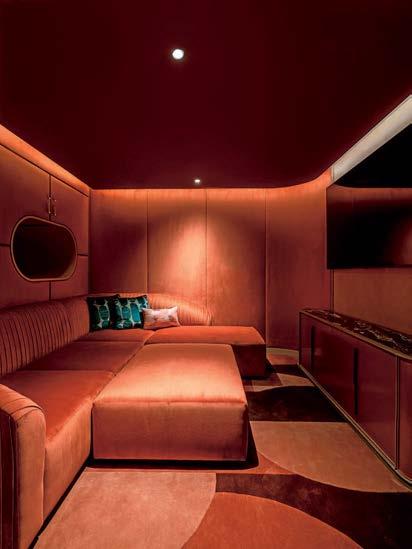
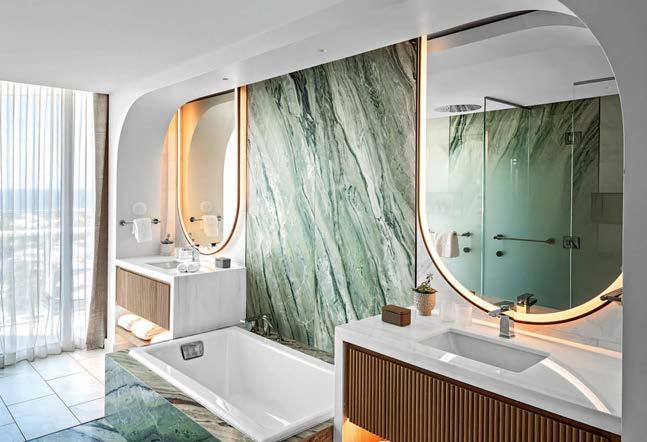
Left: Ribbon ceiling fixtures reappear in a guest-room corridor, floored with porcelain tile. Right, from top: The two-bedroom presidential suite features a color-drenched media room with custom carpet and velvet wallcovering.
Custom mirrors border marble paneling in its main bathroom, which has a sunken tub and Atlantic Ocean views.
Opposite top: A suite bedroom opens to a balcony. Opposite bottom: Back in the presidential suite, leather chair and sofa upholstery joins oak tambour paneling and more water-esque decorative references in its living-dining area.
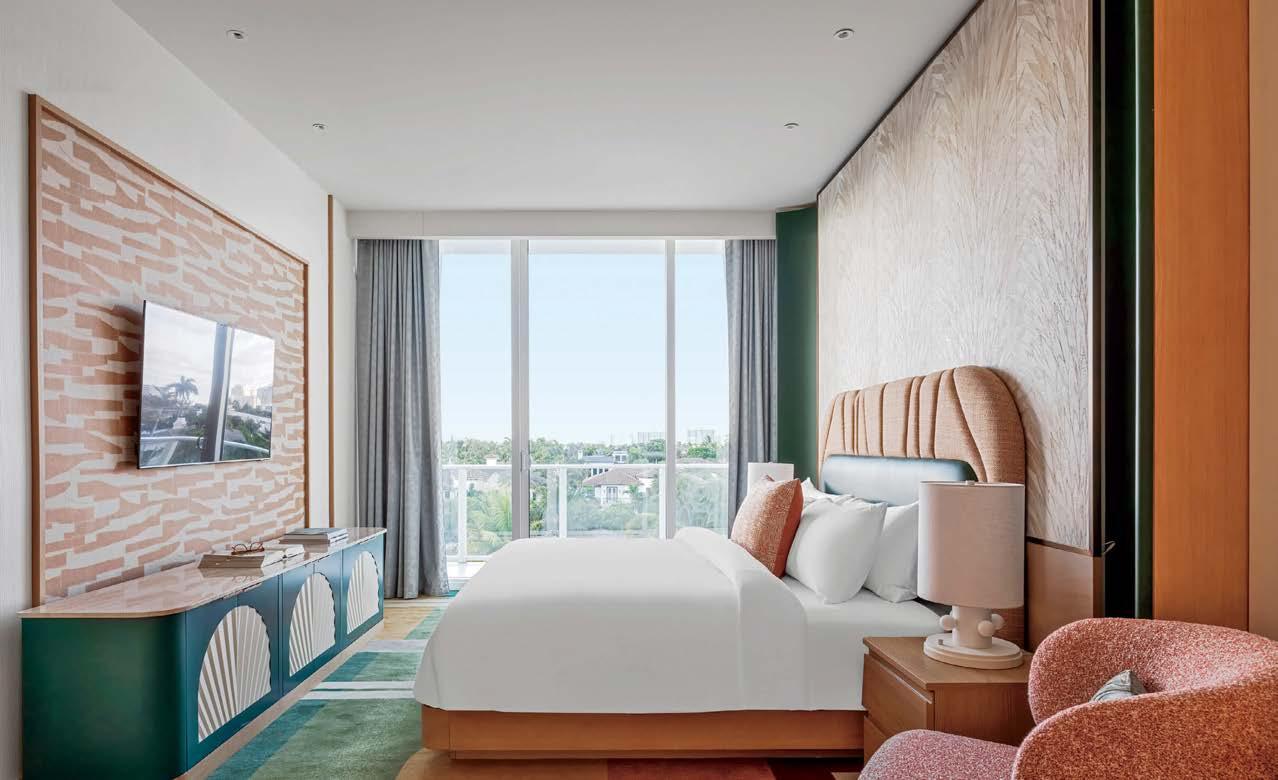
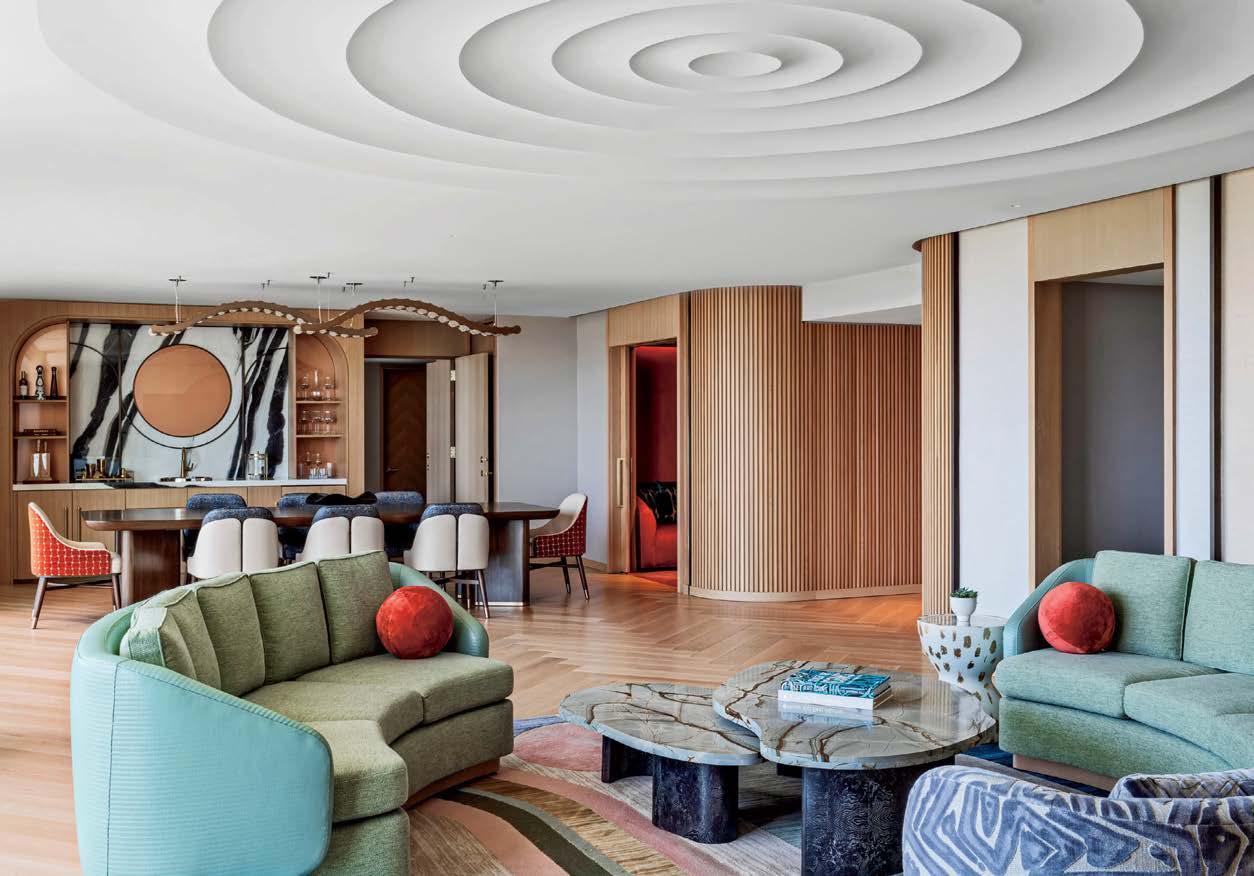
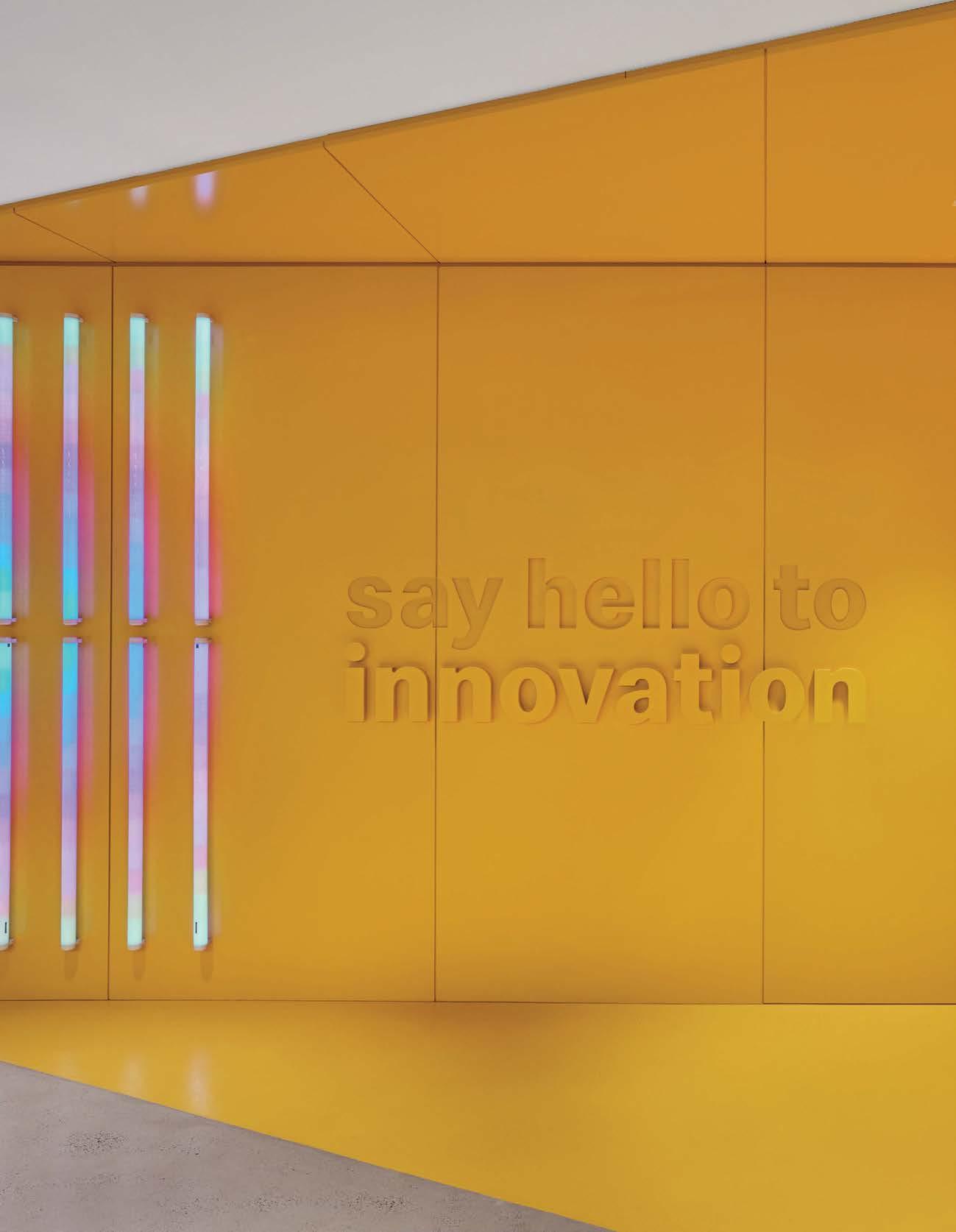
IA Interior Architects delivers a sense of forward dynamism with Speedee Labs, a new R&D facility within McDonald’s Chicago headquarters
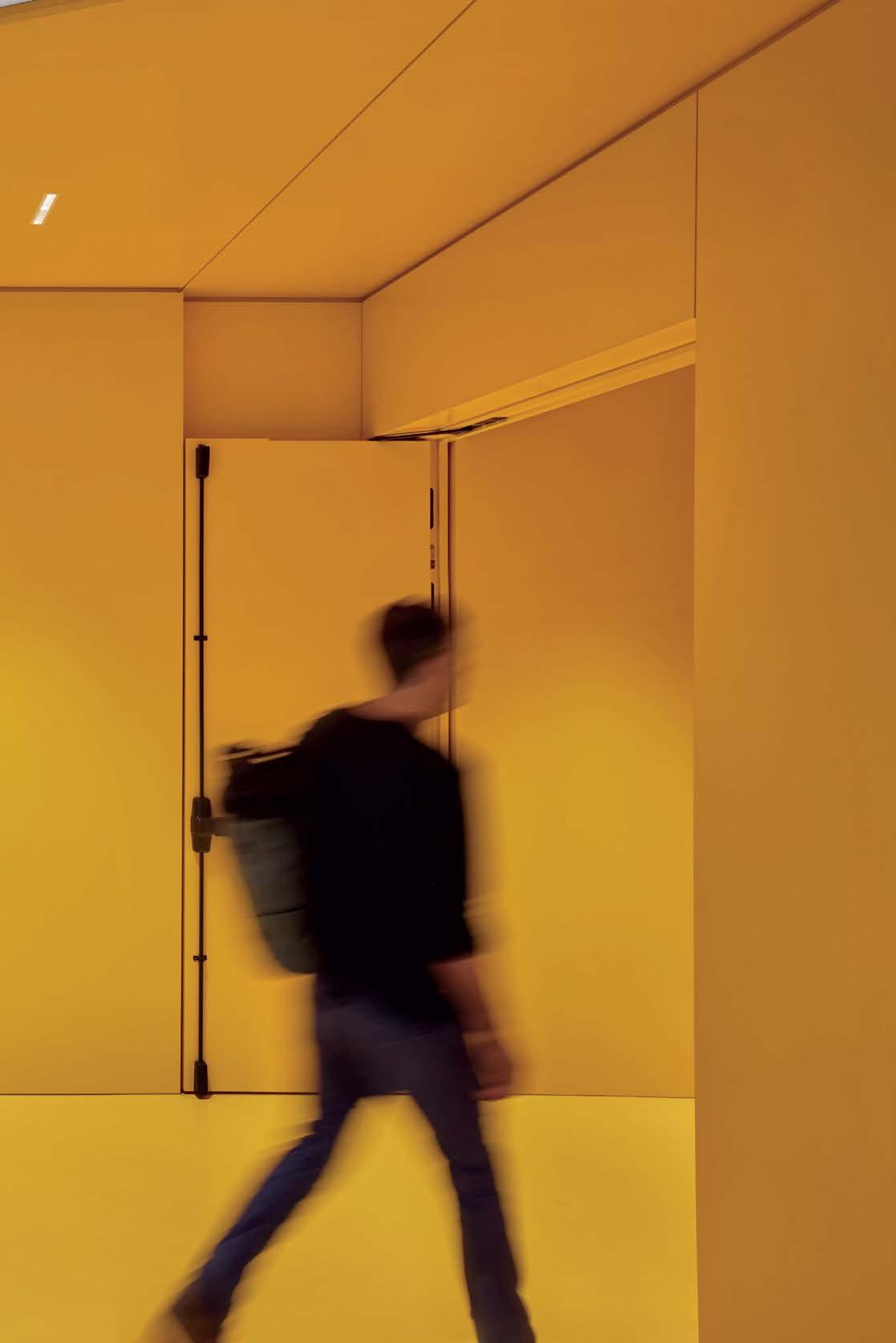
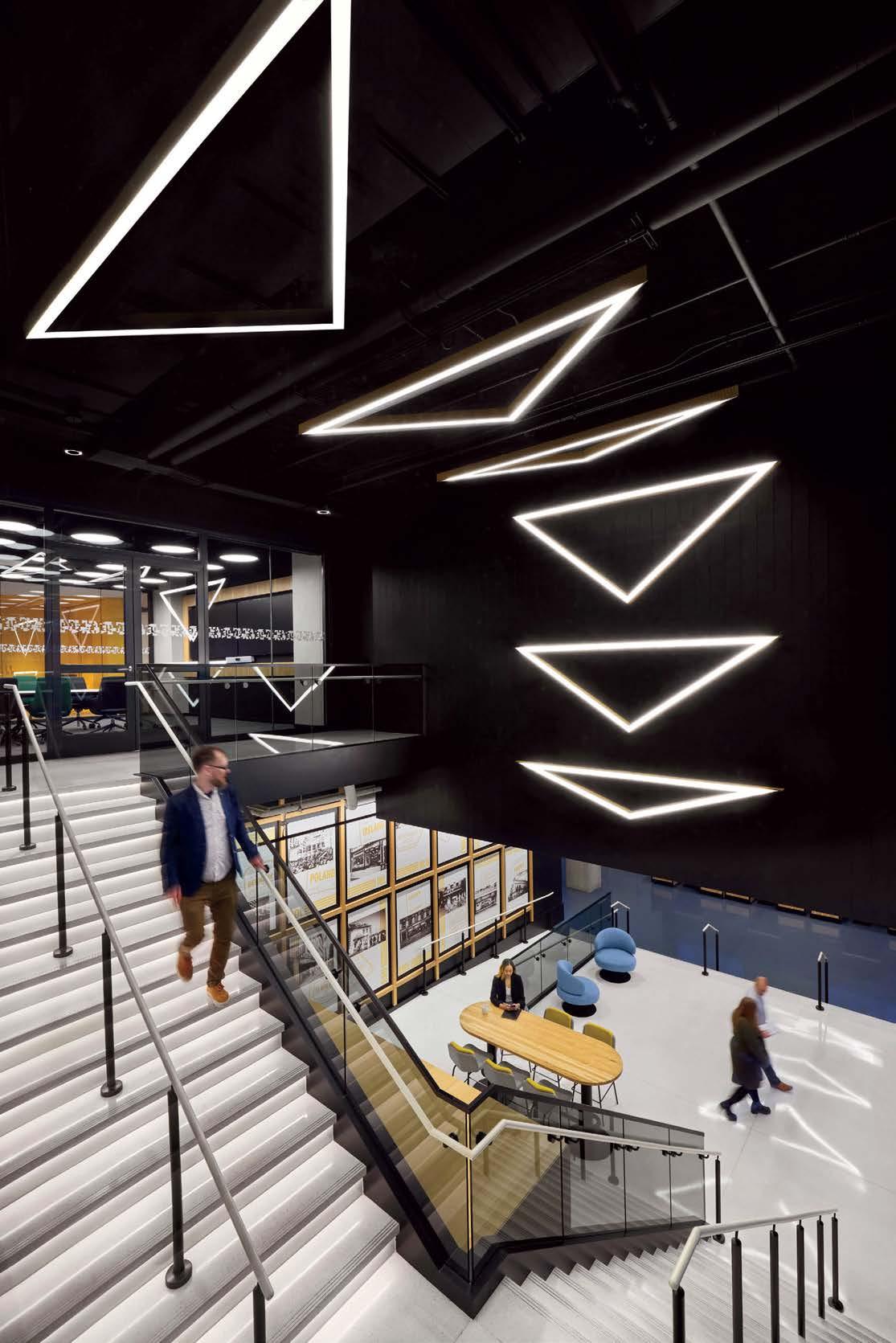
Previous spread: A motion‑activated LED wall installation animates the entry to the customer experience hub at Speedee Labs, a new 22,500‑square‑foot, two‑level R&D center within McDonald’s Chicago headquarters by IA Interior Architects.
Opposite: Beneath custom triangular LED fixtures, a new terroxy resin stair links two of the lab’s core components—the second‑floor lobby lounge and the ground‑floor test kitchens.
Top: In the main lobby, a backlit installation dubbed the “cheese wall” adjoins the elevator lobby serving the second floor labs and other program spaces. Center, from left: A 20‑foot‑long vitrine anchors the heritage exhibit area. Nearby, hickory millwork frames a grid of dark‑glass display cabinets flanked by video screens. Bottom: Here Now Studio’s Hugh modular sofa and Allermuir Design Studio’s FortySeven side table, finished in a custom brand color, outfit the lobby lounge.
Almost a decade ago, IA Interior Architects helped McDonald’s move its headquarters from suburban Oak Brook into a new Gensler-designed building in Chicago’s buzzy West Loop. The firm, which retains its 11th-place ranking on Interior Design’s 100 Giants list, gave the corporation new digs that signaled a wholesale cultural shift for the global brand, replacing cubiclebound norms with a fluid, activity-based workplace where mobility, openness, and cross-functional collaboration became the new defaults. Now, after years of continued partnership, IA is back, extending and recalibrating parts of the nine-story headquarters for an ever-evolving organization and the workforce that drives it.
The project involves several parts. IA’s design for Hamburger University—McDonald’s global training and leadership institute on the second floor—has been one of the original move’s standout successes. Building on that momentum, the company decided to pair it with a new R&D center, Speedee Labs, named for its 1950’s mascot, a hamburger-headed chef. The facility links directly to new ground-floor test kitchens—inserted into a former courtyard—the final major component to shift from Oak Brook to the city. Completing the program are a gallerylike space for heritage displays; the Fan Store, an in-house merch emporium reserved for employees and corporate visitors; and a showstopping feature wall in the main lobby, bringing the total to 35,200 square feet.
Right from the main lobby, there’s a conscious effort to move beyond familiar brand identifiers. As Chad Finken, IA’s creative director, notes, “McDonald’s is well established; we’re not going to tell them who they are, right?” Hence the backlit wall installation—a glowing expanse of yellow lacquer that, from afar, resembles nine layers of melting cheese. “But up close, you can see it’s a topographical view of the West Loop, with the building centered in the middle of it.” Along with referencing the HQ’s floor count and urban neighborhood, the 3D mural not only nods to a signature menu staple but also incorporates wire-mesh panels that evoke another restaurant hallmark: fry baskets.
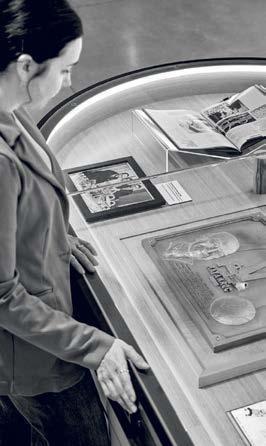
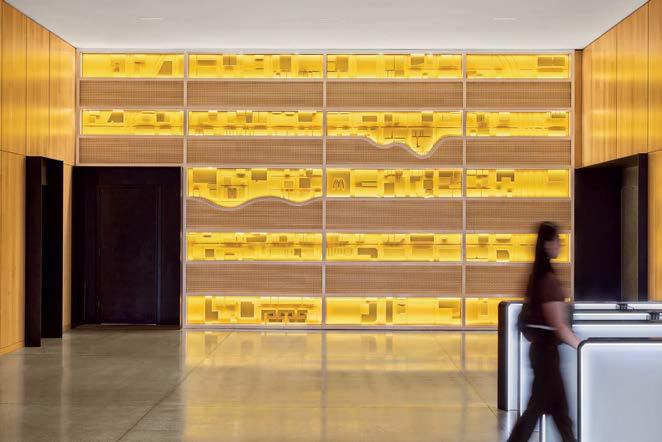
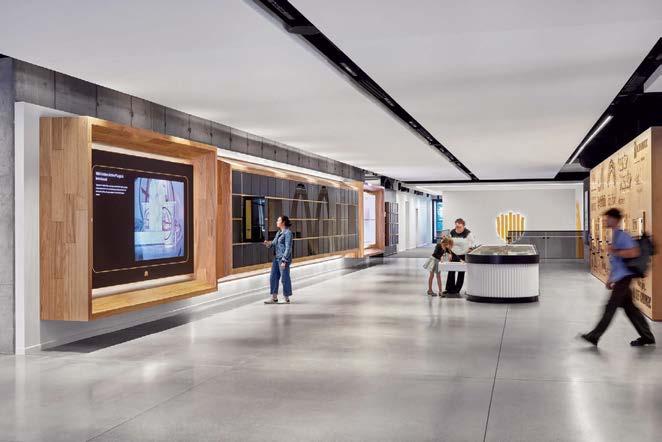
Flanking the elevator lobby, the cheese wall acts as a beacon, signaling the start of the Speedee Labs experience—a progression through environments dedicated to the development of all things McDonald’s, from customer service to restaurant design and kitchen technology. Staff and visitors arrive in the second-floor lobby lounge, a long communal space furnished with comfortable sofas and yellow side tables. “It’s a central touchdown,” IA senior designer Erin Dayrit observes, “where people can take a break, sit and make a phone call, or go on their laptops.” The hickorypaneled walls are festooned with digital banners bearing multilingual greetings and kinetic imagery “as a nice way of adding a sense of movement,” Finken adds.
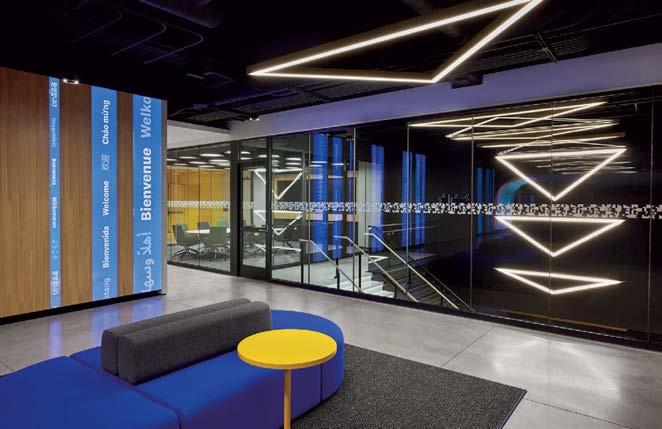
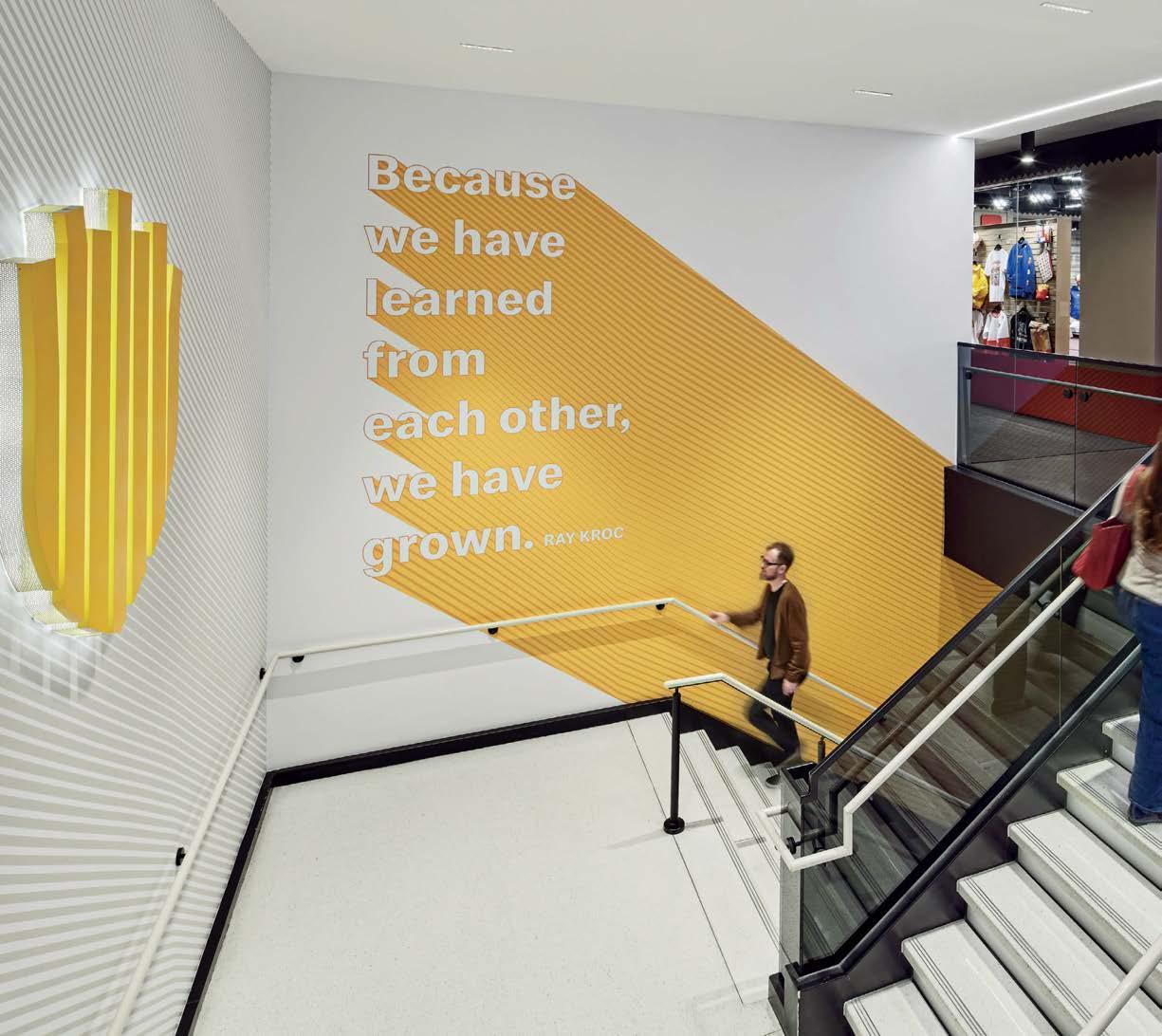
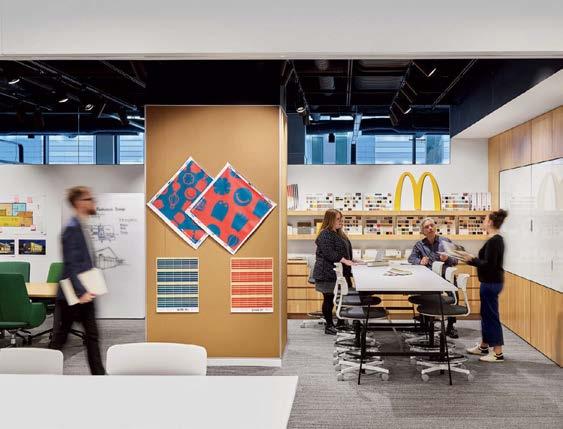
The dynamism continues overhead with a series of arrowhead‑ shape LED fixtures pointing the way to the project’s biggest intervention: a new stair that descends to a stagelike landing overlooking the adaptable test kitchens and adjacent restaurant development environments. “The idea is that coming down, before you’re in the buzz, you’re experiencing it,” Finken says. “You’re smelling it, hearing it, seeing it.” The low platform is a multifunctional viewing spot with an open pantry; bar, stools, and lounge chairs for coffee breaks; and a wall grid of poster‑sized images of McDonald’s outlets around the globe, each bearing the appropriate passport stamp—“so international visitors feel represented,” Dayrit reports. “It’s also a gathering place where they have big meetings.”
At the top of the stair, an all‑yellow portal space—its wall emblazoned with the motto “welcome to innovation” next to a motion‑activated, multicolor LED display—forms a dazzling threshold to the customer‑experience hub. The facility is a hotbed of hands‑on experimentation enabled by state‑of‑the‑art technology, including interactive immersion rooms with
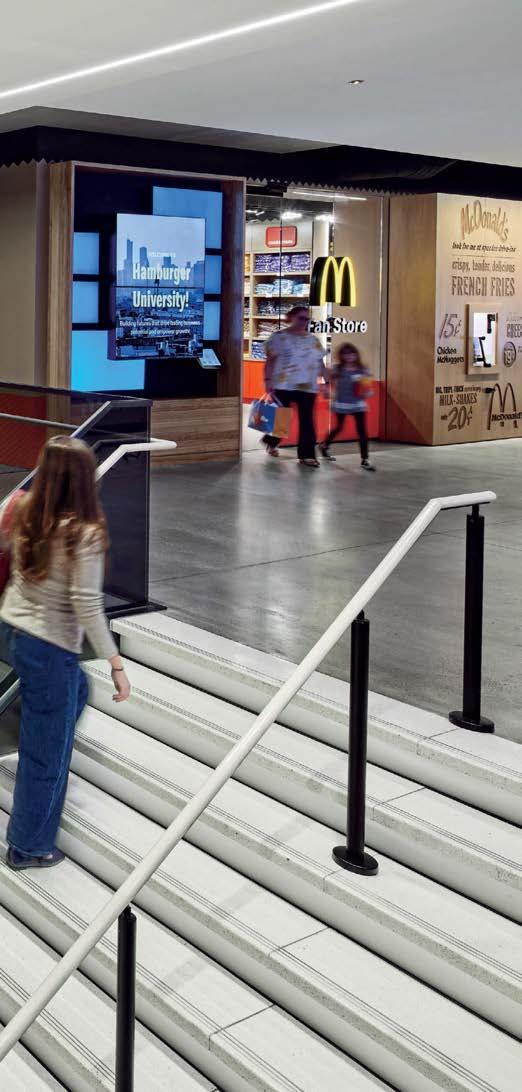
Opposite top: Refreshed with bright custom graphics, an existing stair provides access to the Hamburger University training institute and the new in-house Fan Store selling brand merchandise. Opposite bottom: Christophe Pillet’s Rec worktables, flanked by Pearson Lloyd’s Routes stools, populate the design studio in the hub.
Top: Backdropped by a curved digital screen, Studio TK’s Borough modular sofa, Patrick Norguet’s Jima side chairs, a built-in banquette incorporating powder-coated metal mesh, and Caine Heintzman’s Vale sconce form an open work environment in the hub. Bottom: The double-height main lobby retains its original Patricia Urquiola Tuffty Time modular seating, with Jessica Stockholder’s site-specific sculpture—an assemblage of cooking implements patented by McDonald’s employees—still suspended overhead.
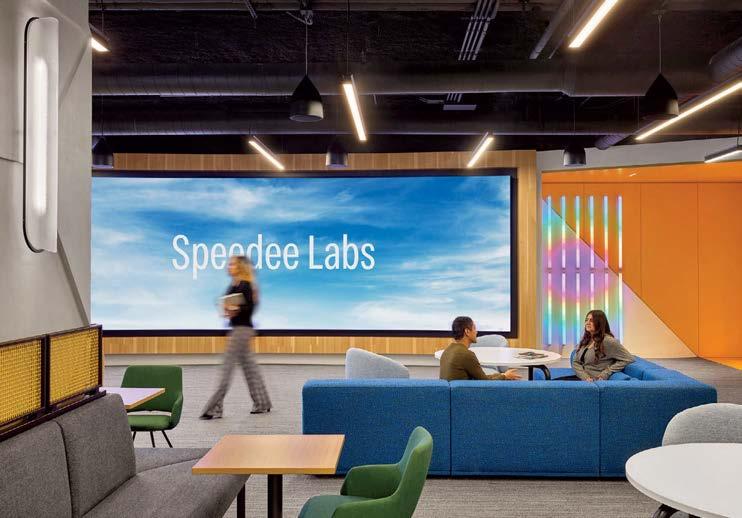
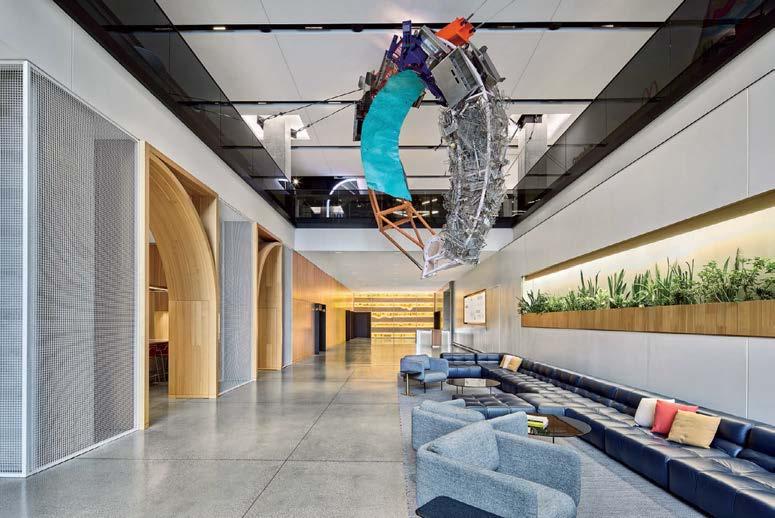
Top: Overlooking the test kitchens, the landing hosts Khodi Feiz’s Libelle chairs, Paul James’s Alfred stools, Joey Ruiter’s bar table, and poster-sized images of McDonald’s outlets worldwide. Center, from left: The exterior of the store evokes the restaurants’ classic kraft-paper takeout bags, printed with current branding. The heritage vitrine features visitor-operated pullout display drawers. Bottom: One end of the elevator lobby leads to the training institute; the other, to the labs.
Opposite: Custom pendant fixtures above the store counter replicate McDonald’s cups and straws, while serving trays are repurposed as wall signage.
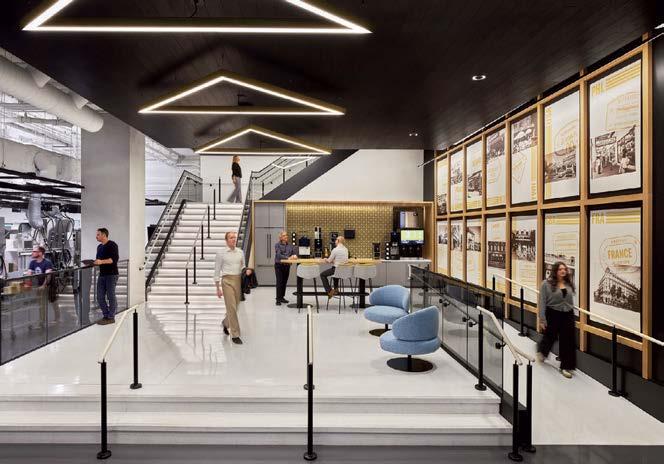
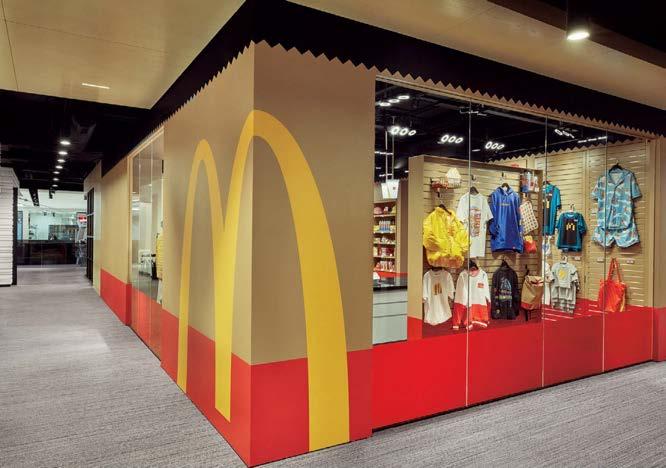
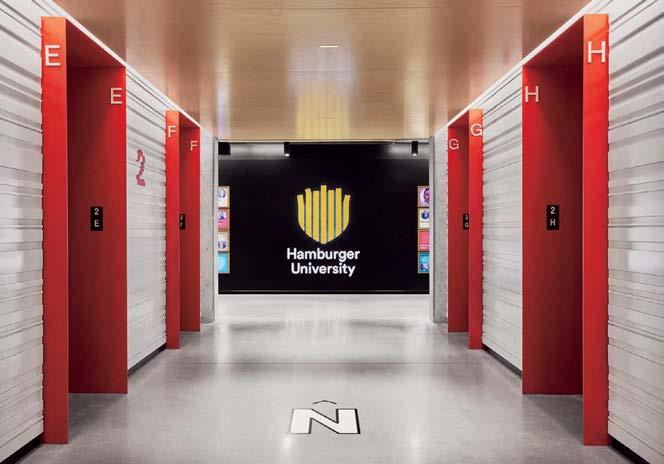
operable glass walls that allow spaces to be reconfigured as needed; a Drive Thru lab; and an open work environment back dropped by an enormous curved video screen and furnished with a choice of seating arrangements. Nearby, the open design studio and prototype lab let everyone see evolutions in brand identity and collateral taking shape in real time.
But it’s McDonald’s past, stretching all the way back to the 1940’s, that takes center stage in the heritage exhibit—a long space off the lobby lounge dedicated to displaying materials from the company’s extensive archives. One wall is spanned by a massive hickory‑framed grid of dark‑glass panels, some of them operable doors fronting illuminated cubbies containing vintage artifacts. At either end of the grid, digital screens play videos documenting the history of corporate innovation and training. A 20‑foot‑long freestanding vitrine runs down the middle of the space, a trove of intriguing objects spread beneath its glass top, while drawers along its sides can be opened by visitors to reveal even more memorabilia—“all sorts of wild stuff,” Finken notes with a laugh, “things I didn’t know existed.”
That sense of fun is pervasive.
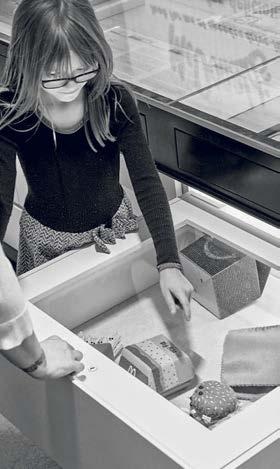
“One of the original design narratives from 2018 was about creating moments that make you smile,” Dayrit notes— a goal more than met by the adjacent Fan Store. With an exterior that mimics the restau‑ rants’ kraft‑paper takeout bags and an interior filled with hom ages to iconic accoutrements— red serving trays repurposed as signage, custom pendant fixtures in the form of giant drink cups with straws—the outlet is as much a source of visual wit as of colorful mer‑ chandise. It’s a little temple of mouthwatering temptations.
“I can vouch for that,” Dayrit concludes. “When I first visited, I bought a bunch of swag.”
PROJECT TEAM
SHANE SMITH; ASHLEY MIKELS; RUBEN GONZALEZ; MICHELLE DERRICO; LANE FELTS; ETHAN BARBOUR; ALYSSA ALVAREZ; SCOTT MC CAGE: IA INTERIOR ARCHITECTS. ZIKEN SIGNAGE: GRAPHICS CONSULTANT. WAVEGUIDE: AUDIOVISUAL, ACOUSTICS CON S ULTANT. OFFICE REVOLUTION: FURNITURE DEALER. PARENTI & RAFFAELLI: WOODWORK. SALAS O’BRIEN: MEP. MAGNUSSON KLEMENCIC ASSOCIATES: STRUCTURAL ENGINEER. EXECUTIVE CONSTRUCTION: GENERAL CONTRACTOR.
PRODUCT SOURCES FROM FRONT LUMINII: CUSTOM WALL FIXTURE (HUB ENTRY). M C GRORY GLASS: VESTIBULE GLASS (STAIR 1). OCL ARCHITECTURAL LIGHTING: CUSTOM PENDANT FIXTURES. TERRAZZO & MARBLE SUPPLY: STAIR TREADS, RISERS, LANDING. GRAND RAPIDS CHAIR: BAR TABLE, STOOLS (LANDING). FIRECLAY TILE: BACKSPLASH TILE. STUDIO TK: CHAIRS (LANDING), WORKTABLES (STUDIO), MODULAR SOFA, SIDE CHAIRS (WORKSPACE). BANKER WIRE: METAL MESH (CHEESE WALL, WORKSPACE). QTL: DISPLAY CASE FIXTURES (HERITAGE). SKYLINE DESIGN: GLASS WALL INSTALLATION (HERITAGE), GLASS BOARD (STUDIO). HERE NOW DESIGN: MODULAR SOFA (LOBBY LOUNGE). ALLERMUIR: SIDE TABLE. TARKETT: RUG. ASTEK: HAPTIC WALLCOVERING (STAIR 2). TEKNION: STOOLS (STUDIO). KOROSEAL: WALLCOVERING. INTERFACE: CARPET (STUDIO, WORKSPACE). A-N-D: SCONCE (WORKSPACE). B&B ITALIA: MODULAR SEATING (MAIN LOBBY). FORMICA: WALLCOVERING (STORE). EUREKA LIGHTING: TRACK LIGHTING. THROUGHOUT IGUZZINI: RECESSED CEILING FIXTURES. DOOGE VENEERS: WOOD VEENER. BENJAMIN MOORE & CO.; SCUFFMASTER: PAINT.
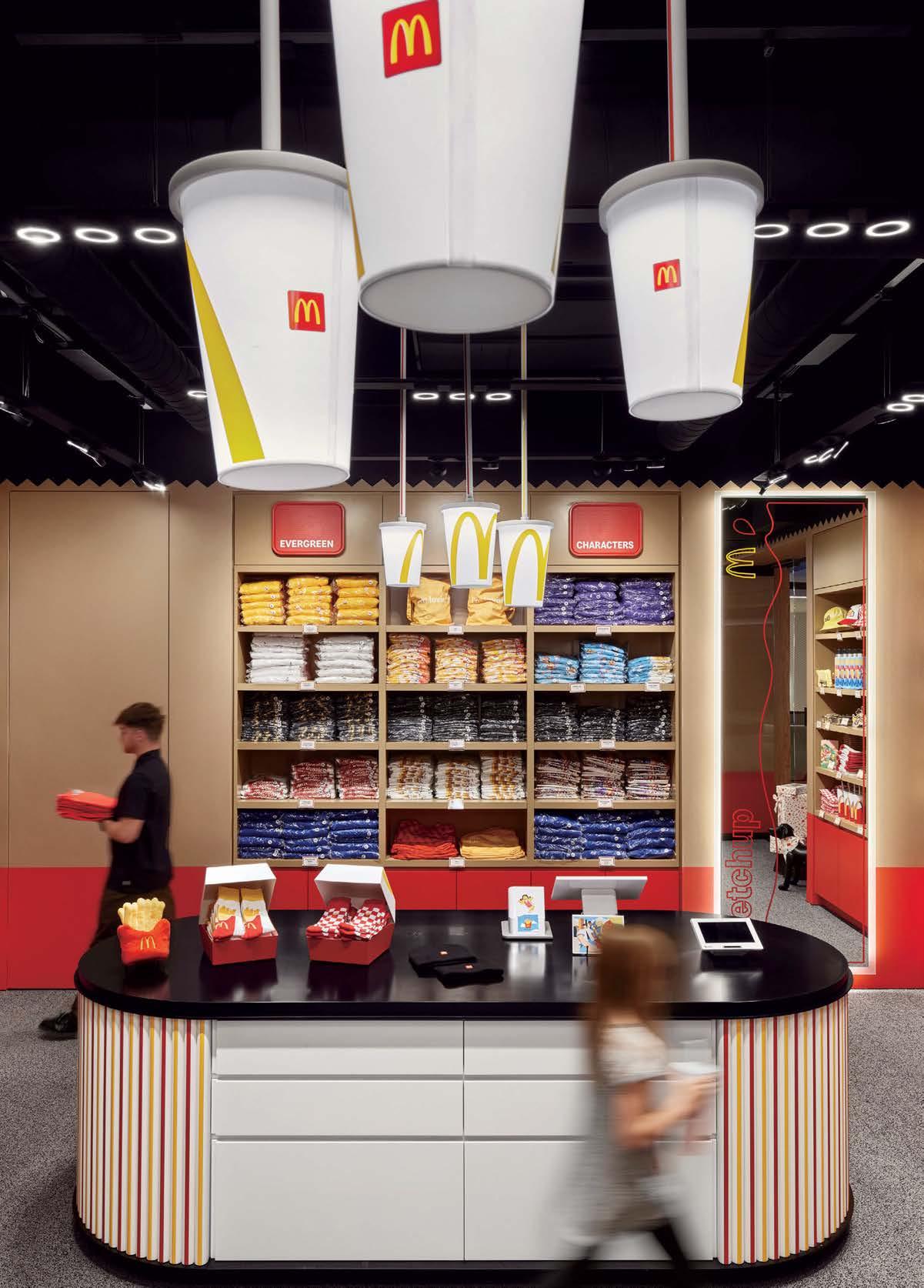
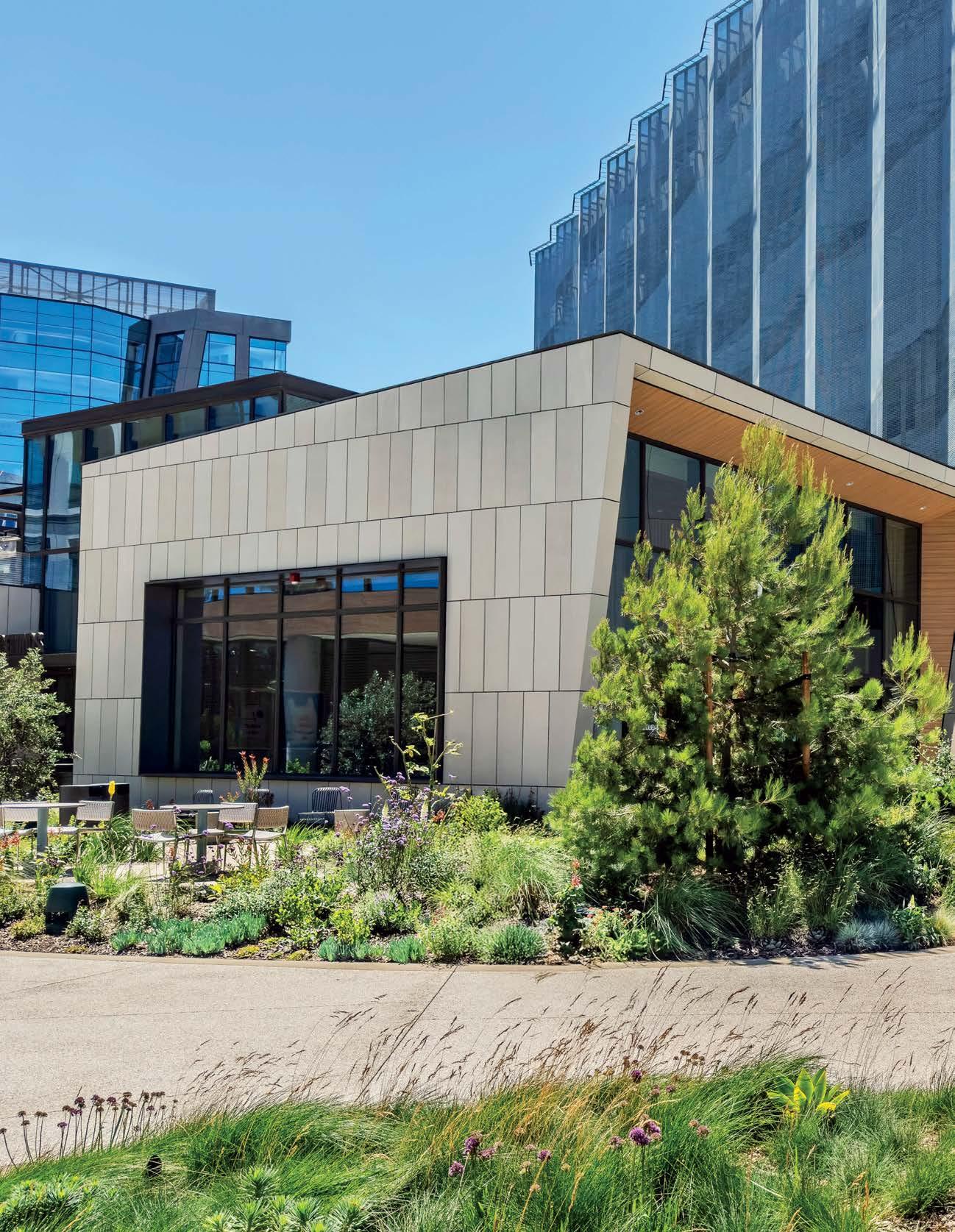
At Kilroy Oyster Point, a 50-acre site redeveloped into a biotech hub in South San Francisco, California, Rapt Studio infuses amenity spaces with coastal nods, energetic art, and a sense of community
text: rebecca dalzell photography: eric laignel
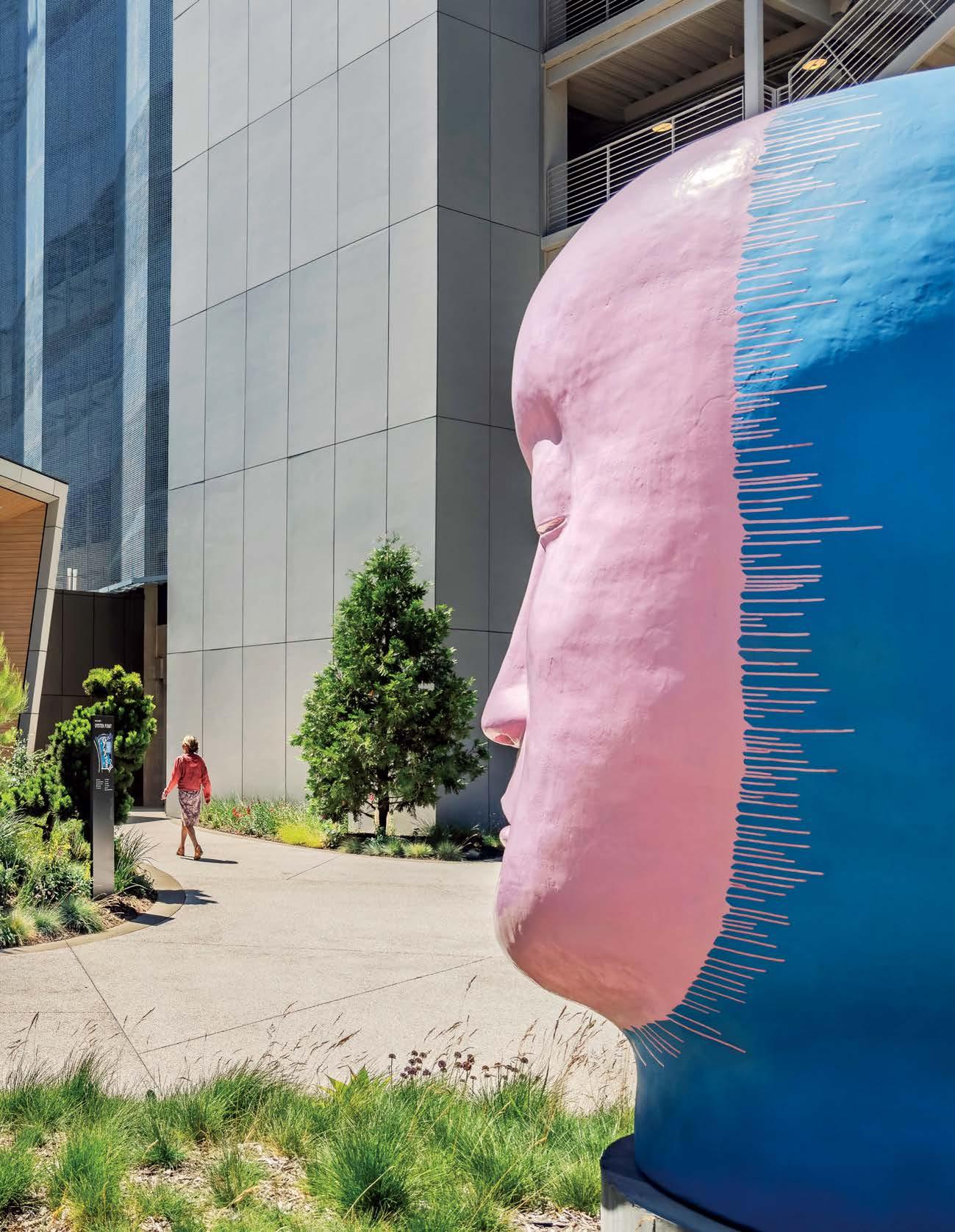
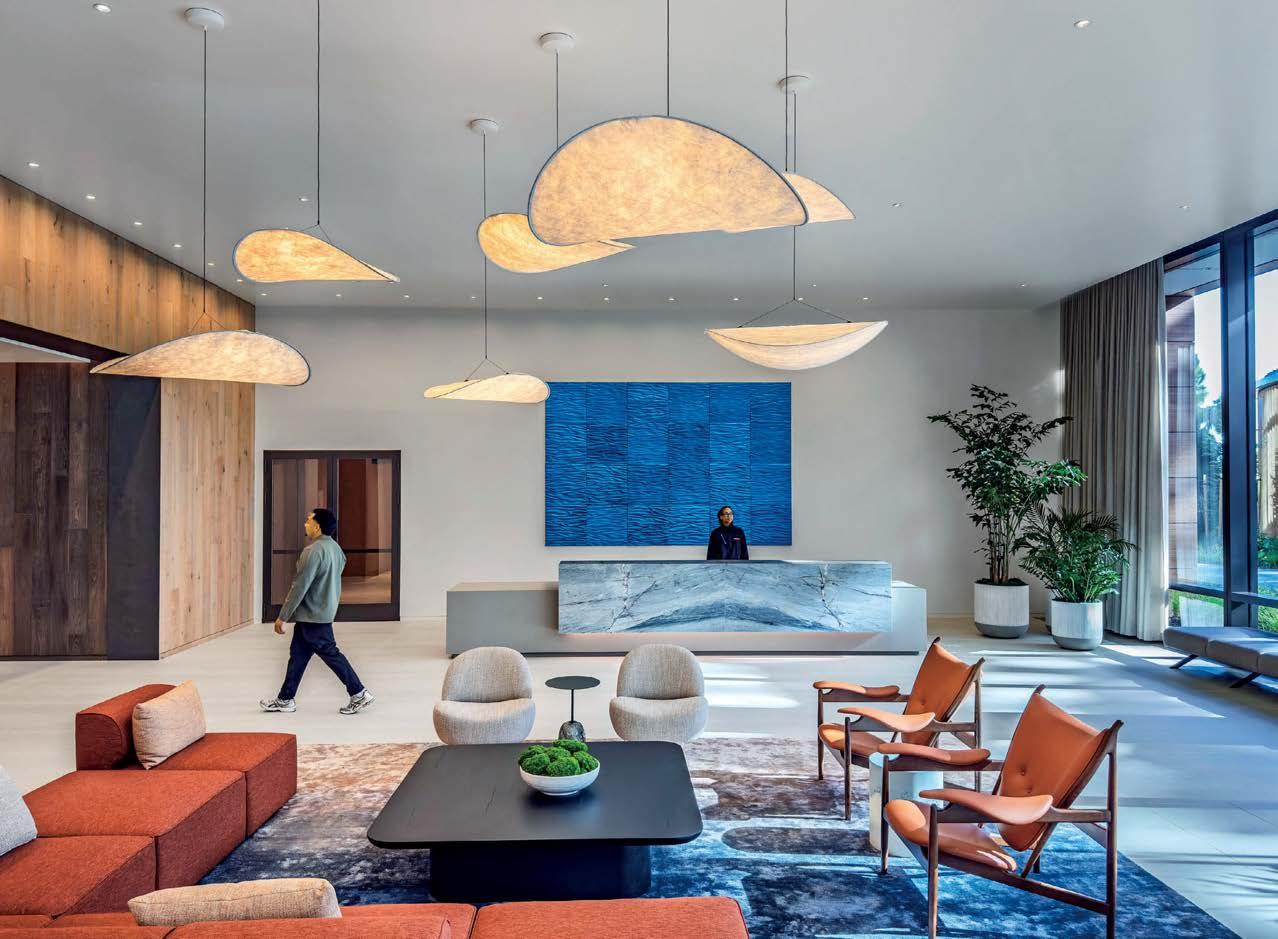
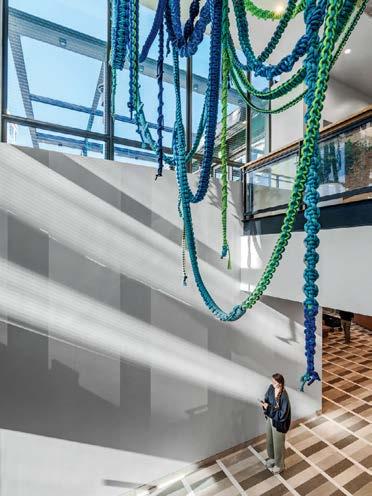
Not long ago, Oyster Point in South San Franscisco, California, was an overlooked industrial swath of concrete warehouses, its main attractions being an old marina and a fishing pier on San Franscisco Bay. But in 2018, Kilroy Realty began redeveloping the 50-acre site as Kilroy Oyster Point, a biotech and life-sciences hub, with six ground-up office and lab buildings opening in two stages, plus a spruced-up waterfront trail. For phase two, Kilroy tapped Rapt Studio for a suite of amenities that would attract blue-chip tenants: two building lobbies, fitness and conference centers, and a food hall, totaling 48,400 square feet. But the brief went beyond the spaces themselves. “The client was passionate about revitalizing the whole property, not just the building footprints,” Rapt creative director and head of design innovation August Petersen begins. “The question was, How do you shape the experience of inhabiting the campus?”
Petersen and Rapt CEO and CCO David Galullo, an Interior Design Hall of Fame member, had to create a sense of place for what could otherwise be a generic
office park. That’s something of a specialty for Rapt, which ranks number 92 among Interior Design’s 100 Giants; its ethos is to use design to foster feelings of belonging and community. The studio started by devising a narrative rooted in the rugged coastal landscape that would unite the various areas into a cohesive whole.
“We hoped to meaningfully link the interior and exterior public spaces,” Galullo says. The team was essentially planning the campus quad, the land between the lab buildings, which are by California architecture firm DGA. They had to situate two freestanding structures, the food hall and the conference center, and make them stand out amid the labs’ canyon of glass. “Fluidity was a prevalent theme for Kilroy. Since the surrounding buildings are square, everything between them should be organic and flow together,” Petersen adds.
Leaning into the location, Rapt conceived architecture and interiors that draw on the ecology and geology of Northern California. The food hall, dubbed Farewinds, became the focus, making it
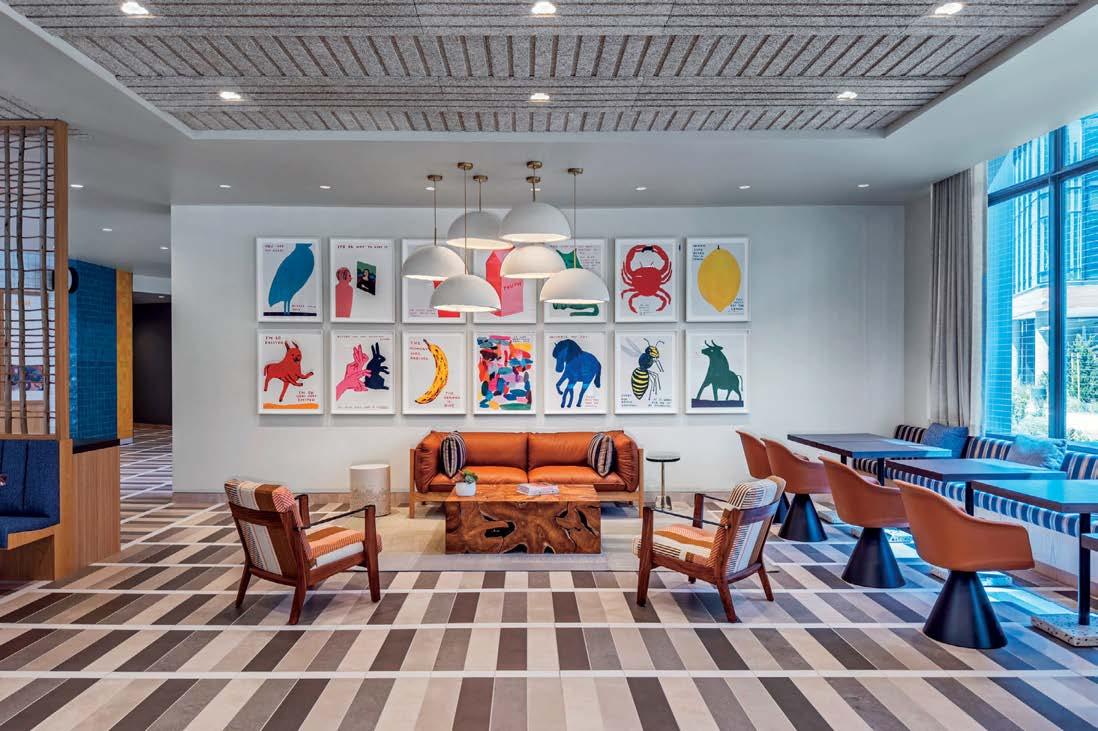
Previous spread: At Kilroy Oyster Point, a biotech and life-sciences hub in South San Franscico, California, a 10-foot-tall sculpture by ceramicist Jun Kaneko faces the concreteframed food hall, part of Rapt Studio’s 48,400-square-foot amenities scope, its massing inspired by the jagged rocks along the Pacific coast.
Opposite top: In one of two reception lobbies by Rapt, Tense pendant fixtures by New Works float above Finn Juhl’s Chieftain chairs, backdropped by a desk clad in Ijen Blue quartzite and an Alex Weinstein work in fiberglass, automotive paint, and aluminum. Opposite bottom: Pacific Eel Grass, an installation of yachting rope by macramé artist Jim Olarte, hangs above an entrance to the Farewinds food hall.
Top: Gathered beneath Danielle Trofe’s mycelium MushLume pendants in a Farewinds lounge are Capo lounge chairs by Neri & Hu, Andreas Engesvik and Daniel Rybakken’s Arbour sofa, Mario Ferrarini’s Lyz chairs, and custom porcelain floor tile. Bottom: Overlooked by the site’s second Kaneko sculpture, an amphitheater with fused-bamboo decking near the food hall is by James Corner Field Operations and the glass lab buildings around it are by DGA.
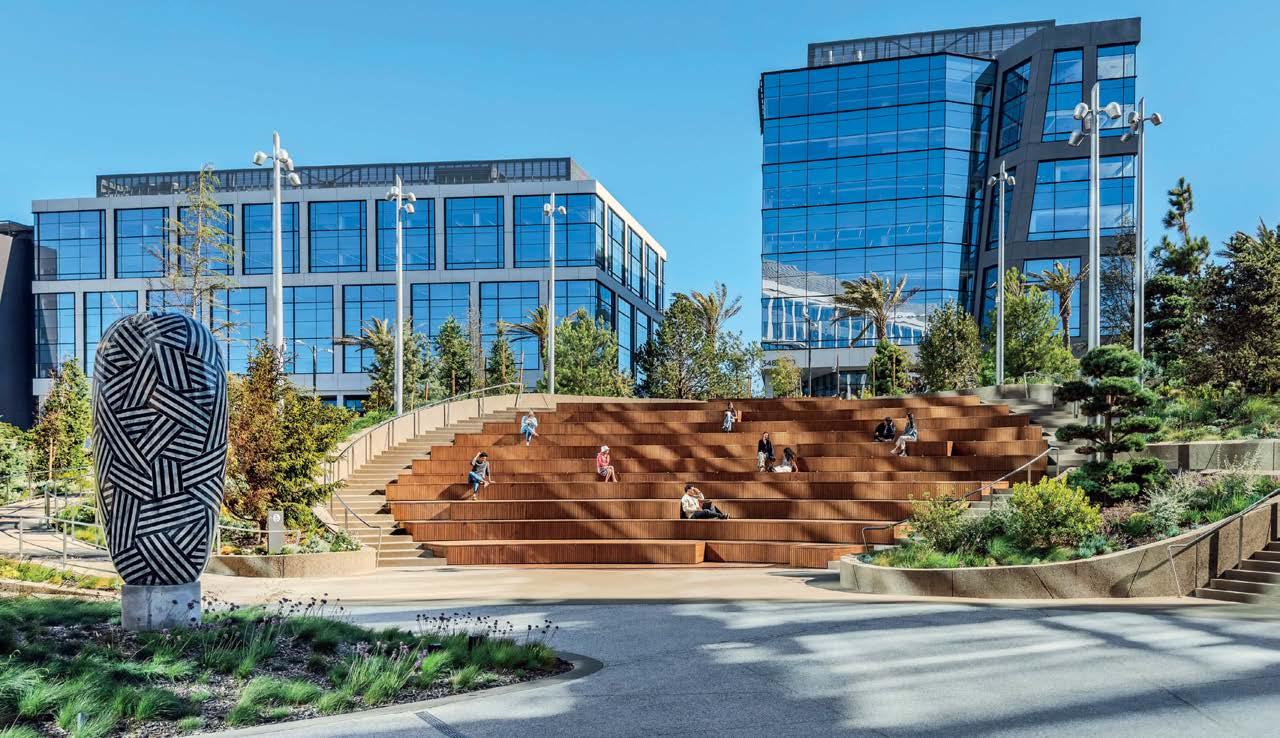
“Leaning into the location, Rapt conceived architecture and interiors that draw on the ecology and geology of Northern California”
the nexus for everyone on campus, housing serveries, a grab-and-go market, lounges, and a private dining room. But first its massing had to be wrestled with. Petersen and Rapt explored shed roofs and coral shapes before landing on a rock-inspired, concreteclad structure, its double-height window walls like jagged faces on a geode. A triangular atrium is at its heart, filled with lush vegetation that helps blur the line between indoors and out. The ground floor hosts food stalls and dining areas; upstairs is a mezzanine with a terrace and bar. Natural light streams in from multiple angles.
On the south side, the food hall overlooks a circular amphitheater with fused bamboo decking. Built into a hill, it’s also by DGA and the site’s landscape architect, James Corner Field Operations, and functions as a town square for events or casual use. To the north, the hall opens onto a plaza beside the conference center, a low, wood-clad volume shaped a bit like an oyster. Concrete paths shimmer with seashell aggregate, and each intersection is anchored by giant ceramic head sculptures by Japanese-American artist Jun Kaneko— the first inkling that art by the established and the emerging, local and international, figures prominently in helping to distinguish Kilroy Oyster Point.
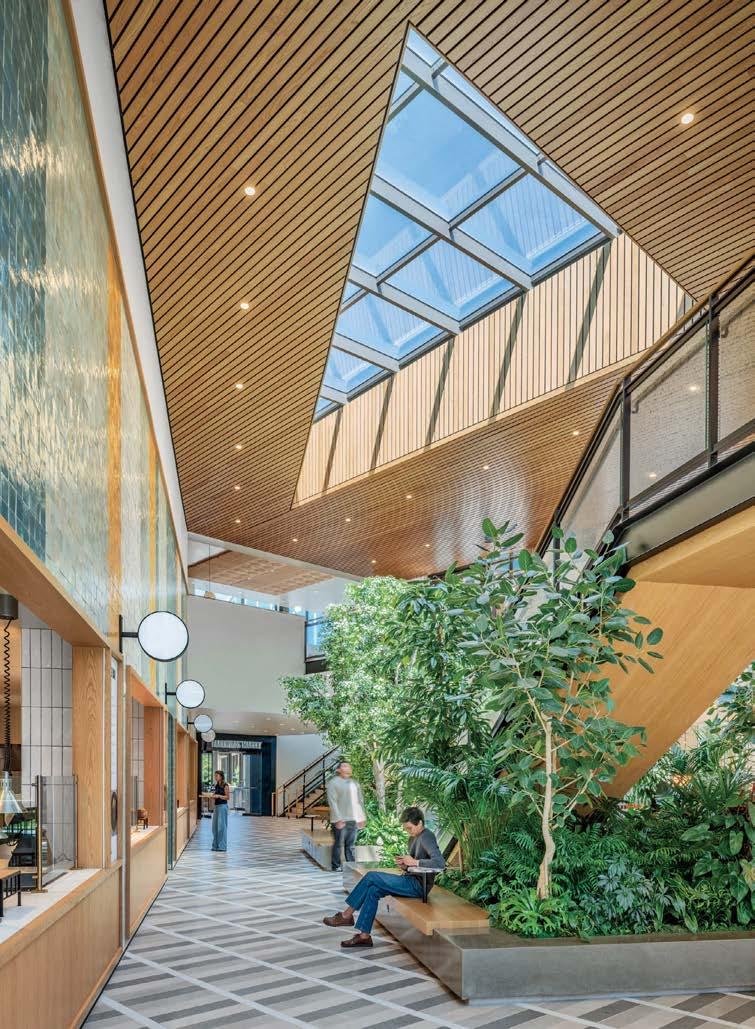
That’s apparent inside Farewinds, where Rapt conceived refined, layered spaces that feel approachable and residential—an antidote to the sterile labs. Cool tones of blue and gray, driftwood screens, and a doubleheight installation of teal and green yachting rope by California macramé artist Jim Olarte bring a whiff of the sea. “The palette has a gritty, weathered quality, with materials that feel as if they’ve been dredged out of the bay,” Petersen explains. On an atrium wall, handmade zellige tile form blocks of color like nautical stripes, a pattern mirrored in the porcelain-stoneware flooring. A mix of furnishings invites people to linger all day. There are roomy booths, a communal teak table in the market, and a dining lounge with Neri & Hu armchairs upholstered in handwoven Portuguese blankets. The private dining room, with its long oak table, amberglass pendant fixtures by Italian studio Chiaramonte Marin, and cobalt-detailed artwork by Mexican-descent painter Abel Macias is open to all when not reserved for events
Left: Zellige tile line a wall of serving stations in the Farewinds atrium, crowned by an acoustic wood-slat ceiling.
Opposite top, from left: A Fort Standard Column table on ceramic floor tile in the grab-and-go market. The lounge’s teak coffee table. Olarte’s 1,000 linear feet of rope. Opposite center, from left: Glory Day McSharry’s acrylic on wood panel assemblage and In Common With’s Dome pendants at the Farewinds bar. Traditional Portuguese blanket fabric on the lounge’s Capo chair. The atrium’s Zellige wall tile. Opposite bottom, from left: Bronze signage for the market. Ceramic tile, custom oak-veneer cabinetry, and Allied Maker’s Concentric sconce in the market. Jeffrey Sincich’s quilted mixed-media works and a custom teak communal table in the coffee bar.
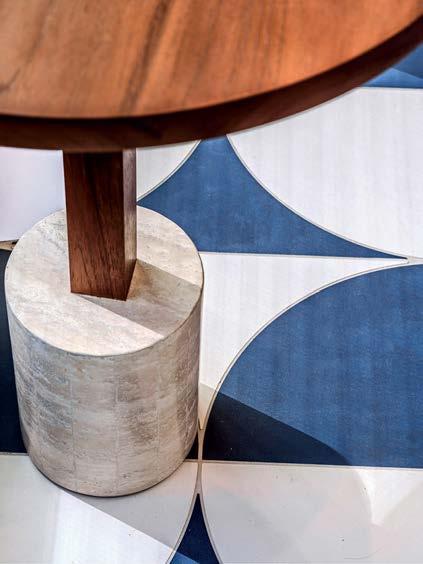
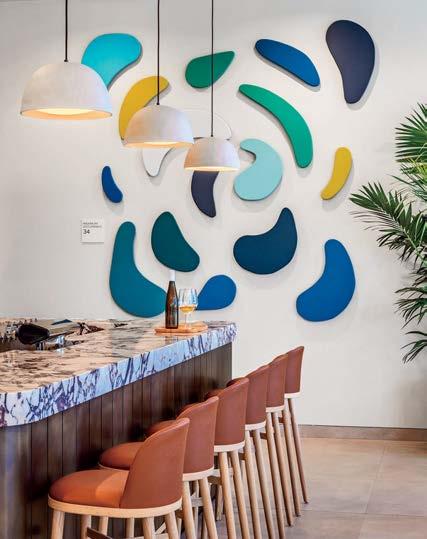
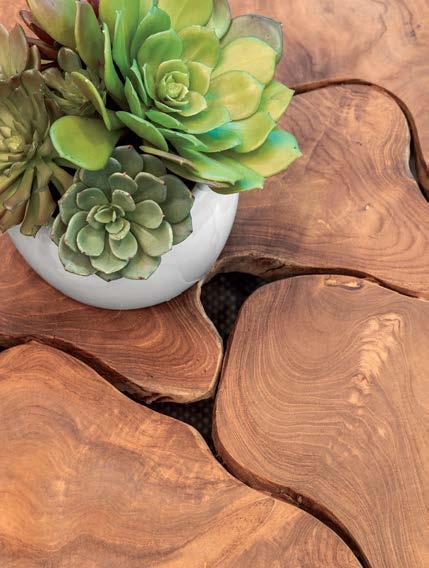
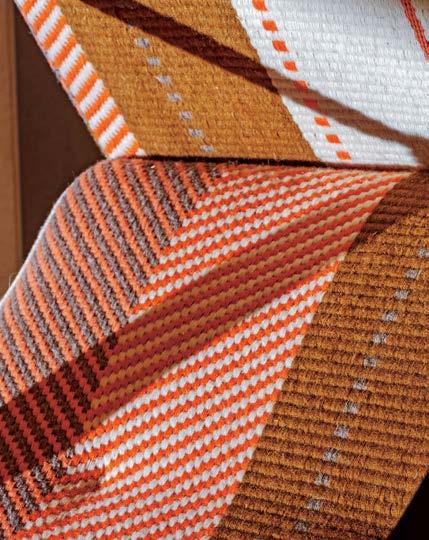
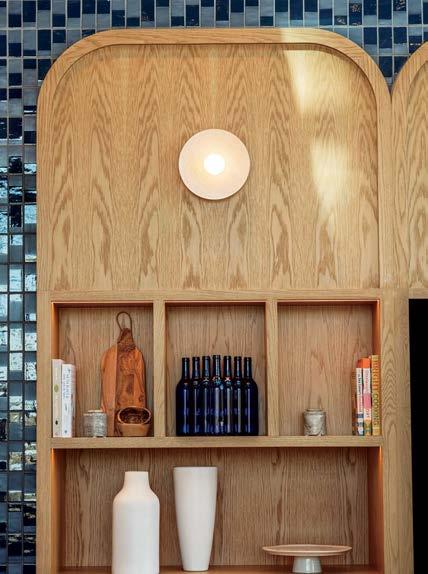
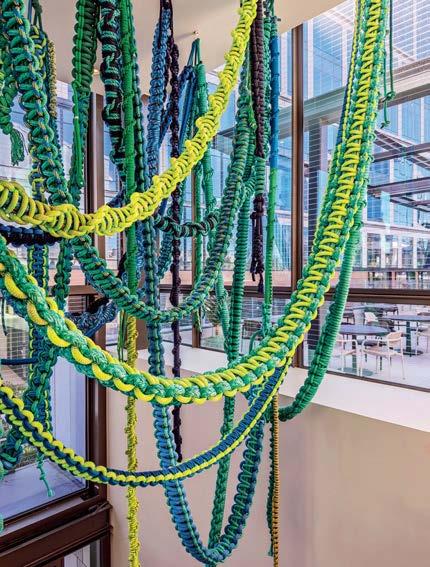
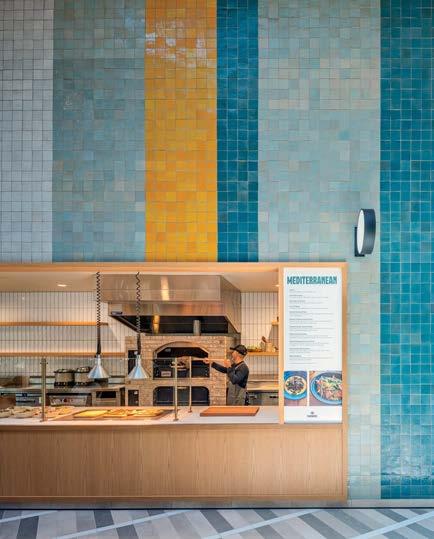
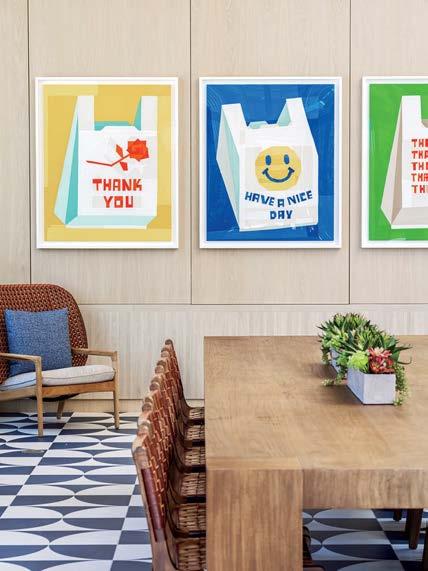
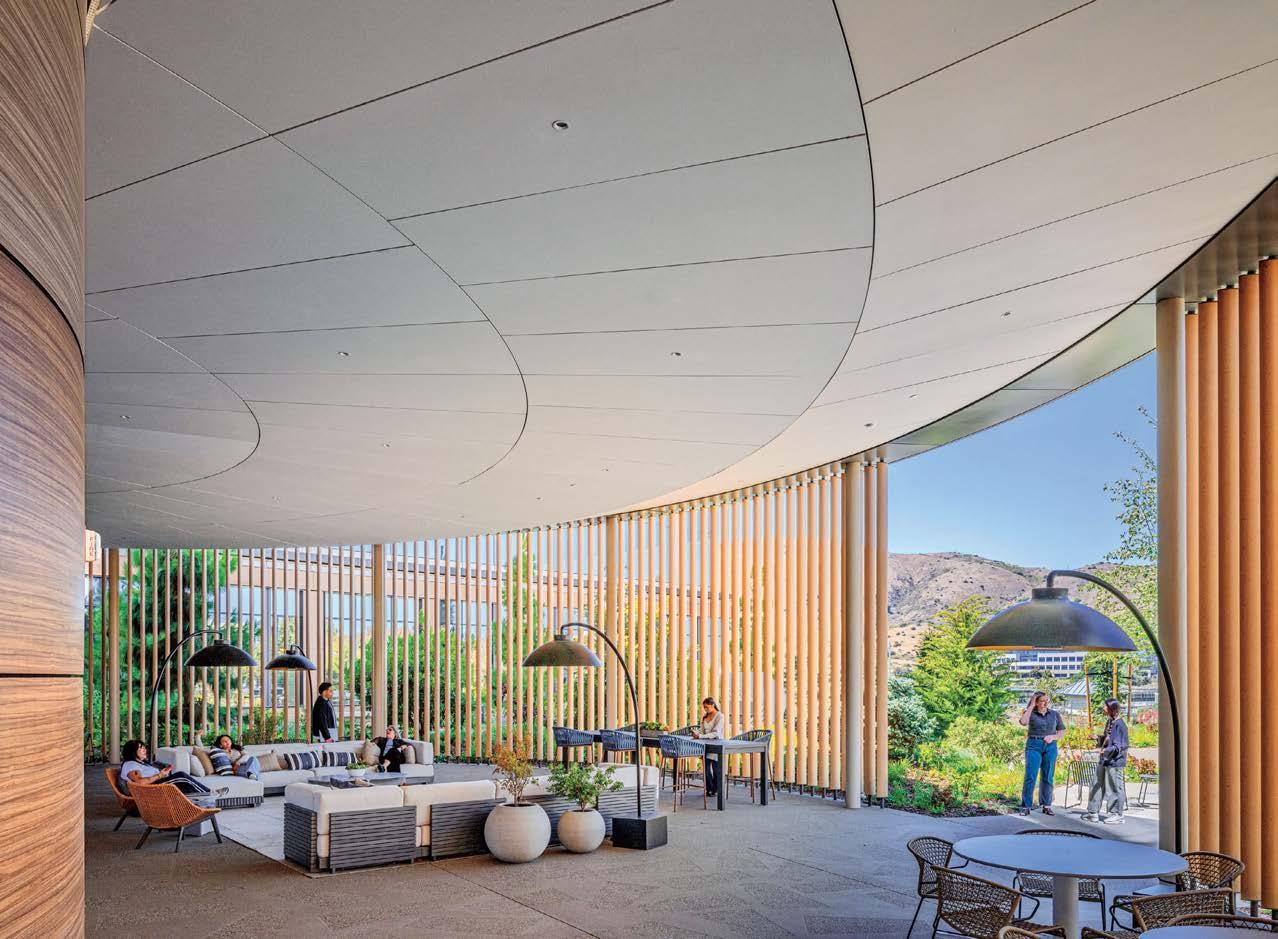
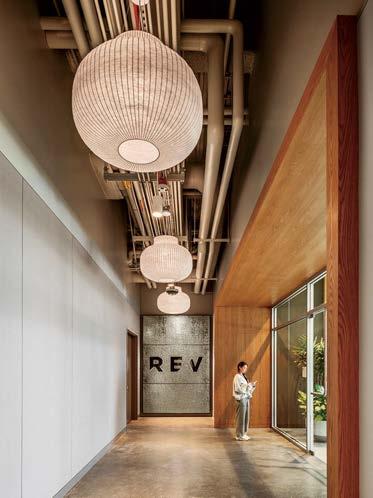
The crafted, comfortable aesthetic continues throughout the amenity spaces. In one of the two reception lobbies, a blue quartzite desk faces a seating area with leather Finn Juhl armchairs and New Works pendants, their soft Tyvek diffusers resembling floating potato chips. On the conference center’s patio, shielded by a cantilevered ceiling and vertical woodlook slats, Ramón Esteve all-weather aluminum sectionals and Sebastian Herkner club chairs furnish a sophisticated lounge. Even the gym gets cloudlike Benjamin Hubert pendants and a tufted circular sofa by Thomas Bernstrand and Stefan Borselius.
Some of the most interesting elements, Petersen says, are natural light and shadow. While conducting solar studies, he and Galullo paid close attention to how rooms orient around the windows and the interplay between the architecture and the sun. At the conference center, for instance, the vertical patio slats cast shifting shadows throughout the day. Lengthening silhouettes slice across the floor and imbue the space with character. Like Rapt’s entire concept, the result is a subtle evocation of the dramatic setting.
PROJECT TEAM
JULIA KOMARCZYK; MARIA HOLDER; LINN KAGAY; JANELL LEUNG: RAPT STUDIO. DGA: CAMPUS ARCHITECT. JAMES CORNER FIELD OPERATIONS: LANDSCAPE ARCHITECT. WEIDNERCA: CUSTOM SIGNAGE. DPA FINE: ART CONSULTANT. HATHAWAY DINWIDDIE CONSTRUCTION COMPANY: GENERAL CONTRACTOR.
PRODUCT SOURCES FROM FRONT NEW WORKS: PENDANT FIXTURES (RECEPTION). HOUSE OF FINN JUHL: ARMCHAIRS. SACCAL DESIGN HOUSE: WHITE CHAIRS. AUDO COPENHAGEN: SECTIONAL. ALARWOOL: CUSTOM RUG. CAESARSTONE: DESK SOLID SURFACING. PORCELANOSA: CUSTOM FLOOR TILE (FOOD HALL, PRIVATE DINING). DANIELLE TROFE DESIGN: PENDANT FIXTURES (LOUNGE). THROUGH THE FUTURE PERFECT: LOUNGE CHAIR. HAY: SOFA. BAUX: CEILING TILE. POTOCCO: DINING CHAIRS (LOUNGE, PATIO). CLÉ TILE: WALL TILE (ATRIUM). 9WOOD: SLAT CEILING. MOSA: FLOOR TILE (MARKET, COFFEE BAR). FORT STANDARD: TABLE (MARKET). FRANCE & SON: TEAK TABLE (LOUNGE). IN COMMON WITH: PENDANT FIXTURES (BAR). STELLAR WORKS: STOOLS. DDS TILE: WALL TILE (MARKET). ALLIED MAKER: SCONCE. GLOSTER FURNITURE: LOUNGE CHAIR (COFFEE BAR). INDUSTRY WEST: DINING CHAIRS. UNALOME INTERIOR: CUSTOM TABLES (COFFEE BAR, PRIVATE DINING). HEATSAIL: HEAT LAMPS (PATIO). RH: SECTIONALS. KETTAL: DINING TABLES, STOOLS. DEDON: LOUNGE CHAIRS. TRESPA: EXTERIOR SLAT SYSTEM. MUUTO: PENDANT FIXTURES (GYM). GTEX STAINLESS: PANELING. BLÅ STATION: SOFA. TURF DESIGN: BAFFLE SYSTEM. VIBIA: PENDANT F IXTURES. BROKIS: PENDANT FIXTURES (PRIVATE DINING). LASKASAS: CHAIRS. NANIMARQUINA: RUG. MAHARAM: CURTAIN FABRIC. THROUGHOUT BENJAMIN MOORE & CO.: PAINT.
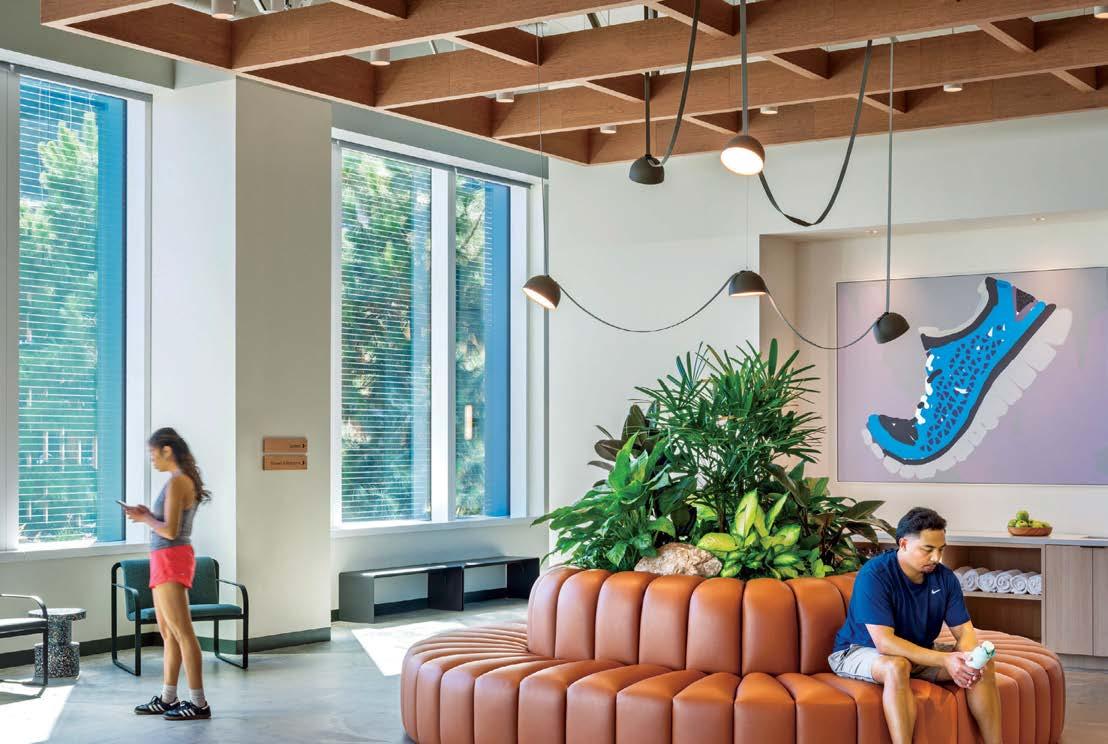
Top:
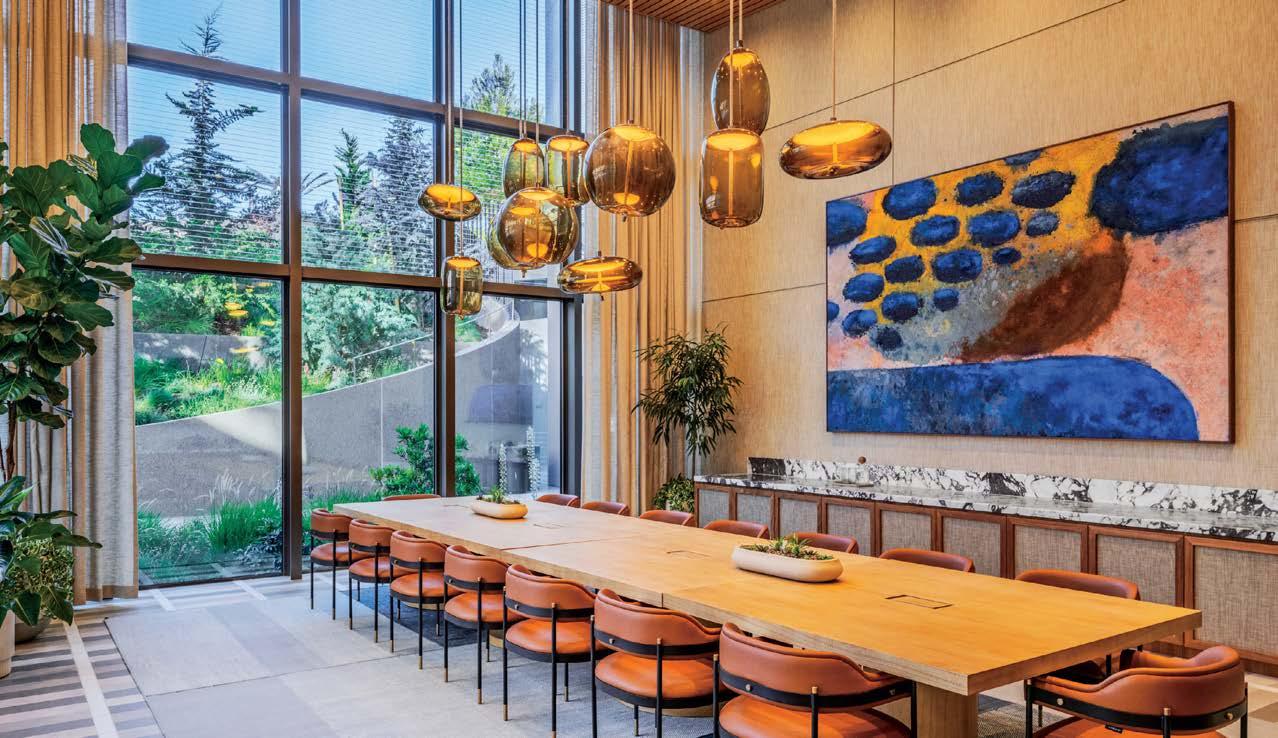
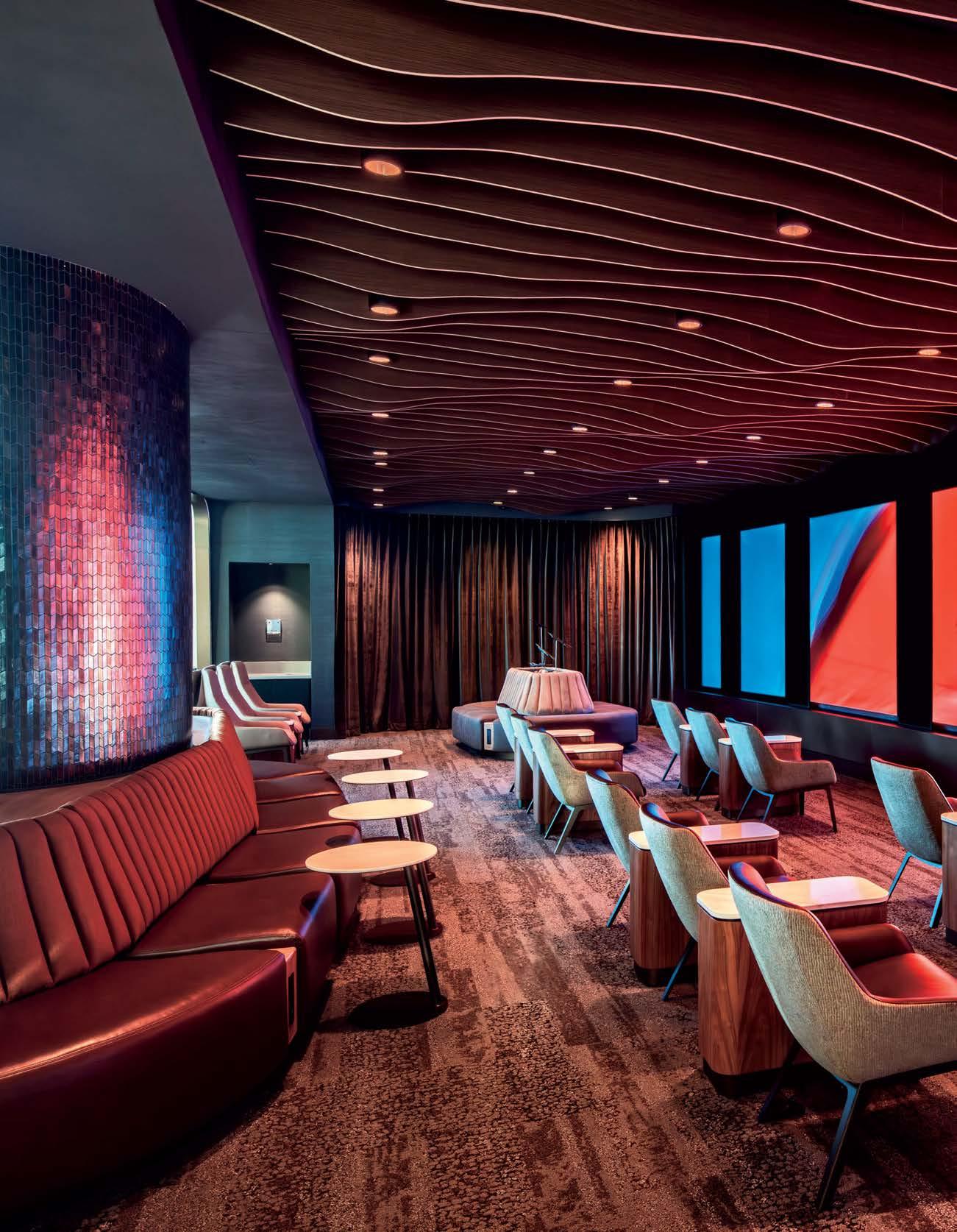
Travelers are treated to serenity and style, local and global influences, plus a womblike immersion room in the
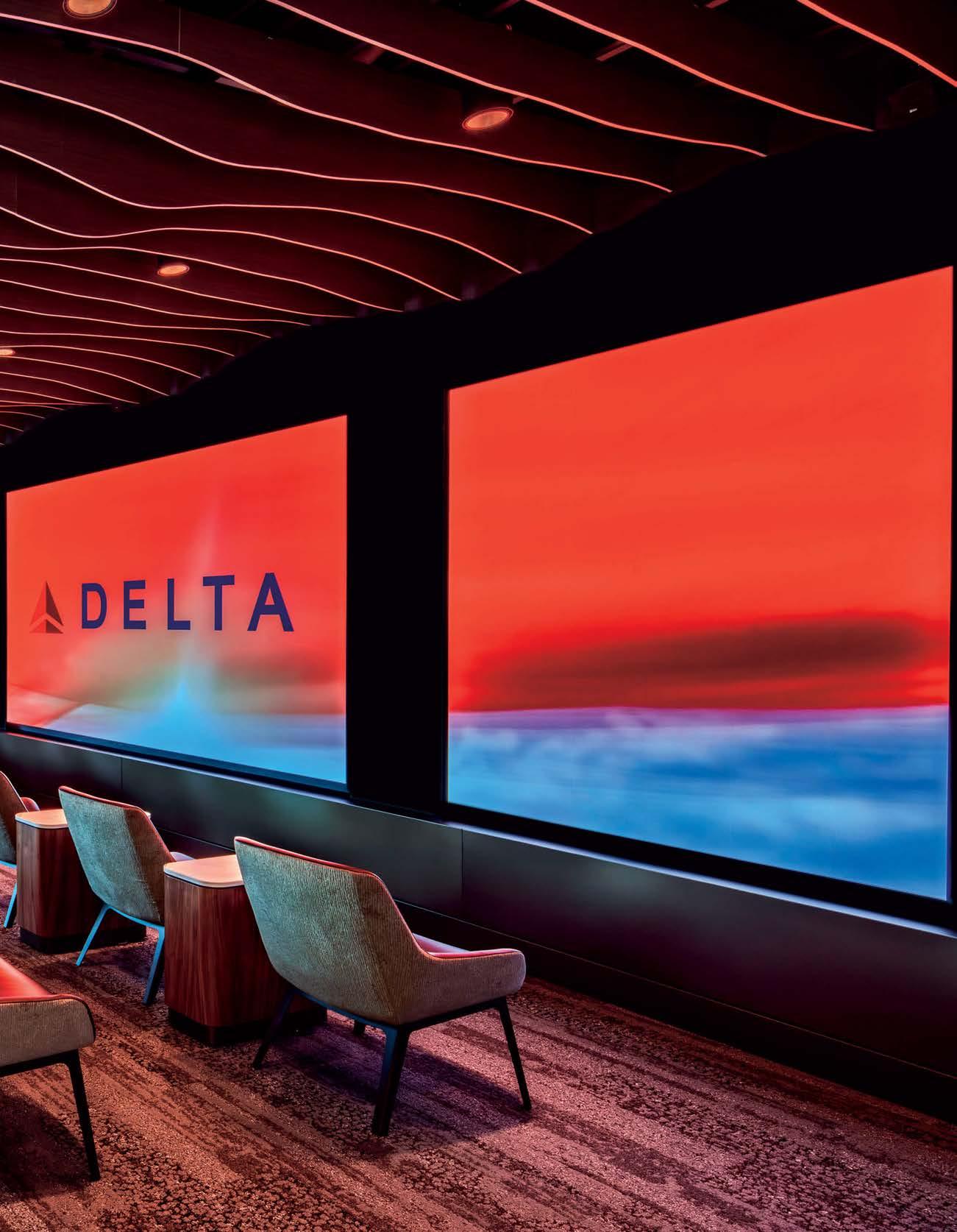
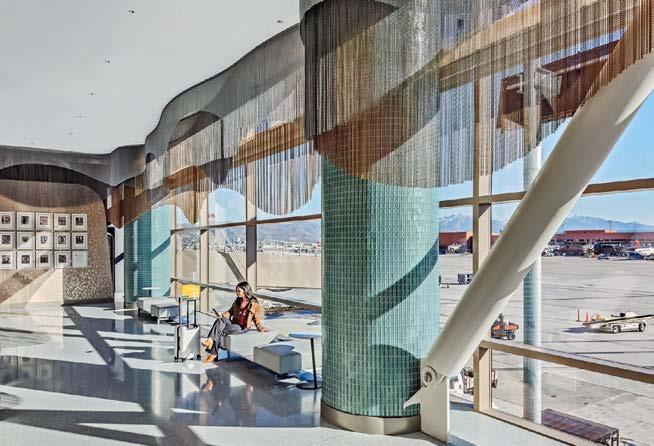
Previous spread: At the Delta Sky Club at Salt Lake City International Airport Concourse B by HOK, an immersion room is a calming, quiet retreat for neurodiverse guests, with velvet drapery, acoustical felt baffles, and Boss Design’s Marnie lounge chairs facing LED screens looping Utah landmarks as if seen through a plane window.
Top: Aluminum chains shimmer by the windows in the arrival space, which is meant to evoke snowy Park City winters. Bottom: Diamond-pattern Palladiano terrazzo flooring and a custom stretched acoustic ceiling allude to icy forms; the logo wall appears at every Delta Sky Club reception.
Opposite top: Walnut tambour paneling and Delta blue–tinted glass sliding doors mark the entry to the club. Opposite bottom: Poured terrazzo flooring in the earthy colors of a hiking trail leads guests through the lounge, where Paul Brayton Designs Ellary lounge chairs line the 15-foot-high window wall overlooking the tarmac and Oquirrh Mountains.
Delta Airlines has 54 Sky Club lounges across the country, but no two are alike. There’s an Old Hollywood aesthetic in Los Angeles, a skyline mosaic in New York, and an expansive terrace in Minneapolis. The latest of these is in Concourse B of Salt Lake City International Airport, an outdoors-inspired retreat by HOK. Sarah Oppenhuizen, director of interiors at the firm’s San Francisco studio, and her team got a tour of nine other Delta clubs and came back with a clear brief: to create a unique lounge that reflects Utah but retains familiar elements from other locations.
When Delta released an RFP for the club, HOK had an advantage: The firm, which ranks seventh among Interior Design’s 100 Giants, is the architect and engineer of the entire terminal. It replaced outdated mid-century structures with two linear concourses that have been opening in phases since 2020. Each was programmed to include lounges, and when Delta signed on, HOK proved it had the hospitality chops to continue with the interior design for the 34,000-square-foot, two-story club.
Oppenhuizen had previously worked on aviation and hospitality projects. But this was her first airport club, and she leaned into the distinct demands of the typology. “Durability is a huge factor, because in addition to people, you have suitcases,” she begins. The space had to look high-end while hosting thousands of guests each day. Wayfinding is key: Visitors should be able to move intuitively around the large, open area—and not get disoriented before catching a flight. And since club lounges cater largely to individual travelers with laptops, outlets are expected at almost every seat.
For Delta, it was crucial that the club feel like a respite from the busy terminal, with minimal branding and a refined ambiance. “The client asked for a serene, relaxing environment where people can take a deep breath after
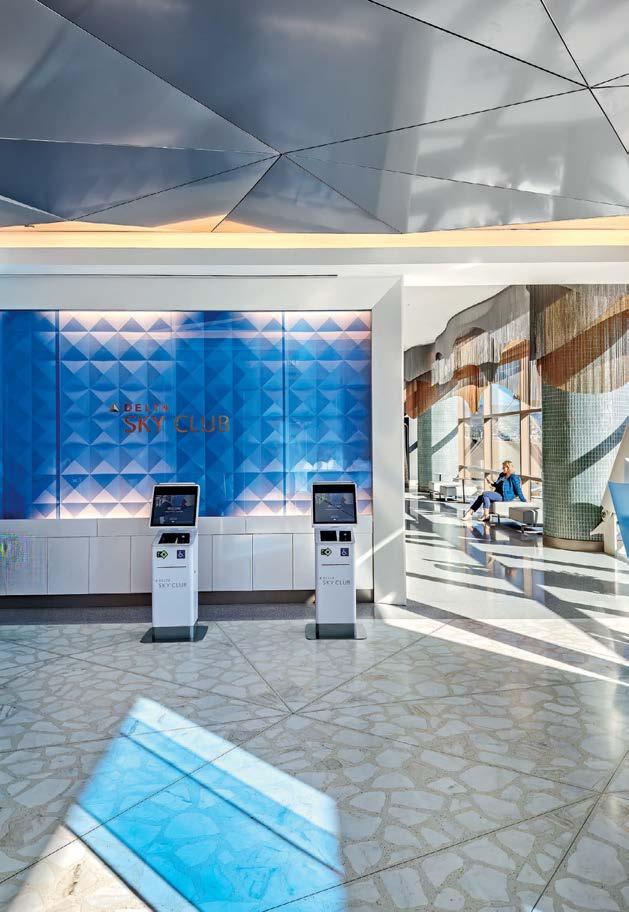
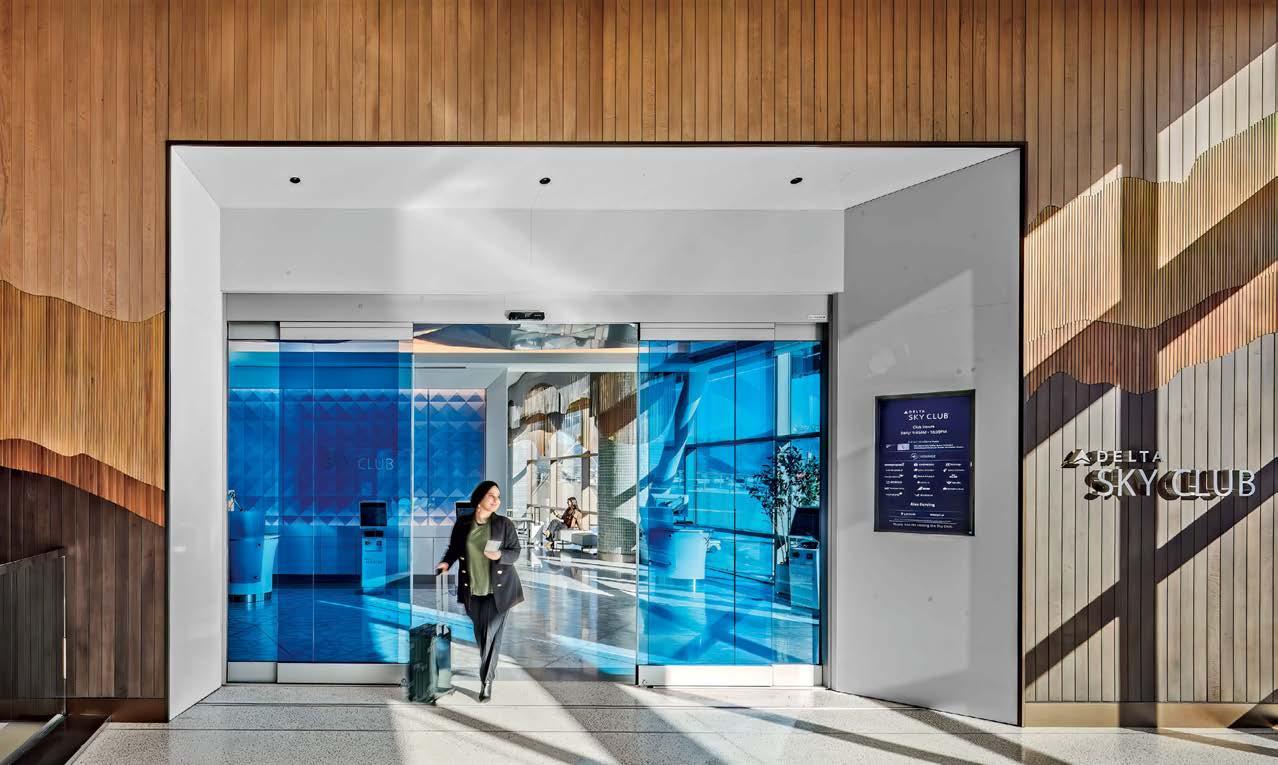
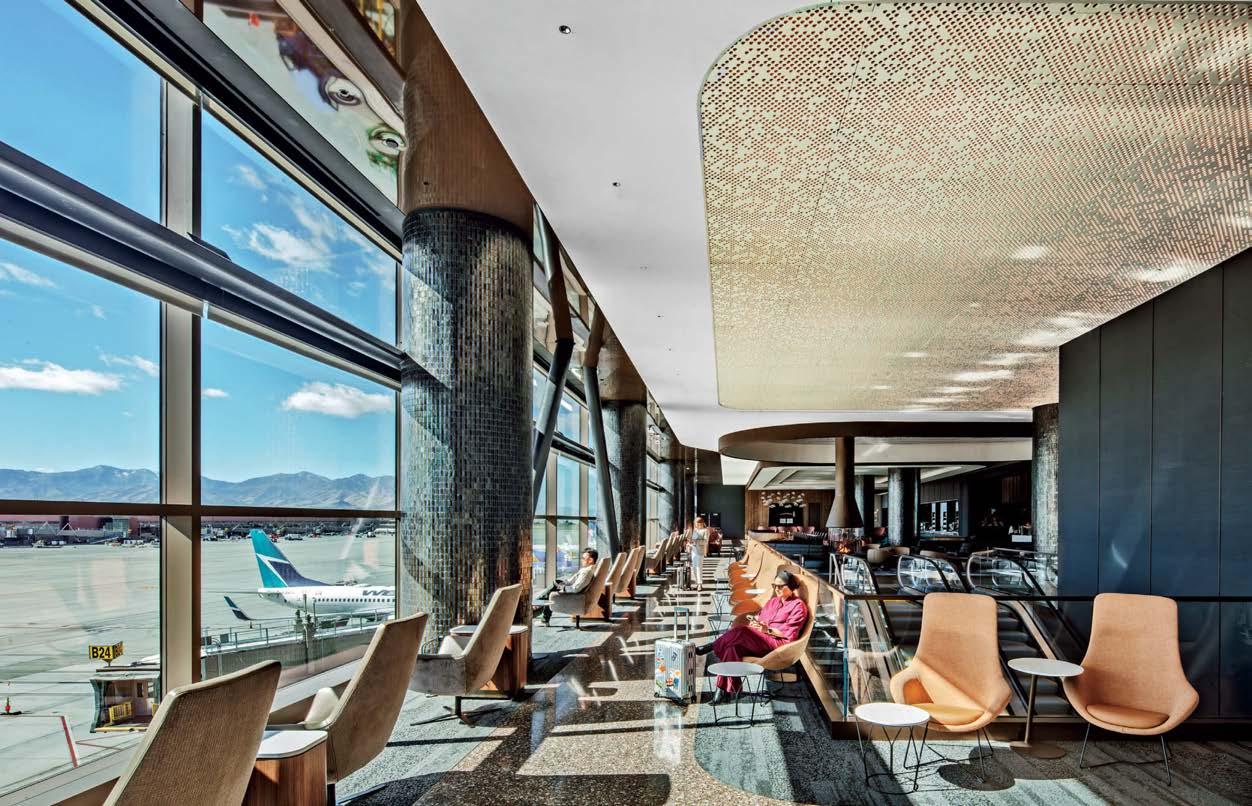
A custom, 360-degree bronze-finish fireplace anchors the lounge’s central seating area, where Verge armchairs by Eoos stand on carpet and under a ceiling of rippled stainless-steel panels, both alluding to the Great Salt Lake.
going through security,” Oppenhuizen continues. It should have the usual bar, beverage counters, food service, and phone booths, but also a few surprises. “Delta challenged us to create something that would set this club apart,” she adds.
The entrance from the terminal is always the same: wood paneling, Delta-blue sliding glass doors, and a sculptural logo wall. Beyond that, the experience varies. In Salt Lake City, HOK mined the natural beauty of Utah for inspiration. The arrival, on the lower level, evokes winter in Park City with cool colors and metals, like aluminum chains that shimmer by the window. A custom stretched acoustic ceiling forms a 3D diamond pattern like hunks of ice; the geometry mirrors the carved terrazzo floor below.
At the top of the escalator, guests encounter an earth-tone terrazzo path that acts like a hiking trail leading through the lounge and its different vignettes. The main seating area centers around a 360-degree fireplace with a bronze-clad flue; a ceiling paneled in rippled stainless steel and cool-blue carpet allude to the Great Salt Lake. Lounge chairs line the 15-foot-high window wall overlooking the tarmac and the Wasatch and Oquirrh mountain ranges in the distance. Beyond, the palette darkens to reference caverns and caves in national parks like Zion, as in bronze-frame seating nooks surrounded by plum-colored acoustical material. The theme is most evident in the moody bar area, wrapped in stonelike paneling that resemble geodes. Cast-glass sconces by local artisan Hammerton look like stalactites, while chandeliers by Dutch Studio Toer channel fireflies.
With 600 seats throughout the club, members have a mix of upright and relaxed postures to choose from, including 11 types of banquettes, almost all with a laptop table. “There’s not a bad seat in the house, because every area has a focal point,” Delta Sky Club design and facilities project lead Mishael Lake Thompson states. “HOK did a fantastic job creating scenes within each space that encourage people to come back and try a new spot.” They especially angle for a seat by the fireplace, she notes.
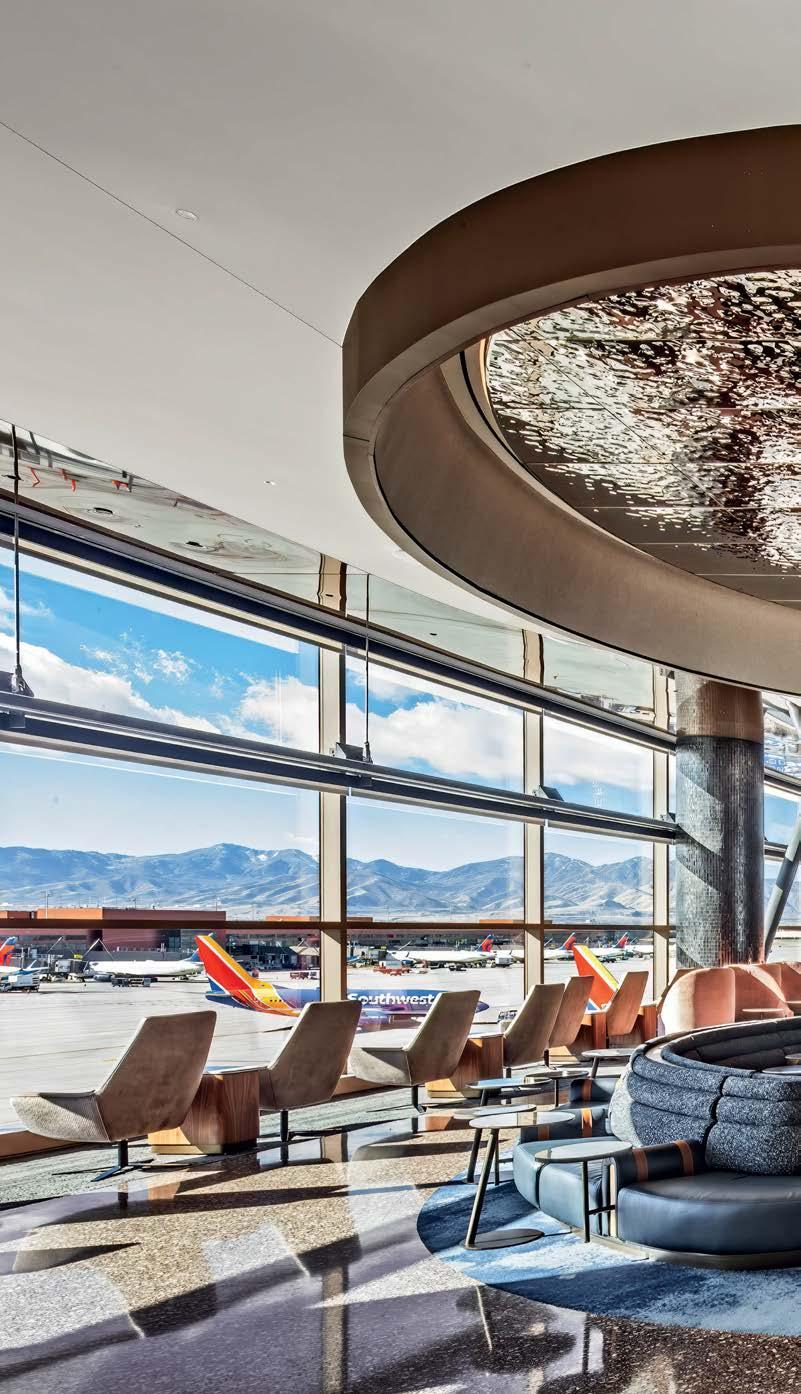
“There’s not a bad seat in the house, because every area has a focal point”
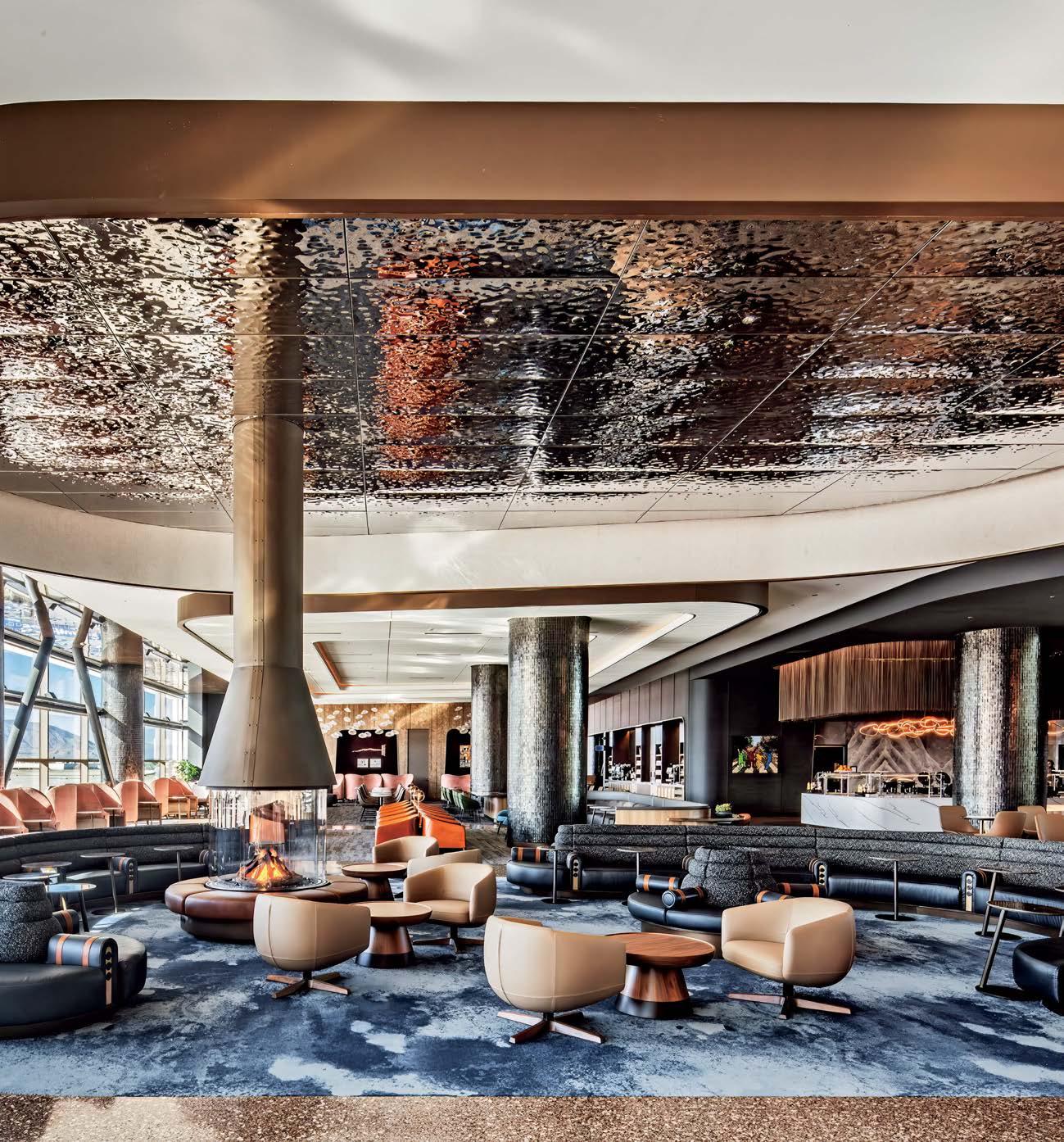
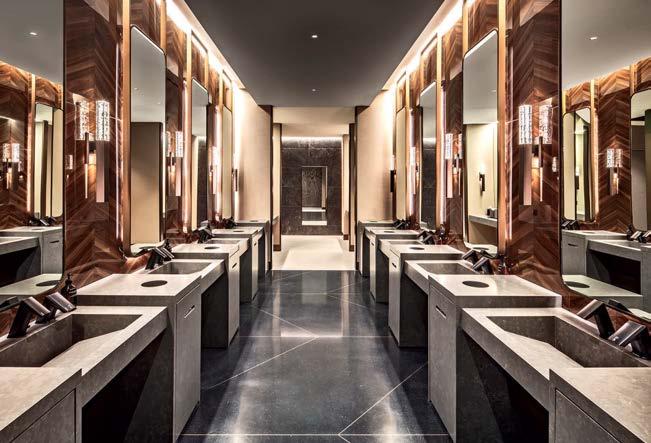
The most unusual element, though, is the cocoonlike immersion room, HOK’s response to the challenge to differentiate this Delta Sky Club from its peers. “Our series of large screens mimics the experience of looking out a plane window with the world moving by,” Oppenhuizen explains. Images of Utah landmarks—deserts, mountains, lakes, and rivers, in various weather conditions—appear, accompanied by the sounds of birds or thunderstorms, and colored LEDs in the felt-baffled ceiling shift with each scene. Behind velvet curtains, it feels removed from the rest of the lounge, but not so much that someone could miss a flight; turn around and planes are visible on the tarmac.
The idea for the immersion room stemmed from HOK’s research into neuroinclusive design, which calls for calming, biophilic environments that reduce stress. “Some individuals need a separation from everything going on in the club, and this space offers a visual and auditory escape,” Oppenhuizen says. It’s an amenity any harried traveler can appreciate.
PROJECT TEAM
BRIAN COOK; MEREDITH QUINN; KRISTIN CHOI; JIM LIN; ELIZABETH PAREDES; JAMES ADDISON; FATEN ABDULLAH; STEVEN HANDELMAN; TOM KACZKOWSKI; LISA CASSEDY; STEVE WITTE: HOK.
ELEVATE: GRAPHICS. TWINHOUSE ART ADVISORY: ART CONSULTANT. ISEC: MILLWORK. HOLDER
CONSTRUCTION: GENERAL CONTRACTOR.
PRODUCT SOURCES
FROM FRONT ARCHITEX: DRAPERY FABRIC (IMMERSION). FUTUMIS: CUSTOM TABLES. BOSS DESIGN: CHAIRS (IMMERSION), GREEN SOFAS (LOUNGE), STOOLS (BAR AREA). KRISKADECOR: CHAIN (ARRIVAL). 3FORM: GLASS (ENTRY). KEILHAUER: ORANGE CHAIRS, B ARREL CHAIRS (LOUNGE). PAUL BRAYTON
DESIGNS: BEIGE CHAIRS. ACUCRAFT: CUSTOM FIREPLACE. RIMEX METAL: METAL CEILING PANELS.
EGE CARPETS: CARPET. NEIL ALLEN INDUSTRIES: TABLES. SLOAN VALVE COMPANY: SINKS, SINK FITTINGS (RESTROOM). HAMMERTON: SCONCES. STONE SOURCE: WALL TILE. C.F. STINSON: ANZEA UP HOL STERY (NOOK). DAVIS: LOUNGE CHAIRS (BAR AREA). BOCCI: PENDANT FIXTURES. MOOOI: CHANDELIERS. ALEX TURCO THROUGH ROCK MILL TILE & STONE: RESIN PANELING. ELITE MODERN: CHAIRS. THROUGHOUT INTERFACE: CARPET TILE. INNOVATIONS: WALLCOVERING. ARKTURA; UNIKA VAEV; VELARIA SYSTEMS: ACOUSTIC CEILINGS. DALTILE: GLASS TILE. TERRAZZO & MARBLE SUPPLY: TERRAZZO. ARBORITE: PLASTIC LAMINATE. SCUFFMASTER; SHERWIN-WILLIAMS: PAINT.
Top: Hammerton’s Axis Modern sconces illuminate the women’s restroom, with quartz-top vanities, herringbone porcelain wall tile, and terrazzo flooring. Bottom: A Corian laptop table, Anzea upholstery, and acoustic paneling furnish a banquette nook.
Opposite top: Across from Sebastian Herkner’s Tote lounge chairs, Bocci’s 73 Random pendant fixtures and a glass tile–clad column emit an icy shimmer in the bar area. Opposite bottom: Another bar seating area references Utah’s caves and mining history, with stonelook resin paneling, copper details, and Flock of Light chandeliers by Studio Toer.
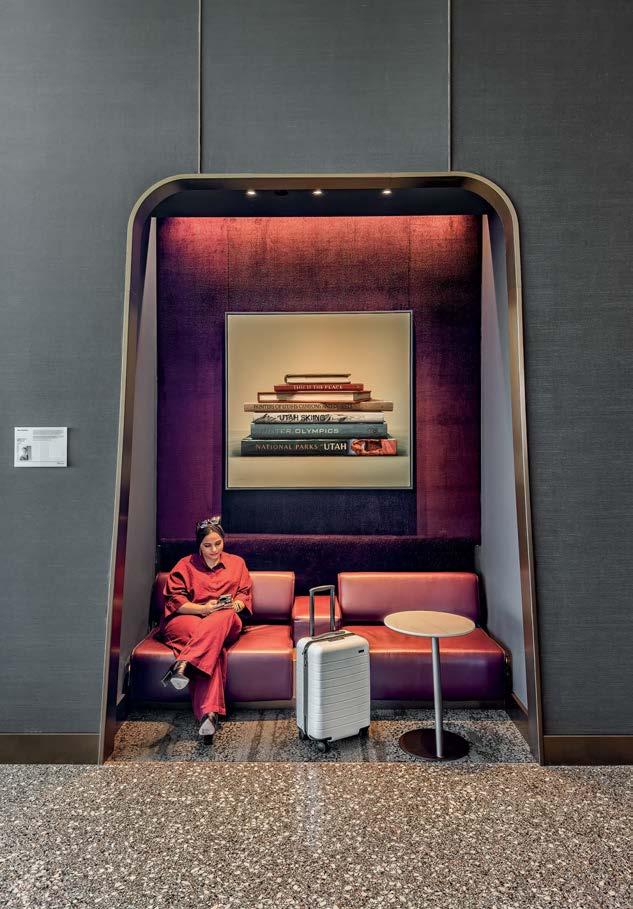
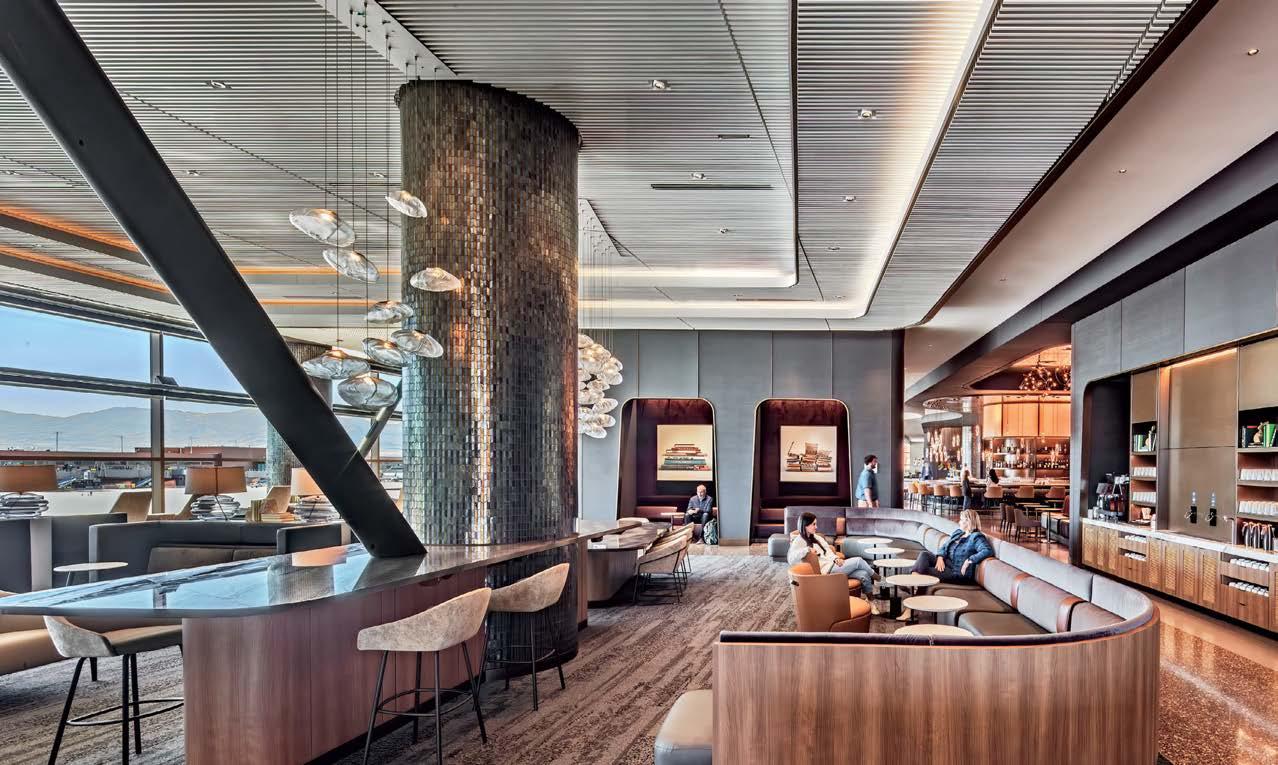
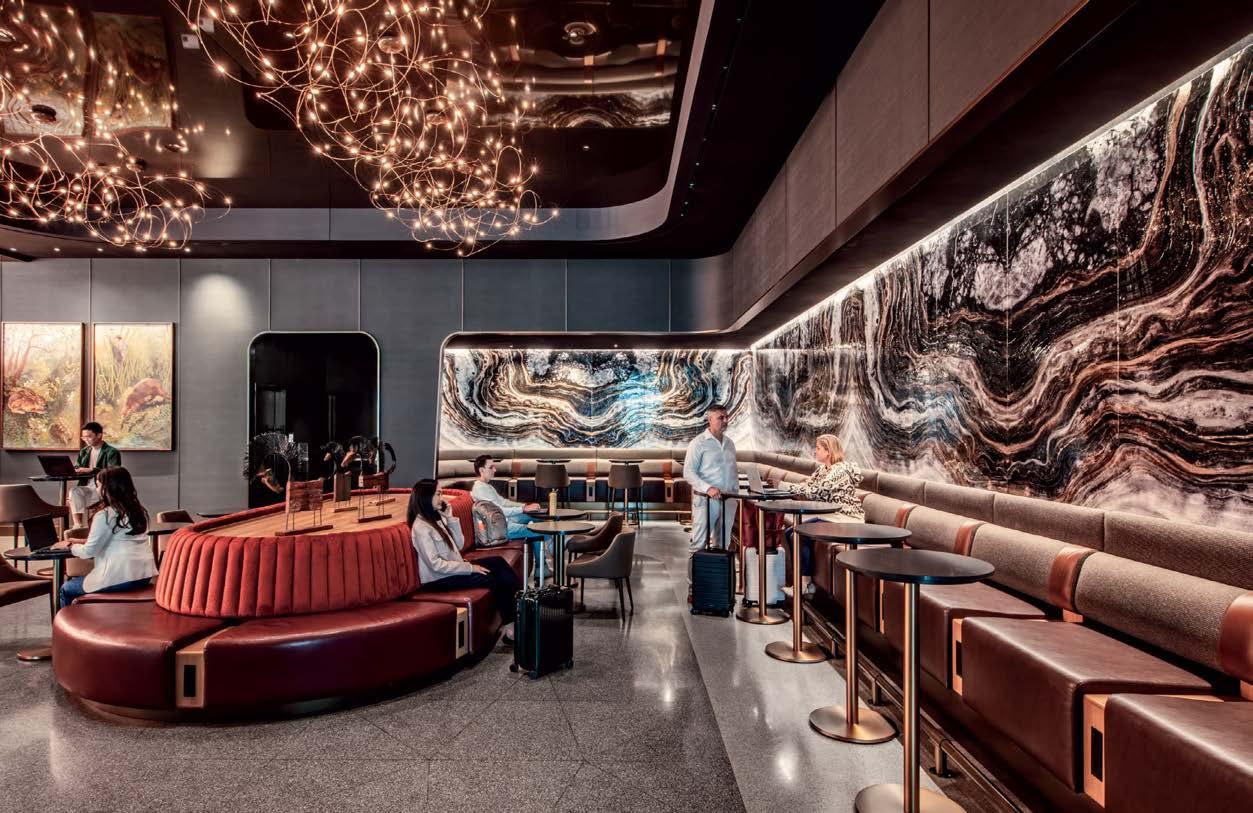
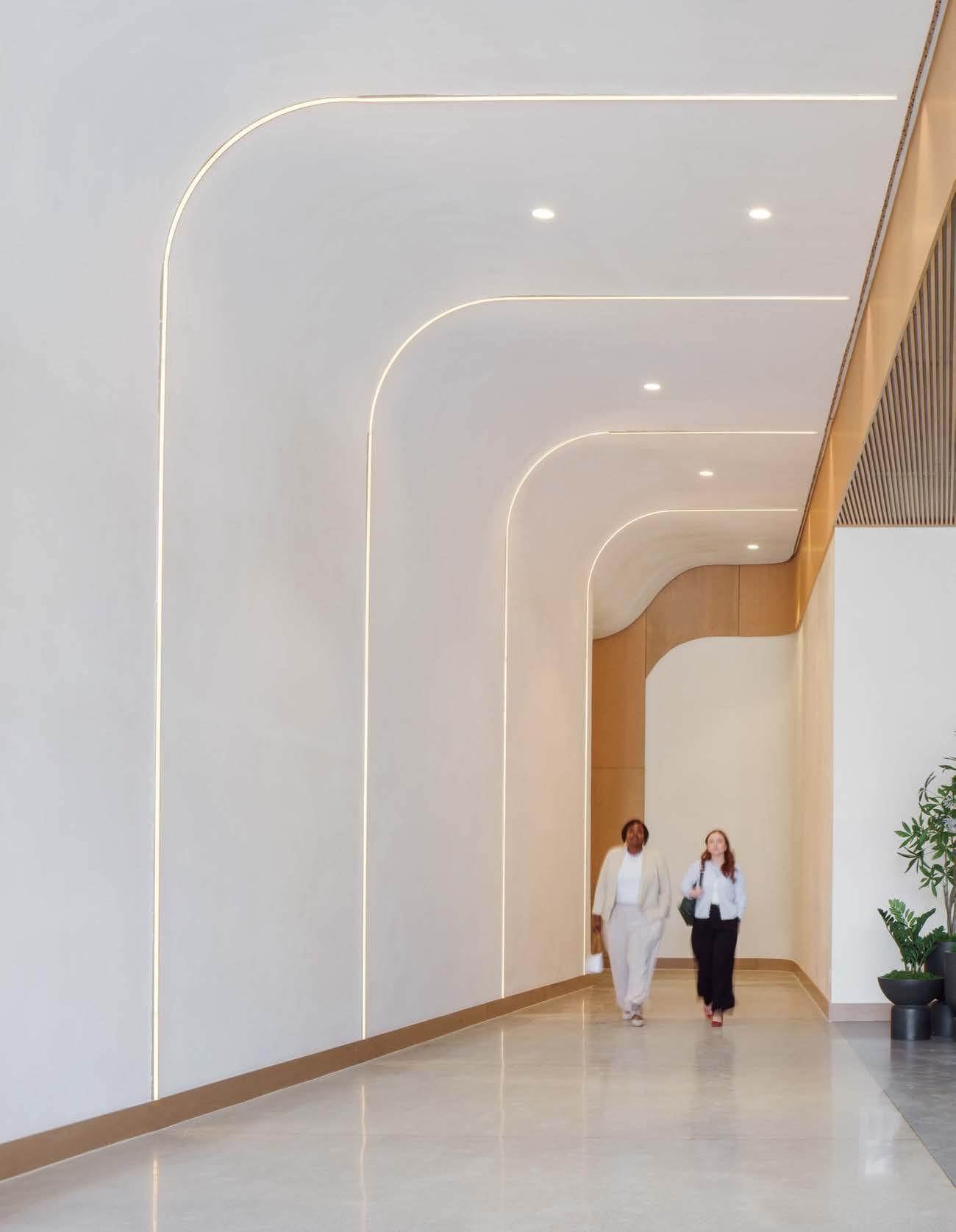
From the U.S. to China, workplace to hospitality, projects by top and rising firms embrace storytelling and sustainability, creating spaces people want to be in text: annie block
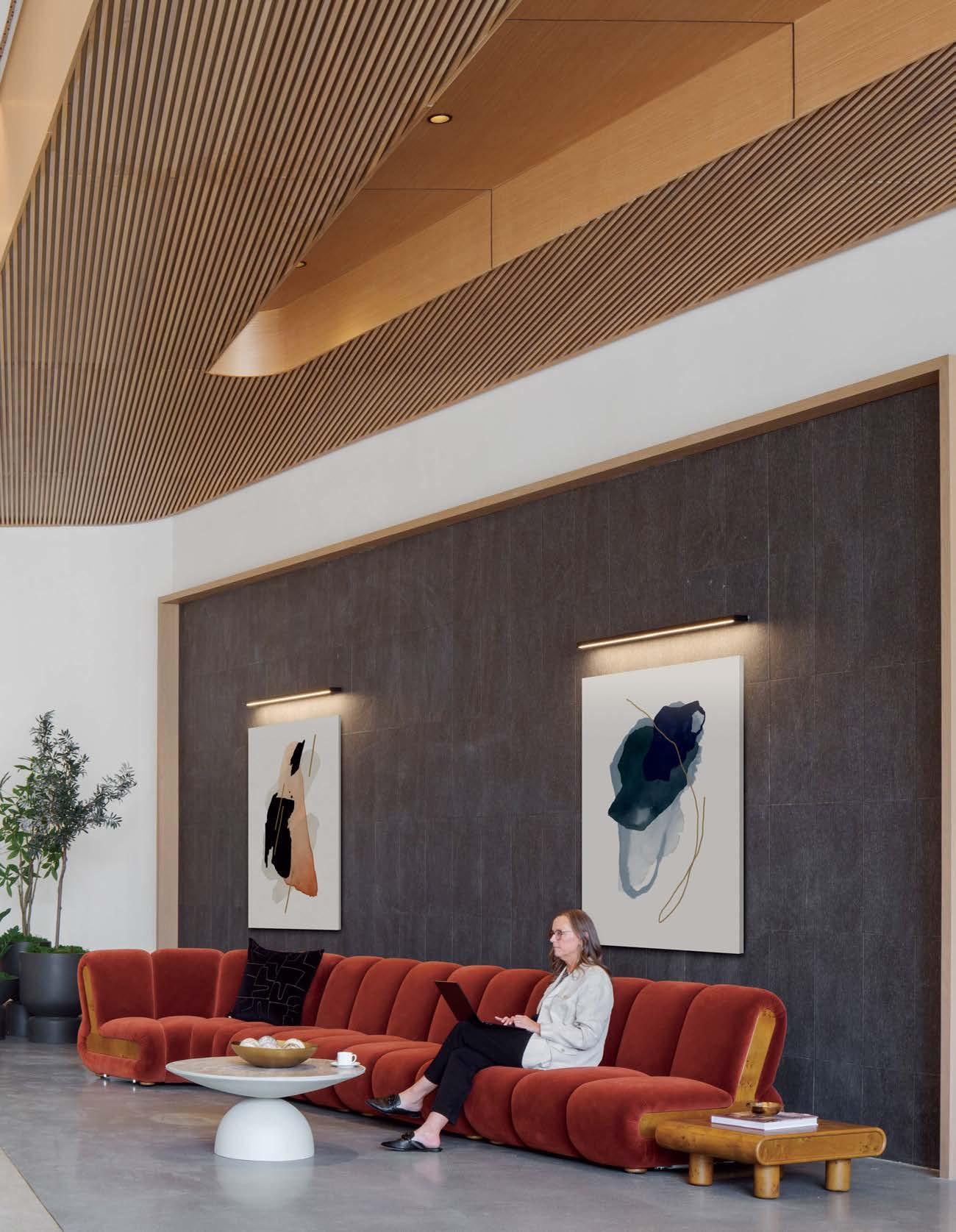
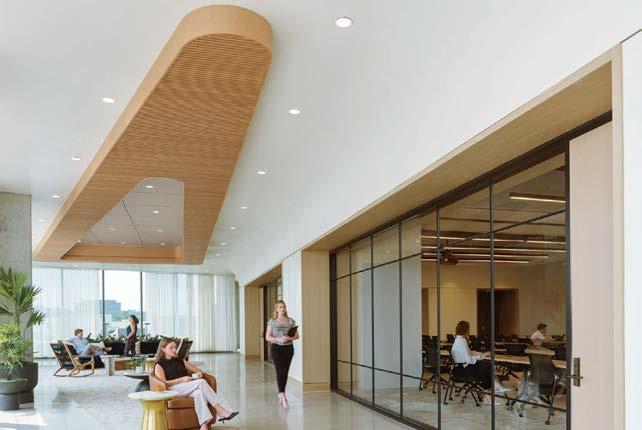
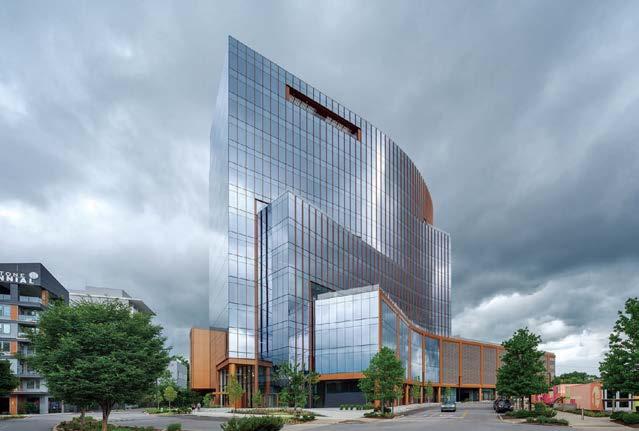
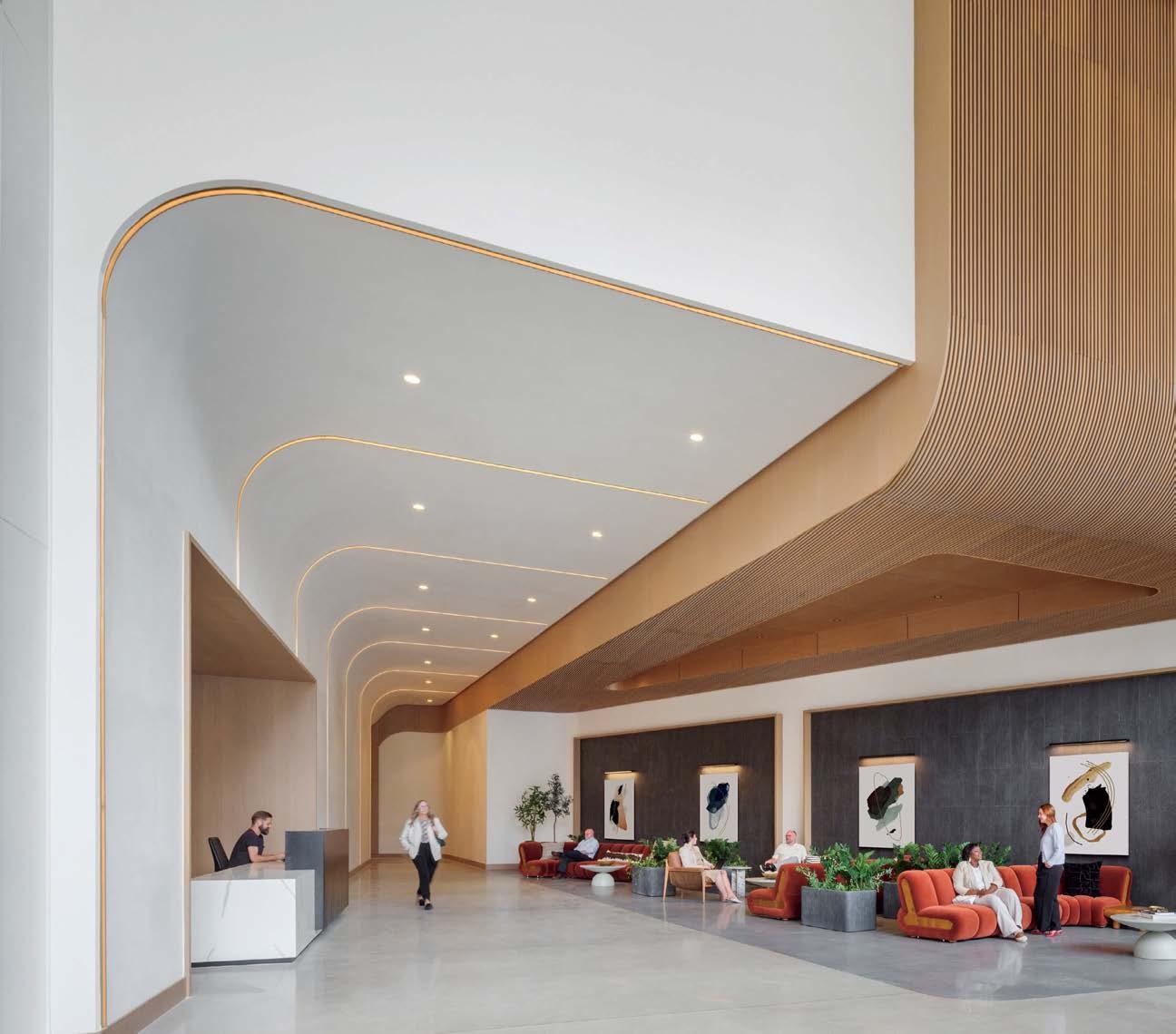
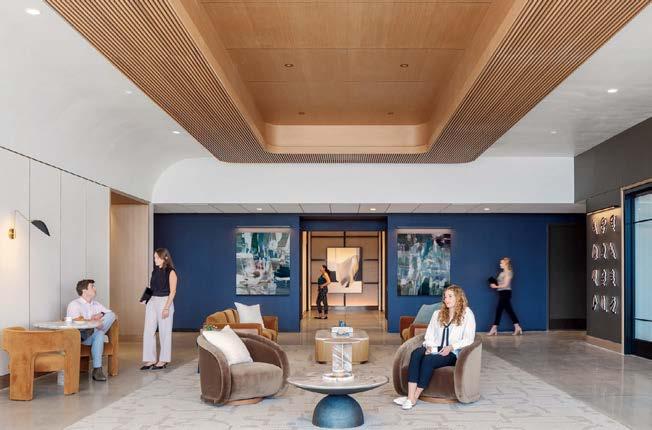
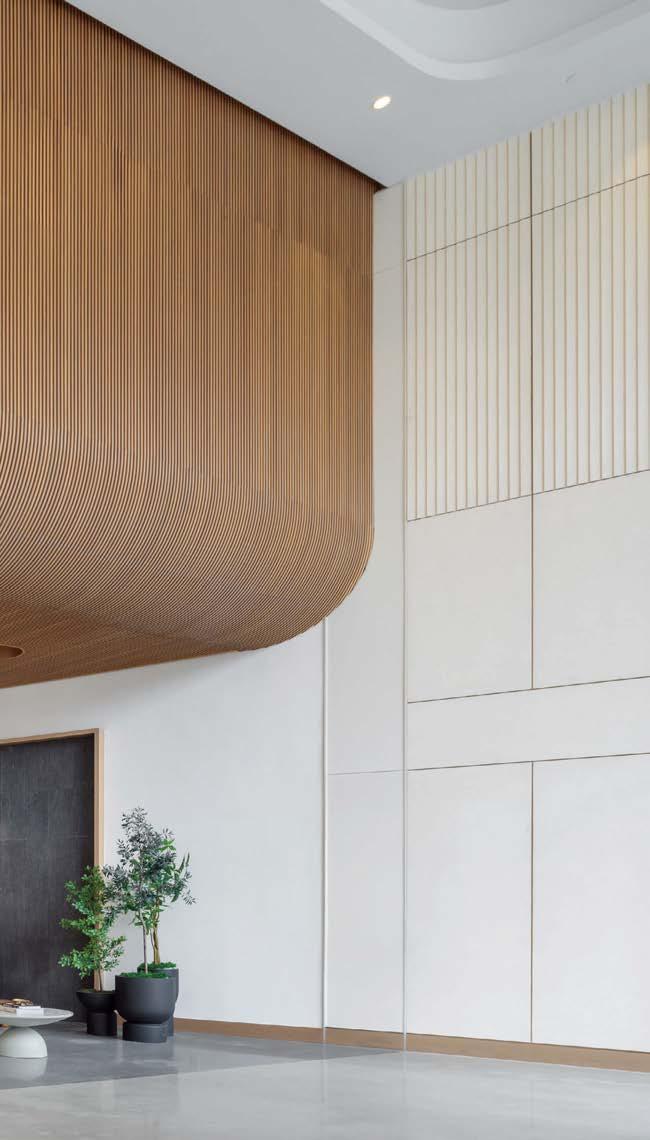
“We took inspiration from the architecture’s taught curves and peeling layers, its sculptural and functional qualities, to formulate elevated, hospitality-rich interiors”
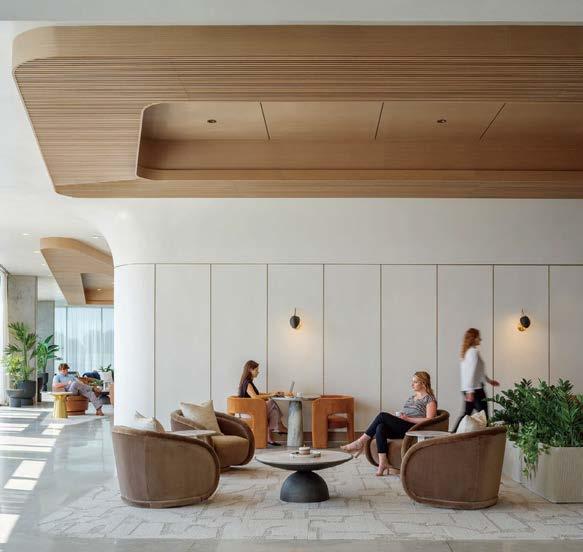
100 giants #79.
project 5 City Blvd, Nashville, Tennessee.
standout More than 30,000 square feet of this ground-up, 15-story office tower by architecture firm Goettsch Partners has been crafted by PDB to be flexible, welcoming, and wellness-oriented. That’s evident in the lobby, an airy 30-foot space with inviting velvetappointed curved sectionals, capped by a dramatic ceiling swoosh veneered in warm white oak. The upscale finishes continue on level five—a full floor of amenities—where glass-fronted training rooms are divisible and daylit, and lounges are like living rooms, with chenille-upholstered barrel chairs, marble-topped coffee tables, and carbon-neutral carpet tile.
photography Jason O’Rear.
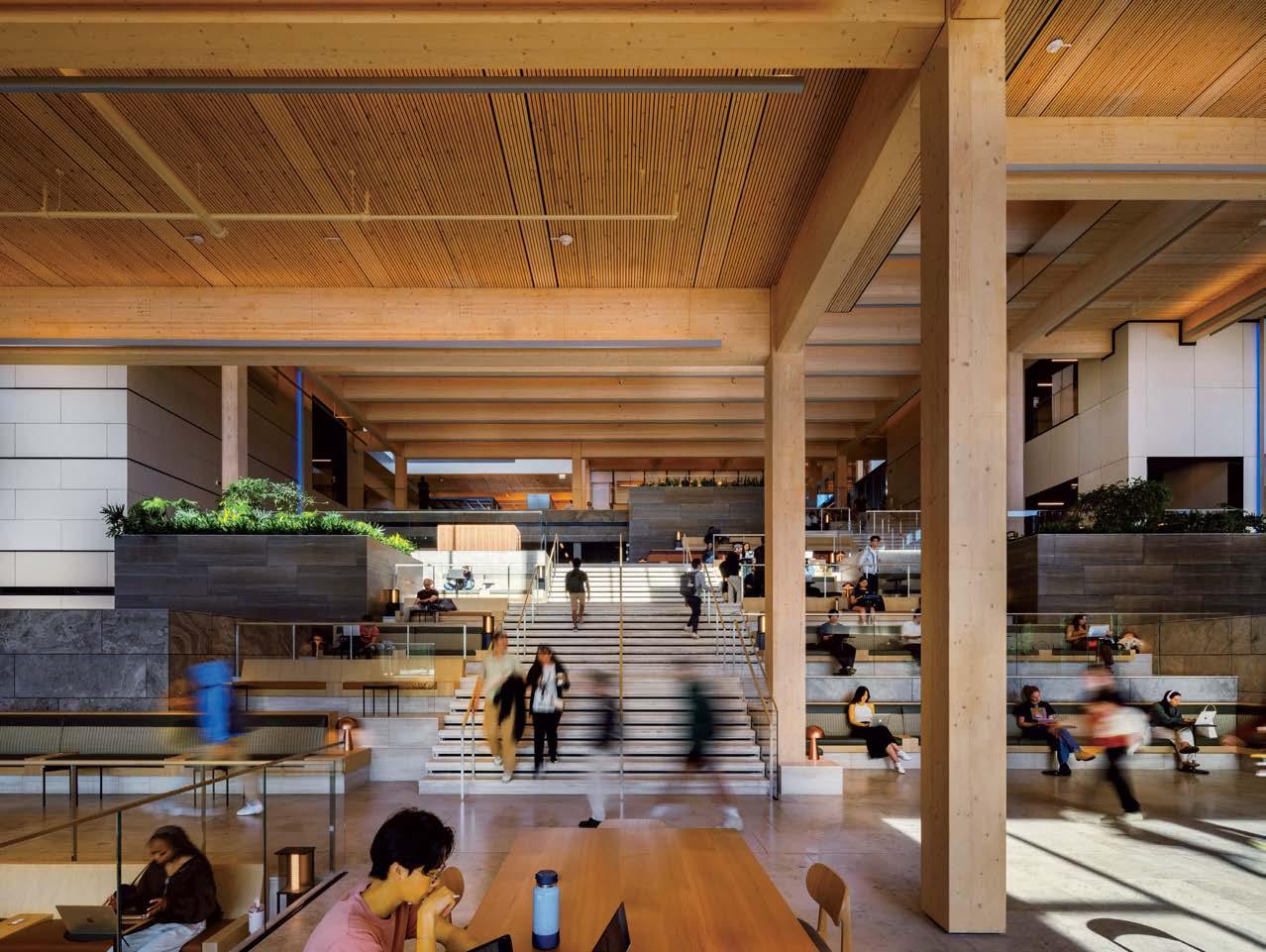
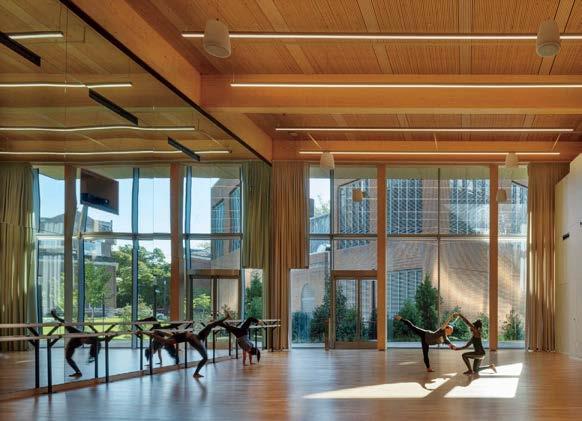
100 giants #23.
project Bloomberg Student Center, Johns Hopkins University, Baltimore.
standout Even in academia, Rockwell delivers cinematic, engaging interiors. Collaborating with design architect BIG–Bjarke Ingels Group, the 150,000-square-foot project combines spaces geared for hospitality, performance, and mindfulness across four floors, which center on an atrium “living room,” a convivial, open-flow expanse defined by mass-timber columns and ceilings and a limestone feature stair, all radiated by study and dining areas. Included in the program are multiple rooms for reflection, art-making, dance classes, and music rehearsals, the final version of which may appear in the black-box theater, its 250 seats sporting recycled polyester–blend upholstery in a JHU Blue Jays colorway.
photography Nic Lehoux.
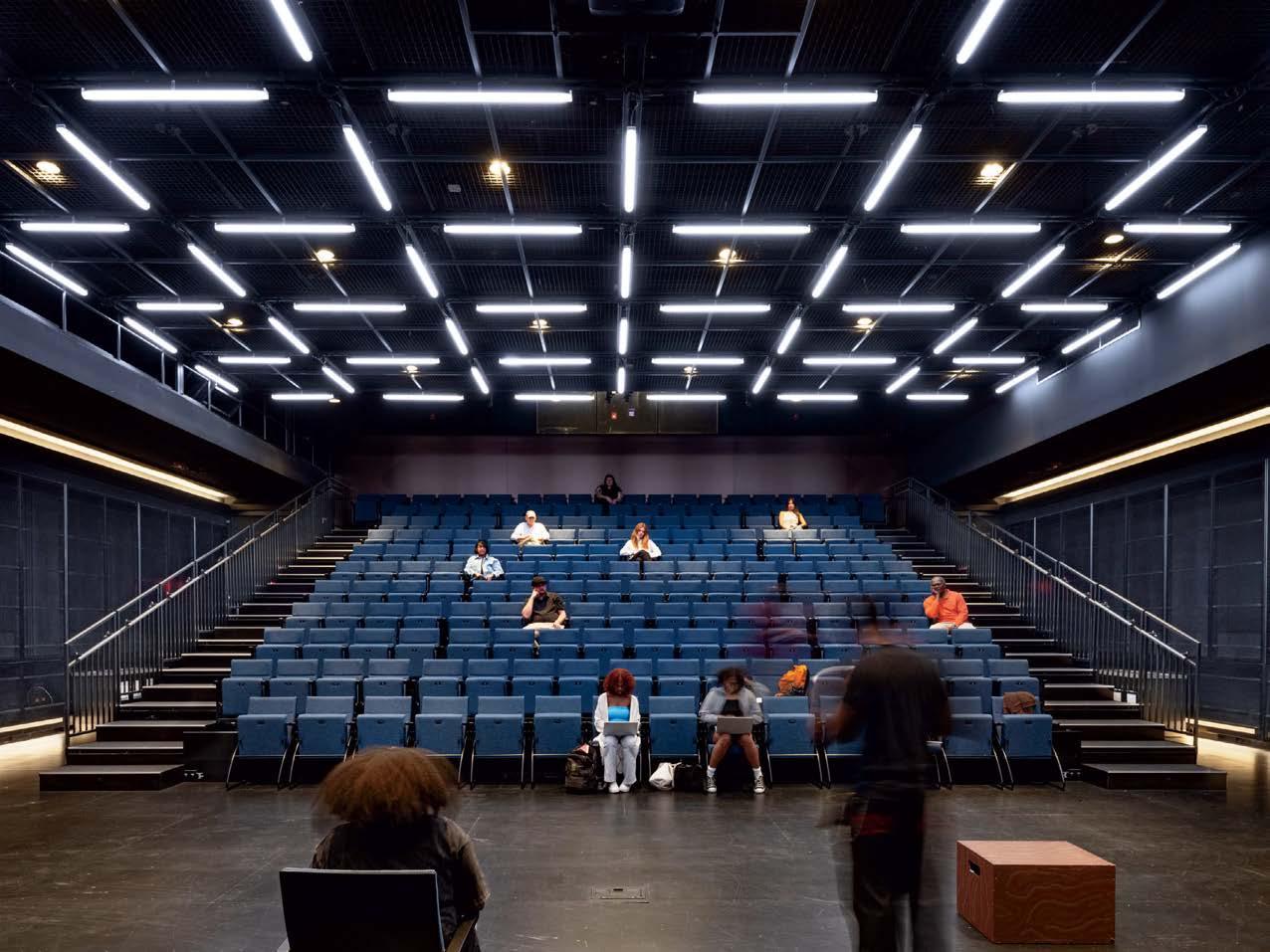
“We tapped into our roots in social, memorable spaces that choreograph and capture the energy of the users, in this case students”
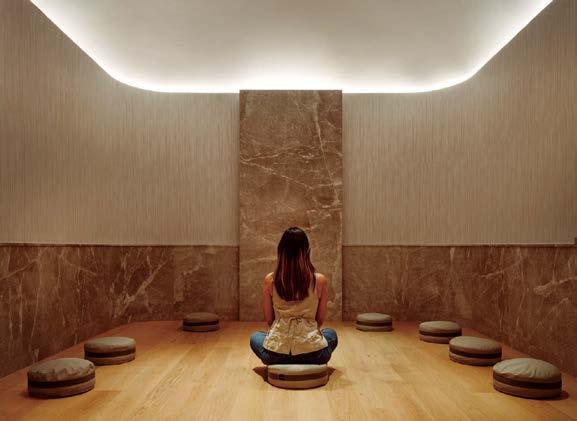
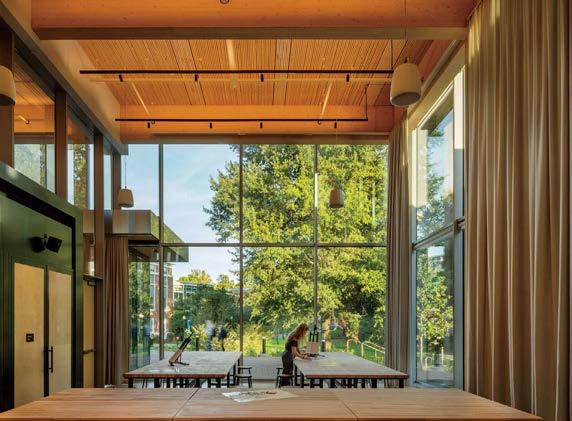
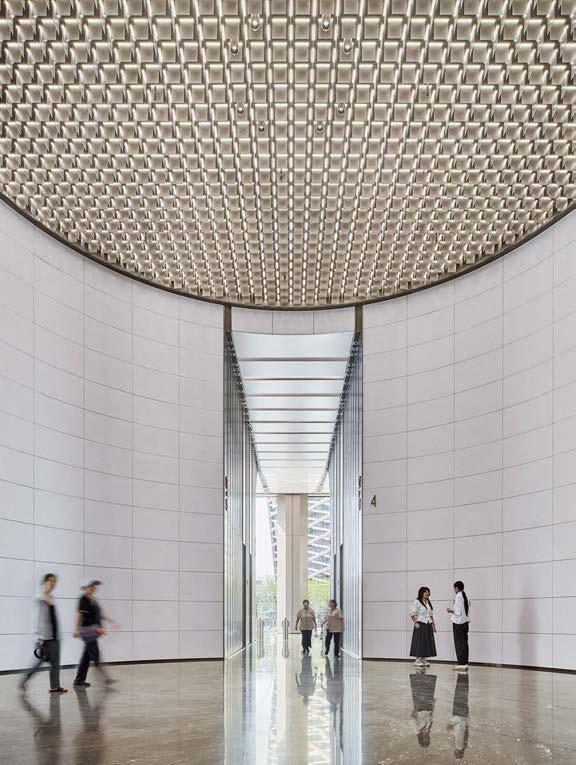
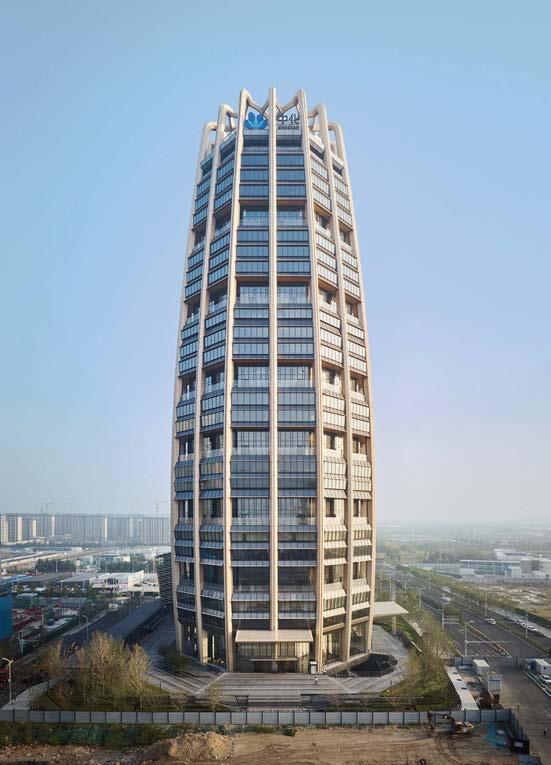
100 giants #28.
project Sinochem, Xiong’an, China.
standout The 31-story headquarters for one of the world’s largest chemical companies is a beacon of high performance. A dominant material is aluminum paneling, which, for the exterior crown, has been arranged in a peony form referencing Sinochem’s corporate identity and the Chinese symbol for prosperity, renewal, and vitality. The metal reappears inside, surrounding the lobby, where it’s champagne-toned or bronze-finished, and wrapping the 40-foot atrium, one of six, where it resembles bamboo. The recyclable material joins photovoltaics, passive solar control, and natural ventilation and daylighting, which has the nearly 1 million-square-foot project targeting LEED Platinum certification and net-zero energy in operations by 2050. photography Qingyan Zhu.
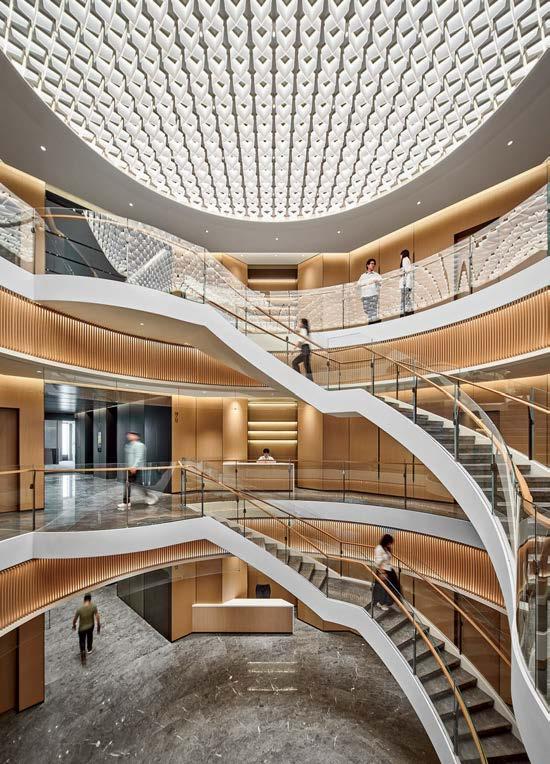
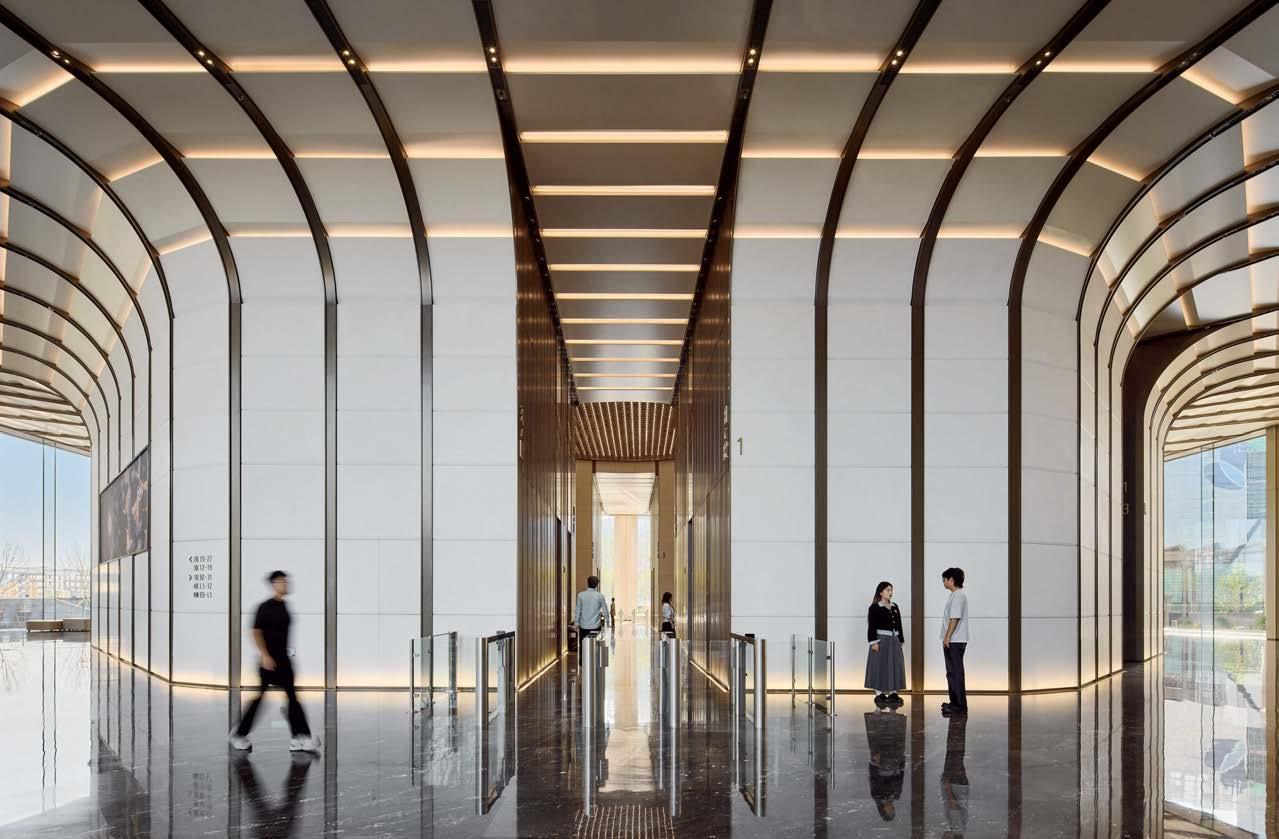
“The
octagonal tower pairs sustainability with a workplace centered on light, air, and well-being”
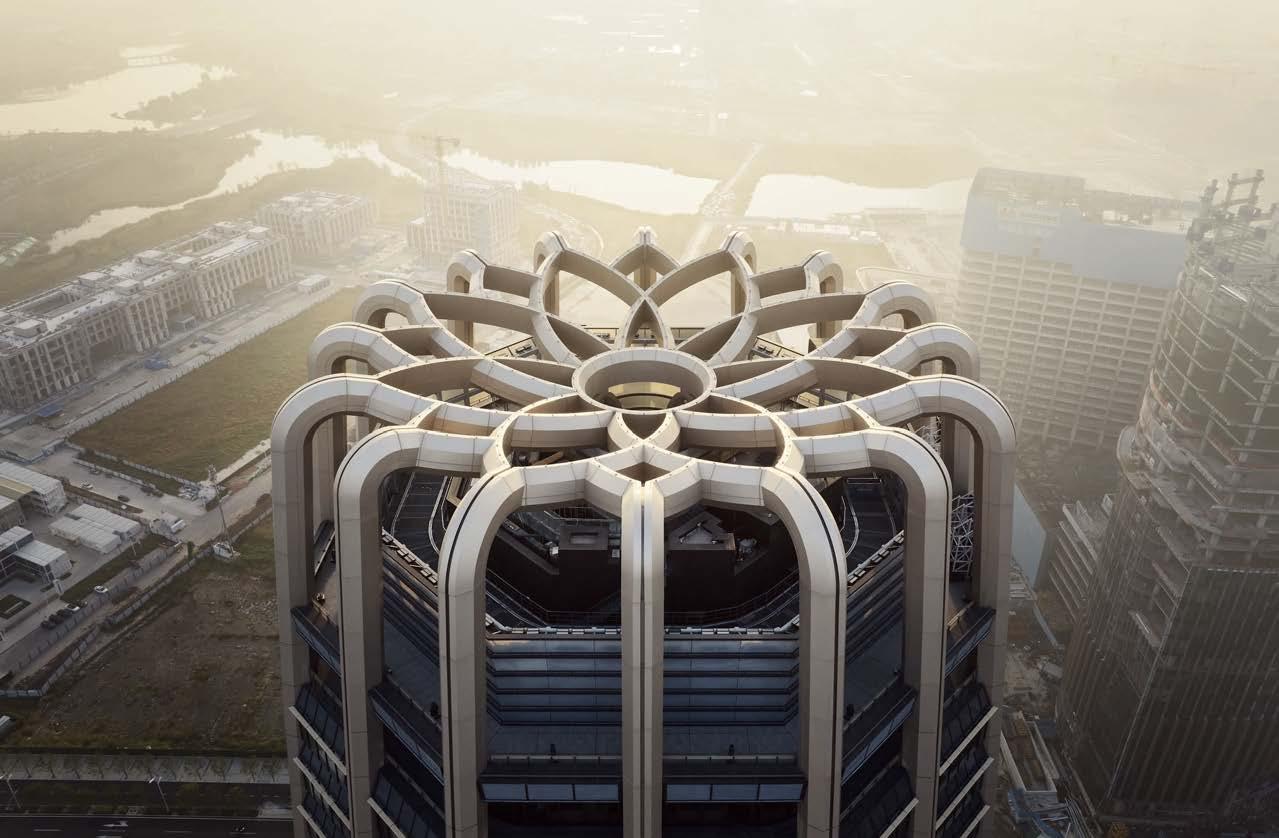
“Details like suiting-stitch on the TerraStrand rug reference the Garment District location”
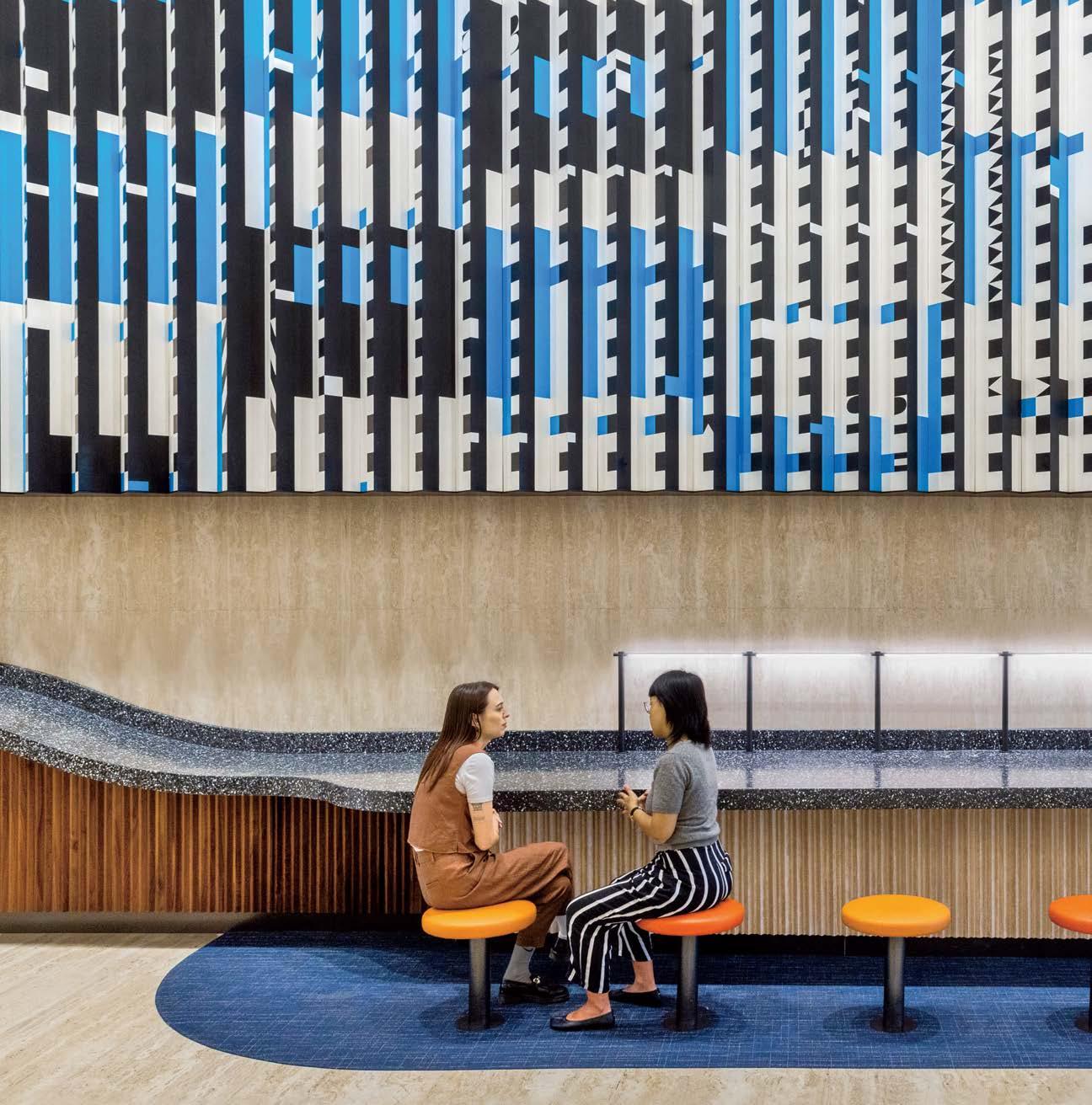
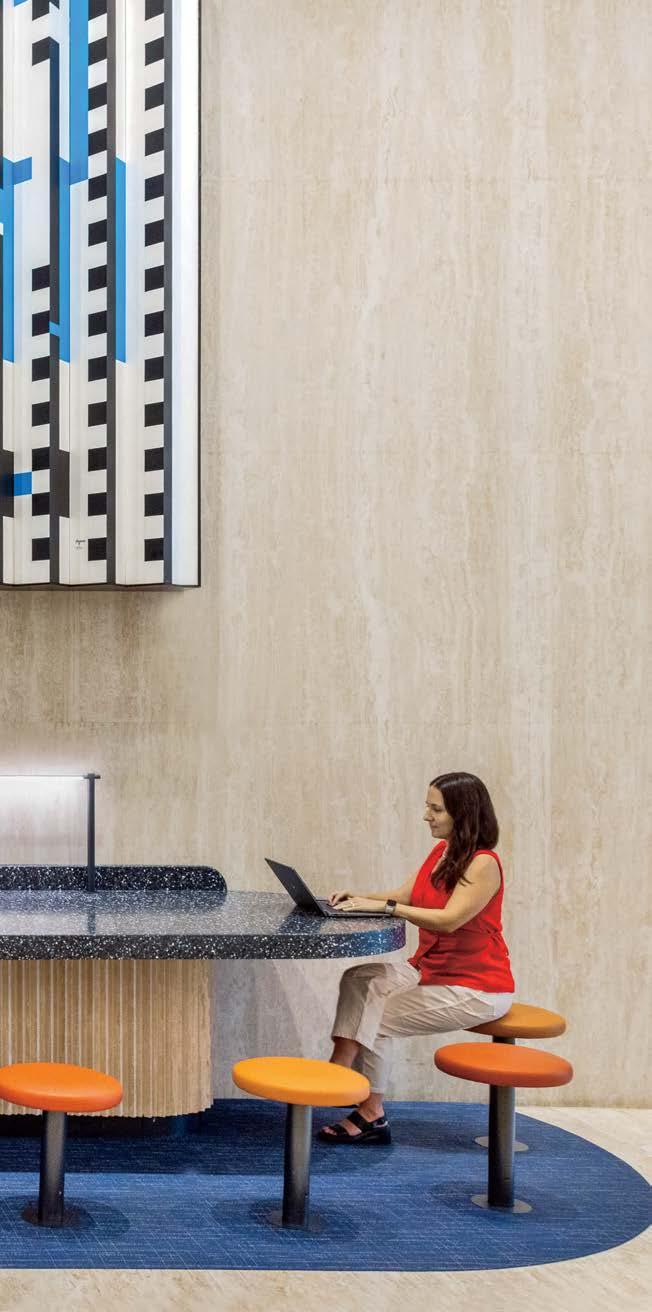
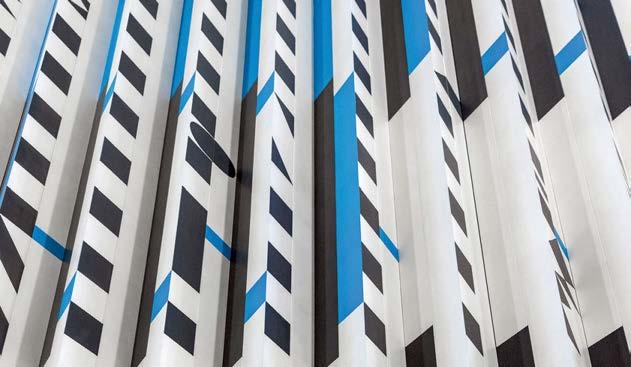
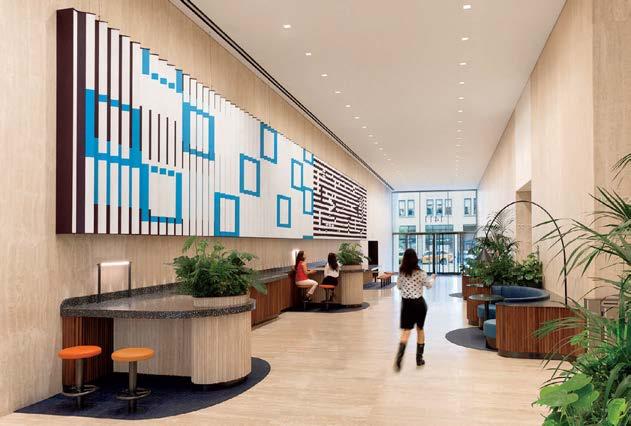
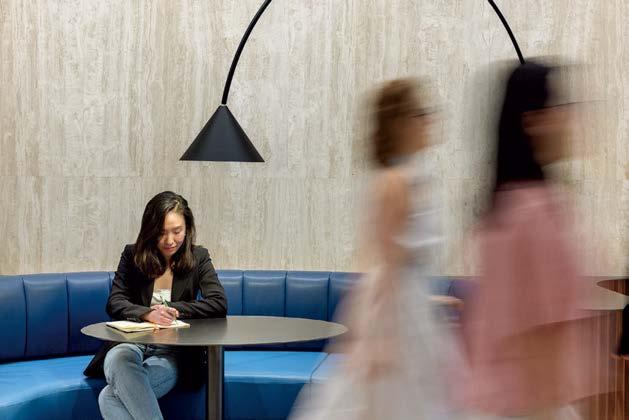
rising giants #177. project 1411 Broadway, New York.
standout It helps when a client has a blue-chip art collection to choose from. Such was the case with the owner of this 40-story, 1970 office tower, formerly the World Apparel Center. KPF has fashionably transformed its 6,000-squarefoot, through-block lobby, coordinating the blue in Yaacov Agam’s kinetic 8-by-65-foot acrylic on aluminum from 1972 with the renovation’s color scheme, from the banquette’s vegan leather upholstery to the terrazzo of the 67-foot-long built-in workstation bar and even the complimentary Manhattanhenge-hued silicone covering the stools. Actual sunsets can be viewed from the indoor/ outdoor rooftop amenity currently under construction.
photography Claire Dub/KPF.
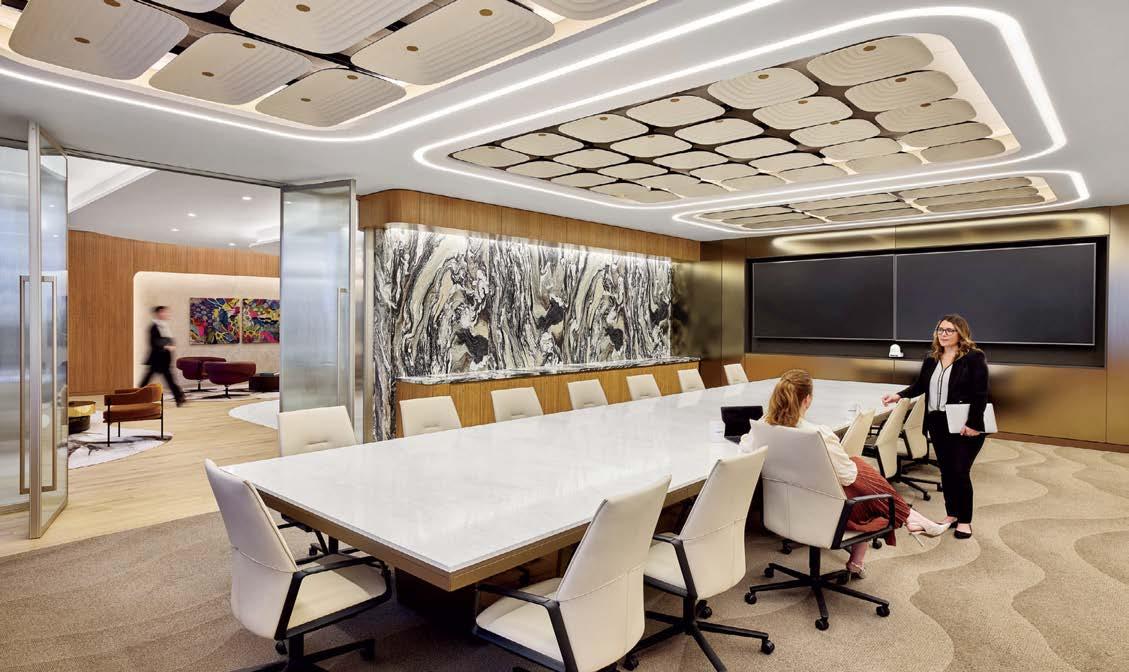
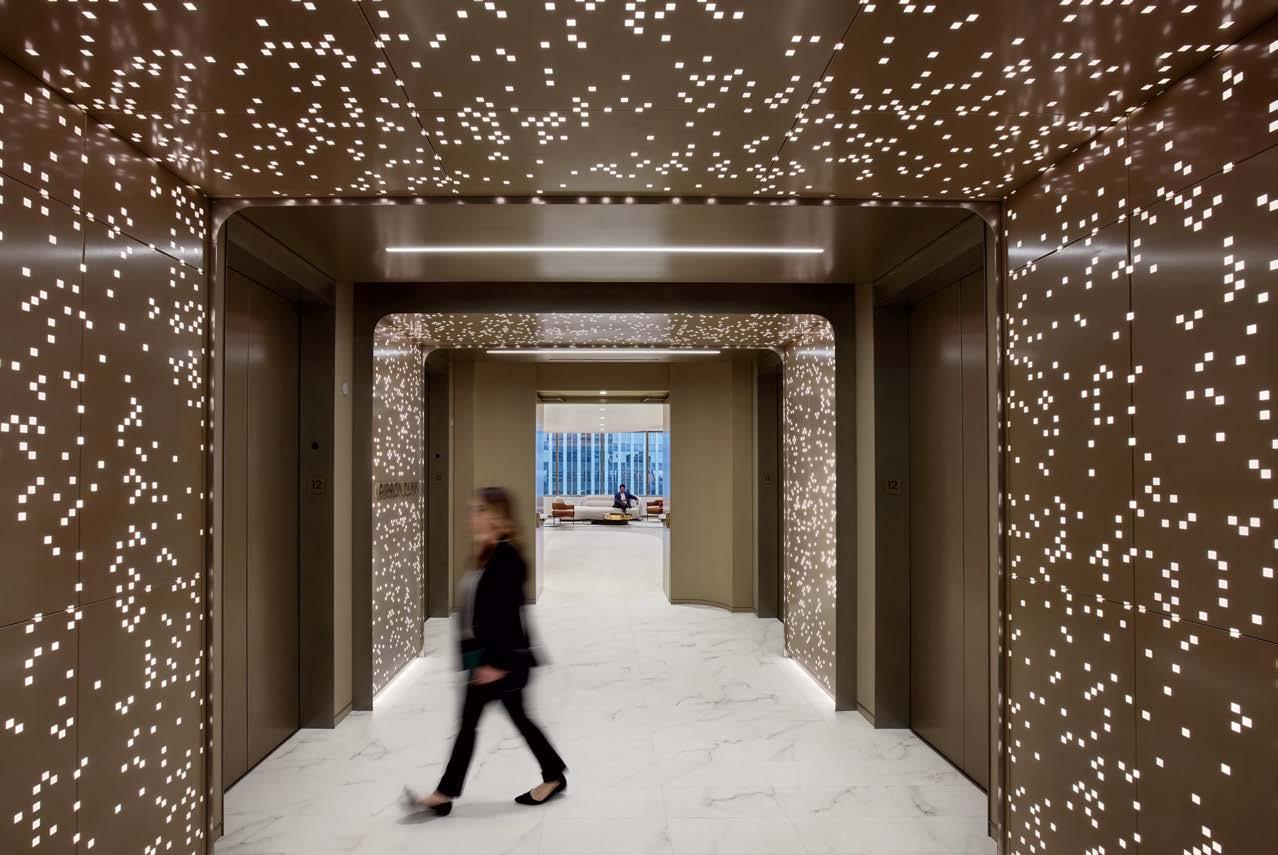
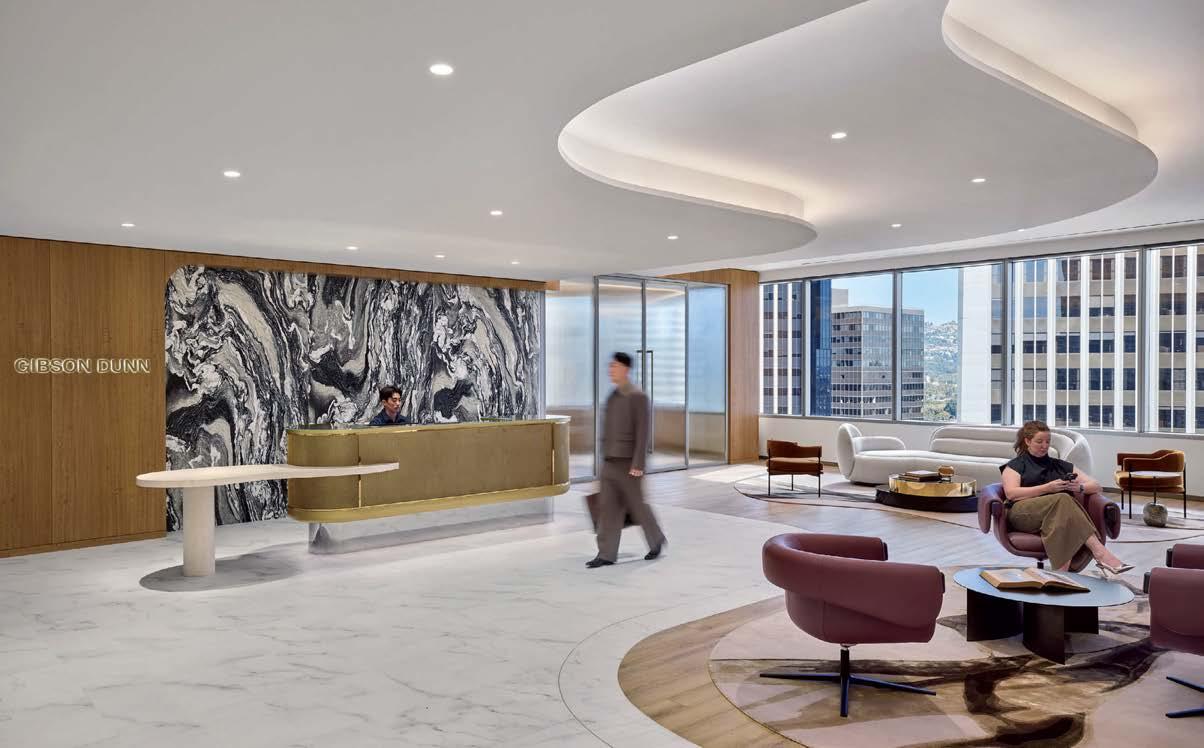
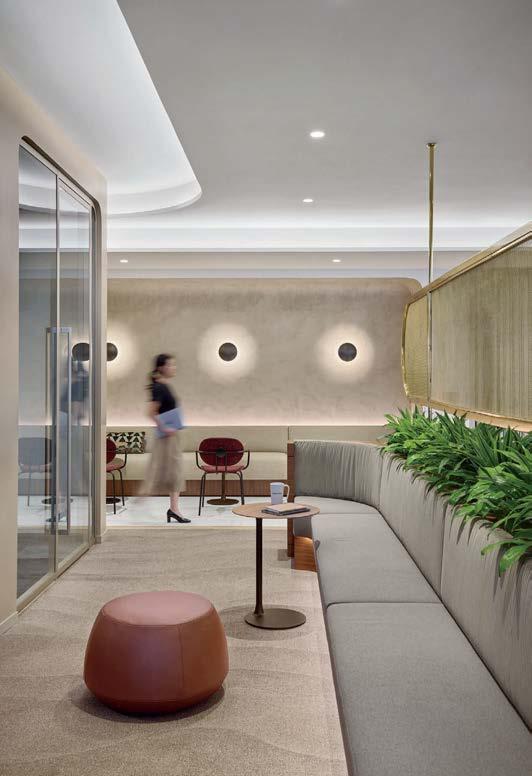
“The palette—reflective, lustrous, warm—draws from the region’s deserts, waves, and canyons”
100 giants #1.
project Gibson Dunn & Crutcher, Los Angeles.
standout When the 136-year-old law firm needed more space, it landed in a location that was top to bottom by the Giants’s highestranking firm, which orchestrated the 40,000-square-foot interiors on the penthouse floor of the Class A office building it designed in 2006. The workplace concept leans in to site context, starting with the glimmering elevator lobby, enveloped by custom aluminum panels that have been CNC-cut and backlit with LEDs for a constellation referencing the project’s Avenue of the Stars location. Farther in are nods to California sunsets and sandy beaches, such as reception’s rhythmic Cipollino Ondulato marble wall and ceiling of lapped drywall and plaster, the boardroom’s coastlinelike carpet (fittingly made of regenerated fishing nets), and a lounge aglow from Disco sconces by Jordi Miralbell and Mariona Raventós. photography Garrett Rowland.
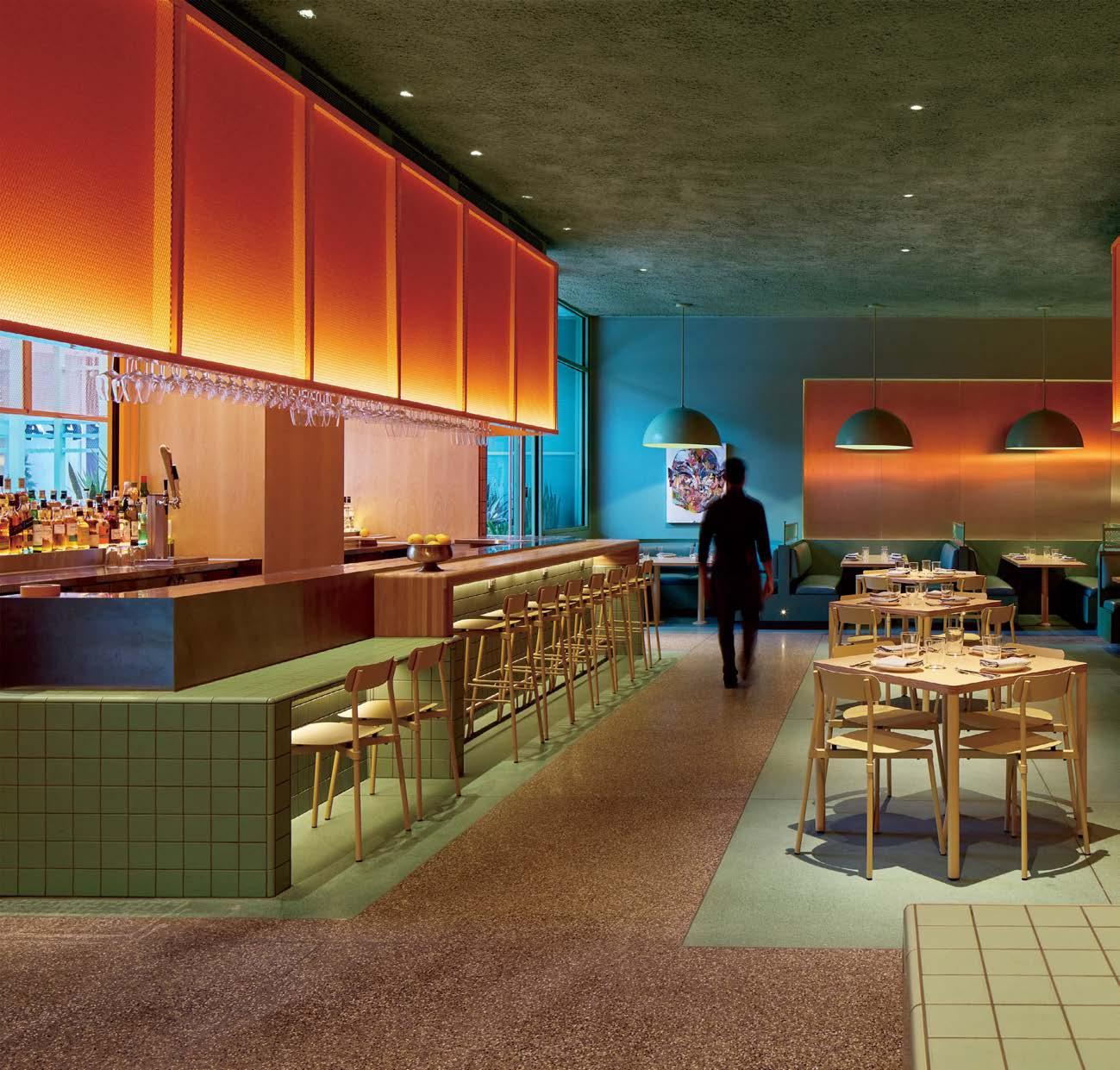
rising giants #132. project Super Peach, Los Angeles. standout For chef David Chang’s latest West Coast eatery, he returned to the firm that designed his Momofuku Noodle Bar Uptown in New York in 2018. The concept for this nearly 10,000-squarefoot commission extends beyond the noodle-centric format into a more expansive, all-day offering emphasizing variety, sociability, and performance, which INC expressed with a theater-in-the-round layout, a visible open kitchen, and a mix of booths, bars, and custom birch-ply tables that encourage lingering and interaction. Via upper swaths of powder-coated metal mesh and uplit acoustic panel, glazed porcelain tile, 36-inch-diameter pendant domes, and a SonaSprayed ceiling, the palette focuses on citrus and grounding earthy-green tones as a literal and atmospheric representation of the restaurant name and company branding. photography Ye Rin Mok.
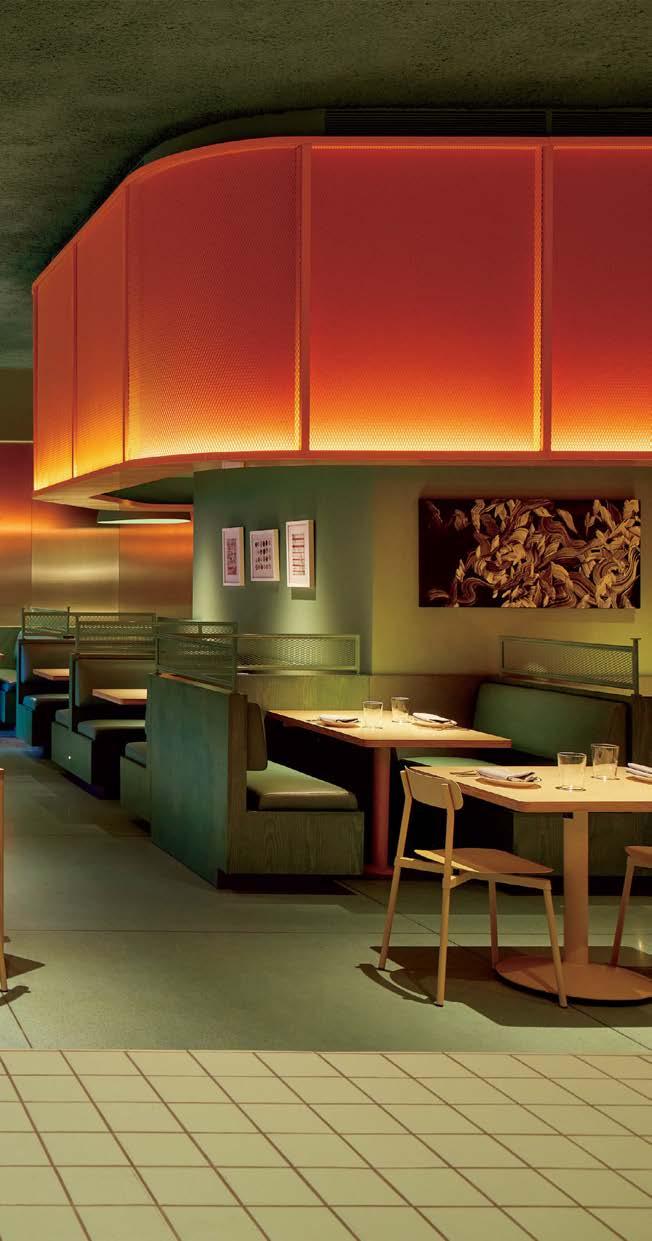
“While orange is core to Momofuku, its saturation and application here intentionally evoke the warmth and intensity of L.A. ’ s light, reinforcing a sense of place”
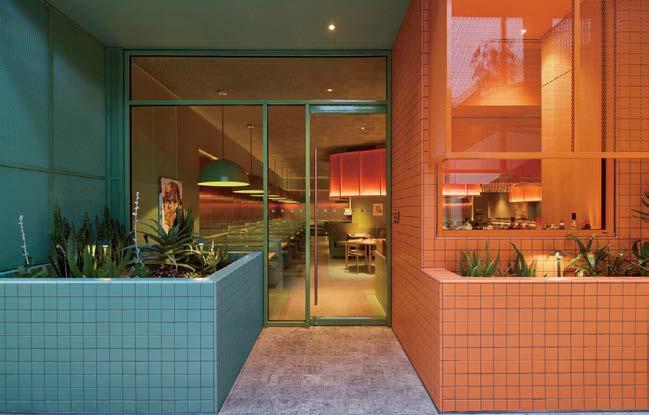
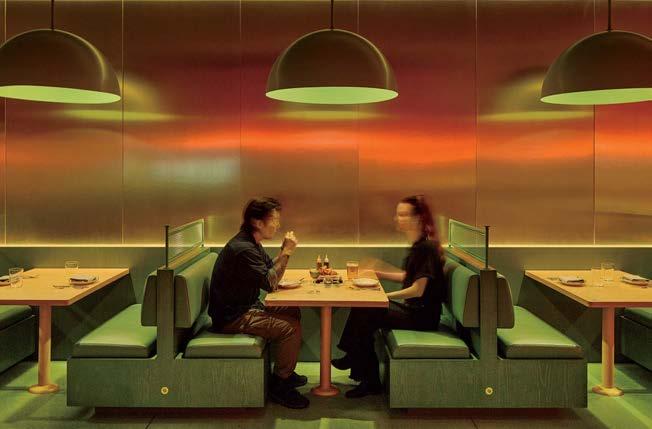
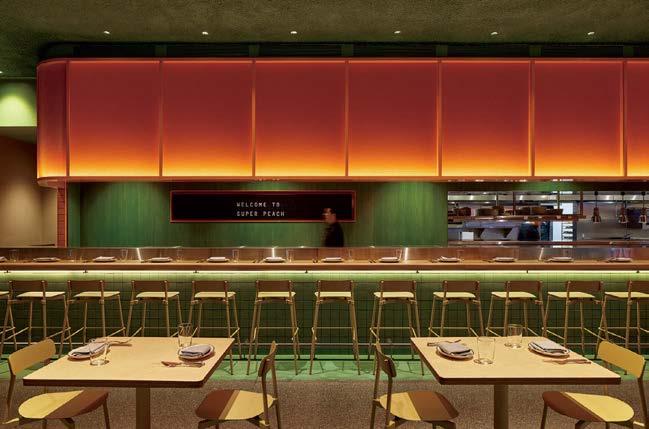
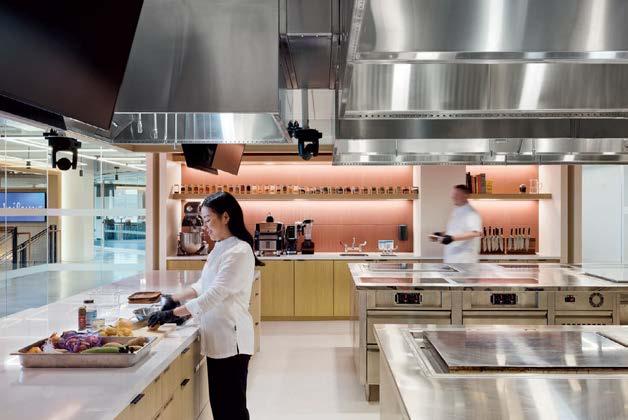
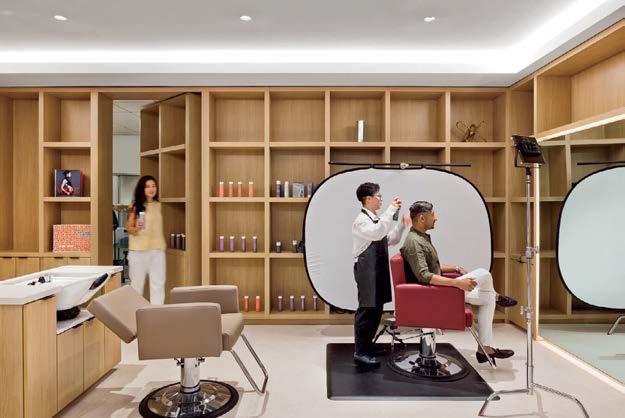
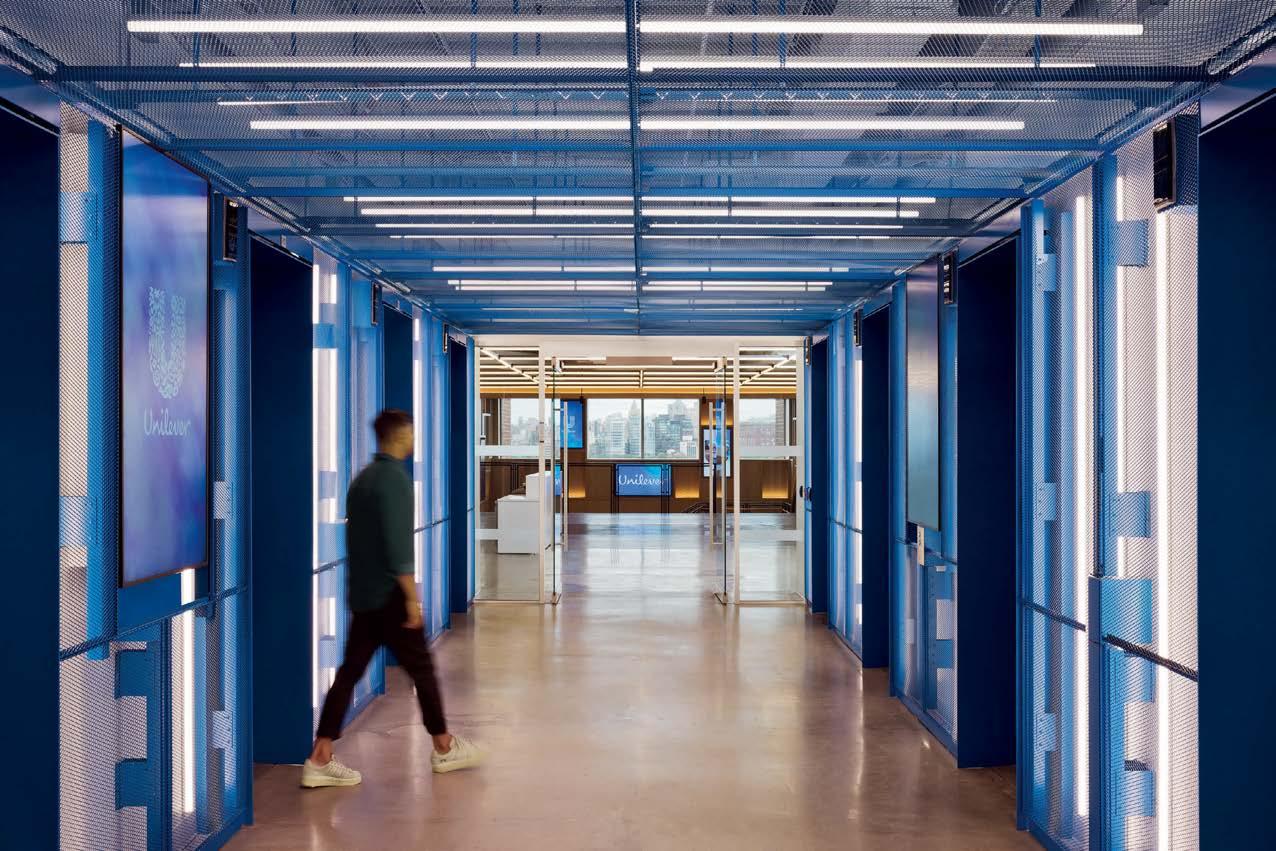
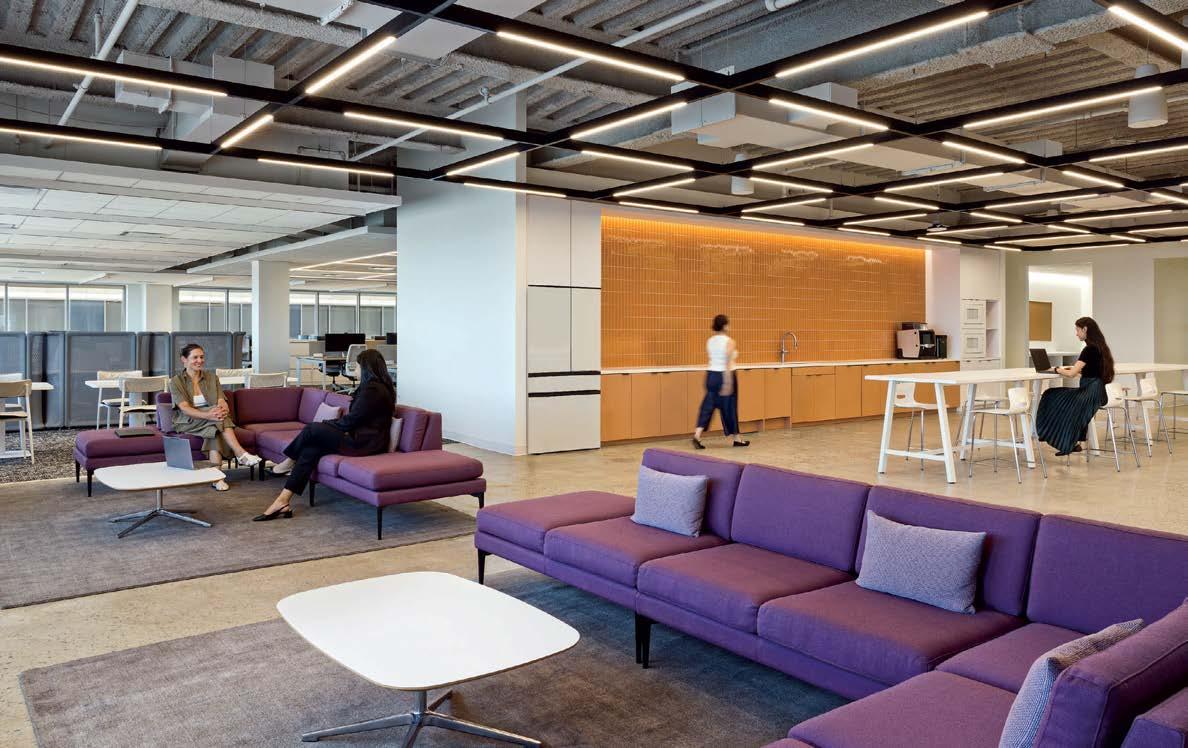
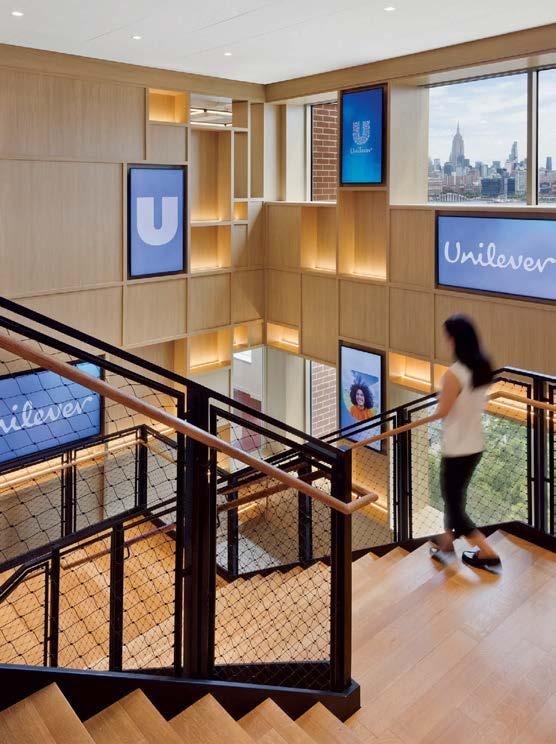
“The flexible, purpose-built infrastructure allows teams to adapt environments to support ideation, prototyping, and testing in real time of marketing campaigns”
100 giants #2.
project Unilever, Hoboken, New Jersey.
standout It’s not often a multinational consumer-goods company condenses its headquarters, but right-sizing and increasing efficiency are what P&W did for the U.S. outpost of the British entity that makes Hellmann’s, Dove, and Vaseline. Throughout the 111,000-square-foot, three-level workplace, which relocated from 350,000 square feet in suburbia to a waterfront downtown with Manhattan views, are bold, bright expressions of collaboration, celebration, and consumer love— core culture anchors—such as the elevator lobby’s Unilever Blue metal-mesh panels, the hub’s violet Uptown Social sectionals by Achella Design, and, around the main stair in FSC-certified reclaimed white oak, the 10 screens looping campaigns and products. Those and new products get developed in the professional-grade kitchen and full-service beauty salon.
photography Connie Zhou.
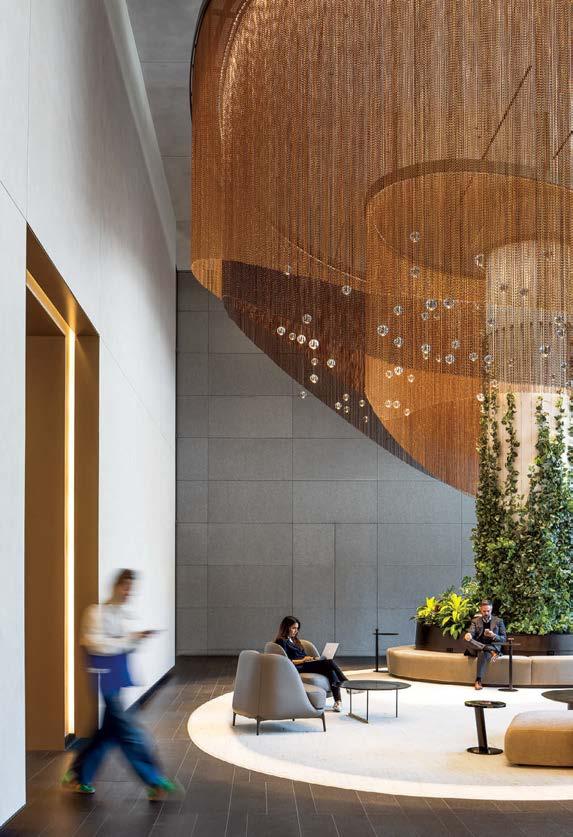
“Mists
that rise from the Pacific and spread into nearby redwood forests inspired the ceilingscape, the strands of glass pendants mimicking water droplets”
100 giants #24.
project 680 Folsom Street, San Francisco.
standout The renovation of this 5,000-square-foot lobby and adjoining event space, inside a landmarked 12-story office building constructed for Pacific Bell in 1964, was influenced by and protects nature. Anchored by repurposed granite flooring are luxe, earth-tone furnishings—Francesco Rota’s Cosy Curve sectionals upholstered in woven slub and heathered yarns, Velvet armchairs by Matteo Zorzenoni—accompanied by live tropical plants and a luminous brushed gold–finished coffee kiosk. Poetically tying it all together are a series of dramatic ceiling installations composed of two-color, anodized-aluminum chain link ranging from 7 to 13 feet long, their silhouettes nodding to the city’s prevalent coastal fog. photography Sean Airhart/NBBJ.
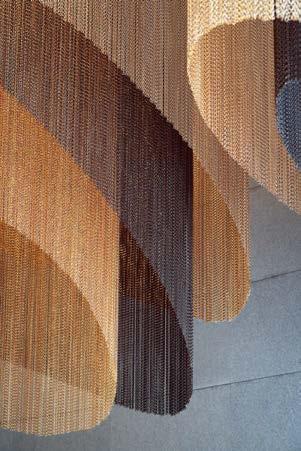
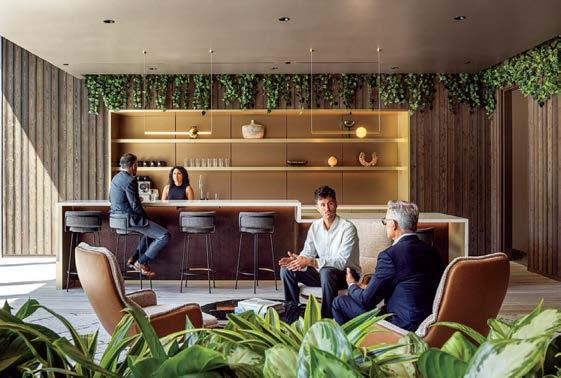
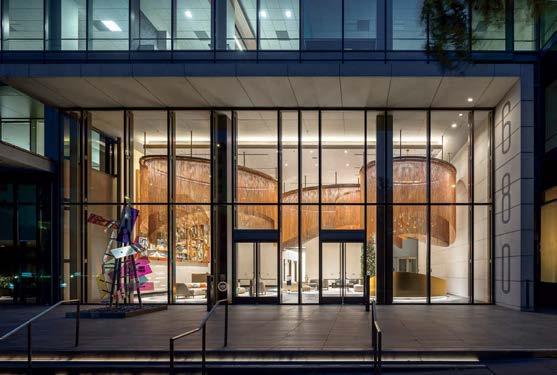
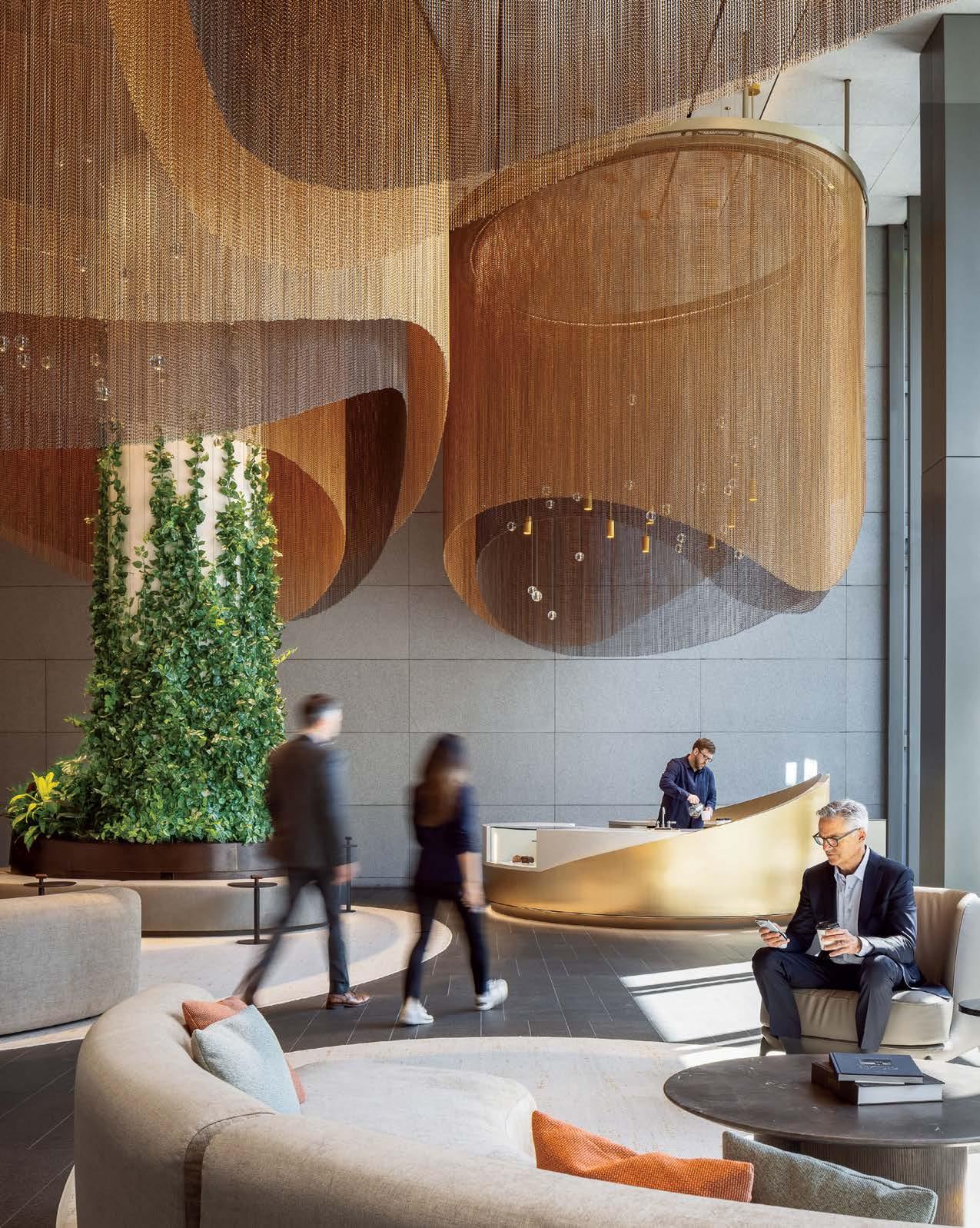
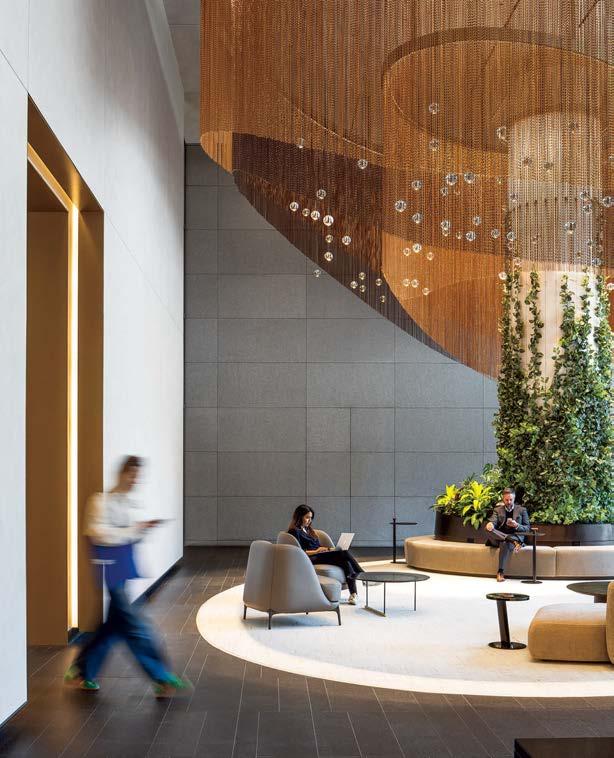
BIG–Bjarke Ingels Group (“Welcome In,” page 184), big.dk.
Gensler (“Welcome In,” page 184), gensler.com.
Goettsch Partners (“Welcome In,” page 184), gpchicago.com.
INC Architecture & Design (“Welcome In,” page 184), inc.nyc.
KPF (“Welcome In,” page 184), kpf.com.
NBBJ (“Welcome In,” page 184), nbbj.com.
Partners by Design (“Welcome In,” page 184), pbdinc.com.
Perkins&Will (“Welcome In,” page 184), perkinswill.com.
Rockwell Group (“Welcome In,” page 184), rockwellgroup.com.
Skidmore, Owings & Merrill (“Welcome In,” page 184), som.com.
Eric Laignel Photography (“Tenant Appeal,” page 140; “Tropical Paradise,” page 150; “Breathing New Life,” page 168; “Ready for Takeoff,” page 176), ericlaignel.com.
Garrett Rowland (“Driving Thru,” page 160), garrettrowland.com.
New York City May 14–20, 2026 ay


nycxdesign.org Contact: office@nycxdesign.org
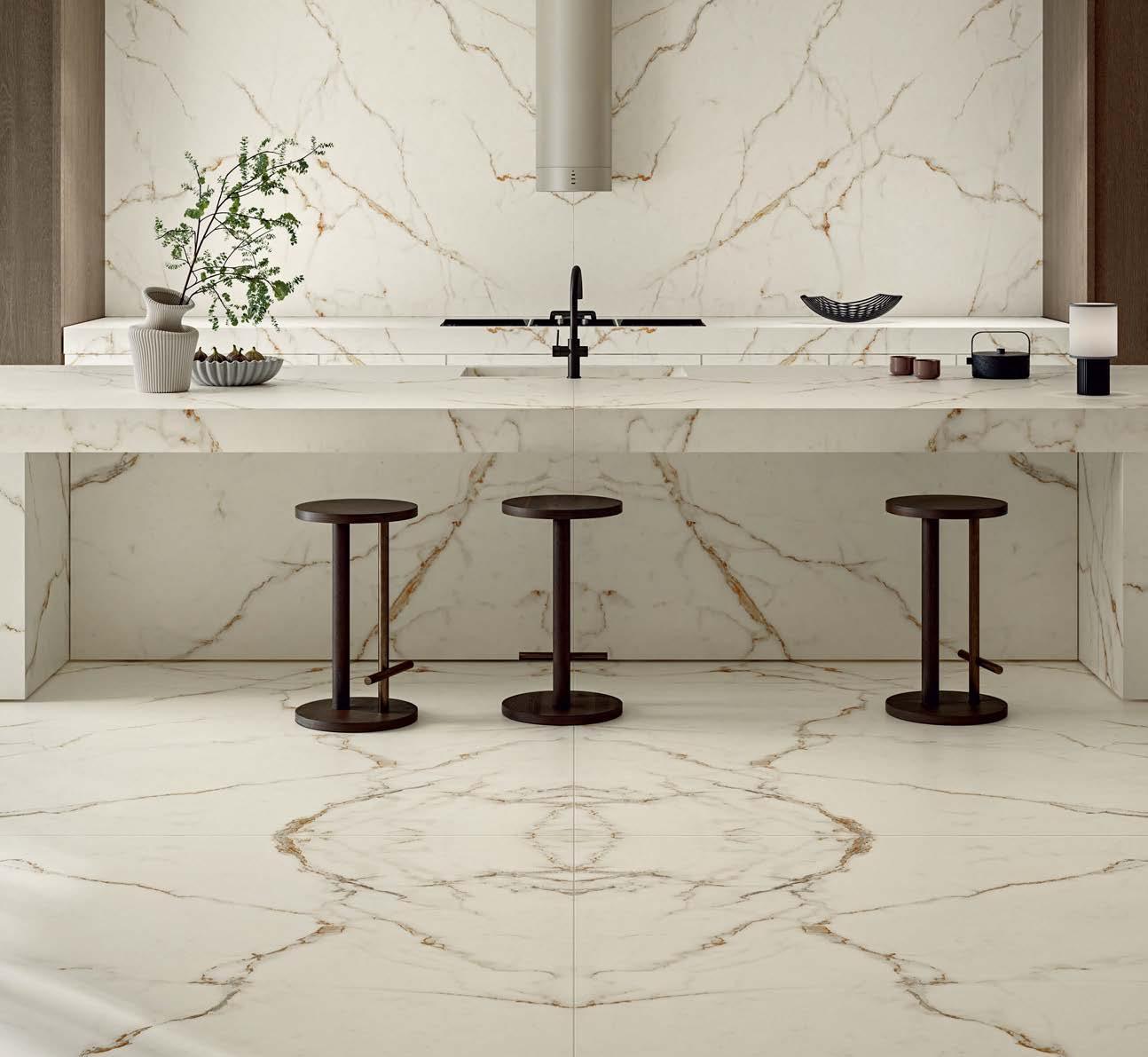
ONE SIZE. INFINITE


ACHIEVE SEAMLESS, COORDINATED DESIGNS ACROSS MULTIPLE SURFACES WITH EXTRA-LARGE PREMIUM PORCELAIN SLABS

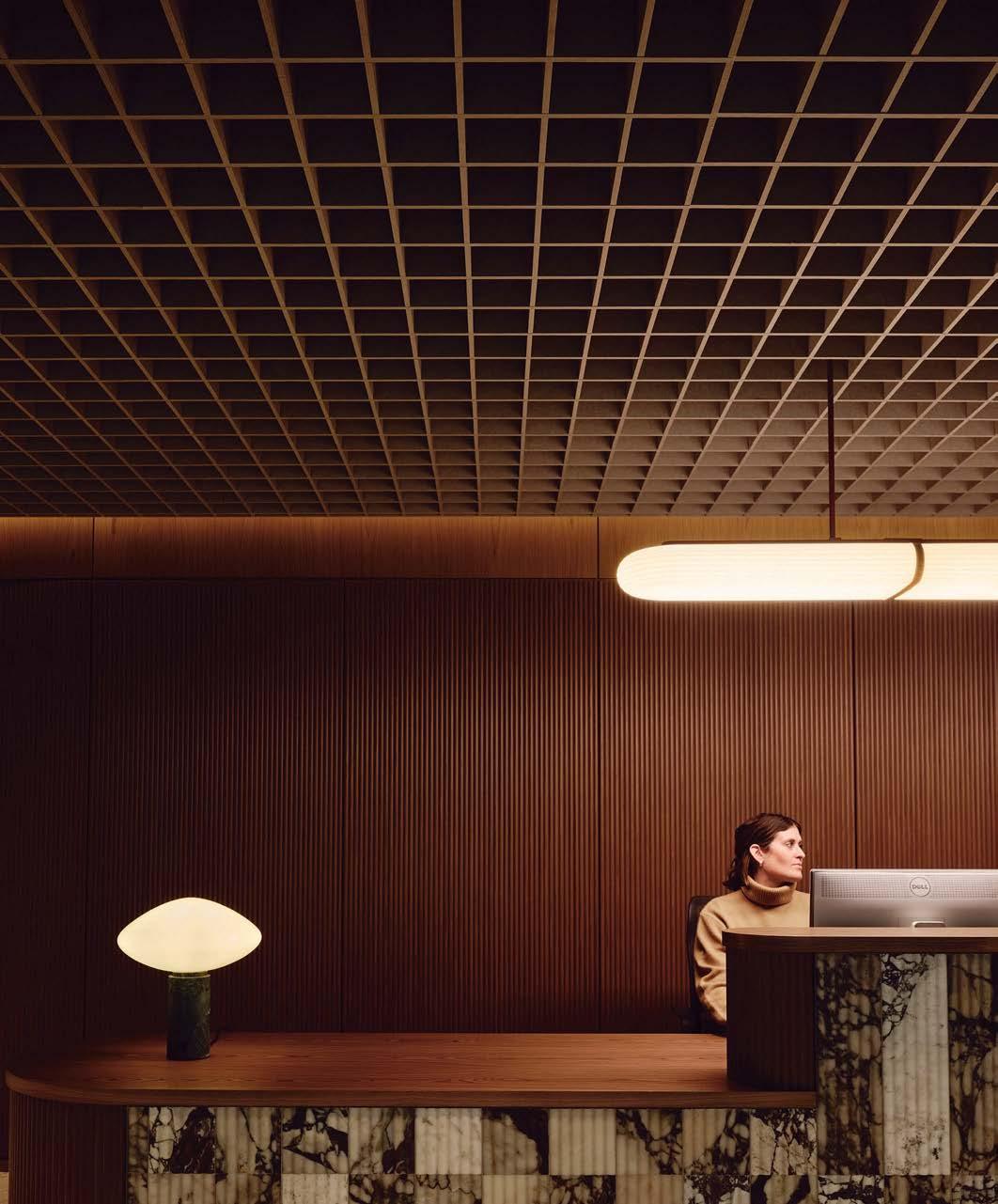
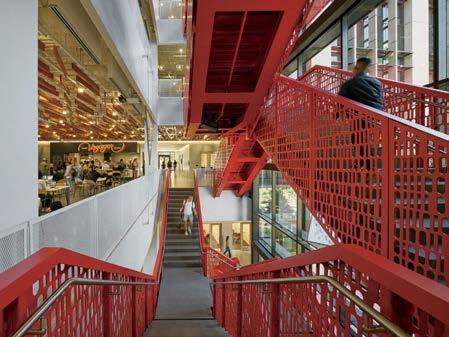
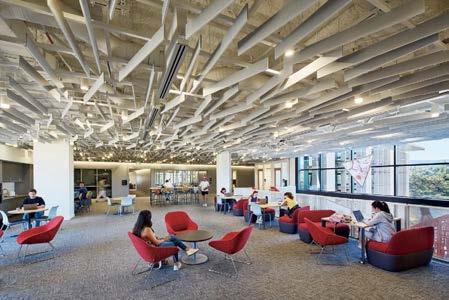
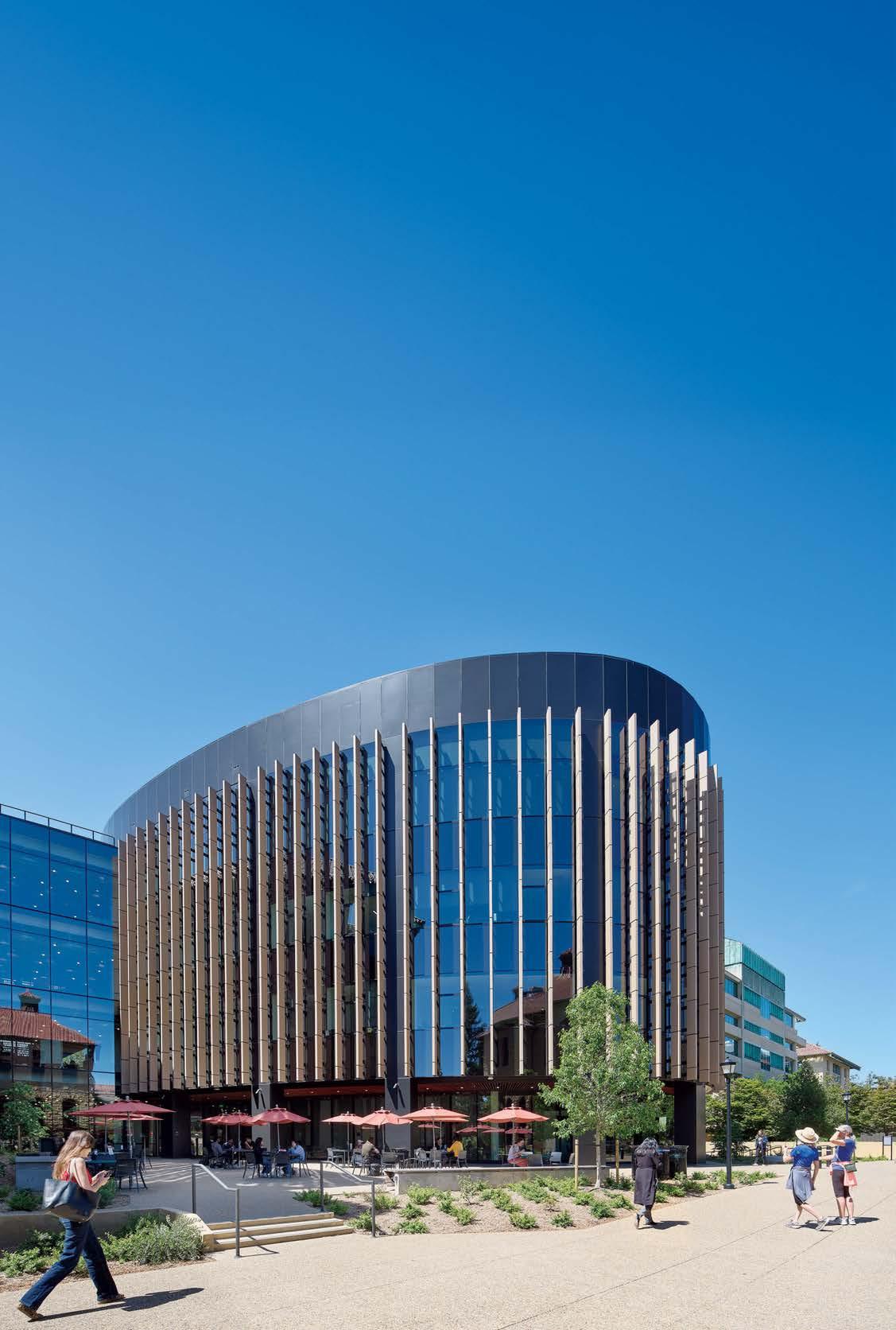
In Northern California’s Silicon Valley, ideas move at the speed of code. Stanford University in Palo Alto is furthering this progress with its new Computing and Data Science building, which functions more like a connective network than a standalone object. The 167,000-square-foot CoDa, as the coeds call it, is by Seattle-based LMN, which, ranking 141st among Interior Design’s Rising Giants, specializes in large-scale, sustainable, and community-focused civic, academic, and mixed-use projects that redefine urban infrastructure—and this project follows suit.
Both client and architect believe in “collaborative innovation,” that tech and data science are enhanced with the liberal arts, and CoDa expresses this ethos of cross-pollination. In addition to providing much-needed office and study spaces for Stanford’s engineering school, CoDa’s classrooms also serve all seven of the university’s schools, including the humanities. “The idea was to bridge these sciences to other academic disciplines on campus, and, ultimately, the outside world,” LMN principal Stephen Demayo explains.
A feature is the central “mixing” chamber containing a precast-concrete stair that spans the structure’s five floors. The pattern of its perforated-aluminum balustrades, which have been powder-coated Stanford Cardinal red, was devised from 8-bit binary code, nodding to computer language while revealing views of adjacent lounges. Acoustic felt baffles above those lounges introduce movement, suggesting the flow of ideas between people and subject matters. Outside, the ovoid form engages a busy campus thoroughfare, its vertical terra-cotta fins fittingly doing double duty: referencing the materiality of the campus’s historic architecture and providing shade from the California sun.
—Lauren Gallow
THANK YOU TO OUR 2026 GIANTS OF DESIGN CONFERENCE PARTNERS FOR HELPING US CELEBRATE AT THE RITZ-CARLTON BACARA, SANTA BARBARA