JANUARY 2026
COVER STORY
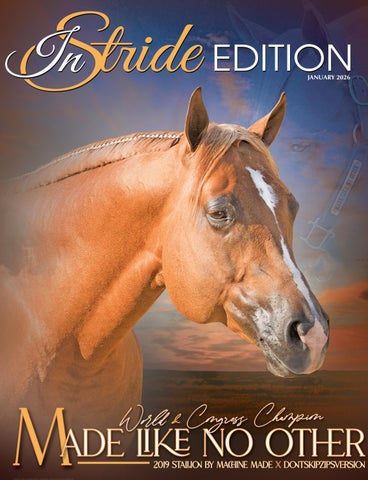
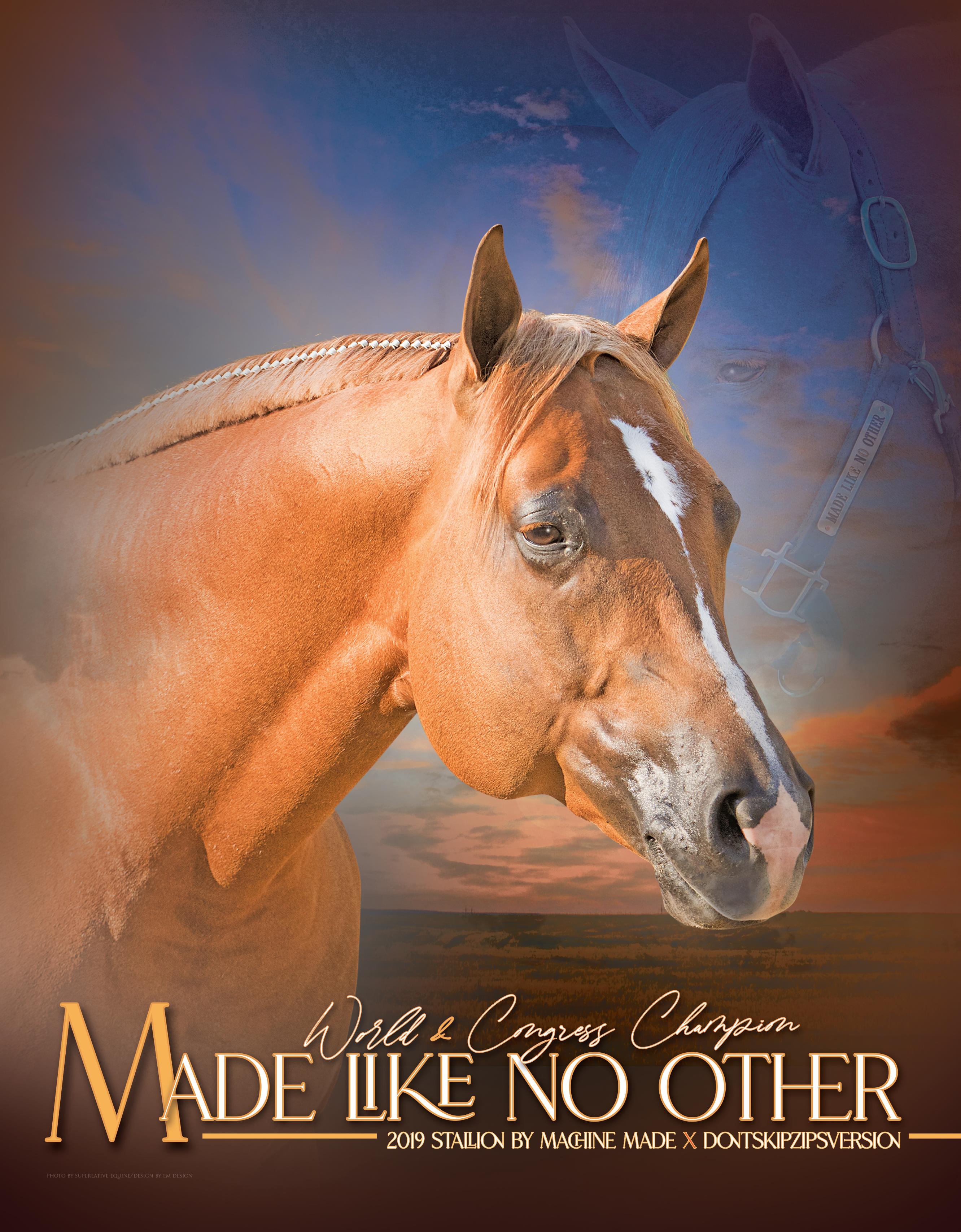
MADE LIKE NO OTHER 10-13
By Corrine S. Borton
Photos by Superlative Equine, Shane Rux & Cody Parmenter
FEATURES
FOALING KITS: BREEDERS AND VETERINARIANS
OFFER ADVICE ON PREPARING FOR NEW FOALS 17-19
By
Corrine S. Borton
OFF AND RUNNING: NEW RAIL HORSE ASSOCIATION HAS FOUR EVENTS PLANNED IN 2026 23-25
By Corrine S. Borton
File Photo by Caroline Saylors
GOLD STANDARD: PALOMINO HORSE BREEDERS OF AMERICA SECTION 35-46
EVENTS
FLORIDA CIRCUITS: OVER $89,000 AWARDED AT GOLD AND GULF COAST 30-34
By Corrine S. Borton
Photos by Shane Rux
PROFILES
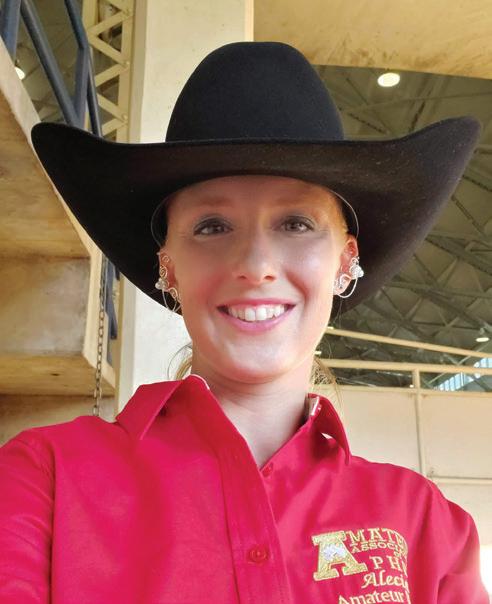
AMATEURS 50-51
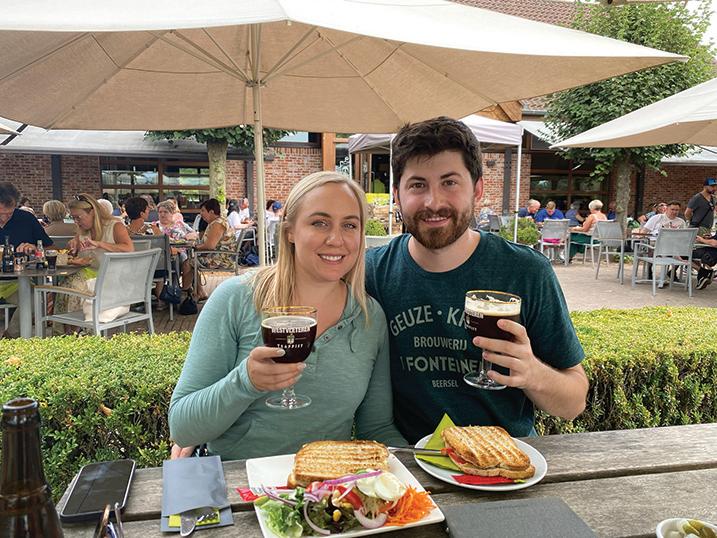
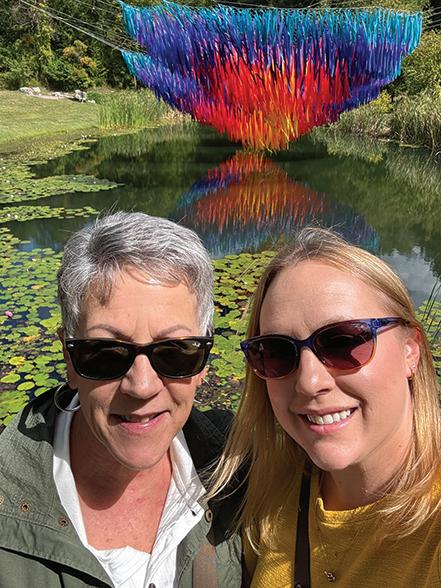
Molly McElrath
REGULAR COLUMNS
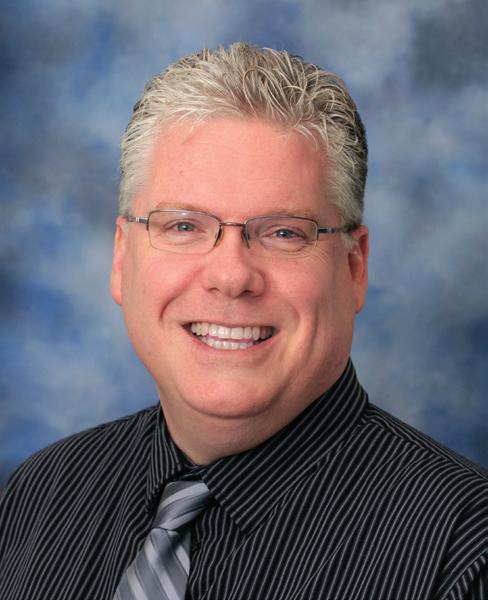
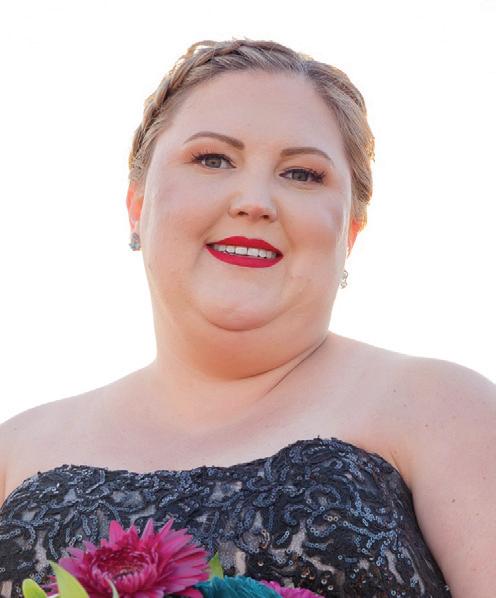
“INSIDE” THE LAW 53
By Katherine Jarve
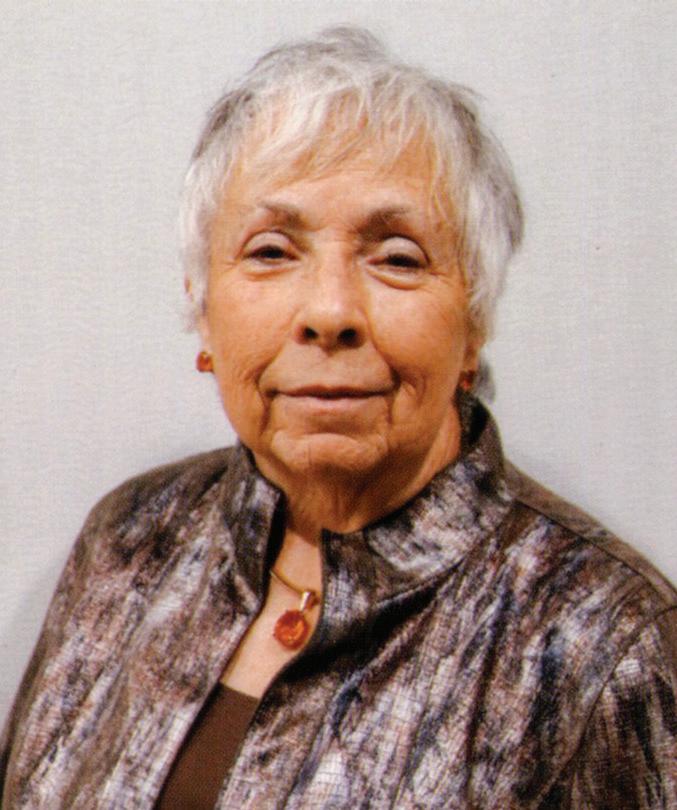
“INSIDE” HEALTH 55
By Larry Jacobson
ASSOCIATION NEWS 57 THE BUZZ 59

JANUARY 2026
ADVERTISING SALES
Courtney B. Ament
Deanna Green Willis
WEBSITE ADVERTISING
Courtney B. Ament
TECHNICAL ANALYST
Brent Adam Borton
CIRCULATION
Lenora B. Sheppard
ADVERTISING DESIGNERS
Courtsey Designs
Denise Hawkins
Designs By Raigen Emajes
Hampel Designs
Jakovich Marketing
Katz Graphics
Superlative Equine
Valor Designs
CONTRIBUTING WRITERS
Courtney Borton Ament
Corrine S. Borton
COLUMNISTS
Katherine Jarve
Larry Jacobson
COPY & RESEARCH
Lenora B. Sheppard
CONTRIBUTING PHOTOGRAPHERS
Courtney Borton Ament
Jeff Kirkbride
Millenial Cowgirl
Cody Parmenter
Shane Rux
Caroline Saylors
Superlative Equine
Equi+Focus and Equi+Calm Pellets and Paste • Prices Vary • https://shopehi.com/collections/equine-performance-pastes
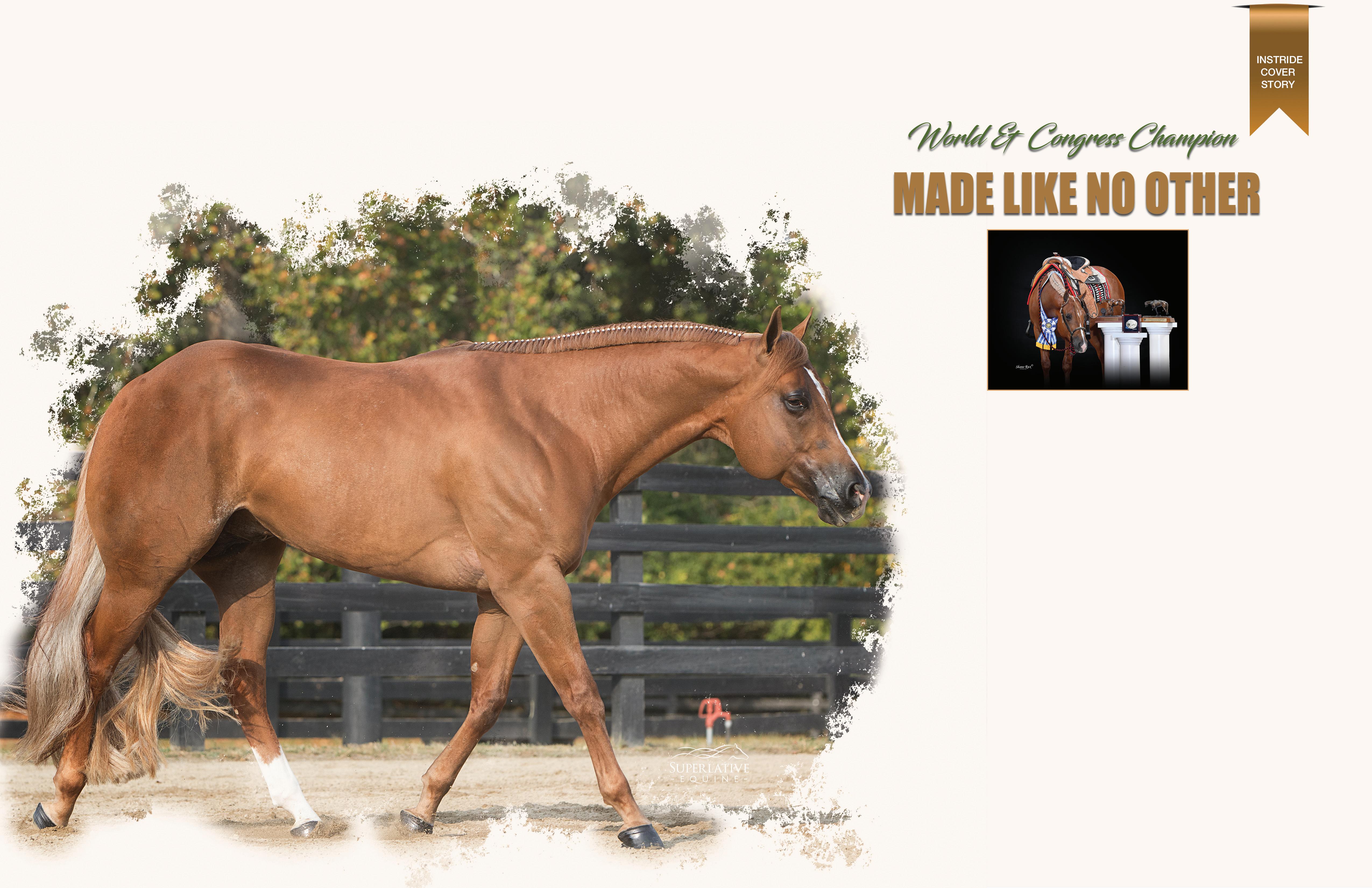
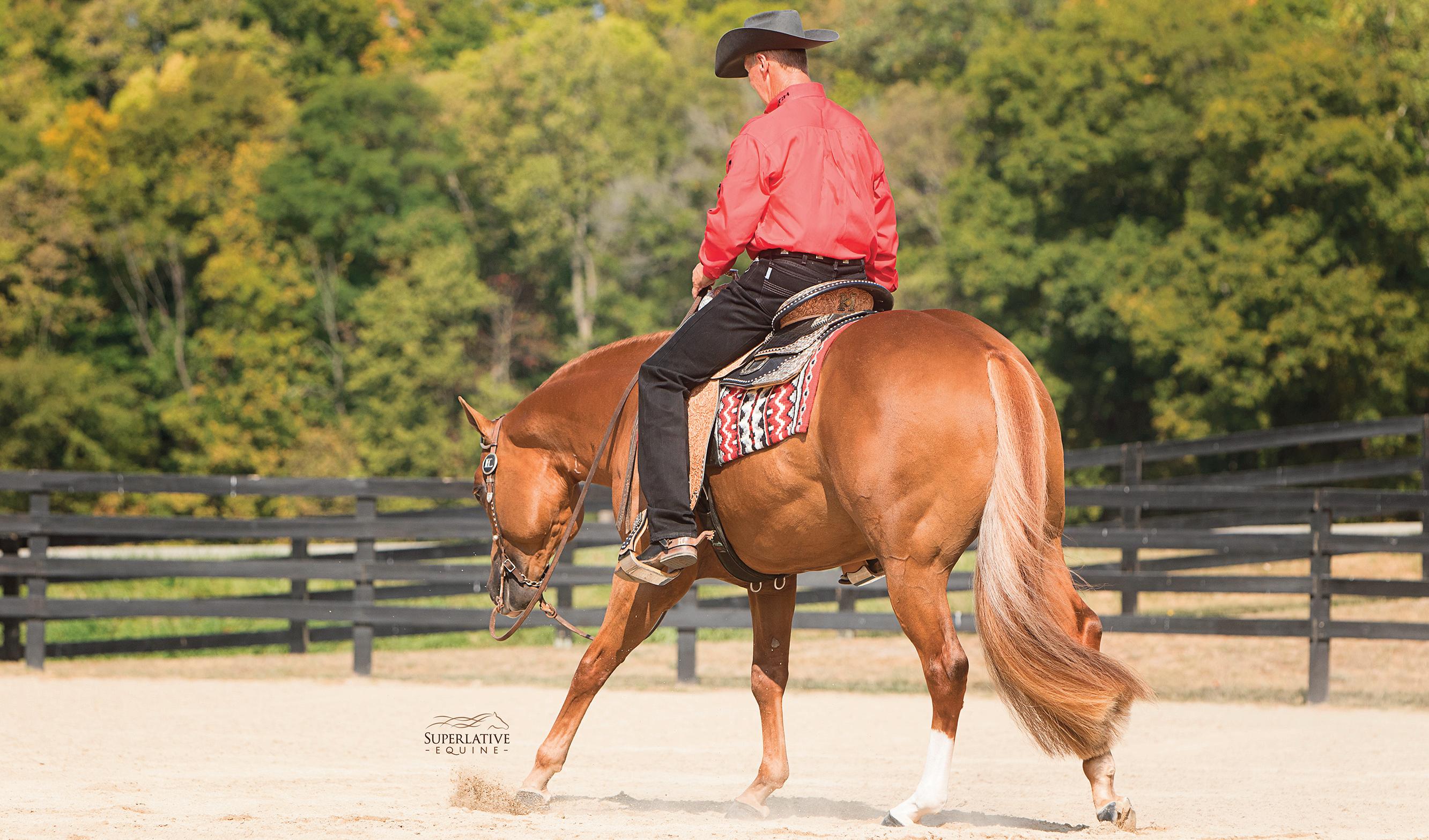
National Snaffle Bit Association (NSBA) Quarter Million Dollar Club Rider Kenny Lakins says Made Like No Other (Scotty) is like a fine wine – he just keeps getting better with age.
“He’s a very special horse,” he said. “You don’t get to have those in your program very often. He has excellent conformation. He’s extremely intelligent and he’s beautiful. He’s a real natural.”
Lakins has been riding the 2019 sorrel stallion by Machine Made out of Dontskipzipsversion since early in his 2year-old year. He was bred and raised by Lakins’ long time customers Mike and Lisa Wilkes, of Dublin, Georgia.
“He was such a natural mover from the first ride,” Kenny said. “He had so much cadence and rhythm. You could tell he was going to be a really good jogger.”
That’s something Mike and Lisa noticed when Scotty was just a baby.
“I remember one day I was away at a horse show and Mike called,” Lisa explained. “I could hear the excitement in his voice and could almost see his smile while he was talking. He had been at the barn checking on things and watching
the yearlings. He said ‘Lisa, Scotty is special. He has so much natural talent.’ I remember smiling because I had already thought the same thing but Mike had finally got to see Scotty loping around himself. If you know Mike you know he is brutally honest and has a good eye for a talented horse. He doesn’t sugar coat things. So when he said that it was exciting.”
For the last 15 years Ohio trainers Kenny and Ashley Lakins have ridden horses for Mike and Lisa and the Wilkes have had horses in their program consistently for the past decade so when it came time for Scotty to get started under saddle, the trainer choice was easy.
“Sending Scotty to Kenny to train was a no brainer,” Lisa said. “Kenny is among the best in the industry when it comes to training stallions. We have won (American Quarter Horse Association) AQHA and NSBA World and Congress Championships with Kenny and Ashley prior to Scotty.”
When it came time to make a decision where Scotty would make his debut under saddle, Kenny had a very definitive plan – the Masters 2-Year-Old s
Maiden Western Pleasure at the 2021 Quarter Horse Congress.
“I received a call from Kenny Lakins after Scotty had been in training a few months,” Lisa recalled. “He said ‘girl this horse is going to train up early he will be ready for the Congress. He has so much natural talent.’ I thought there are those words again ‘natural talent.’ Kenny said ‘this is the stallion Mike has been wanting. He is great legged and great minded, smart and beautiful.’”
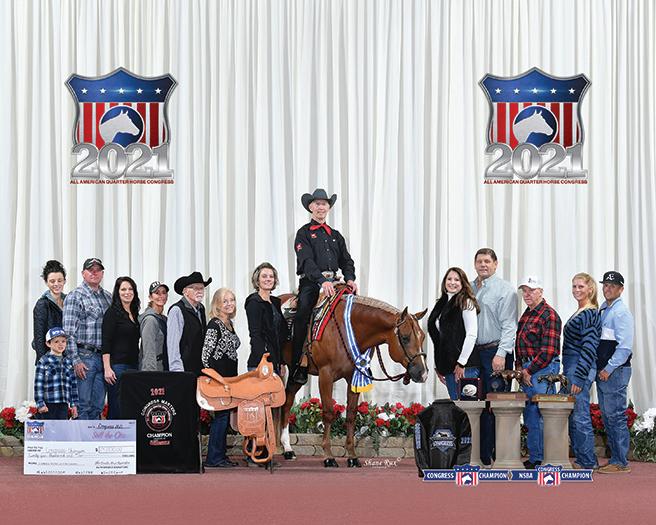
Kenny’s gamble paid off when Scotty was named the unanimous winner of the class, earning $25,000 in his very first show.
“He showed just like I thought he would,” Kenny recalled. “I kept his program just like all the other shows I had taken him to throughout the year. He was very easy to prepare. I rode him that day longed him a bit then got his ready to show.”
But that was just the beginning. After sitting out his entire 3-year-old year because of illness, Scotty returned to the show pen in 2023 with a bang. He earned World Championship titles in Junior Western Pleasure at the NSBA World Show in August and at the AQHA World Show in November. He also captured a Congress Championship that year in Junior Western Pleasure.
“He really has not changed much since the first time I showed him,” Kenny said. “He is a great show horse. He is very focused and just great to be around and ride. I think he really likes to show off in the pen. Kind of likes all the attention to be on him.”
What sets Scotty apart from others is his ability to excel at all the gears without much effort.
“He has a very laid back attitude,” he said. “He is well made. He’s pretty behind with a freaky front leg at the lope that finishes his stride. He jogs with a lot of rhythm and really does not cover much ground.”
In 2024 Scotty headed to the breeding shed for the first time.
“We talked about what to do with Scotty after he won both the Junior Western Pleasure at the Congress and at the AQHA World Show,” Lisa explained. “I know a lot of people would have retired him after winning those tiles but we just could not see him standing around doing nothing during the off breeding season.”
But Scotty really likes showing. He is healthy and easy to prepare so his show career continues.
And Lisa got her chance to show Scotty
for the first time at the 2025 Quarter Horse Congress, placing third in the Amateur Select Western Pleasure with 30 entries.
“You don’t have to run his wheels off to get him ready to
show,” Lisa said. “Kenny will continue to show him and I will show him this year in the Amateur Select Western Pleasure. We will let Scotty continue to tell us what his future holds as far as showing is concerned.”
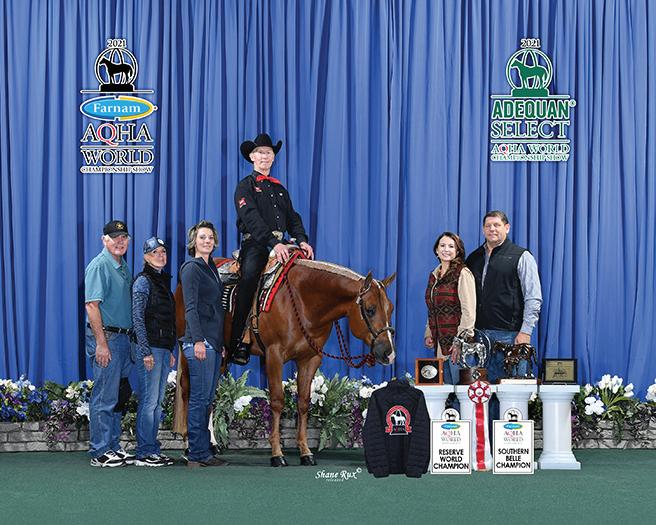
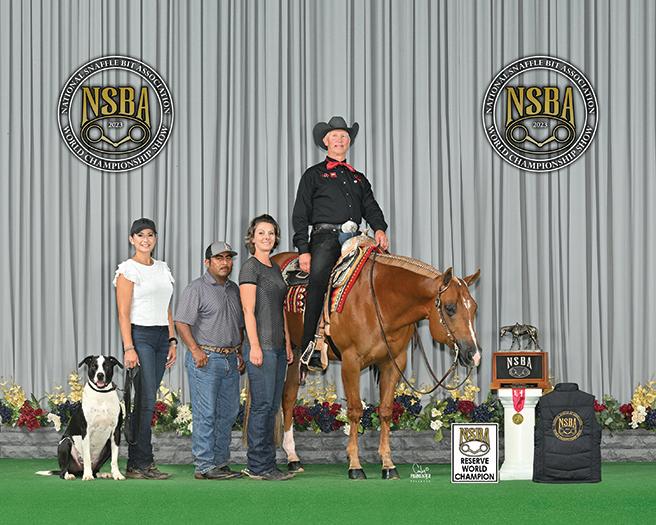
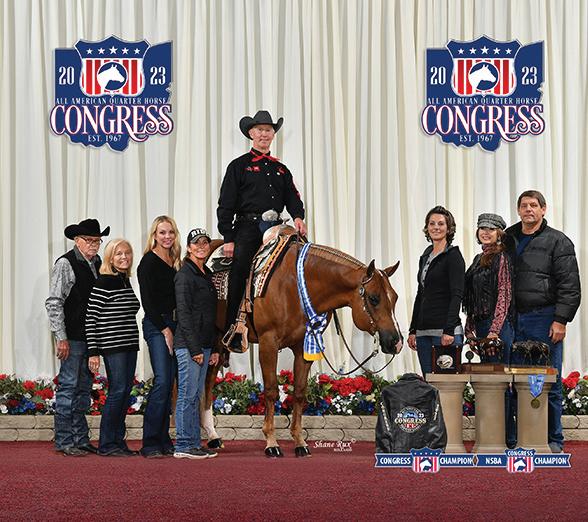
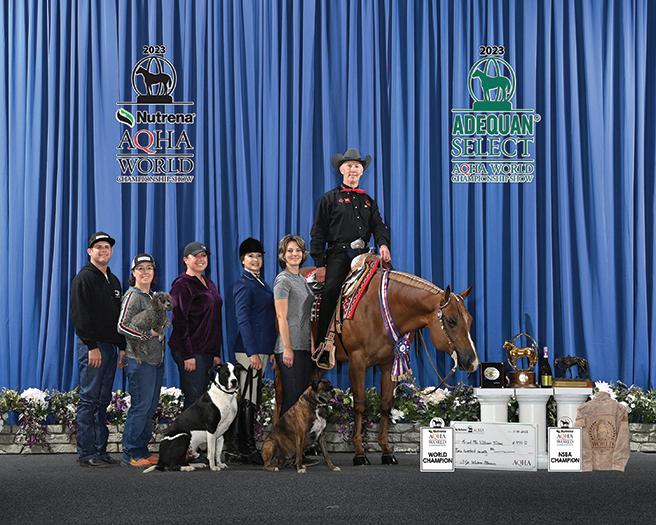
Kenny Lakins is pictured (top) riding Made Like No Other and inset at 2021 Quarter Horse Congress where they won the Masters 2-Year-Old Western Pleasure. Below that (left to right) Kenny and Scotty at the 2021 AQHA World Show; at the 2023 NSBA World Show; at the 2023 Quarter Horse Congress and at the 2023 AQHA World Show. At far right, one of Scotty’s foals out of VS Code Me Lucky.
For now, he is back in the breeding shed, standing the 2026 season at Richland Ranch in Auburn, Illinois.
“Scotty has two breeding seasons behind him now,” Lisa said. “We are extremely excited about the foals we have on the ground and the foals we have seen of outside mare owners. We are repeatedly hearing how good-minded and good legged his foals are.”
Kenny and Ashley Lakins are also excited about his future as a sire.
“We love the foals we have seen by him,” Ashley said. “They seem to look a lot like him and move a lot like him. The people that have them rave about their quiet nature and great movement.”
Kenny said all that has to happen is for Scotty to throw
his own trainability and kind nature.
“I would hope he throws his movement to them as well and his conformation would be another great aspect of his babies.”
The Wilkes have a couple Scotty foals out of their two-time AQHA World Champion mare, VS Code Me Lucky. They say they are both short coupled like Scotty and great legged.

“We crossed him on our Rock mare and that filly is also great legged and short coupled,” Lisa said. “We have those crosses coming again this year, along with a couple Lopin Machine bred mares. I also bred him to my 17-hand black Hubba mare. I’m very excited to see that cross.”
But as thrilled as they are with their own Scotty foals, the Wilkes say the thing that really pleases them is that they have had numerous mare owners bred back to Scotty after seeing the foals they had out of their own mares.
“That says a lot about what they think about his foals,” Lisa said. “I know as a breeder, breeding to a stallion that hasn’t proven himself as a producer yet can be a gamble. You just never know if the stallion will be a producer. So far what we are seeing out of Scotty’s foals, the oldest being yearlings we are very excited about.”
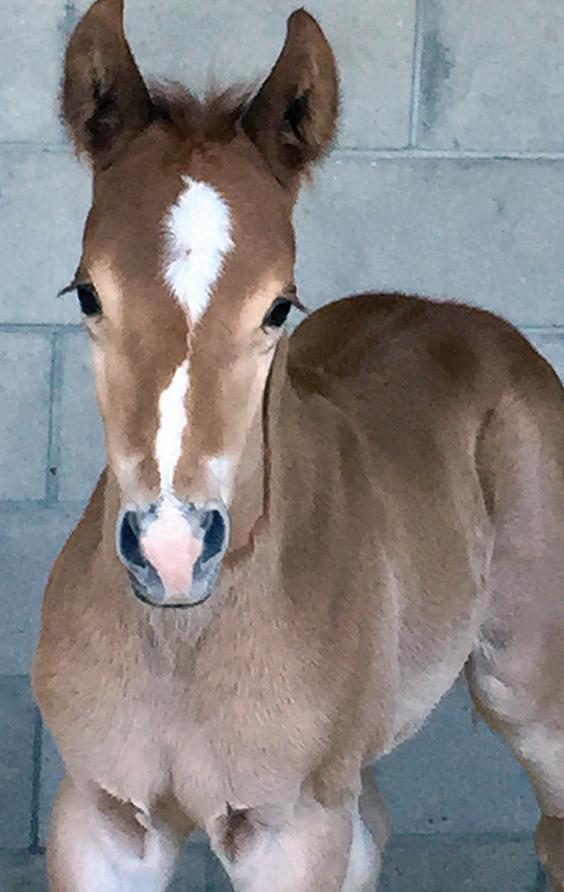
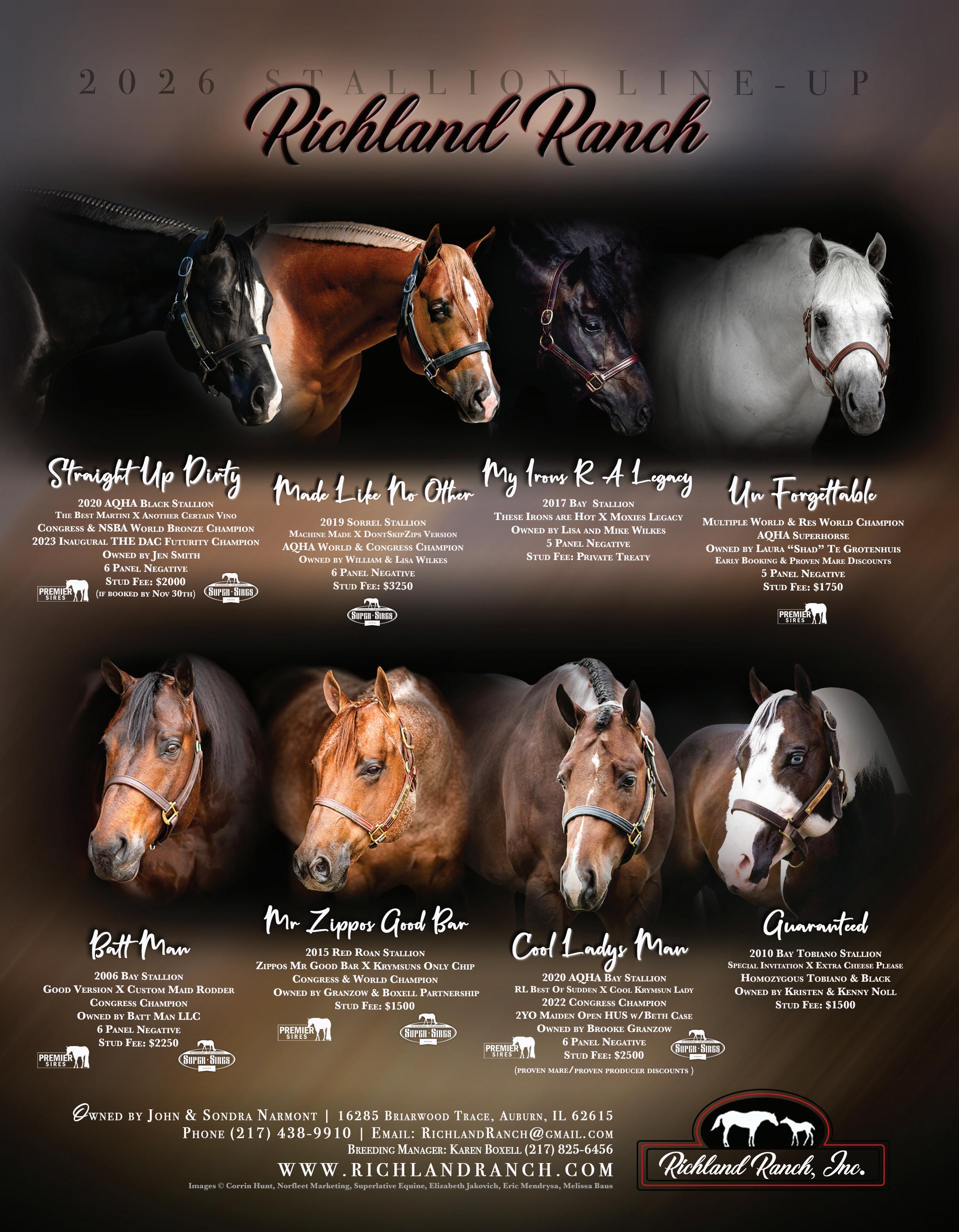
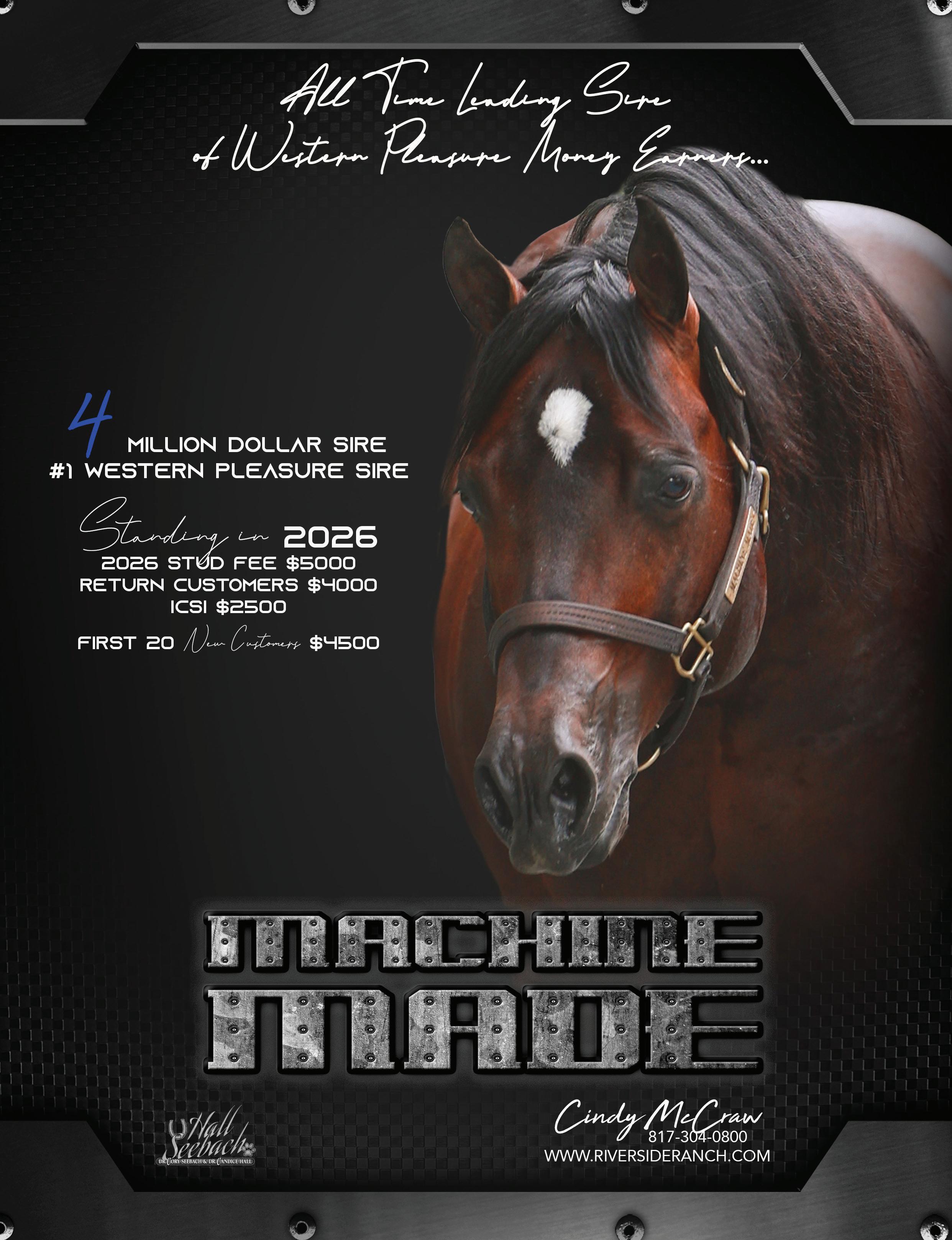
Made Like No Other is six panel negative and his 2026 stud fee is $3,250 or $2,750 for repeat breeders. Shipped semen is available until May 1 and frozen semen is available after that. World/Congress Champion mares receive a discount of $750 and there is a $250 discount for multiple mares.
Scotty’s foals are eligible for the NSBA BCF and SIF, Super Sires, Iowa Futurity, MQHA Futurity and the Southern Belle.
For additional information or a breeding contract contact stallion manager Karen Boxell Alderman by calling (217) 825-6456 or emailing richlandranch@gmail.com. You can also visit his website at www.richalndranch.com.
“Mike and I would like to thank all the mare owners who believed in Scotty like we do and have bred to him,”Lisa said. “We are beyond excited to see his foals in the show pen. I know showing a horse you raise and winning on that horse is a wonderful feeling. I can only imagine how nervous and proud Mike and I will be when Scotty’s foals begin their show careers.”
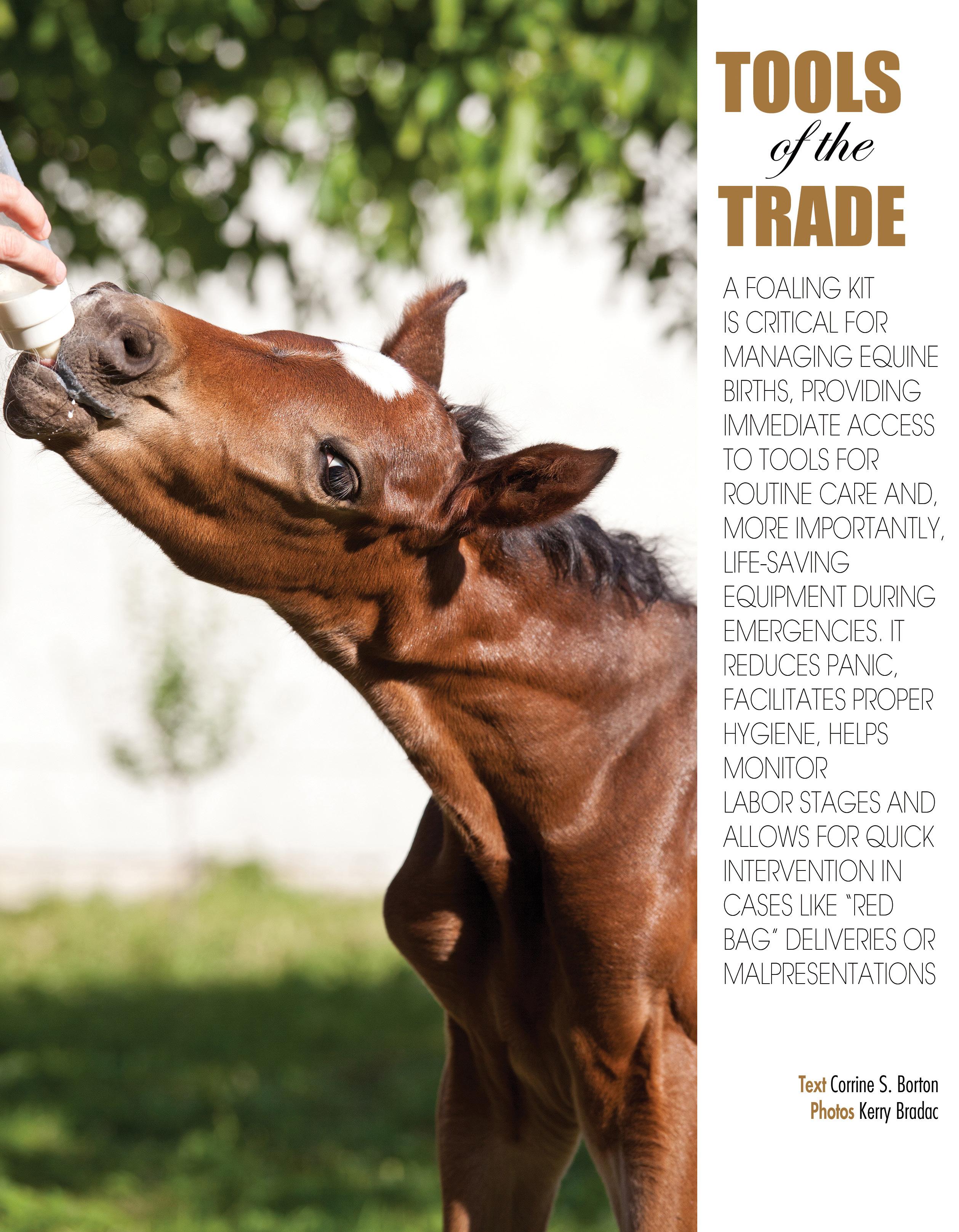

“ I have come up with a system that works for me in case I do have any issues,” said longtime breeder Kerry Bradac. “Prepare for the worst and hope for the best.”
Preparing for a foal is exciting—but when the moment arrives, there’s no time to hunt for supplies. A well-stocked foaling kit ensures you can respond quickly, calmly, and safely if your mare needs assistance. Whether you're an experienced breeder or welcoming your first foal, having the right tools on hand can make all the difference.
Kerry Bradac owns and operates Bradac Ranch South in Ocala, Florida and has been breeding American Quarter Horses for show for 31 years. She has always utilized a fairly elaborate foaling kit that she put together herself and would not think about approaching foaling season without.
“ I have come up with a system that works for me in case I do have any issues,” she said. “Prepare for the worst and hope for the best.”
Her foaling kit is comprised of the following:
• Cameras
• Foalert and Transmitters
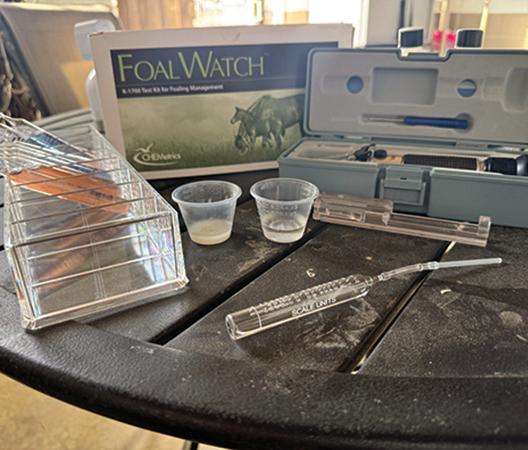
• Foalwatch Milk Testing Kit
• Colostrum Refractometer
• EZ Milker and Bottles (which I will collect a bottle of milk from mare’s with excellent colostrum to freeze for emergencies)
• plastic sample cups
• enemas
• towels
• banamine
• baling twine (to tie up placenta until it passes)
• scissors
• scalpel (in case of a red bag delivery)
• thermometer
• biosponge
• foal probiotics
• foal blankets
• foal halters
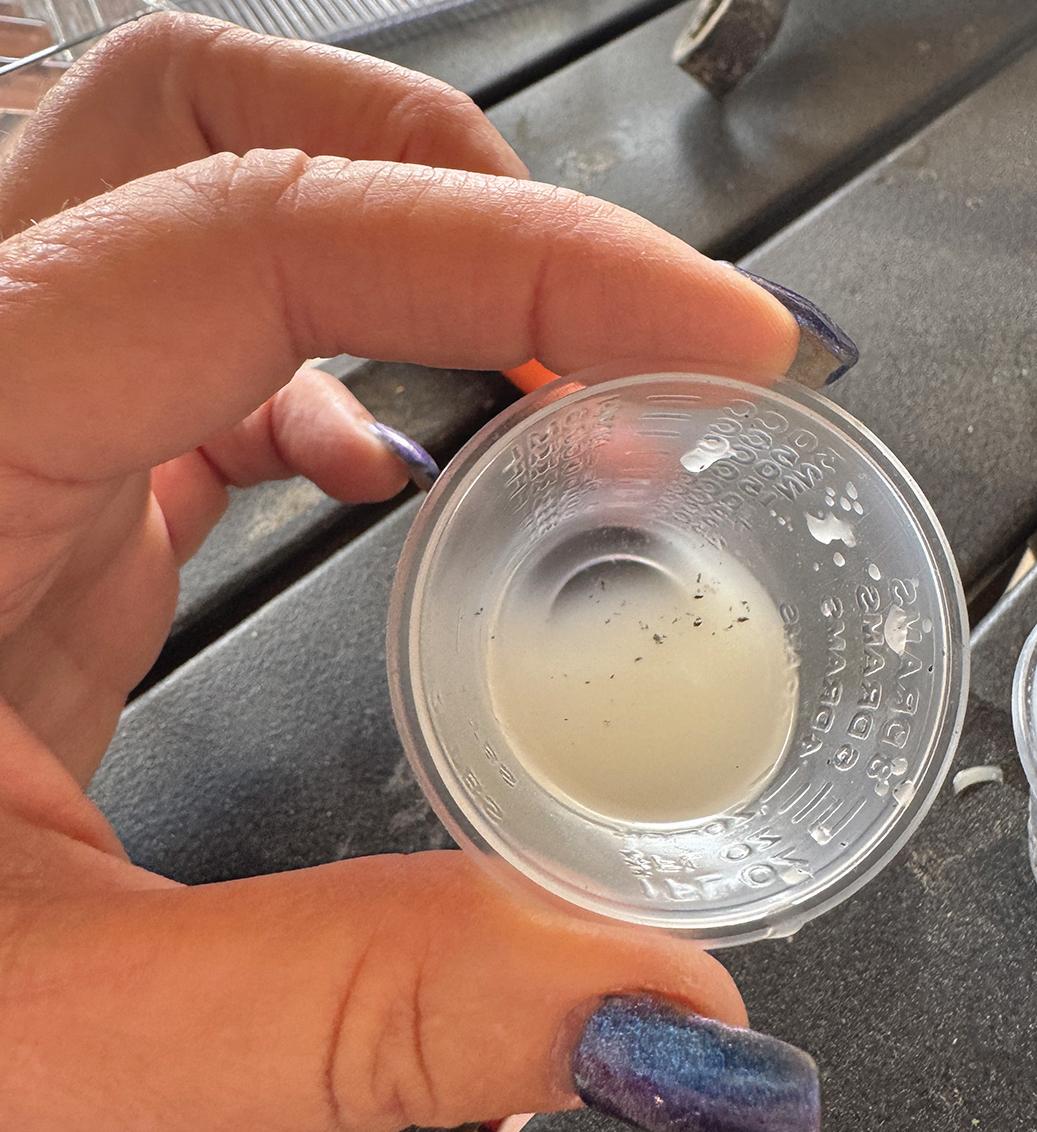
Bradac says she uses almost every item in her kit for every delivery. But the item she uses most is the plastic cup as she uses them for both milk collection and to hold iodine to treat navels.
For the past five or six years, Bradac has welcomed three to nine of her own foals into the world and she foals out mares for customers.
“Some years I have foaled out as many as 30 mares,” she said.
“We have several mares and collect milk samples from them daily. The cups also come in handy for treating navels with iodine. We go through 100-plus every foaling season.
The first milk (colostrum) is critical for the foal’s immunity. Bradac pays close attention to her mares’ milk leading up to and during delivery.
“They make milk collection easy,” she said. “I use the FoalWatch milk testing kit. It is very accurate. I also love my Colostrum Refractometer as it lets me know the quality of the mare’s colostrum and what foal’s may be at risk for having a low IgG (immunoglobulin G also known as an antibody).”
Foal IgG testing measures antibody levels to ensure adequate passive transfer from colostrum, which is critical for preventing infections in newborns. It is essential to test IgG levels 12-24 hours after birth, with idea levels being <800 mg/dL. Levels below 400-800 mg/dL indicate partial or complete failure of passive transfer, requiring immediate intervention.
“ I have my vet IgG test EVERY foal,” Bradac said. “ That is something that is so important to do. Even though my vet does the test, I would consider it a staple in my foaling kit.”
Colostrum & Feeding Backup
Newborn foals do not have an active immune system and it is critical that the foal receives colostrum, which is the initial milk that the mare produces and contains high levels of antibodies. These antibodies are needed for the newborn foal to fight off disease and infection. The foal absorbs these antibodies through the stomach and 36 hours after birth the stomach is no longer able to transfer these antibodies into the blood stream.
According to the University of Tennessee U-Equine Re-
port, It is recommended that a new born foal receive colostrum within the first 24 hours of life and preferably within the first 12 hours. Therefore it is important to also have foal bottles, nipples and syringes without needles in your foaling kit.
Colostrum can be “banked” for use later in the foaling season or during the following year for foals in which the mare dies during birthing or is not producing milk. Colostrum can be milked from gentle mares and frozen for use later. When thawing frozen colostrum do not heat it, as this will destroy the antibodies. A foal should be given one quart of colostrum the first day of life to ensure proper immunity. The foal will only be able to ingest one half to one cup of colostrum per feeding and should be repeated at least every two hours.
When to Call the Veterinarian
Foaling emergencies require immediate veterinary intervention when the mare shows no progress for 10-15 minutes after the water breaks, a "red bag" (placenta) appears instead of a white amniotic sac, or if labor lasts longer than 20-30 minutes.
“The scariest situation I have ever had happen to me was when I had a mare literally push out her intestines,” Bradac recalled. “My vet performed an emergency c-section at the farm to get the foal out. We raced the filly to the clinic and they were waiting for us with oxygen for her.
Bradac’s vet stayed behind to harvest the mare’s colostrum and euthanize the mare.
“The filly was tubed with her dam’s colostrum and we were lucky enough to find a nurse mare within hours,” Bradac said. “When things go south with mares, they really go south. Your best bet is to get them to a vet clinic ASAP, especially for dystocia.”
Because of that experience, Bradac leaves her truck hooked up to my trailer if I have a mare that is close to foaling.
“In a foaling emergency, every minute counts,” she said. “The sooner I can get my mare to the clinic, the chances for both her and her unborn foal surviving increase.”
Here are some tips on knowing when to call your vet:
1. During Labor (Dystocia)
• No Progress: If the mare has been in active, straining labor for more than 15–20 minutes after her water breaks without a foal appearing.
• "Red Bag" Delivery: If a thick, bright red velvet-like membrane appears instead of the normal translucent white sac. This is a critical emergency where the placenta has separated prematurely, cutting off the foal's oxygen.
• Malpresentation: If anything other than two front feet (soles down) and a muzzle appears first (e.g., only one foot, hind legs, or just the head).
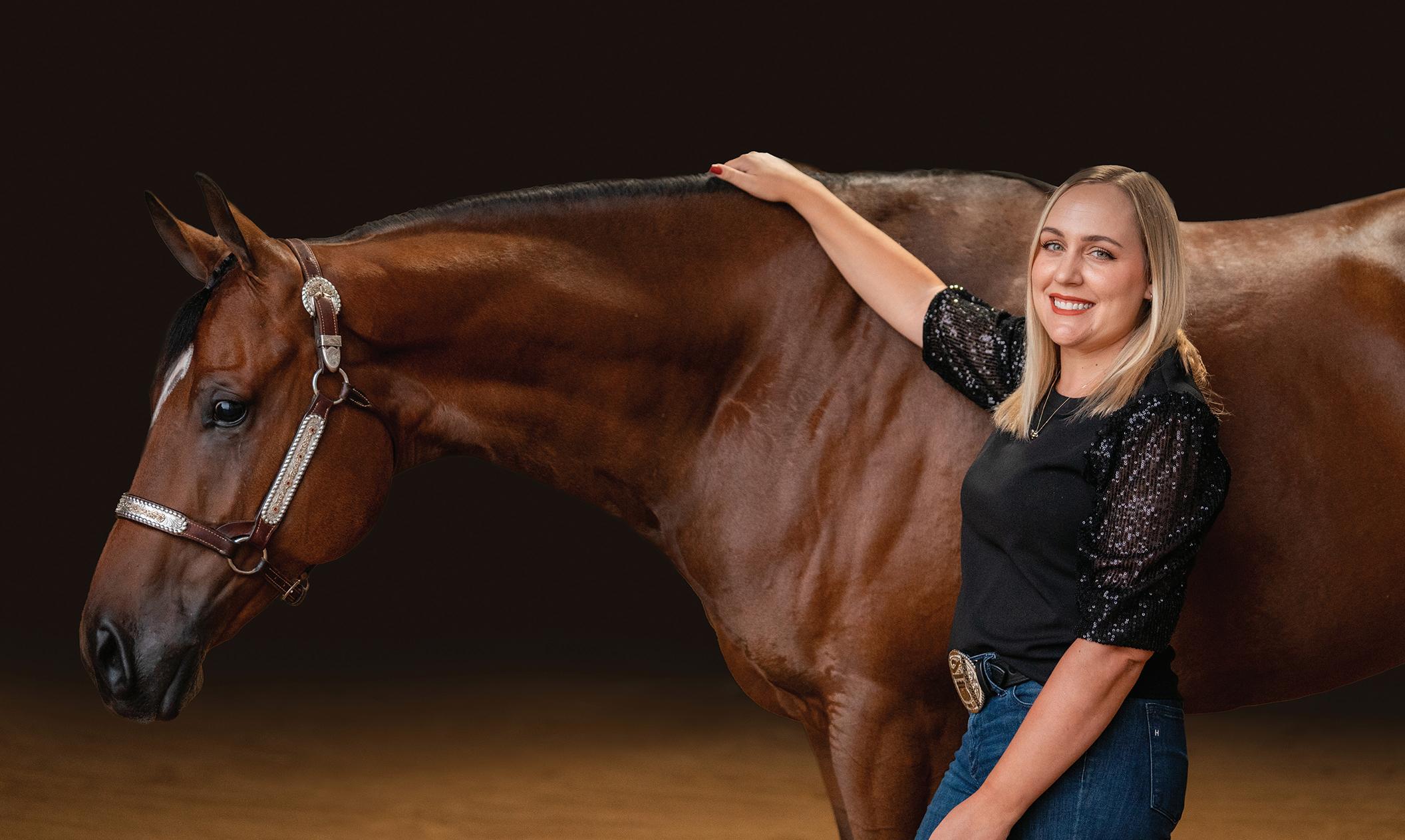
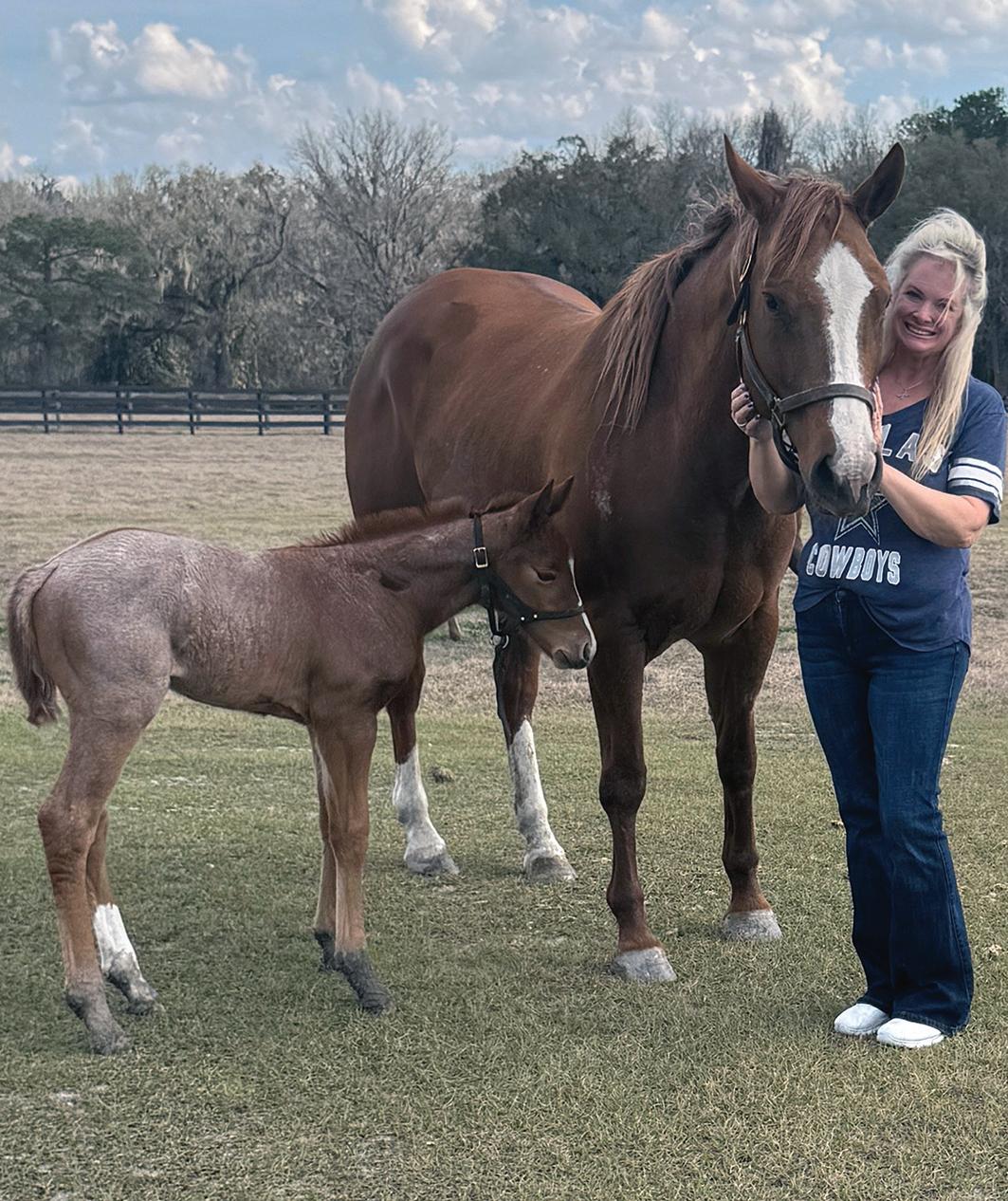
Kerry Bradac is pictured on the opposite page with Rock N The Pink, a mare she raised from a foal and who is now a member of Bradac’s broodmare band. Kerry has been breeding for 31 years and has always used a foaling kit (shown on the opposite page top). It is wellstocked at all times. She uses over 100 plastic sample cups (pictured on this page) each breeding season. She uses them to collect milk samples and to house iodine for naval dips.
• Maternal Distress: Excessive sweating, rolling, or violent thrashing during labor.
2. After Birth (The 1-2-3 Rule) - Veterinarians use the "1-2-3 Rule" to monitor the health of the mare and foal postdelivery. Call if these milestones are missed:
• 1 Hour: The foal should be standing
• 2 Hours: The foal should be nursing
• 3 Hours: The mare should have passed the entite placenta. A retained placenta is a life-threatening emrgency that can lead to laminitis or sepsis.
3. Newborn Foal Red Flags
• Weakness: Inability to stand, a weak suckle reflex, or lack of interest in the mare.
• Abnormal Vitals: A heart rate that does not rise above 60 bpm or failure to breathe within 1 minute of birth.
• Physical Issues: Milk coming out of the nose, straining to defecate (meconium impaction), or swollen joints.
• "Dummy Foal" Signs: Disorientation, wandering aimlessly, or not recognizing the mother.
4. Post Foaling Mare Emergencies
• Profuse Bleeding: Constant active bleeding from the vulva.
• Severe Pain: Violent rolling or thrashing after birth, which could indicate a uterine rupture or internal hemorrhage.
• Incomplete Placenta: If the placenta passes but appears torn or is missing pieces upon inspection.
Final Thoughts
Most veterinarians recommend a “new baby check’ within 12-24 hours after birth. Foaling is a natural process, and most mares deliver without complications. Preparation is your best protection against emergencies. A thoughtfully assembled foaling kit provides peace of mind and ensures that when the big moment arrives, you can focus on supporting your mare and welcoming a healthy new life into the world. ttt
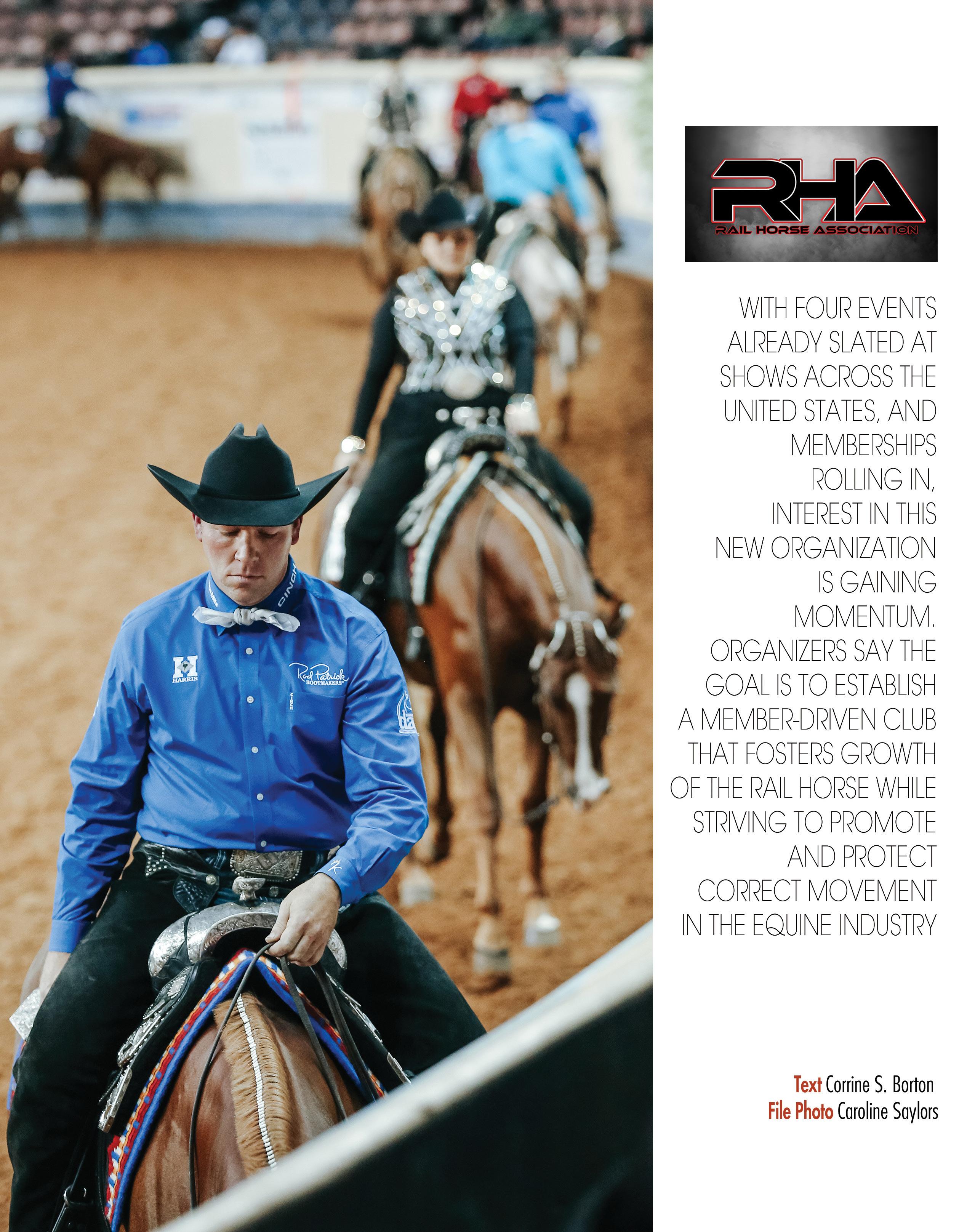

ith plenty of enthusiasm from pleasure horse fans, the Rail Horse Association is off and running.
Since holding an informational meeting at the Quarter Horse Congress designed to establish the level of interest in the establishment of an association that focuses on Western Pleasure and Hunter Under Saddle, organizers have been working on everything from a fair and adequate leveling system to establishing inaugural classes with show partners across the United States.
THE InAUGURAL EVEnTS
Since January the new association has announced that the association’s first event, a $30,000 Non-Pro Western Pleasure Maturity will be featured at The Madness, scheduled for May 2 & 3, in Wilmington, Ohio. Sponsored by the Cook Family, of Cypress, Texas. $5,000 will be paid out in each of the six levels of competition - DIY, Rookie, Level 1, Level 2, Level 3 and Level 4.
Next up for the RHA will be a $15,000 added Non-Pro Prime Time Western Pleasure held during the Cornhusker Classic June 9-14 at the Sandhill Global Events Center in Lincoln, Nebraska. Prime Time Divisions include Open Prime Time, Limited Prime Time and Rookie Prime Time and $5,000 will be awarded in each division.
The Corporate Challenge will host a RHA $30,000 added Non-Pro Western Pleasure July 8-12, at the National Equestrian Center, Lake St. Louis, Missouri.
As of press time, the final RHA event for 2026 will be a $30,000 added Non-Pro Hunter Under Saddle, held during the Michigan Breeders Futurity and Great Lakes Classic, Sept. 17-20, at the MSU Livestock Pavilion in Lansing. Paybacks
will be divided evenly into six levels including DIY, Rookie, Level 1, Level 2, Level 3 and Level 4.
“No matter where you fall (in which level), you are competing on a fair and exciting stage with everyone having the same payout potential,” said founding member Ashley Lakins. “This is about growth and opportunity.”
The entry fee for RHA classes is $150 per level; $125 per additional level entered. All (100%) of the sponsor funds go directly back into class paybacks and 100% of every entry fee is returned to the payback of the level entered.
MEMBERSHIPS
The RHA is now accepting applications for membership. A two-day auction was held on the association’s Facebook page for the association’s very first membership number. Jamie Busic, of Ironwood Farms in Ohio was the winning bidder at $7,600. The money raised from the auction goes directly to 2026 class prize money.
Annual memberships are $78 for NonPro, Select and Open Riders. Youth Lifetime memberships (age 18 and under as of Jan. 1) are $78.
Membership applications are available on the association’s website.
2026 OFFICIAnTS
The RHA judges for 2026 are: Brian Baker; Dawn Baker; Angie Cannizzaro; Brian Cox; Shannon Curl-Holbin; Taft Dickerson; Shane Dowdy; Jamie English; Jason Ducharme; Katie Green; Rusty Green; Mike Hachtel; Kenny Lakins; Cody Parrish; Suzanne Duquette; Laura Spell; Kristy Starnes; Casey Willis; Randy Wilson; Judy Zeitler; Mark Zeitler; Katy Jo Zuidema.
SPOnSORSHIPS
The RHA offers the following sponsorship opportunities:
• Corporate Sponsorships: Gold, $30,000; Silver, $20,000; Bronze, $15,000.
• Individual/Barn/Family: $10,000; $7,500; $5,000; $2,500; $1,000
LEVELS
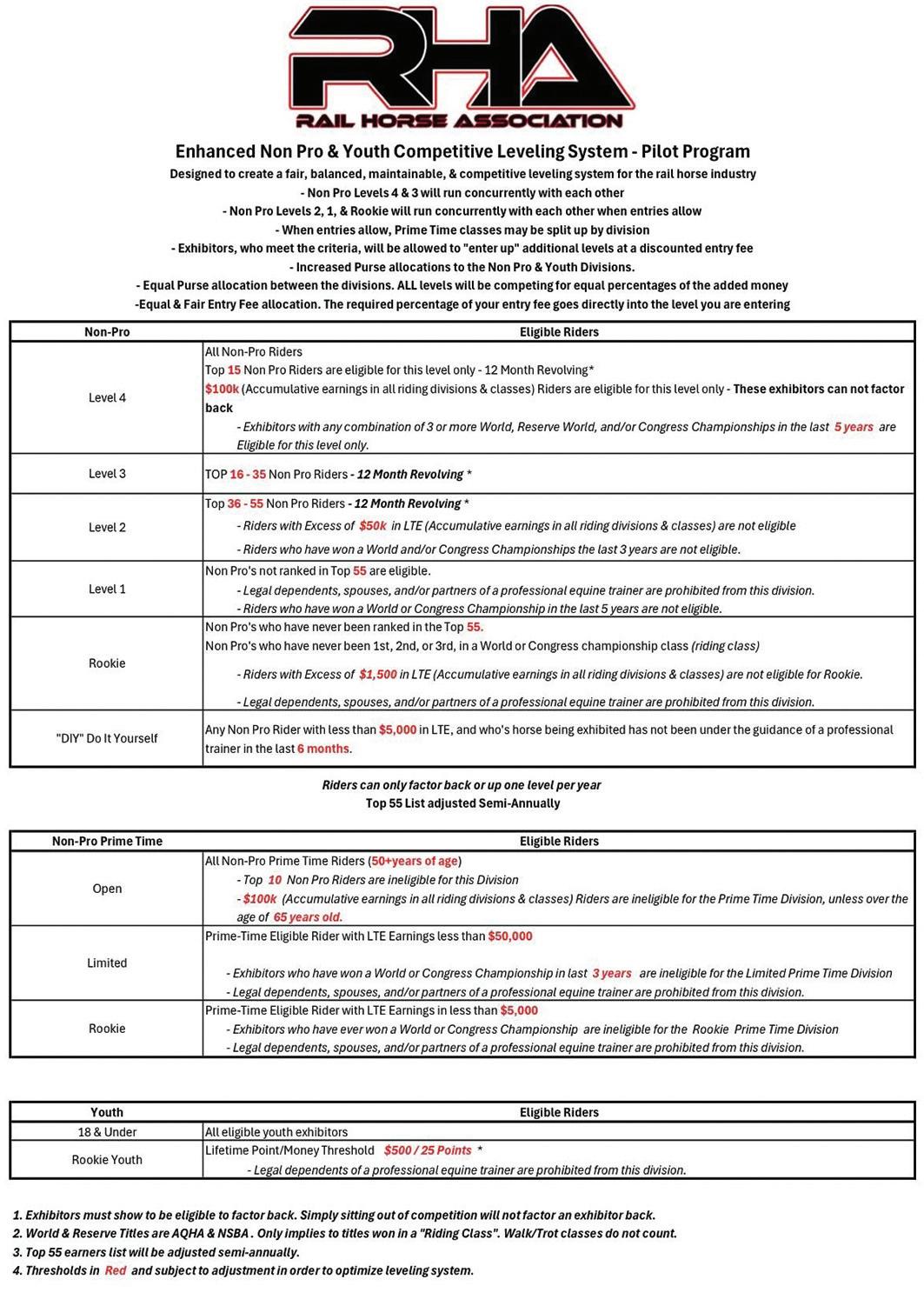
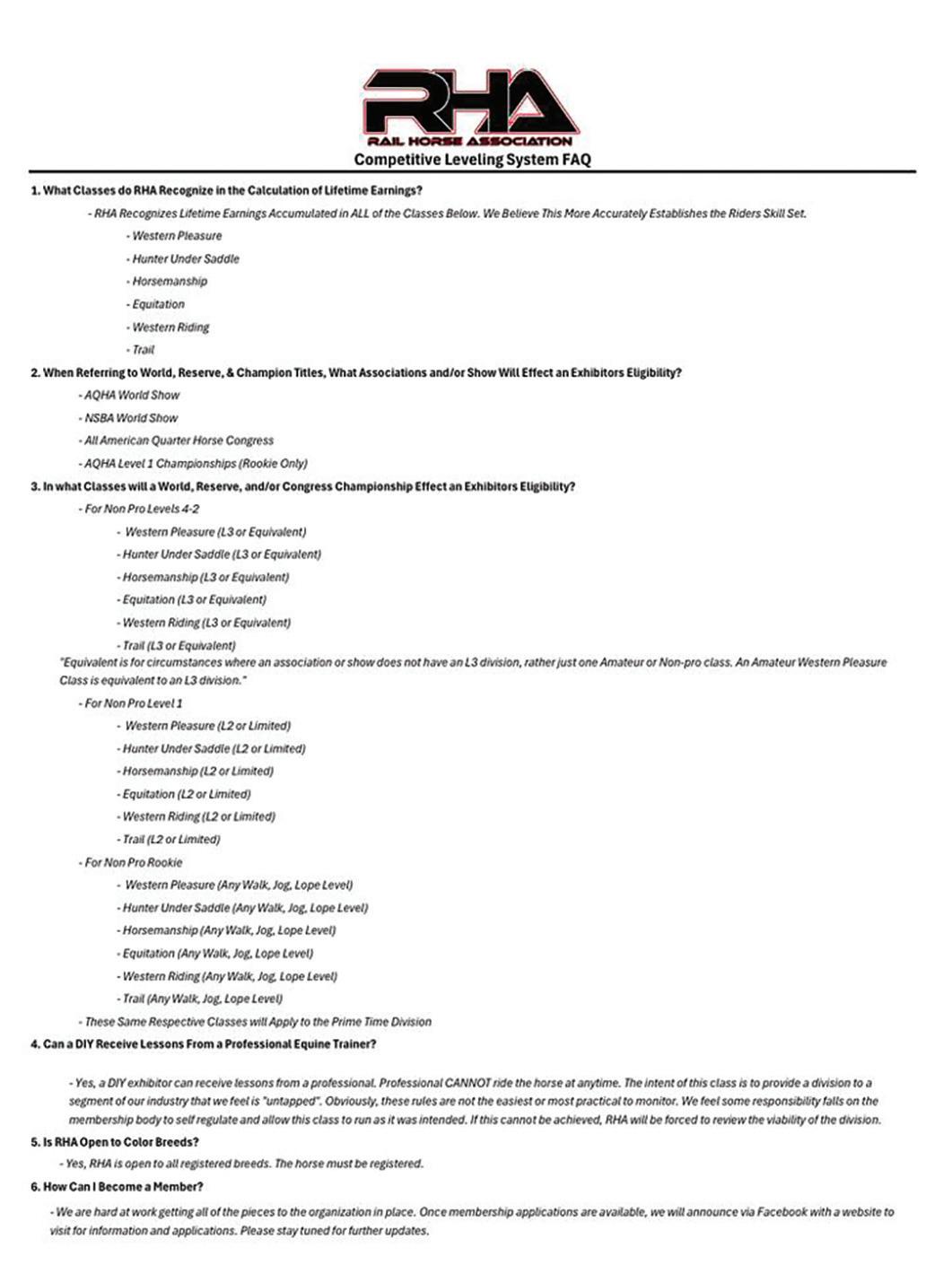
The RHA has created a leveling system designed to encourage growth within Rail Horse events, according to organizers.
“This system focuses on equal payout across all levels –ensuring it is just as rewarding to compete in the Rookie and DIY divisions as it is in the higher levels,” Lakins explained. “By doing so, RHA is bringing the Pleasure and Hunter Under Saddle horse back into the spotlight, celebrating their role and value in today’s industry.”
The RHA recently listed the Top 55 riders from last year based on 2025 earnings in all riding disciplines. The list is not the only criteria which determines levels. The Leveling sheet (at right) helps explain the leveling system and updates are constantly being made for clarification purposes (follow RHA on Facebook for updates). RHA membership cards will also display assigned level for easy reference. When completing your membership application, please answer all questions as accurately and thoroughly as possible. Submissions will be cross-referenced to ensure accuracy.
Top Riders: The RHA Top 50 Riders include: Nancy Wilkerson-Ditty; Madeleine M. Bayless; Mallory Menard; Mallory Vroegh; Alexa Love Arrington; Angela Fox; Ty Paris Dougherty; Brooke DeBuhr; Hillary Timchak, Caroline L. Cavallo; Juliana Baskin Blackburn; Deanna Willis; Angela H. Wade; Rebekah L. Kazakevicius; Brayden Stine; Greg Wheat; Eleanor Ott; Laina P. Banks; Kaleena Weakly; Jordan Macan; Debra Sharp; Alicia Matthies; Tammy Michele Conroy; Alexis Gooding; Jenna Hyde-Jones; Jana Leigh Simons; Kimber Mitchell; Sandra Morgan; Raymond Arnona; Tessa Lynch Sutton; Amy Drake Gumz; Jessica M. Baird; Courtney Archer; Ellie Marie Schommer; Isabella Stanley; Kaitlyn Sawyer Smith; Kayla Morgan Budine; Morgan Miller; Jessica A. Hartwell; Linda Ball Sargent; Sunni Duke; Haley Hartman; Lauren Allen; Erin Shapiro Boatwright; Bill Cosentino; Anneene Miller; Kylee Faith Wiseman; Katie Jo Jones; Richard Carr; Michelle Bauer; Becky Galyean; Laurel Champlin; Susan Renee Phillips; Sarah Nimigan; Megan Hawkins. ABOUT THE RAIL HORSE ASSOCIATIOn
The vision statement of the RHA is to establish a member driven association designed to foster growth of the Rail Horse while striving to promote and protect correct movement in the equine industry focusing on all levels of exhibitors. The association’s mission statement is to build an efficient leadership structure designed to effectively partner with other associations to develop the Rail Horse Association.
Founding members include: Ashley Lakins, Ray Alderman, JR Cook, Randy Jacobs, Blair Roberts, Charles Cannizzaro and Bill Cosentino.
For additional information on the newly established Rail Horse Association visit www.railhorseassociation.com. You can also follow the RHA for updates and additional events being added all the time, on the association’s Facebook and Instagram platforms.
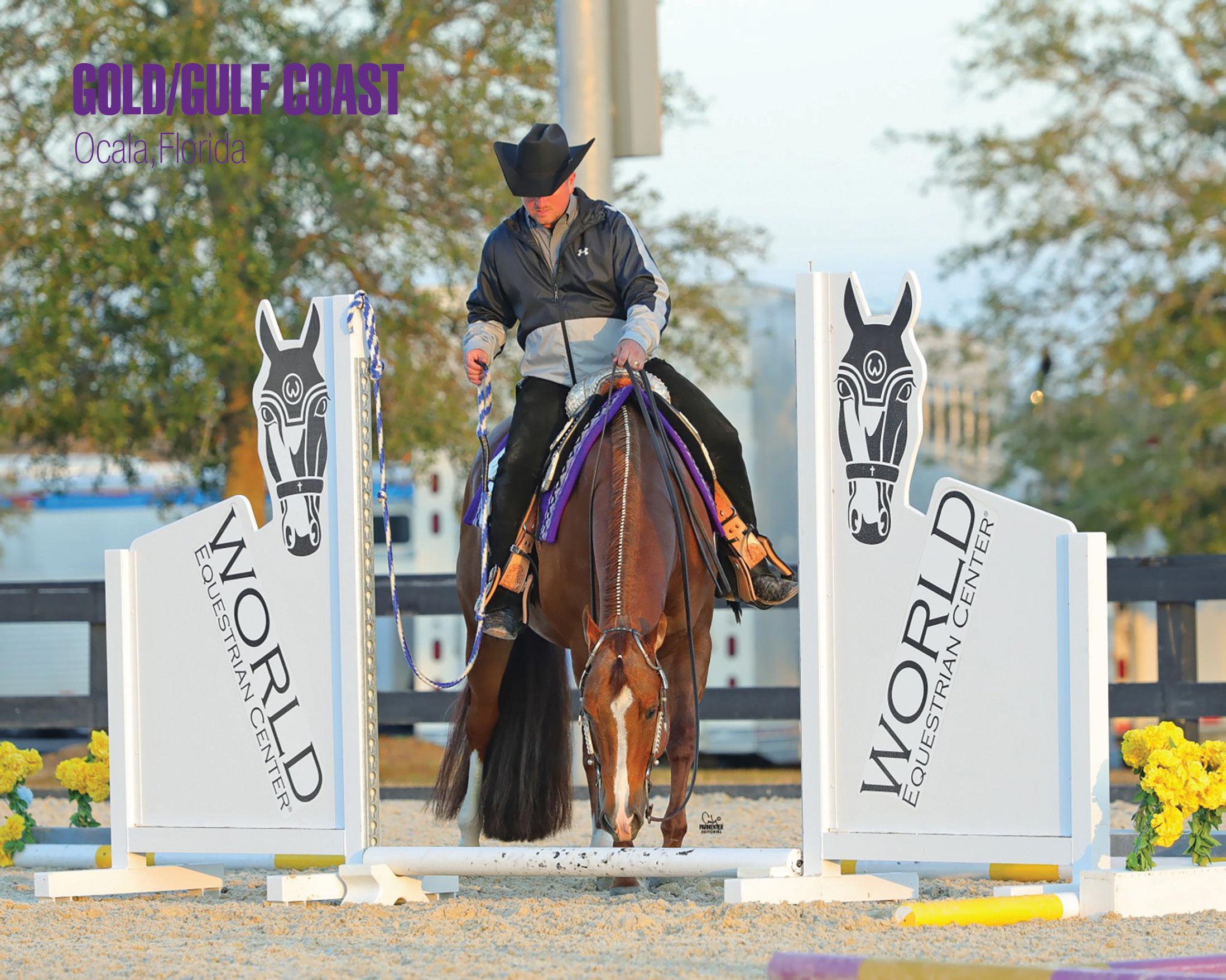
Over $89,000 awarded in payouts at Florida Gold/Gulf Coast
Gold Coast Added Money Winners
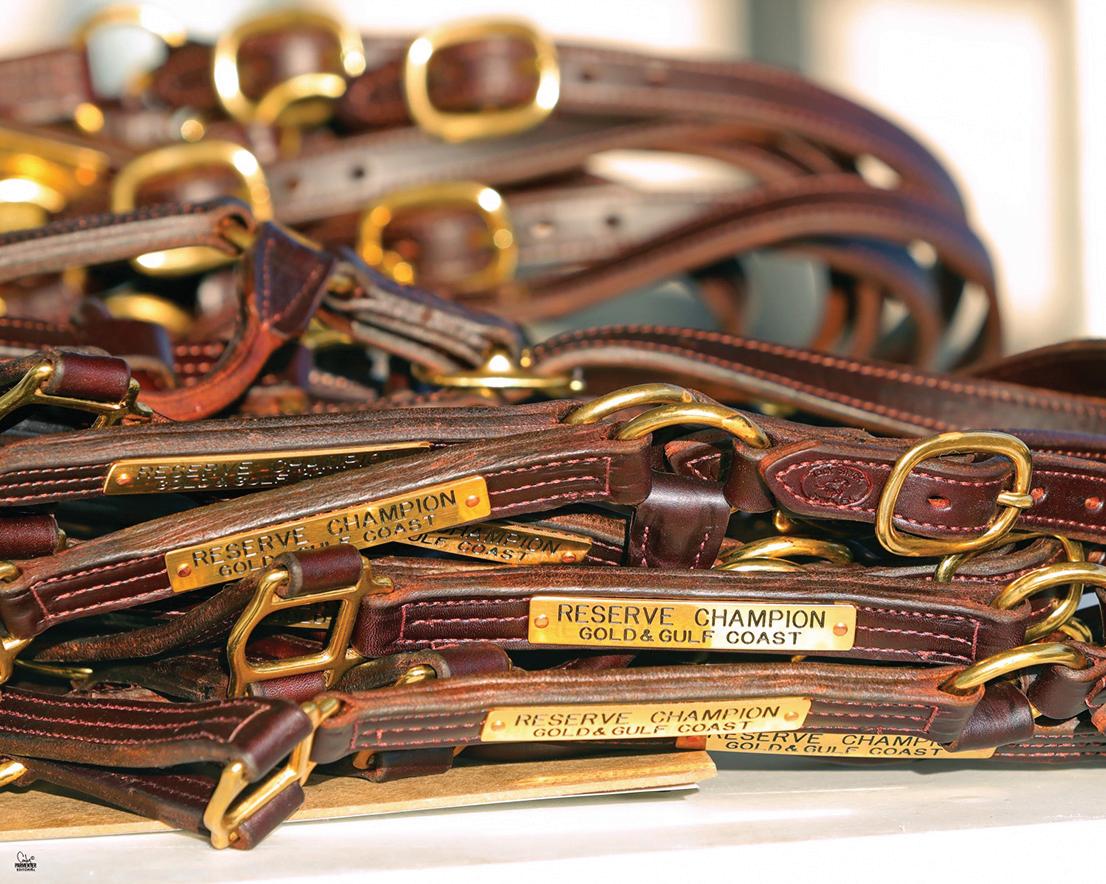
The 2025-2026 Florida Gold and Golf Coast Circuits wrapped up American Quarter Horse Association (AQHA) and National Snaffle Bit Association (NSBA) competition at the World Equestrian Center in Ocala, with impressive numbers and over $89,000 in payouts.
The Gold Coast, held Dec. 28-31 drew 7,276 AQHA entries and awarded $47,265 in prize money. The Gulf Coast followed Jan. 1-6 and drew a total of 10,983 entries and paid out $41,880, according to An Equine Production, the event management team.
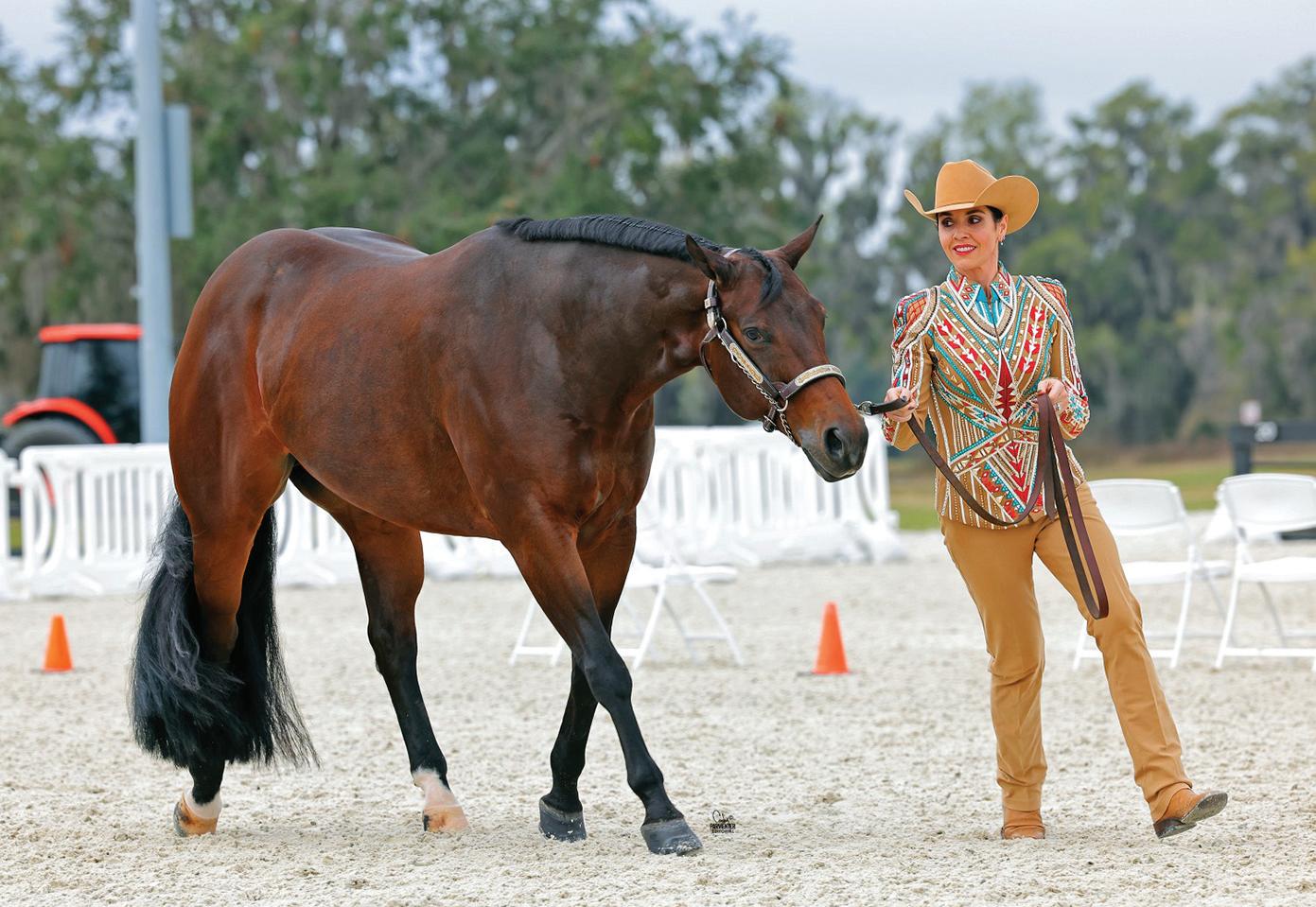
Non-Pro Showmanship (20 shown): Ultimate Ryde, owned and shown by Kaleena Weakley, $455.
6 & Over Open Western Riding (6 shown): Hez Blazin Trouble, owned and shown by Susan Wilson, $602.28.
Junior Ranch Trail (10 shown): Cookies And Dream, owned by Kathryne K. Zachrich and shown by Noel Meadows, $531.76.
Senior Ranch Trail (15 shown): (tie) The Half Time Show, owned by Kara Ann Bennett and shown by Steve Meadows, $498.42 and Princess Ice, owned by Erika Collins Sterling and shown by Matt Gouthro, $498.42.
3-Year-Old Open Hunter
and shown by Olivia Medows, $458.50.
Junior Ranch Riding (12 shown): Charlie Daniels, owned by Janet Behling and shown by Shannon Quinlan Hill, $570.11.

Senior Ranch Riding (13 shown): Xtra Wimpys Catalyst, owned by Erika Collins Sterling and shown by Matt Gouthro, $554.62.
Junior Ranch Rail (6 shown): RunningOutOfBoonLite, owned by Kathryne K. Zachrich and shown by Steve Meadows, $602.28.
Senior Ranch Rail (3 shown) One Cool Joe, owned by Michelle Higdon-Rector and shown by Steve Meadows, $701.52.
Under Saddle (5 shown): RC Kola, owned by Madeleine M Bayless and shown by Keith Miller, $576.90.
Maturity Open Hunter Under Saddle (2 shown): Ma Donna, owned by Corrival Ranch LLC and shown by Scott Jones, $300.
3-Year-Old Non-Pro Hunter Under Saddle (4 shown): RC Kola, owned and shown by Madeleine M. Bayless, $602.28.
Maturity Non-Pro Hunter Under Saddle (4 shown): Prettiest Of All, owned and shown by Madeleine M. Bayless, $735.36.
Gold Coast Non-Pro Hunt Seat Equitation (17 shown): Too Blazin Cool, owned by Wild Oats Farm, LLC
Maturity Open Western Pleasure (3 shown): Sophisticated Sophie, owned by Gorman & Alice Barger and shown by Erin Lieurance, $1,052.28.
3-Year-Old Open Western Pleasure (3 shown): Dang Theres No Doubt, owned by Amy Lynch and shown by Erin Lieurance, $1.052.28.
Maturity Non-Pro Western Pleasure (4 shown): Shes Coming In Hot, owned and shown by Todd D. Yoder, $735.36.
4/5-Year-Old Open Trail (10 shown): Did It In Code, owned by Linda Lu Kosal and shown by Colton Plyman, $2,179.40.
All-Age Non-Pro Trail (17 shown): VS Retirement Fund, owned and shown by Madeline Rippeon, $1,102.70.
All-Age Non-Pro Ranch Riding (14 shown): Xtra Wimpys Catalyst, owned and shown by Erika Collins Sterling, $472.67.
Gold Coast Non-Pro Horsemanship Stakes (21 shown): Insomniak, owned and shown by Kaylee M. Mellott, $464.75.
6-Year-Old & Over Open Trail (12 shown): No Doubt Hez Hot, owned by Judith E. Bower and shown by Colton Lasusa, $3,470.45.
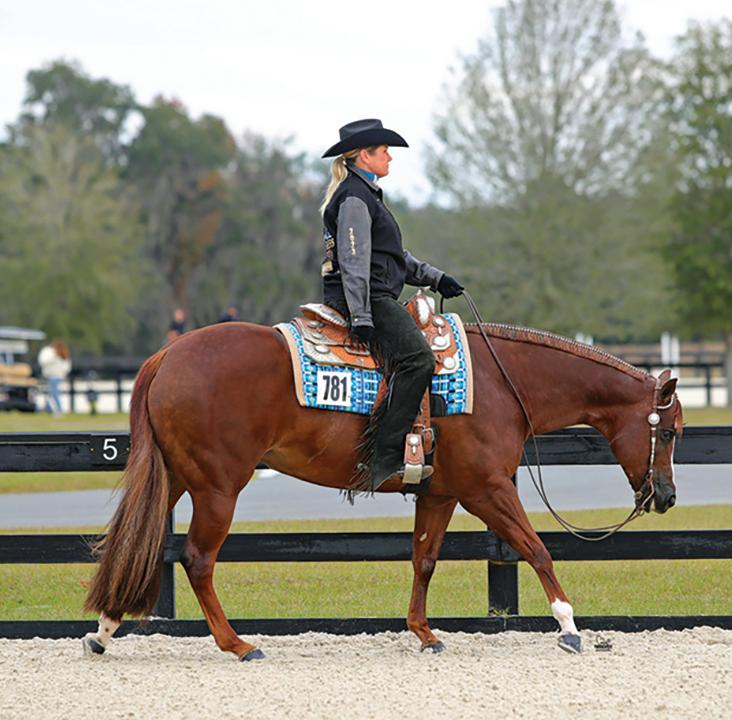
Kyle Dougherty is pictured on the opposite page (top) guiding Lets Ride to a win in the 6-Year-Old & Over Open Trail at the Gulf Coast. On this page (top) Kaleena Weekly and Uttimate Ryde performing their winning Non-Pro Showmanship pattern at the Gold Coast. Below that (left) Kaylee Mellott and Insomniak, competing in the Gold Coast Non-Pro Horsemanship Stakes and Erin Lieurance riding Sophisticated Sophie to a win in the Open Western Pleasure Maturity at the Gold Coast. s
Gulf Coast Added Money Winners
Open Low Hunter Derby (23 shown): That Is That,owned by Michael J Schultz and shown by Katelyn Anna Schultz, $2,144.
Open High Hunter Derby (10 shown): My Next Edition, owned by Hana Thomas and shown by Ryan Painter, $680.
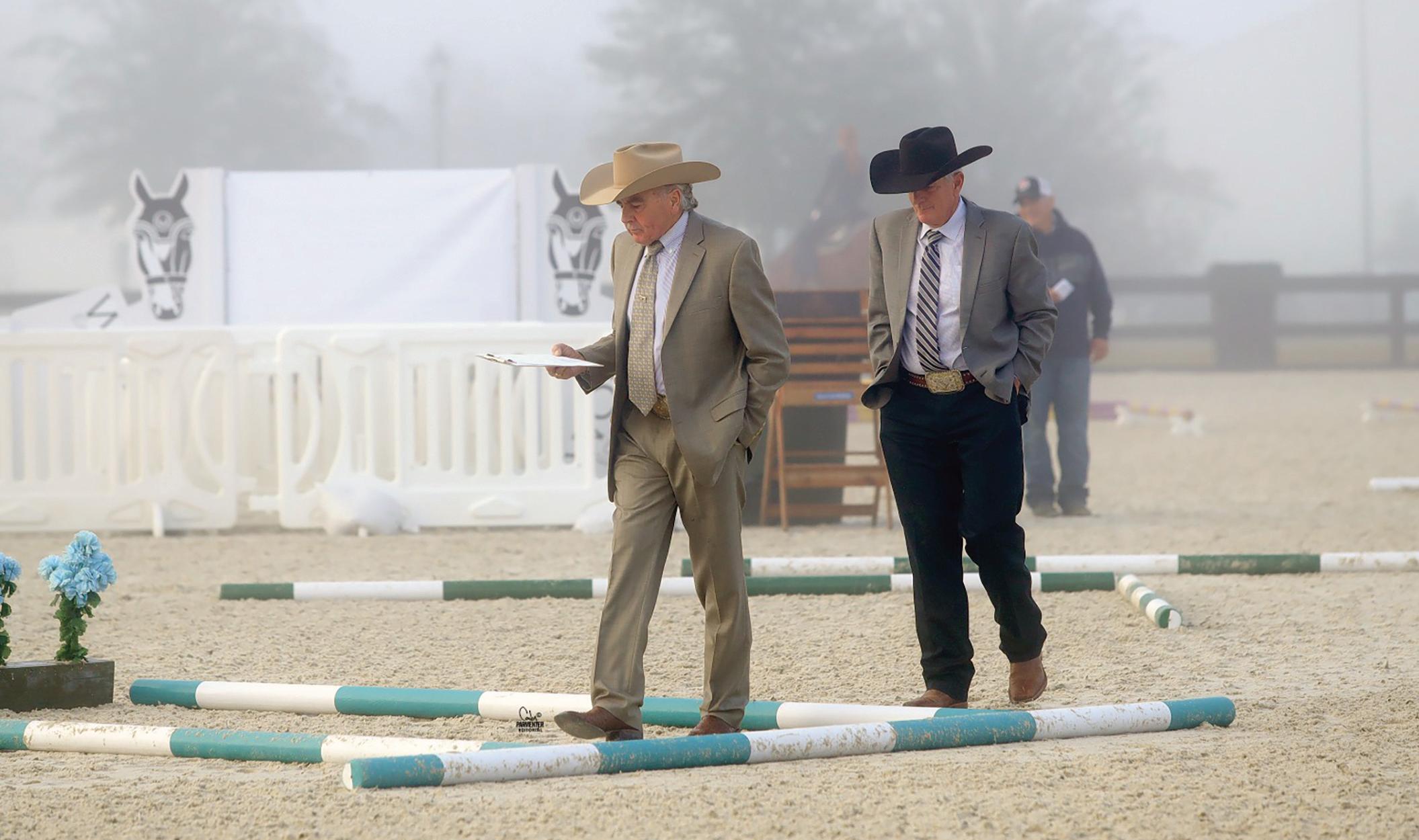
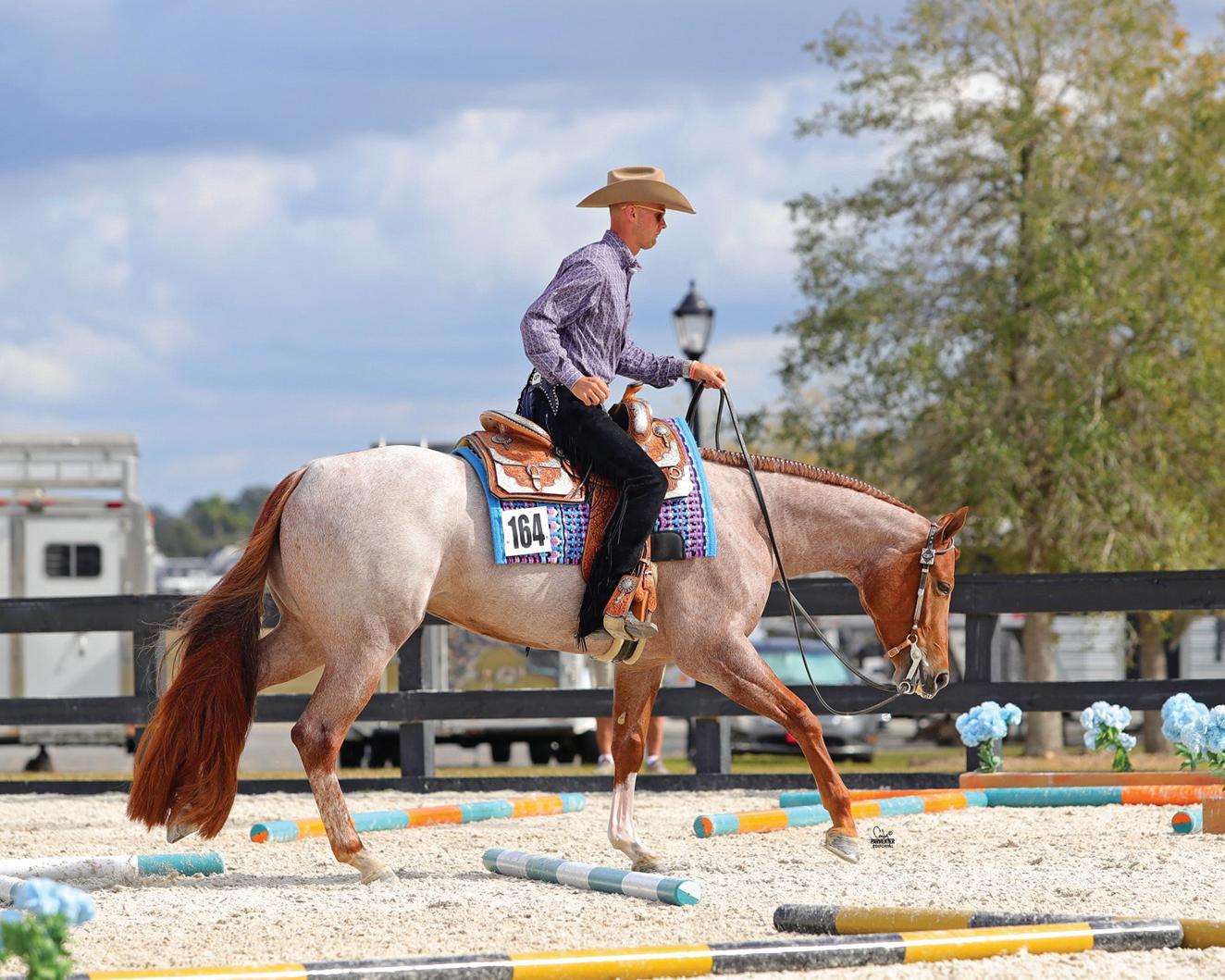
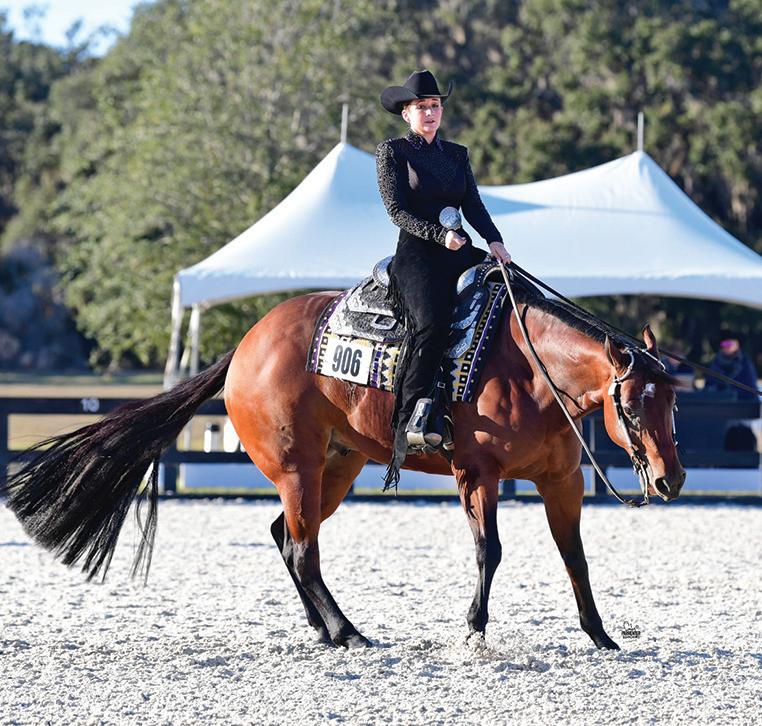
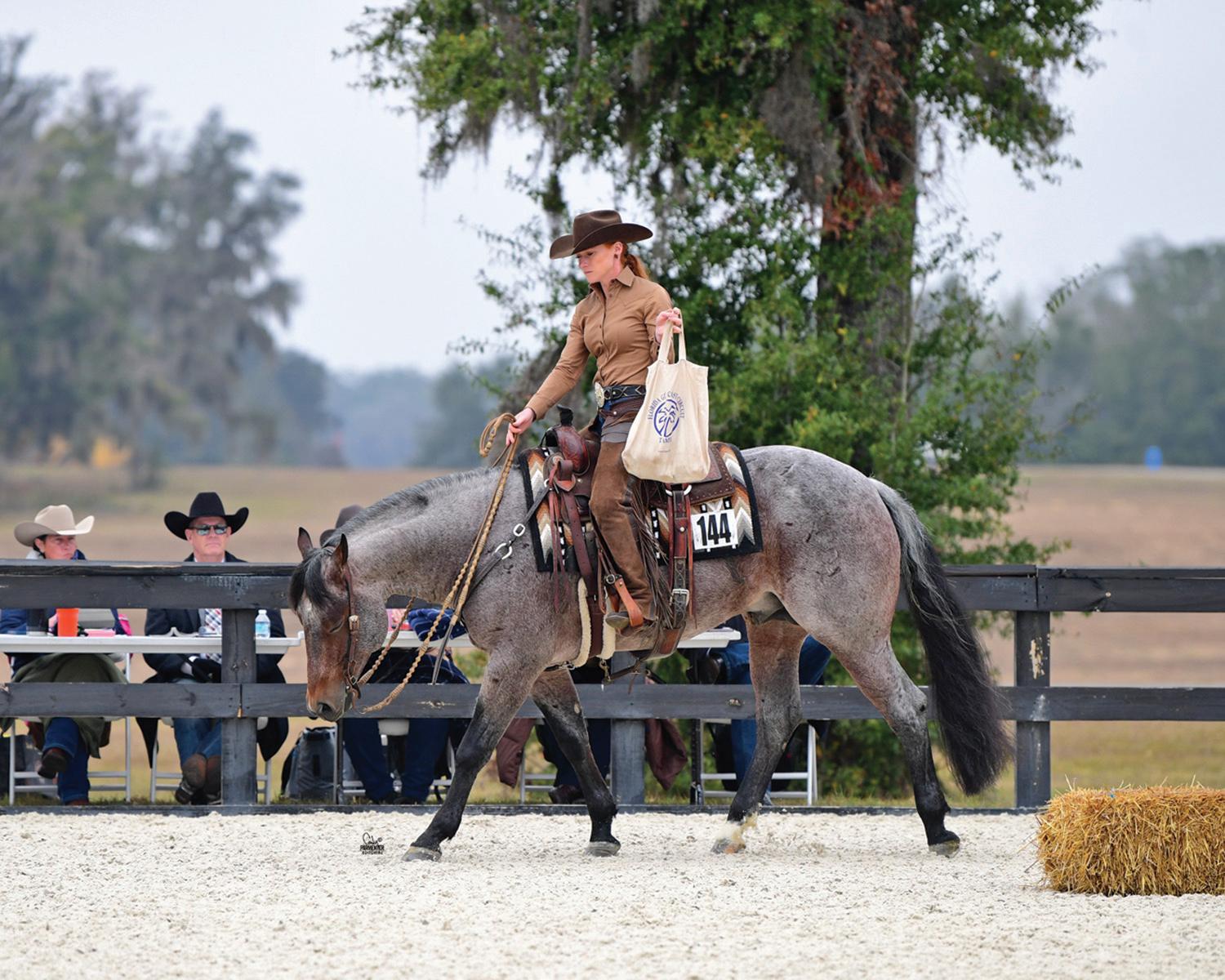
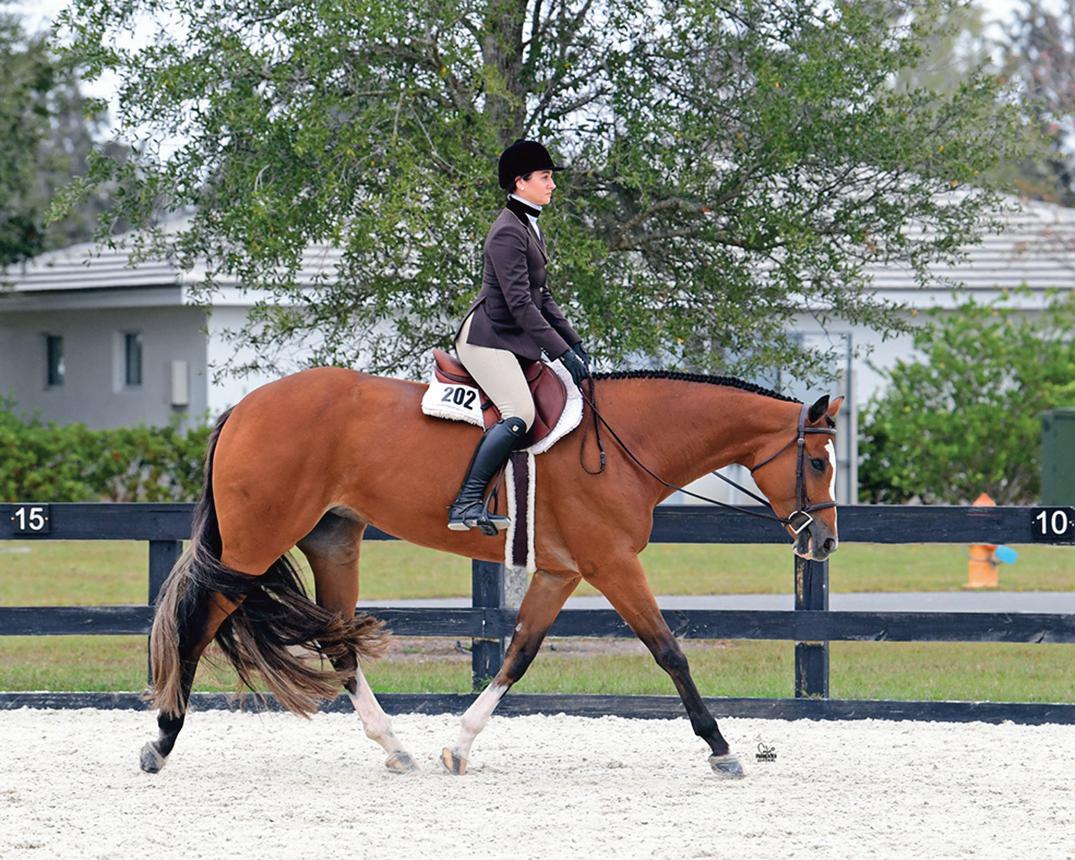
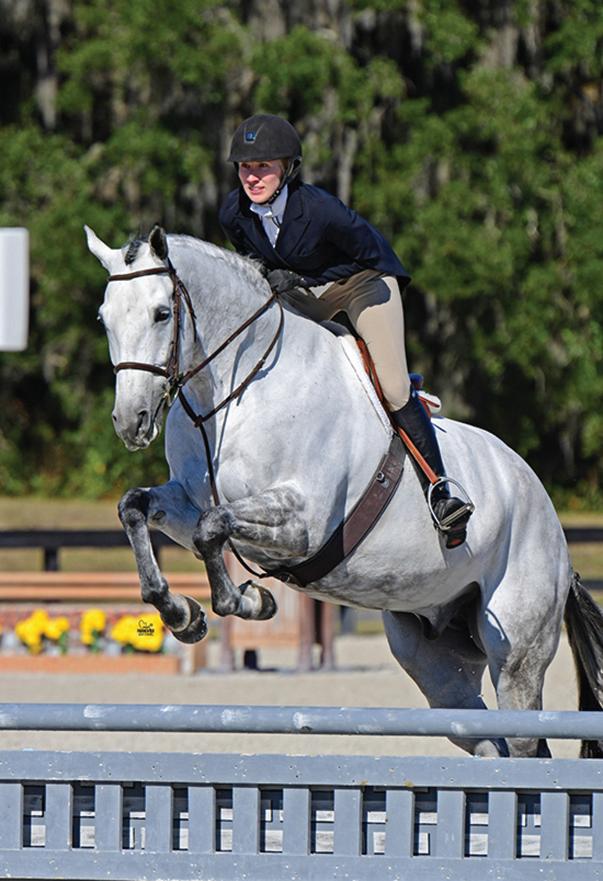
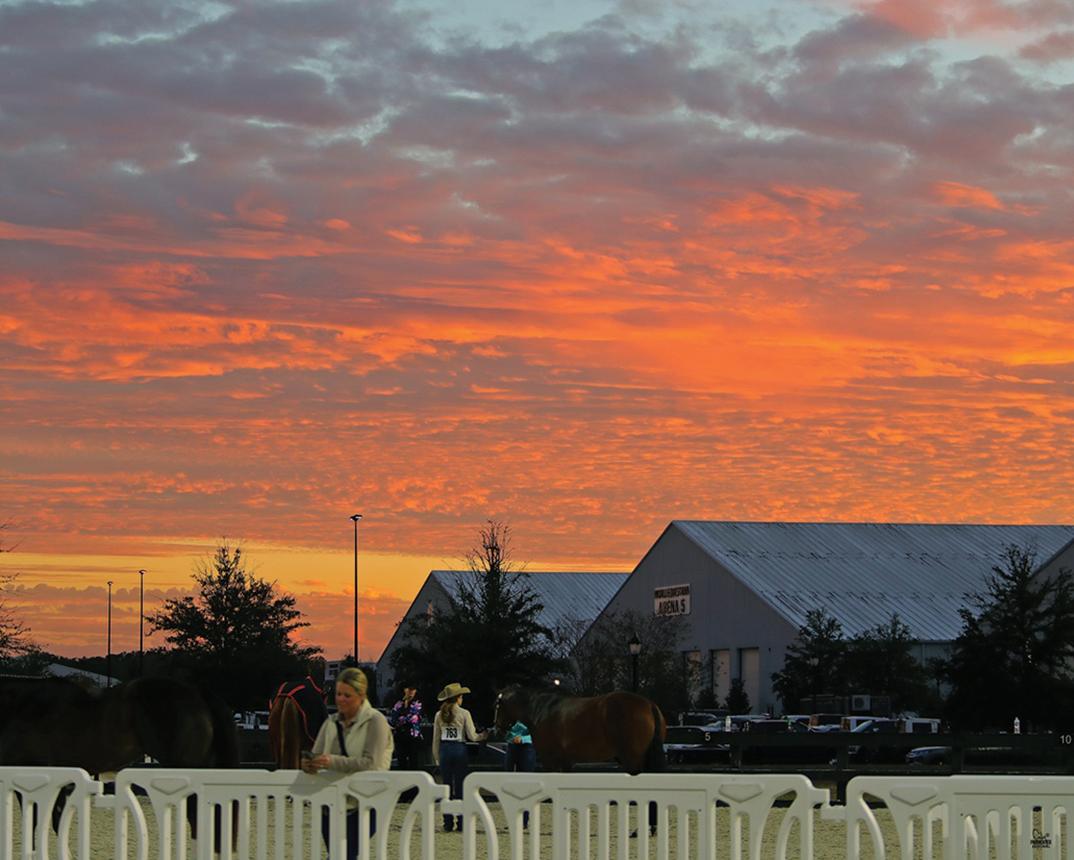
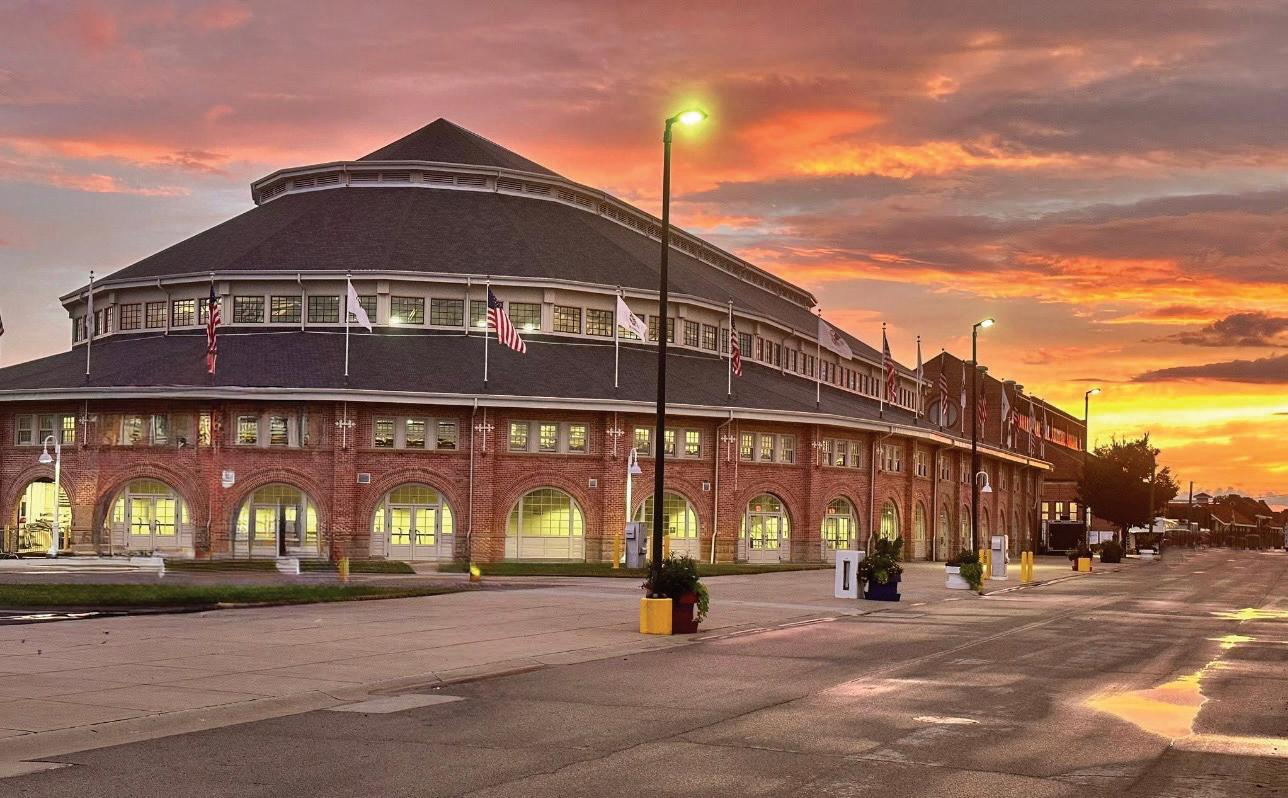
On this page (top) Judges walk the course prior to the start of Trail competition at the World Equestrian Center which hosted the 2025 Florida Gold Coast and 2026 Florida Gulf Coast circuits. Below that, Colton Plyman rides Did It In Code to a win in the 4/5-Year-Old Open Trail at the Gold Coast Circuit. On the opposite page (clockwise from upper left): Shannon Quinlan Hill and Charlie Daniels winning the Senior Ranch Trail at the Gulf Coast; That Is That winning the Low Hunter Derby at the Gulf Coast with Katelyn Schultz in the irons for owner Michael Schultz; one of the spectacular sunsets over the WEC in Ocala; and Prettiest Of All and Madeleine Bayless, winners of the Maturity Non-Pro Hunter Under Saddle at the Gold Coast.
Senior Ranch Trail (17 shown): Charlie Daniels, owned by Janet Behling and shown by Shannon Quinlan Hill, $565.60.
Junior Ranch Rail (7 shown): The Soldier, owned by Michelle Higdon-Rector and shown by Steve Meadows, $568.
Maturity Open Western Pleasure (4 shown): Dang Theres No Doubt, owned by Amy Lynch and shown by Erin Lieurance, $1,116.
3-Year-Old Open Western Pleasure (3 shown): VS Snap In Code, owned by Bill Baskin & Susan Blackburn and shown by Juliana Blackburn-BaskinArora, $708.
Maturity Open Hunter Under Saddle (6 shown): In Pats Honor, owned by Susan L. Merkatoris and shown by Keith Miller, $612. 6 & Over Open Trail (19 shown) Lets Ride, owned by Janet S. Egolf and shown by Kyle Dougherty, $2,002.
Senior Ranch Riding (19 shown): One
Cool Joe, owned by Michelle Higdon Rector and shown by Steve Meadows, $599.20.
Junior Ranch Trail (5 shown): Cookies And Dream, owned by Kathryne K. Zachrich nd shown by Noel Meadows, $585.
Senior Ranch Rail (6 shown): Xtra Wimpys Catalyst, owned by Erika Collins Sterling and shown by Matt Gouthro, $612.
Maturity Non-Pro Western Pleasure (3 shown): Foxy Cleopatraa, owned and shown by Jillian Marie Zidian.
3-Year-Old Non-Pro Western Pleasure (1 shown): Intan-
gible Assets, owned and shown by Kenneth Hoffman.
Maturity Non-Pro Hunter Under Saddle (6 shown): Built Just Right, owned and shown by Sandra Morgan, $544.
5-Year-Old Open Trail (8 shown): Suddenbreakingnews, owned by Jolene M. Mierzejewski and shown by Jennifer Paul, $888.
All-Age Non-Pro Trail (8 shown): (tie) Party Favours, owned by Kara S Sisco and shown by Emerson Knabenshue, $720.90 and Hez Blazin Trouble, owned and shown by Susan Wilson, $720.90.
Junior Ranch Riding (8 shown): Daytona Five Hundred, owned by Debbie Kuffer and shown by Shannon Quinlan Hill, $592.
All-Age Non-Pro Ranch Riding (12 shown): Xtra Wimpys Catalyst, owned and shown by Erika Collins Sterling, $584.80.
Judges for the Gold Coast included: Michael Edwards, Daren Wright, Jon Barry, Tom Robertson, Robert Dehn, Jerry Erickson, Buddy Fisher, Sara Simons, Brendan Brown, Jill Griggs, Murray Griggs, Kristy Starnes, Glenn Wells, Jennifer Goss, Kathryn Kope, Shannon Curl-Holbin and Liz Baker. Judges for the Gulf Coast included: Tonya Brown, Mark Russell, Karen Graham, Lindsay SoderbergGeiger, Jimmy Daurio, Kelly McDowall, Kelly BolesChapman, John Briggs, Jim Searles, Garth Gooding, Rob Meneely, Andrea Simons, Tom Crowley, Terry Cross and Stacey Roberson.






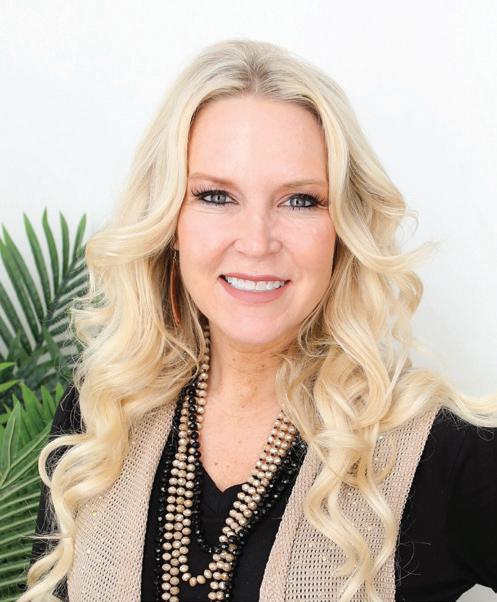
Susan Arbo President
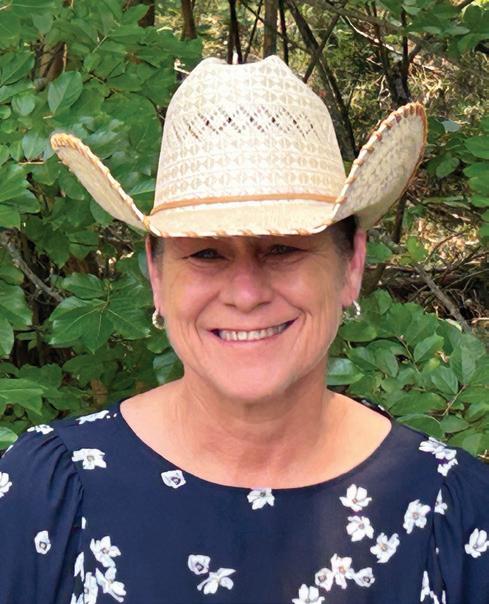
Michele Kelley Treasurer
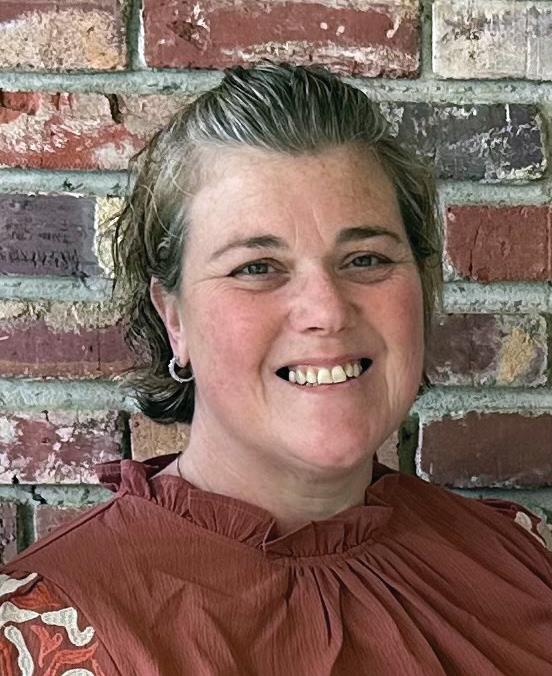
Perri Williams Appointee
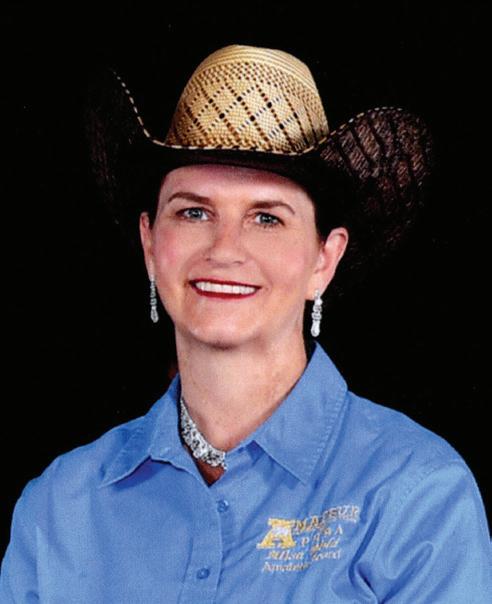
Alisa Wold President-Elect
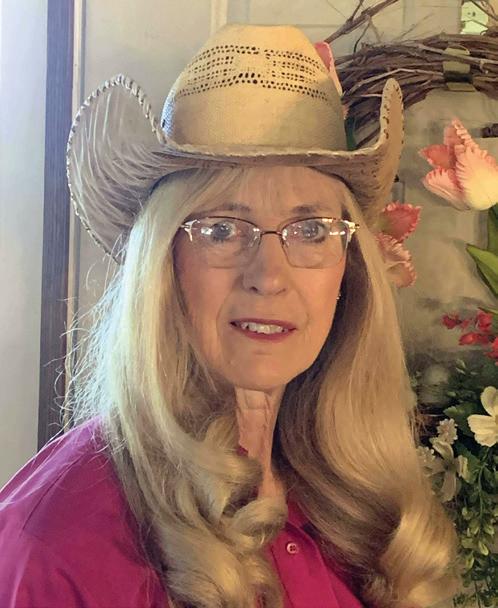
Lisa Eikenberry Secretary
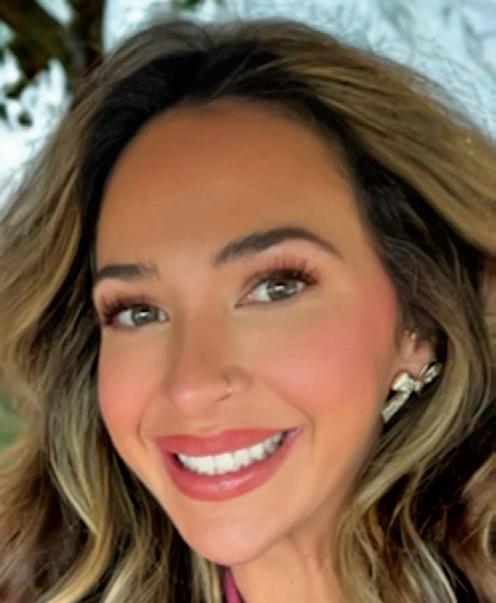
Anne Lumley Appointee