Surpass Living Two Day Program Binder Sample
Winter Wonderland Week — Monday: Cozy Cabin
Music & Movement — Gather ’Round the Fire
To encourage gentle movement, rhythmic engagement, and emotional connection through familiar folk songs and the imagery of warmth and firelight.
Materials:
Rhythm scarves, egg shakers, small hand drums, guitar or speaker with soft folk playlist, fireplace video or flameless candles, large-print lyric cards.
Music Suggestions:
● This Little Light of Mine
● You Are My Sunshine
● Take Me Home, Country Roads
● Down in the Valley
● Michael, Row the Boat Ashore
Steps
Welcome & Warm Hands
Begin with a slow hand rub and deep breathing to set a calm tone. Invite imagery: “Imagine we’re gathered by the fire, warming our hands.”
Call & Response Warm-Up
Hum or clap a rhythm and invite echoing from participants. Encourage eye contact and gentle smiles.
Resident Role: Distribute shakers or drums
Instrument Circle
Encourage soft, rhythmic “firelight” sounds such as slow rolls or gentle taps. Use cue words like “spark,” “crackle,” and “glow.”
Resident Role: Collect instruments
Resident Role: Distribute scarves
Sing-Along
Lead familiar folk tunes, inviting light scarf movements for expression. Encourage swaying, humming, or tapping to the rhythm.
Resident Role: Collect scarves
Guided Imagery Movement
Encourage motions that suggest cozy activity:
● “Reaching for logs”
● “Stirring chili”
● “Hugging a blanket”
Dim the lights slightly and add soft firelight effects.
Closing Reflection
Play gentle instrumental music.
Invite one-word shares such as “warm,” “peaceful,” or “together.”
Facilitator Tips:
Keep the pace slow and inclusive. Encourage participation through choice: “Would you like to sing or just sway?”
Focus on the feelings of warmth, togetherness, and calm over perfect performance.
Art Viewing & Discussion: Cabin Life featuring Thomas Kinkade’s “Winter at Lamplight Manor”
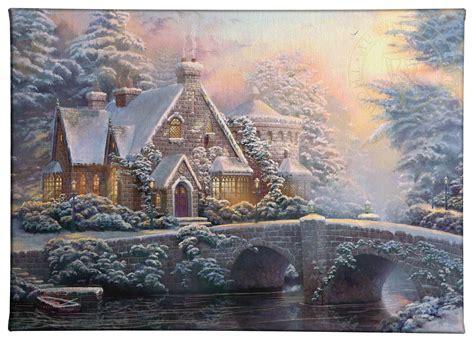
Materials:
Individual prints of Winter at Lamplight Manor, pine cone, and knitted swatch, Cling Sheet, Short artist bio in large print (at least 25 point font)
Observation
Distribute individual prints to each participant and invite them to take a quiet moment to look closely
Prompt: “What do you notice first?”…pause… “—the light, the snow, the cabin, or the trees?”
Sensory Bridge
Pass around the pine cone and knitted swatch.
Prompt: “Which texture feels most like the scene to you?”
Branching Questions:
1. Would you rather be standing outside looking in at this cozy cabin, or sitting inside looking out at the snowy night?
2. What might you imagine hearing in this scene—the crunch of snow, the sound of the wind, or quiet music from inside?
3. If you could walk into this painting, where would you go first—the cabin, the bridge, or the snowy path?
4. Does this image remind you more of a real place you’ve been, or an imagined place?
5. When you look at the light in the windows, what feelings come up—comfort, peace, curiosity, or something else?
Description of the Artwork
About Winter at Lamplight Manor, by Thomas Kinkade, 1992
Thomas Kinkade’s Winter at Lamplight Manor glows with the warmth of evening light against a cool winter landscape. The stone cabin, tucked beside a bridge and snowy trees, feels alive with welcome. Golden light spills from the windows and reflects softly on the snow, suggesting family, comfort, and faith in the heart of winter The smoke curling from the chimney rises into a twilight sky, blending lavender, blue, and soft cream tones. The water beneath the bridge shimmers faintly, capturing quiet movement that contrasts with the stillness of snow. Every brushstroke holds detail—a lantern at the door, frost on the branches, footprints that invite you closer.
Art Insight
Thomas Kinkade, known as the “Painter of Light,” created tranquil works that celebrate faith, warmth, and belonging. Winter at Lamplight Manor is a reminder that even in the coldest seasons, light and love can fill the darkest nights.
Reflection
Invite participants to write a word or short phrase on the Cling sheet that describes what the painting makes them feel—such as “peaceful,” “home,” “still,” “hopeful,” or “warm.”
Post all the words on a display titled “Cabin Reflections” alongside a framed/matted image of the painting.
Extension Art Studio — “Windows of Light” Mixed Media Collage
Express warmth, home, and belonging through layered color and light imagery
Materials:
Midnight blue cardstock, pre-cut black window frames, tissue paper in gold, amber, and white, glue sticks, cotton swabs, white paint pens, and small battery tea lights.
Steps:
1. Glue the window frame to the cardstock.
2. Choose tissue colors for panes—ask, “Would you like golden glow or frosty white?”
3. Tear or cut tissue to fit behind each pane and glue lightly
4. Write a short word or blessing inside one pane, such as “Peace” or “Friendship.”
5. Display collages near tea lights or light for a glowing effect.
Featured Chef Culinary — Chili Cook-Off & Cornbread Tasting
A flavorful, social experience that sparks comfort-food memories.
Voting & Engagement:
● Colored tickets for voting (three colors for the three chilis)
● Small containers, jars, or labeled paper bags for collecting votes (“Vote Here!” signs) (Resident Role: Collect Votes)
● “Cozy Kitchen Favorite” award card or small prize for the winning chili
● Poster board or corkboard labeled “Cozy Kitchen Board” to display recipe names and comfort-food memories shared by residents
● Small tasting cards where residents can jot down “My Favorite” or “Reminds me of…”
● 2-ounce disposable tasting cups (at least 2–3 per participant; place a colored dot on each cup to match ticket colors for voting)
Setup:
Prepare three chilis:
1. Classic Beef & Bean
2. White Chicken & Corn
3. Hearty Veggie Three-Bean
Offer 2-ounce tasting cups and invite participants to reminisce:
“When you think of winter nights, what kinds of foods bring you comfort or make you feel at home?”
“Some people love soups and stews on cold nights, others think of baking or a family favorite—what comes to mind for you?”
“If you were to spend a cozy evening by the fire, what food or drink might you want nearby?”
Residents vote with colored tickets for their favorite chili, and all recipes are posted on the “Cozy Kitchen” board. Serve mini cornbread muffins alongside, with butter and honey.
Resident Culinary — Shake & Make Cinnamon-Maple Butter
Today, we are making: Shake & Make Cinnamon-Maple Butter to put on our biscuits!
Let’s begin by gathering our ingredients. Please place a “check” next to each item collected.
Heavy Cream (cold) Pure Maple Syrup
Ground Cinnamon Salt
Small Jar with Lid
Now let’s make sure we have our supplies. Please check to ensure we have:
Measuring Spoons
Measuring Cups
Large Mixing Bowl
Small Pitcher or Cup (for pouring off buttermilk)
Butter Spreader or Small Spoon
Now let’s get cooking!
Please place a “check” next to each completed step.
Fill each jar halfway with cold heavy cream
Add a small drizzle of maple syrup (about 1 teaspoon per jar)
Sprinkle a pinch of cinnamon and a tiny pinch of salt into each jar
Close the lids tightly so nothing spills
Shake the jars for about 3–5 minutes until the sound changes from “slosh” to “thud”
Open the jars and pour off the thin liquid (that’s the buttermilk)
Add a small splash of cold water, close the jars, and shake again for a few seconds
Pour off the remaining liquid and stir the butter once or twice to finish
Taste and add a tiny bit more maple syrup if you like it sweeter
Serve your Cinnamon-Maple Butter with warm biscuits or cornbread
Thank you for helping make our delicious Shake & Make Cinnamon-Maple Butter! Enjoy the taste of cozy comfort in every bite.
Volunteerism — Knitting & Crocheting Circle: Afghan Squares for the Community
A purposeful, heart-centered program that promotes calm focus, fine motor coordination, and a sense of contribution. Residents knit or crochet 8-inch squares that will later be joined together to create warm blankets, which are donated to local homeless shelters. The activity fosters a sense of belonging, pride, and the joy of giving back.
Materials:
Worsted-weight yarn in assorted colors, size eight knitting needles, crochet hooks (size H or I), round looms for accessibility, scissors, measuring tape, yarn needles for sewing, and name tags to label each square. Provide baskets or fabric bins to collect finished pieces.
Set-Up & Environment:
Create a warm, communal atmosphere perhaps near a “fireplace” display or soft background music like acoustic guitar or gentle folk instrumentals. Display finished squares on a board or clothesline as a visual motivator for progress.
Pattern & Instructions:
● Knitting: Cast on 32 stitches. Knit every row (garter stitch) until the square measures approximately 8 inches. Bind off loosely
● Crocheting: Chain 30–32 stitches depending on tension. Single crochet each row until the piece forms a square (approximately 8x8 inches). Fasten off and weave in ends.
Encourage participants to work at their own pace and celebrate each completed square, noting progress on a “Warm Hands, Warm Hearts” tally board.
Community Impact Extension:
Once enough squares are completed, residents, volunteers or staff can help assemble them into afghans using whip stitch or single crochet joins. Host a “Blanket Blessing” or “Warmth & Gratitude” ceremony before delivery to a local shelter. Display a small sign reading:
“These blankets were made with love by the residents of Surpass Living spreading warmth one stitch at a time.”
Facilitator Prompts & Conversation Starters:
“Some people love making things for family, others enjoy creating for friends or even for themselves. Who comes to mind for you when you think about handmade gifts?”
“As you look at the yarns, notice which colors or textures feel the most comforting or inviting to you. What are you drawn to today?”
“As you’re stitching, you might imagine someone finding comfort in your blanket on a cold night. What feelings or thoughts come up for you when you picture that moment?”
“Some residents like to add a little note or message with their square—something simple like ‘Made with warmth and care.’ If you were to include a word or phrase, what might you want it to say?”
Adaptations & Inclusive Options:
● For those with limited dexterity, consider using thicker yarn and larger tools or inviting them to help sort colors, measure, or label completed squares.
● Residents who enjoy social connection but not crafting can assist by winding yarn balls, cutting labels, or organizing the display board.
● Add a sensory component by offering samples of soft, textured yarns for residents to touch and choose from.
Closing Reflection:
Invite everyone to pause and appreciate the growing pile of squares a visual reminder that many small contributions can create something beautiful and meaningful together.
End with a simple phrase of thanks: “Every stitch holds kindness; every square adds warmth to someone’s story.”
Spiritual & Emotional — Gratitude Tree Inspired by Gustav Klimt’s “The Tree of
Life”
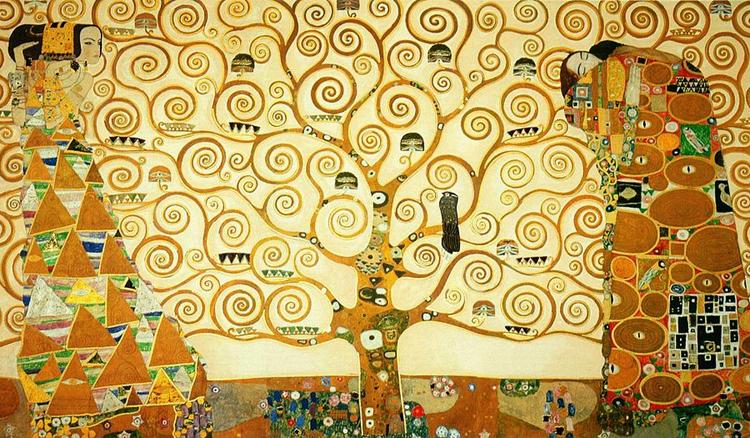
To inspire reflection, connection, and gratitude using Gustav Klimt’s art as a symbol of life, renewal, and community Participants create “gratitude icicle” or tags that come together to form a Tree of Life display for the week.
Materials:
● Printed or projected image of The Tree of Life by Gustav Klimt (1909)
● Pre-made standing “Gratitude Tree” or wall decal tree (see sourcing suggestions below)
● Icicle-shaped paper tags
● Metallic pens and markers (gold, copper, silver, black)
● String, ribbon, or mini clothespins for attaching tags
● Gold or white LED fairy lights (optional)
● Background music (soft instrumental piano or classical strings)
● Table covering, display sign, and small basket for blank tags
About Gustav Klimt and The Tree of Life:
Gustav Klimt (1862–1918) was an Austrian painter whose work celebrated beauty, connection, and the human spirit. He was known for combining symbolism, mosaic-like detail, and gold leaf to express ideas of love, life, and eternity.
The Tree of Life is one of his most recognized works, created as part of a mural for the Stoclet House in Brussels. The swirling golden branches stretch outward like an
embrace, symbolizing how all living things are connected. The roots represent stability and the past; the branches represent growth and the future. The golden tones suggest warmth and divine light, while the decorative patterns convey abundance and creativity
For many, Klimt’s Tree of Life represents renewal the idea that, even through change or loss, life continues to branch and bloom in new directions.
Where to Find a Ready-Made Tree:
You don’t need to create one from scratch. Easy options include:
● Amazon: Search “metal tabletop gratitude tree” or “photo display tree” 18–24-inch reusable styles work well.
● Michaels or Hobby Lobby: Try “seasonal tree centerpiece” or “thankful tree kit.”
● Oriental Trading: Look for “DIY Thankful Tree” or “Giving Tree Classroom Kit.”
● Flat Display Option: Use a removable wall decal tree or a paper tree cutout on a bulletin board with icicle tags taped to branches.
Facilitator Steps:
● Introduction:
Show or project Klimt’s Tree of Life and invite quiet observation.
Prompt: “What do you notice first the golden color, the spirals, or the flowing branches?”
Encourage discussion about how the painting makes them feel calm, connected, inspired, or curious.
● Art Connection:
“Klimt believed beauty and creativity connect all people. His golden tree reminds us that even though each branch grows in its own direction, they all share one trunk one source of life. Our Gratitude Tree will be just like that each of us adding a branch of light and appreciation.”
● Activity:
Invite each participant to choose an icicle and write (or dictate) a word, phrase, or sentence that expresses something they’re thankful for.
Encourage decorating with metallic markers inspired by Klimt’s shimmering designs — swirls, dots, or lines of gold.
● Display Together:
Attach completed tags to the tree branches or wall display Add lights if available. Facilitator Cue: “As each branch fills, our Gratitude Tree becomes a living reflection of kindness, gratitude, and shared connection.”
● Closing Reflection:
Read aloud a few gratitude words or phrases from the tree, then share: “Like Klimt’s golden tree, our community shines brighter when each person adds their light. Gratitude connects us one branch, one heart, one community.”
To spark warmth, laughter, and team spirit while celebrating comfort, creativity, and community. This day brings everyone together through cozy attire, food stories, and a sense of friendly fun all while giving back through the Cozy Cabin Cookbook project.
Theme:
“Comfort, Connection, and a Dash of Chili Powder.”
Everyone is invited to show their flannel flair and share their favorite winter comfort recipe soups, stews, casseroles, cookies, breads, or drinks that remind them of home.
Materials:
● Recipe submission cards or forms
● A collection basket or “Recipe Drop Box”
● Camera for photos
● Bulletin board or digital slideshow for “Cozy Crew Wall”
● Small prizes (optional): “Flannel Fan Favorite,” “Most Unique Recipe”
● Charity selection slips (residents vote on which cause to support)
Suggested Timeline:
● Morning Warm-Up – Flannel Parade
Kick off the day with a casual “Flannel Roll Call.” Gather staff and residents for a quick group photo. Play upbeat folk or country tunes (“Home,” “Take Me Home, Country Roads,” “You Are My Sunshine”).
● Afternoon Fun – Cozy Crew Bulletin Board
Take candid photos throughout the day staff serving chili, residents tasting biscuits, a group knitting, or laughing in plaid. Print the photos and add speech bubbles like:
○ “Flannel is my superpower.”
○ “Staying warm, one spoonful at a time.”
○ “Cozy Crew since 2025.”
The board can be titled “The Cozy Crew – Where Comfort Meets Kindness.”
Charity Connection:
Once all recipes are collected, residents vote on a charity to receive proceeds from the printed Surpass Living Cozy Cabin Cookbook. Examples include:
● Local homeless shelters
● Food pantries
● Animal rescues
● Veteran support programs
Optional Sensory Program — Cozy Cabin Comforts
Encourage relaxation and emotional grounding through touch, smell, sight, sound, and taste using familiar, cozy elements that evoke warmth and belonging.
Setting & Materials:
Prepare a small cozy space or table with:
● Flickering LED candles or an electric fireplace video
● Knit blankets and flannel fabric squares
● Pinecones and smooth wood pieces for tactile engagement
● Cinnamon sticks simmering or apple cider potpourri for scent
● Speaker or tablet playing gentle acoustic guitar or “You Are My Sunshine”
● Warm apple cider or toast with cinnamon butter (connects with the Resident Culinary butter-shaking activity)
Steps for Facilitation:
● Welcome & Orientation
● Invite residents to sit comfortably. Dim the lights and create a calm, golden glow from candles or the fireplace video.
Facilitator Script:
“Welcome to our cozy cabin. Let’s take a moment to breathe in the warmth and comfort of this space.”
● Sight
Encourage participants to watch the flickering light or the glowing video of a fire.
Prompt:
“What do you notice about the light is it soft, bright, or soothing?”
“Does this remind you of sitting by a fireplace or candlelight?”
● Touch
Distribute knit blankets, flannel squares, pinecones, and wood pieces for tactile exploration.
Prompt:
“How does this texture feel in your hands warm, smooth, or rough?”
● Smell
Invite participants to take a slow breath and notice the scent of cinnamon or apple.
Prompt:
“Does this smell remind you of baking, holidays, or family gatherings?”
“Which scent feels most comforting to you?”
● Sound
Play a soft acoustic track such as “You Are My Sunshine” or gentle guitar music mixed with a crackling fire sound.
Prompt:
“How does this sound make you feel?”
● Taste
Offer a small cup of warm apple cider or a piece of toast with cinnamon butter.
Prompt:
“How does this taste make you feel cozy, relaxed, happy?”
“Is there a food or drink that always makes you feel at home?”
● Reflection & Connection
Invite brief conversation or one-word reflections.
Facilitator Script:
“What makes a place feel cozy for you?”
“Sometimes it’s the warmth, sometimes it’s who we share it with.”
Allow space for quiet moments and soft conversation.
© Inspired Memory Care, Inc. 2025 | Winter Wonderland Theme Week — Cozy Cabin Day
Surpass Living
Winter Wonderland Week —Tuesday: Sparkle & Light
Music & Movement Light Through Music
To awaken energy, connection, and calm through guided movement inspired by light. This program combines gentle stretching, rhythm, and expressive flow to support body awareness and mood elevation.
Materials:
Scarves or light ribbons, egg shakers or rhythm sticks, light-up ball or LED candle, speaker or music source
Music Suggestions:
● Morning Has Broken – Cat Stevens (instrumental)
● Here Comes the Sun – The Beatles (instrumental)
● You Are My Sunshine
● This Little Light of Mine
● Feelin’ Good (instrumental)
● Over the Rainbow
● Clair de Lune
● Lean on Me
● Edelweiss
● What a Wonderful World
● River Flows in You
● Ave Maria
Facilitator Steps:
● Welcome Warm-Up (5–8 min)
○ Facilitator Script: “Let’s feel the light waking up in our bodies. Maybe it starts in your hands… now your shoulders… now your heart.”
○ Movements:
■ Shoulder rolls → slow head turns
■ Hand opening and closing to “catch the light”
■ Raise arms slowly overhead with inhale, lower with exhale (“lifting the sunrise”)
■ Gentle torso twist with scarf or ribbon
■ Resident Roles:
● Hand out scarves
● Collect scarves
● Rhythmic Awakening
○ Facilitator Prompts: “We make the beat together.” “Everyone’s rhythm matters.”
○ Movements:
■ Tap thighs or drums to a steady pulse
■ Call & Response: facilitator plays, residents echo
■ Add gentle foot taps or arm sweeps to rhythm
■ “Light Sparks”: each participant shakes or taps once on cue; the group repeats in unison
■ Resident Roles:
● Distribute instruments
● Collect instruments
● Flow & Reach
○ Movements:
■ “Painting Light”: move scarves in arcs, circles, and waves
■ “Sunrise Stretch”: arms rise from lap to sky, then open wide
■ “Drifting Snowlight”: side-to-side swaying
■ “Light Streams”: residents pass imaginary light from person to person
■ Resident Roles:
● Hand out scarves or ribbons
● Collect scarves or ribbons
■ Adaptations:
Can be done seated or standing. Encourage mirroring—residents copy one another’s slow motions.
● Partner & Group Movement
○ Activity: Pass the glowing ball or candle in rhythm around the circle. Each participant adds a simple gesture (lift, bow, wave).
● Reflection & Grounding
○ Movements:
■ Slow breathing with arms opening and closing over the chest (“gathering light in”)
■ Gentle hand massage or palm-to-palm contact for sensory soothing
■ Final gesture: raise lights together, then bring to heart
■ Facilitator Script:
“Our light moves through music, through each breath, through one another Let’s carry that brightness with us.”
■ Optional Resident Reading: “Even in the quiet of winter, our inner light still dances.
Art Viewing & Discussion: Glass and Ice: Dale Chihuly’s Icicle Creek
Chandelier

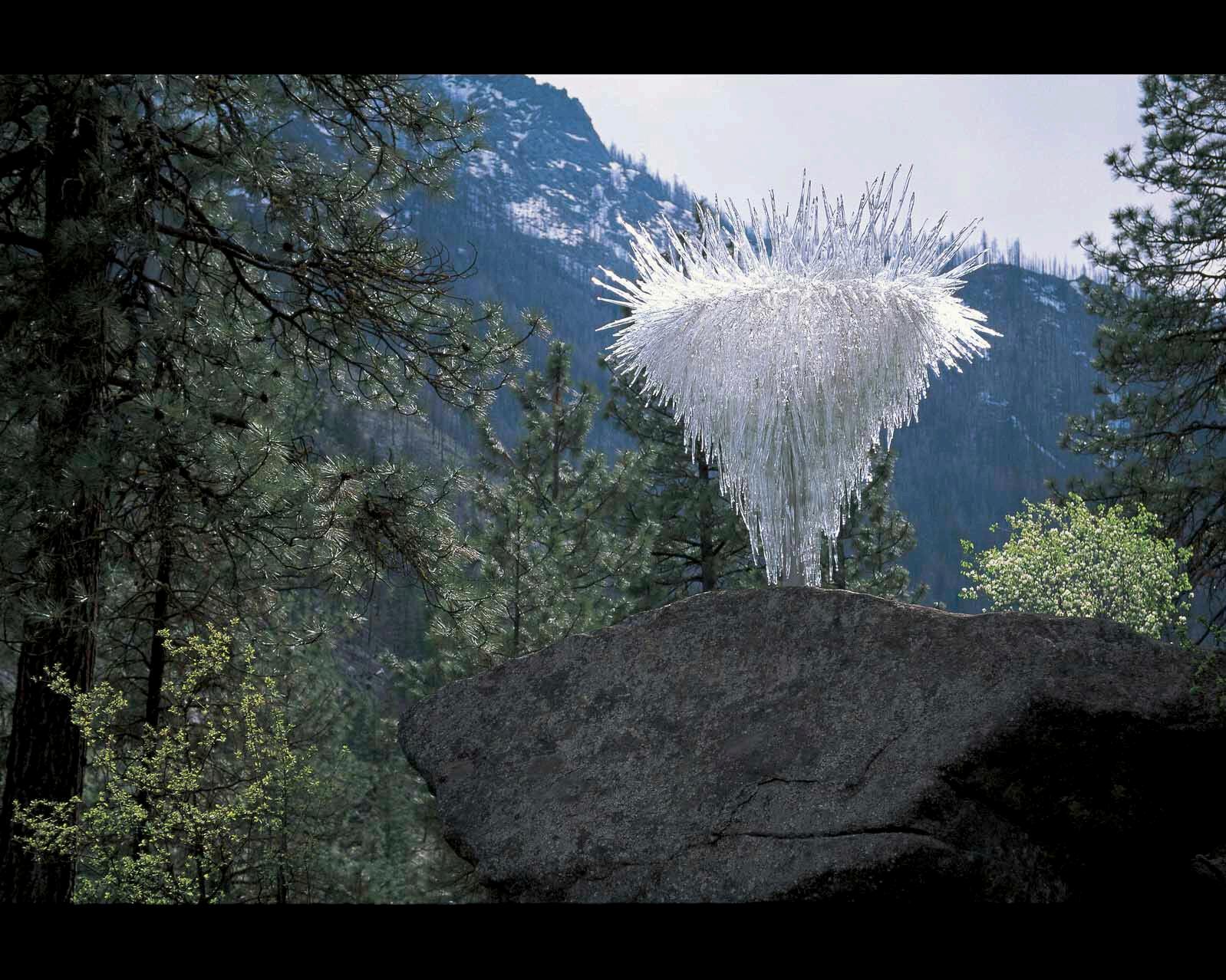
Materials:
Individual prints of Icicle Creek Chandelier, short artist bio in large print, tablet with YouTube Video, “Chihuly’s Icicle Creek Chandelier, ” Mint or Pine fragrance with diffuser (https://www.youtube.com/watch?v=mCm2_6ygcG8 )
Observation
Distribute individual prints to each participant and invite them to take a quiet moment to look closely
Prompt: “Which do you prefer, the daytime image, or the nighttime image?”
Sensory Bridge
Diffuse a fresh scent like mint or pine to evoke crisp, cool air.
Prompt: Does this scent seem like something you might smell in this scene?
Branching Questions:
1. If you could change the color of this piece, what would you choose—and why?
2. If you could touch the piece, what do you imagine it would feel like?
3. What word or phrase would you use to describe the light in this piece?
4. What is the first thing you notice about this piece?
5. What would it be like if this sculpture hung in your home or community space?
Description of the Artwork
About Icicle Creek Chandelier, by Dale Chilhuly, 1996
Dale Chihuly’s Icicle Creek Chandelier is a large glass sculpture inspired by the cold, sparkling beauty of winter in the Pacific Northwest. It hangs like a frozen waterfall, with hundreds of hand-blown glass pieces that twist and curl like icicles. The sculpture catches and reflects light, making it look as if it’s glowing from within. Chihuly used clear and pale blue glass to remind viewers of snow, ice, and the flowing waters of Icicle Creek in Washington State.
This chandelier is part of Chihuly’s series of works that explore how glass can capture movement and light, much like nature does. When people look at Icicle Creek Chandelier, they often feel the calm and brightness of winter without the cold. It shows how art can turn something fragile—like glass—into something powerful and full of energy, connecting the beauty of the outdoors with the creativity of human hands.
Art Insight
Dale Chihuly is an American glass artist known for transforming glass into colorful, flowing works that often look like shapes from nature. Born in 1941 in Tacoma, Washington, he began working with glass in the 1960s and became one of the first artists to use it for large-scale sculpture instead of just small decorative pieces. Chihuly often works with a team to create his enormous chandeliers, sea forms, and garden installations. His art celebrates light, color, and movement, showing how something fragile—like glass—can be turned into something bold and full of life.
Reflection
“What words come to mind when you think about light shining through ice?”
Optional Chef Culinary Program: White Chocolate and Coconut Tasting
Setup:
Demonstrate melting white chocolate over a water bath. Offer residents a sprinkle of coconut or other toppings for their chocolate (some suggestions might be dried fruit or nuts).
Pass out small tasting plates or spoons. Encourage mindful tasting one sense at a time:
● Sight: “What do you notice first?”
● Taste: “Is it more sweet or mild?”
● Texture: “Does the coconut make it feel airy, chewy, or soft?”
● Memory: “Would you enjoy eating coconut in other recipes?”
Encourage branching questions:
● “Would you rather have this on a warm day or a snowy one?”
● “What drink would you enjoy with it — cocoa, coffee, or tea?”
Resident Culinary Program
Sparkling Citrus Parfaits
Today, we are making Sparkling Citrus Parfaits!
These parfaits are light, bright, and full of color just like winter sunshine!
Let’s begin by gathering our ingredients.
Please place a “check” next to each item collected.
Vanilla or Lemon Yogurt
Fresh Citrus Fruit (orange, grapefruit, or mandarin segments)
Crushed Vanilla Wafers or Graham Crackers
Honey or Agave Syrup (optional)
Shredded Coconut (for sparkle)
Fresh Mint Leaves or Orange Zest (for garnish)
Now let’s make sure we have our supplies.
Please check to ensure we have:
Clear Cups or Small Bowls (for layering)
Small Spoons
Measuring Spoons or Scoops
Small Bowls for Each Ingredient
Damp Cloths for Easy Cleanup
Now let’s get cooking!
Please place a “check” next to each completed step.
Spoon a layer of yogurt into the bottom of each cup
Add a layer of diced citrus fruit on top
Sprinkle a spoonful of crushed wafers or graham crackers
Repeat the layers yogurt, fruit, and crumbs until your cup is nearly full
Drizzle a tiny bit of honey or agave syrup for extra sweetness (optional)
Sprinkle shredded coconut on top for a “snowy sparkle”
Add a mint leaf or pinch of orange zest for decoration
Take a moment to notice the bright colors like sunlight in a glass!
Taste your parfait and describe it: Sweet? Tart? Refreshing?
Thank you for helping make our delicious Sparkling Citrus Parfaits!
They’re as bright and beautiful as the light of winter itself fresh, sweet, and full of cheer!
To inspire reflection, creativity, and connection through poetry, imagery, and gentle movement centered on the theme of light. Residents explore how light appears in daily life as warmth, hope, or renewal and express these feelings through words and motion.
Materials:
● Printed poems in large font
● Speaker for background instrumental music (optional)
● Visual cues such as a sunrise photo, candle flame, or winter landscape
● Silk scarves or LED candles
Music Options:
● What a Wonderful World (instrumental)
● You Light Up My Life (instrumental)
Facilitator Steps:
● Opening Reflection
○ Facilitator Prompts:
■ “Where do you find light in your day?”
■ “When you think of light, what color(s) comes to mind?”
○ Facilitator may share a short verse to set the tone:“There is a crack in everything that’s how the light gets in.” Leonard Cohen
■ Encourage residents to respond with simple word associations with “light” such as “Hope,” “Morning,” or “Peace.”
● Facilitator Cue:
Acknowledge all responses warmly “That’s beautiful,” “I love that,” or “Yes, that’s light in its own way.”
Invite brief conversation about how light can mean both physical brightness and emotional warmth.
● Poetry of Light Readings
○ Poem Selections (choose 3–4):
■ Stopping by Woods on a Snowy Evening – Robert Frost
■ Light – Sara Teasdale
■ Kindness (excerpt) – Naomi Shihab Nye
■ Winter Morning – Ogden Nash
■ Facilitator Prompts:
● “What words or images stand out to you?”
● “How does this poem make you feel calm, thoughtful, hopeful?”
● “If this poem were a color, what color might it be?”
● Adaptation for Memory Care: Shorten each poem to 2–3 lines and pair with a visual cue (sunrise, candle flame, or snowfall).
Pause gently after each reading and invite one-word responses such as “Warm,” “Soft,” or “Quiet.”
● Movement & Sensory Expression
○ Activity Steps:
■ “Rays of Light” – Residents lift arms slowly upward with their breath, opening hands wide (“Our light reaches out”).
■ “Reflection Dance” – Move scarves in gentle waves to the rhythm, imagining light bouncing off water or glass.
■ “Passing the Glow” – Pass a glowing candle or light wand from person to person. Each participant says one word that describes “light” — Peace, Joy, Family, Love.
○ Facilitator Tip:
Encourage mirroring and eye contact to strengthen connection. Reinforce that there’s no right or wrong way to move every gesture reflects one’s own light.
Extension: Decorating Sparkle Stones
Materials:
● Smooth stones (river or garden stones)
● Metallic or paint markers (gold, silver, white)
● Glitter glue or sparkle stickers
● Soft cloths for cleaning stones
● Music and Speaker
● Optional: essential oil spray (lemon or lavender) for sensory calm
Facilitator Steps:
● Invite residents to choose one or two stones that “feel right.”
Encourage them to write or draw something that represents strength or light (offer pre-printed words or controlled choices for residents who struggle to choose):
○ A word (Hope, Peace, Love, Family, Courage)
○ A symbol (sun, heart, star, wave, tree, candle)
○ A pattern (lines, dots, spirals)
● As they work, play soft instrumental music (You Raise Me Up or Morning Has Broken).
● Remind participants: “There’s no wrong way to make your stone shine your light is your own.”
● Adaptation:
For residents with dexterity challenges, offer pre-painted stones to trace or hold; for Memory Care, provide stickers or gems to press onto stones for a tactile sparkle.
Sharing & Reflection
Invite each participant (if comfortable) to hold up their stone and share a few words:
● “What word or color do you have, and why?”
● “When do you feel strongest or most full of light?”
● “Who helps you keep your light bright?”
● Facilitator Script: “Each of our stones shines in its own way together, they make a path of strength and hope. Thank you for joining today’s program!”
Staff Morale: Hall Hockey
Encourage physical movement and laughter across ability levels. Build community between staff and residents. Foster teamwork, rhythm, and positive competition. Offer roles for everyone players, goalies, scorekeepers, and fans
Materials:
● Pool Noodle “Hockey Sticks” in two colors
● Wiffle Balls or Balloon “Pucks”
● Laundry Basket “Goals”
● Team Bandannas or Tee Shirts (optional)
● Small prizes or medals (optional)
● Scoreboard or tally sheet
Music:
● Eye of the Tiger
● We Are the Champions
● We Will Rock You
● Theme from Chariots of Fire
● Another One Bites the Dust
● Thunderstruck
● We’re Not Gonna Take It
● Rock You Like a Hurricane
Facilitator Steps:
● Round 1: Warm-Up
○ Hand out pool noodles to each team in a matching color
○ Encourage light passing to get used to movement.
○ Shooting drills to get used to shooting on a goal.
● Round 2: Mixed Teams & Cooperative Challenge
○ Each team must pass to at least one resident and one staff member before scoring.
○ Set a 3-minute timer per match.
○ Alternate who starts with the ball
○ Celebrate every goal and assist.
● Adaptations:
○ For residents in wheelchairs, use pool noodles to tap from a seated position.
○ For residents with lower vision, use a bright-colored balloon instead of a ball.
○ For those with limited range of motion, residents can act as goalies or official passers.
Optional Sensory Station: Sparkle & Light
To invite residents to explore light, reflection, and renewal through multisensory experiences inspiring calm, curiosity, and wonder
Setting & Materials: Arrange a small nook with: LED fairy lights, Smooth satin squares, Citrus or eucalyptus scented lotion, Soft harp or piano music with a small bell, and Lemon or orange slices in sparkling water.
Steps:
● Invite Exploration: “Welcome! Let’s explore how light looks, feels, and sounds today.”
● Sight:
Encourage turning a prism or watching fairy lights. “What colors do you see reflected in the light?”
● Touch:
Offer smooth satin and/or a square of chiffon “How does this texture feel in your hand?” “Do you notice how light shimmers in the fabric?”
● Smell & Sound:
Invite a slow breath of citrus or eucalyptus scent (use controlled choice to select lotion and offer hand massage) and a soft ring of a bell. “How does this scent or sound make you feel?”
● Sip
Offer a sip of sparkling citrus water. “Does lemon or orange make you feel more refreshed?”