

SCAN THE QR CODE REGISTER NOW
Because your story deserves the spotlight





Astheregulatorylandscapegrowsincreasinglycomplexandtechnology-driven,the
RegTechsectorisemergingasavitalenablerforbusinessesacrosstheglobe.Regulatory compliancehasevolvedfarbeyondbeingastaticobligation,becominginsteadadynamic intersectionofinnovation,riskmanagement,andoperationalefficiency.Organizationsareno longerlimitedtoreactivecompliancemeasures;theyareseekingintelligent,technology-driven solutionsthatallowthemtoanticipateregulatorychangesandadaptproactively Attheforefront ofthistransformationarevisionaryleaderswhoareredefininghowbusinessesnavigateregulatory challenges.Throughtheirstrategicinsight,innovativeapproaches,andadoptionofadvanced technologies,theseindividualsarehelpingorganizationsnotonlymeetcompliancerequirements butalsoleveragethemasopportunitiestoenhancegrowth,resilience,andcompetitiveadvantage.
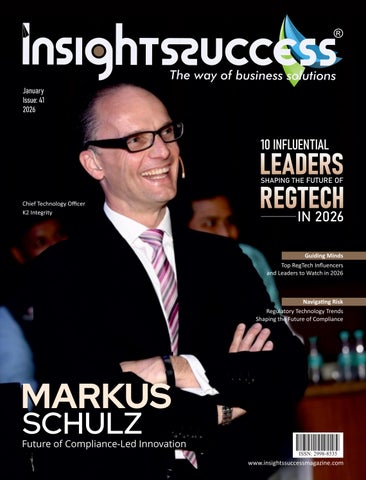
InsightsSuccessinitsexclusivefeature 10 Influential Leaders Shaping the Future of RegTech in 2026 highlightsindividualswhoseleadership,foresight,andinnovationaredrivingtheglobal evolutionofRegTech.FrompioneeringAI-poweredcomplianceplatformstodeveloping advanceddataanalyticssolutionsforregulatoryreporting,theseleadersareshapinghow organizationsrespondtoregulatorydemandswhilefosteringabroaderculturalshifttoward proactiveandintelligentcompliancestrategies.Byleveragingadvancedtoolssuchasmachine learning,blockchain,andpredictiveanalyticswithincomplianceframeworks,theseinnovators enableorganizationstoanticipateregulatorychanges,mitigaterisks,andstreamlineoperationsin anincreasinglydigitalandinterconnectedbusinessenvironment.Throughtheirvisionand expertise,theseleadersareredefiningtheroleofcompliancefromareactiveobligationtoa strategicenabler,transformingitintoadriverofoperationalefficiency,transparency,andlongtermresilience.
AsRegTechcontinuestoevolve,theinfluenceofthesevisionaryleadersunderscoresa fundamentalshiftinhoworganizationsapproachcompliance.Byintegratingadvanced technologiesandfosteringacultureofproactivegovernance,theyaretransformingregulatory obligationsintostrategicopportunitiesthatdriveefficiency,transparency,andlong-term resilience.Theirworkhighlightsthegrowingimportanceofinnovationinnavigatingcomplex regulatorylandscapesandsetsabenchmarkforthefutureofintelligent,technology-driven compliance.Collectively,theseleadersarenotonlyshapingthetrajectoryofRegTechbutarealso redefiningthewaybusinessesworldwideharnesstechnologytoachievesustainablegrowthand operationalexcellence.
Haveagreatreadahead!
MichaelWayne

Top RegTech Influencers and Leaders to Watch in 2026
Regulatory Technology Trends
Shaping the Future of Compliance
Editor-in-Chief
Merry D'Souza
Managing Editor Executive Editor
Preston Bannister
Visualizer
David King
Senior Sales Managers
Jenny Fernandes
Art & Design Director
Rosy Scott
Assistant Editor
Michael Wayne
Associate Designer
Angela Ruskin
Business Development Manager
Ankush Patel Ganesh Jagtap
Marketing Manager Technical Head
James M.
Jacob Smile
Technical Specialist
Irvin Wilson
SME-SMO Executive
Steve Rodrigues
Robert Brown

Sales Executive
Ruth Herbert Simon, Tom
Business Development Executives
Digital Marketing Manager
Dominique T.
Research Analyst
Frank Adams
Database Management Technology Consultant
Stella Andrew
Circulation Manager January, 2026
sales@insightssuccess.com

David Stokes


Follow us on : www.facebook.com/insightssuccess/ www.x.com/insightssuccess We are also available on :


Copyright © 2026 Insights Success , All rights reserved. The content and images used in this magazine should not be reproduced or transmitted in any form or by any means, electronic, mechanical, photocopying, recording or otherwise, without prior permission from Insights Success. Reprint rights remain solely with Insights Success.
AlLindseth Principal
AnatolijusNachumovas SolutionArchitect
ChristopherOwers PracticeDirector-Global HeadofRegulatory ComplianceSolutions
DavidSemmens ChiefInvestmentOfficer
DollyMphahlele HeadofMentorship
MahnoorKhokhar ManagerofDemand Planningand LogisticsOptimization
MarkusSchulz ChiefTechnologyOfficer
MicheleHenry GlobalHeadof OperationalResilience
HUBCSiAdvisory Services csiadvisoryservices.com
Lietuvosbankas| BankofLithuania lb.lt
FirstDerivative firstderivative.com
Cadro cadro.com
HighRisersAfricanMovement highrisers.ai
PorterAirlinesInc flyporter.com
K2Integrity k2integrity.com Aberdeen aberdeenplc.com
NereVuuren RegionalSalesDirector
C&RSoftware crsoftware.com
TeodoraChristova Director,Global StrategicPartnerships
LSEG(London StockExchangeGroup) lseg.com
Alisrecognisedforhisanalyticalinsight,collaborative approach,andabilitytotranslatecomplexissuesintoclear, actionablestrategies.
Anatolijuscollaborateswithcross-functionalteamsto translatecomplexbusinessrequirementsintosecureand efficienttechnicalarchitectures.
Christopherbringsextensiveexperienceinaligningregulatory requirementswithscalabledataandanalyticsplatforms, enablingfirmstoenhancetransparency,efficiency,and governance.
Davidworkscloselywithstakeholderstoensureconsistent investmentperformance,stronggovernance,andalignment withclientobjectives.
Dollyiscommittedtofosteringinclusivegrowth,confidence, andlong-termimpactbycreatingsupportiveenvironmentsfor personalandprofessionaladvancement.
Mahnoorisknownforheranalyticalmindset,collaborative approach,andabilitytotranslatecomplexdataintoactionable insights.
Markusisknownforhisforward-lookingapproach,strong technicalleadership,andabilitytoaligntechnologywith businessandregulatoryneeds.
Micheleworkscloselywithglobalteamstostrengthen organisationalpreparednessandresponsecapabilities, drawingonherexpertiseinriskmanagementandregulatory frameworks.
Nereworkscloselywithorganisationstohelpoptimise customerjourneys,enhancecollectionsperformance,and achievesustainablebusinessoutcomes.
Teodoraisknownforherstrategicmindsetandherabilityto buildlong-term,mutuallybeneficialpartnershipsthat strengthenLSEG’spositionacrossglobalmarkets.




Thecomplianceissuedidnotappeartobea boardroomconcernandRegTechwasnotan unavoidableworldwiderequirement20yearsback, yetMarkusSchulzwasquietlygaininginsightsintohow thesystemsthink,combiningbusinessknowledgewith regulatoryrequirementssupportedbytechnology.Hebegan programmingasayoungboy,developinganintuitive understandingoflogic,structure,andthepossibilitiesand limitationsofsystemsthatwouldlaterdefinehiscareerat theintersectionoftechnology,finance,andregulation.The initialexcitementdidnotdisappear,butrathertooka differentform.
Markusisprofessionallytrainedasabankerandenteredthe financialservicessectorduringthedot-comboomand subsequentbust.Aftervariousfront-officeroles,hewas askedtomanagethebank'se-commerceportfolioforthe German-speakingmarkets.Itwasatimewheninnovation racedaheadofgovernance,exposingboththeupsideand downside,challengesMarkusfacedfirsthand.Theearly yearsofhiscareershapedhisbeliefthatrelyingoneither technologyandregulationalonewasinsufficient,andthat trueprogresscomesfrommasteringbothtogether
Hemadeadeliberatetransitionintoseniorcompliance leadershiproles.WhileholdingthepostsofGroupMoney LaunderingReportingOfficerandChiefCompliance Officerinvariousglobalcorporations,heobservedhow eventhebest-fundedcomplianceinitiativeswere underminedbyfragmenteddata,opaquemodels,andpoorly designedsystems.Hebecameevenmoreconvincedthat technologyshouldbebuiltonafoundationofregulatory reality.
Today,asChiefTechnologyOfficeratK2Integrity,he bringsthedisciplineofapractitionerandthevisionofa technologisttothedevelopmentofRegTechsolutionsthat areinnovative,transparent,andfutureproof,rootedindata, informedbyregulation,anddrivenbypurpose.
Markus'relationshipwithtechnologybeganbeforemost peoplehadcomputersintheirhomes.Hestartedcoding beforeage10,developinganintuitionofhowsystemswork thatwouldlaterproveinvaluable.Yethisformaltraining tookadifferentpath,hequalifiedasabanker,settingthe stageforacareerthatwoulduniquelycombinefinancial servicesexpertisewithtechnologicalvision.
Thedot-comeraprovidedhisfirstmajorprovingground. Heledane-commerceportfolioforGerman-speaking marketsataglobalbankduringatimewheninnovation consistentlyoutpacedgovernance.Thoseyearstaughthima lessonheiscarryingforwardtoday:understandingboththe opportunitiesandrisksoftechnologicaladvancement withinbusinessevolutionprovesfarmorevaluablethan masteringeitheralone.
"I saw firsthand how legacy compliance frameworks and fragmented technologies struggled to keep pace with increasingly sophisticated financial crime, growing data volumes, and rising regulatory expectations across jurisdictions," hereflectsonhistransitionintocompliance leadership.
Hisprogressionintofinancialcrimepreventionwas deliberate.HeservedasGroupMoneyLaundering ReportingOfficer(MLRO)andChiefComplianceOfficer forglobalfinancialinstitutions,therolesthatexposedhim totheday-to-dayrealityofdefendingagainstcriminal networkswithbillion-dollarresources.Hewatched complianceteamsdrowninalertsgeneratedbysystemsthat producedmorenoisethaninsight.Hesawinstitutions investmillionsintechnologiesthatfailedduringregulatory examinationsbecausetheywereinsufficient,incomplete,or couldn'texplaintheirdecision-makingprocesses.
Thisexperiencecrystallizedacoreconviction:RegTech solutionsdesignedwithoutdeepregulatoryunderstanding, aswellasbankingbusinessandoperationsinsights,miss themark.Toomanyvendorsbuildimpressivetechnical capabilitiesthatcrumbleunderregulatoryscrutinybecause theydonotaddresswhatregulatorsevaluate:defensibility, transparency,andoperationalsustainability,ormatchbank set-upsandtechnologies.
AtK2Integrity,Markuschampionsanapproachhecalls "compliancebydesign."Ratherthanboltingongovernance featuresafterdeployment,histeamsembedauditability, explainability,anddatacontrolsdirectlyintoRegTech solutionsfrominception.
"Regulators are not opposed to innovation, but they expect clarity around how decisions are made, what data is used, and how risks are managed," heexplains.Hisdual perspectiveasbothtechnologistandformerregulatorfacingexecutiveshapeseverydesigndecision.


"I saw firsthand how legacy compliance frameworks and fragmented technologies struggled to keep pace with increasingly sophisticated financial crime, growing data volumes, and rising regulatory expectations across jurisdictions.”
Thisphilosophyaddressesafundamentaltensionin financialservices:institutionsneedinnovationtocombat evolvingthreats,yettheyoperateinenvironmentswhere regulatorymisstepscarryexistentialconsequences.He resolvesthistensionbyrefusingtoseeitasatradeoff. Technologydesignedthrougharegulatorylensfromday onecandeliverbothinnovationanddefensibility.
K2Integrity'sdifferentiationstemsdirectlyfromthis approach.Thefirmbuildssolutionsusingpractitionerswho havesatinthehotseat,formerregulators,MLROs, investigators,andcomplianceleaderswhoknowwhat actuallyhappensduringexaminations.Theyunderstandthat impressivealgorithmsmatterlittleifinstitutionscannot explainthemtosupervisors.
TheDataFoundation
Markusidentifiesthreefundamentalchallengesthat organizationsfacewhendevelopingRegTechcapabilities: dataavailability,datacompleteness,anddatalineage.Does theorganizationpossessthenecessaryinformation?Isthat datareliableandcomprehensiveenoughforadvanced analytics?Canthefirmtrackanddemonstratethatdata flowsthroughappropriateprocessestoachievethedesired outcomes?

"This has not changed with AI; if anything, it has become more pronounced. The industry's rush toward artificial intelligence has only intensified these longstanding data issues," heobserves.
Theorganizationtakesadata-firstapproach,building modularSaaSsolutionsdesignedtointegratewithcomplex globaldataenvironments.Thefirmprioritizesdataquality, lineage,andinteroperability,enablinginstitutionstodeploy advancedanalyticsandAIresponsiblywhilemaintaining transparency
WhenitcomestoAIspecifically,hemaintainsclear principles.Datamanagementandgovernanceremainvital, alongsidetransparentlogicthatrevealswhatthemachine hasdone,whichdataitused,howitwastrained,andhowit reacheditsconclusions.Whilemodeltrainingoften capturesattention,heemphasizesthatongoingmonitoring, maintenance,andcorrectionareequallyimportant.
"At K2 Integrity, we emphasize AI as a decision-support tool rather than a decision-maker," hestates.Human oversight,ongoingmonitoring,andmodelmaintenance matterjustasmuchasinitialdevelopment.Regulators expectinstitutionstounderstandandcontroltheirmodels throughouttheirlifecycle,notjustatdeployment.AIisnot dissimilartoanewjunioremployee:itrequiresclose oversightinitially,andlessovertime.
MarkusseesRegTech'sroleexpandingfarbeyondits traditionalcompliancefunction.Overthenextthreetofive years,hepredictsitwillincreasinglyinformstrategic decisionsaroundmarketentry,customersegmentation, productdevelopment,andcapitalallocation.
"Regulatory compliance is increasingly recognized as a business enabler rather than a cost center," henotes.When organizationsembedriskintelligenceearlyindecisionmaking,theycanaligngrowthstrategieswithriskappetite fromtheoutset.InstitutionsthatleverageRegTech effectivelypositionthemselvestorespondtoregulatory change,manageemergingrisks,andbuildlong-termtrust withbothregulatorsandstakeholders.
Thistransformationrequiresrethinkinglong-held assumptions.Hefrequentlyencountersorganizationsthat viewdigitaltransformationincomplianceasaquick process.Therealityprovesfarmorecomplex.Financial crimecomplianceandriskmanagementtouchnumerous
areasacrossorganizationsfromcustomerandtransaction datatoHRrecords,spanningretail,wholesale,investment, andprivatebankingoperations.
"Successful transformation requires holistic planning, realistic timelines, leadership support, and effective execution at all levels," heemphasizes.
Asco-chairoftheGlobalCoalitiontoFightFinancial Crime(GCFFC)TechnologyGroup,Markusadvocatesfor strongerpublic-privatecollaboration.Herejectsthenotion thatprivateandpublicsectorsworkatoddswitheachother

"We all share the common goal of combating financial crime, and the most effective approach is to work together. Ultimately, we are united by the goals of maintaining market safety and upholding financial integrity," heargues.
TheGCFFCprovidesaplatformforexchangingideasand developinginnovativesolutionsthatenhanceboththe effectivenessandefficiencyoffinancialcrimecompliance frameworks.Hebelievesthiscollaborativeapproachcan achieveresultsimpossibleforeithersectoralone.
Yetheacknowledgesapersistentobstacle:information sharingremainsconstrainedlessbytechnologythanby regulatoryframeworks.Dataprivacylawsoftenpreventthe collaborationneededtofightfinancialcrimeeffectively Whengatekeeperscannotshareinformationacross jurisdictions,criminalsmaintaintheiradvantage.
"This has not changed with AI; if anything, it has become more pronounced. The industry's rush toward artificial intelligence has only intensified these longstanding issues.”
Thiscreatesanongoingbattlebetweenindividual gatekeepersandorganizedglobalcrimenetworks,Markus observes.RegTechmustfocusonimprovingdata integration,entityresolution,anddynamicriskdetection whileoperatingwithintheseregulatoryconstraints.
Markusbringsovertwodecadesofexperiencedesigning complianceframeworksthatworkacrossjurisdictions.He notesthatregulatoryharmonizationhasalignedcore principles,enablingorganizationstoimplementglobal programsthatrespectlocaldistinctions.
"Each market presents unique requirements that must be taken into account when building a global framework to meet local regulations," heexplains.Fromhisexperience, organizationscaneffectivelyestablishglobalrisk managementwhilemaintaininglocalcompliance,butonly throughcarefuldesign.
Thiscapabilitygrowsincreasinglycriticalasgeopolitical tensionscomplicatecross-borderoperations.Headvises
technologyleaderstobuildscalableRegTechsolutionsby startingwithcommonfundamentals:clearlyidentifyand understandtheproblemyouwanttosolve.
"Too often, I've observed organizations partnering with vendors in the hope that a system will fix their problems. I believe technology shouldn't be the first response, it should serve as an enabler and accelerator of an already welldesigned process," hecautions.
EvenemergingtechnologieslikeagenticAIfacethis constraint.Theclassicprincipleholdstrue:AIcannot transformpoorinputintoflawlessresults.Orasheputsit, "garbagein,gospelout."
Markusleadswithprinciplesshapedbyglobalexperience. Heemphasizesdiversityasessentialforeffectiveteams, encompassingperspectives,backgrounds,gender,age, education,experiences,productknowledge,market understanding,culturalawareness,languageproficiency, technologicalexpertise,andoperationalexperience.


"Successful transformation requires holistic planning, realistic timelines, leadership support, and effective execution at all levels.”
"By integrating this variety of experiences, organizations can build strong and effective global teams," heexplains. Whileacknowledgingthateachfirmhasdistinct characteristicsrequiringtailoredapproaches,Markussees diversityasthecommonfoundationforsuccess.
Throughouthiscareer,Markushasdedicatedhimselfto advancingtheindustrybroadly,notjustindividual organizations.Hecollaborateswithgroupsincludingthe

WolfsbergGroup,theBaselInstituteonGovernance, ACAMS,andtheGCFFC,amongothers.Heintendsto continuecontributingwithinbothK2Integrityandacross thebroaderecosystem.
RegTechholdsaparticularlyspecialplaceforMarkusand continuestoremainclosetohisheart.Hereflectsonthe significantpotentialoftechnologytoplayapivotalrolein combatingfinancialcrime,especiallyaseffortsintensifyto dismantleinstitutionalbarriers,liberatedatawhile safeguardingprivacy,andbuildenvironmentsthatare increasinglyresilienttofinancialcriminalactivity
Hisvisioncentersonwhathecalls#bettertogether,an acknowledgmentthatfightingfinancialcrimerequires collaboration,sophisticatedtechnology,regulatorywisdom, andunwaveringcommitment.Ascriminalnetworksgrow moresophisticated,thedefensemustevolvejustasrapidly UnderMarkus’sleadership,K2IntegritydevelopsRegTech solutionsthatnotonlyrespondtoevolvingthreats,butalso helpinstitutionsanticipateandmanageriskproactively.

Theregulatorytechnology(RegTech)landscapeis enteringadecisivephaseasfinancialinstitutions, governments,andenterprisesgrapplewithrising regulatorycomplexity,exponentialdatagrowth,and heightenedexpectationsaroundtransparency, accountability,andresilience.Regulatoryframeworksare evolvingrapidlyacrossjurisdictions,shapedbyfinancial innovation,digitaltransformation,cybersecuritythreats, environmentalandsocialgovernance(ESG)mandates,and deepeningglobalinterconnectedness.Inthisenvironment, organizationscannolongerrelyonmanualcompliance processes,siloedriskfunctions,orfragmentedtechnology toolstomeetregulatorydemandseffectivelyorsustainably. In2026,RegTechhasmovedwellbeyonditsearlyroleasa supportfunctionfocusedprimarilyoncompliance automation,reporting,andcostreduction.Ithasemergedas astrategiccapabilitythatdirectlyinfluencesgovernance
structures,enterpriseriskmanagement,operational resilience,anddigitaltrust.Complianceisnolongerviewed merelyasadefensiveobligationbutasacriticalenablerof responsiblegrowthandinnovation.Thisshifthaselevated theimportanceofleaderswhocanintegratedeepregulatory expertisewithadvancedtechnologiesandalong-term businessperspective.
StrategicvisionariesinRegTechareplayingapivotalrole inaligningcompliancewithbroaderenterprisestrategy Theyunderstandthatregulatoryobligationscannotexistin isolationfrombusinessobjectives,customerexperience,or operationalprocesses.Instead,compliancemustbe embeddedintothedesignofproducts,services,anddigital platformsfromtheoutset,ratherthanaddedasan
afterthought.This“compliancebydesign”approachallows organizationstoinnovatefasterwhilemaintaining regulatoryconfidence.In2026,theseleadersare increasinglyvisibleattheboardandexecutivelevel,where regulatoryriskisdiscussedalongsidefinancial performance,capitalallocation,andlong-termgrowth strategy
Theyadviseseniorleadershipondefiningriskappetite, strengtheningdatagovernanceframeworks,and anticipatingregulatorychangeinaworldofaccelerating policyshifts.Theirinfluenceextendsbeyondtechnology selectiontoorganizationaldesign,helpingbreakdownsilos betweencompliance,IT,legal,andbusinessteams.Equally importantistheirroleinshapingorganizationalculture. Strategicvisionarieschampionaccountability,ethical conduct,andtransparencyascoreenterprisevaluesrather thancompliancecheckboxes.ByaligningRegTech investmentswithcorporatepurposeandstakeholder expectations,theyensurethatregulatorycompliance reinforcesinstitutionalintegrity,customertrust,andmarket credibility
Technologydriveninnovatorsareattheforefrontof applyingartificialintelligence,machinelearning,natural languageprocessing,andadvancedanalyticstosomeofthe mostcomplexregulatorychallengesfacingorganizations today Theirfocusisonbuildingintelligentsystemscapable ofinterpretingevolvingregulations,mappingregulatory obligationstointernalcontrols,monitoringtransactionsand behaviorsinrealtime,andidentifyingpotentialcompliance risksbeforetheyescalateintomaterialissues.In2026, theseinnovationsaretransformingRegTechfroma reactive,rule-basedfunctionintoapredictiveand preventativecapability
Automatedregulatoryintelligencetoolscantrackpolicy changesacrossjurisdictions,whileadvancedanalytics enablecontinuousmonitoringratherthanperiodicaudits. Thisshiftsignificantlyenhancesoperationalresilienceand reducesthecostanddisruptionassociatedwithregulatory interventions.However,asregulatorsdemandgreater transparency,explainability,andaccountabilityfrom automateddecision-makingsystems,leadershipinthisarea hasbecomemorecomplex.InfluentialRegTechinnovators placestrongemphasisonresponsibleAIpractices, includingrigorousmodelvalidation,biasdetectionand mitigation,andcleargovernancestructures.Auditability andtraceabilityareprioritizedtoensurethatautomated
compliancedecisionscanbeexplained,challenged,and defendedunderregulatoryscrutiny.
GlobalthoughtleadersinRegTechplayacriticalrolein shapingindustrydialogueandinfluencingregulatory ecosystemsacrossborders.Throughactiveengagement withregulators,participationinindustryassociations,and contributionstoglobalforums,theyhelpdrivegreater alignmentandconvergenceinregulatoryapproaches.Their perspectivesareparticularlyvaluableformultinational organizationsnavigatingfragmented,overlapping,and sometimesconflictingregulatoryregimes.
Theseleadersalsorecognizethatthelong-termsuccessof RegTechdependsasmuchonpeopleasontechnology.In 2026,theyplacestrongemphasisoneducation, collaboration,andtalentdevelopment,advocatingfor interdisciplinaryskillsetsthatcombineregulatory knowledge,datascience,andbusinessacumen.Their influenceisvisibleinthegrowthofcross-functionalteams andsharedcomplianceframeworksthatsupportglobal operationswhilerespectinglocalregulatoryrequirements. Theyalsoencouragepublicprivatepartnerships,standard settinginitiatives,andregulatorysandboxesthataccelerate innovationwhilemaintainingsystemicstabilityglobally
TheevolutionofRegTechin2026reflectsafundamental shiftinhoworganizationsperceiveandmanage compliance.Nolongerlimitedtomeetingregulatory mandates,RegTechhasbecomeastrategicenablerthat strengthensgovernance,enhancesoperationalresilience, andbuildsenduringdigitaltrust.Theleadersdrivingthis transformationstandoutfortheirabilitytoalignregulatory expertisewithtechnologicalinnovationandbusiness strategy,creatingcomplianceframeworksthatareboth robustandadaptable.Asregulatoryexpectationscontinue toexpandandglobalcomplexityintensifies,theinfluence ofstrategicvisionaries,technologydriveninnovators,and globalthoughtleaderswillbecomeevenmorecritical. Theircollectiveeffortsaresettingnewbenchmarksfor responsibleinnovation,transparency,andcollaboration acrossmarkets.Bypositioningcomplianceasadriverof long-termvalueratherthanaconstraint,theseguiding mindsaredefiningthefutureofRegTechandshapinga moresecure,accountable,andsustainableregulatory ecosystem.

Thefast-changingbusinessandfinanciallandscape hasmadecomplianceincreasinglycomplexand critical.Theregulatorysystemsarebecoming increasinglynumerousandcomplexasthegovernments andinternationalorganizationsattempttodealwiththe risksoffinancialcrimeanddataprivacy.Manual-based traditionalcompliancetechniquesandperiodicauditsare notenoughinmanyorganizations.Regulatorytechnology, commonlyknownasRegTech,isplayingakeyrolein transforminghowfirmsrespondtoregulatorydemands whilemaintainingoperationalagility.Abusinesscangaina competitiveadvantagebyusingthelatesttechnologiesto meetthechangingregulatoryrequirements,doabetterjob ofriskmanagement,andhaveasustainablegrowthina timeofincreasinglytoughregulatorychallenges.This
transformationleadstoquickerdecision-makingprocess, bettertransparency,lesscost,enhancedgovernance, resilienceandclosergovernance-stakeholderrelationship.
Implementationofadvanceddataanalyticsandartificial intelligence(AI)isoneofthemostsignificanttendenciesin theregulatorytechnology Theoldcompliancesystemstend tobeconfusedbylarge,non-homogeneousdatathat includesinternalrecords,externalmarketdataand regulatoryfilings.Thesolutiontothisdilemmacanbe foundinadvancedanalyticsandAIthatallowrealtimedata processing,identificationofpatternsandpredictiveinsight thatisnoteasilyavailabletohumananalysts.TheAI-based
compliancesoftwarecanidentifysuspiciousactivitythat couldbeasignoffraud,moneylaundering,andother illegaloperations.Theabilityofnaturallanguage processingcanalsoimprovecompliancesystemssinceit allowsinterpretationofacomplexregulatorytext automatically
Throughtheabilitytoconvertunformatteddatainto actionabledata,organizationscanfocusonprioritizing regulatoryrisksandminimizefalsepositivedata,andbetter allocatecomplianceresources.AIcompliancedoesnot simplystopatdetectionandreporting.Machinelearning modelscanadapttoemergingtrendsovertimeandimprove theiraccuracyandsensitivityastheyprocesslarger volumesofdata.Suchflexibilityisespeciallyimportantin areaswheretherequirementsoftheregulationchange rapidly.Thecompaniesthatimplementsuchdata-driven methodsareinabetterpositiontopredictthechangesin regulationsandactonthemproactivelyinsteadof reactively
Machinelearningmodelscanadapttoemergingtrendsover timeandimprovetheiraccuracyandsensitivityasthey processlargervolumesofdata.KnowYourCustomer (KYC),Anti-Moneylaundering(AML),andtransaction monitoringregulatoryrequirementscanalsobeenhanced bybenefitofblockchain-basedframeworksthatguarantee dataintegrityandtraceability.Blockchaincansupport shareddigitalidentitiesthatareonlyauthenticatedoncein KnowYourCustomerprocessesandbeusedbymany institutions.Thiswillminimizeduplication,decreasethe costofonboarding,andimprovecustomerexperienceand atthesametimeupholdhighlevelsofverification.
Thecross-bordercomplianceisalsoupheldbyshared identitystructuresespeciallyinthebanking,insurance,and capitalmarketindustries.Inadditiontoidentity,blockchain cansimplifyregulatoryreportingbydevelopingverifiable audittrailswhichregulatorscanaccesssafely.Smart contractscanhelptoautomatizecompliancechecksand issuethealertincaseoftheconditionviolation.Itisarealtimetransparencythatdecreasesthecompliancereporting latencyandenhancesauditreadiness.Thoseinstitutionsthat adoptblockchainsolutionsthereforeacquireoperational resilienceandabetterpostureofcompliance.Blockchain hasnotbeenunafraidofobstaclesinitsuseincompliance despitepromise.Theinteroperabilityofdisparate blockchainnetworksisyettobeaddressed,andsois regulatoryuncertaintyincertainjurisdictions.
Cloudcomputinghasbeenakeyfacilitatorofthe contemporaryregulatorytechnologysolutions.Cloudnativecomplianceplatformsaremorescaled,flexible,and cost-effectivethantraditionalon-premisessystemscanbe. Theseplatformshaveawidescopeofcompliancepractices, includingregulationchangemanagementorincident reportingandauditworkflowcoordination.Oneofthekey benefitsofcloud-nativecompliancesystemsisthatitis possibletointegratevariousriskdomainsinasingle framework.Insteadofhavingtodealwithsiloed compliancefunctions,organizationsmayimplement integratedriskmanagementplatformsthatenablethemto haveanoverallpictureofregulatoryrequirements,internal controls,andriskexposures.
Constantmonitoringandlivereportingarealsodonevia cloudplatforms.Automatedalertscanbegivento complianceteams,monitoringofremediationactivitiesand creationofreportstobeprovidedtointernalstakeholdersor regulatorscanbedoneatafasterandmoreaccuraterate. Thescalabilityofcloudservicesallowsorganizationsto addandreducecomplianceeffortsasbusinessneedsvary withoutmakinghugecapitalinvestments.Although adoptionofthecloudhasoperationaladvantages,thereis needtobeakeenconsiderationonthesecurityofdataand regulatoryconsiderationsontheissueofdataresidency Theorganizationsshouldmakesurethatthecloudservice providersarecertifiedaccordingtohighstandardsof securityanddatagovernanceiscompatiblewiththe relevantprivacylegislation.
Theregulatorytechnologyisquicklytransformingthe mannerinwhichorganizationsareapproachingcompliance, makingitacostcenterinsteadofastrategicasset.AIoffers advanceddataanalyticsforobtainingproperinsightsand predictivecomplianceservices.Blockchainprovides transparentandreliablesystemsofthedigitalidentityand audittrail.Cloud-nativeplatformsareplatformsthat integratecomplianceandriskmanagement,increase scalabilityandresponsiveness.Asregulatoryenvironments becomemorecomplex,organizationsthatadoptRegTech trendsarebetterpositionedtorespondtocompliance requirementsefficientlyandeffectively.Implementation involvesinvestmentintechnology,goodgovernanceaswell asteamworkasawayofsatisfyingcompliance requirements.Suchorganizationshaveanadvantageof balancingthecomplianceriskandprovidinganopportunity toinnovateanddevelop.








www.x.com/insightssuccess