Associate Dean for Research and Intellectual Life, Albany Law School
A federal judge on Nov. 24, 2025, dismissed the indictments against former FBI Director
James B. Comey and New York Attorney General Letitia James, blocking the Department of Justice’s efforts to prosecute two of President Donald Trump’s perceived adversaries.
But U.S. District Judge Cameron McGowan Currie qualified her dismissals, saying she did so “without prejudice.”
What does that legal term mean?
Unaddressed charges
In her ruling, Currie
concluded that the appointment of interim U.S. Attorney Lindsey Halligan, who filed the cases against Comey and James, was unlawful. Currie wrote: “Because Ms. Halligan had no lawful authority to present the indictment, I will grant Mr. Comey’s motion and dismiss the indictment without prejudice.”
She wrote the same about the case against James. Join 1,724 readers who give monthly to fund research-based journalism I'll pitch in Currie’s “without prejudice” reference means the dismissal did not address what legal scholars like me call the merits or substance of the underlying criminal charges.
A “without prejudice”
dismissal is legalese for “you can try again if you can fix the problems with your case.” Had the judge ruled that the dismissals were “with prejudice,” that would have meant the government could not have brought the cases again.
Here’s what prosecutors would need to fix to be able to bring cases against Comey and James again.
Federal law provides that whenever a U.S. attorney’s position is vacant, the attorney general may appoint an interim U.S. attorney for a period of 120 days. At the end of that period, it’s up to the federal judges of the district where that position is vacant to appoint someone to continue in that role unless and until the president nominates, and the Senate confirms, a U.S.
attorney through the normal appointments process.
The Trump administration appointed Halligan’s predecessor, U.S. Attorney Erik Siebert, in that interim role in January 2025. And when the 120 days from his appointment lapsed, the district judges of the Eastern District of Virginia selected him to continue on in his interim role.
Currie found that when Siebert resigned after his reappointment, that did not empower the Trump administration to appoint a new interim prosecutor. The power still resided with the District Court judges. Because of that, Halligan’s appointment and her efforts to secure the Comey and James indictments were void. The end of the begin-
ning
The Department of Justice can certainly appeal these rulings and could get them reversed on appeal, or it could refile them after a new U.S. attorney is named in accordance with law.
It may be too late for the case against Comey, however, because the statute of limitations on those charges has already run out. As Currie noted in her Comey ruling, while the statute of limitations is generally suspended when a valid indictment has been filed, an invalid indictment, like the one against Comey, would not have the same effect on the statute of limitations. That means the time has likely run out on the claims
against the former FBI director. If Currie’s rulings stand, the Justice Department can’t just file the cases again, with Halligan still in this role, unless the Trump administration follows the procedures set forth in the law for her proper appointment.
While this is not the beginning of the end for these prosecutions, it is, at least, the end of the beginning.
Disclosure statement
Ray Brescia does not work for, consult, own shares in or receive funding from any company or organization that would benefit from this article, and has disclosed no relevant affiliations beyond their academic appointment.
‘I have to talk about it so that the world can know what happened to women and girls in Sudan’ rape and terror sparks mass migration
By Sabine Lee
Professor in Modern History, University of Birmingham
Heather Tasker
Assistant Professor of Political Science, Dalhousie University
Susan Bartels
Clinician-Scientist, Queen's University, Ontario
I was in Khartoum when the conflict started. Armed soldiers of Arabs came to our house and they wanted to loot groundnuts, but my mother resisted opening the door. Immediately, one soldier shot her. I screamed but three of the soldiers surrounded me. They grabbed me and I was taken behind a building where ten soldiers raped me. Nobody came to rescue me because my mom was already shot dead and
neighbours ran away. After two days, when my mom was buried, I joined others to come to South Sudan.
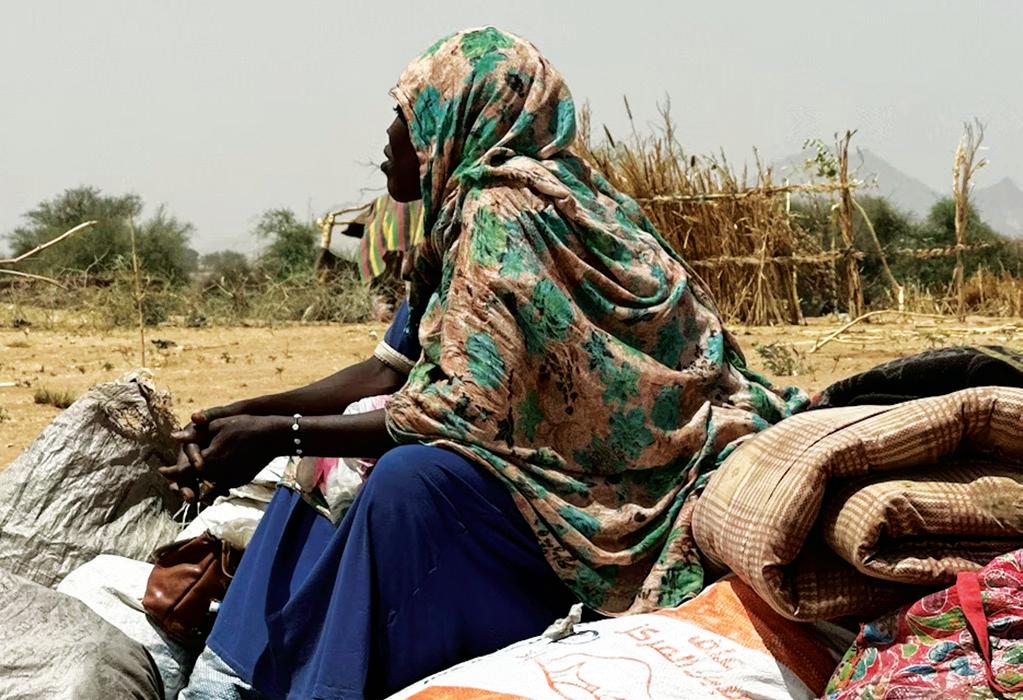
This girl’s story was shared with us near the Aweil border crossing between South Sudan and Sudan, and it mirrors what we heard from many others. In the sweltering heat of July 2024 – and with mud underfoot and rainwater pooling along the road – South Sudanese members of our international team asked people to share stories about experiences of women and girls making the perilous journey between the two countries. The accounts they shared were harrowing, urgent, and clear.
We spoke with nearly 700 returnees and forced migrants – women and men, girls and boys – many of whom shared similar experiences of being terrorised by soldiers and armed militias on both sides of the Sudan civil war. The war has been tearing the country apart since 2023 and has led to
the deaths of more than 150,000 people.
The struggle for power between Sudan’s army and a powerful paramilitary group, the Rapid Support Forces (RSF) has led to a famine and claims of a genocide in the western Darfur region. The RSF was formed in 2013 and has its origins in the notorious Janjaweed militia that fought rebels in Darfur, where they were accused of genocide and ethnic cleansing against the region’s non-Arab population. New reports about massacres and atrocities continue to emerge.
As the crisis deepens, our research has revealed that sexual and gender-based violence is a major driver of migration to South Sudan. Over half of our participants said it was the main reason they sought sanctuary across the border, with adolescent girls, aged 13 to 17, being far more likely to state that sexual violence was the reason they had to migrate. The research, which
was recently published in Conflict and Health , uncovered multiple harrowing accounts of gang rapes and murder, some on children as young as 12. Join 1,724 readers who give monthly to fund research-based journalism I'll pitch in What is happening in South Sudan and Sudan? Since its independence in 2011, South Sudan has remained among the most fragile states globally, plagued by chronic political instability and humanitarian crises. Following internal divisions, a devastating civil war, fought largely along ethnic lines, erupted in 2013. This conflict resulted in nearly 400,000 deaths and an estimated 2.3 million people forcibly displaced, including 800,000 to Sudan. Another two million people were internally displaced within South Sudan, severely undermining state-building efforts. The country has remained on a knife-edge with the UN stating in October that it is on
the brink of returning to all-out civil war. The outbreak of war in Sudan in 2023 further exacerbated South Sudan’s fragilities and vulnerabilities, jeopardised peace efforts and worsened the existing humanitarian crisis. The Sudan conflict triggered a massive influx, this time with over 1.2 million refugees and returnees crossing into South Sudan
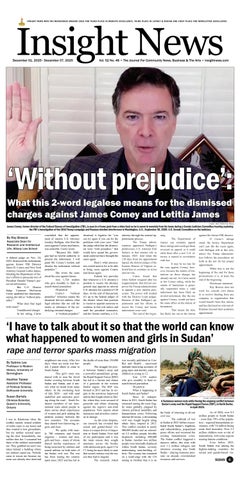
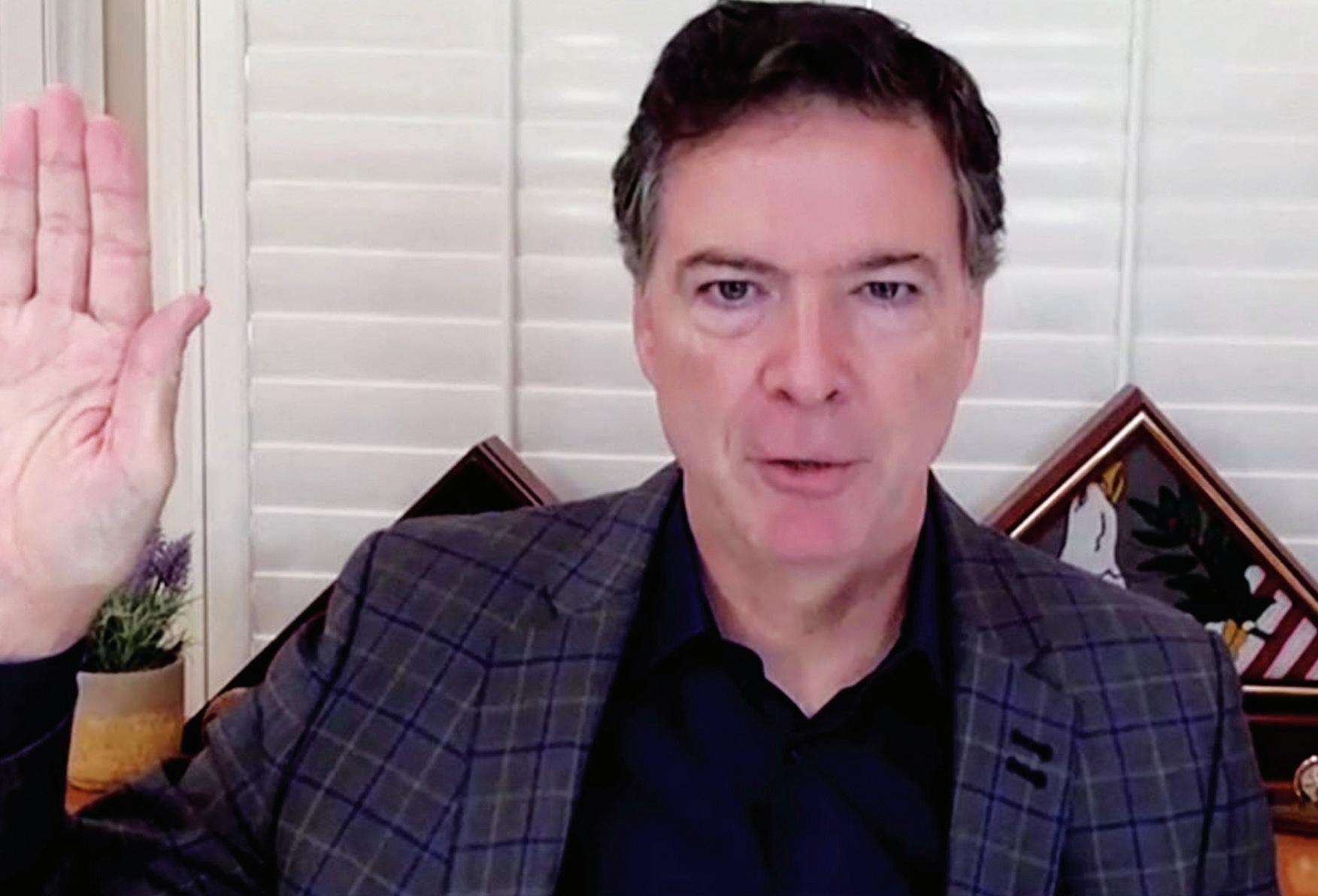
Comey, former director of the Federal Bureau of Investigation (FBI), is seen in a frame grab from a video feed
the FBI's investigation of the 2016 Trump campaign and Russian election interference in
AACWI launches major Dementia outreach effort for African-descent communities in Minnesota
By Pulane Choane
A caregiver supports an elder during a home-based health check, reflecting the community centered approach behind new dementia screening initiatives.
Credit: Image licensed under
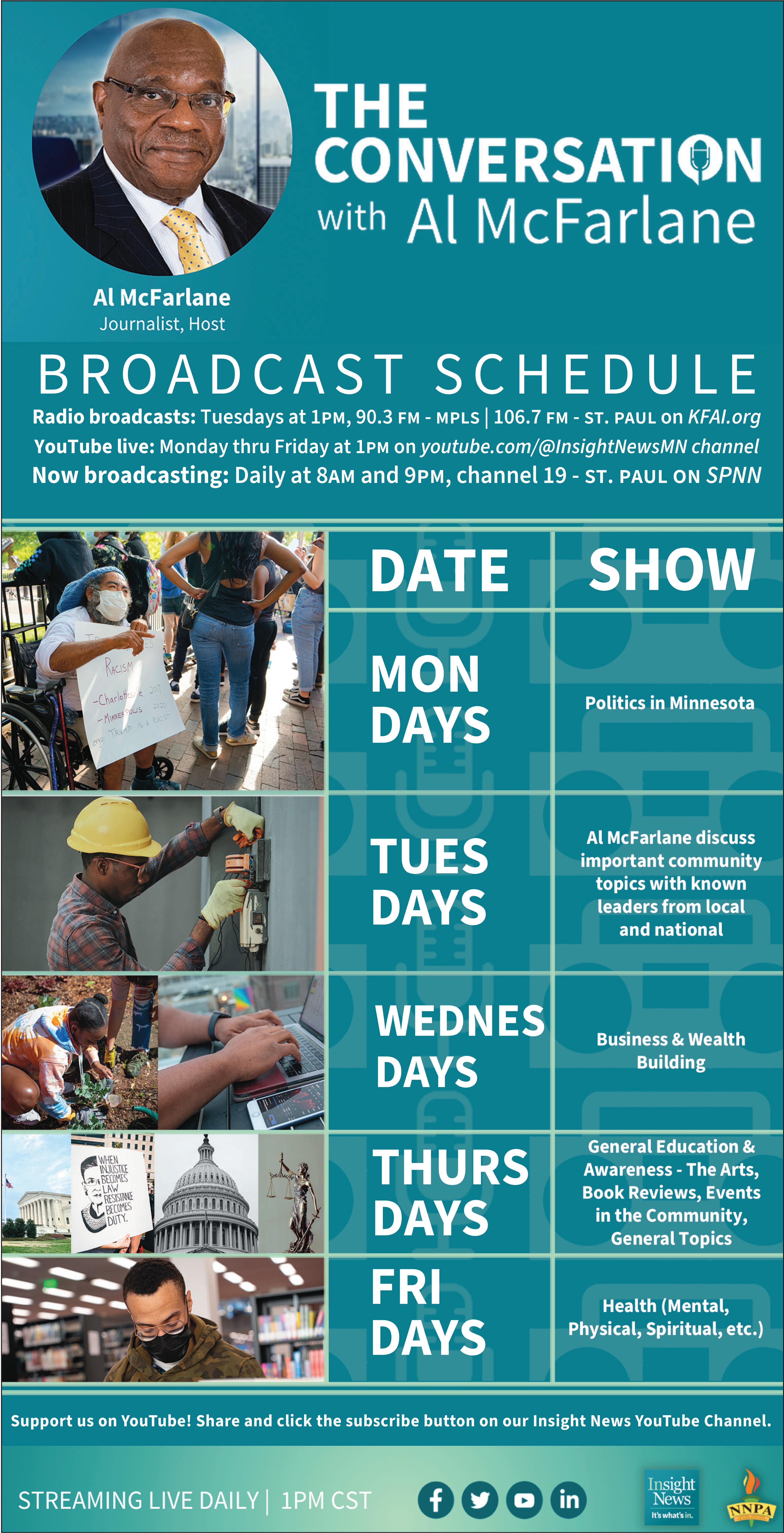
CC BY NC 4.0. On Friday, November 21, 2025, listeners of Radio KFAI 90.3FM’s popular program The Conversation with Al McFarlane heard a moving discussion about memory loss, caregiving and a new state-funded effort aimed at the Twin Cities’ African-descent communities. “This grant comes at a critical time for our community,” said Dr. Lolita King-Bethel, assistant clinic director of the African American Child Wellness Institute, as she described a two-year campaign funded by the Minnesota Board on Aging to boost awareness, screening and culturally specific supports.
Dr. King-Bethel
framed the work with clarity and urgency as she started quickly addressing misconceptions around Dementia. “Dementia is the broader umbrella and Alzheimer’s falls under that,” she told host Al McFarlane and guest Dr. Oliver Williams, carefully differentiating
Meet Roxanne Brown, the first African American and the first woman President of United Seelworkers
In a significant moment for the labor movement, Roxanne Brown, set to become the first African American woman elected as President of the United Steelworkers (USW), North America’s largest industrial union, joins Make It Plain with Rev. Mark Thompson. With the official transition happening in March, Brown’s ascent is more than just a personal achievement; it represents a shift in the labor movement’s leadership reflecting the demographics of today’s workforce.
Born in Kingston, Jamaica, she moved to New York at the age of two and was raised by what she affectionately refers to as “the Amazons”—a family of strong, single women who were deeply involved in healthcare and unions. Her first
exposure to the labor movement came through the nurses union and AFSCME’s CSEA in New York. This early influence clearly set the stage for what would be a lifelong commitment to labor rights and leadership.
Reflecting on her path to this esteemed position, Brown shared, “I cut my teeth in our policy shop, and I had to learn about our core issues and our core values. I literally spent my entire career fighting on behalf of our members across so many sectors.”
The USW under Brown’s leadership will be setting the tone with what she believes is a much-needed representation change. Brown emphasized, “We are the most diverse union in North America… we’re cradle to grave and have
everything in between.”
With a membership boasting varied backgrounds, Brown’s leadership is a reflection of this diversity, as the board she is set to lead will be its most diverse in the union’s history.
Leading a predomi-
nantly male union presents its unique set of challenges. Brown noted, “When people think about our union, there’s an image that comes to mind that does not look like me. But…we are the most diverse union in
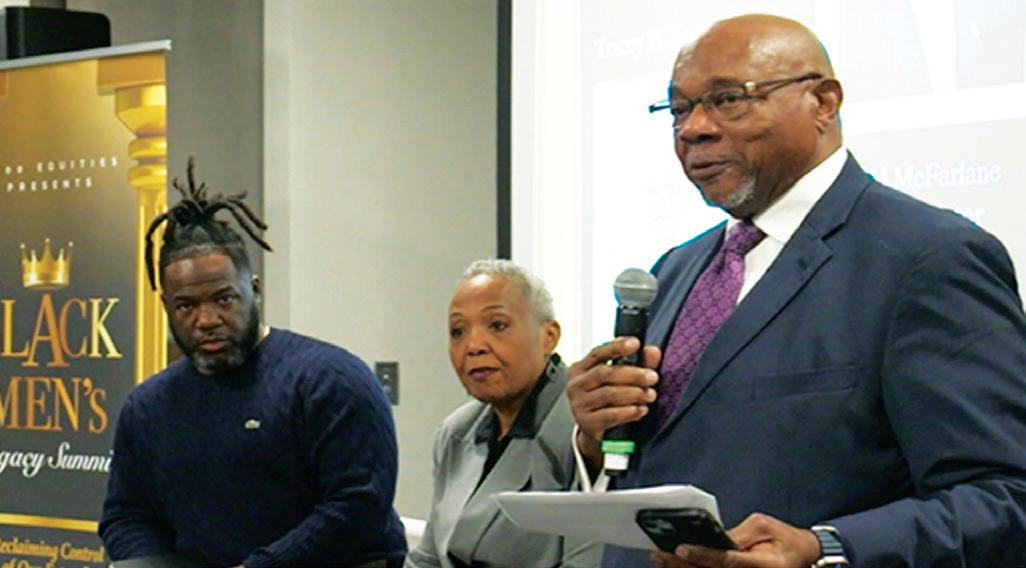
Black Men’s Legacy Summit: one month later, the real legacy work begins
By Pulane Choane
A month has passed since the fourth annual Black Men’s Legacy Summit, which was hosted by Build Wealth MN and 9000 Equities. This year’s edition of the Summit brought community leaders, homeowners, entrepreneurs, and families into one room on Penn Avenue. But the conversations that began on October 25 have not faded. In many ways, the Summit served less as a single event and more as a catalyst, surfacing old questions about wealth, inheritance, memory, and power that Black Minnesotans have wrestled with for generations.
The numbers that
framed the day remain as stark now as they were then, as only about 45 percent of Black households in the United States own homes, compared with nearly 75 percent of White households. In a country where home equity accounts for the largest share of intergenerational wealth, this gap is not simply a statistic, but rather it is a map of who gets to anchor themselves, who gets to pass something down, and who is forced to rebuild every generation. That is the backdrop against which this Summit unfolded and why its themes continue to echo weeks later. What emerged that day was not a list of talking points. It was a collective insistence that legacy must be claimed, shaped, and defended, especially in communities
where historical stripping of assets, land, and opportunity have been the norm rather than the exception. Three voices in particular articulated this truth with clarity and urgency, and their words continue to guide the post-Summit conversations happening across North Minneapolis today. The first of
Saint Paul City Council demands answers after police violence at Payne-Phalen protest
A tense morning on the East Side has pushed long-standing community concerns about policing, immigrant safety, and civil rights back into the center of public debate. After Saint Paul police used force on residents and observers during a Payne-Phalen protest against federal immigration actions, the Saint Paul City Council is calling for a full-scale investigation and a public accounting of what went wrong.
The confrontation unfolded as community members gathered to witness and protest an action by federal Homeland Security Investigations (HSI) agents. What many expected to be a peaceful demonstration quickly turned into a chaotic scene—one that raised urgent questions about police conduct, limits of authority, and the city’s separation ordinance designed to protect immigrant residents from entanglement with federal immigration enforcement.
“Saint Paul’s separation ordinance is not symbolic—it’s a public safety promise,” several councilmembers emphasized in their joint response. The law prohibits local police from assisting with or participating in federal immigration enforcement. But after Tuesday’s clash, that promise now feels uncertain to many.
Councilmembers speak out Ward 6 Councilmem-
ber Nelsie Yang, who represents the neighborhood where the incident occurred, voiced deep frustration:
“ICE has no place in our city. I am deeply horrified by the way our Saint Paul police officers conducted themselves yesterday. What we witnessed was not reflective of our values in safety for all.” Yang said the moment demands humility and transformation from the police department, not defensiveness.
Ward 7 Councilmember Cheniqua Johnson echoed those concerns.
“Trust between our community, our Police Department, and our City has been broken,” she said. “We have handled many protests—many tough days—that simply do not turn into what we saw yesterday. We owe our residents answers.”
Council President Rebecca Noecker underscored that the city’s obligation to protect residents does not come with exceptions.
“Every resident, regardless of immigration status, deserves to feel safe,” she said. “We are committed to a full, transparent investigation—into adherence to the separation ordinance and SPPD’s use-offorce policies.”
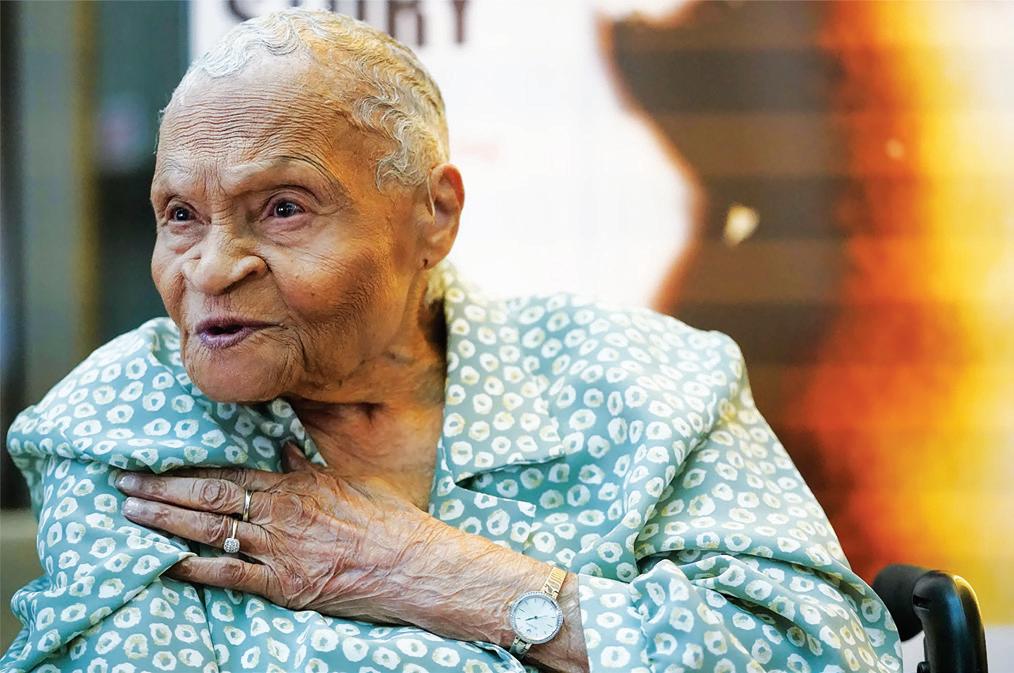
Mother Viola Fletcher, who carried the memory of Tulsa’s shame and the nation’s unfinished business longer than any other living soul, died on November 24 at age 111. She stood as the oldest known survivor of the 1921 Tulsa Race Massacre, the burning of Greenwood, and the attempted erasure of Black prosperity that white mobs tried to silence forever. Tulsa Mayor Monroe Nichols said her death marks a moment of mourning for a city still learning how to reckon with its own truth. “Today, our city mourns the loss of Mother Viola Fletcher, a survivor of one of the darkest chapters in our city’s history,” Nichols stated. “Mother Fletcher endured more than anyone should, yet she spent her life lighting a
path forward with purpose.” She spent that long life fighting for justice that too many leaders tried to bury along with the bodies from Black Wall Street. In Greenwood, she was a child watching terror reshape a world that had promised her nothing but possibility. For more than a century, she bore witness so the country could never again pretend not to know. “Her legacy will be carried forward with the courage and conviction she modeled every day of her life,” Nichols said.
This Day in History Mother Fletcher’s mission reached the halls of Congress when she demanded reparations for survivors and descendants of the massacre. She testified with a steadiness that shamed a nation still unwilling to repair what it helped
these being veteran community journalist and founder of Insight News MN, Al McFarlane, who moderated the day’s most critical discussions. McFarlane offered a view of legacy that stretched beyond current
Credit: AP Photo/Mary Altaffer Tulsa Race Massacre survivor Viola Ford Fletcher gestures while speaking during an interview with The Associated Press
Insight News Editor Al McFarlane, moderated the panel on legacy building which featured Adair Mosley, CEO of Ground Break Coalition, and Tracey Williams Dillard, Publisher, The Minnesota Spokesman.
By Stacy M. Brown Black Press USA Senior National Correspondent
Contributing Writer
Contributing Writer
Commentary
I am because we are:
What I am thankful for in Black Minnesota
There is an African saying that captures the heart of community in five simple words: “I am because we are.” As we move into this Thanksgiving season, those words keep returning to me. They remind me that gratitude is not just about what I have as an individual. It is about who I am because of the communities that surround me, hold me accountable, and help me grow.
I am a transplant to Minnesota. I moved here from Texas, carrying the weight of why I left and the hope of what I might find. Like so many Black people who have moved across the country for school, work, or safety, I arrived with a suitcase, a vision for my future, and a quiet question in my heart: Will I find community here. What I found in Minnesota’s Black community is one of the things I am most thankful for this year.
I am thankful to live in a place where “community” is not just a word on a flyer. Here, I have met Black leaders who are not only resilient and vigilant, but also deeply forward thinking. They are not
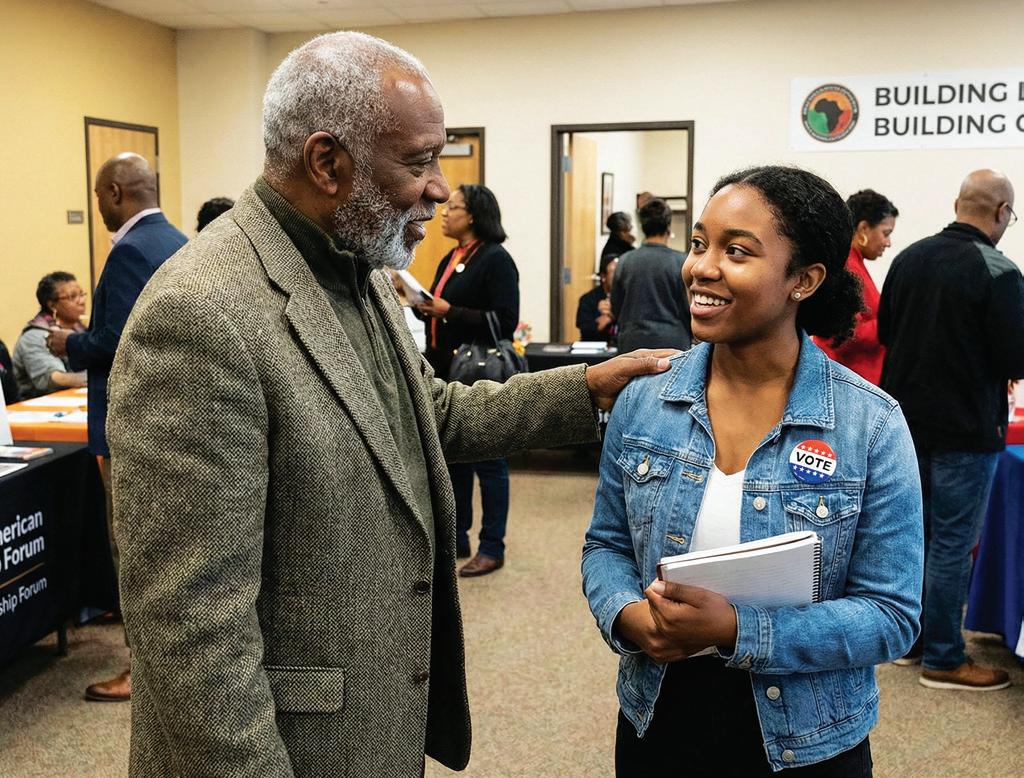
content with surviving. They are focused on building a new generation of leaders and making sure that young people like me are seen, supported, and prepared. Organizations like the African American Leadership Forum do this work every day. AALF describes its mission as “Boldly Black Centered,” and that is exactly how it feels to stand in rooms that they convene. When I graduated from the Josie R. Johnson Leadership Academy, I looked around and saw Black men and women of every age, all investing in each other, all committed to making Minnesota stronger. It was not just a ceremony. It was a reminder that leadership is a community project.
I am thankful for the Divine Nine organizations that anchor our lives in ways that are both formal and informal. Their chapters across Minnesota show up at community events, mentor young people, sponsor scholarships, and remind us that service is a way of life. As a member of Sigma Gamma Rho, I am continuously reminded that our letters are not just about who we are today. They are a promise to lift as we climb and to leave more opportunities behind us than we found in front of us.
I am thankful for organizations like Jack and Jill of America, Inc. that invest in Black children and teens long before anyone hands them a title or a degree. Jack and Jill reminds us that leadership does
not start when you are sworn into office or step into a boardroom. It starts in childhood, with spaces that affirm you, expose you to possibility, and teach you that your voice matters.
I am thankful for Black news organizations like InsightNews that make space for our stories and our analysis of the world around us. In a media landscape that often misrepresents or erases Black voices, InsightNews chooses a different path. It offers a platform where Black Minnesotans, including Gen Z, can wrestle with the big questions of our time and speak from our own lived experiences. That is not something I take for granted. All of this matters for my generation. Gen Z is growing up in a time when so much feels unstable. We came of age with school lockdown drills, social media timelines full of vio-
lence, book bans that target our history, and political debates that question our belonging. For Black Gen Z, especially, the stakes have always felt personal. We are watching attacks on voting rights, on honest education, on diversity programs that opened doors for so many. We are stepping into adulthood at a time when our leadership is needed and our future is on the line.
In moments like these, community is not a luxury. It is survival.
When I sit around a Thanksgiving table this year and someone asks, “What are you thankful for,” I will think about the people and institutions that caught me as a transplant and reminded me that I did not have to walk this journey alone.
I am thankful for elders who pull me aside after events, press a word of encouragement into my hand, and re-
mind me that they have been fighting for a long time, and they are glad we are here to pick up the torch.
I am thankful for peers who are organizing, studying, working, and parenting while still making time to show up at community meetings, mentoring sessions, and late night group chats where we dream about what a more just Minnesota could look like.
I am thankful for the young people who are watching us, who are still in middle and high school, who ask questions that force us to be honest about the world we are handing them. They are the reason that leadership development is not optional. It is our obligation.
Most of all, I am thankful to be in a community that understands that building a new generation of leaders does not happen by accident. It takes intention. It takes organizations that are rooted in our history and responsive to our present. It takes Black churches, neighborhood groups, youth programs, and civic organizations that see Gen Z not as a problem to be solved, but as partners and future leaders to be prepared. This Thanksgiving, many of us will gather with family and friends. Some of our tables will be full. Some will feel smaller because of loss. Some will be quiet because people are tired from carrying so much. In the middle of all of that complexity, we still have a choice about how we answer the
question, “What are you thankful for.”
My answer this year is simple. I am thankful for a Black community in Minnesota that chose to make room for a young Black woman from Texas and, in doing so, showed me why community matters. I am thankful to live in a place where resilience is matched by vision, where vigilance is paired with hope, and where building the next generation is treated as sacred work.
That African proverb says that if we give thanks for a little, we will find a lot. When I look at the mentors, neighbors, organizations, and friends who have surrounded me here, I know that is true. What started as a little hope that I might find community has grown into a deep conviction that we are building something powerful together.
My prayer and my challenge for all of us, especially my fellow Gen Z Black Minnesotans,
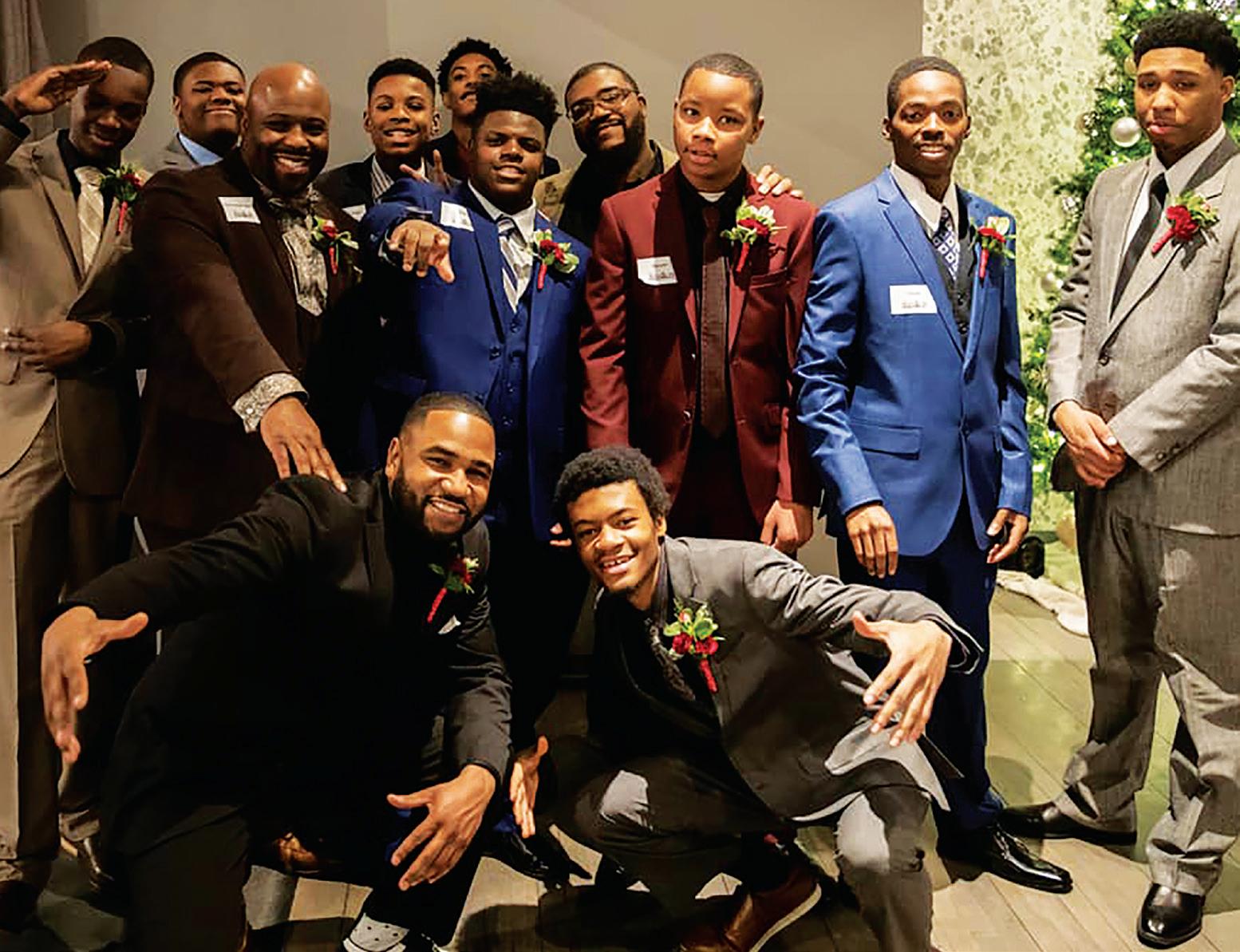
Why wearing a suit still matters
Let me tell you something I’ve learned from both life and experience: your appearance speaks before you do. Long before
you get the chance to introduce yourself, shake a hand, or prove your worth — the world has already formed an opinion. That’s why I’ve always believed, “How you present yourself is how the world will treat you.” And for young black men, especially, that truth
carries even more weight. I’ve seen firsthand how the way you dress changes how you carry yourself. When a young man puts on a suit — his posture shifts, his walk straightens, and his confidence shows up before his words ever do. It’s not about vanity. It’s about identity. A suit doesn’t just change how people see you; it changes how you see yourself. That’s why at The Man Up Club, we created our Suit Program — because we understand that sometimes, excellence just needs a little push in the right direction. When I see one of our young brothers walk into a room wearing a tailored suit for the first time — the glow in his eyes says it all. He’s not just wearing fabric; he’s wearing discipline, pride, and presence. Recently, we hosted a Suit Drive to make that experience possible for more young men across Minneapolis. The turnout was powerful. We collected and donated suits to young Black men who needed them for moments that matter — homecomings, proms, funerals, interviews, or even highclass events like galas.
And here’s the best part: we don’t loan them — we let them keep them. Because every young man deserves to own something that makes him feel like he belongs in the room.
When a young man looks in the mirror wearing a clean, fitted suit, something in him changes. His shoulders rise. His voice steadies. He starts to see the man he’s becoming. That’s the transformation we’re after — not just in clothing, but in confidence. I often tell our young men, “The suit doesn’t make you a man — but it reminds you to act like one.” We live in a world that judges before it listens. So when a young man steps out with confidence, poise, and class — it speaks volumes. It says, “I respect myself. I respect where I’m going.”
That’s why our suit program is so much more than a clothing initiative. It’s a message. A message that says, “You are worthy of excellence.” And to the community — we couldn’t do this without you. We’re always accepting suit donations — jackets, dress shirts, ties, dress shoes, belts — anything that can help a young man step into his best
Community
Twin Cities declare Snow Emergencies
Minneapolis and Saint Paul launch coordinated street-clearing efforts
Heavy snowfall across the metro has triggered Snow Emergency declarations in both Minneapolis and Saint Paul, activating a multi-day system of parking restrictions and plowing schedules designed to keep streets, sidewalks, and emergency routes passable throughout the storm.
Crews in both cities began working Sunday to treat and clear roads, and officials are urging residents, workers, and visitors to follow winter parking rules closely to avoid ticketing and towing. With more than 1,000 miles of streets between the two cities, compliance is essential to keep neighborhoods accessible and safe.
Minneapolis’ Snow Emergency began 9 p.m. Sunday, November 30. Parking restrictions continue over three days:
Monday 8 a.m. to 8 p.m. No parking on the even-numbered side of non-Snow Emergency routes. No parking on either side of parkways.
Tuesday 8 a.m. to 8 p.m.
• No parking on the odd-numbered side of nonSnow Emergency routes.
A complete Snow Emergency route map and signup options for text and app alerts are available on the City’s website. Officials urge residents to sign up for MPLSAlerts by texting 77295, call 612-348-
SNOW, or download the MPLS Parking App for updates.
SAINT PAUL: Night Plow and Day Plow routes now in effect
Saint Paul’s Snow Emergency is also underway, and residents can hear a recorded status update by calling 651266-PLOW (7569).
Saint Paul’s system divides the city into Night Plow and Day Plow routes: Night Plow Routes — Began 9 p.m. Sunday, November 30 Day Plow Routes — Begin 8 a.m. Monday, December 1 Day Plow Routes are not signed.
• Any block without a Night Plow Route sign should be treated as a Day Plow Route.
Cars not moved by 8 a.m. will be ticketed and towed.
Saint Paul’s Snow Emergency lasts 96 hours, through Thursday, December 4 at 9 p.m., or until plowing is complete. Residents should also avoid parking anywhere streets aren’t plowed all the way to the curb.
The city urges residents to use the Winter Parking Map at stpaul.gov/snow to find safe parking locations.
Sidewalk and Neighborhood Responsibilities
Both cities stress that sidewalks are a critical part of
the transportation network—vital for children, seniors, people with disabilities, transit riders, and neighbors walking to work or school.
Minneapolis Requirements
• Shovel sidewalks within 24 hours for homes and duplexes. Other properties must clear snow within four daytime hours.
• Free sand is available at multiple locations to improve traction.
Saint Paul Requirements Clear sidewalks within 24 hours of snowfall.
• Corner properties must also clear curb cuts, walkways, and crosswalks. Do not push or blow snow into the street.
• Keep trash and recycling carts out of the roadway— place them in the boulevard or at the driveway’s end.
• Shovel out hydrants and clear storm drains to prevent flooding during melt.
How to Stay Informed
Minneapolis
• Text MPLSAlerts to 77295.
Visit the City website— Snow Emergency banners appear at the top of every page.
• Call 612-348-SNOW for multilingual updates (English, Spanish, Somali, Hmong).
Minneapolis parks launch December lineup of free winter events
The Minneapolis Park and Recreation Board is rolling out a full slate of free, family-friendly events throughout the month of December, offering residents opportunities to celebrate winter, enjoy cultural performances, and stay active during the holiday season. The programming spans parks and recreation centers across the city and is designed for all ages. A complete calendar of neighborhood and citywide events is available at www.minneapolisparks.org/ event-calendar.
Upcoming park events
Saturday, December 6 Indian Dance Performance Graco Park | 10:30–11:30 a.m. Attendees can enjoy a morning of traditional Indian dance, open to all ages.
Tuesday, December 9
Community Sing-A-Long Loring Park | 7–8:30 p.m.
Residents are invited to lift their voices together for an evening of community singing.
Wednesday, December 10
Pop-Up Dance Party Bryant Square Park | 7–8:30 p.m.
A spontaneous, high-energy dance party returns to Bryant
Square for families and youth.
Friday, December 19
Two Winter Solstice celebrations will take place:
• Creekview Park | 5–7 p.m.
• Lake Nokomis Community Center | 6–8 p.m.
Both gatherings invite families to honor the longest night of the year with seasonal activities.
Saturday, December 20
Winter Whirl Phelps Park | 1–3 p.m.
This festive event offers seasonal games and winter fun for children and families.
Monday, December 22 Winter Break Skating Rink Kickoff
Longfellow Park | 2–3:30 p.m.
Families can help kick off winter break as skating rinks officially open for the season.
Holiday activities across the parks
Recreation centers throughout Minneapolis are hosting a variety of holiday-themed events, including gingerbread house decorating, crafting sessions, coat drives, and ugly sweater parties. These programs encourage families to get into the spirit of the season. More details and registration information are available online.
Activities during Minneapolis Public Schools winter break
With Minneapolis Public Schools closed from December 22 through January 2, the park system will offer numerous activities, camps, and field trips for children and youth. Details can be found at www.minneapolisparks.org/schoolrelease.
Nicollet Island Winter Market returns
The Nicollet Island Winter Market will bring more than 50 Minnesota makers and artisans together on December 13 and 14, from 10 a.m. to 4 p.m. Visitors can shop for handmade goods, enjoy live music, and sample offerings from local food vendors.
Holiday dance event:
Downtown Get-Down
On Sunday, December 14, from 6:30 to 8:30 p.m., the Nicollet Island Pavilion will host the Downtown Get-Down: Holiday Edition. The event features festive line dancing led by Billie and the Backroad Kickers, set to a mix of country favorites and holiday hits. Guests are encouraged to dress in holiday attire and enjoy snacks and beverages available for purchase.
Download the MPLS Parking App.
• Follow City social media, watch local TV/radio, or call 311.
• Winter parking info in multiple languages: stpaul. gov/snowlanguages FAQs: stpaul.gov/snowFAQs
• Sign up for alerts (English, Spanish, Hmong, Somali, Oromo): stpaul.gov/snow
A Shared Call for Cooperation
With winter weather settling in, both Minneapolis and Saint Paul stress the same message: Move your car, shovel your sidewalks, and stay alert for updates. The sooner plows can clear streets curb-to-curb, the safer and more accessible neighborhoods will be for everyone—from emergency vehicles to city buses to families walking home.
Minneapolis declares Snow Emergency; Parking rules began Sunday night
Minneapolis declared a Snow Emergency starting November 30, as crews work around the clock to keep streets open and drivable. Public Works
teams have already begun plowing and treating roadways, and citywide parking rules allow plows to clear more than 1,000 miles of streets as safely and efficiently as possible.
What residents need to know: Three days of parking rules City officials emphasize that Snow Emergency rules are essential for keeping streets accessible—for everyday travel and for emergency vehicles. Following the rules helps prevent ticketing and towing, and ensures crews can widen streets for everyone’s safety.
• No parking on the even-numbered side of non-Snow Emergency routes until 8 p.m., or until plowing is complete. No parking on either side of parkways until they are fully plowed or until 8 p.m. Tuesday, Dec. 2, 8 a.m. to 8 p.m. No parking on the odd-numbered side of nonSnow Emergency routes until 8 p.m., or until fully plowed. A full map of Snow Emergency routes is available on the City’s website.
Stay informed all winter long
The City urges residents, workers, and visitors to sign up for at least two alert methods to ensure they don’t miss Snow Emergency declarations or daily parking instructions. Options include:
Hawthorne Huddle set to close 0ut 2025 with focus on recovery and community vision
The Hawthorne Huddle will conclude the year with a powerful conversation on public health and community healing. Residents, partners, and stakeholders are invited to join the final gathering of 2025 on Thursday, December 4, from 7:30 to 9:00 a.m. via Zoom. This month’s featured guest is Dr. Ronda Marie Chakolis-Hassan, who will present “Building Pathways to Recovery: Minneapolis Health Department’s Brixadi Initiative.” Her presentation will highlight emerging strategies to support individuals navigating substance use recovery and the city’s efforts to expand access to treatment.
Alongside the main presentation, the Huddle will also mark another year of shared dialogue, partnership, and community progress. Participants will be invited to celebrate the collective work of 2025 and offer ideas to help shape the 2026 agenda. The Zoom room will open at 7:10 a.m. to welcome early arrivals.
Opening and Community Updates
The meeting will be co-led by Diana Hawkins of
the Hawthorne Neighborhood Council and Ann DeGroot of the Minneapolis Youth Coordinating Board. Attendees will introduce themselves by sharing their name and affiliation in the chat—a long-standing Huddle practice that supports connection and collaboration beyond the meeting. Regular updates from community partners will include: Safety Report from Bill Magnuson of the MPD 4th Precinct COVID and Health Updates from Luisa Pessoa-Brandão, Director of Public Health Initiatives for the City of Minneapolis Report from HUEMAN presented by Clarence Jones
A segment honoring individuals and organizations making positive contributions to the community Announcements and community reflections on priorities for 2026 will follow.
Main Program: Building Pathways to Recovery
Dr. Chakolis-Hassan’s keynote presentation on the Brixadi initiative will serve
as the meeting’s central focus. The Minneapolis Health Department’s program aims to build stronger, more accessible pathways to recovery—an effort that aligns closely with community health needs in North Minneapolis.
Neighborhood Updates and Closing
A report from the Hawthorne Neighborhood Council will be delivered by Diana Hawkins, followed by closing announcements. The next Hawthorne Huddle is scheduled for Thursday, January 8, 2026. How to Join the Meeting
Community members can follow updates through the Youth Coordinating Board and Hawthorne Neighborhood Council websites and social media pages.
Winter in Saint Paul: skates, lights, and holiday nights
Free Youth Hockey Clinic
Dec. 7
Young skaters ages 10 and under have a rare chance to learn from the best. A free hockey clinic, held in partnership with the St. Paul Capitals, Saints, and former IIHF World Juniors captain Taylor Chorney, hits the ice December 7 at 12:10 p.m. at the Charles M. Schulz Arena. No equipment? No problem. Play It Again Sports will provide gear for participants who need it. Registration is firstcome, first-served—so lace up and don’t delay.
Ski & Snowboard lesson registration
With winter knocking on the door, Saint Paul Parks & Rec is opening registration for downhill, snowboard, and cross-country lessons at Como Park Ski Center and Highland National Golf Course. Families can browse classes online and sign up before sessions fill. And don’t forget your cross-country ski pass—required for all Ramsey County/ Saint Paul shared trails and available for purchase online or at ski chalets.
Instructors needed Parks & Rec is looking for experienced skiers and snowboarders ready to share their skills with Saint Paul youth. Instructor positions run
from mid-December through early February. Tow-rope operators are also needed to keep the ski hills running smoothly. Interested community members can contact 651-6953774 or email Parkswinterski@ ci.stpaul.mn.us.
Palace Community Center hosts blood drive Give the gift of life this season. The Palace Community Center will hold a blood drive on December 4 from 8 a.m. to 4 p.m. Donations are open to residents 16 and older, and each donation can help save up to three lives. All donors are also entered for a chance to win a $100 gift card.
Amped Art Lights Up
Downtown Downtown Saint Paul is glowing with color thanks to Amped Art, a new installation featuring artwork wrapped around 16 electrical boxes. Four local artists bring stories of culture, community, and creativity to life. Residents can learn more about the artists and view a map of the installations online.
Winter Events & Holiday Parties Across the City From cookies to crafts, Santa to storytime, Parks & Rec is spreading holiday cheer at recreation centers across the city. Free events for all
ages run December 9–30, with activities designed for families, teens, tots, and seniors. A few highlights include: Santa’s Workshop at Battle Creek, Dec. 9 Holiday Campus Party + Santa Paws at Palace, Dec. 11
Senior Holiday Party at El Rio Vista, Dec. 16
Winter Wonderland at North Dale, Dec. 17
Holiday Express at Phalen, Dec. 22 New Year’s Eve Tot Time at Highland Park, Dec. 30 Some events require registration or have age-specific
Sudan From Cover
lence globally, having the second-highest rates in Sub-Saharan Africa.
The border between Sudan and South Sudan has long been a corridor of cyclical displacement, shaped by decades of war, famine, and political instability. However,
terms many listeners use interchangeably. “Alzheimer’s often impacts the hippocampus, the part of the brain that stores memory. With Alzheimer’s you see short-term memory problems, and sometimes long-term memory problems too.” Her informative explanations around moved the show from abstract anxiety into concrete, clinical terms that people could understand.
The project, which is funded at roughly $150,000 and is listed among Minnesota Board on Aging awards this fall, will combine media outreach, church-based screenings and follow-up referral pathways. “We are going to be increasing the awareness of dementia
the scale and complexity of the current crisis has intensified vulnerabilities, particularly for women and girls. The effects have manifested in rape, sexual abuse, trafficking, and forced prostitution – on both sides of the border.
Fleeing sexual violence and terror
We focused our study on that border and the people who were fleeing through it. We used “sensemaking” methodol-
and its impact on the Black community,” Dr. King-Bethel said. “This campaign will be for the next two years to increase awareness through media, through partnership with other avenues so that we can do one-on-one screenings and assessments that are culturally relevant and specific.”
Listeners of McFarlane’s popular educational segment got both practical and surprising details as Dr King-Bethel also said that the institute will bring a five-minute, picture-based screening called” Five-Cog” into churches and mosques. “We have 11 churches committed to allowing us to come in and provide a really short screening to assess whether or not a person should be referred on for further testing,” Dr. King-Bethel said. The screening is intentionally designed to avoid language bias and to work for elders who are
ogy (based on the principle that storytelling is an intuitive way to convey complex information and helps people make sense of their experiences) to document what happened to women on their journeys and the risks they faced in the South Sudanese settlements. We had adopted a similar approach when examining accounts of sexual exploitation by UN peacekeepers in Haiti and DRC.
The fieldwork team –
not fluent in English, including African immigrant communities. “This is a culturally based assessment tool,” she said. “It did very well in populations of color, particularly Black populations.” The conversation balanced clinical explanation with warm, community-centered outreach. Dr. King-Bethel described an initiative she jokingly calls “a wing and a prayer”, she with a light laugh explained what this concept meant, while also underscoring its human touch. “We are replicating that with our dementia awareness campaign to offer a mini presentation and then they get to go home with their chicken wings.”
The show host Al McFarlane and Dr. Williams added personal testimonies that grounded the public-health message in lived experience. McFarlane described early, uneasy memories of an aunt who ended
three female and three male researchers from the not-for-profit STEWARDWOMEN – worked on the border of Aweil North for two weeks to collect these stories. STEWARDWOMEN is a women-led South Sudanese organisation which aims to address violence against women, including sexual violence. Disclosure statement Sabine Lee received funding from the XCEPT Cross-Border Research and
up “locked away” because family members did not understand what was happening. “They put her in a rocking chair, and she just rocked back and forth, and somehow I got a memory of her rocking herself out of the chair, falling forward on the floor, throwing up and dying,” he said, with his voice low from that memory of his aunt, while Dr. Williams described his own family history of stroke-related dementia and the shock of “losing my father that I had before.” As the guests conversed, the show moved through risk, prevention and caregiving. Dr. King-Bethel emphasized that risk factors like high blood pressure, diabetes and substance misuse are interconnected with stroke and vascular dementia. “If we know something runs in the family, younger generations can get ahead of that with improved diet, exercise and by staying away from excessive
the Cross-Border Conflict Evidence, Policy and Trends (XCEPT) research programme, which funded the research detailed herein.
Heather Tasker receives funding from the Social Science and Humanities Research Council (SSHRC), International Development Research Council (IDRC), and the XCEPT Cross-Border Research and the Cross-Border Conflict Evidence, Policy and Trends (XCEPT) research programme.
alcohol use,” she advised. She urged listeners to take practical steps such as going to annual checkups with local health service providers, adhering to taking one’s medicine where one has been prescribed medication and documenting concerns for primary care visits. “Write it down. Be as specific as you can,” she said, referencing the reality that brief medical visits often miss nuance and that writing down these concerns does help provide that nuance. Caregivers, she also added, often bear enormous emotional burdens. “Sometimes they (caregivers) think the person is just being difficult, but it’s the brain,” she said. “Caregivers need support and guidance. We will be doing hands-on support at AACWI and compiling a resource book with culturally specific caregivers and services in Minneapolis.”
The radio segment
XCEPT funded the research detailed herein.
Susan Bartels received funding from the Cross-Border Conflict Evidence, Policy and Trends (XCEPT) research programme, which funded the research presented in this article. She also receives funding from the Social Sciences and Humanities Research Council (SSHRC) and the Canadian Institutes of Health Research (CIHR).
concluded with a clear call to action. “Go to the African American Child Wellness Institute website, get more information and find out if you are ready for an assessment,” McFarlane urged listeners. Dr. King-Bethel promised partnerships with medical providers, memory-care facilities and local organizations to ensure screening leads to care. The board-funded initiative is explicit about one goal: preserve dignity and memory while building community knowledge and support. The interview, which was posted as an episode of The Conversation, underscores how targeted, culturally informed outreach can bridge stigma, clinical care and everyday compassion. “We owe it to our elders to do better,” Dr. King-Bethel said. “Preserve memory, preserve legacy, ensure our elders receive the care and dignity they deserve.”
North America, in terms of our sectors and membership.” She recognizes the importance of transcending stereotypes and advocated for a more inclusive image representing the diversity within the
economic cycles as he pointed toward the construction site behind the venue and said, “They are building a pyramid. In North Minneapolis … our pyramid is rising.” It was not rhetoric but rather, in his words, McFarlane was grounding legacy in the concrete reality of millions now moving into community-centered development funds, with down payment assistance designed to pull families into ownership who have historically been pushed out. When he told attendees to imagine legacy for “100, 500, even 1,000 years from now,” he was pushing them to think not only as individuals but as future ancestors. That rising pyramid he called on audi-
union. Amidst the intricate challenges of tariffs and economic pressures, uncertainty remains a theme. Brown explains, “This current environment of tariffs is not strategic and creates uncertainty…not just for sectors but for our ability to use the tools we’ve relied on for survival.”
Brown is poised to take on these challenges headon with strategies rooted in ed-
ences to envision rests on three sturdy pillars: homeownership, entrepreneurship, and commercial real estate. McFarlane explained that already, $16 million has been deployed into funds to help families buy homes, many with up to $50,000 available for down payment assistance and additional support to lower barriers to entry. For a community historically excluded from pathways to ownership, those aren’t gestures but rather, they are lifelines. His message a month later continues to motivate families beginning the process of exploring homeownership tools and aligning short-term decisions with long-term wealth. Tracy Williams Dilliard, CEO and publisher of the Minnesota Spokesman-Recorder, with two Juneteenth awards for her contributions to Black media, was also among those
Kim said the response was especially painful for communities of color who have seen similar patterns before.
Council Vice President HwaJeong Kim, who was present during the confrontation, described a scene of indiscriminate force:
“Our officers fired at the press and community members. We were tear gassed, pepper sprayed, hit with lower lethals. Chemical weapons in a residential neighborhood should be banned—period.”
set ablaze. She reminded lawmakers she had lived through state-sponsored violence and had lived long enough to see the excuses that followed. She co-authored her memoir “Don’t Let Them Bury My Story” with her grandson, refusing to allow America the comfort of forgetting.
She left her words in the archives of Oklahoma State University through oral histories that insisted history would not escape the sound of her voice.
Her labor began early. During World War II, she worked in a shipyard as an assistant welder.
Later, she cleaned houses with
Ward 1 Councilmember Anika Bowie framed the issue as a matter of leadership and values:
“Our community deserves better than fear-based enforcement that strips people of dignity. This was not an immigration problem—it was a failure of policy, governance, and political courage.”
Ward 3 Councilmember Saura Jost stressed the need
a determination that carried her well into her eighties. She built a life out of the ashes she was never meant to rise from.
The world took notice of her strength. During a 2021 journey to Ghana, she received the title “NaaLamiley,” translated as someone strong enough to stand the test of time. Her vision inspired the Viola Ford Fletcher Foundation, which promotes education, health, and economic opportunity. Community members honored her in ways large and small, including the gift of custom dentures created to recognize her legacy and impact.
Three years ago, she stood with her brother, Hughes Van Ellis, known as Uncle Red, inside Ghana’s embassy in Washington. She was 108 then.
ucation, engagement, and advocacy at all governmental levels. She affirmed the union’s commitment by saying, “Engage, engage, engage—because we are charged to do that on behalf of our membership.”
In discussing the broader significance of her leadership and that of fellow African American union leaders, Brown reflects, “Leadership should al-
standing firmly in legacy. Coming from a lineage of the very founders of Minnesota’s oldest Black-owned newspaper, her voice brought a different dimension as her view of legacy is also preservation. Explaining her view on this, Dilliard, “This work is not about making money. It is a labor of love,” she was reminding the room that some of the most powerful forms of inheritance are not financial but cultural. Her grandfather founded the Spokesman-Recorder at a time when Black voices were not just ignored but actively excluded from the state’s media ecosystem. Through media, she argued, Black people see themselves as they are: whole, dignified, worthy. Her stewardship, and her preparation of her daughter to inherit that stewardship, made visible the kind of continuity that many Black
for a clear reckoning: “Neighbors and a journalist were injured. Trust has been harmed. We must review whether these actions aligned with our policies and values.” And Ward 4 Councilmember Molly Coleman placed responsibility squarely on both federal and local systems: “The federal government has shown it is a threat to our residents, especially our immigrant community. When that’s happening, our police
He was 101. Both were sworn in as citizens of Ghana in a ceremony filled with music, dancing children, and the full weight of ancestral return. It was the first time anyone had been sworn in as a citizen inside the Ghanaian embassy. “I’m so grateful to all. I thank you so much for this honor,” Fletcher said before signing her citizenship papers. Her brother echoed her sentiment. “I’m so thankful to Ghana, and all of you,” Ellis stated. Oklahoma State Rep. Regina Goodwin attended the ceremony, along with journalist Tiffany Cross and Ambassador Erieka Bennett. Bennett spoke of heritage that surpasses borders. “You don’t have to be born in Africa to be an African,” Bennett declared. “Africa is born in
ways reflect who is being led… I’m opening the door so that others know what is possible.” “It is not about us alone; it is about what we represent and showing what is possible to our members who look like us,” she said. Brown listed some of the products USW members produce: Goodyear, Bridge-
families were denied through decades of displacement, redlining, and asset loss. “Legacy is rich in relationships, culture, and the stories we pass down,” she said. Her words continue to inspire families who are now documenting their own histories or reconnecting with elders whose memories might otherwise be lost.
Then finally, another important voice there was Adair Mosley, CEO of the GroundBreak Coalition, a grassroots organization working to invest in Black-owned businesses and community real estate. Mosley, reframed legacy away from the myth of singular achievement.
“Legacy isn’t one achievement. It is the daily work, the small, steady steps that make up our life story.” Mosley also framed narrative control as critical:
“For too long, the stories told about Black people have cen-
must hold themselves to the highest standard of public safety. What we saw yesterday did not meet that standard.” In response to overwhelming public demand for accountability, the City Council said it is taking these immediate steps:
• A formal investigation by the Police Civilian Internal Affairs Review Commission into whether officers violated the city’s separation ordinance and use-offorce policies.
• A full audit of the public
you.” Cross spoke of feeling the presence of ancestors moving through the room, a presence made sharper by the endurance of Fletcher and Ellis. Goodwin said their lives proved that the African spirit cannot be broken. “This is what it’s all about,” Cross stated. “The spirit of Africa, its powerful and rich history.”
Their citizenship ceremony became more than a celebration. It became a reminder that the diaspora carries stories the world still needs to hear, and that the road home is long but never closed. Bennett told the gathering that Ghana opens its doors to all who seek connection. “Welcome home,” she said.
Car components, including glass and steel Glass on iPhones and Android devices • Fiber optic cables used for 5G systems • Oil for powering vehicles • Cement
tered on brokenness and deficit,” he said. “We must reclaim our story. Our narrative should reflect resilience, abundance, and a history of rebuilding.” His call to reclaim narrative challenged the deficit-based portrayals that often overshadow the depth, creativity, and resilience of Black communities.
In the weeks since, his message has resonated in neighborhood meetings, small business incubators, and family conversations as people rethink how they tell their stories and how they position themselves in the broader economic landscape of the region.
Together, these three leaders articulated a truth that the Summit made impossible to ignore. Legacy is not an abstract concept. It is a living practice. It is economic and cultural. It is memory and planning. It is the quiet work of everyday deci-
cost associated with the police response.
• A Council resolution to initiate these actions at the December 3 meeting.
Councilmembers signaled they are prepared to use every oversight tool available— from policy changes to future budget decisions—to rebuild public trust and ensure the city’s promises to its immigrant communities are honored.
For many residents, the events in Payne-Phalen are bigger than a single incident— they are a test of Saint Paul’s
sion-making and the bold work of entering spaces long closed to Black families. And for many who attended, the Summit was not an ending but the start of a new hope for what could be in the generations to come for thousands of Black Minnesotans.
This article marks the beginning of a series that will examine how the work of legacy building continues to unfold month by month. The next instalments will explore how families are navigating the homeownership pathways introduced at the Summit, how community members are sustaining and reimagining cultural institutions, and how Black Minnesotans are restructuring the narrative frameworks that define them. The Summit concluded in one afternoon but the work it set in motion is still beginning.
commitment to equity, immigrant safety, and community-led public safety. As the investigation begins, councilmembers say they will be watching closely, listening to the community, and demanding the transparency residents are owed. Saint Paul will now have to confront difficult questions about policing, civil rights, and the meaning of sanctuary. But one message from the council was unmistakably clear: the community is demanding accountability, and the city must deliver.
At The Legislature
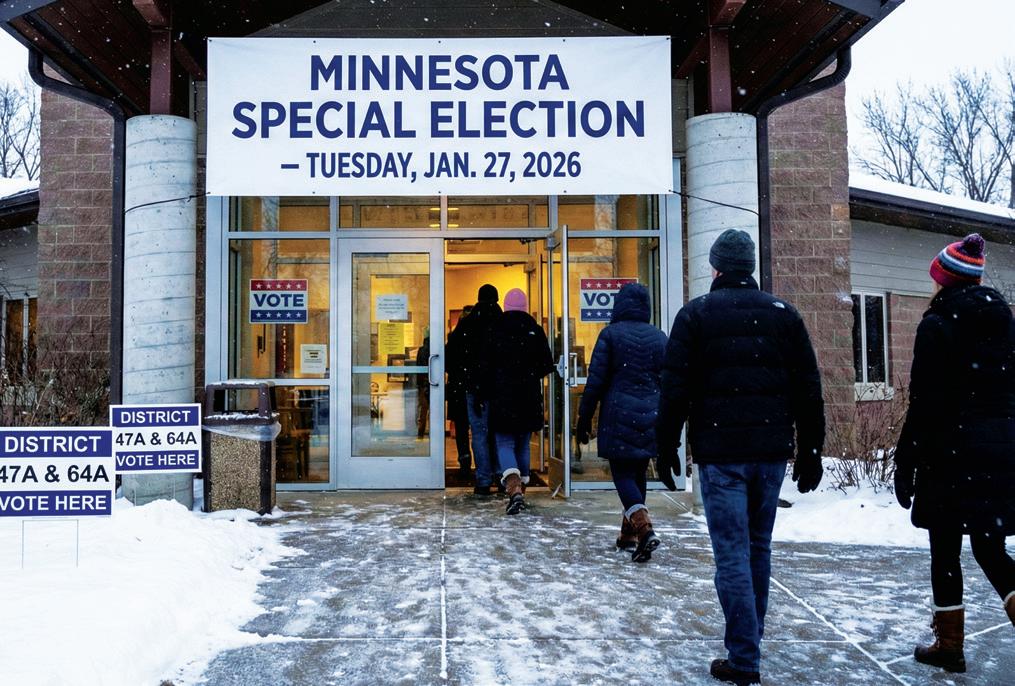
Two House special elections scheduled for Jan. 27
Special elections to fill the District 47A and District 64A House seats are scheduled for Tuesday, Jan. 27, 2026. Rep. Amanda Hem-
mingsen-Jaeger (DFL-Woodbury) and Rep. Kaohly Vang Her (DFL-St. Paul) resigned their seats Nov. 17. Earlier, Hemmingsen-Jaeger won a spe-
GLOW a must-see winter outing. Register for Winter Activities
GLOW Holiday Festival
Shines Bright
One of the region’s favorite holiday traditions returns as GLOW Holiday Festival lights up CHS Field through January 4, 2026.
Millions of lights, family attractions, and a warm burst of seasonal magic make
From youth programs to adult leagues, the full winter activity lineup is now open for registration. Residents are encouraged to browse online and secure a spot before classes fill.
Job Openings at Parks & Rec
The department is currently hiring for full-time and seasonal roles, including
Building Maintenance Supervisor, Parks Worker III, Community Recreation Leaders, and contract officials/umpires. Volunteer coaches are also needed to support youth sports.
Updates, Programs & Reminders
Parents and caregivers can enroll youth in Rec Check, S’more Fun, preschool programs, and aquatic activities. Several swim programs— including Women’s Swim
Nights, Sensory Friendly Swim, Rondo Community Open Swim, and Teen Aquatic Fitness—provide welcoming and inclusive swimming opportunities.
Como Zoo & Conservatory Highlights
The Wolves and Wild Lands exhibit runs through January 4, 2026. “Little Explorers Thursday,” a weekly program for toddlers ages 1–3, continues with free activities, animal
meet-and-greets, and playbased learning.
Adaptive Recreation
Programming
Parks & Rec continues to offer robust adaptive recreation programs for individuals of all ages with physical or developmental disabilities. November and December schedules are available online.
Stay Informed About Park Projects
Residents can read or subscribe to the Current
and
Rep. Erin Koegel Rep. Brad Tabke
Tax refunds expected to rise by about $1,000 next year
By Stacy M. Brown Black Press USA Senior National Correspondent
Federal tax refunds are positioned for a sharp rise next year, with new projections showing that the average payment could increase by about $1,000 for millions of Americans.
Analysts expect the typical refund to reach roughly $4,151 for the 2026 filing season, a major jump from the $3,151 average refund taxpayers received during the 2025 season. CBS News reported that IRS filing data has revealed that the average direct deposit refund for 2025 stands at $3,151, up from $3,092 the prior year.
“When people go to file, they’ll be surprised by really, really large refunds,” Don Schneider, deputy head of U.S. policy at Piper Sandler and one of the report’s authors, said in a recent podcast about the analysis. “In a typical year, we might have about $270 billion in tax refunds, and it’ll be that plus another $90 billion.”
Analysts expected a spike to come after the Trump administration’s sweeping tax and spending law was signed in July. The law eliminates federal taxes on some overtime and tipped income and lifts the state and local tax deduction cap from $10,000 to $40,000. All changes were made retroactive to 2025, setting up larger refunds when taxpayers file in early 2026.
Because most Americans receive their refunds within about 21 days of filing, the size of those payments often carries significant weight in household budgets. Next year could bring one of the biggest refund seasons on record. The benefits will not be evenly shared. Piper Sandler’s analysis shows middle and upper-middle income households, those earning between $60,000 and $400,000, stand to gain the most. That finding matches a Tax Policy Center review that estimated that people earning more than $217,000 receive six of every ten dollars in new tax breaks created by the July law. High earners will see some limits. The expanded
$40,000 SALT deduction begins to phase out for households earning more than $500,000. Lower-income filers are also unlikely to benefit because the higher SALT cap only helps people whose state and local tax bills exceed the standard de-
duction. Filers must itemize to claim it, which tax experts note is less common among lower-income households.
Schneider said the impact falls primarily on households in the middle of the income distribution rather than
those at the lowest or highest ends.
“This isn’t going to the very bottom of the distribution. It isn’t going to the very top of the distribution either,” Scheider said.
Trump’s big ugly bill strips nursing of professional status as Black women across the nation brace for devastating consequences
By Stacy M. Brown Black Press USA Senior National Correspondent
The Trump administration has declared that nursing is not a professional degree, striking directly at the heart of America’s healthcare workforce and landing hardest on Black women, who make up nearly 13 percent of the national healthcare labor force and almost 10 percent of registered nurses. The administration frames the move as a technical adjustment to loan classifications. For Black wom-
en and the communities that rely on them, the consequences are far more severe.
“This is a gut punch for nursing,” Patricia Pittman of George Washington University stated. “Education from ADN to BSN and beyond is the single best way to retain nurses, especially in underserved communities.”
Under the One Big Beautiful Bill Act, nursing, physical therapy, physician assistants, and other frontline health professions have been stripped of professional degree status. Students in these
fields can borrow only $20,500 per year with a total cap of $100,000. Students in law, dentistry, medicine, and other protected fields can borrow up to $50,000 per year and $200,000 total. Nursing students report tuition and clinical training costs that far exceed the new caps, leaving many unable to continue their education. The American Association of Colleges of Nursing issued a direct warning. “Excluding nursing disregards the rigorous education, licensure, and direct patient care that define our profession,” the organization stated. “This decision threatens the healthcare of patients in communities across the country.”
munities. Studies of Black nurse practitioners describe persistent racism, heavy workloads, and limited institutional support.
The nation already faces a shortage of hundreds of thousands of nurses. Graduate degrees are required for advanced practice roles. Without meaningful access to federal loans, fewer students will enter or complete these programs.
Black women, who rely on student loans at far higher rates than white students, now face a barrier to financial mobility and advancement in the nursing profession.
Research shows that Black nurses often serve in underserved rural and urban com-
Participants in one national qualitative study described taking additional time to address inequities and care for patients facing social and economic barriers while contending with organizational barriers and burnout.
Kim Brundidge, a doctoral nursing student and practicing nurse, described the consequences for the next generation of providers. “If students are not able to afford advanced education, the quality and number of nurses entering the workforce will decline,” she said.
Local and national nursing groups are preparing challenges to the reclassification. Leaders across the field warn that the bill undermines the country’s ability to meet basic healthcare needs.
“In many communities across the country, advanced practice registered nurses ensure access to essential and high-quality care that would otherwise be unavailable,” Jennifer Mensik Kennedy of the American Nurses Association said. “Limiting nurses’ access to graduate education threatens the very foundation of patient care.”
1 in 3 US nonprofits that serve communities lost government funding in early 2025
By Shannon Fyfe
Assistant Professor of Law and Assistant Professor of Philosophy, Washington and Lee University
Elizabeth Lanphier
Assistant Professor of Pediatrics, University of Cincinnati
About one-third of U.S. nonprofit service providers experienced a disruption in their government funding in the first half of 2025. That’s what we found when we teamed up with Urban Institute researchers to collect nationally representative survey data from 2,737 nonprofits across the country. These organizations run food pantries, deliver job training and offer mental health services. They provide independent living assistance, disaster relief and emergency shelter, among other services.
Our team found that 21% lost a grant or contract, 27% faced delays or funding freezes and 6% were hit with stop-work orders. Some of the nonprofits had experienced more than one of these funding problems, which affected nonprofits of all kinds. But they were especially disruptive to
larger ones that employ more people and provide key services, such as large social service agencies, food banks and organizations serving people enrolled in Medicaid.
These findings came from the most recent Nonprofit Trends and Impacts survey, which we conducted from April to June 2025 with colleagues at the Urban Institute, including Laura Tomasko, Hannah Martin, Katie Fallon and Elizabeth T. Boris. They follow findings from a prior survey that the project fielded between October 2024 and January 2025. When funding dries up, nonprofits tend to shrink and scale back their services. About 21% of those hit by funding cuts in the first half of 2025 were already serving fewer people by the time they completed the survey in April, May and June 2025, and 29% had reduced their staff. Many of these nonprofit leaders also told us they expect to have to lay off more of their employees by the end of 2025.
Nonprofits had already been facing financial pressure.
In the prior round of the survey that our team conducted in the fall of 2024, more than half of nonprofit leaders said they were worried about
their organization’s finances. Many of them said they had received less money through donations and were facing tougher competition when they applied for grants, largely due to a tougher economic climate and the end of federal funding that had been disbursed during the COVID-19 pandemic. Why it matters
Nonprofits often partner with the government to deliver essential services. This government support is vital – it makes up about 20% of the revenue that most nonprofits rely on. What’s more, government funding provided more than half of total revenue for about 1 in 5 service-oriented nonprofits in 2023, which is the most recent data available.
That same year, about 2 in 3 nonprofits received at least one federal, state or local government grant or contract. Government funding made up 42% of total revenue for service-providing nonprofits that experienced government funding disruptions in our 2025 survey. The rest of their funding came from donations, foundation grants and service fees. Nonprofits get less than half of their total revenue from foundations and individual
By Shannon Fyfe
Assistant Professor of Law and Assistant Professor of Philosophy, Washington and Lee University
Elizabeth Lanphier
Assistant Professor of Pediatrics, University of Cincinnati
Following the federal government’s changes to COVID-19 vaccine eligibility and recommendations in 2025, many people are wondering whether they can get COVID-19 vaccines for themselves or their children.
In May 2025, the U.S. Food and Drug Administration limited eligibility for updated COVID-19 vaccines to people ages 65 years and up and to those under 65 with a “highrisk” condition. In September, the Centers for Disease Control and Prevention adopted an “individualized decision-making” approach to COVID-19 vaccination instead of broadly recommending the vaccines. It’s not just the public that is confused. Many physicians and pharmacists also have questions about whether and how they can administer COVID-19 vaccines.
As philosophers with expertise in bioethics and legal philosophy, we have been following the ethical and regulatory landscape for COVID-19 vaccines since they first became available in late 2020.
In the fall of 2025 that landscape looks a bit different in light of the new guidelines. While it is causing understandable confusion, most people who want to get a COVID-19 vaccine can do so. Broad access is possible, in part, through what in health care is called “off-label use.”
“Off-label” refers to using an FDA-approved product for a different purpose, or with a different population, than that for which it received approval. Off-label prescriptions are common in health care, particularly in pediatrics.
COVID-19 vaccines from 2020-2025
People likely recall that COVID-19 vaccines were developed faster than any vaccine had been previously, thanks to efforts such as the U.S. government’s Operation Warp Speed. Initially limited in supply, the vaccines first became available through “emergency use authorization” in December 2020, with health care workers among the first prioritized by the government to receive them.
In August 2021, the FDA fully approved the first COVID-19 vaccine for people ages 16 and up. Following this, younger children started to become eligible for COVID-19 vaccines. From 2022 through summer 2025, COVID-19 vaccines were available to everyone 6 months and older in doctors’ offices or pharmacies, mostly free of charge, albeit with disparities in access due to an individual’s age, geographic location or vaccine costs.
But in May 2025, the new FDA and CDC leadership appointed by the Trump administration started to change their agencies’ positions on COVID-19 vaccines. Such regulatory changes affect who is considered eligible for the vaccines and whether public and private insurers must provide coverage. Meanwhile, state laws influence the ability of pharmacists, who frequently provide routine vaccinations, to administer COVID-19 vaccines.
Understanding the role of federal agencies such as the FDA and the CDC, as well as medical professional organizations and guidelines, can help untangle the complicated picture for access to COVID-19 vaccines.
2025 changes to FDA and CDC guidance
It’s helpful to understand the process through which vaccines become approved and endorsed by government agencies in the U.S.
First, the FDA approves drugs and other biologic products such as vaccines for specific uses, in specific age
based diets
By John-Michael Lawrence
Medical research shows that a plant-based diet reduces the need for medication, reduces the need for health care, and prevents chronic ailments (diabetes, high blood pressure, high cholesterol, blood ailments, prostate cancer, etc.) that disproportionately impact low-income communities and commu-
nities of color because of poor diet and lack of health care.
Animal protein and fast foods as a norm in your diet means that animal fat, preservatives, salt, chemicals and who knows what are also norms in your diet. A five-dollar value meal can buy a week’s worth of healthy beans, rice, and greens without fatback and pork. You don’t have to buy something; you have to stop buying animal protein. A plant-based diet will do the following:
The Northside Epicenter, 705 42nd Ave. N., in Camden is experiencing a season of remarkable growth, energy, and purpose as its vision of a dynamic Black business ecosystem continues to unfold. Activity throughout the building reflects a collective momentum, with each enterprise contributing to a powerful model of community-driven economic development. The Ballroom remains one of the Epicenter’s busiest hubs, regularly hosting gatherings that bring neighbors together for celebrations, community meetings, and special events. A recent produce giveaway stood out as a highlight, providing families with fresh food while demonstrating the impact of sharing resources at the local level.
Several businesses within the Epicenter are marking important milestones. The Apothecary celebrated its first anniversary, a testament to the dedication, creativity, and wellness-centered mission that has shaped its identity. Healthy Helpful Insight Healthcare Institute is preparing to graduate another cohort of professionals, continuing its commitment to training a new generation to serve the community with skill and compassion.
Other enterprises are expanding as well. Affinity Moving is steadily growing its reach and influence, exemplifying the Epicenter’s spirit of collaboration and upward mobility. In addition, the long-anticipated opening of a fully functioning
groups – in this case, to prevent people from getting COVID-19 or, if they do get it, to reduce the severity of their symptoms.
Next, the CDC recommends products that the FDA has approved or authorized. These recommendations have a different regulatory function than the initial FDA decisions. The CDC issues public health guidelines for which vaccines people should receive and which ones public and private insurance must cover. In some states, the CDC’s recommendations also affect whether pharmacies can administer vaccines.
Until September 2025, when the CDC shifted its stance, the agency broadly recommended COVID-19 vaccines for everyone 6 months of age and older, regardless of their underlying conditions. These recommendations supported public health and ensured that public and private insurance covered 100% of the cost of these vaccines as preventive health care.
Medical and CDC recommendations
Despite the FDA’s updated eligibility criteria and the CDC’s revised guidance, medical professional organizations have continued to broadly recommend COVID-19 vaccines.
In August, the American Academy of Pediatrics issued its own vaccine schedule. In addition to kids who meet FDA eligibility due to heightened risk, the organization recommends that all children between 6 months and 2 years old be vaccinated against COVID-19, as well as any child whose parent or guardian wants them to be vaccinated.
When the Advisory
Committee on Immunization
Practices, or ACIP – the committee that advises the CDC on vaccine policy – met in mid-September, it voted to recommend that anyone 6 months and older can get a COVID-19 vaccine according to “individual-based decision-making.”
The committee also voted to require continued funding of COVID-19 vaccines through private and public health insurance and the Vaccines for Children program that provides free vaccines to children who are Medicaid eligible, uninsured or underinsured. In October, the interim CDC director adopted the ACIP recommendations as the formal guidance from the CDC for the 2025-2026 COVID-19 vaccines.
These recommendations from the CDC and medical professional organizations are difficult to square with the FDA labeling changes for COVID-19 vaccines. The CDC is recommending that people make individual decisions with their medical providers about COVID-19 vaccination, regardless of their eligibility through FDA approval.
This is possible because anyone who doesn’t meet FDA eligibility can get
a COVID-19 vaccine through off-label use.
Off-label use of COVID-19 vaccines
Using COVID-19 vaccines off-label means administering them for the same purpose but to a wider population than those who are FDA-eligible. In 2021 the CDC prohibited the off-label use of COVID-19 vaccines purchased by the federal government. This was an unusual move and is no longer the case.
While uncommon, off-label vaccination is sometimes recommended. One example is off-label vaccination against measles, mumps and rubella, or MMR, for children under 12 months old who plan to travel to areas where measles is not eradicated, or are exposed to a disease outbreak.
Moreover, the CDC’s 2025-2026 COVID-19 vaccine recommendations remove certain barriers that typically accompany off-label use. For example, products used off-label are not always covered by insurance. Many private insurers already committed to covering COVID-19 vaccines as preventive care for the 2025-2026 vaccine season. The recommendations from ACIP and the CDC subsequently guaranteed that private and public health insurance plans would continue to cover COVID-19 vaccines in full. This includes COVID-19 vaccines under the Vaccines for Children program that purchases vaccines for approximately half of U.S. children.
Off-label use of a product is ethically and legally permissible if a physician be-
lieves its benefits outweigh its risks for their patient. But the CDC’s recommendation for individual decision-making may also lessen clinicians’ worries about liability. So might the guidance from the American Academy of Pediatrics, as well as the American College of Obstetricians and Gynecologists’ vaccine recommendations that anyone who is pregnant should get an updated COVID-19 vaccine during pregnancy. Off-label use is typically done via a doctor’s prescription. Yet many COVID-19 vaccines are administered in pharmacies. Getting vaccinated in a pharmacy is especially helpful for people without primary care doctors or the time or money for a clinic visit. Many states have taken steps to remove barriers to obtaining off-label COVID-19 vaccines at pharmacies. The CDC’s October 2025 recommendations for individual decision-making also enable COVID-19 vaccination by pharmacists.
For people who would like to be vaccinated against COVID-19, knowing how off-label use fits into current regulations may be helpful for understanding their access to vaccines this respiratory virus season, and medical treatment in general.
Disclosure statement
The authors do not work for, consult, own shares in or receive funding from any company or organization that would benefit from this article, and have disclosed no relevant affiliations beyond their academic appointment.
Reverse and prevent diseases and conditions that particularly plague communities of color and poor communities
Make unaffordable medical attention and medical treatment largely unnecessary
Give you better health
Give you a better quality of life
• Give you a longer life
• The opinions expressed in this commentary are those of the writer and not necessarily those of the AFRO.
barbershop brings another essential service to the building— one that strengthens community ties and adds new vitality to the space. Every corner of the Northside Epicenter reflects progress, partnership, and purposeful work. The products and services offered throughout the building meet real community needs, but the deeper story is one of collective vision becoming reality. The Epicenter continues to evolve into what it was designed to be: a living, thriving example of what can emerge when Black businesses, community leadership, and shared purpose come together.
—Reporting based on remarks from Principal Anissa Keyes.
By Cody Christie
Miguel Sano is
Credit: Nick Wosika-Imagn Images
Books, Art & Culture
Art and Artifact: murals from the Minneapolis uprising
Sharing Our Stories
By W.D. Foster-Graham Book Review Editor
We are five years out from that fateful, defining day of May 25, 2020—the day George Floyd was murdered by police. In the days and weeks that followed, the scene of his murder at East 38th Street and Chicago Avenue in Minneapolis—now George Floyd Square—was visited by many in silence. It was an event that resonated around the world.
Many storefronts around the Twin Cities boarded up their windows during the subsequent uprising. Voices that had long been suppressed by police brutality were expressed—through the murals and artwork created on those planks as a direct result of that day. Through the efforts of a Black queer woman named Leesa Kelly, Memorialize the Movement was founded, to prevent erasure of this history and safeguard it. When the plywood murals came down from the storefront businesses, Kelly reclaimed a great number of them and stored them. This movement spread to other cities. As art is the first expression of a movement or a period of time,
these murals make powerful statements of our feelings as people of color over this public execution of George Floyd and the BIPOC persons who suffered the same fate at the hands of police, and as such they must be preserved.
With essays by Leslie Guy, Leesa Kelly, Amira McLendon, Howard Oransky, and Seph Rodney, Art and Artifact includes over 100 photographs of the murals archived by Memorialize the Movement. In 2024, Amira McLendon curated an exhibition of the collection at the Katherine E. Nash Gallery at the University of Minnesota.
Some of the artists are identified; others aren’t. These murals showed up in different parts of the Twin Cities:
Southside, Lake Street, Uptown, Northeast, Downtown Minneapolis, Whittier, and St. Paul. The artists represented are Black, Brown, and Indigenous. As I viewed the murals, I was reminded where I was on that day, the protests for justice, the shock and the outrage, that the racism which was beneath the surface was out in the open for the world to see; had it not for the bravery of a 17-year-old Black teenager who recorded the murder, it may never have seen the light of prosecution and the subsequent convictions. Art and Artifact: Murals from the Minneapolis Uprising is available through Amazon, Barnes & Noble, and the University of Minnesota Press. Never forget.
It’s always been hard to make it as an artist
in
America and it’s becoming only harder
By Joanna Woronkowicz Associate Professor of Public and Environmental Affairs, Indiana University
“Being an artist is not viewed as a real job.”
It’s a sentiment I’ve heard time and again, one that echoes across studios, rehearsal halls and kitchen tables – a quiet frustration that the labor of making art rarely earns the legitimacy or security afforded to other kinds of work.
I study how artists work and earn a living in the United States. In a country that valorizes creativity yet neglects the people who produce it, I’ve seen how artists are left to navigate a system that treats their calling as a personal gamble rather than a profession worth supporting.
“I wish this country supported artists,” one artist told me. “Look how good it could be if culture was celebrated.”
The reality is that for many artists, the dream of sustaining a creative career now comes with steep odds: volatile income, limited benefits and few protections against technological or market shocks.
Some countries have begun to recognize this and act accordingly. South Korea, for instance, introduced its Artist Welfare Act in 2011 and expanded it in 2022, creating mechanisms for income stabilization, insurance coverage and protection against unfair contracts.
Such examples show that insecurity is not an inevitable feature of artistic life – it’s a symptom of policy choices.
My new book, “Artists at Work: Rethinking Policy for Artistic Careers,” uses U.S. labor force data to show how building a creative career has become an increasingly risky pursuit – and how smarter policies could make it less so.
A fragile profession
About 2.4 million Americans are artists, or roughly 1% of the workforce in 2019. This figure includes individuals whose primary occupation falls within an artistic field – such as musicians, designers, writers, actors, architects or visual artists – according to the U.S. Bureau of Labor Statistics. It’s likely an undercount, since
many artists hold jobs outside of the arts to support their creative work.
But even before the COVID-19 pandemic, the number of working artists was already falling. Between 2017 and 2019, formal employment in these fields dropped from 2.48 million to 2.4 million, a quiet contraction that reflected shrinking opportunities and growing instability across creative fields.
When COVID-19 hit, that slow decline turned into a collapse. The arts economy shrank by 6.4% in 2020 – nearly twice the overall U.S. rate of decline – and more than 600,000 jobs disappeared. For artists, the pandemic didn’t create new problems so much as reveal how little of the safety net reached them in the first place.
Health insurance is one example.
Most artists are insured, but roughly 20% buy coverage on their own, compared with about 10% of all U.S. workers. When the Affordable Care Act expanded access to individual plans, artists’ coverage rates improved significantly – a reminder that good policy can make a real difference for this workforce.
Even this modest progress is now under threat: With enhanced marketplace subsidies set to expire and the current government funding impasse looming, individual premiums under the ACA could more than double for many enrollees next year.
Education doesn’t provide much protection either.
Artists are among the most educated groups in the labor market – about two-thirds hold at least a bachelor’s degree – but their earnings don’t rise as much with each level of education as those of other professionals. Research shows that even artists with graduate degrees earn lower pay and face sharper income swings than workers with similar schooling in other fields. Artists almost by definition juggle multiple roles. In 2019, about 8% held more than one job – compared with 5% of all workers – and roughly 30% worked part time in different types of jobs. Many combined teaching, freelance projects and contract gigs to piece together something close to full-time work.
Oct. 1, 2025, is compounding the effects of the Trump administration’s longer-term spending cuts. The full extent of the impacts of these federal disruptions on nonprofits’ budgets won’t be known until 2026 or later.
makes it unlikely that philanthropy will replace the government funding that’s being lost.
What still isn’t known Nonprofits from California to Florida are seeing their funding withheld, and the government shutdown that began
In addition, our survey doesn’t include the leaders of very small nonprofits, or several kinds of nonprofits – including hospitals, colleges, universities, churches and foundations.
What’s next Our upcoming Non-
My research shows that self-employment is far more common among artists than among other workers. Yet many go independent not because they crave entrepreneurship but because it’s the only option available. The top industries employing artists include professional and technical services, arts and entertainment, information and retail.
In other words, artists often move between arts and non-arts jobs, teaching by day or working service shifts at night, just to keep their creative practice alive.
Existing labor laws assume a steady paycheck
Most U.S. labor protections – health insurance, paid leave, workers’ compensation and retirement benefits – are tied to full-time, W-2 employment. But few artists work that way. They rely on gigs that don’t fit neatly into existing systems: short-term contracts, productions with limited runs such as musicals or film shoots, and one-off project fees.
Existing rules simply do not support professional artists.
Because employers don’t pay into unemployment funds for contractors or freelancers, most artists are ineligible for unemployment insurance.
Copyright law was originally written with publishers and record labels in mind, leaving visual artists without royalties when their work is resold. Existing copyright law is being challenged by artists and record labels, who are claiming their work was used to train AI models without permission, favoring tech companies that say these tools will “democratize” artmaking.
The tax code, meanwhile, lets collectors deduct the full value of artwork they donate, but limits artists themselves to deducting only the cost of materials.
Public funding of the arts, from the New Deal’s Federal Art Project to the creation of the National Endowment for the Arts, has come in brief bursts – but is often first on the chopping block during economic downturns.
Together, these examples reveal a century-long pattern: The U.S. celebrates art but neglects artists. Instead of treat-
profit Trends and Impacts surveys in early 2026 will convey more of the effects of government funding cuts on nonprofits’ budgets and programs. A more complete picture will not be possible until the Internal Revenue Service publishes data that it collects from the 990 form that most charitable nonprofits must file on an annual basis. Historically, The IRS has taken years to release comprehensive nonprofit financial data, requiring additional research beyond the 990 form.
ing creative work as legitimate labor, the country’s policies fail to offer artists stability or protection.
Labor policy that values artists If labor policies have largely ignored artists, it’s because policymakers start from the wrong place. Too often, artists are asked to justify their worth by proving that they drive tourism, raise property values or fuel innovation. That logic turns creative work into a tool for someone else’s goals. In my view, a better starting point is the right to choose creative work. The ability to select one’s occupation freely – and to make a living doing meaningful work – is, to many Americans, as fundamental as freedom of speech. Yet the structure of U.S. workforce policy makes that choice nearly impossible for many artists.
A more coherent approach would treat the arts as part of the nation’s labor sys-
tem, not an afterthought. One policy change could require benefits such as health care, unemployment insurance and retirement savings to be portable – following the worker, not the employer. Laws could protect freelancers from late or missing payments, such as New York’s Freelance Isn’t Free Act. And tax and copyright policies could give artists the same chance to profit from their work that investors and corporations already enjoy. Many European countries already do this through “droit de suite” laws, which grant visual artists a small royalty each time their work is resold – ensuring that creators, not just collectors, can reap the rewards of the long-term value of their art.
Designing policies around how many artists actually work – project by project, contract by contract – would make it possible for more people to build sustainable careers in the arts. It would also make the sector more inclusive, draw-
ing talent from across social classes rather than only from those that can afford to take the risk.
But I think policy change also requires a shift in mindset.
Viewing artists not as special cases or economic tools, but as workers exercising a basic human right – the right to choose their work – strengthens both culture and democracy. To me, the central question is not whether artists deserve help because their work enriches others, but whether every individual should have the freedom to make a living through work that gives life meaning.
Disclosure statement
Joanna Woronkowicz does not work for, consult, own shares in or receive funding from any company or organization that would benefit from this article, and has disclosed no relevant affiliations beyond their academic appointment.