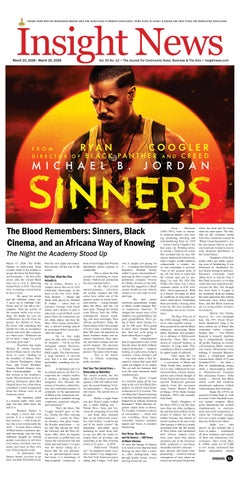
The Blood Remembers: Sinners, Black Cinema, and an Africana Way of Knowing
The Night the Academy Stood Up
March 15, 2026. The Dolby Theatre in Hollywood. Ryan Coogler walks to the podium to accept the Oscar for Best Original Screenplay — the first of his career, only the second Black man ever to win it, following Jordan Peele in 2018. The room rises. A standing ovation before he says a word.
He opens his mouth and the Oakland comes out: "I grew up in Oakland, California, and we can talk a lot." Laughter. Then the gravity of the moment settles over everything. He thanks his cast, his collaborators, his wife Zinzi, his parents, his children at home. He closes with something that sounds less like an acceptance speech and more like a prayer, or a blues lyric: "Memories are all we have. I hope I've given you some great ones."
Elsewhere that night, Michael B. Jordan becomes the first Black man to win Best Actor in years, standing on the shoulders of Sidney Poitier, Denzel Washington, Jamie Foxx, and Forest Whitaker. Autumn Durald Arkapaw wins Best Cinematography — the first woman in the Academy's nearly 100-year history to do so. Ludwig Göransson takes Best Original Score for a film whose soundtrack is itself an argument about the African roots of all American music.
The headlines called it a historic night. They were right, but they didn't know the half of it. Because Sinners is not simply a movie that won awards. It is a cultural event that connects — with living tissue, like a root system under the earth — to more than a century of Black artistic resistance, spiritual knowledge, and the long, unbroken struggle by African people everywhere to tell their own stories, own their own creations, and insist on their own way of knowing the world.
To understand what Sinners means, you have to go back. Far back. Past Hollywood.
Past the civil rights movement. Past slavery. All the way to the source.
Part One: What the Film
Actually Is
On its surface, Sinners is a vampire horror film set in 1932 Clarksdale, Mississippi, in the heart of the Jim Crow Delta. Twin brothers — Smoke and Stack, both played by Michael B. Jordan — return from Al Capone's Chicago with blood money and a dream: to open a juke joint, a sacred Black social space where the community can eat, drink, dance, and hear the blues. Their young cousin Sammie, a musical prodigy played by newcomer Miles Caton, provides the sound.
On its first night open, the juke joint is besieged by vampires — led by an Irish immigrant named Remmick, backed by a freshly turned KKK couple. The film becomes a siege narrative, a survival story. But it is also, and more profoundly, something else entirely.
As Britannica put it in its cultural analysis, the film "incorporates the vampire mythos to produce a fitting thematic antagonist who threatens the erasure of freedom, cultural history, and communal memory. It comments on the appropriation of Black art by mainstream culture and draws parallels among vampirism, organized religion, and colonialism."
That's the thesis. But Coogler himself gave us the key. During the film's opening narration — voiced by Wunmi Mosaku, who plays Annie, the Hoodoo practitioner — we are told that among the Irish, the Choctaw, and the West Africans alike, there are legends of musicians so gifted they can "pierce the veil between life and death, past and future." Coogler was not merely setting up a horror film. He was announcing an epistemological claim: that music is a technology of trans-temporal connection, a
form of knowledge that Western rationalism cannot contain or commodify.
This is where the film ascends to something no mainstream Hollywood production has dared attempt before.
In the film's pivotal musical sequence — a five-minute ecstatic eruption that film critics have called one of the greatest scenes in recent American cinema — young Sammie plays the blues, and the veil tears open. Through the breach come B-boys from the 1990s, contemporary dancers twerking, and most stunningly, West African performers doing the Zaouli dance of the Guro people of Ivory Coast, a tradition more than 200 years old practiced to honor feminine beauty and ancestral connection. Past, present, and future collapse into one sacred moment. The ancestors are present. The descendants are present. The music is the bridge. This is not horror. This is African cosmology made cinematic.
Part Two: The Untold Story — Ownership as Rebellion The critical acclaim, the box office ($370 million worldwide against a $90-100 million budget), the record-breaking 16 Oscar nominations — these are the told stories. The untold story is the deal.
Before a single frame was shot, Ryan Coogler walked into a studio bidding war — Warner Bros., Sony, and Universal all competing for his film — and made three demands that, as one Hollywood executive told Vulture, "could be the end of the studio system." He demanded: first-dollar gross (meaning he earns from ticket one, not after the studio recoups), final cut privilege, and ownership of the film reverting to him in 25 years — in 2050. Hollywood "freaked out." An unnamed senior executive called it "very dangerous." The New York Times ran a piece noting that Coogler "will then
own it, despite not paying for it" — a framing The Hollywood Reporter's Richard Newby called "a gross miscalculation," pointing out that Coogler's own production company Proximity Media invested in the film, and that the suggestion a Black creator should not own what he creates is its own kind of colonial logic. The deal carries enormous generational weight, as Black wealth manager Belva Anakwenze observed. "It changes the money story of his children, his grandchildren, his great grandchildren. We're going to know about George Lucas for 200 years. We're going to know about Quentin Tarantino. And now we're going to know about Ryan Coogler." The meta-narrative here is impossible to miss. A film literally about the theft of Black cultural production — vampires feeding on a juke joint, trying to consume a blues prodigy's gift — was made under a deal designed to ensure that same theft could not happen to its maker. The art and the business deal were the same statement, made simultaneously. This places Coogler in a tradition going all the way back to the very first Black filmmakers. As scholar Ana-Christina Ramón of UCLA noted, "The one thing that I found interesting is the fact that [the details] were leaked for an African American filmmaker." White directors negotiate similar deals in silence. For Coogler, it became a national conversation — which tells you everything about whose ownership America considers natural and whose it considers threatening.
Part Three: The River and Its Source — 100 Years of Black Cinema To trace the lineage of Sinners is to travel a river that has been flowing for more than a century, often underground, often through hostile terrain, always moving toward the sea.
Oscar Micheaux (1884–1951), born to formerly enslaved parents, was writing, producing, directing, and self-distributing films by 1919 — before Charlie Chaplin's The Kid came out. Working entirely outside a Hollywood system that excluded him by race, Micheaux understood instinctively what Coogler would formalize contractually a century later: that ownership is survival. "One of the greatest tasks of my life has been to teach that the colored man can be anything," he said. His 1920 film Within Our Gates was a direct cinematic rebuke to D.W. Griffith's white-supremacist Birth of a Nation. He made 44 films in conditions of near-total economic deprivation, distributing them personally, carrying prints in his car. His very existence as a filmmaker was an act of resistance.
The Race Film era of the 1920s through 1940s created an entire parallel cinema — films produced by and for Black audiences, showcasing Black talent, humanity, and complexity in defiance of Hollywood's minstrelsy. These films were shown in "colored" theaters, in churches, in lodge halls. They constituted a Black counterpublic sphere made of celluloid.
Then came the LA Rebellion of the 1960s and 70s — a movement of Black and Third World film students at UCLA who, influenced by Italian neorealism, African cinema, and the anti-colonial thought of Frantz Fanon and Aimé Césaire, rejected Hollywood grammar entirely. From this movement came Charles Burnett (Killer of Sheep, 1978), Haile Gerima (Sankofa, 1993), and crucially, Julie Dash.
Dash's Daughters of the Dust (1991) is the film that, more than any other, prefigures the spiritual and aesthetic architecture of Sinners. Set on the Gullah Geechee Sea Islands of South Carolina at the turn of the 20th century, it follows a family descended from the Ibo people of West Africa who maintained their African cultural retentions more intact than almost anywhere else in the Americas. Dash employed a non-linear, dreamlike narrative structure — past, present, and future interpenetrating — rooted in African conceptions of time where ancestors are not gone but present,
where the dead and the living share the same space. The film, shot by the visionary Arthur Jafa (who coined the concept of "Black Visual Intonation"), was the first feature film by an African American woman to receive wide theatrical distribution in the United States.
Daughters of the Dust nearly didn't get made, requiring years of fundraising. It was dismissed by distributors before finally finding its audience. Beyoncé's Lemonade visual album drew so heavily from it that Dash received a co-writing credit and a new generation discovered the film. The through line from Dash to Coogler is not incidental. Both are making the same argument: that African Americans carry Africa inside them, and that Black American art is a living archive of ancestral memory.
Melvin Van Peebles deserves his own paragraph here. His 1971 Sweet Sweetback's Baadasssss Song is the most radical act of Black film ownership before Coogler's Sinners deal — Van Peebles financed it himself, distributing it independently, keeping all profits, building an entirely self-sustaining Black commercial cinema infrastructure from nothing. It launched Blaxploitation, a complicated genre. Gordon Parks' (Shaft 1971) and (Sounder1972) — the latter a film of heartbreaking beauty about a sharecropping family in Depression-era Louisiana that anticipates Sinners ' Delta setting — showed that Black stories could find enormous mainstream audiences without compromising their humanity.
Super Fly (1972), directed by Gordon Parks Jr., with its iconic Curtis Mayfield score, was another template: Black genre filmmaking that worked simultaneously as entertainment and social commentary, in which the "criminal" protagonist was a more complex figure than any Hollywood villain.
Spike Lee— who arrives on this timeline like a force of nature — synthesized all these traditions and exploded them into mainstream consciousness. She's Gotta Have It (1986), made for $175,000 in two weeks, announced that Black independent cinema
Mayor Frey vetoes “Pause Evictions, Save Lives” Ordinance
By Al McFarlane
In a 7-5-1 vote on March 5, 2026, the Minneapolis City Council passed the “Pause Evictions, Save Lives” ordinance — a temporary measure
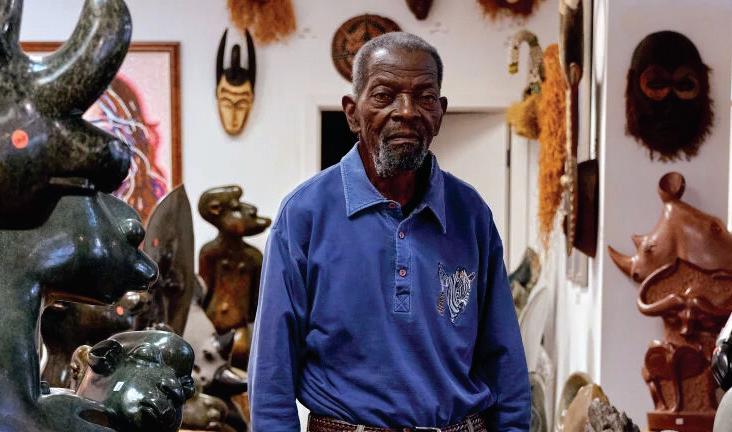
Rex Mhiripiri, beloved husband, father, grandfather, artist, businessman, and man of deep Christian faith, passed away on March 9, 2026. After 90 years of a full life, Rex is leaving a remarkable legacy of perseverance, redemption, creativity, generosity, and love. Born Stanlake Mhiripiri in 1935, in what was then Rhodesia, Rex was shaped by humble beginnings, a sharp mind, and an early love of learning. From walking long distances to school and excelling academically, to attending Goromonzi, one of the most respected boarding schools of his time, Rex carried throughout his life both a fierce intelligence
intended to mitigate the impact of the Trump Administration’s Operation Metro Surge on distressed community renters. Ordinance co-authors were Council Members Robin Wonsley (Ward 2), Jason Chavez (Ward 9), Soren Stevenson (Ward 8), Aurin Chowdhury (Ward 12), and Council Vice President Jamal Osman (Ward 6). On March 11, 2026 — the deadline to act — Mayor Jacob Frey vetoed the ordinance. In his veto letter and public statements, Frey drew
heavily on the experience of COVID-era eviction moratoriums, arguing that such broad measures ultimately harm tenants by accumulating unmanageable debt without solving underlying housing instability. Frey said,"Stopping evictions may sound good, but experience from COVID shows it’s not the answer: Rental assistance is. Getting help to families quickly is the most effective way to prevent eviction, and that’s exactly what this investment does."
Frey’s office challenged the prevailing narrative that evictions were already surging.
According to mayoral data, as of March 6, Minneapolis had recorded 982 eviction filings in 2026 compared to 1,040 during the same period in 2025 — a 5.5% year-over-year decrease. Officials argued the numbers remained consistent with the 2025 monthly average. Hennepin County data also showed emergency rent assistance applications were slightly down in early 2026 compared to
Lt. Governor Flanagan to headline national flagship No Kings rally at State Capitol
By Al McFarlane, Editor
and a determination to rise beyond circumstance.
In 1966, Rex emigrated to the United States, bringing with him a rich life story that had already spanned southern and eastern Africa, where he had worked as a teacher, salesman, analyst, and broadcaster. His path had been marked by adventure, hardship, giftedness, and struggle, but also by the steady hand of God. A fierce and kind believer, Rex loved the Lord and devoted himself to serving Him, often reflecting on how grace had changed him and how no life is beyond redemption.
Rex built a beautiful
era of backlash
of 100. Not a passing grade in any classroom. Not an adequate return on generations of civic engagement, electoral organizing, and legislative lobbying. And yet it is the measured reality of where Black Minnesotans stand as Minnesota enters one of the most consequential and hostile political environments in modern state history. Between 2020 and 2023, Minnesota’s DFL supermajority produced a historic run of legislation directly targeting
Lt. Governor Peggy Flanagan will headline the national flagship No Kings rally at the Minnesota State Capitol in St. Paul on Saturday, March 28. Minnesota was selected to host the flagship event following weeks of extraordinary community response to Operation Metro Surge, the largest federal immigration enforcement operation in American history, which brought more than 3,000 ICE agents into the state and sparked mass protests, mutual aid efforts, and grassroots organizing across Minnesota. "Minnesotans take care of each other," Flanagan said. "When Donald Trump sent thousands of ICE agents into our communities to try to divide us, he underestimated who we are. We showed up for our neighbors. We stood shoul-
Navigating the green rush: Minneapolis offers resources as Black entrepreneurs eye cannabis equity
Minneapolis is stepping up support for its emerging adultuse cannabis industry, offering free legal education, technical assistance, and regulatory guidance to small business owners looking to break into one of the fastest-growing sectors in Minnesota. For Black residents, the stakes of getting this right extend far beyond business opportunity — they represent a chance at economic repair after decades of disproportionate harm.
On Wednesday, April 1, the City of Minneapolis is hosting a free virtual Lunch & Learn on cannabis contract law, running from noon to 1:30 p.m. Attorneys Jared Reams and Craig Buske of Buske Reams PLLC will walk attendees through the legal architecture of running a cannabis business, covering labor peace and employment agreements, supplier contracts, and commercial leases. A limited number of one-onone legal consultations will also be available to attendees. "We built in social equity provisions specifically so that the communities most harmed by prohibition would have a real pathway into this industry," said Charlene Moore, Director of Equity Initiatives at the Office of Cannabis Management. "The licensing pipeline is moving, but we need to be honest that the pace has not matched the urgency." Alongside the workshop comes a significant reg-
Immigration raids cost Minneapolis $203 million as relief funds race to reach struggling businesses
The economic toll of Operation Metro Surge on Minneapolis has reached $203 million and counting, according to the city’s Emergency Operations Center, as federal immigration raids that began in December continue to devastate small businesses, immigrant communities, and commercial corridors across the Twin Cities. The damage is staggering in its breadth. The city estimates $81 million in lost revenue for restaurants and small businesses, $47 million
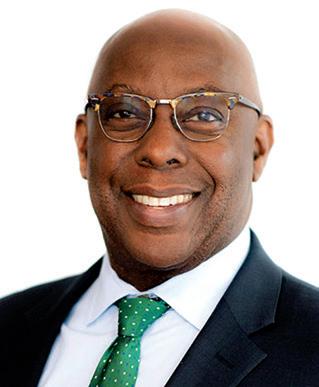
Ellison, Joan Baez, Maggie Rogers, Jane Fonda,
life with his wife, Julie, and together they raised a large and loving family. He was the proud father of nine children: Dave,
Credit: Ben Hovland | MPR News Minneapolis Mayor Jacob Frey
Rex Mhiripiri
Editor
Lt. Governor Peggy Flanagan
A microphone is not a mandate
When I saw headlines suggesting that the Target boycott was over, what struck me first was not relief. It was discomfort.
Not simply because I disagree. I do. And not simply because I do not believe Target has done enough to repair the trust it broke when it retreated from diversity, equity and inclusion commitments. It has not.
What unsettled me was something deeper and more familiar.
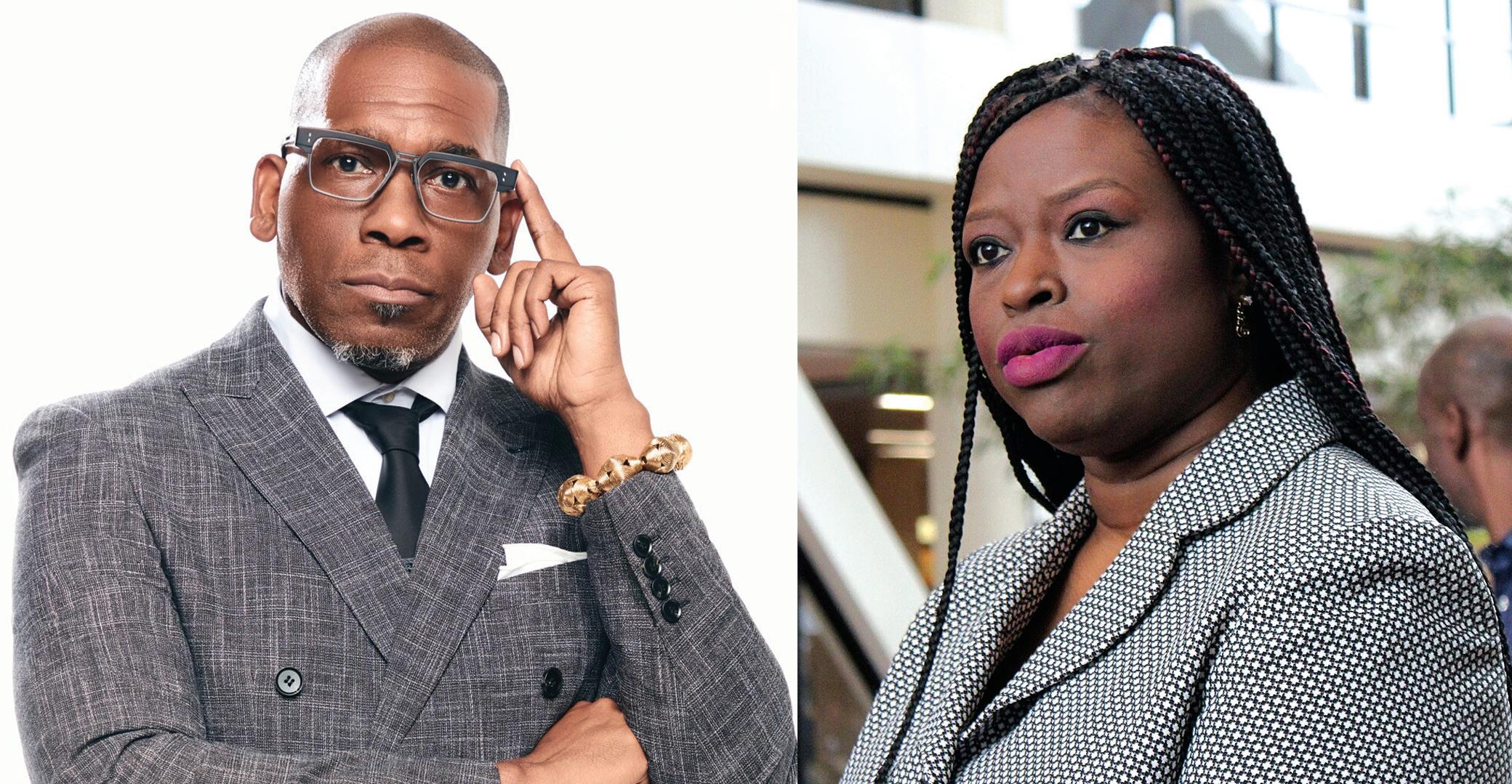
Rev. Jamal Harrison Bryant recently stood before cameras and suggested that the Target boycott had reached its end, a declaration that quickly sparked backlash from Minnesota organizers and others who made clear that no such collective decision had been made.
How did we get to a place where one person, no matter how visible or well-known, could step before cameras and sound as though he were in a position to tell Black people that a movement had reached its end?
For me, as a Black Gen Z writer living in Minnesota, that is the real story.
This is not just a dispute about Target. It is a dispute about authority, proximity to harm, and whether Black communities are still expected to accept an old model of public leadership in which prominence is treated as permission.
Black Gen Z has rea-
son to reject that model.
Too often, our politics still operate as though a title, a pulpit, or a national platform can substitute for actual consent. As though visibility itself creates legitimacy. As though if someone is famous enough, then they can speak in a voice large enough to stand in for the rest of us.
But that is not how my generation understands community.
Black Gen Z came of age in a world where political thought is not handed down from a mountaintop. It is formed in conversation, study, group chats, classrooms, organizing spaces, church pews, college campuses, and kitchen tables. We compare notes. We cross-check claims. We listen locally. We pay attention to who is closest to the consequences, not just who is closest to the microphone.
That is why this moment matters.
Because this boycott is not some abstract national drama. Target is headquartered here, in Minneapolis. The boycott itself was announced here by Minnesota organizers, and local boycott leaders, including Nekima Levy Armstrong, have said clearly that the boycott remains active and that Bryant did not start the grassroots movement and has no authority to end it.
That local context matters.
People in Minnesota are not discussing Target from a distance. They are dealing with a company embedded in their civic and moral landscape. They are dealing with what it means when a hometown corporation signals retreat on DEI at the precise moment those commit-
ments are under political attack. They are also dealing with a very Minnesota reality, that local organizers have connected this fight to broader community distrust around immigration enforcement and Target’s silence in moments when people wanted clarity and courage. For Black Gen Z in Minnesota, that changes the texture of the conversation. This is not just about consumer choice or a symbolic act of protest. It is about what it means to live in a place where a corporation built its brand on familiarity, convenience, and community goodwill, then asked people to accept a retreat from principle as though it were merely a change in language. Here, the question is not whether Target can eventually move past the boycott. The question is whether the community that carried the disappointment has actually been heard.
That is why this cannot be reduced to a press conference in Washington or a declaration from Georgia.
Moral authority is not produced by distance from the
The future of work
The future of work is no longer a distant idea — it’s here.
Automation, artificial intelligence, remote work, and the green economy are redefining the workforce, and at breakneck speed. For the communities we serve and partner with, this moment presents both a challenge and a huge opportunity. The
question is: will we be passengers or drivers of this transformation?
At OIC of America, we’re preparing people to lead in this new world of work and not get left behind. That means teaching digital and AI skills, expanding access to technology, and making sure every learner has the tools to succeed in a tech-enabled economy. But it also means investing in emotional intelligence, critical thinking, and adaptability — skills that are just as important in a fast-changing and increasingly competitive world.
The World Economic Forum predicts that by 2030, up to 85 million jobs may be displaced by automation — but 97 million new roles will emerge. These new jobs will require new skillsets. The future will reward lifelong learners — those who are willing to train, pivot, and grow. And for the skilled trades where we focus on preparing people for the workforce, the possibilities to chart new paths are endless.
In Pennsylvania, our Delaware Valley Alliance (DVA) serves as the blueprint
harm. It is not produced by charisma, access, or visibility. And it is certainly not produced by a public desire to move on before the people most affected believe repair has actually occurred. Let me be clear. This is not an argument against leadership. Black Gen Z is not leaderless. We are simply less willing to confuse being heard with being authorized. There is a difference.
A leader can persuade, convene, challenge, and inspire. But no leader, however prominent, can imply community consensus where no real consensus exists. And when the issue is corporate accountability, that distinction matters even more. Companies are often eager to find a clean ending, a symbolic gesture, a recognizable face with whom they can appear to move forward. But communities do not owe corporations closure on demand. That is especially true here.
In January 2025, Target announced it was concluding its three-year DEI goals and ending its REACH initiatives
while shifting to what it called “Belonging at the Bullseye.” Black Gen Z is fluent in the difference between rebranding and repair. A new name is not the same as renewed trust. A more soothing framework is not the same as restored commitment.
And that is part of why this moment landed so hard. Recent reporting shows Bryant later clarified that he was speaking about the “Target Fast” he led, not necessarily the broader boycott, and he apologized for assumptions he said were “not true” and for being “out of touch” with what the community wanted.
That apology matters. But so does what it revealed.
It also revealed something that I think Black Gen Z understands instinctively. Community is not a performance. It is not something that can be wrapped up neatly because a public figure is ready to announce progress. Community is messy, participatory, and often unresolved. It moves at the speed of trust, not at the speed of a news cycle. And when trust has been broken, especially around something as serious as a retreat from DEI in a moment of national backlash, the people most affected deserve more than a polished public narrative about moving forward.
That is why this is bigger than the question of who started the boycott. The deeper question is how Black communities decide when a corporation has actually repaired harm, and whether our political habits are still too vulnerable
It revealed how quickly public confusion can be created when one visible figure speaks in a way that exceeds the authority he actually has. It revealed how easily grassroots labor, especially labor rooted in Black women and local organizers, can be overshadowed once a bigger platform enters the frame. And it revealed how much work we still have to do to build a Black public culture where visibility is not mistaken for ownership.
for this evolution. The DVA is an essential component of the infrastructure needed to ensure communities secure the necessary resources to thrive longterm.
By integrating housing, public safety, career training, health and more into a cohesive advocacy framework, we aren’t just filling jobs; we are securing economic independence for Pennsylvania’s talented, yet untapped (and overlooked) workers. This coordi-
nated effort is structured so that the Commonwealth’s booming industry surges in life sciences, data centers, and advanced manufacturing also benefit its citizens more equitably. These wins reflect a statewide victory for its citizens; as the “future of work” arrives, no community is left on the sidelines of progress. We look forward to scaling this approach in other communities where we serve. For communities that have historically been left out of
solutions that put people at the center. This is a defining moment. Let’s make sure our people are prepared to not just survive — but lead. For more information, visit http://www.oicofamerica.org
By Haley Taylor Schlitz, Esq.
Pastor Jamal Bryant on left and Attorney Nekima Levy Armstrong
From 3
the final months of 2025.
Frey also pointed to statements from leaders of affordable housing nonprofits — including Catholic Charities Twin Cities and Aeon — who urged the council not to pass the ordinance and instead focus on direct rental assistance, warning that broad eviction pauses can leave residents deeper in debt and facing a more severe reckoning later.
The Council’s ordinance would have extended the required pre-eviction notice period from 30 to 60 days, remaining in effect through August 31, 2026.
The city’s data showed Operation Metro Surge had created an additional $15.7 million monthly need for rental support, as residents stayed home out of fear of federal agents. The extra month was intended to give families time to secure emergency funds, apply for rental assistance, and avoid formal eviction filings.
Operation Metro Surge began in December 2025, when the Department of Homeland Security deployed what it called the “largest DHS operation ever” — sending up to 4,000 federal immigration enforcement agents into the Minneapolis–Saint Paul metropolitan area. The operation, ostensibly targeting immigration fraud tied to the Somali-American community, resulted in agents shooting three people and killing two, racially profiling residents, and detaining legal immigrants — including young children — shipping them across state lines. The operation ignited a relief response on the scale of a natural disaster.
A federal judge found that the “overwhelming majority” of cases brought by ICE involved people lawfully present in the United States. Federal officials reported approximately 4,000 arrests during the operation, though Border Czar Tom Homan could not confirm how many involved individuals deemed a genuine safety threat.
The human and economic toll was devastating. In just one month, the City of Minneapolis’s preliminary impact assessment estimated at least $203.1 million in community and economic damage — covering losses to the economy, community livelihoods, mental health services, and food and shelter security. City officials estimated that 76,000 people — mostly immigrants, refugees, Native Americans, and people of color — needed urgent relief assistance.
A University of Minnesota Center for Urban and Regional Affairs (CURA) report found that statewide rent debt caused by the operation reached between $27.4 million and $51.3 million by February — on
From 3
the structural barriers Black communities had documented for decades: the PROMISE Act, cannabis legalization with explicit social equity provisions, the North Star Promise free college tuition program, the African American Family Preservation Act, worker protections for gig economy drivers (disproportionately East African immigrants), tenants’ rights legislation, and a $103 million commitment to small business capital access in communities harmed by structural racial discrimination and civil unrest. These were not gifts from above. They were the direct result of Black political organizing, Black electoral power, and — for the first time — a legislative caucus of People of Color and Indigenous legislators large enough to function as a governing bloc.
top of the $44.6 million in rent debt typically expected during any two-month period. Twin Cities workers lost an estimated $106 million in wages during the surge, according to analysis by economists at North Star Policy Action.
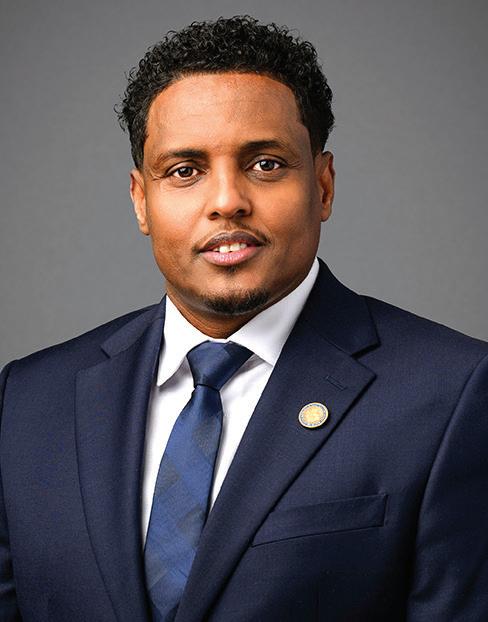
Osman represents Ward 6 — home to Minneapolis’s largest East African community. A Somali immigrant, community advocate, and father of five, Osman has made renter protections a cornerstone of his service since being elected in a special election in 2020. One of his earliest victories was the original 30-Day Pre-Eviction Notice ordinance, which extended what was then a 14-day requirement — the very standard the “Pause Evictions” ordinance would have temporarily doubled.
Before the mayor’s veto, Osman spoke at a news conference alongside Council Member Robin Wonsley and housing advocates outside the Seward Tower East apartment building. He said, "This is the actual work we expect him to sign, and it will be fairly disappointing to me and many immigrants if he vetoed this."
In announcing his veto, Frey simultaneously proposed an additional $1 million in city-funded emergency rental assistance — on top of the $1 million the city had already allocated to Hennepin County in February for low-income people facing eviction.
Council Member Jamison Whiting (Ward 11), who had abstained from the original vote, announced that the Wilson Foundation Minnesota would match the mayor’s latest contribution. In total, approximately $3 million in rental assistance was expected to become available, to be distributed through Hennepin County starting in April at the earliest.
Frey also called on landlords to work with tenants on payment plans to avoid evictions, framing this as a partnership approach rather than a regulatory mandate.
Before the final council vote, Whiting floated — but did not formally propose — an amendment that would have limited the 60-day notice extension to residents who provided their landlord a written attestation that federal immigration enforcement had directly impacted their ability to pay rent.
The idea was framed as a way to target protections specifically to those most harmed by Operation Metro Surge.
The proposal was immediately rejected by ordinance supporters. Council Member Jason Chavez (Ward 9) likened the attestation requirement to an “ICE hit list” that could expose immigrant tenants to federal targeting, and said he would not support it under any circumstances.
Council President Elliott Payne (Ward 1), who said he was personally assaulted by ICE while protecting his community during the surge, delivered some of the sharpest criticism of Frey’s decision.
"History will look back on the leaders of Minneapolis and what they did to stand up for our residents during and after Trump’s invasion of our city. As someone who spent every day trying to protect my community from ICE, to the point where I was personally assaulted by them, I’m so disappointed Mayor Frey vetoed this bare-minimum policy that would show that he could move beyond cuss words and take real action to provide material support for our neighbors. This is a veto rooted in cowardice, not the livelihoods of our residents," said Payne.
Wonsley, Ordinance Lead Author, accused Frey of prioritizing landlords over working-class residents. She said, "Our own mayor spent months touring around the country saying he was fighting for Minneapolis. But what we didn’t know was he was fighting for Minneapolis landlords, not working-class people. Preventing eviction is always more cost-effective than trying to rehouse someone who has been evicted. It’s also far more humane”
Stevenson called the
veto a betrayal of community trust. "Mayor Frey ignored housing experts who shared data supporting this policy. Rather than listen to those experts or the countless residents and impacted families who testified about the urgent need, he rationalized his veto with unsupported claims from a handful of landlords." Stevenson said.
Chavez called Frey’s veto “…a slap in the face of our immigrant neighbors who have been demonized and forced back into the shadows — and the community that has spent months fundraising to keep families together. The cameras may have left Minneapolis, but the majority of this city believes in supporting our immigrant neighbors."
HOME Line, a tenant rights nonprofit, offered data-driven critiques of the veto.
HOME Line Co-Executive Director Eric Hauge said, " During the first two months of 2026, we have seen an 87% increase in calls to our tenant hotline about financial aid compared to the same period last year. In the last quarter alone, we received more financial assistance calls than in any quarter during the COVID-19 pandemic.”
Jess Zerik, Co-Executive Director, HOME Line added "The timeline for rental assistance does not match the timeline of evictions. That’s why advocates, renters, and community members were asking for more time. Landlords seeing normal balance sheets may be because of mutual aid — but that support isn’t going to last and it’s not sustainable. We are anticipating a drastic increase in eviction filings." "Experts are the people who are coming to us and saying, ‘I’m behind on rent, I just need a little bit more time, I’m working with my neighbors and I’m connected to a
experiencing homelessness.
mutual aid group.’ The experts, those who are in our community right now, those who are directly impacted and those who are supporting them, are telling us that this is a bare minimum solution. Let’s listen to the experts,” said Chowdhury.
On March 12, about 100 residents gathered at the Hennepin County Government Center — where eviction cases are heard weekly — to demand a veto override. Frida Tellez Mercado, speaking through a translator, read a statement from her neighbor Laura Perez, a 10year resident and mother of five: "The other concern is not being able to pay our rent, and the worry of losing that one place that has afforded us protection and kept us safe during this occupation." — Laura Perez (read by Frida Tellez Mercado)
Another speaker at the rally, organizer Flannery Clark of South Minneapolis, linked the eviction threat to broader city enforcement patterns: “We can only assume that in 30 days, Jacob Frey’s police will be harassing our immigrant neighbors in the same way they harass our unhoused neighbors.”
The Minneapolis City Council requires nine votes to override a mayoral veto. The ordinance passed 7-5-1, meaning proponents would need to flip at least two votes from the opposition or abstention column — and Council Vice President Osman himself acknowledged in his social media post that the votes may not be there. Frey’s veto was the first of his third term. His veto announcement was accompanied by supportive statements from Whiting and four of the five council members who voted against the ordinance — a strong signal against vote-flipping.
Political observers noted that in 2024, only half of Frey’s eight vetoes held, with the Council successfully overriding measures on rideshare driver pay, a Gaza ceasefire resolution, carbon emission fees, and the 2025 budget. This override battle is seen as significantly harder.
The Minnesota Senate passed a $40 million emergency rental assistance bill on a 35-32 vote, sponsored by Sen. Lindsey Port (DFL-Burnsville), who called it an effort to address an “imminent and unnecessary
eviction crisis” brought on by the ICE surge and difficult economic conditions. Sen. Sandy Pappas called the legislation “a $40 million lifeboat as quickly as possible, through a tested program, to Minnesotans who need our help.” However, the bill faces near-certain defeat in the evenly divided state House. Speaker Lisa Demuth (R-Cold Spring) said the Republican caucus had no appetite for assistance to people who “make choices to either not go to work or do other things.” Across the river, the St. Paul City Council unanimously advanced a similar 60day pre-eviction notice extension.
Sixteen Minneapolis state legislators signed a letter urging Frey not to veto the ordinance before he acted. At its core, this debate pits two competing theories of what works against one another. Mayor Frey and some housing nonprofits argue that COVID-era eviction pauses ultimately deepened tenant debt without solving housing instability — and that direct rental assistance is a faster, more targeted, and more humane intervention. They point to data showing eviction filings have not yet spiked dramatically. Tenant advocates, council members, and housing researchers counter that rental assistance alone — delayed by bureaucratic timelines and wildly insufficient funding (roughly $3 million committed against an estimated $27 million to $51 million in statewide rent debt) — cannot reach families fast enough to prevent the wave of evictions feared to crest in coming months as mutual aid dries up and unpaid rent accumulates. They argue the ordinance was “a temporary solution to a temporary problem,” and that every eviction filing — regardless of outcome — can follow a tenant for years and shut them out of future housing.
With $203 million in documented community impact, a divided city government, a deadlocked state legislature, and a council override vote on the horizon, Minneapolis faces one of its most consequential housing decisions in a generation — with thousands of immigrant families watching to see which way their city will stand.
This is the first time the chamber has been tied since the 1979-80 session. Because neither party holds a 68-seat majority, they must operate under a power-sharing agreement to manage committees and floor sessions.
Every budget negotiation now requires Republican buy-in. Every equity-specific program is subject to a veto point that did not exist two years ago. And into this already constrained environment, Governor Tim Walz has introduced a 2026 supplemental budget that proposes to ban “legislatively named grants” — the exact mechanism through which PROMISE Act funds flow through MEDA, the Neighborhood Development Center, and the six Minnesota Initiative Foundations to Black and POCI small business owners.
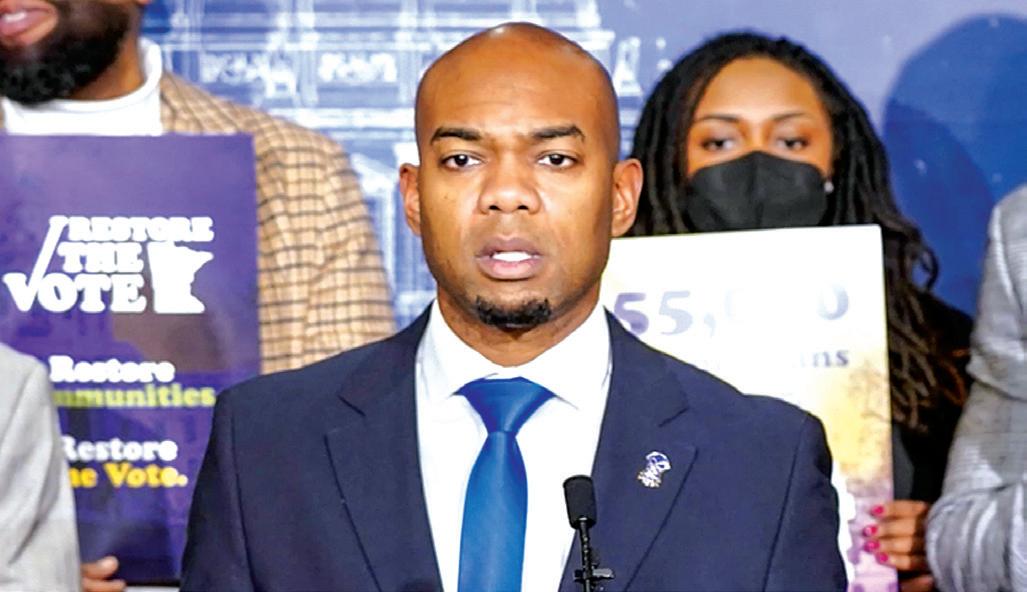
“The issues affecting POCI communities are integral to the fabric of Minnesota. Drawing on my lived experiences and unique perspective, I am committed to creating informed policies that support everyone, especially our most vulnerable communities.” — Rep. Cedrick Frazier, Co-Chair, Minnesota House POCI Caucus That window is now closing. The 2024 election produced a split legislature that has functionally ended the era of DFL-driven equity legislation. The House is currently in a historic 67–67 tie between the DFL and Republicans.
The Context: Minnesota’s Peculiar Racial Paradox
This is a state that ranks among the best in the nation for overall quality of life — top ten in education, employment, median income, health outcomes, and civic participation. It is also a state that ranks among the very worst in the nation for racial disparities in virtually every one of those same categories. Approximately 76% of white Minnesotans own their homes — one of the highest rates in the country. Fewer than one in four Black Minnesotans can say the same. That homeownership gap is one of the largest in the nation, and it is not an accident. It is the measurable legacy of redlining, restrictive covenants, contract buying, and deliberate exclusion from the postwar wealth-building programs — the GI Bill, FHA mortgage insurance, suburban infrastructure subsidies — that created the white middle class that Minnesota celebrates. The employment gap between white and POCI workers is among the worst in the country. The number of minority-owned businesses in Minnesota is three times below the national average. Black Minnesotans represent 5% of the state’s adult population but 39% of adults
The Minnesota racial paradox by the number
76% White homeownership rate in Minnesota
<25% Black homeownership rate — one of the worst racial gaps in the nation
3× How far Minnesota falls below the national average in minority-owned businesses
39% Share of homeless adults who are Black (vs. 5% of general population)
29/100 Average score on Minnesota’s Racial Equity Dividends Index across 22 cities/counties
These are not failures of individual effort or cultural pathology. They are the documented outcomes of specific policy choices — choices that directed state and federal capital, land, infrastructure, and institutional support toward white communities for a century, and toward POCI communities almost not at all.
The Current Political Landscape
Minnesota’s Black political infrastructure today is more developed than at any point in the state’s history — and more threatened than it has been since
the civil rights era. The contradiction is the point. Power invites backlash. The 2023–2024 POCI legislative achievements were not greeted with bipartisan celebration. They were met with a coordinated effort to reframe equity programs as preferential treatment, to invoke fraud investigations as a reason to restructure delivery mechanisms, and to use fiscal language to accomplish what racial language can no longer openly accomplish.
The Trump administration’s January 2025 executive order targeting DEI programs across the federal government provided both legal cover and political ammunition for this effort. Minnesota’s AG Keith Ellison fought back, securing a settlement in February 2026 that protects $530 million in federal K–12 education funding for Minnesota while DEI programs continue. But the battle is ongoing, and its costs are real: organizations have been forced to spend time and resources defending programs that serve documented needs rather than expanding them to meet documented gaps. Into this environment steps Rep. Cedrick Frazier — perhaps the most consequential Black legislator in Minnesota’s
history over the past decade — who is leaving the House to run for Hennepin County Attorney. His departure from the legislature is the most visible sign of a broader strategic shift: the recognition that the electoral arena is no longer sufficient, that Black Minnesotans must build power in prosecutorial offices, county boards, and economic institutions as well as in legislative chambers.
The through line across all of these dynamics — the budget fights, the DEI rollback, the legislative constraints — is a single, fundamental question: Will Black Minnesotans be permitted to use the levers of democratic governance to address the harms that democratic governance produced? Or will those levers be restricted, defunded, or structurally redesigned in ways that leave the documented harms in place while eliminating the mechanisms to remedy them? The answer will not be determined in Washington or St. Paul alone. It will be determined, in significant part, by what Black Minnesotans choose to do with the power they have built — and the power they are still building.
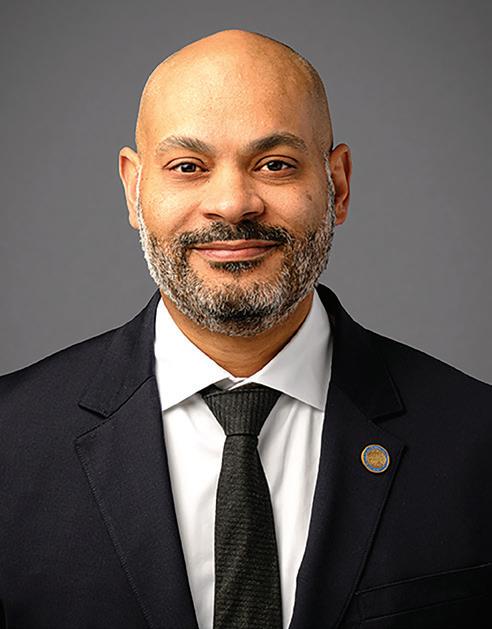
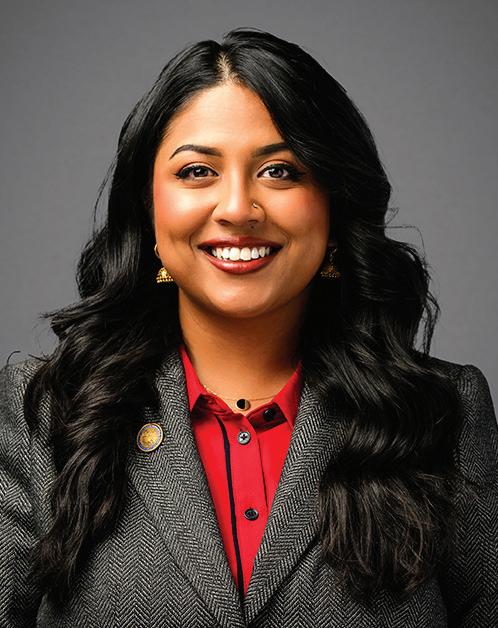
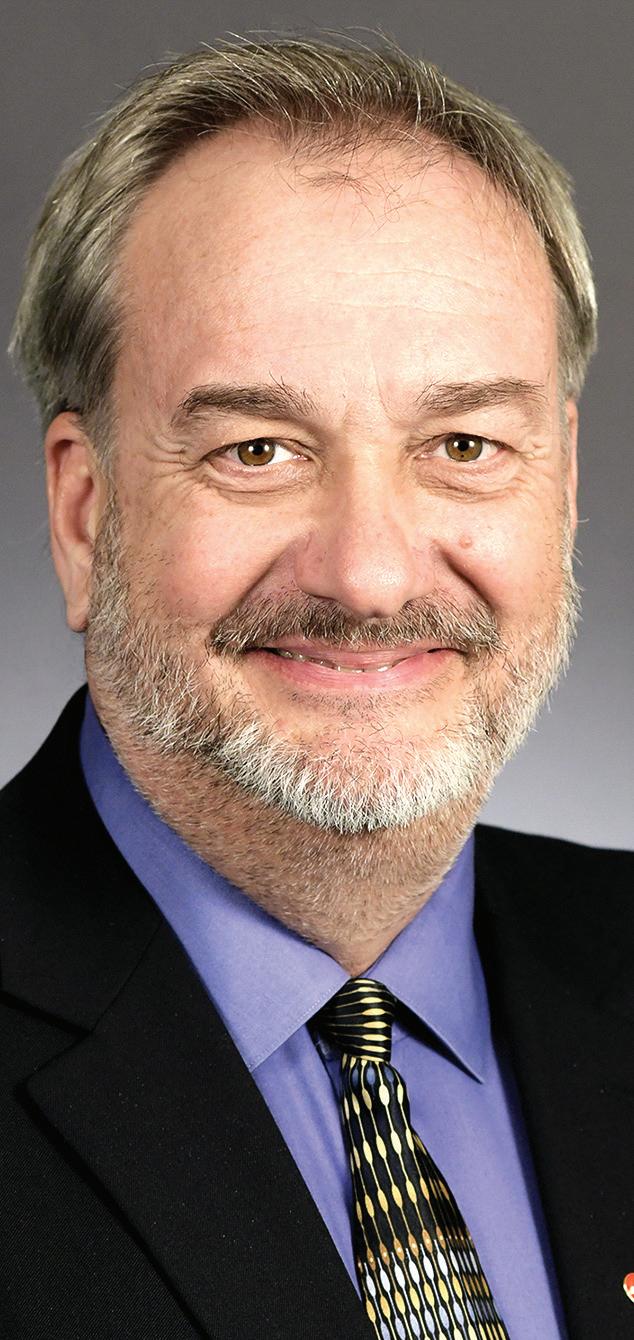
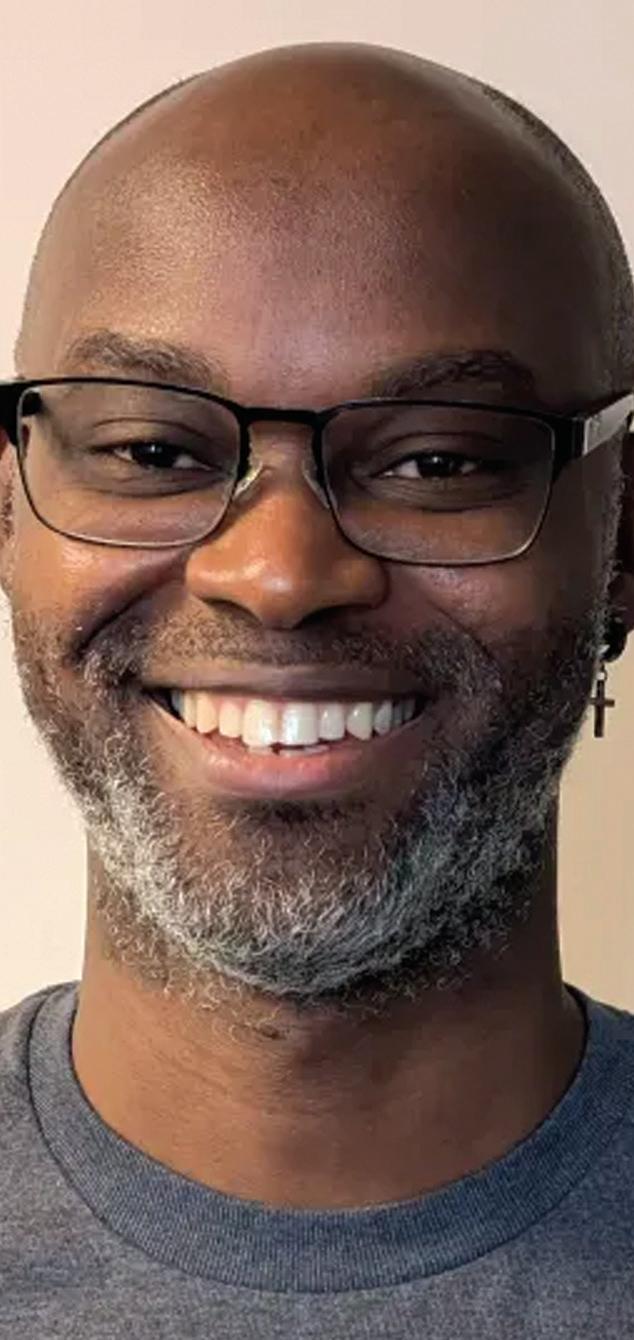
Jamal Osman
Elliott Payne
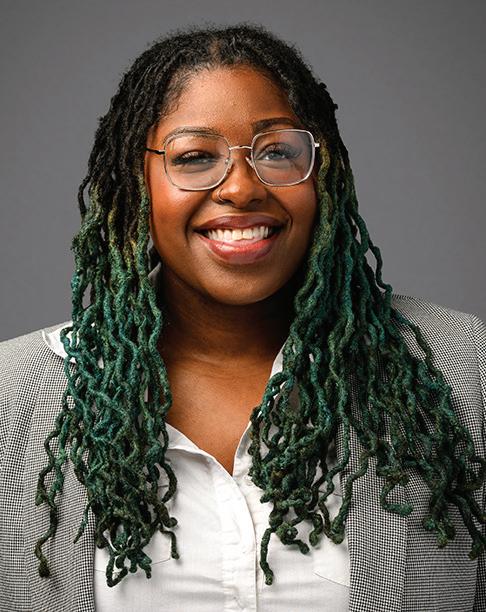
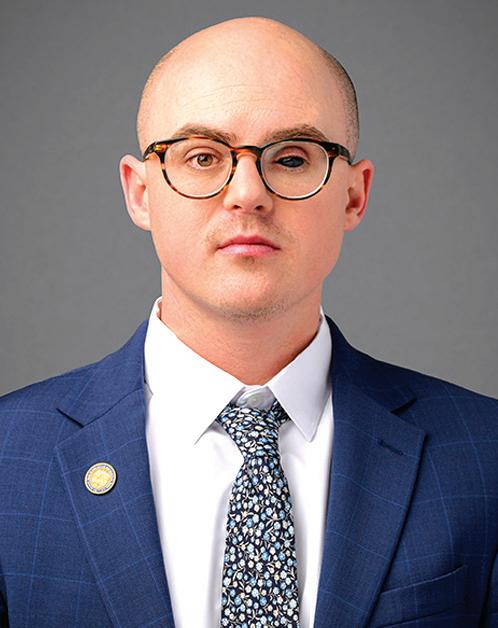
Soren Stevenson Aurin Chowdhury
Robin Wonsley
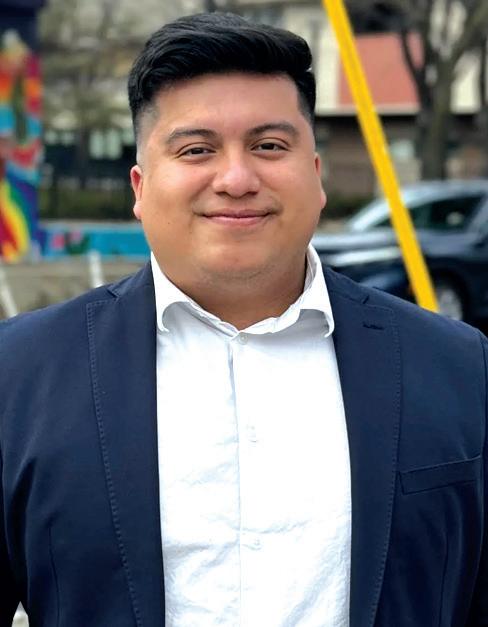
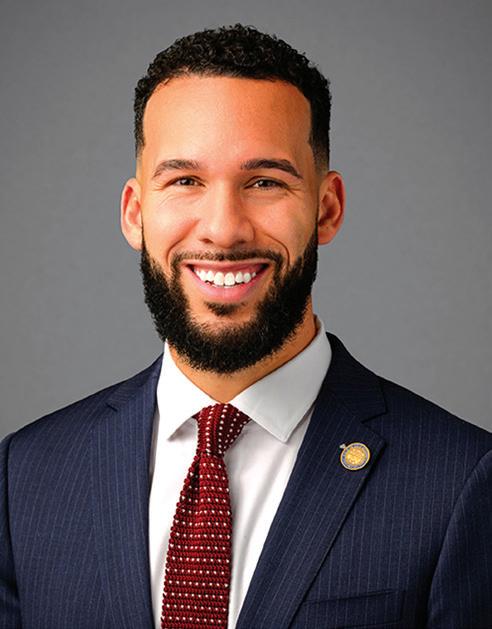
Jason Chavez
Jamison Whiting
At The Legislature
For immigrants powering Minnesota's meatpacking industry, corporate consolidation is one more threat they can't afford
As lawmakers push to block retail giants from taking over the meat supply chain, the largely immigrant and Latino workforce that keeps Minnesota's plants running faces a compounding crisis — corporate consolidation from above and federal immigration enforcement from all sides.
By Insight News Staff
Minnesota legislators are moving to rein in corporate consolidation in the meatpacking industry, but for the immigrant workers and communities of color who make up the backbone of that workforce, the stakes of this fight go far deeper than market competition. They go to the question of whether the people who do the most dangerous work in America's food supply chain will ever have real power over their own lives.
The bill, HF 4080, introduced by Rep. Rick Hansen (DFL-53B), was heard in the Agriculture Finance and Policy Committee on March 18. It would prohibit large grocery retailers from holding ownership stakes in meatpacking companies. Companion legislation has been introduced in the Minnesota Senate by Sen. Aric Putnam (D-14). Parallel bills have been introduced in both chambers of the Iowa legislature, backed by the United Food and Commercial Workers International Union, which represents more than 250,000 workers in meatpacking and food processing nationally.
"Minnesota farmers are taking home a shrinking share of every dollar consumers spend on meat, and yet prices at the grocery counter keep rising," said Sen. Putnam. "SF 4393 would prevent the largest retailers in America from locking in that broken dynamic — because when one company controls the supply chain, farmers get squeezed and consumers pay the bill."
Who actually works in these plants Minnesota's food production plants employ approximately 12,000 workers, 77 percent of whom speak Spanish as a first language and are immigrants to the country and region. Nationally, 33 percent of meatpacking workers are immigrants, according to Census Bureau data — a figure that is likely higher, since the Census Bureau tends to underreport unauthorized workers, who may make up as much as 23 percent of all meatpacking workers.
All four communities featured in a Center for Rural Policy and Development study of rural Minnesota are home to large meatpacking plants, which serve as both the largest economic driver and employer of immigrants and refugees in each city. Towns like Worthington, Austin, Willmar, Long Prairie, and Pelican Rapids have been transformed by that reality. Nobles County, home to Worthington, has seen its population shift from 84 percent white in 2010 to 25 percent people of color by 2020 — driven largely by the JBS pork plant, which employs 2,000 workers, many of them immigrants.
"If we didn't have immigration, we would have net population loss," said Sara Karki, an attorney at the Immigrant Law Center of Minnesota's office in Austin. "The leadership has been particularly cognizant of the need to be welcoming. It's not just 'Oh, people are coming to steal jobs.' It's a realization that they need everyone who's coming to fill the jobs that they have — and they're still often short of workers."
A workforce under compounding pressure
The legislative push to prevent corporations like Walmart and Costco from controlling the entire meat supply chain comes at a moment when immigrant meatpacking workers are already living under extraordinary stress. Operation Metro Surge has shifted ICE activity beyond the Twin Cities to rural meatpacking towns as far as three hours away from Minneapolis. Immigrant families are staying home and children are missing school in communities like Willmar, Worthington, Pelican Rapids, and Long Prairie. Decreased economic activity is hurting local businesses, including immigrant-owned meat processors.
"People who used to go out and run their errands, now are scared to do that," said Jackson Henry, union representative for UFCW Local 1189. "We have gone and tried to help people by delivering food, and even when we go to those people's homes, sometimes they won't come out — that's the level of fear that people live with." That fear makes the threat of corporate consolidation even more acute. Workers who do not speak English, do not have secure legal residency, or face danger returning to their birth countries have less liberty to speak up against abuse and hazardous conditions. When a single corporation controls both the retailer and the processing plant, workers lose the already-thin leverage they have. Wages sink, safety standards erode, and the union protections that provide a floor begin to collapse.
said.
"When grocery retailers vertically integrate, we all suffer — workers, farmers, ranchers, and consumers," said Mark Lauritsen, Director of the Food Processing, Packing and Manufacturing Division and International Vice President at UFCW International. "With even more consolidation in meatpacking, employers will have more bargaining power to drive down wages for essential workers."
ulatory update with real consequences for small vendors. The Minnesota Office of Cannabis Management has issued new licensing requirements that effectively prohibit the sale of lower-potency hemp edible products — including drinks and gummies — at farmer's markets in most circumstances. For micro-entrepreneurs who used farmer's markets as a low-barrier entry point to test products and build a customer base, the change closes an accessible door.
Why this matters
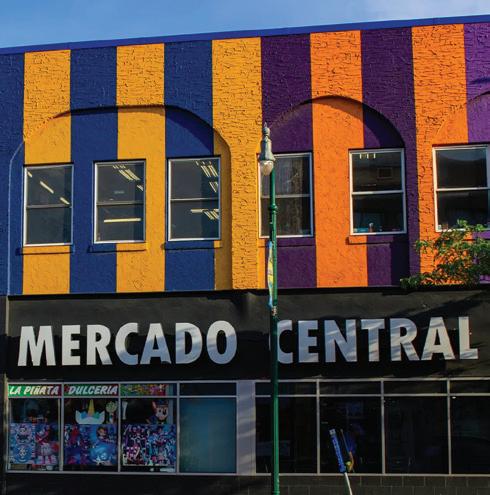
From 3 nue over December and January, per CBS Minnesota. On Eat Street, at Mercado Central, and in the Karmel Mall, the fear has been paralyzing. Revenue at many businesses dropped 80 to 100%. Only one of seven restaurants at Mercado Central stayed open during the worst of the raids. An NDC survey of more than 130 businesses found two-thirds rated the impact as high or critical, with nearly 80% citing emergency financial assistance as their top need, according to MPR News.
Rally
presence throughout the
for Black Minneapolis These developments arrive against a backdrop that Black Minneapolis residents know well. For generations, Black communities — particularly in North Minneapolis — bore the heaviest burden of marijuana criminalization. Black Minnesotans were arrested for marijuana possession at dramatically higher rates than white residents, even though usage rates were comparable across racial groups. Those arrests created cascading consequences: criminal records that blocked access to housing, employment, and educational opportunity. Now, as Minnesota's legal cannabis market takes shape following adult-use legalization in 2023, there is both promise and peril. The promise is a legal, regulated industry
Chef Gavin Kaysen of Spoon and Stable told KARE 11 that his restaurant lost more than $70,000 in private event business in a single week, with 85% of corporate bookings vanishing. The El Sazon restaurant chain, with five locations, is considering Chapter 11 bankruptcy, per the Star Tribune. State and local officials are scrambling to respond. Governor Tim Walz announced a $10 million emergency relief package on February 12, administered through the Department of Employment and Economic Development, offering forgivable loans of $2,500 to $25,000 at zero interest, with eligibility for 50% forgiveness after one year. Walz called the raids a
that could generate generational wealth for people who were previously criminalized for the very same activity. The peril, advocates warn, is that without intentional support, the industry could be captured by well-capitalized outside investors — leaving the communities most harmed by the War on Drugs behind once again. "Residents here watched this industry get built largely without them for the first year," said City Council Member David Okafor, who represents a North Minneapolis ward where cannabis enforcement historically ran high. "Now we have local owners coming through the social equity program, and that changes the conversation about what reinvestment in this community actually looks like."
campaign of retribution and demanded the federal government reimburse Minnesota for the damage.
On Tuesday, Hennepin County launched “Operation Reconnect,” a $2 million Small Business Recovery Fund offering grants of $3,000 to $10,000 to help businesses cover rent and mortgage payments. The fund is administered by nonprofit lender NextStage, with applications closing March 25. Commissioner Angela Conley said the funding is designed to prevent widespread commercial vacancies and blight in the county.
The Minneapolis Foundation has assembled an Economic Response Fund of
Understanding contract law is not an abstraction for a Black entrepreneur trying to open a dispensary in North Minneapolis. It could be the difference between a thriving business and an exploitative lease agreement that strips away equity before the doors ever open.
$3.5 million in grants from 28 Minnesota companies, distributing $2,500 to $10,000 to businesses with fewer than 40 employees. CEO R.T. Rybak said small businesses are facing enormous disruptions. The Minneapolis City Council separately approved $7 million in relief. Community-led efforts have also mobilized. The Whittier Alliance’s “Show Up for Eat Street” campaign is raising $325,000 for 65 restaurants along Nicollet Avenue. Al’s Breakfast donates $5 from every order of its Pretti Good French toast to local mutual aid. Indeed Brewing hosts a weekly food drive. Arbeiter Brewing, a Korean immigrant-owned brewery near Lake Street, donated all
What consolidation means for these communities
Studies suggest that immigrant workers largely support lagging rural economies. In Minnesota, the most racially diverse rural counties tended to see their populations increase, while largely white or less diverse rural counties saw population declines. Nationally, counties with high levels of meatpacking employment saw an average of 9 percent population growth between 2000 and 2010. When Walmart or Costco owns the processing plant, the profits that once circulated through a regional economy — supporting local businesses, schools, and tax bases — flow instead to distant shareholders. For communities already absorbing the trauma of Operation Metro Surge, that economic extraction compounds a crisis already well underway.
Rep. Hansen put it plainly. "Everyone pays the price for monopolization, economically and culturally," he
The city's ongoing role City staff have signaled they are actively engaged in shaping how Minneapolis's cannabis industry develops, with focus areas including support for local businesses, age verification enforcement, and public and environmental health. That presence suggests the city views itself not just as a licensing authority, but as an active partner in building an equitable industry.
"The money exists.
The framework exists," said Renata Hollins, Executive Director of the Cannabis Equity Coalition of Minnesota. "What communities are waiting on is execution — and every month of delay is a month someone doesn't get their record cleared or their loan application strengthened."
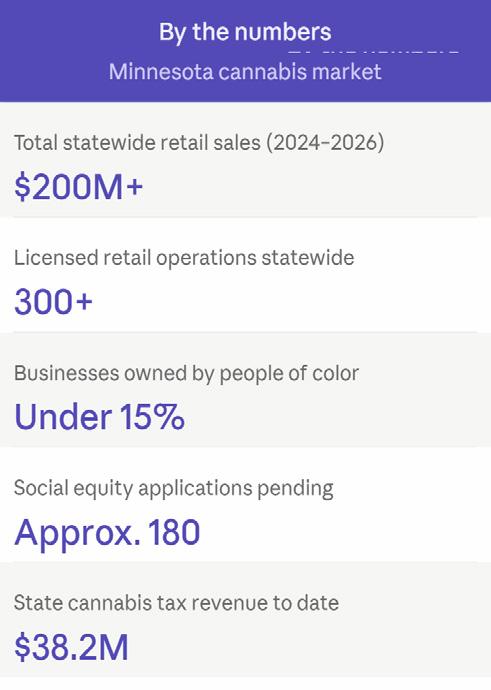
A portion of the state's $38.2 million in cannabis
proceeds from a recent batch of beer to impacted families. For the communities hardest hit by Operation Metro Surge, the numbers tell a story that goes beyond balance sheets. These are neighborhoods where families built businesses over decades, where restaurants and shops anchor cultural identity, and where the fear of a federal raid has emptied streets that were once among the most vibrant in the city. The relief funds are a start. Whether they are enough remains an open question. Meanwhile, Minnesota’s community banks are grappling with an unrelated but uniquely frustrating problem.
"This is one small step that we can take to keep the culture in agriculture and protect workers at the same time."
The bills in both Minnesota and Iowa would empower state attorneys general to challenge anticompetitive practices and require dominant retailers to divest from meatpacking operations they already own. For the Somali workers processing turkey in Willmar, the Latino families anchoring communities in Worthington, and the Karen and West African immigrants who have rebuilt rural Minnesota towns that were otherwise shrinking, the outcome of this legislation is not abstract. It is the difference between an industry that must compete for their labor — and one that owns everything including them.
For more information on the Minnesota vertical integration legislation, visit revisor. mn.gov; UFCW International: ufcw.org; Immigrant Law Center of Minnesota: ilcm.org or 651-641-1011.
tax revenue collected through early 2026 is directed by law toward community reinvestment grants, workforce development, and expungement support for Minnesotans with prior cannabis convictions. Advocates say distribution of those funds has been slower than promised.
For Black residents and entrepreneurs, the message is clear: the window is open and resources are available — but staying informed and legally protected is essential. The road to cannabis equity won't be navigated by missing the details. For more information on the April 1 Lunch & Learn, register by emailing Buske Reams PLLC directly; cannabis technical assistance: contact the Minneapolis Small Business Team; state licensing requirements: mn.gov/ocm or 612-555-0180.
Since the U.S. Mint stopped producing pennies on November 12, the absence of federal rounding guidance has left bankers improvising. Jean Chalifoux Kiely of Sunrise Banks in St. Paul told Twin Cities Business that branches could no longer order pennies from the Federal Reserve Bank of Minneapolis, and the change came without awareness or communication. Grand Rapids State Bank CEO Noah Wilcox warned regulators could penalize banks for rounding errors, telling the publication that if a customer cashes a check for $4.63 and receives $4.60, a regulator could call that consumer harm.
What to expect on March 28 Marches will begin at noon from
crisis. In the weeks following the killings of Renee Good and Alex Pretti, she showed up consistently at vigils, memorials, and community protests honoring their lives. Beyond public events, Flanagan volunteered as a legal observer at an elementary school, helped deliver groceries to immigrant families, and worked with community members on protective efforts. "We're not powerless. We don't back down to wannabe kings," Flanagan said. "Minnesota is showing the country what we're made of."
three locations across St. Paul before converging at the Capitol for the main rally at 2:00 p.m. The event will be live-streamed nationwide. The St. Paul gathering is one of more than 3,000 No Kings events scheduled across the country, bringing together what organizers describe
as millions of Americans united against what they call the Trump administration's authoritarianism and corruption. For community members, the rally represents something larger than a single afternoon. It is a public declaration — rooted in Minnesota's tradition of mutual aid and neighbor care — that the response to Operation Metro Surge will not end when the cameras leave. For event information and media credentials, visit the No Kings rally RSVP page; Minnesota immigrant resources: mnimmigrantcoalition.org; At-
Sen. Aric Putnam Jackson Henry
Rep. Rick Hansen
Mayor Frey launches campaign to bring visitors back to Minneapolis
City partners with Meet Minneapolis to invite the nation to support local businesses and communities reeling from $203 million in January economic losses.
By Insight News Staff
Mayor Jacob Frey took to the national stage Tuesday, delivering a forceful message to Americans across the country: Minneapolis is open, its businesses are waiting, and the city’s spirit remains unbroken. In partnership with Meet Minneapolis, the city’s official destination marketing organization, Mayor Frey unveiled a new video campaign designed to reverse the tide of economic damage that has struck local businesses and immigrant communities in recent months.
The campaign arrives against a sobering economic backdrop. Federal immigration enforcement actions, which intensified earlier this year, have sent ripples of financial hardship through Minneapolis neighborhoods, particularly those anchored by immigrant-owned small businesses. According to figures released by the mayor’s office, the city absorbed roughly $203.1 million in economic losses in January alone — a figure that encompasses more than $80 million in lost revenue for small businesses and hotel cancellations running at approximately $5 million per week.
Mayor Frey was direct about the human dimension behind the numbers. The immigration enforcement actions that triggered the downturn have not been felt equally — they have landed hardest on the immi-
grant entrepreneurs who have long been among the city’s most industrious economic contributors. “Once you experience Minneapolis, like me, you may just want to move here forever,” the mayor added, striking a note of civic pride amid the urgency.
The campaign draws on Minneapolis’ breadth and depth as a commercial hub. The city is home to just under 100,000 businesses, spanning the full spectrum from Fortune 500 headquarters — including Target, U.S. Bancorp, and Xcel Energy — to the family-owned restaurants, neighborhood shops, and local startups that animate Minneapolis’ diverse commercial corridors.
It is those smaller enterprises — many of them operated by first- and second-gener-
ation immigrant families — that have been most acutely harmed by the recent enforcement environment. Tourism spending and local foot traffic are not abstractions for these businesses; they are, in many cases, the margin between survival and closure.
Melvin Tennant, President and CEO of Meet Minneapolis, joined Mayor Frey in sounding the call, framing the moment as an opportunity for visitors to discover what locals have long known about their city. “Minneapolis is defined by creativity, culture and community, and there has never been a better time to experience it. From the walkability of our compact downtown footprint to the rich diversity of our neighborhoods and cultural districts, visitors will find Minneapoli-
Power to the people: Transforming the Minneapolis skyline
For business owners in Minne-
apolis, a roof is no longer just a structural necessity—it’s a vehicle for community wealth. Local visionaries like Jamez Staples, CEO of Renewable Energy Partners (REP), are proving that the right infrastructure can do more than just lower energy costs; it can power an entire community. Through his recent initiatives, Staples is demonstrating that energy efficiency is the foundation of a "clean energy economy" designed to keep resources within the community. By pioneering projects like the 365-kilowatt community solar garden on the rooftop of his alma mater, North High School, Staples shows that energy efficiency and local empowerment go hand-in-hand.
What is energy-efficient roofing in the Twin Cities?
In a climate like Minnesota’s, which faces both humid summers and freezing winters, energy-efficient roofing must work double duty. These systems use materials like insulated roofing panels to prevent heat from escaping during the winter and reflective coatings to bounce sunlight away in the summer. As Staples often emphasizes, these upgrades are the critical first step toward building resiliency hubs and microgrid-ready buildings. By combining high-efficiency roofing with solar arrays, Minnesota businesses can reduce their reliance on the traditional grid and even provide power back to the community during outages.
How to find the best local roofing and energy partners
Choosing a partner for an energy project is about more than just finding a contractor; it’s about finding a team that understands the local landscape and social equity.
Look for community impact: Companies like REP don't just install panels; they focus on workforce development, training local residents in solar
installation so the economic benefits of "green" upgrades stay in the neighborhood.
Verify credentials:
Ensure contractors are certified Minority Business Enterprises (MBE) or holds local certifications like the Central Certification (CERT) Program. A professional partner should provide proof of liability insurance and workers’ compensation without hesitation.
Check the track record: Look for projects that have successfully navigated local utility partnerships and Minnesota’s specific regulations, such as REP’s collaborations with Xcel Energy and Minneapolis Public Schools.
Frequently asked questions
Does solar work with energy-efficient shingles?
Absolutely. In fact, many Minneapolis property owners are opting for Class 4 impact-rated shingles to protect against severe hailstorms while providing a stable base for solar arrays. Staples’ projects often integrate these durable materials to ensure the underlying structure lasts as long as the 25year lifespan of the solar panels. Are there local incentives?
Yes. Beyond federal tax credits, Minnesota business owners can often tap into state-specific goals established by the Solar Jobs Act. Working with a local developer who understands these incentives can significantly lower the upfront cost of a new, efficient roof.
tans are welcoming and inviting. There’s energy, and discovery, around every corner and we invite visitors to come see for themselves what makes Minneapolis so special.” Tennant said.
Tennant’s reference to the city’s “compact downtown footprint” points to one of Minneapolis’ enduring competitive advantages as a tourism destination: its walkability. Unlike many American cities of comparable economic weight, Minneapolis’ core is navigable on foot, with cultural institutions, dining options, and green spaces in close proximity to one another.
“Minneapolis residents have shown the world their heroism. Now it’s time for visitors to experience Minneapolis, witness our city’s unbreakable spirit, and enjoy amazing food by a lake, in a park, or anywhere in our city.”
city’s dining scene, nourished by waves of immigration from East Africa, Southeast Asia, Latin America, and beyond, has made Minneapolis a quietly celebrated culinary destination.
Its arts ecosystem, anchored by institutions like the Walker Art Center and First Avenue music venue, has long punched above its weight nationally.
The statistics underlying Mayor Frey’s appeal underscore the scale of the challenge facing Minneapolis’ business community:
Those figures, drawn from the mayor’s own communications to constituents, paint a picture of an economic wound that is both deep and ongoing. The $5 million in weekly hotel cancellations alone reflects a broader hesitancy among would-be visitors — a hesitancy that Frey’s campaign is explicitly designed to counter.
For potential visitors weighing the decision to travel, the mayor’s message offers a catalogue of what awaits. The
Then there are the lakes — perhaps the city’s most singular attraction. The Chain of Lakes, woven through the city’s south and southwest neighborhoods, offers an urban outdoor experience unlike anything available in comparable American cities. Mayor Frey leaned into that image in his statement, conjuring the simple pleasure of “amazing food by a lake, in a park, or anywhere in our city.” For residents of the broader Twin Cities region, the campaign carries a different kind of resonance. It is an invitation to rediscover their own backyard — to spend an afternoon in the Midtown Global Market, a morning on Lake Harriet, an evening in a North Loop
restaurant — and, in doing so, to be part of the city’s recovery. Frey’s campaign is ultimately a wager that the best advertisement for Minneapolis is Minneapolis itself — that visitors who come will leave as advocates, and that dollars spent at locally owned businesses will do more lasting good than any government program could on its own. It is also an acknowledgment of hard political realities: the federal enforcement environment that triggered these losses is not within the city’s direct control. What is within its control is the story it chooses to tell about itself.
For the immigrant families who have built busi-
Is there a "rule of thumb" for roof replacement?
Local experts often point to the 25% rule: if more than 25% of your roof surface requires repairs, a full replacement is usually more cost-effective. This provides the perfect opportunity to upgrade to reflective, energy-saving materials that qualify for modern green energy incentives.
The smart choice
Switching to energy-efficient roofing and solar is a practical and financially smart decision, especially in a city committed to climate justice. By supporting local experts like Jamez Staples, residents and businesses aren’t just lowering utility bills—they’re participating in a movement that brings power back to the people and builds a more resilient Minnesota.
For further information: Jamez Staples and Renewable Energy Partners (REP)
Renewable Energy Partners (REP)
• Address: 1200 Plymouth Ave N, Minneapolis, MN 55411
Staples can also be reached through the Minnesota Center for Environmental Advocacy, St. Paul office: 1919 University Ave W, Suite 515, and Duluth office: DeWitt-Seitz Building
Cancer vaccines could change everything, but vaccine misinformation stands in the way
Cancer vaccines could transform treatment and prevention – but misinformation about mRNA vaccines threatens their potential
By Dannell D. Boatman Assistant Professor and Health Communication Researcher, West Virginia University
Scientists are making rapid progress toward a long-awaited goal that could help to reshape cancer care: mRNA cancer vaccines with the potential to significantly boost the immune system’s ability to fight and eliminate tumors.
Since the early 2000s, there have been over 120 promising clinical trials testing the use of mRNA vaccines to treat multiple cancer types, such as melanoma, brain, breast, lung and prostate cancer.
At the same time, misinformation about so-called turbo cancer began spreading widely on social media, with mainstream media outlets first reporting on it in late 2022. Turbo cancer refers to the false claim that COVID-19 mRNA vaccines cause unusually aggressive cancers.
As a researcher in health communication who monitors cancer-related conversations online, I have seen how quickly new misinformation can spread and the impact it can have on people’s health decisions. In the case of mRNA cancer vaccines, this false narrative could undermine public confidence in an important tool that may help prevent or treat cancer in the future.
Cancer research and mRNA vaccines
How mRNA vaccines work is by delivering instructions that prompt the body’s cells to make specific proteins. This process teaches the immune system how to recognize and attack those proteins. In cancer research, scientists can design highly targeted vaccines that train the immune system to find tumor cells and more effectively kill them without harming healthy cells.
One example of this potential comes from studies on glioblastoma, an aggressive brain tumor with few effective treatments. Researchers have found that a personalized mRNA vaccine can rapidly activate people’s immune systems against this type of brain cancer and improve survival.
The body of evidence that mRNA vaccines can transform how researchers harness the immune system to treat cancer is growing. However, even the most promising medical advances can only improve health if people are willing to use them.
Rise of the ‘turbo cancer’ narrative “Turbo cancer” is a term often used by anti-vaccine advocates who claim – without credible evidence – that COVID-19 mRNA vaccines are causing unusually aggressive cancers.
This inaccurate narrative has trickled into the mainstream news. In September 2025, a controversial U.K. cardiologist claimed that the COVID-19 vaccine contributed to the royal family’s recent cancer diagnoses, spurring immediate backlash from the medical community. Although
Most people likely first heard about mRNA technology through COVID-19 vaccines, but scientists have been studying it for decades.
uncommon, some public figures and health professionals have claimed that the vaccines could cause cancer despite ample contradictory evidence, often by misinterpreting or misrepresenting studies.
Health misinformation can be described as false or misleading health-related claims shared with the public that are not supported by scientific evidence, are based on unverified personal stories or are opinions presented as facts. For example, while tracking discussions about the HPV vaccine across social media platforms, my team and I found that safety fears, mistrust of authority and conspiracy claims were widespread online.
Vaccine misinformation accelerated during the COVID-19 pandemic, causing what researchers call an infodemic: the rapid spread of both accurate and false health information during a public health crisis. The COVID-19 infodemic made it harder for people to find trustworthy guidance and shaped public attitudes toward vaccines.
“Turbo cancer” reflects many of the same patterns and narratives as the COVID-19 infodemic.
In a social listening study, which involves systematically monitoring online conversations about different topics, my team and I observed countless posts about turbo cancer beginning in July 2023 and continuing through early 2026. Many posts rely on emotionally compelling anecdotes, misinterpretations of animal studies, misuse of adverse events reporting and recycled myths that vaccines alter human DNA. Some posts also link rising can-
Black maternal mortality climbs as rates fall for every other group, CDC data shows
By Insight News Staff
In 2024, 649 women in the Unit-
ed States died from causes related to pregnancy or childbirth. The overall maternal mortality rate fell slightly, to 17.9 deaths per 100,000 live births. On paper, that looks like progress. But behind that national number lies one of the most persistent and alarming health crises in modern America: Black women are dying at more than three times the rate of white women, and the gap is not closing. It is widening. According to the most recent data from the Centers for Disease Control and Prevention, the maternal mortality rate for Black women in 2024 was 44.8 deaths per 100,000 live births. For white women, it was 14.2. For Hispanic women, 12.1. The
rate for Black women was the only one that did not show a statistically significant decline over the past two years.
The United States already has one of the highest maternal death rates among wealthy nations, nearly double the average across other high-income countries, according to the OECD. But for Black women, the picture is far worse.
An analysis by McKinsey's Institute for Economic Mobility warns that if current trends continue, the Black maternal mortality rate could nearly double to 94 deaths per 100,000 live births by 2040, putting the country on par with low-income nations.
The CDC has determined that 84% of all pregnancy-related deaths in the United States are preventable. That figure makes what is happening to Black mothers not just a health
cer rates in younger adults to the COVID-19 vaccine. However, large population studies have found no increased cancer risk following vaccination.
None of these turbo cancer claims are supported by credible evidence. But on social media, repetition, personal stories and scientific-sounding language can make misinformation appear legitimate and help it spread quickly.
Cancer vaccine misinformation harms health
At first glance, fringe claims such as turbo cancer may seem easy to dismiss. But research shows that they can have real-world consequences, and cancer-related misinformation can be particularly consequential.
Inaccurate information about cancer treatment is common online, and researchers have shown that it influences patient decisions. When patients rely on unproven approaches instead of recommended therapies, their risk of death can increase substantially.
Clinicians are already seeing the effects of misinformation in routine care. Oncol-
ogists report having to address myths or misleading information that patients have encountered, though researchers do not yet know how common these conversations are across cancer care.
mRNA technology is entering a pivotal phase in its development. Scientific progress is accelerating, but public understanding has not kept pace. Repeated exposure to misleading claims can erode trust in mRNA technology over time, increasing the likelihood that some patients will decline mRNA therapies in the future.
If misleading narratives such as turbo cancer continue to spread, they could complicate the future rollout of mRNA vaccines and limit their lifesaving benefits.
Keeping communication in pace with science
Once misinformation takes hold of public understanding, changing its course can be difficult.
Research has consistently shown that proactive, transparent and persuasive communication can counter misinformation. It also shows that trust, once lost, is difficult to rebuild.
Medical innovations can save lives, but only if communication keeps up. This means monitoring emerging misinformation trends on social media, addressing concerns early on, equipping clinicians to have effective patient conversations and designing public health messaging that builds public understanding of new medical technologies before they are widely introduced in the clinic.
Scientific innovation alone is not enough to improve health. Ensuring that the public can evaluate medical innovations like mRNA cancer vaccines based on evidence, rather than viral misinformation, is part of the scientific challenge.
The future of cancer care depends not just on scientific discovery, but on public understanding and trust.
Disclosure statement
Dannell D. Boatman receives funding from Merck, Sharp & Dohme LLC, the National Institutes of Health, the National Institute of General Medical Sciences and the Centers for Disease Control and Prevention.
disparity. It is a policy failure.
A gap that widens when the crisis fades
One of the most troubling patterns in recent data is what happens when a broader crisis ends. During the COVID-19 pandemic, maternal deaths surged for women of all races. In 2021, the overall toll reached 1,205, the highest in more than 50 years.
At that peak, the ratio between Black and white maternal death rates was roughly 2.6 to 1. But once pandemic disruptions faded, structural forces came roaring back. By 2023, the ratio had climbed to nearly 3.5 to 1. The rate for white women dropped from 19 to 14.5 per 100,000 between 2022 and 2023. The rate for Black women actually ticked
Maruva (Steve), Regina, Titus (Angela), and Maria (Jason). He was also the cherished grandfather of ten grandchildren: Nick, Jonah, Isaiah, Ava, Laura, Kaleb, Sterling, Nyla, Maddie, and Reese, each of whom brought him tremendous joy and pride.
up, from 49.5 to 50.3, before declining to 44.8 in 2024.
Researchers say this pattern reveals something important. Dr. Amanda Williams, interim medical director for the March of Dimes, told PBS that once the country returned to normal, the impact of systemic racism and unequal access to care returned with it.
A study analyzing CDC data from 2018 to 2024 confirmed that racial disparities in maternal mortality widened during the pandemic and have not returned to pre-pandemic levels.
The causes are known and treatable
The leading causes of maternal death among Black women are concentrated in a handful of conditions that respond to timely medical intervention.
Preeclampsia and eclampsia, hypertensive disorders of pregnancy, are among the deadliest. Black women are approximately 60% more likely to develop preeclampsia, and their risk of dying from it is about five times greater than that of white women, according to the U.S. Preventive Services Task Force. Research published in the American Journal of Public Health found that Black women with preeclampsia face nearly
Though he was known as a strong and disciplined patriarch, he was also deeply devoted to his family and committed to helping them build lives of purpose, education, faith, and service.
For more than 25 years, Rex made his home in Bloomington, Minnesota, and later lived in Lakeville for 20 years before moving back to Bloomington. He became widely known through his art and entrepreneurial spirit, most no-
three times the risk of in-hospital death, even after adjusting for other variables.
Postpartum cardiomyopathy, a form of heart failure that can develop in the final weeks of pregnancy or months after delivery, kills Black women at five times the rate of white women. Obstetric hemorrhage, or severe bleeding during or after delivery, is 2.3 times more deadly for Black women. Blood vessel blockages during pregnancy are 2.6 times more fatal.
Together, these four causes account for 59% of the racial gap in maternal mortality, according to the American Journal of Public Health. When cardiovascular conditions are combined, they are responsible for more than a third of all pregnancy-related deaths in the country.
Treatment delays play a significant role. Studies show that the amount of blood a woman loses during delivery is routinely underestimated. An American Heart Association report found that provider-related factors, including delays in diagnosis and treatment, contribute to roughly half of maternal deaths from hypertensive disorders. Implicit bias, not intentional neglect, often drives these delays.
It is also important to understand that maternal death is not limited to the delivery room. CDC data from 2011 to 2015 shows that among deaths where timing was known, only about 17% occurred on the day
tably as the owner of Mhiripiri Art Gallery which he operated for over 40 years, first at Butler Square in downtown Minneapolis, and then at 90th and Penn in Bloomington since 2005. Through his gallery, he shared beauty, culture, and vision with the wider community, while also creating opportunities to support artists and loved ones in Minnesota and in Zimbabwe. His work stood as a testament to his creativity, resilience, and refusal to let adversity define him.
of delivery. Roughly 31% happened during pregnancy itself, and more than 50% occurred in the days, weeks, and months after the baby was born. A greater share of deaths among Black women occurred in the late postpartum period, 43 days to a year after delivery, compared to white women, pointing to gaps in follow-up care that disproportionately affect Black mothers.
Income and education do not protect Black mothers
Perhaps the most devastating finding in the research is that wealth and education do not erase the disparity.
A study from the National Bureau of Economic Research found that the wealthiest Black woman in California faces a higher risk of maternal death than the least wealthy white woman. College-educated Black women experience maternal mortality rates comparable to those of white women without a high school diploma. Researchers point to a concept called "weathering," a term describing how Black women's bodies age faster due to the cumulative toll of living with racism, discrimination, and chronic stress. This physiological burden, measured through what scientists call allostatic load, elevates rates of hypertension, diabetes, and obesity, all of which are independent risk factors for deadly pregnancy complications.
A 2016 study found
Rex will be remem-
bered as a man of testimony: a man who lived many chapters, who knew hardship and success, and who ultimately gave glory to God for the life he had been given. He treasured time, prayed earnestly for the protection of his children and grandchildren, and believed that a person could change through faith. His life was not simple. It was full. His legacy will live on through his beloved Julie, his children, his grandchildren, his
that 40% of first- and second-year medical students believed that Black patients have thicker skin than white patients. Others believed Black people feel less pain. These beliefs shape clinical decisions at the bedside, including how seriously symptoms are taken and how quickly treatment is delivered. Black women also face the consequences of restrictive reproductive health policy. Research from the Institute for Women's Policy Research found that maternal death rates in states with heavy abortion restrictions are 62% higher than in states with abortion access. Forty-five percent of Black women and girls under 55 live in states with significant abortion and contraceptive restrictions or total bans, meaning these policy choices have outsized consequences for Black communities.
Many Black women also lose Medicaid coverage just 60 days after delivery, creating a dangerous gap during a period when life-threatening complications can still emerge. Since a significant share of maternal deaths occur weeks or months postpartum, this insurance cutoff leaves some of the most vulnerable women without a medical safety net at a critical time.
Infants face the same crisis
The disparities extend beyond the mother. In 2022, the infant mortality rate for Black babies was 10.9 deaths per 1,000 live births, more than double the rate
art, and the many people who were touched by his story. A Celebration of Life will be held on Saturday, March 28 at Grace Church in Eden Prairie (9301 Eden Prairie Road). The 10:00am visitation will be followed by a one-hour service at 11:00. Following the service, all are invited to the Mhiripiri Art Gallery (9001 Penn Ave S, Bloomington) for an Open House in Rex’s honor from 1:00 - 5:00, with catering provided by the gallery’s neigh-
for white infants at 4.5. That means roughly one in 91 Black infants dies before their first birthday, compared to about one in 222 white infants. Preterm birth affects 14 to 15% of Black births compared to 9% of white births. Low birth weight follows the same pattern. Infant mortality worsened in 20 states between 2018 and 2022. States that expanded Medicaid eligibility saw greater improvements, reinforcing the connection between insurance access and birth outcomes.
Solutions that are already saving lives
The evidence base for interventions is growing. Doula care, in which trained non-clinical professionals provide continuous support before, during, and after pregnancy, has emerged as one of the most promising tools.
The American College of Obstetricians and Gynecologists has recognized doula support as one of the most effective ways to improve labor and delivery outcomes.
A modeling study in Oregon estimated that doula care for 1.8 million women would save $91 million, prevent more than 219,000 unnecessary cesarean deliveries, and avert 51 maternal deaths. A study of 99 California hospitals found that maternal safety bundles, standardized protocols for managing emergencies like hemorrhage, reduced severe complications by 21%, with Black women seeing a 9% improvement.
bor, Gyropolis. The service will be livestreamed: Grace.live/memorial. In lieu of flowers, donations may be made in Rex’s honor to support extended family in Zimbabwe, including education tuition, medical expenses, clean water wells, and subsistence farming. Rex would be honored to know that on March 28, 2026, his family and friends continued his spirit of generosity.
Midwifery-led care has been associated with lower rates of preterm birth, fewer C-sections, and higher breastfeeding rates. Several states have begun covering doula services under Medicaid. Advocates are pushing for postpartum Medicaid coverage to extend from 60 days to a full year, closing a gap that currently leaves many Black women without insurance during the period when late complications are most likely to strike.
Telehealth has also shown promise. Research found that implementing remote postpartum care during the pandemic was linked to decreased racial disparities in follow-up visit attendance, offering a model that could be scaled.
A crisis that demands more than awareness
The data leaves little room for ambiguity. Black women in America are dying from pregnancy at rates that would be considered a public health emergency in any other context. The causes are known. The solutions are tested. The majority of these deaths are preventable. What remains is the question of whether the country will invest in the policies, clinical reforms, and community-based care systems that can close the gap, or whether the numbers will continue to climb. For the families, the communities, and the children left behind, the answer cannot wait
could be urban, sexy, intellectually rigorous, and commercially viable. Do the Right Thing (1989), Malcolm X (1992), Crooklyn (1994), Bamboozled (2000) — Lee's filmography is a sustained argument, sometimes furious, sometimes elegiac, always urgent, about Black identity, representation, and the relationship between art and power. His production company 40 Acres and a Mule has been one of the longest-running examples of Black creative infrastructure in Hollywood.
The 1977 television miniseries Roots, based on Alex Haley's family history, was perhaps the single most impactful act of Black storytelling in the mass media era. An estimated 130 million Americans watched it. For many Black Americans, it was the first time they saw their full humanity, their full history — not as slaves but as people with names, cultures, families, and African origins — reflected in mainstream media.
The Color Purple (1985), directed by Steven Spielberg but adapted from Alice Walker's Pulitzer Prize-winning novel, with performances by Whoopi Goldberg, Danny Glover, and the great Oprah Winfrey in her film debut, was another seismic event in Black cultural life — a film about Black women's interiority, suffering, and transcendence that the Black community claimed as its own, whatever its complicated relationship with its director.
A Raisin in the Sun — first a 1959 Broadway play by Lorraine Hansberry, then a 1961 film with Sidney Poitier and Ruby Dee — is perhaps the definitive text of Black American aspiration against structural denial. Its title taken from a Langston Hughes poem, it asked: what happens to a dream deferred? Does it dry up, or does it explode? Poitier, Dee, and Ossie Davis — a triumvirate of Black theatrical and cinematic royalty — embodied in their very lives and careers the answer: you do not defer. You create. You insist. You endure.
Putney Swope (1969), Robert Downey Sr.'s radical satire in which a Black man accidentally takes over a white advertising agency and turns it into a vehicle for Black power, anticipated the critique of cultural appropriation that sits at the center of Sinners. Long overlooked, it belongs in this conversation.
12 Years a Slave (2013), directed by Steve McQueen, written by John Ridley, and starring Chiwetel Ejiofor, was the film that finally — 88 years after the Oscars began — brought a Best Picture award to a story about American slavery. Its unflinching refusal to soften the horror of the institution while maintaining the full humanity of Solomon Northup was a moral act as much as an artistic one.
Fruitvale Station (2013) is where Coogler himself enters this river. Made when he was 26, based on the 2009 police killing of Oscar Grant on an Oakland BART platform, it starred Michael B. Jordan in his breakthrough role. A film made for almost nothing, shot with documentary intimacy, it asked the oldest question in Black American art: how do you hold the full dignity of a Black life in a medium and a culture that has so consistently denied it? From that film to Sinners is a 12-year journey, but it is a single continuous artistic statement.
Black Panther (2018) and Wakanda Forever (2022) require extended treatment here, because they represent the apotheosis of something that had been building in the culture for decades: the arrival of an unapologetically African-centered imagination at the absolute center of global popular culture. Wakanda — a fictional African nation that was never colonized, that maintained its own technologies, its own spiritualities, its own epistemological frameworks — was not just a superhero movie. It was a theological and philosophical provocation. For the African diaspora globally, it was a declaration: we existed before they arrived. We existed differently. And we remember.
The film's cultural impact was staggering. It grossed $1.35 billion and won Marvel its first Best Picture nomination. But more than box office, it created a phenomenon: Black audiences wearing traditional African dress to theaters, families using the film as an entry point to African history and culture, children playing at being Wakandan citizens rather than American superheroes.
Chadwick Boseman's T'Challa became one of the most important cultural figures of our time, and his death — and Coogler's decision to mourn him publicly in Wakanda Forever rather than recast the role — was one of the most genuinely moving moments in contemporary cinema.
Part Four: The Musicians: An Africana Way of Knowing in Sound You cannot understand Sinners without understanding the musical genealogy it invokes, because the film's central argument is not about vampires. It is about what music is: not entertainment, not commodity, but a form of knowledge — an African form of knowledge — that was brought across the Middle Passage in the only way knowledge could survive that crossing: encoded in the body, in rhythm, in voice.
The blues, which sits at the heart of Sinners, did not begin in Mississippi. It began in West Africa, in the griotic traditions of the Mande people, in the call-and-response structures of communal work and worship, in the talking drums that carried information across vast distances. When enslaved Africans were brought to the Americas, they carried these structures inside them. The blues — with its blue notes, its bent pitches, its dialogic structure between singer and instrument — is, at its root, a retention of African musical epistemology in a new landscape of suffering and survival.
Robert Johnson, whose legendary crossroads mythology inspired Sammie's character in Sinners, and whose recordings Coogler shared with composer Ludwig Göransson during production, understood his music as something more than entertainment. His recordings from the 1930s — the same period the film is set — are documents of a man in genuine spiritual conversation with forces that white Christian culture could only call "the devil." For Johnson, and for the African tradition he was operating within, these forces were something else: ancestors, spirits, the power of memory itself.
Duke Ellington and Count Basie brought that same deep African structure into the most sophisticated orchestral arrangements American music had ever seen, proving that the European concert tradition was not the apex of musical development but merely one branch of a global tree rooted in Africa. Ellington's "Sacred Concerts" in the 1960s and 70s were explicit: this music is not secular. This music prays.
Lena Horne and Dorothy Dandridge — beautiful, brilliant, and systematically denied the full range of their gifts by a Hollywood that wanted their image but not their personhood — embodied in their very careers the vampiric dynamic Sinners dramatizes. Horne refused to be photographed with white actors in degrading positions, refused maid roles, insisted on her dignity, and was essentially blacklisted for it. Dandridge, the first Black woman nominated for the Best Actress Oscar (for Carmen Jones, 1954), died at 41 in circumstances that remain controversial — her beauty, her talent, and her Blackness locked in permanent combat with the industry that simultaneously exploited and excluded her.
Eartha Kitt — whose political boldness at a 1968 White House luncheon, where she confronted Lady Bird Johnson over the Vietnam War, caused the CIA to open a file on her and essentially ended her American career for nearly a decade — was another avatar of this tradition: the Black artist who refuses to separate art from politics, body from spirit, performance from testimony.
Ethel Waters — the first Black actor to appear on major American television, in 1939 — represents the invisible labor of the pioneers, those
who fought simply to exist in the frame. But it is in jazz that the Africana Way of Knowing reaches its most articulate philosophical expression in music. John Coltrane's A Love Supreme (1965) is not a jazz album. It is a sacred text, a prayer in four movements, a sonic theology that draws on African spiritual traditions, Hindu philosophy, and Christian mysticism in a synthesis that Western categorical thinking cannot contain. Coltrane spoke of music as a vehicle for spiritual evolution, for the ascension of consciousness. His "sheets of sound" technique — stacking harmonic possibilities simultaneously rather than sequentially — is itself a philosophical statement about time: not linear, not progressive, but simultaneous. African time.
Miles Davis — whose entire career was a series of creative reinventions that dragged jazz forward through bebop, cool jazz, modal jazz, fusion, and electric experimentation — was fundamentally an African griot in a suit, using the trumpet as a talking drum. His famous "silence" — the notes he didn't play — was itself a teaching about presence and absence, about what lives in the space between.
Sun Ra was the most radical of all: an Afrofuturist philosopher-musician who claimed to be from Saturn, who led his Arkestra through cosmic performances that mixed African ceremonial music with avant-garde jazz and science fiction mythology, decades before Afrofuturism had a name.
Sun Ra was doing what Daughters of the Dust did cinematically and what Sinners does cinematically: collapsing linear time, insisting on an African presence that extends backward before the Middle Passage and forward into a liberated future.
The musical sequence at the heart of Sinners — where Sammie's blues tears open the veil between past and future — is a direct homage to all of this. When the Zaouli dancers from West Africa appear alongside the B-boys and the contemporary dancers, Coogler is making explicit what Coltrane, Sun Ra, and the entire Black musical tradition has always implied: we are not a people without history. We are a people with too much history — a history so deep it bends time.
Part Five: The Actors Bodies as Archives
James Earl Jones, whose voice is perhaps the most famous in 20th-century American culture, spent decades fighting for roles that reflected his full humanity. His partnership with Ruby Dee and Ossie Davis — the great theatrical triumvirate of Black American performance — represented a conscious, political commitment to using art as a vehicle for liberation. Dee and Davis were not merely actors. They were activists, organizers, lovers, parents, and griots in the truest sense: keepers of the community's story. Davis's eulogy for Malcolm X in 1965 is one of the great pieces of American oratory. Their careers together were a sustained argument that Black art and Black politics were not separate domains.
Sidney Poitier — who died in 2022 at 94 — was the first Black actor to win the Best Actor Oscar, in 1963, for Lilies of the Field. What is often forgotten about Poitier is the enormous price he paid for that dignity: he was required to be, at all times, respectable, non-threatening, and aspirationally white in his values, because that was the only Black man Hollywood would allow to be a hero. He understood this. He played the game because the game was the only game available. But he also chafed against it, and in films like In the Heat of the Night (1967) and Guess Who's Coming to Dinner (1967), you can see him straining against the container.
Denzel Washington, whom Michael B. Jordan cited in his Oscar acceptance speech, represents a different era: the post-Civil Rights generation of Black actors who could claim complexity, rage, vulnerability, and moral ambiguity on screen. His Oscar-winning turn as the corrupt detective Alonzo Harris in Training Day (2001) was not in spite of his Blackness but through it — a performance about the seductions and cor-
ruptions of power in a system built for someone else. Jordan's own Oscar speech was a genealogy — an explicit act of ancestral acknowledgment: "I stand here because of the people that came before me: Sidney Poitier, Denzel Washington, Halle Berry, Jamie Foxx, Forest Whitaker, Will Smith." He was constructing a lineage in real time, insisting that his win was not individual but collective, not personal but historical.
Part Six: The Deep Structure — An Africana Way of Knowing Here is the untold story that connects all of this, the thread that runs from the Guro dancers in Sinners back to West Africa and forward into whatever comes next:
African epistemology — the Africana Way of Knowing — is fundamentally different from the Cartesian, linear, individualist framework that Western modernity constructed. In African philosophical traditions (Ubuntu philosophy, Akan thought, Yoruba cosmology, Bantu metaphysics), knowledge is:
Communal, not individual. You know through relationship, not isolation. I am because we are — Ubuntu. Non-linear in time. Ancestors are not past. They are present, accessible, participatory. The future is also accessible — through divination, through music, through dream. Time is circular or spiral, not an arrow. Embodied, not abstract. Knowledge lives in the body, in rhythm, in movement. The drum carries information. The dance is theology. The blues is philosophy. Sacred and secular simultaneously. There is no clean separation between the spiritual and the material, the holy and the profane. The juke joint and the church are not opposites. They are two rooms in the same house.
Rooted in place and ancestry. Identity is not individual biography; it is participation in an ancestral lineage that extends before birth and after death.
The entire history of African American art — from the field holler to the spiritual to the blues to jazz to hip-hop, from Oscar Micheaux to Julie Dash to Spike Lee to Ryan Coogler — can be understood as the struggle to maintain, recover, and transmit this way of knowing in the face of a civilization that has tried to destroy it for 400 years.
What Sinners does — what makes it historic in a way that transcends its Oscar count — is that it makes this epistemological struggle explicit. The vampire Remmick does not just want Sammie's blood. He wants his music. He wants the connection to ancestors that the music carries. He wants to steal not just a talent but a way of knowing the world — and through that theft, to feel connected to his own lost Irish ancestors. The colonial logic is laid bare: the colonizer is lonely. The colonizer wants what he has destroyed. The colonizer wants to consume the very thing he has spent centuries trying to kill.
And Sammie — at the end of the film, old, scarred, played by the legendary Buddy Guy — chooses mortality over immortality. Stack offers to turn him, to give him eternal life. Sammie refuses. Why? Because to accept immortality from the vampire would be to accept the vampire's logic: that life is about individual perpetuation. Sammie's tradition says otherwise. Life is about the transmission of the song. He has played the blues. He has kept the lineage alive. The music will outlast him. That is enough. That is an African answer to the question of death.
Part Seven: What the Black World Is Saying
The Black response to Sinners has been a kind of collective recognition — the feeling of seeing something true about yourself in a cultural object for the first time, or after a long absence. Social media erupted not with analysis but with testimony. "When I look back at Sinners, the cultural significance, representation, the way it brought people together — that's beautiful, that's HISTORY," one user wrote on X.
"That's a win that cannot be quantified or voted."
Educators in Black communities recognized what the film was doing. "Some early reviewers have tried to label Sinners as 'gothic,'" wrote a team of Black history educators in Philadelphia, "but that misses the point entirely. ' Sinners ' is not Gothic in the European sense, it does not trade in spectacle, terror for terror's sake, or decaying aristocracy. Instead, it draws from African and African American traditions where art, spirit, history, and struggle are deeply intertwined."
U.S. Representative Lateefah Simon of Oakland put it most politically: "In a time when forces are working feverishly to silence what Black stories can be, this Oscar win is a declaration."
That last sentence points to the present moment. Sinners was made and released into a political climate in the United States in which the very teaching of Black history is under legislative attack, in which diversity programs are being dismantled, in which the vocabulary of equity is being criminalized. The film's Oscar wins landed in this context like a rebuke. You can ban the curriculum. You cannot ban the memory in the music.
Critical voices from the left raised important challenges. A professor of African American history writing in Current Affairs argued that Sinners ' celebration of Black entrepreneurship and cultural essentialism — the juke joint as the dream, individual ownership as the answer — offers a limited political vision, one that does not address the structural conditions that produce racial capitalism. This is a serious critique. Coogler himself acknowledged that the film was "trying to communicate a feeling more than any specific allegory."
But there is something the purely structuralist critique misses: the film is not a political program. It is a spiritual event. And for a people who have had their spirituality criminalized, their culture commodified, their history suppressed, and their humanity denied, a film that says you are connected to something ancient and undestroyable — that is not a small thing. That is medicine.
Part Eight: The Emergence — What This Portends
What does this all portend? We are witnessing — in the work of Ryan Coogler, in the tradition he stands in, in the global Black response to Sinners and Black Panther and Wakanda Forever and Get Out and Moonlight and Daughters of the Dust — the emergence of something that does not yet have a name in the mainstream. But in Black intellectual circles, it is being called African epistemology, Afrocentricity, the Africana Way of Knowing. And it is not new. It is, in fact, very old. What is new is its visibility, its confidence, and its reach.
For the first time in history, these ideas — that Africa is not merely the beginning of a story that culminates in European modernity, but the continuing source of ways of knowing, being, and creating that the world desperately needs — are arriving at the center of global culture not only through academic journals but through blockbuster films, billion-dollar music careers, and world-class athletic performances. They are arriving embodied and beautiful, in IMAX and Ultra Panavision 70, with a score that blends Mississippi Delta blues with West African percussion and hip-hop polyrhythm.
Black Panther asked: what if Africa had never been colonized? Sinners asks: what survived the colonization that they couldn't kill? The answer is the same: the music. The memory. The way of knowing. What Ryan Coogler has done — what all the artists in this lineage have done, from Oscar Micheaux writing his own checks and driving his own prints to Sun Ra claiming to be from Saturn to Julie Dash spending a decade funding Daughters of the Dust to Coogler negotiating his 25-year ownership clause — is insist that Black people are not only subjects of history but agents of it. Not only victims of the vampire but people who know how to kill vampires, because
their grandmothers told them, because the hoodoo bag works, because the music remembers what the history books tried to erase.
The scene that may outlast the entire film is the one at the very end: old Sammie, having lived a full mortal life, sitting with Stack and Mary who have not aged, being offered immortality and refusing it. Buddy Guy — 88 years old, one of the last living links to that Mississippi Delta world, a man whose very body is an archive — embodies the refusal. I played the song. I kept it going. I am the bridge. I am enough. This is not despair. This is the deepest possible form of faith. The faith that says the ancestors are not gone, the lineage is not broken, the music will go on — not despite mortality but through it, not despite suffering but transformed by it, into something so pure it can pierce the veil between life and death.
That is what the Black world is hearing in Sinners. That is what Oscar Micheaux was doing in 1919. That is what Coltrane was doing in 1965. That is what Julie Dash was doing in 1991. That is what Coogler is doing in 2025. They are keeping the song going.
And the song, as it always has, refuses to die.
Coda: The River Keeps Moving From Oscar Micheaux to Ryan Coogler is 106 years. The tools have changed — from hand-cranked cameras and self-distributed prints to IMAX and global streaming. The obstacles have changed in form but not in essence: the same forces that denied Micheaux distribution, that silenced Eartha Kitt, that blacklisted Paul Robeson, that required Poitier to be respectable, that dismissed Daughters of the Dust as uncommercial, are the same forces that leaked Coogler's deal to frame his ownership as something threatening rather than natural.
But the river keeps moving. The Mississippi Delta blues is in the Oscar-winning score of a 2025 vampire film that a 39-year-old Black man from Oakland made about his own family's history, under a contract that will give him full ownership of the work in 25 years.
Somewhere, Oscar Micheaux is smiling. Somewhere, Coltrane is playing. Somewhere, the ancestors are dancing. And the veil, just for a moment, tears open.
Written March 2026, in the wake of the 98th Academy Awards.
A Partial Genealogy: The River Pioneers (1910s–40s) | Oscar Micheaux, Lincoln Motion Picture Co., Tressie Souders | Black ownership, race films, alternative gaze Stage & Screen (1950s–60s) | Sidney Poitier, Ruby Dee, Ossie Davis, Bert Parks, Dorothy Dandridge, Lena Horne, Eartha Kitt | Black dignity on screen; art as political act The Music (1920s–70s) | Duke Ellington, Count Basie, Miles Davis, John Coltrane, Sun Ra | African epistemology in sound; time, memory, spirit
Blaxploitation/Social (1970s) | Melvin Van Peebles, Gordon Parks, Super Fly, Sounder, Roots | Black genre film; mass audience; cultural memory Stage to Screen | A Raisin in the Sun, The Color Purple, X/Malcolm X | Black literary tradition meets cinema | LA Rebellion & Indie (1970s–90s) | Charles Burnett, Haile Gerima, Julie Dash (Daughters of the Dust) | African aesthetics; non-linear time; diasporic identity Mainstream Insurgency (1986–2000s) | Spike Lee, John Singleton, Putney Swope | Black urban cinema; political provocation; ownership New Vanguard (2013–present) | Ryan Coogler (Fruitvale Station, Creed, Black Panther, Sinners), Jordan Peele (Get Out, Us), Ava DuVernay, Barry Jenkins | African cosmology at blockbuster scale; creative ownership; global Black audience.