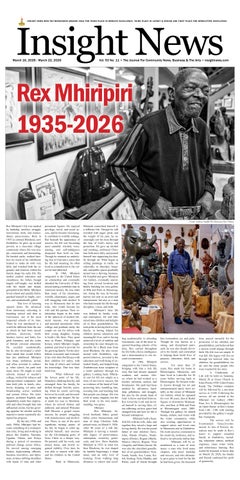

Rex Mhiripiri 1935-2026

Rex Mhiripiri’s life was marked by hardship, intellect, struggle, reinvention, faith, and extraordinary perseverance. Born in 1935 in colonial Rhodesia, now Zimbabwe, he grew up in rural poverty in a close-knit village community where life was simple, communal, and demanding. He herded cattle, walked barefoot for much of his childhood, learned to make do with very little, and watched both the ingenuity and tensions within his family shape his early life. His mother pushed education and cleanliness; his father, though largely self-taught, was skilled with his hands and deeply grounded in the Bible. Mhiripiri loved school and quickly distinguished himself as bright, curious, and academically gifted. That love of learning opened doors. He advanced from missionary schooling to boarding school and then to Goromonzi, one of the most respected schools of its time. There he was introduced to a world far different from the one in which he had been raised: uniforms, electricity, toothbrushes, knives and forks, English literature, and the codes of British colonial education. He excelled academically, but he also developed a rebellious streak that would follow him into adulthood. Mhiripiri was sharp, ambitious, proud, and often resistant to authority. After school, his path took many turns. He taught in rural schools, trained in teacher’s college, worked for tobacco and mining-related companies, and later held jobs in hotels, electricity, shipping, oil sales, and broadcasting across southern and eastern Africa. His intelligence, polished English, and adaptability made him employable and often brought him into influential circles, but his growing appetite for alcohol and his impulsive nature repeatedly disrupted his progress.
By the late 1950s and early 1960s, Mhiripiri had become something of a cosmopolitan exile, living and working in places like Zambia, Tanzania, Uganda, Ghana, and Kenya during a period of enormous political change across Africa. He moved among emerging leaders, high-ranking officials, business executives, and diplomats, at times rubbing shoulders with heads of state and other
prominent figures. He enjoyed privilege, travel, and social access, and he became increasingly confident in worldly settings. But beneath the appearance of success, his life was becoming more unstable. Alcohol, womanizing, and self-indulgence deepened their hold on him. Though he retained an underlying fear of God and a sense that his life had meaning, he often lived in contradiction to the values he had inherited.
In 1966, Mhiripiri emigrated to the United States on scholarship and eventually attended the University of Minnesota during a turbulent time in American history. He was older than many of his classmates, worldly, charismatic, angry, and still struggling with alcohol. It was in Minnesota that he met Julie, who would become his wife and life partner. Their relationship began in the midst of the upheaval of student life, racial tension, war protests, and personal uncertainty. After college and graduate study, the couple set out for Africa with their young daughter, hoping to build a life there. They spent time in Rome, Ethiopia, and Kenya, where Mhiripiri taught, painted, and tried to provide for his growing family. Yet his alcoholism worsened, and eventually his wife Julie fled Kenya with their children for safety, with the help of others and without his knowledge. That loss shattered him.
What followed was the lowest point of his life. Homeless, drinking heavily, and estranged from his family, he drifted through Nairobi, painting when he could, surviving however he could, and descending further into despair. He later made his way to Montreal, where he arrived broken and addicted, and entered Welcome Hall Mission, a gospel rescue mission for people struggling with homelessness and alcoholism. There, in one of the most significant turning points of his life, he began to sober up, rebuild himself, and encounter the life-changing grace of Jesus Christ in a deeper way. He painted, sold his work, sent money home, and slowly regained stability. Over time, he was able to reunite with Julie and his children in the United States.
Back in Minnesota,
Mhiripiri committed himself to a different life. Though he still wrestled with anger, pride, and the weight of his past, he increasingly saw his story through the lens of God’s mercy and protection. He gave up alcohol and smoking, embraced Christian faith more fully, and poured himself into supporting his family through art. What began as selling paintings in malls, on sidewalks, in churches, hospitals, and public spaces gradually turned into a thriving business. He founded and grew Mhiripiri Art Gallery, eventually operating from several locations and finally building his own gallery at 90th and Penn in Bloomington. Along the way, he became known not only as an artist and entrepreneur, but also as a man who had remade his life through discipline, vision, and faith.
Mhiripiri’s later life was defined by family, work, and redemption. He and Julie raised nine children and delighted in their grandchildren. He took pride in having built a close family, in having helped his children pursue education and meaningful lives, and in having achieved a level of stability and ownership he once thought impossible for a Black man from rural Rhodesia. He also reconnected with Zimbabwe, supported relatives, invested in the education and well-being of extended family, and helped bring Zimbabwean stone sculpture to a wider audience through his gallery. Looking back, Mhiripiri saw his life not simply as a story of survival or success, but as evidence of the hand of God: protecting him, humbling him, rescuing him, and teaching him that people can change. His was a life of many chapters, but the final word, in his own understanding, was grace.
Obituary Rex Mhiripiri, beloved husband, father, grandfather, artist, businessman, and man of deep Christian faith, passed away on March 9, 2026. After 90 years of a full life, Mhiripiri is leaving a remarkable legacy of perseverance, redemption, creativity, generosity, and love. Born Stanlake Mhiripiri in 1935, in what was then Rhodesia, he was shaped by humble beginnings, a sharp mind, and an early love of learning. From walking long distances to school and excel-

ling academically, to attending Goromonzi, one of the most respected boarding schools of his time, Rex carried throughout his life both a fierce intelligence and a determination to rise beyond circumstance.
In 1966, Mhiripiri emigrated to the United States, bringing with him a rich life story that had already spanned southern and eastern Africa, where he had worked as a teacher, salesman, analyst, and broadcaster. His path had been marked by adventure, hardship, giftedness, and struggle, but also by the steady hand of God. A fierce and kind believer, Rex loved the Lord and devoted himself to serving Him, often reflecting on how grace had changed him and how no life is beyond redemption.
Mhiripiri built a beautiful life with his wife, Julie, and together they raised a large and loving family. He was the proud father of nine children: Dave, John, Rhoda (Frank), Mudzingwa (Ebony), Rugare (Mark), Maruva (Steve), Regina, Titus (Angela), and Maria (Jason). He was also the cherished grandfather of ten grandchildren: Nick, Jonah, Isaiah, Ava, Laura, Kaleb, Sterling, Nyla, Maddie, and Reese, each of whom brought
him tremendous joy and pride. Though he was known as a strong and disciplined patriarch, he was also deeply devoted to his family and committed to helping them build lives of purpose, education, faith, and service.
For more than 25 years, Rex made his home in Bloomington, Minnesota, and later lived in Lakeville for 20 years before moving back to Bloomington. He became widely known through his art and entrepreneurial spirit, most notably as the owner of Mhiripiri
Art Gallery which he operated for over 40 years, first at Butler Square in downtown Minneapolis, and then at 90th and Penn in Bloomington since 2005. Through his gallery, he shared beauty, culture, and vision with the wider community, while also creating opportunities to support artists and loved ones in Minnesota and in Zimbabwe. His work stood as a testament to his creativity, resilience, and refusal to let adversity define him. Mhiripiri will be remembered as a man of testimony: a man who lived many chapters, who knew hardship and success, and who ultimately gave glory to God for the life he had been given. He treasured
time, prayed earnestly for the protection of his children and grandchildren, and believed that a person could change through faith. His life was not simple. It was full. His legacy will live on through his beloved Julie, his children, his grandchildren, his art, and the many people who were touched by his story.
A Celebration of Life will be held on Saturday, March 28 at Grace Church in Eden Prairie (9301 Eden Prairie Road). The 10:00am visitation will be followed by a one-hour service at 11:00. Following the service, all are invited to the Mhiripiri Art Gallery (9001 Penn Ave S, Bloomington) for an Open House in Rex’s honor from 1:00 - 5:00, with catering provided by the gallery’s neighbor, Gyropolis.
The service will be livestreamed: Grace.live/memorial. In lieu of flowers, donations may be made in Rex’s honor to support extended family in Zimbabwe, including education tuition, medical expenses, clean water wells, and subsistence farming. Rex would be honored to know that on March 28, 2026, his family and friends continued his spirit of generosity.
Credit: Anthony Soufflé/The Minnesota Star Tribune


















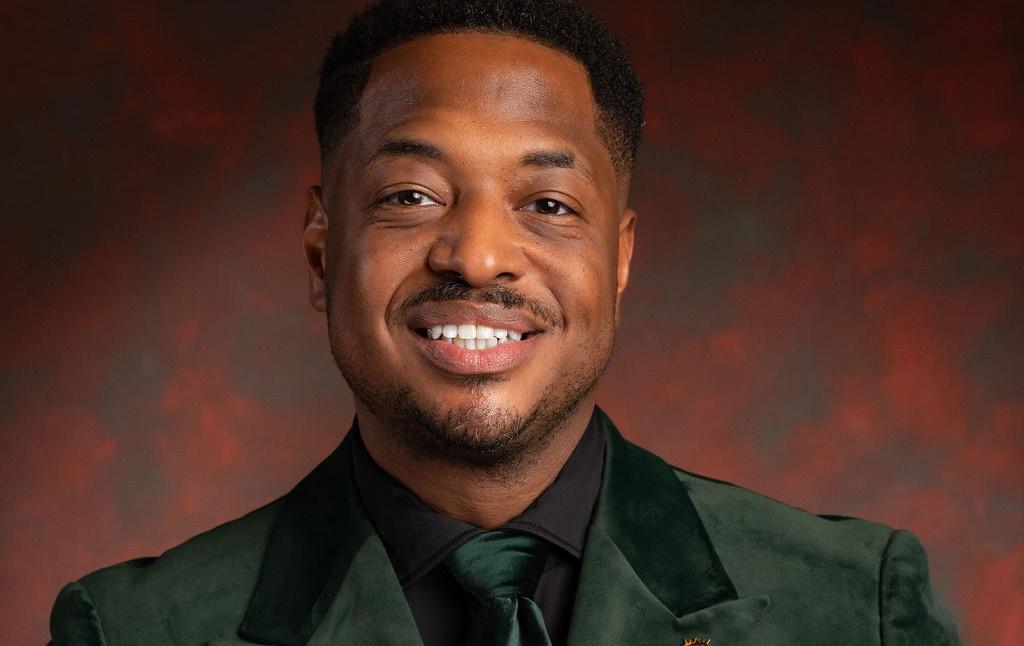
For Black communities, inconsistent or absent access points contribute to shorter life expectancies and preventable health disparities
By Benny Roberts, Executive Director
Longevity, especially in context to Minnesota black life statistics or urban experiences are about more than how long we live— it’s also about how well we live.
Quality of life is shaped by access: access to preventative health care, trusted information, early intervention, movement practices or manual activities, nutritious food, and places where people feel safe enough to show up as they are. For too many communities, especially Black communities, those access points are inconsistent or absent, contributing to shorter life expectancies and prevent-
able health disparities. That gap is not about lack of will; it’s about lack of opportunity. I am so curious about the Blue Zones research- longevity hotspots all over the world that have been studied for their impacting factors to health and the ability to live lives. The Blue Zone research, founded by fellow Minnesotan Dave Buettner, is an engaging study that has become a phenomenon that

Minneapolis Police are investigating a shooting that left one man dead in the city's Fifth Precinct.
The incident occurred at approximately 1:30 a.m. on Saturday, March 14, 2026, on the 2300 block of Hennepin Avenue South. Officers responding to the scene located a man suffering from at least one life-threatening gunshot wound. They provided medical aid before he was transported by ambulance to Hennepin Healthcare, where he later died.
Preliminary information released by the department indicates the man was in a parking lot with a group of people when gunfire erupted from outside the group, striking him.
has been adapted into multiple book forms and a Netflix documentary—this research is also in line with other local studies around the Social Determinants of Health. The data informs us that people live longer and fuller lives when they have good food, spiritual practices, some healthy movement, and are con-
Flanagan: Leadership as a family tradition
For Minnesota Lt. Gov. Peggy Flanagan, leadership isn't just a career path—it’s a family tradition. This Women’s History Month, the Senate candidate is reflecting on the generations of women who paved the way for her own journey in Minnesota politics. "I learned that from Day One from my grandmother, auntie, and mother," Flanagan says, noting that her Grandma Mary was active in the local Democratic Party long before it was common for women to hold such roles. That spirit of service continued with her Auntie Mary, who ran for the State Senate in 1982. Though her aunt lost by a slim margin, Flanagan eventually won a seat in the same district years later. Flanagan also cites her mother’s hard work and sacrifice as a primary inspiration. She recalls the powerful image of watching her mother graduate from St. Kate’s in a blue gown, a moment that convinced her she could achieve anything. "The way I grew up, I didn’t know that women didn’t lead or run things," she said. "In my world, women were leading all the time—in our families, in our communities, and in the DFL." Now, Flanagan is fighting to pass that same world on to her daughter and the next generation of children. Her track record includes serving on the Minneapolis School Board and leading the campaign to
State Representative Mary Frances Clardy (DFL-53A) released an update detailing the priorities and early actions of the 2026 legislative session, focusing on a range of issues including public safety, education, and food security.
In a newsletter to her Legislative District, she announced a new weapons screening process is now in effect at the Minnesota State Capitol. The measure, which resembles security procedures at major sporting events and other government buildings, utilizes modern equipment to screen visitors and deter illegal weapons, ensuring a safer environment for lawmakers, staff, and visitors.
Rep. Clardy highlighted the renewed legislative

efforts to combat gun violence, referencing the emotional testimony of Jackie Flavin, the mother of 10-year-old Harper Moyski, before the Public Safety Committee. She said House DFL members are united in seeking "bold action," with key proposals that include:
• Banning assault weapons and high-capacity magazines.
• Reenacting the ban on binary triggers. Requiring the safe storage of firearms.
• Regulating "ghost guns."
• Mandating the reporting of lost or stolen firearms.
Clardy, addressing staffing challenges within Minnesota's schools, reported positive outcomes from an apprenticeship program she


authored and passed into law. The apprenticeship program, referred to as the Forward Together Teacher Registered Apprenticeship Cohort (TRAC), is designed to address the special education teacher shortage. She said so far the initiative has:

• Demonstrated a 96% retention rate in its first cohort, indicating a sustainable approach to building the teaching workforce.
Police Chief Brian O’Hara addressed the violence, stating, “Gun violence devas-
tates families and traumatizes communities, and tonight it took the life of a man. We will do everything we can to bring those responsible for this senseless violence to justice.” Minneapolis Forensic Scientists processed the scene as part of the investigation. Authorities are working to determine the sequence of events that led to the shooting. As of this report, no arrests have been made. The case number is 26-063443. Anyone with information is encouraged to contact the MPD by emailing policetips@minneapolismn. gov or calling 612-673-5845 to leave a voicemail. Tips can also be submitted anonymously through CrimeStoppers at 1-800-222-TIPS (8477) or online at CrimeStoppersMN.org.
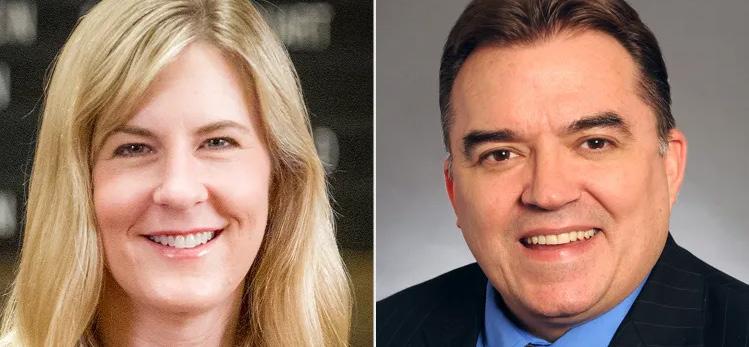
Following the surviving of an assassination attempt on June 14, Senator John Hoffman returned to the chamber with a renewed focus on legislative duty.
"When you survive an attempted assassination, you look at the world differently," said Senator Hoffman in his first speech back. "The noise fades. The posturing falls away. The chatter becomes irrelevant. What remains is what's truly important: family, community, and the responsibility we have to care for one another."
Legislators pay tribute to a transformative leader In a moving memorial resolu-

As Minnesota grapples with the fallout of the highest number of eviction filings in state history, the Minnesota Senate is moving to provide critical financial relief. This week, three Senate committees advanced a bill to deploy $40 million in emergency rental assistance. Emphasizing the urgency of the crisis, the Office of Sen. Pappas stated, "This legislation would provide a $40 million lifeboat as quickly as possible, through a tested program, to Minnesotans who need our help."

Benny Roberts
Pappas
Credit: Minnesota House of Representatives photographer's office; Minnesota State Senate Minnesota Rep. Melissa Hortman and Sen. John Hoffman
State Representative Mary Frances Clardy
The myth of paradise for Black children in America

By Haley Taylor Schlitz, Esq.
There was something almost painfully symbolic in the contrast.
Dax Shepard, on his Armchair Expert with Dax Shepard podcast, talking about why he keeps his daughters’ faces off social media, described a frightening hypothetical. He worried about a stranger seeing them on a sidewalk, recognizing them, pretending familiarity, and using that knowledge in a way a young child might not know how to handle. It was the fear of a father trying to guard his daughters from a danger he hopes never comes.
Then Sterling K. Brown answered from another America.
Brown said he understood Shepard’s reasoning. But his children are Black boys. And because they are Black boys, he said, he thinks differently. The more visible they are on social media, the safer they may be. He wants to make sure they make it home.
That difference stayed with me.
Not because Shepard was wrong. He was speaking with the tenderness of a father. His fear was real. But what struck me was how much his fear belonged to the realm of the hypothetical, while Brown’s belonged to the realm of history.
One father imagines what could happen.
The other speaks from what this country has shown can happen.
For Black Gen Z, Brown’s words do not land as some surprising celebrity confession. They land as recognition. They land with the weight of names that never fully leave our collective memory. Trayvon Martin is one of them. So many of us hear his name in the back-

ground whenever Black boyhood and safety appear in the same sentence. We hear the old truth beneath Brown’s words, that Black children in America are too often denied the full shelter of innocence. They can be seen as threatening before they are seen as young, vulnerable, or deeply loved.
That is why Brown’s statement cuts so deeply. He was not defending overexposure. He was naming a brutal calculation. He was saying out loud that in America, there are times when being publicly known can feel safer than being unknown. That perhaps a familiar face, a public profile, even a little proximity to celebrity, might create the hesitation that simple humanity should already provide.
That is a devastating thing for any parent to have to believe.
And for Black families, it is not new.
Black families have always worried about their children getting home safely. We
have always known that innocence is not always enough, that politeness is not always enough, that doing everything right is not always enough. That is why so many of us have had what is known simply as “the talk,” those painful conversations about how to survive an encounter with police, how to keep your hands visible, how to remain calm, how to make it home. My own family has had those conversations with me and my siblings, especially my brother. They were never abstract. They were acts of love shaped by caution, by memory, by the knowledge that Black childhood in America has always come with warnings attached.
That is why the contrast with Shepard matters so much.
His instinct, to protect his daughters’ privacy, is not shallow. It is loving. But it is also a reminder of the two Americas that still exist. In one America, parents can wor-
ry primarily about anonymity, about overexposure, about the possibility that too much public familiarity could put a child at risk. In the other, Black families are sometimes forced into a far more painful line of thinking, whether being recognized, being known, being publicly attached to love and community, might offer one more layer of protection. That is not because Black families care less about privacy. It is because this country has taught us that privacy and safety are not always the same thing. And right now, here in Minnesota, that broader atmosphere of fear has become impossible to ignore. In recent weeks, educators, school leaders, and families have described the harm caused by the federal immigration enforcement surge, including children missing school, high absenteeism, widespread anxiety, and major dis-
ruptions to daily life. Minnesota Attorney General Keith Ellison and the cities of Minneapolis and Saint Paul have also alleged that the surge brought racial profiling, lockdowns, business closures, and chaos to communities.
That matters here because Brown’s words tap into something bigger than one family or one interview. They speak to a growing feeling among many vulnerable communities that ordinary humanity is no longer trusted to be enough protection. Families are left asking chilling questions. What might make someone pause before doing harm? A witness? A camera? A public profile? A known name? Proof that this child, this family, this person belongs to a community that will notice if something happens?
That is the terrible logic underneath this moment.
For Black Gen Z, none of this feels abstract. We are a generation raised on foot-
age, on evidence, on timelines filled with names and videos and explanations that came too late. We have seen how visibility can force the nation to look. We have also seen how often looking is not enough. We know being seen is not the same as being safe. We know visibility is not justice. But we also understand why families keep reaching for visibility anyway, because invisibility has never guaranteed protection either. That is the heartbreak inside Brown’s words. He was not celebrating social media. He was confessing a lack of trust. Not simply distrust in strangers, but distrust in a country that still does not reliably see Black boys as boys first. Distrust in a society where Black families still have to think defensively about childhood. Distrust in systems that have never fully earned our confidence, and in times like these, seem determined to prove why. That may be the most unsettling part of all. Brown’s words remind us that for all the language of racial progress, America has not outgrown the conditions that taught Black families to be afraid in the first place. If anything, moments like this strip away the comforting fiction. They reveal that what many hoped was changing has, for too many families, remained painfully familiar. So no, Brown’s words do not just tell us something about parenting. They tell us something about America. They remind us that Black families have always had to think about safety with a depth and urgency that others have had the luxury to treat as hypothetical. They remind us that there are still two Americas, one where privacy can be the central concern, and another where visibility itself can start to feel like a form of protection. And they remind us of something even harder to face, that this is not a new failure. It is an old one. Brown’s words only force us to see it clearly again.






Wherever I go, I meet women who remind me how much urgent work remains to ensure every woman can live a healthy life.
There are those who simply can’t reach care—like Sarah in Malawi, who weeks before her due date had to travel for five hours, by bus and on foot, to stay near a facility where she’d be able to safely deliver her baby.
There are those who suffer because of restrictive
policies—like Kaitlyn, whose miscarriage became even more traumatic when two hospitals in Louisiana refused to treat her, even though she was bleeding and in excruciating pain. And there are those whose lives are cut short because health conditions that impact women are under-researched, underfunded, and overlooked. In Rwanda, I met a young woman named Eden who is preparing to become one of her country’s few cardiothoracic surgeons after losing a close friend, whose heart condition was diagnosed too late. Heart disease is the number one killer of women—yet the ways it manifests in women remains woefully underexamined and misunderstood. I wish I could say that such stories are rare. But the
harsh and unacceptable reality is that women everywhere face barriers that prevent them from living healthy lives. As a result, they spend nearly a decade more of their lives in poor health than men do.
This International
Women’s Day, it’s time for us to recognize that women deserve better—and to insist on it.
When we remove the obstacles to good health—both mental health and physical health—we open the door to a world where women can truly live the lives they want.
A critical place to start is by investing in research on the health issues that impact women uniquely or differently.
Women face conditions men don’t, and they often experience a greater long-term toll from the conditions they do share
with men. Yet only about 5 percent of global research funding goes toward women’s health: 4 percent focuses on women’s cancers, and the remaining 1 percent goes toward everything else. There’s a long, long list of things that fall into the category of “everything else.”
Last year, I partnered with the nonprofit Wellcome Leap to address this imbalance. Wellcome Leap , known for driving scientific innovation at impressive speed and scale, just launched a new program to improve how we diagnose and treat heart disease in women— one of the most urgent gaps in medicine today. But research alone isn’t enough.

Melinda French Gates visit the Area 25 Health Center in Lilongwe, Malawi in Jun 2015.


nected—to care, to resources, and to community. A personal or communal identity, Regular health screenings, early detection, and preventative education can add years to a person’s life, but just as importantly, they add life to those years. When care is brought directly into our neighborhoods, barriers like transpor-
tation, cost, mistrust, and time tend not to be a factor anymore. Health stops being something you chase in crisis and becomes something you tend to in community. That is why we partner to host events like the Partners in Prevention (PIP) Health Clinic, at Hallie Q. Brown Community Center. This idea was originally formed by the HueMan Partnership, led by Clarence Jones and Metro State University’s School of Nursing, led by Dr. Debra Eardley. We’re entering our
• Addressed the critical shortage of special education teachers, particularly for Emotional Behavioral (EBD) and Autism Spectrum (ASD) services, and helped smaller districts that struggle to compete for licensed teachers.
Enabled a Earn-WhileYou-Learn Model: The two-year pathway removes financial and logistical barriers, allowing dedicated paraprofessionals and community members to transition into teaching roles.
• Elevated quality and effectiveness as a job-embedded, registered apprenticeship model that blends
third semester of the PIP Clinic and the data on its value is resounding. These clinics are not just about a single appointment or screening; they are a public health intervention giving the community access to health resources, services, and giving experiences that are healing to the mind and the body. It’s about removing the barriers that make us fearful of getting the resources that cut our lives short. We are meeting people where they are at, and intervening, for some
people, before small issues become life-altering ones. By normalizing preventative care, creating pathways to follow-up services, and building relationships between providers and community members that foster trust over time, we are seeing health services in a way that doesn’t traumatize its patients. We’re working to support independence and vitality for our elders. We’re helping to sustain work, family, and caregiving responsibilities for our adults.
And for the whole community, we’re aiming to shift outcomes. Longevity and improved quality of life is where Hallie is headed, and the PIP Clinic partnership is 100% in alignment with our mission. When health resources are paired with strong social connection and cultural grounding, the impact multiplies. Communities that feel seen and supported thrive. Preventative health events are a tangible investment in longevity, dignity, and col-
must also shore up the services and organizations that are reaching women where they are right now, many of which are facing debilitating funding challenges.
One of the ways that Pivotal is taking on this challenge is through an initiative called Action for Woman's Health, which supports organizations doing critical work in communities around the globe, from helping women in the Philippines advocate for their sexual and reproductive health to bringing breast cancer screenings to remote areas of Brazil to supporting women through pregnancy, childbirth, and early parenting in Seattle. We funded more than 80 organizations, but there are countless like them that need more attention and investment. Even if you’re not on the front lines, providing care,
The future of downtown revitalization, the fate of the city's sports arena, and a heated debate over eviction notices were among the key topics recently addressed by Ward 7 Council Member Elizabeth Shaffer in her latest community newsletter. The update provided residents with an "insider's" look into city deliberations and neighborhood activity, underscoring both the challenges and opportunities facing Minneapolis's core.The Future of Downtown: Green Space and the Arena Question Following a "Downtown Dialogues" panel with her colleagues, Council Member Shaffer shared an optimistic, yet ambitious, vision for Nicollet Mall. She foresees the pedestrian thoroughfare transforming into a "thriving, bustling destination," citing possibilities like a top-tier green space with carefully manicured gardens, a playground, or even an outdoor skating ribbon. She also expressed support for the idea of fully pedestrianizing the mall. The future of the Target Center, home to the Minnesota Timberwolves and Lynx, also remains a priority. Shaffer emphasized the "vital" nature of the teams’ presence to the downtown economy. She stated that whether the solution is a remodel, a rebuild on the current site, or moving to a new space like the City Center or Farmers’ Market location, their continued residency is crucial. If the teams were to depart, she stressed that the city must be "creative, intentional, and bold" in redeveloping the substantial downtown real estate.Eviction Notice Veto Sparks Debate on Direct Aid
A major policy flashpoint—the council's resolu-
theory and practice, ensuring teacher candidates are well-prepared, highly effective, and thrive in the profession.
Supported participating districts are ability to recruit and retain staff and hire their own personnel who are already invested and familiar with their schools.
Provided extra support in the classroom during
the apprenticeship year through a collaborative-teaching model. She said the program is designed to provide solutions to the special education teacher shortage and is helping to fill staffing gaps while preventing burnout among educators. Clardy said her advocacy work included meetings with Head Start Heroes: Advocating for early childhood

education and family support services.
• LIUNA: Discussing highwage construction jobs, worker safety, and critical infrastructure investment.
• Friends of the Boundary Waters Wilderness: Lobbying for the protection of the BWCA.
• Black Farmers and the MN Department of Agriculture: Discussing future partnership opportunities.


tion to temporarily extend the pre-eviction notice period from 30 to 60 days—was resolved by Mayor Jacob Frey's veto. Shaffer's update contextualized the move, noting that the Mayor paired the veto with a proposal for an additional $1 million in emergency rental assistance, to be matched by a private foundation.
The decision was backed by prominent nonprofit leaders, including Catholic Charities and Project for Pride in Living, who argued that an extension of time merely "creates more debt" and delays displacement, sometimes even disqualifying residents from assistance programs. They advocated for "direct and rapid-response emergency rental assistance."
The proposal for the $1 million aid package requires a simple majority and is scheduled to come before the City Council in the last week of March, coinciding with an anticipated vote to override the Mayor’s veto.Key Neighborhood and Infrastructure Updates In addition to down-
town policy, the Ward 7 update included critical information for residents:
Public Safety: While crime is reported to be down in many areas, Council Member Shaffer acknowledged that residents are "extremely frustrated with the open and blatant drug use and drug sales" that continue to plague livability and business viability, particularly in Uptown, Loring Park, and parts of Downtown. Franklin Avenue Reconstruction: Hennepin County is set to begin its longplanned reconstruction of Franklin Avenue, closing sections to through traffic from Lyndale to Lasalle/ Blaisdell and from 1st Ave. to Chicago. The work, which will run until November, aims to introduce a three-lane
Sarah Barton at a health facility in Lilongwe, Malawi.
Melinda French Gates and Eden Gatesi are interviewed in Butaro, Rwanda.
Council Member Elizabeth Shaffer
At The Legislature
No banning permit to carry holders from having firearm in Capitol Complex
By Mike Cook
A State Capitol hearing room was not packed for a bill related to firearms; however, there was no way to know if any attendees were packing heat.
A person with a permit to carry can now have their firearm when at the seat of state government; people without a permit cannot.
Sponsored by Rep. Brion Curran (DFL-White Bear Lake), HF3357 would also prohibit permit-to-carry holders from possessing firearms in the Capitol Area. An exception would be made for House security staff who carry firearms pursuant to federal law that permits retired peace officers to carry a firearm in public places.
The bill failed to garner House State Government Finance and Policy Committee approval Thursday along party lines. It has 25 DFL co-sponsors and zero Republicans.
“This bill has been around for years as have many members of this committee. I
can assure the public today that what we’re seeing is yet another failure of the House GOP to even entertain compromise,” Curran said.
Limited committee debate — at times with numerous interruptions, including accusations of impugning motives — was along the traditional firearm arguments that have, too, been around for years: safety vs. Second Amendment rights.
“Let us create sacred space for words, not guns,” is one way Rep. Kristin Bahner (DFL-Maple Grove) described the bill after emotionally recalling the events of last June 14 when Speaker Emerita Melissa Hortman was assassinated and the accused gunman also visited Bahner’s home.
“Somehow, I believed that Minnesota Nice insulated this place, a North Star untouched by violence, but last June that vision was shattered as a gunman took our beloved speaker leaving a voice we can’t ever fill. Our colleagues were targeted, they were stalked and they were hunted by a gunman prepared to kill me and my fam-
ily. Everyone in this room car ries invisible wounds that may never heal.

“Returning to this space has been harder than I anticipated. A place where I once took solace, where our leaders taught us to rise above the partisanship, to take off our red jerseys and our blue jerseys, and to do the people’s work. But doing that work with the threat of guns looming over our heads, over our words, is an immense weight to bear. For me, that means standing on the House Floor trembling with fear, but that is what I will do. And I will stand bravely and defiantly on that floor because my community needs to see their representative standing up for them.”
The Senate now bans firearms and dangerous weapons from its gallery.
Anna Leamy, director of government relations and advocacy for the Minnesota Gun Owners Caucus, had a different take, saying the bill targets “peaceable citizens” who’ve demonstrated a commitment to lawful conduct by removing their ability to exercise self-de-
Protecting the bedrock of democracy in Minnesota
fense rights at the “seat of democratic participation.” “Minnesotans should not have to choose between exercising their First Amendment rights and exercising their Second Amendment rights,” she said.
Saying she “appreciates” Second Amendment rights, Bahner said it’s very dif-
ferent when one’s body is on the line. “There is no work environment which we should just be asked to work under that threat.
It is the job of our leadership and of our state to step up and to protect the health and safety of every member of this body as they sit on that floor, as well as the general public as they sit in these spaces, to discuss our
democratic principles.”
Rep. Ben Davis (R-Merrifield) does not appreciate a bill that aims to take away his right to protect himself where he works for constituents who strongly support the Second Amendment and support the right for him to have a firearm.
“It appears that you’re all for constitutional rights, except for in the people’s house,” he said. “… I want us to be able to protect ourselves.”
A permit-to-carry holder, Committee Co-Chair Rep. Jim Nash (R-Waconia) said people with such designations are “heavily, heavily vetted.”
He spoke of being threatened by people wearing anti-gun shirts and wishing him death.
“You would like to put this into law, and the people who are cheering you on from the sidelines would like to see me shot and killed in front of my family. Are we OK with that? I can’t think that we are.”
Proposed legislation seeks felony penalties for voter intimidation
The Minnesota Senate Elections Committee recently held a federal impacts hearing to address emerging threats to election integrity. DFLers are aiming to elevate penalties for voter intimidation from gross misdemeanors to felonies.
"Every Minnesotan deserves to cast their ballot free from fear or intimidation," a statement from Senator Sandra L. Pappas (65, DFL) noted. "Democracy is the bedrock of our society, and we will always fight to protect it."
Lawmakers also examined the economic shadow of Operation Metro Surge, calling for a study on immigration enforcement’s impact on state industry
Legislation is moving forward to fund a comprehensive study on the statewide economic impacts of "Operation Metro Surge." The study aims to provide data on how aggressive federal enforcement affects local businesses, agriculture, and schools. Addressing the broader responsibility of the state,
Senator Majority Leader Erin Murphy reflected on the current legislative climate: "We return here together, altered, terrorized, fearful, but determined. That's what courage is for. As I look around — as I look at all of us — what I see is the courage to continue to work for the people of Minnesota."


Limiting federal law enforcement access to child care facilities fails along party lines
By Winter Keefer
Anna Stallman, a parent of a student at a south Minneapolis Spanish immersion school, set a scene for legislators Wednesday.
“Little ones, excited to start their day, hands held by parents, stood in horror as masked agents in tactical gear with guns aggressively pulled a staff member out of her car and hauled her off in unmarked ve-
hicles.” This happened without a warrant at the onset of Operation Metro Surge, Stallman said.
Similar stories were told by over a dozen parents and educators who testified before the House Children and Families Finance and Policy Committee in favor of a bill looking to limit law enforcement access to child care centers.
Sponsored by Rep. Samantha Sencer-Mura (DFLMpls), HF3415, as amended,
would prohibit child care staff from letting a federal immigration enforcement officer enter a child care facility without a signed warrant authorizing the arrest of a specific individual in the building. It would also require staff to ask officers for valid identification and a written statement of purpose.
Some Republicans took issue with the language centering on child care staff rather than agents who break the law.
The Fourth Amend-
ment should prohibit access to any private facility without a warrant, said Rep. Bjorn Olson (R-Fairmont). “Asking the people who watch our children to stand like Gandalf and say, ‘You shall not pass,’ that’s concerning to me.”
The U.S. Constitution’s Supremacy Clause prohibits the state from regulating federal officers themselves, so the bill looked to provide guidance to child care staff, Sencer-Mura explained.

“Heck, I want the Constitution to be followed, but what happens when the
isn’t being followed?” said Rep. María Isa Pérez-Vega (DFL-St. Paul).
The sole testimony against the bill came from David Zimmer, public safety policy fellow for the Center of the American Experiment, who wrote in a letter that the bill would “inappropriately regulate the legal authority of federal agents.”
Minnesota’s move to autonomous vehicles stalls in transportation committee
The day of the empty driver’s seat is upon us.
If you’ve visited one of the 10 states where rideshare company Waymo operates, you may have seen a vehicle with no one behind the steering wheel, or perhaps you’ve been a passenger in one of its self-driving autos.
Now Waymo (and perhaps other rideshare companies that use autonomous vehicles) is preparing to come to Minnesota. Is state law sufficiently prepared for this new way of getting around?
Rep. Jon Koznick (R-Lakeville) believes that it’s not, so he’s sponsoring HF3513. It would establish a regulatory framework for autonomous vehicles, including altering several definitions in statute and setting out requirements for opera-
By Mike Cook
Faye Bernstein shared her story Monday and put forth a powerful, targeted declaration.
A 20-year employee at the Department of Human Services, Bernstein disparaged the department culture by telling what happened about seven years ago when she questioned its activities.
“In the course of doing my job I came across some contract irregularities that I
tions, insurance and regulations for transportation services.
On Wednesday, the House Transportation Finance and Policy Committee heard from 18 testifiers who were split on the pros and cons of autonomous vehicles, then considered eight amendments, adopting three.
But when Koznick moved to set aside the remaining eight amendments and approve the bill, the motion failed on a party-line vote with one abstention. Brakes engaged, the bill was laid over for further committee consideration.
“There is exciting emerging technology in transportation that I think is going to be transformative to all sorts of transit modes and systems,” Koznick said. “This legislation establishes a clear and predict-
would consider in the scope of what we talk about today to be quite minor. But as minor as they were it was not something DHS leadership could hear. As I result of me speaking about it, I was locked out of the building, I was banned from all DHS owned and licensed property,” she told the House Fraud Prevention and State Agency Oversight Committee.
A multiple-month investigation, including allegations of racism and threatening to harm leadership, Bernstein said the results showed, “I

tion, barring municipalities and counties from setting their own rules for autonomous vehicles.
That last provision inspired letters to the committee from multiple organizations objecting to limiting local control.
able framework for autonomous vehicles operating in Minnesota.”
The bill deals with a plethora of concerns, among
was found to have questioned the competency and the decision-making of the leadership in the Behavioral Health Division, and I was found to have held up contracts that had compliance problems. … I absolutely did both of those things and I’m doing both of those things today. I am very much questioning the competency of the leadership of the Department of Human Services.”
She knows those people well, but change needs to be made because the proper mindset and actions are absent.
them dealing with collisions, setting requirements for insurance and transportation service networks, and giving the state controlling authority on regula-
“Compassion when huge amounts of money is stolen is not the right thing to do,” Bernstein continued. “… You think about people this winter had fingers and toes frozen off because the Department of Human Services had to shut down a program. People without homes had real consequences.” Because of “largescale fraud” found by its own Office of Inspector General, the department ceased operations of the housing stabilization services program Oct. 31, 2025. Bernstein’s experi-
ence ties into a recent report by the state’s director of program integrity showing there has been almost 50 years of state awareness of vulnerabilities in public programs that has enabled decades of fraudulent activity, much of that targeted at the department in recent years.
“This year-after-year, decade-after-decade problem, I do not see how we can come through this without a massive change at the Department of Human Services in our leadership. There just really simply has to be firings. I hate to say
“I took a time warp to the future,” said retired 911 dispatcher Alex Smith. “But it was a safer future.”
The committee adopted Koznick amendments that made multiple corrections in the bill’s text, established the source of an appropriation and clarified some elements of operating near airports.
But Koznick recommended the committee reject all other amendments, including some that dealt with interactions with public transit, incident reporting, licensure, delivery of goods and wheelchair accessibility.
Some testifiers echoed those concerns, while three Minnesota rideshare drivers spoke of autonomous vehicles not being able to deal with passenger emergencies and being untested in the state’s cold and snowy weather. Meanwhile, advocates for those with disabilities said they believe autonomous vehicles could make their lives easier by circumventing the discrimination they’ve experienced from rideshare drivers. And some who have taken Waymo rides in other states said they felt considerably safer than during some rideshare experiences they’ve had in Minnesota.
None were adopted.
that, I hate to see people fired, but there is no other way to turn this around. … The need to retaliate against people who speak up as I initially did in the most benign ways, the need to retaliate against people like me is so ingrained. It is through every step of the process.”
Rep. Kristin Robbins (R-Maple Grove), the committee chair, said Bernstein is speaking for hundreds of people at the department and oth-
Constitution
Credit: Andrew VonBank
Rep. Kristin Bahner offers testimony to the House state government committee March 5 in support of a bill sponsored by Rep. Brion Curran, right, to prohibit permit to carry holders from possessing firearms in the Capitol Complex.
Credit: Michele Jokinen
SouthWest Transit CEO Erik Hansen testifies before the House Transportation Finance and Policy Committee March 4 in support of HF3513. Rep. Jon Koznick sponsors the bill to establish a regulatory framework for autonomous vehicles.
Senator Erin Murphy
Senator Sandra L. Pappas
Rep. Samantha Sencer-Mura
ers no longer working there. Officials were invited to appear at the hearing, but were absent. However, Commissioner Shireen Gandhi appeared in the same room minutes after the fraud committee hearing for the House Ways and Committee.
“Extraordinarily infuriating” is how Rep. Walter Hudson (R-Albertville) described Bernstein’s testimony, particularly taking aim at the racism allegations.
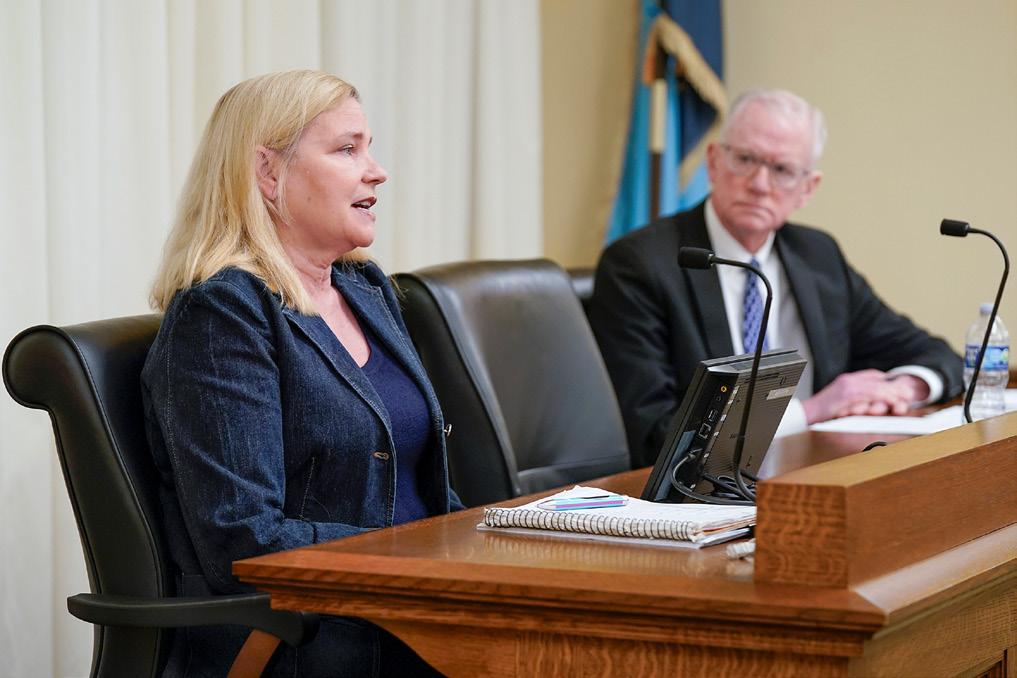
Faye Bernstein, a 20-year Department of Human Services
employee, testifies March 9 before the House fraud prevention committee about retaliation she experienced after reporting contract irregularities.
“One of the ways to judge the veracity of testimony is to compare it against other
Transportation
bill, as amended and amended again, before it ultimately failed on a voice vote.
Your smartphone can probably do a lot of cool things, but one thing it can’t do is hold your state driver’s license or identification ID card. Those still need to be presented in plastic form. For now.
Sponsored by Rep. Brad Tabke (DFL-Shakopee), HF1335 would authorize electronic versions of driver’s licenses and Minnesota identification cards.
On Monday, the panel that Tabke co-chairs – the House Transportation Finance and Policy Committee – discussed the
“This would mimic what’s happening in 14 other states right now,” Tabke said. “It’s just like a mobile payment system in that you tap to show your ID. A physical ID is still required, but this option adds convenience, security and safe ty.
Electronic driver's li censes 3/9/26
“Without having to show your physical ID, which has your home address on it, by merely tapping, you could show that you are of age for buying alcohol or renting a car or a ho-
evidence. We have heard on tape Attorney General Keith Ellison meeting with people who would later be indicted and some convicted in the Feeding our Future scandal. And what was their entire premise of their complaints? That state agencies are being racist. He bought into that; he said (Gov. Tim) Walz feels the same way. That is consistent with what we’re hearing from Ms. Bernstein right now.
“The question becomes why retaliate? What possible motivation could you have, what innocent and benign explanation is there for the type of retaliation that she’s describing? I can’t think of any, but the
culture seems to be very intentional. I’ll leave it at that.”
Roadmap to prevent fraud
Named the state’s director of program integrity on Dec. 12, 2025, Tim O’Malley is a judge and former FBI agent and former Bureau of Criminal Apprehension superintendent.
Tasked with strengthening fraud protection to saving taxpayer dollars, he wrote the Feb. 23 scathing report showing a lot of work is needed.
“Minnesota’s fraud vulnerabilities have existed for decades. Historical reports from state and federal auditors repeatedly identified internal con-

room,” Tabke added. “I really like this,” said Rep. Erin Koegel (DFLSpring Lake Park). “I like to leave the house with as little as possible, so if I can just go with my phone, that’d be great.”
The bill would authorize the Department of Public Safety to implement the electronic versions, laying out contracting and rulemaking authority, requirements for implementation, limits around electronic and physical credential use, and the authority to set a fee.
trol weaknesses, yet corrective actions were either not executed or inconsistently implemented. A “too trusting mindset” and a system biased toward facilitating payments — rather than safeguarding funds — contributed to creating opportunities for exploitation,” per the report. Employee training and technology upgrades are among the “nine pillars of reform” called for by the report. “Modern criminal schemes require modern tools. Data sharing, use of analytics, monitoring tools such as GPS, biometrics, cameras must be leveraged,” O’Malley said.
It’s not unusual to see young passengers peering at videos in the back seat of a vehicle. But should the driver be able to watch something, too?
It turns out Minnesota law doesn’t specifically say they can’t. It does have a prohibition on looking at a “television screen,” but Rep. Terry Stier (R-Belle Plaine) believes that to be outdated language.
So he’s sponsoring HF3241, which would broaden the prohibition to include operating a motor vehicle while a “display of electronic content”
is visible to the driver. Violations would be a petty misdemeanor.
“Surely, we can agree that we don’t want drivers going 70 miles per hour down the road while playing video games or watching TV,” Stier told the House Transportation Finance and Policy Committee Wednesday.
The committee approved two amendments, one correcting a date and an oral amendment offered by Rep. Julie Greene (DFL-Edina) clarifying that the prohibition would not apply to law enforcement vehicles being used in the performance of official duties.
federal government shutdowns introduce significant uncertainty to the projections,” according to MMB.
The projected surplus for Fiscal Years 2026-27 is now higher than it was in the November estimate, and no deficit is projected for the next biennium.
“Minnesota’s budget outlook has improved amid significant near-term economic and fiscal uncertainty,” according to the February forecast released Friday by Minnesota Management and Budget.
The 2026-27 biennium projected balance is now $3.7 billion, $1.3 billion higher than November estimates. “A slightly improved economic outlook drives a higher revenue forecast largely driven by more volatile sources of revenue,” according to MMB.
However, spending growth is forecast to outpace revenue growth in the projections through Fiscal Year 2029. The projected General Fund balance for the 2028-29 biennium is now $377 million, but “a significant structural imbalance remains. Shifting policies at the federal level and missing or incomplete data due to recent
The forecast released Friday provides the most recent snapshot of the state's financial health. It is the first look at projections since the November 2025 forecast of an almost $2.47 billion surplus for the current 2026-27 biennium and a $2.96 billion deficit in the next.
Gov. Tim Walz called it “good news day” at a news conference and said legislators’ work last year led to the state projections.
“Really grateful for all the work. I hope it sets the tone because I don’t think there’s a lot of states were able to do what we were able to do collectively, bipartisanly last legislative session,” Walz said.
Revenue and spending
Revenue for Fiscal Years 202627 is forecasted to come in at $67.5 billion while total spending is forecasted at $70.2 billion.
On the revenue side, individual income tax collections are expected to exceed
U.S. Army veteran Stefan Egan says psilocybin saved his life.
Egan suffered both physical and mental trauma after five deployments as a counterintelligence agent. After a suicide attempt nearly took his life, Egan turned to alternative treatment options.
“Unlike many of my brothers and sisters in arms, I
“I appreciate the thinking outside the box and introducing some new concepts,” said the committee’s co-chair, Rep. Jon Koznick (R-Lakeville). “There’s a lot of privacy concerns. There’s some public safety concerns that should be looked at. We’re just not ready to do this.”
Visitors to the House of Representatives booth at the Minnesota State Fair were asked their opinion on this issue in 2024, and they favored digital drivers’ licenses and identification cards by a margin of 43.2% to 37.8%, with 19% undecided or with no opinion.
The committee rejected an amendment that would have limited eligibility for electronic credentials to those who can demonstrate U.S. citizenship or lawful presence in the country.
Panel seeks to expand inside-the-vehicle video ban

The bill was then approved by voice vote and sent to the House Floor.
“What we’re looking at now is a real switch in what is taking place as we’re interacting with those electronic devices,”
said Mike Hanson, director of the Department of Public Safety’s Office of Traffic Safety.
“There’s much more video content and other types of interaction,” Hanson added.
“This includes the video streaming, the gaming, the shopping.
… We’re seeing a decline in the amount of texting and messaging that’s taking place, but we’re seeing significant increases in the amount of engagement

levels forecast in November by $665 million while corporate franchise tax collections are up by $336 million, sales tax collections are up by $86 million and other revenue is up by $114 million. Spending for E-12 education is now projected to be $111 million more than in November because of higher spending in special education. Health and human services spending is forecasted to be $162 million less than projected in November. That’s due to the new pre-payment review process for Medicaid claims that Gov. Tim Walz announced in October. That new process
was provided the opportunity to use psilocybin in a therapeutic manner — albeit from the illicit market — but therapeutic, nonetheless. Without that access I wouldn’t be here,” he told the House Health Finance and Policy Committee Monday. In the context of certain therapies, this psychedelic (most commonly derived from certain mushrooms) could soon no longer be illicit in Minnesota. Sponsored by Rep.
Andy Smith (DFL-Rochester), HF2906, as amended, would legalize psilocybin for therapeutic use and reclassify the drug from Schedule I to Schedule IV. With bipartisan support via voice vote, the bill was sent to the House Commerce Finance and Policy Committee. Smith emphasized that this bill, based on the 2025 recommendations by the Psychedelic Medicine Task Force, would not legalize the recreational use of psilocybin. Only
has impacted the forecast because payments for claims are delayed, providers are billing for less in what’s called “cost avoidance,” and denials of claims that would have been paid before the process went into place. The pre-payment review process is forecasted to reduce spending by $133 million in Fiscal Years 2026-27 and by $105 million in Fiscal Years 2028-29.
The state is in a strong financial position, but forecasters said there’s several uncertainties that present risks in the budget.
Those include lack of access to information that
a select group of adults 21 and older who are diagnosed with a qualifying medical condition would be eligible to receive this kind of therapy and psilocybin would be administered under strict supervision by a licensed facilitator. Qualifying conditions would be determined by the Department of Health. The Office of Cannabis Management would oversee patient registries, facilitator licensing and
would normally be included in the February forecast due to the government shutdown in October and the current partial government shutdown. The February forecast also doesn’t include any tax revenue impacts caused by Operation Metro Surge, which won’t be seen in the state’s monthly revenue report until March at the earliest. There are budget uncertainties around the federal funding the state receives. The Trump administration’s threats to Minnesota’s federal funding could result in increased costs for the state, which includes the announcement this week to halt $259 million in Medicaid funds from the state. State law is also out of compliance with HR1, known as the “One Big Beautiful Bill,” and the state could lose significant federal funds if state law isn’t brought into compliance.
House leaders react
"Today’s forecast gives us the chance to pass a bipartisan tax conformity bill that helps workers through common-sense policies, like no tax on tips and no tax on overtime, and helps our
the cultivation and testing of mushrooms.
Rep. Nolan West (R-Blaine), a co-sponsor of the bill, said it mirrors much of the federal discussion around the medical use of psychedelics — even discussions by Republicans, he emphasized.
Last month, U.S. Health and Human Services
Secretary Robert F. Kennedy Jr. said his agency and the Department of Veterans Affairs are
with this virtual content.” Hanson added that, in an average year, 30 Minnesotans are killed because of distracted driving.
Some forms of content from the vehicle’s infotainment system are not restricted, including information related to vehicle operation, condition or navigation. The bill would also allow exceptions for authorized emergency vehicles, video used to aid the driver’s visibility out of the vehicle, use of a dedicated GPS for navigation, and use of a wireless communications device as authorized under the state’s “hands free” law.
Main Street businesses continue to be the job creators that keep our state strong," House Speaker Lisa Demuth (R-Cold Spring) said in a statement. "Tax increases on Minnesota families and more government spending should be off the table, and our focus should remain on lowering costs on family budgets." “This is not a normal forecast day. This forecast comes with the biggest asterisk ever. All of the improvement we see in the forecast today — in fact more than all of it — would be offset by just the cuts to Minnesota’s Medicaid funding that were announced by the Trump Administration earlier this week, to say nothing of the other cuts Trump has promised,” House DFL Caucus Leader Zack Stephenson (DFL-Coon Rapids) said in a statement.
“Unless Donald Trump’s retaliatory campaign against Minnesota is stopped, these surpluses are actually deficits. The chaos and uncertainty Trump has caused will make it very challenging for legislators to make budget decisions going forward, and real Minnesotans will be worse off because of it.”
working to finalize rules allowing access to psychedelic-assisted therapy. Multiple veterans were among dozens of testifiers in support of the bill. Legislators also heard from doctors and therapists. No testifiers spoke against the bill.
“If this was a terrible idea you would have seen medical professionals here saying that,” West said.
Credit: Michele Jokinen
Credit: Michele Jokinen
Amanda Duerr, director of government affairs for the Minnesota Automobile Dealers Association, speaks to the House transportation committee in support of a bill to authorize electronic drivers’ licenses.
Office of Traffic Safety Director Mike Hanson testifies in support of HF3241 before the House transportation committee Feb. 25. Rep. Terry Stier sponsors the bill banning driving with an electronic video display visible.
By Rob Hubbard
By Rob Hubbard
By Lisa Kaczke
By Winter Keefer
At The Capitol
Walz encourages Minnesotans to take advantage of the state’s Child Tax Credit
Governor Tim Walz last week encouraged Minnesotans to take advantage of the state’s Child Tax Credit He highlighted the success of the state’s Child Tax Credit, a policy he said is already benefiting hundreds of thousands of children. Data from his office indicates that over 154,000 tax returns have claimed the credit this year, benefiting more than 318,000 children across Minnesota with an average credit of $2,669. The credit offers up to $1,750 per qualifying child and is fully refundable.
“These numbers show exactly why we created the Child Tax Credit: to put money in the pockets of working families and lift children out of poverty,” the Governor said. “Hundreds of thousands of Minnesota children are already benefiting this tax season, and we want every eligible family to make sure they claim the credit when they file their taxes this year.” The credit is estimated to reduce child poverty by up to one-third in the state.
Walz also announced a proposal for a major structural overhaul of the state's human
services system, moving toward a single, centralized entity for administration. The plan seeks to streamline service delivery by shifting away from the complex, layered model currently managed by a patchwork of counties, Managed Care Organizations, and state agencies.
The proposal aims to modernize Medicaid administration, consolidate administrative functions, and initiate independent reviews to improve program integrity and service quality.
“Minnesota is consistently ranked as one of the
best states to live because we invest in programs that support children, seniors, people with disabilities, and families,” Walz said. “But systems built decades ago must evolve to meet today’s challenges. This proposal begins the work of modernizing how we deliver human services so we can strengthen oversight, increase efficiency, and improve the quality of services Minnesotans rely on.” The initiative builds on recent efforts to strengthen fraud prevention and accountability within state programs.
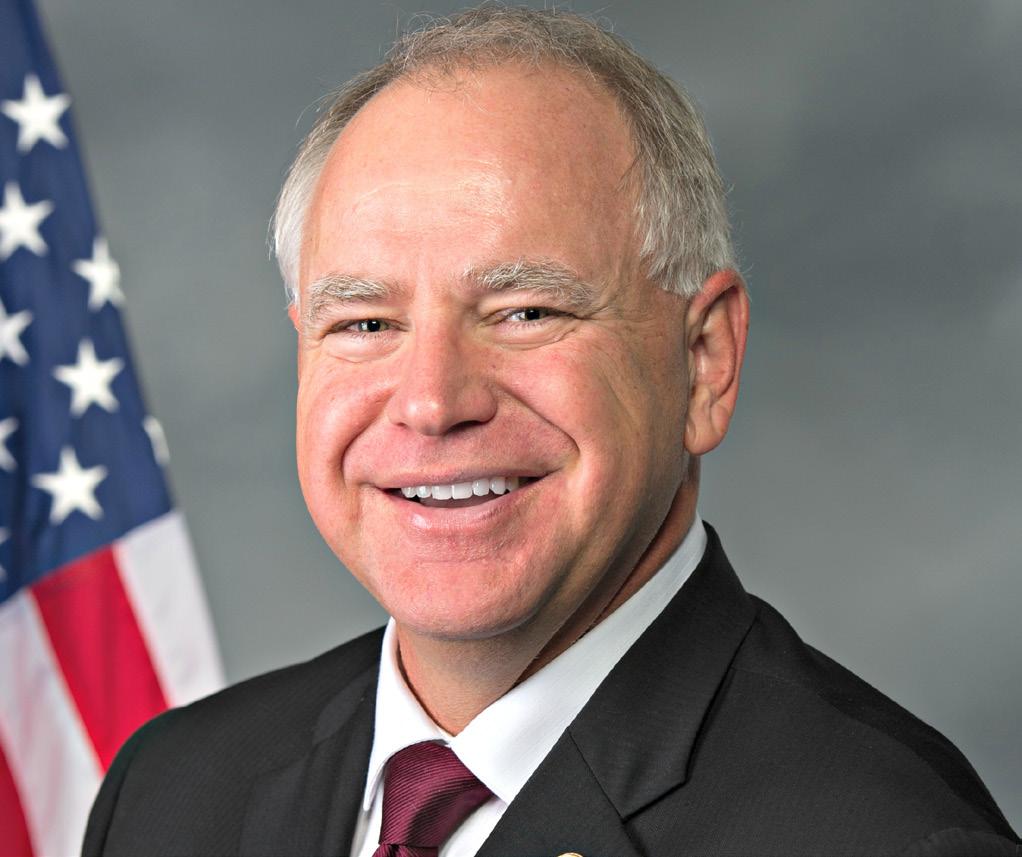
At Minneapolis City Hall
Whiting highlights
efforts
Minneapolis City Council
Member Jamison Whiting's latest Ward 11 newsletter, released on March 13, 2026, detailed the City Council's ongoing efforts to address the humanitarian and economic fallout from Operation Metro Surge, with a major focus on securing emergency rental assistance for affected residents.
A central announcement in the newsletter was the City's move to invest $1 million directly into emergency rental assistance, a proposal strongly supported by Council Member Whiting. This investment is set to be matched by a $1 million commitment from the Wilson Foundation and its founder, John Wilson.
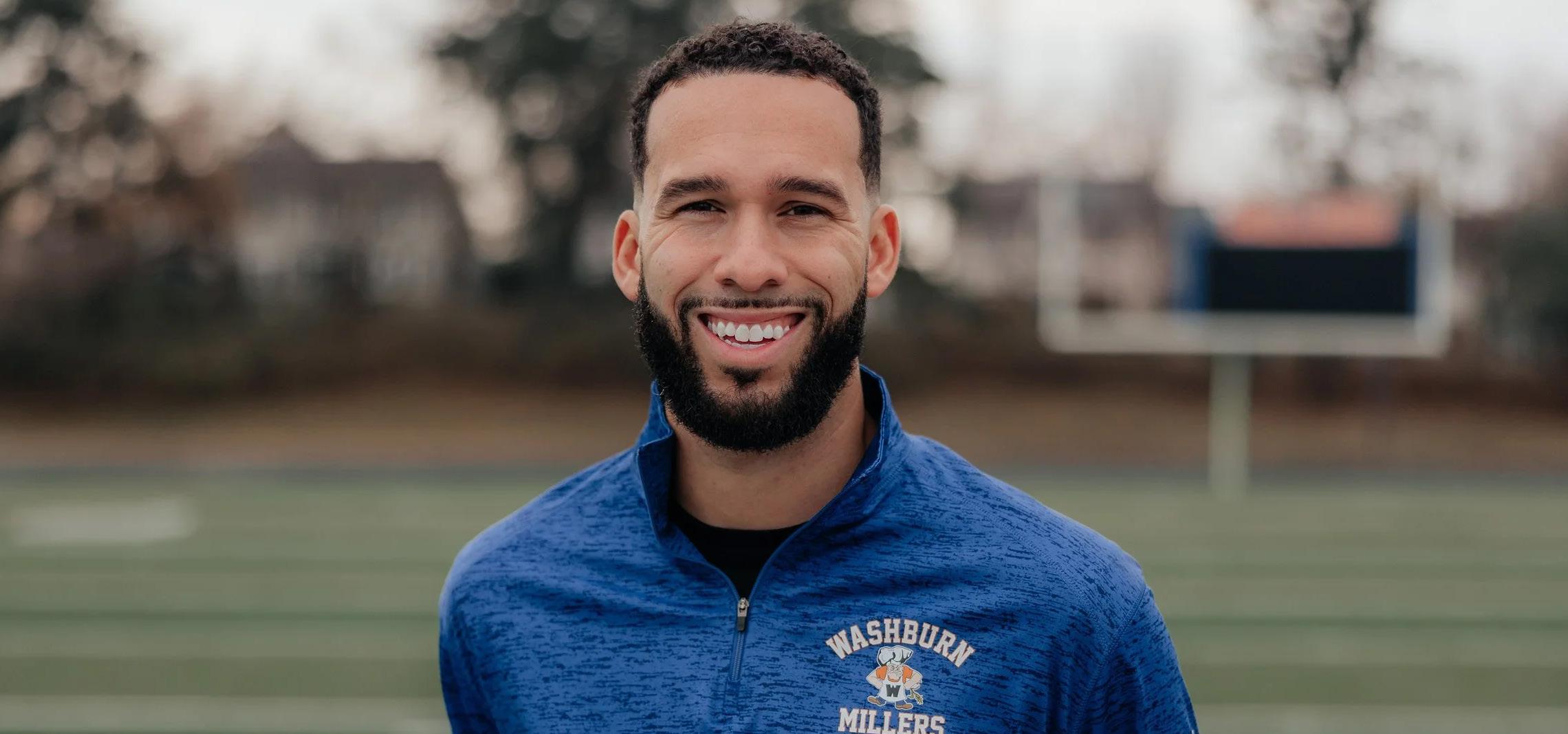
"This level of philanthropic leadership is exactly what is needed in this moment," Council Member Whiting stated in the newsletter. This $2 million combined pledge, when added to the $1 million the City Council previously approved in February, will unlock a total of $3 million in direct emergency rental assistance aimed at supporting the city’s most vulnerable, particularly the immigrant and refugee communities that make up a large portion of Minneapolis' renters.Operation Metro Surge’s $203.1 Million Impact
The urgency of the
aid was underscored by a new assessment of the occupation’s costs. City leaders released figures showing that Operation Metro Surge resulted in an estimated impact of at least $203.1 million in a single month. This data, drawn from the "Preliminary Impact Assessment & Relief Needs Overview," highlights the severe economic and community disruptions, with a
focus on the urgent relief needs of approximately 76,000 people.New Safety Training and Wellness Center Proposed
The newsletter also provided an update on a proposed Community Safety Training and Wellness Center. The initiative is being advanced as a long-term investment to modernize and consolidate training
facilities for all of Minneapolis' public safety teams, including 911, Behavioral Crisis Response (BCR), Emergency Management, Fire, and Police. The total estimated project cost is $38 million, which will be covered by the City’s capital budget and a request for State funding. The anticipated facility, to be located at 146 W. 60th St., is designed to enhance training, preparedness, and support the physical and mental health of first responders.City Notes: 311 Anniversary and Data Excellence 311 Celebrates 20 Years: Minneapolis 311, the city’s non-emergency help line, is celebrating its 20th anniversary. Mayor Jacob Frey declared March 11, 2026, as National 311 Day in Minneapolis to honor the service's two decades of connecting residents to city services via phone,
web, email, text, and mobile app. What Works Cities Certification: Minneapolis has been awarded the Bloomberg Philanthropies "What Works Cities" Silver Certification by Results for America. The recognition is for establishing exceptional data capabilities used to inform policy, allocate funding, and improve municipal services. • Boards and Commissions Recruiting: The City is currently accepting applications from residents interested in serving on various boards and commissions, including the Minneapolis Arts Commission, Homegrown Minneapolis Food Council, and the Community Commission on Police Oversight, with the application window open until March 31.
Warren updates Ward 5 on critical resources
of key resources, community updates, and seasonal safety warnings for North Minneapolis residents. The newsletter update encourages neighbors to move forward with renewed energy while emphasizing community safety and engagement. Council Member Warren issued a safety notice urging residents to prepare for severe weather conditions expected today,
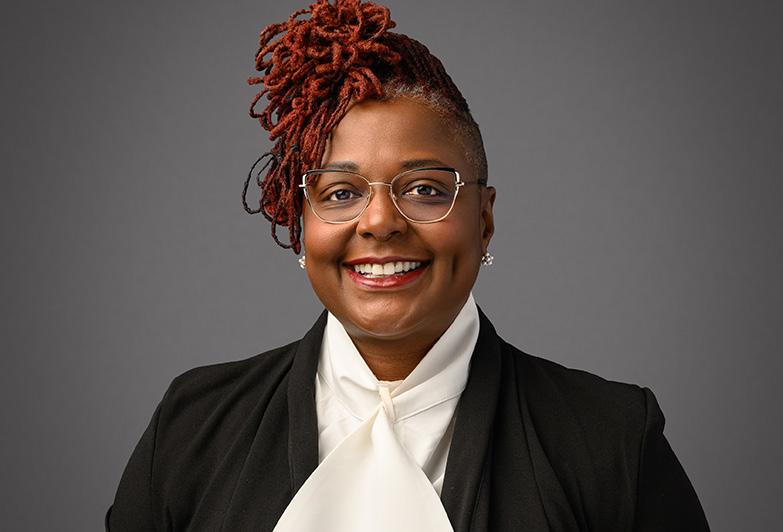
The
Shelter Connect Hotline at 612-2048200, which offers real-time shelter bed availability.
She said the Minneapolis City Council recently passed two specific honorary resolutions recognizing Ramadan as a meaningful period that reminds the community of the
values of compassion, service, and caring for those around us, and, Women’s History Month. She also highlighted upcoming community events including: A free "Know your rights: shape your future" event on Saturday, April 11, from 11:00 AM – 1:00 PM, covering legal topics like police stops and eviction notices.
A Public Hearing Notice for a proposal by Parity Wellness to establish a state-credentialed care facility serving 7–16 people at 911 Penn Ave N. The hearing is today, Monday, March 16, 2026, at 4:30 PM at the Public Service Center – room 350, 250 S 4th St, Minneapolis. Warren reported that
Minneapolis is celebrating 20 years of Minneapolis 3-1-1, which serves as the primary non-emergency contact point for service requests and questions.
She said Ward 5 construction season projects planned include improvements to Van White Boulevard slated for later this spring.
The City also advises residents with older home plumbing on three specific precautions to reduce the risk of lead exposure from drinking water: Clean faucet aerators.
Run the cold water before use for 2 to 3 minutes if it has been sitting in the pipes for over six hours. Use cold water for
drinking, cooking, and preparing baby formula. Council Member Warren shared advice for residents facing eviction, stressing communication with landlords, seeking free legal advice (available for low-income tenants), and applying for assistance right away. Additionally, residents are urged to get involved by applying to serve on a City board or commission. The purpose of this opportunity is to bring community voices and lived experiences directly into local government to help shape policies and programs. The deadline for applications is March 31. In


Governor Tim Walz
Council Member Aurin Chowdhury
Council Member Robin Wonsley
Council Member Pearll Warren
Council Member Jason Chavez Council Member Soren Stevenson
The fat cells that burn could fight obesity
Scientists are targeting energy-generating fat cells that produce heat, in what could become the next major frontier in weight loss therapies
By Claudio Villanueva Professor of Integrative Biology and Physiology, University of California, Los Angeles
Over the past few years, a new class of medications has transformed the treatment of obesity. Drugs like Ozempic, Wegovy and Mounjaro work primarily by reducing appetite, helping people eat less and feel full sooner. Their success has demonstrated something important: Body weight is biologically regulated, and targeting the right biological pathways can lead to meaningful weight loss that can help transform lives.
But appetite is only half of the equation. Your weight reflects a balance between the calories you consume through your diet and the energy you expend through movement, exercise and maintaining basic cellular function. While recent therapies have focused on controlling energy intake, scientists are increasingly turning their attention to the other side of the ledger: the tissues that burn energy. At the center of this conversation is an organ most people misunderstand: fat. For decades, fat – also known as adipose tissue – was thought of as passive storage: a biological pantry for excess calories. Scientists now know this view is incomplete.
Fat is not just storage
White adipose tissue, the most abundant type of fat in adults, does store energy in the form
of triglycerides. But it also has several other functions.
For one, white fat is a powerful endocrine organ, releasing hormones like leptin that reduce appetite, as well as adiponectin, which regulates insulin and blood sugar levels. It also cushions organs, insulates against heat loss and acts as a metabolic buffer, safely storing excess lipids that would otherwise accumulate in the liver or muscle.
When white adipose cells expand in a healthy, flexible way, they protect the body. When they become inflamed or dysfunctional, they contribute to insulin resistance, fatty liver disease and cardiovascular risk.
Obesity arises from both the expansion of white adipose cells and an increase in their number.
In other words, fat is not inherently harmful. Its health impact depends on the size of adipose cells, and when they become too large, they are unable to function optimally.
Increasing the number of new fat cells can sometimes improve metabolic function.
Moreover, there are additional types of fat, and they behave in different ways.
Brown fat: The cellular furnace Unlike white fat, brown fat is specialized to burn energy.
Brown adipose cells are packed with mitochondria – the tiny power plants inside cells – and contain a protein called UCP1 that allows them to convert chemical energy directly into heat. Instead of storing calories, brown fat dissipates them. In infants, brown fat
helps maintain body temperature. For years, scientists believed it largely disappeared in adulthood. But imaging studies in the late 2000s revealed that many adults retain metabolically active brown fat, particularly in the neck and upper chest.
Exposure to cold temperatures naturally triggers the brain to stimulate brown fat cells and generate heat. As energy use rises for this process, so does calorie-burning.
If activating brown fat increases energy expenditure, could it be harnessed to treat obesity?
The challenge is that human metabolism is tightly regulated. When energy expenditure increases, the body often compensates by stimulating hunger. Studies in animals – and observations in humans – show that cold exposure not only activates brown fat but also increases appetite. The brain detects the higher energy demand and signals for greater food intake.
From an evolutionary perspective, this makes sense. For our human ancestors, cold environments meant survival required more fuel. A system that failed to replace calories burned to keep you warm would have been dangerous. This homeostatic defense of body weight is powerful. It is one reason why weight loss is difficult to sustain and why increasing energy expenditure alone may not be sufficient to lose weight.
But when coupled with GLP-1 drugs that suppress appetite, promoting energy expenditure could lead to therapies that are even more powerful at promoting weight loss.
USAID's collapse could undo decades of disease progress
The dismantling of USAID puts billions of dollars in global health investment and years of disease-elimination progress at serious risk
By Sarah Greene Instructor in Pediatrics and Infectious Diseases, Washington University
in St. Louis
Philip
Budge
Associate Professor of Medicine, Washington University in St. Louis
In Greek mythology, King Sisyphus was condemned by the god Zeus to spend eternity rolling a boulder up a hill only to have it roll back down, having to start anew every day.
His story captured our attention as researchers studying neglected tropical diseases – a collection of conditions that primarily affect poor people in low-income countries. These diseases do not kill people at the rates of more well-known infections, such as HIV, malaria and tuberculosis, but cause significant pain and disability. As chronic infections that can cause disfigurement, they are also stigmatizing and economi-
cally devastating.
For over 50 years, researchers, clinicians and policymakers in the global health community have worked to eliminate infections such as onchocerciasis (also known as river blindness) and lymphatic filariasis (elephantiasis). They’ve done this through controlling black flies and mosquitoes, the vectors that spread these diseases, as well as huge campaigns to distribute antiparasitic medications to entire communities in areas where these diseases are endemic.
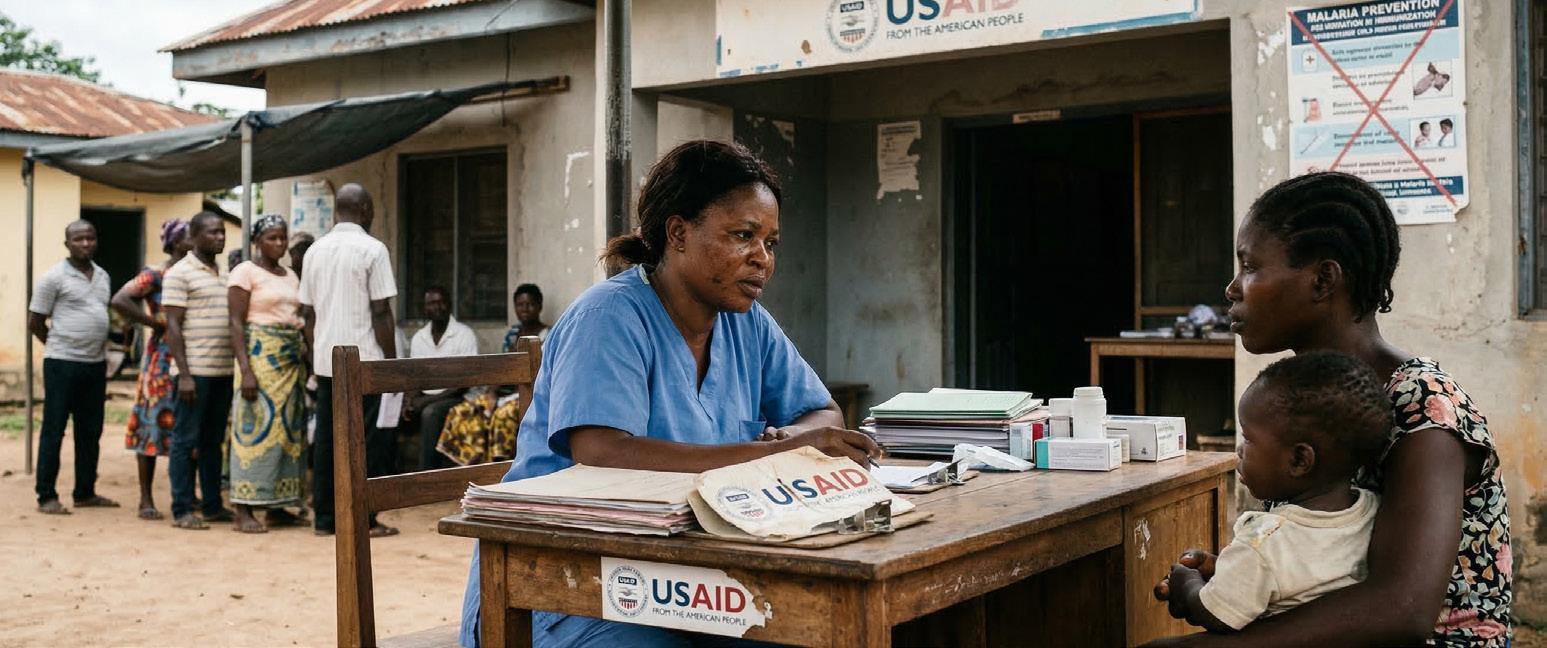
Unfortunately, the Trump administration’s sudden defunding of the U.S. Agency for International Development in 2025 has created a real-life Sisyphean struggle for countries working to eliminate neglected tropical diseases. Withdrawal of USAID support is abandoning the boulder of disease elimination partway up the mountain. When countries are unable to provide treatment, the parasites that cause these diseases will spread to infect more people.
Inevitably, the boulder will roll backward, undoing

Adding further complexity to fat’s role in weight loss are beige fat cells. These cells arise within white fat depots under certain conditions – such as cold exposure or specific hormonal signals – and acquires some of the heat-producing properties of brown fat. This process, often called browning, reveals that adipose tissue is remarkably flexible.
Fat is not a static mass. It contains stem and progenitor cells capable of generating new adipocytes with distinct properties. That flexibility opens intriguing therapeutic possibilities: Instead of merely shrinking fat, could researchers reprogram it to become something else?
Researchers like me are exploring ways to safely enhance the heat-generating capacity of fat cells, potentially increasing energy expenditure without relying solely on environmental cold. Brown and beige fat are compelling targets because they are purpose-built for heat production, which is why my lab is focusing on harnessing them to treat metabolic
disease.
But fat is not the only tissue in the body that consumes energy or can generate heat in the cold. Skeletal muscle accounts for a substantial portion of daily energy expenditure, particularly during activity. The liver continuously engages in metabolically expensive processes. Even subtle futile cycles – processes in which molecules are repeatedly built and broken down – consume energy and generate heat. The future of metabolic therapeutics for weight loss may involve carefully increasing energy flux across multiple tissues. The challenge is doing so without triggering compensatory hunger or unintended side effects. Any intervention that dramatically raises metabolic demand risks being interpreted by the brain as a threat to survival.
A two-sided strategy to maximize weight loss
The success of GLP-1–based medications has demonstrated that targeting appetite pathways can overcome some of the body’s resistance to weight loss.
The next generation of therapies
may build on that foundation.
One possibility is combining medications that modulate appetite with interventions that enhance energy expenditure. By influencing both sides of the energy balance equation – intake and output –it might be possible to achieve more durable metabolic improvements.
Equally important is shifting the public narrative. Fat is not merely an enemy to eliminate. It is a dynamic, multifunctional organ that protects, communicates, adapts and, under the right conditions, burns energy.
Understanding that complexity moves society beyond simplistic views of weight regulation. It also points toward a future in which therapies are not just about eating less, but about strategically harnessing the body’s own metabolic machinery.
The era of appetite control has begun. I believe the era of precision energy expenditure will be next.
Disclosure statement Claudio Villanueva receives funding from National Institutes of Health.
decades and billions of dollars of work.
Ancient foes
Lymphatic filariasis and onchocerciasis are centuries-old afflictions. An Egyptian statue of Pharaoh Mentuhotep II from 2000 B.C. is suggestive of lymphatic filariasis.
Filarial worms can live for years within humans, causing a variety of different problems. In lymphatic filariasis, adult worms live in the lymphatic vessels, a network running throughout the body that returns fluid back to the circulatory system. This disruption of the lymphatic system can cause the extremities or the scrotum to swell tremendously. In onchocerciasis, adult worms live in small nodules under the skin. The larval forms of these parasites migrate through the skin and can invade the eyes, causing chronic inflammation that can lead to blindness. In recognition of the significant suffering these disUSAID 13


Beige fat and metabolic plasticity
Colon Cancer
The cancer no one saw coming for young Americans
Colorectal cancer has quietly become the leading cause of cancer death in Americans under 50, with Black communities bearing the heaviest burden and researchers racing to understand why a disease once associated with old age is now striking people in the prime of life
By Insight News Team
When Chadwick Boseman died in August 2020 at the age of 43, the world learned that the beloved star of Black Panther had been quietly fighting Stage III colon cancer for four years. His death was a gut punch for millions of fans, but it also shone a spotlight on a crisis that the medical community had been watching unfold for more than a decade: colorectal cancer is no longer a disease of the elderly. It is killing younger Americans at an accelerating pace, and the communities hit hardest are the ones that can least afford to lose another generation.
A landmark study published in January 2026 in the Journal of the American Medical Association confirmed what cancer researchers had long feared. Colorectal cancer is now the number one cause of cancer death in Americans under 50, having climbed from fifth place in the early 1990s to the top of the list by 2023. It reached that grim milestone seven years sooner than experts had projected. And while overall cancer death rates in younger Americans have dropped by 44% since 1990, colorectal cancer was the only major form of the disease where deaths kept climbing, rising by roughly 1% every year since 2005.
For Black Americans, the picture is even more dire. According to research from UCLA Health published in Nature Reviews Gastroenterology and Hepatology, Black individuals are approximately 20% more likely to develop colorectal cancer and about 40% more likely to die from it than white Americans. That disparity makes colorectal cancer one of the most significant drivers of racial health inequity in oncology today.
Understanding the disease Colorectal cancer, often abbreviated as CRC, is a malignancy that originates in the colon or rectum, the final segments of the digestive tract. It is the third most commonly diagnosed cancer and the second leading cause of cancer death in the United States overall, according to the American Cancer Society. Globally, the World Health Organization reported nearly 1.9 million new cases in 2022, with more than 900,000 deaths worldwide.
The disease typically begins with small, benign growths called polyps that form along the inner lining of the colon. Over time, a subset of these polyps, particularly adenomatous polyps, can undergo malignant transformation. Research indicates that roughly 15% to 40% of colon cancers develop from polyps over a span of two to five years. Left unchecked, the cancer can penetrate the colon wall and metastasize to distant organs, most commonly the liver and lungs. For 2026, the American Cancer Society projects approximately 158,850 new colorectal cancer cases in the United States, including 108,860 colon tumors and 49,990 rectal tumors. An estimated 55,230 Americans will die from the disease this year. Nearly half of all new diagnoses now occur in people younger than 65, a dramatic shift from 1995 when that figure was just 27%.
Staging is central to treatment decisions. The American Joint Committee on Cancer uses the TNM system, evaluating tumor depth, lymph node involvement, and distant metastasis on a scale from Stage 0 through Stage IV. Five-year survival ranges from 91% for localized disease to just 15% for cancers that have spread to distant organs, according to data
from the National Cancer Institute's SEER database.
The silent warning signs One of the most dangerous characteristics of colorectal cancer is that it frequently produces no symptoms in its earliest and most treatable stages. That is precisely why routine screening matters so much. When symptoms do appear, they can be easy to dismiss or mistake for less serious conditions such as hemorrhoids or irritable bowel syndrome.
The most common warning signs include persistent changes in bowel habits, such as diarrhea or constipation lasting more than a few days; rectal bleeding or blood in the stool; persistent abdominal discomfort including cramps, gas, or pain; a feeling that the bowel does not empty completely; unexplained weight loss; and chronic fatigue or weakness. Dr. Monisha Singh, a GI medical oncologist at Houston Methodist, has urged patients to trust their instincts. She has said that paying attention to your body and noticing when something is wrong is essential, and that patients should never hesitate to advocate for themselves.
Who is most at risk
The risk factors for colorectal cancer fall into two broad categories: those individuals can modify and those they cannot. Among modifiable factors, diet plays a central role. Diets heavy in processed and red meat and low in fruits, vegetables, and fiber are associated with higher colorectal cancer risk. The World Cancer Research Fund recommends limiting red meat consumption to 12 to 18 ounces per week. Physical inactivity is also a major contributor, with sedentary individuals facing up to 50% greater risk. Obesity raises colon cancer risk by approximately 50% in men.
Smoking and heavy alcohol use are well-established contributors as well.
Among factors beyond a person's control, age remains the strongest single predictor. More than 75% of cases are diagnosed in people 55 and older. But the trend lines among younger adults are heading sharply in the wrong direction.
A family history of colorectal cancer or polyps significantly elevates risk, especially when a first-degree relative was diagnosed. Inherited genetic conditions like Lynch syndrome can push lifetime risk as high as 80%, while familial adenomatous polyposis can approach nearly 100% without preventive intervention. Chronic inflammatory bowel diseases, including Crohn's disease and ulcerative colitis, nearly double the risk.
A crisis within a crisis: racial disparities in colorectal cancer
For a publication rooted in the Twin Cities' Black community, the racial dimension of this disease demands careful attention. The data is stark and consistent across multiple major studies. Black Americans have the highest colorectal cancer incidence and mortality of any racial or ethnic group in the United States. According to the American Cancer Society, Black individuals are about 20% more likely to be diagnosed and roughly 40% more likely to die from the disease compared to most other groups. The reasons are complex and deeply intertwined with the structural inequities that shape American health care. Research published by the National Institutes of Health has found that the disparities are driven by a web of interconnected factors: lower screening rates in Black communities, reduced access to quality health care,
higher poverty rates, residence in food deserts where fresh produce is scarce, and lower rates of health insurance coverage. Black Americans are also more likely to receive colonoscopies from providers with lower adenoma detection rates and to receive care at hospitals associated with worse outcomes.
Critically, the disparity is not only about access. Research from Memorial Sloan Kettering Cancer Center published in 2025 found that colorectal tumors in patients with African ancestry carry distinct molecular profiles that may reduce treatment options. The study found that Black patients had a median overall survival of 45.7 months from time of diagnosis, compared with 67.1 months for patients of European ancestry. These findings underscore the urgent need for greater racial diversity in cancer research and clinical trials.
There is also evidence that the early-onset trend is hitting Black communities especially hard. While approximately 5% of all colorectal cancer diagnoses nationwide occur before age 50, that figure more than doubles to 11% among Black Americans, according to research compiled by Healthline. Survival outcomes for Black patients with early-onset disease are also significantly worse.
Yet there is reason for cautious optimism. A UCLA-led review published in Nature Reviews Gastroenterology and Hepatology found that within health systems providing equal access, such as the Veterans Health Administration, racial disparities in screening essentially disappear. That finding suggests the problem is solvable when the systemic barriers are removed.
The alarming rise of youngonset colorectal cancer
Perhaps the most unsettling dimension of the colorectal cancer landscape is the sharp increase in cases among younger adults. What was once firmly categorized as a disease of aging has undergone a dramatic generational shift. According to the American Cancer Society's 2026 statistics report, colorectal cancer incidence in adults aged 20 to 49 rose by roughly 3% per year from 2013 to 2022. One in five diagnoses now involves someone younger than 55. In the early 2000s, only 5% to 7% of cases occurred before age 50.
The JAMA study published in January 2026 brought the urgency into even sharper focus. It found that among the five leading causes of cancer death in Americans under 50, colorectal cancer was the only one where mortality increased. Deaths from lung cancer, breast cancer, leukemia, and brain cancer all declined during the same period. Rebecca Siegel, senior scientific director of surveillance research at the American Cancer Society and lead author of the study, told NBC News that the speed of the rise caught researchers off guard.
A major part of the problem is late diagnosis. Approximately 60% to 70% of young-onset patients present with advanced disease because their symptoms were dismissed or attributed to benign conditions. Three out of four people under 50 diagnosed with colorectal cancer already have advanced disease at the time of detection, according to data from the American Cancer Society.
The underlying causes are still being investigated. Researchers are examining the potential roles of ultra-processed foods, changes in the gut microbiome, sedentary lifestyles, rising obesity rates, and even microplastics, which have been found in higher concentra-
tions in tumor tissues compared to healthy colon tissue. Some epidemiological studies suggest that each generation born since the 1950s carries a progressively higher risk. Only about 20% of early-onset cases are linked to known genetic conditions like Lynch syndrome, leaving the vast majority unexplained.
Dr. Sanjay Reddy of Yale Medicine's colon and rectal surgery department has urged patients not to wait for a referral. He has said that anyone experiencing changes in bowel habits or bleeding that does not resolve should get a colonoscopy, even if they assume the cause is something as common as hemorrhoids.
Screening: the most powerful tool available Screening remains the single most effective weapon against colorectal cancer. It can detect the disease before symptoms appear and, in many cases, prevent cancer altogether by identifying and removing precancerous polyps. The American Cancer Society recommends that average-risk adults begin screening at age 45 and continue through age 75. Those with elevated risk factors should consult their physician about starting earlier, often 10 years before the age at which their closest affected relative was diagnosed.
The gold standard remains the colonoscopy, recommended every 10 years for average-risk adults. During the procedure, a physician can both detect and remove precancerous polyps in a single session. Stoolbased tests are also available, including fecal immunochemical tests and multi-target stool DNA tests, which can be completed at home and are recommended annually or every three years depending on the test. A newer option, the Shield blood test approved by the FDA, offers a less invasive screening method using a simple blood draw every three years.
Screening rates have improved but remain uneven.
The New York State Department of Health reported in March 2026 that 73.5% of adults aged 45 to 75 had received screening according to guidelines, but the rate was significantly lower among adults aged 45 to 54, the group where early detection could have the greatest impact. Screening rates were also lower among individuals without health insurance or a regular health care provider.
A rapidly evolving treatment landscape
Treatment for colorectal cancer has become increasingly personalized in recent years, with molecular testing guiding drug selection and a growing emphasis on preserving quality of life alongside survival. Surgery remains the cornerstone of curative treatment. Early-stage cancers can often be removed during colonoscopy. For more advanced tumors, partial colectomy removes the cancerous section along with surrounding lymph nodes, and advances in laparoscopic and robotic-assisted surgery have significantly shortened recovery times. Chemotherapy is standard following surgery for Stage III cancers and is sometimes recommended for highrisk Stage II tumors. The most commonly used regimens include FOLFOX and CAPEOX, typically administered over three to six months. For metastatic disease, chemotherapy is combined with targeted agents. Targeted therapy has produced important breakthroughs. EGFR inhibitors such as cetuximab and panitumumab are effective in tumors without RAS mutations. VEGF inhibitors like bevacizumab work by cutting off the tumor's blood

supply. A significant milestone came with the FDA's accelerated approval of adagrasib, marketed as Krazati, the first drug to target the KRAS-G12C mutation in colorectal cancer. Additionally, data presented at the 2026 ASCO Gastrointestinal Cancers Symposium showed that the combination of encorafenib plus cetuximab with the FOLFIRI chemotherapy regimen achieved a 64.4% overall response rate in patients with BRAF V600E-mutated colorectal cancer.
Immunotherapy has been transformative for a specific subset of patients. About 5% of metastatic colorectal cancers carry a molecular feature known as microsatellite instability-high, or MSI-H, which makes tumors highly responsive to immune checkpoint inhibitors. The FDA has approved pembrolizumab, nivolumab, and the combination of nivolumab plus ipilimumab as frontline treatments for these patients. In remarkable trials at Memorial Sloan Kettering, immunotherapy alone achieved complete tumor disappearance in rectal cancer patients carrying the mismatch-repair-deficient mutation.
For the remaining 95% of patients with microsatellite-stable tumors, immunotherapy has historically shown little benefit. But a landmark UCLA-led study published in The Lancet demonstrated that combining the targeted drug zanzalintinib with the immune checkpoint inhibitor atezolizumab extended survival compared to standard treatment. It marked the first time an immunotherapy-based approach had shown a survival benefit in this much larger patient population.
Research continues to push into new frontiers. Antibody-drug conjugates are being developed to deliver chemotherapy directly to tumor cells. Liquid biopsies using circulating tumor DNA are being tested to detect residual disease after surgery and guide decisions about additional treatment. Personalized cancer vaccines using mRNA technology are in clinical trials. And CAR T-cell therapy, which has shown extraordinary results in blood cancers, is now being explored for solid tumors including colorectal cancer.
The public faces of a private disease Colorectal cancer has taken some of the world's most beloved figures, and their stories have played a powerful role in raising awareness. Boseman's death in 2020 was perhaps the most impactful, sparking a measurable surge in screening awareness, particularly among younger adults and Black communities. The soccer legend Pele was diagnosed in 2021 and died from the disease in 2022 at age 82. Actress Kirstie Alley, known for her Emmy-winning work on Cheers, died of colon cancer at 71 in 2022 after keeping her diagnosis private. Legendary actress Audrey Hepburn was diagnosed with a rare form of appendiceal cancer, classified under the colorectal umbrella, and died in 1993 at 63. Charles M. Schulz, the creator of the Peanuts comic strip, was diagnosed in 1999 and died weeks before his final strip ran in newspapers.
Survivors have also used their platforms to advocate
for screening. Sharon Osbourne was diagnosed in 2002 after a routine blood test revealed severe anemia. She allowed cameras to document her treatment during The Osbournes, becoming one of the most visible colon cancer advocates. President Ronald Reagan underwent surgery in 1985 to remove two feet of his colon after a colonoscopy detected a cancerous growth, and he went on to complete his second term. Supreme Court Justice Ruth Bader Ginsburg was diagnosed in 1999 and continued serving on the Court for more than two decades after treatment. Actor Morgan Freeman was diagnosed with Stage I colon cancer in 2010 and has since encouraged regular screening.
What you can do today Prevention is not a guarantee, but the evidence overwhelmingly shows that individual action can dramatically reduce risk. The most important single step is getting screened starting at age 45, or earlier if family history warrants it. Beyond screening, a fiber-rich diet emphasizing fruits, vegetables, whole grains, and lean proteins is strongly associated with lower risk. The World Cancer Research Fund recommends limiting red meat to 12 to 18 ounces per week and minimizing processed meat.
Regular physical activity, even 30 to 60 minutes of walking per day, has been shown to support colon health and improve outcomes for cancer patients. Maintaining a healthy weight is critical, as excess body weight significantly raises risk, particularly in men. Limiting alcohol and quitting smoking are also important steps. Even moderate alcohol consumption has been linked to increased colorectal cancer risk. Perhaps most important of all: know your family history. If a first-degree relative has had colorectal cancer, your risk is more than four times higher than average. Share that information with your doctor. And do not ignore your body's signals. Persistent changes in bowel habits, blood in your stool, unexplained fatigue, or abdominal pain all warrant a conversation with a medical professional. If your concerns are dismissed, seek a second opinion.
A disease that demands attention Colorectal cancer sits at the intersection of some of the most pressing challenges in American public health: rising chronic disease in younger populations, persistent racial disparities in health outcomes, unequal access to preventive care, and the slow pace of translating medical advances into community-level impact. The science is advancing rapidly, treatments are improving, and screening tools are more accessible than ever. But none of that matters if people do not know they are at risk, cannot get to a doctor, or are told their symptoms are nothing to worry about.
The data published in 2026 should serve as a turning point. Colorectal cancer is preventable, treatable, and survivable when caught early. The question is whether the systems meant to protect the public can rise to meet a crisis that is no longer hiding in the data. It is here. It is growing. And it is taking people far too young.
Pregnancy back pain is more than just discomfort
A nurse explains why the condition is too often dismissed and why it deserves proper attention and treatment
By Julie Vignato Assistant Professor of Nursing, University of Iowa
About half to three-quarters of expectant mothers experience pain during pregnancy that is largely untreated, contributing to preventable suffering and harm. Many mothers avoid medications and treatments during pregnancy for fear that they may cause harm to their unborn baby. Yet, most are unaware of the harms that untreated pain in pregnancy may cause.
Like many women, I experienced severe pain in pregnancy. As a nurse researcher, I listen to women’s stories and analyze data from across the United States. I share these findings through publications, presentations and the media to raise awareness and reduce the suffering of untreated pregnancy pain.
Not just minor ‘discomfort’ Mothers are often told that the pain that comes with pregnancy is a temporary discomfort that comes with the territory – and ends as soon as the baby is born.
But when pain and discomfort persist to the point that mothers cannot sleep, work and care for their other children, mothers are experiencing pain that needs to be addressed. And for some mothers, the pain does not just eventually fade. Back pain and headaches, for example, can last longer than three months, becoming a chronic
condition that affects overall health.
Normal changes that occur during pregnancy often lead to pain. Pregnancy pain normally occurs from hormonal changes that can cause headaches and loosening of pelvic joints. The loosening of joints and the weight of the unborn baby contribute to back pelvic pain. The weight of the developing baby also causes the spine to abnormally curve, a condition called lordosis.
Back and pelvic pain increase in the third trimester of pregnancy when the weight of the baby is at its greatest. This is why it’s incredibly important for doctors and loved ones to believe mothers when they report pain. However, one meta-analysis, meaning an in-depth review of existing research, found that more than 50% of mothers who reported their pain received little to no treatment from their doctors.
Inadequacy of current treatments
Current treatments for pain during pregnancy are highly limited.
Tylenol, though safe –despite the current controversy – treats only mild pain and is ineffective for moderate to severe muscle pain.
Alternative treatments that are also recommended and can be effective, such as heat or cold applications, massage, chiropractic adjustments, exercise and physical therapy, may need to be used in unison and on an ongoing basis. These
treatments are not always covered by insurance.
The most effective approach combines several treatments, including exercise that may be provided through physical therapy. Unfortunately, this care may be costly for mothers without adequate insurance, and awareness of these options varies among providers.
The harms of untreated pregnancy pain
My team’s research reveals that when mothers report pain during pregnancy to their health care providers and loved ones, mothers are typically instructed to go home, rest, take Tylenol, go on maternity leave or a combination of these. However, this does not meet the needs of mothers who must work or care for other children. In addition, going on leave early is not an option for many mothers who desire to save their limited maternity leave for after the baby is born.
Mothers will almost always continue to take care of their children or work at the expense of their health if they feel there are no other choices. However, when expectations from their work, family or themselves are not met, mothers may feel guilty about not being a good enough mother or employee. This cycle can contribute to mental health challenges.
When pain is left untreated, mothers may feel minimized, unheard and overwhelmed. In turn, they can start to feel helpless and hopeless, which are symptoms of depres-

sion. My colleagues and I found that approximately 44% of women with severe pain report moderate to severe depressive symptoms during the third trimester of pregnancy.
Untreated depression can also lead to suicide, which is responsible for 5% to 20% of maternal deaths in the U.S.
Equally important, opioid or narcotic pain relievers may be prescribed for pregnant mothers experiencing severe pain. Yet, 1 in 5 women with pain report misusing these prescribed medications during pregnancy to relieve pain. In turn, this increases the risk of newborns experiencing withdrawal from these medications after birth, causing significant suffering. Sadly, neonatal opioid withdrawal syndrome is becoming more common, costing the country over US$462 million annually. With suicide and drug overdoses now the leading causes of death in the year after childbirth, effective pain management in pregnancy is urgently needed.
Being assertive about pregnancy pain Managing pregnancy pain starts with open communication between the mother and their health care provider. Our studies reveal that by gently adjusting
expectations, sharing how they feel and asking about available treatments, mothers can take an active role in ensuring their pain is understood and addressed.
Pregnant mothers are strong, but it’s natural to slow down. Pregnancy is a time to listen to your body and adjust expectations. I believe that balance matters. If pain prevents you from lifting your toddler, that’s OK. What your child will remember the most are the moments you snuggled with them on the couch.
My team’s studies reveal that talking to loved ones about pain may be a challenge.
So choose a calm, quiet time without distractions – when everyone can listen and respond thoughtfully. Be open about how you feel and clear about the help you need. Using “I” statements such as “I feel …” also helps. Allow for questions.
Share reliable articles or invite loved ones to a medical appointment so they can better understand what you are experiencing. If someone dismisses your pain, reach out to others who are more supportive. It is also important to start the conversation with your doctor, midwife or nurse practitioner. Before your appointment, jot down your main concerns and any questions you would like to ask.
Be honest about your
pain, especially if it is preventing you from sleeping or doing your usual activities. Tell your provider whether the pain is constant or comes and goes, and describe what it feels like –achy, throbbing, sharp or dull. Even mild ongoing pain that disrupts rest or daily life is important.
Share what you’ve already tried and how well those treatments have worked. If your pain is not improving, reach out to discuss other options, such as prescription medications or a referral to physical therapy. Sometimes, it takes more than one conversation to find relief. If your pain continues, ask about consulting with a specialist or another health care provider for a different perspective. If your pain improves with treatment but your insurance requests you stop, ask your provider to help appeal the decision. Ongoing treatment throughout pregnancy may be necessary to control your pain. Relief is possible when pain is taken seriously, not dismissed as an unavoidable harm of pregnancy.
Disclosure statement
Julie Vignato received funding from the National Institutes of Health. She is a member and Leadership Scholar with the United States Association for the Study of Pain.
The hidden mental health toll on formerly incarcerated Black men
Many say they're doing OK, but researchers find high rates of depression and PTSD among this often-overlooked population
By Helena Addison Postdoctoral Fellow, Yale University
“People can assess me, interview me, incarcerate me, observe me, and they can think they know what I need,” said Shawn, a man in his early 50s who spent 15 years in and out of prison. “And that can be an educated assessment, but at the end of the day, I live inside of this body, inside of this head. I know what I need.”
Shawn is one of 29 formerly incarcerated Black men living in Philadelphia I interviewed as part of my research on coping with the mental health effects of imprisonment. His name and the names of other people quoted in this article are pseudonyms chosen to protect their privacy.
I study incarceration, mental health and access to health care. I’ve previously written about how confinement in jails and prisons leaves a lasting impact on mental health. But I also wanted to understand how the men I interviewed recognized and addressed their own mental health needs — through coping strategies, conversations with friends and family, and seeking mental health treatment.
USAID
From 11
eases cause, the World Health Organization coordinated global efforts to eliminate them: onchocerciasis starting in 1974 and lymphatic filariasis in 2000. Since then, these public health campaigns have distributed hundreds of millions of doses of treatment for lymphatic filariasis and onchocerciasis. Medications vary somewhat by
Depressed but ‘doing OK’
Both research and clinical practice often fail to accurately capture how formerly incarcerated Black men identify their own mental health needs. That’s in part because implicit bias and anti-Black racism shape how mental health is assessed and treated in both correctional and community facilities.
Most of the men I spoke with said the mental health evaluations they received while incarcerated were designed only to “check the boxes” and conveyed a sense that no one really cared.
“They’d listen. They’d ask the pertinent questions,” Malcolm, 62, explained. “Then they’d talk down to you. And then they forget all about you.”
A few of the men received diagnoses they didn’t understand or believe. John, 29, described how a judge ordered him to have a mental health evaluation and that he was diagnosed as having post-traumatic stress disorder.
“I didn’t take it serious,” he said. “I didn’t start understanding mental health and believing it until I was locked up for a long period of time. I started reading up on it and studying it. …That’s how I started understanding therapy was important.”
location, but they often involve the use of the Nobel Prize-winning drug ivermectin. Merck, the manufacturer of ivermectin, provides the drug for free to each country’s disease control program. Similarly, the companies GlaxoSmithKline and Eisai respectively donate the antiparasitic medications albendazole and diethylcarbamazine citrate for these campaigns. Together, these programs have dramatically reduced the numbers of people exposed to these infections. For lymphatic filariasis, as of 2024,
Comparing the way participants described their mental health in their own words during the interviews with standardized screening tools revealed an important pattern. Most described themselves as “good,” “blessed,” “at peace” or “doing OK.” Yet nearly all reported symptoms of depression, anxiety or PTSD.
More than half reported three or more PTSD symptoms, such as trauma-related nightmares or feeling constantly on guard and easily startled.
These findings underscore that what appears to be resilience or well-being on the surface may mask underlying mental health needs, and the way those needs are expressed is shaped by culture and life experiences.
Coping mechanisms
Participants described self-reliance as essential to coping with incarceration and life after release. Physical separation from family and community, along with strained relationships and limited resources after release, left many feeling like they had to manage mental distress on their own.
“When you’re in prison, you learn to depend on yourself,” Ken, 56, said.
Some said incarceration reinforced existing coping
871 million people no longer need preventive medications, and 21 countries have eliminated this infection. Five countries have eliminated onchocerciasis.
A job partially completed Despite significant progress in controlling these infections, it remains logistically challenging to map endemic areas, deliver medications, test for ongoing infection and decide which areas have active outbreaks. While each country runs its own medication deliv-

strategies they’d had, such as exercising, praying, journaling, reading and meditation.
“I was always into being active,” said Tay, 31, who took part in a military-style bootcamp while incarcerated. “I learned how to use [exercise] to cope with my emotions.”
Others were introduced to new coping skills through educational, vocational and recreational programs inside their correctional facilities.
Men spoke about how earning GEDs, taking college courses, learning trades and participating in other structured programs helped them manage stress and connect with others. Unfortunately, the availability of such programs is limited.
Bottled-up feelings
Many of my study’s participants described wanting to “do things differently” after incarceration by expressing their emotions rather than suppressing them.
ery programs, these efforts have been supported by the World Health Organization as well as USAID or USAID-funded nongovernmental organizations. The Trump administration’s funding cuts to USAID halted over 40 drug distribution drives in 2025, affecting over 140 million people. Importantly, the U.S was the largest financial contributor to the World Health Organization until it withdrew its membership in January 2026. We and others working on eliminating these neglected diseases are concerned
Some directly connected bottling up feelings to behaviors that had led to their incarceration.
“[You’ve] let a lot of stuff build up and then [you’ll] go outside and lash out on the first person you see,” David, 30, explained. “I’m getting more comfortable with expressing myself, whether it’s to my mom or if it’s to a friend.”
But finding the right people to confide in could be difficult.
“I try to express myself every day. People laugh and make a joke out of it,” Shakur, 21, said. “If I had somebody sitting one-on-one, talking to me about my problems, I’d feel better.”
Navigating romantic relationships was also difficult.
“We come back to them broken. And they trying to fix us, but they don’t know how to fix us. They’re broken too,” said Thomas, 44.
Mass incarceration
that the rapid decrease in funding for these programs will destabilize efforts to treat infections. Stopping medication delivery now can allow these infections to spread unchecked and roll back decades of progress. Donated medications can be effective only if they are delivered to those who need them. This might mean that these campaigns will have to be combined with other public health efforts already underway, or that each country reallocates resources toward these efforts.
doesn’t just fracture individuals – it erodes romantic relationships, as those left behind often navigate their own economic strain, limited resources and emotional distress.
Participants emphasized that speaking with people who shared similar experiences made it easier to express themselves and helped them navigate moments of distress.
Deep distrust of institutions
Many participants expressed deep distrust of mental health treatment within correctional facilities.
“Being a Black man living to 62 years old, I don’t trust the government from the Tuskegee experiment to the thing they had going on in Holmesburg prison,” said Carl. “How can you put your trust in that?” The Tuskegee study
If the world turns its back on eliminating these
eases, millions of people will be hurt by the
Jesse Jackson’s misdiagnosis of Parkinson’s is common – new genetic discovery could lead to treatment for this deadly disease

Doctors frequently confuse the disease with Parkinson's, but a new genetic finding could change how it is diagnosed and treated
By Jose Abisambra Professor of Neuroscience, University
clots if he got injured from a fall. But his condition worsened, and he died within 10 years.
in neurodegenerative diseases, tau, can activate PERK, which further weaponizes abnormal tau against cells.
did not sufficiently clear out tau. Our next step was to identify which proteins PERK actually affected.
fore irreversible damage occurs.
“Yes, doctor. My dad’s first fall was on his 65th birthday. He stood in the driveway and suddenly dropped backwards on his back. After he fell two more times, we came to the clinic.”
The symptoms the patient’s son described didn’t fit the usual diagnosis of Parkinson’s disease. The family noted mood changes, including outbursts of anger. When the patient tried reading, the words “jumped” at him. Instead of looking down the page with his eyes, he moved his entire head. While his hands didn’t shake, he noticeably moved around more slowly.
Dad was diagnosed with Parkinson’s. The doctors weren’t convinced this was the right diagnosis, but it was the best they could come up with. He was given medications for Parkinson’s. They treated his symptoms with physical therapy and blood thinners to prevent
of Florida Depression
From 13
was a research study conducted by the U.S. federal government from 1932 to 1972. It followed Black men with syphilis but withheld effective treatment, even after the cure was made widely available in the 1940s. This caused preventable suffering and deaths.
During the Holmesburg Prison experiments, con-
He had been misdiagnosed. He actually had progressive supranuclear palsy, a rare and aggressive neurodegenerative disease with similar symptoms to Parkinson’s. The late Rev. Jesse Jackson, who died on Feb. 17, 2026, at age 84, had a similar experience of misdiagnosis.
About 6 to 10 in 100,000 people are affected by progressive supranuclear palsy, totaling around 30,000 patients in the United States. But because this disease is often misdiagnosed, the real numbers are likely higher. It shares similar symptoms with Parkinson’s, making it very challenging to distinguish between the two. In fact, PSP is also called atypical parkinsonism. Moreover, the brain cells of people with PSP share similar pathological signs with 20 other neurodegenerative disorders.
There are no biological tests to screen for progressive supranuclear palsy and no therapies specifically for this
ducted at a Philadelphia prison from the 1950s through the 1970s, University of Pennsylvania researchers tested pharmaceuticals and chemicals on incarcerated men, many of them Black, without adequate informed consent.
Some of the men I interviewed also reported experiencing or witnessing mistreatment after reporting mental health concerns, and they expressed fears that seeking help while incarcerated would lead to punishment rather than support.
disease. Patients like Jackson are stuck with treatments that don’t improve their quality of life. In our recently published research, my neuroscience lab identified a potential biomarker that could help change how doctors approach this disease.
Genetics of progressive supranuclear palsy
Rare genetic changes can increase someone’s risk of developing progressive supranuclear palsy.
For example, researchers found that a single mutation on the gene coding for the stress sensor protein PERK increases a person’s risk of developing the disease. PERK helps relieve stress from a part of the cell that acts as a warehouse for newly made proteins. When the cell becomes stressed, PERK dials down the production of new proteins and gives this warehouse time to recover.
Many labs worked to find why this single change in DNA could unleash a devastating life sentence. My team and I had previously found that alterations in a key protein involved
Stigma and seeking help After release, participants shared concerns that they would be seen as “weak” by their peers for talking about their problems. This mental health stigma served as a barrier to seeking treatment.
“It’s not normal for guys like us, as far as being Black, African American, to reach out to a therapist,” said David. Some men, like Antonio, who described feeling “like walls was closing in on me,” were motivated to seek treatment due to significant mental
After identifying three other PERK mutations, the field focused on targeting PERK as a way to treat the disease. However, results were conflicting: Both increasing and decreasing PERK activity improved cell survival and brain function in animal and cell models.
Then researchers made a crucial discovery: Unlike properly functioning PERK, the mutant form of this protein could not eliminate tau clumps in the brain. This meant that the brain normally has a way to get rid of toxic tau, but this mechanism was compromised in people who have the mutation. Treatment strategies that could change the activity of PERK, even in sick patients, could provide a way to fight this disease.
How PERK connects to PSP
My team and I wanted to understand how PERK promotes the abnormal accumulations of tau protein that causes progressive supranuclear palsy.
First, we genetically engineered cells to express normal or mutant PERK. As expected, while both forms of PERK carried out nearly identical functions, mutant PERK
distress. Others were driven by a desire to improve their relationships with their wives or children. Nearly 70% of participants had used formal mental health services at some point. Some were mandated to receive treatment, while others sought help voluntarily – sometimes at local walk-in clinics and behavioral health centers such as Wedge Recovery Centers, a Philadelphia staple that was mentioned by several participants but closed in May 2025 due to financial losses. Communities can
We hypothesized that both versions of PERK reduced the production of different proteins. To test this, we tagged cells with an antibiotic that attaches to newly made proteins.
Surprisingly, only four proteins differed between normal and mutant PERK cells, suggesting we’d found a potential key to understand how progressive supranuclear palsy develops and how it kills brain cells.
One of the proteins we identified, DLX1, was previously associated with the disease. After confirming that DLX1 is enriched in the brains of people with PSP, we tested how changing DLX1 levels would affect fruit flies engineered to produce high levels of tau in their brains. We found that reducing DLX1 levels in the flies minimized the damage tau causes on cells. These findings strongly imply that DLX1 plays a role in the development of progressive supranuclear palsy.
Future of PSP treatment
Effectively treating diseases requires identifying how they damage cells at the molecular level. Early diagnosis is especially critical to opening an effective therapeutic window be-
work together to reduce stigma around seeking mental health support and formal treatment, take expressions of mental distress from formerly incarcerated men seriously, and create spaces where they feel safe being vulnerable.
Participants named visible, neighborhood clinics with walk-in behavioral health services as places they felt able to go in moments of need. Increasing the visibility of these services, conducting outreach and integrating formerly incarcerated men as peer navigators can help build trust.
Our study offers the first evidence linking key proteins involved in the development of progressive supranuclear palsy, which has major implications for how it’s treated and diagnosed. For example, screening for higher DLX1 levels in the brain or blood could confirm a diagnosis of the disease. Also, developing drugs that reduce DLX1 could potentially reduce symptoms in patients. Importantly, our team identified three other proteins we are currently testing to see whether they can also offer improved diagnostic and therapeutic value. Combination therapies that target these proteins could potentially help improve patients’ lives.
As researchers work toward more accurate diagnoses and treatment, patients can have more hope to alleviate the devastating consequences of progressive supranuclear palsy. Disclosure statement Jose Abisambra receives funding from the National Institutes of Health. Prior research funding for his work originated from the Department of Defense, the Alzheimer's Association, the Rotary Club, and the CurePSP foundation. He is a consultant for CurieBio and coeditor-in-chief of the scientific journal Brain Research.
Disclosure statement Helena Addison received funding from National Institute of Nursing Research of the National Institutes of Health under Award Number F31NR020434, the Substance Abuse and Mental Health Administration and American Nurses Association Minority Fellowship Program, the University of Pennsylvania's Presidential PhD Fellowship, and Jonas Philanthropies to support this study and/or her PhD training.
Credit: AP Photo/Erin Hooley
Rev. Jesse Jackson died at age 84 after living with progressive supranuclear palsy.
Half a million rural homes at risk as USDA cuts program
A successful federal initiative that has long underpinned affordable rental housing in rural communities is being phased out
By Brian Y. An Co-Director
The high cost of renting and buying homes in U.S. cities is no secret. But this affordability problem isn’t limited to urban regions – it affects rural areas as well.
Rural areas, home to about 25% of Americans, benefit from federally supported rental housing programs – particularly a U.S. Department of Agriculture program to provide affordable homes for low-income residents.
The USDA’s Section 515 program is the primary way that the U.S. government finances affordable rental homes in rural communities. Since its inception in 1963, the program has supported the construction of over 533,000 apartments, townhouses and other small, multifamily rental homes.
The program offers below-market-rate loans to private and nonprofit developers who build and manage residential housing for low-income residents in small towns and rural counties. The terms of the deal between property owners and the government obliges these landlords to keep rents affordable for their occupants for decades, generally restricting rent to about 30% of tenants’ income.
Last new loans were in 2011 People who live in Section 515 housing typically pay around US$325 per month. That’s much less than rural market-rate rents, which typically run $800$1,100 per month for modest homes.
Because the USDA stopped issuing new Section 515 loans in 2011, this arrangement is phasing out now as existing loans mature.
Loans for about 90% of all remaining Section 515 homes will mature by 2045, according to the Housing Assistance Council, a national nonprofit that supports affordable housing efforts throughout rural America. By 2050, the owners of nearly all properties currently in the program’s portfolio are projected to have paid off their mortgages.
And once most of the owners of these homes exit the Section 515 program, it will have been fully phased out.
An often-overlooked housing program
As a public policy professor who studies housing, I wanted to understand what happens when Section 515 loans mature. I also was interested in what determines whether properties remain affordable or leave the program after the loans are paid off.
To find out, I worked with three other housing policy researchers on a national study that was peer-reviewed and published in Housing Policy Debate in September 2025.
As of 2024, these loans were still supporting some 400,000 homes on almost 13,000 properties across 87% of all U.S. counties.
The roughly 750,000 Americans in those homes are among the nation’s poorest. The average household income of someone living in Section 515 housing in 2023 was just about $16,000 per year, which was only about one-fifth of the national median household income, which hovered around $76,600 during the same period in inflation-adjusted 2023 dollars.
In addition to having
a very low income, more than 60% of the people enrolled in the program are over 62, have disabilities, or fall into both of those categories.
Market-rate options
after maturity
The vast majority of these affordable rental homes were built in the 1970s through the 1990s and financed with USDA loans that last between 30 and 50 years.
By 2050, there will be no Section 515 housing left.
The owners of these rental properties no longer have to keep rents affordable once they have paid off their loans.
And their owners and tenants may also lose access to a USDA rental assistance program, which helps keep tenants’ housing costs low. They can refinance the homes or sell the properties. They also can continue to charge affordable rents to occupants or convert those units to market rate. Because of this flexibility, a large share of rural affordable housing units could soon be converted to properties rented at market rates.
What the data shows so far
For this study, our research team analyzed data from nearly 15,000 of the Section 515 properties throughout the country, which have been placed in service since 1963 – including many that are no longer providing rural affordable housing. We found that the largest factors determining whether a building remains affordable after a Section 515 loan matures are who owns and manages that property. Buildings owned by for-profit companies are far more likely to leave the program than those that belong to nonprofit housing organizations. Nonprofit-owned buildings, after accounting for building age and local market

conditions, are 30% to 40% less likely to convert formerly Section 515 affordable housing into market-rate properties after the owners pay off their loans.
After analyzing this data, we also concluded that buildings run by small property management companies are more likely to leave the program than those managed by larger ones. Properties where the owner manages the homes are also more likely to exit.
Landlords owning more residential properties were also more likely to exit the program. This indicates that larger landlords may be able to afford the renovations and upgrades required to turn their buildings into market-rate housing once restrictions end.
Why subsidies and local markets matter Having subsidies through other government programs can help keep affordable housing units from being converted to market-rate housing.
One-third of Section 515 properties also get support from other programs, including Section 8 vouchers and low-income housing tax credits. Those tax credits are another federal incentive that’s provided to developers who build and rehabilitate affordable rental housing while allowing lower rents for low-income tenants.
Those properties are more likely to remain affordable, even years after some of
these tax incentives expire. Local economic conditions can play a role too. In areas with high unemployment rates, large military populations and low housing inventory, properties are also more likely to exit the program.
That means the same rural counties experiencing economic or demographic pressures are often the most likely to have a decline in affordable housing units when owners pay off their Section 515 loans.
Steps that can be taken Congress and the USDA have taken some steps to slow the loss of affordable housing in rural areas.
For example, the USDA has funded preservation efforts such as the Multifamily Housing Preservation and Revitalization pilot program, which provides grants, loan restructuring and other financing tools to help repair aging Section 515 properties and extend their affordability.
These efforts have helped preserve some buildings and support ownership transfers from private sector landlords to nonprofit housing groups. But they spend only tens of millions of dollars per year and focus mainly on maintaining existing properties rather than building new housing.
Researchers estimate that about $5.6 billion in repairs would be needed to preserve the affordable housing currently
tied to the Section 515 program.
Some lawmakers have proposed reforms aimed at doing more than chipping away at the loss of this kind of affordable housing. The bipartisan Rural Housing Service Reform
and opinions expressed in the published research paper are solely those of the paper’s authors and do not necessarily reflect the views and opinions of JPMorganChase or its affiliates.
Middle East war hits an already fragile US economy
Risks on the horizon
By Michael Klein Professor of International Economic Affairs at The Fletcher School, Tufts University
The “fog of war” refers to confusion and uncertainty on the battlefield and the attendant possibility of fatal error. This principle has a parallel when it comes to the economic consequences of wars as well, especially when they occur in a region that is a chokepoint for the production and shipment of one-fifth of the world’s oil and a third of its natural gas. Although no one really knows how deeply the ripple effects of the joint U.S.-Israeli strikes on Iran will impair the global economy, the Gulf kingdom of Qatar issued a dire warning on March 6, 2026, that reflects those concerns: “This will bring down the economies of the world,” Qatar’s energy minister said. The impact includes one of the largest oil price shocks in history, which briefly pushed the price of crude to nearly US$120 a barrel on March 8. As for the U.S. economy, it was already showing signs of weakness. Data released on March 6 showed an unexpected loss in jobs in February.
As an economist, I expect the biggest economic

risks of this war to be inflationary pressures and slowing growth due to the rising price of oil. In addition, uncertainty from the “economic fog of war” could make consumers reticent to spend and businesses hesitant about hiring and investing. These conditions will make it challenging for policymakers to steer the economy.
Uncertainty and risks There is currently, and likely to be for some time, great uncertainty about the length of the war in Iran, the range of countries involved and its costs. All of these factors will determine how much the war hurts economies in the U.S. and across the globe.
We do know there will be disruptions to the supply
of oil and liquefied natural gas, which is difficult to ship through the Strait of Hormuz, and from the fiscal costs associated with this military action.
As of March 9, the price of crude oil was hovering a little under $90 a barrel after reaching $118 a day earlier.
That’s up from $67 before the U.S. and Israel began bombing Iran on Feb. 28, driving up gasoline prices across the U.S. The majority of oil and liquefied natural gas produced in the Middle East travels through the Strait of Hormuz – but the threat of attack has made travel through this waterway uninsurable, which has brought shipping through this vital passage to a virtual halt.
This is also an expensive military campaign for
the United States, which has already seen the loss of aircraft and a depletion of its stock of missiles. Early estimates of the cost of the war were nearly $1 billion a day.
Challenges managing a supply shock
The 1979 Iranian Revolution also brought about a spike in the price of oil, which was an important contributing factor to the United States and Europe experiencing an economic phenomenon called “stagflation” – a portmanteau of stagnant growth and high inflation. This is unlikely to be repeated to the same extent now. Economies are less dependent upon oil and natural gas than they were in the late 1970s and
early ’80s. And the U.S. is not beginning the war with a previous decade of high inflation that made it more difficult to reduce price pressures, since expectations of inflation feed into actual inflation.
Still, supply shocks are challenging to address, as the world saw with the COVID-19 pandemic, and policymakers will likely have to make some difficult choices that involve hard trade-offs.
Trade-off between fighting inflation or recession
One of the questions arising from supply shocks is whether a central bank should raise interest rates to combat inflation or lower them to offset weakness in the economy and rising unemployment. Lifting rates brings down inflation by reducing demand for loans and curbing growth, while lowering rates has the opposite effect. In both the late 1970s and during the onset of the pandemic, the Federal Reserve opted to keep rates low to help support the economy and the job market. In both cases, this led to a spike in inflation. The inflation of the late 1970s and early ’80s was brought down by a strong reversal of monetary policy with high interest rates, causing a recession that was, at that time, the deepest since the 1930s. Notably, the reduction of inflation in the wake of COVID-19 did not require a similar economic downturn to achieve that goal.
An important reason for that is the long history of low inflation in the decades before the 2020s and the “anchoring” of inflation expectations.
But there are reasons to be concerned.
While the Fed now has a well-deserved anti-inflation reputation, its credibility with financial markets is at risk because of President Donald Trump’s attacks on Chairman Jerome Powell, the prosecution of Federal Reserve Board member Lisa Cook and the appointment of a new chair who many suspect will push for lower rates because that’s what the president wants. Concerns
This
Why the poverty line is the wrong way to measure poverty
By Olivier Sterck Associate Professor of Economics, University of Oxford
Michael W. Green, a Wall Street investor, created a buzz in late 2025 by arguing that the U.S. poverty line should be jacked up to US$140,000 for a family of four. Currently, a family of that size has to be eking by on $33,000 a year to qualify as poor in the federal government’s eyes.
His critique builds on a broader debate about how to measure poverty in the United States. The U.S. government has made few changes to how it officially calculates the poverty rate since President Lyndon B. Johnson launched the “war on poverty” in the 1960s.
Outlets such as The Washington Post, Fortune and Fox News covered Green’s assertions, sparking a flurry of public debate over a topic usually relegated to economists like me.
Having spent more than 15 years researching poverty as an economist, I believe that whether the government ought to draw this line at $33,000, $100,000 or $140,000 is not the real issue. Instead, I’ve been arguing that there is no magic threshold below which you are poor and above which you’re doing fine. Instead, poverty should be understood as a spectrum that can be measured without relying on arbitrary lines.
3 different poverty lines
Think about it: Living on $100 a day is better than $75 a day, which is better than $50, which
Treating poverty as a spectrum rather than a fixed threshold offers a far more accurate picture of inequality and who gets left behind
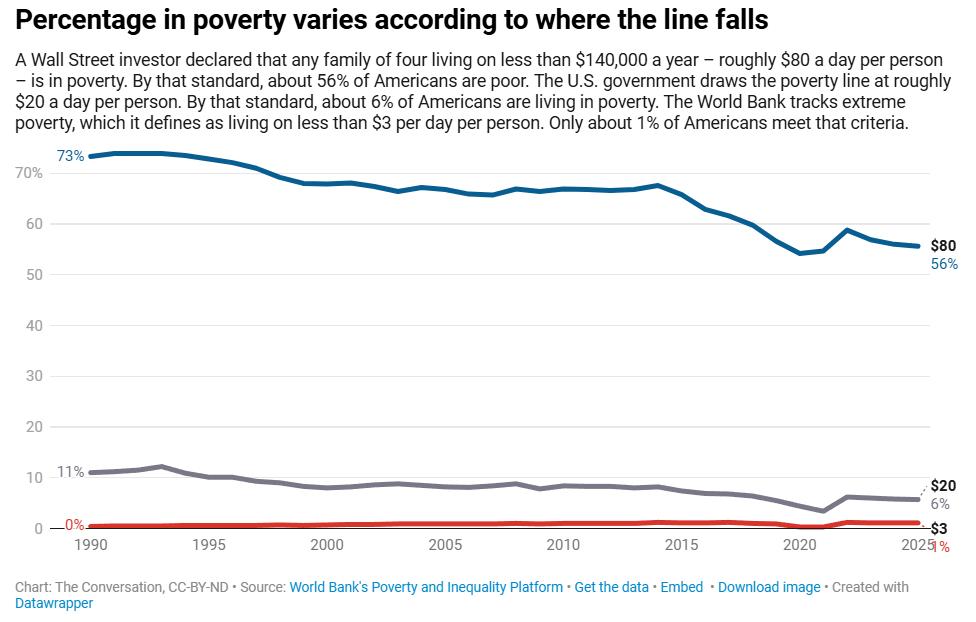
is better than $25. Nothing magical happens when you cross some arbitrary line. People don’t suddenly escape the constraints and vulnerabilities of having low incomes when they make one dollar more than they used to.
And yet almost all public debates, research and policy treat poverty lines as legitimate – as if this threshold really exists.
Consider three very different poverty lines:
Moving the poverty line to $80 per person per day, which today amounts to roughly $140,000 for a family of four per year, as Green proposes, then 56% of Americans are poor according to World Bank data. So are most people in other high-income countries.
Drawing the poverty line at about $20 per person per day – approximately equivalent to the official U.S. poverty threshold for a family of four –the share of Americans who are below that line plunges to 6%, according to the World Bank data I analyzed.
The World Bank also has a definition of extreme poverty: $3 per person per day. If you put the line there, only 1% of Americans would be officially experiencing poverty. Even among experts, there is little agreement on where the poverty line should fall. As a result, debates about poverty lines often reveal more about the choice of threshold than about poverty itself.
Measuring poverty without lines
Based on my research, I have proposed letting go of poverty lines to get a more meaningful view of how poverty evolved over time and in different countries.
Instead, I propose a new way to measure poverty, through what I call “average poverty,” which reflects the fact that having less income is always worse than having more.
Average poverty builds on a simple intuition. If someone I’ll call Alex earns half as much as someone else I’ll call Barbara, then Barbara is
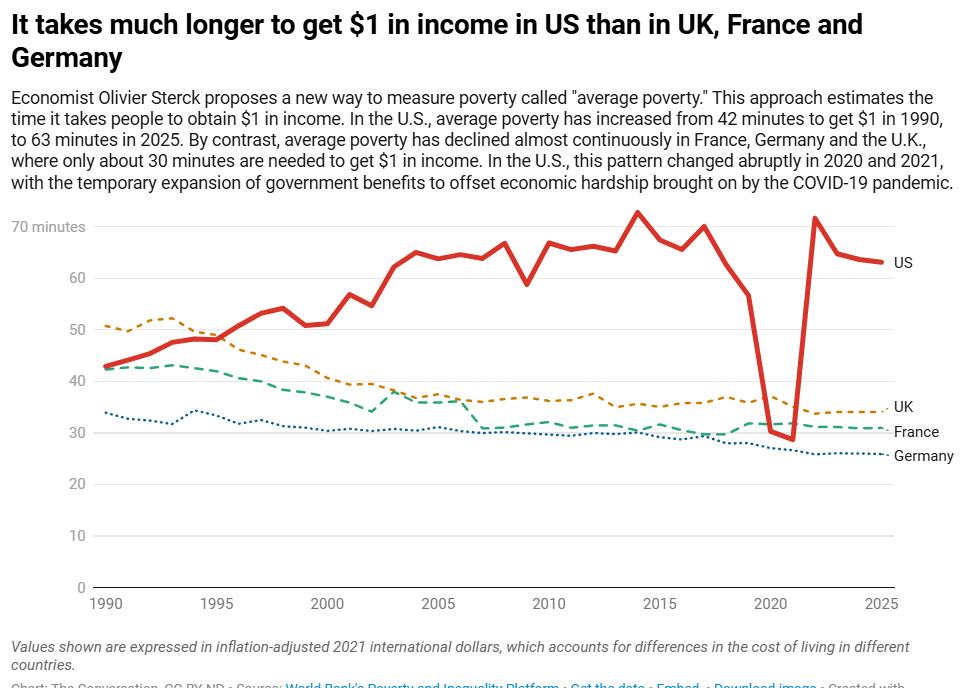
twice as rich as Alex and Alex is twice as poor as Barbara. Similar inverse relationships are widespread in other fields: Pace is the reciprocal of speed in running as resistance and conductance are in electricity.
This means that poverty can be defined as the inverse of income, and its unit is simply inverted. If incomes are measured in dollars per day, poverty is measured in days per dollar.
Average poverty therefore captures something very concrete: the average number of minutes, hours or days that it takes to get $1 in income. For these purposes, income includes earnings from work, government benefits and other sources of money, and it is averaged among all family members. It is expressed in international dollars, which account for inflation and global price differences. The time to get $1 refers to a day of life for anyone at any age and in any circumstance, not just the hours worked by someone with a job.
My proposed measure casts the U.S. in a strikingly different light from traditional poverty statistics. In the U.S., I’ve calculated that it takes 63 minutes on average to get $1 in income. That’s much slower than in many other high-income countries:
United Kingdom: 34 minutes
France: less than 31 minutes
• Germany: about 26 minutes
This indicates that average poverty is substantially higher in the U.S., even though U.S. average incomes are higher than in most Western European countries. While average poverty declined over time in most other high-income countries, it has increased almost continuously in the U.S. since 1990 despite swift growth in average incomes.
There is one exception to this trend: during the COVID-19 pandemic, when the U.S. adopted several short-term anti-poverty measures.
The price of inequality At first glance, this seems paradoxical. How can a rich country’s economy grow and yet get poorer?
The answer is simple: inequality.
Seeing poverty as a spectrum rather than a switch that’s on or off casts light on what traditional measures hide: Inequality matters no matter where you are on the poverty-prosperity continuum. Under this approach, poverty can change for two reasons: either incomes rise or fall on average, or the distribution of income may become more or less unequal.
And the U.S. has one of the most unequal economies in the world, and by far the most unequal among rich countries. Across all 50 states, inequality has risen sharply since 1990, regardless of political orientation, demographic composition or economic structure.
When inequality rises faster than incomes grow, average poverty increases even in a growing economy. This is why the U.S. appears poorer under a continuous measure than when there’s a simple line drawn at the $20-per-day mark: Its income distribution has been getting more unequal even as the average income has risen.
Seeing poverty as a spectrum changes the conversation. It reveals what poverty lines miss and why inequality matters so much.
Disclosure statement Olivier Sterck receives funding from the Research Foundation Flanders (FWO). He does not work for, consult, own shares in or receive funding from any organization that would benefit from this article.
Far from random, China’s global port network is clustering near the world’s riskiest trade routes
By Dylan Spencer Assistant Professor
of Criminology, Georgia Southern University
Gohar Petrossian Professor of Criminal Justice, John Jay College of Criminal Justice
Stephen Pires
Associate Professor of Criminal Justice, Florida International University
In late February 2026, the Panamanian government took control of two ports in the Panama Canal that had been operated by a Hong Kong conglomerate for two decades. The move is the latest in a long-simmering legal battle after Panama’s high court voided the company’s contracts.
Far from just a local dispute, however, the episode has drawn in the United States and China, whose competition over global ports and trade routes has intensified in recent years, including in the crucial Panama Canal Zone, where China’s presence has repeatedly drawn the ire of the Trump administration.
Chinese firms now own or operate terminals at more than 90 ports worldwide, including many of the busiest. The network spans Africa, Europe, the Middle East and Asia, with growing activity in South America.
The scale of China’s involvement in overseas ports has fueled debate over whether these investments are purely commercial or serve broader strategic goals.
Much of that debate has relied on case studies and politicized headlines, including in the case of the Panama Canal. But understanding where these ports are located, and whether there are consistent patterns in the countries that host them, is important given that disruptions to global shipping lanes can reverberate across the world economy.
In a recent study, we
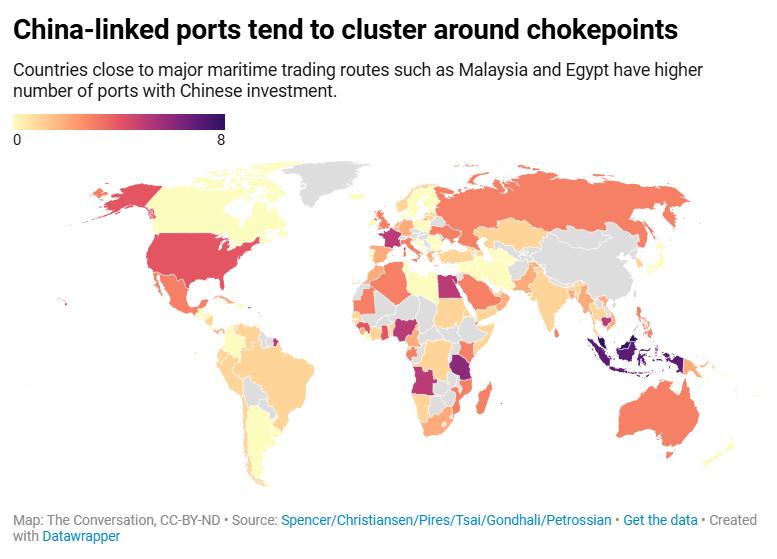
– researchers in maritime security, global infrastructure and trade – built the first global database of Chinese-affiliated ports and analyzed 133 coastal countries to understand why some host Chinese port investments while others do not.
We found that China’s overseas port expansion is not random. Far from being driven primarily by general business climate measures, the investments cluster near maritime chokepoints and piracy-prone shipping corridors, with more modest evidence that resource-rich countries are also more likely to host these ports.
The importance of chokepoints Some sea routes are more important than others. The Suez Canal, the Strait of Hormuz and the Strait of Malacca are examples of chokepoints – narrow routes through which large volumes of global trade and energy shipments must pass.
In our findings, countries near primary or secondary chokepoints, such as Panama or countries bordering the Dover Strait, such as France, were substantially more likely to host a Chinese-affiliated port. Put simply, proximity to critical trade bottlenecks strongly predicts Chinese investments.
This makes economic sense. China depends heavily on maritime trade to sustain economic growth. And ports near chokepoints sit along the world’s most sensitive shipping corridors and offer long-term commercial access in strategic locations.
Despite concerns in the West that Beijing is developing ports for military reasons, not every port is a naval base in disguise.
Most Chinese-affiliated facilities are commercial terminals. However, commercial infrastructure can still have strategic value. China’s first overseas military logistics base in Djibouti sits alongside the Chinese-operated Doraleh port complex. A report from the Congressional Research Service notes that the facility supports naval operations and regional access in the western Indian Ocean. That does not make other Chinese-owned or operated ports military installations. But control over terminals, logistics platforms, and supply chain data can shape economic and security relationships over time.
The role of piracy and resources The same corridors in which
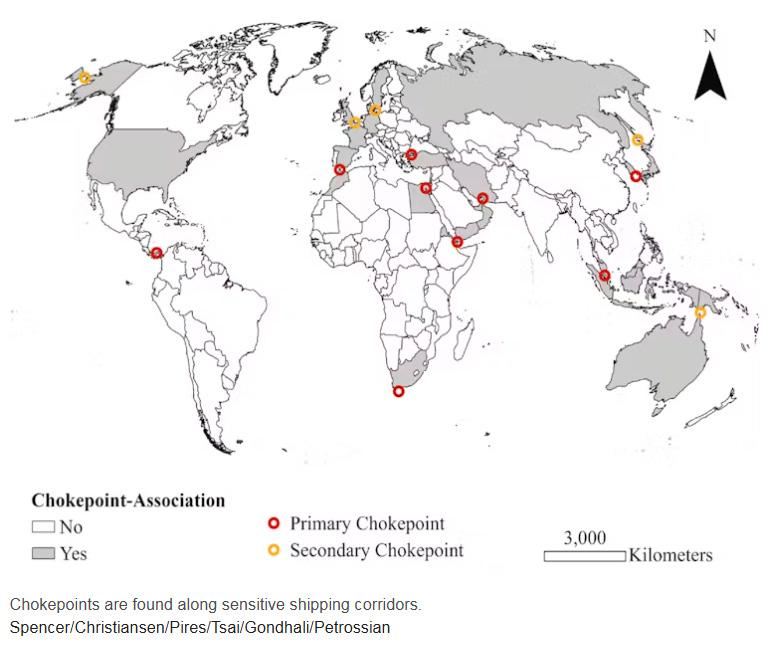
Beijing is concentrating port investment are also hot spots for maritime crime. In separate research, we found that seaports can facilitate illegal, unreported and unregulated fishing when oversight is weak. Our latest findings show that Chinese-affiliated ports are more common in countries already experiencing piracy and maritime insecurity.
That overlap does not mean ports cause illicit activity, but it shows these investments often occur in higher-risk maritime environments.
One of the most surprising findings from our study was the relationship between piracy and port investment.
Between 1991 and 2018, thousands of piracy incidents were recorded worldwide. But rather than avoiding risky waters, Chinese-affiliated ports are more common in countries experiencing higher levels of piracy.
Why invest in unstable corridors? One explanation is that piracy signals where trade routes are both vulnerable and valuable. Investing in ports in areas such as the Gulf of Guinea or parts of Southeast Asia may help Beijing protect its shipping interests. In this sense, piracy may signal not just risk but opportunity.
We also examined natural resource wealth of port host nations using a broad measure that includes extractive mineral and agricultural resources. We found modest evidence that countries with higher resource levels were more likely to host at least one Chinese-affiliated port, though this relationship was not consistent across all models.
Some commonly cited explanations as to where and why China invests in ports did not hold up in our analysis. Broad measures of business climate and governance, such as ease of doing business or institutional stability, were not consistent predictors of Chinese-affiliated port presence. This suggests that geography and maritime risk factors may matter more than general economic or governance indicators.
Broader implications
Whatever the motivations behind Chinese investments, their implications extend beyond local trade and logistics.
Ports are no longer just local infrastructure projects. They are nodes in global supply chains and increasingly in geopolitical competition.
And while not every
investment signals a covert military ambition, it would be naive to treat all port projects as politically neutral.
Recent U.S. policy responses reflect these growing concerns. In early 2026, the White House outlined a plan to strengthen the U.S. shipping industry and reduce reliance on foreign-controlled maritime infrastructure. The administration has also taken a closer look at foreign involvement in key facilities in the Western Hemisphere, including ports linked to the Panama Canal.
Such moves suggest that control over maritime infrastructure is no longer viewed in Washington as just a commercial issue but increasingly as a matter of economic and national security.
And as the map of countries with Chinese-affiliated ports suggests, Beijing’s investments are following the world’s most consequential trade routes not by accident, but by design.
Disclosure statement
The authors do not work for, consult, own shares in or receive funding from any company or organization that would benefit from this article, and have disclosed no relevant affiliations beyond their academic appointment.
Nearly 1 in 3 missing children are Black; Their cases get less attention
States including Pennsylvania are proposing Ebony Alerts to ensure missing Black children receive the same public safety response as their peers
By Itay Ravid Associate Professor of Law, Villanova University
Nearly one-third of U.S. children reported missing are Black, even though Black people constitute roughly 14% of the U.S. population.
To address one dimension of this problem, Pennsylvania and a few other states, including Alabama and Massachusetts, have in recent years proposed legislation to reform missing child alert systems. Not all missing children cases trigger an Amber Alert – the nationwide emergency alert system for missing children – but those that do receive greater public and media attention. These states suggest implementing an “Ebony Alert” that focuses on children of color.
Pennsylvania state Rep. Gina Curry introduced a bill “specifically tailored to finding missing Black and Brown youth” in June 2024 and reintroduced it in January 2025.
It is currently sitting in the Children and Youth Committee.
Pennsylvania and the other states where these laws are pending are taking a cue from California, which started its statewide Ebony Alert program in January 2024. California’s system aims to guarantee that cases of missing Black youth are treated fairly by law enforcement agencies and the public is alerted in similar fashion and through the same venues offered under Amber Alerts.
I am a law professor who studies victimization and inequalities in the criminal legal
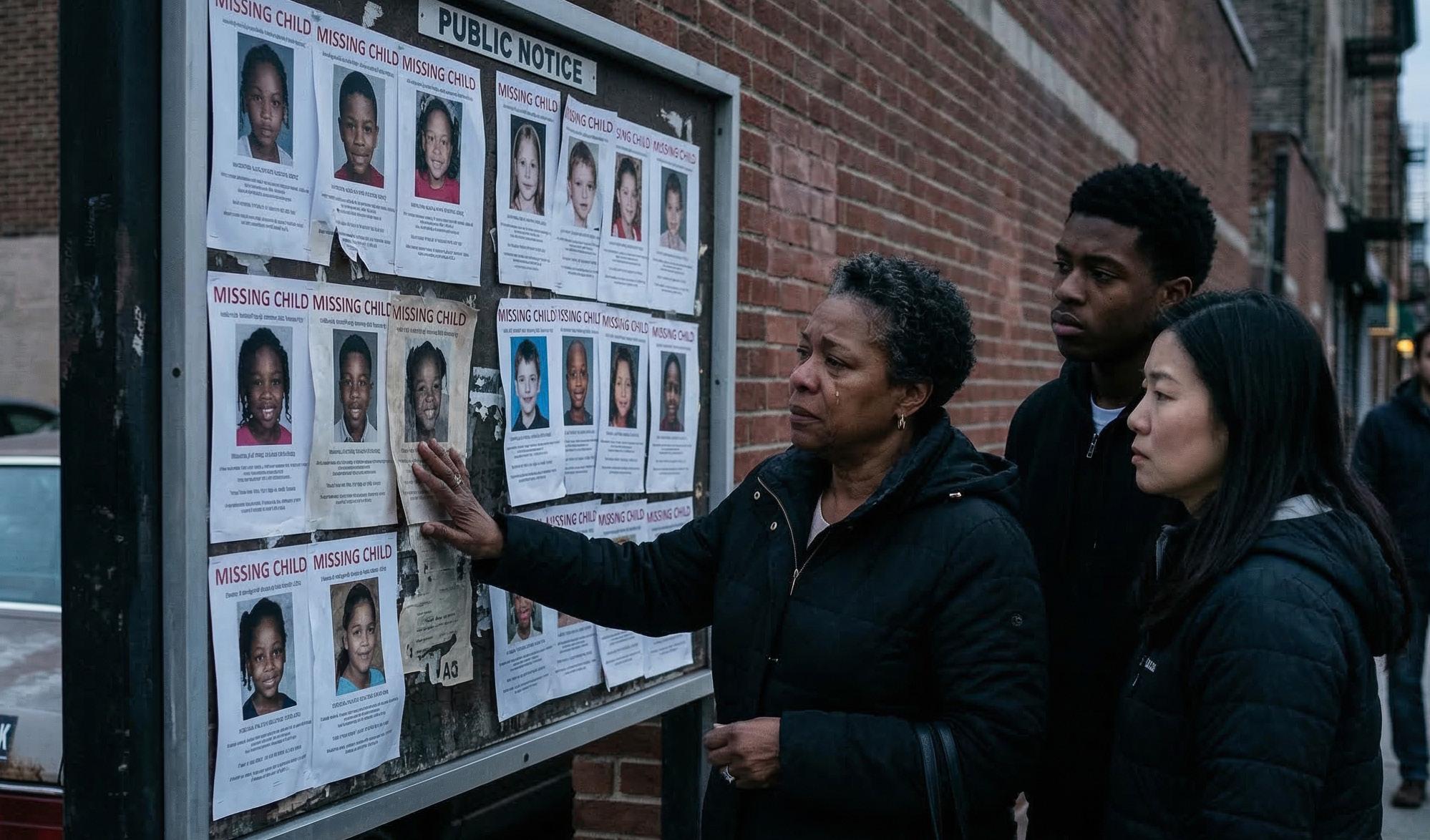
system. In a recent legal paper, attorney Tanisha Brown and I examined how Ebony-like laws might save more Black children who go missing.
Our study focuses specifically on Black children, though we recognize that the disproportionate number of missing children from Native American and other marginalized communities also deserve attention and further inquiry.
The crisis of missing Black children
Our original data analysis suggests that the probability of Black children going missing is three times that of white children.
The May 2025 Minority and Missing Report – a
collaborative effort among leading law enforcement and various civil society groups – also highlighted the disproportionate number of missing Black, American Indian and Alaska Native children.
These disparities extend beyond reporting rates for missing children.
Black children are also more vulnerable to trafficking and exploitation than white children. Structural inequalities, such as poverty, housing instability and overrepresentation in the foster care system, compound their risks.
Amber’s role in the disparities The Amber Alert system was adopted in the early 2000s.

Amber stands for America’s Missing: Broadcast Emergency Response. It is a powerful and comprehensive alert infrastructure that distributes information about a missing child through radio, television, text messages, highway signs, email notifications and major online platforms, including Google and Facebook.
Many of the kids who go missing are victims of crime – abducted from their neighborhoods, homes and schools, subjected to physical and psychological abuse, and, in some tragic cases, killed. Amber Alerts mobilize communities to assist in the search process.
To issue an Amber Alert, law enforcement must determine that specific statutory conditions are met, including the age of the child, law enforcement’s belief in imminent danger of serious injury or death, and the sufficiency of existing information to assist in recovery. Crucially, children who are categorized as “runaways” are excluded from Amber eligibility.
Advocacy groups for missing children argue that for a host of reasons, including implicit and explicit racial bias, Black children who go missing are disproportionately labeled as runaways. This excludes them from the protections of the Amber system and reduces the likelihood of them being found.
Even when an Amber Alert is initiated, some data suggests that Black children are less likely to be recovered than white children.
States respond with Ebony Alerts California’s Ebony Alert system ensures that all cases involving missing Black youth receive public notification comparable in scope and visibility to Amber Alerts. It offers different criteria for the initiation of the alerts. For example, an Ebony Alert may be issued when law
enforcement determines that an individual went missing under “unexplained and suspicious circumstances.”
The Pennsylvania proposal generally follows California’s provisions, while stating that it is intended for “young people of color.”
These efforts publicly acknowledge and attempt to address the disproportionate impact of missing-child crises on Black communities. They also shine light on the limitations of formally colorblind frameworks like Amber, as Amber’s race-neutral design has, in practice, produced racially disparate outcomes – with potential lifeor-death consequences.
Addressing Amber’s structural flaws
In order to fix the Amber Alert system in states without Ebony Alert legislation, we propose three reforms that would reduce flaws in its design.
1. A more holistic evaluation of missing child cases: Currently, all Amber factors must be present to initiate an alert. Our approach suggests that no single factor should stop an alert from being issued. Doing so will require law enforcement agents to approach each case with more complexity and nuance, including recognizing particular community needs.
2. A broader spectrum of “at risk” conditions: Law enforcement can issue alerts in cases beyond the most typical cases of “serious risk to bodily integrity or death.” This might include “unexplained and suspicious circumstances” or recognizing that the missing person might be subject to trafficking.
3. Shift the burden within law enforcement decision-making: To mitigate bias in alert initiation, we
propose that law enforcement bear the burden of explaining why not to initiate an alert – instead of why to – when they cannot explain circumstances behind a child going missing. Together, these reforms could significantly address existing problems within the Amber system itself.
Equal protection challenges
The design of Ebony Alert laws, however, raises a constitutional question: Can such laws withstand equal protection challenges?
Under current doctrine, Ebony Alert laws would likely be considered a racial classification subject to strict scrutiny, an almost impassable legal hurdle. The 2020 Students for Fair Admissions Inc. v. President and Fellows of Harvard College, in which the Supreme Court ruled that several race-conscious admission programs at Harvard and the University of North Carolina violated the equal protection clause, might have further challenged this type of legislation.
To pass strict scrutiny, laws must be narrowly tailored interventions that serve a compelling state interest.
As Brown and I argue, the interests and context of Ebony Alert laws differ meaningfully from those in the Students for Fair Admission case. Ebony is law-enforcement legislation aimed at protecting children who are victims of crime. Courts have long recognized that “safeguarding the physical and psychological well-being of a minor” is a compelling interest.
Ebony Alert laws also address documented racial disparities in the Amber system that undermine equal protection and public safety. According to case law, race-conscious measures may be deemed compelling when “essential to accomplishing criminal system objectives within a community served,” including maintaining trust and perceptions of fairness. These points are developed more fully in our paper.
To be sure, Ebony Alerts are not a panacea. As the Minority and Missing Report emphasizes, there are broader issues, such as inconsistent reporting protocols, inadequate training and strained relations between marginalized communities and police.
Nonetheless, Ebony Alert proposals invite a broader reckoning with how race-neutral systems can produce racially unequal outcomes. Carefully designed race-conscious remedies may be necessary to fulfill the criminal legal system’s most basic promise: protecting children’s lives.
Disclosure statement Itay Ravid does not work for, consult, own shares in or receive funding from any company or organization that would benefit from this article, and has disclosed no relevant affiliations beyond their academic appointment.
Ascend event connects emerging suppliers to Target opportunity
ASCEND Twin Cities is hold-
ing a virtual event to help developing companies build foundational understanding for long-term growth and engagement with Target. The event, titled “Building Foundations for Growth,” is a supplier-facing virtual session scheduled for Tuesday, April 28, 2025, from 2 PM EST/1 PM CST to 4 PM EST/3 PM CST. The symposium is specifically designed for suppliers who offer indirect goods and services to corporate customers, as well as companies looking to build corporate capacity and learn the process for Target’s consideration. Attendees are ex-
pected to gain clarity on several key areas, including: Supplier readiness expectations and engagement fundamentals. Target’s supplier engagement ecosystem.
• How to leverage certification as a growth tool.
• Real-world perspectives from Target teams and current suppliers. Participants will leave with clear next steps for continued engagement. To ensure a productive experience, attendees are required to complete pre-work, including registration in the supplier portal and the event registration form, prior to the session. Emnet Addo, Sup-
plier Development Manager at MEDA, said while participation does not guarantee inclusion or the award of business with Target, it serves as a valuable opportunity for foundational learning. Registration in the supplier portal: app.smartsheet.com/b/ form/3ecb6eba19314d2ea39e30976c5e9495

The university deal almost no one accepted is still a threat
Trump offered a restrictive deal to universities that almost all rejected – but the Compact for Academic Excellence in Higher Education may not be entirely dead
By Fred L. Pincus Emeritus Professor of Sociology, University of Maryland, Baltimore County
In October 2025, the Trump administration made a controversial proposal to nine major colleges and universities, including Dartmouth College and the University of Virginia. The administration offered them a deal: If they agreed to adopt certain policy changes, such as revising admissions and hiring practices, they would receive advantages in federal funding programs.
The administration later expanded the list of schools to more than 100 that could benefit from the deal, which it called the Compact for Academic Excellence in Higher Education.
The plan included a wide range of policy changes. For example, it would require schools to cap international student enrollment at about 15% and to use “legal force” against disruptive protesters.
At least two small schools not initially approached by the Trump administration expressed interest in signing the restrictive proposal: The New College of Florida, a public, liberal arts college in Sarasota; and Valley Forge Military College, a private, two-year military college in Wayne, Pennsylvania.
Although the pro-
posed agreement has received little public attention in the past few months, as a sociologist who has studied race and inequality, I think it is important to understand what the document says.
The proposal reveals President Donald Trump’s vision for U.S. colleges and universities. In this vision, universities would have less ethnic and racial diversity, and people’s First Amendment rights would be weakened.
The proposal also suggests a stronger federal role in shaping how universities operate, which I see as a major departure from the long-standing U.S. tradition of academic freedom.
A second act?
Despite the compact’s lack of support among universities, the Trump administration has indicated it may revise the plan.
In an interview on Jan. 21, 2026, Secretary of Education Linda McMahon said the administration is working on an updated version.
“There was a draft version, preliminary version, that went out that was intended to be sent to universities to get their reaction from it. … We are working on developing the right kind of compact with some input that we’re already getting,” McMahon said in an interview with The Daily Signal.
The proposal’s broad scope The original version of the compact included several major policy requirements.
First, universities would be prohibited from giving any preference to prospective students or faculty candidates based on their “sex, ethnicity, race, nationality, political views, sexual orientation, gender identity, religious associations.”
This aligns with a 2023 Supreme Court decision that colleges and universities cannot consider race as a factor in admissions decisions.
Second, the proposal would mandate that college student applicants take a widely used standardized test like the SAT – a requirement that an increasing number of schools have dropped in recent years.
Third, the compact calls on universities to “maintain a vibrant marketplace of ideas where different views can be explored, debated and challenged.”
Universities would also need to transform or abolish “institutional units that purposefully punish, belittle and even spark violence against conservative ideas.”
This follows the Trump administration’s push for more viewpoint diversity, or the exchange of a wide range of philosophical and political perspectives. Conservatives have frequently criticized what they

see as a liberal political bias on college campuses.
Fourth, the proposal would require campus administrators to use “lawful force” against “demonstrators” on campus. This action could be directed toward someone disrupting class instruction and libraries, or blocking certain parts of campuses.
The proposal also doubles down on Trump’s 2025 executive order that there are only two sexes: male and female.
This language would provide support for some universities limiting how gender is taught.
Texas A&M University announced in January 2026 that it is ending its women’s studies major. In February, the state of Florida also announced that it is limiting how sex and gender can be taught in introductory sociology classes at public universities.
Academic freedom under threat
The proposal does not specifically say that faculty cannot teach certain subjects or discuss particular issues. But as a retired so-
ciologist who has taught diversity-related courses and published a diversity textbook, I was particularly struck by the following part of the proposal: “Academic freedom is not absolute, and universities shall adopt policies that prevent discriminatory, threatening, harassing, or other behaviors that abridge the rights of other members of the university community.”
This very broad language gives university administrators, or government officials, leverage over professors’ and researchers’ basic, daily work and their overall academic freedom – meaning, their ability to research, teach and publish whatever they want, without fear of censorship or retaliation.
An ultimatum
None of the schools that the Trump administration initially approached signed on to the proposal.
The American Association of Colleges and Universities, one of the largest national higher education associations, described the compact as an ultimatum: Schools could sign the agreement and receive “multiple positive benefits,” including federal grants, or refuse and risk
losing federal funding.
The American Association of University Professors, a national nonprofit that advocates for academic freedom, said that the plan “stinks of favoritism, patronage and bribery.”
Some conservative groups, including the Heritage Foundation, supported the administration’s attempt to address problems in higher education, such as rising tuition. However, the organization also warned that “federal officials should avoid expanding the government’s role in higher education” while pursuing those goals.
It is unclear whether the White House will release a revised version of the compact. Still, the original proposal offers insight into how the administration hopes to reshape American higher education.
Disclosure statement
Fred L. Pincus does not work for, consult, own shares in or receive funding from any company or organization that would benefit from this article, and has disclosed no relevant affiliations beyond their academic appointment.
How Black male college athletes deal with anti‑Black stereotypes on campus
By Jonathan Howe Assistant Professor of Sport Management, Temple University
In an effort to avoid stereotypes about Black male athletes, such as being labeled a “dumb jock,” Spike, a college football player, says he wore athletic clothes to class as little as possible.
“I mean, granted, I’m a 6-foot-4, 240-pound Black kid on campus, so it’s kind of hard to get away from that,” he said. “But I didn’t want any, you know, significant confirmation that I was an athlete. So, I just wore like a collared shirt, jeans and nice shoes every day.” Trey, a baseball player, refrained from speaking up or sharing personal information – even with his teammates. He said he was often “outnumbered in opinion” as he was one of two Black athletes on a team of 40, which led to him “not even wanting to speak up” about issues that may cause conflict with others. “I’m a Black student-athlete and, like, that already makes me have to carry myself a different way,” he said.
I’m a professor of sport management who researches the experiences of Black male college athletes. During the 2020-21 academic year, I interviewed 16 Black male college athletes at Division I colleges across the U.S. I wanted to know how they changed their behavior to navigate stereotypes about them.
I also asked participants, who competed in numerous sports – including football, baseball, cheer, diving, and track and field – to record audio diaries about the topic as part of the study. I found that these college athletes, at times, went out of their way to change how they present themselves to others in order to avoid anti-Black racism and “dumb jock” stereotypes on campus. At other times, they pushed back against these stereotypes as a form of resistance.
New research shows Black male college athletes routinely alter how they dress, speak and present themselves to avoid anti-Black racism and dumb jock stereotypes
‘I don’t bring up that I am a student-athlete’ Self-presentation refers to how someone acts or behaves during social interactions in order to influence how others perceive them. For example, a person may change how they speak, or their word choices, depending on who is around them.
The Black male college athletes in my study altered their presentation in a number of ways, including their dress or clothing and their speech. They also limited how much information they shared, and at times they hid details about their identity.
Marc, another football player, reflected on how being a Black male college athlete affected how he spoke – both the frequency and delivery –during class. “You have to be, like, more engaged,” he said. “You got to assert yourself more and you got to be more analytic about things.”
These adjustments were not restricted to academic environments. Marc was also careful about what information he shared in various athletic settings, too. “You do not really talk about personal stuff or anything like that,” he said. Participants did not want their vulnerabilities used against them by their coaches or academic advisers.
Another strategy
Black male college athletes used was hiding details about their identity – most often their athletic identity. Tyler, a track athlete, noted, “I try to make sure I don’t bring up that I am a student-athlete. I’m just trying to build my identity away from the sport.”
Black students, white campuses
Black men represent about 6% of total college students in U.S. four-year public institutions.

Yet at Division I schools, the highest level of college athletic competition, they represent roughly 45% of football players and 51% of men’s basketball players.
Overall, Black men represent 12% of all Division I college athletes, excluding historically Black colleges and universities.
Meanwhile, at Power Five schools, where college football is a big-time business, as many as 1 in 6 Black male students are athletes, compared with 1 in 50 white students.
The vast majority of Division I schools are predominantly white institutions. Their athletic departments, including coaching staffs and administrators, are overwhelmingly white. For example, 78% of Division I athletic directors, 81% of head coaches, 68% of assistant coaches and 90% of head athletic trainers are white.
Similar to their athletic experience, these athletes do not see many other Black people across campus. Faculty on
these campuses are 93% nonBlack.
Racism and discrimination
It is well documented that Black male college athletes experience racism and discrimination while attending these predominantly white schools. This includes, for example, unequal enforcement of school policies and less access to educational opportunities.
They are discriminated against for being Black, for being Black males and for being athletes. Although touted for their physical prowess, Black male athletes are often labeled “dumb jocks” – their intelligence somehow discredited by their physical stature.
They are sometimes seen by students, faculty, staff and even fans as lacking the intellectual ability and motivation to succeed academically. They are characterized as illegitimate students who undermine the academic mission of the university and receive special treatment.
One study found
that professors and academic counselors had lower academic expectations of Black college athletes compared with their white counterparts and that these athletes lacked autonomy in making academic decisions. Academic counselors often selected their courses, as opposed to the athletes registering themselves, which made the athletes feel powerless.
Another study found that faculty members were more likely to attribute Black male college athletes’ success to policies, such as affirmative action, instead of their merits, as they did for white athletes.
Resisting societal pressure
Not all the athletes altered their behavior or appearance to avoid anti-Black stereotypes. Keyvon, a football player, expressed that he presents himself authentically in predominantly white spaces as a way to “apply pressure” and force people to get comfortable with his Blackness.
Being a big-time college athlete indeed presents
privileges, such as a pseudo-celebrity status, which at times can shield Black male college athletes from the impact of stereotypes and anti-Blackness. However, this is often the case solely when Black males perform well in their sport. Sport performance should not determine how people treat Black male college athletes. Nor should Black male college athletes be placed in a box when it comes to how they present themselves, or risk anti-Black discrimination if they express themselves authentically. Ultimately, Black male college athletes will present themselves in a manner they deem appropriate – whether that aligns with what society expects or not.
Disclosure statement Jonathan Howe does not work for, consult, own shares in or receive funding from any company or organization that would benefit from this article, and has disclosed no relevant affiliations beyond their academic appointment.
Technology
The $200 million question: who controls America's most powerful AI system?
The breakdown between Anthropic and the Defense Department is now in federal court, and the outcome could determine how every AI company in America does business with the government.
By Syed Fahad Fayyaz
Contributing Writer
On February 27, Anthropic CEO Dario Amodei released a statement saying his company could not allow the Pentagon to deploy its artificial intelligence models without certain limitations. Within hours, President Donald Trump called the company’s leadership “leftwing nut jobs” on Truth Social. Defense Secretary Pete Hegseth designated Anthropic a “supply chain risk to national security,” a label historically reserved for foreign adversaries. And OpenAI, the rival firm whose founders Amodei once worked alongside, stepped in to take the contract.
What started as a contract negotiation has become the most significant confrontation between the technology industry and the U.S. national security establishment in years. It has produced federal lawsuits, a consumer boycott, high-profile resignations, and difficult questions that neither side has fully answered.
What each side wanted
The dispute centers on a $200 million Pentagon contract for Anthropic’s Claude AI model, which had already been integrated into intelligence analysis, operational planning, cyber operations, and logistics across multiple agencies. Anthropic was the first AI lab permitted to operate on the Defense Department’s classified networks. Palantir, which generates roughly 60 percent of its U.S. revenue from government contracts, built its AI infrastructure around Claude, according to Piper Sandler analysts.
When Pentagon Chief Technology Officer Emil Michael initiated a renegotiation, the Defense Department asked for unrestricted access to use Claude for all lawful purposes. Anthropic agreed to that standard with two exceptions: it did not want its technology powering weapons systems that could select and engage targets without human oversight, and it did not want its models used to conduct mass surveillance of American citizens.
Anthropic’s position, as stated by Amodei, was that these were narrow, principled restrictions that had not prevented a single government mission from being carried out. The company argued it had a responsibility to set boundaries on how its most powerful technology could be used.
The Pentagon’s position was, from the military’s perspective, a contractor that places conditions on how its products are used during a national security emergency is a contractor the military cannot fully depend on. The Defense Department maintained that it must retain the ability to deploy technology for all lawful purposes without restrictions imposed by a private vendor. Neither side moved. On February 27, the contract collapsed.
The fallout Trump’s social media directive ordered every federal agency to “immediately cease” using Anthropic’s technology, with a six-month phase-out for the Defense Department. Hegseth’s supply chain risk designation barred any defense contractor or supplier from conducting commercial activity with the company. The General Services Administration terminated Anthropic’s OneGov contract covering all three branches of the federal government.
Hours later, OpenAI announced its own deal with the Pentagon. CEO Sam Alt-

man wrote on X that the Defense Department had agreed to OpenAI’s principles prohibiting domestic mass surveillance and autonomous weapons. He described the agreement as proof that working with the military while maintaining safety guardrails was possible.
Critics quickly challenged that characterization. OpenAI published an excerpt of its contract stating the Pentagon “may use the AI System for all lawful purposes,” language that legal analysts noted was functionally similar to what Anthropic had rejected.
The Electronic Frontier Foundation called the contract’s surveillance protections “weasel words.” An analysis in MIT Technology Review cited Alan Rozenshtein, a University of Minnesota law professor, who observed that much of what ordinary people consider surveillance is not legally classified that way.
OpenAI responded.
By March 3, Altman acknowledged the deal had been rushed and issued amended language explicitly stating that OpenAI’s systems would not be “intentionally used for domestic surveillance of U.S. persons and nationals.” The Pentagon confirmed that OpenAI’s tools would not be used by intelligence agencies such as the NSA. Altman also said publicly that Anthropic should not have been designated a supply chain risk.
The consumer response was significant. According to Sensor Tower data reported by TechCrunch, ChatGPT uninstalls in the United States surged 295 percent above normal daily averages. A boycott campaign under the hashtag QuitGPT claimed more than 2.5 million participants. Claude climbed to the number one free app in the Apple App Store, with U.S. installs rising 37 percent on Friday and 51 percent on Saturday, according to the same reporting.
Dissent and resignations
On March 7, Caitlin Kalinowski resigned from OpenAI, where she had led the company’s hardware and robotics team. Kalinowski, who previously held roles at Meta, Oculus VR, and Apple, said her departure was not a protest against national defense work itself. In a series of posts on X, she wrote that sur-
veillance of Americans without judicial oversight and lethal autonomy without human authorization were lines that “deserved more deliberation than they got.” She described the issue as one of governance, not politics. Her resignation was reported by Bloomberg, NPR, CNBC, and The Hill.
Dozens of researchers from OpenAI and Google signed an open letter supporting Anthropic’s position. Aidan McLaughlin, a research scientist at OpenAI, posted on X that he did not think the deal was worth it, a message that drew nearly 500,000 views.
The legal battle On March 9, Anthropic filed two federal lawsuits. The primary complaint, filed in U.S. District Court in San Francisco, named more than a dozen federal agencies as defendants, including the Department of Defense, the Treasury Department, and the General Services Administration. The lawsuit called the government’s actions “unprecedented and unlawful,” arguing the supply chain risk statute was designed to protect against foreign adversaries, not to punish a domestic company over contract terms. The company also raised a First Amendment claim, asserting the designation was retaliation for its public advocacy on AI safety.
The government has not publicly conceded any of these arguments. Federal agencies hold broad authority over procurement decisions, and courts have historically given significant deference to the executive branch on national security matters. At a March 11 status conference, Justice Department attorney James Harlow declined to commit to taking no additional actions against Anthropic before a hearing.
On March 10, Microsoft filed an amicus brief urging the court to issue a temporary restraining order. Microsoft, which is both a major investor in Anthropic and one of OpenAI’s biggest backers, warned that without relief, defense contractors would need to immediately reconfigure systems, a process that “could potentially hamper U.S. warfighters at a critical point in time.” That same day, 37 researchers and engineers from OpenAI and Google, including Google DeepMind chief scientist Jeff Dean, filed
their own amicus brief. A civil rights coalition including the Electronic Frontier Foundation and the Cato Institute filed a separate brief arguing the designation violated Anthropic’s free speech rights. U.S. District Judge Rita F. Lin moved the preliminary injunction hearing to March 24.
Claude in active military operations
One of the most notable aspects of this dispute is that the Pentagon continued using Claude for active military operations even after announcing the ban. The Wall Street Journal reported that Claude was used through Palantir’s integration during U.S. and Israeli strikes on Iran, operations that were underway at the time the supply chain risk designation was announced on February 27.
At Palantir’s AIPcon 9 conference in Maryland on March 12, CEO Alex Karp confirmed on camera that Claude remained in use. “The Department of War is planning to phase out Anthropic; currently, it’s not phased out,” Karp said, according to reporting from the conference. “Our products are integrated with Anthropic, and in the future, it will probably be integrated with other large language models.”
Pentagon CTO Emil Michael acknowledged the difficulty of removing Claude from military systems. “You can’t just rip out a system that’s deeply embedded overnight,” he said. An internal Pentagon memo from CIO Kirsten Davies stated that use of Anthropic’s tools might continue beyond the six-month phase-out period if deemed critical to national security.
This situation has drawn criticism from multiple directions. Anthropic’s supporters argue it undermines the credibility of the supply chain risk label: if Claude is safe enough to use during strikes on Iran, how can its maker be treated like a foreign adversary? The Pentagon’s defenders counter that this dependency on a single vendor’s AI is precisely the kind of vulnerability the military is trying to eliminate by insisting on unrestricted terms.
The political question Observers on both sides have raised the question of whether this dispute is purely about pol-
icy or whether political dynamics played a role. Amodei did not attend Trump’s inauguration and was absent from White House events where other tech executives appeared. White House AI czar David Sacks has publicly accused Anthropic of promoting “woke AI.” A fellow at the Council on Foreign Relations said the dispute “feels like it is about politics and personalities” and is “masquerading as a policy dispute.”
Others push back on that framing. Every administration, regardless of party, depends on reliable defense suppliers. If a technology company can impose moral conditions on how the military uses its products, that sets a precedent any Pentagon leadership would resist. The Information Technology Industry Council, representing Apple, Amazon, Google, Meta, Microsoft, and others, wrote to the White House urging reversal of the designation, but framed their concern around procurement policy, not partisanship.
What this could mean for communities
For readers in the Twin Cities and across the country, the questions at the heart of this dispute have direct relevance.
The debate over domestic surveillance carries particular weight for Black communities. The FBI’s COINTELPRO program, which ran from 1956 to 1971, systematically surveilled and disrupted Black activists and organizations, including the Black Panther Party and leaders such as Dr. Martin Luther King Jr. The Electronic Frontier Foundation has documented how post-9/11 surveillance programs expanded the government’s monitoring capabilities, with communities of color bearing a disproportionate share of that scrutiny.
Artificial intelligence has introduced new dimensions to these concerns. The Brennan Center for Justice has reported that facial recognition technologies are significantly less accurate for nonwhite faces, contributing to wrongful arrests. In Detroit, a pregnant Black woman was arrested, detained, and charged with robbery and carjacking based on a faulty facial recognition match. The Electronic Privacy Information Center has documented how
predictive policing algorithms, trained on historically biased data, have led to over-policing in communities of color.
At the same time, military technology has implications for employment, economic investment, and educational pipelines. Defense contracts drive significant job creation and research funding. Restrictions on how AI companies can work with the government could affect which communities benefit from that investment and which are left out. Whether AI systems should come with restrictions when deployed by the government, and who gets to set those restrictions, are questions that affect civil liberties, public safety, economic opportunity, and the relationship between citizens and the state.
What comes next
The preliminary injunction hearing before Judge Lin on March 24 will be a significant moment. If the court blocks the Pentagon’s designation, it will affirm that private companies can maintain conditions on government use of their technology and set a precedent limiting the use of supply chain risk labels against domestic firms. If the court upholds the designation, it will signal that companies imposing safety conditions on government contracts risk losing access to the largest single buyer of technology in the world.
Congress has begun to engage. Senator Mark Kelly of Arizona met with Altman and raised questions about AI use in military operations and domestic surveillance. Multiple federal agencies, including Treasury, State, and Health and Human Services, have confirmed they are migrating off Claude following Trump’s directive. The technology itself continues to advance, becoming more capable, more integrated into critical systems, and harder to remove once deployed. However this legal and political battle is resolved, the outcome will shape how artificial intelligence is governed in the United States for years to come. Both sides believe they are protecting something essential. What the courts and Congress decide will determine which vision prevails.
Anthropic CEO Dario Amodei, left, and Pentagon Chief Technology Officer Emil Michael. The two were directly across the negotiating table when talks over AI contract terms collapsed in February, setting off the most significant dispute between the technology industry and the national security establishment in years.
A Turing Award winner raises $1 billion to prove the AI industry has taken a wrong turn
By Syed Fahad Fayyaz
Contributing Writer
The artificial intelligence industry is in the middle of the largest capital deployment in technology history. OpenAI closed a $110 billion funding round in February. Google, Meta, Amazon, and Microsoft have collectively committed hundreds of billions more to building and scaling large language models, the text-prediction systems that power ChatGPT, Gemini, Claude, and the wave of AI chat
bots that have reshaped how the world thinks about computing. Nearly every major technology company on the planet is betting that these models, trained on enormous quantities of human-written text, represent the clearest path toward machines that can truly think.
Yann LeCun thinks they are all wrong. On March 10, the Turing Award winner and one of three scientists credited with inventing modern deep learning announced $1.03 billion in seed funding for his new company, Advanced Machine Intelligence Labs, known as AMI. It is the largest seed round ever raised by a European startup. The company has no product, no revenue, and roughly a dozen employees. Its pre-money valuation sits at $3.5 billion. And its founding thesis is a direct challenge to the industry’s most expensive assumption: that large language models are the road to real intelligence.
LeCun, who spent twelve years as Meta’s chief AI scientist before leaving in November 2025, believes language models are a statistical trick. They predict words, but they do not understand anything. His new company will build something different: so-called world models, AI systems that learn from video, audio, and physical sensor data to understand how the real world works, rather than how language describes it. If he is right, the dominant technology stack of the AI era could be headed for an architectural dead end. If he is wrong, AMI Labs will be remembered as the most expensive research grant in European history.
The departure from Meta LeCun joined Facebook in 2013 to build its AI research division, known as FAIR. For more than a decade, he had unusual freedom. Meta gave him resources to pursue fundamental research without requiring commercial products. He described the arrangement to the Financial Times as having both a clean slate and total creative liberty. That changed in 2025. After the disappointing launch of Meta’s Llama 4 model in April, Mark Zuckerberg overhauled the company’s entire AI operation. He invested $14.3 billion in Scale AI and recruited its 28-year-old CEO, Alexandr Wang, as Meta’s new chief AI officer. Wang was installed to lead a new division called Meta Superintelligence Labs, focused on commercially competitive large language models. Under the new structure, LeCun would report to Wang.
In an explosive interview with the Financial Times published in January 2026, LeCun laid out his frustrations. He described Wang as lacking research experience, telling the paper there was “no experience with research or how you practice research, how you do it.” When pressed about reporting to the younger executive, LeCun did not hold back. “You don’t tell a researcher what to do,” he said. “You certainly don’t tell a researcher like me what to do.”
LeCun also revealed that Meta’s AI team had manipulated some of the Llama 4 benchmark results, an accusation that drew wide attention. According to LeCun, the controversy caused Zuckerberg to lose confidence in the GenAI organization. He told the Finan-
cial Times that the CEO “basically sidelined the entire GenAI organisation” after the scandal and predicted more departures were coming. In October 2025, Meta laid off 600 employees from the Superintelligence Labs division, including researchers from FAIR.
LeCun announced his departure on LinkedIn on November 18, 2025. In his post, he wrote that AMI’s goal was to bring about “the next big revolution in AI: systems that understand the physical world, have persistent memory, can reason, and can plan complex action sequences.” Meta said it would partner with his new company. LeCun described the split as amicable but acknowledged the difference in vision was irreconcilable.
A different architecture for intelligence
AMI Labs is headquartered in Paris, with offices planned in New York, Montreal, and Singapore. LeCun serves as executive chairman. Day-to-day operations are led by CEO Alexandre LeBrun, a French serial entrepreneur who previously co-founded and ran Nabla, a medical AI startup. The founding team includes Saining Xie as chief science officer, formerly of Google DeepMind; Pascale Fung as chief research and innovation officer, formerly of Meta; Michael Rabbat as VP of world models, formerly of Meta; and Laurent Solly as COO, formerly Meta’s vice president for Europe. The core research centers on an architecture LeCun developed at Meta called JEPA, or Joint Embedding Predictive Architecture. In an exclusive interview with MIT Technology Review published in January 2026, LeCun explained the idea in plain terms. “The world is unpredictable,” he said. “If you try to build a generative model that predicts every detail of the future, it will fail. JEPA is not generative AI. It is a system that learns to represent videos really well.”
The distinction from standard large language models is fundamental. A language model predicts the next word in a sequence. A diffusion model predicts every pixel of a future image frame. Both approaches require modeling everything, including all the random, unpredictable noise in the real world. JEPA takes a different path. Rather than predicting the future in full sensory detail, it predicts the future in an abstract representational space. It learns the underlying physical rules, like gravity, momentum, and object permanence, while ignoring irrelevant noise. Think of it as the difference between memorizing every frame of a video and understanding the physics that make the video happen.
In his interview with Wired, published around the time of the funding announcement, LeCun was blunt about the industry’s prevailing thesis.
“The idea that you’re going to extend the capabilities of LLMs to the point that they’re going to have human-level intelligence is complete nonsense,” he said. He told Reuters that AMI aims to become “the main provider of intelligent systems, regardless of what the application is.” In that same Reuters interview, LeCun disclosed that AMI is already in conversations with Meta about deploying its technology in the Ray-Ban Meta smart glasses, calling it one of the nearer-term potential applications. He also pointed to domestic robots as a natural fit. “You need a domestic robot to have some level of common sense to really understand the physical world,” he said.
The investors and the long bet The $1.03 billion round was coled by Cathay Innovation, Greycroft, Hiro Capital, HV Capital, and Bezos Expeditions. Corporate backers include Nvidia, Samsung, Toyota Ventures, Te-
Yann LeCun, one of the inventors of modern deep learning, left Meta and raised $1.03 billion in four months for a startup built on the conviction that large language models will never produce real intelligence

masek, and Publicis Groupe. Individual investors include Tim and Rosemary Berners-Lee, Jim Breyer, Mark Cuban, Xavier Niel, and former Google CEO Eric Schmidt. According to reporting by Sifted, LeCun initially sought roughly 500 million euros. Demand significantly exceeded that figure.
LeBrun, the CEO, was candid with TechCrunch about the timeline. “AMI Labs is a very ambitious project, because it starts with fundamental research,” he said. “It’s not your typical applied AI startup that can release a product in three months, have revenue in six months, and make $10 million in annual recurring revenue in 12 months.” He acknowledged it could take years for world models to go from theory to commercial applications.
This is, in other words, an enormous research grant dressed as a startup investment. Investors are betting on LeCun’s track record and on a long-horizon thesis that language models will hit a ceiling. What it means when the most-funded seed round in European history is essentially a wager on scientific discovery is a question the industry is still processing.
Open research in an era of closed labs
One of AMI’s most notable commitments is to open research. LeBrun told TechCrunch that the company plans to publish its findings and open-source parts of its technology. “We think things move faster when they’re open, and it’s in our best interest to build a community and a research ecosystem around us,” he said. In an era when OpenAI, Google, and even Meta under its new AI leadership have moved toward closed-source models and restricted publication, AMI’s stance could reshape the global research ecosystem. LeCun reinforced this point in his MIT Technology Review interview, arguing that the shift toward secrecy in the AI industry is slowing innovation. He urged academics not to work on large language models, saying there was no point trying to compete with industry on that front. “Work on something else,” he said. “Invent new techniques. The breakthroughs are not going to come from scaling up LLMs.”
A growing field and a geopolitical dimension AMI is not alone in chasing world models. Fei-Fei Li’s World Labs secured $1 billion
in funding last month and is reportedly in talks to raise at a $5 billion valuation. Other startups like SpAItial are also pursuing the approach. Nvidia has invested heavily in world model infrastructure through its Cosmos platform. LeBrun acknowledged the trend, warning in his TechCrunch interview that world models would become the next buzzword and that within six months, every startup would claim the label to attract investors. There is also a geopolitical dimension. LeCun has deliberately positioned AMI as a European company, one of the few frontier AI labs that are neither Chinese nor American. His choice of Paris as headquarters, and the involvement of French investors like Cathay Innovation and Daphni, reflects that framing. Pierre-Éric Leibovici, founder and managing partner of Daphni, told Sifted that AMI could be “the first European company to reach the scale of the GAFAM companies.” European AI startups have historically struggled to retain their biggest winners, with late-stage capital and talent mobility pulling companies toward the United States. AMI could break that pattern, or it could become another data point in the same old story.
What comes next LeCun told Wired that AMI plans to release its first models quickly. But quickly, in the context of fundamental research, is a relative term. LeBrun has said the company will spend its first year focused entirely on research and development. There is no commercial timeline. There is no product roadmap. There is a Turing Award winner, a billion dollars, and a conviction that the rest of the industry is building on the wrong foundation.
Whether that conviction holds up will take years to determine. In the meantime, the AI industry is watching. One of its founding architects has placed the largest research bet in European startup history on the proposition that the technology everyone else is building is not the future. In his MIT Technology Review interview, LeCun put it simply: “We are going to have AI systems that have human-like and human-level intelligence, but they’re not going to be built on LLMs, and it’s not going to happen next year or two years from now.” Major conceptual breakthroughs, he said, are needed first. AMI Labs is his attempt to make them.
Credit: Nick Fetty/The New York Academy of Sciences
Yann LeCun, executive chairman of AMI Labs and a recipient of the Turing Award, left Meta in November 2025 after twelve years as its chief AI scientist. His new Paris-based startup raised $1.03 billion in seed funding on March 10, 2026.
Books, Arts & Culture Hollywood grapples with AI’s growing influence
From production to post, the film industry is grappling with AI's growing footprint.
By Holly Willis Professor of Cinematic Arts, University of Southern California
I teach a course on AI and filmmaking at USC’s School of Cinematic Arts, and lately, rather than planning each session well in advance, I’ve been structuring the class the night before. I’ll browse platforms like X, Substack and YouTube, selecting the most provocative articles and video clips to present the following morning.
It’s a testament to how quickly artificial intelligence’s relationship to filmmaking is evolving: Each week brings new – often startling –developments.
The next morning in class, my students and I debate the ethics, aesthetics and the storytelling changes taking place in these collaborations with AI.
And we’re not alone: Throughout Hollywood, everyone – aspiring actors and filmmakers, stars, screenwriters and studio execs – seems to have a take on what’s coming next.
Nothing uncanny about this clip
In February 2026, a 15-second AI-generated video clip of Tom Cruise battling Brad Pitt on a burned-out highway overpass went viral. Depending on the viewer, the video elicited either admiration, outrage or existential hand-wringing.
Created by Irish filmmaker Ruairi Robinson via a generative-AI tool called Seedance 2.0, the video marked yet another milestone in the propulsive growth of AI tools.
Seedance 2.0 – which was developed by ByteDance, the Chinese company behind TikTok – is now one of the many AI tools available to create short-form video clips. But unlike most AI-generated videos, Pitt and Cruise don’t look creepy, uncanny or animated in the clip, which almost perfectly mimics live-action footage. The appearance of two A-list stars in a fairly realistic scene created by a relatively unknown director using stolen likenesses jolted the industry.
The backlash was swift. Disney sent a ceaseand-desist letter, claiming that the video was generated from a dataset that most likely includes Disney’s copyrighted characters. The actors’ union, SAG-AFTRA, pointed to the video’s “blatant infringement” of the actors’ likenesses, as well as their voices.
“SAG-AFTRA stands with the studios in condemning the blatant infringement enabled
by Bytedance’s new AI video model Seedance 2.0,” the guild wrote in a statement. This practice, the guild added, “undercuts the ability of human talent to earn a livelihood,” while disregarding “law, ethics, industry standards and basic principles of consent.”
In class, after watching the video, we explored the ethics of using someone’s likeness without permission, the challenges facing actors who build careers based on their unique ability to embody characters, and what the future holds for our understanding of acting.
If filmmakers can prompt fake actors to deliver precise performances, where does that leave human actors?
In with the old Since 2023, the skyline of the Las Vegas strip has been dominated by an illuminated orb called the Sphere: an entertainment complex featuring a 360-degree LED screen covering 160,000 square feet (14,864 square meters). The Sphere recently surpassed 2 million tickets sold for a reimagining of the classic 1939 film “The Wizard of Oz.”
The film, which premiered in August 2024, was shortened, its color was enhanced, and it was stretched to expand across the interior of the dome. AI was used to transfer the imagery from the film’s original, modest aspect ratio to the giant dome. This required generating new imagery around the edges of the original shots in what’s known as “AI outpainting.” The technology was also deployed to boost the original film’s resolution and to enhance certain scenes.
Some critics fretted that this fairly radical augmentation of the original classic would offend viewers. Instead, it has drawn them in droves to the Sphere, where they’ve been willing to shell out between US$100 and $200 per ticket.
Not bad for a movie about a girl from Kansas made in 1939.
Given the resounding success of “The Wizard of Oz,” experts expect producers to plumb the film archives for other potential hits and enhance them with AI before screening them in venues as varied as IMAX theaters and Cosm, another 360-degree dome with locations in Los Angeles, Dallas and Atlanta.
Or AI can simply be used to create material that was never completed for a historic film.
In fact, The New Yorker recently profiled AI media entrepreneur Edward Saatchi, who is working to recreate and reincorporate lost footage from Orson Welles’ 1942 fea-
ture “The Magnificent Ambersons.” While Welles was in Brazil shooting a documentary, executives at RKO Radio Pictures reedited the film without his approval after a poor preview screening. They cut around 45 minutes, replaced the original ending with a happier one and destroyed most of the footage that had been removed.
Saatchi’s idea is to build a dataset that includes the existing film, as well as scripts, notes, images and even new performances by actors. Then he plans to use his AI platform, Showrunner, to create new scenes from this data.
While Saatchi hopes to honor the director’s creative vision by producing the film he originally intended, his efforts open up some thorny questions. Is it appropriate to take an existing artwork and revise it without the creator’s input? Isn’t there something sacrosanct about a film, the intentions of the director and the performances of the actors in a film’s original form? To what extent should these questions be overlooked if refashioning old movies will introduce them to new audiences?
Fewer opportunities? There’s also an undercurrent of anxiety in my classes. What will happen, my students often wonder, once they graduate?
They’re worried that within a year or two, AI will have replaced entry-level film industry jobs, from concept artists to apprentice-level editors, before they’ve even had a chance to enter the workforce.
They have reason to fear.
In 2024, the Animation Guild published a sobering report claiming that by 2026, “creative workers will be facing an era of disruption, defined by the consolidation of some job roles, the replacement of existing job roles with new ones, and the elimination of many jobs entirely.”
Some of those predictions have borne out: 41,000 jobs in film and television have disappeared in Los Angeles County alone over the past three years.
But I’ve tried to counter the hard statistics with some stories of thoughtful practices.
For example, filmmaker Paul Trillo at the AI studio Asteria has talked about how he seeks to keep artists at the center of the process. When he detailed the company’s work on a music video for the singer-songwriter Cuco, he was keen to highlight the number of artists working on the project. Yes, AI tools were used.


Music scene shines with RenegadeEnsemble's Vanguard series
The Twin Cities' vibrant new music landscape is set to take center stage next week as the non-profit RenegadeEnsemble presents the second installment of its 2026 Vanguard New Music Series. The concert, scheduled for Thursday, March 19, at 7 p.m., will feature the vocal trio Lumen Antiqua at Arts on Lafond in St. Paul.
Trio to premiere Posthuma work Lumen Antiqua, a trio composed of soprano Rachel Farhi, mezzo-sopranos Jessi McKinnon and Becca Tobin, will anchor the first half of the program. They are slated to premiere Epigraphs: A Cantata Inspired by Louisa May Alcott, a new work
by RenegadeEnsemble Artistic Director Jonathan Posthuma, which will also feature guest soloist Abs Trewin. The program highlights the ensemble's focus on “connecting audiences to the living thread of song” and includes pieces by
second half of the

Lumen Antiqua, a trio composed of soprano Rachel Farhi, mezzo-sopranos Jessi McKinnon and Becca Tobin
Threads presents In Full Bloom - a 15th Anniversary Gala
Threads Dance Project is gearing up for a major milestone, inviting the community to celebrate its 15th Anniversary Gala, "In Full Bloom," which is now less than a month away.
The event is a heartfelt "thank you" to all who have contributed their time, talents, and generosity over the years and celebrates the company's accomplishments and its standing in the Minnesota dance community.

The event features special performances by the professional Threads Company as well as students from the NexGen/YDP programs. A highlight of the night will be the honoring of three Community Champions—Roxanne Wallace, Erin Scott, and Kenneth Charles—whose contributions have been integral to the project's success.
Artists and writers are often hesitant to disclose they’ve collaborated with AI; and those fears may be justified
By Joel Carnevale Assistant Professor of Management, Florida International University
Generative artificial intelligence has become a routine part of creative work.
Novelists are using it to develop plots. Musicians are experimenting with AI-generated sounds. Filmmakers are incorporating it into their editing process. And when the software company Adobe surveyed more than 2,500 creative professionals across four continents in 2024, it found that roughly 83% reported using AI in their work, with 69% saying it helped them express their creativity more effectively.
The appeal is understandable. Emerging research shows that generative AI can support the creative process and, at times, produce outputs that people prefer to work made by humans alone.
Yet there’s an important caveat that my colleagues and I have recently begun to explore in our research: Positive views of creative work often shift once people learn that AI was involved.
Because generative AI can produce original content with minimal human input, its use raises questions about quality, authorship and authenticity. Especially for creative work
closely tied to personal expression and intent, AI involvement can complicate how audiences interpret the final product.
Organizational behavior researchers Anand Benegal, Lynne Vincent and I study how people establish, maintain and defend their reputations, particularly in creative fields. We wanted to know whether using AI carries a reputational cost – and whether established artists are shielded from the backlash.
No one is immune
When we set out to examine these questions, two competing possibilities emerged.
On one hand, individuals with strong reputations are often granted greater latitude. Their actions are interpreted more favorably and their intentions given the benefit of the doubt. So established artists who use novel technologies like AI may be seen as innovative or forward-thinking, while novices are viewed as dependent or incompetent.
On the other hand, established creators may be held to higher standards. Because their reputations are closely tied to originality and personal expression, AI use can appear inconsistent with that image, inviting greater scrutiny rather than leniency.
To test these competing possibilities, we conducted an experiment in which partic-
ipants listened to the same short musical composition, which was described as part of an upcoming video game soundtrack.
For the purposes of the experiment, we misled some of the participants by telling them that the piece had been written by Academy Award–winning film composer Hans Zimmer. We told others that it had been created by a first-year college music student.
Across the experimental conditions, some participants were informed that the work was created “in collaboration with AI technology,” while others received no such information. We then measured changes in participants’ perceptions of the creator’s reputation, perceptions of the creator’s competence and how much credit they attributed to the creator versus the AI.
Our results showed that the creator’s existing reputation did not protect them: Both Zimmer’s reputation and that of the novice took a hit when AI involvement was disclosed. For creators considering whether their past success will shield them, our study suggests this might not be the case.
Credit where credit is due?
That said, reputation was not entirely irrelevant – it did shape how evaluators interpreted the creator’s role in the work. The preexisting reputations of established creators
did provide a limited advantage. When we asked participants to indicate how much of the work they attributed to the human creator versus the AI, evaluators were more likely to assume Zimmer had relied less on AI.
In other words, an artist’s prior reputation shaped how people judged authorship, even if it didn’t shield them from reputational damage.
This distinction points to an important implication. The backlash may not stem simply from the presence of AI but from how observers interpret the balance between human contribution and AI assistance.
At what point does collaborating with AI begin to be perceived less like assistance and more like handing over control of the creative process?
In other words, when does AI’s role become substantial enough that it is seen as the primary author of the final product?
For instance, a composer might use AI to clean up background noise, adjust timing or suggest alternative harmonies – decisions that refine but do not fundamentally alter their original work. Alternatively, the composer might ask AI to generate multiple melodies, select one they like and make minor adjustments to tempo or instrumentation.
Our study did not vary the degree of AI involvement; participants were told only that AI was used or not
Artistic and Executive Director Karen L. Charles described the Gala as a oncein-a-lifetime celebration. For those unable to attend the gala, the organization also announced an alternative way to support its mission: tickets are now on sale for Tapestries 10.0 - Anniversary Edition, scheduled for May 1-2 at the Southern Theater in Minneapolis.
mentioned at all.
But the findings suggest that how much AI is used – and how central it appears to the creative process – matters. For creators and organizations, the question may not be whether AI is involved but whether audiences are made aware of the extent of its involvement.
To disclose or not to disclose?
A practical question that naturally follows is whether creators should disclose their AI use.
The New York Times recently reported that some romance novelists were quietly incorporating AI tools into their writing process without disclosing it to readers. This reluctance appears to be widespread: A 2025 workplace survey found that nearly half of employees conceal their use of AI tools, often out of concern that others will view them as cutting corners or question their competence.
Is silence strategically wiser than transparency?
In our first experiment, the composer’s work either mentioned AI collaboration or didn’t mention AI at all.
But we went on to conduct a second experiment to examine disclosure more directly. This time, participants evaluated an employee at an advertising agency.
Everyone first learned that this employee had a strong reputation for creativity. Then, depending on the version of the scenario they saw, the employee either openly said they used AI to help with their creative work; said they used AI only
for administrative tasks, such as scheduling meetings; explicitly said they avoided using AI because creativity should come from one’s own thoughts and experiences; or said nothing about AI at all.
This allowed us to see how both using AI and how that use was disclosed influenced judgments of the employee’s creativity and reputation. The results were clear in one respect: Disclosing AI use harmed the employee’s reputation.
Just as importantly, explicitly stating that AI was not used did not improve evaluations. In other words, there was no reputational advantage to publicly distancing oneself from AI. Staying silent led to evaluations that were at least as favorable as explicitly saying no AI was used.
Our findings suggest that disclosure decisions are asymmetric. For creators who use AI, transparency carries costs. For those who abstain, making clear that they didn’t use AI doesn’t confer an advantage over remaining silent. Debates over disclosure of AI use in creative fields will continue to be hotly debated. But from a reputational standpoint – at least for now – our findings suggest that disclosing AI use carries costs.
Disclosure statement
Joel Carnevale does not work for, consult, own shares in or receive funding from any company or organization that would benefit from this article, and has disclosed no relevant affiliations beyond their academic appointment.



National/Global
Congress still has ways to throttle back Trump’s war with Iran
Lawmakers retain real tools to throttle back an escalating conflict and press the administration for answers before it is too late
By SoRelle Wyckoff
Gaynor Assistant Professor of Public Policy and Politics, University of Virginia
Charlie Hunt
Associate Professor of Political Science, Boise State
University
Despite the scale of its military assault on Iran, the Trump administration’s reasons for entering into war have been inconsistent and vague, from regime change to the destruction of nuclear weapons, preempting military action by Israel, or the more chilling decree of following “God’s divine plan.”
Politicians, pundits and even social media users have been quick to point out the contradictions of these justifications – regime change is impossible from the air, especially when you kill the alternatives, and weren’t those nuclear weapons already destroyed?
But the “why” for entering into war matters beyond scoring political points.
Why, and how, a president engages in military action has serious implications for the constitutional authority of any wartime action and, specifically, whether Congress has any hope of checking the warmaking of a president.
War powers and ‘imminent threats’
Under Article 1, Section 8, of the U.S. Constitution, only Congress has the authority to declare war.
One way around this, as the Trump administration and congressional Republicans have half-heartedly attempted, is to avoid calling this conflict a “war.” The messaging didn’t stick. In fact, President Donald Trump has already used the term repeatedly.
The more viable option for sidestepping the need
to have Congress declare a war is for the president to claim authority under the War Powers Resolution of 1973, which grants a president the power to involve the armed forced in “hostilities” or “potential hostilities” without congressional approval only under extraordinary conditions of “imminent threat.”
At least one member of the administration appears to understand this nuance: Secretary of State Marco Rubio – notably, a former member of Congress himself. Rubio used the specific terminology “imminent threat” when discussing why the Trump administration began the bombing.
Absent a truly imminent threat, the president is required by the resolution to “consult regularly” with Congress before and after engaging in military action. Importantly, the military action is limited to 60 days, during which the president must “report to the Congress periodically” with updates to keep the legislative branch informed.
After 60 days, the president must, the resolution says, “terminate any use of United States Armed Forces.” If a president wants to wage a war longer than that, that requires an additional declaration by Congress. Such a declaration would require votes similar to a bill being passed.
In 2002, for example, after initiating a “war on terror,” President George W. Bush eventually turned to Congress to pass the Authorization for the Use of Military Force Against Iraq. This permitted Bush to send troops into Iraq and further pursue a war that would last a decade.
In today’s case, by claiming that the Iranian regime was posing an imminent threat to the United States, the president can more easily circumvent congressional approval for military action and then turn to Congress after the fact if further action is needed.
As we recently dis-
cussed on our podcast about Congress, “Highway to Hill,” Congress has been continually ceding its power to the executive branch for decades. Deflection on military authority goes back even further: Congress hasn’t formally declared war since World War II – yes, despite involvement in Korea, Vietnam, Afghanistan and many other places. But the Constitution doesn’t mince words on who’s responsible for entering the U.S. into war: Congress. And how this war is ultimately framed by the White House has implications for the types of oversight Congress can perform to limit or curtail military action.
The limited powers of the war powers resolution Congress, seemingly caught off guard by the Trump administration’s actions in Iran, has responded in a few ways. Perhaps unsurprisingly, responses have fallen largely along party lines. Following the initial bombings, U.S. Sen. Tim Kaine, a Democrat from Virginia, introduced a war powers resolution to prevent further military action in Iran. In the House, U.S. Reps. Ro Khanna, a California Democrat, and Thomas Massie, a Republican from Kentucky, introduced a similar bipartisan resolution. The votes failed in both chambers despite overwhelming support from Democrats.
On the Republican side, Rubio’s explanation for the military action seemed to appease many key members of Congress. Senate Majority Leader John Thune, a South Dakota Republican, claimed the president had the authority to move forward with military action in Iran.
Speaker of the House
Mike Johnson, a Louisiana Republican, said that any congressional attempt to limit the president’s warmaking power would be “frightening” and “dangerous.”

Public accountability in congressional hearings
But Congress has two more traditional and frequently used oversight tools at its disposal: oversight hearings and the power of the purse.
Oversight hearings provide members of Congress an opportunity to not only question and investigate the executive branch’s activity, but also to provide their constituents with this fact-finding work and draw attention to policy issues. As some recent oversight hearings indicate, these can also be opportunities for partisan jabs and “made for TV” moments.
But there is evidence that they produce results. Following tense oversight hearings on excessive spending in the Department of Homeland Security, Secretary Kristi Noem was fired from her position in early March 2026.
In the 1970s, the Church Committee – named for its formidable chair, U.S. Sen. Frank Church of Idaho – held extensive hearings that included eye-opening testimony about clandestine U.S. intelligence activities abroad and domestically. The Church Committee recommended, and Congress subsequently enacted, dozens of sweeping reforms to foreign in-
telligence collection activities, as well as restraints on future efforts by the U.S. government to assassinate people.
Although the Trump administration has provided closed-door briefings to members of Congress, Democratic senators are asking for more. They are calling for Department of Defense Secretary Pete Hegseth and Secretary of State Rubio to come before congressional committees to explain their reasoning and plans for the Iran war.
Not only do oversight hearings provide members of Congress with an opportunity to investigate and question an administration’s actions, but they bring that discussion to the public. This transparency provides constituents with information about how their tax dollars are being spent, what their members of Congress think, and may even sway public opinion.
Power of the purse
But perhaps the most powerful tool that Congress has is its power of the purse, outlined in Article 1 of the Constitution.
Military actions in Iran are already costing an estimated US$1 billion a day, or as U.S. Rep. Tom Cole of Oklahoma, the Republican House Appropriations Committee chair,
put it: “a lot.”
As the war drags on, the Trump administration will need more money – money that only Congress can dole out. Unlike war powers resolutions, which in this case would limit military action after the fact, new spending cannot occur until Congress writes and passes legislation appropriating additional funds. But this would constitute a blank check for a foreign war. And that might be too much to ask of members of Congress in both parties, particularly as the U.S. faces a historic deficit and cuts to safety net programs. And as public opinion on both military action in Iran and the state of the economy continues to sour, a vote for more military spending might well overtax any remaining goodwill of voters and members of Congress alike.
In fact, the political pressure on Congress to put its foot down could become so immense that lawmakers may have to do something – like their job. Disclosure statement
The authors do not work for, consult, own shares in or receive funding from any company or organization that would benefit from this article, and have disclosed no relevant affiliations beyond their academic appointment.
ICE buys $87M warehouse in Pennsylvania; can local officials block a detention facility?
By Aaron Walayat
Assistant Professor
of
Law,
University of Dayton
Immigration and Customs Enforcement finalized the purchase of a 520,000-square-foot warehouse in Berks County, Pennsylvania, in February 2026. The agency paid US$87 million for the warehouse, intended for development into a detention center.
The purchase of the facility is part of a national push by ICE to build more detention facilities. The push is frustrating local communities that are concerned about such purchases.
Currently, there are roughly 220 facilities being used to detain immigrants nationwide. The detention funding provided to ICE – $3.4 billion in the most recent budget for the Department of Homeland Security – has historically been spent on contracts with detention providers.
The “ICE Detention Reengineering Initiative,” a 2026 initiative by ICE to over-
haul its detention system, aims to transform 24 large, vacant warehouses into immigration detention facilities. The plan calls for 16 regional processing centers, each designed to hold hundreds of detainees, and eight larger facilities with significantly greater capacity. ICE is relying almost entirely on private contractors to rapidly expand detention capacity nationwide. These contracts, backed by a $45 billion congressional budget, give private prison contractors a significant amount of revenue for use of these facilities.
Warehouses already slated for conversion have been identified in Surprise, Arizona; Social Circle, Georgia; Hagerstown, Maryland; Romulus, Michigan; Trenton, New Jersey; Schuylkill, Pennsylvania; and Socorro, Texas, among other locations.
I’m a professor of law at the University of Dayton. My research focuses on federal and state constitutional law, international law, property law and legal theory.
As ICE expands its detention infrastructure under new federal funding, communities across the country are dis-
covering that their legal tools to push back are limited. According to Transactional Records Access Clearinghouse, there are 68,289 individuals currently in ICE custody.
Residents express concern Residents in Berks County are upset the public didn’t get more information about the warehouse purchase before it changed hands.
One Upper Bern resident remarked that “no one wants a prison, a detention center, in their backyard.” U.S. Sen. John Fetterman of Pennsylvania criticized the purchase in Berks County and another facility in Schuylkill County, Pennsylvania. Fetterman says the facility would provide too much strain on local utilities.
Residents also raised concerns about lost tax revenue. The Upper Bern property previously generated roughly $199,620 annually in county taxes, $31,229 in township taxes and $597,110 in school district taxes − even while vacant, according to reporting by Spotlight PA. As a federally owned facility, the property is now exempt from state and local taxa-
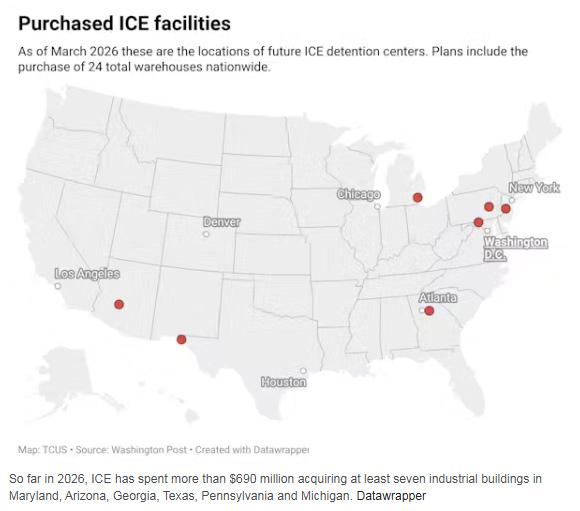
tion, eliminating that revenue stream entirely.
Can government real estate purchases be prevented?
State and local governments have little power to block land sales to the federal government.
Under the property clause of the Constitution, Congress holds exclusive authority over public lands – once the real estate is purchased, it is considered public land. The supremacy clause bars states and localities from interfering with federal property
acquisitions or regulating land use on federal property after a sale. Additionally, in McCulloch v. Maryland the Supreme Court determined that a state did not have the power to tax the federal government.
Section 1231(g) of the U.S. Code authorizes ICE to acquire land and build or operate detention facilities when suitable federal facilities are unavailable. ICE is using funding from President Donald Trump’s tax-and-spending bill, signed into law in July 2025, to purchase the warehouses.
Political pressure as a bargaining tool
Politicians on both sides of the aisle have called for greater transparency around ICE’s property acquisitions, especially when facilities are located in their own districts. Clear information about plans for the facility or earlier public disclosure about the intended purchases could be helpful, but states have few legal tools beyond political pressure. Pennsylvania Gov. Josh Shapiro acknowledged that state options are limited, since the federal government is the buyer, but he suggested local governments may have more leverage over permitting. Local governments do have some control of the regulatory steps that come before a facility opens, especially when a project involves converting an existing warehouse. Some localities have attempted to block ICE facilities through permitting authority. Officials in Howard County, Maryland, for example, revoked building permits for a private
Credit: Henry Griffin, AP file photo
Oversight at work in Congress, as the Senate Foreign Relations Committee on Feb. 10, 1966, holds one of its many hearings on the Vietnam war. George Kennan, former ambassador to Moscow, is at the witness table.
From 23
detention center they believed ICE intended to use. ICE, however, said it had no plans to pur-
chase or open a facility there, making it unlikely the decision will serve as an effective precedent for other communities.
Some states are pursuing more creative legal strategies. Arizona Attorney General Kris Mayes has reportedly considered invoking the state’s
“public nuisance” law to block an ICE facility in Surprise, Arizona, arguing the facility would threaten public health and community well-being. Critics say the approach is legally novel with little precedent, making the outcome uncertain.
Some local officials
are taking a more direct approach, appealing to landowners themselves. Officials in Lehigh County, Pennsylvania, which borders both Berks and Schuylkill counties, sent a letter urging private parties not to sell or lease property to ICE. Federal ownership
of detention facilities may ultimately prove difficult to challenge, leaving affected communities with little recourse beyond public pressure, as ICE continues to acquire property across the country.
Disclosure statement
Aaron Walayat does not work for, consult, own shares in or receive funding from any company or organization that would benefit from this article, and has disclosed no relevant affiliations beyond their academic appointment.
China’s muted response over war in Iran reflects Beijing’s
delicate calculus as a concerned onlooker
By John Calabrese Assistant Professor, School of Public Affairs and Non-Resident Senior Fellow, Middle East Institute, American University
China has perfected the role of concerned onlooker as the Middle East conflict spreads across the region.
With no direct role in the conflict and some 4,200 miles (6,800 kilometers) away from the action, Beijing has a little more breathing room to work out the calculus on how the U.S.-Israeli attack on Iran affects its interests. Yet the recent events nonetheless place China in a strategically uncomfortable position. The U.S. campaign is the most significant operation conducted by China’s main strategic, economic and military rival since the Iraq war, and it is unfolding across a region central to China’s energy security and commercial ambitions.
Yet Beijing’s response has been muted at best.
As a longtime observer of China’s changing relationship with the Middle East, I see China’s calculated response as reflecting its limited leverage to control events as well as the transactional nature of its relationship with Iran.
A matter of principle?
The joint Israeli-U.S. operation runs counter to China’s longheld position on foreign intervention.
China formally opposes regime change and externally engineered political transitions as a matter of doctrine, viewing such actions as contrary to principles it treats as protective of both national sov-
By Coalter G Lathrop
Senior Lecturing Fellow in International Law, Duke University
Americans have a reputation for being bad at world geography, and the current U.S. administration is no exception, particularly when it comes to correctly identifying what is – and is not – part of the United States of America.
President Donald Trump’s April 2025 executive order “unleashing America’s offshore critical minerals” provides an example. It purports to “unleash” seabed minerals both within and far outside U.S. jurisdiction.
The minerals on the U.S. seabed are America’s. The minerals on the international seabed are not “America’s.” The administration plans to authorize companies to mine in international areas, nonetheless.
I have studied the international agreements and customary rules governing the oceans since the Law of the Sea Convention entered into force in 1994. The Trump administration’s attempt to unilaterally exploit the seabed resources of the global commons will severely undermine part of the rules-based international order that the U.S. built and of which it has been the main beneficiary.
The scramble for critical minerals
The U.S. has been trying to secure access to critical minerals that are essential for modern technology. These materials include nickel, manganese and cobalt for large batteries and copper for the power grid. All can be found on land, but some
ereignty in general and its own domestic and territorial sensitivities in particular.
This doctrinal stance shaped Beijing’s early response. On Feb. 28, 2026, it joined Moscow in requesting an emergency United Nations Security Council session, expressed being “highly concerned” over the missile strikes, and urged respect for Iran’s territorial integrity and a cessation of hostilities.
Beijing paired diplomatic protest with precautionary measures, urging nationals in Iran to evacuate and warning citizens in Israel to strengthen their emergency preparedness.
This combination of public condemnation of the U.S.-Israeli strikes and rapid risk mitigation suggests China was more concerned with preparing for escalation rather than seeking to halt it.
A lukewarm friendship?
But should China lend more support to Iran, a country seen as an ally to Beijing and with which it has had growing ties?
Unlike in 2025’s brief Pakistan-India conflict, China has less of an obligation to stand alongside an ally. Pakistan has long been strongly allied with China, especially in regard to regional issues with India.
While Pakistan countered India in that May conflict with fighter jets and missiles supplied by China, Iran has less Chinese-made military hardware at its disposal.
China has provided Tehran with selective military and dual-use support over time – including air defense systems, drone technology and surveillance assistance – but it has avoided formal security guarantees.
And unlike with the Pakistan-India conflict – which gave the West a rare glimpse
can also be found at the bottom of the sea.
Of particular interest are polymetallic nodules – agglomerations, typically smaller than a potato, containing manganese and other metals and found in the silt of the deep ocean floor. An Australian mining executive described these nodules as “an EV battery in a rock.”
The Clarion Clipperton Zone, in the middle of the Pacific Ocean, contains one of the highest concentrations of polymetallic nodules. But whose nodules are they?
My ocean
In September 1945, President Harry Truman claimed for America a large part of the seabed extending from its shores, areas that, before Truman’s claim, were shared by the international community.
In reaction, countries around the world spent the next five decades hammering out a system to limit how much of the seabed that coastal countries could claim, and establishing rules that would govern the remaining shared areas of the oceans.
The resulting arrangement, finalized in 1994, gives countries that border the ocean authority over the resources in the water and seabed within 200 nautical miles (370 kilometers) of their coasts, known as “exclusive economic zones,” and, for some countries, additional areas of seabed beyond that limit.
The United States enjoys one of the world’s largest exclusive economic zones today. It includes an area totaling over 4 million square miles (10 million square kilometers)
– larger than all 50 U.S. states combined – and an additional
of what China’s latest military hardware can do in live situations – China can now observe what its key rival can do.
With U.S. forces concentrated around Iran, Chinese satellites and other intelligence platforms have been actively observing U.S. and allied deployments near the Gulf of Oman.
Such intelligence is arguably more useful for China’s longer-term Indo-Pacific planning than for influencing the current conflict’s battlefield dynamics.
The pattern is consistent: support an ally within various limits, but avoid entanglement at all costs.
China doesn’t really see much obligation to help Iran now. What it does care about is projecting an image as an alternative global leader to the U.S. Iran as a focus of resistance to the West may theoretically fit within Beijing’s vision, but its destabilizing behavior is incompatible with it.
Despite rhetoric about “comprehensive partnership,” China has never made a decisive strategic bet on Tehran. Bilateral trade remains modest relative to China’s global portfolio. Oil imports from Iran are useful to Beijing, but replaceable. And Belt and Road Initiative investment flows more heavily toward Gulf nations such as Saudi Arabia and the United Arab Emirates — economies now exposed to Iranian retaliation.
A network under strain The asymmetry is evident: Iran has long needed China far more than China has needed Iran. In isolation, then, a weakened Iran – or even one with a leadership more aligned with the West – is not a major concern to China.
Yet it becomes consequential for China once you

factor in the broader strategic environment surrounding many of China’s allies.
Russia remains mired in a grinding war of attrition in Ukraine. Pakistan and Afghanistan face escalating instability.
In the Western Hemisphere, the Trump administration has intensified its interventionist posture. On Jan. 3, 2026, U.S. forces launched Operation Absolute Resolve, a raid in Caracas that captured Venezuelan President Nicolás Maduro and his wife, removing him from power and transporting them to New York to face federal charges. Within weeks, Washington declared a national emergency with respect to Cuba, authorizing additional tariffs on imports from countries that supply oil to the island, as part of broader pressure linked to Havana’s alignment with governments Washington deems hostile.
Now Iran — another partner often framed as part of China’s counterbalancing axis — is absorbing sustained U.S.–Israeli strikes that have shuttered the Strait of Hormuz and triggered retaliatory attacks across Gulf nations central to China’s trade, energy flows and expatriate presence.
What emerges is not a consolidated bloc with China at the center, but a network under

nearly 400 million square miles (1 million square kilometers) of seabed extending even farther offshore.
In those areas, the United States controls the exploitation and management of living and nonliving natural resources, including seabed minerals.
Our ocean But exclusive economic zones were only one part of what the Law of the Sea Convention negotiators called a “package deal.”
The other part of the deal retains the remaining areas – approximately half of the planet’s seabed – for the international community. It’s known as “the Area,” and its resources are considered the common heritage of mankind. To prevent a free-for-all, no single country can authorize mining in the Area. Instead it is managed by the International Seabed Authority for the benefit of humankind as a whole. To date, the ISA has executed 31 contracts with countries and companies to explore the mineral resources in the Area.
One hundred and seventy-one countries have joined
the Convention so far. However, the United States, despite being one of its primary architects, is the only industrialized nation remaining outside the treaty. Nonetheless, the U.S. has long considered the treaty to reflect rules of customary international law. Where the Area is concerned, the U.S. respected the terms of the package deal –until now.
‘America’s’ offshore critical minerals Trump’s offshore mining order relies on a U.S. statute enacted in 1980 as an interim measure pending completion of negotiations related to the Area. It authorized the National Oceanic and Atmospheric Administration to license exploration and permit commercial recovery of polymetallic nodules on the seabed in areas outside U.S. jurisdiction. When that 1980 statute was enacted, there was a spurt of commercial interest. The U.S. issued four exploration licenses. Two were relinquished in the 1990s. In the 30-plus years since the international community finalized the package deal, even the company holding the two remaining
strain.
Neither patron nor bystander
For Beijing, the combination of Iranian escalation and expansive U.S. objectives underscores hard limits. China lacks meaningful force projection in the region, offers no defense commitments and has consistently avoided the burdens of a security guarantor.
Nonintervention is, for China, not merely tactical caution; it has become a defining feature of Beijing’s diplomatic identity.
If the Iranian regime survives in weakened form, Beijing will likely calibrate limited, deniable support while avoiding overcommitment. If the regime falls, China would probably pursue pragmatic engagement with whatever authority emerges, safeguarding its economic interests in transactional fashion.
It is against this backdrop that the anticipated U.S.–China meeting in late March takes on greater significance.
The Trump administration has indicated that talks would focus on trade, but whether the meeting proceeds — and under what atmosphere — is far from certain.
Only weeks ago, Donald Trump appeared polit-
NOAA licenses – Lockheed
Martin – has considered them largely worthless unless the U.S. ratifies the Law of the Sea Convention.
That changed in April 2025 when Trump, citing the 1980 U.S. law, ordered the NOAA to “expedite the process for reviewing and issuing seabed mineral exploration licenses and commercial recovery permits in areas beyond national jurisdiction.”
A few days later, Canadian mining firm The Metals Company submitted an application via its wholly-owned subsidiary TMC USA to mine polymetallic nodules in the Area under U.S. unilateral authority. TMC USA touted its application for mining areas in the nodule-rich Clarion Clipperton Zone – in the middle of the Area – as a “world first”.
The International Seabed Authority condemned the move and reminded countries that “unilateral exploitation of resources that belong to no single State but to all of humanity is prohibited.”
Is that legal? So, does the Trump administration’s plan violate U.S. international obligations?
The answer is maybe.
The U.S. is not a party to the Law of the Sea Convention, so it is not bound by the treaty. But scholars disagree on whether U.S. unilateral mining would violate obligations arising from rules of customary international law.
The United States is not the only player in this game. If any of the 171 countries that have subscribed to the treaty were to participate in or allow their citizens to participate in U.S.-authorized mining activity in the Area, they would violate
ically weakened by a Supreme Court decision striking down many of his tariffs. Now, the optics are more complicated. Chinese President Xi Jinping would enter any discussion with the elephant of a large-scale U.S. military campaign in the room and at a moment when several of China’s strategic partners are struggling across multiple theaters.
As such, Beijing’s public denunciations of U.S. actions as “unacceptable” and calls for restraint highlight its discomfort with the concept of regime change. But the measured response ultimately underscores both its limited leverage over American military action and the increasingly transactional — and fragile — nature of its diplomatic partnerships. China is neither Iran’s patron nor a passive bystander; it is a cautious opportunist operating within clear constraints, preserving flexibility while avoiding entanglement in a conflict it cannot control.
Disclosure statement John Calabrese does not work for, consult, own shares in or receive funding from any company or organization that would benefit from this article, and has disclosed no relevant affiliations beyond their academic appointment.
their treaty obligations. Any other Convention partner could bring them before the International Tribunal for the Law of the Sea in Hamburg, Germany. Canada, home of TMC, could find itself in that position. So could many nations whose citizens or companies have worked with TMC. If those partners continued their work with TMC USA under U.S. authorization, their home countries could be exposed to legal action.
The Area is not a domestic source In announcing an expedited seabed mining application process in January 2026, NOAA Administrator Neil Jacobs mischaracterized polymetallic nodules in the Area as “a domestic source of critical minerals for the United States.”
To be clear, the United States has critical minerals on its land territory and within its area of exclusive seabed jurisdiction. It is beginning to explore those resources with an eye to possible future mining. These are domestic American sources of critical minerals –they are “America’s.” The minerals in the Area are not. Yes, America needs critical minerals, but it should not undermine the system of international ocean governance – a system it engineered and from which it benefits perhaps more than any other nation – to get them.
Disclosure statement
Coalter G Lathrop does not work for, consult, own shares in or receive funding from any company or organization that would benefit from this article, and has disclosed no relevant affiliations beyond their academic appointment.
Credit: USGS Pacific Coastal and Marine Science Center
A metal claw reaches for an iron and manganese nodule on the seabed for testing.