


Minneapolis, MN — In a move that signals an exciting new chapter for Black leadership and narrative power in Minnesota, the African American Leadership Forum (AALF) has appointed Dara Beevas as its new Chief Executive Officer — a leader whose journey blends entrepreneurial grit, cultural storytelling, and transformative innovation.
Beevas steps into the CEO role following the transition of former CEO Adair Mosley, who now leads the GroundBreak Coalition. The Forum’s board selected Beevas to ensure continuity of mission and momentum, trusting her creative vision to guide the organization through an era of strategic growth and sustained impact.
“Dara’s leadership during this transition gives The Forum clarity and confidence as we uphold our vision of Black
economic liberation and systemic change,” said the board in a statement announcing her appointment.
A Narrative Strategist Turned Organizational Leader Beevas initially joined The Forum as its Chief Narrative Officer in January 2025, where her formal mandate was to shape and elevate the stories of Black leaders, innovators, and community change-makers — positioning storytelling not just as communication, but as a catalyst for cultural transformation and collective power.
Her promotion to CEO marks a significant evolution in her leadership arc. It affirms the growing recognition that narrative strategy — when grounded in authentic community experience — is central to public policy influence, civic power, and systemic progress.
“Storytelling is an act
of liberation, an anchor to our heritage, and a bridge to possibility,” Beevas said upon her initial appointment — words that have come to define her leadership philosophy. Entrepreneurship as Cultural Transformation Long before her Forum leadership role, Beevas built a reputation as an entrepreneurial force in publishing and narrative empowerment. She is a co-founder and strategic architect of Wise Ink Creative Publishing, a boutique independent publisher she launched with a mission to democratize publishing and amplify underrepresented voices.
Under her leadership at Wise Ink, Beevas helped guide thousands of authors, thought leaders, and cultural innovators to bring their stories to audiences around the world — with a particular focus on
creators from historically marginalized communities. Her entrepreneurial work extends beyond business mechanics to cultural impact. Through Wise Ink, she helped authors harness storytelling as a tool for social change — from memoirs that shape public discourse to anthologies that center Black joy and liberation. Beevas is also the author of The Indie Author Revolution, a widely respected guide for independent authors navigating the publishing landscape — a testament to her thought leadership in guiding others to become storytellers, entrepreneurs, and agents of influence. Lifelong Development and Cultural Influence Her trajectory reflects deep commitment to personal and professional development. Beevas holds a master’s degree
in publishing and has been recognized as both an emerging writer by the Givens Foundation for African American Literature and a 2017-2019 Bush Foundation Fellow, where she further sharpened her leadership capacity and strategic vision.
Her influence also extends into cultural and educational spaces. Beevas frequently speaks on the power of narrative, Afrofuturism, and collective imagination, exploring how communities can shape future realities through stories that reflect their heritage and aspirations.
“I am honored to lead this organization in shaping a bold, equitable future for Black Minnesotans,” Beevas said, signaling her commitment to forward-looking leadership rooted in community power and creative agency.
With Beevas at the helm, The Forum will continue to expand its impact — uniting research, policy, narrative strategy, and community innovation to build a thriving and equitable ecosystem where Black voices are elevated and possibilities are limitless.
Leading With Story, Strategy, and Vision As CEO, Beevas inherits The Forum’s mandate to confront racial inequity and drive systemic change across economic opportunity, education, health, public safety, and community investment. Her appointment symbolizes a growing recognition that effective leadership today requires both strategic governance and cultural imagination — and that stories are among the most powerful levers for equitable transformation.


















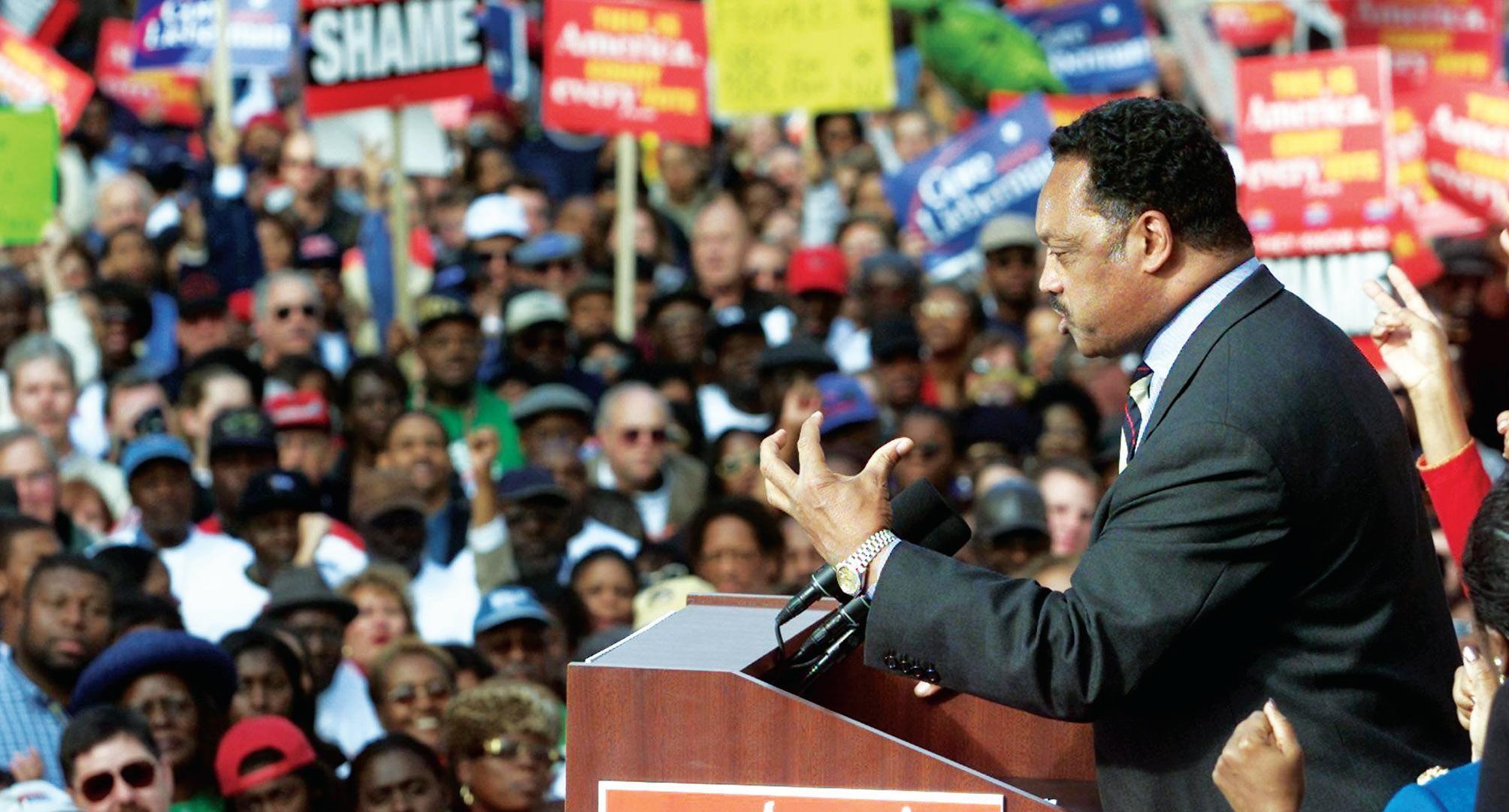
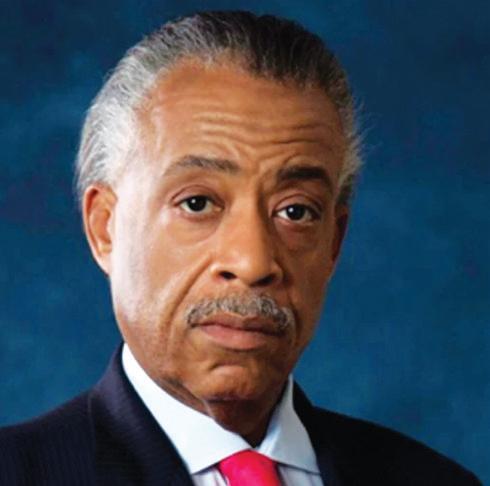
At a Tuesday morning press conference in New York City, Rev. Al Sharpton reflected on the life of Rev. Jesse Jackson, calling him a transformative force who carried the civil rights movement forward and
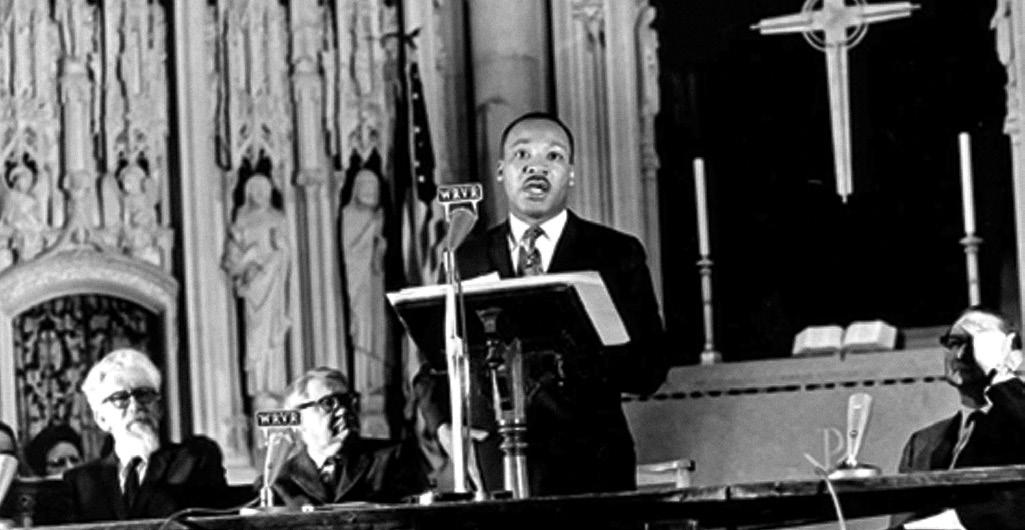
NEW YORK - Rev. Jesse L. Jackson Sr., a consequential and transformative leader who reshaped the civil rights movement, altered Democratic Party politics, and changed the course of U.S. political history, died Tuesday at the age of 84. Speaking at an 11 a.m. press conference Tuesday, February 17, 2026, in New York City, Rev. Al Sharpton reflected on the life and legacy Sharpton addressing reporters hours after news of Jackson’s passing became public, emphasizing that Jackson was not simply a symbolic figure of the movement, but one of the leaders who carried it forward after the assassination of Dr. Martin Luther King Jr. in 1968. Jackson was present at the Lorraine Motel in Memphis when King was killed, standing with musician Ben Branch and speaking with King moments before the fatal shot. Sharpton noted that Jackson was one of only two Black individuals engaged with King at that moment. Though Jackson rarely spoke publicly about witnessing the assassination, Sharpton said the experience shaped his lifelong commitment
to continue the work. Jackson, 12 years younger than King, consistently reminded younger leaders that
Jesse Jackson helped shape modern U.S. activism and championed racial and economic justice for decades leaves a lasting political and moral legacy
By Karen Juanita Carrillo NY Amsterdam News
Civil Rights icon Rev. Jesse Jackson, Sr., whose career took him from his early collaboration with Martin Luther King to creating the Rainbow/PUSH Coalition to two runs for the presidency and ultimately passing the torch to a new generation died Tuesday according to his family.
“Our father was a servant leader — not only to our
family, but to the oppressed, the voiceless, and the overlooked around the world,” said the Jackson family in statement.
“We shared him with the world, and in return, the world became part of our extended family. His unwavering belief in justice, equality, and love uplifted millions, and we ask you to honor his memory by continuing the fight for the values he lived by.” Rev. Jackson was hospitalized at Chicago’s Northwestern Memorial Hospital on Nov. 12, for observation due to Progressive Supranuclear Palsy
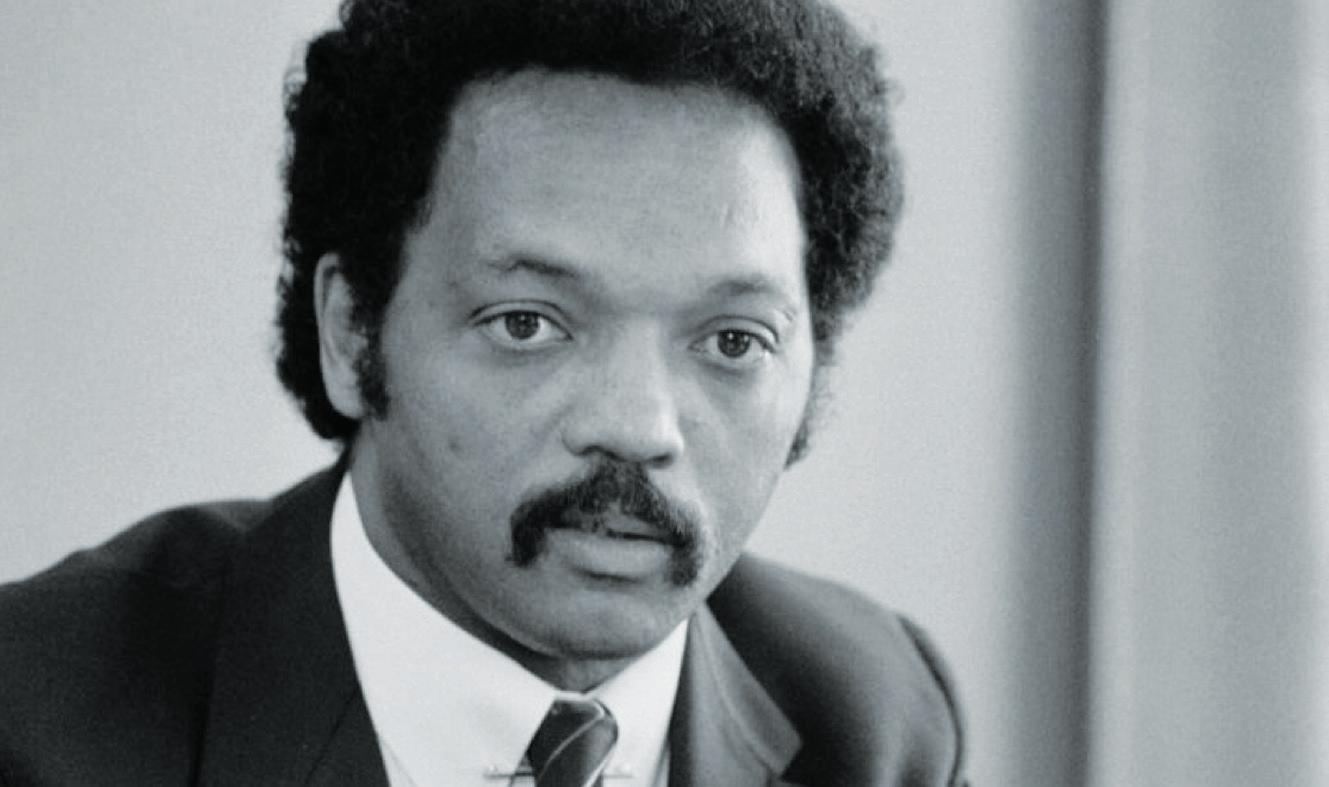
(PSP), a neurodegenerative disease that was initially mistaken for Parkinson’s, according to a Rainbow/PUSH statement. He was diagnosed with PSP during a Mayo Clinic visit in April 2025. There is no current cure for the disease, so his treatment was focused on alleviating his
symptoms. In the early 1960s when young activists were fighting against race-based discrimination Jackson was among them, unaware of the role he
As communities across the country reflected on the legacy of Dr. Martin Luther King Jr., a sobering assessment emerged on Radio KFAI 90.3FM’s The Conversation with Al McFarlane: the dangers King warned about are no longer theoretical. “Dr. King’s warnings seem more prescient than ever,” said Dedrick Asante Muhammad, president of the Joint Center for Political and Economic Studies, during a wide-ranging discussion with host Al McFarlane and Monica Mitchell, the organization’s chief of staff.
McFarlane opened the program by situating the

conversation in the present moment, pointing to “the tremendous upheaval happening in our culture, community, our country right now,” and noting that Minnesota itself was feeling the strain. “A lot of Minnesotans took to the streets this past weekend, braving 40-below wind chill conditions, protesting the atrocity of the “killing of two American citizens by federal ICE,” he said, adding that the city had become a frontline for national tensions.
Muhammad an-
Activists rally outside St. Paul Federal Courthouse after Nekima Levy Armstrong pleads not guilty
Activists gathered Friday outside the federal courthouse in downtown St. Paul following a court appearance by civil rights attorney and organizer Nekima Levy Armstrong, who pleaded not guilty to federal charges stemming from a January protest.
Levy Armstrong appeared in court alongside several others, including journalist Don Lemon and school board member Chauntyll Allen. The charges are connected to a January 18 demonstration at Cities Church. All defendants entered not guilty pleas during Friday’s arraignment.
Following the hearing, supporters convened outside the Warren E. Burger Federal Building for a rally and press conference, where speakers framed the case as part of broader tensions surrounding immigration enforcement and protest rights.
One speaker praised Levy Armstrong’s long record of activism. “Dr. Nekima has been on the ground every single day,” the speaker said, describing her as both a professor and a consistent advocate for justice. Allen was also recognized for her work with youth and her continued engagement in public service.The remarks placed Minnesota activists within a larger national movement pushing back against federal immigration actions carried out by U.S. Immigration and Customs Enforcement (ICE). Speakers suggested that local communities are closely monitoring enforcement activity and remain prepared to respond.
“ICE cannot go anywhere unless Minnesotans hear

about it,” one speaker said, emphasizing community vigilance and rapid information-sharing./ The rally also included pointed comments directed at the media. Speakers urged journalists to stand in solidarity with colleagues facing legal jeopardy and to press government officials more aggressively during public briefings.
“When they don’t tell the truth, ask them the hard questions,” the speaker said.
Organizers framed Friday’s court proceedings as one moment in what they described as a longer struggle over civil liberties, immigration policy, and public accountability. They concluded with a call for broad participation across generations, arguing that responsibility for defending democratic principles extends beyond those directly facing charges. The case will proceed through federal court in the coming months, as supporters vow to continue organizing both inside and outside the courtroom.
Journalist Don Lemon pleads not guilty to civil rights charges in Minnesota church protest
By Steve Karnowski Associated Press
ST. PAUL, Minn. (AP) — Former CNN host turned independent journalist Don Lemon pleaded not guilty to federal civil rights charges Friday, following a protest at a Minnesota church where an Immigration and Customs Enforcement official is a pastor. Four others also pleaded not guilty in the case.
Lemon insists he was at the Cities Church in St. Paul to chronicle the Jan. 18 protest but was not a participant. The veteran journalist vowed to fight what he called “baseless charges” and protect his free speech rights.
“For more than 30 years, I’ve been a journalist, and the power and protection of the First Amendment has been the underpinning of my work. The First Amendment, the freedom of the press, are the bedrock of our democracy,” Lemon said outside the courthouse after his arraignment. “And like all of you here in Minnesota, the great people of Minnesota, I will not be intimidated, I will not back down.”
Dozens of supporters gathered outside the courthouse, chanting “Pam Bondi has got to go” and “Protect the press.”

‘We the people have to stand for our rights’ Civil rights attorney Nekima Levy Armstrong was among the other defendants who pleaded not guilty Friday. The prominent local activist was the subject of a doctored photo posted on official White House social media that falsely showed her crying during her arrest. The picture is part of a deluge of AI-altered imagery that has circulated since the fatal shootings of Renee Good and Alex Pretti by federal officers in Minneapolis amid President Donald Trump's administration's immigration crackdown. Levy Armstrong echoed Lemon's defiant words after the hearing.
By Nina Srinivasan
The latest rounds of nuclear talks between the U.S. and Iran are going well enough for now, according to the steady drip of public statements from the main parties involved.
“I think they want to make a deal,” said U.S. President Donald Trump on the eve of the latest round of discussions held in Geneva on Feb. 17, 2026. Iran’s foreign minister, Abbas Araghchi, noted progress over the “guiding principles” of the talks.
Such optimism was similarly on display during initial talks in Oman earlier in the month.
But as someone who has researched nonproliferation and U.S. national security for two decades and was involved in State Department nuclear diplomacy, I know we have been here before.
Optimism also existed in spring 2025, during five rounds of indirect talks that preceded the United States bombing of Iran’s nuclear infrastructure as part of a broader Israeli attack. Pointedly, Iran noted in February that a climate of mistrust created by that attack hangs over the efforts for a negotiated deal now.
And underpinning any pessimism over a deal now is the fact that talks are taking place with a backdrop of U.S. military buildup in the Persian Gulf region and counteraction from Iran, including the closure of the Strait of Hormuz for a live-fire drill.
Red lines
But it is more than mistrust that will need to be overcome. The positions of both the U.S. government and Iran have ossified since May 8, 2018 – the date when the first Trump administration withdrew the United States from the Obama-era Iran nuclear deal.
Iran continues to be unwilling to even discuss its ballistic missile program. This

is a red line for them.
Yet the United States continues to demand limits to Iran’s ballistic missiles and the ending of Iran’s support of proxy fighters in the region be included in the nuclear talks, in addition to having Iran fully abandon enriching uranium –including at the low civilian-use level agreed on under the 2015 nuclear deal.
The talks are taking place amid a wider trend toward the end of what can be called the “arms control era.” The expiration of New START – which until Feb. 5, 2026, limited both the size and status of U.S. and Russian nuclear weapons and maintained robust verification mechanisms – together with the increasing willingness to engage in military actions to achieve political goals heightens the challenges for diplomacy.
Military brinkmanship
So why the apparent public optimism from the U.S. government?
Trump believes that Iran is in a weaker position than during his first term, following the largely successful Israeli attacks on Iran’s regional proxies as well as on Iran itself. The
strategic capabilities of Tehran’s two main sponsored groups, Hamas and Hezbollah, are clearly diminished as a result of Israeli action.
The U.S. may also still feel it has the upper hand following the June 2025 Operation Rising Lion, in which Iran’s nuclear infrastructure was attacked in response to an International Atomic Energy Agency’s report that Iran’s stockpile of near-weapons grade enriched uranium surged by over 50% in the spring.
The reopening of talks now also comes in the immediate aftermath of Iran’s bloody crackdown on anti-government protests, leaving thousands of protesters dead.
The USS Abraham Lincoln carrier group was deployed near Iranian waters in January as a signal to the protesters of U.S support. U.S. Secretary of State Marco Rubio has said that successful talks must include topics beyond Iran’s nuclear program, including the “treatment of (its) own people.”
Trump continues to consider military options against Iran, warning that “if they don’t make a deal, the consequences are very steep.”
Yet there is a danger
that Washington may be overestimating its position. While the United States maintains that Iranian nuclear sites were “obliterated” in the June attack, satellite imagery indicates that Iran is working to restore its nuclear program. And while Tehran’s proxies in Gaza and Lebanon are severely degraded, Iranian-supported militias in Iraq, including the Kataib Hezbollah, have renewed urgent preparations for war – potentially against the U.S. – and the Houthi rebels have threatened to withdraw from a ceasefire deal with the United States.
Moreover, Iran’s commitment to its ballistic missile program is stronger than ever before, with much of the infrastructure already rebuilt from Operation Rising Lion.
No returning to the 2015 deal Iran maintains that the talks must be confined only to guarantees about the civilian purpose of its nuclear program, not its missile program, its support of regional proxy groups or its own human rights abuses.
And that is incompatible with the U.S.’s long-held position.
This disagreement ultimately prevented the U.S.
and Iran from renewing the now-defunct 2015 political deal during the Biden administration. Signed by China, France, Germany, Russia, the U.K., the United States and Iran, the Joint Comprehensive Plan of Action (JCPOA) halted Iran’s development of nuclear technology and stockpiling of nuclear material in exchange for lifting multiple international economic sanctions placed on Iran. Ballistic missile technology and Iran’s proxy support for regional militias were not included in the original agreement due to Iran’s unwillingness to include those measures.
The parties to the Iran deal ultimately decided that a nuclear deal was better than the alternative of no deal at all.
There was a window for such a deal to be resumed in between the two Trump administrations. And the Biden administration publicly pledged to strengthen and renew the Obama-era nuclear deal in 2021.
But by then, Iran had significantly increased its nuclear technical capability during the four years that has passed since the JCPOA collapsed. That increased the difficulty: Just to return to the previous deal would have required Iran to give up the new technical capability it had achieved for no new benefits.
The window closed in 2022 after Iran removed all of the International Atomic Energy Agency’s surveillance and monitoring under the deal and started enriching uranium to near weapons levels and stockpiling sufficient amounts for several nuclear weapons.
The IAEA, the U.N’s nuclear watchdog, currently maintains only normal safeguards Iran had agreed to before the JCPOA.
Even with the 2025 U.S. strikes, Iran currently has the ability to produce enough fissile material for a nuclear bomb within weeks to several months. This is up from over a year under the 2015 deal.
US and Iran talks today
Although most analysts doubt that Iran has developed the weaponization knowledge necessary to build a nuclear bomb
– estimates vary from several months to about two years due to the lack of access to and evidence on Iran’s weaponization research – Iran’s technical advances reduce the value for the U.S. government of returning to the 2015 deal. Iran’s knowledge cannot be put back into Pandora’s box.
But talks do not necessarily need an end point – in the shape of a deal – for them to have purpose.
With the increased military brinkmanship, talks could help the U.S. and Iran step back from the edge, build trust and perhaps develop better political relations. Both sides would benefit from this stabilization: Iran economically, from being reintegrated into the international system, and the U.S. from a verifiable lengthening of the time it would take Iran to break out.
None of this is guaranteed. When I worked in multilateral nuclear diplomacy for the U.S. State Department, we saw talks fail in 2009 regarding North Korea’s nuclear weapons program, after six years of on-andoff progress. The consequence of that failure is a more unstable East Asia and renewed interest by South Korea in developing nuclear weapons.
Unfortunately, the same dynamic appears here. The shape of a potential new deal is unclear. As time passes with no deal, both sides harden their negotiating starting points, making a deal less likely. Military escalations may lead to a new willingness to compromise on the part of Iran or precipitate its decision to build nuclear weapons. But even should the talks prove a failure, the effort to dampen the confrontational responses and heightening tensions would still be valuable in reducing the possibility of regional conflict.
Disclosure statement
Nina Srinivasan Rathbun does not work for, consult, own shares in or receive funding from any company or organization that would benefit from this article, and has disclosed no relevant affiliations beyond their academic appointment.




Winter in Minnesota is no joke.
Snow piles up, temperatures drop, and for many people, physical activity slowly fades into the background. The days get shorter, routines change, and it becomes easier to stay indoors and inactive. At the Man Up Club, we understand that reality — but we also believe that health and wellness don’t stop just because the weather does. That belief is exactly why, even with snow on the ground and ice outside, we found a way to keep our young men moving. When outdoor hoops weren’t an option, we brought the hoops indoors. What might seem like a simple adjustment actually represents something much bigger: adaptability, commitment to wellness, and teaching young men how to overcome obstacles rather than be limited by them. Physical activity is a foundational part of healthy development, especially for young men. Movement supports not only physical strength, but also mental clarity, emotional regulation, and discipline. When kids and teens don’t have access to consistent outlets for physical activity, it shows — in their energy, their focus, and their confidence. Basketball, in particular, gives our young men a space to compete, communicate, and release stress in a positive way.
By bringing basketball indoors, we’re doing more than just providing a game. We’re reinforcing a mindset: no
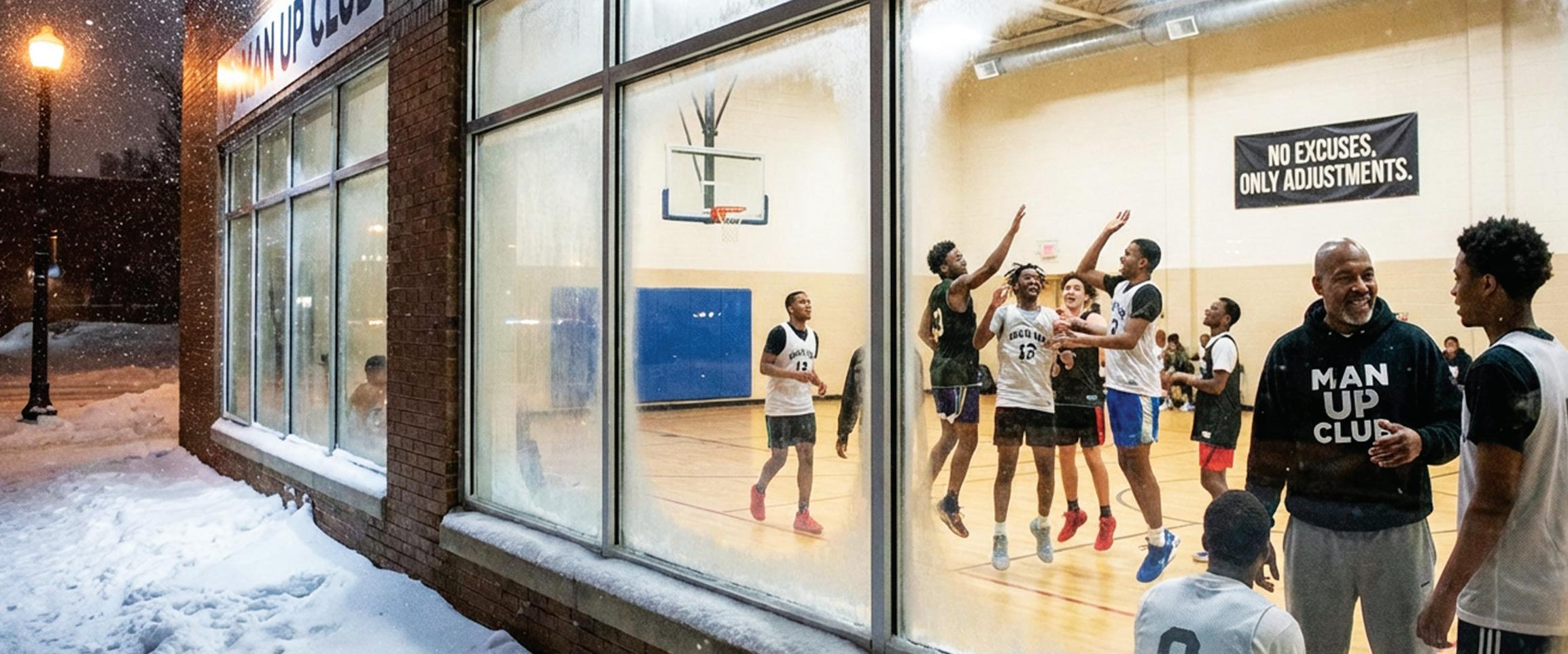
excuses, only adjustments. Minnesota winters teach resilience by default. We take that lesson and apply it intentionally. Life will always present barriers — weather, circumstances, lack of resources — and how you respond matters more than the obstacle itself. Our young men see firsthand that when something doesn’t work the way you expected, you pivot and keep going.
Health and wellness are not seasonal habits. They are daily commitments. During the winter months, rates of inactivity, weight gain, and even seasonal depression tend to increase. That’s why it’s critical to create structured opportunities for movement and connection. When our young men step onto the indoor court, they’re not just getting exercise — they’re engaging socially, building camaraderie, and strengthening bonds with peers and mentors.
Basketball also teaches lessons that extend far
beyond the court. Teamwork, accountability, communication, and emotional control all come into play. You learn quickly that effort matters, that your attitude affects others, and that discipline shows up in how you prepare and how you play. These lessons align directly with our mission at the Man Up Club: developing holistic young men of character. From a wellness standpoint, consistent movement improves cardiovascular health, coordination, and endurance. Just as importantly, it supports mental health by reducing stress and boosting mood. We’ve seen it firsthand — young men who come in quiet and reserved leave energized, smiling, and more open. That shift matters. It impacts how they show up in school, at home, and in other areas of their lives.
We also want our young men to understand that being active doesn’t require
perfect conditions. You don’t need ideal weather, expensive equipment, or a professional gym. You need creativity, commitment, and community. By making space indoors, we show them that wellness is accessible when you’re intentional about it.
At the Man Up Club, our role isn’t just to run programs — it’s to model the habits and mindsets we want our young men to carry into adulthood. Staying active during a Minnesota winter is a powerful metaphor for life: when things get cold, uncomfortable, or inconvenient, you don’t shut down. You find another way. Bringing the hoops inside is a small action with a big message. Health matters. Movement matters. And no matter the season, we will continue creating opportunities for our young men to grow stron-

Jackson From 3
each generation bears responsibility for advancing the struggle. Sharpton said Jackson challenged those who followed him the same way King had challenged his peers—by insisting the movement never belonged to a single era.
After 1968, Jackson sustained the movement through Operation Breadbasket, leading economic boycotts, pressing corporations on diversity and accountability, and defending affirmative action. As the nation entered the Reagan era and civil rights protections came under renewed attack, Jackson stood alongside leaders such as the late Rep. John Lewis to defend voting rights and confront racial profiling and discriminatory policing.
“We romanticize the 1960s,” Sharpton said, noting that gains such as the Voting Rights Act had to be renewed repeatedly and were constantly challenged by state laws. Jack-
son carried that fight into a new era marked by mass incarceration and structural inequality.
Changing the Rules of American Politics
Sharpton highlighted Jackson’s lasting impact on electoral politics, particularly within the Democratic Party.
In 1984, Jackson’s first presidential campaign forced the party to abandon winner-take-all delegate systems in favor of proportional representation. Under the old rules, a candidate could lose the popular vote yet claim all the delegates. Jackson challenged that structure and succeeded.
That change later made Barack Obama’s 2008 nomination possible. Though Hillary Clinton won several large states, Obama’s ability to accumulate delegates under proportional rules—rules rooted in Jackson’s 1984 campaign— secured the nomination.
Jackson’s organizing also reshaped national elections. Sharpton credited him with registering unprecedented numbers of new voters, many of whom
Jackson slowed down but did not consider himself retired.
would play in the Civil Rights Movement over the next several decades. By the time of his passing, he had lived to see the inauguration of a Black president and his work being done by thousands of people from every background.
Despite a 2017 diagnosis of Parkinson’s disease,
From 3
chored the discussion in Dr. King’s 1967 Beyond Vietnam speech. “When machines and computers, profit motives and property rights are considered more important than people,” King warned, “the giant triplets of racism, extreme materialism and militarism are incapable of being conquered.” Muhammad told listeners, “I think that really does surmise… the moment we’re in.”
He pointed to a convergence of pressures. “We’re seeing National Guard troops across the country,” he said. “We’re seeing attacks on immigrants. We’re seeing attacks on DEI as a guise for attacking advancements of people of color, particularly African Americans.” He added that recent tax policy and economic shifts “really does feel like the giant triplets of racism, extreme materialism and militarism are incapable of being conquered.”
The conversation drew heavily on the Joint Center’s State of the Dream 2026 report, subtitled From Regression to Signs of a Black Recession. Mitchell explained that one of the most alarming developments was how quickly policy infrastructure had been dismantled. “In the first 100 days of the administration, we saw executive orders dismantling diversity programs across federal agencies,” she said. “At the same time, the government really just stopped the ability to track and collect demographic
As recently as 2024, Jackson was organizing human rights campaigns to address the humanitarian crisis in Gaza, calling for the release of Israeli hostages and Palestinian prisoners, and for an end to the suffering caused by the war in Gaza.
“We are faith leaders and advocates, united in this moment of moral reckoning to affirm the sanctity of all human life,” Jackson said at the time during his “Call to Action”
had never been included in political calculations. That surge helped shift control of the U.S. Senate in the 1986 midterm elections, preserving civil rights protections under threat during the Reagan administration. In 1988, Jackson ran for president again, winning more than seven million votes nationwide and carrying New York City. Though he lost the state, Sharpton said Jackson’s victory in the city laid the groundwork for the election of David Dinkins as New York City’s first Black mayor in 1989.
Jackson’s 1988 New York City campaign coordinator later played a central role in Dinkins’ mayoral campaign, demonstrating that Jackson’s coalition could translate into governing power.
‘He Never Stopped Showing Up’
Sharpton emphasized that Jackson remained deeply engaged well into the 21st century— standing with families after the killing of Trayvon Martin, appearing during the George Floyd uprising, and attending
summit.
He was also vocal about the 2024 election and the direction politics in America was headed. “We’ll win if we vote our numbers, but if we don’t, we risk losing our democracy,” he told The New Republic in 2023. “Trump wants to pull us back into white supremacy. DeSantis is even worse. He’s a Harvard and Yale man. He knows better. There’s something more insidious about that.”
Floyd’s funeral. Despite age and illness, Jackson never stopped showing up.
Sharpton recalled asking Jackson why he continued his work after receiving nearly every honor imaginable. Jackson replied that he never learned how to retire. Leaders of his generation, Jackson explained, were never raised to expect long lives. Dr. King, Medgar Evers, and Malcolm X were all killed at age 39.
“When he woke up one day at 55,” Sharpton said, Jackson realized there had never been a retirement plan for people like them.
Jackson also played a unique international role, helping secure the release of U.S. hostages from Iraq and Syria when others could not. He received little public credit, Sharpton said, consistent with Jackson’s belief that those who need credit do not deserve it, and those who deserve it do not need it.
National Leaders React Jackson’s passing prompted
A Young Activist
Born in Greenville, S.C., on October 8, 1941, Jesse was the son of Helen Burns, a 17-yearold single mother. She later married Charles Henry Jackson, who adopted Jesse and helped raise him. After attending the University of Illinois on an athletic scholarship for one year, he transferred to North Carolina A&T College (NCAT) in Greensboro. It was there that he began working as a civil rights activist by joining the local
data.”
She warned that this had a deeper consequence.
“When you eliminate the ability to measure,” Mitchell said, “it’s much easier to claim there’s no problem because there’s no data showing a problem.”
Muhammad connected that policy retreat to worsening economic indicators. “We had record low Black unemployment… about 6.2 percent at the beginning of the year,” he said, noting it had dropped as low as 4.8 percent previously.
“Now we see the steady rise… the last numbers were 7.5 percent Black unemployment. And in November, it was 8.3 percent.” He added, “If that unemployment rate were the same for the entire country, we would be in an acknowledged recession.”
McFarlane pressed the issue further, asking about intent and impact. “It seems to me the strategies being deployed… have an intention of dismantling economic possibility for the Black community,” he said, raising concerns about
tributes from national civil rights, political, and religious leaders.
President Joe Biden described Jackson as a moral force whose life’s work advanced justice and equality and helped guide the nation through moments of division.
Former President Barack Obama, joined by Michelle Obama, credited Jackson with laying the political and moral groundwork for a new generation of leadership.
House Minority Leader Hakeem Jeffries called Jackson a legendary voice for the voiceless whose advocacy expanded political participation nationwide.
U.S. Sen. Raphael Warnock said Jackson stood among America’s great moral leaders, bridging faith and civic action.
Former U.N. Ambassador Andrew Young reflected on Jackson’s global reach, describing his legacy as international and enduring.
New York Gov. Kathy Hochul cited Jackson’s courage and conviction across decades of struggle.
chapter of the Congress of Racial Equality (CORE). In July 1960, still a freshman, he joined seven high schoolers to walk into the whites-only Greenville County Public Library, demanding it be desegregated. They were arrested and became known as the “Greenville Eight.”
From there, Jackson grew into one of the most prominent young leaders in the movement. By 1965 he had become active in the Southern
Black businesses and the depletion of wealth.
Muhammad pointed to multiple pressures at once.
“There’s the kind of outright attack on the Small Business Administration and kind of wiping out their staff,” he said. He also cited “the attack on the funds that have been used to try to help develop minority business.” While acknowledging those programs were flawed, he stressed, “The answer was not to completely pull them away.” He added that cuts to government agencies also meant “it limits the ability for small businesses to have contracts,” and warned that tariff uncertainty was “creating an economically unknowable, insecure environment,” making businesses “much more cautious in their hiring… and that is all slowing down the economy.” Mitchell returned to the theme of visibility and accountability. “What removing those systems does,” she said, “it removes the referees who can call out when the game is
rigged.” Without data collection and enforcement, she argued, discrimination can continue with little recourse. “Historically, there were federal agencies tracking those patterns… Now, those offices have been gutted or closed, the data collection has stopped, the enforcement capacity is gone.”
The discussion turned back to Minnesota and the lived experience of enforcement and policing. McFarlane described how close to home recent incidents felt. “I’m sitting three minutes from where the Venezuelan gentleman was shot, not killed,” he said, “and I’m sitting seven minutes from where the two people were murdered… brother Alex Pretti and also sister Renee Nicole Good.” He added, “You can’t drive to your regular grocery store… without now thinking about what you’re going to run into.”
She described the broader psychological impact. “There is a reverberation of trauma that these tactics cause,”
“We the people have to stand for our rights. We have to stand for the Constitution. We have to stand for our First Amendment rights to freedom of the speech, some freedom of assembly, and freedom of the press,” she said.
“Today we have the federal government trying to weaponize the Department of Justice in order to silence us, in order to prevent us from speaking the truth," Levy Armstrong said. "They are trying to prevent us from calling out a manifest injustice.”
All of the defendants have been charged under the FACE Act Protesters interrupted a service
at the Southern Baptist church last month, chanting “ICE out” and “Justice for Renee Good,” referring to the 37-year-old mother of three who was fatally shot by an ICE officer in Minneapolis.
In total, nine people have been charged under the 1994 Freedom of Access to Clinic Entrances Act in relation to the church protest. The FACE Act prohibits interference or intimidation of “any person by force, threat of force, or physical obstruction exercising or seeking to exercise the First Amendment right of religious freedom at a place of religious worship.”
Two more defendants accused in the protest are scheduled for arraignment next week, including another independent journalist, Georgia Fort. Penalties can range up to a year in prison and up to a $10,000 fine.
Attorneys for journalists seek to pierce veil of grand jury secrecy
Lawyers for Lemon and Fort filed a joint motion with the court Friday seeking transcripts of the normally secret grand jury proceedings that resulted in the indictments against the nine defendants. They maintained that Lemon and Fort were at the church protest in their capacity as journalists covering the story. The defense attorneys noted that several judges — including the chief federal judge for Minnesota — found no probable cause to support the complaints that prosecutors first tried to file against the two journalists, so they refused to sign arrest warrants for Lemon or Fort before the government turned to the grand jury. They said those refusals raise serious concerns about whether the government made misleading or inaccurate state-
ments of law and/or facts to the grand jury. And they expressed concern that President Donald Trump, Attorney General Pam Bondi and other Justice Department officials put undue pressure on prosecutors to charge them.
“In the United States of America, we do not prosecute journalists for doing their job. That happens in Russia, China, Iran and other authoritarian regimes. And yet the government sold this unconstitutional mess to the grand jury,” they wrote. “Disclosure of the grand jury proceedings is necessary to ensure the government did not mislead or mis-instruct it.”
The attorneys also said prosecutors told them they will oppose the motion.
Protest provoked conservative religious backlash
Renee Carlson, an attorney with
New York City Mayor Zohran Mamdani said Jackson never stopped demanding that America live up to its promises. NAACP President Derrick Johnson credited Jackson with expanding the electorate and redefining political power for marginalized communities.
Catholic priest and longtime activist Father Michael Pfleger described Jackson as relentless, saying no injustice was ever too small or too large for him to confront.
Former Atlanta Mayor Kasim Reed described Jackson as a freedom fighter whose leadership reshaped local and national politics.
A Living Legacy Sharpton concluded that Rev. Jesse Jackson did not merely witness the civil rights movement—he extended it, modernized it, and carried it across generations.
“He earned his place through struggle,” Sharpton said. “And history owes him accuracy.”
Christian Leadership Conference (SCLC). He had already graduated NCAT and was attending Chicago Theological Seminary. King had called for people to support his voting rights campaign in Selma, Ala., so he drove down to the site with a group of students and participated in the Selma marches which followed “Bloody
Wanting to
for
Mitchell said, noting that intimidation affects not only those directly targeted but also families and children who witness it. Both guests stressed that the problem is systemic.
“Over-policing is not an individual police officer issue,” Mitchell said. “It’s the system in which it exists.” Muhammad added that the United States had moved from a “challenging situation with our police force” to one where “we’ve brought in the military,” which he said is “even less equipped to deal with U.S. citizens in a respectful, civil manner.”
Despite the grim assessment, the conversation did not end without a sense of agency. Muhammad noted that, historically, Black communities had made gains even under harsher conditions. “They had much less power, much less opportunity… but with that little bit of power… they then paved the way for major pieces of legislation to change,” he said, ref-
True North Legal, which is representing Cities Church, said in a statement that by pleading not guilty Lemon and others are “doubling down on their claim that the press can do whatever they want under the auspices of journalism.”
“The First Amendment does not protect premeditated schemes to violate the sanctity of a sanctuary, disrupt worship services, or intimidate children,” Carlson said. “There is no ‘press pass’ to trespass on church property or conspire to invade religious worship.”
The church protest drew sharp complaints from conservative religious and political leaders. White House press secretary Karoline Leavitt warned in a social media post at the time: “President Trump will not tolerate the intimidation and harassment of Christians in their sacred places of worship.” Even clergy who oppose the
erencing the civil rights era. Mitchell framed the moment as one that still contained possibility. “I don’t think that we’re in a moment of hopelessness,” she said, pointing to “thousands of Minnesotans gathering in negative 40-degree weather” as evidence of continued resolve.
As the program closed, McFarlane read from the final paragraph of Muhammad’s op-ed, published in Insight News and nationally: “As Dr. King stated, we refuse to believe that the bank of justice is bankrupt, but urgent action is required. Unless we act deliberately, economic and racial inequalities will become entrenched, resulting in generational loss.”
For listeners in Minnesota and beyond, the message from the broadcast was unmistakable. The struggle Dr. King described, they argued, is not a matter of history. It is a present-tense crisis demanding present-tense action.
administration's immigration enforcement tactics expressed discomfort.
Former federal prosecutor is part of Lemon's legal team
One of Lemon's attorneys who was in court Friday is Joe Thompson, one of several former prosecutors who have left the Minnesota U.S. Attorney's Office in recent weeks citing frustration with the Trump administration’s immigration enforcement crackdown in the state and the Justice Department’s response to the killing of Good and Pretti. Thompson had led the sprawling investigation of major public program fraud cases for the prosecutors office until he resigned last month. The Trump administration has cited the fraud cases, in which most defendants have come from the state’s large Somali community, as justification for its immigration crackdown.
By Graham Johnson
House Republican legislative leaders are ready to pick up where they left off last year on addressing fraud in state government.
Flanked by caucus members at a Monday news conference, House Speaker Lisa Demuth (R-Cold Spring) and House Republican Floor Leader Harry Niska (R-Ramsey) announced their legislative priorities for the 2026 session, which they dubbed “The North Star Comeback.”
In addition to fraud, Republicans’ priorities include affordability, safety and reducing school mandates.
“House Republicans stand ready to get to work,” Demuth said.
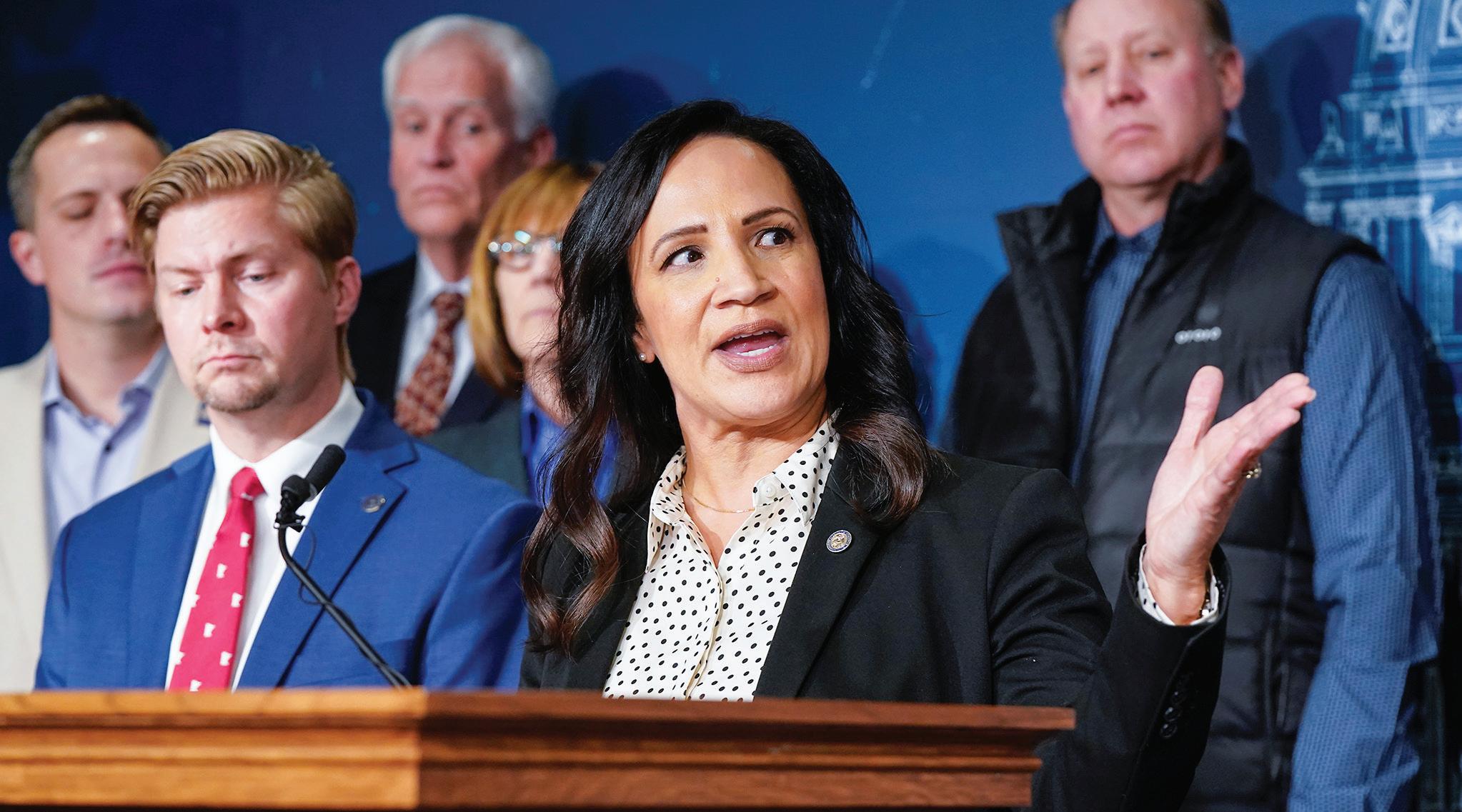
Fraud Key among the Republicans’ fraud priorities is HF1, sponsored by Rep. Patti Anderson (R-Dellwood), which would create an independent Office of Inspector General to “inves-
tigate and combat suspected fraud, misuse, and other unlawful uses of public funds in state government with a focus on the providers and recipients of state-funded services.”
“That’s going to be a top priority,” Niska said, adding the Senate passed a similar bill, SF856, 60-7 last year, but House DFLers refused to suspend the rules on the final night of the
2025 session for House action.
Niska also referenced a slew of bills that Republicans intend to bring forward to further address fraud, including bills that would create consequences for officials who allow fraud to occur unchecked and create statutory guidelines for programs with a high risk of fraud.
“The departments that enabled the fraud cannot be trusted to fix the problem themselves,” Niska said.
Affordability In addressing affordability, Republican lawmakers said their proposed bills would lower health care costs by establishing a permanent reinsurance program and establishing a commission to investigate the ongoing rise in property taxes.
Niska said Republicans also support conforming state tax code to new federal tax laws
that cut taxes on tips and overtime as a way to ease the rising cost of living for Minnesotans.
“House Republicans are here to reverse that damage to family budgets,” Niska said.
Bonding
Traditionally the second year of a biennium is focused on a capital investment — or bonding — bill. Demuth said legislative leaders will discuss a potential proposal this session, but the upcoming February forecast detailing the state’s finances would further inform a decision on it.
“Our state doesn’t have money right now,” Demuth said. Demuth referenced last year’s $700 million bonding bill that focused on basic needs like roads and bridges, saying those projects were important. In the end, Demuth said she offers “no promises at this point.”
residents:
To Rep. Leigh
Paul), Americans have reached an historic juncture. And she believes that Minnesota legislators have an opportunity to reach a bipartisan consensus.
“Let’s stand together as a DFL and a Minnesota GOP and say, ‘No more,’” Finke said at a Monday news conference.
“This is the kind of moment in history when we must say, ‘Never again.’”
Finke was speaking of how the state should respond to the actions and policies of federal agents from U.S. Immigration and Customs Enforcement (ICE) and Customs and Border Protection (CBP). And why she’s sponsoring two of the 11 bills that DFL legislators discussed at the briefing, each of them focused upon some aspect of how ICE and CBP operate within the state.
House/Senate DFL Press Conference 2/16/26
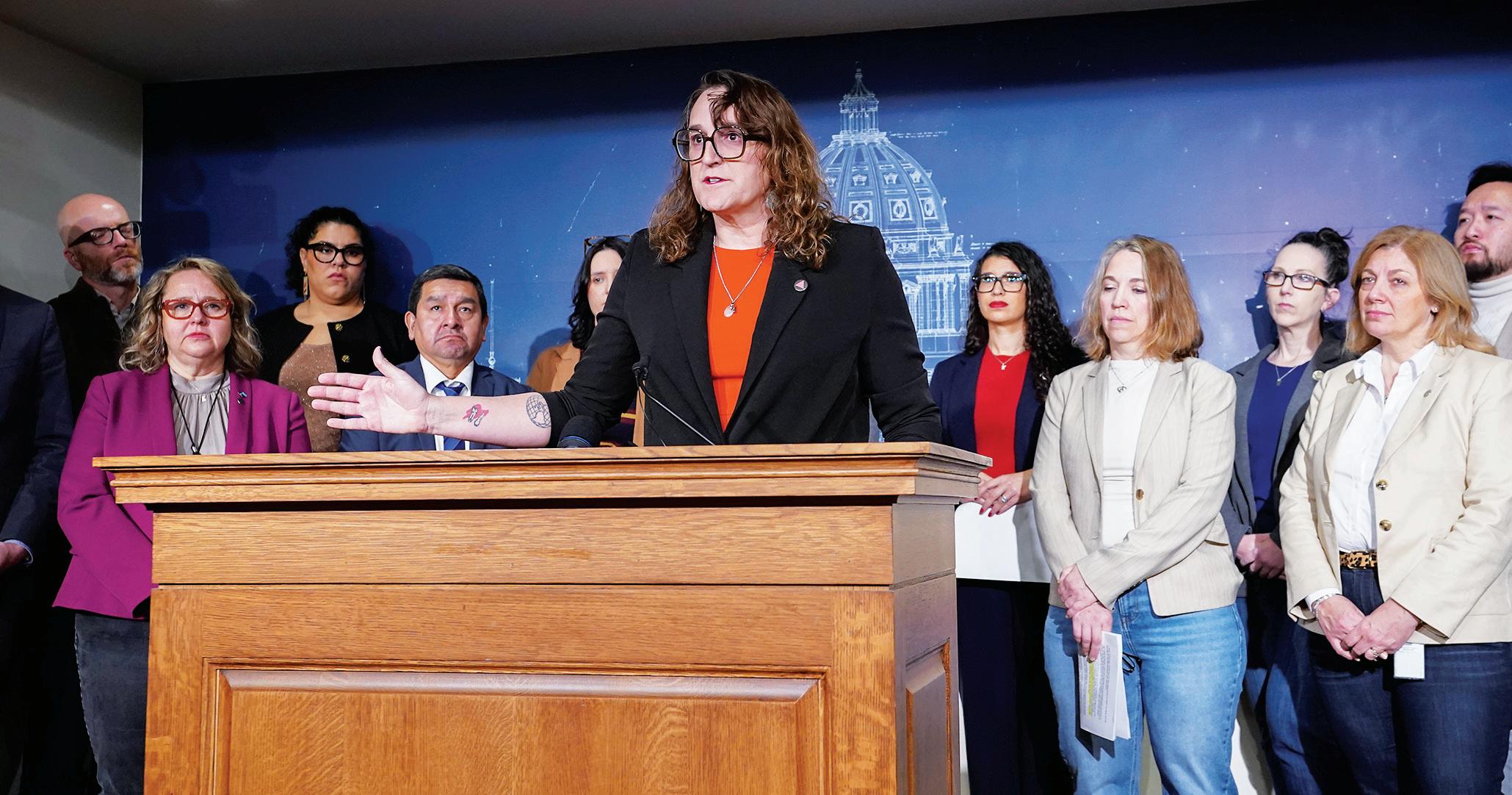
The bills sponsored by Finke include HF3412 to require that agents exhibit visible identification and not wear masks and HF3358 to require that vehicles used to transport detainees be marked as law enforcement.
Coulter (DFL-Bloomington) would make hospitals and college campuses off limits to agents.
Three bills are designed to address accountability issues:
SAINT PAUL — As federal immigration enforcement intensifies across Minnesota under what officials have called “Operation Metro Surge,” the Saint Paul City Council has moved decisively to assert local authority, protect civil rights, and reassure residents that city government will stand with its communities.
Council President Rebecca Noecker, who represents Ward 2, outlined a series of legislative and community actions in a February newsletter that frames the moment as a test of values as much as law.
“For those of us in public office, the ongoing federal incursion into our communities has forced a difficult reckoning,” Noecker said. “Standing up for our community, showing that we have our people’s backs, means more than ever.”
Ordinances aimed at accountability and transparency
On February 5, the City Council adopted Ordinance 26-5, which prohibits law enforcement from staging or operating on city-owned property, restricts access to non-public city spaces, and codifies the city’s December 19, 2025 cease-and-desist directive ordering federal law enforcement to leave city property.
The council has also taken final action on Ordinance 26-6, requiring all law enforcement officers to clearly identify themselves — including agency affiliation and name or badge number — on the outermost
layer of their uniforms. to know who is interacting with them,” Noecker said, calling identification “a basic measure of transparency and account ability.”
Four bills would keep ICE out of certain areas:
HF3415, sponsored by Rep. Samantha Sencer-Mura, DFL-Mpls), would require ICE agents
“These are easy policies to understand and get behind,” Finke said. “We should be able to go into the House and get not just the one vote we need to pass them, but countless Republican votes to support these.”
dinance 26-7, which would prohibit law enforcement officers from wearing masks, is expected to receive a final vote this week. Supporters argue the policy is another critical step toward accountability, particularly during federal operations that have raised widespread concern.
Building trust with community leaders Beyond legislation, city leaders are emphasizing dialogue and partnership. On February 9, Noecker joined Mayor Kaohly Her, Saint Paul Police Chief Henry, State Representative Samakab Hussein, and leaders from the Somali Community Action Coalition for a focused conversation on ICE-related concerns, resource navigation, and strengthening long-term collaboration between city institutions
with city leadership at a Com munity Conversation hosted by Noecker on Tuesday, February 24, from 5:30 to 6:30 p.m. at Dayton’s Bluff Recreation Center, 800 Conway St. The informal gathering is open to all and designed for questions, ideas, and concerns.
Downtown Action Series focuses on revitalization
The city’s broader civic agenda continues with Downtown Action Series –
Meeting #5, set for Thursday, February 19, from 4:30 to 6:00 p.m. at Union Depot, 214 4th St. E.
The working session will feature updates from the Mayor’s Office, city departments, Ramsey County, state leaders, public safety partners, and downtown organizations.
Organizers say the goal is to balance accountability with public input as Saint Paul
to keep away from child care centers;
• HF3435, sponsored by Rep. Sydney Jordan (DFLMpls) would keep agents away from school grounds; and yet-to-be-introduced bills sponsored by Rep. Anquam Mahamoud (DFLMpls) and Rep. Nathan
works toward downtown revitalization.
RSVP required.
Resources and reporting federal actions
The City of Saint Paul has launched an official webpage compiling updates on legal actions, community responses, and resources related to federal enforcement activity. City leaders are encouraging residents to share the page widely to ensure access to accurate information.
In addition, Attorney
General Keith Ellison has introduced a Federal Action Reporting Form for Minnesotans to document firsthand experiences with federal government actions that may involve civil rights concerns, public safety impacts, or funding changes.
Ward 2 budget wins and downtown investment
Noecker also highlighted a Ward 2 budget victory tied to stronger parking enforcement.
• HF3405, sponsored by Rep. Kelly Moller (DFL-Shoreview), would require the Bureau of Criminal Apprehension’s participation in investigations of all Minnesota shootings involving law enforcement or federal agents; HF3414, sponsored by House DFL Floor Leader Jamie Long (DFL-Mpls), would give Minnesotans the opportunity to defend their constitutional rights in civil court; and Rep. Fue Lee (DFL-Mpls) plans to introduce a bill that would restrict the use of tear gas and flash bang grenades.
Two bills would deal with protecting the privacy of Minnesota

HF3146, sponsored by Rep. Aisha Gomez (DFLMpls), would prohibit the acquisition and use of facial recognition technology by government entities, and • a yet-to-be-introduced bill that’ll be sponsored by Rep. Brad Tabke (DFL-Shakopee) would restrict the use of automatic license plate readers.
House DFL Caucus Leader Zack Stephenson (DFLCoon Rapids) sees the proposals as having the potential for bipartisan support.
“We’re certainly going to give every Republican every opportunity to demonstrate that their values are consistent with Minnesotans and not Donald Trump,” he said. “I think we’re seeing not just in Minnesota, but around the country, that this is the age of states asserting themselves. … If we’re not going to fight for this, what are we doing here?”
Investments secured in the 2026 budget preserved two Parking
Enforcement Officers and added a third, contributing to nearly three times more meter citations in 2025 compared to

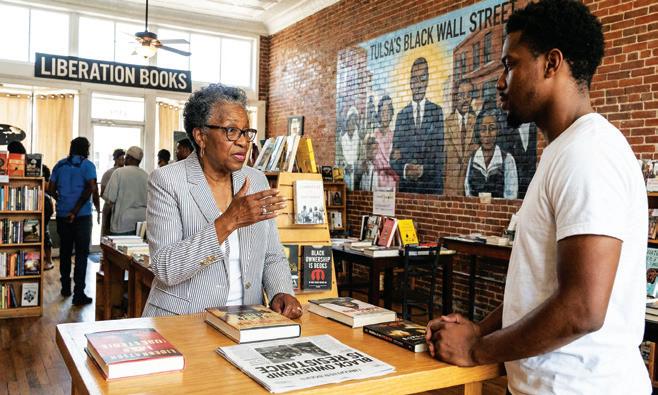
Advocates say building and sustaining Black-owned businesses is being emphasized as a path to economic power and community stability
As Black History Month celebrations unfold across the country—often centered on culture, athletics, and iconic speeches— advocates for economic justice are urging the public to confront a less comfortable but foundational part of Black history: ownership.
In a recent statement, Richard Trent, executive director of the national small-business advocacy group Main Street Alliance, emphasized that Black ownership has long been a form of resistance rather than mere participation in the marketplace.
“Before viral moments and corporate tributes, there were storefronts, farms, insurance companies, and entire business districts,” Trent noted, pointing to historic examples such as Tulsa, Oklahoma’s Greenwood District. Often referred to as “Black Wall Street,” Greenwood was built by Black entrepreneurs who understood that ownership translated directly into power—economic leverage that could protect communities and shape political outcomes. That power, Trent argued, is precisely why it was targeted and destroyed.

The connection between economic power and political rights has deep roots in Black organizing traditions. Trent referenced Rev. Jesse Jackson’s Operation Breadbasket, which emerged from the Civil Rights Movement to focus on economic justice, including
contracts, hiring authority, and access to capital. The initiative underscored a reality that remains relevant today: political rights alone are insufficient without economic control.
For Black Americans, owning a business has rarely been “just business.” According
to advocates, it has meant navigating redlining, limited access to capital, discriminatory supply chains, and shifting public policy. These barriers, Trent said, are not abstract or historical footnotes—they are lived realities that continue to shape out-
comes for Black entrepreneurs.
“That’s not symbolic,” Trent wrote. “That’s resistance.”
Main Street Alliance, which organizes small business owners nationwide, says its work is centered on making ownership “real and durable” by advocating for fair access to capital, healthcare, childcare, trade stability, and competitive markets that do not favor monopolies. The organization argues that cultural recognition without economic power leaves communities vulnerable.
As Black History Month continues, Trent and other advocates are calling for a broader public conversation— one that places Black ownership at the center of discussions about equity, resilience, and self-determination.
“Ownership is not a side story,” Trent said. “It’s the story.”
Travel experts assess whether political tensions and policy shifts could affect visitor numbers
By Frédéric Dimanche Professor
and
former Director
(2015-2025), Ted Rogers School of Hospitality and Tourism Management, Toronto Metropolitan University
Kelley A. McClinchey Teaching Faculty, Geography and Environmental Studies, Wilfrid Laurier University
With an upcoming FIFA World Cup being staged across the nation, 2026 was supposed to be a bumper year for tourism to the United States, driven in part by hordes of arriving soccer fans.
And yet, the U.S. tourism industry is worried. While the rest of the world saw a travel bump in 2025, with global international arrivals up 4%, the U.S. saw a downturn. The number of foreign tourists who came to the United States fell by 5.4% during the year –a sharper decline than the one experienced in 2017-18, the last time, outside the height of the COVID-19 pandemic, that the industry was gripped by fears of a travel slump.
Policy stances from the Trump administration on everything from immigration to tariffs, along with currency swings and stricter border controls, have seemingly proved a turnoff to travelers from other countries, especially Canadians – the single largest source of foreign tourists for the United States. Canadian travel to the U.S. fell by close to 30% in 2025. But it is not just visitors from Canada who are choosing to avoid the United States. Travel from Australia, India and Western Europe, among others, has also shrunk.
We are experts in tourism. And while we don’t possess a crystal ball, we believe that the tourism decline of 2025 could well continue through 2026. The evidence appears clear: Washington’s ongoing policies are putting off would-be travelers. In other words, the tourism industry is in the midst of a “Trump slump.”
Fewer Canadians heading south
The impact of Donald Trump’s policies are perhaps most pronounced when looking north of the U.S. border. According to the U.S. Travel Association, Canadian visitors generated approximately 20.4 million visits and roughly US$20.5 billion in visitor spending in 2024, supporting about 140,000 American jobs.
The economic impact of fewer Canadian visitors in 2025 affects mostly border
states that depend heavily on people driving across the border for retail, restaurants, casinos and short-stay hotels.
The sharp drop in return trips by car to Canada is a direct indication that border economies might be facing stress. This has led elected officials and tourism professionals to woo Canadians in recent months, sometimes with “Canadian-only deals.”
And it isn’t just border states. In Las Vegas, some hotels are now offering currency rate parity between Canadian and U.S. dollars for rooms and gambling vouchers in a bid to attract customers.
Winter-sun states, such as Florida, Arizona and California, are facing both fewer short-stay arrivals and an emerging drop-off in Canadian “snowbirds.” Reports indicate a noticeable increase in Canadians listing U.S. properties in Florida and Arizona for sale and canceling seasonal plans, threatening lodging, health care spending and property tax revenue.
Economic and safety concerns
Economic policies pursued by the Trump administration appear to be among the main reasons visitors are staying away from the U.S. Multiple tariff announcements – pushing tariffs to the highest levels since 1935 – along with tougher border-related rhetoric and an aggressive foreign policy have contributed to a negative perception of the U.S. among would-be tourists. Many foreigners report feeling unwelcome or uncertain about travel to the U.S., and some public leaders from Canada and Europe have urged citizens to spend domestically, instead. This significantly reduced intent to travel to the U.S. in 2025.
Meanwhile, exchange rates and inflation have further affected some aspiring travelers, especially Canadians. The Canadian dollar was weakened in 2025, making U.S. trips more expensive. This disproportionately affected day-trip and shopping-driven border crossings.
Travelers are also staying away from the U.S. because of safety concerns. Several countries have posted travel advisories about the risks of traveling to the U.S., with Germany being the latest. Although most worries are related to increased border controls, recent aggressive tactics by immigration agents have added to potential visitors’ decisions to avoid the U.S.
A wake-up call for the US
The current tourism outlook is reason for concern. Julia Simpson, president and CEO of the industry association World
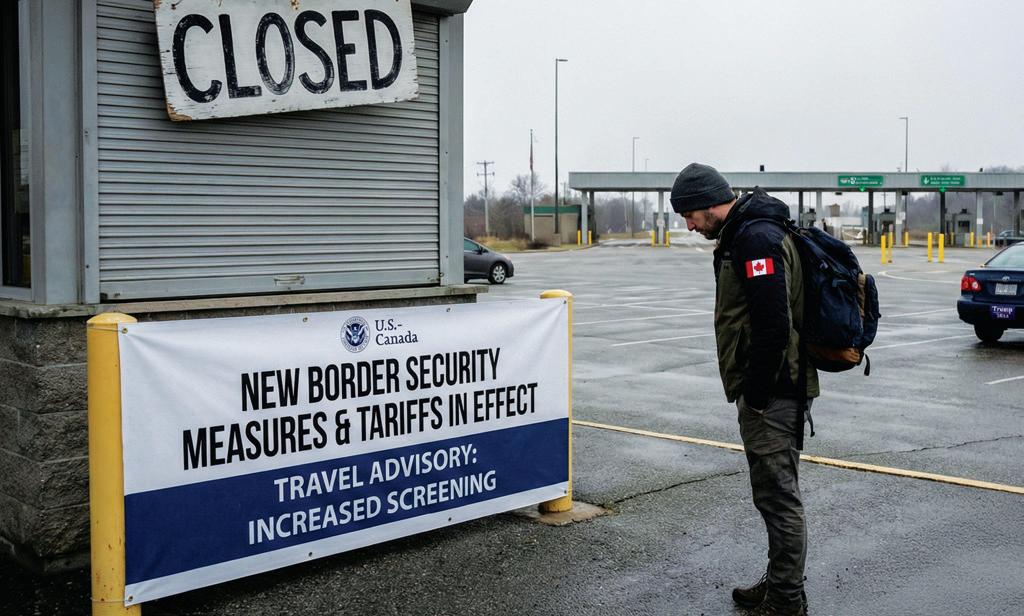
Travel and Tourism Council, has described the situation as a “wake-up call” for the U.S. government.
“The world’s biggest travel and tourism economy is heading in the wrong direction,” she said in May 2025. “While other nations are rolling out the welcome mat, the U.S. government is putting up the ‘closed’ sign.”
According to estimates, the U.S. stood to lose about $30 billion in international tourism in 2025 as travelers chose to travel elsewhere.
The disappointing figures for U.S. tourism follow a longer trend. The share of global international travel heading to the U.S. fell from 8.4% in 1996 to 4.9% in 2024 and was expected to drop to 4.8% in 2025. Meanwhile, arrivals to other top tourism destinations, including France, Greece, Mexico and Italy, are set to increase.
The decline is also being felt by the business tourism sector, with every major global region sending fewer people to the U.S. for work.
A World Cup bump?
So what does that mean for the upcoming FIFA World Cup, with 75% of the soccer matches being hosted across the United States? Traditionally, host nations benefit from sports events, although impacts are often overestimated. After a disappointing year, the U.S. tourism sector expects the World Cup to boost visits and revenue.
But Trump’s foreign policy may undermine those expectations.
A new visa integrity fee of $250 and plans for social media screening of some visitors make travel to the U.S. less attractive. And there are growing calls for a boycott of the U.S. following some of Trump’s policies, including his aggressive stance about Greenland.
Former FIFA President Sepp Blatter has suggested that fans avoid going to the U.S. for the World Cup.
It remains to be seen whether fans will follow his call. Bookings for flights and hotels were up after the dates and venues of games were announced in December.
But current political rhetoric is affecting travel decisions, especially given that fans from some specific countries may not be able to get visas. The U.S. government has imposed travel bans on Senegal, Ivory Coast, Iran and Haiti, all of which have qualified for the
World Cup. European soccer leaders have even discussed the possibility of a boycott, although such an action is unlikely to happen, given the revenue at stake for national teams and football associations.
Will the ‘Trump slump’ continue?
White House policies look unlikely to drastically change in the next few months. And this causes concern for tourism professionals, although most have remained silent about the recent immigration crackdown.
To make matters worse, federal funding for Brand USA, the national destination marketing organization, was cut deeply in mid-2025, leading to staff shortages that have reduced the country’s capacity to counter negative sentiment through positive promotion.
Soccer fans tend to be passionate about following their national side. And this could
offset some of the impact of the Trump travel slump. Yet, with sky-high match ticket prices and the international reputation of the U.S. as a tourism destination damaged, we believe it is unlikely that the tourism industry will recover in 2026. It will take a long time and good strategies to repair the serious damage done to the nation’s image among travelers in the rest of the world.
Disclosure statement
The authors do not work for, consult, own shares in or receive funding from any company or organization that would benefit from this article, and have disclosed no relevant affiliations beyond their academic appointment.

Researchers and activists argue food access and affordability remain deeply unequal
By Bobby J. Smith II
In Black
(WIB) – The recent release of the Dietary Guidelines for Americans, 2025–2030, by the U.S. Department of Health and Human Services poses a challenge for communities and individuals struggling with food insecurity. The new guidelines flip the traditional food pyramid on its head, recommending increased intake of costly red meat, whole dairy products, healthy fats, and whole grains.
But these guidelines create several blind spots, overlooking the prevalence of poor-quality food and limited grocery store choices in low-income communities — a reality for the 18.3 million U.S. households facing food insecurity. For these Americans, the real question is not what to eat, but whether they have access to safe, high-quality food — a question of food justice. This concern is not new.
Expanding the Meaning of Black Protest
During the civil rights and Black power movements, Black communities across the country pushed to expand the meaning of Black protest to include access to a reliable, nutritious food supply. From the Student Nonviolent Coordinating Committee (SNCC) to the Black Panther Party, food emerged as a critical site of social, political, and economic struggle. In Chicago, food came into sharp focus through the work of the Women of Operation Breadbasket, the direct-action unit of Dr. Martin Luther King Jr.’s Southern Christian Leadership Conference’s (SCLC) Operation Breadbasket in the North. The team of Black women placed the quality of food available in grocery stores in their neighborhoods at the center of their fight for racial and economic justice.
Founded in 1967 by Rev. Willie T. Barrow, a co-founder of Operation Breadbasket alongside Rev. Jesse L. Jackson Sr., the Women of Operation Breadbasket launched a Bad Meat Campaign that same year. Members included prominent figures such as civil rights activist and international labor
leader Rev. Addie L. Wyatt, who helped mobilize Black mothers and community members on the South and West Sides in protests against grocers who sold rotten meat and inadequate produce in Black neighborhoods, transforming grocery aisles into battlegrounds for civil rights.
Supermarket Civil Rights
This campaign reveals what I call supermarket civil rights: a highly visible form of consumer activism through which Black communities challenged and exposed grocery stores as contested sites of power, where food access was routinely compromised and negotiated during the civil rights era.
Robert Culp’s 1969 documentary “Operation Breadbasket” provides footage of supermarket civil rights. In the film, the Women of Operation Breadbasket confront a grocery store owner and a meat manager about hazardous conditions in the meat department at a D&S Super Markets store.
The documentary included a scene of Rev. Calvin Morris, Associate Director of Operation Breadbasket, giving a speech in front of the meat section, as the camera showed maggots flying around spoiled meat in brown boxes and on dirty floors, and unclean machinery with meat stuck in it.
The group’s campaign made clear that bad meat was a

significant health concern at the intersection of race, economics, and community well-being.
The supplying of bad meat in Black neighborhoods reflected how white grocers valued Black patrons: unsafe working conditions, heightened risk of foodborne illness, and the manipulation of Black purchasing power.
Food Power Politics
But the bad meat campaign offered Black neighborhoods a site to navigate what I call food power politics — the struggle over how food is weaponized in Black communities during times of social unrest and how they fight back. In one of the documentary’s final scenes, Barrow and Morris returned to tour the same D&S store months later.
The transformation is unmistakable: high-quality meat, stocked meat display fridges, new machinery, updated cleaning systems, and cleaner aisles. Although the Women of Operation Breadbasket’s Bad Meat campaign did not dismantle racism and food disparities
in the city, it dramatized how Black women could fight for civil rights in the least likely of places — inside the supermarket.
Operation Breadbasket closed in Chicago in 1971, and its founder, Jackson, converted it into Operation People United to Save Humanity — later changed from “Save” to “Serve” (PUSH) — which became the Rainbow PUSH Coalition in 1996, and is still operating. Many members of the Women of Operation Breadbasket continued their activism in this organization.
A Right to Safe, Nutritious Food
By demanding dignity in Black food experiences, the Women of Operation Breadbasket asserted the right to safe and nutritious food, a central pillar of today’s food justice movement. Learning from their practical actions expands the blueprint of methods that can help food justice activists and organizations today as they struggle to redress systematic inequity at the nexus
of food disparities, poor diet quality, and environmental degradation.
The Chicago Food Policy Action Council carries forward work of the Women of Operation Breadbasket, confronting food insecurity through several efforts such as the Metro Chicago Good Food Purchasing Initiative, that fosters a Chicagoland food system defined as “accessible, equitable, racially just, healthy, fair, local, humane, and sustainable” in the face of shifting SNAP policies and rising grocery costs.
Beyond Chicago, the National Black Food and Justice Alliance (NBFJA) offers a national infrastructure, rooted in Black food experiences, actively mobilizing farmers, organizers, policymakers, advocates, and related stakeholders to reshape how Black communities interface with U.S. foodscapes and imagine brighter, equitable food futures for all.
The history of Supermarket civil rights and its living legacies remind us that the food story of Black life matters. Food justice has always been built from the ground up, and remembering this history is essential to shaping what comes next.
Bobby J. Smith II is an associate professor of African American studies at the University of Illinois—Urbana-Champaign, author of the James Beard Award-nominated book Food Power Politics, and a Public Voices Fellow through The OpEd Project.
Small, evidence-based changes that could significantly reduce your risk of chronic disease

By Michael I Goran Professor of Pediatrics and Vice Chair for Research, University of Southern California
The Dietary Guidelines for Americans aim to translate the most up-to-date nutrition science into practical advice for the public as well as to guide federal policy for programs such as school lunches.
But the newest version of the guidelines, released on Jan. 7, 2026, seems to be spurring more confusion than clarity about what people should be eating.
I’ve been studying nutrition and chronic disease for over 35 years, and in 2020 I wrote “Sugarproof,” a book about reducing consumption of added sugars to improve health. I served as a scientific adviser for the new guidelines. I chose to participate in this process, despite its accelerated and sometimes controversial nature, for two reasons.
First, I wanted to help ensure the review was conducted with scientific rigor. And second, federal health officials prioritized examining areas where the evidence has become especially strong – particularly food processing, added sugars and sugary beverages, which closely aligns with my research.
My role, along with colleagues, was to review and synthesize that evidence and help clarify where the science
is strongest and most consistent.
What’s different in the new dietary guidelines?
The dietary guidelines, first published in 1980, are updated every five years. The newest version differs from the previous versions in a few key ways.
For one thing, the new report is shorter, at nine pages rather than 400. It offers simpler advice directly to the public, whereas previous guidelines were more directed at policymakers and nutrition experts.
Also, the new guidelines reflect an important paradigm shift in defining a healthy diet. For the past half-century, dietary advice has been shaped by a focus on general dietary patterns and targets for individual nutrients, such as protein, fat and carbohydrate. The new guidelines instead emphasize overall diet quality.
Some health and nutrition experts have criticized specific aspects of the guidelines, such as how the current administration developed them, or how they address saturated fat, beef, dairy, protein and alcohol intake. These points have dominated the public discourse.
But while some of them are valid, they risk overshadowing the strongest, least controversial and most actionable conclusions from the scientific evidence.
What we found in our scientific assessment was that just a few straightforward changes to your diet – specifically, reducing highly processed
foods and sugary drinks, and increasing whole grains – can meaningfully improve your health.
What the evidence actually shows
My research assistants and I evaluated the conclusions of studies on consuming sugar, highly processed foods and whole grains, and assessed how well they were conducted and how likely they were to be biased. We graded the overall quality of the findings as low, moderate or high based on standardized criteria such as their consistency and plausibility.
We found moderate to high quality evidence that people who eat higher amounts of processed foods have a higher risk of developing Type 2 diabetes, cardiovascular disease, dementia and death from any cause.
Similarly, we found moderately solid evidence that people who drink more sugar-sweetened beverages have a higher risk of obesity and Type 2 diabetes, as well as quite conclusive evidence that children who drink fruit juice have a higher risk of obesity. And consuming more beverages containing artificial sweeteners raises the risk of death from any cause and Alzheimer’s disease, based on moderately good evidence.
Whole grains, on the other hand, have a protective effect on health. We found high-quality evidence that people who eat more whole grains
have a lower risk of cardiovascular disease and death from any cause. People who consume more dietary fiber, which is
abundant in whole grains, have a lower risk of Type 2 diabetes and death from any cause, based on moderate-quality research.
According to the research we evaluated, it’s these


By Steve Karnowski and Rebecca Boone, Associated Press
Four people have been indicted on federal charges stemming from clashes with federal officers in Minneapolis, including one woman who is accused of biting off an immigration officer’s fingertip.
The three others were charged in connection with threats made to FBI agents after documents containing the agents' personal information
was stolen from a vehicle. According to sworn statements filed in those cases, the FBI agents were investigating a shooting by an Immigration Customs Enforcement Officer on Jan. 14 when protests made the area unsafe and they had to flee on foot, leaving behind two of their vehicles. The vehicles were vandalized and broken into, and several things were stolen including guns, FBI identification cards and documents that included addresses, phone numbers and other personal information of some FBI employees.
That personal information was then posted on social media, according to the court documents, and that's when the officers began receiving threatening phone calls, text messages and emails.
Woman accused of biting off immigration officer’s fingertip Claire Louise Feng, 27, is accused of biting off the fingertip of a special agent from Homeland Security Investigations during a Jan. 24 protest that happened after immigration officers shot and killed Alex Pretti. Feng, who is from St.
Paul, Minnesota, was indicted on the charge of assaulting a federal officer resulting in injury. In an affidavit filed in the case, Homeland Security Investigations special agent Bronson Day said an immigration officer was attempting to arrest another protester when Feng tackled the officer. A Customs and Border Protection officer took Feng to the ground and was trying to secure her arms when Feng bit the officer’s finger through a glove, Day wrote. The day was very cold and the officer didn’t im-
mediately realize the severity of the injury, Day wrote, but when the officer removed his glove, he realized the tip of his ring finger had been removed, exposing the bone. He was able to get medical attention within an hour, Day wrote. Feng’s attorney, Kevin C. Riach, said she would fight the charge.
“All you have to do to assess the credibility of ICE (Immigration and Customs Enforcement) agents when they make allegations like this is to look at yesterday’s dismissal that confirmed ICE agents have
made false allegations against a defendant,” Riach said. “We look forward to fighting this case and clearing Ms. Feng’s name.” 3 people indicted in threats to FBI agents Brenna Marie Doyle, 18, of Spokane, Washington, was indicted Thursday on charges of threatening to murder a federal law enforcement officer, threatening to murder a federal law enforcement officer’s family member and inter-
By NY Carib News
Barbados Prime Minister Mia Mottley became the second Caribbean politician to win all the seats in a national Parliament on three occasions as she led the Barbados Labor Party (BLP) to yet another whitewash of her opponents in the Barbados general election.
Mottley, 60, follows former Grenadian Prime Minister Dr. Keith Mitchell, who earlier this year announced he was bowing out of active politics after he had become the first regional leader to win all the seats in his country’s Parliament.
She led the BLP to consecutive clean sweeps since winning all 30 seats in the Barbados Parliament when she became the country’s first female prime minister following the May 24, 2018, general election.
“We are humbled by your confidence and trust. Thank you. Let us now come together as one people to continue building our nation,” the BLP said in a statement posted on its Facebook page.In Wednesday’s general election, Mottley comfortably regained her St Michael
By By Alvin Buyinza Word In Black
(WIB) – The Education Department office responsible for protecting the rights of marginalized and minority students in the nation’s K-12 public schools dismissed nearly every discrimination complaint it received last year, due to the Trump administration’s massive reduction in force, according to a new government watchdog report.
At the same time, the Government Accountability Office found that the administration’s attempt to lay off about half of the department’s Office for Civil Rights — a move that was challenged in court — may have cost taxpayers as much
North East seat and later told supporters gathered at the party’s headquarters in the heart of the capital, Bridgetown, that her new cabinet is expected to be sworn in on Monday, with the first sitting of the new Parliament scheduled for next Friday.
“Something special happened in the country today,”
Mottley said ahead of a planned thank-you rally on Saturday.She recalled that when she first won the general election in 2018, she had told Barbadians that her administration would “work hard” to stabilize the country.
“We thought we would move to a growth path,” she said, noting that soon after coming into office, Barbados, like the rest of the world, had to deal with the COVID-19 pandemic and that over the last two and a half years, the Government had started a mission to transform the country.
“We did not come to hold office, we come to make Barbados better and your lives better,” she said, noting that next month the BLP will be celebrating its 88th year as a political organization.
Mottley, an attorney, said that the party and Govern-
ment remain focused on what “Barbadians want us to focus on” even as she warned against the challenges of ensuring the country’s democracy remains intact as it moves towards celebrating its 60th year of political independence and its fifth year as a republic.
She said Barbadians must also accept the responsibility for the transformation of the country and that everyone must band together to deal with both the local and geopolitical challenges.
Mottley said she was also concerned about the situation regarding the main opposition Democratic Labor Party (DLP), insisting that Barbados needs “strong institutions,” recalling also her efforts to have the party represented in the Senate following the previous two resounding defeats.
Meanwhile, the DLP leader, Ralph Thorne, was defeated in the St John’s constituency, polling 1,876 votes as against 2,327 for the winner Charles Griffith of the BLP and 236 votes for the candidate, Kemar Stuart.
Thorne, who was elected to represent the Christ
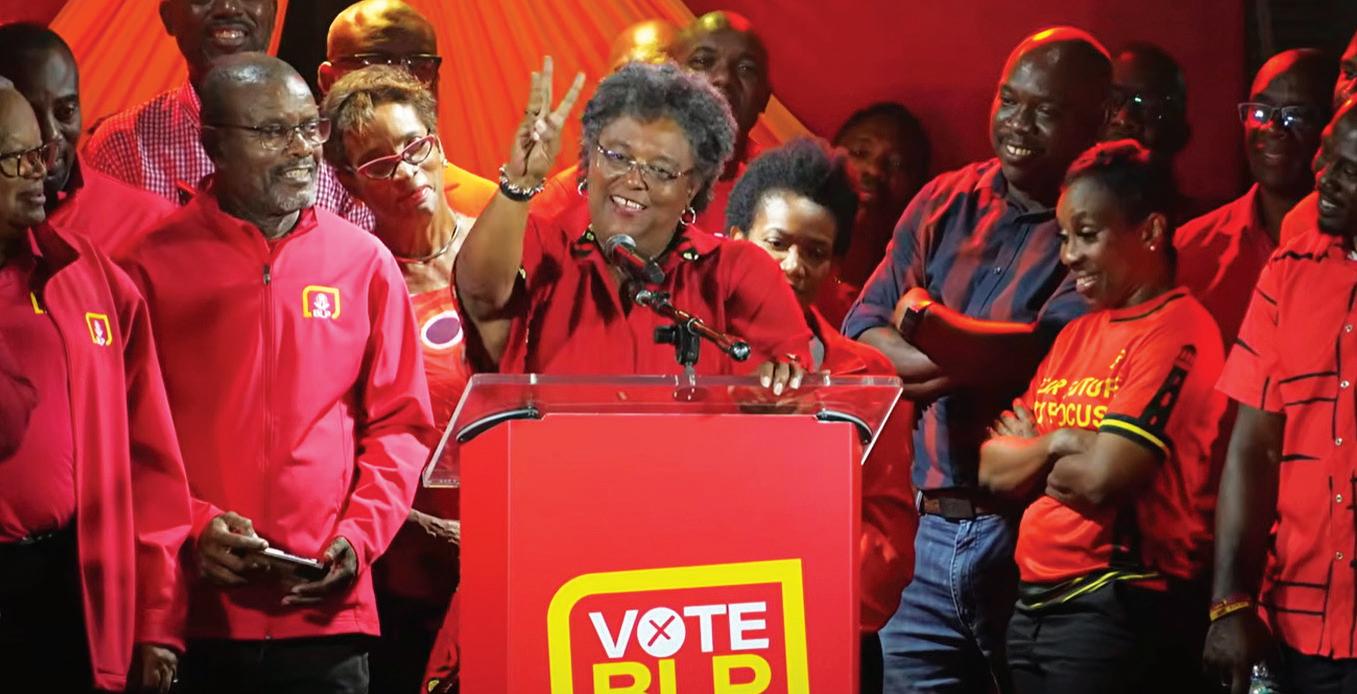
Church South district for the BLP in the last general election but crossed the floor to become Opposition leader, said of the latest defeat, “We acquitted ourselves well, fought a clean campaign.”
“The result is quite disappointing, no explanation for it,” he said as he conceded defeat.
On Wednesday, he complained of being unable to cast his ballot in the election, telling reporters that he had resided in Christ Church East for more than 20 years.
He said he was being told to go to another constituency to vote, but “the position I take is that to vote in Rendezvous is to commit fraud, certain-
ly as it relates to my address”.
“So, I consider that I have been denied the right to vote due to an administrative error by the Electoral and Boundaries Commission,” he told reporters.
But university lecturer and former DLP president, Dr Ronnie Yearwood, said that the electorate had sent yet another “clear message” to the party.
“You can’t lose three times in this way and believe what you are doing,” Yearwood said, urging the party to undertake a reform of itself. “This is not where we want to be…but the public has given the party a third defeat”.
Political scientist
and pollster, Peter Wickham, said while the ruling BLP has “grown and evolved”, the same cannot be said of the DLP.
He said the election result is “more about the DLP and what it has to do”, adding “it has to make hard decisions”. Wickham said that the campaign of the DLP was “horrible” and that the leader had to step down.
“The party has to start looking for a new leader and identify new talent,” he added. For the first time in its political history, the general election was observed by foreign observer teams from the Caribbean Community (Caricom) and the Commonwealth.
aspects – too much highly processed foods and sweetened beverages, and too little whole grain foods – that are significantly contributing to the epidemic of chronic diseases such as obesity, Type 2 diabetes and heart disease in this country –and not protein, beef or dairy intake.
From scientific evidence to guidelines
Our report was the first one to recommend that the guidelines explicitly mention decreasing consumption of highly processed foods. Overall, though, research on the negative health effects of sugar and processed foods and the beneficial effects of whole grains has been building for many years and has
as $38 million over the nine months it took to resolve the case.
The volume of discrimination cases the civil rights office dismissed and the price tag for gutting the office highlight the dramatic effects of the Trump administration’s twin goals for public education: dismantling the Education Department and waging a so-called “war on woke” that would end federal enforcement of civil rights law.
The Office of Civil Rights Is In “Turmoil” Katy Neas, CEO of The Arc of the United States, said in a statement that the GAO report shows how the civil rights office has been “thrown into turmoil” even as discrimination complaints
been noted in previous reports. On the other hand, research on how strongly protein, red meat, saturated fat and dairy are linked with chronic disease risk is much less conclusive. Yet the 2025 guidelines encourage increasing consumption of those foods – a change from previous versions.
The inverted pyramid imagery used to represent the 2025 guidelines also emphasizes protein – specifically, meat and dairy – by putting these foods in a highly prominent spot in the top left corner of the image. Whole grains sit at the very bottom; and except for milk, beverages are not represented.
Scientific advisers were not involved in designing the image.
Making small changes that can improve your health
An important point we encountered repeatedly in reviewing the research was
compound and vanish from the public eye.
“Families have a right to turn to OCR when a child is denied accommodations, pushed out of class, harassed, or disciplined unfairly because of disability,” said Neas, whose organization protects disability rights. “When those complaints aren’t addressed, schools lose
that even small dietary changes could meaningfully lower people’s chronic disease risks. For example, consuming just 10% fewer calories per day from highly processed foods could lower the risk of diabetes by 14%, according to one of the lead studies we relied on for the evidence review. Another study showed that eating one less serving of highly processed foods per day lowers the risk of heart disease by 4%.
You can achieve that simply by switching from a highly processed packaged bread to one with fewer ingredients or replacing one fast-food meal per week with a simple home-cooked meal. Or, switch your preferred brands of daily staples such as tomato sauce, yogurt, salad dressing, crackers and nut butter to ones that have fewer ingredients like added sugars, sweeteners, emulsifiers and preservatives.
Cutting down on sug-
ary beverages – for example, soda, sweet teas, juices and energy drinks – had an equally dramatic effect. Simply drinking the equivalent of one can less per day lowers the risk of diabetes by 26% and the risk of heart disease by 14%.
And eating just one additional serving of whole grains per day – say, replacing packaged bread with whole grain bread – results in an 18% lower risk of diabetes and a 13% lower risk of death from all causes combined.
How to adopt ‘kitchen processing’ Another way to make these improvements is to take basic elements of food processing back from manufacturers and return them to your own kitchen – what I call “kitchen processing.” Humans have always processed food by chopping, cooking, fermenting, drying or freezing. The problem
clear direction, families lose answers, and students live with the consequences for years.”
“Rights are only meaningful when enforcement exists,” she said. On the campaign trail, President Donald Trump promised to shutter the Education Department. In March, Trump laid off nearly half of the OCR staff and shuttered seven of the department’s 12 regional offices. But a federal judge blocked the move last summer. While the case was ongoing, the Trump administration put the employees on administrative leave and told them not to report to work. That meant taxpayers were still paying their salaries, even though they were not actually working. Between March 11 and September 23, 2025, the department’s Office of Civ-
with highly processed foods isn’t just the industrial processing that transforms the chemical structure of natural ingredients, but also what chemicals are added to improve taste and shelf life.
Kitchen processing, though, can instead be optimized for health and for your household’s flavor preferences – and you can easily do it without cooking from scratch. Here are some simple examples: Instead of flavored yogurts, buy plain yogurt and add your favorite fruit or some homemade simple fruit compote. Instead of sugary or diet beverages, use a squeeze of citrus or even a splash of juice to flavor plain sparkling water.
• Start with a plain whole grain breakfast cereal and add your own favorite source of fiber and/or fruit. Instead of packaged “en-
ergy bars” make your own preferred mixture of nuts, seeds and dried fruit.
• Instead of bottled salad dressing, make a simple one at home with olive oil, vinegar or lemon juice, a dab of mustard and other flavorings of choice, such as garlic, herbs, or honey. You can adapt this way of thinking to the foods you eat most often by making similar types of swaps. They may seem small, but they will build over time and have an outsized effect on your health.
Disclosure statement
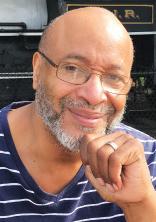
our blood, even at an early age. It has always been a universal language. That being said, I am happy to bring to you Lanell Lightfoot’s children’s book Sing.
Music, be it with vocals or instruments, has always been part of our culture. Music came with us from the African continent.
It was a means of communication between villages. It came as voices of freedom via the Underground Railroad. It is in
Our main character, a young Black girl named Lanell, loves to sing. It starts when she wakes up in the morning. Each person or animal sings to bring joy to her. She sings with her mother. She sings with her cat. She sings with her siblings. She sings with the bus driver. She sings with her teacher and her friends.
Everyone Lanell sings to add another ingredient to the joy of each day. As more people
sing along with her, the sense of community grows stronger. We all know someone who has had that special gift since early childhood, a voice that inspires and uplifts with infectious joy and positive energy. In this story, we see yet another example of how those around Lanell support, nurture, and appreciate her singing.
As a singer herself, who has performed before many distinguished audiences (including Queen Elizabeth II), Lanell Lightfoot encourages readers to “find their own voices, join in, and sing their way to happiness.” As an original
member of the Sounds of Blackness (whom she has also sang with), I can testify to that. Also, in her dedication, we find that Lanell not only inspires; she is deeply inspired by her children. For their gift of artistry, I give a hat tip to Chasity Hampton and Reyhana Ismail. Sing is available through Amazon and the Planting People Growing Justice website, www.ppgjli.org.
Thank you, Lanell, for sharing your literary voice as well as your musical voice to inspire our children going forward. You are touching so many, one child at a time.

mont, the nation will never be the same again.”
Jesse Jackson’s two campaigns for president, in 1984 and 1988, were unsuccessful but historic. The civil rights activist and organizer, who died on Feb. 17, 2026, helped pave the way for Barack Obama’s election a generation later as the nation’s first – and so far only – African American president.
Jackson’s campaigns energized a multiracial coalition that not only provided support for other late-20th-century Democratic politicians, including President Bill Clinton, but helped create an organizing template – a so-called Rainbow Coalition combining Black, Latino, working-class white and young voters – that continues to resonate in progressive politics today.
Vermont, where I teach political science, did not look like fertile ground for Jackson when he first ran for president. Then, as now, Vermont was one of the most homogeneous, predominantly white states in the country. But if Jackson seemed like an awkward fit for a mostly rural, lilywhite state, he nonetheless saw possibilities there.
He campaigned in Vermont twice in 1984, buoyantly declaring in Montpelier, the state capital, “If I win Ver-
He did not win Vermont, taking just 8% of the Democratic primary vote in 1984 but tripling his share to 26% in 1988. Appealing to voters in small, rural New England precincts was a remarkable achievement for a candidate identified with Chicago and civil rights campaigns in the South. Jackson’s presidential ambitions coincided with a pivotal moment in Vermont politics: The state’s voting patterns were shifting left, with new residents arriving and changing the state’s culture and economy. In 1970, nearly 70% of Vermonters had been born there. By 1990, that figure had dropped by 10 percentage points.
The Vermont Rainbow Coalition, which was formed to support Jackson’s first campaign, organized a crucial constituency in a fluid time, establishing patterns that would persist for decades.
Setting the standard in Vermont Jackson created a “People’s Platform” that would sound familiar to today’s progressives, calling for higher taxes on businesses, higher minimum wages and single-payer, universal health care.
In light of Jackson’s efforts, Vermont activists saw the potential for a durable statewide organization. Rather than disband the Vermont Rainbow
Coalition after the 1984 primary, they kept the group going, endorsing candidates in campaigns for the legislature and statewide office in each of the next three election cycles. The coalition also endorsed Bernie Sanders’ failed bid for Congress in 1988.
Sanders served eight years as mayor of Burlington as an “independent socialist,” cultivating a core collection of local allies known as the Progressive Coalition who sought to wrest power away from establishment members of the city’s Board of Aldermen. In 1992, the Vermont Rainbow Coalition merged with Burlington’s Progressive Coalition to form the statewide Progressive Coalition.
The Jackson-Sanders lineage Sanders eventually went on to win election to the House as an independent in 1990, serving in the chamber until winning his Senate seat, also as an independent, in 2006. His presidential runs in 2016 and 2020 made him a prominent national figure and a leader among progressives.
Alexandria Ocasio-Cortez, who unseated a member of the House Democratic leadership in a stunning 2018 primary upset in New York, had been a Sanders campaign organizer and remains his close ally. On Jan. 1, 2026,

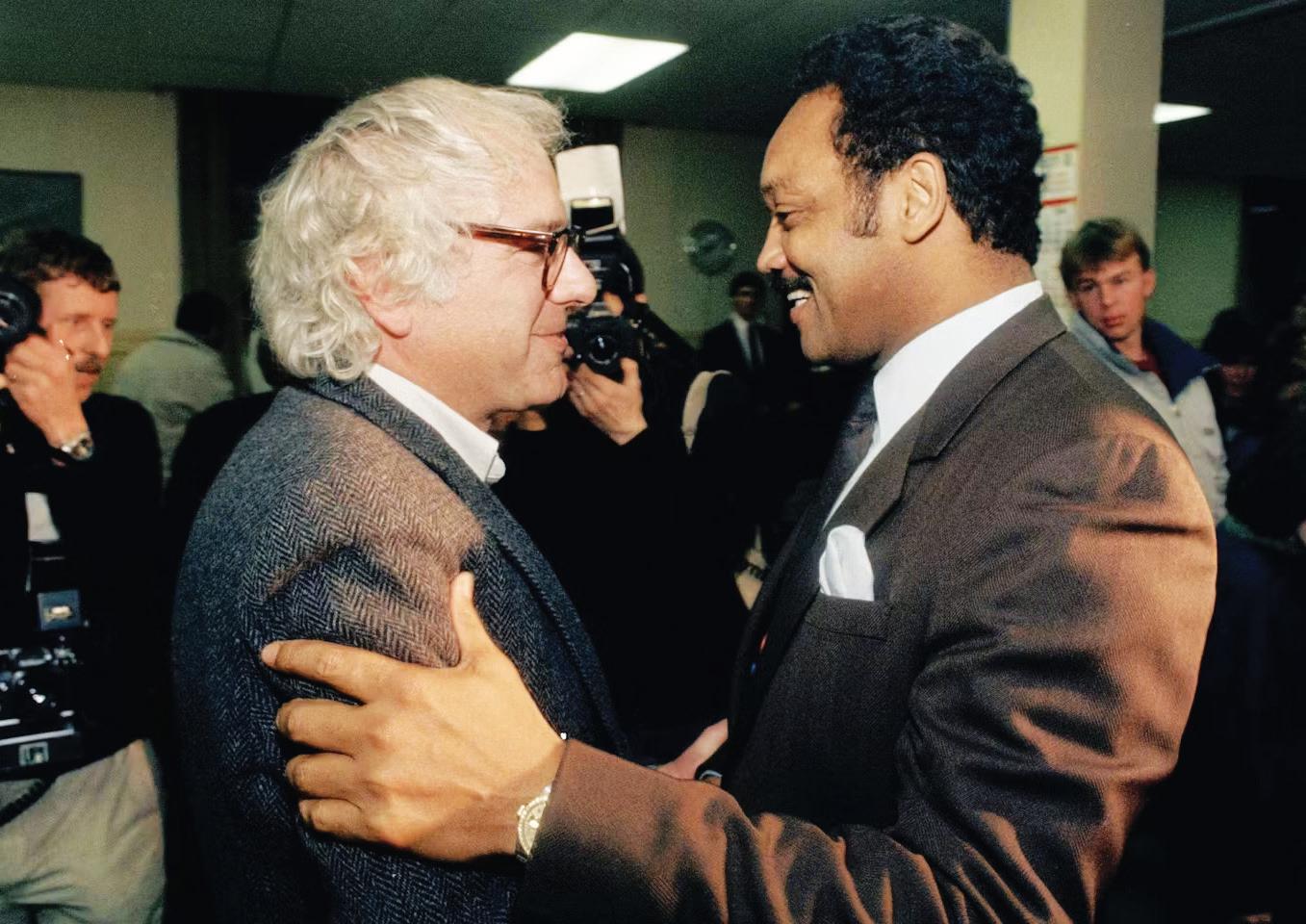

il Rights received over 9,000 complaints alleging discrimination, according to a report from the Government Accountability Office. More than 7,000 of those complaints — around 90% — were dismissed. In 2025, OCR, under the Trump administration, only reached a resolution agreement in just two out of 14 racial harassment cases, according to the OCR.
What Is The Office of Civil Rights?
The Education Department’s OCR is the sector that handles
cases of discrimination against race, sex, disability, religion and age in schools and colleges. The office investigates these complaints and sends out guidelines to the respective institution to comply with civil rights law. Complaints can be dismissed for a variety of reasons, the report says. In the GAO’s 2021 report on school bullying, for example, changes to OCR’s guidance led to a sharp uptick in dismissals of bullying complaints. The dismissal rate also jumped from 49% of resolved complaints in the 2010-2011 school year to 81% in the 2019-2020 school year.
But compared to prior years and administrations, the department, under Trump’s second term, is dismissing far more
injure a person. The indictment alleges she left voice messages on the FBI agent's phone threatening to kill them and their spouse and child. Doyle hasn't entered a plea yet, and her attorney Rob-
state transmission of a threat to
Sanders swore in Zohran Mam-
dani – like Ocasio-Cortez, a Democratic socialist – as mayor of New York City.
Sanders had endorsed Jackson for president in 1988. Years later, Jackson returned the favor.
Sanders paid tribute to Jackson at the 2024 Democratic National Convention.
“Jesse Jackson is one of the very most significant political leaders in this country in the last 100 years,” Sanders said.
“Jesse’s contribution to modern history is not just bringing us together – it is bringing us together around a progressive agenda.”
Not just Vermont
complaints and issuing fewer resolutions. Experts say this could lead to more civil rights abuses going unnoticed. Even with its workforce slashed by half, the OCR is still receiving discrimination complaints.
Discrimination Complaints Are Worsening Beth Gellman-Beer, who led the OCR’s regional office in Philadelphia before being laid off in March, says her office had 1,000 cases on the docket when her team received notice that it would be cut. Under the Trump administration, the bigoted behavior her office investigated had become more egregious. She cited a case from 2024 concerning students at a
ert D. Richman said they were waiting to receive evidence from the government so they can evaluate the case. He noted Doyle lives in Washington state and has never been to Minnesota.
Pennsylvania high school who wore Confederate flag attire during the school’s homecoming week.
The students posted on social media that anyone who had a problem with the Confederate flag should “go down south and call a white person racist and see what happens.”
Parents, teachers and community leaders alerted school officials, according to the complaint. Although school administrators forced students to remove their attire, they also insisted they didn’t believe the behavior amounted to racial harassment.
Gellman-Beer says
“There is no allegation that she took any steps whatsoever to carry out any of these threats or come within a thousand miles of the agent,” Richman said. James Patrick Lyons,
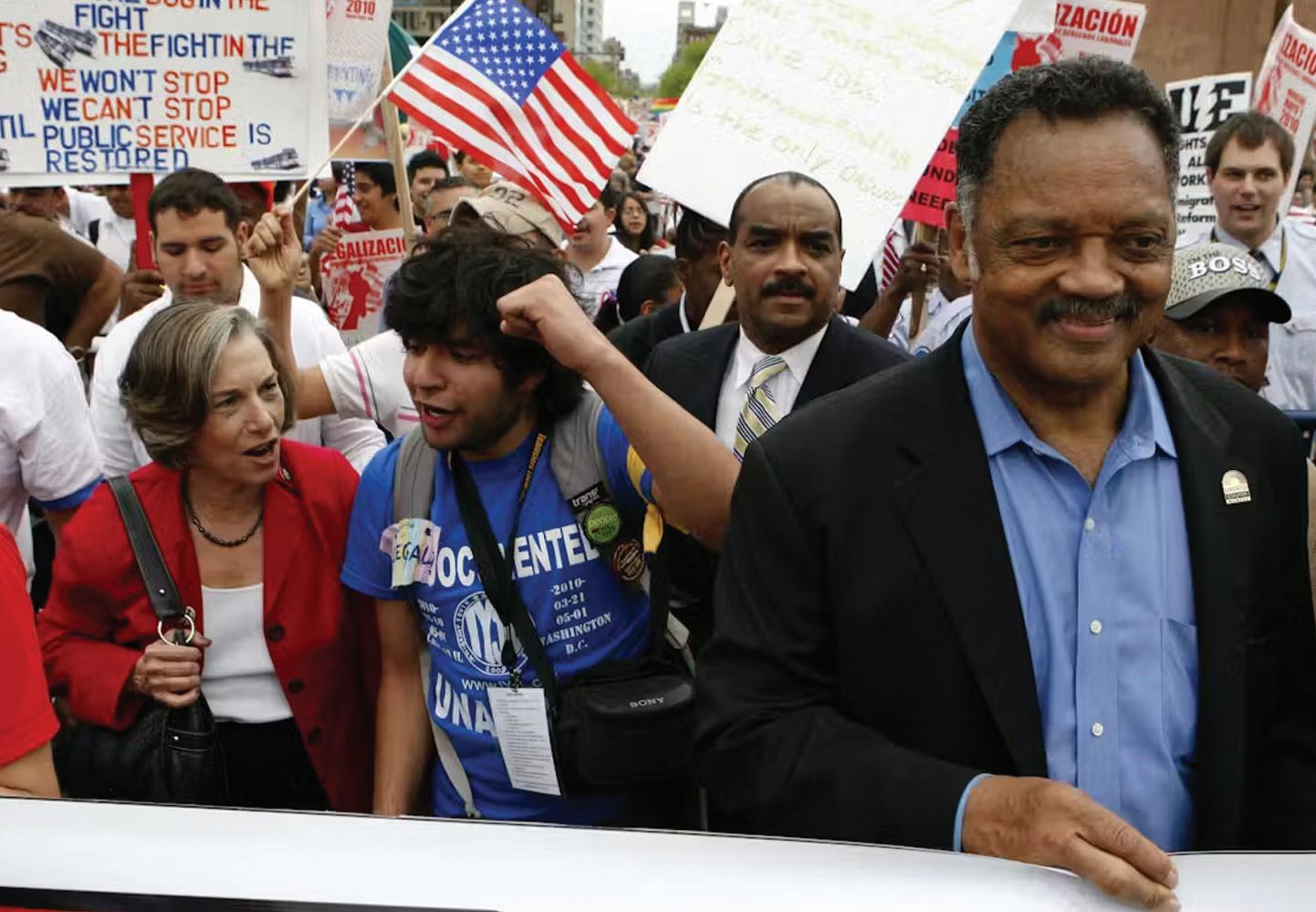
In Vermont, Jackson performed surprisingly well in unlikely places – taking nearly 20% of the 1984 primary vote in working-class Bakersfield and Belvi-
dere, for example. Today’s Vermont Progressive Party, which emerged
out of the old Vermont Progressive Coalition, is one of the most successful third parties in the
she often thinks about that case and similar cases. Without a robust OCR workforce, there’s virtually no one available to ensure schools comply with civil rights laws.
“No one’s following up on those cases. That’s what keeps me up at night,” she says.
Millions of Dollars
Spent on Mass Layoffs
The GAO report found that the mass layoffs Trump called for may have cost up to $38 million in salaries and benefits for OCR workers who weren’t working between March and December.
The Education Department also failed to account for all possible costs and sav-
ings associated with its mass layoffs and reorganization, according to the report. Furthermore, the department didn’t detail its analyses despite direction from the Office of Management and Budget and the Office of Personnel Management. “Without fully accounting for costs and savings and documenting its analyses, [the Education Department] lacks reasonable assurance that its actions achieved the stated goal of reforming its federal workforce to maximize efficiency and productivity, including whether such actions improved service to the American people, increased productivity, or saved taxpayer dollars.”
45, of California was indicted on five counts of interstate transmission of threats to injure a person, and Jose Alberto Ramirez, 29, of Illinois was indicted on one count of the same charge. Both men are accused of sending threatening text messages to FBI employees. Attorneys for Ramirez and Lyons did not immediately respond to messages requesting comment. Neither man has had the opportunity to enter a plea.
nation, winning official “major party” status in the state shortly after its official founding in 2000. The party has elected candidates to the state legislature, city councils and even a few statewide offices, including that of lieutenant governor. Vermont was not alone in experiencing the catalyzing effect of Jackson’s presidential runs. Jackson had a significant mobilizing impact on Black voters nationwide. In Washington state, the Washington Rainbow Coalition started in Seattle and spread across the state between 1984 and 1996.
New Jersey and Pennsylvania had their own successful and independent Rainbow Coalitions. In 2003, the Rainbow Coalition Party of Massachusetts joined the Green Party to become the Green Rainbow Party.
In my own research, I’ve investigated the durability of the “Jackson effect” in Vermont. There is no better test of what differentiates the Vermont
Progressive Party from the state’s Democratic Party than the 2016 Democratic primary race for lieutenant governor, which pitted progressive David Zuckerman against two prominent, mainstream Democrats. Zuckerman beat the Democrats most handily in towns that had voted the most heavily for Jesse Jackson in 1984, an effect that persisted even when controlling for population, partisanship and liberalism.
Many people would point to Sanders as the catalyst for Vermont’s continuing progressive movement. But Sanders and the progressives owe much to Jackson.
Disclosure statement
Bert Johnson does not work for, consult, own shares in or receive funding from any company or organization that would benefit from this article, and has disclosed no relevant affiliations beyond their academic appointment.